AFP

Biden: superhero, lame duck — or both?

So what do Americans see in Joe Biden — a doddery has-been whom even his own party doesn’t want around, or an improbable superhero? After an extraordinary week in Washington politics, the answer is a bit of both.

The 79-year-old’s political obituary has been issued more times than can be counted since he took office in 2021 amid the political wreckage of Donald Trump’s presidency, a pandemic and fear of economic disaster.

Now he’s fighting back. Or at least his alter-ego, a comically sinister cartoon character dubbed “Dark Brandon” is.

In political nerd circles, the meme has been doing the rounds — and it started going viral on Twitter this week as Biden notched win after against-the-odds win.

The “Dark Brandon” character was originally invented on Twitter by depressed leftists, angry that their centrist president was failing to get things done. They called him Brandon in a nod to a separate, vulgar Republican meme using the same name — and added death ray eyes.

But all of a sudden, mainstream Democrats are embracing “Dark Brandon” as their own, rebranding him from ineffectual grandfather figure to a kind of political terminator.

“Dark Brandon cannot be stopped,” reads one caption over a portrait of Biden with deeply tanned skin and fiery yellow eyes.

Another version depicts a photoshopped Biden capturing lightning in his hands, white light shooting from his eyes.

Why the giddiness?

Check the headlines:

– Friday, Biden gets a blockbuster jobs report showing US unemployment back to a half-century low.

– Late Thursday, the final holdout Democratic senator, Kyrsten Sinema, blesses a vast spending package for historic investment in fighting climate change, as well as lowering costs in the ruinously expensive health system.

– Monday, Biden announces the United States has killed Ayman al-Zawahiri, the last big name of the 9/11-era Al-Qaeda leadership.

– A few days before that, Congress passes a $52 billion investment package boosting semiconductor manufacturing. Oh, there’s also this week’s bill passed to compensate military veterans exposed to toxins, a cause dear to Biden’s heart.

And all that with a tiny Democratic majority in the House of Representatives and only one extra vote in the Senate.

Biden isn’t the reincarnation — as he reportedly would like to be — of his hero Franklin D. Roosevelt, who rebuilt the United States in the Great Depression, tweeted Slate political writer Jordan Weissmann.

“But as of now it looks like Biden’s first term could be on par w/ Obama’s when it comes to significant achievements, and with a much smaller majority.”

– Or lame duck? –

Not so fast say Republicans, some of whom literally portray Biden as a mentally incompetent puppet of far-leftist handlers.

Ronny Jackson — a former White House physician who famously praised Trump’s “good genes” and suggested the obese Republican had the capacity to live to 200 — has caused a stir by going on Fox News and other right-wing outlets to diagnose Biden with “cognitive failures.”

But even setting aside the smears about Biden’s health, there’s no denying that a large majority of Americans — from left and right — don’t think he’s on the right track.

They blame him for Democratic infighting in Congress, for declaring victory too soon over Covid last year, for the ugly exit from Afghanistan, and for four-decades-high inflation.

And they don’t want him to stick around.

Only 18 percent of voters want Biden to run for a second term in 2024, according to a fresh Yahoo News/YouGov poll.

The poll gives Biden a 35 percent overall approval rating, with just 30 percent on the economy, and only 26 percent believing he is “up to the challenges facing the US.”

Most surprising — or, if you’re Biden, worrying — is that the naysayers include a growing number of Democratic members of Congress.

Usually, party support for an incumbent president to seek a second term is automatic. To challenge is almost unthinkable.

But when it comes to Biden, who would be a record 86 years old by the end of a second term, even high-ranking allies are getting cold feet.

Axios counts nearly 20 elected Democratic officials who have recently refused to back a second term.

One congresswoman, Carolyn Maloney, coyly answered that “I happen to think (Biden) won’t be running.”

To which the White House says nonsense. “The president intends to run in 2024,” Press Secretary Karine Jean-Pierre has repeatedly declared.

The “Dark Brandon” vs lame duck debate goes on.

Seeking water, Brazil indigenous group finds new home

Clutching a machete and a cell phone, indigenous leader Vanderlei Weraxunu tours his community’s future home, a swathe of tropical forest land north of Rio de Janeiro where his people will finally have water.

Weraxunu is one of around 50 members of the Mbya Guarani people who will soon establish a new home in the middle of what will be Brazil’s first municipal nature reserve, where they plan to live according to their ancestral lifestyle.

The project promises to transform the lives of community members, who have been living in a settlement with no access to potable water in Marica county, in Rio de Janeiro state.

Hailing from different regions of Brazil, the community of Mbya Guarani moved there a decade ago and founded a village, Ceu Azul (Blue Sky) on a plot of land donated by a businessman.

But the land, a former coffee plantation, is too degraded to farm crops, and the village has to have water trucked in by the municipal government.

“A river ran through it 150 years ago. But then the former owner turned it into a coffee plantation and it was devastated,” says the youthful, chiseled Weraxunu, sporting a beaded armband, traditional face paint and long black hair.

“They cut down the forest and that caused the river to dry up,” he adds, as a black- and bronze-furred monkey playfully performs acrobatics on his arms and shoulders.

South America is home to an estimated 280,000 Guarani, divided into several subgroups including the Mbya.

They have a long history of conflicts with non-native farmers, who had often forced them from their ancestral land.

– ‘Guardians of nature’ –

After years of negotiations with the government, Weraxunu’s community is now set to move in the coming months to a 50-hectare (125-acre) plot of public land about 35 kilometers (20 miles) away, donated by the municipality.

“We’ll have more resources, we’ll be able to plant (manioc and sweet potato) and gather medicinal herbs,” says Weraxunu.

They also plan to bring back native crops such as Guarani maize, which they hold sacred, as well as bamboo for the handcrafts that are an important source of the community’s income.

“Until now, we’ve had to bring in bamboo from other places” to make traditional baskets, says Maria Helena Jaxuka, a Guarani cacique, or chief.

The local government has pledged to provide houses, a school, health care and a cultural center for the new village — plus official ownership of the land.

“It will allow us to preserve nature, as well as our culture and way of life,” says Weraxunu.

“The Guarani and all indigenous peoples are the guardians of nature, which gives us life.”

China scraps cooperation with US over Taiwan spat

China said Friday it was ending cooperation with the United States on a litany of key issues including climate change, anti-drug efforts and military talks, as relations between the two superpowers nosedive over Taiwan.

Beijing has reacted furiously to a visit by US House Speaker Nancy Pelosi to Taiwan, which it claims as its territory and has vowed to retake — by force if necessary.

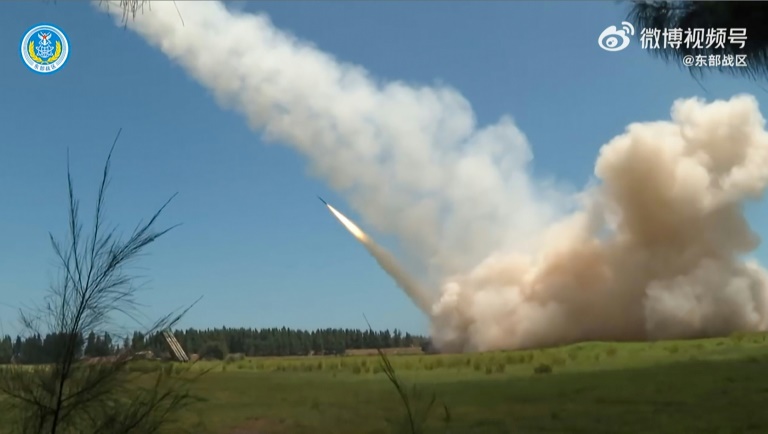
It has since Thursday encircled the self-ruled, democratic island with a series of huge military drills that have been roundly condemned by the United States and other Western allies.

And Friday saw its foreign ministry hit back further against the United States, suspending talks and cooperation on multiple agreements between the two — including on climate change.

The world’s two largest polluters last year pledged to work together to accelerate climate action this decade, and vowed to meet regularly to “address the climate crisis”.

But that deal now looks shaky in light of China’s latest move.

Raising the alarm, UN Secretary-General Antonio Guterres warned the two superpowers must continue to work together — for the world’s sake.

“For the secretary-general there is no way to solve the most pressing problems of all the world without an effective dialogue and cooperation between the two countries,” Guterres’ spokesman Stephane Dujarric told reporters.

In Washington, the White House summoned China’s ambassador to condemn Beijing’s “irresponsible” behaviour over Taiwan, a senior US official said Friday.

Taiwan has also condemned Beijing’s response to the visit, with premier Su Tseng-chang calling for allies to push for de-escalation.

“(We) didn’t expect that the evil neighbour next door would show off its power at our door and arbitrarily jeopardise the busiest waterways in the world with its military exercises,” he told reporters.

Pelosi — who Beijing also hit with sanctions — has defended her trip to Taiwan, saying Friday that Washington would “not allow” China to isolate the island.

– ‘Our motherland is powerful’ –

Beijing has said its military exercises will continue until midday Sunday, and Taipei reported that 68 Chinese planes and 13 warships crossed the “median line” that runs down the Taiwan Strait on Friday.

AFP journalists on the Chinese island of Pingtan saw a fighter jet flying overhead, prompting tourists to snap photos.

A Chinese military vessel sailing through the Taiwan Strait was also visible, they added.

China’s drills involved a “conventional missile firepower assault” in waters east of Taiwan, the Chinese military said. 

And state broadcaster CCTV reported that Chinese missiles flew directly over Taiwan — a major escalation if confirmed.

On Pingtan, local tourists proudly extolled Beijing’s military might against its much smaller neighbour.

“Our motherland is powerful. We are not afraid of having war with Taiwan, the US or any country in the world,” Liu, a 40-year-old tourist from Zhejiang province, told AFP.

“We hope to unify Taiwan soon,” he added. “We don’t want to start a war, but we are not afraid of others.”

Wang, a businesswoman, was more sanguine about prospects for cross-strait ties.

“I hope China can unify Taiwan, but I don’t want war,” she said. “I hope this issue can be solved in a peaceful way.”

– ‘Significant escalation’ –

The scale and intensity of China’s drills have triggered outrage in the United States and other democracies.

“These provocative actions are a significant escalation,” US Secretary of State Antony Blinken said after talks with Southeast Asian foreign ministers at an ASEAN summit in Phnom Penh.

“The fact is, the speaker’s visit was peaceful. There is no justification for this extreme, disproportionate and escalatory military response,” he added.

China’s foreign minister countered by warning Washington not to escalate tensions.

“America’s habit is to create a problem and then use this problem to achieve its goals. But this approach will not work with China,” Wang Yi told a press conference on the summit sidelines.

“We want to issue a warning to the US not to act rashly and not to create a bigger crisis.”

Japan has lodged a formal diplomatic complaint against Beijing, with five of China’s missiles believed to have landed in its exclusive economic zone. 

On Friday, Japan’s foreign ministry said China cancelled a planned bilateral meeting on the ASEAN summit sidelines. 

And Australia — which has a troubled relationship with China, its largest trading partner — condemned the drills as “disproportionate and destabilising”.

The manoeuvres are taking place along some of the world’s busiest shipping routes, used to disseminate the global supply of vital semiconductors and electronic equipment produced in East Asia.

Stocks fall after US jobs growth surges

Stock markets slid Friday as a much stronger-than-expected US jobs report raised the prospect that the Federal Reserve will maintain its aggressive monetary policy to combat inflation.

Official data published Friday showed the US economy added 528,000 positions, defying all expectations of a slowdown.

Friday’s data also showed US wages jumped, which will add to inflation concerns and likely push the Fed to raise rates aggressively again next month.

The Fed has previously said its decision will be guided by data.

Markets fell after the “absolutely monster” jobs report “with wages also up strongly” leaves “the Fed with all the ammo it needs to keep on hiking a lot more”, Markets.com analyst Neil Wilson told AFP.

“Those betting on the Fed relenting soon have been caught out by today’s report,” he added.

Wall Street stocks were lower with the Dow and S&P falling 0.4 percent and 0.8 percent respectively, while the tech-heavy Nasdaq Composite was down nearly 1.3 percent after 1530 GMT.

The dollar gained against other major currencies.

Officials have said the US economy remains healthy despite four-decade high inflation and a sharp lift in borrowing costs.

The jobs data “make a mockery of claims that the economy is on the brink of recession”, said Michael Pearce, senior US economist at Capital Economics, said.

“All the details appear to support continued aggressive rate hikes from the Fed,” he said in a note.

In Europe, London equities ended the day down 0.1 percent one day after the Bank of England unveiled a half-point interest rate hike and forecast UK inflation topping 13 percent on surging domestic energy bills.

The BoE’s rate increase followed more aggressive monetary policy from the European Central Bank and the Fed as authorities crack down on rampant inflation in the wake of Russia’s invasion of Ukraine.

Back in the eurozone, Frankfurt stocks slipped 0.6 percent and Paris also sank 0.6 percent at the close of trading.

– ‘Stagflation awaits’ –

“The dire warnings from the BoE are impossible to ignore as other central banks desperately try to avoid a similar fate,” OANDA analyst Craig Erlam told AFP.

“It seems only a matter of time until others are forced to accept that a recession is the price to pay for getting inflation under control.”

He added: “A period of stagflation now awaits the UK — and others may not be far behind as the crushing impact of energy prices wreaks havoc on living standards and saps demand.”

Stagflation is a toxic mixture of stubbornly high consumer prices and low economic growth.

India’s central bank on Friday lifted borrowing costs for the third time in four months to the highest level since summer 2019.

Asian equities mostly rose Friday, with Taipei surging on easing concerns over a conflict with Beijing — even as China conducts its largest-ever military exercises around Taiwan in response to US House Speaker Nancy Pelosi’s visit earlier this week.

Oil prices rose later Friday, one day after WTI crude fell to the level where it had stood before the Ukraine conflict sent the market soaring. 

– Key figures at around 1530 GMT –

New York – Dow: DOWN 0.4 percent at 32,592.91 points

EURO STOXX 50: DOWN 0.5 percent at 3,641.20

London – FTSE 100: DOWN 0.1 percent at 7,439.74 (close)

Frankfurt – DAX: DOWN 0.6 percent at 13,573.93 (close)

Paris – CAC 40: DOWN 0.6 percent at 6,472.35 (close)

Tokyo – Nikkei 225: UP 0.9 percent at 28,175.87 (close)

Hong Kong – Hang Seng Index: UP 0.1 percent at 20,201.94 (close)

Shanghai – Composite: UP 1.2 percent at 3,227.03 (close)

Euro/dollar: DOWN at $1.0154 from $1.0246 Thursday

Pound/dollar: DOWN at $1.2045 from $1.2160

Euro/pound: UP at 84.28 pence from 84.26 pence

Dollar/yen: UP at 135.38 yen from 132.89 yen

Brent North Sea crude: UP 1.7 percent at $95.75 per barrel

West Texas Intermediate: UP 1.7 percent at $90.05 per barrel

burs-raz/pvh

Stocks fall after US jobs growth surges

Stock markets slid Friday as a much stronger-than-expected US jobs report raised the prospect that the Federal Reserve will maintain its aggressive monetary policy to combat inflation.

Official data published Friday showed the US economy added 528,000 positions, defying all expectations of a slowdown.

Friday’s data also showed US wages jumped, which will add to inflation concerns and likely push the Fed to raise rates aggressively again next month.

The Fed has previously said its decision will be guided by data.

Markets fell after the “absolutely monster” jobs report “with wages also up strongly” leaves “the Fed with all the ammo it needs to keep on hiking a lot more”, Markets.com analyst Neil Wilson told AFP.

“Those betting on the Fed relenting soon have been caught out by today’s report,” he added.

Wall Street stocks were lower with the Dow and S&P falling 0.4 percent and 0.8 percent respectively, while the tech-heavy Nasdaq Composite was down nearly 1.3 percent after 1530 GMT.

The dollar gained against other major currencies.

Officials have said the US economy remains healthy despite four-decade high inflation and a sharp lift in borrowing costs.

The jobs data “make a mockery of claims that the economy is on the brink of recession”, said Michael Pearce, senior US economist at Capital Economics, said.

“All the details appear to support continued aggressive rate hikes from the Fed,” he said in a note.

In Europe, London equities ended the day down 0.1 percent one day after the Bank of England unveiled a half-point interest rate hike and forecast UK inflation topping 13 percent on surging domestic energy bills.

The BoE’s rate increase followed more aggressive monetary policy from the European Central Bank and the Fed as authorities crack down on rampant inflation in the wake of Russia’s invasion of Ukraine.

Back in the eurozone, Frankfurt stocks slipped 0.6 percent and Paris also sank 0.6 percent at the close of trading.

– ‘Stagflation awaits’ –

“The dire warnings from the BoE are impossible to ignore as other central banks desperately try to avoid a similar fate,” OANDA analyst Craig Erlam told AFP.

“It seems only a matter of time until others are forced to accept that a recession is the price to pay for getting inflation under control.”

He added: “A period of stagflation now awaits the UK — and others may not be far behind as the crushing impact of energy prices wreaks havoc on living standards and saps demand.”

Stagflation is a toxic mixture of stubbornly high consumer prices and low economic growth.

India’s central bank on Friday lifted borrowing costs for the third time in four months to the highest level since summer 2019.

Asian equities mostly rose Friday, with Taipei surging on easing concerns over a conflict with Beijing — even as China conducts its largest-ever military exercises around Taiwan in response to US House Speaker Nancy Pelosi’s visit earlier this week.

Oil prices rose later Friday, one day after WTI crude fell to the level where it had stood before the Ukraine conflict sent the market soaring. 

– Key figures at around 1530 GMT –

New York – Dow: DOWN 0.4 percent at 32,592.91 points

EURO STOXX 50: DOWN 0.5 percent at 3,641.20

London – FTSE 100: DOWN 0.1 percent at 7,439.74 (close)

Frankfurt – DAX: DOWN 0.6 percent at 13,573.93 (close)

Paris – CAC 40: DOWN 0.6 percent at 6,472.35 (close)

Tokyo – Nikkei 225: UP 0.9 percent at 28,175.87 (close)

Hong Kong – Hang Seng Index: UP 0.1 percent at 20,201.94 (close)

Shanghai – Composite: UP 1.2 percent at 3,227.03 (close)

Euro/dollar: DOWN at $1.0154 from $1.0246 Thursday

Pound/dollar: DOWN at $1.2045 from $1.2160

Euro/pound: UP at 84.28 pence from 84.26 pence

Dollar/yen: UP at 135.38 yen from 132.89 yen

Brent North Sea crude: UP 1.7 percent at $95.75 per barrel

West Texas Intermediate: UP 1.7 percent at $90.05 per barrel

burs-raz/pvh

Relatives of trapped Mexican miners pray for miracle

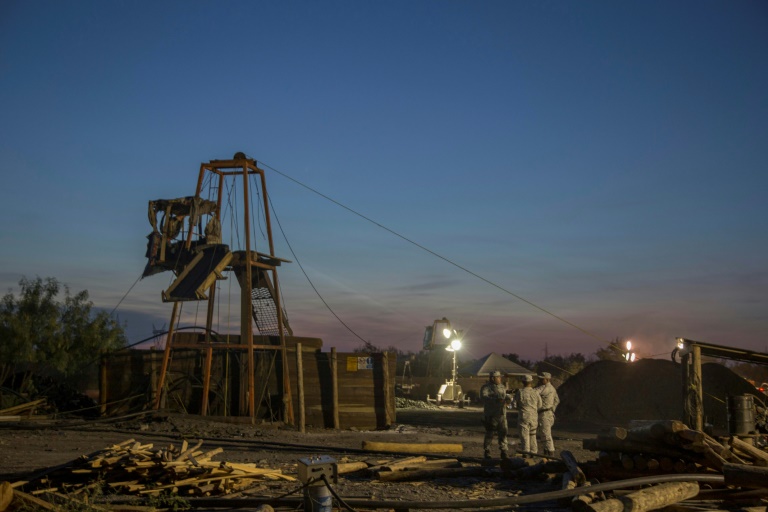
Relatives of 10 workers trapped in a flooded coal mine in northern Mexico clung to hope they were still alive Friday, nearly 48 hours after a cave-in sparked a major rescue operation.

Family members spent a second night waiting anxiously for news after the latest disaster to strike Mexico’s main coal-producing region in Coahuila state.

“I feel desperate, not knowing what’s happening and when I’ll see him again,” said Jesus Mireles Romo, whose father was among the missing.

“But I have faith that it will turn out well, that they will all get out,” he told AFP, his eyes red from crying.

The 24-year-old rushed to the mine in Agujita in the municipality of Sabinas with his two brothers on Wednesday to try to help the victims before the authorities took over, and has not left since.

“It’s painful to see your children who don’t lose hope of seeing their father again,” said his mother Claudia Romo, 45.

Five miners managed to escape in the initial aftermath of the cave-in Wednesday, but since then no survivors have been found.

Around 230 army and other government personnel were sent to the site, about 1,130 kilometers (700 miles) north of Mexico City, the defense ministry said.

– ‘Working tirelessly’ –

Soldiers and emergency workers worked through the night under floodlights pumping out water from the mine to try to make it safe enough to enter.

Authorities said the three mine shafts descended 60 meters (200 feet) and the floodwater inside was 30 meters deep — slightly lower than the day before.

“It’s essential to reduce the water level … to allow the safe entry of specialized search and rescue personnel,” civil defense national coordinator Laura Velazquez said.

“We’re working tirelessly to rescue the 10 trapped miners,” she said.

Family members cried and comforted each other while hopes of finding survivors dimmed with each passing hour.

“What we want is for them to retrieve the bodies,” Angelica Montelongo said with a sad and tired look, before summoning up new hope that her brother Jaime would be rescued.

“But hey, God willing, right? You have to have faith that they’re alive,” she said.

Experts and relatives painted a picture of a precarious profession fraught with risks extracting coal from the mines with lax safety standards.

“There’s always job insecurity… and danger,” said Blasa Maribel Navarro, whose cousin Sergio Cruz has mined coal for several years to support his two daughters.

Navarro said she was still hopeful of seeing him alive “because we trust in God.”

– History of accidents –

Crudely constructed mines like the one that collapsed lack concrete reinforcements to protect workers from a cave-in, engineering expert Guillermo Iglesias said.

The miners “dig a shaft two meters in circumference and keep digging until they reach a small layer of coal,” he told local radio.

The only thing supporting the surrounding earth is usually a large plastic tube through which the workers enter, he added.

Coahuila’s state government said the miners had been carrying out excavation work when they hit an adjoining area full of water, causing the shaft to collapse and flood.

Coahuila has seen a series of fatal mining accidents over the years.

Last year, seven miners died when they were trapped in the region.

The worst accident was an explosion that claimed 65 lives at the Pasta de Conchos mine in 2006.

Only two bodies were retrieved after that tragedy and the families have repeatedly urged the Mexican authorities to recover them.

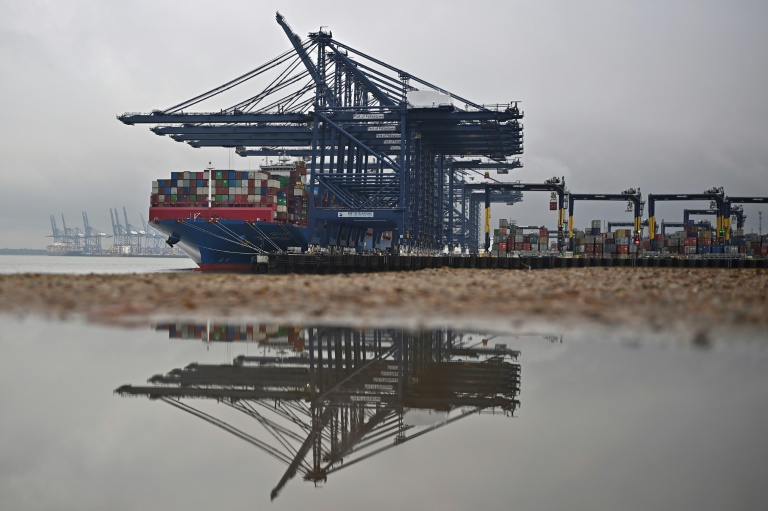
UK's busiest container port set for 8-day strike

Workers at the UK’s largest container port will hold an eight-day strike at the end of August, union bosses said Friday, in the country’s latest industrial action over pay amid spiralling inflation.

“Workers at the port of Felixstowe will begin strike action later this month in a dispute over pay after peace talks… failed to produce a reasonable offer,” the Unite union said in a statement.

Over 1,900 workers will hold eight days of strikes from August 21 until August 29, it added.

The union said port operator, the Felixstowe Dock and Railway Company, had “failed to improve on its offer of a seven per cent pay increase,” with inflation predicted to hit 13 percent later this year.

“Felixstowe docks and its parent company CK Hutchison Holdings Ltd are both massively profitable and incredibly wealthy. They are fully able to pay the workforce a fair day’s pay,” said Unite general secretary Sharon Graham.

Felixstowe, in east England, is the UK’s largest container port and handles 48 percent of containers brought into the country.

“Strike action will cause huge disruption and will generate massive shockwaves throughout the UK’s supply chain, but this dispute is entirely of the company’s own making,” said Unite’s national officer for docks, Bobby Morton.

The UK is mired in disputes over pay and conditions, with economic headwinds set to strengthen later this year.

Hundreds of workers at an Amazon warehouse in the UK downed tools Thursday in protest over a pay rise offer of 35 pence (41 euro cents, 42 US cents) per hour.

The GMB trade union said staff at the warehouse in Tilbury, southeast England, are seeking a £2-an-hour rise to help them deal with the cost-of-living crisis.

Train workers recently brought the country’s network to a virtual standstill when they held their biggest walkouts in three decades.

Gases from Iceland's volcano threaten nearby village

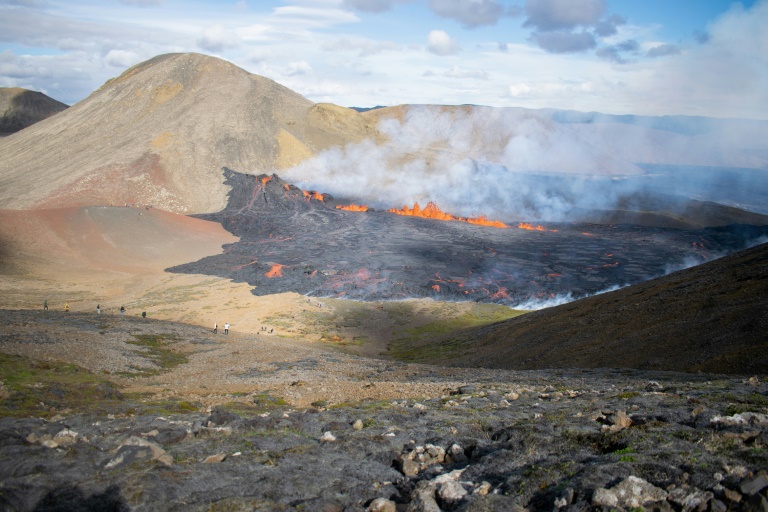
Noxious gases from an Icelandic volcano threaten to pollute the air of a nearby village and risk spreading to the capital Reykjavik, the Icelandic Meteorological Office (IMO) said on Friday.

The weather agency said it expected particularly heavy gas pollution in Vogar, a village of some 1,000 inhabitants about five kilometres (three miles) northeast of Fagradalsfjall, the uninhabited valley where the volcano is located.

It said the pollution could reach Reykjavik, 40 kilometres from the volcano, by Saturday.

Concentrations of sulphur dioxide could reach up to 2,600 microgrammes per cubic metre, a level considered “unhealthy for the sensitive”, according to the Environment Agency of Iceland. 

But the IMO warned that their models were uncertain since the “flow from the eruption is very uneven”.

The warning came after measurements showed that activity had halved at the volcanic fissure, which has been spewing glowing lava since Wednesday, and that the length of the crack had shrunk from an initial 360 metres (1,181 feet) to around 130 metres.

Although more powerful than a previous eruption in the same area last year, the initial lava flow of around 32 cubic metres (1,130 cubic feet) per second had decreased by the second day to around 18 cubic metres per second, according to an assessment published late on Thursday.

“This behaviour is very similar to what is usually observed during eruptions in the country — the eruption is powerful at the beginning and then subsides,” the Institute of Earth Sciences said in a statement.

The field of lava from the eruption covered 144,000 square metres on Thursday. 

“The (lava) flow is strongest in the middle of (the fissure) and there are indications that it may extend northwards,” authorities warned.

The pressure in the tunnel feeding the eruption is not balanced, which geophysicists say could lead to a new eruption at a new location. 

“New fissures can open in the immediate vicinity of the eruption site with little notice,” the IMO said.

Visitors have flocked to the eruption in record numbers to marvel at the flow of lava.

According to authorities, more than 4,200 people walked the 14-kilometre round trip to the site on the Reykjanes peninsula in southwest Iceland on Thursday, about two hours from the nearest car park. 

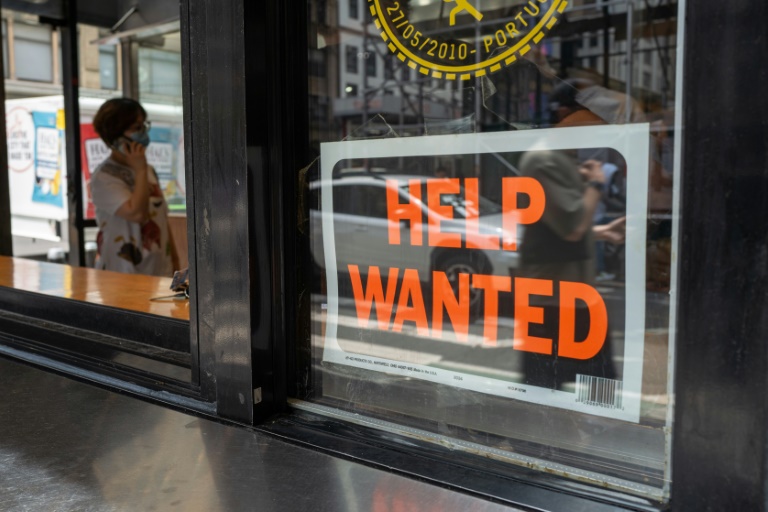
Surprise US job surge lifts employment back to pre-Covid levels

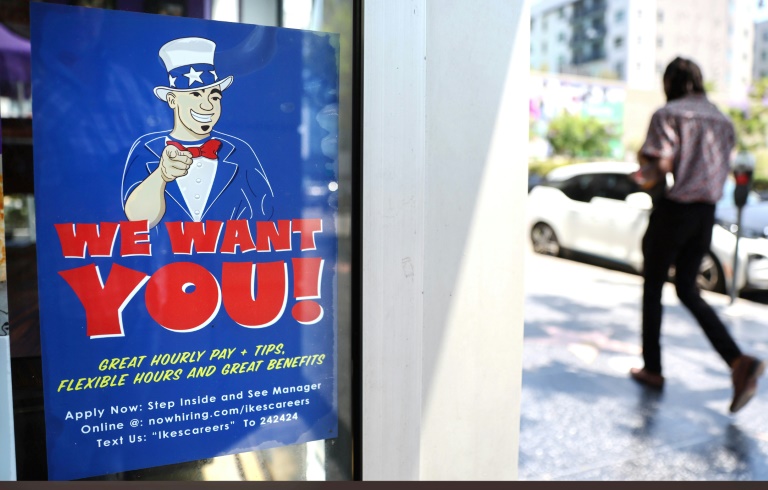
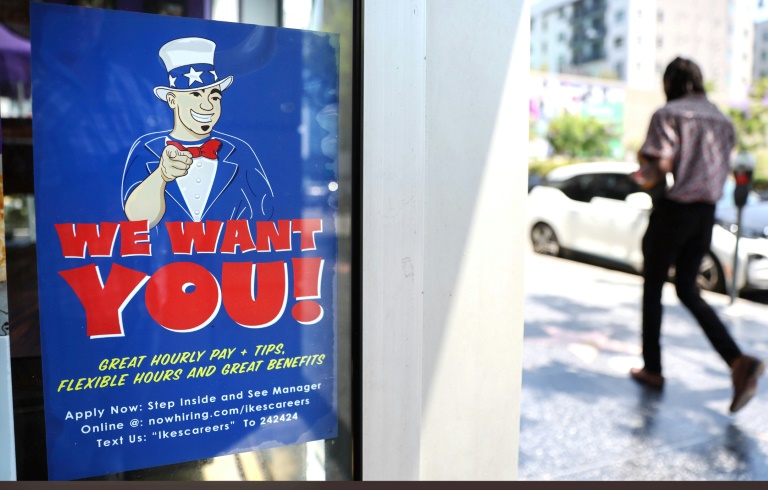
The US jobs market grew much faster than expected in July, lifting employment back to pre-pandemic levels, in news welcomed by President Joe Biden as he faces tough midterm elections — but which also fuels concerns over sky-high inflation.

Even the White House had predicted job gains would slow last month, which Biden had said was part of the natural downshift after the rapid rebound of the world’s largest economy from the pandemic downturn.

Instead, US job growth jumped in July, as the economy added a surprising 528,000 positions, more than double what economists were expecting, according to official data released Friday. That took the jobless rate back to the pre-pandemic level of February 2020.

“Today, the unemployment rate matches the lowest it’s been in more than 50 years: 3.5%,” Biden said in a statement.

“More people are working than at any point in American history … there’s more work to do, but today’s jobs report shows we are making significant progress for working families.”

On top of the hiring surge last month, the Labor Department report said the outsized job gain in June was revised higher, as was May, adding a total 28,000 positions to the initial data.

Meanwhile, the closely-watched report showed wages jumped in July — with average hourly earnings up 15 cents from June — stoking concerns about a possible wage-price spiral. Over the past 12 months, average hourly earnings have increased by 5.2 percent.

That’s good for families struggling to make ends meet as they face soaring prices for groceries and gas, but could drive firms to raise prices further.

With inflation topping nine percent, the highest in more than 40 years, the Federal Reserve has been raising interest rates aggressively to cool the economy, and economists now say a third consecutive three-quarter-point hike is likely in September.

– ‘Wow’ –

After recent data showed GDP contracted for the second consecutive quarter — causing many to say the economy is in recession — US stocks had been gaining ground due to investor optimism that the Fed would be able to dial back its inflation-fighting efforts.

But Wall Street opened sharply lower following the jobs report, amid concerns about coming rate hikes.

With the latest increase, total non-farm employment recovered to its pre-pandemic level, the data showed, and hiring topped 430,000 in the past three months.

KPMG economist Diane Swonk’s initial reaction: “Wow.”

“This report pushes the Fed towards a 75 basis point move AGAIN in September,” she said on Twitter.

From zero at the start of the year, the Fed has raised the benchmark borrowing rate four times, and pledged to continue its war on inflation.

And central bankers this week have made it clear that investor optimism about a possible downshift was misplaced.

“Recession is now less of a worry. Inflation is more of a worry,” Harvard economist Jason Furman tweeted. “The Fed will likely need to do more.”

The central bank will get two more employment reports and multiple inflation reports before its next policy meeting in mid-September.

While employers for months have been struggling to find workers — with nearly two open positions for every unemployed person in the work force — job gains have continued.

Hiring was robust in leisure and hospitality and health care, which each adding 96,000 or more in july, while manufacturing and construction gained at least 32,000.

Builders in particular have been under pressure as the struggle to meet high demand for construction, especially homes, but employment in the sector is now back to its pre-pandemic level, the report said.

But there were signs of strains as well. The number of people working part time for economic reasons, which dropped sharply in June, rebounded in July. And a growing number of workers are taking on second jobs, including 403,000 with two full-time positions.

The share of people in the labor force has been stuck at around 62 percent, and some economists are pointing to the impact of long-Covid, which is keeping potential workers on the sidelines.

Kathryn Bach of the Brookings Institution said she believes there could be as many as four million people prevented from working due to the effects of Covid-19.

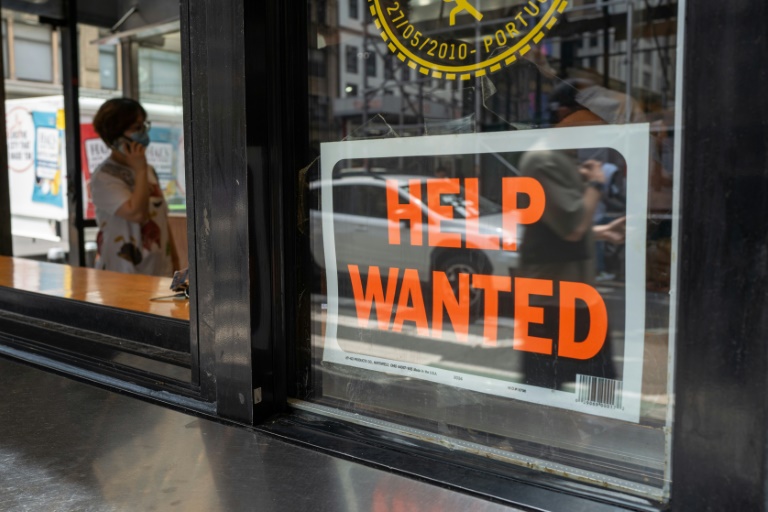
Surprise US job surge lifts employment back to pre-Covid levels

The US jobs market grew much faster than expected in July, lifting employment back to pre-pandemic levels, in news welcomed by President Joe Biden as he faces tough midterm elections — but which also fuels concerns over sky-high inflation.

Even the White House had predicted job gains would slow last month, which Biden had said was part of the natural downshift after the rapid rebound of the world’s largest economy from the pandemic downturn.

Instead, US job growth jumped in July, as the economy added a surprising 528,000 positions, more than double what economists were expecting, according to official data released Friday. That took the jobless rate back to the pre-pandemic level of February 2020.

“Today, the unemployment rate matches the lowest it’s been in more than 50 years: 3.5%,” Biden said in a statement.

“More people are working than at any point in American history … there’s more work to do, but today’s jobs report shows we are making significant progress for working families.”

On top of the hiring surge last month, the Labor Department report said the outsized job gain in June was revised higher, as was May, adding a total 28,000 positions to the initial data.

Meanwhile, the closely-watched report showed wages jumped in July — with average hourly earnings up 15 cents from June — stoking concerns about a possible wage-price spiral. Over the past 12 months, average hourly earnings have increased by 5.2 percent.

That’s good for families struggling to make ends meet as they face soaring prices for groceries and gas, but could drive firms to raise prices further.

With inflation topping nine percent, the highest in more than 40 years, the Federal Reserve has been raising interest rates aggressively to cool the economy, and economists now say a third consecutive three-quarter-point hike is likely in September.

– ‘Wow’ –

After recent data showed GDP contracted for the second consecutive quarter — causing many to say the economy is in recession — US stocks had been gaining ground due to investor optimism that the Fed would be able to dial back its inflation-fighting efforts.

But Wall Street opened sharply lower following the jobs report, amid concerns about coming rate hikes.

With the latest increase, total non-farm employment recovered to its pre-pandemic level, the data showed, and hiring topped 430,000 in the past three months.

KPMG economist Diane Swonk’s initial reaction: “Wow.”

“This report pushes the Fed towards a 75 basis point move AGAIN in September,” she said on Twitter.

From zero at the start of the year, the Fed has raised the benchmark borrowing rate four times, and pledged to continue its war on inflation.

And central bankers this week have made it clear that investor optimism about a possible downshift was misplaced.

“Recession is now less of a worry. Inflation is more of a worry,” Harvard economist Jason Furman tweeted. “The Fed will likely need to do more.”

The central bank will get two more employment reports and multiple inflation reports before its next policy meeting in mid-September.

While employers for months have been struggling to find workers — with nearly two open positions for every unemployed person in the work force — job gains have continued.

Hiring was robust in leisure and hospitality and health care, which each adding 96,000 or more in july, while manufacturing and construction gained at least 32,000.

Builders in particular have been under pressure as the struggle to meet high demand for construction, especially homes, but employment in the sector is now back to its pre-pandemic level, the report said.

But there were signs of strains as well. The number of people working part time for economic reasons, which dropped sharply in June, rebounded in July. And a growing number of workers are taking on second jobs, including 403,000 with two full-time positions.

The share of people in the labor force has been stuck at around 62 percent, and some economists are pointing to the impact of long-Covid, which is keeping potential workers on the sidelines.

Kathryn Bach of the Brookings Institution said she believes there could be as many as four million people prevented from working due to the effects of Covid-19.

Close Bitnami banner
Bitnami