AFP

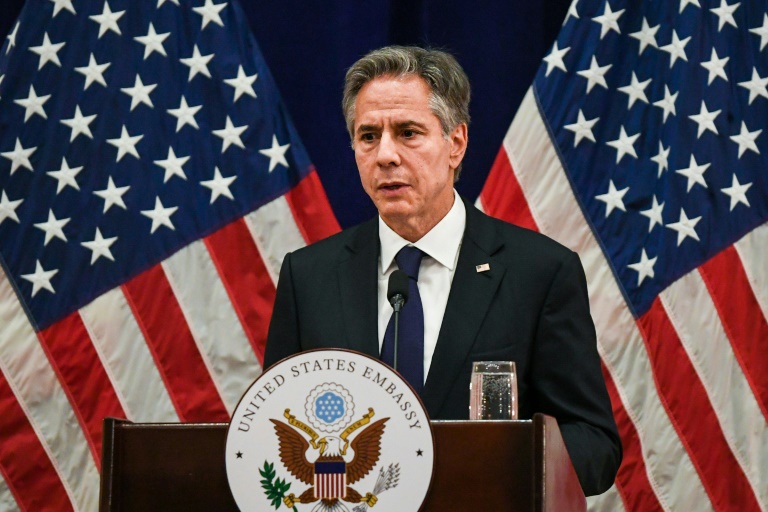
Albert Woodfox, Black Panther who spent 43 years in solitary, dies

Albert Woodfox, a former member of the Black Panthers who spent a record 43 years in solitary confinement for a murder he claimed he did not commit, has died at the age of 75.

Woodfox, who was released from prison in February 2016, died in New Orleans, Louisiana, on Thursday of complications from Covid-19, his lawyer, George Kendall, said.

Woodfox and Herman Wallace, another African American inmate at the notorious Louisiana State Penitentiary known as Angola, were convicted of the 1972 murder of a white prison guard, Brent Miller. Both men maintained their innocence.

Woodfox, Wallace and another prisoner, Robert King, were dubbed the “Angola Three” and their cases drew international attention because of the long stretches they spent in solitary confinement.

The trio embraced the Black Panther militant movement while serving time for lesser crimes and said they were targeted by prison officials because they spoke out against inhumane treatment and racial segregation at the jail.

Woodfox, Wallace and King were confined to tiny cells for 23 hours a day at the prison built on the site of a former plantation worked by slaves from Africa.

Woodfox, who was serving time for armed robbery at the time of the murder of the prison guard, spent a total of 43 years and 10 months in solitary, believed to be more than any other US inmate ever.

King spent 29 years in solitary until his conviction for a separate prison murder was overturned in 2001 and he was released.

Wallace, who was suffering from liver cancer, was freed in 2013 and died just three days after his release.

Woodfox became a champion for prison reform following his release and published a book, “Solitary,” in 2019 that was nominated for a Pulitzer Prize and a National Book Award.

Lightning strike near White House kills two people

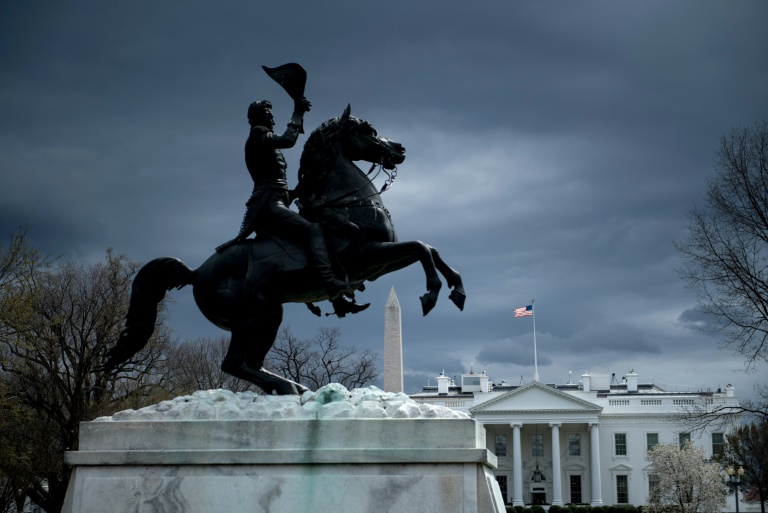
A man and woman in their late seventies were pronounced dead, and two others remained in critical condition Friday, after being struck by lightning in a park near the White House as a severe storm swept through the US capital.

The lightning hit Lafayette Square, a small park across the street from the White House, shortly before 7:00 pm (2300 GMT) Thursday, leaving two men and two women with “critical life-threatening injuries,” according to a statement from Washington’s fire and emergencies department.

All the victims were taken to local hospitals, but on Friday morning the Metropolitan Police confirmed that two of them — 75-year-old Donna Mueller and 76-year-old James Mueller, both from Janesville in Wisconsin — had been pronounced dead. 

The other two adults remain in critical condition, police said.

A White House spokeswoman said the Biden administration was “saddened by the tragic loss of life.”

“We are praying for those still fighting for their lives,” added Press Secretary Karine Jean-Pierre in a statement.

US Secret Service and park police rushed to help the four after witnessing the strike, fire and emergency services department spokesman Vito Maggiolo said in a statement posted on social media.

The victims had apparently sought shelter from the storm under one of the park’s trees.

“Trees are not safe places,” Maggiolo told the Washington Post. “Anybody that goes to seek shelter under a tree, that’s a very dangerous place to be.”

Photos posted by the department on social media showed multiple ambulances and at least one fire truck with flashing lights working at the scene.

Witness David Root told NBC he heard a “horrific boom.”

“I just couldn’t believe it,” he was quoted as saying. “Was surreal. I have never seen anything like this in my entire life.”

He said he had also been sheltering beneath a tree when he saw the lightning strike across the park. 

The people “weren’t moving,” he said, so he and others ran over to give help.

The Washington Post said the four were found some 100 feet from the statue of former US president Andrew Jackson which marks the center of the square.

The strike was part of a severe thunderstorm that hit the American capital on Thursday evening.

According to the US weather service, lightning killed an average of 27 people per year in the United States over the past decade.

Only about 10 percent of people struck by lightning are killed — typically from cardiac arrest — but many are left with lasting disability including neurological damage.

'Synthetic embryo' breakthrough but growing human organs far off

Stem cell scientists say they have created “synthetic embryos” without using sperm, eggs or fertilisation for the first time, but the prospect of using such a technique to grow human organs for transplantation remains distant.

The breakthrough was hailed as a major step forward, though some experts said the result could not fully be considered to be embryos and warned of future ethical considerations.

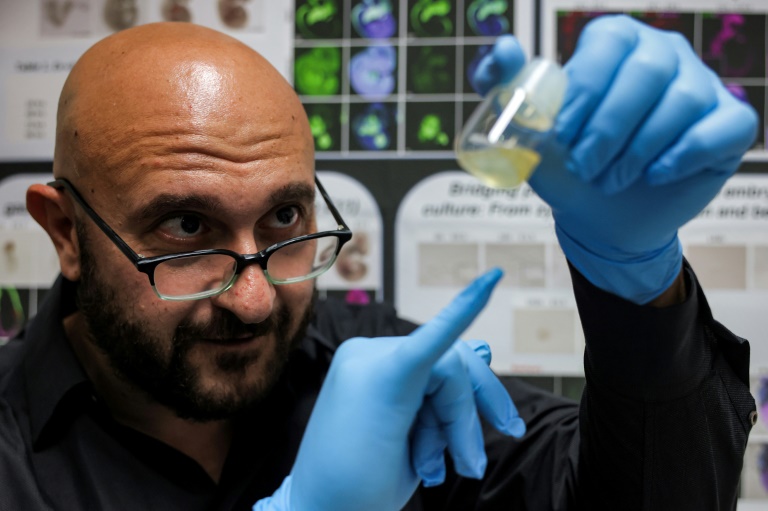
In research published in the journal Cell this week, scientists at the Weizmann Institute of Science in Israel said found a way to have mouse stem cells self-assemble into embryo-like structures in the lab.

They started by collecting cells from the skin of mice, then made them return to the state of stem cells.

The stem cells were then placed in a special incubator designed by the researchers, which continuously moved to mimic a mother’s womb.

The vast majority of the cells failed to form anything.

But 50 — 0.5 percent of the 10,000 total — collected themselves into spheres, then embryo-like structures, the researchers said.

After eight days — around a third of the 20-day mouse gestation period — there were early signs of a brain and a beating heart, they added.

They were described as 95-percent similar to normal mouse embryos.

– ‘Time will tell’ –

If human organs could one day be grown in a lab, the technique could provide life-saving transplants for thousands of people every year.

Stem cell scientist Jacob Hanna, who led the research, told AFP, “The big problem for transplantation is that you need to find a matching donor and the DNA is never identical to the patient.”

But using the new technique, one day scientists could take cells from a patient’s liver, for example, use them to make stem cells, grow a synthetic embryo then “transplant them back into the patient”, Hanna said.

“The cell will be made from the patient, so it will be the exact DNA — no need to find donors and there can be no rejection,” he added.

While they were the most advanced synthetic embryo-like structures ever grown, some scientists not involved in the research warned against calling them “embryos”.

“These are not embryos,” French stem cell scientist Laurent David told AFP.

He preferred to call them embryoids, the name for a group of cells that resemble an embryo.

However, David welcomed the “very convincing” research, which he said could allow further experiments to understand exactly how organs form.

Beyond organs, Hanna said the embryoids could also help identify new targets for drugs and potentially help find solutions for a range of issues such as pregnancy loss, infertility, endometriosis and preeclampsia.

“Time will tell,” he said.

Hanna, a Palestinian who led the research at the institute in Israel, said, “Science is my escape from the harsh reality I face while living in my homeland.”

“And I am one of the very ‘lucky’ ones,” he added.

The first author of the Cell study is a PhD student from the Palestinian enclave of Gaza, who needs a special permit regularly renewed to allow him to work at the institute in the Israeli city of Rehovot, Hanna said.

– Ethical implications –

Hanna has founded a company, Renewal Bio, that he said “will be focusing on testing potential clinical applications of human synthetic embryoids”.

He said they had ethical approval for such testing in Israel and it was legal in many other countries such as the US and UK.

“We should remember that synthetic embryos are embryoids and not real embryos and do not have the potential to become viable,” he said.

But researchers not involved in the study said it was very early to consider using such a technique for humans.

Alfonso Martinez Arias of Spain’s Pompeu Fabra University said the breakthrough “opens the door to similar studies with human cells, though there are many regulatory hoops to get through first and, from the point of view of the experiments, human systems lag behind mouse systems”.

And aiming to get similar results from human cells is likely to open an ethical can of worms.

“Although the prospect of synthetic human embryos is still distant, it will be crucial to engage in wider discussions about the legal and ethical implications of such research,” James Briscoe of Britain’s Francis Crick Institute said.

China scraps cooperation with US over Taiwan spat

China said Friday it was ending cooperation with the United States on a litany of key issues including climate change, anti-drug efforts and military talks, as relations between the two superpowers nosedive over Taiwan.

Beijing has reacted furiously to a visit by US House Speaker Nancy Pelosi to Taiwan, which it claims as its territory and has vowed to retake — by force if necessary.

It has since Thursday encircled the self-ruled, democratic island with a series of huge military drills that have been roundly condemned by the United States and other Western allies.

And Friday saw its foreign ministry hit back further against the United States, suspending talks and cooperation on multiple agreements between the two — including on climate change.

The world’s two largest polluters last year pledged to work together to accelerate climate action this decade, and vowed to meet regularly to “address the climate crisis”.

But that deal looks shaky as relations sink to some of their lowest levels in years, as do agreements on everything from talks on military matters to anti-drug cooperation.

Pelosi — who Beijing also hit with sanctions for the visit — has defended her trip to Taiwan, saying Friday that Washington would “not allow” China to isolate the island.

In Washington, the White House summoned China’s ambassador to Washington to condemn Beijing’s “irresponsible” behaviour over Taiwan, a senior US official said Friday.

Taiwan has also condemned Beijing’s response to the visit, with premier Su Tseng-chang calling for allies to push for de-escalation.

“(We) didn’t expect that the evil neighbour next door would show off its power at our door and arbitrarily jeopardise the busiest waterways in the world with its military exercises,” he told reporters.

– ‘Our motherland is powerful’ –

Beijing has said its military exercises will continue until midday Sunday, and Taipei reported that 68 Chinese planes and 13 warships crossed the “median line” that runs down the Taiwan Strait on Friday.

AFP journalists on the Chinese island of Pingtan saw a fighter jet flying overhead, prompting tourists to snap photos as it flew along the coast.

A Chinese military vessel sailing through the Taiwan Strait was also visible, they added.

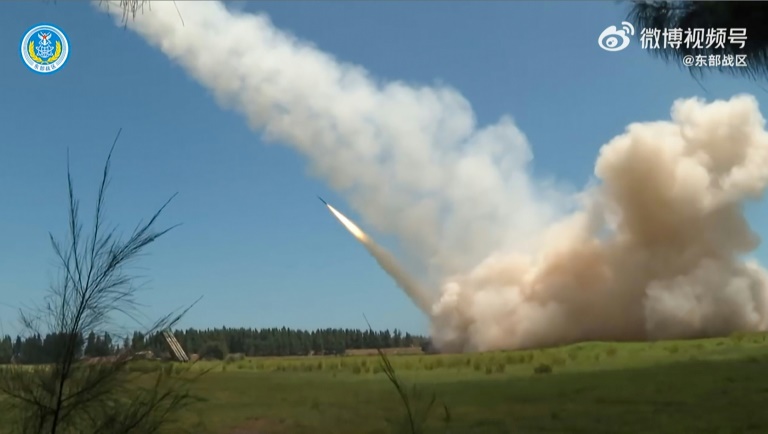
China’s drills involved a “conventional missile firepower assault” in waters to the east of Taiwan, the Chinese military said. 

And state broadcaster CCTV reported that Chinese missiles had flown directly over Taiwan — a major escalation if officially confirmed.

On the Chinese island of Pingtan, local tourists proudly extolled their country’s military might against its much smaller neighbour.

“Our motherland is powerful. We are not afraid of having war with Taiwan, the US or any country in the world,” Liu, a 40-year-old tourist from Zhejiang province, told AFP.

“We hope to unify Taiwan soon. We are not scared of anyone,” he added. 

“We don’t want to start a war, but we are not afraid of others.”

Wang, a businesswoman, was more sanguine about prospects for cross-strait ties.

“I hope China can unify Taiwan, but I don’t want war,” she said. “I hope this issue can be solved in a peaceful way.”

– ‘Significant escalation’ –

The scale and intensity of China’s drills have triggered outrage in the United States and other democracies.

“These provocative actions are a significant escalation,” US Secretary of State Antony Blinken said after talks with Southeast Asian foreign ministers at an ASEAN summit in Phnom Penh.

“The fact is, the speaker’s visit was peaceful. There is no justification for this extreme, disproportionate and escalatory military response,” he added.

China’s foreign minister countered with a warning for the United States, urging Washington not to escalate tensions.

“America’s habit is to create a problem and then use this problem to achieve its goals. But this approach will not work with China,” Wang Yi said at a press conference on the sidelines of the same summit.

“We want to issue a warning to the US not to act rashly and not to create a bigger crisis.”

Japan has lodged a formal diplomatic complaint against Beijing, with five of China’s missiles believed to have landed in its exclusive economic zone. 

On Friday, Japan’s foreign ministry said China “cancelled” a planned bilateral meeting on the sidelines of the ASEAN summit. 

And Australia — which has a troubled relationship with China, its largest trading partner — condemned the drills as “disproportionate and destabilising”.

The manoeuvres are taking place along some of the world’s busiest shipping routes, used to disseminate the global supply of vital semiconductors and electronic equipment produced in East Asia.

More grain leaves Ukraine ahead of high-stakes summit on Russian invasion

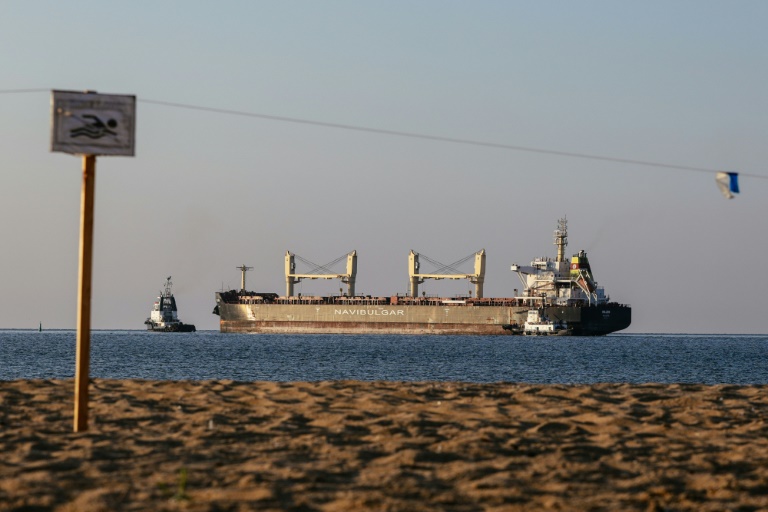
Three bulk carriers loaded with grain set sail from Ukraine on Friday under a landmark deal to free up shipments brokered by Turkey, as its leader met his Russian counterpart for talks on Moscow’s invasion of its neighbour.

Months of efforts by President Recep Tayyip Erdogan saw Moscow and Kyiv agree in Istanbul last month to resume the shipments from Ukrainian ports in a bid to relieve a global food crisis caused by the assault launched in February.

The government in Kyiv said on social media that two ships carrying Ukrainian maize — the Maltese-flagged Rojen and the Turkish Polarnet — had set off from Chornomorsk while the Panama-flagged Navistar departed from Odessa. 

As the vessels left, Erdogan was preparing with most of his top ministers for his second talks with President Vladimir Putin in 17 days and a working lunch in the Russian resort city of Sochi.

“I believe that (today’s meeting) will open a whole different page in Turkish-Russian relations,” the Turkish president said at the start of the talks, while Putin voiced hopes for a deal to boost “the development of our trade and economic ties.”

Putin also thanked Erdogan for helping orchestrate the resumption of Ukrainian grain shipments.

“Deliveries have already begun. I want to thank you, both for this and for the fact that at the same time an accompanying decision was made on uninterrupted supplies of Russian food and fertilisers to world markets,” Putin said.

The first ship from Ukraine crossed Istanbul on Wednesday, while the three latest deliveries were destined for Turkey and markets in Ireland and Britain.

European Council on Foreign Relations fellow Asli Aydintasbas wrote in a report last week that the war had “restored Turkey’s self-image as a key geopolitical player” give Erdogan a higher profile than at any time in recent years.

The Turkish leader wants to translate the success into truce talks in Istanbul between Putin and Ukrainian President Volodymyr Zelensky.

“We discussed if the grain agreement could be an occasion for a sustainable ceasefire,” Turkish Foreign Minister Mevlut Cavusoglu said after talks with Russian counterpart Sergei Lavrov in Asia this week.

– Extensive investigations –

The rare diplomatic breakthrough has been overshadowed in Ukraine, however, by a mushrooming controversy over accusations that the war-torn country is violating international law and endangering civilians in its defence against Russia’s invasion.

Amnesty International released a report Thursday listing incidents in 19 cities and towns where Ukrainian forces appeared to have put civilians in harm’s way by establishing bases in residential areas.

Zelensky equated the accusations to victim-blaming in an evening address in which he said the rights group had sought to offer “amnesty (to) the terrorist state and shift the responsibility from the aggressor to the victim”.  

“There is no condition, even hypothetically, under which any Russian strike on Ukraine becomes justified. Aggression against our state is unprovoked, invasive and terrorist,” he added.  

“If someone makes a report in which the victim and the aggressor are supposedly equal in some way… then this cannot be tolerated.”  

After a four-month investigation, Amnesty said it had found that the Ukrainian military had established bases in schools and hospitals, and launched attacks from populated areas, asserting that the tactics violated international humanitarian law. 

It pushed back against criticism of its report Friday, saying the group “fully stands by our research.” 

“The findings… were based on evidence gathered during extensive investigations which were subject to the same rigorous standards and due diligence processes as all of Amnesty International’s work,” Secretary General Agnes Callamard told AFP in emailed comments.

– Counter-offensive –

On Friday, the Ukrainian presidency and local authorities reported Russian bombardments overnight targeting the southern city of Mykolaiv with widely-banned cluster bombs and heavy artillery — wounding 20 people, including a 14-year-old boy.

Mykolaiv — which has been attacked frequently — is on the main route to Odessa, Ukraine’s biggest port on the Black Sea, and is the closest city to the southern front. 

The regional regional governor Vitaliy Kim ordered a curfew from 11:00 pm (2000 GMT) on Friday until 5:00 am (0200 GMT) on Monday, appealing to locals to “plan the weekend and make purchases for these two days.”

“Honest people have nothing to worry about — just keep your documents with you,” the governor said on social media platform Telegram.

Several towns and villages in the east, including Nikopol and Kryvyi Rig, were also hit by shelling that damaged houses and a gas station.

Several missiles struck the central city of Zaporizhzhia overnight, where Moscow has been accused of storing heavy weapons at Europe’s largest nuclear power plant in occupied Ukrainian territory.

There was also heavy bombardment of Ukraine’s second city Kharkiv, in the northeast, where housing, shops, a market and an educational institution were damaged.

Ukrainian forces are conducting a counter-offensive in the country’s south, where they claim to have retaken more than 50 villages previously controlled by Moscow.

They also claimed to have liberated two villages in the eastern Donetsk region on Thursday and one near Kharkiv on Friday. 

Blinken meets Cambodian opposition leader

US Secretary of State Antony Blinken met a Cambodian opposition leader facing treason charges during a visit to Phnom Penh Friday, expressing concern about the kingdom’s eroding democracy ahead of elections next year.

One of the world’s longest-serving leaders, Prime Minister Hun Sen has ruled Cambodia for more than 37 years. In 2018 his party won every seat in a national election.

And in June, a Phnom Penh court convicted about 60 opposition figures — including dual US-Cambodian citizen Theary Seng — in a mass treason trial that rights groups have condemned as politically motivated.

Blinken said he directly expressed concerns about the kingdom’s ailing democracy during talks with Hun Sen, while visiting the Cambodian capital for the Association of South East Nations (ASEAN) foreign ministers’ meeting.

Allowing broader participation in the political system would strengthen the country, the secretary of state told reporters Friday.

“One of the things that stands in the way of strengthening the relationship between our countries are our concerns about eroding respect for human rights and democratic institutions here in Cambodia,” he said.

Washington’s top diplomat said that earlier Friday he met Cambodian opposition leader Kem Sokha, who is on trial for treason in a case that has dragged on since January 2020 — and which could effectively rule him out of next year’s national election.

During talks with Hun Sen, Blinken also raised the case of Theary Seng. The outspoken lawyer and campaigner was hit with a six-year jail term in June’s treason case.

Hun Sen and his ruling party have publicly backed the prime minister’s eldest son — currently commander of the army — to eventually take the reins.

Ahead of local elections two months ago, the United Nations Human Rights Office said it was disturbed by reports of opposition obstruction in a “paralysing political environment”.

Hun Sen’s political party later announced a landslide win.

Japan’s foreign minister Yoshimasa Hayashi also raised concerns about Cambodia’s democracy with Hun Sen during his bilateral talks on the sidelines of the ASEAN meeting.

Japan hopes Cambodia’s election next year is a “reflection of the diverse voices of the Cambodian people”, Japanese foreign ministry official Yasuhiro Tsukamoto told reporters in an online briefing.

Drought-hit Mont Blanc shuts shelters to dissuade hikers

Authorities in the French Alps said Friday they had closed down two popular mountain shelters used by Mont Blanc climbers because of potentially deadly drought-related rockfalls.

In a year marked by drought and heatwaves, rockfalls and gaping crevices have made access to the top of Mont Blanc, western Europe’s highest mountain, even more difficult and perilous.

The mayor’s office in the Mont Blanc village of Saint-Gervais, said climbers were in “mortal danger” from rocks and shards coming loose because of dry weather and dropping from a height.

“All day long, we still see climbers going on the mountain range, all the time, as if this was Disneyland or the Parc Asterix,” said Saint-Gervais mayor Jean-Marc Peillex, in reference to two popular theme parks near Paris.

Hikers had been advised since last month to stay away because of the danger, but “they just don’t give a damn,” he told AFP. 

The closure of the two mountain shelters — Gouter with 120 overnight spots and Tete Rousse with 74, as well as a base camp accommodating up to 50 people — was to “show clearly that there is no accommodation available”.

The authorities had warned for weeks that falling rocks were a danger, he said, adding that crossing the Gouter mountain corridor represented “a mortal danger”, he said.

Nevertheless, 79 people stayed at the Gouter shelter Thursday night, he said.

The shelters will remain shut until normal weather conditions return, the mayor said, probably not before early September.

Peillex had warned Wednesday that Saint-Gervais would require a deposit of 15,000 euros ($15,200) from each hiker, saying the sum represented the average cost of a rescue operation and a funeral.

He was, however, advised that French law offers no basis for such a move.

A lack of snow during the winter has laid bare vast areas of greyish glacier — yellowish where sand dust from the Sahara has accumulated — riven with fractures on the Mont Blanc.

The heat did the rest, causing the fragile snow bridges to melt that make it possible to cross the crevasses, as well as leading to landslides.

Following several heatwaves, France is in the grip of severe drought, blamed by scientists on climate change.

On Friday, 100 municipalities across the country were without drinking water, Environment Minister Christophe Bechu said.

Calling the drought “historic”, Prime Minister Elisabeth Borne called a crisis meeting Friday to seek solutions.

Scientists say human-induced climate change is amplifying extreme weather — including the heatwaves, droughts and floods seen in several parts of the planet in recent weeks — and say these events will become more frequent and more intense.

The international community has agreed that climate change poses an existential threat to human systems and the natural world. 

Stocks fall after US jobs growth surges

Stock markets slid Friday as a much stronger-than-expected US jobs report raised the prospect that the Federal Reserve will maintain its aggressive monetary policy to combat inflation.

Official data published Friday showed the US economy added 528,000 positions, defying all expectations of a slowdown.

Friday’s data also showed US wages jumped, which will add to inflation concerns and likely push the Fed to raise rates aggressively again next month.

The Fed has previously said its decision will be guided by data.

“The key takeaway from the report is that it squashes the friendly notion that the Fed can turn friendly with its monetary policy decisions sooner rather than later,” said Patrick O’Hare, analyst at Briefing.com.

Wall Street stocks opened lower with the Dow and S&P falling one percent and 0.7 percent respectively, while the tech-heavy Nasdaq Composite was down nearly 1.4 percent.

The dollar gained against other major currencies.

Officials have said the US economy remains healthy despite four-decade high inflation and a sharp lift in borrowing costs.

The jobs data “make a mockery of claims that the economy is on the brink of recession”, said Michael Pearce, senior US economist at Capital Economics, said.

“All the details appear to support continued aggressive rate hikes from the Fed,” he said in a note.

In Europe, London equities retreated 0.2 percent one day after the Bank of England unveiled a half-point interest rate hike and forecast UK inflation topping 13 percent on surging domestic energy bills.

The BoE’s rate increase followed more aggressive monetary policy from the European Central Bank and the Fed as authorities crack down on rampant inflation in the wake of Russia’s invasion of Ukraine.

Back in the eurozone, Frankfurt stocks slipped 0.4 percent and Paris sank 0.7 percent.

– ‘Stagflation awaits’ –

“The dire warnings from the BoE are impossible to ignore as other central banks desperately try to avoid a similar fate,” OANDA analyst Craig Erlam told AFP.

“It seems only a matter of time until others are forced to accept that a recession is the price to pay for getting inflation under control.”

He added: “A period of stagflation now awaits the UK — and others may not be far behind as the crushing impact of energy prices wreaks havoc on living standards and saps demand.”

Stagflation is a toxic mixture of stubbornly high consumer prices and low economic growth.

India’s central bank on Friday lifted borrowing costs for the third time in four months to the highest level since summer 2019.

Asian equities mostly rose Friday, with Taipei surging on easing concerns over a conflict with Beijing — even as China conducts its largest-ever military exercises around Taiwan in response to US House Speaker Nancy Pelosi’s visit earlier this week.

Oil prices fell further, one day after WTI crude fell to the level where it had stood before the Ukraine conflict sent the market soaring. 

– Key figures at around 1330 GMT –

London – FTSE 100: DOWN 0.2 percent at 7,430.67 points

Frankfurt – DAX: DOWN 0.4 percent at 13,599.79

Paris – CAC 40: DOWN 0.7 percent at 6,465.23

EURO STOXX 50: DOWN 0.5 percent at 3,640.03

New York – Dow: DOWN 0.7 percent at 32,498.29

Tokyo – Nikkei 225: UP 0.9 percent at 28,175.87 (close)

Hong Kong – Hang Seng Index: UP 0.1 percent at 20,201.94 (close)

Shanghai – Composite: UP 1.2 percent at 3,227.03 (close)

Euro/dollar: DOWN at $1.0153 from $1.0246 Thursday

Pound/dollar: DOWN at $1.2021 from $1.2160

Euro/pound: UP at 84.44 pence from 84.26 pence

Dollar/yen: UP at 134.78 yen from 132.89 yen

Brent North Sea crude: DOWN 1.0 percent at $93.14 per barrel

West Texas Intermediate: DOWN 1.2 percent at $87.41 per barrel

burs-raz/lth

Stocks fall after US jobs growth surges

Stock markets slid Friday as a much stronger-than-expected US jobs report raised the prospect that the Federal Reserve will maintain its aggressive monetary policy to combat inflation.

Official data published Friday showed the US economy added 528,000 positions, defying all expectations of a slowdown.

Friday’s data also showed US wages jumped, which will add to inflation concerns and likely push the Fed to raise rates aggressively again next month.

The Fed has previously said its decision will be guided by data.

“The key takeaway from the report is that it squashes the friendly notion that the Fed can turn friendly with its monetary policy decisions sooner rather than later,” said Patrick O’Hare, analyst at Briefing.com.

Wall Street stocks opened lower with the Dow and S&P falling one percent and 0.7 percent respectively, while the tech-heavy Nasdaq Composite was down nearly 1.4 percent.

The dollar gained against other major currencies.

Officials have said the US economy remains healthy despite four-decade high inflation and a sharp lift in borrowing costs.

The jobs data “make a mockery of claims that the economy is on the brink of recession”, said Michael Pearce, senior US economist at Capital Economics, said.

“All the details appear to support continued aggressive rate hikes from the Fed,” he said in a note.

In Europe, London equities retreated 0.2 percent one day after the Bank of England unveiled a half-point interest rate hike and forecast UK inflation topping 13 percent on surging domestic energy bills.

The BoE’s rate increase followed more aggressive monetary policy from the European Central Bank and the Fed as authorities crack down on rampant inflation in the wake of Russia’s invasion of Ukraine.

Back in the eurozone, Frankfurt stocks slipped 0.4 percent and Paris sank 0.7 percent.

– ‘Stagflation awaits’ –

“The dire warnings from the BoE are impossible to ignore as other central banks desperately try to avoid a similar fate,” OANDA analyst Craig Erlam told AFP.

“It seems only a matter of time until others are forced to accept that a recession is the price to pay for getting inflation under control.”

He added: “A period of stagflation now awaits the UK — and others may not be far behind as the crushing impact of energy prices wreaks havoc on living standards and saps demand.”

Stagflation is a toxic mixture of stubbornly high consumer prices and low economic growth.

India’s central bank on Friday lifted borrowing costs for the third time in four months to the highest level since summer 2019.

Asian equities mostly rose Friday, with Taipei surging on easing concerns over a conflict with Beijing — even as China conducts its largest-ever military exercises around Taiwan in response to US House Speaker Nancy Pelosi’s visit earlier this week.

Oil prices fell further, one day after WTI crude fell to the level where it had stood before the Ukraine conflict sent the market soaring. 

– Key figures at around 1330 GMT –

London – FTSE 100: DOWN 0.2 percent at 7,430.67 points

Frankfurt – DAX: DOWN 0.4 percent at 13,599.79

Paris – CAC 40: DOWN 0.7 percent at 6,465.23

EURO STOXX 50: DOWN 0.5 percent at 3,640.03

New York – Dow: DOWN 0.7 percent at 32,498.29

Tokyo – Nikkei 225: UP 0.9 percent at 28,175.87 (close)

Hong Kong – Hang Seng Index: UP 0.1 percent at 20,201.94 (close)

Shanghai – Composite: UP 1.2 percent at 3,227.03 (close)

Euro/dollar: DOWN at $1.0153 from $1.0246 Thursday

Pound/dollar: DOWN at $1.2021 from $1.2160

Euro/pound: UP at 84.44 pence from 84.26 pence

Dollar/yen: UP at 134.78 yen from 132.89 yen

Brent North Sea crude: DOWN 1.0 percent at $93.14 per barrel

West Texas Intermediate: DOWN 1.2 percent at $87.41 per barrel

burs-raz/lth

Where's Boris? UK's PM on leave as economic crisis deepens

A British cabinet member admitted Friday “I don’t know where Boris is” as the prime minister checked out on holiday, in a week that saw the Bank of England warn a year-long recession is coming.

Boris Johnson has since Wednesday been on a belated honeymoon with wife Carrie, according to Downing Street.

Aides said he still remained at the helm, rather than handing over temporarily to Deputy Prime Minister Dominic Raab, but refused to confirm the honeymoon destination. 

The UK embassy in Ljubljana confirmed that Johnson was on a private visit to Slovenia.

Johnson will have a lot more time on his hands after September 6, when he is due to hand over to either Liz Truss or Rishi Sunak as Conservative leader, but decided to take a break sooner.

Chancellor of the Exchequer Nadhim Zahawi is also on holiday this week, and the opposition Labour party accused the government’s two senior-most members of being “missing in action”.

“I don’t know where Boris is, but I’m in constant contact with him,” Business Secretary and Truss supporter Kwasi Kwarteng told Times Radio. 

He said he exchanges WhatsApp messages with both Johnson and Zahawi “all the time”, and insisted that criticism the government was doing nothing about the economic crisis was “false”.

Zahawi said he had remained in touch with Bank of England governor Andrew Bailey on Thursday after the central bank hiked interest rates from 1.25 to 1.75 percent, the biggest rise in 27 years.

The bank is trying to rein in surging inflation, which it warned could peak at 13.3 percent, as it forecast the UK economy would enter a recession in the fourth quarter that will last until late 2023.

“For me, like I’m sure lots of others, there is no such thing as a holiday and not working. I never had that in the private sector, not in government,” Zahawi said in a statement.

– ‘Magical solutions’ –

Foreign Secretary Truss and Sunak, Zahawi’s predecessor as chancellor, clashed anew over how to address the crisis in a televised debate late Thursday.

“The reality is we’re facing a recession if we carry on with our business-as-usual policies,” Truss, who is leading in surveys of Tory members, told reporters on Friday.

She plans an emergency budget to lower taxes immediately to combat the cost-of-living crisis, and to review the independent Bank of England’s inflation-fighting mandate.

But Sunak said tax cuts financed with more borrowing would force the bank to increase interest rates even more, insisting on the need to maintain fiscal rigour and tame the price pressures first.

Former cabinet minister Liam Fox, who supports Sunak, warned against “magical solutions” via debt-financed tax cuts as proposed by Truss.

The two candidates were due later Friday to host another hustings event in front of Tory members, who have until September 2 to vote. 

At Thursday’s Sky News debate, Truss was forced on the back foot after the moderator highlighted her shifting stances over the years, including a major policy U-turn this week on pay for public-sector workers.

But Sunak also faced embarrassment after video emerged of him telling grassroots Tories in wealthy Kent last week that, as chancellor, he had diverted government funds away from “deprived urban areas”.

His campaign said that in the video, obtained Friday by the New Statesman magazine, Sunak had merely stressed the need to shift the focus of government help to other towns and rural areas.

But senior Labour MP Lisa Nandy said: “This leadership race is revealing the Conservatives’ true colours. 

“It’s scandalous that Rishi Sunak is openly boasting that he fixed the rules to funnel taxpayers’ money to prosperous Tory shires.”

Close Bitnami banner
Bitnami