AFP

European stocks mainly rise, London down as rate hike looms

European stocks mostly rose Thursday but London fell before an expected interest rate hike from the Bank of England, while traders tracked Chinese military drills around Taiwan.

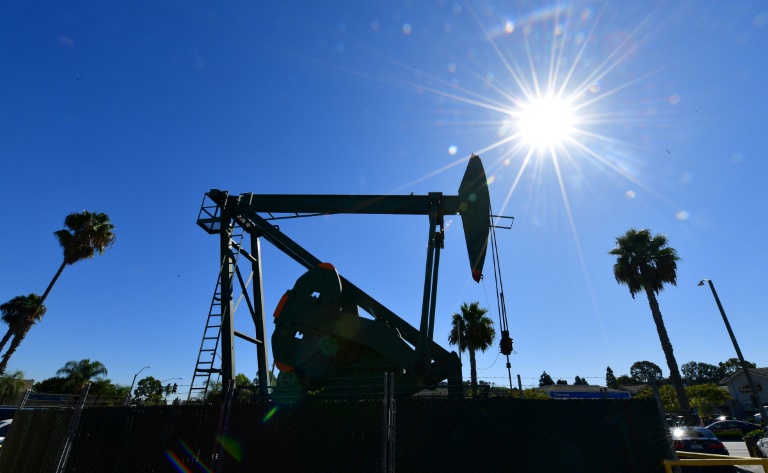
Oil prices edged higher, one day after sinking as major producers announced a small output increase.

The London stock market declined ahead of the Bank of England’s latest rate decision at 1100 GMT.

The BoE is tipped by economists to ramp up interest rates by a half-point, the biggest hike in almost 30 years, mirroring aggressive monetary policy elsewhere as it seeks to cool decades-high inflation.

“All eyes (are) on (the) BoE to see if follows other central banks and delivers a larger hike,” said MUFG analyst Lee Hardman.

Rising interest rates tend to weigh on shares because they lift business loan repayments and eat further into consumers’ incomes.

In company news, Rolls-Royce shares sank 10 percent after the British engine maker revealed it tanked into a £1.6-billion ($1.9-billion) net loss in the first half on adverse currency movements, despite rebounding revenues.

Frankfurt and Paris stock markets meanwhile advanced.

Most Asian indices tracked a Wall Street rally fuelled by healthy economic and earnings data, despite lingering Taiwan concerns.

New York surged Wednesday after a report on the crucial US services sector showed surprise improvement, soothing recession fears in the world’s top economy.

That came as several companies — including Electronic Arts, Starbucks and Moderna — posted strong earnings, extending a broadly positive reporting season in the face of surging inflation and rising interest rates.

Markets have swung this week after a number of Federal Reserve officials lined up to suggest there were still some big US rate hikes likely and talk of cuts next year might be overdone.

– Pelosi visit –

The mood in Asia was also a lot more settled after the upheaval of this week’s visit to Taiwan by US House Speaker Nancy Pelosi, which sparked outrage in China with warnings of stern military and economic responses.

Beijing has suspended a limited amount of cross-strait imports and exports, and on Thursday began its largest-ever military exercises encircling Taiwan that are expected to last for days.

Soon after, Taiwan’s defence ministry said it was “preparing for war without seeking war”.

Taipei stocks fell again on worries that the Chinese manoeuvres would hit shipping lanes and flights into Taiwan.

– Key figures at around 0940 GMT –

London – FTSE 100: DOWN 0.2 percent at 7,431.05 points

Frankfurt – DAX: UP 0.9 percent at 13,706.27

Paris – CAC 40: UP 0.5 at 6,504.53

EURO STOXX 50: UP 0.6 percent at 3,755.04

Tokyo – Nikkei 225: UP 0.7 percent at 27,932.20 (close)

Hong Kong – Hang Seng Index: UP 2.1 percent at 20,174.04 (close)

Shanghai – Composite: UP 0.8 percent at 3,189.04 (close)

New York – Dow: UP 1.3 percent at 32,812.50 (close)

Euro/dollar: UP at $1.0188 from $1.0166 Wednesday

Pound/dollar: UP at $1.2166 from $1.2149

Euro/pound: UP at 83.73 pence from 83.63 pence

Dollar/yen: UP at 134.26 yen from 133.86 yen

Brent North Sea crude: UP 0.4 percent at $97.16 per barrel

West Texas Intermediate: UP 0.3 percent at $90.95 per barrel

burs/rfj/lth
Spectators flock to Iceland volcano

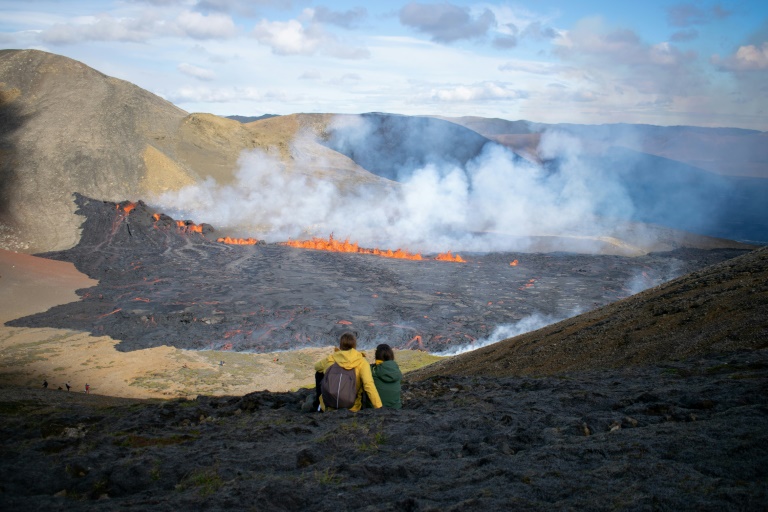
Curious onlookers made their way Thursday to the site of a volcano erupting near Iceland’s capital Reykjavik to marvel at the bubbling lava, a day after the fissure appeared in an uninhabited valley.

The eruption was around 40 kilometres (25 miles) from Reykjavik, near the site of the Mount Fagradalsfjall volcano in southwestern Iceland that spewed magma for six months between March and September 2021.

While last year’s eruption was easily accessible on foot and drew more than 435,000 tourists, the new eruption is trickier to access, requiring a strenuous 90-minute hilly hike from the closest car park. 

Despite that, more than 1,830 people visited the site on the first day of the eruption, according to the Icelandic Tourist Board, and more visitors were seen trekking to the scene early Thursday.

The fissure was estimated to be around 360 metres (1,181 feet) long, the Icelandic Meteorological Office said Thursday, with lava fountains about 10-15 metres high.

The average lava flow in the first hours was estimated at 32 cubic metres per second, according to measurements done Wednesday at 1705 GMT — 3.5 hours after the eruption began — by scientists from the Institute of Earth Sciences.

That is about four or five times more than at the beginning of last year’s eruption.

“The current eruption is therefore much more powerful,” the Institute wrote in a Facebook post.

The lava covered an area of about 74,000 square metres, it said. 

By comparison, last year’s six-month eruption saw 150 million cubic metres of lava spilled over 4.85 square kilometres.

Officials had initially urged people to refrain from visiting the site until a danger assessment had been conducted.

But on Thursday, the Department of Civil Protection and Emergency Management said only that young children should not walk up to the eruption site.

Gases from a volcanic eruption — especially sulphur dioxide — can be elevated in the immediate vicinity, may pose a danger to health and even be fatal.

Gas pollution can also be carried by the wind.

Mount Fagradalsfjall belongs to the Krysuvik volcanic system on the Reykjanes peninsula in southwestern Iceland.

Known as the land of fire and ice, Iceland has 32 volcanic systems currently considered active, the highest number in Europe. The country has had an eruption every five years on average.

Mexico races to rescue trapped coal miners

Rescuers raced Wednesday to free about 10 workers believed to be trapped in a coal mine in northern Mexico, while three others were found alive, authorities said.

Military personnel and rescue dogs were deployed to the scene of the accident in the state of Coahuila, President Andres Manuel Lopez Obrador said.

“At 1:35 pm (1835 GMT) a coal mine collapsed in the municipality of Sabinas, Coahuila, which caused a tunnel to flood” and trapped the workers, he tweeted.

“We hope to find them safe.”

Lopez Obrador had said nine miners were missing, but the security ministry said later that three had been rescued and taken to hospital while 10 were still believed to be inside.

“The work will not stop until they are found,” the ministry said in a statement.

“The Mexican government guarantees all the necessary resources to carry out the search and rescue operations,” it said.

Anxious relatives gathered to wait for news, with some crying and comforting each other at the site, about 1,130 kilometres (700 miles) north of Mexico City.

The mother of one of the workers wept inconsolably, unable to answer questions from the press.

Through tears, another woman at the scene said two of her children worked in the mine, though one of them had managed to escape after the accident.

As night fell hours later, the families gathered under tents outside the mine in silence as state police, the national guard, medical teams and other rescuers worked to find the trapped workers.

Coahuila’s state government said that the miners had been carrying out excavation work when they hit an adjoining area full of water, causing the shaft to collapse and flood.

“The mine began operating in January of this year and until now there have been no reports of any type of anomaly,” it said in a statement.

State governor Miguel Riquelme said he had asked labor authorities and the local prosecutor’s office to prioritize the rescue and investigation.

Coahuila, the country’s main coal-producing region, has seen a series of fatal mining accidents over the years.

The worst was an explosion that claimed 65 lives at the Pasta de Conchos mine in 2006.

Last year, seven miners died when they were trapped after another accident in Coahuila.

Beluga whale spotted in France's Seine river

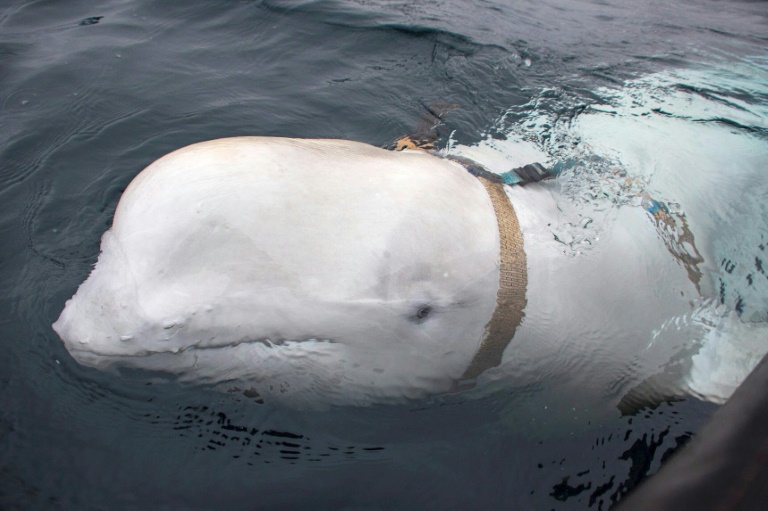
A Beluga whale, a protected species usually found in cold Arctic waters, has been seen in France’s Seine river, with authorities urging people to keep their distance to avoid distressing the animal.

Officials in the Eure department of Normandy said late Wednesday that images suggested it was a beluga separated from its pod, though they did not specify its size nor where exactly it was seen.

An adult beluga can reach up to four metres (13 feet) in length, and while they migrate away from the Arctic in the autumn to feed as ice forms, they rarely venture so far south.

“Studies of its health are underway to determine the best measures to take to ensure its chances of survival,” the Eure regional authorities said.

In May, a killer whale — technically part of the dolphin family — was found dead in the Seine between the port city of Le Havre and Rouen.

The animal had been stranded in the river, which flows through Paris to the Channel, and was unable to find its way back to the ocean despite attempts by officials to guide it.

The Eure authorities said lone belugas do sometimes swim farther south than usual, and are able to temporarily survive in fresh water.

Wind and water: undersea drone readies to aid offshore boom

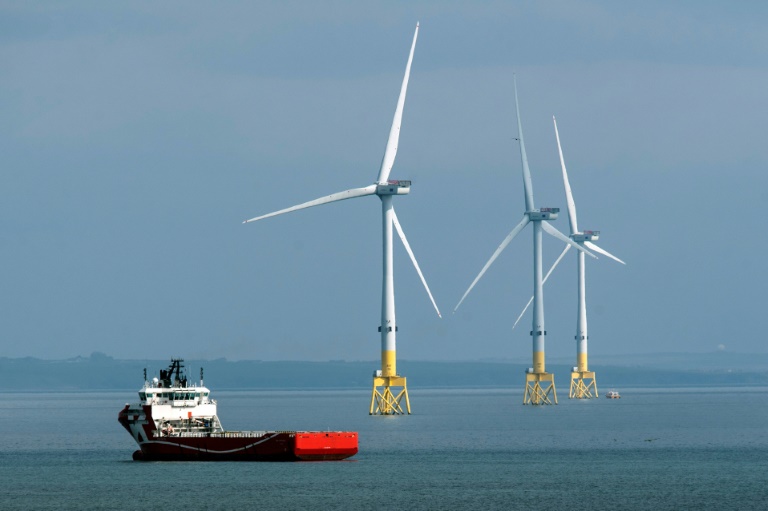
In a wave tank at a robot laboratory in the Scottish capital Edinburgh, engineers observe in silence as an underwater drone rises stealthily to the surface.

The team, which led the development of the remotely operated vehicle (ROV) at Heriot-Watt university, believe the submersible machine is a game-changer for offshore wind farms, obviating the need for divers.

The engineers reckon it will soon be ready to perform inspections and maintenance at wind farms, transforming the nature of the high-risk and costly endeavours just as the industry is set for huge expansion.

British Prime Minister Boris Johnson has promised to make the UK the “Saudi Arabia” of wind power, with plans to generate enough electricity from offshore to power every UK home by 2030.

While Johnson is on his way out of office, the industry is banking on the expansion plans, especially after Russia’s invasion of Ukraine sent the price of traditional carbon energy through the roof.

“We have to imagine that in 10, 15 years time there will be hundreds of wind farms, which means thousands of wind turbines all across the coast of the UK,” Yvan Petillot, a robotics and autonomous systems professor at Heriot-Watt, told AFP.

“You also have hydrogen technology being developed and all of this will need to be maintained, inspected and serviced.

“What we are developing is remote technologies where people can inspect and maintain those assets from shore, without putting anyone in harm’s way.”

– Accumulation of micro-organisms –

In May the ROV, which is equipped with sensors and advanced software, conducted what is believed to be the first ever autonomous offshore wind farm inspection.

The device was deployed at French energy firm EDF’s Blyth wind farm, off the coast of Northumberland, northeast England.

It successfully recorded videos that allowed researchers to assess the exterior condition of turbine foundations and cables.

Meanwhile its software created a 3D reconstruction model of parts of the energy company’s underwater assets.

Petillot said the 3D model can pick up the accumulation of micro-organisms, plants and algae on the turbine foundations. 

If a problem is detected, the ROV system can be deployed with a robotic arm to conduct a repair.

“The system will first do an autonomous inspection of the seabed and the structure, and build the 3D model that someone from shore can look at and say, ‘there’s a problem here’,” Petillot said.

“Typically you would have corrosion on the system, you might have to turn a valve, you might have to connect a cable, you might have to change an anode and clean the surface if there is too much bio-fouling.”

Maxime Duchet, an offshore wind research engineer at EDF, said the images and modelling will greatly enhance the ability to conduct operations and maintenance activities on-site.

– ‘Safer and faster’ –

Further tests are needed to estimate the time required to inspect all of the turbine foundations and to demonstrate the full potential of marine robotic technology, he noted.

“However, it is clear from these initial results that the technology can ensure safer and faster operations and a reduced carbon footprint,” Duchet added.

Engineers, who use a joystick to pilot the vehicle, say the ROV can be left alone to perform its primary mapping task for most of the time. 

If it becomes stuck, or lingers too long in a particular area, a pilot can commandeer it. 

Petillot said a long-term benefit could be allowing more people to join the team managing the ROV remotely, who might not have been willing or able to work offshore.

It is incredibly difficult to find a diver or a qualified pilot for such projects, he noted. 

In contrast, finding somebody to help control the system as though they were playing a video game should prove far easier, according to Petillot.

Great Barrier Reef sees fragile coral comeback

Parts of Australia’s beleaguered Great Barrier Reef now have the highest levels of coral cover seen in decades, a government report said Thursday, suggesting the aquatic wonder could survive given the chance.

Portions of the vast UNESCO heritage site showed a marked increase in coral cover in the last year, reaching levels not seen in 36 years of monitoring, the Australian Institute of Marine Science said. 

Scientists surveying 87 sites said northern and central parts of the reef had bounced back from damage more quickly than some had expected, thanks mainly to fast-growing Acropora — a branching coral that supports thousands of marine species. 

“These latest results demonstrate the reef can still recover in periods free of intense disturbances,” said the Australian Institute of Marine Science’s CEO Paul Hardisty.

But far from declaring victory, Hardisty warned the gains could easily be reversed by cyclones, new bleaching events or crown-of-thorns outbreaks. 

He pointed to a reversal in fortunes for the southern portion of the reef, which a year ago had appeared to be on the mend, but was now in decline again.

“This shows how vulnerable the reef is to the continued acute and severe disturbances that are occurring more often, and are longer-lasting,” he said.

Coral coverage has increased by 36 percent across sites monitored in the northern part of the reef, up from 27 percent in 2021. 

But the picture was less encouraging as the scientists moved south, with a smaller increase in cover in the reef’s central belt and a marked decrease in coral cover in the south.

The spread of coral-killing crown-of-thorns starfish has also taken a toll.

Only fierce lobbying by the Australian government stopped the reef from being labelled “in danger” by UNESCO — a potentially devastating blow to the country’s multi-billion-dollar tourism industry. 

Many fear that the speeding rate of damage could cause the reef to be destroyed entirely. 

Marine scientist Terry Hughes said it was “good news” that coral was regrowing, but warned the species driving the recovery were very vulnerable to ocean heating.

He added that replacing large, old, slow-growing corals that had defined the reef was likely “no longer possible. Instead we’re seeing partial reassembly of fast-growing, weedy corals before the next disturbance.”

Zoe Richards a researcher at the Coral Conservation and Research Group at Curtin University also cautioned against over-optimism.

“This recovery trend is driven by a handful of Acropora species which often grow in a boom-and-bust pattern,” she said. “This means that the next thermal stress event could easily decimate these coral communities once again.”

“We are already finding evidence that each mass bleaching event leads to local extinctions of rarer species, so the short-term success of a handful of fast-growing coral species masks the full story about the largely hidden losses of biodiversity.”

Heavy rain hits northern Japan, 200,000 urged to evacuate

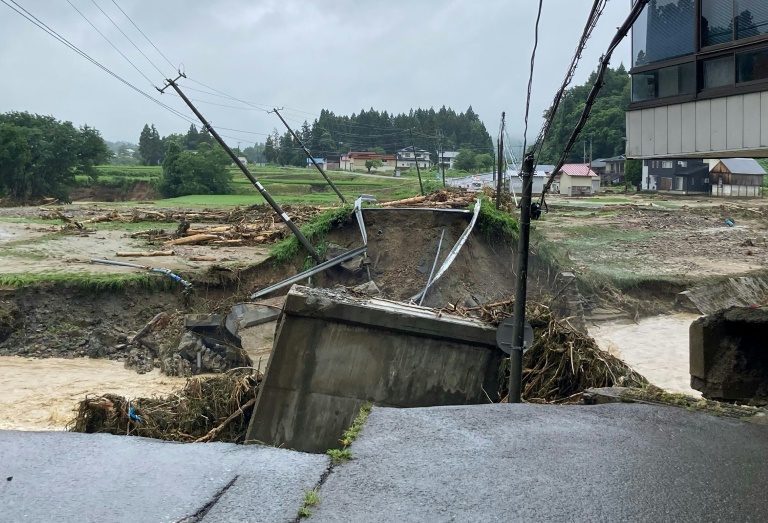
Bridges collapsed and rivers burst their banks as heavy rain lashed northern Japan on Thursday, with 200,000 residents urged to evacuate as authorities warned of dangerous flooding.

TV footage showed a muddy mass of broken trees swept into a mountainous residential area by the downpours, which broke records in some areas.

Two people have been reported missing, top government spokesman Hirokazu Matsuno told reporters.

Authorities have warned of an increased risk of landslides and floods.

Public broadcaster NHK said non-compulsory evacuation advisories were issued to 200,000 residents in five regions: Niigata, Yamagata, Fukushima, Ishikawa and Fukui.

Other TV footage showed homes flooded by an overflowing river and another muddy waterway reaching the height of a bridge.

Some shinkansen bullet trains were suspended in the affected areas.

Scientists say climate change is intensifying the risk of heavy rain in Japan and elsewhere, because a warmer atmosphere holds more water.

Strong rain in 2021 triggered a devastating landslide in the central resort town of Atami that killed 27 people.

And in 2018, floods and landslides killed more than 200 people in western Japan during the country’s annual rainy season.

China's Taiwan war games threaten more global supply chain disruption

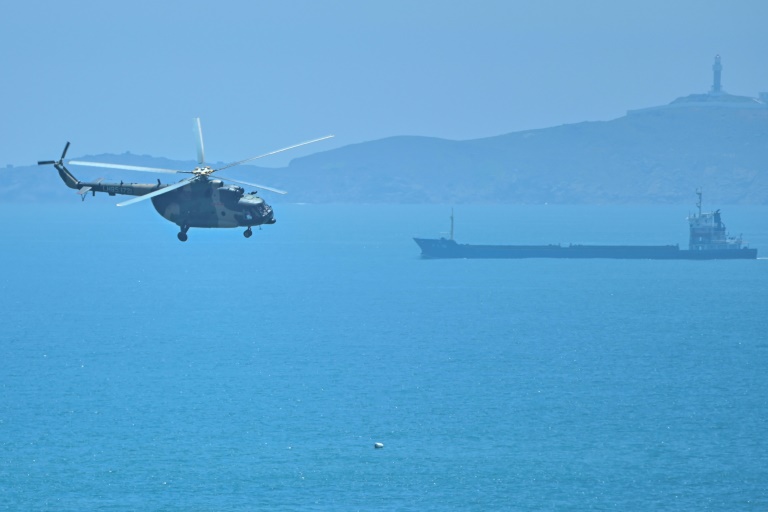
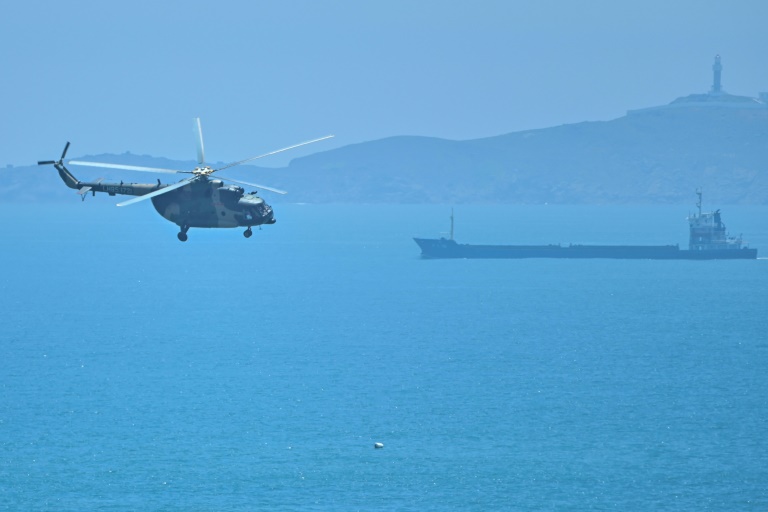
Chinese military exercises around Taiwan are set to disrupt one of the world’s busiest shipping zones, analysts told AFP, highlighting the island’s critical position in already stretched global supply chains.

The drills — China’s largest-ever around Taiwan — are a major show of strength after US House Speaker Nancy Pelosi infuriated Beijing by visiting the island.

The manoeuvres kicked off Thursday and will take place along some of the busiest shipping routes on the planet, used to supply vital semiconductors and electronic equipment produced in East Asian factory hubs to global markets.

The routes are also a key artery for natural gas.

Nearly half the world’s container ships passed through the narrow Taiwan Strait — which separates the island from the Chinese mainland — in the first seven months of this year, according to data compiled by Bloomberg. 

“Given that much of the world’s container fleet passes through that waterway, there will inevitably be disruptions to global supply chains due to the rerouting,” said James Char, an associate research fellow at Singapore’s S. Rajaratnam School of International Studies.

– ‘Incredibly busy waterway’ –

Even a small disruption in global supply chains, already battered by the Covid-19 pandemic and Russia’s invasion of Ukraine, could prove costly.

“China’s planned live-fire exercises are occurring in an incredibly busy waterway,” Nick Marro, the Economist Intelligence Unit’s lead analyst for global trade, wrote in a note.

“The shutting down of these transport routes — even temporarily — has consequences not only for Taiwan, but also trade flows tied to Japan and South Korea.”

The uncertainty dragged the Taiwan Taiex Shipping and Transportation Index, which tracks major shipping and airline stocks, down 1.05 percent on Thursday.

The index was down 4.6 percent since the beginning of the week.

Taiwan’s Maritime and Port Bureau has warned ships in northern, eastern and southern areas to avoid the areas being used for the drills.

But several shipping companies contacted by AFP said they were waiting to see the impact of the drills before rerouting.

The ongoing typhoon season made it riskier to divert ships around the eastern coast of Taiwan through the Philippine Sea, some added.

Others said they would stick to their schedules.

“We don’t see any impact during (this) period and we don’t have any plan on re-routing our vessels,” said Bonnie Huang, a spokesman for Maersk China.

The drills have also hit air routes.

Over the last two days, more than 400 flights were cancelled at major airports in Fujian, the Chinese province closest to Taiwan, signalling that the airspace could be used by the military.

Taiwan’s cabinet meanwhile, has said the exercises would disrupt 18 international routes passing through its flight information region (FIR).

– Aggressive posturing –

During the previous Taiwan Strait Crisis in the 1990s, China conducted military exercises for months, including lobbing missiles into waters off Taiwan and rehearsing amphibious assaults on the island.

“The Chinese undoubtedly wanted to demonstrate resolve in ways that went beyond what they did in 1996,” said Bonnie Glaser, director of the Asia programme at the US-based German Marshall Fund think tank.

China’s Global Times newspaper said Wednesday the drills were aimed at showing that China’s military is “capable of blockading the entire island”.

But China’s ongoing economic woes mean it is unlikely to risk a major disruption and would limit itself to aggressive posturing, analysts said.

“Closing off traffic through the Strait for any extended period of time will also hurt the Chinese economy,” Char said.

“It’s not in Beijing’s interest to interrupt civilian travel and trade in the region,” said Natasha Kassam of the Lowy Institute, an Australian think tank.

The extent to which China will escalate its response to the Pelosi visit — flexing its military muscle, cyber attacks and economic sanctions — remains to be seen.

Given its military advances, “China very likely has the ability to enforce an air and maritime blockade against Taiwan,” said Thomas Shugart, an expert at US think tank the Center for a New American Security.

“Whether China will choose to attempt such a blockade… is largely a matter of how much political and economic risk the Chinese Communist Party’s leaders are willing to incur.”

China's Taiwan war games threaten more global supply chain disruption

Chinese military exercises around Taiwan are set to disrupt one of the world’s busiest shipping zones, analysts told AFP, highlighting the island’s critical position in already stretched global supply chains.

The drills — China’s largest-ever around Taiwan — are a major show of strength after US House Speaker Nancy Pelosi infuriated Beijing by visiting the island.

The manoeuvres kicked off Thursday and will take place along some of the busiest shipping routes on the planet, used to supply vital semiconductors and electronic equipment produced in East Asian factory hubs to global markets.

The routes are also a key artery for natural gas.

Nearly half the world’s container ships passed through the narrow Taiwan Strait — which separates the island from the Chinese mainland — in the first seven months of this year, according to data compiled by Bloomberg. 

“Given that much of the world’s container fleet passes through that waterway, there will inevitably be disruptions to global supply chains due to the rerouting,” said James Char, an associate research fellow at Singapore’s S. Rajaratnam School of International Studies.

– ‘Incredibly busy waterway’ –

Even a small disruption in global supply chains, already battered by the Covid-19 pandemic and Russia’s invasion of Ukraine, could prove costly.

“China’s planned live-fire exercises are occurring in an incredibly busy waterway,” Nick Marro, the Economist Intelligence Unit’s lead analyst for global trade, wrote in a note.

“The shutting down of these transport routes — even temporarily — has consequences not only for Taiwan, but also trade flows tied to Japan and South Korea.”

The uncertainty dragged the Taiwan Taiex Shipping and Transportation Index, which tracks major shipping and airline stocks, down 1.05 percent on Thursday.

The index was down 4.6 percent since the beginning of the week.

Taiwan’s Maritime and Port Bureau has warned ships in northern, eastern and southern areas to avoid the areas being used for the drills.

But several shipping companies contacted by AFP said they were waiting to see the impact of the drills before rerouting.

The ongoing typhoon season made it riskier to divert ships around the eastern coast of Taiwan through the Philippine Sea, some added.

Others said they would stick to their schedules.

“We don’t see any impact during (this) period and we don’t have any plan on re-routing our vessels,” said Bonnie Huang, a spokesman for Maersk China.

The drills have also hit air routes.

Over the last two days, more than 400 flights were cancelled at major airports in Fujian, the Chinese province closest to Taiwan, signalling that the airspace could be used by the military.

Taiwan’s cabinet meanwhile, has said the exercises would disrupt 18 international routes passing through its flight information region (FIR).

– Aggressive posturing –

During the previous Taiwan Strait Crisis in the 1990s, China conducted military exercises for months, including lobbing missiles into waters off Taiwan and rehearsing amphibious assaults on the island.

“The Chinese undoubtedly wanted to demonstrate resolve in ways that went beyond what they did in 1996,” said Bonnie Glaser, director of the Asia programme at the US-based German Marshall Fund think tank.

China’s Global Times newspaper said Wednesday the drills were aimed at showing that China’s military is “capable of blockading the entire island”.

But China’s ongoing economic woes mean it is unlikely to risk a major disruption and would limit itself to aggressive posturing, analysts said.

“Closing off traffic through the Strait for any extended period of time will also hurt the Chinese economy,” Char said.

“It’s not in Beijing’s interest to interrupt civilian travel and trade in the region,” said Natasha Kassam of the Lowy Institute, an Australian think tank.

The extent to which China will escalate its response to the Pelosi visit — flexing its military muscle, cyber attacks and economic sanctions — remains to be seen.

Given its military advances, “China very likely has the ability to enforce an air and maritime blockade against Taiwan,” said Thomas Shugart, an expert at US think tank the Center for a New American Security.

“Whether China will choose to attempt such a blockade… is largely a matter of how much political and economic risk the Chinese Communist Party’s leaders are willing to incur.”

Toyota upgrades forecast even as Q1 net profit slumps

Toyota upgraded its annual net profit forecast on Thursday, predicting an earnings boost from the weaker yen even after first-quarter net profit took a hit from pandemic-related supply chain issues.

The global chip shortage, Covid-19 lockdowns disrupting Chinese factory output and Russia’s invasion of Ukraine are all weighing heavily on the auto industry.

But Japanese companies like Toyota selling products overseas have also benefited from a cheaper yen, which has hit 24-year lows against the dollar in recent months.

The world’s top-selling automaker now forecasts an annual net profit of 2.36 trillion yen ($17.6 billion) — up from its previous estimate of 2.26 trillion yen, but still a drop of 17 percent compared with last year’s record results.

For the three months to June, the auto titan said net profit fell 17.9 percent on-year to 736.8 billion yen.

“Despite the positive foreign exchange effects from the weaker yen, the large impact from lower sales volume due to supply constraints and higher raw materials prices led to a decrease in operating income” in the first quarter, the company said.

Meanwhile, “the revision of foreign exchange rate assumptions had a positive impact on the operating income forecast”, it said.

Revisions to the predicted impact of “soaring materials prices” and cost-reduction efforts would also cause operating income to decrease this financial year, Toyota added.

Buoyed in part by the weaker yen, Toyota in May logged a record full-year net profit of 2.85 trillion yen for 2021-22.

The focus will now be on whether the company can keep its global production target of 9.7 million units for this financial year in light of the parts shortage, said Satoru Takada, auto analyst at research and consulting firm TIW.

Three big automakers in Japan — Toyota, Nissan and Honda — have been “unable to sufficiently recover production” to meet consumer demand, Takada told AFP.

However, Toyota has so far largely escaped the worst of the crises, he said, adding that the company has “customers waiting for its cars thanks to strong demand”.

The  firm built stronger ties with domestic suppliers after Japan’s 2011 earthquake and tsunami, which analysts say helped it weather a pandemic-triggered shortage of semiconductors — an essential component of modern cars — better than its rivals.

But it has been forced to repeatedly adjust production targets because of the chip shortage and pandemic-linked factory closures.

Adding to the problems is uncertainty arising from Moscow’s war in Ukraine. Toyota said in March it would halt operations at its only factory in Russia, and stop shipping vehicles to the country.

Ahead of the earnings announcement, SC Capital called Toyota’s annual outlook “the most low-balled in the industry”, predicting a sharp upwards revision later this year as semiconductor supplies become more abundant.

“Toyota’s first quarter… is expected to be bad. But consensus is way too low for the rest of the year, as supply constraints from Shanghai will subside from the second quarter and chip inventory rises more than expected,” SC Capital said in a SmartKarma commentary.

“Anyone who’s spoken with the company knows that the second quarter will see a V-shaped recovery and an upward revision for the full fiscal year.”

Close Bitnami banner
Bitnami