AFP

Alibaba quarterly revenue flat for first time ever in June

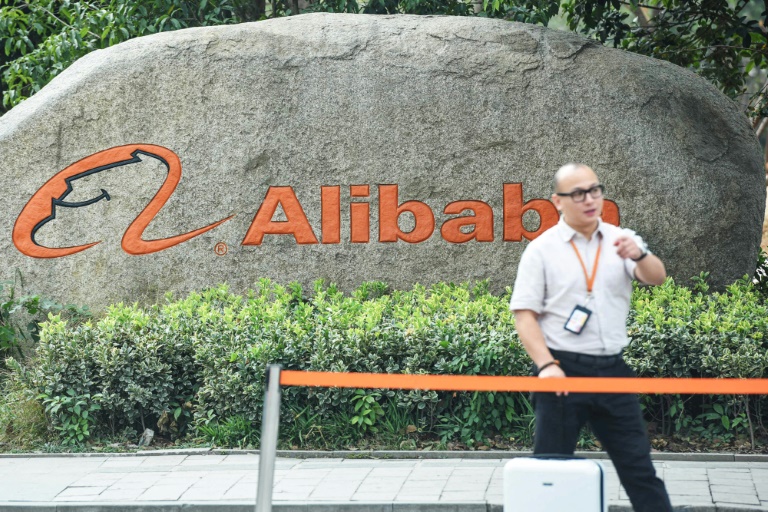
Chinese e-commerce giant Alibaba reported flat revenue growth on Thursday for the first time ever, as the country grappled with an economic slowdown and Covid-19 resurgences kept consumers jittery.

Alibaba’s performance is widely seen as a gauge of Chinese consumer sentiment, given its market dominance, and its revenue growth has slowed markedly over the past year.

Revenue came in at 205.6 billion yuan ($30.7 billion) in the April-June quarter, beating analyst expectations despite being slightly below the same period last year, following a decline in the company’s China commerce segment revenue, Alibaba said.

The company has been grappling with growing competition and economic fallout from strict Covid restrictions that have battered consumer sentiment, pushed the unemployment rate up and tangled supply chains.

“Following a relatively slow April and May, we saw signs of recovery across our businesses in June,” said Alibaba Group’s chairman and chief executive Daniel Zhang in a statement.

“Despite the soft economic conditions, we managed to deliver stable revenues and narrowed losses in several strategic businesses by improving operating efficiency,” he added in an earnings call.

The company’s revenue growth was flat “primarily due to a decline in China commerce segment revenue” although this was offset by growth in the cloud segment, Alibaba said.

Many parts of China have faced harsh lockdowns in recent months, as officials struggled to stamp out the Omicron variant under the country’s zero-Covid policy. 

Shanghai, China’s biggest city and a major economic hub, was sealed off for two months due to Covid-related restrictions during the quarter.

The firm cited “restrictions that resulted in supply chain and logistics disruptions in April and most of May” that bogged down performance in its China commerce sector, although there was a pick-up in demand in June during a popular shopping festival.

Its profit for the latest quarter stood at 22.7 billion yuan, down from 45.1 billion yuan a year earlier.

Alibaba has recently been building its international commerce businesses, such as Lazada in Southeast Asia and Trendyol in Turkey.

It has also shifted from its aggressive market expansion in the past, amid slowing growth.

– Challenges –

Apart from coronavirus curbs, Alibaba has been contending with a regulatory crackdown on China’s tech giants and other challenges abroad.

US authorities have put the company on a watchlist that could see it delisted in New York if it does not comply with disclosure orders, causing its shares to slump.

The company is seeking a primary listing in Hong Kong which could allow it to access mainland China’s vast pool of investors, a move that comes as Chinese tech firms trading in New York grow increasingly worried about regulatory action by US authorities.

Alibaba, a tech behemoth, has also seen its market value plummet after Beijing launched a sweeping crackdown in 2020.

In recent years, Chinese officials have taken aim at alleged anti-competitive practices by some of the country’s biggest names, driven by fears that major internet firms control too much data and expanded too quickly.

This included a last-minute cancellation of a planned IPO by Alibaba’s financial arm Ant Group, which would have been the world’s largest public offering at the time.

Last week, a report said Alibaba co-founder Jack Ma plans to give up control of Ant Group as part of a strategy to appease Chinese regulators and revive the digital payments unit’s initial public offering.

Following the latest results, Alibaba’s US-listed shares rose 4.5 percent in pre-market trading.

China’s economy expanded just 0.4 percent in the second quarter this year, logging its slowest growth since the initial coronavirus outbreak more than two years ago.

Alibaba quarterly revenue flat for first time ever in June

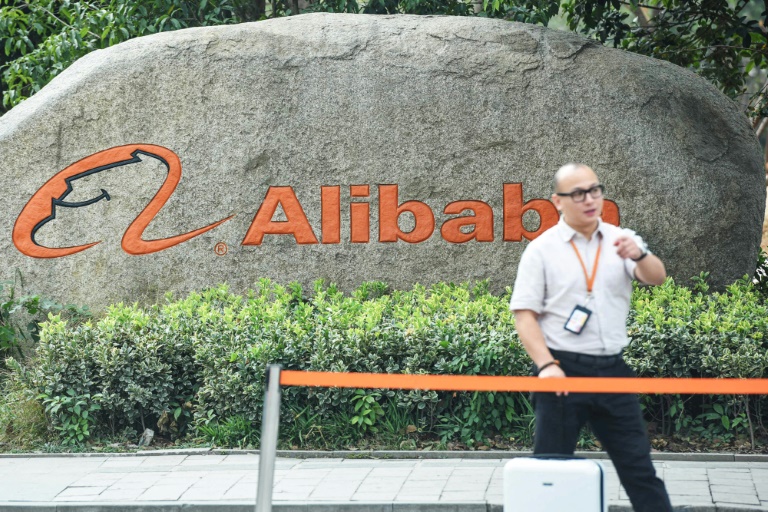
Chinese e-commerce giant Alibaba reported flat revenue growth on Thursday for the first time ever, as the country grappled with an economic slowdown and Covid-19 resurgences kept consumers jittery.

Alibaba’s performance is widely seen as a gauge of Chinese consumer sentiment, given its market dominance, and its revenue growth has slowed markedly over the past year.

Revenue came in at 205.6 billion yuan ($30.7 billion) in the April-June quarter, beating analyst expectations despite being slightly below the same period last year, following a decline in the company’s China commerce segment revenue, Alibaba said.

The company has been grappling with growing competition and economic fallout from strict Covid restrictions that have battered consumer sentiment, pushed the unemployment rate up and tangled supply chains.

“Following a relatively slow April and May, we saw signs of recovery across our businesses in June,” said Alibaba Group’s chairman and chief executive Daniel Zhang in a statement.

“Despite the soft economic conditions, we managed to deliver stable revenues and narrowed losses in several strategic businesses by improving operating efficiency,” he added in an earnings call.

The company’s revenue growth was flat “primarily due to a decline in China commerce segment revenue” although this was offset by growth in the cloud segment, Alibaba said.

Many parts of China have faced harsh lockdowns in recent months, as officials struggled to stamp out the Omicron variant under the country’s zero-Covid policy. 

Shanghai, China’s biggest city and a major economic hub, was sealed off for two months due to Covid-related restrictions during the quarter.

The firm cited “restrictions that resulted in supply chain and logistics disruptions in April and most of May” that bogged down performance in its China commerce sector, although there was a pick-up in demand in June during a popular shopping festival.

Its profit for the latest quarter stood at 22.7 billion yuan, down from 45.1 billion yuan a year earlier.

Alibaba has recently been building its international commerce businesses, such as Lazada in Southeast Asia and Trendyol in Turkey.

It has also shifted from its aggressive market expansion in the past, amid slowing growth.

– Challenges –

Apart from coronavirus curbs, Alibaba has been contending with a regulatory crackdown on China’s tech giants and other challenges abroad.

US authorities have put the company on a watchlist that could see it delisted in New York if it does not comply with disclosure orders, causing its shares to slump.

The company is seeking a primary listing in Hong Kong which could allow it to access mainland China’s vast pool of investors, a move that comes as Chinese tech firms trading in New York grow increasingly worried about regulatory action by US authorities.

Alibaba, a tech behemoth, has also seen its market value plummet after Beijing launched a sweeping crackdown in 2020.

In recent years, Chinese officials have taken aim at alleged anti-competitive practices by some of the country’s biggest names, driven by fears that major internet firms control too much data and expanded too quickly.

This included a last-minute cancellation of a planned IPO by Alibaba’s financial arm Ant Group, which would have been the world’s largest public offering at the time.

Last week, a report said Alibaba co-founder Jack Ma plans to give up control of Ant Group as part of a strategy to appease Chinese regulators and revive the digital payments unit’s initial public offering.

Following the latest results, Alibaba’s US-listed shares rose 4.5 percent in pre-market trading.

China’s economy expanded just 0.4 percent in the second quarter this year, logging its slowest growth since the initial coronavirus outbreak more than two years ago.
Taliban say 'no information' about Al-Qaeda chief Zawahiri in Afghanistan

The Taliban said Thursday they have no knowledge of Ayman al-Zawahiri’s presence in Afghanistan, days after US President Joe Biden announced the Al-Qaeda chief’s killing by a drone strike in Kabul.

Zawahiri’s assassination is the biggest blow to Al-Qaeda since US special forces killed Osama bin Laden in 2011, and calls into question the Taliban’s promise not to harbour militant groups.

“The Islamic Emirate of Afghanistan has no information about Ayman al-Zawahiri’s arrival and stay in Kabul,” said an official statement — the Taliban’s first mention of his name since Biden’s announcement.

Zawahiri was believed to be in charge of steering Al-Qaeda’s operations — including the 9/11 attacks — as well as serving as bin Laden’s personal doctor.

A senior US administration official said the 71-year-old Egyptian was on the balcony of a three-storey house in the Afghan capital when targeted with two Hellfire missiles early on Sunday.

Thursday’s carefully phrased Taliban statement neither confirmed his presence in Afghanistan nor acknowledged his death.

“The leadership of the Islamic Emirate of Afghanistan has instructed the intelligence agencies to hold a comprehensive and serious investigation,” it said.

“The fact that America invaded our territory and violated all international principles, we strongly condemn the action once again.

“If such action is repeated, the responsibility of any consequences will be on the United States of America.”

The Taliban reiterated in their statement that there was “no threat” to any country from Afghanistan’s soil.

They called on Washington to adhere to the Doha pact signed in February 2020 that paved the way for the withdrawal of foreign forces from Afghanistan, ending two decades of US-led military intervention in the country.

In announcing Zawahiri’s death Tuesday, Biden declared “justice had been delivered” to the families of victims of the 9/11 attacks on the US.

Sunday’s drone attack was the first known over-the-horizon strike by the US on a target in Afghanistan since Washington withdrew its forces from the country on August 31 last year, days after the Taliban swept back to power.

The house targeted in the strike is in Sherpur, one of Kabul’s most affluent neighbourhoods, with several villas occupied by high-ranking Taliban officials and commanders.

Zawahiri took over Al-Qaeda after bin Laden was killed, and had a $25 million US bounty on his head.

News of his death comes a month before the first anniversary of the final withdrawal of US troops from Afghanistan, leaving the country in the hands of the Taliban insurgency that fought Western forces since the US-led invasion in 2001.

abh-sjd-jd-fox/aha

Blasts ring out as fires rage in Berlin forest

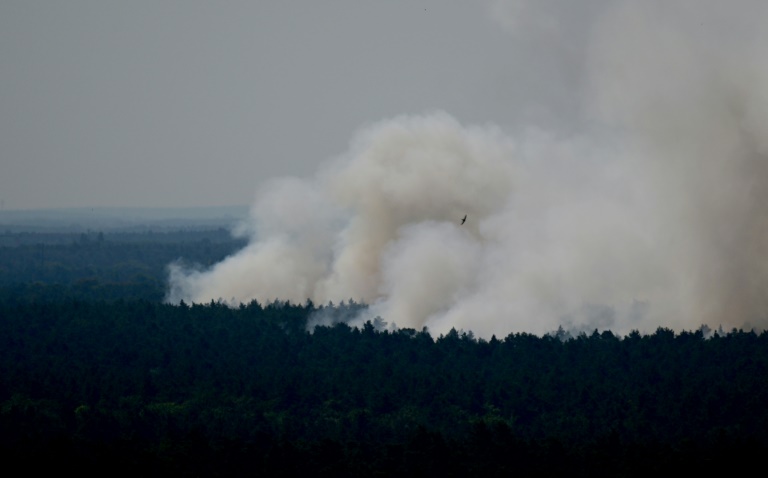
A huge fire  broke out Thursday in a popular forest in western Berlin next to a police munitions storage site, sending plumes of smoke into the skies and setting off intermittent explosions. 

The army sent in a tank aimed at evacuating munitions at the affected storage site as well as remote-controlled de-mining robots, while drones were circling the air to help assess the emergency.

The situation is “extremely extraordinary with munitions,” said Berlin fire brigade spokesman Thomas Kirstein, adding that it was “under control and there was no danger for Berliners.” 

The fire was however expected to last for some time, he said.

Firefighters called to the site in the middle of the night were confronted with intermittent blasts that sent debris flying and hindered their work. 

They have so far been able to begin tackling only two of the four hotspots across the affected area of 15,000 square metres (161,500 square feet), as explosions at the munitions store were still rocking the area.

No one has been hurt by the fires, which came on a day when a new heatwave was due to envelop Germany.

Officials have built a security cordon to allow firefighters to start working around a kilometre from the ammunition storage zone. 

The store holds munitions uncovered by police, but also unexploded World War 2-era ordnance which is regularly dug up during construction works.

Police said they were investigating what set off the fire.

Authorities appealed for the public to avoid the forest, popular with both locals and tourists, as several regional rail lines have been halted.

But authorities said no firefighting choppers were available as they were already in use to calm forest fires in eastern Germany.

– Heatwave –

The German capital is rarely hit by forest fires, even though its 29,000 hectares of forests make it one of the greenest cities in the world.

Brandenburg, the region surrounding Berlin, as well as parts of eastern Germany have for days been battling forest fires.

Scientists say climate change is making heatwaves around the world more frequent and more intense, which increases the risk of fires.

Temperatures are expected to climb as high as 40 degrees Celsius (104 degrees Fahrenheit) across parts of Germany on Thursday. In Berlin, they are predicted to reach 38C.

After a scorching Thursday, heavy thunderstorms are due to sweep into the country from the west on Friday, the German weather service said.

A cold front is predicted to bring temperatures down by more than 10 degrees overnight in western Germany, falling to around 20-25 degrees on Friday.

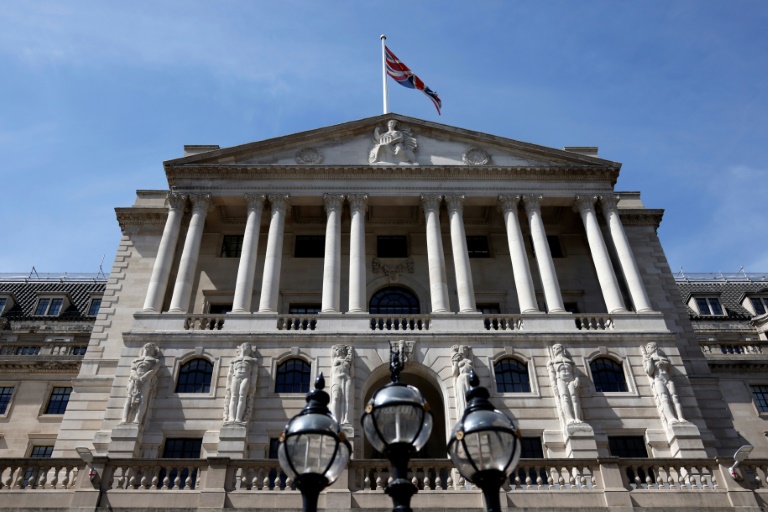
Bank of England delivers biggest rate hike in 27 years

The Bank of England unleashed Thursday its biggest interest rate hike since 1995 as it forecast inflation topping 13 percent this year and warned of a looming year-long recession.

, and forecast inflation will top 13 percent this year, sparking a year-long recession in Britain.

The bank’s Monetary Policy Committee voted 8-1 in favour of lifting its key interest rate by 0.50 percentage points to 1.75 percent.

The increase tallied with expectations and took borrowing costs to the highest level since December 2008.

The move also mirrors aggressive monetary policy from the US Federal Reserve and the European Central Bank last month, as the world races to cool red-hot inflation that has been fuelled by Russia’s invasion of Ukraine.

It also ramps up loan repayments for UK consumers and businesses, who are already facing a squeeze from a worsening cost of living crisis.

– Inflation ‘intensifying’ –

UK inflation is set to peak at 13 percent, or the highest level in more than 42 years, according to the BoE.

“Inflationary pressures in the United Kingdom and the rest of Europe have intensified significantly” since May, read a statement after the decision.

“That largely reflects a near doubling in wholesale gas prices since May, owing to Russia’s restriction of gas supplies to Europe and the risk of further curbs.

“As this feeds through to retail energy prices, it will exacerbate the fall in real incomes for UK households and further increase UK CPI inflation in the near term.”

In more grim news, the BoE predicted the UK economy would enter a painful recession that will last until late 2023.

“GDP growth in the United Kingdom is slowing,” the BoE said.

“The latest rise in gas prices has led to another significant deterioration in the outlook for activity in the United Kingdom and the rest of Europe.

“The United Kingdom is now projected to enter recession from the fourth quarter of this year.”

However, the recession will be shallower than the 2008 crash that was sparked by the global financial crisis.

The UK economy is expected to shrink by up to 2.1 percent in size from its highest point, according to the central bank’s forecast.

UK inflation had already jumped to a four-decade high of 9.4 percent in June, deepening the cost-of-living crisis as workers’ wages fail to keep pace.

Global inflation is surging as energy prices continue to rocket on key gas and oil producer Russia’s war on neighbouring Ukraine. 

Consumer prices have also rocketed on supply-chain strains as demand rebounds on the easing of Covid restrictions.

That has forced central banks to raise interest rates, risking the prospect of recession as higher borrowing costs hurt businesses and consumers.

– ‘Challenging winter ahead’ –

Inflation is also running at a 40-year peak of 9.1 percent in the United States, and a record high of 8.6 percent in the eurozone. 

The Fed in July delivered its second straight 0.75-percentage-point increase, in what economists have called the most aggressive Fed tightening cycle since the 1980s.

The European Central Bank then surprised markets last month with a bigger-than-expected 0.50-percentage-point hike, bringing an end to the era of negative interest rates in the eurozone.

Policymakers are anxious to quell inflation before it becomes dangerously entrenched — and sparks a prolonged economic downturn.

Added to the picture in Britain, energy regulator Ofgem is due to ramp up domestic electricity and gas prices again in October, ahead of the colder northern hemisphere winter.

That could take the average UK household energy bill well above £3,000 ($3,600) per year.

Ofgem warned Thursday that Britons face a “very challenging winter ahead”, adding its so-called energy price cap will now be reviewed every quarter instead of every six months.

The final frontier? Just a slice of Spanish sausage

A red ball of spicy fire with luminous patches glowing menacingly against a black background.

This, prominent French scientist Etienne Klein declared, was the latest astonishing picture taken by the James Webb Space Telescope of Proxima Centauri, the closest star to our Sun.

Fellow Twitter users marvelled at the details on the picture purportedly taken by the telescope, which has thrilled the world with images of distant galaxies going back to the birth of the universe.

“This level of detail… A new world is revealed every day,” he gushed.

But in fact, as Klein later revealed, the picture was not of the intriguing star just over four light-years from the Sun but a far more modest slice of the lip-sizzling Spanish sausage chorizo.

“According to contemporary cosmology, no object belonging to Spanish charcuterie exists anywhere but on Earth,” he said.

Klein acknowledged that many users had not understood his joke which he said was simply aimed at encouraging us “to be wary of arguments from people in positions of authority as well as the spontaneous eloquence of certain images”.

However, at a time when battling fake news is of paramount importance for the scientific community, many Twitter users indicated they were unamused by Klein, director of research at France’s Atomic Energy Commission (CEA) and a radio show producer.

On Wednesday, he said sorry to those who were misled.

“I come to present my apologies to those who may have been shocked by my prank, which had nothing original about it,” he said, describing the post as a “scientist’s joke”.

He was shortly back on surer ground posting on Twitter an image of the famous Cartwheel Galaxy taken by the James Webb Space Telescope. This time, he assured users, the photo was real.

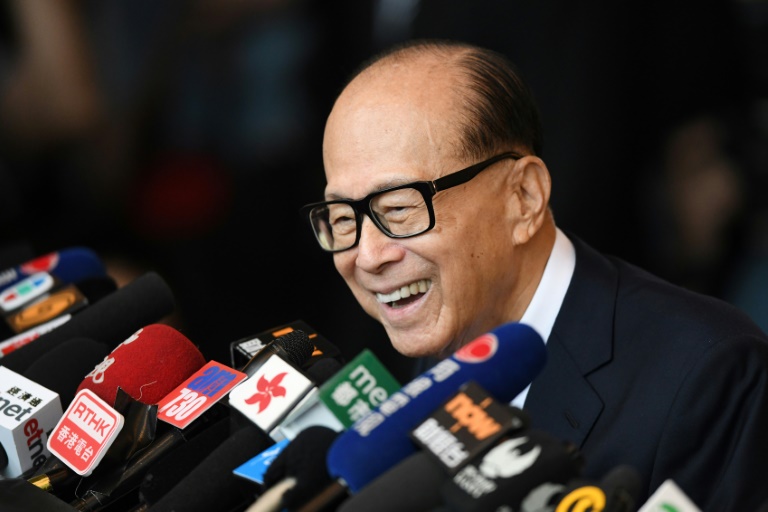
Hong Kong billionaire Li Ka-shing's firm to sell stake in fintech upstart

Hong Kong billionaire Li Ka-shing’s firm is selling its stake in the parent company of fintech upstart      AMTD Digital, according to a statement released Thursday, after the company enjoyed a massive rally this week.

Hong Kong-based AMTD Digital was worth more than $203 billion when New York markets closed on Wednesday, making it the world’s fifth-biggest financial company on paper, Bloomberg reported.

AMTD Digital was listed just three weeks ago, and reported $25 million in revenue for the financial year that ended in April 2021. 

Li’s CK Group said in a statement that it holds less than four percent of AMTD Digital’s parent company, AMTD Group, and has entered negotiations to sell those shares.

CK added that it has no representatives on AMTD Group’s board and has no business dealings with or shareholdings in AMTD Digital directly.

The sale would put distance between CK and AMTD Digital’s founder Calvin Choi, a former investment banker who is appealing a ban by Hong Kong regulators for failing to disclose conflicts of interest.

Li’s CK said its current four percent stake was left over from a sale nearly a decade ago, where CK sold a majority of its AMTD Group shares.

AMTD Group was set up in 2003 and lists CK Asset Holdings as a co-founder, according to its website.

Analysts have partly attributed AMTD Digital’s current rally to the small portion of shares that were made available for trading.

“The low free float in the company’s shares means it will be easier for big shareholders to push up the stock price,” research analyst Thomas Nip at Valuable Capital in Hong Kong told Bloomberg, adding that the stock is highly overvalued.

Oktay Kavrak, director at Leverage Shares, told Bloomberg that AMTD Digital was heading for a “nosedive” given the speed of its ascent.

AMTD Digital’s swift rally had prompted questions of whether it was the next “meme stock” — shares that skyrocket due to retail trading mania — similar to video game chain GameStop.

In January 2021, small-time stock traders banded together and rocked Wall Street by driving up the prices of shares like GameStop and cinema chain AMC, reaping massive profits.

But there is no evidence yet of a clear link between AMTD Digital’s stock movements this week and trades driven by social media interest, with some users of Reddit forum WallStreetBets dismissing the connection.

On Tuesday, AMTD Digital said it knew of “no material circumstances, events nor other matters relating to our company’s business and operating activities since the IPO date”.

Spectators flock to Iceland volcano

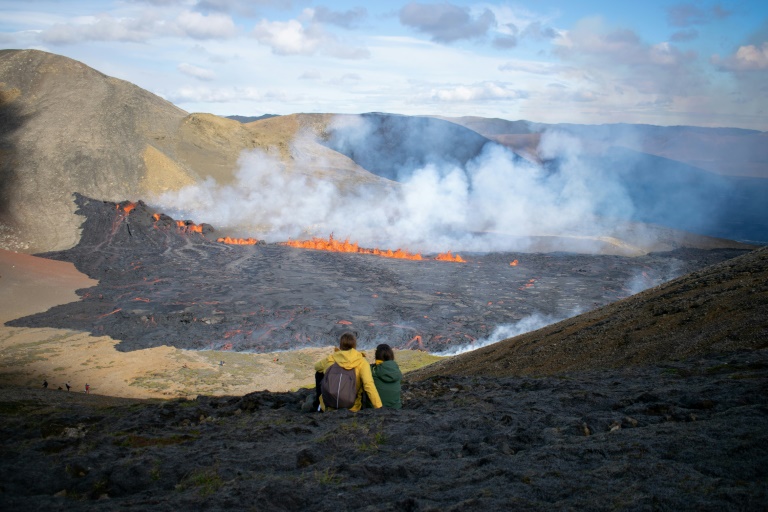
Curious onlookers made their way Thursday to the site of a volcano erupting near Iceland’s capital Reykjavik to marvel at the bubbling lava, a day after the fissure appeared in an uninhabited valley.

The eruption was around 40 kilometres (25 miles) from Reykjavik, near the site of the Mount Fagradalsfjall volcano in southwestern Iceland that spewed magma for six months between March and September 2021.

While last year’s eruption was easily accessible on foot and drew more than 435,000 tourists, the new eruption is trickier to access, requiring a strenuous 90-minute hilly hike from the closest car park. 

Despite that, more than 1,830 people visited the site on the first day of the eruption, according to the Icelandic Tourist Board, and more visitors were seen trekking to the scene early Thursday.

Among them was American tourist Hather Hoff, 42, for whom seeing lava was “a life goal”.

“I had to sit down and have a little cry because it is so beautiful, so emotional — this is the raw power of our planet,” she told AFP.

Anita Sauckel, a 40-year-old German living in Iceland, visited last year’s eruption and could not resist witnessing the latest volcanic activity.

“This is special with the lava, huge fountains popping out in the middle, and I love that a lot,” she said.

The fissure was estimated to be around 360 metres (1,181 feet) long, the Icelandic Meteorological Office said Thursday, with lava fountains about 10-15 metres high.

Wednesday’s eruption was preceded by a period of intense seismic activity, with about 10,000 earthquakes detected since Saturday, including two with a magnitude of at least 5.0.

The frequency of the earthquakes has slowed since the magma burst through the ground.

The average lava flow in the first hours was estimated at 32 cubic metres per second, according to measurements done Wednesday at 1705 GMT — 3.5 hours after the eruption began — by scientists from the Institute of Earth Sciences.

That is about four or five times more than at the beginning of last year’s eruption.

“The current eruption is therefore much more powerful,” the Institute wrote in a Facebook post.

The lava covered an area of about 74,000 square metres (around 800,000 square feet), it said. 

By comparison, last year’s six-month eruption saw 150 million cubic metres of lava spilled over 4.85 square kilometres.

– Gas risk –

Officials had initially urged people to refrain from visiting the site until a danger assessment had been conducted.

But on Thursday, the Department of Civil Protection and Emergency Management said only that young children should not walk up to the eruption site.

Gases from a volcanic eruption — especially sulphur dioxide — can be elevated in the immediate vicinity, may pose a danger to health and even be fatal.

Gas pollution can also be carried by the wind.

Mount Fagradalsfjall belongs to the Krysuvik volcanic system on the Reykjanes peninsula in southwestern Iceland.

Known as the land of fire and ice, Iceland has 32 volcanic systems currently considered active, the highest number in Europe. The country has had an eruption every five years on average.

However, until last year, the Reykjanes peninsula had not experienced an eruption since the 13th century, when a volcano erupted for 30 years from 1210-1240.

Geophysicists have said that the 2021 eruption could signal the beginning of a new period of eruptions lasting centuries.

A vast island near the Arctic Circle, Iceland straddles the Mid-Atlantic Ridge, a crack on the ocean floor separating the Eurasian and North American tectonic plates.

The shifting of these plates is in part responsible for Iceland’s intense volcanic activity.

Seoul says Pelosi DMZ visit sends clear message to North

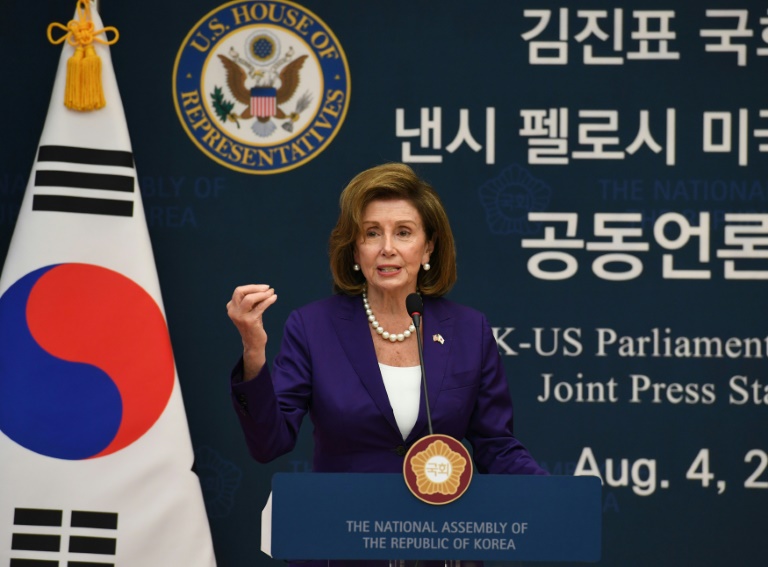
After her high-profile trip to Taiwan, US House Speaker Nancy Pelosi was in South Korea Thursday where her agenda included a visit to the heavily fortified Demilitarized Zone (DMZ) — but not a meeting with the country’s president.

Pelosi, who arrived in Seoul late Wednesday, met top parliamentary officials in the capital before her scheduled trip to the border with the nuclear-armed North, where the two neighbours’ forces stand face to face, a South Korean official said.

She will be the highest-ranking US official to visit the Joint Security Area (JSA) and inter-Korean truce village of Panmunjom since then president Donald Trump met North Korean leader Kim Jong Un there in 2019.

But those talks collapsed and North Korea has conducted a record-breaking blitz of weapons tests so far this year, including firing an intercontinental ballistic missile at full range for the first time since 2017.

Pelosi discussed the “grave situation” and growing threat posed by North Korea’s nuclear weapons programmes with her South Korean counterpart, National Assembly Speaker Kim Jin-pyo.

And her trip to the DMZ is seen by President Yoon Suk-yeol as “a sign of strong deterrence between South Korea and the US against North Korea,” an official from his office said Thursday.

– Pelosi snub? –

Yoon, who spoke to Pelosi by phone but did not meet her in person as he is officially on holiday this week, is facing growing domestic criticism over his perceived snub of the second in line to the US Presidency.

Local media and lawmakers from Yoon’s party have pointed to the fact that no official delegation was sent to greet Pelosi, even as Yoon was photographed attending a play in central Seoul the same night.

“What should we make of the fact that [Yoon] is watching a play and have a gathering [with the actors] but not meeting the US House Speaker?” a former lawmaker from Yoon’s People’s Power party, Yoo Seung-min, wrote on Facebook Thursday.

“Speaker Pelosi is visiting the JSA today. It is undesirable to think that the leader of our ally’s parliament visits the forefront of our security but there won’t be any meetings between our president and her.”

Yoon took office in May, vowing to boost ties with the United States, including ramping up the joint military drills that always infuriate North Korea, which views them as rehearsals for invasion.

He had also struck a hawkish, anti-China tone on the campaign trail, saying he wanted to buy an additional THAAD US missile system to counter the North, despite staunch opposition from Beijing.

But critical local media reports now speculate he may have avoided meeting Pelosi in a bid to placate China.

– Taiwan visit –

At a brief press conference in Seoul, during which she did not take any questions, Pelosi hailed the “special” relationship between South Korea and the United States — but made no mention of her visit to Taipei.

“The US-Republic of Korea relationship is special to us,” she said, adding that the bond which was forged during the Korean war “from urgency and security… has become the warmest of friendships.”

Pelosi had defied repeated Chinese warnings to visit Taiwan, which China considers its territory. Beijing had said any such trip would be viewed as a major provocation.

It has since launched massive military drills around the island.

China is North Korea’s key ally and trade partner.

Pyongyang on Wednesday echoed Beijing’s criticism of the Pelosi visit to Taiwan, describing it as “impudent interference” in China’s internal affairs and blaming Washington for raising regional tensions.

South Korea is the fourth stop in Pelosi’s Asia tour, following Singapore, Malaysia and Taiwan.

She is scheduled to fly to Japan later on Thursday for the final leg of her Asia trip.

European stocks mainly rise, London down as rate hike looms

European stocks mostly rose Thursday but London fell before an expected interest rate hike from the Bank of England, while traders tracked Chinese military drills around Taiwan.

Oil prices edged higher, one day after sinking as major producers announced a small output increase.

The London stock market declined ahead of the Bank of England’s latest rate decision at 1100 GMT.

The BoE is tipped by economists to ramp up interest rates by a half-point, the biggest hike in almost 30 years, mirroring aggressive monetary policy elsewhere as it seeks to cool decades-high inflation.

“All eyes (are) on (the) BoE to see if follows other central banks and delivers a larger hike,” said MUFG analyst Lee Hardman.

Rising interest rates tend to weigh on shares because they lift business loan repayments and eat further into consumers’ incomes.

In company news, Rolls-Royce shares sank 10 percent after the British engine maker revealed it tanked into a £1.6-billion ($1.9-billion) net loss in the first half on adverse currency movements, despite rebounding revenues.

Frankfurt and Paris stock markets meanwhile advanced.

Most Asian indices tracked a Wall Street rally fuelled by healthy economic and earnings data, despite lingering Taiwan concerns.

New York surged Wednesday after a report on the crucial US services sector showed surprise improvement, soothing recession fears in the world’s top economy.

That came as several companies — including Electronic Arts, Starbucks and Moderna — posted strong earnings, extending a broadly positive reporting season in the face of surging inflation and rising interest rates.

Markets have swung this week after a number of Federal Reserve officials lined up to suggest there were still some big US rate hikes likely and talk of cuts next year might be overdone.

– Pelosi visit –

The mood in Asia was also a lot more settled after the upheaval of this week’s visit to Taiwan by US House Speaker Nancy Pelosi, which sparked outrage in China with warnings of stern military and economic responses.

Beijing has suspended a limited amount of cross-strait imports and exports, and on Thursday began its largest-ever military exercises encircling Taiwan that are expected to last for days.

Soon after, Taiwan’s defence ministry said it was “preparing for war without seeking war”.

Taipei stocks fell again on worries that the Chinese manoeuvres would hit shipping lanes and flights into Taiwan.

– Key figures at around 0940 GMT –

London – FTSE 100: DOWN 0.2 percent at 7,431.05 points

Frankfurt – DAX: UP 0.9 percent at 13,706.27

Paris – CAC 40: UP 0.5 at 6,504.53

EURO STOXX 50: UP 0.6 percent at 3,755.04

Tokyo – Nikkei 225: UP 0.7 percent at 27,932.20 (close)

Hong Kong – Hang Seng Index: UP 2.1 percent at 20,174.04 (close)

Shanghai – Composite: UP 0.8 percent at 3,189.04 (close)

New York – Dow: UP 1.3 percent at 32,812.50 (close)

Euro/dollar: UP at $1.0188 from $1.0166 Wednesday

Pound/dollar: UP at $1.2166 from $1.2149

Euro/pound: UP at 83.73 pence from 83.63 pence

Dollar/yen: UP at 134.26 yen from 133.86 yen

Brent North Sea crude: UP 0.4 percent at $97.16 per barrel

West Texas Intermediate: UP 0.3 percent at $90.95 per barrel

burs/rfj/lth

Close Bitnami banner
Bitnami