AFP

Stock markets rise after Pelosi's Taiwan trip

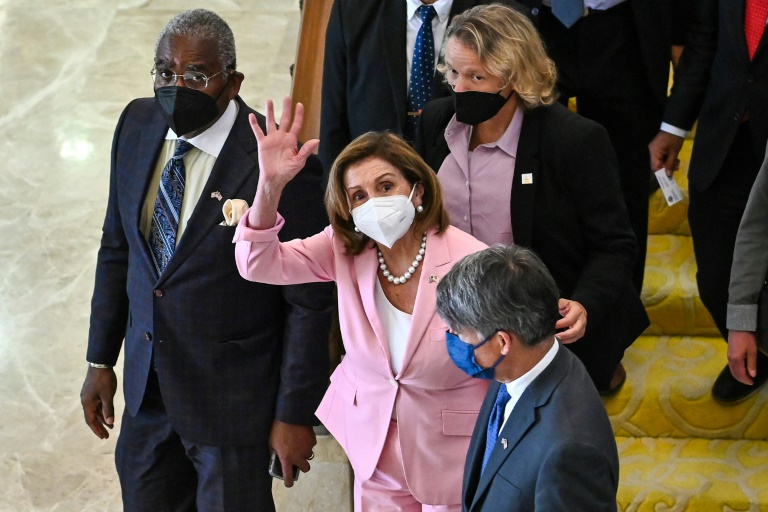
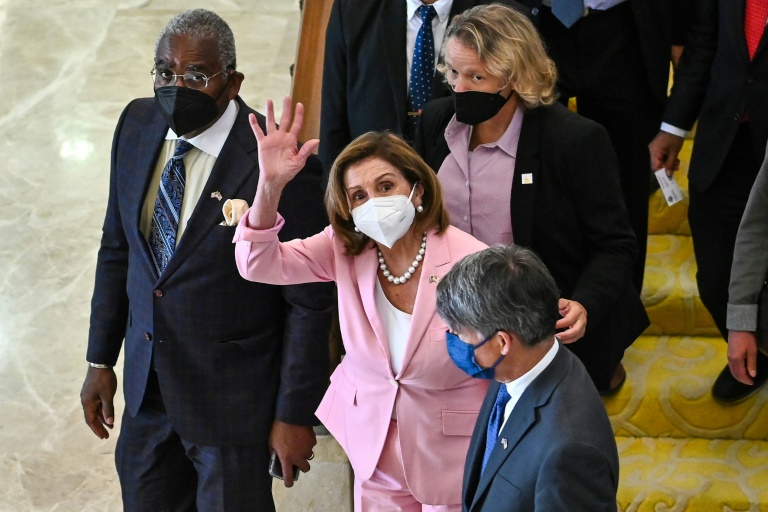
Global stocks mostly rose on Wednesday as investor concerns over US-China tensions eased following House Speaker Nancy Pelosi’s trip to Taiwan.

Oil prices, meanwhile, dropped after the OPEC+ oil cartel, led by Saudi Arabia and Russia, agreed a small increase in production and official data showed US crude stockpiles surprisingly rose last week.

The OPEC+ decision to raise production by 100,000 barrels per day for September is likely to disappoint US President Joe Biden, who travelled to Saudi Arabia last month to lobby for help to tame soaring energy prices, analysts said.

Analyst Edward Gardner, of Capital Economics, warned however that “as has become increasingly glaring recently, though, an increase in quotas is not the same as an increase in production”.

Output is supposed to have returned to pre-Covid levels, but only on paper, as some members of the 23-nation group have struggled to meet their quotas.

The main contracts were down more than two percent, with Brent — the international benchmark — falling back under $100.

– ‘Rollercoaster ride’- 

Traders also nervously watched for reactions to Pelosi’s visit to Taiwan, which China considers a part of its territory.

“What China didn’t do has seemingly been the focal point,” said Patrick O’Hare, at Briefing.com.

“China didn’t take any action that would necessitate a military response from the US. That understanding has sparked a measure of relief for investors as Speaker Pelosi heads to South Korea,” he said.

The highest profile trip to Taiwan in 25 years by a US politician was met with condemnation from Beijing, which vowed “punishment”.

“This week was already shaping up to be another rollercoaster ride and Pelosi’s trip just added another layer of event risk for the markets,” Craig Erlam, an analyst at OANDA, said.

News of the visit had sent shivers on Tuesday through trading floors that were already on edge over the Ukraine war, surging inflation, rising interest rates and slowing economic growth.

However, most equity markets edged upwards on Wednesday.

“There has been a lot of fear but no material effect,” AvaTrade analyst Naeem Aslam told AFP, when asked about the markets impact of Pelosi’s visit.

European markets closed higher, with Paris and Frankfurt both up around one percent and London’s FTSE 100 rising by 0.5 percent.

Wall Street indices were also up in midday trading following positive economic data and another round of corporate earnings that included good results from Starbucks and CVS Health.

The ISM non-manufacturing purchasing managers index showed growth in services activity accelerated in July for the first time in four months.

Investors are also keeping a close eye on moves by central banks to rein in inflation.

The Bank of England is expected to follow other major central banks with an aggressive interest rate hike to tackle surging inflation on Thursday.

The half-percentage-point increased would be the biggest in more than a quarter century.

– Key figures at around 1545 GMT –

New York – Dow: UP 1.0 percent at 32,707.35 points

EURO STOXX 50: UP 1.3 percent at 3,732.54

London – FTSE 100: UP 0.5 percent at 7,445.68 (close)

Frankfurt – DAX: UP 1.0 percent at 13,587.56 (close)

Paris – CAC 40: UP 1.0 percent at 6,472.06 (close)

Tokyo – Nikkei 225: UP 0.5 percent at 27,741.90 (close)

Hong Kong – Hang Seng Index: UP 0.4 percent at 19,767.09 (close)

Shanghai – Composite: DOWN 0.7 percent at 3,163.67 (close)

Taipei – TAIEX: DOWN 0.2 percent at 14,777.02 (close)

Dollar/yen: UP at 134.24 yen from 133.10 yen Tuesday

Euro/dollar: DOWN at $1.0138 from $1.0166

Pound/dollar: DOWN at $1.2126 from $1.2170

Euro/pound: UP at 83.62 pence from 83.57 pence

Brent North Sea crude: DOWN 2.3 percent at $98.21 per barrel

West Texas Intermediate: DOWN 2.4 percent at $92.16 per barrel

burs/lth/raz

Kansas abortion vote rocks US midterms outlook

The surprise vote in Republican-heavy Kansas to repudiate a push for abortion bans fired shockwaves through the US political landscape ahead of November’s midterm elections, with President Joe Biden’s Democrats now seeing a glimmer of hope that they may avoid their predicted drubbing.

Ever since the Supreme Court overturned the nationwide right to terminate a pregnancy in June, US conservatives have been nervously asking whether their triumphant push to severely restrict access to the procedure — a decades-long dream — has gone too far in the run-up to the midterms.

In Kansas, they got an answer.

The state is a Republican stronghold, but in Tuesday’s referendum, a bid to remove abortion rights from the Kansas constitution was rejected by 59 to 41 percent, with unusually heavy turnout.

Given this was the first time Americans had an opportunity to vote on the issue since the conservative-dominated Supreme Court ruled to overturn the half-century-old Roe v. Wade decision enshrining abortion rights, Democrats are rejoicing — and say the backlash is only beginning.

“Tonight’s overwhelming defeat of the ballot referendum in Kansas shows the massive support for abortion rights among voters, and serves as a clear warning to anti-abortion politicians across the country: their time is up,” said Planned Parenthood, which lobbies for abortion access.

“As the first state to vote on abortion rights following the fall of Roe v. Wade, Kansas is a model for a path to restoring reproductive rights across the country through direct democracy,” said the group’s president Alexis McGill Johnson, who also leads the Planned Parenthood Action Fund. 

“We have the opportunity to protect abortion access at the ballot box in November. We know that Kansas will not be our last fight or our last victory.”

Or, as former Democratic senator Claire McCaskill told MSNBC after the vote: “This should be a big flashing signal to every Democratic candidate out there.”

– Trump card –

The November midterms, which will decide which party controls Congress for the last two years of Biden’s first term, is shaping up as rough for Democrats who even now only control the legislature by a few votes.

Blamed by voters for soaring inflation — at a four-decade high — and widespread pessimism in the messy aftermath of the Covid-19 pandemic, Democrats are forecast to lose at least the House of Representatives and maybe the Senate. 

This would likely make Biden a lame duck, turning Washington into an even uglier political battlefield than it is today.

And abortion is not the only reason the midterms campaign will bring ideological tensions to a boil.

Donald Trump is pushing hardline right-wing candidates to boost his brand and possibly set the stage for his own attempted White House comeback in 2024.

Several candidates endorsed by Trump won primary votes held around the United States on Tuesday at the same time as the Kansas referendum, signaling that the disgraced ex-president remains a force.

In Michigan, one of the handful of House Republicans who dared join Democrats in impeaching Trump as president was tossed out, replaced by a former Trump administration official.

Trump’s candidate for the Senate, Blake Masters, won the Republican primary in the swing state of Arizona.

And Trump’s candidate for the sensitive post of Arizona secretary of state, a key figure in running elections, also won. Mark Finchem, a supporter of Trump’s lie that the 2020 presidential election was stolen, has ties to a far-right militia.

Increasingly, Democrats are seeking to link that Trump surge and the abortion dispute, arguing that the midterms will be a battle not just between two parties but generally between political moderates and growing extremism.

Across the country, Democrats have even gone so far as to pay for advertising boosting Trump’s primary candidates — the theory being that they will be easier to beat in November than more moderate Republicans.

For example, according to The New York Times, the Democratic side spent about $627,000 on advertising in Maryland to help Trump-endorsed candidate Dan Cox — another 2020 election lie supporter — win his Republican gubernatorial primary.

First Ukrainian grain shipment sails through Istanbul

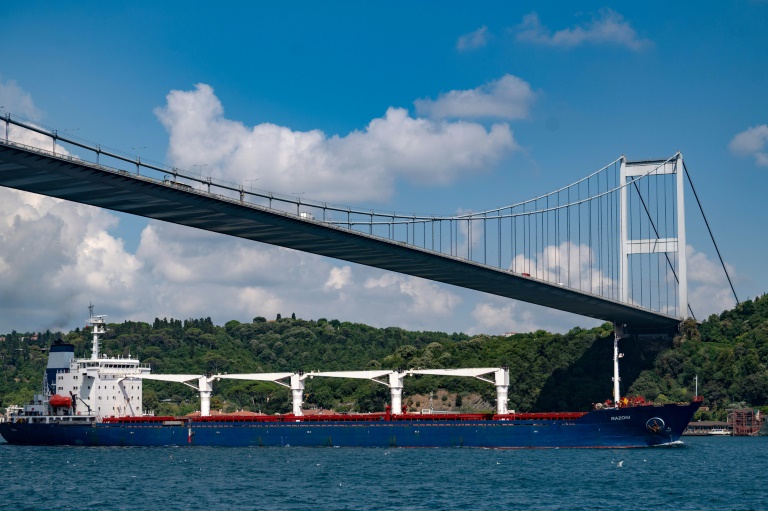
The first shipment of grain from Ukraine since the Kremlin’s invasion five months ago sailed through Istanbul on Wednesday under a landmark deal designed to help alleviate a global food crisis sparked by the war.

The Sierra Leone-flagged Razoni’s voyage from the Black Sea port of Odessa to Lebanon is being watched closely for signs of how the first agreement signed by Moscow and Kyiv since Russia invaded its pro-Western neighbour holds.

A deal brokered by Turkey and the United Nations last month lifted a Russian naval blockade of Ukraine’s Black Sea cities and set terms for millions of tonnes of wheat and other grain to start flowing from filled silos and ports.

Ukraine exports roughly half of the sunflower oil used on the world market and is one of the world’s main suppliers of grain.

An almost complete halt to its exports helped push up global food prices and make imports prohibitively expensive in some of the poorest countries in the world.

The Razoni took 26,000 tonnes of maize through a specially designated corridor in the mine-infested waters of the Black Sea before reaching the northern edge of the Bosphorus Strait on Tuesday.

A team of 20 inspectors from the two warring parties and the UN and Turkey strapped on orange helmets and boarded the ship early Wednesday for a mandated inspection that officials said lasted less than 90 minutes.

– More ships –

The ship’s passage is being overseen by an international team that includes Russian and Ukrainian officials in Istanbul.

“This marks the conclusion of an initial ‘proof of concept’ operation to execute the agreement between the Russian Federation, Turkey, Ukraine and the United Nations,” the team said after the ship was cleared to pass through Istanbul.

The 186-metre (610-foot) long vessel now moves on to the Sea of Marmara and the Aegean before it is set to reach the coast of Lebanon in the coming days.

Kyiv says at least 16 more grain ships are waiting to depart.

But it also accuses Russia of stealing Ukrainian grain in territories seized by Kremlin forces, then shipping it to allied countries such as Syria.

Turkish hopes that the deal could help build trust and lead to ceasefire talks have so far been disappointed.

Turkish President Recep Tayyip Erdogan is expected to push for direct ceasefire negotiations when he meets Vladimir Putin at the Russian leader’s Black Sea retreat in Sochi on Friday.

“We discussed if the grain agreement can be an occasion for a sustainable ceasefire,” Turkish Foreign Minister Mevlut Cavusoglu said after meeting Russian counterpart Sergei Lavrov in Cambodia on Wednesday.

Yet Russia continues to pound southern Ukrainian cities near the Black Sea with missiles and press on with its grinding ground assault across the east.

Moscow said on Wednesday that it had also destroyed a foreign arms depot in a region near Poland that is the further removed from the war.

The attack coincided with a visit to Kyiv by Polish Foreign Minister Zbigniew Rau.

– Counter-offensive –

Kyiv has launched mandatory evacuations from the eastern Donetsk region — now bearing the brunt of Russia’s offensive — because the government does not expect to be able to provide it with heat in the cold winter months.

Ukrainian forces have been pressing a counter-offensive to drive out the Russians from the southern Kherson region that they seized in the first days of war, near the Kremlin-annexed peninsula of Crimea.

The Ukrainian presidency said it had “liberated” seven more villages in the southern region while 53 remained under Russian control.

Ukraine has been bolstered by more supplies of Western weapons — particularly long-range rockets — ahead of the planned push to retake Kherson city.

The United States announced a new tranche of weapons worth $550 million for Ukraine’s forces.

These include longer-range ammunition for increasingly important HIMARS rocket launchers and artillery pieces.

Ukraine is using the HIMARS and similar Western systems to smash Russian arms depots and break down its lines of ground communication across the war zone.

– Energy wars –

The Russians have been unable to seize any major village or city since gaining full control of the Donbas war zone’s smaller Lugansk region in early July.

Ukrainian President Volodymyr Zelensky told US President Joe Biden in a message that “the word ‘HIMARS’ has become almost synonymous with the word ‘justice’ for our country”.

Russia has responded by sharply reducing natural gas supplies to Europe and stepping up its propaganda battle against the West and Kyiv.

The latest Russian reduction along the Nord Stream pipeline to Germany has forced Berlin to reassess its plans to wean itself off nuclear energy in the wake of the 2011 Fukushima disaster in Japan.

Chancellor Olaf Scholz on Wednesday said extending the lifetime of Germany’s three remaining nuclear power plants “can make sense”.

Moscow’s propaganda campaign has included a decision to label Ukraine’s Azov regiment, which fought the Russians in devastated Mariupol, a “terrorist” organisation.

Its members were among 50 Ukrainian servicemen killed last week in an attack on a jail holding prisoners of war in Russian-occupied territory.

Ukraine accuses Moscow of deliberately executing the detainees.

bur-zak/lcm

Deja vu as new Iceland volcano erupts near capital

A volcano erupted in Iceland near the capital Reykjavik on Wednesday, the Icelandic Meteorological Office (IMO) said as live images on local media showed lava spewing out of a fissure in the ground.

The eruption was some 40 kilometres (25 miles) from Reykjavik, near the site of the Mount Fagradalsfjall volcano that erupted for six months in March-September 2021, mesmerising tourists and spectators who flocked to the scene.

This time, a line of glowing red lava could be seen gushing from the ground, spreading into a blanket of smouldering black rock as it cooled and as blue smoke rose up from the hilly landscape on the Reykjanes peninsula. 

“Eruption has started near Fagradalsfjall. Exact location has yet to be confirmed,” the IMO, which monitors seismic activity, wrote on Twitter.

It estimated the size of the fissure at about 300 meters (yards).

It later said the eruption started in the Meradalir valley, less than one kilometre from the scene of last year’s eruption.

Wednesday’s eruption came after a period of intense seismic activity, with about 10,000 earthquakes detected since Saturday, including two with a magnitude of at least 5.0.

While there was no ash plume, the IMO said it was “possible that pollution can be detected due to the gas release”.

Gases from a volcanic eruption — especially sulphur dioxide — can be elevated in the immediate vicinity, and may pose a danger to health and even be fatal.

Gas pollution can also be carried by the wind.

“Risk to populated areas and critical infrastructure is considered very low and there have been no disruptions to flights”, the Icelandic foreign ministry said on Twitter.

More than an hour after the start of the eruption, a commercial passenger jet could be seen flying over the eruption site at low altitude heading for Reykjavik’s main airport Keflavik.

– Awakening –

Mount Fagradalsfjall belongs to the Krysuvik volcanic system on the Reykjanes peninsula in southwestern Iceland.

Iceland has 32 volcanic systems currently considered active, the highest number in Europe. The country has had an eruption every five years on average.

However, until last year’s eruption at Mount Fagradalsfjall, the Reykjanes peninsula had not experienced an eruption since the 13th century, when a volcano erupted for 30 years from 1210 to 1240.

After last year’s eruption, geophysicists had said it could signal the beginning of a new period of eruptions lasting centuries.

Iceland, a vast island near the Arctic Circle, straddles the Mid-Atlantic Ridge, a crack on the ocean floor separating the Eurasian and North American tectonic plates.

The shifting of these plates is in part responsible for Iceland’s intense volcanic activity.

Scientists revive cells and organs in dead pigs

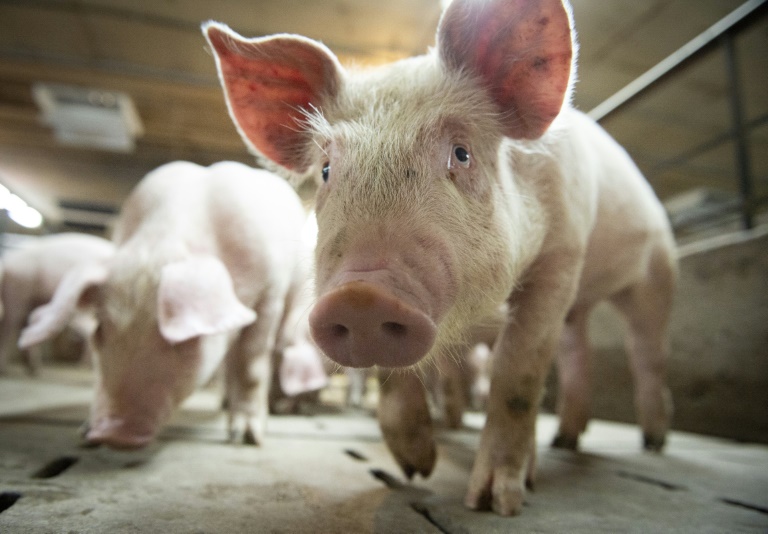
Scientists announced Wednesday they have restored blood flow and cell function throughout the bodies of pigs that were dead for an hour, in a breakthrough experts say could mean we need to update the definition of death itself.

The discovery raised hopes for a range of future medical uses in humans, the most immediate being that it could help organs last longer, potentially saving the lives of thousands of people worldwide in need of transplants.

However it could also spur debate about the ethics of such procedures — particularly after some of the ostensibly dead pigs startled the scientists by making sudden head movements during the experiment.

The US-based team stunned the scientific community in 2019 by managing to restore cell function in the brains of pigs hours after they had been decapitated.

For the latest research, published in the journal Nature, the team sought to expand this technique to the entire body.

They induced a heart attack in the anaesthetised pigs, which stopped blood flowing through the bodies.

This deprives the body’s cells of oxygen — and without oxygen, cells in mammals die.

The pigs then sat dead for an hour.

– ‘Demise of cells can be halted’ –

The scientists then pumped the bodies with a liquid containing the pigs’ own blood, as well as a synthetic form of haemoglobin — the protein that carries oxygen in red blood cells — and drugs that protect cells and prevent blood clots.

Blood started circulating again and many cells began functioning including in vital organs such as the heart, liver and kidney, for the next six hours of the experiment.

“These cells were functioning hours after they should not have been — what this tells us is that the demise of cells can be halted,” Nenad Sestan, the study’s senior author and a researcher at Yale University, told journalists.

Co-lead author David Andrijevic, also from Yale, told AFP the team hopes the technique, called OrganEx, “can be used to salvage organs”.

OrganEx could also make new forms of surgery possible as it creates “more medical wiggle room in cases with no circulation to fix things,” said Anders Sandberg of Oxford University’s Future of Humanity Institute.

The technique could potentially also be used to resuscitate people. However this could increase the risk of bringing back patients to a point where they are unable to live without life support — trapped on what is called the “bridge to nowhere,” Brendan Parent, a bioethicist at the NYU Grossman School of Medicine, said in a linked comment in Nature.

– Could death be treatable? – 

Sam Parnia of the NYU Grossman School of Medicine said it was “a truly remarkable and incredibly significant study”.

It showed that death was not black and white but rather a “biological process that remains treatable and reversible for hours after it has occurred”, he said.

Benjamin Curtis, a philosopher focused on ethics at the UK’s Nottingham Trent University, said the definition of death may need updating because it hinges on the concept of irreversibility.

“This research shows that many processes that we thought were irreversible are not in fact irreversible, and so on the current medical definition of death a person may not be truly dead until hours after their bodily functions have stopped,” he told AFP.

“Indeed, there may be bodies lying in morgues right now that haven’t yet ‘died’, if we take the current definition as valid.”

During the experiment, pretty much all of the OrganEx pigs made powerful movements with their head and neck, said Stephen Latham, a Yale ethicist and study co-author.

“It was quite startling for the people in the room,” he told journalists.

He emphasised that while it was not known what caused the movement, at no point was any electrical activity recorded in the pigs’ brains, showing that they never regained consciousness after death.

While there was a “little burst” on the EEG machine measuring brain activity at the time of the movement, Latham said that was probably caused by the shifting of the head affecting the recording.

However Curtis said the movement was a “major concern” because recent neuroscience research has suggested that “conscious experience can continue even when electrical activity in the brain cannot be measured”.

“So it is possible that this technique did in fact cause the subject pigs to suffer, and would cause human beings to suffer were it to be used on them,” he added, calling for more research.

OPEC+ agrees small oil output rise despite Biden plea

The OPEC+ oil cartel agreed to a tiny increase in production Wednesday, an amount analysts say will disappoint US President Joe Biden after he personally lobbied Saudi leaders for help to tame soaring energy prices.

The cartel led by Saudi Arabia and Russia decided to raise production by 100,000 barrels per day for September, much lower than previous increases, according to a statement issued after a ministerial videoconference.

Oil prices seesawed following the announcement, rising before falling more than one percent in afternoon trading, with the main international contract, Brent, slipping under $100 per barrel.

“The smallest increase in OPEC+ history will do little to help the ongoing global energy crisis,” Edward Moya, analyst at OANDA trading platform, told AFP.

“The Biden administration will not be happy and this will be a setback in improving US-Saudi relations,” said Moya, who expects oil prices to remain stuck around $100.

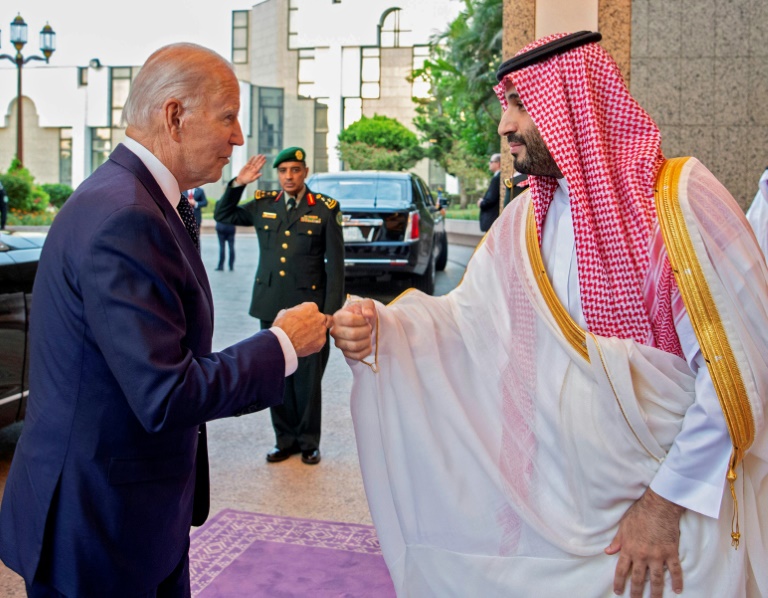
With energy prices soaring following Russia’s war in Ukraine, Biden made a controversial trip to Saudi Arabia in July in part to convince the kingdom to loosen the production taps to stabilise the market and curb rampant inflation.

The US president met Crown Prince Mohammed bin Salman despite his promise to make the kingdom a “pariah” in the wake of the 2018 killing of journalist Jamal Khashoggi.

Biden said after his meetings with Saudi officials that he was “doing all I can” to increase the oil supply.

“A 100,000 barrel per day output hike is a pittance,” said Han Tan, chief market analyst at Exinity.

“It’s likely that the Biden administration will feel let down, considering its overtures to Saudi Arabia have yielded scant results, at least this time around,” Tan said.

– ‘Token gesture’ –

Saudi Arabia faced a balancing act between its old ally, Washington, and its OPEC+ partner Moscow, which has been hit by Western sanctions over the Ukraine invasion.

“The increase was a token gesture to appease US President Joe Biden,” said Stephen Brennock, analyst at PVM Energy.

The OPEC+ statement emphasised the “value and importance of maintaining consensus as essential to the cohesion” of the group, which includes the 13-member Organization of the Petroleum Exporting Countries and 10 allies including Russia.

Russia’s deputy prime minister in charge of energy, Alexander Novak, said OPEC+ made a “cautious” decision due to “uncertainties in the market”.

He noted that Covid cases are rising.

“We see uncertainties associated with the disruption of transport and logistics chains due to restrictions being introduced, including for Russian oil and oil products,” Novak said.

– Western lobbying –

Biden is not the only Western leader to have lobbied bin Salman.

French President Emmanuel Macron hosted him last week in Paris, with Macron’s office saying the two leaders agreed to work “to ease the effects” of the Ukraine war.

Before announcing he would resign as British prime minister, Boris Johnson had also visited bin Salman in Riyadh in March to plead for higher oil production.

After cutting production in 2020 in response to falling prices during the Covid pandemic, OPEC+ agreed to raise its quotas last year as demand rebounded.

OPEC+ began to add around 400,000 barrels per day to the market last year, renewing the policy every month until June. It upped production by almost 650,000 bpd in July and August.

Its output is supposed to have returned to pre-Covid levels after cuts totalling 9.7 million bpd — but only on paper, as some members of the 23-nation group have struggled to meet their quotas.

OPEC+ agrees small oil output rise despite Biden plea

The OPEC+ oil cartel agreed to a tiny increase in production Wednesday, an amount analysts say will disappoint US President Joe Biden after he personally lobbied Saudi leaders for help to tame soaring energy prices.

The cartel led by Saudi Arabia and Russia decided to raise production by 100,000 barrels per day for September, much lower than previous increases, according to a statement issued after a ministerial videoconference.

Oil prices seesawed following the announcement, rising before falling more than one percent in afternoon trading, with the main international contract, Brent, slipping under $100 per barrel.

“The smallest increase in OPEC+ history will do little to help the ongoing global energy crisis,” Edward Moya, analyst at OANDA trading platform, told AFP.

“The Biden administration will not be happy and this will be a setback in improving US-Saudi relations,” said Moya, who expects oil prices to remain stuck around $100.

With energy prices soaring following Russia’s war in Ukraine, Biden made a controversial trip to Saudi Arabia in July in part to convince the kingdom to loosen the production taps to stabilise the market and curb rampant inflation.

The US president met Crown Prince Mohammed bin Salman despite his promise to make the kingdom a “pariah” in the wake of the 2018 killing of journalist Jamal Khashoggi.

Biden said after his meetings with Saudi officials that he was “doing all I can” to increase the oil supply.

“A 100,000 barrel per day output hike is a pittance,” said Han Tan, chief market analyst at Exinity.

“It’s likely that the Biden administration will feel let down, considering its overtures to Saudi Arabia have yielded scant results, at least this time around,” Tan said.

– ‘Token gesture’ –

Saudi Arabia faced a balancing act between its old ally, Washington, and its OPEC+ partner Moscow, which has been hit by Western sanctions over the Ukraine invasion.

“The increase was a token gesture to appease US President Joe Biden,” said Stephen Brennock, analyst at PVM Energy.

The OPEC+ statement emphasised the “value and importance of maintaining consensus as essential to the cohesion” of the group, which includes the 13-member Organization of the Petroleum Exporting Countries and 10 allies including Russia.

Russia’s deputy prime minister in charge of energy, Alexander Novak, said OPEC+ made a “cautious” decision due to “uncertainties in the market”.

He noted that Covid cases are rising.

“We see uncertainties associated with the disruption of transport and logistics chains due to restrictions being introduced, including for Russian oil and oil products,” Novak said.

– Western lobbying –

Biden is not the only Western leader to have lobbied bin Salman.

French President Emmanuel Macron hosted him last week in Paris, with Macron’s office saying the two leaders agreed to work “to ease the effects” of the Ukraine war.

Before announcing he would resign as British prime minister, Boris Johnson had also visited bin Salman in Riyadh in March to plead for higher oil production.

After cutting production in 2020 in response to falling prices during the Covid pandemic, OPEC+ agreed to raise its quotas last year as demand rebounded.

OPEC+ began to add around 400,000 barrels per day to the market last year, renewing the policy every month until June. It upped production by almost 650,000 bpd in July and August.

Its output is supposed to have returned to pre-Covid levels after cuts totalling 9.7 million bpd — but only on paper, as some members of the 23-nation group have struggled to meet their quotas.

Taiwan defiant as China readies military drills over Pelosi visit

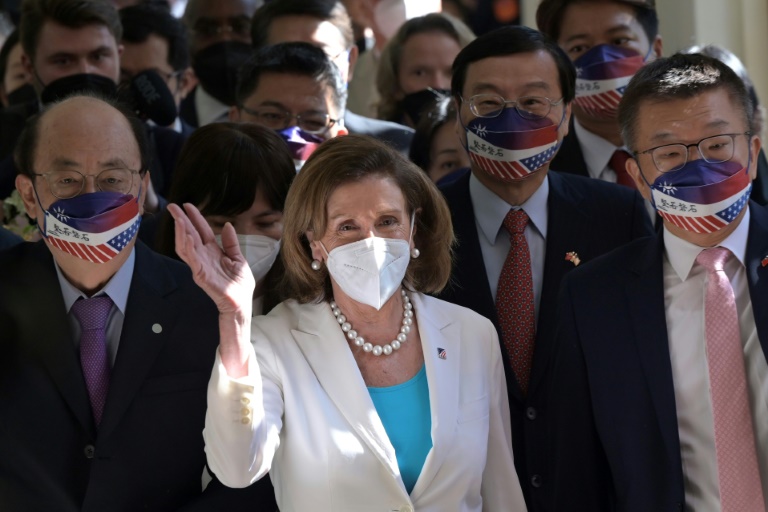
Taiwan struck a defiant tone Wednesday as it hosted US House Speaker Nancy Pelosi, with a furious China gearing up for military exercises dangerously close to the island’s shores in retaliation for the visit.

Pelosi landed in Taiwan late Tuesday despite a series of increasingly stark threats from Beijing, which views the island as its territory and warned it would consider the visit a major provocation.

China responded swiftly, announcing what it said were “necessary and just” military drills in the seas just off Taiwan’s coast — some of the world’s busiest waterways.

“In the current struggle surrounding Pelosi’s Taiwan visit, the United States are the provocateurs, China is the victim,” Beijing’s foreign ministry said.

But Taiwanese President Tsai Ing-wen said the island of 23 million would not be cowed. 

“Facing deliberately heightened military threats, Taiwan will not back down. We will… continue to hold the line of defence for democracy,” Tsai said at an event with Pelosi in Taipei.

She also thanked the 82-year-old US lawmaker for “taking concrete actions to show your staunch support for Taiwan at this critical moment”.

China tries to keep Taiwan isolated on the world stage and opposes countries having official exchanges with Taipei.

Pelosi, second in line to the presidency, is the highest-profile elected US official to visit Taiwan in 25 years.

“Today, our delegation… came to Taiwan to make unequivocally clear we will not abandon our commitment to Taiwan,” she said at the event with Tsai.

She added her group had come “in peace to the region”.

Before leaving Taiwan, Pelosi also met with several dissidents who have previously been in the crosshairs of China’s wrath — including Tiananmen protest student leader Wu’er Kaixi. 

“We are in high agreement that Taiwan is in the frontline (of democracy),” Wu’er said. 

“Both the United States and Taiwan governments need to… conduct more in defending human rights.”

Pelosi’s delegation left Taiwan on Wednesday evening en route to South Korea, her next stop in an Asia tour that has included stops in Singapore and Malaysia. She will wrap up her trip in Japan.

– Crossing the median line –

After her departure, Taiwan’s defence ministry announced late Wednesday that 27 Chinese warplanes had entered the island’s air defence identification zone (ADIZ).

Over the last two years, Beijing has ramped up military incursions into Taiwan’s ADIZ — which is not the same as the island’s territorial airspace, but includes a far greater area. 

The ministry published a map that showed 16 Su-30s and 6 J-11s had crossed the so-called “median line” of the Taiwan Strait — an unofficial boundary in the narrow waterway, which separates the island from the mainland and straddles vital shipping lanes.

Chinese jets also crossed over the so-called “median line” during two high-level visits by US officials in 2020 during Donald Trump’s presidency.

Nevertheless, that is still a relatively rare occurrence. 

– ‘High alert’ –

President Joe Biden’s administration said in the run-up to Pelosi’s visit that US policy towards Taiwan remained unchanged.

This means support for its government while diplomatically recognising Beijing over Taipei, and opposing a formal independence declaration by Taiwan or a forceful takeover by China.

Beijing summoned US Ambassador Nicholas Burns over Pelosi’s visit, while the Chinese military declared it was on “high alert” and would “launch a series of targeted military actions in response” to the visit.

The drills will include “long-range live ammunition shooting” in the Taiwan Strait.

The zone of Chinese exercises will be within 20 kilometres (12 miles) of Taiwan’s shoreline at some points, according to coordinates released by the Chinese military.

Taiwan’s defence ministry spokesman Sun Li-fang said Wednesday that some of the areas of China’s drills “breach into… (Taiwan’s) territorial waters”. 

“This is an irrational move to challenge the international order.”

But a source with the Chinese military told AFP that the exercises would be staged “in preparation for actual combat”. 

“If the Taiwanese forces come into contact with the PLA on purpose and accidentally fires a gun, the PLA will take stern countermeasures, and all the consequences will be borne by the Taiwanese side,” the source warned. 

Taiwan’s Mainland Affairs Council, which sets the government’s China policies, accused Beijing of “vicious intimidation” and called for democratic countries to “unite and take a solemn stand to punish and deter” Beijing.

– ‘We shouldn’t be too worried’ –

Beijing has long used diplomatic, military and economic pressure on Taiwan.

China has announced curbs on the import of fruit and fish from Taiwan — citing the detection of pesticide residue and the coronavirus. It also halted shipments of sand to the island.

Outside the Taiwanese parliament, 31-year-old computer programmer Frank Chen shrugged off the Chinese warnings over Pelosi’s visit.

“I think China will take more threatening actions and ban more Taiwanese products, but we shouldn’t be too worried,” he told AFP.

There was a small group of pro-China demonstrators outside parliament as well.

“The United States uses Taiwan as a pawn in its confrontation with China, to try to drag China down,” Lee Kai-dee, a 71-year-old retired researcher, told AFP.

“If the United States continues to act this way, Taiwan will end up like Ukraine.”

China has vowed to annex self-ruled, democratic Taiwan one day, by force if necessary.

Russia’s invasion of Ukraine in February heightened fears in Taiwan that China may similarly follow through on its threats to annex the island.

Stock markets rise after Pelosi's Taiwan trip

Global stocks mostly rose on Wednesday as investor concerns over US-China tensions eased following House Speaker Nancy Pelosi’s trip to Taiwan.

Oil prices also marginally rose after the OPEC+ oil cartel, led by Saudi Arabia and Russia, agreed a small increase in production.

The decision to raise production by 100,000 barrels per day for September is likely to disappoint US President Joe Biden, who had lobbied for a big hike to tame soaring energy prices, analysts said.

Analyst Edward Gardner, of Capital Economics, warned however that “as has become increasingly glaring recently, though, an increase in quotas is not the same as an increase in production.”

Output is supposed to have returned to pre-Covid levels, but only on paper, as some members of the 23-nation group have struggled to meet their quotas.

The main contracts were only slightly higher, with Brent — the international benchmark — rising just over $100.

– ‘Rollercoaster ride’- 

Traders also nervously watched for reactions — so far — to Pelosi’s visit to Taiwan, which China considers a part of its territory.

“What China didn’t do has seemingly been the focal point,” said Patrick O’Hare, at Briefing.com.

“China didn’t take any action that would necessitate a military response from the US. That understanding has sparked a measure of relief for investors as Speaker Pelosi heads to South Korea,” he said.

The highest profile trip to Taiwan in 25 years by a US politician was met with condemnation from Beijing, which vowed “punishment”.

“This week was already shaping up to be another rollercoaster ride and Pelosi’s trip just added another layer of event risk for the markets,” Craig Erlam, an analyst at OANDA, said.

News of the visit had sent shivers on Tuesday through trading floors that were already on edge over the Ukraine war, surging inflation, rising interest rates and slowing economic growth.

However, most equity markets edged upwards on Wednesday.

London nudged higher on the eve of a widely-expected half-point interest rate hike by the Bank of England.

“There has been a lot of fear but no material effect,” AvaTrade analyst Naeem Aslam told AFP, when questioned about the markets impact of Pelosi’s visit.

“Hence, we see equities holding on to their gains and moving higher.” 

– Rate hikes –

Analysts are also keen to find out what the White House’s response will be, particularly ahead of mid-term elections in November, with anti-China rhetoric playing well with voters but Biden keen not to further harm economic ties.

SPI Asset Management’s Stephen Innes added that the US administration was probably not likely to cut Trump-era tariffs before then.

Wednesday’s broadly positive performance followed a drop on Wall Street, where the Taiwan news was compounded by a series of hawkish comments from Federal Reserve officials indicating more big interest rate hikes could still be in the pipeline.

– Key figures at around 1350 GMT –

London – FTSE 100: UP 0.3 percent at 7,434.31  points

Frankfurt – DAX: UP 0.4 percent at 13,496.38 

Paris – CAC 40: UP 0.7 percent at 6,453.31 

EURO STOXX 50: UP 0.8 percent at 3,713.60

New York – Dow: UP 0.7 percent at 32,631.29

Tokyo – Nikkei 225: UP 0.5 percent at 27,741.90 (close)

Hong Kong – Hang Seng Index: UP 0.4 percent at 19,767.09 (close)

Shanghai – Composite: DOWN 0.7 percent at 3,163.67 (close)

Taipei – TAIEX: DOWN 0.2 percent at 14,777.02 (close)

Dollar/yen: UP at 133.61 yen from 133.10 yen Tuesday

Euro/dollar: UP at $1.0175 from $1.0166

Pound/dollar: DOWN at $1.2160 from $1.2170

Euro/pound: UP at 83.65 pence from 83.57 pence

Brent North Sea crude: UP 0.2 percent at $100.75 per barrel

West Texas Intermediate: UP 0.1 percent at $94.52 per barrel

burs/rfj-kjm/lth

Stock markets rise after Pelosi's Taiwan trip

Global stocks mostly rose on Wednesday as investor concerns over US-China tensions eased following House Speaker Nancy Pelosi’s trip to Taiwan.

Oil prices also marginally rose after the OPEC+ oil cartel, led by Saudi Arabia and Russia, agreed a small increase in production.

The decision to raise production by 100,000 barrels per day for September is likely to disappoint US President Joe Biden, who had lobbied for a big hike to tame soaring energy prices, analysts said.

Analyst Edward Gardner, of Capital Economics, warned however that “as has become increasingly glaring recently, though, an increase in quotas is not the same as an increase in production.”

Output is supposed to have returned to pre-Covid levels, but only on paper, as some members of the 23-nation group have struggled to meet their quotas.

The main contracts were only slightly higher, with Brent — the international benchmark — rising just over $100.

– ‘Rollercoaster ride’- 

Traders also nervously watched for reactions — so far — to Pelosi’s visit to Taiwan, which China considers a part of its territory.

“What China didn’t do has seemingly been the focal point,” said Patrick O’Hare, at Briefing.com.

“China didn’t take any action that would necessitate a military response from the US. That understanding has sparked a measure of relief for investors as Speaker Pelosi heads to South Korea,” he said.

The highest profile trip to Taiwan in 25 years by a US politician was met with condemnation from Beijing, which vowed “punishment”.

“This week was already shaping up to be another rollercoaster ride and Pelosi’s trip just added another layer of event risk for the markets,” Craig Erlam, an analyst at OANDA, said.

News of the visit had sent shivers on Tuesday through trading floors that were already on edge over the Ukraine war, surging inflation, rising interest rates and slowing economic growth.

However, most equity markets edged upwards on Wednesday.

London nudged higher on the eve of a widely-expected half-point interest rate hike by the Bank of England.

“There has been a lot of fear but no material effect,” AvaTrade analyst Naeem Aslam told AFP, when questioned about the markets impact of Pelosi’s visit.

“Hence, we see equities holding on to their gains and moving higher.” 

– Rate hikes –

Analysts are also keen to find out what the White House’s response will be, particularly ahead of mid-term elections in November, with anti-China rhetoric playing well with voters but Biden keen not to further harm economic ties.

SPI Asset Management’s Stephen Innes added that the US administration was probably not likely to cut Trump-era tariffs before then.

Wednesday’s broadly positive performance followed a drop on Wall Street, where the Taiwan news was compounded by a series of hawkish comments from Federal Reserve officials indicating more big interest rate hikes could still be in the pipeline.

– Key figures at around 1350 GMT –

London – FTSE 100: UP 0.3 percent at 7,434.31  points

Frankfurt – DAX: UP 0.4 percent at 13,496.38 

Paris – CAC 40: UP 0.7 percent at 6,453.31 

EURO STOXX 50: UP 0.8 percent at 3,713.60

New York – Dow: UP 0.7 percent at 32,631.29

Tokyo – Nikkei 225: UP 0.5 percent at 27,741.90 (close)

Hong Kong – Hang Seng Index: UP 0.4 percent at 19,767.09 (close)

Shanghai – Composite: DOWN 0.7 percent at 3,163.67 (close)

Taipei – TAIEX: DOWN 0.2 percent at 14,777.02 (close)

Dollar/yen: UP at 133.61 yen from 133.10 yen Tuesday

Euro/dollar: UP at $1.0175 from $1.0166

Pound/dollar: DOWN at $1.2160 from $1.2170

Euro/pound: UP at 83.65 pence from 83.57 pence

Brent North Sea crude: UP 0.2 percent at $100.75 per barrel

West Texas Intermediate: UP 0.1 percent at $94.52 per barrel

burs/rfj-kjm/lth

Close Bitnami banner
Bitnami