AFP

Dutch declare shortage in 'land of water'

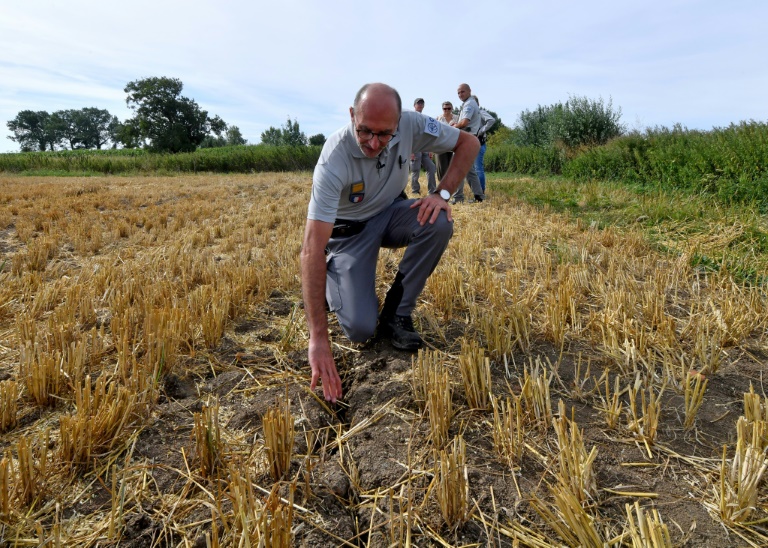
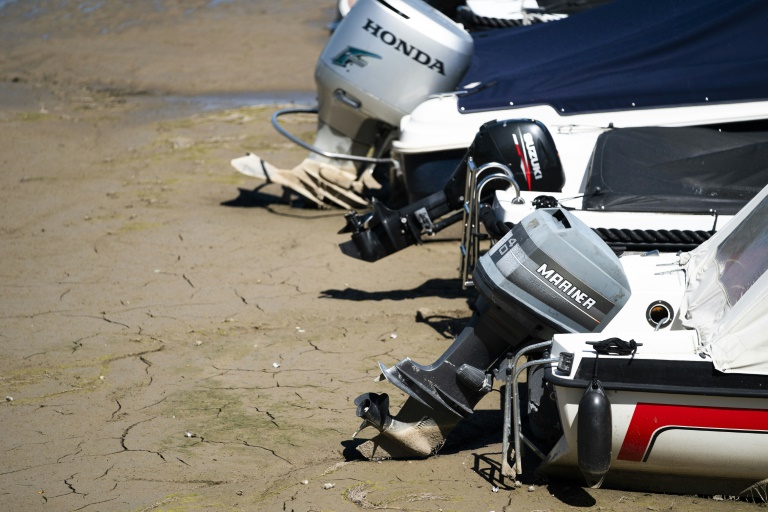
The Netherlands declared an official water shortage on Wednesday as the low-lying “land of water” was hit by Europe’s sweltering summer.

The Dutch government said it was eyeing further measures to conserve water amid a drought, and authorities have already imposed limits on farming and shipping.

The country is protected from the sea by a famed system of dams, dykes and canals but remains particularly vulnerable to climate change.

“The Netherlands is a land of water, but here too our water is precious,” Infrastructure and Water Management Minister Mark Harbers said in a statement.

Parts of the Netherlands have already banned farmers from spraying their crops with surface water, in a blow for the world’s second largest agricultural exporter after the United States.

Some canal locks for shipping have also been suspended, with salt water from the sea creeping back into some rivers as their water levels are so low, Harbers added.

Priority would now be given to ensuring that vital dykes remain safe, and then to drinking water and energy supplies, he said.

The drought was “becoming increasingly visible in nature” and it was “conceivable that the drought will affect more social interests”, Harbers added.

“That is why I ask all Dutch people to think carefully about whether they should wash their car or fill their inflatable swimming pool completely.”

With around a third of its surface area lying below sea level, the Netherlands has historically battled against the weather. 

Climate change has now accentuated its struggle.

In July the Netherlands recorded its third-highest temperature since records began — 39.4C. A month earlier it suffered its first fatal tornado for 30 years.

Driest July in memory imperils Europe's crops

As much of Europe bakes in a third heatwave since June, fears are growing that extreme drought driven by climate change in the continent’s breadbasket nations will dent stable crop yields and deepen the cost-of-living crisis. 

The European Commission on Wednesday urged EU member states to re-use treated urban waste water as irrigation on the continent’s parched farms, after France and parts of England saw their driest July on record.

In France, where an intense drought has hammered farmers and prompted widespread limits on freshwater use, there was just 9.7 millimetres (0.38 inches) of rain last month, Meteo France said.

That was 84 percent down on the average levels seen for July between 1991 and 2022, making it the driest month since March 1961, the agency added.

Farmers nationwide are reporting difficulties in feeding livestock because of parched grasslands, while irrigation has been banned in large areas of the northwest and southeast due to freshwater shortages.

Environment Minister Christophe Bechu said July’s rainfall represented “just 12 percent of what’s needed”. 

France is the forth-largest exporter of wheat and among the top five exporters of maize globally. Poor harvests due to drought may heap further pressure on grain supplies after Russia’s invasion of Ukraine caused global shockwaves. 

“Our food system has been under stress for a while, and with the supply issues from Ukraine, that has only gotten worse,” said Shouro Dasgupta, environmental economist at the Euro-Mediterranean Center on Climate Change.

“These heatwaves are on top of droughts and will see crops wither faster.”

Dasgupta said that extreme heat driven by climate change is also contributing to food price inflation for consumers and harsher conditions for producers. 

“Droughts and heatwaves impact people’s livelihoods. People will be less able to afford food,” he told AFP. 

“And during heatwaves outdoor workers are only able to work fewer hours, which brings cascading impacts for supply.”

– ‘Food systems not working’ –

Britain’s Met Office this week said much of southern and eastern England had their driest July on record. 

Some water providers have already announced restrictions affecting millions of people, and fruit and vegetable producers have announced several crop losses such as beans and berries.

Britain’s inflation surged to a 40-year high in June on rising fuel and food prices.

Elizabeth Robinson, director of the London School of Economics’ Grantham Research Institute on Climate Change and the Environment, said that spiralling food costs — worsened by heat-induced losses in Europe and Britain — were a sign that “food systems aren’t working for people.”

“There are some long-term, difficult conversations that need to be had, particularly about food waste and the diversion of grains away from food for people to feed animals,” she told AFP.

In Spain, already parched under a prolonged hot spell, temperatures will breach 40C in several areas this week. 

The heat is worsening water shortages that have dogged Spanish agriculture since last winter, with local restrictions on water usage in the most affected regions. 

The government said this week that Spain’s reservoirs are at just 40.4 percent capacity.

Juan Carlos Hervas, from the COAG farmers’ union, told AFP that Spains olive harvest from unirrigated land will come in at less than 20 percent of the average of the last five years. 

Spain supplies nearly half the world’s olive oil.  

– ‘Worst drought this century’ –

Portugal, where temperatures yet again breached the 40C mark this week, is experiencing “the worst drought this century”, environment minister Jose Duarte Cordeiro warned last month.

Portugal along with Poland has asked its citizens to cut down on water use to ease the pressure.

“Water authorities across Europe are unprepared for what scientists have been saying for three decades,” said Dasgupta. “A high incidence of heatwaves will hit water supply “.

The European Commission in an updated assessment last month found that nearly half — 44 percent — of the EU and Britain was currently experiencing “warning” levels of drought. 

It warned that exceptional low soil moisture levels meant several countries, including France, Romania, Spain, Portugal and Italy will experience reduced crop yield in 2022. 

“The unfavourable  forecasts  for the coming months may compromise the water supply and will likely keep the competition for this resource high,” it said. 

A separate EU bulletin, also last month, said that EU yields of soybean, sunflowers and maize were already 9 percent below average. 

On Wednesday Virginijus Sinkevicius, EU commissioner for the environment, fisheries and the oceans. urged EU nations to re-use more of its waste water.

“We need to stop wasting water and use this resource more efficiently to adapt to the changing climate and ensure the security and sustainability of our agricultural supply.” he said.

Turkish inflation stabilises at under 80% in boost to Erdogan

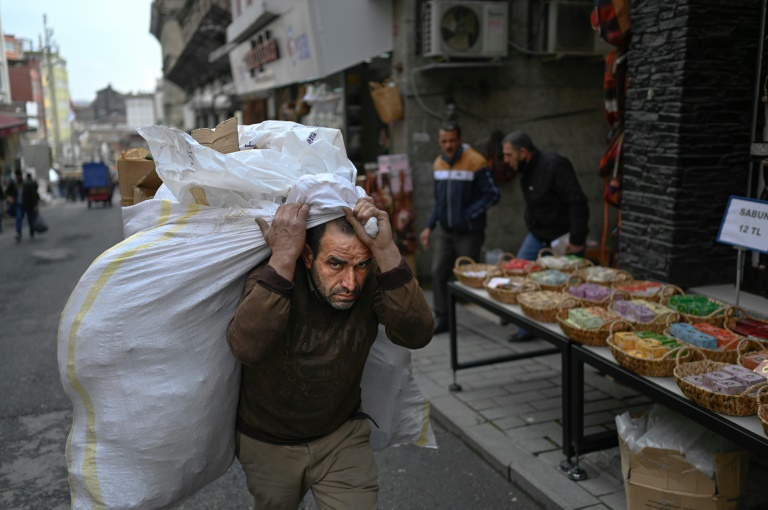
Turkey’s annual inflation rate stabilised in July at just under 80 percent, official data showed on Wednesday, helping support President Recep Tayyip Erdogan’s pledges that runaway price increases would soon stop.

The official annual rate of consumer price increases reached 79.6 percent in July compared to 78.6 percent in June.

Turkey plunged into a fresh economic crisis when Erdogan set off on an unusual economic experiment nearly a year ago that attempted to bring down chronically high inflation by slashing interest rates.

Conventional economic theory, accepted by world governments, states that lower interest rates drive growth and push up prices by building up demand.

Turkey now has a real interest rate that factors in inflation of negative 64.4 percent — the lowest in the world by a substantial margin.

This means that Turks have a strong incentive to spend as much as they can before their liras lose even more value.

But Erdogan has repeatedly urged “patience” and vowed that prices would start falling again at the start of next year.

“A price stabilisation trend has already started,” Erdogan said two days before the latest inflation report was released.

“We hope that inflation will enter a significant downward trend in the first months of the new year.”

The central bank now forecasts the inflation rate to ease back down to roughly 40 percent by the time Erdogan is due to face a difficult re-election next July.

– Doubt in data –

Opposition leaders and many Turks no longer trust official government data.

The annual inflation rate reported this week in Istanbul — headed by a popular opposition party figure — was roughly 100 percent.

“Turkey’s official inflation and Istanbul’s inflation have historically moved in tandem,” the Turkish central bank’s former chief economist Hakan Kara tweeted.

“The difference, which has reached 19.5 percentage points in the last four months, is remarkable.”

But a respected monthly study released by independent economists from Turkey’s ENAG research institute also showed prices stabilising — although at a much higher rate than the one reported by the state statistics agency.

ENAG said the official annual rate of consumer price increases reached 176 percent in July compared to 174 percent in June.

The government’s July report showed price increases being led by a 119-percent jump in the cost of transportation.

This helps back government arguments that inflation is being driven by external factors such as soaring energy prices caused by Russia’s standoff with the West over its invasion in Ukraine.

Food and non-alcoholic prices rose by 95 percent because of the sharp depreciation of the lira that makes imports more expensive.

The Turkish currency has lost more than half its value against the dollar in the past 12 months.

It now trades at nearly 18 to the dollar compared to the 3.5 mark at which it stood in 2018.

Erdogan’s popularity has suffered badly in the second decade of his rule as a result.

A poll of polls released this week showed him losing in a runoff against any of the top five potential challengers to his rule.

Scholz opens door to extend nuclear as Russia squeezes gas supply

German Chancellor Olaf Scholz on Wednesday raised the possibility of keeping nuclear plants going as he accused Russia of blocking the delivery of a key turbine to throttle gas supplies to Europe.

The continent’s biggest economy has been scrambling for energy sources to fill a gap left by a reduction in gas supplies from Moscow. 

Standing next to the turbine, Scholz said that extending the lifetime of Germany’s three remaining nuclear power plants “can make sense”.

The power stations, which are set to be taken off the grid at the end of the year, were “relevant exclusively for electricity production, and only for a small part of it,” Scholz said.

In total, the nuclear fleet accounts for six percent of Germany’s electricity output.

The government has said it will await the outcome of a new “stress test” of the national electric grid before determining whether to stick with the long-planned phaseout.

– Nuclear switch –

Former Chancellor Angela Merkel spectacularly decided to ditch atomic energy in 2011 following the Fukushima nuclear disaster in Japan.

Extending the lifetime of the plants has set off a heated debate in Germany, where nuclear power has been a source of controversy stretching back before Merkel’s move.

The question has split the governing coalition, with Scholz’s Social Democrats and the Greens hitherto sceptical, and the FDP favouring an extension.

Germany has already moved to restart mothballed coal power plants to guard against an energy shortfall.

The first of these was already “supplying electricity to the network”, Scholz said Wednesday, adding that Germany had to prepare for a “difficult time”. 

The squeeze comes as Russia dwindles supplies of gas, which Germany has long relied on to power industry and heat homes.

Russian energy giant Gazprom has chalked up limited supplies to technical issues.

The delayed return of a turbine from Canada, where the unit was being serviced, was behind the initial reduction in deliveries via the Nord Stream 1 gas pipeline in June, according to Gazprom.

Supplies via the energy link were further reduced to around 20 percent of capacity in late July, after Gazprom halted the operation of one of the last two operating turbines due to the “technical condition of the engine”.

– Turbine trouble –

Berlin has dismissed Gazprom’s justifications for the reduction to supply, seeing instead a “political” move in response to the West’s support for Ukraine.

The turbine which was transferred from Canada to Germany was “available and working”, Scholz said Wednesday.

“There is no reason why this delivery cannot happen,” he said, adding that it had received “all the approvals” needed for export from Germany to Russia.

Pipeline operators only had to say “they want to have the turbine and provide the necessary customs information for transport to Russia”, Scholz said.

But Kremlin spokesperson Dmitry Peskov insisted that Gazprom was still waiting for documents confirming the unit was “not affected by sanctions”.

It was however “technologically possible” in the opinion of Russian President Vladimir Putin to continue deliveries via the Nord Stream 2 pipeline, Peskov said.

The second pipeline, which runs parallel to Nord Stream 1, stands completed but was blocked by the German government in the run up to the invasion of Ukraine.

Former Chancellor Gerhard Schroeder, who signed off on the pipeline while in office, told German magazine Stern it was “the easiest solution” to use Nord Stream 2 instead.

But Scholz has rejected the call, saying Nord Stream 1 provided sufficient capacity for gas flows. 

Moscow’s move to limit supplies sent a “difficult message” to the world by creating doubt over Russia’s commitment to its agreements, he added.

OPEC+ meets after Biden push to hike oil output

The OPEC+ group of major oil exporters began talks on its output strategy on Wednesday after US President Joe Biden lobbied Saudi Arabia to boost production to tame soaring prices.

The cartel led by Saudi Arabia and Russia has so far resisted US pressure to ramp up production significantly after Moscow’s invasion of Ukraine sent oil prices soaring.

After cutting production in 2020 in response to falling prices during the Covid pandemic, OPEC+ began to modestly raise it last year and has renewed the policy every month.

Its output is supposed to have returned to pre-Covid levels — but only on paper, as some members of the 23-nation group have struggled to meet their quotas.

Craig Erlam, analyst at OANDA trading platform, said the OPEC+ meeting will show whether “President Biden has any influence in the cartel at all”.

The OPEC+ group began technical talks early afternoon, to be followed by a ministerial meeting by videoconference.

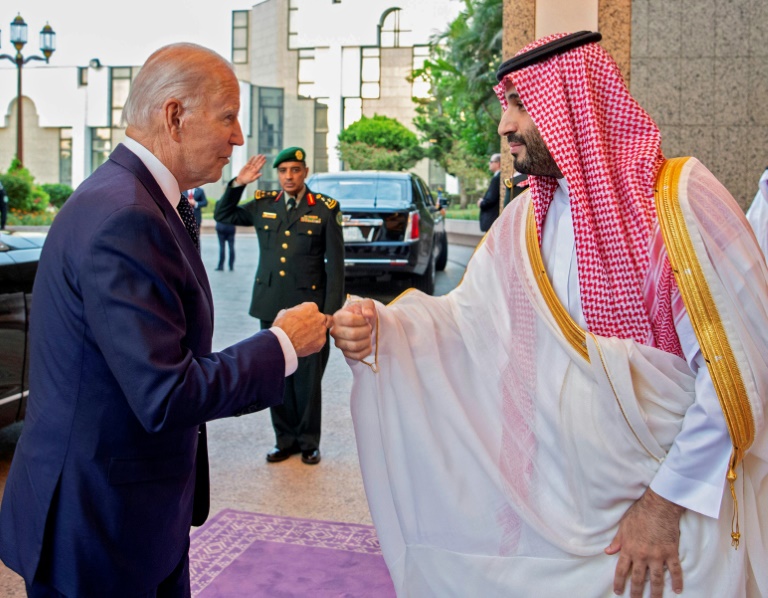
Biden made a controversial trip to Saudi Arabia in July in part to convince the kingdom to loosen the production taps to stabilise the market and curb rampant inflation.

The US president met Crown Prince Mohammed bin Salman despite his promise to make the kingdom a “pariah” in the wake of the 2018 killing of journalist Jamal Khashoggi.

Biden said after his meetings with Saudi officials that he was “doing all I can” to increase the oil supply.

“Saudi Arabia and its allies will have to decide whether to heed Joe Biden’s request and raise production or show solidarity towards Russia by staying put,” said Tamas Varga, analyst at oil broker PVM.

French President Emmanuel Macron also reached out to bin Salman, hosting him last week in Paris, with Macron’s office saying the two leaders agreed to work “to ease the effects” of the Ukraine war.

Before resigning as British prime minister, Boris Johnson had also visited bin Salman in Riyadh in March to lobby for higher oil production.

But Stephen Innes, managing partner at SPI Asset Management, said OPEC+ is “unlikely to announce a significant production increase given growing recession fears” and a drop in oil prices since early June.

– More cautious? –

After reaching close to $140 per barrel in early March, crude prices have slid further this week following weak economic data from China, the world’s biggest importer of oil.

The main contracts were slightly down on Wednesday ahead of the meeting, with Brent — the international benchmark — slipping back under $100.

This week’s price slide “could make OPEC+ more cautious”, Commerzbank said in a note.

The German bank said news that Libyan production has returned to normal levels for the first time in nearly four months could also serve as an argument against a bigger expansion in output.

OPEC+ began to add around 400,000 barrels per day to the market last year, renewing the policy every month until June, when it upped production by almost 650,000 bpd.

Analysts say the group has now reversed cuts totalling 9.7 million bpd that had been agreed in 2020, though only in theory.

OPEC+ meets after Biden push to hike oil output

The OPEC+ group of major oil exporters began talks on its output strategy on Wednesday after US President Joe Biden lobbied Saudi Arabia to boost production to tame soaring prices.

The cartel led by Saudi Arabia and Russia has so far resisted US pressure to ramp up production significantly after Moscow’s invasion of Ukraine sent oil prices soaring.

After cutting production in 2020 in response to falling prices during the Covid pandemic, OPEC+ began to modestly raise it last year and has renewed the policy every month.

Its output is supposed to have returned to pre-Covid levels — but only on paper, as some members of the 23-nation group have struggled to meet their quotas.

Craig Erlam, analyst at OANDA trading platform, said the OPEC+ meeting will show whether “President Biden has any influence in the cartel at all”.

The OPEC+ group began technical talks early afternoon, to be followed by a ministerial meeting by videoconference.

Biden made a controversial trip to Saudi Arabia in July in part to convince the kingdom to loosen the production taps to stabilise the market and curb rampant inflation.

The US president met Crown Prince Mohammed bin Salman despite his promise to make the kingdom a “pariah” in the wake of the 2018 killing of journalist Jamal Khashoggi.

Biden said after his meetings with Saudi officials that he was “doing all I can” to increase the oil supply.

“Saudi Arabia and its allies will have to decide whether to heed Joe Biden’s request and raise production or show solidarity towards Russia by staying put,” said Tamas Varga, analyst at oil broker PVM.

French President Emmanuel Macron also reached out to bin Salman, hosting him last week in Paris, with Macron’s office saying the two leaders agreed to work “to ease the effects” of the Ukraine war.

Before resigning as British prime minister, Boris Johnson had also visited bin Salman in Riyadh in March to lobby for higher oil production.

But Stephen Innes, managing partner at SPI Asset Management, said OPEC+ is “unlikely to announce a significant production increase given growing recession fears” and a drop in oil prices since early June.

– More cautious? –

After reaching close to $140 per barrel in early March, crude prices have slid further this week following weak economic data from China, the world’s biggest importer of oil.

The main contracts were slightly down on Wednesday ahead of the meeting, with Brent — the international benchmark — slipping back under $100.

This week’s price slide “could make OPEC+ more cautious”, Commerzbank said in a note.

The German bank said news that Libyan production has returned to normal levels for the first time in nearly four months could also serve as an argument against a bigger expansion in output.

OPEC+ began to add around 400,000 barrels per day to the market last year, renewing the policy every month until June, when it upped production by almost 650,000 bpd.

Analysts say the group has now reversed cuts totalling 9.7 million bpd that had been agreed in 2020, though only in theory.

Stock markets rise but Taiwan fears keep confidence in check

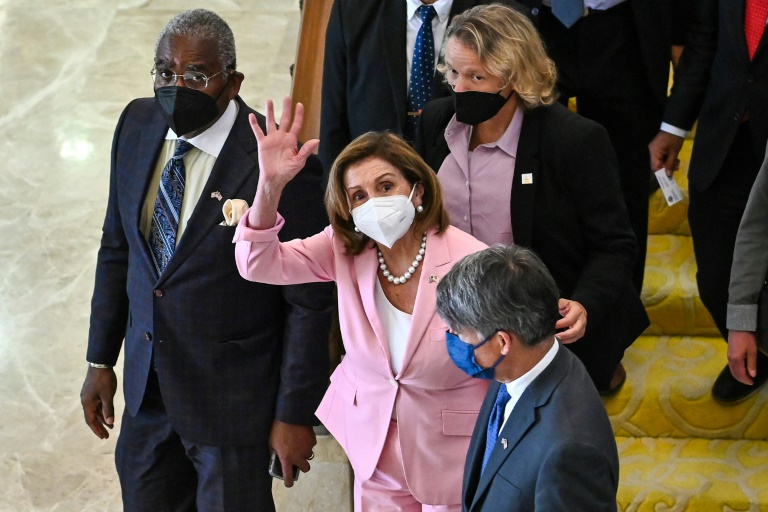
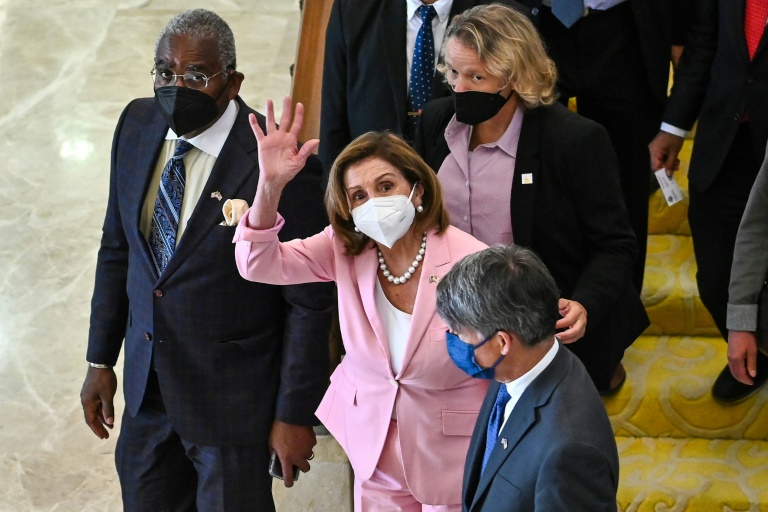
Global stocks mostly rose Wednesday as traders tracked House Speaker Nancy Pelosi’s visit to Taiwan, which has further strained China-US ties.

The highest profile trip to Taiwan in 25 years by a US politician met with condemnation from Beijing, which warned of serious economic and military consequences.

The news had sent shivers on Tuesday through trading floors that were already on edge over the Ukraine war, surging inflation, rising interest rates and slowing economic growth.

However, most equity markets edged upwards on Wednesday.

London nudged higher on the eve of a widely-expected half-point interest rate hike in Britain.

Oil prices slid as the OPEC+ group of major oil exporters convened to discuss output strategy.

Meanwhile, Pelosi departed Taiwan on Wednesday evening, ending her controversial landmark visit that Beijing responded to with threats and military drills.

– Equities hold gains –

“There has been a lot of fear but no material effect,” AvaTrade analyst Naeem Aslam told AFP, when questioned about the markets impact of Pelosi’s visit.

“Hence, we see equities holding on to their gains and moving higher.” 

Analysts are also keen to find out what the White House’s response will be, particularly ahead of mid-term elections in November with anti-China rhetoric playing well with voters, but President Joe Biden keen not to further harm economic ties.

SPI Asset Management’s Stephen Innes added that the US administration was probably not likely to cut Trump-era tariffs before then.

Wednesday’s broadly positive performance followed a drop on Wall Street, where the Taiwan news was compounded by a series of hawkish comments from Federal Reserve officials indicating more big interest rate hikes could still be in the pipeline.

Stocks rallied last week and Treasury yields dropped after boss Jerome Powell hinted the bank could begin slowing down, but the latest remarks suggest a hoped-for dovish pivot might not be coming just yet as inflation remains stubbornly high.

– Key figures at around 1030 GMT –

London – FTSE 100: UP 0.1 percent at 7,413.24 points

Frankfurt – DAX: UP 0.2 percent at 13,478.84

Paris – CAC 40: UP 0.2 at 6,421.76

EURO STOXX 50: UP 0.4 percent at 3,699.33

Tokyo – Nikkei 225: UP 0.5 percent at 27,741.90 (close)

Hong Kong – Hang Seng Index: UP 0.4 percent at 19,767.09 (close)

Shanghai – Composite: DOWN 0.7 percent at 3,163.67 (close)

Taipei – TAIEX: DOWN 0.2 percent at 14,777.02 (close)

New York – Dow: DOWN 1.2 percent at 32,396.17 (close)

Dollar/yen: DOWN at 133.04 yen from 133.10 yen Tuesday

Euro/dollar: UP at $1.0196 from $1.0166

Pound/dollar: UP at $1.2185 from $1.2170

Euro/pound: UP at 83.68 pence from 83.57 pence

Brent North Sea crude: DOWN 0.9 percent at $99.62 per barrel

West Texas Intermediate: DOWN 0.6 percent at $93.88 per barrel

burs/rfj/bp

Stock markets rise but Taiwan fears keep confidence in check

Global stocks mostly rose Wednesday as traders tracked House Speaker Nancy Pelosi’s visit to Taiwan, which has further strained China-US ties.

The highest profile trip to Taiwan in 25 years by a US politician met with condemnation from Beijing, which warned of serious economic and military consequences.

The news had sent shivers on Tuesday through trading floors that were already on edge over the Ukraine war, surging inflation, rising interest rates and slowing economic growth.

However, most equity markets edged upwards on Wednesday.

London nudged higher on the eve of a widely-expected half-point interest rate hike in Britain.

Oil prices slid as the OPEC+ group of major oil exporters convened to discuss output strategy.

Meanwhile, Pelosi departed Taiwan on Wednesday evening, ending her controversial landmark visit that Beijing responded to with threats and military drills.

– Equities hold gains –

“There has been a lot of fear but no material effect,” AvaTrade analyst Naeem Aslam told AFP, when questioned about the markets impact of Pelosi’s visit.

“Hence, we see equities holding on to their gains and moving higher.” 

Analysts are also keen to find out what the White House’s response will be, particularly ahead of mid-term elections in November with anti-China rhetoric playing well with voters, but President Joe Biden keen not to further harm economic ties.

SPI Asset Management’s Stephen Innes added that the US administration was probably not likely to cut Trump-era tariffs before then.

Wednesday’s broadly positive performance followed a drop on Wall Street, where the Taiwan news was compounded by a series of hawkish comments from Federal Reserve officials indicating more big interest rate hikes could still be in the pipeline.

Stocks rallied last week and Treasury yields dropped after boss Jerome Powell hinted the bank could begin slowing down, but the latest remarks suggest a hoped-for dovish pivot might not be coming just yet as inflation remains stubbornly high.

– Key figures at around 1030 GMT –

London – FTSE 100: UP 0.1 percent at 7,413.24 points

Frankfurt – DAX: UP 0.2 percent at 13,478.84

Paris – CAC 40: UP 0.2 at 6,421.76

EURO STOXX 50: UP 0.4 percent at 3,699.33

Tokyo – Nikkei 225: UP 0.5 percent at 27,741.90 (close)

Hong Kong – Hang Seng Index: UP 0.4 percent at 19,767.09 (close)

Shanghai – Composite: DOWN 0.7 percent at 3,163.67 (close)

Taipei – TAIEX: DOWN 0.2 percent at 14,777.02 (close)

New York – Dow: DOWN 1.2 percent at 32,396.17 (close)

Dollar/yen: DOWN at 133.04 yen from 133.10 yen Tuesday

Euro/dollar: UP at $1.0196 from $1.0166

Pound/dollar: UP at $1.2185 from $1.2170

Euro/pound: UP at 83.68 pence from 83.57 pence

Brent North Sea crude: DOWN 0.9 percent at $99.62 per barrel

West Texas Intermediate: DOWN 0.6 percent at $93.88 per barrel

burs/rfj/bp

First Ukrainian grain shipment completes checks in Turkey

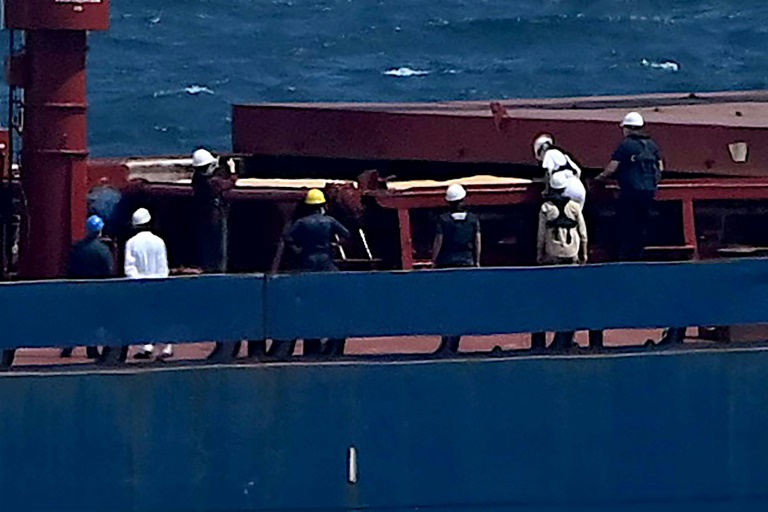
A Russian and Ukrainian team on Wednesday completed a high-stakes inspection of the first shipment of grain from Ukraine since the Kremlin’s invasion five months ago helped spark a global food crisis.

The checks aboard the Sierra Leone-flagged Razoni in Istanbul were being watched closely for signs of how well the first agreement signed by Moscow and Kyiv since Russia invaded its pro-Western neighbour can hold.

A deal brokered by Turkey and the United Nations last month lifted a Russian naval blockade of Ukraine’s Black Sea cities and set terms for millions of tonnes of wheat and other grain to start flowing from Ukraine’s filled silos and ports.

Ukraine exports roughly half of the sunflower oil used on the world market and is one of the world’s main supplies of grain.

An almost complete halt to its exports helped push up global food prices and make imports prohibitively expensive in some of the poorest countries in the world.

The Razoni is due to deliver more than 26,000 tonnes of maize to Lebanon — a crisis-wracked country that imports more than 80 percent of its wheat from Ukraine and Russia.

The ship sailed through a specially designated corridor in the mine-infested waters of the Black Sea before reaching the northern edge of the Bosphorus Strait on Tuesday.

A team of 20 inspectors from the two warring parties and the UN and Turkey strapped on orange helmets and boarded the ship early Wednesday for a check that officials said lasted less than 90 minutes.

– Arms depot –

The 186-metre (610-foot) long vessel is now due to sail down the Bosphorus Strait in the heart of Istanbul before moving on to the Marmara and Aegean seas.

The UN secretary general’s spokesman, Stephane Dujarric, said he hoped for “more outbound movement” from Ukraine on Wednesday.

Kyiv says at least 16 more grain ships are waiting to depart.

But it also accuses Russia of stealing Ukrainian grain in territories seized by Kremlin forces and then shipping it to allied countries such as Syria.

But Turkish hopes that the grain deal could help build trust and lead to ceasefire talks have so far proved futile.

Russia has continued to pound southern Ukrainian cities near the Black Sea with missiles and pressed on with its grinding ground assault across the east.

Officials in Mykolaiv said no one was killed Wednesday in shelling on one of the southern city’s supermarkets that came just days after the region’s grain mogul and his wife died in a targeted strike on their house.

Moscow said on Wednesday that it had destroyed another foreign arms deport in western Ukraine — a region the furthest removed from the fighting.

– Donetsk evacuations –

Kyiv has launched mandatory evacuations from the eastern Donetsk region — now bearing the brunt of Russia’s offensive — because the government does not expect to be able to provide it with heat in the cold winter months.

Ukrainian President Volodymyr Zelensky has urged the estimated 200,000 remaining residents of the Donetsk region to leave.

Kyiv’s forces have been pressing a counter-offensive to drive out the Russians from the southern Kherson region near the Kremlin-annexed Crimea peninsula.

The Ukrainian presidency said it had “liberated” seven more villages in the region while 53 remained under Russian control.

Ukraine has been bolstered by more supplies of Western weapons — particularly long-range rockets — ahead of the planned push to retake Kherson city.

The United States announced a new tranche of weapons worth $550 million for Ukraine’s forces.

These include longer-range ammunition for increasingly important HIMARS rocket launchers and artillery pieces.

Ukraine is using the HIMARS and similar Western weapons to smash Russian arms depots and break down its lines of ground communication across the east.

– ‘Justice’ –

The Russians have been unable to seize any major village or city since gaining full control of the Donbas war zone’s smaller Lugansk region in early July.

Zelensky told US President Joe Biden in a message that “the word ‘HIMARS’ has become almost synonymous with the word ‘justice’ for our country”.

Russia has responded by stepping up its propaganda battle against the West and Kyiv.

Its supreme court this week labelled Ukraine’s Azov regiment a “terrorist” organisation — a decision that could pave the way for captured fighters to face lengthy jail terms.

Azov fighters were among 2,500 Ukrainian soldiers who surrendered in May after weeks of fierce resistance at the Azovstal steel plant in devastated Mariupol.

The regiment — which was incorporated into Ukraine’s national guard in 2014 — is demonised by Moscow for alleged far-right links. 

Its members were among 50 Ukrainian servicemen killed last week in an attack on a jail holding prisoners of war in Russian-occupied territory. 

Ukraine accuses Moscow of deliberately executing the detainees.

Satellite firm bars Russia's NTV Mir over Ukraine Nazi slurs

French satellite company Eutelsat on Wednesday halted European broadcasts of Russian channel NTV Mir after regulators flagged content it had aired comparing Ukrainians to Nazis.

Media regulator Arcom asked for the Russian channel to be blocked because it had repeatedly portrayed not only Ukraine’s leaders but also its population as adhering to Nazi ideology.

Eutelsat has already taken down several Russian channels after requests from the European Union and individual countries dismayed at the dissemination of what they regard as pro-Kremlin propaganda since the February 24 invasion of Ukraine.

NTV Mir’s parent company was sanctioned by the United States in May, the White House labelling it state-owned and alleging its revenue from overseas advertising was fed back to the Kremlin. 

The French regulator said on its website that the channel “tends to repeatedly portray not only the Ukrainian leadership and the Ukrainian army, but also and above all the Ukrainian population, as adhering to the Nazi ideology of the Third Reich”.

Arcom cited a broadcast on 24 April that characterised Ukrainian President Volodymyr Zelensky as “a comedian in the role of Hitler who ordered a missile to be fired at women and children”. 

Eutelsat carries the NTV Mir in Europe but when asked by AFP could not confirm which countries would be affected by the ban.

Arcom said it was possible that NTV Mir could still be picked up on other non-European satellites with more limited coverage on the continent.

Since the Russian invasion, Eutelsat has halted broadcasts of news channel RT in several countries as well as two other Russian state broadcasters, Russia 24 and RTR Planeta.

Close Bitnami banner
Bitnami