AFP

European equities drift higher after Asian gains

European equities drifted higher Monday after Asian gains, as investors tracked the latest corporate and geopolitical news.

Markets brushed off weak Chinese data and comments indicating the Federal Reserve is wedded to its anti-inflation rate-hike campaign.

Investors in Europe were “happy to drift higher”, Markets.com analyst Neil Wilson told AFP.

He added that sentiment was partly “lifted” by news that the first shipment of Ukrainian grain since the Russian invasion had left the port of Odessa.

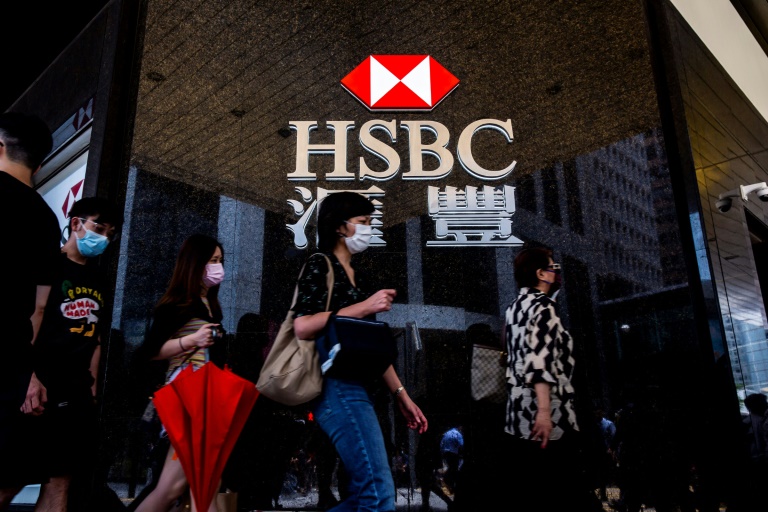
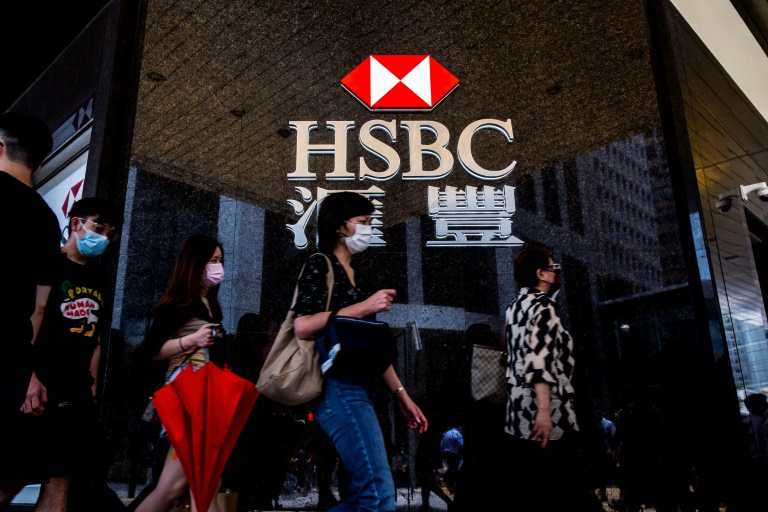
Asia-focused lender HSBC provided another boost with a “bullish” outlook, alongside its intention to revert to quarterly shareholder dividends next year.

HSBC shares jumped 7.1 percent to 550.30 pence in the British capital.

London stocks also rose despite expectations that the Bank of England would deliver a bumper 0.50-percentage-point interest rate hike this Thursday to combat rocketing inflation.

“Sharp hikes by the US Federal Reserve and European Central Bank in July make it all the more likely that it will pull the trigger on an outsize rate hike,” Wilson noted.

Global central banks are ramping up borrowing costs in an attempt to get a handle on runaway consumer price inflation.

– Weak China data –

Asian stock markets climbed, regardless of another disappointing reading on the health of the Chinese economy.

The closely watched Purchasing Managers’ Index of manufacturing activity shrank in July on the back of weak demand and the strict zero-Covid measures imposed in parts of the country.

While sweeping curbs have eased in major hubs such as Shanghai and Beijing, sporadic lockdowns in other cities and towns have kept businesses and consumers worried with few signs of the policy easing.

The China data sent oil prices sharply lower on revived demand concerns ahead of Wednesday’s OPEC scheduled output meeting.

Last week, strong earnings from US titans Amazon and Apple sparked healthy Wall Street gains and eased concerns about the economic impact of surging inflation and rising rates.

That came after investors took Fed chief Jerome Powell’s comments Wednesday to indicate the US central bank could start slowing down its monetary tightening, providing a much-needed boost to stocks.

– Key figures at around 1145 GMT –

London – FTSE 100: UP 0.5 percent at 7,463.86 points

Frankfurt – DAX: UP 0.6 percent at 13,559.63

Paris – CAC 40: UP 0.4 at 6,475.42

EURO STOXX 50: UP 0.5 percent at 3,726.74

Tokyo – Nikkei 225: UP 0.7 percent at 27,993.35 (close)

Hong Kong – Hang Seng Index: UP 0.1 percent at 20,165.84 (close)

Shanghai – Composite: UP 0.2 percent at 3,259.96 (close)

New York – Dow: UP 1.0 percent at 32,845.13 (close)

Euro/dollar: UP at $1.0251 from $1.0228 Friday

Pound/dollar: UP at $1.2240 from $1.2189 

Euro/pound: DOWN at 83.76 pence from 83.89 pence

Dollar/yen: DOWN at 132.25 yen from 133.25 yen

Brent North Sea crude: DOWN 1.3 percent at $102.63 per barrel

West Texas Intermediate: DOWN 2.0 percent at $96.62 per barrel

burs/rfj/raz

European equities drift higher after Asian gains

European equities drifted higher Monday after Asian gains, as investors tracked the latest corporate and geopolitical news.

Markets brushed off weak Chinese data and comments indicating the Federal Reserve is wedded to its anti-inflation rate-hike campaign.

Investors in Europe were “happy to drift higher”, Markets.com analyst Neil Wilson told AFP.

He added that sentiment was partly “lifted” by news that the first shipment of Ukrainian grain since the Russian invasion had left the port of Odessa.

Asia-focused lender HSBC provided another boost with a “bullish” outlook, alongside its intention to revert to quarterly shareholder dividends next year.

HSBC shares jumped 7.1 percent to 550.30 pence in the British capital.

London stocks also rose despite expectations that the Bank of England would deliver a bumper 0.50-percentage-point interest rate hike this Thursday to combat rocketing inflation.

“Sharp hikes by the US Federal Reserve and European Central Bank in July make it all the more likely that it will pull the trigger on an outsize rate hike,” Wilson noted.

Global central banks are ramping up borrowing costs in an attempt to get a handle on runaway consumer price inflation.

– Weak China data –

Asian stock markets climbed, regardless of another disappointing reading on the health of the Chinese economy.

The closely watched Purchasing Managers’ Index of manufacturing activity shrank in July on the back of weak demand and the strict zero-Covid measures imposed in parts of the country.

While sweeping curbs have eased in major hubs such as Shanghai and Beijing, sporadic lockdowns in other cities and towns have kept businesses and consumers worried with few signs of the policy easing.

The China data sent oil prices sharply lower on revived demand concerns ahead of Wednesday’s OPEC scheduled output meeting.

Last week, strong earnings from US titans Amazon and Apple sparked healthy Wall Street gains and eased concerns about the economic impact of surging inflation and rising rates.

That came after investors took Fed chief Jerome Powell’s comments Wednesday to indicate the US central bank could start slowing down its monetary tightening, providing a much-needed boost to stocks.

– Key figures at around 1145 GMT –

London – FTSE 100: UP 0.5 percent at 7,463.86 points

Frankfurt – DAX: UP 0.6 percent at 13,559.63

Paris – CAC 40: UP 0.4 at 6,475.42

EURO STOXX 50: UP 0.5 percent at 3,726.74

Tokyo – Nikkei 225: UP 0.7 percent at 27,993.35 (close)

Hong Kong – Hang Seng Index: UP 0.1 percent at 20,165.84 (close)

Shanghai – Composite: UP 0.2 percent at 3,259.96 (close)

New York – Dow: UP 1.0 percent at 32,845.13 (close)

Euro/dollar: UP at $1.0251 from $1.0228 Friday

Pound/dollar: UP at $1.2240 from $1.2189 

Euro/pound: DOWN at 83.76 pence from 83.89 pence

Dollar/yen: DOWN at 132.25 yen from 133.25 yen

Brent North Sea crude: DOWN 1.3 percent at $102.63 per barrel

West Texas Intermediate: DOWN 2.0 percent at $96.62 per barrel

burs/rfj/raz
Rockfalls, gaping crevices put Mont Blanc out of reach for many

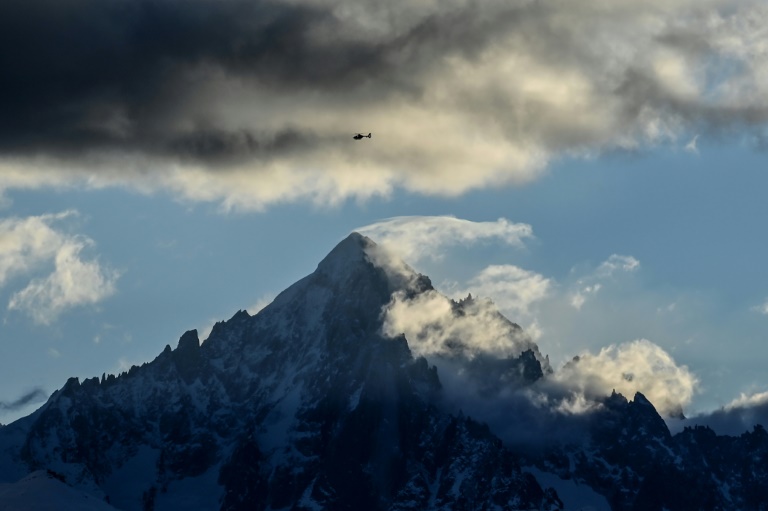
In a year marked by drought and heatwaves, rockfalls and gaping crevices have made access to the top of Mont Blanc even more difficult and perilous — to the great frustration of amateur mountaineers.

Officially, none of the seven routes leading to the summit, at 4,807 metres (15,774 feet), is closed, but access conditions at the end of July have deteriorated to such an extent that only the most experienced climbers are able to make the ascent, experts say. 

A lack of snow during the winter has laid bare vast areas of greyish glacier — yellowish where sand dust from the Sahara has accumulated — riven with fractures.

The heat did the rest, causing the melting of the fragile snow bridges that make it possible to cross the crevasses as well as leading to landslides.

In the southeastern French town of Chamonix, at the foot of the “White Giant”, the season is in full swing with thousands of tourists flocking by cable car to the top of the Aiguille du Midi, at 3,842 metres, the closest you can get to the summit of Mont Blanc without hiking or climbing.

– ‘Awful’ conditions –

But in the small cave carved out of the ice which serves as a changing room and a starting point for mountaineers for many mountain races, there are fewer people than ever putting on crampons right now.

Scotsman Evan Warden and his 14-year-old son David said they were shocked to discover the “awful” conditions.

“Everywhere we walked there was just constant rockfall and the crevices constantly open up. (We were) pretty worried,” said David, 14, on his first visit to the Alps.

“MB is too risky… that was our plan, yes but I’ve not seen this much rockfall here in a long time. That’s global warming definitely,” Evan said, adding that the pair had hoped to do the “Trois Monts” (three peaks) route.

Norwegians Monica and Marten Antheun had also been hoping to have a go at the famed peak after three years’ waiting.

They had booked a trip, but it was cancelled.

“I think the guides know the area and the conditions. It’s okay for us, we can do it later”, said Monica.

Guiding firm, Les Compagnies des guides de Chamonix et de Saint-Gervais, announced in mid-July the temporary suspension of ascents to Mont Blanc by the “normal” Gouter route due to rockfalls in the Gouter corridor, also known as “death gully”.

Access remains open only to independent guides.

Recent very high temperatures have destabilised the mountain, says Noe Verite, caretaker of the Cosmiques refuge, located on the Trois Monts route.

“We see the conditions deteriorating day by day,” he said.

– ‘Like fridges’ –

For him, July is usually the peak of the season, but the cancellations have been piling up.

The usual route is affected by large rocks “like fridges” falling, Verite said.

Currently, only between a dozen and 20 skilled mountaineers are able to reach the summit of Mont Blanc each day compared to 100-120 usually, says Olivier Grebert, president of the Compagnie des guides de Chamonix.

Cancelled races are postponed, reimbursed or redirected to other routes and the firm takes the opportunity to do a bit of education with those who, for example, want to climb the summit “for their 40th birthday”.

“This ascent must be part of a mountaineering career,” explains Grebert: “Mont Blanc sometimes has the reputation of being an easy ascent but it’s not the case, this year even more so.”

US envoy hopeful on Lebanon-Israel sea border talks

A US envoy on Monday expressed optimism that Lebanon and Israel could move towards a maritime border deal to settle competing claims over offshore gas fields.

The dispute escalated in early June after Israel moved a production vessel near the Karish offshore field, which is partly claimed by neighbour Lebanon.

This prompted Beirut to call for the resumption of US-mediated negotiations on the demarcation dispute.

“I remain optimistic that we can make continuous progress as we have over the last several weeks and I look forward to coming back to the region and being able to make the final arrangements,” Amos Hochstein told reporters after meeting Lebanon’s top leaders.

Hochstein, on his second visit in less than two months, is carrying an Israeli proposal in response to a demarcation offer made by Lebanon.

On Monday, he met with President Michel Aoun, Prime Minister Najib Mikati and Parliament Speaker Nabih Berri at the presidential palace.

Lebanon is looking to clinch “a deal that preserves its rights and its wealth and that could provide, as soon as negotiations are over, an opportunity to revitalise the economy,” Aoun said before Monday’s meeting.

Lebanon and Israel have no diplomatic relations and are separated by a UN-patrolled border. 

They had resumed maritime border negotiations in 2020 but the process was stalled by Beirut’s claim that the map used by the United Nations in the talks needed modifying.

Lebanon initially demanded 860 square kilometres (330 square miles) in the disputed maritime area but then asked for an additional 1,430 square kilometres, including part of the Karish field.

Israel claims that the field lies in its waters and is not part of the disputed area subject to ongoing negotiations.

– ‘Pay dearly’ – 

A Lebanese official in mid-June said Beirut had made a new offer to Hochstein, holding back on demands for territory where Israel planned to imminently extract gas.

Beirut was pushing for the country’s maritime border to exclude Karish and include the whole of a nearby field instead, the official told AFP at the time.

An Israeli official on Sunday said Israel’s offer, which related to the original disputed zones, was a “compromise to both sides” and would allow Lebanon to develop “the Sidon reservoir”, known as the Qana field, while safeguarding Israel’s interest.

On July 2, Israel said it had downed three drones launched by Lebanon’s Iran-backed Hezbollah that were headed towards the Karish gas field.

The Iran-backed Shiite Muslim movement on Sunday released a short video it said showed surveillance of several Israeli-chartered energy infrastructure ships, including the production vessel sent to Karish which is operated by London-listed firm Energean.

Hezbollah’s chief Hassan Nasrallah had threatened attacks if Israel proceeds with gas exploration in the disputed area.

On Sunday, he said he was trying to “strengthen” Lebanon’s negotiating power and said that his party will determine its next step based on the outcomes of Monday’s talks.

“We’re paying no attention to Nasrallah’s threats and they’re not a factor in the negotiations,” Ram Ben Barak, head of the Israeli foreign and defence committee told public broadcaster Kan radio on Monday.

“But if Nasrallah dares to do anything to Israel’s gas rigs, Lebanon –- and Hezbollah -– will pay dearly.”

Israel and Hezbollah last fought a devastating war in 2006.

HSBC H1 pre-tax profit falls, dismisses calls for split

HSBC bank on Monday said pre-tax profit fell in the first half, and appeared to rebuff calls to spin off its Asian activities on the eve of a key shareholder meeting.

Pre-tax earnings sank 15 percent to US$9.2 billion after it took a $1.1-billion hit on possible credit losses “to reflect heightened economic uncertainty and inflation”, HSBC said.

The result “reflected a more normalised level of expected credit losses compared with the Covid-19 releases made last year, as well as the macroeconomic impact of the Russia-Ukraine war”, added Chief Executive Noel Quinn.

However, net profit rose 14 percent to US$8.3 billion in the reporting period partly on a large one-off tax credit.

– Quarterly dividends –

The annual revenue outlook was positive, Quinn noted, with net interest income expected to reach at least US$31 billion this year and US$37 billion next year as interest rates rise.

The group was confident of achieving its best returns in a decade in 2023.  

“We also intend to revert to quarterly dividends in 2023,” he added.

London-headquartered HSBC was among a number of major banks to cancel dividends early in the pandemic after a de facto order from the Bank of England — a move that upset some Hong Kong investors.

Monday’s results come one day before HSBC executives’ first face-to-face meeting with shareholders from the Asian financial hub in three years.

– Asia spin-off demands –

Executives are expected to field questions about a restructuring bid from its biggest shareholder Ping An Insurance Group.

The lender is under pressure from Ping An, which has a 9.2-percent stake, to spin off its Asian operations, in a bid to unlock shareholder value amid tensions between China and the West.

The bank has previously hinted it wants to keep its current structure while continuing a pivot to Asia.

Quinn, speaking later on Monday, suggested such an “alternative structure” would have a “negative” impact on HSBC.

“It has been our judgment that alternative structural options will not deliver increased value for shareholders,” Quinn told analysts on a conference call.

“Rather, they would have a material negative impact on value.”

HSBC had “considered many of these options over recent years”, and recently updated its analysis with third-party financial and legal advice, he added.

Hong Kong politician Christine Fong said on Sunday that HSBC separating its Asian business and bringing back its primary listing to the city is the “best way to protect (the interests of) minority shareholders”.

Fong, who reportedly represents 500 small investors in HSBC stock, also voiced support for Ping An getting seats on HSBC’s board, citing the cancelled dividends in 2020 as a reason.

Last year, HSBC vowed to accelerate a multi-year pivot to Asia and the Middle East, with ambitions to lead Asia’s wealth management market.

The bank said it would invest $6 billion in Hong Kong, China and Singapore and hire more than 5,000 wealth advisers — while slashing 35,000 jobs and cutting its retail operations in the United States and France. 

HSBC H1 pre-tax profit falls, dismisses calls for split

HSBC bank on Monday said pre-tax profit fell in the first half, and appeared to rebuff calls to spin off its Asian activities on the eve of a key shareholder meeting.

Pre-tax earnings sank 15 percent to US$9.2 billion after it took a $1.1-billion hit on possible credit losses “to reflect heightened economic uncertainty and inflation”, HSBC said.

The result “reflected a more normalised level of expected credit losses compared with the Covid-19 releases made last year, as well as the macroeconomic impact of the Russia-Ukraine war”, added Chief Executive Noel Quinn.

However, net profit rose 14 percent to US$8.3 billion in the reporting period partly on a large one-off tax credit.

– Quarterly dividends –

The annual revenue outlook was positive, Quinn noted, with net interest income expected to reach at least US$31 billion this year and US$37 billion next year as interest rates rise.

The group was confident of achieving its best returns in a decade in 2023.  

“We also intend to revert to quarterly dividends in 2023,” he added.

London-headquartered HSBC was among a number of major banks to cancel dividends early in the pandemic after a de facto order from the Bank of England — a move that upset some Hong Kong investors.

Monday’s results come one day before HSBC executives’ first face-to-face meeting with shareholders from the Asian financial hub in three years.

– Asia spin-off demands –

Executives are expected to field questions about a restructuring bid from its biggest shareholder Ping An Insurance Group.

The lender is under pressure from Ping An, which has a 9.2-percent stake, to spin off its Asian operations, in a bid to unlock shareholder value amid tensions between China and the West.

The bank has previously hinted it wants to keep its current structure while continuing a pivot to Asia.

Quinn, speaking later on Monday, suggested such an “alternative structure” would have a “negative” impact on HSBC.

“It has been our judgment that alternative structural options will not deliver increased value for shareholders,” Quinn told analysts on a conference call.

“Rather, they would have a material negative impact on value.”

HSBC had “considered many of these options over recent years”, and recently updated its analysis with third-party financial and legal advice, he added.

Hong Kong politician Christine Fong said on Sunday that HSBC separating its Asian business and bringing back its primary listing to the city is the “best way to protect (the interests of) minority shareholders”.

Fong, who reportedly represents 500 small investors in HSBC stock, also voiced support for Ping An getting seats on HSBC’s board, citing the cancelled dividends in 2020 as a reason.

Last year, HSBC vowed to accelerate a multi-year pivot to Asia and the Middle East, with ambitions to lead Asia’s wealth management market.

The bank said it would invest $6 billion in Hong Kong, China and Singapore and hire more than 5,000 wealth advisers — while slashing 35,000 jobs and cutting its retail operations in the United States and France. 

Pelosi's Asia tour kicks off under Taiwan cloud

US House Speaker Nancy Pelosi on Monday kicked off an Asia tour that has been shrouded in secrecy following an escalation in tensions with China over Taiwan.

With no word if Pelosi will visit the island, she stopped first in Singapore, where Prime Minister Lee Hsien Loong urged her at a meeting to strive for “stable” ties with Beijing.

Her itinerary also includes Malaysia, South Korea and Japan, but a possible Taiwan visit has dominated attention in the run-up.

Reports about a plan to visit the island have enraged Beijing and caused unease in the White House with President Joe Biden trying to lower the temperature.

Beijing considers self-ruled Taiwan its territory — to be seized one day, by force if necessary — and said it would regard a Pelosi visit as a major provocation.

Pelosi’s office confirmed her Asia trip in a statement Sunday once her plane was in the air, following days of US media speculation and the speaker refusing to confirm her itinerary.

“The trip will focus on mutual security, economic partnership and democratic governance in the Indo-Pacific region,” it said, referring to the Asia-Pacific.

The statement did not mention Taiwan. But visits by US officials there are usually kept secret until delegations land.

And as speculation mounted, both CNN and Taiwan’s TVBS cited unnamed sources Monday to report that Pelosi does indeed plan to include the island on her Asia tour.

– ‘Powder keg’ –

The Global Times, China’s state-run tabloid, suggested that Pelosi might use “emergency excuses like an aircraft fault or refuelling” to land at a Taiwanese airport.

“If she dares to stop in Taiwan, it will be the moment to ignite the powder keg of the situation in the Taiwan Straits,” Hu Xijin, a former Global Times editor and now commentator, tweeted.

Beijing’s foreign ministry on Monday, warned a visit would “seriously threaten the peace and stability” of the Taiwan Strait if it goes ahead.

“If House Speaker Nancy Pelosi visits Taiwan, China will take resolute and strong countermeasures to defend its sovereignty and territorial integrity,” spokesman Zhao Lijian said.

“As to what measures, if she dares to go, then let’s wait and see.”

Taiwan’s 23 million people have long lived with the possibility of an invasion but the threat has intensified under Chinese President Xi Jinping.

The United States maintains a policy of “strategic ambiguity” over whether it would militarily intervene were China to invade.

While it diplomatically recognises Beijing over Taipei, it also backs Taiwan’s democratic government and opposes any forced change to the island’s status.

American officials often make discreet visits to Taiwan to show support but a Pelosi trip would be higher-profile than any in recent history.

Taiwan’s government has remained silent on the prospect of a Pelosi visit and there has been minimal local press coverage. 

“I really hate what the Chinese are doing,” Hsu Ching-feng, a fruit vendor in Taipei, told AFP.

“But there’s nothing us common folks can do about it but ignore them. I will just ignore them.”

– ‘Wrong target’ –

As House speaker, Pelosi is third in line to the US presidency and one of the country’s most powerful politicians.

The last House speaker to visit was Newt Gingrich in 1997.

Biden and Xi had a tense phone call last week clouded by disagreements over Taiwan.

Xi issued an oblique warning to the United States not to “play with fire” over the island.

Speculation about Pelosi’s Taiwan plans has coincided with an uptick in military activity across the region.

US officials have sought to downplay the significance of a Pelosi visit, urging calm from Chinese leaders.

Kharis Templeman, a Taiwan expert at the Hoover Institution, said Beijing “misread US politics and screwed their signalling up” with its intense reaction.

“They picked the wrong target. Biden doesn’t control the Speaker or any other member of Congress,” he tweeted Sunday.

“They’ve drawn the line at the Speaker of the House, on a visit rich in symbolism but of limited practical value. And now it will be politically costly for either Pelosi not to go, or Xi not to respond with something dramatic.”

In Taiwan, there have been mixed views about the prospect of Pelosi visiting, but figures from both the ruling party and the main opposition have said the island should not cave to Chinese pressure.

“If Pelosi were to cancel or postpone the trip, it would be a victory for the Chinese government and for Xi as it would show that the pressure it has exerted has achieved some desired effects,” Hung Chin-fu, from Taiwan’s National Cheng Kung University, told AFP. 

Hong Kong economy tips into technical recession

Hong Kong has tipped back into a technical recession, new government figures showed Monday, weighed down by mounting interest rates, weakened global trade and the city’s continued adherence to strict coronavirus controls.

Following a year-on-year decrease of 3.9 percent in the first quarter of 2022, the city’s GDP again reported decline in the second quarter on Monday — but with a narrower margin of 1.4 percent — according to advance estimates released by the Census and Statistics Department. 

The downturn is reversing last year’s recovery when the economy enjoyed a 6.3 percent annual growth after the slowdown in 2019 and 2020, when the city was first upended by months of huge, sometimes violent pro-democracy protests, and then the pandemic.

The Hong Kong government said the economic improvement was smaller than expected due to weak performance in external trade.

Official statistics released last month showed the value of total exports of goods in the second quarter decreased by 4.2 percent compared with the preceding quarter. 

For the first half of 2022, a visible trade deficit of $206.1 billion, equivalent to 8.2 percent of the value of imports of goods, was recorded.

“Weakened global demand and continued disruptions to cross-boundary land cargo flows between the mainland and Hong Kong weighed heavily on Hong Kong’s exports,” the government said Monday.

Monetary policy tightening by major central banks around the world is expected to dampen global economic growth significantly while quarantine-free travel between Hong Kong and mainland China is yet to have a clear timetable under Beijing’s strict adherence to its zero covid policy.

The financial hub’s new leader John Lee said his government would soon announce further shortening of mandatory hotel quarantine for overseas arrivals, according to an interview with the Hong Kong Economic Journal published on Monday.  

“Connecting with the world and with the mainland, we shall do both and they are not contradictory,” Lee told the newspaper. 

“I understand that one of Hong Kong’s competitiveness lies in its international connections.” 

In following China’s zero covid policy, Hong Kong has been largely cut off from the rest of the world for more than two years. 

It still has some of the world’s strictest restrictions, including week-long quarantine for arrivals and a ban on group gatherings with more than four people.

Local media recently reported that the government was mulling resuming quarantine-free travel for overseas arrivals in November, when the city is hoping to resuscitate its international image with a finance summit and the Hong Kong Rugby Sevens. 

Hong Kong economy tips into technical recession

Hong Kong has tipped back into a technical recession, new government figures showed Monday, weighed down by mounting interest rates, weakened global trade and the city’s continued adherence to strict coronavirus controls.

Following a year-on-year decrease of 3.9 percent in the first quarter of 2022, the city’s GDP again reported decline in the second quarter on Monday — but with a narrower margin of 1.4 percent — according to advance estimates released by the Census and Statistics Department. 

The downturn is reversing last year’s recovery when the economy enjoyed a 6.3 percent annual growth after the slowdown in 2019 and 2020, when the city was first upended by months of huge, sometimes violent pro-democracy protests, and then the pandemic.

The Hong Kong government said the economic improvement was smaller than expected due to weak performance in external trade.

Official statistics released last month showed the value of total exports of goods in the second quarter decreased by 4.2 percent compared with the preceding quarter. 

For the first half of 2022, a visible trade deficit of $206.1 billion, equivalent to 8.2 percent of the value of imports of goods, was recorded.

“Weakened global demand and continued disruptions to cross-boundary land cargo flows between the mainland and Hong Kong weighed heavily on Hong Kong’s exports,” the government said Monday.

Monetary policy tightening by major central banks around the world is expected to dampen global economic growth significantly while quarantine-free travel between Hong Kong and mainland China is yet to have a clear timetable under Beijing’s strict adherence to its zero covid policy.

The financial hub’s new leader John Lee said his government would soon announce further shortening of mandatory hotel quarantine for overseas arrivals, according to an interview with the Hong Kong Economic Journal published on Monday.  

“Connecting with the world and with the mainland, we shall do both and they are not contradictory,” Lee told the newspaper. 

“I understand that one of Hong Kong’s competitiveness lies in its international connections.” 

In following China’s zero covid policy, Hong Kong has been largely cut off from the rest of the world for more than two years. 

It still has some of the world’s strictest restrictions, including week-long quarantine for arrivals and a ban on group gatherings with more than four people.

Local media recently reported that the government was mulling resuming quarantine-free travel for overseas arrivals in November, when the city is hoping to resuscitate its international image with a finance summit and the Hong Kong Rugby Sevens. 

'Good to be back': Hugs and tears as Tonga reopens borders

Families embraced and cried tears of joy Monday as they reunited at Tonga’s airport — the inaugural arrivals to the Pacific nation after it lifted Covid restrictions for the first time since the pandemic struck.

After Tonga shut its borders in March 2020, the government had tightly controlled a select list of people who were approved to fly into the kingdom — leaving over 3,000 Tongans stuck overseas.

But with restrictions lifted, Monday’s first batch of tourists and returning Tongans — greeted with colourful garlands and serenaded by a band at the Fua’amotu International Airport — will not have to undergo quarantine. 

The first plane to land was an Air New Zealand flight from Auckland carrying around 200 passengers.

“It’s good to be back,” said ‘Etu Palu, eager to see family again with his mother Finau Palu, who said it was “good to visit the motherland!”

Another passenger, Siosaia Filikitonga, said this was his first visit to Tonga in more than two years because of the pandemic.

“I am happy and emotional. Once Tonga announced the border re-opening, I booked to come,” Filikitonga told AFP.

Amid the reunions, Sione Moala Mafi, CEO of Tonga’s Ministry of Tourism, said the visitors bring an important boost to the Pacific Kingdom’s economy.

“I’m so glad that the border’s open and that facilitates the travel between Tonga and the outside world, especially, New Zealand,” he said.

“I can see there are a lot of foreign visitors are arriving on the flight as well as Tongans.”

More flights, one from New Zealand and one from Australia, are expected later this week with planes from Fiji also due Tuesday and Saturday.

“We are happy to welcome them,” Moala Mafi added.

– No super yachts –

Despite its reopening, Tonga is taking a cautious staged approach by limiting the number of incoming flights this month under a framework announced by the Prime Minister’s Office on July 22.

They will review the number of flights and cruise ships for September and October, and all incoming passengers must be vaccinated and have negative COVID-19 tests before departure and three to five days after arrival.

Currently the government’s National Emergency Management Committee has set the current level to “orange”, but Moala Mafi said it looks like “we are progressing towards” going “green”.

“Orange now and it has to be reviewed at the end of this month,” he said.

So far, yachts and super yachts are not included in the border re-opening, much to the frustration of tourism operators, who say July, with its fantastic weather, is the peak season in Tonga.

“I’ve got 20 boats sitting in Tahiti that want to come to Tonga. Big boats, I’m not talking about little yachts, because they won’t let the yachts come back in here and I don’t know why,” said David Hunt, owner of Super Yacht Services Tonga.

He was waiting at the airport to meet a yacht owner who had not seen his yacht moored in Vava’u —  one of Tonga’s islands — for over three years.

“Before the pandemic, we were averaging about 30 to 35 yachts a year between operators, but it could be much more this year,” he said.

“They’ve got all these boats coming down to the Pacific they don’t want to be in Ukraine, in the Mediterranean.”

Moala Mafi said the government is still undecided on yachts in Tongan waters.

“We are still finalising the policy framework for the cruise ships,” he said. “We don’t forget them, but they are in the pipeline.”

Close Bitnami banner
Bitnami