AFP

Gorgosaurus sells for $6.1 mn at New York auction

The first skeleton of a Gorgosaurus dinosaur to go under the hammer sold for $6.1 million at auction in New York Thursday, Sotheby’s said.

The specimen is 10 feet tall (three meters) and 22 feet long, and had been expected to fetch between $5 million and $8 million.

“The result places the Gorgosaurus among the most valuable dinosaurs ever sold at auction, and establishes a new benchmark for a Gorgosaurus skeleton,” Sotheby’s said in a statement.

The Gorgosaurus roamed the earth approximately 77 million years ago. 

A typical adult weighed about two tonnes, slightly smaller than its more famous relative, the Tyrannosaurus rex.

Paleontologists say it was fiercer and faster than the T-Rex, with a stronger bite of around 42,000 newtons compared to 35,000.

The skeleton was discovered in the Judith River Formation near Havre, in the US state of Montana in 2018.

The sale marked the first time that Sotheby’s had auctioned a full dinosaur skeleton since it sold Sue the T-Rex in 1997 for $8.36 million.

“Today’s Gorgosaurus came to auction without a name, providing the buyer the exclusive opportunity to name the dinosaur,” Sotheby’s said.

Sotheby’s did not reveal the buyer.

Unlike other countries, the United States does not restrict the sale or export of fossils, meaning the skeleton could end up overseas.

Gorgosaurus sells for $6.1 mn at New York auction

The first skeleton of a Gorgosaurus dinosaur to go under the hammer sold for $6.1 million at auction in New York Thursday, Sotheby’s said.

The specimen is 10 feet tall (three meters) and 22 feet long, and had been expected to fetch between $5 million and $8 million.

“The result places the Gorgosaurus among the most valuable dinosaurs ever sold at auction, and establishes a new benchmark for a Gorgosaurus skeleton,” Sotheby’s said in a statement.

The Gorgosaurus roamed the earth approximately 77 million years ago. 

A typical adult weighed about two tonnes, slightly smaller than its more famous relative, the Tyrannosaurus rex.

Paleontologists say it was fiercer and faster than the T-Rex, with a stronger bite of around 42,000 newtons compared to 35,000.

The skeleton was discovered in the Judith River Formation near Havre, in the US state of Montana in 2018.

The sale marked the first time that Sotheby’s had auctioned a full dinosaur skeleton since it sold Sue the T-Rex in 1997 for $8.36 million.

“Today’s Gorgosaurus came to auction without a name, providing the buyer the exclusive opportunity to name the dinosaur,” Sotheby’s said.

Sotheby’s did not reveal the buyer.

Unlike other countries, the United States does not restrict the sale or export of fossils, meaning the skeleton could end up overseas.

Deal reached for generic drug to prevent HIV infection

A deal has been reached to allow for distribution of a low-cost generic version of a long-term preventative treatment against HIV in low-income countries where most of the world’s infections occur, Unitaid and the Medicines Patent Pool announced Thursday.

The deal will see ViiV Healthcare, a subsidiary of British pharmaceutical giant GSK, allow selected manufacturers to produce generic versions of Cabotegravir LA, its long-acting pre-exposure prophylaxis (PrEP) treatment for HIV.

The deal will provide access to the injectable version of cabotegravir, which has been shown to provide two months of protection against infection, in 90 countries where over 70 percent of all new HIV infections occurred in 2020, said Unitaid. 

“Access to an effective long-acting HIV prevention option could significantly contribute to the goal of ending HIV transmission and ending the epidemic by 2030,” said Unitaid spokesman Herve Verhoosel.

“Efforts to increase access to Cabotegravir LA for PrEP will be especially impactful for groups that experience particularly high rates of infection, such as men who have sex with men and sex workers,” he added.

Long-lasting cabotegravir injections only recently became available, and have been shown to be much more effective than an oral version that needed to be taken daily.

But the cost — the price of a year’s treatment cost $22,000 in the United States earlier this year — was an obstacle for widespread rollout in all but high-income countries.

– ‘Top global priority’ –

The World Health Organization released new guidelines about cabotegravir on Thursday, calling for countries to work towards making the drug swiftly available for those in need.

“We hope these new guidelines will help accelerate country efforts to start to plan and deliver CAB-LA alongside other HIV prevention options,” Meg Doherty, director of the WHO’s global HIV, hepatitis and sexually-transmitted infection programmes, said in a statement.

The news comes one day after a new report presented at the International AIDS Conference in Montreal, Canada, that found the global fight against HIV has stalled from shrinking resources due to Covid-19 and other crises.

Some 1.5 million new infections occurred last year –- more than a million over global targets of fighting the virus.

“Long-acting PrEP could play a major role in ending the HIV pandemic, but right now, very few people can get it,” said Adeeba Kamarulzaman, president of the International AIDS Society which convenes the conference.

“Scaling up affordable access to this game-changing prevention tool must be a top global priority,” she said in a statement.

Unitaid is a global health initiative which works on ensuring equitable access to medical innovations in low- and middle-income countries.

The Medicines Patent Pool, founded by Unitaid and UN-backed, works to licence needed medicines for generic distribution in low- and middle-income countries.

W. Mediterranean hit by 'exceptional' heatwave: experts

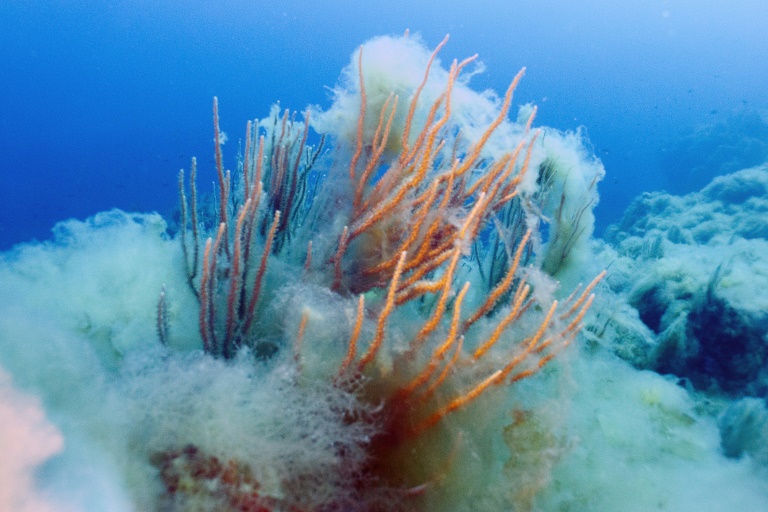
An “exceptional” marine heatwave is gripping the western Mediterranean with surface temperatures up to five degrees Celsius (41 degrees Fahrenheit) hotter than average, according to experts contacted by AFP. 

Although the record-breaking heatwave that baked northern Europe and Britain this month has subsided, the experts said the persistently hotter-than-normal temperatures in the Mediterranean posed a threat to the entire marine ecosystem.

“This huge marine heatwave began in May in the Ligurian sea” between Corsica and Italy, said Karina von Schuckmann, an oceanographer at the non-profit research group Mercator Ocean International.

It then spread to the Gulf of Taranto in the Ionian Sea, she said. 

By July, the heatwave had engulfed the Balearic Islands, Sardinia, and the Tyrrhenian Sea. 

“The surface temperature anomaly map shows higher than normal values, in the order of +4 to +5C from the east of the Balearic Islands to the east of Corsica,” Mercator said in a statement. 

While humans might find the warmer water temperatures pleasant in the tourist hotspots of the western Mediterranean, the group warned that “ocean warming impacts the entire ecosystem.” 

“It is important to be aware of the possible consequences for local fauna and flora, as well as the occurrence of extreme weather events that could result in natural disasters,” it said.

Von Schuckmann said that unusually warm temperatures could cause irreversible migration for some species and “mass die-offs” for others.

She noted knock-on effects for industries such as tourism and fishing which rely on favourable water conditions.

According to the UN’s climate science body, marine heatwaves have already doubled in frequency globally since 1980.


– Die-offs, invasive species – 

Although the Mediterranean only counts for one percent of Earth’s ocean surface area, it contains nearly 20 percent of all known marine species.

A study published this month in the journal Global Change Biology found that the Mediterranean had experienced five consecutive years of mass mortality events between 2015-2019.

France’s CNRS research centre has noted that marine heatwaves in 1999, 2003 and 2006 caused mass die-offs for some species, notably the posidonia, a genus of flowering plants.

“We can predict the main impact will be on fixed organisms such as plants or corals,” said Charles-Francois Boudouresque, a marine ecologist at Aix-Marseille University. 

Some species of fish such as the barracuda could become more abundant in warming northern Mediterranean waters, however.

Boudouresque said some species coming through the Suez Canal from the Red Sea could become problematic “within five to 10 years”.

These include the rhopilema — a herbivore jellyfish — and the rabbit fish, which Boudouresque described as “extremely greedy”.

Already abundant in the eastern Mediterranean, its appearance in western waters would threaten the algae forests that serve as nurseries for myriad varieties of fish. 

Rhopilema can also sting swimmers with enough severity to require hospital treatment.

As there is little governments can do once a marine heatwave takes hold, Von Schuckmann said the best course of action is to reduce the greenhouse gas emissions that contribute to warming.

“Even if we stopped emitting today, the oceans, which contain 90 percent of Earth’s heat, will continue to warm,” she said.

“Since at least 2003 (marine heatwaves) have become more common and in future they will last longer, cover more sea, and be more intense and severe,” said Von Schuckmann.

Deadly Russian strikes target military bases in central Ukraine

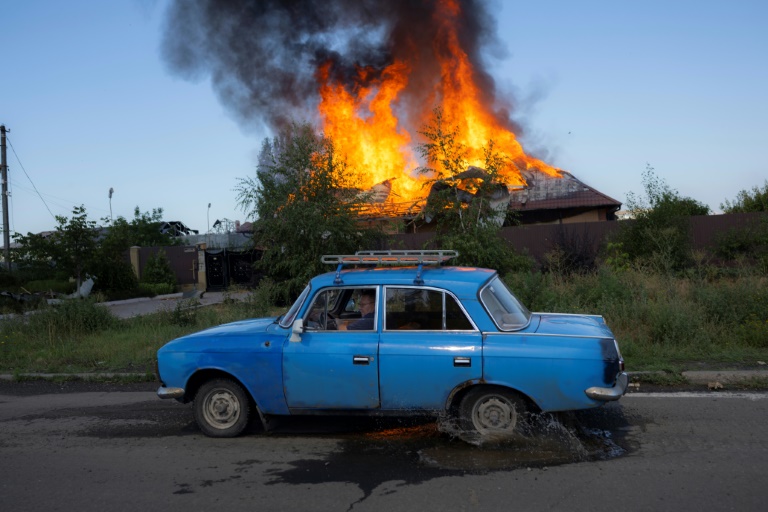
Russian strikes on military facilities and residential buildings across war-scarred Ukraine Thursday left several dead in attacks President Volodymyr Zelensky described as “missile terrorism”.

The deadliest attacks, which struck the central Kyrovograd region, came as the country was marking its first Day Of Ukraine Statehood that was announced by Zelensky earlier.

Russia’s invasion has morphed into a gruelling war of attrition and frontline artillery battles. Both sides are striking targets behind the frontlines to dent the others ability to fight a protracted conflict.

“Twenty-five people have been transferred to medical facilities and are receiving treatment. Five are dead,” the region’s governor Andriy Raikovich said in a video on his social media.

The Interfax-Ukraine news agency quoted Raikovich as saying that there were 12 servicemen among the wounded.

City officials said the attacks on the region’s administrative centre, Kropyvnytskyi, damaged “aviation equipment,” aircraft and nearby buildings, Interfax-Ukraine reported.

Kropyvnytskyi lies some 300 kilometres (186 miles) south of the capital Kyiv and three people, including one Ukrainian serviceman were killed in Russian strikes on railway and military infrastructure over the weekend.

Russian strikes reported earlier on Thursday meanwhile destroyed one building at a military base north of Kyiv.

Senior Ukrainian military official Oleksiy Gromov said the missiles that hit the town 30 kilometres (19 miles) north of Kyiv were fired from the Crimea peninsula, annexed by Russia in 2014.

– ‘Troubled morning’ –

At least one person was also killed and two more injured in a strike on the central Dnipro region, its governor Valentin Reznichenko said on social media.

“It’s a troubled morning. Again there is missile terror. We will not give up,” Ukraine’s President Volodymyr Zelensky said on social media.

Russia launched its full-scale invasion of Ukraine in February, displacing millions and killing thousands more. 

Moscow’s forces first tried and failed to wrest control of Kyiv and the country’s second-largest city of Kharkiv, and have since turned their attention to capturing the eastern Donbas region.

There, in the town of Toretsk, Russia launched deadly strikes on a five-story residential building.

“Rescue workers today found and removed the remains of two people — a man and a woman. In total two people died and three were rescued,” regional emergency services said.

They added separately that the toll from strikes on a hotel one day earlier in the Donbas town of Bakhmut under Ukrainian control had increased to four.

AFP journalists in the area reported Bakhmut and nearby Siversk had also been experiencing electricity cuts following strikes in the area.

While fighting since February has centred on the eastern Donbas region, Ukraine’s forces are also building momentum in their counter-offensive for the southern Kherson region.

In the neighbouring southern region of Mykolaiv — key for supplying efforts to recapture Kherson — one person was injured and a school building was destroyed following “extensive” shelling, governor Vitaliy Kim said.

Wall Street shrugs off US economy contracting

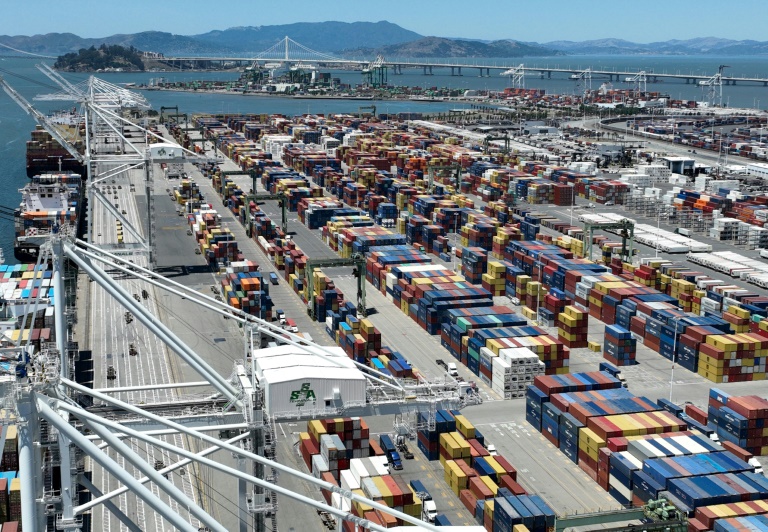
Wall Street stocks rose on Thursday despite data showing the US economy contracted for a second straight quarter as investors took it as a signal the Federal Reserve may slow interest rate hikes.

The increase follows a surge in Wall Street’s main stock indices on Wednesday, after investors welcomed comments by US Federal Reserve chief Jerome Powell suggesting its next super-sized increase could be its last.

The Fed hiked interest rates by three-quarters of a percentage point, its second hike in a row of that magnitude and the fourth increase this year.

“The reported basis for the positive response was a belief that the Fed Chair effectively lowered the temperature on the future pace of rate hikes,” said market analyst Patrick J. O’Hare at Briefing.com.

In late morning trading, the Dow and S&P 500 were both 0.6 higher. Meanwhile, the tech-heavy Nasdaq Composite — which jumped 4.1 percent on Wednesday, added 0.4 percent.

US gross domestic product (GDP) fell at an annual rate of 0.9 percent in the April-June quarter, following a 1.6 percent decline in the first quarter.

Two consecutive quarters of contraction in GDP is generally accepted as the technical definition of a recession.

Powell also said that future hikes will depend on economic data, and the markets took the GDP data as an indication that rate hikes will slow.

“Well, GDP was quite poor, so there won’t be a hattrick of 75 basis point hikes in September, that’s for sure,” said Fawad Razaqzada at City Index and FOREX.com.

“The US GDP data has re-affirmed my view that the Fed will have to slow down the pace of the hikes and potentially go in reverse in early 2023,” he added.

Meanwhile, a key inflation measure, the personal consumption expenditures price index, rose 7.1 percent in the latest three months, the same pace as in the first quarter, data showed.

The Fed and other central banks have been raising interest rates to rein in soaring inflation, but that risks slowing growth or even tipping the economy into recession.

Stephen Innes at SPI Asset Management said the market is “far too over-focused on the September 50 vs 75 debate, and not enough on the Fed’s underlying message.”

He said Fed policymakers have been clear they are “unequivocally prepared to allow a deeper economic slowdown and even a short-dipped recession if that is the price to be paid to get underlying inflation under control.”

European stock markets finished mostly higher.

Europe’s energy sector was in particular focus with Britain’s Shell and France’s TotalEnergies posting bumper second-quarter profits on elevated oil and gas prices. 

Asian indices mostly climbed following a surge on Wall Street, fuelled by hopes that the US central bank could slow its pace of inflation-fighting interest rate hikes.

The dollar bounced back against the euro and pound from a sell-off that came in response to Powell’s comments, but slumped to a month low against the yen. 

Oil prices pushed on data showing a big drop in US stockpiles, as well as the market expectations that the Fed will slow interest rate hikes.

– Key figures at around 1530 GMT –

New York – Dow: UP 0.6 percent at 32,377.88 points

EURO STOXX 50: UP 1.2 percent at 3,652.20

London – FTSE 100: DOWN less than 0.1 percent at 7,345.25 (close) 

Frankfurt – DAX: UP 0.9 percent at 13,282.11 (close)

Paris – CAC 40: UP 1.3 percent at 6,339.21 (close)

Tokyo – Nikkei 225: UP 0.4 percent at 27,815.48 (close)

Hong Kong – Hang Seng Index: DOWN 0.2 percent at 20,622.68 (close)

Shanghai – Composite: UP 0.2 percent at 3,282.58 (close)

Euro/dollar: DOWN at $1.0164 from $1.0200 Wednesday

Pound/dollar: DOWN at $1.2128 from $1.2158 

Euro/pound: DOWN at 83.80 pence from 83.89 pence

Dollar/yen: DOWN at 134.46 yen from 136.57 yen

Brent North Sea crude: UP 0.9 percent at $107.58 per barrel

West Texas Intermediate: UP 0.8 percent at $98.04 per barrel

burs-rl/har

Wall Street shrugs off US economy contracting

Wall Street stocks rose on Thursday despite data showing the US economy contracted for a second straight quarter as investors took it as a signal the Federal Reserve may slow interest rate hikes.

The increase follows a surge in Wall Street’s main stock indices on Wednesday, after investors welcomed comments by US Federal Reserve chief Jerome Powell suggesting its next super-sized increase could be its last.

The Fed hiked interest rates by three-quarters of a percentage point, its second hike in a row of that magnitude and the fourth increase this year.

“The reported basis for the positive response was a belief that the Fed Chair effectively lowered the temperature on the future pace of rate hikes,” said market analyst Patrick J. O’Hare at Briefing.com.

In late morning trading, the Dow and S&P 500 were both 0.6 higher. Meanwhile, the tech-heavy Nasdaq Composite — which jumped 4.1 percent on Wednesday, added 0.4 percent.

US gross domestic product (GDP) fell at an annual rate of 0.9 percent in the April-June quarter, following a 1.6 percent decline in the first quarter.

Two consecutive quarters of contraction in GDP is generally accepted as the technical definition of a recession.

Powell also said that future hikes will depend on economic data, and the markets took the GDP data as an indication that rate hikes will slow.

“Well, GDP was quite poor, so there won’t be a hattrick of 75 basis point hikes in September, that’s for sure,” said Fawad Razaqzada at City Index and FOREX.com.

“The US GDP data has re-affirmed my view that the Fed will have to slow down the pace of the hikes and potentially go in reverse in early 2023,” he added.

Meanwhile, a key inflation measure, the personal consumption expenditures price index, rose 7.1 percent in the latest three months, the same pace as in the first quarter, data showed.

The Fed and other central banks have been raising interest rates to rein in soaring inflation, but that risks slowing growth or even tipping the economy into recession.

Stephen Innes at SPI Asset Management said the market is “far too over-focused on the September 50 vs 75 debate, and not enough on the Fed’s underlying message.”

He said Fed policymakers have been clear they are “unequivocally prepared to allow a deeper economic slowdown and even a short-dipped recession if that is the price to be paid to get underlying inflation under control.”

European stock markets finished mostly higher.

Europe’s energy sector was in particular focus with Britain’s Shell and France’s TotalEnergies posting bumper second-quarter profits on elevated oil and gas prices. 

Asian indices mostly climbed following a surge on Wall Street, fuelled by hopes that the US central bank could slow its pace of inflation-fighting interest rate hikes.

The dollar bounced back against the euro and pound from a sell-off that came in response to Powell’s comments, but slumped to a month low against the yen. 

Oil prices pushed on data showing a big drop in US stockpiles, as well as the market expectations that the Fed will slow interest rate hikes.

– Key figures at around 1530 GMT –

New York – Dow: UP 0.6 percent at 32,377.88 points

EURO STOXX 50: UP 1.2 percent at 3,652.20

London – FTSE 100: DOWN less than 0.1 percent at 7,345.25 (close) 

Frankfurt – DAX: UP 0.9 percent at 13,282.11 (close)

Paris – CAC 40: UP 1.3 percent at 6,339.21 (close)

Tokyo – Nikkei 225: UP 0.4 percent at 27,815.48 (close)

Hong Kong – Hang Seng Index: DOWN 0.2 percent at 20,622.68 (close)

Shanghai – Composite: UP 0.2 percent at 3,282.58 (close)

Euro/dollar: DOWN at $1.0164 from $1.0200 Wednesday

Pound/dollar: DOWN at $1.2128 from $1.2158 

Euro/pound: DOWN at 83.80 pence from 83.89 pence

Dollar/yen: DOWN at 134.46 yen from 136.57 yen

Brent North Sea crude: UP 0.9 percent at $107.58 per barrel

West Texas Intermediate: UP 0.8 percent at $98.04 per barrel

burs-rl/har

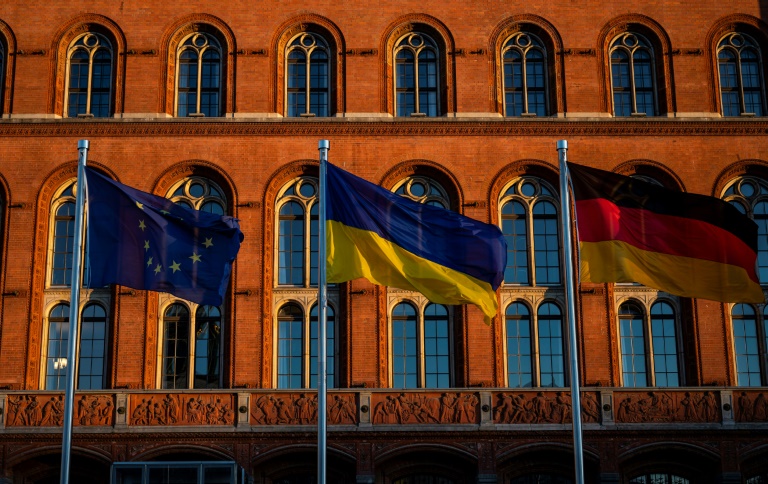
Berlin monuments fall dark to save energy

The city of Berlin started switching off spotlights illuminating its historic monuments as part of a national effort to save energy in the face of Russian gas shortages.

Some 200 buildings and landmarks including Berlin’s red-brick city hall, State Opera House and Charlottenburg Palace will fall dark at night, officials in the German capital said this week.

“Given the war against Ukraine and the energy policy threats by Russia, it’s important that we be as careful as possible with our energy,” the city’s chief official for the environment, Bettina Jarasch, said on Wednesday.

Jarasch of the Green party said that included consumers and industry but also public institutions, calling the move “the right thing to do to make a visible contribution”.

The policy affected six monuments from Wednesday night and will eventually encompass 200 buildings and landmarks along with their 1,400 spotlights over the next four weeks, Jarasch’s office said.

An electrical services firm will shut off 100-120 lights per day without dismantling them, keeping the policy temporary.

The cash-strapped capital will not save money as the labour costs are expected to match the benefit of cutting energy use.

President Frank-Walter Steinmeier said this week he wanted to set an example by keeping the facade of his official residence, Bellevue Palace in Berlin’s sprawling Tiergarten park, dark at night. 

– Cold showers –

Several German cities have said they would step up efforts to limit the use of energy, with Hanover in the north announcing plans this week to only offer cold showers at public pools and sports centres.

Chancellor Olaf Scholz’s centre-left-led government has launched a national drive to save energy amid soaring prices due to the Russian invasion of Ukraine, and the EU agreed this week to reduce Russian gas use across the bloc.

Officials have warned that the Kremlin could cut off supplies this winter in retaliation for biting Western sanctions against Moscow over the war.  

The German efforts include reducing the use of air conditioning, promoting public transport and pushing for more efficient shower heads.

Before the Ukraine war, Germany bought 55 percent of its natural gas from Russia. 

Although the rate had fallen to 35 percent by early June, Europe’s top economy is still heavily dependent on Russia for its energy, and says Moscow is using it as a “weapon”.

On Wednesday, Russian state-run energy giant Gazprom slashed deliveries of gas through the Nord Stream pipeline to Germany to 20 percent capacity from the previous 40 percent. 

Alabama to execute man despite objections of victim's family

A man convicted of murdering his ex-girlfriend is to be executed in the southern US state of Alabama on Thursday despite the objections of the victim’s family.

Joe Nathan James, 49, was sentenced to death in 1996 for the 1994 murder of 26-year-old Faith Hall.

James is scheduled to be executed by lethal injection at 7:00 pm Eastern time (2300 GMT).

He has petitioned the US Supreme Court to stay his execution “pursuant to the wishes of the surviving members of the family of the victim.”

“The victims and their families are paramount in our justice system, and deserve to be heard on the matter of the ultimate punishment of offenders,” James’ lawyer said in an appeal to the Supreme Court.

Hall’s daughters, who were six and three years old when their mother was murdered, have said they want his life to be spared.

“I don’t want it to go forward. We’re not God,” Terryln Hall told CBS 42.

“An eye for an eye has never been a good outlook for life,” added her sister, Toni Hall.

James was convicted of shooting Faith Hall to death after she broke off their short relationship.

If his execution goes ahead, James would be the eighth person executed in the United States this year.

W. Mediterranean hit by 'exceptional' heatwave: experts

An “exceptional” marine heatwave is gripping the western Mediterranean with surface temperatures up to five degrees Celsius (41 degrees Fahrenheit) hotter than average, according to experts contacted by AFP. 

Although the record-breaking heatwave that baked northern Europe and Britain this month has subsided, the experts said the persistently hotter-than-normal temperatures in the Mediterranean posed a threat to the entire marine ecosystem.

“This huge marine heatwave began in May in the Ligurian sea” between Corsica and Italy, said Karina von Schuckmann, an oceanographer at the non-profit research group Mercator Ocean International.

It then spread to the Gulf of Taranto in the Ionian Sea, she said. 

By July, the heatwave had engulfed the Balearic Islands, Sardinia, and the Tyrrhenian Sea. 

“The surface temperature anomaly map shows higher than normal values, in the order of +4 to +5C from the east of the Balearic Islands to the east of Corsica,” Mercator said in a statement. 

While humans might find the warmer water temperatures pleasant in the tourist hotspots of the western Mediterranean, the group warned that “ocean warming impacts the entire ecosystem.” 

“It is important to be aware of the possible consequences for local fauna and flora, as well as the occurrence of extreme weather events that could result in natural disasters,” it said.

Von Schuckmann said that unusually warm temperatures could cause irreversible migration for some species and “mass die-offs” for others.

She noted knock-on effects for industries such as tourism and fishing which rely on favourable water conditions.

According to the UN’s climate science body, marine heatwaves have already doubled in frequency globally since 1980.


– Die-offs, invasive species – 

Although the Mediterranean only counts for one percent of Earth’s ocean surface area, it contains nearly 20 percent of all known marine species.

A study published this month in the journal Global Change Biology found that the Mediterranean had experienced five consecutive years of mass mortality events between 2015-2019.

France’s CNRS research centre has noted that marine heatwaves in 1999, 2003 and 2006 caused mass die-offs for some species, notably the posidonia, a genus of flowering plants.

“We can predict the main impact will be on fixed organisms such as plants or corals,” said Charles-Francois Boudouresque, a marine ecologist at Aix-Marseille University. 

Some species of fish such as the barracuda could become more abundant in warming northern Mediterranean waters, however.

Boudouresque said some species coming through the Suez Canal from the Red Sea could become problematic “within five to 10 years”.

These include the rhopilema, a herbivore jellyfish Boudouresque described as “extremely greedy”, and which could disrupt marine food chains.

Already abundant in the eastern Mediterranean, its appearance in western waters would threaten the algae forests that serve as nurseries for myriad varieties of fish. 

Rhopilema can also sting swimmers with enough severity to require hospital treatment.

Another invasive species is the rabbit fish, which is native to the Red Sea but is increasingly found in the Mediterranean. 

As there is little governments can do once a marine heatwave takes hold, Von Schuckmann said the best course of action is to reduce the greenhouse gas emissions that contribute to warming.

“Even if we stopped emitting today, the oceans, which contain 90 percent of Earth’s heat, will continue to warm,” she said.

“Since at least 2003 (marine heatwaves) have become more common and in future they will last longer, cover more sea, and be more intense and severe,” said Von Schuckmann.

Close Bitnami banner
Bitnami