AFP

In one month, 43 US clinics have stopped offering abortions: study

At least 43 clinics throughout the United States have stopped offering abortions since the Supreme Court rolled back the nationwide right to the procedure, according to a study published Thursday.

In the month since the landmark June 24 ruling, 11 states have banned abortions either after six weeks of pregnancy or altogether, according to the Guttmacher Institute, a research group that supports abortion access.

As a result, 43 clinics — including 23 in Texas alone, five in Oklahoma and five in Alabama — have closed or refocused their resources on other forms of care, by the institute’s count.

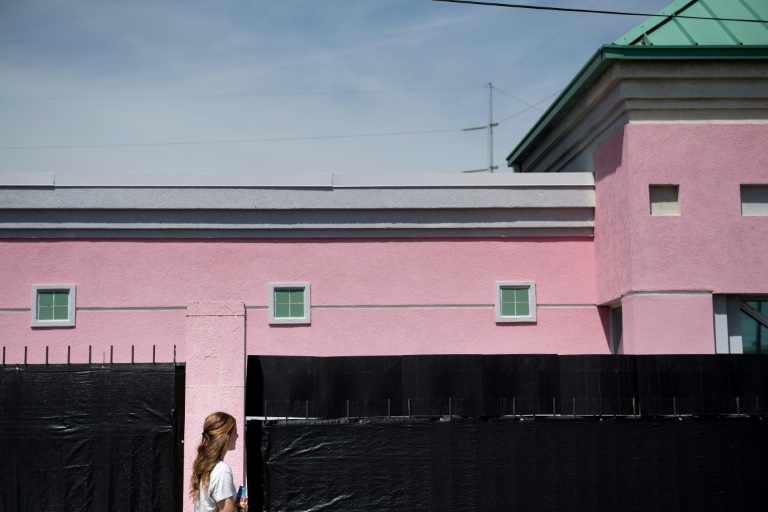
The Jackson Women’s Health Organization, also known as the Pink House — which was at the heart of the Supreme Court case — closed on July 7 after long being the only location providing abortions in the state of Mississippi.

“The already dire state of abortion access in many parts of the country will continue to deteriorate and more states will adopt abortion bans in the coming weeks and months,” the study authors wrote.

Some states, such as Louisiana or North Dakota, have laws banning abortion, but legal battles have slowed the enactment of those new rules.

Others, such as Indiana, have called special state congressional sessions to pass new legislation.

Half of all US states, particularly in the largely conservative South and Midwest, are expected to eventually ban abortions.

Wall Street stocks rally again, shrugging off weak GDP report

Wall Street stocks rose on Thursday despite data showing the US economy contracted for a second straight quarter, as investors took it as a signal the Federal Reserve may slow interest rate hikes.

Stocks initially fell after the economic report, which showed US gross domestic product declined at an annual rate of 0.9 percent in the second quarter, following an even bigger drop in the first three months of the year.

But markets pivoted later in the morning, betting that clear signs of economic weakness would prompt the Fed to ease off on steep increases in borrowing costs. The US central bank on Wednesday undertook its second straight 75 basis point increase, and signaled it is prepared to do more.

“The real catalyst … is a belief that bad news (earnings disappointments and weak data) is good news (fewer rate hikes from the Fed),” Briefing.com said in an analysis.

Major US indices finished the session up around one percent, following even bigger gains Wednesday after investors welcomed comments by US Federal Reserve chief Jerome Powell, who said the central bank at some point would be able to slow the pace of rate hikes.

“Well, GDP was quite poor, so there won’t be a hat-trick of 75 basis point hikes in September, that’s for sure,” said Fawad Razaqzada at City Index and FOREX.com.

“The US GDP data has re-affirmed my view that the Fed will have to slow down the pace of the hikes and potentially go in reverse in early 2023,” he added.

Analysts also pointed to improved investor sentiment that has enabled stocks to advance despite lackluster earnings because the results have not been as bad as feared.

Also, many investors believe that “any downturn that we are going through will likely be mild,” said Jack Ablin, chief investment officer of Cresset Asset Management.

But Ablin said it was still too soon to “declare victory” on inflation.

Earlier, European stock markets finished mostly higher.

Europe’s energy sector was in particular focus with Britain’s Shell and France’s TotalEnergies posting bumper second-quarter profits on elevated oil and gas prices. 

Asian indices mostly climbed following Wednesday’s surge on Wall Street.

– Key figures at around 2030 GMT –

New York – Dow: UP 1.0 percent at 32,529.63 (close)

New York – S&P 500: UP 1.2 percent at 4,072.43 (close)

New York – Nasdaq: UP 1.1 percent at 12,162.59 (close)

London – FTSE 100: DOWN less than 0.1 percent at 7,345.25 (close) 

Frankfurt – DAX: UP 0.9 percent at 13,282.11 (close)

Paris – CAC 40: UP 1.3 percent at 6,339.21 (close)

EURO STOXX 50: UP 1.2 percent at 3,652.20 (close)

Tokyo – Nikkei 225: UP 0.4 percent at 27,815.48 (close)

Hong Kong – Hang Seng Index: DOWN 0.2 percent at 20,622.68 (close)

Shanghai – Composite: UP 0.2 percent at 3,282.58 (close)

Euro/dollar: DOWN at $1.0197 from $1.0200 Wednesday

Pound/dollar: UP at $1.2177 from $1.2158 

Euro/pound: DOWN at 83.70 pence from 83.89 pence

Dollar/yen: DOWN at 134.25 yen from 136.57 yen

Brent North Sea crude: UP 0.5 percent at $107.14 per barrel

West Texas Intermediate: DOWN 0.8 percent at $96.42 per barrel

burs-jmb/hs

Biden, Xi agree to hold face-to-face summit

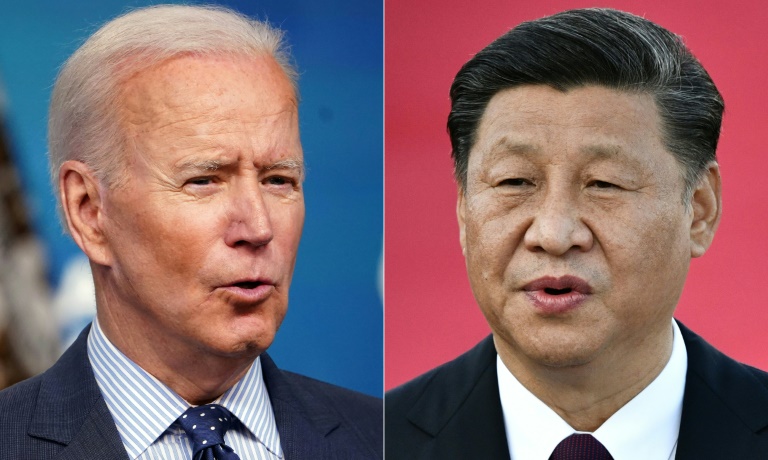
President Joe Biden and his Chinese counterpart Xi Jinping agreed to schedule their first in-person summit during a sometimes tense phone call Thursday where Xi warned the United States not to “play with fire” in Taiwan.

Although this was their fifth phone or video call since Biden took office a year and a half ago, the summit would be their first in-person meeting as leaders. No detail was given on the timing or location.

Biden and Xi “discussed the value of meeting face-to-face and agreed to have their teams follow up to find a mutually agreeable time to do so,” a US official said, speaking on condition of anonymity.

Both sides described the call, which lasted two hours and 17 minutes, as a robust exchange on the many disputes between the world’s two biggest economic powers.

China’s state-run Xinhua agency said Xi delivered harsh words on US policy towards Taiwan, a democratic island with close ties to the United States but which China considers part of its territory.

“Those who play with fire will eventually get burned,” Xi was quoted as telling Biden, repeating language he employed when they spoke last November. “I hope the US side fully understands that.”

Tensions around Taiwan are steadily escalating amid fears that Xi could ultimately order an invasion to impose Beijing’s rule.

In the latest flashpoint, Chinese authorities are furious at unconfirmed plans by Biden ally and speaker of the House of Representatives, Nancy Pelosi, to visit the island.

Although US officials frequently visit Taiwan, separated by a narrow strip of water from the Chinese mainland, Beijing considers a Pelosi trip as a major provocation. She’s second in line to the US presidency and given her position may travel with military transport.

Washington will “bear the consequences” if the trip goes ahead, China warned Wednesday.

During the call, Xi was quoted as telling Biden “the position of the Chinese government and people on the Taiwan issue is consistent.”

“It is the firm will of the over 1.4 billion Chinese people to firmly safeguard China’s national sovereignty and territorial integrity,” he said.

In response, Biden reassured Xi that US policy, known as “strategic ambiguity,” was unchanged — essentially favoring the status quo in Taiwan, with Washington recognizing Chinese sovereignty but opposing any enforcement, allowing the Taiwanese to retain their distinct rule.

“On Taiwan, President Biden underscored that the United States policy has not changed and that the United States strongly opposes unilateral efforts to change the status quo or undermine peace and stability across the Taiwan Strait,” the White House said in a statement.

– No move on tariffs –

Biden prides himself on a close relationship with Xi going back years, but it’s getting hard to mask deepening mistrust between the two countries.

US officials said Biden touched on a raft of sensitive issues, including China’s “genocide and forced labor practices” and its increasingly aggressive military posture across Asia.

The White House described Biden’s outreach as part of “efforts to maintain and deepen lines of communication” and to “responsibly manage our differences and work together where our interests align.”

According to the White House, Biden’s chief hope is to establish “guardrails” for the two superpowers.

This is meant to ensure that while they sharply disagree on democracy, and are increasingly rivals on the geopolitical stage, they can avoid open conflict.

Where to place the guardrails, however, is challenging amid so many unresolved disputes, including a simmering trade war begun under Donald Trump’s presidency.

One big question still completely unresolved is the trade war started under Donald Trump, with 25 percent import duties on billions of dollars of Chinese products.

Despite speculation that Biden could soon ease some of those tariffs to try and lower roaring inflation in the US economy, there was no movement on the issue during his talk with Xi.

“On the question of tariffs, President Biden explained to President Xi… core concerns with China’s unfair practices which harm American workers and harm American families, but he did not discuss any potential steps he might take,” the US official told reporters.

“It would be wrong to believe that somehow a decision on any next steps was somehow waiting for this conversation.”

Recession fears deepen as US economy contracts again

The US economy contracted for a second straight quarter between April and June, according to official data released Thursday, adding fuel to recession fears and creating a headache for President Joe Biden ahead of midterm elections.

Gross domestic product declined at an annual rate of 0.9 percent in the second quarter, following a bigger drop in the first three months of the year, according to the Commerce Department.

While not the official definition, two quarters of negative growth is commonly viewed as a strong signal that a recession is underway, and a downturn in the world’s largest economy would have global consequences — as well as domestic political costs.

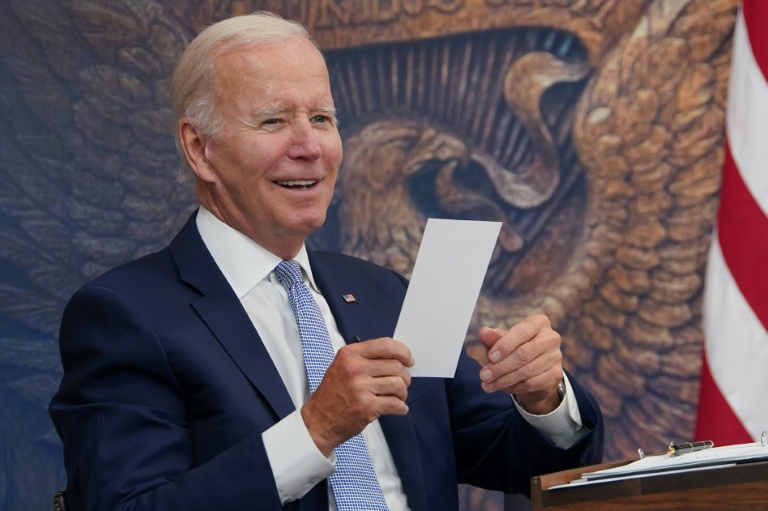
Biden insisted that the US economy is “on the right path” despite the slowdown, touting the strong labor market.

“That doesn’t sound like a recession to me,” he said in remarks at the White House, noting unemployment at near record lows and more than a million jobs created in the latest quarter.

But his critics are sure to seize on the report as proof of the veteran Democrat’s mismanagement.

After a 1.6 percent decline in the first three months of the year, the report said the slowdown in the latest quarter was largely due to drops in government spending at all levels, in private investment on goods including autos, and on residential buildings, despite an increase in exports.

But personal consumption expenditures (PCE) continued to increase, though at a slower rate than the prior quarter, the data showed.

Still, American families continue to feel the bite from sky-high inflation, as a result of supply chain snarls due to Covid-19 lockdowns, as well as the fallout from Russia’s war in Ukraine, which has sent food and fuel prices soaring.

Consumer prices topped nine percent in June, the highest in more than four decades, and the GDP data showed another key inflation measure, the PCE price index, rose a still-high 7.1 percent in the latest three months, the same as in the January-March period.

But gas prices at the pump have fallen 74 cents since hitting a record of more than $5 a gallon in mid-June.

The US central bank has been raising interest rates aggressively — with the latest big hike on Wednesday — to try to cool the economy and tamp down price pressures.

“It’s no surprise that the economy is slowing down as the Federal Reserve acts to bring down inflation,” Biden said in a statement shortly after the GDP report was released. 

“But even as we face historic global challenges, we are on the right path and we will come through this transition stronger and more secure,” he said.

– Recession debate –

It would be highly unusual for an economy still adding jobs at a rapid pace, and with near record-low unemployment, to fall into recession. Even so, many economists say the discussion of a downturn is more a matter of when, not if.

That poses a major political headache for the president, who has seen his approval ratings plummet in recent months.

“The government just announced what every American has been feeling for nearly a year — we are in a recession,” House Republican leader Kevin McCarthy said on Twitter. “Democrats would rather redefine a recession than restore a healthy economy.”

But Fed Chair Jerome Powell agreed with Biden and other economists who say the GDP figures are inconsistent with other strong data.

Powell on Wednesday said he does not think the country is currently in a recession because “there are too many areas of the economy that are performing too well.”

Treasury Secretary Janet Yellen said Thursday there was a path to lower inflation without triggering an uptick in joblessness, though she acknowledged “numerous risks” to the economic outlook.

Mike Fratantoni, chief economist of the Mortgage Bankers Association, was among those who echoed Powell’s view, saying: “The ongoing strength in the job market and other signs of growth make it unlikely that this will be categorized as a recession.”

Powell also said it is possible to cool price pressures without causing a downturn or a big jump in joblessness, although he acknowledged the path to threading that needle is narrowing.

But economist Mohamed El-Erian said on Twitter that the data point to “deepening stagflation and flashing red recession risk.”

That impression may be the one that sticks in the minds of investors and consumers. 

Wall Street was initially not happy with the data, but stocks rebounded and ended the day with solid gains of more than one percent.

Recession fears deepen as US economy contracts again

The US economy contracted for a second straight quarter between April and June, according to official data released Thursday, adding fuel to recession fears and creating a headache for President Joe Biden ahead of midterm elections.

Gross domestic product declined at an annual rate of 0.9 percent in the second quarter, following a bigger drop in the first three months of the year, according to the Commerce Department.

While not the official definition, two quarters of negative growth is commonly viewed as a strong signal that a recession is underway, and a downturn in the world’s largest economy would have global consequences — as well as domestic political costs.

Biden insisted that the US economy is “on the right path” despite the slowdown, touting the strong labor market.

“That doesn’t sound like a recession to me,” he said in remarks at the White House, noting unemployment at near record lows and more than a million jobs created in the latest quarter.

But his critics are sure to seize on the report as proof of the veteran Democrat’s mismanagement.

After a 1.6 percent decline in the first three months of the year, the report said the slowdown in the latest quarter was largely due to drops in government spending at all levels, in private investment on goods including autos, and on residential buildings, despite an increase in exports.

But personal consumption expenditures (PCE) continued to increase, though at a slower rate than the prior quarter, the data showed.

Still, American families continue to feel the bite from sky-high inflation, as a result of supply chain snarls due to Covid-19 lockdowns, as well as the fallout from Russia’s war in Ukraine, which has sent food and fuel prices soaring.

Consumer prices topped nine percent in June, the highest in more than four decades, and the GDP data showed another key inflation measure, the PCE price index, rose a still-high 7.1 percent in the latest three months, the same as in the January-March period.

But gas prices at the pump have fallen 74 cents since hitting a record of more than $5 a gallon in mid-June.

The US central bank has been raising interest rates aggressively — with the latest big hike on Wednesday — to try to cool the economy and tamp down price pressures.

“It’s no surprise that the economy is slowing down as the Federal Reserve acts to bring down inflation,” Biden said in a statement shortly after the GDP report was released. 

“But even as we face historic global challenges, we are on the right path and we will come through this transition stronger and more secure,” he said.

– Recession debate –

It would be highly unusual for an economy still adding jobs at a rapid pace, and with near record-low unemployment, to fall into recession. Even so, many economists say the discussion of a downturn is more a matter of when, not if.

That poses a major political headache for the president, who has seen his approval ratings plummet in recent months.

“The government just announced what every American has been feeling for nearly a year — we are in a recession,” House Republican leader Kevin McCarthy said on Twitter. “Democrats would rather redefine a recession than restore a healthy economy.”

But Fed Chair Jerome Powell agreed with Biden and other economists who say the GDP figures are inconsistent with other strong data.

Powell on Wednesday said he does not think the country is currently in a recession because “there are too many areas of the economy that are performing too well.”

Treasury Secretary Janet Yellen said Thursday there was a path to lower inflation without triggering an uptick in joblessness, though she acknowledged “numerous risks” to the economic outlook.

Mike Fratantoni, chief economist of the Mortgage Bankers Association, was among those who echoed Powell’s view, saying: “The ongoing strength in the job market and other signs of growth make it unlikely that this will be categorized as a recession.”

Powell also said it is possible to cool price pressures without causing a downturn or a big jump in joblessness, although he acknowledged the path to threading that needle is narrowing.

But economist Mohamed El-Erian said on Twitter that the data point to “deepening stagflation and flashing red recession risk.”

That impression may be the one that sticks in the minds of investors and consumers. 

Wall Street was initially not happy with the data, but stocks rebounded and ended the day with solid gains of more than one percent.

US House passes bill to boost domestic chip manufacturing

The US House of Representatives passed a bill on Thursday to boost domestic production of semiconductors, the in-demand microchips that power everything from smartphones to cars and weapons.

The CHIPS Act was approved by the House in a 243-187 vote with 24 Republicans joining Democrats and now goes to President Joe Biden for his signature.

Biden had lobbied strongly for passage of the bill, which will increase US competitiveness with major chip-maker China. He welcomed its approval, saying it will “lower the costs of every day goods.”

“And, it will create high-paying manufacturing jobs across the country and strengthen US leadership in the industries of the future at the same time,” the president said in a statement.

“By making more semiconductors in the United States, this bill will increase domestic manufacturing and lower costs for families,” he said. “And, it will strengthen our national security by making us less dependent on foreign sources of semiconductors.”

The legislation provides $52 billion to increase domestic semiconductor production and more than $100 billion over five years for research and development.

The CHIPS Act was passed on Wednesday in the Senate by a rare bipartisan vote of 64 to 33, with 17 Republicans joining hands with Democrats.

Global semiconductor supplies were disrupted by fallout from Covid-19 shutdowns, sparking widespread shortages of the chips — many of which are made in Asia.

Worldwide chip shortages notably slowed production of new automobiles last year, causing prices to increase.

Passage of the CHIPS Act by the House came shortly after a lengthy telephone call between Biden and Chinese President Xi Jinping.

China criticized details of the bill earlier Thursday.

Foreign ministry spokesman Zhao Lijian said that while the act “claims to be aimed at improving the competitiveness of US technology and chips, (it) contains provisions that restrict normal scientific and technological cooperation between China and the United States.

“China is firmly opposed to this,” Zhao told reporters.

Senate passage of the bill came a day after the South Korean group SK announced a huge investment in US semiconductors and other cutting-edge industries.

The conglomerate said in a statement it plans to “increase its new investment in the United States by $22 billion in areas including semiconductors, green energy, and bioscience, creating tens of thousands of new high-tech, high-paying American jobs.”

In US, the definition of 'recession' is moving target

Now that the US economy has posted two consecutive quarters of negative growth, is it in recession? Opinions are starkly divided, and President Joe Biden is definitely in the No camp.

The “R” word is akin to profanity in some Washington circles these days, especially within the Biden administration.

Just defining exactly what a recession is and when it begins has sparked furious debate — based as much around politics as economics.

“That doesn’t sound like a recession to me,” the US president said Thursday after the Commerce Department reported that GDP declined at an annual rate of 0.9 percent in the second quarter, following a bigger drop in the first three months of 2022.

While not the official definition, two quarters of negative growth is commonly viewed as a strong sign that a recession is underway — but the veteran Democrat’s government has been at pains for a week to explain why the term does not apply.

“How Do Economists Determine Whether the Economy is in a Recession?” the White House said in a blog post last week, apparently trying to get the jump on Thursday’s data release.

“While some maintain that two consecutive quarters of falling real GDP constitute a recession, that is neither the official definition nor the way economists evaluate the state of the business cycle,” the White House said.

Of course, opposition Republicans quickly picked up on the spin.

“Newsflash for Joe Biden: You can’t change reality by arguing over definitions,” the Republican National Committee said in a statement on Monday.

Then on Thursday, top House Republican Kevin McCarthy tweeted: “Democrats would rather redefine a recession than restore a healthy economy.”

– ‘One official arbiter’ –

So beyond the political spin machine, what really is a recession?

In a note on its website, the International Monetary Fund insists there is “no official definition of recession.”

“Most commentators and analysts use, as a practical definition of recession, two consecutive quarters of decline in a country’s real (inflation-adjusted) gross domestic product (GDP),” the Washington-based global lender says.

For the IMF’s chief economist Pierre-Olivier Gourinchas, “the general assessment as to whether the economy is in a recession overall is a little bit more complex.”

Federal Reserve Chair Jerome Powell said Wednesday the Fed “doesn’t make a judgment on that,” but added: “What a recession really is — it’s a broad-based decline across many industries that is sustained for more than a couple months.”

And then on Thursday, Treasury Secretary and former Fed chair Janet Yellen chimed in: “I think we should avoid a semantic battle.”

David Wilcox, a senior economist at the Peterson Institute for International Economics and at Bloomberg Economics, says that considering an economy as entering recession after two consecutive quarters of negative GDP growth is simply “wrong.”

“I kind of cringe and resist every time I see” that definition, Wilcox told AFP.

“There’s one official arbiter of recession dating in the United States. And that’s the National Bureau of Economic Research.”

– Late to the party? –

The NBER, a private, independent and nonpartisan entity, was founded in 1920 to refine research on the US economy. Its “Business Cycle Dating Committee” uses several data points to determine when the economy is in expansion or recession.

“A recession is the period between a peak of economic activity and its subsequent trough, or lowest point,” the NBER says on its website.

“The NBER’s definition emphasizes that a recession involves a significant decline in economic activity that is spread across the economy and lasts more than a few months.”

But because the bureau prefers to base its assessment on solid data and publish its opinion several months after the figures are released, it can seem a little late to the party.

Ellen Hughes-Cromwick, an economist at the Third Way, a center-left think tank, says that the NBER’s traditional delay is “not a problem” but rather a “methodology” that allows the bureau to avoid repeated revisions.

“What is common knowledge among economists is that in that preliminary estimate (each quarter), they have less than 50 percent of actual statistics,” she explains.

“In other words, 50 percent of that GDP preliminary estimate… are estimates,” adds Hughes-Cromwick, who worked as an economist under presidents Ronald Reagan and Barack Obama.

Translation: the NBER is perhaps totally justified in taking its time.

Xi warns Biden not to 'play with fire' over Taiwan

Chinese President Xi Jinping warned his US counterpart Joe Biden not to “play with fire” over the self-ruled island of Taiwan during a lengthy phone call Thursday that the White House said aimed to steady the superpowers’ rocky relationship.

A statement relayed by Chinese state media said the call, lasting two hours and 17 minutes according to the White House, was “candid” — often diplomatic speak for a difficult exchange.

State-run Xinhua agency said Xi delivered harsh words on US policy towards Taiwan, a democratic island with close ties to the United States but which China considers part of its territory.

“Those who play with fire will eventually get burned,” Xi was quoted as telling Biden, repeating language he employed when they spoke last November. “I hope the US side fully understand that.”

Tensions around Taiwan are steadily escalating amid fears that Xi could ultimately order an invasion to impose Beijing’s rule. In the latest flashpoint, Chinese authorities are furious at unconfirmed plans by Biden ally and speaker of the House of Representatives, Nancy Pelosi, to visit the island.

Although US officials frequently visit Taiwan, separated by a narrow strip of water from the Chinese mainland, Beijing considers a Pelosi trip as a major provocation. She’s second in line to the US presidency and given her position may travel with military transport.

Washington will “bear the consequences” if the trip goes ahead, China warned Wednesday.

During the call, Xi was quoted as telling Biden “the position of the Chinese government and people on the Taiwan issue is consistent.”

“It is the firm will of the over 1.4 billion Chinese people to firmly safeguard China’s national sovereignty and territorial integrity,” he said.

In response, Biden reassured Xi that US policy, known as “strategic ambiguity,” was unchanged — essentially favoring the status quo in Taiwan, with Washington recognizing Chinese sovereignty but opposing any enforcement, allowing the Taiwanese to retain their distinct rule.

“On Taiwan, President Biden underscored that the United States policy has not changed and that the United States strongly opposes unilateral efforts to change the status quo or undermine peace and stability across the Taiwan Strait,” the White House said in a statement.

– ‘Guardrails’ –

While this was Biden’s fifth talk with Xi since becoming president a year and a half ago, it’s getting hard to mask deepening mistrust between the two countries.

Biden prides himself on a close relationship with Xi going back years but — in large part due to Covid travel restrictions — the two have yet to meet face-to-face since he took office.

White House National Security Council spokesman John Kirby said “tensions over China’s aggressive, coercive behavior in the Indo-Pacific” were high on the agenda for the call — using the US administration’s term for the Asia-Pacific region.

The White House described Biden’s outreach as part of “efforts to maintain and deepen lines of communication” and to “responsibly manage our differences and work together where our interests align.”

According to the White House, Biden’s chief hope is to establish “guardrails” for the two superpowers.

This is meant to ensure that while they sharply disagree on democracy, and are increasingly rivals on the geopolitical stage, they can avoid open conflict.

Where to place the guardrails, however, is challenging amid so many unresolved disputes, including a simmering trade war begun under Donald Trump’s presidency.

Asked whether Biden could lift some of the 25 percent import duties placed on billions of dollars of Chinese products by Trump, Kirby said there was still no decision.

“We do believe… that the tariffs that were put in place by his predecessor were poorly designed. We believe that they’ve increased costs for American families and small businesses, as well as ranchers. And that’s, you know, without actually addressing some of China’s harmful trade practices,” Kirby said.

But “I don’t have any decision to speak to with respect to tariffs by the president. He’s working this out.”

Recession fears deepen as US economy contracts again

The US economy contracted for a second straight quarter between April and June, government data showed Thursday, adding fuel to recession fears in a headache for President Joe Biden ahead of midterm elections.

Gross domestic product declined at an annual rate of 0.9 percent in the second quarter, following a bigger drop in the first three months of the year, according to the Commerce Department.

While not the official definition, two quarters of negative growth is commonly viewed as a strong signal that a recession is underway, and a downturn in the world’s largest economy would have global consequences — as well as domestic political costs.

Biden insisted that the US economy is “on the right path” despite the slowdown, touting the strong labor market.

“That doesn’t sound like a recession to me,” he said in remarks at the White House.

But his critics are sure to seize on the report as proof of the veteran Democrat’s mismanagement.

After a 1.6 percent decline in the first three months of the year, the report said the slowdown in the latest quarter was largely due to drops in government spending at all levels, in private investment on goods including autos, and on residential buildings, despite an increase in exports.

But personal consumption expenditures (PCE) continued to increase, though at a slower rate than the prior quarter, the data showed.

The US economy also continues to battle sky-high inflation, as a result of supply chain snarls due to Covid-19 lockdowns, as well as the fallout from Russia’s war in Ukraine which has sent food and fuel prices soaring.

Consumer prices topped nine percent in June, the highest in more than four decades, while the GDP data showed another key inflation measure, the PCE price index, rose a still-high 7.1 percent in the latest three months, the same as in the January-March period.

The US central bank has been raising interest rates aggressively — with the latest big hike on Wednesday — to try to cool the economy and tamp down price pressures.

“It’s no surprise that the economy is slowing down as the Federal Reserve acts to bring down inflation,” Biden said in a statement shortly after the GDP report was released. 

“But even as we face historic global challenges, we are on the right path and we will come through this transition stronger and more secure,” he said.

– Recession debate –

It would be highly unusual for an economy still adding jobs at a rapid pace, and with near record-low unemployment, to fall into recession. Even so, many economists say the discussion of a downturn is more a matter of when, not if.

That poses a major political headache for the president, who has seen his approval ratings plummet in recent months as American families struggle to make ends meet due to surging inflation.

Fed Chair Jerome Powell agreed with Biden and other economists who say the GDP figures are inconsistent with other strong data.

Powell on Wednesday said he does not think the country is currently in a recession because “there are too many areas of the economy that are performing too well.”

Treasury Secretary Janet Yellen said Thursday there was a path to lower inflation without triggering an uptick in joblessness, though she acknowledged “numerous risks” to the economic outlook.

Mike Fratantoni, chief economist of the Mortgage Bankers Association, was among those who echoed Powell’s view, saying “the ongoing strength in the job market and other signs of growth make it unlikely that this will be categorized as a recession.”

Powell also said it is possible to cool price pressures without causing a downturn or a big jump in joblessness, although he acknowledged the path to thread that needle is narrowing.

But economist Mohamed El-Erian said on Twitter that the data point to “deepening stagflation and flashing red recession risk.”

That impression may be the one that sticks in the minds of investors and consumers.

Wall Street was initially not happy with the data, but stocks rebounded and were solidly higher at mid-afternoon.

Recession fears deepen as US economy contracts again

The US economy contracted for a second straight quarter between April and June, government data showed Thursday, adding fuel to recession fears in a headache for President Joe Biden ahead of midterm elections.

Gross domestic product declined at an annual rate of 0.9 percent in the second quarter, following a bigger drop in the first three months of the year, according to the Commerce Department.

While not the official definition, two quarters of negative growth is commonly viewed as a strong signal that a recession is underway, and a downturn in the world’s largest economy would have global consequences — as well as domestic political costs.

Biden insisted that the US economy is “on the right path” despite the slowdown, touting the strong labor market.

“That doesn’t sound like a recession to me,” he said in remarks at the White House.

But his critics are sure to seize on the report as proof of the veteran Democrat’s mismanagement.

After a 1.6 percent decline in the first three months of the year, the report said the slowdown in the latest quarter was largely due to drops in government spending at all levels, in private investment on goods including autos, and on residential buildings, despite an increase in exports.

But personal consumption expenditures (PCE) continued to increase, though at a slower rate than the prior quarter, the data showed.

The US economy also continues to battle sky-high inflation, as a result of supply chain snarls due to Covid-19 lockdowns, as well as the fallout from Russia’s war in Ukraine which has sent food and fuel prices soaring.

Consumer prices topped nine percent in June, the highest in more than four decades, while the GDP data showed another key inflation measure, the PCE price index, rose a still-high 7.1 percent in the latest three months, the same as in the January-March period.

The US central bank has been raising interest rates aggressively — with the latest big hike on Wednesday — to try to cool the economy and tamp down price pressures.

“It’s no surprise that the economy is slowing down as the Federal Reserve acts to bring down inflation,” Biden said in a statement shortly after the GDP report was released. 

“But even as we face historic global challenges, we are on the right path and we will come through this transition stronger and more secure,” he said.

– Recession debate –

It would be highly unusual for an economy still adding jobs at a rapid pace, and with near record-low unemployment, to fall into recession. Even so, many economists say the discussion of a downturn is more a matter of when, not if.

That poses a major political headache for the president, who has seen his approval ratings plummet in recent months as American families struggle to make ends meet due to surging inflation.

Fed Chair Jerome Powell agreed with Biden and other economists who say the GDP figures are inconsistent with other strong data.

Powell on Wednesday said he does not think the country is currently in a recession because “there are too many areas of the economy that are performing too well.”

Treasury Secretary Janet Yellen said Thursday there was a path to lower inflation without triggering an uptick in joblessness, though she acknowledged “numerous risks” to the economic outlook.

Mike Fratantoni, chief economist of the Mortgage Bankers Association, was among those who echoed Powell’s view, saying “the ongoing strength in the job market and other signs of growth make it unlikely that this will be categorized as a recession.”

Powell also said it is possible to cool price pressures without causing a downturn or a big jump in joblessness, although he acknowledged the path to thread that needle is narrowing.

But economist Mohamed El-Erian said on Twitter that the data point to “deepening stagflation and flashing red recession risk.”

That impression may be the one that sticks in the minds of investors and consumers.

Wall Street was initially not happy with the data, but stocks rebounded and were solidly higher at mid-afternoon.

Close Bitnami banner
Bitnami