AFP

US stocks rally, dollar retreats as Fed hikes interest rates again

Wall Street stocks rallied and the dollar retreated Wednesday as the Federal Reserve again proceeded with a large interest rate hike, maintaining its forceful stance to combat inflation.

The US central bank carried out the second straight 75 basis point increase, and the fourth rate hike this year, moving aggressively to cool the strongest surge in inflation in more than four decades without derailing the world’s largest economy.

Following a positive session in European equity markets, US stocks were also up prior to the Fed’s 1800 GMT announcement.

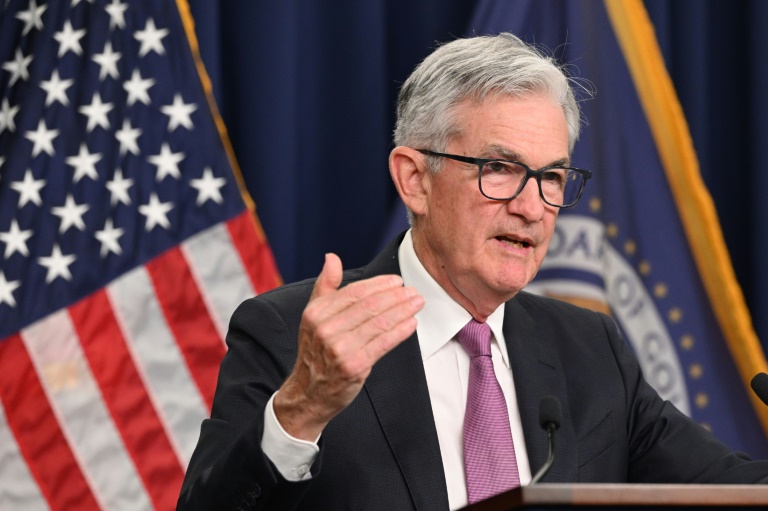
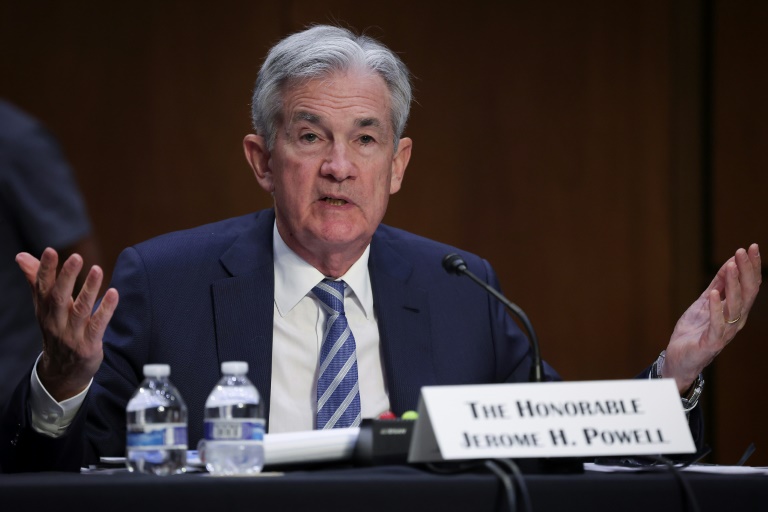
But equities pushed even higher during Fed Chair Jerome Powell’s news conference, where he described the US economy as slowing but not in recession.

Analysts said the central bank’s move met market expectations and they took heart in Powell’s statements that implied the central bank could undertake smaller interest rate hikes later in 2022 after two straight super-sized increases.

Wall Street “is contemplating less aggressive monetary policy at least on the Fed Funds rate as we move from the third quarter into the fourth quarter,” said Art Hogan, chief market strategist at B Riley Wealth Management.

All three major US indices enjoyed solid gains, with the S&P 500 finishing up 2.6 percent. 

The dollar also pulled back against the euro and other currencies in a sign the Fed’s stance was seen as less hawkish than expected.

On Thursday, all eyes will be on second-quarter US growth data, which could show the US economy is technically in recession according to one leading benchmark.

GDP in the first quarter contracted 1.6 percent. Two quarters of negative growth are generally considered a sign the economy is in recession, although that is not the official criteria.

Powell noted the Fed’s mandate is to promote price stability and full employment, not to make declarations about recessions — but added he did not consider current conditions consistent with such a categorization.

A recession is “a broad-based decline across many industries that is sustained for more than a couple months,” Powell told reporters.

“What we have right now doesn’t seem like that. The real reason is that the labor market is just sending such a strong signal of economic strength that it makes you really question the GDP data.” 

– New Credit Suisse CEO –

In Europe, shares in London rose 0.6 percent, Paris climbed 0.8 percent and Frankfurt added 0.5 percent.

On the corporate front, Switzerland’s scandal-hit banking giant Credit Suisse appointed a new chief executive as higher litigation costs and financial market volatility pushed it deeper into the red.

Ulrich Koerner, head of asset management at the bank, takes the reins from Thomas Gottstein on Monday.

The bank has been hit by a series of scandals and crises including the implosions of financial services firms Greensill and Archegos last year.

After starting the day lower on the Swiss stock exchange, Credit Suisse shares rose one percent.

Back on Wall Street, very large gains were enjoyed by both Microsoft, up 6.7 percent, and Google parent Alphabet, up 7.7 percent, despite reporting lower profits that were still not as bad than feared.

– Key figures at around 2110 GMT –

New York – Dow: UP 1.4 percent at 32,197.59 (close)

New York – S&P 500: UP 2.6 percent at 4,023.61 (close)

New York – Nasdaq: UP 4.1 percent at 12,032.42 (close)

London – FTSE 100: UP 0.6 percent at 7,348.23 (close) 

Frankfurt – DAX: UP 0.5 percent at 13,166.38 (close)

Paris – CAC 40: UP 0.8 percent at 6,257.94 (close)

EURO STOXX 50: UP 0.9 percent at 3,607.78 (close)

Tokyo – Nikkei 225: UP 0.2 percent at 27,715.75 (close)

Hong Kong – Hang Seng Index: DOWN 1.1 percent at 20,670.04 (close)

Shanghai – Composite: DOWN 0.1 percent at 3,275.76 (close)

Euro/dollar: UP at $1.0201 from $1.0117 late Tuesday

Pound/dollar: UP at $1.2151 from $1.2028 

Euro/pound: DOWN at 83.85 pence from 84.11 pence

Dollar/yen: UP at 136.51 yen from 136.91 yen

Brent North Sea crude: UP 2.1 percent at $106.62 per barrel

West Texas Intermediate: UP 2.4 percent at $97.26 per barrel

burs-jmb/sst
US stocks rally, dollar retreats as Fed hikes interest rates again

Wall Street stocks rallied and the dollar retreated Wednesday as the Federal Reserve again proceeded with a large interest rate hike, maintaining its forceful stance to combat inflation.

The US central bank carried out the second straight 75 basis point increase, and the fourth rate hike this year, moving aggressively to cool the strongest surge in inflation in more than four decades without derailing the world’s largest economy.

Following a positive session in European equity markets, US stocks were also up prior to the Fed’s 1800 GMT announcement.

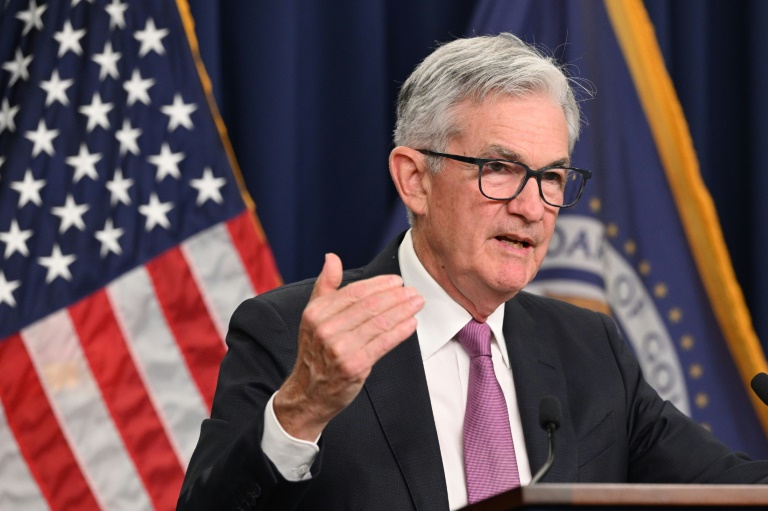
But equities pushed even higher during Fed Chair Jerome Powell’s news conference, where he described the US economy as slowing but not in recession.

Analysts said the central bank’s move met market expectations and they took heart in Powell’s statements that implied the central bank could undertake smaller interest rate hikes later in 2022 after two straight super-sized increases.

Wall Street “is contemplating less aggressive monetary policy at least on the Fed Funds rate as we move from the third quarter into the fourth quarter,” said Art Hogan, chief market strategist at B Riley Wealth Management.

All three major US indices enjoyed solid gains, with the S&P 500 finishing up 2.6 percent. 

The dollar also pulled back against the euro and other currencies in a sign the Fed’s stance was seen as less hawkish than expected.

On Thursday, all eyes will be on second-quarter US growth data, which could show the US economy is technically in recession according to one leading benchmark.

GDP in the first quarter contracted 1.6 percent. Two quarters of negative growth are generally considered a sign the economy is in recession, although that is not the official criteria.

Powell noted the Fed’s mandate is to promote price stability and full employment, not to make declarations about recessions — but added he did not consider current conditions consistent with such a categorization.

A recession is “a broad-based decline across many industries that is sustained for more than a couple months,” Powell told reporters.

“What we have right now doesn’t seem like that. The real reason is that the labor market is just sending such a strong signal of economic strength that it makes you really question the GDP data.” 

– New Credit Suisse CEO –

In Europe, shares in London rose 0.6 percent, Paris climbed 0.8 percent and Frankfurt added 0.5 percent.

On the corporate front, Switzerland’s scandal-hit banking giant Credit Suisse appointed a new chief executive as higher litigation costs and financial market volatility pushed it deeper into the red.

Ulrich Koerner, head of asset management at the bank, takes the reins from Thomas Gottstein on Monday.

The bank has been hit by a series of scandals and crises including the implosions of financial services firms Greensill and Archegos last year.

After starting the day lower on the Swiss stock exchange, Credit Suisse shares rose one percent.

Back on Wall Street, very large gains were enjoyed by both Microsoft, up 6.7 percent, and Google parent Alphabet, up 7.7 percent, despite reporting lower profits that were still not as bad than feared.

– Key figures at around 2110 GMT –

New York – Dow: UP 1.4 percent at 32,197.59 (close)

New York – S&P 500: UP 2.6 percent at 4,023.61 (close)

New York – Nasdaq: UP 4.1 percent at 12,032.42 (close)

London – FTSE 100: UP 0.6 percent at 7,348.23 (close) 

Frankfurt – DAX: UP 0.5 percent at 13,166.38 (close)

Paris – CAC 40: UP 0.8 percent at 6,257.94 (close)

EURO STOXX 50: UP 0.9 percent at 3,607.78 (close)

Tokyo – Nikkei 225: UP 0.2 percent at 27,715.75 (close)

Hong Kong – Hang Seng Index: DOWN 1.1 percent at 20,670.04 (close)

Shanghai – Composite: DOWN 0.1 percent at 3,275.76 (close)

Euro/dollar: UP at $1.0201 from $1.0117 late Tuesday

Pound/dollar: UP at $1.2151 from $1.2028 

Euro/pound: DOWN at 83.85 pence from 84.11 pence

Dollar/yen: UP at 136.51 yen from 136.91 yen

Brent North Sea crude: UP 2.1 percent at $106.62 per barrel

West Texas Intermediate: UP 2.4 percent at $97.26 per barrel

burs-jmb/sst

NASA details plans to bring back Mars rock samples

NASA plans to bring 30 Martian rock samples back to Earth in 2033, the agency said Wednesday — and is sending two small helicopters to help the mission.

The Perseverance rover, which landed on Mars in February 2021, has so far collected 11 samples as part of its hunt for signatures of ancient life.

But bringing them back for detailed lab study on Earth is proving to be a highly complex task.

Up until now, NASA was planning on sending another rover to Mars to pick up the samples from Perseverance then bring them to a robotic lander equipped with its own rocket, called the Mars Ascent Vehicle.

This in turn would fire the samples into orbit where they would be collected by a European spaceship.

Now, however, the second “Sample Fetch Rover” has been scrapped and Perseverance itself will deliver the precious cargo directly to the lander, which will use a robot arm to extract it.

But since NASA always plans for contingencies, it has a backup plan in case Perseverance becomes immobilized.

The lander, which should launch from Earth in 2028 and land on Mars in mid-2030, will also carry two mini helicopters.

Perseverance brought with it its own helicopter, called Ingenuity, which carried out the first powered flight on another world, and has now made a total of 29 sorties.

The two new helicopters will be a little heavier, equipped with wheels to be able to move on the ground as well, and come with a small arm allowing them to recover the samples.

In this scenario, Perseverance would first drop the samples on the ground, the helicopters would pick them up, then place them next to the ascent vehicle.

The orbiter would be set to return to Earth in the Utah desert in 2033.

NASA details plans to bring back Mars rock samples

NASA plans to bring 30 Martian rock samples back to Earth in 2033, the agency said Wednesday — and is sending two small helicopters to help the mission.

The Perseverance rover, which landed on Mars in February 2021, has so far collected 11 samples as part of its hunt for signatures of ancient life.

But bringing them back for detailed lab study on Earth is proving to be a highly complex task.

Up until now, NASA was planning on sending another rover to Mars to pick up the samples from Perseverance then bring them to a robotic lander equipped with its own rocket, called the Mars Ascent Vehicle.

This in turn would fire the samples into orbit where they would be collected by a European spaceship.

Now, however, the second “Sample Fetch Rover” has been scrapped and Perseverance itself will deliver the precious cargo directly to the lander, which will use a robot arm to extract it.

But since NASA always plans for contingencies, it has a backup plan in case Perseverance becomes immobilized.

The lander, which should launch from Earth in 2028 and land on Mars in mid-2030, will also carry two mini helicopters.

Perseverance brought with it its own helicopter, called Ingenuity, which carried out the first powered flight on another world, and has now made a total of 29 sorties.

The two new helicopters will be a little heavier, equipped with wheels to be able to move on the ground as well, and come with a small arm allowing them to recover the samples.

In this scenario, Perseverance would first drop the samples on the ground, the helicopters would pick them up, then place them next to the ascent vehicle.

The orbiter would be set to return to Earth in the Utah desert in 2033.

Fed attacks US inflation with another interest rate hike

The US Federal Reserve on Wednesday again raised the benchmark interest rate by three-quarters of a percentage point in its ongoing battle to tamp down raging price pressures that are squeezing American families.

It was the second straight 75 basis point increase, and the fourth rate hike this year, as US central bankers move aggressively to cool the strongest surge in inflation in more than four decades, without derailing the world’s largest economy.

While the Fed noted signs that the US economy is slowing, it signaled plans to continue to increase borrowing costs — and Fed Chair Jerome Powell made it clear an even bigger rate hike is possible.

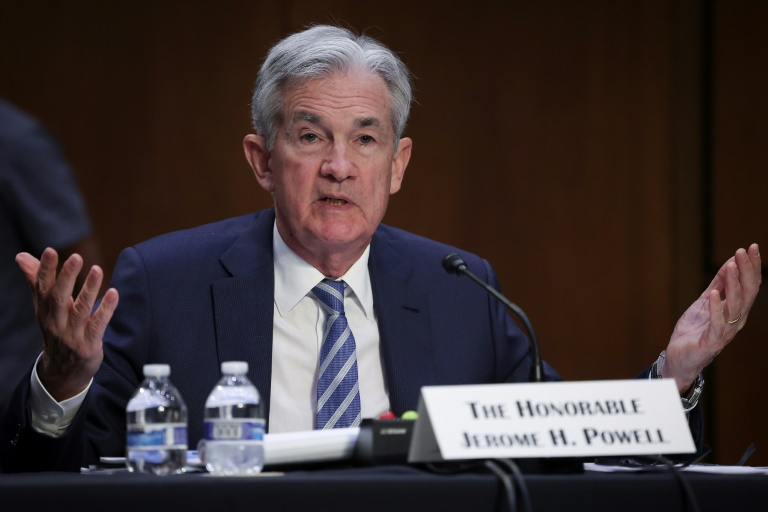
“Inflation is much too high,” Powell told reporters, saying the Fed will keep raising rates until there is solid evidence that inflation is moving back towards the two percent goal.

Another “unusually large increase could be appropriate” at the next meeting in September, Powell said, stressing that US central bankers “wouldn’t hesitate to make a larger move than we did today” if justified.

President Joe Biden is facing political backlash for surging prices, which he has mainly blamed on the Russian invasion of Ukraine that sent global food and energy prices soaring. 

In a vote that was unanimous — unlike the decision made in June — the Fed’s policy-setting Federal Open Market Committee (FOMC) raised its benchmark lending rate to a range of 2.25 to 2.5 percent, after starting the year near zero.

Economists say this has been the most aggressive Fed tightening cycle since the 1980s, when stagflation — a wage-price spiral and stagnant growth — crippled the US economy. But the Fed chief acknowledged that at some point, policymakers will be able to slow the pace of rate hikes.

Wall Street seemed cheered by Powell’s comments, with solid gains in all three major stock indices, including the blue-chip Dow, which ended with an increase of more than 430 points.

The challenge for policymakers is to quell inflation before it becomes dangerously entrenched — and without sending the world’s largest economy into a recession that would reverberate around the globe.

Powell has made it clear they are willing to risk a downturn.

But on Wednesday, he expressed confidence that the United States can avoid that fate, and the Fed can engineer a “soft landing,” taming inflation without causing a recession.

“We’re trying to do just the right amount. We’re not trying to have a recession and we don’t think we have to,” Powell said.

– Recession risk –

The Fed chair nevertheless acknowledged that the path to thread that needle “has narrowed.”

With government data on second quarter GDP due out Thursday, there is intense focus on whether another negative reading will mean the economy is in recession.

The economy contracted 1.6 percent in the January-March period, and though the consensus forecast calls for modest growth in the latest three months, many economists expect a downturn. 

Two consecutive quarters of negative growth are generally considered a sign the economy is in recession, although that is not the official criteria.

But Powell said he does not think the country is currently in a recession because “there are too many areas of the economy that are performing too well.”

While “it’s necessary to have growth slow down… We think that there’s a path for us to be able to bring inflation down while sustaining a strong labor market.”

US prices have continued to rise, and he lamented the hardships faced by families whose paychecks don’t stretch as far at the grocery store.

But the pace seems to be slowing and gasoline prices at the pump have fallen more than 70 cents from the record of just over $5 a gallon in mid-June.

Meanwhile, rising mortgage rates have slowed housing sales for five straight months, and the FOMC statement noted that “recent indicators of spending and production have softened.”

Policymakers seemed to acknowledge that some factors are beyond their control.

“Russia’s war against Ukraine is causing tremendous human and economic hardship. The war and related events are creating additional upward pressure on inflation and are weighing on global economic activity,” the FOMC statement said.

Nancy Vanden Houten of Oxford Economics still expects another three-quarter-point rate hike at the next policy meeting, but after that, she says, “we look for the Fed to downshift to a slower pace of 25bp rate hikes.”

Other economists are now calling for a smaller, half-point increase.

The Fed will see two more key monthly data releases by then, on employment and consumer prices.

Fed attacks US inflation with another interest rate hike

The US Federal Reserve on Wednesday again raised the benchmark interest rate by three-quarters of a percentage point in its ongoing battle to tamp down raging price pressures that are squeezing American families.

It was the second straight 75 basis point increase, and the fourth rate hike this year, as US central bankers move aggressively to cool the strongest surge in inflation in more than four decades, without derailing the world’s largest economy.

While the Fed noted signs that the US economy is slowing, it signaled plans to continue to increase borrowing costs — and Fed Chair Jerome Powell made it clear an even bigger rate hike is possible.

“Inflation is much too high,” Powell told reporters, saying the Fed will keep raising rates until there is solid evidence that inflation is moving back towards the two percent goal.

Another “unusually large increase could be appropriate” at the next meeting in September, Powell said, stressing that US central bankers “wouldn’t hesitate to make a larger move than we did today” if justified.

President Joe Biden is facing political backlash for surging prices, which he has mainly blamed on the Russian invasion of Ukraine that sent global food and energy prices soaring. 

In a vote that was unanimous — unlike the decision made in June — the Fed’s policy-setting Federal Open Market Committee (FOMC) raised its benchmark lending rate to a range of 2.25 to 2.5 percent, after starting the year near zero.

Economists say this has been the most aggressive Fed tightening cycle since the 1980s, when stagflation — a wage-price spiral and stagnant growth — crippled the US economy. But the Fed chief acknowledged that at some point, policymakers will be able to slow the pace of rate hikes.

Wall Street seemed cheered by Powell’s comments, with solid gains in all three major stock indices, including the blue-chip Dow, which ended with an increase of more than 430 points.

The challenge for policymakers is to quell inflation before it becomes dangerously entrenched — and without sending the world’s largest economy into a recession that would reverberate around the globe.

Powell has made it clear they are willing to risk a downturn.

But on Wednesday, he expressed confidence that the United States can avoid that fate, and the Fed can engineer a “soft landing,” taming inflation without causing a recession.

“We’re trying to do just the right amount. We’re not trying to have a recession and we don’t think we have to,” Powell said.

– Recession risk –

The Fed chair nevertheless acknowledged that the path to thread that needle “has narrowed.”

With government data on second quarter GDP due out Thursday, there is intense focus on whether another negative reading will mean the economy is in recession.

The economy contracted 1.6 percent in the January-March period, and though the consensus forecast calls for modest growth in the latest three months, many economists expect a downturn. 

Two consecutive quarters of negative growth are generally considered a sign the economy is in recession, although that is not the official criteria.

But Powell said he does not think the country is currently in a recession because “there are too many areas of the economy that are performing too well.”

While “it’s necessary to have growth slow down… We think that there’s a path for us to be able to bring inflation down while sustaining a strong labor market.”

US prices have continued to rise, and he lamented the hardships faced by families whose paychecks don’t stretch as far at the grocery store.

But the pace seems to be slowing and gasoline prices at the pump have fallen more than 70 cents from the record of just over $5 a gallon in mid-June.

Meanwhile, rising mortgage rates have slowed housing sales for five straight months, and the FOMC statement noted that “recent indicators of spending and production have softened.”

Policymakers seemed to acknowledge that some factors are beyond their control.

“Russia’s war against Ukraine is causing tremendous human and economic hardship. The war and related events are creating additional upward pressure on inflation and are weighing on global economic activity,” the FOMC statement said.

Nancy Vanden Houten of Oxford Economics still expects another three-quarter-point rate hike at the next policy meeting, but after that, she says, “we look for the Fed to downshift to a slower pace of 25bp rate hikes.”

Other economists are now calling for a smaller, half-point increase.

The Fed will see two more key monthly data releases by then, on employment and consumer prices.

Global fight against HIV 'In Danger' amid resource crunch, says UN

The global fight against HIV has stalled from shrinking resources due to Covid-19 and other crises, according to a new report presented at the International AIDS Conference in Montreal, Canada.

Across the world, new HIV infections fell just 3.6 percent between 2020 and 2021, the smallest annual drop since 2016, said the UNAIDS report, titled “In Danger.”

Some 1.5 million new infections occurred last year –- more than a million over global targets of fighting the virus.

“The response to the AIDS pandemic has been derailed by global crises from the colliding pandemics of HIV and Covid, to the war in Ukraine and the resulting global economic crisis,” UNAIDS executive director Winnie Byanyima told reporters.

New infections climbed in Eastern Europe, Central Asia, the Middle East, North Africa and Latin America, in line with trends over several years.

Asia and the Pacific saw a slight rise, bucking previous declines.

Bright spots included western and central Africa — the latter driven largely by Nigeria — and the Caribbean.

“Covid-19 and other instabilities have disrupted health services in much of the world, and millions of students have been out of school, increasing their HIV vulnerability,” the report said.

Globally, 38.4 million people were living with HIV in 2021, with 650,000 deaths from AIDS-related illnesses.

Young women and adolescent girls were disproportionately impacted, with a new infection occurring in this population every two minutes.

Sub-Saharan Africa still accounts for the majority of new infections — 59 percent in 2021 — but that proportion is decreasing as the decline in new cases slows in the rest of the world.

– Fatigue and Ukraine war – 

The report comes as high-income countries are cutting back aid. 

In 2021, international resources available for HIV were six percent lower than in 2010, with bilateral assistance from the United States down 57 percent over the past decade.

The UN says the HIV response in low- and middle-income countries is $8 billion short of the amount needed by 2025.

Anthony Fauci, the United States’ top infectious disease official, said he was worried that fatigue over HIV was holding back resource allocation.

“When you have the disease that we have been addressing as a community, now over 40 years, even that alone is a tough sell to keep the enthusiasm up,” he said.

With Covid and monkeypox added to the mix, “people are exhausted with epidemics and pandemics, so I think our challenge is we have to fight twice as hard to get HIV back on the radar screen,” he added.

Andriy Klepikov, executive director of the Alliance for Public Health, an AIDS advocacy group in Ukraine, called for special attention to his country in light of the invasion by Russia.

“Over 100,000 people living with HIV are actually living in areas directly affected by the war,” he said, stressing the need for more funds from the United States’ PEPFAR program for HIV as well as from UNAIDS.

– Racial disparities – 

Seventy percent of cases globally were reported in key populations: sex workers and their clients, men who have sex with men, people who inject drugs, and transgender people.

The report also called attention to racial inequality as an exacerbator of HIV risks. 

In the United Kingdom and United States of America, Black people lag white people in declines in new infections. In Australia, Canada and the United States, HIV acquisition rates are higher in Indigenous communities.

The report also showed that access to life-saving treatments is faltering, growing by its slowest rate in over a decade.

Three-quarters of all people living with HIV had access to antiretroviral treatments, but 10 million people do not.

The rate of global new infections has declined since peaking in the mid-1990s, but there is far to go in order to achieve the global goal of ending AIDS by 2030.

“We can end AIDS by 2030, but the curve will not bend by itself,” said Byanyima, urging countries to heed the call to action.

US gun makers grilled over marketing by House committee

US gun makers earned $1 billion in the past decade from sales of AR-15-style semiautomatic weapons, a House committee said Wednesday as lawmakers grilled firearms manufacturers after a series of grim mass shootings.

“The gun industry has flooded our neighborhoods, our schools and even our churches and synagogues with these deadly weapons and has gotten rich doing it,” Democratic Representative Carolyn Maloney said.

“They are choosing their bottom line over the lives of their fellow Americans,” the New York lawmaker told a tense day-long hearing of the House Oversight and Reform Committee. “This is beyond irresponsible.”

Maloney and other Democrats accused the gun manufacturers of using “dangerous” marketing tactics to sell firearms to young people and of failing to “acknowledge their role in the violence plaguing our nation.”

“We know the power of marketing, especially the power of marketing to young people, whether it’s cereal or cigarettes, or in this case, guns,” said Bradley Schneider, a Democratic congressman who lives in Highland Park, where a young man shot dead seven people during a July 4 parade.

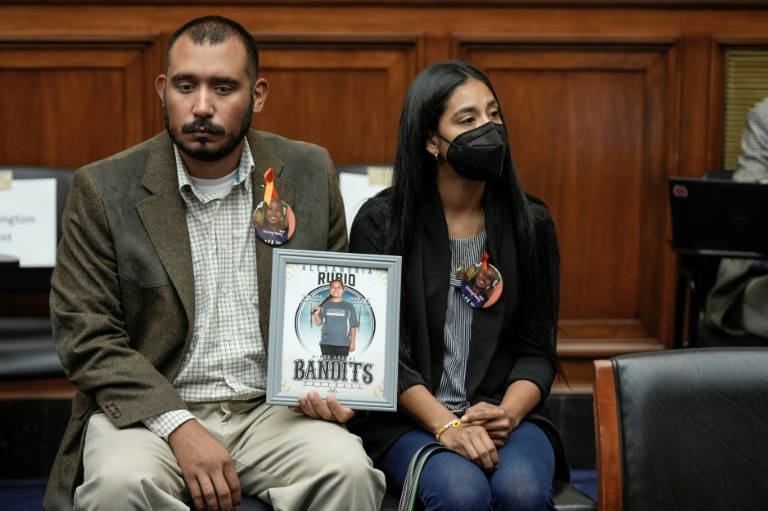
At a hearing attended by several relatives of victims of recent mass shootings, Democrats called for a lifting of the immunity from lawsuits enjoyed by gun makers so they can be held accountable.

Under a 2005 law, gun manufacturers are not liable in the United States for the use of their firearms in the commission of a crime.

Marty Daniel, chief executive officer of Daniel Defense — maker of the gun used by a young man to kill 19 school children and two teachers in Uvalde, Texas — defended his company’s business practices.

“The stated implied purpose of this hearing is to vilify, blame and try to ban over 24 million sporting rifles already in circulation that are lawfully possessed and commonly used by millions of Americans to protect their homes and loved ones,” Daniel said.

“I believe our nation’s response needs to focus not on the type of gun but on the types of persons who are likely to commit mass shootings,” he said.

Christopher Killoy, president and CEO of Sturm, Ruger & Co., said it would be “wrong to deprive citizens of their constitutional right to purchase a lawful firearm they desire because of the criminal acts of wicked people.”

– Bill to ban assault weapons –

Republican lawmakers also pushed back against their Democratic colleagues.

“Gun manufacturers do not cause violent crime,” said Representative James Comer of Kentucky. “Criminals cause violent crime.”

“We’ll continue to protect the rights of all law-abiding gun owners who safely use, store and carry firearms including the AR-15,” Comer said.

According to a report by the House Oversight and Reform Committee, five major gun manufacturers reaped more than $1 billion from the sale of assault rifles over the last decade.

Daniel Defense’s revenue from AR-15-style rifles tripled from $40 million in 2019 to more than $120 million in 2021, the report said.

Ruger’s earnings from AR-15-style rifles rose from $39 million to $103 million during the period while Smith & Wesson’s revenue from long guns, including AR-15-style rifles, doubled, from $108 million to $253 million.

The Democratic-controlled House is moving forward for the first time in nearly 20 years with a bill that would ban the sale, import, manufacture or transfer of certain types of semi-automatic weapons.

The “Assault Weapons Ban of 2021” would likely be doomed to fail in the Senate, however.

Democrats have 50 seats in the 100-member Senate and 10 Republican votes would be needed to bring the measure to the floor.

Congress passed a 10-year ban on assault rifles and certain high-capacity magazines in 1994.

But lawmakers let it expire in 2004, and sales of those weapons have soared since then.

After the Uvalde massacre, President Joe Biden appealed to lawmakers to again ban assault rifles or at least raise the minimum age for buying them from 18 to 21.

But Republican lawmakers, who see such a restriction as going against the constitutional right to bear arms, have refused to go along with Biden’s proposal.

US July 4 parade shooter charged on over 100 counts: officials

US authorities on Wednesday indicted the 21-year-old man accused of carrying out a deadly mass shooting at a July 4 parade near Chicago on 117 counts of murder and other charges, according to an official statement.

Robert Crimo, a young man with a history of mental illness, opened fire on an Independence Day parade in an affluent Chicago suburb, killing seven people and injuring dozens more.

The attack was the latest in the wave of gun violence plaguing the United States.

Crimo, who was disguised in women’s clothing during the shooting, was arrested several hours afterwards. He later confessed to the crime and said he was planning another attack.

Crimo was charged Wednesday with 21 counts of first-degree murder, as well as multiple counts of attempted murder and aggravated battery, according to a statement from prosecutors.

“Our investigation continues, and our victim specialists are working around the clock to support all those affected by this crime,” Lake County State’s Attorney Eric Rinehart said in a statement.

Crimo is set to appear in court next week for his arraignment and have the charges officially read to him.

The July 4 shooting was the latest large-scale gun massacre in the United States, where about 40,000 deaths a year are caused by firearms, according to the Gun Violence Archive.

The shooting further ignited a tense national debate on gun control and raised questions about how a person with a history of mental health problems and threatening behavior was allowed to legally purchase firearms.

Spirit terminates Frontier deal, says in talks with JetBlue

After months of back-and-forth, Spirit Airlines announced Wednesday that it was breaking off a merger with Frontier Group, opening the door to a possible takeover by JetBlue.

The Spirit-Frontier deal, announced in February, was thrown into doubt in early April when JetBlue Airways unveiled its own takeover bid and subsequently launched a hostile takeover bid as smaller carriers try to gain scale to take on the biggest US airlines.

Spirit officials continued to back the Frontier deal, in part due to concerns that the JetBlue offer might face difficulty with antitrust authorities.

But company leaders ran into trouble with Spirit shareholders and repeatedly were forced to postpone an investor vote on the Frontier agreement.

“While we are disappointed that we had to terminate our proposed merger with Frontier, we are proud of the dedicated work of our team members on the transaction over the past many months,” said Ted Christie, chief executive of Spirit in a statement.

“Moving forward, the Spirit Board of Directors will continue our ongoing discussions with JetBlue as we pursue the best path forward for Spirit and our stockholders.”

The most recent bid from JetBlue values Spirit at $3.7 billion, almost a billion more than the value of Frontier.

JetBlue’s bid includes a potential $400 million payment to Spirit if regulators block the takeover.

All three companies have been looking to grow to better compete with the biggest US carriers, American, United, Delta and Southwest.

Close Bitnami banner
Bitnami