AFP

Boeing sees progress on 787 but warns on supply chain

Boeing said Wednesday it is close to receiving regulatory approval to resume 787 jet deliveries, a move that could help reverse lackluster profits, but warned that its production ramp-up for the 737 MAX would be slowed by supply chain problems.

The US aviation giant’s two most popular commercial planes figured prominently in its mixed quarterly earnings report, with the lack of revenue from the 787 Dreamliner again a big drag.

Shares gyrated before finishing the session slightly higher.

A resumption of 787 deliveries will restore a key source of revenue, but a more protracted 737 MAX ramp-up suggests Boeing won’t deliver as many of those planes as quickly as had been expected.

“A lot of things good happened over the quarter,” said Chief Executive Dave Calhoun, who described the company as “on the verge” of garnering approval from US air safety officials on the 787, though he declined to give a precise target date.

Calhoun reported no sign of overall slowdown in the sector, telling analysts that “this general recession thing so far hasn’t impacted our aviation industry.” 

“Will it at some moment? Maybe,” he said, while noting that air travel appears to have been “prioritized fundamentally to a higher slot” by consumers tired of pandemic restrictions.

– Engine trouble –

Calhoun however warned that the company had no timetable for lifting production of the MAX to 38 per month from the current level of 31, calling “limited” engine capacity a “constraint” on the company’s outlook.

“Some investment has to get made and capacity has to expand for the engine suppliers to keep up with what I believe will be continued robust demand,” Calhoun said.

Boeing Chief Financial Officer Brian West told analysts to expect MAX deliveries in the “low 400s” in 2022 after previously estimating around 500.

For the quarter ending June 30, Boeing reported a 67 percent plunge in quarterly profits to $193 million, as revenues declined 1.9 percent to $16.7 billion.

The company missed analyst estimates for revenues and earnings-per-share, but stock prices initially rose after the report, as Boeing confirmed it still expects to have positive cash flow in 2022.

On the 787, the company has been working with the Federal Aviation Administration to address a series of manufacturing issues uncovered in 2020 and since.

Boeing took a $3.5 billion charge for additional rework costs on the 787 in the fourth quarter of 2021. It said in April it also expects another $2 billion in “abnormal costs” for the 787.

At the end of June, Boeing had 120 Dreamliner planes in inventory and was producing the jet “at very low rates,” the company said in a filing.

On Wednesday, the company said it was working with US air safety officials on “final actions” to resume 787 deliveries. 

– China haze –

The enhanced regulatory scrutiny of the 787 and other Boeing planes comes on the heels of a pair of crashes in 2018 and 2019 on the 737 MAX, which led to a lengthy global grounding of the plane.

But the MAX has since returned to service, enabling Boeing to resume deliveries and announce significant new orders, including at the Farnborough Airshow earlier this month.

But Boeing still has 290 MAX planes in inventory. A key wild card remains when deliveries will resume in China, where the MAX has still not returned to service. 

“While we expect 737 MAX deliveries to our customers in China to resume in 2022, subject to final regulatory approvals, risk remains around the timing and rate of those deliveries,” Boeing said in a securities filing Wednesday.

Despite the latest Farnborough orders, Boeing’s backlog of orders in the pipeline lags that of archrival Airbus, but Calhoun told CNBC Wednesday he is not worried about the difference.

“We don’t need to close that gap,” Calhoun said, adding that the aviation industry is “supply constrained for as far as I can see.”

Boeing’s job is “to deliver against our backlog,” he said. “My job is to make sure I’ve got a big enough backlog to continue to increase my rate, stay stable in production and satisfy our customers every step of the way.”

Shares fell during the conference call, but recovered later and finished at $156.09, up 0.1 percent.

Boeing sees progress on 787 but warns on supply chain

Boeing said Wednesday it is close to receiving regulatory approval to resume 787 jet deliveries, a move that could help reverse lackluster profits, but warned that its production ramp-up for the 737 MAX would be slowed by supply chain problems.

The US aviation giant’s two most popular commercial planes figured prominently in its mixed quarterly earnings report, with the lack of revenue from the 787 Dreamliner again a big drag.

Shares gyrated before finishing the session slightly higher.

A resumption of 787 deliveries will restore a key source of revenue, but a more protracted 737 MAX ramp-up suggests Boeing won’t deliver as many of those planes as quickly as had been expected.

“A lot of things good happened over the quarter,” said Chief Executive Dave Calhoun, who described the company as “on the verge” of garnering approval from US air safety officials on the 787, though he declined to give a precise target date.

Calhoun reported no sign of overall slowdown in the sector, telling analysts that “this general recession thing so far hasn’t impacted our aviation industry.” 

“Will it at some moment? Maybe,” he said, while noting that air travel appears to have been “prioritized fundamentally to a higher slot” by consumers tired of pandemic restrictions.

– Engine trouble –

Calhoun however warned that the company had no timetable for lifting production of the MAX to 38 per month from the current level of 31, calling “limited” engine capacity a “constraint” on the company’s outlook.

“Some investment has to get made and capacity has to expand for the engine suppliers to keep up with what I believe will be continued robust demand,” Calhoun said.

Boeing Chief Financial Officer Brian West told analysts to expect MAX deliveries in the “low 400s” in 2022 after previously estimating around 500.

For the quarter ending June 30, Boeing reported a 67 percent plunge in quarterly profits to $193 million, as revenues declined 1.9 percent to $16.7 billion.

The company missed analyst estimates for revenues and earnings-per-share, but stock prices initially rose after the report, as Boeing confirmed it still expects to have positive cash flow in 2022.

On the 787, the company has been working with the Federal Aviation Administration to address a series of manufacturing issues uncovered in 2020 and since.

Boeing took a $3.5 billion charge for additional rework costs on the 787 in the fourth quarter of 2021. It said in April it also expects another $2 billion in “abnormal costs” for the 787.

At the end of June, Boeing had 120 Dreamliner planes in inventory and was producing the jet “at very low rates,” the company said in a filing.

On Wednesday, the company said it was working with US air safety officials on “final actions” to resume 787 deliveries. 

– China haze –

The enhanced regulatory scrutiny of the 787 and other Boeing planes comes on the heels of a pair of crashes in 2018 and 2019 on the 737 MAX, which led to a lengthy global grounding of the plane.

But the MAX has since returned to service, enabling Boeing to resume deliveries and announce significant new orders, including at the Farnborough Airshow earlier this month.

But Boeing still has 290 MAX planes in inventory. A key wild card remains when deliveries will resume in China, where the MAX has still not returned to service. 

“While we expect 737 MAX deliveries to our customers in China to resume in 2022, subject to final regulatory approvals, risk remains around the timing and rate of those deliveries,” Boeing said in a securities filing Wednesday.

Despite the latest Farnborough orders, Boeing’s backlog of orders in the pipeline lags that of archrival Airbus, but Calhoun told CNBC Wednesday he is not worried about the difference.

“We don’t need to close that gap,” Calhoun said, adding that the aviation industry is “supply constrained for as far as I can see.”

Boeing’s job is “to deliver against our backlog,” he said. “My job is to make sure I’ve got a big enough backlog to continue to increase my rate, stay stable in production and satisfy our customers every step of the way.”

Shares fell during the conference call, but recovered later and finished at $156.09, up 0.1 percent.
In US, even the definition of 'recession' is controversial

In Washington circles, saying the “R” word comes with a bit of risk.

As the specter of recession looms over the US economy, defining exactly what one is and when it begins has sparked furious debate — based as much around politics as economics.

Last week, the White House appeared to be trying to get the jump on the possible declaration of a recession in the world’s largest economy — second quarter GDP data is due on Thursday — with a pointed blog post.

The title? “How Do Economists Determine Whether the Economy is in a Recession?”

In the post, President Joe Biden’s team rejects the widely accepted definition of a recession as two consecutive quarters of negative growth — a situation the United States could find itself in as of Thursday.

“While some maintain that two consecutive quarters of falling real GDP constitute a recession, that is neither the official definition nor the way economists evaluate the state of the business cycle,” the White House said.

Of course, opposition Republicans quickly picked up on the spin.

“Newsflash for Joe Biden: You can’t change reality by arguing over definitions,” the Republican National Committee said in a statement on Monday.

– ‘One official arbiter’ –

So beyond the political spin machine, what really is a recession?

“There’s been negative growth in the first quarter of this year. We’ll see what the numbers are… If (the second quarter) were negative, that would technically potentially be a recession,” IMF chief economist Pierre-Olivier Gourinchas said.

In a note on its website, the International Monetary Fund nevertheless insists there is “no official definition of recession.”

“Most commentators and analysts use, as a practical definition of recession, two consecutive quarters of decline in a country’s real (inflation-adjusted) gross domestic product (GDP),” the Washington-based global lender says.

For Gourinchas, “the general assessment as to whether the economy is in a recession overall is a little bit more complex.”

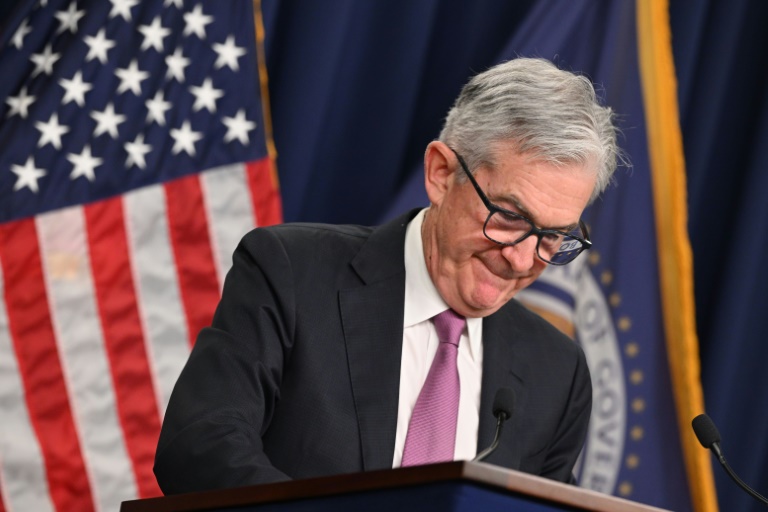
Federal Reserve Chair Jerome Powell said Wednesday the Fed “doesn’t make a judgment on that,” but added: “What a recession really is — it’s a broad-based decline across many industries that is sustained for more than a couple months.”

“The labor market is just sending such a strong signal of economic strength that it makes you really question the GDP data,” Powell said.

David Wilcox, a senior economist at the Peterson Institute for International Economics and at Bloomberg Economics, says that considering an economy as entering recession after two consecutive quarters of negative GDP growth is simply “wrong.”

He says while it’s a “handy rule of thumb,” it’s not gospel. 

“I kind of cringe and resist every time I see” that definition, Wilcox told AFP.

“There’s one official arbiter of recession dating in the United States. And that’s the National Bureau of Economic Research.”

– Late to the party? –

The NBER, a private, independent and nonpartisan entity, was founded in 1920 to refine research on the US economy. Its “Business Cycle Dating Committee” uses several data points to determine when the economy is in expansion or recession.

“A recession is the period between a peak of economic activity and its subsequent trough, or lowest point,” the NBER says on its website.

“The NBER’s definition emphasizes that a recession involves a significant decline in economic activity that is spread across the economy and lasts more than a few months.”

But because the bureau prefers to base its assessment on solid data and publish its opinion several months after the figures are released, it can seem a little late to the party.

Ellen Hughes-Cromwick, an economist at the Third Way, a center-left think tank, says that the NBER’s traditional delay is “not a problem” but rather a “methodology” that allows the bureau to avoid repeated revisions.

“What is common knowledge among economists is that in that preliminary estimate, they have less than 50 percent of actual statistics to measure second quarter GDP,” she explains.

“In other words, 50 percent of that GDP preliminary estimate… are estimates,” adds Hughes-Cromwick, who worked as an economist under presidents Ronald Reagan and Barack Obama.

Translation: the NBER is perhaps totally justified in taking its time.

US regulators move to block Meta virtual reality app deal

US market regulators on Wednesday went to court in an effort to stop Facebook-owner Meta from buying virtual reality fitness app maker Within, a potential blow to the tech giant’s metaverse ambitions.

In a complaint filed in federal court, the Federal Trade Commission argued Meta is trying to illegally expand its virtual reality empire with the purchase of Within Unlimited, maker of fitness app “Supernatural.”

Meta has made it a focus to build its metaverse vision for the internet’s future, betting heavily on the interactive virtual world that the company believes will ensure its powerful position.

“This acquisition poses a reasonable probability of eliminating both present and future competition,” the FTC complaint said. “And Meta would be one step closer to its ultimate goal of owning the entire ‘Metaverse.'”

The social media giant said the FTC’s move defied reality, and expressed confidence that its buy of Within would be good for VR users as well as developers who make apps in that market.

“The FTC’s case is based on ideology and speculation, not evidence,” Meta said in response to an AFP inquiry.

“The idea that this acquisition would lead to anticompetitive outcomes in a dynamic space with as much entry and growth as online and connected fitness is simply not credible.”

Yet the FTC called the acquisition “illegal” and competition bureau deputy director John Newman added: “Instead of competing on the merits, Meta is trying to buy its way to the top.”  

– Moving to block Meta –

Meta is already a leading player in the virtual reality market, and its chief Mark Zuckerberg has stressed that the metaverse is key to the company’s future.

The Silicon Valley titan years back bought virtual reality gear maker Oculus and studios devoted to apps for use in digital realms.

Meta purchases have included a popular “Beat Saber” game in which players slash at oncoming virtual blocks in time to music.

The FTC said that the suit seeks specifically to block Meta and Zuckerberg from getting their hands on Within Unlimited.

The Supernatural app made buy independent studio Within lets users work out in routines set to music by popular artists such as Lady Gaga, Katy Perry, and Coldplay in realistic, virtual locales such as the Galapagos Islands, the FTC said.

The complaint quoted Within’s as calling fitness apps “the killer use case for VR.”

Oculus vice president of play Jason Rubin announced the deal to buy Within in October, not disclosing financial details.

Supernatural is to operate independently as part of Meta’s Reality Labs if the deal is consummated, Rubin said in a blog post at the time.

Supernatural workouts feature routines synched to music hits, real coaches, and “stunning” virtual destinations from Machu Picchu to the surface of Mars, Rubin said.

Some tech world watchers questioned whether the FTC move had also sent a “chilling message” to developers who hope of cashing in when their creations are snapped upt.

“How does the FTC expect startup founders and employees to get any liquidity from their hard work if traditional exit method are going to be blocked?” read a tweet to the regulator from the @pachos account of Samsung Ventures America managing director Michael Pachos.

US Senate passes bill to boost domestic semiconductor manufacturing

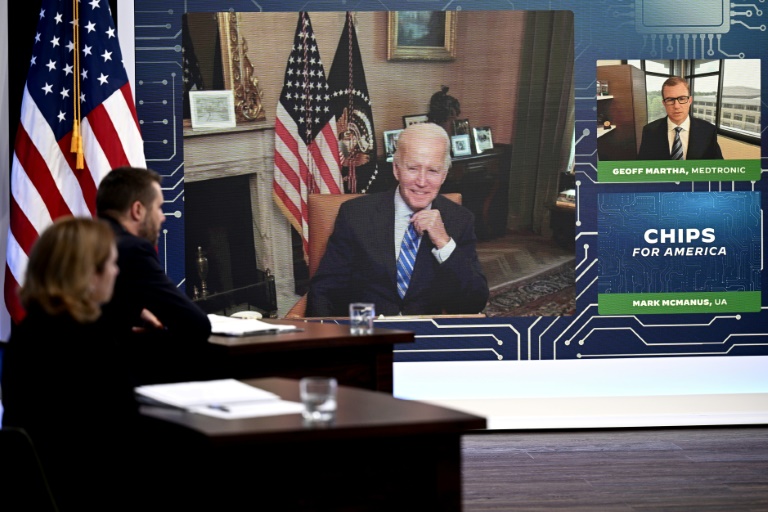
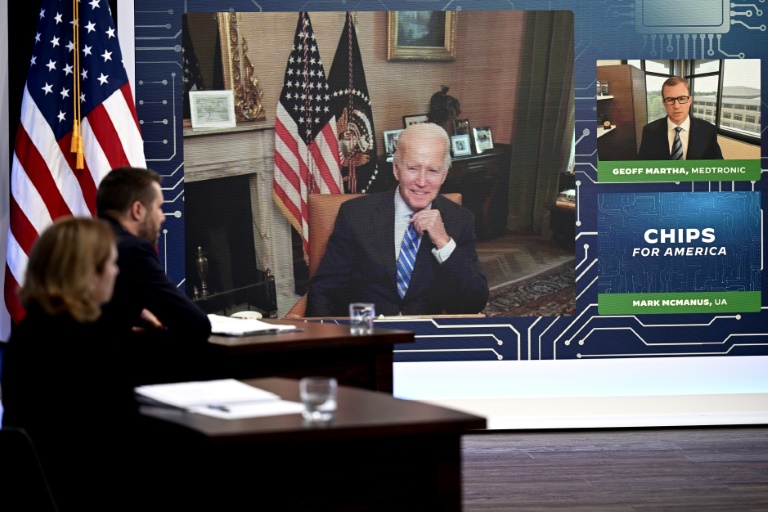
The US Senate passed a bill on Wednesday to boost domestic production of semiconductors amid shortages of the microchips that power everything from smartphones to cars to weapons.

The legislation, which now goes back to the House of Representatives for final passage, provides $52 billion to increase domestic semiconductor production and more than $100 billion over five years for research and development.

The CHIPS Act was passed in the Senate by a rare bipartisan vote of 64 to 33 with 17 Republicans joining hands with Democrats.

President Joe Biden welcomed Senate passage of the legislation that he said will “accelerate the manufacturing of semiconductors in America, lowering prices on everything from cars to dishwashers.”

“It also will create jobs -– good-paying jobs right here in the United States,” Biden said in a statement.

“It will mean more resilient American supply chains, so we are never so reliant on foreign countries for the critical technologies that we need for American consumers and national security,” he said.

Global semiconductor supplies were severely disrupted by fallout from Covid-19 pandemic shutdowns, sparking shortages of the chips — many of which are made in Asia.

The shortages notably slowed production of new automobiles last year, causing prices to increase.

The version of the CHIPS Act passed Wednesday provides $39 billion to finance semiconductor manufacturing plants in the United States and another $13 billion for research.

Senate passage of the bill came a day after the South Korean group SK announced a huge investment in US semiconductor and other cutting edge industries.

The conglomerate said in a statement it plans to “increase its new investment in the United States by $22 billion in areas including semiconductors, green energy, and bioscience, creating tens of thousands of new high-tech, high-paying American jobs.”

US Senate passes bill to boost domestic semiconductor manufacturing

The US Senate passed a bill on Wednesday to boost domestic production of semiconductors amid shortages of the microchips that power everything from smartphones to cars to weapons.

The legislation, which now goes back to the House of Representatives for final passage, provides $52 billion to increase domestic semiconductor production and more than $100 billion over five years for research and development.

The CHIPS Act was passed in the Senate by a rare bipartisan vote of 64 to 33 with 17 Republicans joining hands with Democrats.

President Joe Biden welcomed Senate passage of the legislation that he said will “accelerate the manufacturing of semiconductors in America, lowering prices on everything from cars to dishwashers.”

“It also will create jobs -– good-paying jobs right here in the United States,” Biden said in a statement.

“It will mean more resilient American supply chains, so we are never so reliant on foreign countries for the critical technologies that we need for American consumers and national security,” he said.

Global semiconductor supplies were severely disrupted by fallout from Covid-19 pandemic shutdowns, sparking shortages of the chips — many of which are made in Asia.

The shortages notably slowed production of new automobiles last year, causing prices to increase.

The version of the CHIPS Act passed Wednesday provides $39 billion to finance semiconductor manufacturing plants in the United States and another $13 billion for research.

Senate passage of the bill came a day after the South Korean group SK announced a huge investment in US semiconductor and other cutting edge industries.

The conglomerate said in a statement it plans to “increase its new investment in the United States by $22 billion in areas including semiconductors, green energy, and bioscience, creating tens of thousands of new high-tech, high-paying American jobs.”

US regulators move to block Meta virtual reality app deal

US market regulators on Wednesday went to court to stop Meta from buying virtual reality fitness app maker Within, a potential blow to the tech giant’s metaverse ambitions.

In a complaint filed in federal court, the Federal Trade Commission argued that Facebook-parent Meta is trying to illegally expand its virtual reality empire with the buy of Within Unlimited, maker of fitness app “Supernatural.”

Meta has made it a focus to build its metaverse vision for the internet’s future, betting heavily on the interactive virtual world that the company believes will keep it relevant.

“Instead of competing on the merits, Meta is trying to buy its way to the top,” FTC competition bureau deputy director John Newman said in a release.

“This is an illegal acquisition, and we will pursue all appropriate relief.”

Meta did not immediately respond to a request for comment.

Meta is already a leading player in the virtual reality market, and its chief Mark Zuckerberg has stressed that the metaverse is key to the company’s future.

The Silicon Valley titan years back bought virtual reality gear maker Oculus and studios devoted to apps for use in digital realms.

Meta purchases have included a popular “Beat Saber” game in which players slash at oncoming virtual blocks in time to music.

The FTC said that the suit seeks specifically to block Meta and Zuckerberg from getting their hands on Within Unlimited.

The Supernatural app made buy independent studio Within lets users work out in routines set to music by popular artists such as Lady Gaga, Katy Perry, and Coldplay in realistic, virtual locales such as the Galapagos Islands, the FTC said.

The complaint quoted Within’s as calling fitness apps “the killer use case for VR.”

“Meta is a potential entrant in the virtual reality dedicated fitness app market with the required resources and a reasonable probability of building its own virtual reality app to compete in the space,” the FTC said in the complaint.

“But instead of entering, it chose to try buying Supernatural.”

US regulators move to block Meta virtual reality app deal

US market regulators on Wednesday went to court to stop Meta from buying virtual reality fitness app maker Within, a potential blow to the tech giant’s metaverse ambitions.

In a complaint filed in federal court, the Federal Trade Commission argued that Facebook-parent Meta is trying to illegally expand its virtual reality empire with the buy of Within Unlimited, maker of fitness app “Supernatural.”

Meta has made it a focus to build its metaverse vision for the internet’s future, betting heavily on the interactive virtual world that the company believes will keep it relevant.

“Instead of competing on the merits, Meta is trying to buy its way to the top,” FTC competition bureau deputy director John Newman said in a release.

“This is an illegal acquisition, and we will pursue all appropriate relief.”

Meta did not immediately respond to a request for comment.

Meta is already a leading player in the virtual reality market, and its chief Mark Zuckerberg has stressed that the metaverse is key to the company’s future.

The Silicon Valley titan years back bought virtual reality gear maker Oculus and studios devoted to apps for use in digital realms.

Meta purchases have included a popular “Beat Saber” game in which players slash at oncoming virtual blocks in time to music.

The FTC said that the suit seeks specifically to block Meta and Zuckerberg from getting their hands on Within Unlimited.

The Supernatural app made buy independent studio Within lets users work out in routines set to music by popular artists such as Lady Gaga, Katy Perry, and Coldplay in realistic, virtual locales such as the Galapagos Islands, the FTC said.

The complaint quoted Within’s as calling fitness apps “the killer use case for VR.”

“Meta is a potential entrant in the virtual reality dedicated fitness app market with the required resources and a reasonable probability of building its own virtual reality app to compete in the space,” the FTC said in the complaint.

“But instead of entering, it chose to try buying Supernatural.”

James Lovelock, famed UK scientist behind Gaia theory

The independent British scientist James Lovelock, who has died on his 103rd birthday, was hugely influential for his Gaia theory that Earth is a single self-regulating system — and later his dire warnings about climate change.  

In a wide-ranging career that lasted more than three quarters of a century, Lovelock worked on viruses, the ozone layer, told NASA there was no life on Mars and helped shape — even sometimes reluctantly — the environmental movement. 

His ideas were often at odds with conventional wisdom — generating admiration and sometimes vilification from his peers. He often had to wait for the world to catch up.

The unorthodox scientist, inventor and author worked in a barn-turned-laboratory for decades, though the price for that freedom was a lack of institutional backing.

On the eve of his 101st birthday in 2020, Lovelock told AFP he was enjoying being in lockdown with his wife in southern England as the coronavirus pandemic swept the country.  

“I grew up as an only child hardly meeting anyone — it isn’t any great hardship for me,” he said, adding that the sunny weather and lack of other people were “maximally desirable”.

Despite his declared antisocial tendencies, Lovelock was unfailingly polite and almost impishly charming.

And as ever forging his own path, he said that the world had “overreacted” to Covid.

“Climate change is more dangerous to life on Earth than almost any conceivable disease,” he said.

“If we don’t do something about it, we will find ourselves removed from the planet.”

– ‘Giant’ –

Born on July 26, 1919, Lovelock grew up in south London between the two World Wars, starting out as a photographic chemist.

In 1948, he earned a PhD in medicine and worked in the virus department of Britain’s National Institute for Medical Research for two decades.

In 1957, he invented the machine used to detect the hole in the ozone layer. 

In the early 1960s, as NASA were determined to find life on Mars, Lovelock was under contract at the Jet Propulsion Lab in California.

But Lovelock told his employers there almost certainly wasn’t any life Mars — then designed an experiment to prove it.

A decade later he announced his Gaia theory, describing Earth as an interconnected superorganism.

At a stroke, it helped redefine how science perceives the relationship between our inanimate planet and the life it hosts.

At first the notion was ridiculed by his peers and was even embraced by “Mother Earth” environmentalists, which further annoyed the hard-nosed empiricist.

By the 1990s, however, the complex interplay of all life forms with the water, air and rocks around them — Earth’s geo-bio-chemical balancing act — was accepted by many as self-evident.

Johan Rockstrom, director of the Potsdam Institute for Climate Impact Research, said the Gaia theory had galvanised a new generation of prominent Earth system scientists. 

“Our academic careers are all inspired, in one way or another, by James Lovelock,” he told AFP just a few months before the scientist’s death. 

“He was one of the giants on whose shoulders we all stand.”

– Along with Darwin –

Lovelock later became known as something of a prophet of climate doom with his 2006 book “The Revenge of Gaia” and its 2009 sequel “The Vanishing Face of Gaia”, though he later walked back his most dire predictions.

Never one to shy away from unconventional thinking, Lovelock said humanity might be able to buy time with ambitious technological solutions — many of which remain deeply controversial in climate circles.

“Many different ways to keep Earth cool have been suggested,” he mused to AFP in 2020.

“One idea I find attractive is a sunshade in heliocentric orbit” — essentially a giant sun umbrella in space.

While Lovelock was known for his willingness to take an unorthodox position, fellow scientists said that he was also eager to collaborate with others. 

“He will be remembered for his warm, fun-loving personality, his truly innovative thinking, his clarity of communication, his willingness to take bold risks in developing his ideas, and his abilities to bring people together and learn from them,” said Richard Betts, Head of Climate Impacts Research at Britain’s Met Office Hadley Centre. 

In 2020, AFP asked Lovelock what he would most like to be remembered for.

“The concept of the self-regulating Earth, I suppose,” he replied, saying he had his career at NASA to thank for “stumbling” upon Gaia. 

And he was sanguine about the significance of his legacy. 

“It is as important, in its own way, as Darwin’s thoughts on evolution,” he said.

“We are both students of this great system that we happen to live in.”

Fed attacks US inflation with another interest rate hike

The US Federal Reserve on Wednesday again raised the benchmark interest rate by three-quarters of a percentage point in its ongoing battle to tamp down raging price pressures that are squeezing American families.

It was the second straight 75 basis point increase, and the fourth rate hike this year, as US central bankers move aggressively to cool the strongest surge in inflation in more than four decades, without derailing the world’s largest economy.

While the Fed noted signs that the US economy is slowing, it signaled plans to continue to increase borrowing costs.

President Joe Biden is facing political backlash for surging prices, which he has mainly blamed on the Russian invasion of Ukraine that has sent global food and energy prices soaring. 

Biden insists the US economy will avoid a recession, but even as his approval ratings have cratered, he has supported the Fed in its battle to quell inflation.

Fed Chair Jerome Powell and others have made it clear they are willing to risk a downturn and will keep raising interest rates until they see solid evidence that inflation is moving back towards the two percent goal.

In a vote that was unanimous — unlike the decision made in June — the policy-setting Federal Open Market Committee raised the policy lending rate to a range of 2.25 to 2.5 percent, after starting the year near zero.

“Recent indicators of spending and production have softened,” the FOMC statement said. 

But “inflation remains elevated, reflecting supply and demand imbalances related to the pandemic, higher food and energy prices, and broader price pressures,” the statement said, adding that it expects ongoing rate increases “will be appropriate.”

Economists say this has been the most aggressive Fed tightening cycle since the 1980s, when stagflation — a wage-price spiral and stagnant growth — crippled the US economy.

The challenge for policymakers is to quell inflation before it becomes dangerously entrenched without sending the world’s largest economy into a recession that would reverberate around the globe.

Powell has argued that the US economy is on solid footing and able to withstand the rate increases, and Wednesday’s statement noted that “job gains have been robust in recent months, and the unemployment rate has remained low.” 

But the FOMC also made clear it is “strongly committed to returning inflation to its two percent objective” — and prepared to do more if that goal is threatened.

All eyes will be on Powell’s press conference starting at 2:30 pm (1830 GMT) for indications of whether he thinks the Fed may be able to ease up or will continue the aggressive moves.

– Recession risk –

Policymakers seemed to acknowledge that some factors are beyond their control.

“Russia’s war against Ukraine is causing tremendous human and economic hardship. The war and related events are creating additional upward pressure on inflation and are weighing on global economic activity,” the statement said.

While prices have continued to rise, with home prices hitting a new record, rising mortgage rates have slowed housing sales for five straight months.

But global oil prices are trending down, with the US benchmark WTI falling below $95 a barrel from a peak of more than $123 a barrel in March, and gasoline prices at the pump have fallen more than 70 cents from the record of just over $5 a gallon in mid-June.

Meanwhile, the job market has remained strong, and surveys show inflation expectations in the months ahead have started to trend lower.

Policymakers want to engineer a “soft landing,” taming inflation without causing a downturn, but economists warn they face an increasingly narrow path to success and it would be easy to overshoot by being too aggressive.

GDP in the first quarter contracted 1.6 percent, and the first reading on the April-June period is due out Thursday. 

Though the consensus forecast calls for modest growth, many economists expect a downturn. 

Two quarters of negative growth are generally considered a sign the economy is in recession, although that is not the official criteria.

“The Fed is now stuck between a rock and a hard place, with no easy way out without the economy feeling pain,” KPMG chief economist Diane Swonk said in an analysis, noting that “Powell has started to underscore that reality by admitting a recession could occur.”

“Brace yourself,” Swonk said on Twitter, likening the surge in inflation to a cancer that will spread if left untreated.

She said the benchmark interest rate likely will have to rise to a range of 3.75-4.0 percent, which would mean another 150 basis points of increase in coming months.

Kansas City Fed President Esther George dissented at the June meeting, warning that moving too fast could be “unsettling” and raise recession fears, but voted for the big rate hike this time.

Close Bitnami banner
Bitnami