AFP

Bitter harvest: Malaysian palm oil farmers face labour crunch

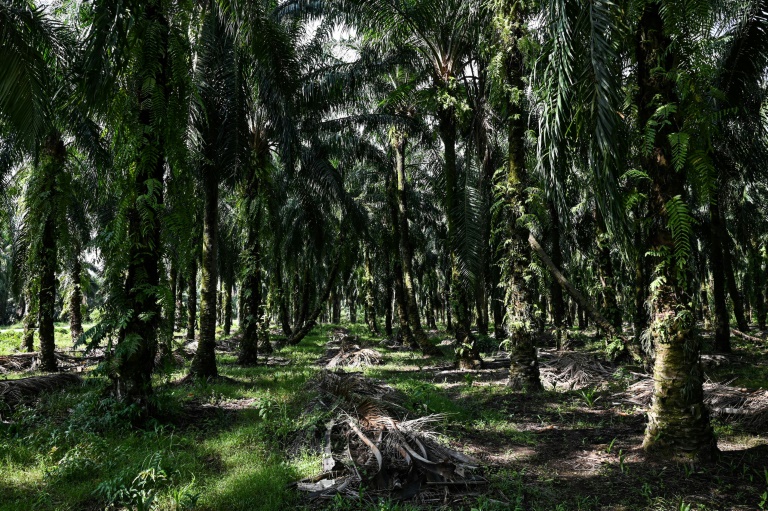
Overripe palm oil fruits hang untouched in trees while others lie rotting scattered around a plantation, as Malaysian farmers reap the bitter harvest of a severe labour shortage.

The tropical country is the world’s second-biggest producer of the edible vegetable oil, which is found in many everyday goods from chocolate to cosmetics. 

The sector has long been reliant on migrants from neighbouring Indonesia for back-breaking plantation work, which is shunned by most in more affluent Malaysia. 

Lengthy Covid border closures had already reduced the foreign labour force, but now bureaucratic hurdles and a ban by Indonesia on sending new workers have dramatically worsened the problems.

“A lot of bunches of fruit are rotting on the trees,” Suzaidee Rajan, 47, who owns a 300-acre (120-hectare) plantation in Ijok, central Selangor state, told AFP. 

“We usually harvest twice a month. But now due to the labour shortage, we can (do so) just once a month. Our income has plunged and locals are angry.”

With just four foreign workers — two fewer than the number he needs — Suzaidee now has to drive into his plantation and load the fruit onto a lorry himself.

Palm oil is a controversial commodity, blamed by environmentalists for fuelling the destruction of rainforest in Malaysia and Indonesia, which together produce 85 percent of global output. 

Green groups say rapid expansion of plantations has destroyed rare animals’ habitats, while there have been allegations of foreign workers being abused and mistreated on some estates. 

The sector nevertheless remains a major contributor to Malaysia’s economy, and has continued to attract foreign workers who can earn higher wages than back home. 

Agricultural firms run large estates, while there are also numerous small-scale farmers like Suzaidee.

– ‘Darkness on horizon’ –

Other Malaysian industries, including construction and manufacturing, also rely on migrant workers from across Asia, and suffered as a result of lengthy pandemic border closures.

While authorities ended a freeze on hiring foreigners in February, labourers have been slow to return because of red tape and difficult negotiations with countries of origin. 

Problems in the plantation sector have been particularly acute, however, and look set to get worse after Indonesia banned sending new workers to Malaysia earlier this month.

Hermono — Indonesia’s ambassador in Kuala Lumpur, who goes by one name — said Jakarta took the decision as Malaysia was not abiding by an agreement aimed at protecting his compatriots.  

The Malaysian estate owners’ association says there is currently a shortage of about 120,000 workers. 

And this month Minister Zuraida Kamaruddin, who oversees the plantation sector, said the industry lost 10.46 billion ringgit ($2.35 billion) in the first five months of 2022 as palm oil fruit was left unharvested. 

“I can see only darkness on the horizon unless migrant workers are brought into the country immediately,” farmer Sahman Duriat, who has a plantation in Ijok, told AFP. 

“My earnings are falling while inflation and production costs are rising.”

After the Indonesian ban was announced, Malaysia’s human resources ministry vowed to address Jakarta’s concerns quickly to ensure it is reversed. 

For Indonesian plantation workers still in Malaysia, there is now much more to do.

“Usually we work in a group of five… but now there are just two of us,” said Zan, who goes by one name, as he cut fruit from a tree while a second man loaded it into a wheelbarrow.

“We harvest 200 tonnes a month with five people but now only 80 tonnes with just two of us.”

Bitter harvest: Malaysian palm oil farmers face labour crunch

Overripe palm oil fruits hang untouched in trees while others lie rotting scattered around a plantation, as Malaysian farmers reap the bitter harvest of a severe labour shortage.

The tropical country is the world’s second-biggest producer of the edible vegetable oil, which is found in many everyday goods from chocolate to cosmetics. 

The sector has long been reliant on migrants from neighbouring Indonesia for back-breaking plantation work, which is shunned by most in more affluent Malaysia. 

Lengthy Covid border closures had already reduced the foreign labour force, but now bureaucratic hurdles and a ban by Indonesia on sending new workers have dramatically worsened the problems.

“A lot of bunches of fruit are rotting on the trees,” Suzaidee Rajan, 47, who owns a 300-acre (120-hectare) plantation in Ijok, central Selangor state, told AFP. 

“We usually harvest twice a month. But now due to the labour shortage, we can (do so) just once a month. Our income has plunged and locals are angry.”

With just four foreign workers — two fewer than the number he needs — Suzaidee now has to drive into his plantation and load the fruit onto a lorry himself.

Palm oil is a controversial commodity, blamed by environmentalists for fuelling the destruction of rainforest in Malaysia and Indonesia, which together produce 85 percent of global output. 

Green groups say rapid expansion of plantations has destroyed rare animals’ habitats, while there have been allegations of foreign workers being abused and mistreated on some estates. 

The sector nevertheless remains a major contributor to Malaysia’s economy, and has continued to attract foreign workers who can earn higher wages than back home. 

Agricultural firms run large estates, while there are also numerous small-scale farmers like Suzaidee.

– ‘Darkness on horizon’ –

Other Malaysian industries, including construction and manufacturing, also rely on migrant workers from across Asia, and suffered as a result of lengthy pandemic border closures.

While authorities ended a freeze on hiring foreigners in February, labourers have been slow to return because of red tape and difficult negotiations with countries of origin. 

Problems in the plantation sector have been particularly acute, however, and look set to get worse after Indonesia banned sending new workers to Malaysia earlier this month.

Hermono — Indonesia’s ambassador in Kuala Lumpur, who goes by one name — said Jakarta took the decision as Malaysia was not abiding by an agreement aimed at protecting his compatriots.  

The Malaysian estate owners’ association says there is currently a shortage of about 120,000 workers. 

And this month Minister Zuraida Kamaruddin, who oversees the plantation sector, said the industry lost 10.46 billion ringgit ($2.35 billion) in the first five months of 2022 as palm oil fruit was left unharvested. 

“I can see only darkness on the horizon unless migrant workers are brought into the country immediately,” farmer Sahman Duriat, who has a plantation in Ijok, told AFP. 

“My earnings are falling while inflation and production costs are rising.”

After the Indonesian ban was announced, Malaysia’s human resources ministry vowed to address Jakarta’s concerns quickly to ensure it is reversed. 

For Indonesian plantation workers still in Malaysia, there is now much more to do.

“Usually we work in a group of five… but now there are just two of us,” said Zan, who goes by one name, as he cut fruit from a tree while a second man loaded it into a wheelbarrow.

“We harvest 200 tonnes a month with five people but now only 80 tonnes with just two of us.”

Powerful earthquake hits northern Philippines

A 7.1-magnitude earthquake hit the northern Philippines Wednesday, the US Geological Survey said, shattering windows of buildings at the epicentre and shaking high-rise towers more than 300 kilometres (185 miles) away in the capital Manila. 

The shallow but powerful quake struck the mountainous and lightly populated province of Abra on the main island of Luzon at 8:43 am (0043 GMT), the USGS said.

Shallow earthquakes tend to cause more damage than deeper ones.

In the municipality of Dolores, which felt the full force of the quake, terrified people ran outside their homes and shops, and the local market’s windows were shattered, Police Major Edwin Sergio told AFP.

“The quake was very strong,” Sergio said, adding there were small cracks in the police station building.

“Vegetables and fruits sold in the market were also disarranged after tables were toppled.”

A video posted on Facebook and verified by AFP showed cracks in the asphalt road and ground in the nearby town of Bangued, though there was no visible damage to houses or stores.

But a number of injured people in Bangued were taken to hospital, police chief Major Nazareno Emia told AFP. 

“Some of the buildings here show cracks. Power was cut off and internet as well,” he added.

Congressman Ching Bernos, who represents the Lone District of Abra, said the quake “caused damages to many households and establishments”, but did not elaborate.

University student Mira Zapata was in her house in the town of San Juan when she felt “really strong shaking”.

“We started shouting and rushed outside,” she said, as aftershocks continued.

“Our house is ok but houses down the hill were damaged.” 

– Ring of Fire –

The Philippines is regularly rocked by quakes due to its location on the Pacific “Ring of Fire”, an arc of intense seismic activity that stretches from Japan through Southeast Asia and across the Pacific basin.

Wednesday’s quake was the strongest recorded in the Philippines in years.

In Vigan City, in the nearby province of Ilocos Sur, centuries-old structures built during the Spanish colonial period were damaged.

Verified video posted on Facebook showed the Bantay Bell Tower in the popular tourist destination partially crumbling. 

“We can’t rule out the possibility of another strong earthquake,” said Renato Solidum, director of the Philippine Institute of Volcanology and Seismology.

In October 2013, a magnitude 7.1 earthquake struck Bohol Island in the central Philippines, killing over 200 people and triggering landslides.

Old churches in the birthplace of Catholicism in the Philippines were badly damaged. Nearly 400,000 were displaced and tens of thousands of houses were damaged. 

The powerful quake altered the island’s landscape and a “ground rupture” pushed up a stretch of ground by up to three meters, creating a wall of rock above the epicentre. 

In 1990, a magnitude 7.8 earthquake in the northern Philippines created a ground rupture stretching over a hundred kilometres. 

Fatalities were estimated to reach over 1,200 and caused major damage to buildings in Manila.

The nation’s volcanology and seismology institute regularly holds quake drills, simulating scenarios in the nation’s active fault lines. 

During major earthquakes, the agency said people would find it difficult to stand on upper floors, trees could shake strongly, heavy objects and furniture may topple and large church bells may ring. 

Eye-popping: Saudi prince unveils mirrored skyscraper eco-city

A futuristic Saudi megacity is to feature two skyscrapers extending across a swathe of desert and mountain terrain, according to the latest disclosures on the project by the kingdom’s de facto ruler.

The parallel structures of mirror-encased skyscrapers extending over 170 kilometres (more than 100 miles), known collectively as The Line, form the heart of the Red Sea megacity NEOM, a plank of Crown Prince Mohammed bin Salman’s bid to diversify the Gulf state’s oil-dependent economy.

First announced in 2017, NEOM has consistently raised eyebrows for proposed flourishes like flying taxis and robot maids, even as architects and economists have questioned its feasibility.

In a presentation Monday night, Prince Mohammed sketched out an even more ambitious vision, describing a car-free utopia that would become the planet’s most liveable city “by far”.

Analysts noted, though, that plans for NEOM have changed course over the years, fuelling doubts about whether The Line will ever become reality.

NEOM, a biotech and digital hub spread over 26,500 square kilometres (10,000 square miles), was once touted as a regional “Silicon Valley”.

Now it’s a vehicle for reimagining urban life on a footprint of just 34 square kilometres, and addressing what Prince Mohammed describes as “liveability and environmental crises”.

“The concept has morphed so much from its early conception that it’s sometimes hard to determine its direction: scaling down, scaling up, or making an aggressive turn sideways,” said Robert Mogielnicki of the Arab Gulf States Institute in Washington.

– Population boom –

Officials had earlier said NEOM’s population would top one million, but Prince Mohammed said the number would actually hit 1.2 million by 2030 before climbing to nine million by 2045.

The eye-popping total is part of a hoped-for nationwide population boom that Prince Mohammed said would be necessary to make Saudi Arabia, the world’s biggest crude exporter, an economic powerhouse.

The goal for 2030 is to have 50 million people — half Saudis and half foreigners — living in the kingdom, up from roughly 34 million today.

By 2040 the target is 100 million people, he said.

“That’s the main purpose of building NEOM, to raise the capacity of Saudi Arabia, get more citizens and more people in Saudi Arabia. And since we are doing it from nothing, why should we copy normal cities?”

The site will be powered by 100 percent renewable energy and feature “a year-round temperate micro-climate with natural ventilation”, a promotional video released Monday said.

Past environmental pledges by the kingdom, such as a vow to achieve net zero carbon emissions by 2060, have sparked scepticism from environmentalists.

NEOM is well-positioned to harness solar and wind energy, and plans are also afoot for the city to host the world’s largest green hydrogen plant, said Torbjorn Soltvedt of risk intelligence company Verisk Maplecroft.

“But the feasibility of NEOM as a whole is still unclear given the unprecedented scale and cost of the project,” he said.

– Finding funds –

At just 200 metres (yards) wide, The Line is intended to be Saudi Arabia’s answer to unchecked and wasteful urban sprawl, layering homes, schools and parks on top of each other in what planners term “Zero Gravity Urbanism”.

Residents will have “all daily needs” reachable within a five-minute walk, while also having access to other perks like outdoor skiing facilities and “a high-speed rail with an end-to-end transit of 20 minutes”, according to a statement.

Though NEOM will operate under its own founding law, which is still being prepared, Saudi officials say they have no plans to waive the kingdom’s alcohol ban.

An airport is already operational at NEOM, and authorities announced in May it would begin receiving regular flights from Dubai, but it is unclear whether major construction of the megacity itself has commenced.

The “first phase” of the project, lasting until 2030, will cost 1.2 trillion Saudi riyals (roughly $319 billion), Prince Mohammed said.

Besides government subsidies, potential sources of funding include the private sector and an initial public offering for NEOM expected in 2024, he said.

Securing the necessary financing remains a potential challenge, though the current climate is more favourable than during the coronavirus pandemic that lowered oil prices.

“But funding is only part of the equation… demand is harder to buy, especially when you’re asking people to be part of an experiment on living and working in the future,” Mogielnicki said.

Most Asian markets down as Fed prepares latest hike

Stocks fell Wednesday as recession fears returned to the forefront of traders’ minds ahead of an expected Federal Reserve interest rate hike later in the day.

The selling followed a steep drop on Wall Street fuelled by concerns that four-decade high inflation and rising borrowing costs were keeping Americans from spending, and pushing the economy towards a recession.

That was backed up by a profit warning by retail titan Walman and a closely watched consumer confidence gauge sinking for the third month in a row.

And the International Monetary Fund slashed its global growth forecasts, warning the US economy would likely shrink.

There had been hope that a recent rally across markets indicated the long-running sell-off may have come to an end, and that signs of an economic slowdown could allow the Fed to ease off its tightening by next year and start cutting rates in 2023.

But observers warned there was still a lot of volatility to come as the bank was still hiking, prices were soaring, Russia’s war in Ukraine showed no sign of ending and China was still battling Covid with lockdowns.

“The Fed hasn’t even gotten to neutral yet,” Jason England, of Janus Henderson Investors, told Bloomberg Television.

“For them to start easing already or for them to start seeing eases priced in is, I think, a little premature.”

All eyes are now on the Fed meeting, which concludes Wednesday and is followed Thursday by second-quarter economic growth figures.

While officials are widely tipped to announce a second successive three-quarter point increase, the main focus will be their outlook for the economy and clues about future moves as it begins to falter.

“Markets are pricing at a slower pace of tightening before the Fed pivots to an easing stance in 2023,” said SPI Asset Management’s Stephen Innes.

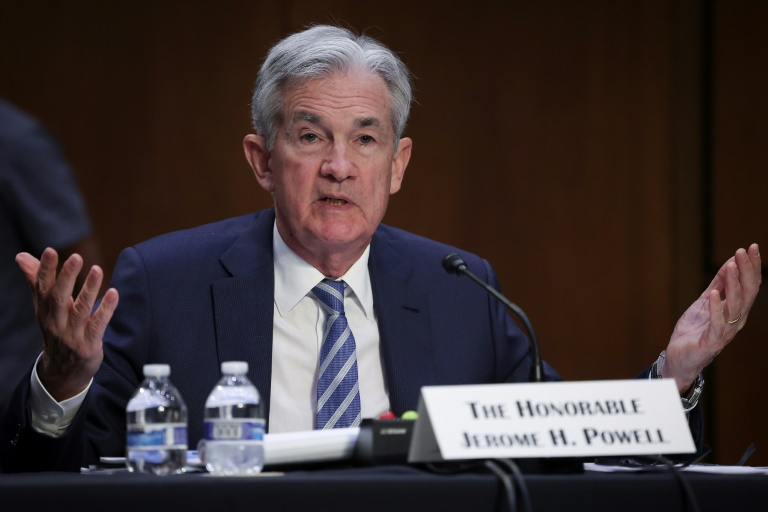
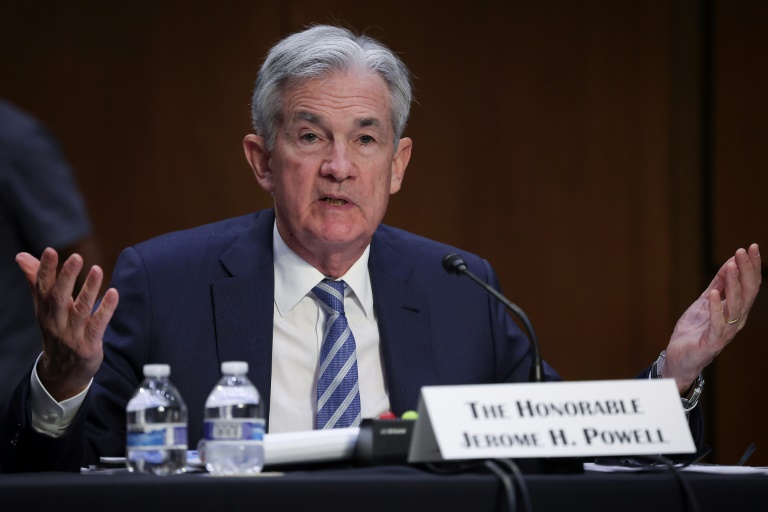
“However, Fed Chair Jerome Powell has been pushing back against a recession outcome while highlighting an outsized focus on combating inflation.”

After a drop on Wall Street, most of Asia gave back a large chunk of Tuesday’s rally.

Hong Kong, Shanghai, Sydney, Seoul, Singapore, Taipei, Manila and Jakarta were all in the red, though Tokyo, Jakarta and Wellington eked out gains.

But US futures rallied after healthy earnings releases from tech titans, including Microsoft and Alphabet, soothed some worries about the consumer.

Oil prices fluctuated as recession worries were offset by data showing a big drop in US stockpiles, which pointed to strong demand at a time when supplies remain weak.

– Key figures at around 0230 GMT –

Tokyo – Nikkei 225: UP 0.1 percent at 27,692.89 (break)

Hong Kong – Hang Seng Index: DOWN 1.2 percent at 20,659.18

Shanghai – Composite: DOWN 0.3 percent at 3,268.76

Euro/dollar: UP at $1.0146 from $1.0126 Tuesday

Pound/dollar: UP at $1.2051 from $1.2030 

Euro/pound: UP at 84.19 pence from 84.09 pence

Dollar/yen: UP at 137.02 yen from 136.95 yen

West Texas Intermediate: FLAT percent at $94.96 per barrel

Brent North Sea crude: DOWN 0.2 percent at $104.22 per barrel

New York – Dow: DOWN 0.7 percent at 31,761.54 (close)

London – FTSE 100: FLAT at 7,306.28 (close)

Most Asian markets down as Fed prepares latest hike

Stocks fell Wednesday as recession fears returned to the forefront of traders’ minds ahead of an expected Federal Reserve interest rate hike later in the day.

The selling followed a steep drop on Wall Street fuelled by concerns that four-decade high inflation and rising borrowing costs were keeping Americans from spending, and pushing the economy towards a recession.

That was backed up by a profit warning by retail titan Walman and a closely watched consumer confidence gauge sinking for the third month in a row.

And the International Monetary Fund slashed its global growth forecasts, warning the US economy would likely shrink.

There had been hope that a recent rally across markets indicated the long-running sell-off may have come to an end, and that signs of an economic slowdown could allow the Fed to ease off its tightening by next year and start cutting rates in 2023.

But observers warned there was still a lot of volatility to come as the bank was still hiking, prices were soaring, Russia’s war in Ukraine showed no sign of ending and China was still battling Covid with lockdowns.

“The Fed hasn’t even gotten to neutral yet,” Jason England, of Janus Henderson Investors, told Bloomberg Television.

“For them to start easing already or for them to start seeing eases priced in is, I think, a little premature.”

All eyes are now on the Fed meeting, which concludes Wednesday and is followed Thursday by second-quarter economic growth figures.

While officials are widely tipped to announce a second successive three-quarter point increase, the main focus will be their outlook for the economy and clues about future moves as it begins to falter.

“Markets are pricing at a slower pace of tightening before the Fed pivots to an easing stance in 2023,” said SPI Asset Management’s Stephen Innes.

“However, Fed Chair Jerome Powell has been pushing back against a recession outcome while highlighting an outsized focus on combating inflation.”

After a drop on Wall Street, most of Asia gave back a large chunk of Tuesday’s rally.

Hong Kong, Shanghai, Sydney, Seoul, Singapore, Taipei, Manila and Jakarta were all in the red, though Tokyo, Jakarta and Wellington eked out gains.

But US futures rallied after healthy earnings releases from tech titans, including Microsoft and Alphabet, soothed some worries about the consumer.

Oil prices fluctuated as recession worries were offset by data showing a big drop in US stockpiles, which pointed to strong demand at a time when supplies remain weak.

– Key figures at around 0230 GMT –

Tokyo – Nikkei 225: UP 0.1 percent at 27,692.89 (break)

Hong Kong – Hang Seng Index: DOWN 1.2 percent at 20,659.18

Shanghai – Composite: DOWN 0.3 percent at 3,268.76

Euro/dollar: UP at $1.0146 from $1.0126 Tuesday

Pound/dollar: UP at $1.2051 from $1.2030 

Euro/pound: UP at 84.19 pence from 84.09 pence

Dollar/yen: UP at 137.02 yen from 136.95 yen

West Texas Intermediate: FLAT percent at $94.96 per barrel

Brent North Sea crude: DOWN 0.2 percent at $104.22 per barrel

New York – Dow: DOWN 0.7 percent at 31,761.54 (close)

London – FTSE 100: FLAT at 7,306.28 (close)

Israel's Teva reaches potential $4.25 bn US opioid settlement

Israeli generic drug maker Teva has reached an agreement in principle to pay $4.25 billion over 13 years to settle a series of court cases over its role in the US opioid epidemic.

If the deal is finalized, Teva would become the latest major company to reach a settlement over the crisis which caused hundreds of thousands of deaths and ravaged communities across the country.

Teva reached the potential agreement on the terms of a “nationwide opioids settlement” with a working group of state attorneys general and lawyers for Native American tribes and other plaintiffs, the company said in its second-quarter financial results.

“Teva will pay up to $4.25 billion (including the already settled cases) plus approximately $100 million for the tribes, spread over 13 years,” it said.

The overall figure includes up to $1.2 billion in the generic version of Narcan, which can reverse opioid overdoses.

The deal will include “no admission of wrongdoing,” but “it remains in our best interest to put these cases behind us,” the company added.

Teva has already gone through several opioid-related lawsuits and reached agreements with some states.

The opioid crisis, which has caused more than 500,000 deaths over 20 years in the United States, has triggered a flurry of lawsuits from victims as well as cities, counties and states impacted by the fallout.

Drugmaker Johnson & Johnson and three major distributors, McKesson, AmerisourceBergen and Cardinal Health, have agreed to pay out $24.5 billion over several years to end more than 3,000 lawsuits.

Purdue Pharma, considered by many to be a major driver of the crisis because of its aggressive promotion of its pain killer OxyContin, filed for bankruptcy in September 2019 as it faced a flood of legal action.

Israel's Teva reaches potential $4.25 bn US opioid settlement

Israeli generic drug maker Teva has reached an agreement in principle to pay $4.25 billion over 13 years to settle a series of court cases over its role in the US opioid epidemic.

If the deal is finalized, Teva would become the latest major company to reach a settlement over the crisis which caused hundreds of thousands of deaths and ravaged communities across the country.

Teva reached the potential agreement on the terms of a “nationwide opioids settlement” with a working group of state attorneys general and lawyers for Native American tribes and other plaintiffs, the company said in its second-quarter financial results.

“Teva will pay up to $4.25 billion (including the already settled cases) plus approximately $100 million for the tribes, spread over 13 years,” it said.

The overall figure includes up to $1.2 billion in the generic version of Narcan, which can reverse opioid overdoses.

The deal will include “no admission of wrongdoing,” but “it remains in our best interest to put these cases behind us,” the company added.

Teva has already gone through several opioid-related lawsuits and reached agreements with some states.

The opioid crisis, which has caused more than 500,000 deaths over 20 years in the United States, has triggered a flurry of lawsuits from victims as well as cities, counties and states impacted by the fallout.

Drugmaker Johnson & Johnson and three major distributors, McKesson, AmerisourceBergen and Cardinal Health, have agreed to pay out $24.5 billion over several years to end more than 3,000 lawsuits.

Purdue Pharma, considered by many to be a major driver of the crisis because of its aggressive promotion of its pain killer OxyContin, filed for bankruptcy in September 2019 as it faced a flood of legal action.

Microsoft earnings fall short as computer sales sag

Microsoft on Tuesday said that its earnings in the recently ended quarter fell shy of expectations as personal computer sales suffered from production holdups in China and sagging demand.

The US technology giant reported profit of $16.7 billion on revenue of $51.9 billion, topping the same quarter a year earlier but missing market forecasts.

The earnings stumble was due mostly to foreign exchange rates and shutdowns of personal computer factories in China, Wedbush analyst Dan Ives said in a note to investors.

Microsoft said that the strong US dollar made its offerings more costly in foreign markets, hurting sales.

“The most important core business; cloud and commercial bookings was relatively rock solid despite fears,” Ives said.

“The core DNA of the Microsoft growth story is cloud and core Azure growth which was healthy this quarter and appears to have momentum into 2023 despite economic headwinds.”

Microsoft shares were up some 4 percent in after-market trades that followed release of the earnings figures.

“In a dynamic environment we saw strong demand, took share, and increased customer commitment to our cloud platform,” said Microsoft chief financial officer Amy Hood.

Shutdowns at computer production facilities in China in May, and a deteriorating market for personal computers, cost Microsoft some $300 million in revenue it would have made from Windows operating systems bought to power the machines, the earnings report indicated.

The personal computer market had been in steady decline prior to the pandemic, as people turned to smartphones or tablets.

A massive shift to shopping, working, socializing and playing from home reignited demand for desktop computing power, but it remains to be seen whether that appetite will remain post-pandemic.

Ad revenue at Microsoft’s online news, search, and career social network LinkedIn suffered due to companies cutting marketing budgets due to broad economic woes, the company said.

The tech veteran based in the US state of Washington also logged $126 million in operating expenses related to scaling back its operations in Russia because of that country’s invasion of Ukraine.

Microsoft saw consumers spend less on Xbox videogame content in the quarter compared to the same period a year earlier, in a possible sign that many are out playing in the real world more as pandemic restrictions ease.

However, Microsoft’s cloud, business and productivity offerings continued to thrive.

“We see real opportunity to help every customer in every industry use digital technology to overcome today’s challenges and emerge stronger,” said Microsoft chief executive Satya Nadella.

Microsoft earnings fall short as computer sales sag

Microsoft on Tuesday said that its earnings in the recently ended quarter fell shy of expectations as personal computer sales suffered from production holdups in China and sagging demand.

The US technology giant reported profit of $16.7 billion on revenue of $51.9 billion, topping the same quarter a year earlier but missing market forecasts.

The earnings stumble was due mostly to foreign exchange rates and shutdowns of personal computer factories in China, Wedbush analyst Dan Ives said in a note to investors.

Microsoft said that the strong US dollar made its offerings more costly in foreign markets, hurting sales.

“The most important core business; cloud and commercial bookings was relatively rock solid despite fears,” Ives said.

“The core DNA of the Microsoft growth story is cloud and core Azure growth which was healthy this quarter and appears to have momentum into 2023 despite economic headwinds.”

Microsoft shares were up some 4 percent in after-market trades that followed release of the earnings figures.

“In a dynamic environment we saw strong demand, took share, and increased customer commitment to our cloud platform,” said Microsoft chief financial officer Amy Hood.

Shutdowns at computer production facilities in China in May, and a deteriorating market for personal computers, cost Microsoft some $300 million in revenue it would have made from Windows operating systems bought to power the machines, the earnings report indicated.

The personal computer market had been in steady decline prior to the pandemic, as people turned to smartphones or tablets.

A massive shift to shopping, working, socializing and playing from home reignited demand for desktop computing power, but it remains to be seen whether that appetite will remain post-pandemic.

Ad revenue at Microsoft’s online news, search, and career social network LinkedIn suffered due to companies cutting marketing budgets due to broad economic woes, the company said.

The tech veteran based in the US state of Washington also logged $126 million in operating expenses related to scaling back its operations in Russia because of that country’s invasion of Ukraine.

Microsoft saw consumers spend less on Xbox videogame content in the quarter compared to the same period a year earlier, in a possible sign that many are out playing in the real world more as pandemic restrictions ease.

However, Microsoft’s cloud, business and productivity offerings continued to thrive.

“We see real opportunity to help every customer in every industry use digital technology to overcome today’s challenges and emerge stronger,” said Microsoft chief executive Satya Nadella.

Close Bitnami banner
Bitnami