AFP

Honduras extradites alleged drug matriarch to the US

Honduras on Tuesday extradited Herlinda Bobadilla, a 61-year-old alleged gang leader arrested in a shootout that killed one of her sons, to the United States on drug charges.

A US indictment alleges Bobadilla, also known as Chinda, and two of her sons led the “Los Montes” drug cartel — one of the largest in Honduras.

Los Montes is “responsible for the distribution of multi-ton quantities of cocaine into the United States valued at millions of US dollars,” the indictment said.

The clan matriarch was captured with three other people in the mountainous department of Colon in the country’s northeast in May.

One of her sons, Tito, was killed in a shootout. Another fled and is still on the run.

The trio had allegedly taken control of Los Montes after Bobadilla’s other son, Noe Montes-Bobadilla, was arrested and extradited to the United States in 2017 and subsequently sentenced to 37 years in jail for drug trafficking.

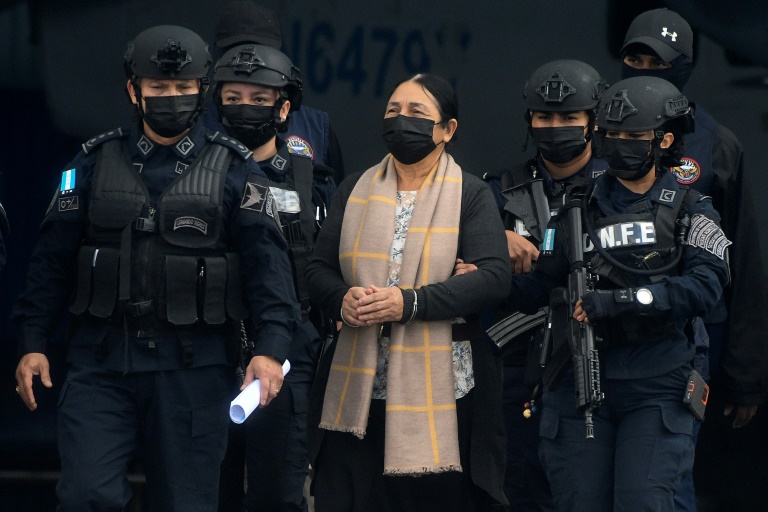
In handcuffs and surrounded by members of the special forces, Bobadilla was taken Tuesday to the air force base at Toncontin near the capital Tegucigalpa.

She was handed over to six members of the US Drug Enforcement Administration (DEA) and escorted onto a plane that took off for the United States.

She will be tried in the Eastern District Court of Virginia on a charge of conspiracy to distribute cocaine to be “unlawfully imported into the United States,” according to the indictment.

Honduras is a major transit country for Colombian cocaine and other narcotics headed mainly to the United States.

The US had offered rewards of up to $5 million for information leading to the capture of Bobadilla and her sons.

In April, former Honduran president Juan Orlando Hernandez was also extradited to the United States on drug charges just over a year after his brother Tony was sentenced in New York to life in prison.

In May, Honduran former police chief Juan Carlos Bonilla was also sent to the United States to stand trial for allegedly supervising drug trafficking operations on behalf of his boss, Hernandez.

Shopify cuts staff as tech firms tighten belts

Canadian e-commerce platform Shopify laid off about 10 percent of its workers Tuesday as a pandemic-driven boom in online shopping has waned.

The reduction in workforce came while US tech giants scale back or even pause hiring due to economic conditions roiled by inflation and the war in Ukraine.

Most of the layoffs would be in areas not involved in building products, Shopify chief executive Tobias Lutke said in an email to employees that the firm posted online.

Shopify beefed up its team as online shopping boomed during the pandemic, gambling that the lifestyle shift would remain even when restrictions eased, Lutke told workers.

“It’s now clear that bet didn’t pay off,” Lutke said. “The next part of the journey will involve fewer teammates than we have picked up along the way.”

Based on the firm’s previous reporting of about 10,000 employees, the job cuts appear poised to impact about 1,000 workers.

The rate of online shopping is about where data projected it would be had there not been a pandemic, Lutke told employees.

“Ultimately, placing this bet was my call to make and I got this wrong,” Lutke said.

Shopify provides merchants and creators tools to set up online shops of their own, with payments, marketing and other features built into the platform.

From Amazon to social networking star Facebook, US tech firms that once grew with abandon have reined in hiring to endure tumultuous times.

Internet giants that saw business boom during the pandemic have taken a hit from inflation, war, supply chain trouble and people returning to pre-Covid lifestyles.

Corporate belt-tightening was a common theme as big tech firms reported earnings from the first three months of this year, and could be focused on anew as second-quarter earnings are reported in coming days.

Snapchat’s owner plans to “substantially” slow recruitment after bleak results disclosed last week caused the share price to plummet.

Snap reported that its loss in the recently ended quarter nearly tripled under conditions “more challenging” than expected.

Firefighters make progress battling latest California blaze

Firefighters made progress battling California’s largest wildfire of the summer on Tuesday, with more than one-quarter of the blaze near Yosemite National Park contained.

The Oak Fire in central California broke out on Friday and spread rapidly, destroying 41 buildings and forcing thousands to evacuate.

By Tuesday, nearly 3,000 firefighters and 24 helicopters at the scene had achieved some success containing the blaze, aided by slightly higher humidity levels, which are forecasted to increase further in the coming days.

Jonathan Pierce, a California fire department spokesman, told AFP that efforts to curtail the spread of the blaze could soon be aided as it approaches areas already ravaged by wildfires from recent years.

“If this fire hits the Ferguson fire scar, it will slow down a little bit because there is less fuel there,” he said.

“That fire was as recent as 2018, so all the vegetation that has come back will be more thin than a lot of the vegetation that has not been burnt.”

So far, the Oak Fire has burnt 18,000 acres — the largest by area this year, but relatively minor compared to the mega-blazes that have engulfed hundreds of thousands of acres in recent years.

Its spread has been driven by an abundance of combustible fuel following years of drought and hot, dry weather conditions.

California Governor Gavin Newsom on Saturday declared a “state of emergency” in Mariposa County, citing “conditions of extreme peril to the safety of persons and property.”

The Oak Fire is burning just a few miles from the smaller Washburn Fire, which briefly threatened Yosemite’s rare giant sequoia trees earlier this month. 

In recent years, California and other parts of the western United States have been ravaged by huge and fast-moving wildfires, driven by a warming climate.

The fire comes as the usually cooler Pacific Northwest is in the grip of extreme temperatures, forecast to top 100 degrees F (38C) in parts of Oregon.

Parts of the South-Central United States including Texas are also experiencing sweltering heatwaves.

But the Southwest is seeing monsoonal moisture, bringing heavy showers and thunderstorms to parts of the region, including sections of Arizona and Utah. 

Firefighters make progress battling latest California blaze

Firefighters made progress battling California’s largest wildfire of the summer on Tuesday, with more than one-quarter of the blaze near Yosemite National Park contained.

The Oak Fire in central California broke out on Friday and spread rapidly, destroying 41 buildings and forcing thousands to evacuate.

By Tuesday, nearly 3,000 firefighters and 24 helicopters at the scene had achieved some success containing the blaze, aided by slightly higher humidity levels, which are forecasted to increase further in the coming days.

Jonathan Pierce, a California fire department spokesman, told AFP that efforts to curtail the spread of the blaze could soon be aided as it approaches areas already ravaged by wildfires from recent years.

“If this fire hits the Ferguson fire scar, it will slow down a little bit because there is less fuel there,” he said.

“That fire was as recent as 2018, so all the vegetation that has come back will be more thin than a lot of the vegetation that has not been burnt.”

So far, the Oak Fire has burnt 18,000 acres — the largest by area this year, but relatively minor compared to the mega-blazes that have engulfed hundreds of thousands of acres in recent years.

Its spread has been driven by an abundance of combustible fuel following years of drought and hot, dry weather conditions.

California Governor Gavin Newsom on Saturday declared a “state of emergency” in Mariposa County, citing “conditions of extreme peril to the safety of persons and property.”

The Oak Fire is burning just a few miles from the smaller Washburn Fire, which briefly threatened Yosemite’s rare giant sequoia trees earlier this month. 

In recent years, California and other parts of the western United States have been ravaged by huge and fast-moving wildfires, driven by a warming climate.

The fire comes as the usually cooler Pacific Northwest is in the grip of extreme temperatures, forecast to top 100 degrees F (38C) in parts of Oregon.

Parts of the South-Central United States including Texas are also experiencing sweltering heatwaves.

But the Southwest is seeing monsoonal moisture, bringing heavy showers and thunderstorms to parts of the region, including sections of Arizona and Utah. 

Lufthansa to cancel nearly all German flights Wednesday

German national carrier Lufthansa said it would have to cancel almost all flights at its domestic hubs in Frankfurt and Munich on Wednesday because of a planned strike by ground crew, adding to a summer of travel chaos across Europe.

The one-day walkout called by Germany’s powerful Verdi union will have a “massive impact”, Lufthansa said in a statement on Tuesday.

More than 1,000 flights will be scrapped, including some already on Tuesday, affecting around 134,000 passengers.

“Lufthansa will have to call off almost the entire flight programme at its hubs in Frankfurt and Munich for Wednesday,” the group said, adding that a knock-on effect on some flights scheduled for Thursday and Friday could not be ruled out.

The strike — scheduled to last from 0145 GMT on Wednesday until 0400 GMT on Thursday — comes as ground workers seek a higher pay rise than the one offered by Lufthansa so far.

The airline said it cancelled 45 long-haul flights due to depart on Tuesday and arrive in Germany on Wednesday, stranding nearly 7,500 passengers in Asia, South America and the United States.

The stoppage promises to bring more pain to a turbulent summer for air travel across Europe.

The relaxation of coronavirus rules has boosted demand, but chronic staff shortages have left passengers facing flight disruptions, long queues and lost luggage.

The Verdi union, representing around 20,000 Lufthansa ground staff, is seeking a 9.5-percent pay rise, or at least 350 euros ($360) per month. It also wants a minimum hourly wage of 13 euros.

The union has said management’s offer so far “does not come close to compensating for inflation” which stood at 7.6 percent in Germany last month.

Lufthansa has countered that it has offered “very substantial pay increases” amounting to more than 10 percent for workers in the lowest wage categories, and a six-percent increase for higher-paid staff.

“The early escalation of a previously constructive collective bargaining round is causing enormous damage,” said Lufthansa labour director Michael Niggemann.

Germany’s aviation sector currently has a shortage of more than 7,000 employees, the nation’s IW economic institute calculated recently.

Many airport workers found jobs in other sectors when travel demand collapsed during the pandemic, and they have not returned now that tourism has bounced back, the economists found.

Russia to quit International Space Station 'after 2024'

Moscow said on Tuesday it was leaving the International Space Station “after 2024”, amid tensions with the West, in a move analysts warned could lead to a halt to Russian manned flights.

The confirmation of the long-mooted move comes as ties unravel between the Kremlin and the West over Moscow’s military intervention in Ukraine and several rounds of devastating sanctions against Russia, including its space sector.

Space experts said Russia’s departure from the International Space Station would seriously affect the country’s space sector and deal a major blow to its programme of manned flights, a major source of Russian pride.

“Of course, we will fulfil all our obligations to our partners, but the decision to leave this station after 2024 has been made,” Yury Borisov, the new head of Russian space agency Roscosmos, told President Vladimir Putin, according to a Kremlin account of their meeting.

“I think that by this time we will start putting together a Russian orbital station,” Borisov added, calling it the domestic space programme’s main “priority”.

“Good,” Putin replied.

The ISS is due to be retired after 2024, although US space agency NASA says it can remain operational until 2030.

The ISS was launched in 1998 at a time of hope for US-Russia cooperation following their Space Race competition during the Cold War.

Washington has not received “any official word” from Russia yet, said Robyn Gatens, director of the ISS for NASA.

Asked whether she wanted the US-Russia space relationship to end, she replied: “No, absolutely not.”

Until now, space exploration has been one of the few areas where cooperation between Russia and the United States and its allies had not been wrecked by tensions over Ukraine and elsewhere.

– ‘Like an old woman’s flat’-

Russia is heavily reliant on imports of everything from manufacturing equipment to consumer goods, and the effects of Western sanctions are expected to wreak havoc on the country’s economy in the long term.

Space expert Vadim Lukashevich said space science cannot flourish in a heavily sanctioned country.

“If the ISS ceases to exist in 2024, we will have nowhere to fly,” Lukashevich told AFP. “At stake is the very preservation of manned flights in Russia, the birthplace of cosmonautics.”

Pointing to Russia’s growing scientific and technological isolation, Lukashevich said the authorities could not plan more than several months in advance and added that even if Russia builds an orbiting station, it would be a throwback to the 1980s.

“It will be archaic, like an old woman’s flat, with a push-button telephone and a record-player,” he said.

Space analyst Vitaly Yegorov struck a similar note, saying it was next to impossible to build a new orbiting station from scratch in a few years.

“Neither in 2024, nor in 2025, nor in 2026 will there be a Russian orbital station,” Yegorov told AFP.

He added that creating a fully-fledged space station would take at least a decade of “the most generous funding”.

Yegorov said Russia’s departure from the ISS meant Moscow might have to put on ice its programme of manned flights “for several years” or even “indefinitely”.

The move could also see Russia abandon its chief spaceport, Baikonur, which it is renting from Kazakhstan, Yegorov said.

Russian Soyuz rockets were the only way to reach the International Space Station until SpaceX, run by the billionaire Elon Musk, debuted a capsule in 2020.

– ‘Difficult to restore’ –

The Soviet space programme can boast of a number of key accomplishments, including sending the first man into space in 1961 and launching the first satellite four years earlier. These feats remain a major source of national pride in Russia.

But experts say Roscosmos is now a shadow of its former self and has in recent years suffered a series of setbacks, including corruption scandals and the loss of a number of satellites and other spacecraft.

Borisov, appointed in mid-July, replaced Dmitry Rogozin, a firebrand politician known for his bombastic statements.

Rogozin had previously warned that without cooperation from Moscow, the ISS could de-orbit and fall on US or European territory.

In a possible sign of disagreement with Borisov, Vladimir Solovyov, chief designer at spacecraft manufacturer Energia, said Russia should not rush to quit the ISS.

“If we halt manned flights for several years, then it will be very difficult to restore what has been achieved,” he was quoted as telling the Russky Cosmos magazine.

France struggles with drought over punishing summer of heat

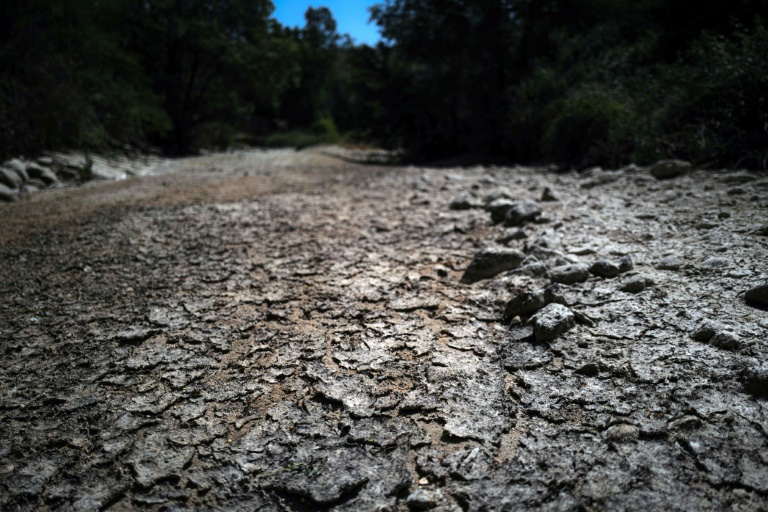
From farmers to fishermen, boat owners to ordinary households, communities across France are struggling with a severe drought that has seen an unprecedented number of regions affected by water restrictions this summer.

Like much of western Europe, the country is going through a punishing hot season of record temperatures and forest fires that have led to renewed focus on climate change.

After the third-driest spring on record and drought-like conditions since, rivers and reservoirs are running low nationwide, leading to increasingly severe water restrictions.

“We have a record number of departments with restrictions,” the environment ministry said in a statement, saying that 90 of the 96 administrative regions known as departments were affected.

The most severe water-saving measures — including a ban on irrigation for farmland — are in place in the northwest in the Loire river basin, as well as the southeast around the Rhone.

Areas in the southwest around the Tarn and Lot rivers are also in the highest red category used by the government’s drought website Propluvia.

Since the start of the year, 151 days out of 204 have had an average temperature above the long-term average, a record since 1947, according to the national weather service Meteo France.

– Consequences –

From the normally verdant Alps to the most famous wine-growing areas in Bourgogne and Bordeaux, the consequences of months of almost rain-free weather are being felt.

In the Franche-Comte area in eastern France, water shortages have become so severe that several villages in the Doubs area are now dependent on water trucks delivering supplies.

The problem is felt acutely by the local dairy farmers whose cows need more than 100 litres of water a day.

“The price of water has double or even tripled compared to a few years ago,” local farmer Aurelie Binet told France 3 television. “As farmers, whatever happens, we use large amounts of water.” 

The picturesque southern village of Saintes-Marie-de-la-Mer near the mouth of the Rhone on the Mediterranean coast is also struggling to draw drinking water from its usual sources.

“It hasn’t rained for eight months and as the Rhone is very low, salt water is flowing up to 20 kilometres (12 miles) inland,” mayor Christelle Aillet told AFP. “We’ve got a problem with the water and of volumes.”

On the Rhine river, commercial canal boats are having to run at a third of their carrying capacity in order to avoid hitting the bottom because the water level is so low.

Even in the far north in the Calais region, which is reliably cooler and wetter than most parts of France, farmers are worried about parched grasslands that are not providing for their animals.

“Some colleagues are saying it’s worse than in 1976 (a record drought year),” Jean-Pierre Clipet from the FDSEA farmers’ union told AFP. “They don’t know how their going to feed their animals this winter.”

– Fishing off limits – 

In red-zone drought areas with the most severe water restrictions, washing cars and watering gardens is prohibited, while golf courses are also unable to keep their fairways green.

Low river levels also mean fishing is restricted, while rescue operations are being carried out for species stranded in some waterways, including around Belfort in eastern France.

Eric Vincent, a fishing guide who takes clients in the Alsace region and the Vosges in the east, told AFP he had had to cancel clients last week.

“The fisherman knows about the condition of the river and knows when to stop,” said the 55-year-old. “I’m not going to be able to accompany clients this summer. It wasn’t like this 10-15 years ago.”  

In the famed vineyards of Bourgogne meanwhile, wine makers expect this year’s harvest to be small and early, perhaps beating the 2020 record when grape pickers began their work in August. 

– Forest fires –

France has endured two severe heatwaves in May and latterly in July — when temperatures soared above 40 degrees Celsius (100 degrees Fahrenheit).

Two huge blazes near Bordeaux in southwest France over the last fortnight have destroyed more than 20,000 hectares (49,000 acres) of tinder-dry forest and required around 2,000 firefighters to bring them under control.

Local authorities are restricting access to many wooded areas as a precaution, including the Calanques National Park along the Mediterranean coast near Marseille which is popular with tourists.

Experts say more severe hot periods and water shortages will become more common as global warming linked to greenhouse gas emissions takes a toll on the planet. 

burs-adp/sjw/raz

Slain Al Jazeera journalist's family in Washington to press for probe

The family of slain Palestinian-American journalist Shireen Abu Akleh on Tuesday pressed the United States for an independent probe and accountability from Israel on a visit to Washington at the invitation of Secretary of State Antony Blinken.

The family, which is also meeting lawmakers, said it was calling for the United States to launch its own “thorough, credible independent and transparent investigation” into Abu Akleh’s murder.

“For far too long, the United States has enabled Israel to kill with impunity by providing weapons, immunity, and diplomatic cover,” Shireen’s brother Tony Abu Akleh and her niece and nephew said in a statement.

“Impunity leads to repetition. We are here to do our part to ensure that this cycle ends,” they said.

“If we allow Shireen’s killing to be swept under the rug, we send a message that the lives of US citizens abroad don’t matter, that the lives of Palestinians living under Israeli occupation don’t matter, and that the most courageous journalists in the world, those who cover the human impact of armed conflict and violence, are expendable.”

Shireen Abu Akleh, an Al Jazeera journalist and a prominent Palestinian reporter, was killed on May 11 as she covered an Israeli operation in the West Bank.

The United States on July 4 released a statement saying she was likely shot by Israeli fire but that there was no evidence her killing was intentional and that the bullet was too damaged for a conclusive finding.

The statement outraged Abu Akleh’s family and Palestinian leaders who say that the United States is not seeking accountability from Israel over the death of the journalist, who also held US citizenship.

Israel says it is still probing her death and rejects suggestions it targeted a journalist. 

Abu Akleh’s family unsuccessfully sought to meet President Joe Biden when he visited Israel and the West Bank earlier this month.

Blinken, however, invited the family to visit Washington, National Security Advisor Jake Sullivan said during the trip.

Blinken had spoken earlier to her family by phone and publicly criticized Israel for using force at her funeral, when police grabbed Palestinian flags and pallbearers struggled not to drop her casket.

Stocks slide as gas prices and inflation erode confidence

Eurozone and US stocks sank on Tuesday on gas supply fears and renewed concerns about the impact of inflation.

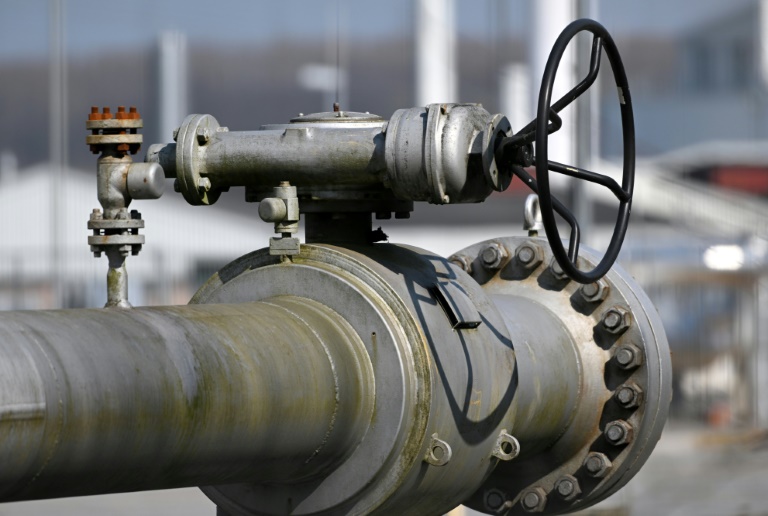
In Europe, the natural gas reference price Dutch TTF surged nearly 13 percent to 203 euros ($205) per megawatt hour, one day after Russia’s Gazprom said it would cut daily gas deliveries to Europe via the Nord Stream pipeline.

“With no clear timeline for when capacity is likely to increase, the prospect of further uncertainty over gas supplies is weighing on European markets today,” CMC Markets analyst Michael Hewson told AFP.

Frankfurt’s DAX slumped 0.9 percent while the CAC in Paris shed 0.4 percent. 

“The euro is also under pressure as it becomes increasingly apparent that a slowing economy will make it increasingly difficult for the ECB to hike aggressively as we head into the winter months. Good luck raising rates against that sort of backdrop,” he added.

It fell by more than one percent to under $1.0120 at one point.

Eurozone bond yields also fell as investors fled to the relative safety of government debt.

Gazprom will cut gas deliveries to 33 million cubic metres a day — about 20 percent of the pipeline’s capacity — from Wednesday.

That has heightened market worries over supplies during the northern hemisphere winter later this year.

At the same time, European Union member states have reached agreement on how to cut their consumption of gas by 15 percent and reduce their dependence on Russian energy.

Gas prices remain way below the record March peak of 345 euros struck after Russia launched its assault on Ukraine.

EU states have accused Russia of squeezing supplies in retaliation for Western sanctions.

Elsewhere Tuesday, Asian stock markets closed mixed.

Investors welcomed news that e-commerce giant Alibaba would seek a primary listing in Hong Kong, which could pave the way for it to be traded by mainland Chinese investors.

Wall Street stocks slid, with a profit warning by Walmart rattling nerves about the impact of inflation on the economy and interest rates.

The retailer said it expects its earnings per share in its non-standard second quarter, which wraps up at the end of this month, to be down by 8-9 percent with an even bigger reduction next year.

Its shares were down around eight percent in morning trading.

“The basis for Walmart’s warning, though, is the real issue for the broader market,” said Patrick J. O’Hare at Briefing.com.

The retailer said food and fuel inflation was pushing consumers to defray discretionary spending on general merchandise.

“That is causing concerns about a trickle-down effect to other retailers, as well as suppliers to Walmart, that is weighing on sentiment and earnings expectations,” said O’Hare.

He said this was also fanning fears the US Federal Reserve, which began a two-day meeting Tuesday, will pursue aggressive rate hikes to tame inflation despite the risk of pushing the US economy into recession.

The International Monetary Fund also cut its forecast for global growth this year by four-tenths of a point to 3.2 percent surging inflation and severe slowdowns in the United States and China, the world’s two largest economies.

IMF chief economist Pierre-Olivier Gourinchas said the United States has only a slim chance of avoiding a downturn.

“The current environment suggest that the likelihood that the US economy can avoid a recession is actually quite narrow,” he said as the IMF cut its forecast for US economic growth this year by a drastic 1.4 percentage points to 2.3 percent.

– Key figures at around 1530 GMT –

New York – Dow: DOWN 0.6 percent at 31,798.59 points

EURO STOXX 50: DOWN 0.8 percent at 3,575.36

Frankfurt – DAX: DOWN 0.9 percent at 13,096.93 (close)

Paris – CAC 40: DOWN 0.4 percent at 6,211.45 (close)

London – FTSE 100: FLAT at 7,306.28 (close)

Tokyo – Nikkei 225: DOWN 0.2 percent at 27,655.21 (close)

Hong Kong – Hang Seng Index: UP 1.7 percent at 20,905.88 (close)

Shanghai – Composite: UP 0.8 percent at 3,277.44 (close)

Euro/dollar: DOWN at $1.0122 from $1.0223 Monday

Pound/dollar: DOWN at $1.2024 from $1.2046 

Euro/pound: DOWN at 84.20 pence from 84.83 pence

Dollar/yen: DOWN at 136.63 yen from 136.65 yen

Brent North Sea crude: DOWN 0.5 percent at $104.61 per barrel

West Texas Intermediate: DOWN 1.3 percent at $95.43 per barrel

burs-rl/lcm

Stocks slide as gas prices and inflation erode confidence

Eurozone and US stocks sank on Tuesday on gas supply fears and renewed concerns about the impact of inflation.

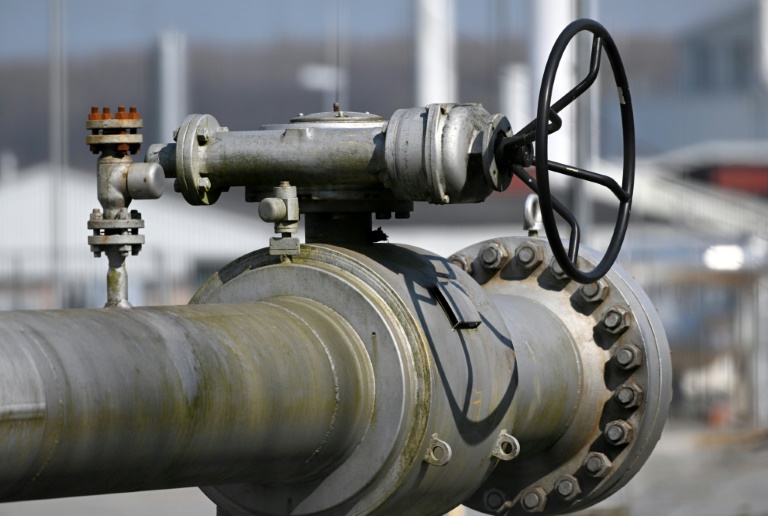
In Europe, the natural gas reference price Dutch TTF surged nearly 13 percent to 203 euros ($205) per megawatt hour, one day after Russia’s Gazprom said it would cut daily gas deliveries to Europe via the Nord Stream pipeline.

“With no clear timeline for when capacity is likely to increase, the prospect of further uncertainty over gas supplies is weighing on European markets today,” CMC Markets analyst Michael Hewson told AFP.

Frankfurt’s DAX slumped 0.9 percent while the CAC in Paris shed 0.4 percent. 

“The euro is also under pressure as it becomes increasingly apparent that a slowing economy will make it increasingly difficult for the ECB to hike aggressively as we head into the winter months. Good luck raising rates against that sort of backdrop,” he added.

It fell by more than one percent to under $1.0120 at one point.

Eurozone bond yields also fell as investors fled to the relative safety of government debt.

Gazprom will cut gas deliveries to 33 million cubic metres a day — about 20 percent of the pipeline’s capacity — from Wednesday.

That has heightened market worries over supplies during the northern hemisphere winter later this year.

At the same time, European Union member states have reached agreement on how to cut their consumption of gas by 15 percent and reduce their dependence on Russian energy.

Gas prices remain way below the record March peak of 345 euros struck after Russia launched its assault on Ukraine.

EU states have accused Russia of squeezing supplies in retaliation for Western sanctions.

Elsewhere Tuesday, Asian stock markets closed mixed.

Investors welcomed news that e-commerce giant Alibaba would seek a primary listing in Hong Kong, which could pave the way for it to be traded by mainland Chinese investors.

Wall Street stocks slid, with a profit warning by Walmart rattling nerves about the impact of inflation on the economy and interest rates.

The retailer said it expects its earnings per share in its non-standard second quarter, which wraps up at the end of this month, to be down by 8-9 percent with an even bigger reduction next year.

Its shares were down around eight percent in morning trading.

“The basis for Walmart’s warning, though, is the real issue for the broader market,” said Patrick J. O’Hare at Briefing.com.

The retailer said food and fuel inflation was pushing consumers to defray discretionary spending on general merchandise.

“That is causing concerns about a trickle-down effect to other retailers, as well as suppliers to Walmart, that is weighing on sentiment and earnings expectations,” said O’Hare.

He said this was also fanning fears the US Federal Reserve, which began a two-day meeting Tuesday, will pursue aggressive rate hikes to tame inflation despite the risk of pushing the US economy into recession.

The International Monetary Fund also cut its forecast for global growth this year by four-tenths of a point to 3.2 percent surging inflation and severe slowdowns in the United States and China, the world’s two largest economies.

IMF chief economist Pierre-Olivier Gourinchas said the United States has only a slim chance of avoiding a downturn.

“The current environment suggest that the likelihood that the US economy can avoid a recession is actually quite narrow,” he said as the IMF cut its forecast for US economic growth this year by a drastic 1.4 percentage points to 2.3 percent.

– Key figures at around 1530 GMT –

New York – Dow: DOWN 0.6 percent at 31,798.59 points

EURO STOXX 50: DOWN 0.8 percent at 3,575.36

Frankfurt – DAX: DOWN 0.9 percent at 13,096.93 (close)

Paris – CAC 40: DOWN 0.4 percent at 6,211.45 (close)

London – FTSE 100: FLAT at 7,306.28 (close)

Tokyo – Nikkei 225: DOWN 0.2 percent at 27,655.21 (close)

Hong Kong – Hang Seng Index: UP 1.7 percent at 20,905.88 (close)

Shanghai – Composite: UP 0.8 percent at 3,277.44 (close)

Euro/dollar: DOWN at $1.0122 from $1.0223 Monday

Pound/dollar: DOWN at $1.2024 from $1.2046 

Euro/pound: DOWN at 84.20 pence from 84.83 pence

Dollar/yen: DOWN at 136.63 yen from 136.65 yen

Brent North Sea crude: DOWN 0.5 percent at $104.61 per barrel

West Texas Intermediate: DOWN 1.3 percent at $95.43 per barrel

burs-rl/lcm
Close Bitnami banner
Bitnami