AFP

Pair of new studies point to natural Covid origin

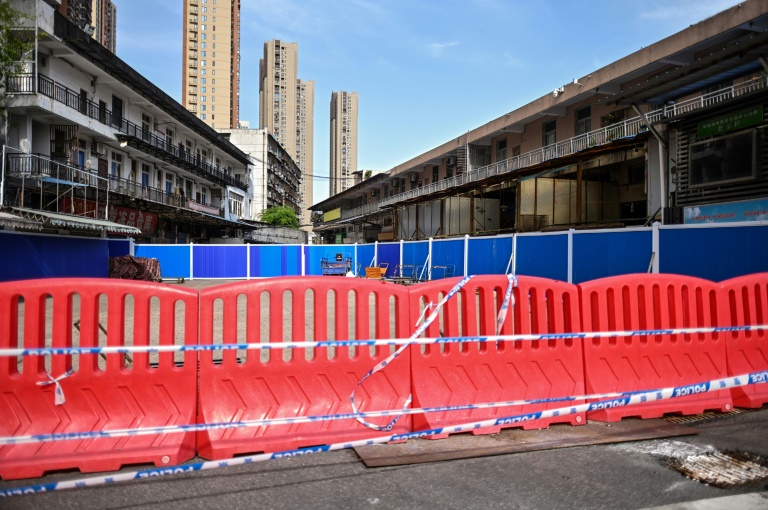
An animal market in China’s Wuhan really was the epicenter of the Covid pandemic, according to a pair of new studies in the journal Science published Tuesday that claimed to have tipped the balance in the debate about the virus’ origins.

Answering the question of whether the disease spilled over naturally from animals to humans, or was the result of a lab accident, is viewed as vital to averting the next pandemic and saving millions of lives.

The first paper analyzed the geographic pattern of Covid cases in the outbreak’s first month, December 2019, showing the first cases were tightly clustered around the Huanan Market. 

The second examined genomic data from the earliest cases to study the virus’ early evolution, concluding it was unlikely the coronavirus circulated widely in humans prior to November 2019.

Both were previously posted as “preprints” but have now been vetted by scientific peer review and appear in a prestigious journal.

Michael Worobey of the University of Arizona, who co-authored both papers, had previously called on the scientific community in a letter to be more open to the idea that the virus was the result of a lab leak.

But the findings moved him “to the point where now I also think it’s just not plausible that this virus was introduced any other way than through the wildlife trade at the Wuhan market,” he told reporters on a call about the findings.

Though previous investigation had centered on the live animal market, researchers wanted more evidence to determine it was really the progenitor of the outbreak, as opposed to an amplifier.

This required neighborhood-level study within Wuhan to be more certain the virus was “zoonotic” — that it jumped from animals to people.

The first study’s team used mapping tools to determine the location of most of the first 174 cases identified by the World Health Organization, finding 155 of them were in Wuhan.

Further, these cases clustered tightly around the market — and some early patients with no recent history of visiting the market lived very close to it.

Mammals now known to be infectable with the virus — including red foxes, hog badgers and raccoon dogs, were all sold live in the market, the team showed.

– Two introductions to humans –

The study authors also tied positive samples from patients in early 2020 to the western portion of the market, which sold live or freshly butchered animals in late 2019.

The tightly confined early cases contrasted with how it radiated throughout the rest of the city by January and February, which the researchers confirmed by drilling into social media check-in data from the Weibo app.

“This tells us the virus was not circulating cryptically,” Worobey said in a statement. “It really originated at that market and spread out from there.”

The second study focused on resolving an apparent discrepancy in the virus’ early evolution.

Two lineages, A and B, marked the early pandemic. 

But while A was closer to the virus found in bats, suggesting the coronavirus in humans came from this source and that A gave rise to B, it was B that was found to be far more present around the market.

The researchers used a technique called “molecular clock analysis,” which relies on the rate at which genetic mutations occur over time to reconstruct a timeline of evolution — and found it unlikely that A gave rise to B.

“Otherwise, lineage A would have had to have been evolving in slow motion compared to the lineage B virus, which just doesn’t make biological sense,” said Worobey.

Instead, the probable scenario was that both jumped from animals at the market to humans on separate occasions, in November and December 2019. The researchers concluded it was unlikely that there was human circulation prior to November 2019.

Under this scenario, there were probably other animal-to-human transmissions at the market that failed to manifest as Covid cases.

“Have we disproven the lab leak theory? No, we have not. Will we ever be able to know? No,” said co-author Kristian Anderson of The Scripps Research Institute.

“But I think what’s really important here is that there are possible scenarios and they’re plausible scenarios and it’s really important to understand that possible does not mean equally likely.”

Buzz Aldrin's Apollo 11 jacket sold for $2.7 mn

The jacket worn by US astronaut Buzz Aldrin during his 1969 flight to the Moon aboard Apollo 11 was sold at auction for $2.7 million in New York Tuesday, Sotheby’s announced.

The white jacket, adorned with an American flag, NASA’s initials, a patch for the Apollo 11 mission and the name “E. ALDRIN,” is part of a personal collection of items the 92-year-old astronaut decided to put up for sale. 

“The exceptionally rare garment was chased by multiple bidders for almost ten minutes before selling to a bidder on the phone,” Sotheby’s said in a statement. 

“After deep consideration, the time felt right to share these items with the world, which for many are symbols of a historical moment, but for me have always remained personal mementos of a life dedicated to science and exploration,” Aldrin, the last living member of Apollo 11’s three-member flight crew, said in a statement last week. 

He explained the jacket was separate from the spacesuit he wore while walking on the moon with fellow astronaut Neil Armstrong, but that he wore it while flying to and from the Moon. 

“I wore this Inflight Coverall Jacket… in the Command Module Columbia, on our historic journey to the Moon and back home again during the Apollo 11 mission,” Aldrin said.

The suits worn on the Moon by Aldrin and Armstrong are part of the National Air and Space Museum’s collections in Washington. 

In total, the New York auction garnered $8.2 million for 68 items sold out of the 69 offered, including $819,000 for a flight plan. 

Third body found in drought-hit lake outside Las Vegas

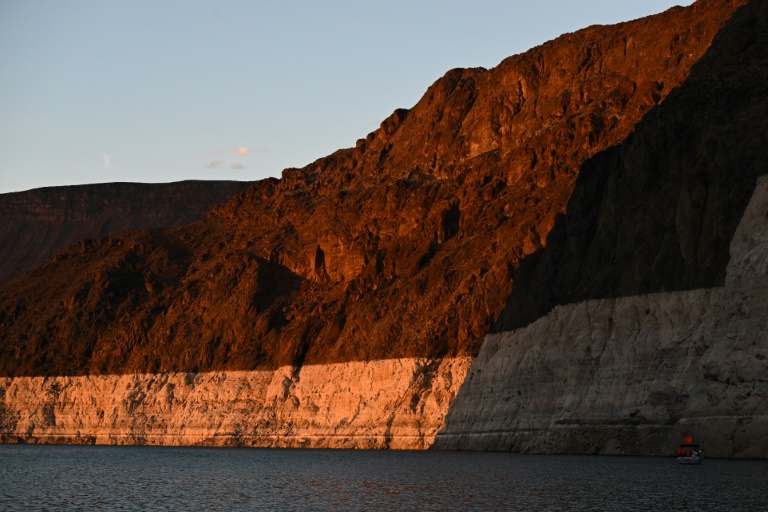
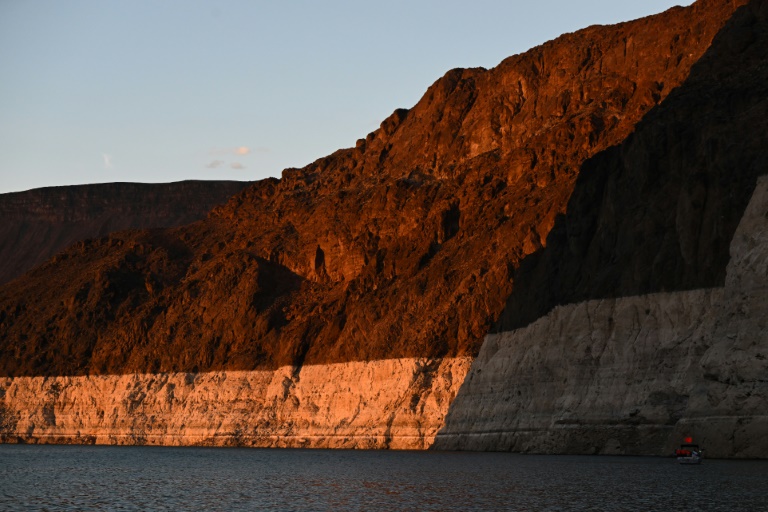
More human remains have been found at a lake near Las Vegas, officials said, months after the rapidly receding waters of drought-hit Lake Mead revealed the corpse of a long-submerged mob victim.

Park rangers responded Monday afternoon to a witness report of a body at Swim Beach and have begun efforts to recover the remains, the National Park Service said.

No details were immediately provided about the age or identity of the most recent discovery, with the local county coroner set to conduct an autopsy.

The giant man-made reservoir drew global attention in May when the decades-old skeleton of a man shot in the head were found stuffed in a barrel that had been dumped in the lake.

Police believe that murder occurred in the late 1970s or early 1980s, when the Las Vegas criminal underworld was particularly active in the desert gambling capital.

Another body was found days later, with no evidence of foul play, and authorities had predicted more bodies would be found as water levels drop in the country’s biggest reservoir.

A historic drought that is gripping much of the western United States is putting a strain on water sources, with reservoirs and lakes falling to unprecedently low levels.

Lake Mead once sat 1,200 feet above sea level. But after more than two decades of drought, it was at only 1,040 feet above sea level Tuesday — its lowest level since filling in the 1930s.

It is currently falling about 12 inches every week.

Third body found in drought-hit lake outside Las Vegas

More human remains have been found at a lake near Las Vegas, officials said, months after the rapidly receding waters of drought-hit Lake Mead revealed the corpse of a long-submerged mob victim.

Park rangers responded Monday afternoon to a witness report of a body at Swim Beach and have begun efforts to recover the remains, the National Park Service said.

No details were immediately provided about the age or identity of the most recent discovery, with the local county coroner set to conduct an autopsy.

The giant man-made reservoir drew global attention in May when the decades-old skeleton of a man shot in the head were found stuffed in a barrel that had been dumped in the lake.

Police believe that murder occurred in the late 1970s or early 1980s, when the Las Vegas criminal underworld was particularly active in the desert gambling capital.

Another body was found days later, with no evidence of foul play, and authorities had predicted more bodies would be found as water levels drop in the country’s biggest reservoir.

A historic drought that is gripping much of the western United States is putting a strain on water sources, with reservoirs and lakes falling to unprecedently low levels.

Lake Mead once sat 1,200 feet above sea level. But after more than two decades of drought, it was at only 1,040 feet above sea level Tuesday — its lowest level since filling in the 1930s.

It is currently falling about 12 inches every week.

Russia to quit International Space Station 'after 2024'

Moscow said Tuesday it was leaving the International Space Station “after 2024” amid tensions with the West, in a move analysts warned could lead to a halt of Russian-crewed flights.

The confirmation of the long-mooted move comes as ties unravel between the Kremlin and the West over Moscow’s military intervention in Ukraine and several rounds of devastating sanctions against Russia, including its space sector.

Space experts said Russia’s departure from the International Space Station would seriously affect the country’s space sector and deal a significant blow to its programme of crewed flights, a major source of Russian pride.

“Of course, we will fulfil all our obligations to our partners, but the decision to leave this station after 2024 has been made,” Yury Borisov, the new head of Russian space agency Roscosmos, told President Vladimir Putin, according to a Kremlin account of their meeting.

“I think that by this time we will start putting together a Russian orbital station,” Borisov added, calling it the domestic space programme’s main “priority”.

“Good,” Putin replied.

The ISS is due to be retired after 2024, although US space agency NASA says it can remain operational until at least 2030.

The ISS was launched in 1998 at a time of hope for US-Russia cooperation following their Space Race competition during the Cold War.

The United States said it was taken by surprise by the announcement.

“It’s an unfortunate development given the critical scientific work performed at the ISS, the valuable professional collaboration our space agencies have had over the years,” State Department spokesman Ned Price said. 

In a statement to AFP, NASA administrator Bill Nelson said the agency “has not been made aware of decisions from any of the partners, though we are continuing to build future capabilities to assure our major presence in low-Earth orbit”.

Until now, space exploration has been one of the few areas where cooperation between Russia and the United States and its allies had not been wrecked by tensions over Ukraine and elsewhere.

– ‘Like an old woman’s flat’-

Russia is heavily reliant on imports of everything from manufacturing equipment to consumer goods, and the effects of Western sanctions are expected to wreak havoc on the country’s economy in the long term.

Space expert Vadim Lukashevich said space science cannot flourish in a heavily sanctioned country.

“If the ISS ceases to exist in 2024, we will have nowhere to fly,” Lukashevich told AFP. “At stake is the very preservation of manned flights in Russia, the birthplace of cosmonautics.”

Pointing to Russia’s growing scientific and technological isolation, Lukashevich said the authorities could not plan more than several months in advance and added that even if Russia builds an orbiting station, it would be a throwback to the 1980s.

“It will be archaic, like an old woman’s flat, with a push-button telephone and a record player,” he said.

Space analyst Vitaly Yegorov struck a similar note, saying it was next to impossible to build a new orbiting station from scratch in a few years.

“Neither in 2024, nor in 2025, nor in 2026 will there be a Russian orbital station,” Yegorov told AFP.

He added that creating a fully-fledged space station would take at least a decade of “the most generous funding”.

Yegorov said Russia’s departure from the ISS meant Moscow might have to put on ice its programme of manned flights “for several years” or even “indefinitely”.

The move could also see Russia abandon its chief spaceport, Baikonur, which it is renting from Kazakhstan, Yegorov said.

Russian Soyuz rockets were the only way to reach the International Space Station until SpaceX, run by billionaire Elon Musk, debuted a capsule in 2020.

– ‘Difficult to restore’ –

The Soviet space programme can boast of a number of key accomplishments, including sending the first man into space in 1961 and launching the first satellite four years earlier. These feats remain a major source of national pride in Russia.

But experts say Roscosmos is now a shadow of its former self and has in recent years suffered a series of setbacks, including corruption scandals and the loss of a number of satellites and other spacecraft.

Borisov, appointed in mid-July, replaced Dmitry Rogozin, a firebrand politician known for his bombastic statements.

Rogozin had previously warned that without cooperation from Moscow, the ISS could de-orbit and fall on US or European territory.

In a possible sign of disagreement with Borisov, Vladimir Solovyov, chief designer at spacecraft manufacturer Energia, said Russia should not rush to quit the ISS.

“If we halt manned flights for several years, then it will be very difficult to restore what has been achieved,” he was quoted as telling the Russky Cosmos magazine.

Stocks slide as gas prices and inflation erode confidence

Eurozone and US stocks sank on Tuesday on gas supply fears and fresh indications that inflation is denting consumer health following an earnings forecast downgrade from Walmart.

Wall Street indices finished firmly lower after Walmart cut its profit forecast, saying rising prices for gasoline, food and other staples were cutting into consumer demand for goods with higher profit margins.

That was followed by a downcast Conference Board reading on consumer confidence due to rising prices.

All three major US indices fell, with the broad-based S&P 500 losing 1.2 percent.

The declines came as the Federal Reserve kicked off a two-day monetary policy meeting expected to conclude with another large interest rate hike, as the central bank seeks to quell sky-high inflation.

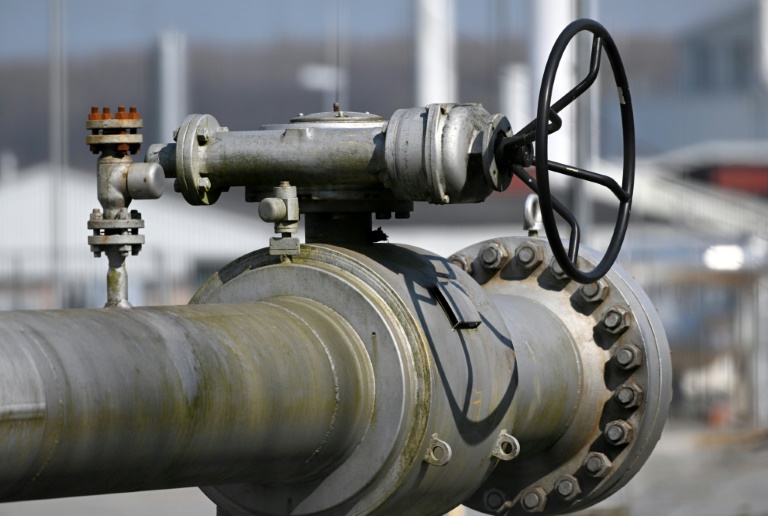
In Europe, the natural gas reference price Dutch TTF surged nearly 13 percent to 203 euros ($205) per megawatt hour, one day after Russia’s Gazprom said it would cut daily gas deliveries to Europe via the Nord Stream pipeline.

“With no clear timeline for when capacity is likely to increase, the prospect of further uncertainty over gas supplies is weighing on European markets today,” CMC Markets analyst Michael Hewson told AFP.

Frankfurt’s DAX slumped 0.9 percent while the CAC in Paris shed 0.4 percent. 

Gazprom’s announcement prompted European Union energy ministers agreed to steps to try to limit dependence on Russian supply.

The plan nominally commits EU countries to reduce their gas use by 15 percent during the winter, although exceptions were carved out for some countries and Hungary rejected the deal. 

Meanwhile, Asian stock markets closed mixed.

Investors welcomed news that e-commerce giant Alibaba would seek a primary listing in Hong Kong, which could pave the way for it to be traded by mainland Chinese investors.

The International Monetary Fund cut its forecast for global growth this year by four-tenths of a point to 3.2 percent due to surging inflation and severe slowdowns in the United States and China, the world’s two largest economies.

IMF chief economist Pierre-Olivier Gourinchas said the United States has only a slim chance of avoiding a downturn.

“The current environment suggest that the likelihood that the US economy can avoid a recession is actually quite narrow,” he said as the IMF cut its forecast for US economic growth this year by a drastic 1.4 percentage points to 2.3 percent.

– Key figures at around 2050 GMT –

New York – Dow: DOWN 0.7 percent at 31,761.54 (close)

New York – S&P 500: DOWN 1.2 percent at 3,921.05 (close)

New York – Nasdaq: DOWN 1.9 percent at 11,562.57 (close)

Frankfurt – DAX: DOWN 0.9 percent at 13,096.93 (close)

Paris – CAC 40: DOWN 0.4 percent at 6,211.45 (close)

London – FTSE 100: FLAT at 7,306.28 (close)

EURO STOXX 50: DOWN 0.8 percent at 3,575.36 (close)

Tokyo – Nikkei 225: DOWN 0.2 percent at 27,655.21 (close)

Hong Kong – Hang Seng Index: UP 1.7 percent at 20,905.88 (close)

Shanghai – Composite: UP 0.8 percent at 3,277.44 (close)

Euro/dollar: DOWN at $1.0126 from $1.0220 Monday

Pound/dollar: DOWN at $1.2030 from $1.2043 

Euro/pound: DOWN at 84.09 pence from 84.84 pence

Dollar/yen: UP at 136.95 yen from 136.69 yen

Brent North Sea crude: DOWN 0.7 percent at $104.40 per barrel

West Texas Intermediate: DOWN 1.8 percent at $94.98 per barrel

burs-jmb/hs

Croatia opens bridge around Bosnia to get to Dubrovnik

Croatia on Tuesday celebrated the opening of a long-awaited bridge linking its southern Adriatic coast including Dubrovnik with the rest of the country, bypassing a narrow strip of Bosnian territory.

The 2.4-kilometre (1.5-mile) span reaches out from the Croatian mainland to the Peljesac peninsula that connects with the southern part of Croatia’s coastline nestled between the sea and the Dinaric Alps.

Festivities stretched from the early morning into the evening, with boat races, fireworks, and pedestrians gathering along the bridge to snap pictures as musical performances added to the air of celebration.    

“This bridge represents the unification of Croatia, joining of the south and the north,” said Ivan Vranjes, a 45-year-old native of Split, who was visiting from abroad. 

As the sun set, a formal ceremony inaugurating the bridge took centre stage, which included a speech by Croatian Prime Minister Andrej Plenkovic along with a video address by Chinese Premier Li Keqiang.

Plenkovic said the opening of the bridge marked a “historic day for Croatia” and lauded the new infrastructure as a “project of a generation, a project of pride”.

The link will bring an end to the untold hours spent by commuters, merchants and tourists at the Bosnian border and is one of the country’s most ambitious infrastructure projects since Croatia declared independence from Yugoslavia in 1991.

– Balkan patchwork –

It was the bloody dissolution of the federation, however, that left a patchwork of divisions across the Balkans, with the frontiers between its six former republics transformed into international borders.

Bosnia maintained its coastal access in the end, but its small outlet leading to the Adriatic Sea cut right through Croatia. 

As a result, around 90,000 people, including residents in the country’s tourism hotspot of Dubrovnik, remained cut off from the rest of the country until now. 

The hard border brought lines and red tape for traders, and headaches for tourists hoping to get south by road.

Inhabitants of the picturesque region of red wines, pebble beaches and oyster farms are looking forward to the end of their geographic isolation caused by the Bosnian border.

The hours-long waits at the border and fears over missing the day’s last ferry will now become a thing of the past, they say.  

“It was really exhausting and made people living here bitter,” Sabina Mikulic, owner of a hotel, glamping site and winery in Orebic, the peninsula’s largest town, told AFP.

– EU funded, Chinese made –

The opening of the bridge has been a long time coming and not without controversy. 

Croatia took its first stab at building the bridge in 2007 only for the project to stall five years later due to budgetary constraints.

In 2017, the European Union — which Croatia joined in 2013 — allocated 357 million euros ($365 million), roughly 85 percent of the cost.

A Chinese firm was selected in 2018 to build the bridge — marking the first significant Chinese involvement in an infrastructure project in Croatia.

On Tuesday, China’s premier said the completion of the bridge marked a new era of cooperation between Beijing, Zagreb and Brussels. 

“The bridge also reflects cooperation between China and the EU,” said Li in his video address. 

But not all were happy with the bridge’s construction, with officials in Bosnia claiming it would hamper its maritime access by preventing high-tonnage vessels from entering its lone port. 

Zagreb eventually agreed to increase the height of the bridge to 55 metres (181 feet) in an attempt to quell the dispute.

The opening of the bridge comes as Croatia is angling for a tourism rebound this year as it hopes to attract pre-pandemic levels of visitors.

The country of 3.8 million people attracts millions of tourists every year hoping to soak up the sun along its stunning coast dappled with more than 1,000 islands and islets.

For retired piano teacher Smilja Matic, who has vacationed for years in the Croatian village of Komarna near the entrance to the new bridge, the link to the mainland is a win for locals and tourists alike.

“It means a new life for locals and for people who travel by plane to Dubrovnik, like me. It’s major progress,” she told AFP.

Outside of tourism, the bridge will likely serve as a boon for businesses and traders as well. 

For decades, oyster farmer Mario Radibratovic was subjected to hours of extra travel to bring his perishable shellfish north to market due to waiting times at the border.

But with the opening of the bridge, the journey north will shrink dramatically. 

For the 57-year-old, the opening of the bridge will bring “immeasurable relief”.

“We are finally becoming part of Croatia,” Radibratovic told AFP who farms oysters and mussels in the village of Mali Ston.

“Until now we felt like second-class citizens.”

Biden undecided on China tariffs ahead of Xi call: W.House

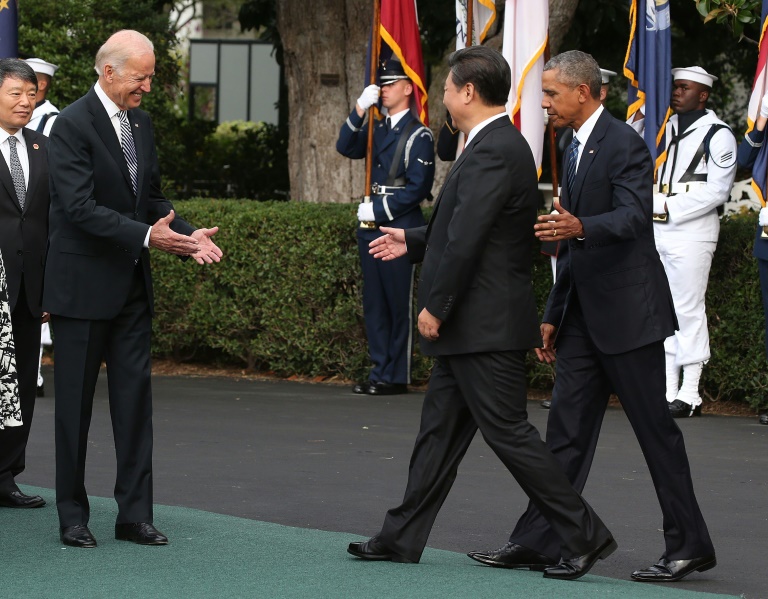
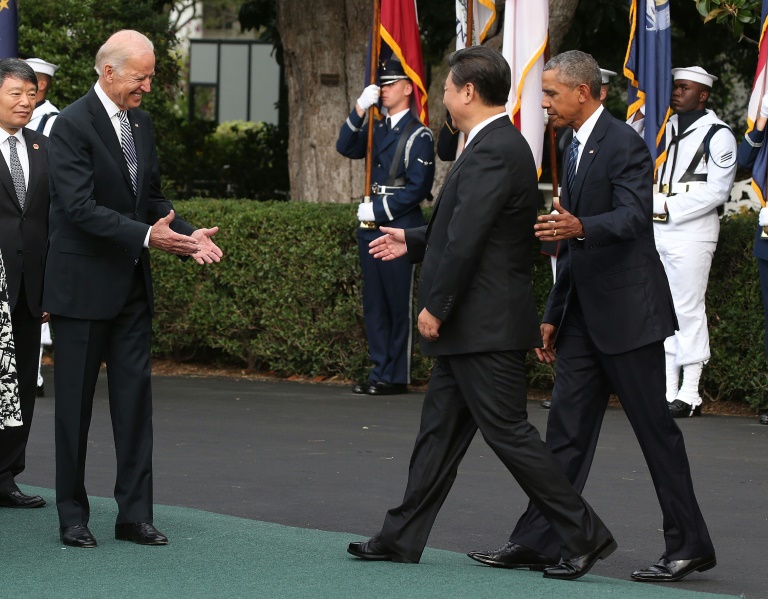
President Joe Biden has still not decided whether to end some trade tariffs on China ahead of a phone call expected this week with his Chinese counterpart Xi Jinping, a senior official said Tuesday.

John Kirby, spokesman for the National Security Council, said the administration believes the tariffs imposed during a trade war under former president Donald Trump are not working, but that Biden has yet to settle on a next move.

“He wants a review of the tariffs that are in place to make sure that they are aligned with our strategic economic priorities, that they’re in our best national interests, and quite frankly, the best interests of the American people, but he hasn’t made a decision,” Kirby told reporters.

“I don’t have any decision to speak to with respect to tariffs by the president. He’s working this out with his team,” Kirby added.

However, the senior official made clear that Biden is not happy with the tariffs, which slapped 25 percent duties on billions of dollars of Chinese imports in retaliation for what the United States says are Beijing’s routinely unfair trade practices.

“We do believe… that the tariffs that were put in place by his predecessor were poorly designed. We believe that they’ve increased costs for American families and small businesses, as well as ranchers. And that’s, you know, without actually addressing some of China’s, China’s harmful trade practices,” Kirby said.

“So we thought that the previous administration’s approach to tariffs was a, was a shoddy deal.”

The call, which is expected this week but has yet to be finally scheduled, will be the fifth between Xi and Biden since the Democrat took office in 2021.

– Relationship tending –

Describing US-China ties as “one of the most consequential bilateral relationships in the world,” Kirby said Biden and Xi would cover “everything from the tensions over Taiwan, to the war in Ukraine, as well as how we better manage competition between our two nations, certainly in the economic sphere.”

“There’s a lot of focus on security challenges and tensions particularly in the Indo-Pacific region — with respect to Taiwan, with respect to the territorial claims in the South and East China Seas, but there’s also there’s also economic competition.”

One of the main goals of the call will be broadly what Kirby called Biden’s China “relationship tending.”

“He wants to make sure that the lines of communication with President Xi on all the issues, whether they’re issues again that we agree on or issues where we have significant difficulty with — that they can still pick up the phone and talk to one another candidly,” Kirby said.

One irritant in the relationship likely to come up is a reported plan by the speaker of the House of Representatives, Biden ally Nancy Pelosi, to visit Taiwan.

As second in line of succession to the US presidency, the speaker requires a significant security detail when she travels abroad and reports of her trip have infuriated Beijing, which claims sovereignty over Taiwan.

Kirby said he wanted to “stress the speaker has not announced any travel.” 

Biden undecided on China tariffs ahead of Xi call: W.House

President Joe Biden has still not decided whether to end some trade tariffs on China ahead of a phone call expected this week with his Chinese counterpart Xi Jinping, a senior official said Tuesday.

John Kirby, spokesman for the National Security Council, said the administration believes the tariffs imposed during a trade war under former president Donald Trump are not working, but that Biden has yet to settle on a next move.

“He wants a review of the tariffs that are in place to make sure that they are aligned with our strategic economic priorities, that they’re in our best national interests, and quite frankly, the best interests of the American people, but he hasn’t made a decision,” Kirby told reporters.

“I don’t have any decision to speak to with respect to tariffs by the president. He’s working this out with his team,” Kirby added.

However, the senior official made clear that Biden is not happy with the tariffs, which slapped 25 percent duties on billions of dollars of Chinese imports in retaliation for what the United States says are Beijing’s routinely unfair trade practices.

“We do believe… that the tariffs that were put in place by his predecessor were poorly designed. We believe that they’ve increased costs for American families and small businesses, as well as ranchers. And that’s, you know, without actually addressing some of China’s, China’s harmful trade practices,” Kirby said.

“So we thought that the previous administration’s approach to tariffs was a, was a shoddy deal.”

The call, which is expected this week but has yet to be finally scheduled, will be the fifth between Xi and Biden since the Democrat took office in 2021.

– Relationship tending –

Describing US-China ties as “one of the most consequential bilateral relationships in the world,” Kirby said Biden and Xi would cover “everything from the tensions over Taiwan, to the war in Ukraine, as well as how we better manage competition between our two nations, certainly in the economic sphere.”

“There’s a lot of focus on security challenges and tensions particularly in the Indo-Pacific region — with respect to Taiwan, with respect to the territorial claims in the South and East China Seas, but there’s also there’s also economic competition.”

One of the main goals of the call will be broadly what Kirby called Biden’s China “relationship tending.”

“He wants to make sure that the lines of communication with President Xi on all the issues, whether they’re issues again that we agree on or issues where we have significant difficulty with — that they can still pick up the phone and talk to one another candidly,” Kirby said.

One irritant in the relationship likely to come up is a reported plan by the speaker of the House of Representatives, Biden ally Nancy Pelosi, to visit Taiwan.

As second in line of succession to the US presidency, the speaker requires a significant security detail when she travels abroad and reports of her trip have infuriated Beijing, which claims sovereignty over Taiwan.

Kirby said he wanted to “stress the speaker has not announced any travel.” 

EU to cut Russian gas use as missiles strike Ukraine

The European Union agreed to reduce gas consumption to break its dependence on Russia Tuesday, as missile strikes on Ukraine’s Black Sea coast cast doubt on a grain export deal.

The effort to help Germany wean itself off Russian gas for the winter came as Turkey announced a meeting in Russia next week between Turkish President Recep Tayyip Erdogan and his Russian counterpart Vladimir Putin.

Erdogan wants Turkey — on good terms with both Moscow and Kyiv — at the centre of diplomatic efforts to halt the five-month war, just as the EU took another big step to cut ties to Moscow.

The EU gas use cut, approved by energy ministers in Brussels, was hailed as an effective response to Russia’s manipulation of its energy wealth as an economic weapon.

The plan nominally commits EU countries to reduce their gas use by 15 percent during the winter, although exceptions were carved out for some countries and Hungary rejected the deal as “useless”. 

“We have made a huge step towards securing gas supplies for our citizens and economies for the upcoming winter,” said Czech industry minister Jozef Sikela, whose country holds the rotating EU presidency.

“I know the decision was not easy, but I think at the end, everybody understands that this sacrifice is necessary,” he added.

Hungary was the only country to oppose the plan, which passed on a majority vote, further isolating Budapest as the only member state reluctant to go further against Russia.

“This is an unjustifiable, useless, unenforceable and harmful proposal that completely ignores national interests,” said Hungarian Foreign Minister Peter Szijjarto.

The deal “serves purely communication purposes, and aims to save the credibility of some Western European politicians”, he added. 

– German ‘mistake’ –

Germany, the EU’s economic powerhouse, is hugely dependent on Russian gas. Berlin takes a major share of the 40 percent of EU gas imports that came from Russia last year. 

“It is true that Germany, with its dependence on Russian gas, has made a strategic mistake but our government is working… to correct this,” German Economy Minister Robert Habeck said. 

The plan asks member states to voluntarily reduce gas use by 15 percent — based on a five-year average for the months in question — starting next month and over the subsequent winter through March.

The target will be adapted to the situation of each country, taking into account their level of stocks and whether or not they have pipelines to share gas. 

Exceptions were given for island states like Ireland, Cyprus and Malta and to Spain or Portugal, which have limited links to the interconnected gas supply grid. 

Baltic countries will be exempted if their electricity connections with Russia’s grid were to be cut.

In the final proposal, EU member countries also rewrote an earlier European Commission plan to give Brussels — rather than the member states — the power to impose gas use cuts in an emergency.

The regulation now foresees the possibility to trigger a “Union alert” that would make the target mandatory, but the decision would lie with member states, a statement said.

The EU deal landed a day after Gazprom said it is cutting daily gas deliveries intended for Europe to about 20 percent of capacity from Wednesday.

Gazprom claimed technical reasons for choking off supply, but EU Energy Commissioner Kadri Simson dismissed this claim.

“This is a politically motivated step and we have to be ready for that and exactly for that reason the pre-emptive reduction of our gas demand is a wise strategy,” she said.

The extent of Russia’s split with the West over Ukraine was also underlined by Moscow’s announcement that it would quit the International Space Station after 2024.

Until now space exploration was one of the few areas where cooperation between Russia, the United States and its allies had not been wrecked by tensions over Ukraine and elsewhere.

The decision to leave the ISS programme “has been made”, Roscosmos chief Yury Borisov told Putin.

– ‘Difficult’ winter  –

Meanwhile, fighting continued in Ukraine. Kyiv said Russian forces launched multiple missile strikes at targets on the Black Sea coast near the southern port city of Odessa and in Mykolaiv. 

The attacks come days after Russian strikes hit Odessa called into question a breakthrough deal to resume exports of grain from Ukraine, that have been disrupted by Moscow’s invasion.

Rescuers were working on the ground near Odessa where “residential buildings” near the coast were hit in the strikes, Ukraine’s southern military command said on Facebook.

In the east, Kramatorsk’s mayor Oleksandr Goncharenko said he was worried about how tens of thousands of mostly elderly residents would cope in the coming months without any gas to keep them warm.

“This winter will be very difficult,” he said.

He said that Ukrainian forces would have to push the Russians back at least 20 kilometres (12 miles) to be able to make repairs to broken gas pipes.

He called for more long-range weapons from Western allies to help repel the enemy.

Close Bitnami banner
Bitnami