AFP

Asia stocks rise as Alibaba boosts tech, eases pre-Fed nerves

Asian markets rose Tuesday as an Alibaba-fuelled surge in Hong Kong provided a much-needed boost to sentiment ahead of a slew of earnings reports from the world’s biggest firms and an expected Federal Reserve interest rate hike.

A shock cut in US retail titan Walmart’s profit outlook fanned concerns that surging inflation and rising borrowing costs are hammering consumer spending and could send the economy into recession.

The news left markets concerned about what’s to come from other Wall Street giants this week — including Apple, Amazon, McDonald’s and General Motors.

Adding to the unease was news that Russia’s Gazprom will cut back gas deliveries to Germany, citing a faulty turbine, less than a week since restarting flows after 10 days of maintenance work.

But after a cautious start to the day, most Asian markets enjoyed a healthy run-up.

Hong Kong led the way in reaction to news that market heavyweight Alibaba will seek a primary listing in the city, which could pave the way for it to be traded by mainland Chinese investors.

The move from a secondary listing would come as several Chinese firms listed in the United States grow increasingly worried about a regulatory crackdown by authorities as part of a stand-off in the tech sector between Washington and Beijing.

It also further indicated the firm is more confident that a long-running period of clampdowns by China on the industry is coming to an end.

“This could boost its liquidity after a year-long sell-off triggered by China’s economic slowdown and Beijing’s crackdown on its most potent internet firms,” said Stephen Innes at SPI Asset Management.

The over five percent surge in Alibaba gave a boost to other tech giants — with JD.com, Tencent, NetEase and Bilibili all up.

– ‘Significant risks’ –

There were also gains in Shanghai, Sydney, Seoul, Singapore, Manila and Jakarta, though Tokyo, Taipei and Wellington slipped.

London was on the front foot in the morning, though Paris and Frankfurt dipped.

Analysts were cautious about the outlook for world markets, despite a positive run-up in July.

“This is most likely a bear market rally and there are significant risks still facing this market,” Katerina Simonetti, at Morgan Stanley Private Wealth Management, told Bloomberg Television.

“We’re probably going to be seeing a lot of choppiness and potentially some further declines in the market before the year-end.”

For now, there will be little respite for investors from the Fed as it continues to ramp up borrowing costs, with another 75 basis point lift expected this week, and more before the end of the year.

Several officials at the bank, including boss Jerome Powell, have suggested they are determined to bring inflation down from four-decade highs, even at the expense of economic growth.

Still, market strategist Louis Navellier said they could start to loosen monetary policy in the new year when the economy shows strains.

“Uncertainty is high as to the Fed’s willingness to keep tightening if the economy slows significantly, with many forecasts projecting that the Fed will reverse and start cutting rates by the summer of 2023 as the economy slows and inflation wanes,” he said in a note. 

– Key figures at around 0810 GMT –

Tokyo – Nikkei 225: DOWN 0.2 percent at 27,655.21 (close)

Hong Kong – Hang Seng Index: UP 1.7 percent at 20,905.88 (close)

Shanghai – Composite: UP 0.8 percent at 3,277.44 (close)

London – FTSE 100: UP 0.5 percent at 7,338.96

Euro/dollar: UP at $1.0220 from $1.0223 Monday

Pound/dollar: UP at $1.2047 from $1.2046 

Euro/pound: UP at 84.86 pence from 84.83 pence

Dollar/yen: DOWN at 136.62 yen from 136.65 yen

West Texas Intermediate: UP 1.9 percent at $98.53 per barrel

Brent North Sea crude: UP 1.8 percent at $107.03 per barrel

New York – Dow: UP 0.3 percent at 31,990.04 (close)
Croatia opens bridge around Bosnia to get to Dubrovnik

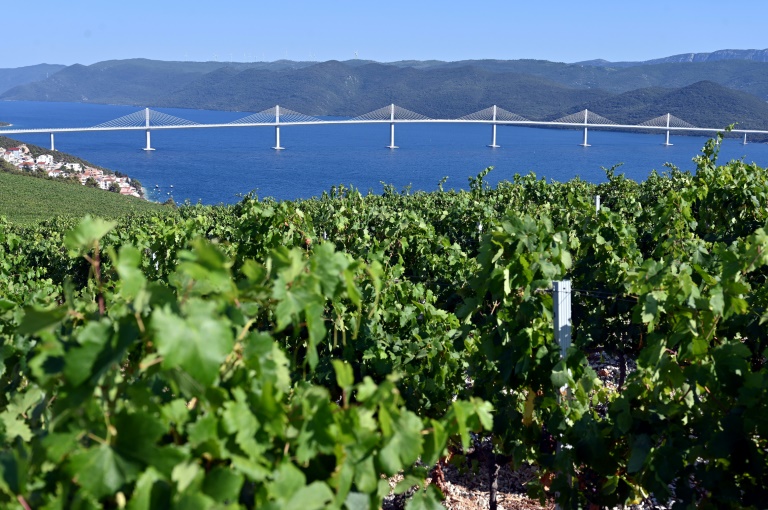
Croatia opens Tuesday a long-awaited bridge linking its southern Adriatic coast including Dubrovnik with the rest of the country, bypassing a narrow strip of Bosnian territory.

The 2.4-kilometre (1.5-mile) span reaches out from the Croatian mainland to the Peljesac peninsula that connects with the southern part of Croatia’s coastline nestled between the sea and the Dinaric Alps.

“The importance of the bridge is enormous, and it’s not only emotional due to the connection of Croatia’s territory, but also for tourism and the economy in general,” said transportation minister Oleg Butkovic earlier this month.

The link will bring an end to the untold hours spent by commuters, merchants, and tourists at the Bosnian border and is one of the country’s most ambitious infrastructure projects since Croatia declared independence from Yugoslavia in 1991.

It was the bloody dissolution of the federation, however, that left a patchwork of divisions across the Balkans, with the frontiers between its six former republics transformed into international borders.

Bosnia maintained its coastal access in the end, but its small outlet leading to the Adriatic Sea cut right through Croatia. 

As a result, around 90,000 people, including residents in the country’s tourism hotspot of Dubrovnik, remained cut off from the rest of the country until now. 

The hard border brought lines and red tape for traders, and headaches for tourists hoping to get south by road.

“It is indeed a historic project for Croatia,” said Sabina Mikulic, owner of a hotel, glamping site, and winery in Orebic — the peninsula’s largest town.

Inhabitants of the picturesque region of red vines, pebble beaches and oyster farms are looking forward to the end of their geographic isolation caused by the Bosnian border.

The hours-long waits at the border and fears over missing the day’s last ferry will now become a thing of the past, they say.  

“It was really exhausting and made people living here bitter,” Mikulic told AFP.

– EU funded, Chinese made –

The opening of the bridge has been a long time coming and not without controversy. 

Croatia took its first stab at building the bridge in 2007 only for the project to stall five years later due to budgetary constraints.

In 2017, the European Union — which Croatia joined in 2013 — allocated 357 million euros ($365 million), roughly 85 percent of the cost.

A Chinese firm was selected in 2018 to build the bridge — marking the first significant Chinese involvement in an infrastructure project in Croatia.

But not all were happy with the bridge’s construction, with officials in Bosnia claiming it would hamper its maritime access by preventing high-tonnage vessels from entering its lone port. 

Zagreb eventually agreed to increase the height of the bridge to 55 metres (181 feet) in an attempt to quell the dispute, even though this increased the cost of the structure.

The opening of the bridge comes as Croatia is angling for a tourism rebound this year as it hopes to attract pre-pandemic levels of visitors.

The country of 3.8 million people attracts millions of tourists every year hoping to soak up the sun along its stunning coast dappled with more than 1,000 islands and islets.

For retired piano teacher Smilja Matic, who has vacationed for years in the Croatian village of Komarna near the entrance to the new bridge, the link to the mainland is a win for locals and tourists alike.

“It means a new life for locals and for people who travel by plane to Dubrovnik, like me. It’s major progress,” she told AFP.

Outside of tourism, the bridge will likely serve as a boon for businesses and traders as well. 

For decades, oyster farmer Mario Radibratovic was subjected to hours of extra travel to bring his perishable shellfish north to market due to waiting times at the border.

But with the opening of the bridge, the journey north will shrink dramatically. 

For the 57-year-old, the opening of the bridge will bring “immeasurable relief”.

“We are finally becoming part of Croatia,” Radibratovic told AFP who farms oysters and mussels in the village of Mali Ston.

“Until now we felt like second-class citizens.”

Firefighters tackle California wildfire as heat grips parts of US

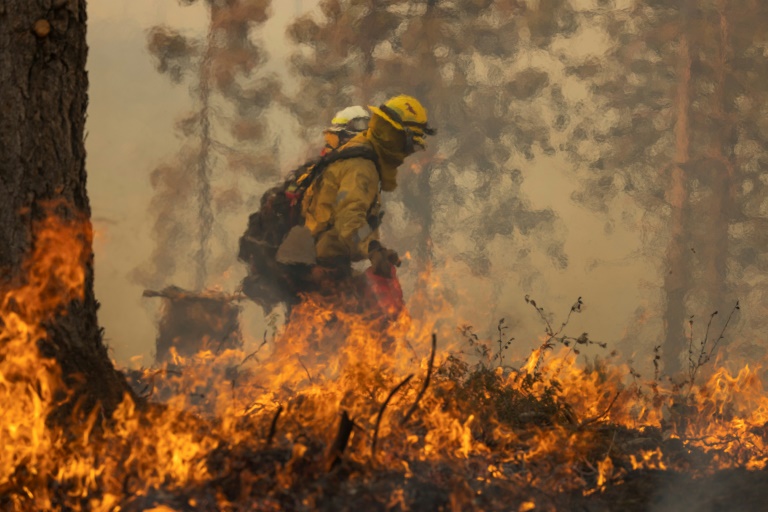
Firefighters were battling California’s largest wildfire of the summer on Monday, a blaze near famed Yosemite National Park that has forced thousands of people to evacuate, officials said.

The Oak Fire in central California broke out on Friday and is raging while parts of the United States swelter through a heat wave, including the usually cool Pacific Northwest.

The fire in Mariposa County has engulfed 17,241 acres (6,977 hectares) and is 16 percent contained, Cal Fire, the state fire department, said.

“Fire crews are working aggressively using bulldozers, hand crews and aircraft,” with only “minimal growth on the fire” seen on Monday, the department said.

It is the most destructive blaze so far this fire season, according to Cal Fire, destroying more than three times the acreage of the nearby Washburn Fire, which has been nearly 90 percent contained.

But it remains much smaller than last year’s Dixie Fire, which burned nearly one million acres.

Jon Heggie, a Cal Fire battalion chief, told CNN the latest wildfire was “very indicative” of other blazes seen in the region over the last two years.

“These fires are burning with just such a velocity and intensity, it makes it extremely challenging and extremely dangerous for both the public and the firefighters,” Heggie said.

“It’s moving so quickly it’s not giving people a lot of time, and they sometimes are just going to have to evacuate with just the shirts on their back.”

One such couple, Jane and Wes Smith, lost their home and everything in it to the inferno, CNN reported.

“It’s pretty sad to see the house that I grew up in and was raised in gone,” their son Nick Smith told the broadcaster. “It hits hard.”

Cal Fire said 55 residential, commercial and other structures had been destroyed.

– ‘Direct result’ of climate change –

Jonathan Pierce, a spokesman for the fire department, said low humidity and high temperatures were stoking the blaze, worsened by the high number of dead trees and steep slopes in the area.

The Oak Fire has forced the evacuation of around 3,000 people so far, officials said.

Nearly 3,000 firefighters backed by 24 helicopters have been deployed near the southwestern edge of Yosemite National Park.

In recent years, California and other parts of the western United States have been ravaged by huge and fast-moving wildfires, driven by years of drought and a warming climate.

“What I can tell you is this is a direct result of what is climate change,” Heggie told CNN.

“You can’t have a 10-year drought in California and expect things to be the same,” he said. “That drought is what drives what we are calling megafires.”

Extreme temperatures could be seen elsewhere in the country, as 60 million Americans were under a heat advisory on Monday.

The National Weather Service said heat advisories were in place in the Southern Plains and Lower Mississippi Valley, while stifling temperatures would ease on Tuesday in the Northeast and mid-Atlantic.

The usually cool Pacific Northwest will see temperatures surpassing 100 or more degrees Fahrenheit (37 degrees Celsius) in the Columbia River Gorge and Basin.

The NWS said daily record highs will likely be broken from northern California to the Portland, Oregon and Seattle, Washington areas on Tuesday.

Cities have opened cooling stations and increased outreach to at-risk communities such as the homeless and those without air conditioning.

The world has been hit by extreme heat waves in recent months, including Western Europe in July and India in March and April — incidents that scientists say are an unmistakable sign of a warming climate.

The extreme weather prompted former US vice president Al Gore, a long-time climate advocate, to issue a stark warning on Sunday about “inaction” by US lawmakers.

Asked whether he believes US President Joe Biden should declare a climate emergency, which would grant him additional policy powers, Gore was blunt.

“Mother Nature has already declared it a global emergency,” Gore told ABC.

Firefighters tackle California wildfire as heat grips parts of US

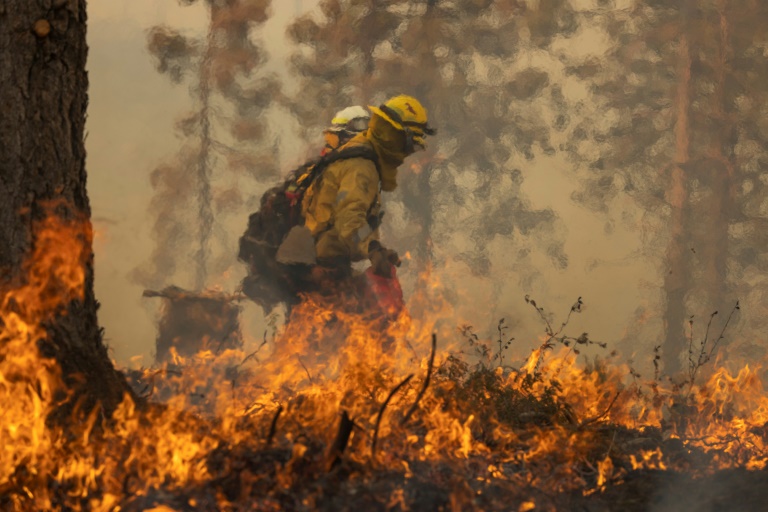
Firefighters were battling California’s largest wildfire of the summer on Monday, a blaze near famed Yosemite National Park that has forced thousands of people to evacuate, officials said.

The Oak Fire in central California broke out on Friday and is raging while parts of the United States swelter through a heat wave, including the usually cool Pacific Northwest.

The fire in Mariposa County has engulfed 17,241 acres (6,977 hectares) and is 16 percent contained, Cal Fire, the state fire department, said.

“Fire crews are working aggressively using bulldozers, hand crews and aircraft,” with only “minimal growth on the fire” seen on Monday, the department said.

It is the most destructive blaze so far this fire season, according to Cal Fire, destroying more than three times the acreage of the nearby Washburn Fire, which has been nearly 90 percent contained.

But it remains much smaller than last year’s Dixie Fire, which burned nearly one million acres.

Jon Heggie, a Cal Fire battalion chief, told CNN the latest wildfire was “very indicative” of other blazes seen in the region over the last two years.

“These fires are burning with just such a velocity and intensity, it makes it extremely challenging and extremely dangerous for both the public and the firefighters,” Heggie said.

“It’s moving so quickly it’s not giving people a lot of time, and they sometimes are just going to have to evacuate with just the shirts on their back.”

One such couple, Jane and Wes Smith, lost their home and everything in it to the inferno, CNN reported.

“It’s pretty sad to see the house that I grew up in and was raised in gone,” their son Nick Smith told the broadcaster. “It hits hard.”

Cal Fire said 55 residential, commercial and other structures had been destroyed.

– ‘Direct result’ of climate change –

Jonathan Pierce, a spokesman for the fire department, said low humidity and high temperatures were stoking the blaze, worsened by the high number of dead trees and steep slopes in the area.

The Oak Fire has forced the evacuation of around 3,000 people so far, officials said.

Nearly 3,000 firefighters backed by 24 helicopters have been deployed near the southwestern edge of Yosemite National Park.

In recent years, California and other parts of the western United States have been ravaged by huge and fast-moving wildfires, driven by years of drought and a warming climate.

“What I can tell you is this is a direct result of what is climate change,” Heggie told CNN.

“You can’t have a 10-year drought in California and expect things to be the same,” he said. “That drought is what drives what we are calling megafires.”

Extreme temperatures could be seen elsewhere in the country, as 60 million Americans were under a heat advisory on Monday.

The National Weather Service said heat advisories were in place in the Southern Plains and Lower Mississippi Valley, while stifling temperatures would ease on Tuesday in the Northeast and mid-Atlantic.

The usually cool Pacific Northwest will see temperatures surpassing 100 or more degrees Fahrenheit (37 degrees Celsius) in the Columbia River Gorge and Basin.

The NWS said daily record highs will likely be broken from northern California to the Portland, Oregon and Seattle, Washington areas on Tuesday.

Cities have opened cooling stations and increased outreach to at-risk communities such as the homeless and those without air conditioning.

The world has been hit by extreme heat waves in recent months, including Western Europe in July and India in March and April — incidents that scientists say are an unmistakable sign of a warming climate.

The extreme weather prompted former US vice president Al Gore, a long-time climate advocate, to issue a stark warning on Sunday about “inaction” by US lawmakers.

Asked whether he believes US President Joe Biden should declare a climate emergency, which would grant him additional policy powers, Gore was blunt.

“Mother Nature has already declared it a global emergency,” Gore told ABC.

Iraqi Kurd farmers battle drought as Lake Dukan retreats

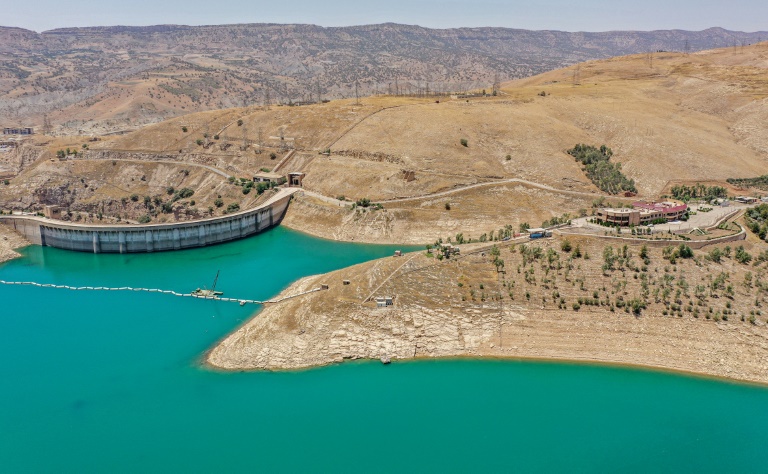
Farmers in Iraqi Kurdistan seeking to irrigate crops face seeing their economic lifeline slip away as the waters of Lake Dukan recede and dams upstream in Iran stem the flow.

Bapir Kalkani, who is also a trade unionist, farms near the picturesque lake but has seen marked changes over the past three years as Iraq suffers prolonged drought.

“There was water where I’m standing now” in 2019, the 56-year-old said. “It used to go three kilometres (two miles) further, but the level has retreated.”

Sesame and beans are being grown on the plain under a blazing sun, adjacent to the lake which is fed by a Tigris tributary, the Lower Zab river which has its source in Iran.

The large artificial lake was created in the 1950s following construction of the Dukan dam, to supply irrigation and drinking water for the region, as well as to generate electricity.

But for several years both the lake and the river have been shrinking — as have all of the rivers in Iraq.

The country is classified as one of the five nations most vulnerable to the effects of climate change and desertification.

Its water reserves have fallen by 60 percent compared with last year, the government says.

– Rainfall becoming rare –

With rainfall becoming a rarity and after three successive years of drought, Iraq has been forced to halve the area it devotes to agriculture.

“If we hadn’t had a little rain in late spring, there would have been no crops in Kurdistan this year,” Kalkani said.

Farmers in the area used to dig shallow wells fed by the Dukan so they could irrigate their crops. But not any more.

“The wells have lost 70 percent of their water,” he said.

Sesame farmer Shirko Aziz Ahmed had to dig a well several metres deep so he could access water and raise it using a diesel-powered pump.

“Sesame needs a lot of watering, so I’m going to have to dig even deeper as the water level goes down,” he said.

Drought is not the only source of the farmer’s water problems.

Iran has built several dams on the Lower Zab, notably the Kolsa barrage.

“The Kolsa dam has caused at least an 80 percent drop in the water levels” of the Lower Zab, said Banafsheh Keynoush of the Washington-based Middle East Institute.

She said Iran is going through one of the worst droughts in its history and has had to revise its irrigation policy.

– Iran ‘dam-building spree’ –

“Iran is on a dam-building spree, and many of its dams are small,” she told AFP.

The Dukan dam in Iraq has also been badly affected by the reduced river flow, said its director Kochar Jamal Tawfeeq.

“Now we have only 41 percent, below half of the capacity” of the dam, he said.

It supplies drinking water for “about three million people in Sulaymaniyah and Kirkuk”, two major cities downstream, he said.

But at just 300 mm (less than 12 inches) of rainfall last year — half the previous annual average — the skies have not been generous. And Tawfeeq said 2022 is on track to mirror last year’s figures.

“We are releasing 90 cubic metres per second,” the director said. “When the reservoir is full, we release 200 to 250.”

Tawfeeq said farmers were being told “not to grow crops that need too much water”.

He said Baghdad had sent teams to Iran to discuss the reduced flow of the Lower Zab river, but “there’s no cooperation from the Iranians”.

Iran contends its river flow contribution into the Tigris and Euphrates basin is only about six percent, according to Keynoush.

“What Iran is trying to say is: ‘The Euphrates and Tigris problems you have are really between you and Turkey’,” where the two main rivers have their sources, she added.

But Iraq itself is not above criticism, said Azzam Alwash, founder of the Nature Iraq non-government organisation and presidential adviser.

Iraqi Kurdistan in the north plans to construct new dams but the projects lack any coordination with Baghdad, Alwash said.

Downstream, in central and south Iraq, the situation is being exasperated by a lack of modernisation of water resources and could result in disaster, he warned.

Thaw and redraw: melting glacier moves Italian-Swiss border

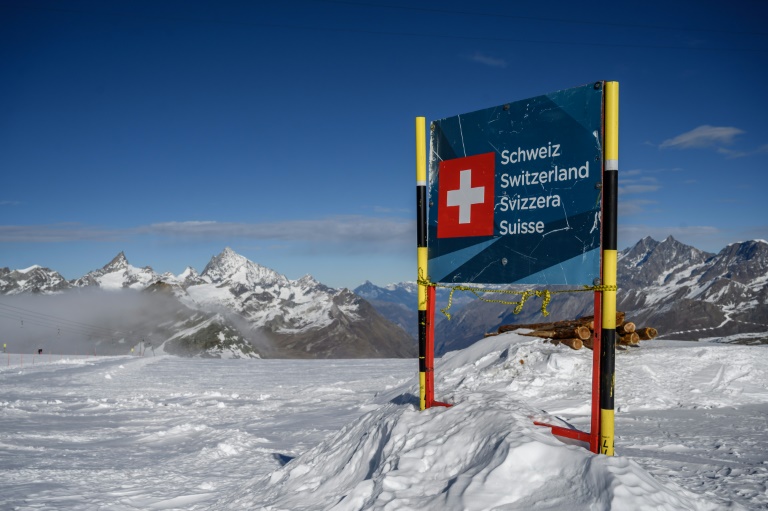
Way up in the snowy Alps, the border between Switzerland and Italy has shifted due to a melting glacier, putting the location of an Italian mountain lodge in dispute.

The borderline runs along a drainage divide — the point at which meltwater will run down either side of the mountain towards one country or the other.

But the Theodul Glacier’s retreat means the watershed has crept towards the Rifugio Guide del Cervino, a refuge for visitors near the 3,480-metre (11,417-foot) Testa Grigia peak — and it is gradually sweeping underneath the building.

Frederic, a 59-year-old tourist, opens the narrow wooden door to enter the refuge’s restaurant, the light flooding in from outside.

The menu is in Italian, not German, and priced in euros rather than Swiss francs. Nonetheless, at the counter, he orders a slice of pie and asks: “So — are we in Switzerland or in Italy?”

It is a question worth asking as it has been the subject of diplomatic negotiations that started in 2018 and concluded with a compromise last year — but the details remain secret.

– Sleeping on the Swiss side –

When the refuge was built on a rocky outcrop in 1984, its 40 beds and long wooden tables were entirely in Italian territory.

But now two-thirds of the lodge, including most of the beds and the restaurant, is technically perched in southern Switzerland.

The issue has come to the fore because the area, which relies on tourism, is located at the top of one of the world’s largest ski resorts, with a major new development including a cable car station being constructed a few metres away.

An agreement was hammered out in Florence in November 2021 but the outcome will only be revealed once it is rubber-stamped by the Swiss government — which will not happen before 2023.

“We agreed to split the difference,” Alain Wicht, chief border official at Switzerland’s national mapping agency Swisstopo told AFP.

His job includes looking after the 7,000 boundary markers along landlocked Switzerland’s 1,935-kilometre border with Austria, France, Germany, Italy and Liechtenstein.

Wicht attended the negotiations, where both parties made concessions to find a solution. “Even if neither side came out winners, at least nobody lost”, he said.

– Line in the snow –

Where the Italian-Swiss border traverses Alpine glaciers, the frontier follows the watershed line.

But the Theodul Glacier lost almost a quarter of its mass between 1973 and 2010. That exposed the rock underneath to the ice, altering the drainage divide and forcing the two neighbours to redraw around a 100-metre-long stretch of their border.

Wicht said that such adjustments were frequent and generally settled by comparing readings by surveyors from the border countries, without getting politicians involved.

“We are squabbling over territory that isn’t worth much,” he said. But he added that this “is the only place where we suddenly had a building involved”, giving “economic value” to the land.

His Italian counterparts declined to comment “due to the complex international situation”.

Former Swisstopo chief Jean-Philippe Amstein said such disputes are typically resolved by exchanging parcels of land of equivalent surface area and value.

In this case, “Switzerland is not interested in obtaining a piece of glacier,” he explained, and “the Italians are unable to compensate for the loss of Swiss surface area”.

– Wine stays Italian –

While the outcome remains secret, the refuge’s caretaker, 51-year-old Lucio Trucco, has been told it will stay on Italian soil.

“The refuge remains Italian because we have always been Italian,” he said.

“The menu is Italian, the wine is Italian, and the taxes are Italian.”

The years of negotiation have delayed the refuge’s renovation — the villages either side of the border have not been able to issue a building permit.

The works will therefore not be completed in time for the scheduled opening of a new cable car up the Italian side of the Klein Matterhorn mountain in late 2023.

The slopes are only accessible from the Swiss ski resort of Zermatt.

While some mid-altitude resorts are preparing for the end of Alpine skiing due to global warming, skiing is possible throughout the summer on the Zermatt-Cervinia slopes, even if such activities contribute to the glacier’s retreat.

“That’s why we have to enhance the area here because it will surely be the last one to die,” said Trucco.

For now, on Swisstopo’s maps, the solid pink band of the Swiss border remains a dashed line as it passes the refuge.

Trump returns to Washington for first time since 2020 defeat

Donald Trump returns Tuesday to Washington for the first time since he left the White House after a failed attempt to overturn his election loss to Joe Biden.

Trump, increasingly teasing a bid to win back the presidency in 2024, is set to address the America First Policy Institute, a think tank run by allies.

He’ll be appearing in a city riveted by weeks of hearings held by a Democratic-run House of Representatives committee on the January 6, 2021 riot where Trump supporters stormed Congress, trying to stop certification of the election result.

The Republican continues repeatedly to push his lie in speeches that he was robbed of victory in 2020, but America First Policy Institute spokesman Marc Lotter said Trump would be looking ahead, rather than back.

“This is a policy speech he will be giving,” he told CNN.

However, Trump is unlikely to deviate too far from his typically incendiary blend of right-wing nationalism, anti-immigrant rhetoric and conspiracy theories about the election.

The Capitol riot hearings, which revealed harrowing details of the assault on Congress and also the attempt by Trump political backers to overturn the election through manipulation of the complicated US electoral system, are believed to have damaged Trump.

Biden, who at the start of his presidency went out of his way to avoid so much as mentioning Trump’s name, launched a blistering broadside Monday on the Republican’s failure to pull back his mob of supporters.

“Brave law enforcement officers were subject to the medieval hell for three hours, dripping in blood, surrounded by carnage, face to face with the crazed mob that believed the lies of the defeated president,” Biden told the National Organization of Black Law Enforcement Executives Conference.

“For three hours, the defeated former president of the United States watched it all happen as he sat in the comfort of the private dining room next to the Oval Office,” he said.

– Trump in pole position –

Trump, 76, remains by far the most recognizable name in Republican politics. He is believed to retain an intensely loyal core of supporters, putting him in pole position if he decides to seek the party nomination.

Potential rivals are gaining ground as the negative publicity piles up.

All eyes are on the progress of Florida Governor Ron DeSantis, who has not declared a bid for the presidency, but has growing stature on the right.

And a recent New York Times/Siena College poll showed that nearly half of Republican primary voters would vote for any Republican other than Trump.

Last week, the right-leaning editorial boards of two newspapers owned by the Murdoch family, the Wall Street Journal and New York Post, issued harsh critiques of Trump’s behavior during the January 6 calamity.

Trump showed he is “unworthy” of becoming president again, the usually friendly Post wrote.

However, both Trump and his portrayal of an America under attack by leftists continues to be boosted by enormously popular commentators on Murdoch-owned Fox News.

“Across American history, our era is easily among the most fraught — and the most alarming,” wrote the leaders of the pro-Trump think tank, including his former economy advisor Larry Kudlow.

Joni Mitchell wows with surprise set at Newport Folk Fest

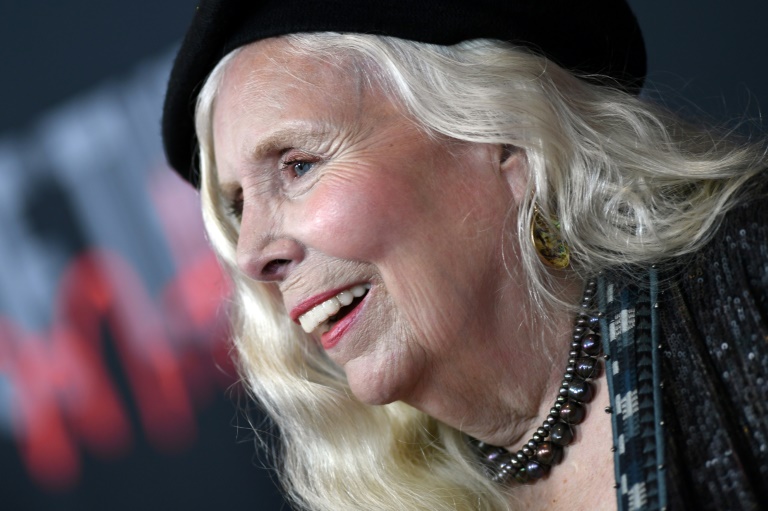
Joni Mitchell delivered her first full set in more than 20 years this weekend, surprising attendees at the Newport Folk Festival alongside country star Brandi Carlile.

The show followed Mitchell’s stage cameo earlier this year, when she joined other artists as they performed a moving tribute to her life’s work at the MusiCares pre-Grammy gala.

Both moments marked rare public appearances for the trailblazing Mitchell, who in 2015 suffered a brain aneurysm that left her temporarily unable to speak, the aftermath of which has involved extensive physical therapy.

Mitchell and Carlile sang duets including the 78-year-old’s “A Case of You” and “Both Sides Now,” while the Canadian-born folk icon delighted the crowd by playing the lengthy solo from “Just Like This Train” on an electric guitar.

Mitchell last appeared at Newport, an annual festival in Rhode Island, in 1969. 

Sunday’s 13-song set also featured her classic environmentalist anthem “Big Yellow Taxi” and “The Circle Game” along with renditions of “Summertime,” “Love Potion No. 9” and “Why Do Fools Fall in Love.”

The revolutionary singer-songwriter earlier this year was honored as MusiCares’ Person of the Year at the charity gala that precedes the Grammys, where she gave a brief performance.

The next night she accepted the Grammy for Best Historical Album, appearing in a red leather beret, sunglasses and floral pants, her flowing blonde hair in pigtails.

Born in a small town in western Canada, Mitchell had her start playing small clubs and eventually moved to Los Angeles, where she became a pivotal figure in the 1960s Laurel Canyon music scene and beyond.

She is considered one of her generation’s most iconic singer-songwriters, giving rise to the phenomenon of the solitary and thoughtful musician who pours out emotion on stage.

Last summer her seminal album “Blue” charted number one on iTunes as it hit its fiftieth anniversary — outperforming even pop sensation Olivia Rodrigo’s “Sour.”

Voicing her own astonishment over the milestone on the MusiCares red carpet, Mitchell earlier this year explained her album’s enduring popularity and recent resurgence: “Maybe people want to get a little bit deeper.”

Stocks wobble as markets begin big week

European and American stocks moved in mixed directions Monday as markets began a busy week, with the US Federal Reserve poised to lift interest rates again and some of the world’s biggest companies scheduled to publish their latest earnings reports.

Asian markets ended lower.

The Fed is widely tipped to hike borrowing costs by 0.75 percentage points Wednesday as it battles soaring inflation.

US second-quarter gross domestic product data are due Thursday, with some observers warning it could show a second successive contraction — which is considered a technical recession.

Investors are also awaiting an extremely heavy week of earnings reports featuring tech giants like Apple, and industrial behemoths such as Boeing and General Motors, along with McDonald’s and other consumer-oriented names.

“Recent risk-on moves appear to be on thin ice as markets gear up for another bout of earnings and a crucial Fed rate decision,” said market analyst Joshua Mahony at trading platform IG.

Wall Street had a mixed day with the Dow and S&P 500 advancing and the tech-rich Nasdaq retreating.

The pullback in Nasdaq reflects reticence ahead of an intense 72-hour stretch that will see releases from most of the biggest US companies, beginning Tuesday with Google parent Alphabet and Microsoft.

“Investors won’t want to touch Nasdaq stocks until we hear from Alphabet tomorrow and if they don’t like what they hear they may wait to see if Thursday’s massive results from Apple and Amazon provide any reasons to be optimistic with tech stocks,” said a note from Oanda’s Edward Moya.

Despite the deluge of market-moving news on the calendar, European stocks had been trading higher across the board until an announcement by Russia’s Gazprom that it was cutting back gas deliveries to Germany due to a faulty turbine, which pulled down the DAX index in Frankfurt.

It ended the day down 0.3 percent, while the CAC in Paris climbed 0.3 percent and London’s FTSE 100 rose 0.4 percent.

Consumer prices are soaring worldwide after economies reopened from pandemic lockdowns and as the war in Ukraine keeps energy prices elevated.

That, in turn, has sparked aggressive rate hikes from major central banks to try and dampen inflationary pressures.

“We still see further downside for risky assets as recession fears accumulate and central banks remain committed to fighting inflation at the expense of growth,” said Standard Chartered strategist Eric Robertsen.

– Key figures at around 2120 GMT –

New York – Dow: UP 0.3 percent at 31,990.04 (close)
New York – S&P 500: UP 0.1 percent at 3,966.84 (close)

New York – Nasdaq: DOWN 0.4 percent at 11,782.67 (close)

London – FTSE 100: UP 0.4 percent at 7,306.30 (close) 

Frankfurt – DAX: DOWN 0.3 percent at 13,210.32 (close)

Paris – CAC 40: UP 0.3 percent at 6,237.55 (close)

EURO STOXX 50: UP 0.2 percent at 3,604.16 (close)

Tokyo – Nikkei 225: DOWN 0.8 percent at 27,699.25 (close)

Hong Kong – Hang Seng Index: DOWN 0.2 percent at 20,562.94 (close)

Shanghai – Composite: DOWN 0.6 percent at 3,250.39 (close)

Euro/dollar: UP at $1.0223 from $1.0213 Friday

Pound/dollar: UP at $1.2046 from $1.1999 

Euro/pound: DOWN at 84.83 pence from 85.09 pence

Dollar/yen: UP at 136.65 yen from 136.12 yen

Brent North Sea crude: UP 1.9 percent at $105.15 per barrel

West Texas Intermediate: UP 2.1 percent at $96.70 per barrel

burs-jmb/bfm

Stocks wobble as markets begin big week

European and American stocks moved in mixed directions Monday as markets began a busy week, with the US Federal Reserve poised to lift interest rates again and some of the world’s biggest companies scheduled to publish their latest earnings reports.

Asian markets ended lower.

The Fed is widely tipped to hike borrowing costs by 0.75 percentage points Wednesday as it battles soaring inflation.

US second-quarter gross domestic product data are due Thursday, with some observers warning it could show a second successive contraction — which is considered a technical recession.

Investors are also awaiting an extremely heavy week of earnings reports featuring tech giants like Apple, and industrial behemoths such as Boeing and General Motors, along with McDonald’s and other consumer-oriented names.

“Recent risk-on moves appear to be on thin ice as markets gear up for another bout of earnings and a crucial Fed rate decision,” said market analyst Joshua Mahony at trading platform IG.

Wall Street had a mixed day with the Dow and S&P 500 advancing and the tech-rich Nasdaq retreating.

The pullback in Nasdaq reflects reticence ahead of an intense 72-hour stretch that will see releases from most of the biggest US companies, beginning Tuesday with Google parent Alphabet and Microsoft.

“Investors won’t want to touch Nasdaq stocks until we hear from Alphabet tomorrow and if they don’t like what they hear they may wait to see if Thursday’s massive results from Apple and Amazon provide any reasons to be optimistic with tech stocks,” said a note from Oanda’s Edward Moya.

Despite the deluge of market-moving news on the calendar, European stocks had been trading higher across the board until an announcement by Russia’s Gazprom that it was cutting back gas deliveries to Germany due to a faulty turbine, which pulled down the DAX index in Frankfurt.

It ended the day down 0.3 percent, while the CAC in Paris climbed 0.3 percent and London’s FTSE 100 rose 0.4 percent.

Consumer prices are soaring worldwide after economies reopened from pandemic lockdowns and as the war in Ukraine keeps energy prices elevated.

That, in turn, has sparked aggressive rate hikes from major central banks to try and dampen inflationary pressures.

“We still see further downside for risky assets as recession fears accumulate and central banks remain committed to fighting inflation at the expense of growth,” said Standard Chartered strategist Eric Robertsen.

– Key figures at around 2120 GMT –

New York – Dow: UP 0.3 percent at 31,990.04 (close)
New York – S&P 500: UP 0.1 percent at 3,966.84 (close)

New York – Nasdaq: DOWN 0.4 percent at 11,782.67 (close)

London – FTSE 100: UP 0.4 percent at 7,306.30 (close) 

Frankfurt – DAX: DOWN 0.3 percent at 13,210.32 (close)

Paris – CAC 40: UP 0.3 percent at 6,237.55 (close)

EURO STOXX 50: UP 0.2 percent at 3,604.16 (close)

Tokyo – Nikkei 225: DOWN 0.8 percent at 27,699.25 (close)

Hong Kong – Hang Seng Index: DOWN 0.2 percent at 20,562.94 (close)

Shanghai – Composite: DOWN 0.6 percent at 3,250.39 (close)

Euro/dollar: UP at $1.0223 from $1.0213 Friday

Pound/dollar: UP at $1.2046 from $1.1999 

Euro/pound: DOWN at 84.83 pence from 85.09 pence

Dollar/yen: UP at 136.65 yen from 136.12 yen

Brent North Sea crude: UP 1.9 percent at $105.15 per barrel

West Texas Intermediate: UP 2.1 percent at $96.70 per barrel

burs-jmb/bfm

Close Bitnami banner
Bitnami