AFP

Eurozone stocks slide, gas prices soar

Eurozone equities sank Tuesday, as natural gas prices surged after Russia tightened the screw on supplies in fresh Ukraine fallout.

Investors digested also major earnings updates on the eve of another likely large US interest rate hike aimed at tackling soaring inflation.

General Motors reported a big drop in second-quarter profits owing to a semiconductor shortage.

Google parent Alphabet, Coca-Cola, Microsoft and McDonald’s are also publishing results Tuesday.

In Europe, stock markets “are under pressure as investors absorb what the news from Gazprom is likely to mean when it comes to gas supplies over the next few days”, noted CMC Markets analyst Michael Hewson.

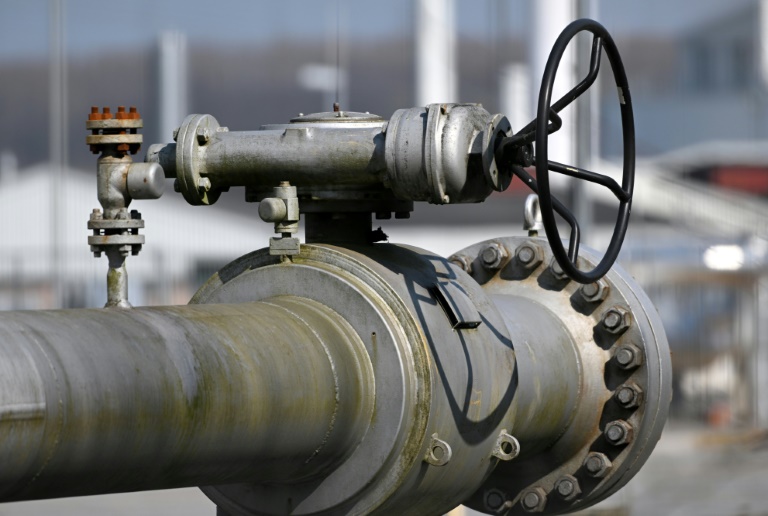
Europe gas reference Dutch TTF surged more than ten percent to 197.97 euros per megawatt hour, one day after Russia’s Gazprom said it would cut daily gas deliveries to Europe via the Nord Stream pipeline.

Oil prices also leapt on concerns of a broader squeeze on global energy supplies, while the euro remained on the back foot against the dollar.

Gazprom will cut the gas deliveries to 33 million cubic metres a day — about 20 percent of the pipeline’s capacity — from Wednesday.

That has heightened market worries over supplies during the northern hemisphere winter later this year.

At the same time, European Union member states have reached agreement on how to cut their consumption of gas by 15 percent and reduce their dependence on Russian energy.

Gas prices remain way below the record March peak of 345 euros struck after Russia launched its assault on Ukraine.

Markets.com analyst Neil Wilson predicted a “big push to fill (gas) stockpiles in what is left of the summer, at any price, to avert a winter crisis”.

EU states have accused Russia of squeezing supplies in retaliation for Western sanctions.

Elsewhere Tuesday, Asian stock markets closed mixed.

Investors welcomed news that e-commerce giant Alibaba would seek a primary listing in Hong Kong, which could pave the way for it to be traded by mainland Chinese investors.

– Key figures at around 1100 GMT –

Frankfurt – DAX: DOWN 1.1 percent at 13,064.82 points

Paris – CAC 40: DOWN 0.7 percent at 6,196.57

London – FTSE 100: UP 0.4 percent at 7,335.10

EURO STOXX 50: DOWN 0.8 percent at 3,575.41

Tokyo – Nikkei 225: DOWN 0.2 percent at 27,655.21 (close)

Hong Kong – Hang Seng Index: UP 1.7 percent at 20,905.88 (close)

Shanghai – Composite: UP 0.8 percent at 3,277.44 (close)

New York – Dow: UP 0.3 percent at 31,990.04 (close)

Euro/dollar: DOWN at $1.0148 from $1.0223 Monday

Pound/dollar: DOWN at $1.1998 from $1.2046 

Euro/pound: DOWN at 84.59 pence from 84.83 pence

Dollar/yen: DOWN at 136.59 yen from 136.65 yen

Brent North Sea crude: UP 1.3 percent at $106.47 per barrel

West Texas Intermediate: UP 1.9 percent at $98.56 per barrel
Eurozone stocks slide, gas prices soar

Eurozone equities sank Tuesday, as natural gas prices surged after Russia tightened the screw on supplies in fresh Ukraine fallout.

Investors digested also major earnings updates on the eve of another likely large US interest rate hike aimed at tackling soaring inflation.

General Motors reported a big drop in second-quarter profits owing to a semiconductor shortage.

Google parent Alphabet, Coca-Cola, Microsoft and McDonald’s are also publishing results Tuesday.

In Europe, stock markets “are under pressure as investors absorb what the news from Gazprom is likely to mean when it comes to gas supplies over the next few days”, noted CMC Markets analyst Michael Hewson.

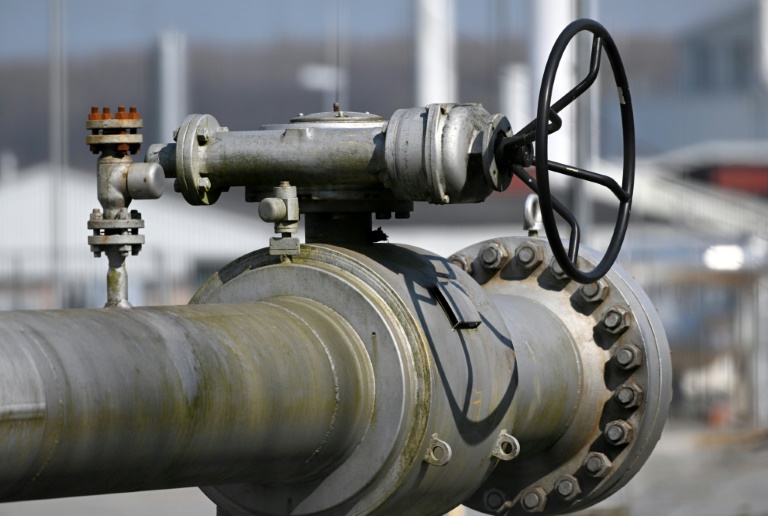
Europe gas reference Dutch TTF surged more than ten percent to 197.97 euros per megawatt hour, one day after Russia’s Gazprom said it would cut daily gas deliveries to Europe via the Nord Stream pipeline.

Oil prices also leapt on concerns of a broader squeeze on global energy supplies, while the euro remained on the back foot against the dollar.

Gazprom will cut the gas deliveries to 33 million cubic metres a day — about 20 percent of the pipeline’s capacity — from Wednesday.

That has heightened market worries over supplies during the northern hemisphere winter later this year.

At the same time, European Union member states have reached agreement on how to cut their consumption of gas by 15 percent and reduce their dependence on Russian energy.

Gas prices remain way below the record March peak of 345 euros struck after Russia launched its assault on Ukraine.

Markets.com analyst Neil Wilson predicted a “big push to fill (gas) stockpiles in what is left of the summer, at any price, to avert a winter crisis”.

EU states have accused Russia of squeezing supplies in retaliation for Western sanctions.

Elsewhere Tuesday, Asian stock markets closed mixed.

Investors welcomed news that e-commerce giant Alibaba would seek a primary listing in Hong Kong, which could pave the way for it to be traded by mainland Chinese investors.

– Key figures at around 1100 GMT –

Frankfurt – DAX: DOWN 1.1 percent at 13,064.82 points

Paris – CAC 40: DOWN 0.7 percent at 6,196.57

London – FTSE 100: UP 0.4 percent at 7,335.10

EURO STOXX 50: DOWN 0.8 percent at 3,575.41

Tokyo – Nikkei 225: DOWN 0.2 percent at 27,655.21 (close)

Hong Kong – Hang Seng Index: UP 1.7 percent at 20,905.88 (close)

Shanghai – Composite: UP 0.8 percent at 3,277.44 (close)

New York – Dow: UP 0.3 percent at 31,990.04 (close)

Euro/dollar: DOWN at $1.0148 from $1.0223 Monday

Pound/dollar: DOWN at $1.1998 from $1.2046 

Euro/pound: DOWN at 84.59 pence from 84.83 pence

Dollar/yen: DOWN at 136.59 yen from 136.65 yen

Brent North Sea crude: UP 1.3 percent at $106.47 per barrel

West Texas Intermediate: UP 1.9 percent at $98.56 per barrel
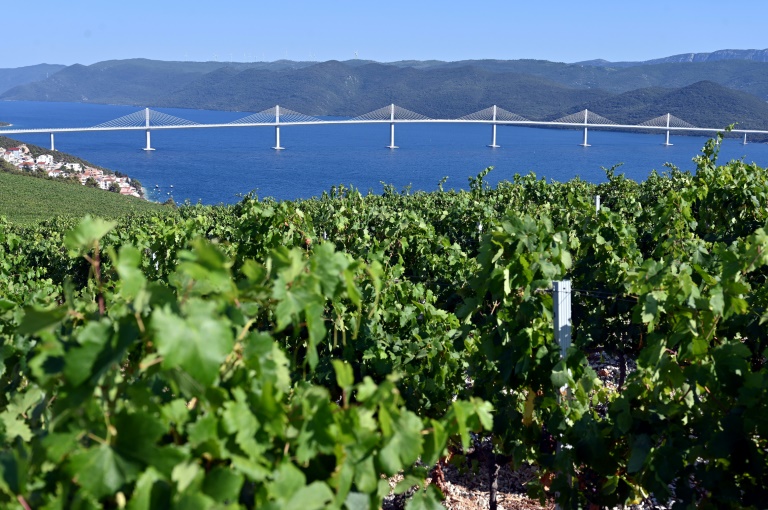
Croatia opens bridge around Bosnia to get to Dubrovnik

Croatia celebrated Tuesday the opening of a long-awaited bridge linking its southern Adriatic coast including Dubrovnik with the rest of the country, bypassing a narrow strip of Bosnian territory.

The 2.4-kilometre (1.5-mile) span reaches out from the Croatian mainland to the Peljesac peninsula that connects with the southern part of Croatia’s coastline nestled between the sea and the Dinaric Alps.

Festivities started early Tuesday with musical performances and a boat race, while dozens of pedestrians snapped pictures on the bridge ahead of a ceremony this evening featuring a speech by Croatian Prime Minister Andrej Plenkovic and a video address by Chinese Premier Li Keqiang.    

“It is a major thing for people here since they did not even feel like they were living like in their own country,” said Joso Miletic, 75, who travelled from his village near the city of Zadar on the central coast to watch the opening of the bridge.

“This is the merging of Croatia into a whole,” he added. 

The link will bring an end to the untold hours spent by commuters, merchants, and tourists at the Bosnian border and is one of the country’s most ambitious infrastructure projects since Croatia declared independence from Yugoslavia in 1991.

It was the bloody dissolution of the federation, however, that left a patchwork of divisions across the Balkans, with the frontiers between its six former republics transformed into international borders.

Bosnia maintained its coastal access in the end, but its small outlet leading to the Adriatic Sea cut right through Croatia. 

As a result, around 90,000 people, including residents in the country’s tourism hotspot of Dubrovnik, remained cut off from the rest of the country until now. 

The hard border brought lines and red tape for traders, and headaches for tourists hoping to get south by road.

“It is indeed a historic project for Croatia,” said Sabina Mikulic, owner of a hotel, glamping site, and winery in Orebic — the peninsula’s largest town.

Inhabitants of the picturesque region of red vines, pebble beaches and oyster farms are looking forward to the end of their geographic isolation caused by the Bosnian border.

The hours-long waits at the border and fears over missing the day’s last ferry will now become a thing of the past, they say.  

“It was really exhausting and made people living here bitter,” Mikulic told AFP.

– EU funded, Chinese made –

The opening of the bridge has been a long time coming and not without controversy. 

Croatia took its first stab at building the bridge in 2007 only for the project to stall five years later due to budgetary constraints.

In 2017, the European Union — which Croatia joined in 2013 — allocated 357 million euros ($365 million), roughly 85 percent of the cost.

A Chinese firm was selected in 2018 to build the bridge — marking the first significant Chinese involvement in an infrastructure project in Croatia.

But not all were happy with the bridge’s construction, with officials in Bosnia claiming it would hamper its maritime access by preventing high-tonnage vessels from entering its lone port. 

Zagreb eventually agreed to increase the height of the bridge to 55 metres (181 feet) in an attempt to quell the dispute.

The opening of the bridge comes as Croatia is angling for a tourism rebound this year as it hopes to attract pre-pandemic levels of visitors.

The country of 3.8 million people attracts millions of tourists every year hoping to soak up the sun along its stunning coast dappled with more than 1,000 islands and islets.

For retired piano teacher Smilja Matic, who has vacationed for years in the Croatian village of Komarna near the entrance to the new bridge, the link to the mainland is a win for locals and tourists alike.

“It means a new life for locals and for people who travel by plane to Dubrovnik, like me. It’s major progress,” she told AFP.

Outside of tourism, the bridge will likely serve as a boon for businesses and traders as well. 

For decades, oyster farmer Mario Radibratovic was subjected to hours of extra travel to bring his perishable shellfish north to market due to waiting times at the border.

But with the opening of the bridge, the journey north will shrink dramatically. 

For the 57-year-old, the opening of the bridge will bring “immeasurable relief”.

“We are finally becoming part of Croatia,” Radibratovic told AFP who farms oysters and mussels in the village of Mali Ston.

“Until now we felt like second-class citizens.”

General Motors Q2 profits fall 40% on supply woes, confirms forecast

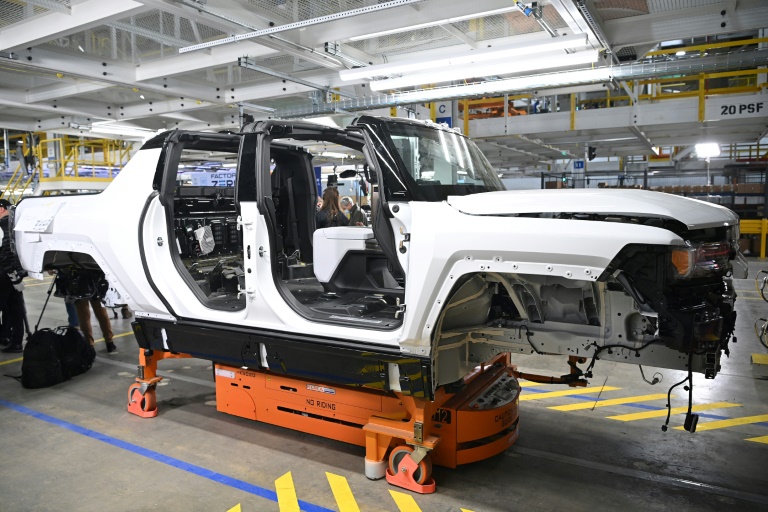
General Motors reported a big drop in second-quarter profits Tuesday due to the grinding semiconductor shortage, although the automaker confirmed its full-year forecast amid strong pricing.

Profits fell 40 percent to $1.7 billion as the Detroit giant was unable to deliver more than 90,000 vehicles unfinished due to missing parts.

But the car manufacturer said production in the second half of 2022 would be “up sharply.”

Revenues rose 4.7 percent to $35.8 billion.

GM reported sharply lower auto deliveries in all regions, including China, where government restrictions connected to the latest Covid-19 outbreak dented sales.

A silver lining has continued to be limited dealership inventories that has kept pricing strong. In the United States, the average price was up $6,600 compared with the year-ago period.

GM alluded to strong customer demand “with most vehicles turning immediately as they arrive at dealers,” the company said in a powerpoint.

“We have been operating with lower volumes due to the semiconductor shortage for the past year, and we have delivered strong results despite those pressures,” said GM Chief Executive Mary Barra in a statement.

Barra alluded to worries about a slowdown or recession, saying “we have modeled many downturn scenarios and we are prepared to take deliberate action when and if necessary.”

Shares fell 1.3 percent to $34.08 in pre-market trading.

Clinton and Blair hail Trimble's legacy of peace in N.Ireland

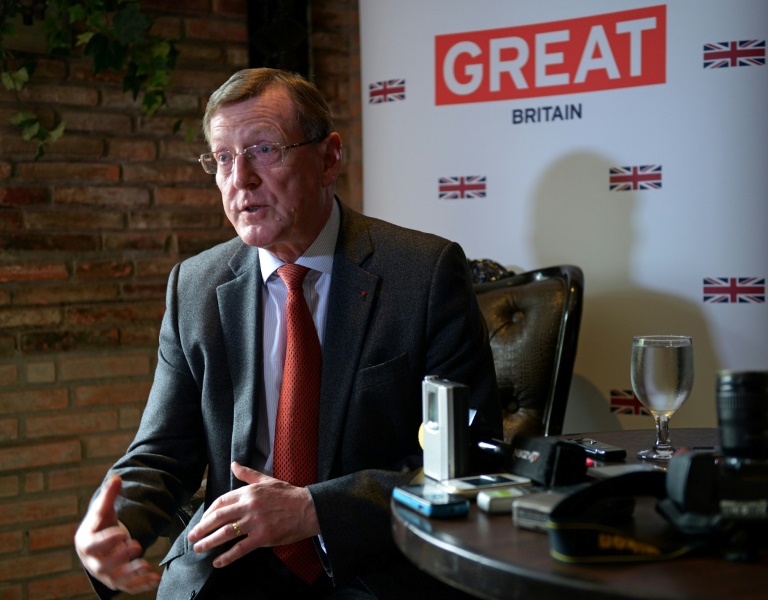
Tony Blair and Bill Clinton have praised the political and personal courage underpinning David Trimble’s contribution to peace in Northern Ireland following the former first minister’s death.

Trimble, who won a Nobel peace prize for his role in the landmark 1998 peace deal that helped end three decades of conflict, died Monday aged 77.

Northern Ireland is again enduring political tension. Its Stormont assembly was meant to reconvene Tuesday to try to overcome weeks of paralysis following elections, but that was postponed after Trimble’s death.

Former UK prime minister Blair, whose government brokered the peace deal along with Ireland and the United States, said the peace could not have been achieved without Trimble’s “masterclass of leadership”.

“David was highly intelligent, very courageous,” Blair told BBC radio on Tuesday.

Asked to summarise his contribution, the former UK leader said: “Immense.

“The hardest thing in leadership is to say no to your own supporters. He did it and he carried it. He paid a political price, but he never complained,” Blair added.

Former US president Clinton said Trimble was “a leader of courage, vision”. 

“His legacy will endure in all who are living better lives because of him today,” Clinton said in a statement late Monday.

Trimble’s death following a short illness was announced by his Ulster Unionist Party (UUP) on Monday. 

No further details were given about the death of a politician who, despite his staunch pro-UK convictions, worked with Irish nationalists to end the three decades of bloodshed known as the “Troubles”. 

British Prime Minister Boris Johnson described Trimble as a “giant of British and international politics”.  

Irish premier Micheal Martin hailed the Nobel laureate as “someone who played a crucial and courageous role in bringing peace to Northern Ireland”.

– Fresh troubles –

Sinn Fein’s Michelle O’Neill, in line to be Northern Ireland’s next first minister after her nationalist party swept to a historic victory in the May elections, lauded Trimble’s “very significant contribution to the peace process”.

O’Neill’s accession is being held up by the now-dominant pro-UK force, the Democratic Unionist Party (DUP), which is refusing to serve with Sinn Fein in the power-sharing executive until London rips up a post-Brexit trading pact with the European Union.

The UK government is pushing through legislation to unilaterally rewrite the so-called Northern Ireland Protocol, sparking legal action by the EU.

But the DUP has still refused to enter the power-sharing government.

UUP leader Doug Beattie urged the DUP and Sinn Fein to “show that very same courage that happened in 1998” in order to restore the Belfast executive and protect peace.

The UUP also opposes the protocol. But at his final public appearance at the end of June, Trimble said the cornerstone of peace remained in place.

“People are actually not throwing the (Good Friday) agreement to pieces, their complaints are still based on the existence of the agreement,” Trimble said at the unveiling of a portrait of him.

The 1998 Good Friday accord largely ended 30 years of conflict in Northern Ireland that killed 3,500 people.

Following the 1998 deal, Trimble served as first minister of Northern Ireland.

However, the UUP’s popularity waned amid unionist loathing of elements of the 1998 accord, which were seen as too accommodating to republicans. 

Airbus tests A400M military plane as water bomber

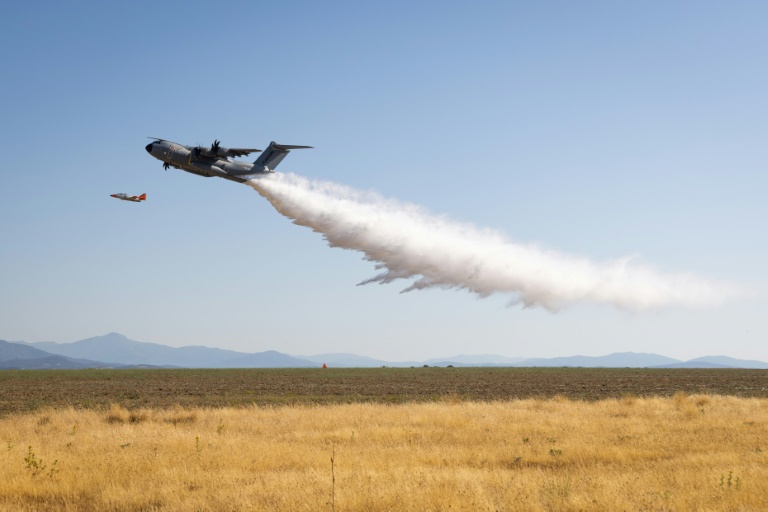
Airbus said Tuesday it had successfully tested its A400M military transporter as a water bomber as heatwaves cause an increasing number of wildfires during the summer in Europe. 

“Airbus has successfully tested a removable firefighting demonstrator kit on the A400M new generation airlifter during a flight test campaign in Spain,” the European plane maker said in a statement.

The test involved dropping 20 tonnes of water in less than 10 seconds, the statement said.

Airbus said that the roll-on/roll-off kit requires no modification to the A400M aircraft. 

The water is stored in a fixed tank in the cargo hold, and retained by two independent doors. These doors are connected to two flood pipes, so when the discharge is triggered, the water is expelled through two sections at the end of the ramp.  

Because of its low-level flight capability and manoeuvrability at low speeds, the A400M can accurately drop payloads of water at very low heights, down to 150 feet (50 metres), Airbus said.

“The development of this firefighting kit is an intrinsic part of our journey towards helping to create a more sustainable and safer world, not only by our actions but also through our products,” said Mike Schoellhorn, head of Airbus Defence and Space.

“We strongly believe the A400M can play a vital role in the fight against the ever-increasing threat posed by wildfires and support the restoration of social and environmental systems.”

Airbus’s deputy head of military aircraft, Jean-Brice Dumont, said that the aim of using the A400M as a water bomber was not to compete with those of rival Canadair, but to complement them. 

Canadair’s water bombers have capacity of 6,000 litres — only a third of that of the A400M. But while the Canadair water bomber can scoop up water from a lake, the A400M needs to land to refill its water tanks. 

Scientists say human-induced climate change is amplifying extreme weather — including the heatwaves, droughts and floods seen in several parts of the planet in recent weeks — and say these events will become more frequent and more intense.

EasyJet hit by aviation disruption but slashes loss

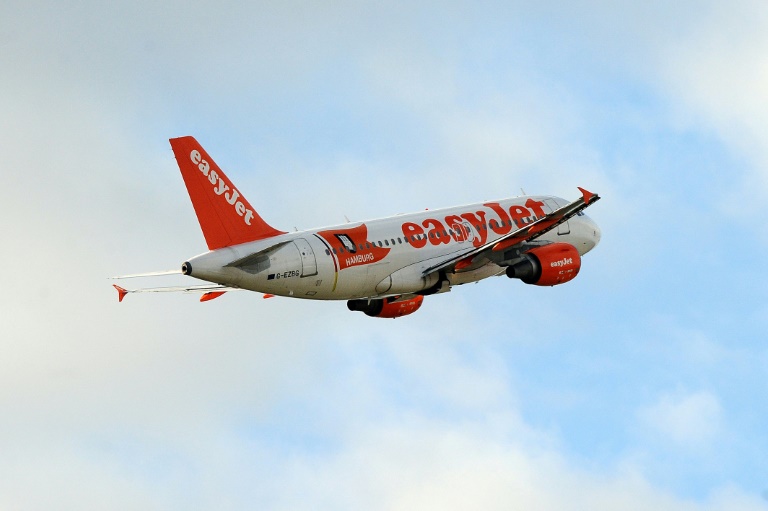
British airline EasyJet on Tuesday said it took a sizeable financial hit from sector-wide disruptions, notably staff shortages, but still slashed quarterly losses as demand recovers.

As airport staff shortages spark flight cancellations, EasyJet said in a statement that it booked a one-off charge totalling £133 million ($160 million).

That saw the airline post a pre-tax loss of £114 million in the group’s third quarter, or the three months to the end of June.

However, that marked a major improvement from a loss of around £318 million for the same period of last year, as travel demand picked up from a Covid-induced downturn.

Third-quarter revenue increased more than eight-fold to £1.8 billion, while traffic rebounded close to pre-Covid levels. 

EasyJet chief executive Johan Lundgren said the carrier was hit by “short-term disruption issues”, but that it was experiencing “the return to flying at scale”.

Traffic surged more than seven-fold to 22 million passengers in the quarter after the lifting of Covid travel curbs.

That was almost 90 percent of the group’s 2019 capacity, before the pandemic ravaged the global aviation sector by grounding planes worldwide.

EasyJet said “the unprecedented ramp-up across the aviation industry, coupled with a tight labour market” had caused “widespread operational challenges culminating in higher levels of cancellations than normal”.

Despite the disruption, EasyJet operated 95 percent of its planned schedule in the quarter.

Airlines and airports are struggling to recruit staff having sacked thousands of workers as the world entered Covid pandemic lockdowns. 

Alibaba seeks dual-primary listing in Hong Kong

E-commerce giant Alibaba said Tuesday it will seek a primary listing in Hong Kong, potentially giving access to China’s vast pool of investors, as mainland officials indicate a long-running crackdown on the tech sector could be coming to an end.

The move also comes as Chinese tech companies traded in New York grow increasingly worried about a regulatory drive by United States authorities as tensions simmer between the superpowers.

While Alibaba has a secondary listing in Hong Kong, it does not allow it to join a popular Stock Connect programme that links to bourses in Shanghai and Shenzhen.

The primary listing, which is expected to take place before the end of the year, would open that door.

News of the plan sent shares in Alibaba soaring 4.8 percent Tuesday, boosting other tech firms and helping drag the broader Hang Seng Index higher.

The Hangzhou-based group is one of a number of tech behemoths ensnared in a wide-ranging regulatory crackdown on alleged anti-competitive practices since late 2020.

The campaign to rein in big tech is driven by fears that massive internet companies control too much data and have expanded too quickly.

But officials appear to be taking a lighter touch as they grapple with a slowing economy. And in May, Premier Li Keqiang urged support for tech companies to list both domestically and abroad.

CEO and group chairman Daniel Zhang said on Tuesday the primary listing aimed to foster “a wider and more diversified investor base to share in Alibaba’s growth and future, especially from China and other markets in Asia”.

“Hong Kong is also the launch pad for Alibaba’s globalisation strategy, and we are fully confident in China’s economy and future.”

Alibaba said on Tuesday it had an average daily trading volume of $3.2 billion in the United States in the first six months of the year, while its Hong Kong secondary listing saw around $700 million.

– Mainland access –

Hong Kong’s Stock Connect programme allows firms to take advantage of liquidity from mainland China for easier financing and higher valuations, but to qualify they must conduct a majority of their annual trading in the Chinese finance hub.

Alibaba is among a category of “innovative” Chinese firms with weighted voting rights or variable interest entities that would be eligible for dual-primary listing in Hong Kong, following a rule change by the bourse in January.

Analyst Willer Chen, at Forsyth Barr Asia, told Bloomberg that the move would be “massive” for Alibaba, adding that inclusion in Stock Connect could lead to a “more diversified investor base”.

Beijing has opposed an attempt by US regulators to inspect the audit papers of Chinese firms listed there, and Alibaba is one of 250 companies facing potential removal if no deal is reached.

Domestically, Alibaba is still reeling from the tech crackdown as well as China’s slowing economy caused by the fallout from strict Covid curbs.

The firm has lost around two-thirds of its value since a 2020 peak, according to Bloomberg, and in May the firm reported that profit fell 59 percent in the last fiscal year.

– Shake-up at Ant –

News of plans for the dual-primary listing came as Alibaba announced it had removed all executives linked to its digital payments arm Ant Group from a joint governing body.

Seven Ant Group executives including CEO Eric Jing and Chief Technology Officer Ni Xingjun were removed from Alibaba Partnership, a group that can nominate the majority of Alibaba’s board, as of May 31, according to an annual report Tuesday.

It is part of a lengthy state-guided restructuring process after a planned 2020 share offering by Ant Group — which would have been the world’s largest IPO at the time — was scuttled last minute, according to a spokesman for the company.

Ant Group has terminated its data sharing agreement with Alibaba and reshuffled its board recently, filling half the seats with independent directors and reducing the number of non-executive directors from the Alibaba Group to two from three.

But Beijing last month rebuffed reports it had started discussions on the potential revival of the IPO.

Alibaba seeks dual-primary listing in Hong Kong

E-commerce giant Alibaba said Tuesday it will seek a primary listing in Hong Kong, potentially giving access to China’s vast pool of investors, as mainland officials indicate a long-running crackdown on the tech sector could be coming to an end.

The move also comes as Chinese tech companies traded in New York grow increasingly worried about a regulatory drive by United States authorities as tensions simmer between the superpowers.

While Alibaba has a secondary listing in Hong Kong, it does not allow it to join a popular Stock Connect programme that links to bourses in Shanghai and Shenzhen.

The primary listing, which is expected to take place before the end of the year, would open that door.

News of the plan sent shares in Alibaba soaring 4.8 percent Tuesday, boosting other tech firms and helping drag the broader Hang Seng Index higher.

The Hangzhou-based group is one of a number of tech behemoths ensnared in a wide-ranging regulatory crackdown on alleged anti-competitive practices since late 2020.

The campaign to rein in big tech is driven by fears that massive internet companies control too much data and have expanded too quickly.

But officials appear to be taking a lighter touch as they grapple with a slowing economy. And in May, Premier Li Keqiang urged support for tech companies to list both domestically and abroad.

CEO and group chairman Daniel Zhang said on Tuesday the primary listing aimed to foster “a wider and more diversified investor base to share in Alibaba’s growth and future, especially from China and other markets in Asia”.

“Hong Kong is also the launch pad for Alibaba’s globalisation strategy, and we are fully confident in China’s economy and future.”

Alibaba said on Tuesday it had an average daily trading volume of $3.2 billion in the United States in the first six months of the year, while its Hong Kong secondary listing saw around $700 million.

– Mainland access –

Hong Kong’s Stock Connect programme allows firms to take advantage of liquidity from mainland China for easier financing and higher valuations, but to qualify they must conduct a majority of their annual trading in the Chinese finance hub.

Alibaba is among a category of “innovative” Chinese firms with weighted voting rights or variable interest entities that would be eligible for dual-primary listing in Hong Kong, following a rule change by the bourse in January.

Analyst Willer Chen, at Forsyth Barr Asia, told Bloomberg that the move would be “massive” for Alibaba, adding that inclusion in Stock Connect could lead to a “more diversified investor base”.

Beijing has opposed an attempt by US regulators to inspect the audit papers of Chinese firms listed there, and Alibaba is one of 250 companies facing potential removal if no deal is reached.

Domestically, Alibaba is still reeling from the tech crackdown as well as China’s slowing economy caused by the fallout from strict Covid curbs.

The firm has lost around two-thirds of its value since a 2020 peak, according to Bloomberg, and in May the firm reported that profit fell 59 percent in the last fiscal year.

– Shake-up at Ant –

News of plans for the dual-primary listing came as Alibaba announced it had removed all executives linked to its digital payments arm Ant Group from a joint governing body.

Seven Ant Group executives including CEO Eric Jing and Chief Technology Officer Ni Xingjun were removed from Alibaba Partnership, a group that can nominate the majority of Alibaba’s board, as of May 31, according to an annual report Tuesday.

It is part of a lengthy state-guided restructuring process after a planned 2020 share offering by Ant Group — which would have been the world’s largest IPO at the time — was scuttled last minute, according to a spokesman for the company.

Ant Group has terminated its data sharing agreement with Alibaba and reshuffled its board recently, filling half the seats with independent directors and reducing the number of non-executive directors from the Alibaba Group to two from three.

But Beijing last month rebuffed reports it had started discussions on the potential revival of the IPO.

Asia stocks rise as Alibaba boosts tech, eases pre-Fed nerves

Asian markets rose Tuesday as an Alibaba-fuelled surge in Hong Kong provided a much-needed boost to sentiment ahead of a slew of earnings reports from the world’s biggest firms and an expected Federal Reserve interest rate hike.

A shock cut in US retail titan Walmart’s profit outlook fanned concerns that surging inflation and rising borrowing costs are hammering consumer spending and could send the economy into recession.

The news left markets concerned about what’s to come from other Wall Street giants this week — including Apple, Amazon, McDonald’s and General Motors.

Adding to the unease was news that Russia’s Gazprom will cut back gas deliveries to Germany, citing a faulty turbine, less than a week since restarting flows after 10 days of maintenance work.

But after a cautious start to the day, most Asian markets enjoyed a healthy run-up.

Hong Kong led the way in reaction to news that market heavyweight Alibaba will seek a primary listing in the city, which could pave the way for it to be traded by mainland Chinese investors.

The move from a secondary listing would come as several Chinese firms listed in the United States grow increasingly worried about a regulatory crackdown by authorities as part of a stand-off in the tech sector between Washington and Beijing.

It also further indicated the firm is more confident that a long-running period of clampdowns by China on the industry is coming to an end.

“This could boost its liquidity after a year-long sell-off triggered by China’s economic slowdown and Beijing’s crackdown on its most potent internet firms,” said Stephen Innes at SPI Asset Management.

The over five percent surge in Alibaba gave a boost to other tech giants — with JD.com, Tencent, NetEase and Bilibili all up.

– ‘Significant risks’ –

There were also gains in Shanghai, Sydney, Seoul, Singapore, Manila and Jakarta, though Tokyo, Taipei and Wellington slipped.

London was on the front foot in the morning, though Paris and Frankfurt dipped.

Analysts were cautious about the outlook for world markets, despite a positive run-up in July.

“This is most likely a bear market rally and there are significant risks still facing this market,” Katerina Simonetti, at Morgan Stanley Private Wealth Management, told Bloomberg Television.

“We’re probably going to be seeing a lot of choppiness and potentially some further declines in the market before the year-end.”

For now, there will be little respite for investors from the Fed as it continues to ramp up borrowing costs, with another 75 basis point lift expected this week, and more before the end of the year.

Several officials at the bank, including boss Jerome Powell, have suggested they are determined to bring inflation down from four-decade highs, even at the expense of economic growth.

Still, market strategist Louis Navellier said they could start to loosen monetary policy in the new year when the economy shows strains.

“Uncertainty is high as to the Fed’s willingness to keep tightening if the economy slows significantly, with many forecasts projecting that the Fed will reverse and start cutting rates by the summer of 2023 as the economy slows and inflation wanes,” he said in a note. 

– Key figures at around 0810 GMT –

Tokyo – Nikkei 225: DOWN 0.2 percent at 27,655.21 (close)

Hong Kong – Hang Seng Index: UP 1.7 percent at 20,905.88 (close)

Shanghai – Composite: UP 0.8 percent at 3,277.44 (close)

London – FTSE 100: UP 0.5 percent at 7,338.96

Euro/dollar: UP at $1.0220 from $1.0223 Monday

Pound/dollar: UP at $1.2047 from $1.2046 

Euro/pound: UP at 84.86 pence from 84.83 pence

Dollar/yen: DOWN at 136.62 yen from 136.65 yen

West Texas Intermediate: UP 1.9 percent at $98.53 per barrel

Brent North Sea crude: UP 1.8 percent at $107.03 per barrel

New York – Dow: UP 0.3 percent at 31,990.04 (close)

Close Bitnami banner
Bitnami