AFP

China launches second of three space station modules

China on Sunday launched the second of three modules needed to complete its new space station, state media reported, the latest step in Beijing’s ambitious space programme.

The uncrewed craft, named Wentian, was propelled by a Long March 5B rocket at 2:22 pm (0622 GMT) from the Wenchang launch centre on China’s tropical island of Hainan.

A quarter of an hour later, an official from the China Manned Space Agency (CMSA) confirmed the “success” of the launch.

Hundreds of people gathered on nearby beaches to take photos of the launcher rising through the air in a plume of white smoke.

After around eight minutes of flight, “the Wentian lab module successfully separated from the rocket and entered its intended orbit, making the launch a complete success,” the CMSA said.

Beijing launched the central module of its space station Tiangong — which means “heavenly palace” — in April 2021.

Almost 18 metres (60 feet) long and weighing 22 tons (48,500 pounds), the new module has three sleeping areas and space for scientific experiments.

It will dock with the existing module in space, a challenging operation that experts said will require several high-precision manipulations and the use of a robotic arm.

“This is the first time China has docked such large vehicles together, which is a delicate operation,” said Jonathan McDowell, an astronomer at the Harvard-Smithsonian Center for Astrophysics. 

He said until the next module arrives, the space station will have a “rather unusual L-shape” which will take a lot of power to keep stable. 

“These are all technical challenges that the USSR pioneered with the Mir station in the late 1980s, but it’s new to China,” he told AFP. 

“But it will result in a much more capable station with the space and power to carry out more scientific experiments.”

Wentian will also serve as a backup platform to control the space station in the event of a failure. 

The third and final module is scheduled to dock in October, and Tiangong — which should have a lifespan of at least 10 years — is expected to become fully operational by the end of the year. 

– Fast-paced space plan –

Under Chinese President Xi Jinping, the country’s plans for its heavily promoted “space dream” have been put into overdrive.

China has made large strides in catching up with the United States and Russia, where astronauts and cosmonauts have decades of experience in space exploration.

“The CSS (Chinese Space Station) will complete its construction… in one and half a year which will be the fastest in history for any modular space station,” said Chen Lan, analyst for the site Go-Taikonauts.com, which specialises in China’s space programme. 

“In comparison, the constructions of Mir and the International Space Station took 10 and 12 years respectively.”

China’s space programme has already landed a rover on Mars and sent probes to the Moon.

In addition to a space station, Beijing is also planning to build a base on the Moon and send humans there by 2030.

China has been excluded from the International Space Station since 2011, when the United States banned NASA from engaging with the country.

While China does not plan to use its space station for global cooperation on the scale of the ISS, Beijing has said it is open to foreign collaboration.
Cricket Australia sells India broadcast rights to Disney

Australian cricket chiefs said Sunday they had agreed to sell broadcasting rights in India to Disney Star in a seven-year deal reportedly worth hundreds of millions of dollars.

The Walt Disney-owned media group is believed to have forked out more than Aus$300 million (US$208 million) for the rights, with some Australian media giving an even higher figure for the total value of the contract.

The agreement, which comes into force from the 2023-24 season onwards, covers men’s and women’s international matches played in Australia as well as the Big Bash League and Women’s Big Bash League.

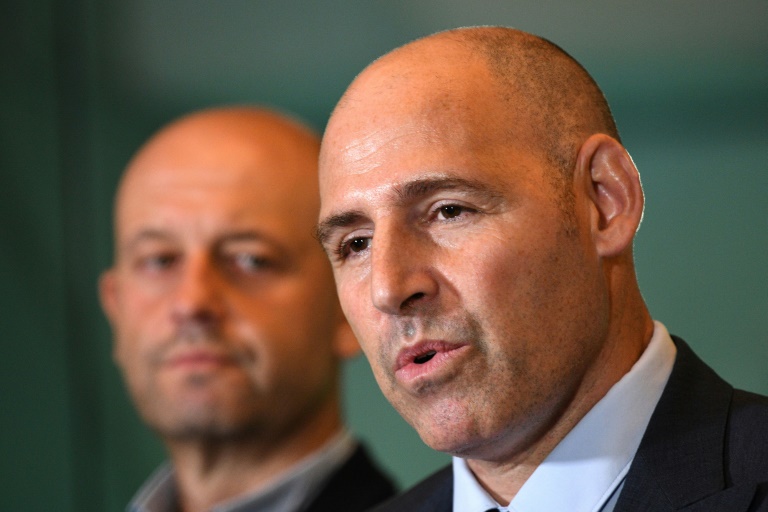
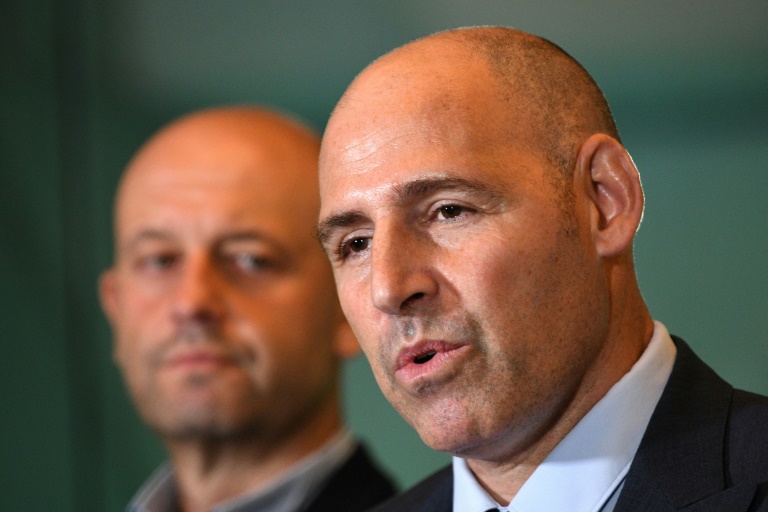
“Disney Star is synonymous with the game in India and we look forward to working with them to showcase the outstanding cricket played in Australia every summer,” Cricket Australia (CA) chief executive Nick Hockley said in a statement

CA did not provide financial details of the deal.

“The magnitude of this association is testament to the enduring rivalry and respect that exists between Australian and Indian teams, the excitement and popularity of WBBL and BBL, and the high regard of Australian cricket in India and global markets more broadly.”

Disney Star will have the rights to broadcast Australian cricket “throughout India and other territories across Asia”, the statement said.

Hockley said there had been “significant interest” in the rights, which are currently held by Sony in a contract running to the end of this season.

Cricket Australia sells India broadcast rights to Disney

Australian cricket chiefs said Sunday they had agreed to sell broadcasting rights in India to Disney Star in a seven-year deal reportedly worth hundreds of millions of dollars.

The Walt Disney-owned media group is believed to have forked out more than Aus$300 million (US$208 million) for the rights, with some Australian media giving an even higher figure for the total value of the contract.

The agreement, which comes into force from the 2023-24 season onwards, covers men’s and women’s international matches played in Australia as well as the Big Bash League and Women’s Big Bash League.

“Disney Star is synonymous with the game in India and we look forward to working with them to showcase the outstanding cricket played in Australia every summer,” Cricket Australia (CA) chief executive Nick Hockley said in a statement

CA did not provide financial details of the deal.

“The magnitude of this association is testament to the enduring rivalry and respect that exists between Australian and Indian teams, the excitement and popularity of WBBL and BBL, and the high regard of Australian cricket in India and global markets more broadly.”

Disney Star will have the rights to broadcast Australian cricket “throughout India and other territories across Asia”, the statement said.

Hockley said there had been “significant interest” in the rights, which are currently held by Sony in a contract running to the end of this season.

Russian strikes on Odessa port cast doubt over grain deal

Ukrainian President Volodymyr Zelensky denounced a missile strike on the port of Odessa as “Russian barbarism” just a day after the warring sides struck a deal to resume cereal exports blocked by the conflict.

The Ukrainian military said its air defences had shot down two cruise missiles but two more hit the port Saturday, threatening the landmark agreement hammered out over months of negotiations aimed at relieving a global food crisis.

Zelensky said the strikes on Odessa showed Moscow could not be trusted to keep its promises.

“Today’s Russian missile attack on Odessa, on our port, is a cynical one, and it was also a blow to the political positions of Russia itself,” Zelensky said in his nightly address, adding dialogue with Moscow was becoming increasingly untenable.

“This apparent Russian barbarism brings us even closer to obtaining the very weapons we need for our victory,” Zelensky added.

The strike came a day after Moscow and Kyiv agreed a deal brokered by Turkish President Recep Tayyip Erdogan and United Nations chief Antonio Guterres.

Odessa is one of three export hubs designated in the agreement and Ukrainian officials said grain was being stored in the port at the time of the strike, although the food stocks did not appear to have been hit.

Guterres — who presided over the signing ceremony on Friday — “unequivocally” condemned the attack, his deputy spokesman said, and urged all sides to stick to the deal.

“These products are desperately needed to address the global food crisis and ease the suffering of millions of people in need around the globe,” he said.

The EU’s foreign policy chief Josep Borrell directly blamed Russia for the strikes.

“Striking a target crucial for grain export a day after the signature of (the) Istanbul agreements is particularly reprehensible and again demonstrates Russia’s total disregard for international law and commitments,” he said.

UK Foreign Secretary Liz Truss said the attack was “absolutely appalling” and “completely unwarranted”.

The United States also “strongly condemned” the attack, with Secretary of State Antony Blinken saying it “casts serious doubt on the credibility of Russia’s commitment to yesterday’s deal”.

There was no official comment from Moscow, but Turkish Defence Minister Hulusi Akar said Russia had denied carrying out the attack.

“The Russians told us that they had absolutely nothing to do with this attack and they were looking into the issue very closely,” Akar said in comments to state news agency Anadolu.

“We will continue to fulfil our responsibilities under the agreement we reached yesterday,” he added.

Regional governor Maksym Marchenko said the strikes left people wounded and damaged port infrastructure in Odessa, without specifying the number or severity of the injuries.

– 20 million tonnes of wheat –

The first major accord between the countries since Russia’s February invasion of Ukraine aims to ease the “acute hunger” the UN says an additional 47 million people are facing because of the war.

Ukraine at the signing warned it would conduct “an immediate military response” should Russia violate the accord and attack its ships or stage an incursion around its ports.

Zelensky said responsibility for enforcing the deal fell to the UN, which along with Turkey is a co-guarantor of the agreement.

The deal includes points on running Ukrainian grain ships along safe corridors that avoid known mines in the Black Sea.

Huge quantities of wheat and other grain have been blocked in Ukrainian ports by Russian warships and the mines Kyiv laid to avert a feared amphibious assault.

Zelensky said that around 20 million tonnes of produce from last year’s harvest and the current crop would be exported under the agreement, estimating the value of Ukraine’s grain stocks at around $10 billion.

Russian Defence Minister Sergei Shoigu told Kremlin state media he expected the deal to start working “in the next few days” although diplomats expect grain to only start fully flowing by mid-August.

– Strikes on central Ukraine –

Russia is trying to fight deeper into the eastern Donetsk region after securing full control of neighbouring Lugansk.

The US State Department on Saturday said two Americans had died in the area, without saying whether the pair were in the country for combat purposes.

Russian missile strikes on railway infrastructure and a military airfield in the central area of Kirovograd on Saturday also killed at least three people and wounded 16 more, regional governor Andriy Raikovych said.

At least one of the dead was a serviceman, he said earlier — a rare admission of a military casualty as combat deaths have been closely guarded by both sides.

Russia also pursued an artillery campaign over Ukraine’s second city, Kharkiv, with attacks wounding one woman, the presidency said. An elderly farmer was killed in further shelling in Sumy, northwest of Kharkiv.

Two others, including a teenager, were wounded in strikes on Mykolaiv, the largest city under Ukrainian control near Russian-occupied Kherson and the southern front, which has been shelled persistently since the beginning of the invasion.

burs-dt/jbr/imm/ssy/mtp

Philippine bakeries shrink 'poor man's bread' as inflation bites

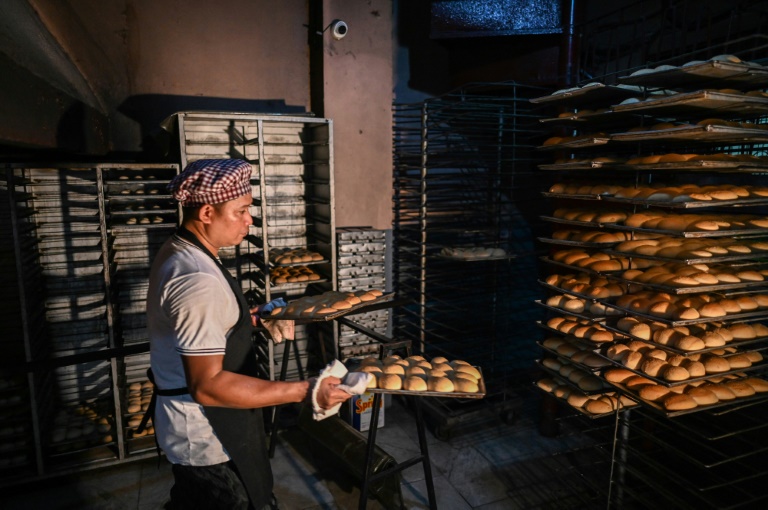
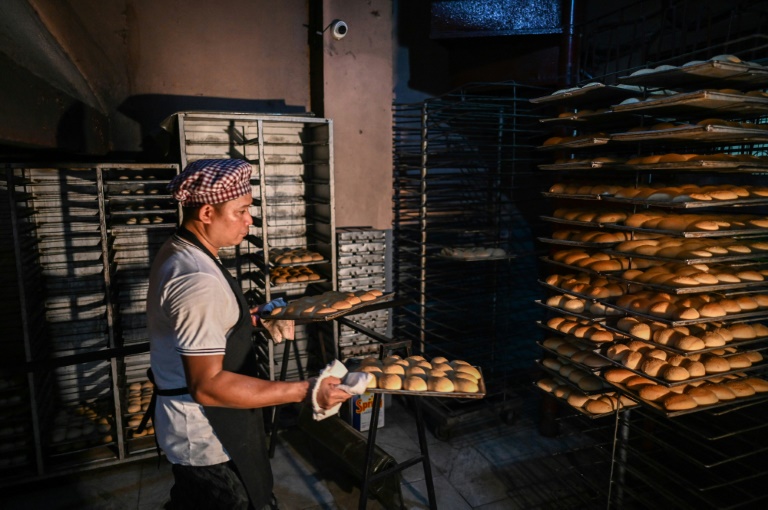
As the war in Ukraine pushes up wheat prices and a weaker peso raises the cost of imported edible oil, many Philippine bakers are shrinking the size of a popular breakfast roll to cope with higher inflation.

The slightly sweet and pillowy soft “pandesal”, which Filipinos often dunk in coffee or stuff with cheese, used to weigh 35 grams at Matimyas Bakery, a breadmaker in suburban Manila.

But as the cost of local and imported ingredients soared in recent months, co-owner Jam Mauleon gradually reduced the size of the roll — known as the “poor man’s bread” because it is cheap — to around 25 grams to avoid raising the 2.50 peso (about $0.04) price.

She feared that even a slight increase would send cash-strapped customers in her neighbourhood to a rival bakery five blocks away.

“We had to reduce the serving size to survive,” Mauleon told AFP, as children, workers and retirees arrived early to buy rolls baked in a brick oven that morning.

As the Philippines lifted Covid-19 restrictions and schoolchildren began returning to the classroom this year, Mauleon had hoped economic conditions for the bakery would improve. 

But since December, as wheat and fuel prices surged, the price of flour has increased by more than 30 percent, while sugar is up 25 percent and salt costs 40 percent more, she said.

The bakery survives day to day and does not make enough money to buy ingredients in bulk, leaving it vulnerable to changing prices in domestic and international markets.

After reducing the number of employees and absorbing higher costs, Mauleon was forced this week to raise the price of a pandesal by 20 percent to three pesos. 

Shrinking the size of the roll any further would affect its quality, she said.

“We will try it out if people will still buy it,” Mauleon said.

“Pandesal is very important in the lives of Filipinos.”

For mother-of-five Laarni Guarino, the price hike means her family now eats fewer rolls for breakfast.  

“We will have to redo our budget. From five pieces each, my children will have to eat just three to four,” Guarino, 35, told AFP. 

“Fifty centavos is a big thing for poor people like us.”

– ‘Shrinkflation’ – 

Lucito Chavez, president of an association representing local bakeries, said thousands of breadmakers were reeling from the higher cost for raw materials, most of which are imported. 

“All of us are struggling, not to make profit, but to survive,” Chavez told AFP. 

“We have to protect the pandesal industry.”

Inflation in the Philippines hit 6.1 percent in June, the highest level in nearly four years, as steep fuel price hikes pushed up food and transport costs. 

Lawmaker and economist Joey Salceda said bread would be hardest hit by “shrinkflation”, where the size of a product gets smaller but the price stays the same.

“Wheat prices have increased by 165 percent,” he told reporters recently, urging bakeries to fortify their products with vitamins and minerals.

Philippine bakeries shrink 'poor man's bread' as inflation bites

As the war in Ukraine pushes up wheat prices and a weaker peso raises the cost of imported edible oil, many Philippine bakers are shrinking the size of a popular breakfast roll to cope with higher inflation.

The slightly sweet and pillowy soft “pandesal”, which Filipinos often dunk in coffee or stuff with cheese, used to weigh 35 grams at Matimyas Bakery, a breadmaker in suburban Manila.

But as the cost of local and imported ingredients soared in recent months, co-owner Jam Mauleon gradually reduced the size of the roll — known as the “poor man’s bread” because it is cheap — to around 25 grams to avoid raising the 2.50 peso (about $0.04) price.

She feared that even a slight increase would send cash-strapped customers in her neighbourhood to a rival bakery five blocks away.

“We had to reduce the serving size to survive,” Mauleon told AFP, as children, workers and retirees arrived early to buy rolls baked in a brick oven that morning.

As the Philippines lifted Covid-19 restrictions and schoolchildren began returning to the classroom this year, Mauleon had hoped economic conditions for the bakery would improve. 

But since December, as wheat and fuel prices surged, the price of flour has increased by more than 30 percent, while sugar is up 25 percent and salt costs 40 percent more, she said.

The bakery survives day to day and does not make enough money to buy ingredients in bulk, leaving it vulnerable to changing prices in domestic and international markets.

After reducing the number of employees and absorbing higher costs, Mauleon was forced this week to raise the price of a pandesal by 20 percent to three pesos. 

Shrinking the size of the roll any further would affect its quality, she said.

“We will try it out if people will still buy it,” Mauleon said.

“Pandesal is very important in the lives of Filipinos.”

For mother-of-five Laarni Guarino, the price hike means her family now eats fewer rolls for breakfast.  

“We will have to redo our budget. From five pieces each, my children will have to eat just three to four,” Guarino, 35, told AFP. 

“Fifty centavos is a big thing for poor people like us.”

– ‘Shrinkflation’ – 

Lucito Chavez, president of an association representing local bakeries, said thousands of breadmakers were reeling from the higher cost for raw materials, most of which are imported. 

“All of us are struggling, not to make profit, but to survive,” Chavez told AFP. 

“We have to protect the pandesal industry.”

Inflation in the Philippines hit 6.1 percent in June, the highest level in nearly four years, as steep fuel price hikes pushed up food and transport costs. 

Lawmaker and economist Joey Salceda said bread would be hardest hit by “shrinkflation”, where the size of a product gets smaller but the price stays the same.

“Wheat prices have increased by 165 percent,” he told reporters recently, urging bakeries to fortify their products with vitamins and minerals.

Why is the world worried about China's property crisis?

China’s troubled property sector suffered another blow this month when frustrated homebuyers stopped making mortgage payments on units in unfinished projects.

The boycott came with many developers struggling to manage mountains of debt, and fears swirling that the crisis could spread to the rest of the Chinese — and global — economy.

How big is China’s property sector?

Colossal. Property and related industries are estimated to contribute as much as a quarter of China’s Gross Domestic Product (GDP).

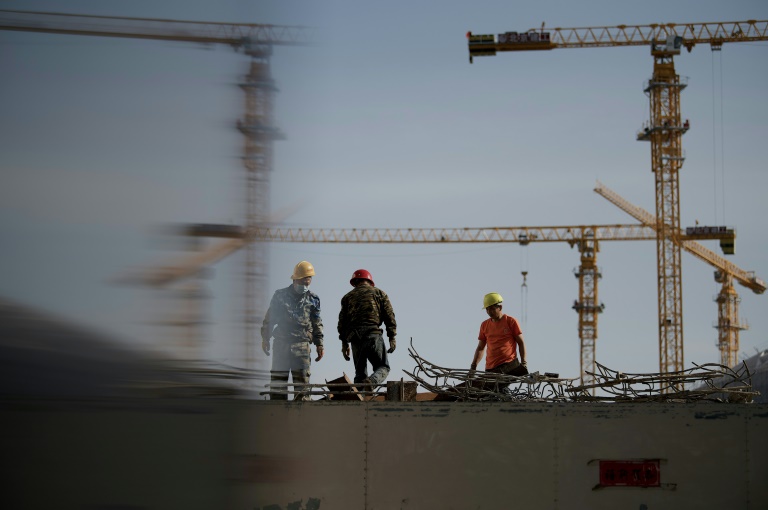
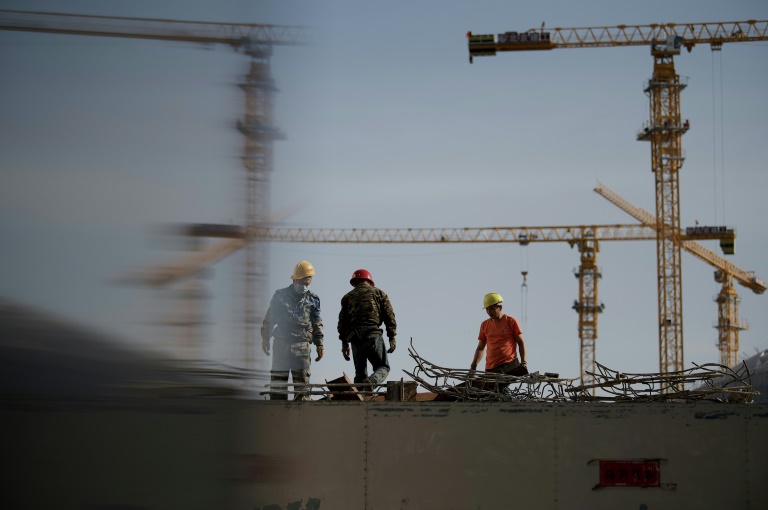
The sector took off after market reforms in 1998. There was a breathtaking construction boom on the back of demand from a growing middle class that saw property as a key family asset and status symbol.

The bonanza was fuelled by easy access to loans, with banks willing to lend as much as possible to both developers and buyers.

Mortgages make up almost 20 percent of all outstanding loans in China’s entire banking system, according to a report by ANZ Research this month.

Many developments rely on “pre-sales”, with buyers paying mortgages on units in projects yet to be built.

Unfinished homes in China amount to 225 million square metres (2.4 billion square feet) of space, Bloomberg News reported.

Why did it plunge into crisis?

As property developers flourished, housing prices also soared.

That worried the government, which was already concerned about the risk posed by debt-laden developers.

It launched a crackdown last year, with the central bank capping the proportion of outstanding property loans to total lending by banks to try to limit the threat to the entire financial system.

This squeezed sources of financing for developers already struggling to handle their debts.

A wave of defaults ensued, most notably by China’s biggest developer, Evergrande, which is drowning in liabilities of more than $300 billion.

On top of the regulatory clampdown, Chinese property firms were also hit by the Covid crisis — the economic uncertainty forced many would-be homebuyers to rethink their purchase plans.

How have homebuyers reacted?

Evergrande’s decline had sparked protests from homebuyers and contractors at its Shenzhen headquarters in September last year.

In June this year, a new form of protest emerged: the mortgage boycott.

People who had bought units in still-unfinished projects announced they would stop making payments until construction resumed.

Within a month, the boycott spread to homebuyers in more than 300 projects in 50 cities across China.

Many of the unfinished projects were concentrated in Henan province, where mass protests in response to rural bank fraud broke out and were suppressed.

Chinese lenders said last week that the affected mortgages account for less than 0.01 percent of outstanding residential mortgages, but analysts say the fear is how far the boycotts will spread.

Why is there global concern?

China is the world’s second-largest economy, with deep global trade and finance links.

If the property crisis spreads to China’s financial system, the shock would be felt far beyond its borders, analysts say.

“Should defaults escalate, there could be broad and serious economic and social implications,” Fitch Ratings wrote in a note on Monday.

This echoed a warning by the US Federal Reserve, which said in May that while China has managed to contain the fallout so far, a worsening property crisis could impact the country’s financial system too.

The crisis could spread and impact global trade and risk sentiment, the Fed said in its May 2022 Financial Stability Report.

What can China do to fix it?

A bailout or rescue fund for the entire property sector is unlikely, even as mortgage boycotts mount, analysts say, as those would mean the government is admitting to the scale of the crisis.

A major bailout may also encourage developers and home buyers to continue with risky decisions as they would see the government and banks taking on responsibility.

But pressure has been building on Chinese banks to help ease the situation. China’s banking regulator said Thursday that it would help ensure that projects are completed and units handed over to buyers.

Some intervention has happened at the local level in Henan province, where a bailout fund was set up in collaboration with a state-backed developer to help stressed projects.

Chen Shujin at Jefferies Hong Kong said local governments, developers and homeowners might also be able to negotiate interest waivers and suspension of mortgage payments for a certain period on a case-by-case basis.

Why is the world worried about China's property crisis?

China’s troubled property sector suffered another blow this month when frustrated homebuyers stopped making mortgage payments on units in unfinished projects.

The boycott came with many developers struggling to manage mountains of debt, and fears swirling that the crisis could spread to the rest of the Chinese — and global — economy.

How big is China’s property sector?

Colossal. Property and related industries are estimated to contribute as much as a quarter of China’s Gross Domestic Product (GDP).

The sector took off after market reforms in 1998. There was a breathtaking construction boom on the back of demand from a growing middle class that saw property as a key family asset and status symbol.

The bonanza was fuelled by easy access to loans, with banks willing to lend as much as possible to both developers and buyers.

Mortgages make up almost 20 percent of all outstanding loans in China’s entire banking system, according to a report by ANZ Research this month.

Many developments rely on “pre-sales”, with buyers paying mortgages on units in projects yet to be built.

Unfinished homes in China amount to 225 million square metres (2.4 billion square feet) of space, Bloomberg News reported.

Why did it plunge into crisis?

As property developers flourished, housing prices also soared.

That worried the government, which was already concerned about the risk posed by debt-laden developers.

It launched a crackdown last year, with the central bank capping the proportion of outstanding property loans to total lending by banks to try to limit the threat to the entire financial system.

This squeezed sources of financing for developers already struggling to handle their debts.

A wave of defaults ensued, most notably by China’s biggest developer, Evergrande, which is drowning in liabilities of more than $300 billion.

On top of the regulatory clampdown, Chinese property firms were also hit by the Covid crisis — the economic uncertainty forced many would-be homebuyers to rethink their purchase plans.

How have homebuyers reacted?

Evergrande’s decline had sparked protests from homebuyers and contractors at its Shenzhen headquarters in September last year.

In June this year, a new form of protest emerged: the mortgage boycott.

People who had bought units in still-unfinished projects announced they would stop making payments until construction resumed.

Within a month, the boycott spread to homebuyers in more than 300 projects in 50 cities across China.

Many of the unfinished projects were concentrated in Henan province, where mass protests in response to rural bank fraud broke out and were suppressed.

Chinese lenders said last week that the affected mortgages account for less than 0.01 percent of outstanding residential mortgages, but analysts say the fear is how far the boycotts will spread.

Why is there global concern?

China is the world’s second-largest economy, with deep global trade and finance links.

If the property crisis spreads to China’s financial system, the shock would be felt far beyond its borders, analysts say.

“Should defaults escalate, there could be broad and serious economic and social implications,” Fitch Ratings wrote in a note on Monday.

This echoed a warning by the US Federal Reserve, which said in May that while China has managed to contain the fallout so far, a worsening property crisis could impact the country’s financial system too.

The crisis could spread and impact global trade and risk sentiment, the Fed said in its May 2022 Financial Stability Report.

What can China do to fix it?

A bailout or rescue fund for the entire property sector is unlikely, even as mortgage boycotts mount, analysts say, as those would mean the government is admitting to the scale of the crisis.

A major bailout may also encourage developers and home buyers to continue with risky decisions as they would see the government and banks taking on responsibility.

But pressure has been building on Chinese banks to help ease the situation. China’s banking regulator said Thursday that it would help ensure that projects are completed and units handed over to buyers.

Some intervention has happened at the local level in Henan province, where a bailout fund was set up in collaboration with a state-backed developer to help stressed projects.

Chen Shujin at Jefferies Hong Kong said local governments, developers and homeowners might also be able to negotiate interest waivers and suspension of mortgage payments for a certain period on a case-by-case basis.

Why is the world worried about China's property crisis?

China’s troubled property sector suffered another blow this month when frustrated homebuyers stopped making mortgage payments on units in unfinished projects.

The boycott came with many developers struggling to manage mountains of debt, and fears swirling that the crisis could spread to the rest of the Chinese — and global — economy.

How big is China’s property sector?

Colossal. Property and related industries are estimated to contribute as much as a quarter of China’s Gross Domestic Product (GDP).

The sector took off after market reforms in 1998. There was a breathtaking construction boom on the back of demand from a growing middle class that saw property as a key family asset and status symbol.

The bonanza was fuelled by easy access to loans, with banks willing to lend as much as possible to both developers and buyers.

Mortgages make up almost 20 percent of all outstanding loans in China’s entire banking system, according to a report by ANZ Research this month.

Many developments rely on “pre-sales”, with buyers paying mortgages on units in projects yet to be built.

Unfinished homes in China amount to 225 million square metres (2.4 billion square feet) of space, Bloomberg News reported.

Why did it plunge into crisis?

As property developers flourished, housing prices also soared.

That worried the government, which was already concerned about the risk posed by debt-laden developers.

It launched a crackdown last year, with the central bank capping the proportion of outstanding property loans to total lending by banks to try to limit the threat to the entire financial system.

This squeezed sources of financing for developers already struggling to handle their debts.

A wave of defaults ensued, most notably by China’s biggest developer, Evergrande, which is drowning in liabilities of more than $300 billion.

On top of the regulatory clampdown, Chinese property firms were also hit by the Covid crisis — the economic uncertainty forced many would-be homebuyers to rethink their purchase plans.

How have homebuyers reacted?

Evergrande’s decline had sparked protests from homebuyers and contractors at its Shenzhen headquarters in September last year.

In June this year, a new form of protest emerged: the mortgage boycott.

People who had bought units in still-unfinished projects announced they would stop making payments until construction resumed.

Within a month, the boycott spread to homebuyers in more than 300 projects in 50 cities across China.

Many of the unfinished projects were concentrated in Henan province, where mass protests in response to rural bank fraud broke out and were suppressed.

Chinese lenders said last week that the affected mortgages account for less than 0.01 percent of outstanding residential mortgages, but analysts say the fear is how far the boycotts will spread.

Why is there global concern?

China is the world’s second-largest economy, with deep global trade and finance links.

If the property crisis spreads to China’s financial system, the shock would be felt far beyond its borders, analysts say.

“Should defaults escalate, there could be broad and serious economic and social implications,” Fitch Ratings wrote in a note on Monday.

This echoed a warning by the US Federal Reserve, which said in May that while China has managed to contain the fallout so far, a worsening property crisis could impact the country’s financial system too.

The crisis could spread and impact global trade and risk sentiment, the Fed said in its May 2022 Financial Stability Report.

What can China do to fix it?

A bailout or rescue fund for the entire property sector is unlikely, even as mortgage boycotts mount, analysts say, as those would mean the government is admitting to the scale of the crisis.

A major bailout may also encourage developers and home buyers to continue with risky decisions as they would see the government and banks taking on responsibility.

But pressure has been building on Chinese banks to help ease the situation. China’s banking regulator said Thursday that it would help ensure that projects are completed and units handed over to buyers.

Some intervention has happened at the local level in Henan province, where a bailout fund was set up in collaboration with a state-backed developer to help stressed projects.

Chen Shujin at Jefferies Hong Kong said local governments, developers and homeowners might also be able to negotiate interest waivers and suspension of mortgage payments for a certain period on a case-by-case basis.

Egypt's small farms play big role but struggle to survive

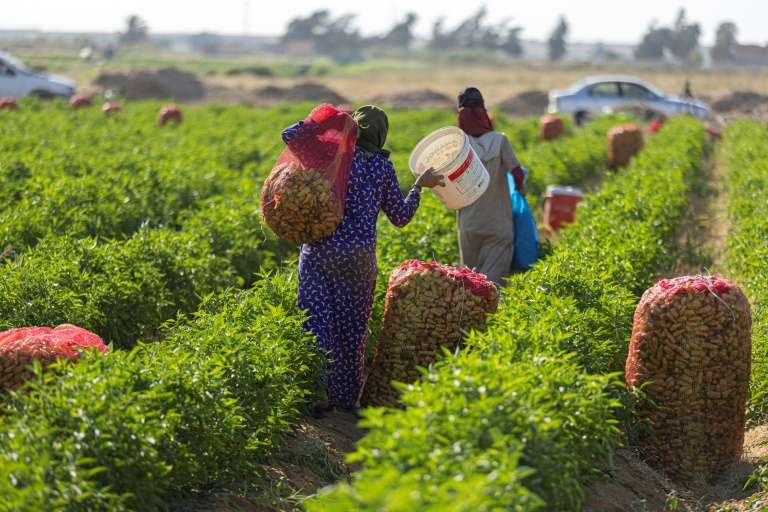
Egyptian smallholders grow nearly half of the country’s crops, a lifeline role increasingly important after grain imports were stalled by war in Ukraine — but they are struggling to survive.

Despite their crucial role providing food for the North African nation’s 103 million people, smallholders are cash-strapped and indebted, frequently selling their harvests at a loss.

“The farmer is dead, trampled,” farmer Zakaria Aboueldahab told AFP, brewing tea on his rented plot of wheat and onions in Qalyubia, 30 kilometres (18 miles) north of Cairo.

“I’m trying to sell my onion harvest but I can’t find a market,” he said, the remnants of his crop scattered across the soil. “I just want to break even. I don’t know how I’m going to pay rent”. 

His onions would sell in Egypt: but financing, marketing and infrastructure hurdles create massive gaps between supply and demand.

According to the United Nations Food and Agriculture Organisation (FAO), small farms are the “primary producers” of food for domestic consumption in Egypt. 

Farmers cultivating less than three feddans (1.2 hectares, three acres ) — an area the size of a football pitch — till 35 percent of arable land.

Yet they produce some 47 percent of Egypt’s field crops, the FAO calculates.

Larger farms focus more on exports -– a dynamic that came to a head when Russia invaded Ukraine.

– ‘Patriotic duty’ –

Egypt, the world’s leading importer of wheat, relied on Russia and Ukraine for 80 percent of its imports, providing the flour for Egypt’s traditional flat bread.

Ordinary Egyptians eat bread at almost every meal, and Egypt’s wheat farmers ramped up production to 40 percent of the country’s needs.

“Without the 40 percent of wheat that we produce domestically,” rural sociologist Saker al-Nour told AFP, the consequences of the war “would be much worse.”

In March, Cairo ordered farmers to grow wheat, calling the “compulsory delivery” orders a “patriotic duty.”

By June, farmers had provided more than 3.5 million tonnes, according to the supply ministry, over half the domestic supply goal to August, and equal to the total amount supplied in 2021.

Compulsory crop deliveries were a pillar of president Gamal Abdel Nasser’s socialist policies in the 1960s, but those policies were dropped amid the structural adjustment programmes of the 1990s.

With them went the former subsidies on seeds, pesticides, and fertilisers which have steadily shrunk over the decades.

“Instantly, when things got tough, it went back to compulsory delivery, but this time without the services that came with it,” Nour said.

To encourage farmers to grow wheat, the government had previously set domestic prices higher than imports.

But the unprecedented surge in global prices undermined that.

– Stronger together? –

“Now I owe money to the pesticide guy, to the fertiliser guy,” Aboueldahab said. “So if someone comes along and bids a low price, what am I supposed to do?”

One solution is for smallholders to join together and harness the power of technology.

Entrepreneur Hussein Abou Bakr launched a start-up finance company called Mozare3, ‘farmer’ in Arabic, which offers farmers financing solutions and agronomy support.

It also helps farmers “become a bloc”, in the absence of effective local cooperatives and sets prices “as a form of protection” against market fluctuations.

Nour warns smallholders have “very limited negotiating power, especially when they don’t have the storage capacity for their harvest”. 

But with illiteracy among smallholders at 32 percent, according to the FAO, offline village associations are necessary.

As climate change bites, Nour warns bottom-up approaches are essential.

These associations could, for example, communicate extreme weather events quickly and directly to farmers whose crops are at risk.

These tools exist, the sociologist said. “We just need to make them available to small farmers.”

Close Bitnami banner
Bitnami