AFP

Why shark encounters are increasing along the US East Coast

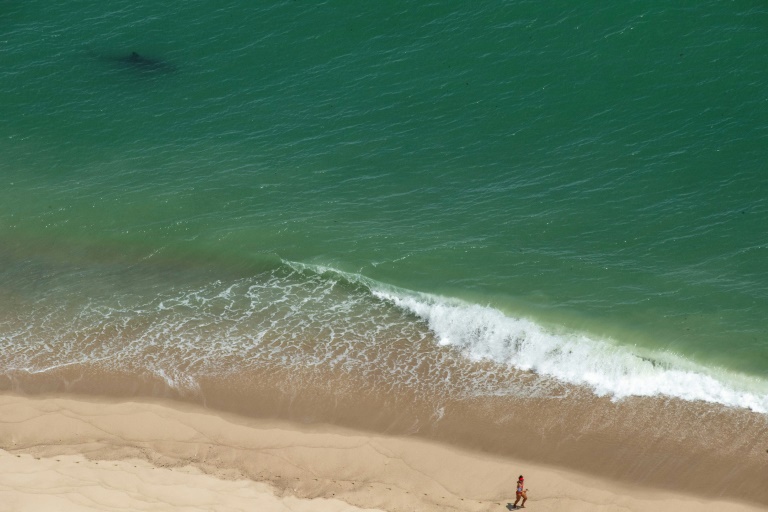
Sun lotion, insect repellant, and the Sharktivity app are this summer’s must-have beach accessories along the US East Coast as human-shark encounters increase. 

Ironically, conservation wins for vulnerable species might be behind the unfortunate uptick, say experts, while there might also be a link to climate as the apex predators’ prey move to new waters.

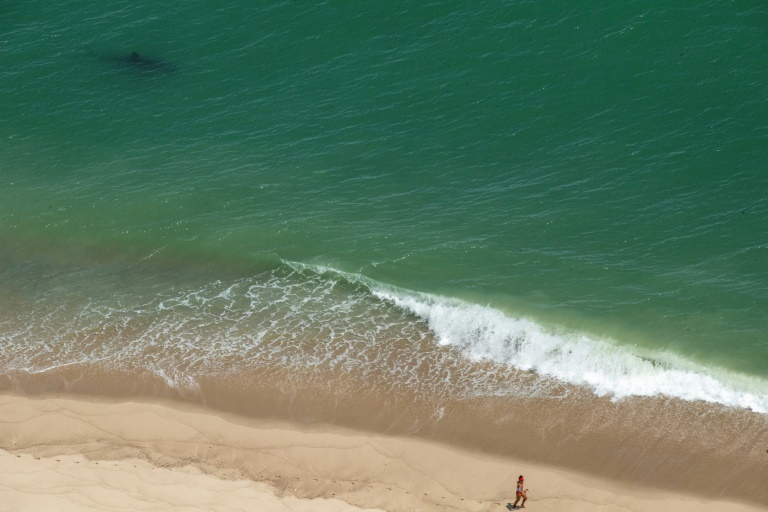
Every summer, great whites move up the Atlantic coast of the United States, toward New England, their number peaking between August and October.

“There’s a general increase in the population that we think is the population rebounding after being protected,” Gregory Skomal, a senior fisheries scientist for the state of Massachusetts, told AFP.

Around 300 of the animals, the world’s largest known fish, have been tagged over the years, with roughly a hundred or so passing through the waters around Cape Cod every year.

The iconic movie “Jaws” was shot in this region, and the creatures are a major tourism draw, adorning baseball caps and t-shirts. On the flipside, however, there have already been temporary beach closures this year after confirmed sightings close to shore.

A major part of the reason is their main prey, seals, are also rebounding thanks to increased protections.

“If you have more sharks feeding close to land and you have more people swimming, the chances for those kinds of negative interactions increases,” said Skomal.

Enter the Atlantic White Shark Conservancy Sharktivity app, which was developed with input from Massachusetts wildlife officials to provide information on shark sightings from researchers, safety officials, and user reports.

– Surveillance patrols –

In New York state, the governor has just announced additional surveillance patrols, including via drones and helicopters.

On the tourist beaches of Long Island, half a dozen shark bites have already come to light, after three years of none at all.

Here, great whites are less likely to be the culprits than other species of shark that operate in the region, in particular tiger sharks, sand tiger sharks and bull sharks.

Nick Whitney, a senior scientist at the New England Aquarium, believes the increasing encounters here might be linked to the sharks’ bait fish — menhaden, also known as porgies or bunkers, recovering.

This might be because of cleaner waters off New York and New Jersey, “but it’s tricky to figure out how much of it is increasing populations or just populations moving around as a result of changing ocean conditions from climate change.”

But if things can thus vary greatly from one year to another on a local level, the global level remains steady at around 75 shark attacks recorded each year, said Gavin Naylor, director of a research program on sharks at the University of Florida.

This follows a brief drop to around 60 during the two first years of the Covid-19 pandemic.

Annual global deaths are around five. In the past twenty years, only two deaths have been reported north of Delaware in the United States, in Cape Cod in 2018, and in Maine in 2020.

But in the future, it is reasonable to think that the number of victims will increase.

“We are going to get more fatalities. There’s more white sharks, the probability is going to increase,” predicts Naylor, even though the trend isn’t yet statistically significant.

Surfers, who venture farther into the water, accounted for half of unprovoked attacks in 2021. Farther south, Florida, with its many tourist beaches and tropical climate, is still where 60 percent of US and 40 percent of world attacks occur.

– Take precautions –

Sharks are far from the bloodthirsty beasts sometimes portrayed in movies. 

Studies have shown that they can mistake surfers or swimmers for their usual prey — notably white sharks, which have rather poor eyesight.

“With so many people on a global scale in the water, if sharks preferred to feed on prey upon humans, we would have tens of thousands of attacks each year,” said Skomal.

With climate change, the expert expects that the increase in ocean temperatures will gradually lengthen the season during which sharks are present in the northern United States.

So what can be done to limit the risks? People should download the Sharktivity app to track sightings. 

“Another thing we tell people is just to be aware of your surroundings,” said Whitney. Look around for birds flying around schools of baitfish, for example.

Don’t swim alone, stick to areas with cell phone coverage, and if bitten, the real danger is bleeding out, so it’s important to get to shore and control the bleeding until help arrives.

Why shark encounters are increasing along the US East Coast

Sun lotion, insect repellant, and the Sharktivity app are this summer’s must-have beach accessories along the US East Coast as human-shark encounters increase. 

Ironically, conservation wins for vulnerable species might be behind the unfortunate uptick, say experts, while there might also be a link to climate as the apex predators’ prey move to new waters.

Every summer, great whites move up the Atlantic coast of the United States, toward New England, their number peaking between August and October.

“There’s a general increase in the population that we think is the population rebounding after being protected,” Gregory Skomal, a senior fisheries scientist for the state of Massachusetts, told AFP.

Around 300 of the animals, the world’s largest known fish, have been tagged over the years, with roughly a hundred or so passing through the waters around Cape Cod every year.

The iconic movie “Jaws” was shot in this region, and the creatures are a major tourism draw, adorning baseball caps and t-shirts. On the flipside, however, there have already been temporary beach closures this year after confirmed sightings close to shore.

A major part of the reason is their main prey, seals, are also rebounding thanks to increased protections.

“If you have more sharks feeding close to land and you have more people swimming, the chances for those kinds of negative interactions increases,” said Skomal.

Enter the Atlantic White Shark Conservancy Sharktivity app, which was developed with input from Massachusetts wildlife officials to provide information on shark sightings from researchers, safety officials, and user reports.

– Surveillance patrols –

In New York state, the governor has just announced additional surveillance patrols, including via drones and helicopters.

On the tourist beaches of Long Island, half a dozen shark bites have already come to light, after three years of none at all.

Here, great whites are less likely to be the culprits than other species of shark that operate in the region, in particular tiger sharks, sand tiger sharks and bull sharks.

Nick Whitney, a senior scientist at the New England Aquarium, believes the increasing encounters here might be linked to the sharks’ bait fish — menhaden, also known as porgies or bunkers, recovering.

This might be because of cleaner waters off New York and New Jersey, “but it’s tricky to figure out how much of it is increasing populations or just populations moving around as a result of changing ocean conditions from climate change.”

But if things can thus vary greatly from one year to another on a local level, the global level remains steady at around 75 shark attacks recorded each year, said Gavin Naylor, director of a research program on sharks at the University of Florida.

This follows a brief drop to around 60 during the two first years of the Covid-19 pandemic.

Annual global deaths are around five. In the past twenty years, only two deaths have been reported north of Delaware in the United States, in Cape Cod in 2018, and in Maine in 2020.

But in the future, it is reasonable to think that the number of victims will increase.

“We are going to get more fatalities. There’s more white sharks, the probability is going to increase,” predicts Naylor, even though the trend isn’t yet statistically significant.

Surfers, who venture farther into the water, accounted for half of unprovoked attacks in 2021. Farther south, Florida, with its many tourist beaches and tropical climate, is still where 60 percent of US and 40 percent of world attacks occur.

– Take precautions –

Sharks are far from the bloodthirsty beasts sometimes portrayed in movies. 

Studies have shown that they can mistake surfers or swimmers for their usual prey — notably white sharks, which have rather poor eyesight.

“With so many people on a global scale in the water, if sharks preferred to feed on prey upon humans, we would have tens of thousands of attacks each year,” said Skomal.

With climate change, the expert expects that the increase in ocean temperatures will gradually lengthen the season during which sharks are present in the northern United States.

So what can be done to limit the risks? People should download the Sharktivity app to track sightings. 

“Another thing we tell people is just to be aware of your surroundings,” said Whitney. Look around for birds flying around schools of baitfish, for example.

Don’t swim alone, stick to areas with cell phone coverage, and if bitten, the real danger is bleeding out, so it’s important to get to shore and control the bleeding until help arrives.
Vanilla spice: arid Israel produces potent tropical pods

In his busy Tel Aviv restaurant, chef Yair Yosefi adds a magic ingredient to his signature cake: Israel’s first commercially produced vanilla providing what devotees claim is perhaps the strongest ever flavour.

It is made by Vanilla Vida, a new food-industry player that says its computer-guided curing process, along with other high-tech cultivation methods, can scientifically craft each batch of vanilla to a specific taste.

The company, founded in 2020, could prove to a be lucrative venture, producing what has become the world’s most precious spice after saffron.

Many mass-produced foods, from ice cream to milk shakes to soy milk, are usually flavoured with artificial vanilla — but the real organic stuff is still very expensive and sought-after.

Vanilla Vida has also developed greenhouses to recreate conditions the vanilla needs to flourish, but until the plants there achieve full size, the company imports fresh vanilla to its processing plant in Or Yehuda, a Tel Aviv suburb. 

Co-founder and CEO Oren Zilberman told AFP his company subjects the raw product to a highly-monitored ageing process.

This, he said, allows it to draw out desired flavours, accelerating the drying process and eliminating the various risks that come with open air drying in tropical environments like Indonesia or Madagascar, two major vanilla producers. 

“We know how, through drying processes with varying temperatures, humidity and other elements to get the raw material to go a certain way, to create slightly different aromas — the same way you roast coffee differently to create different aromas,” Zilberman said.

“If you understand the metabolism, you can create chocolatey vanilla, carameley vanilla, smokey woody vanilla like the French prefer, or very sweet vanilla for Americans,” he added.

Asked about the quality of the Israeli-aged vanilla, chef Yosefi said the proof was in the pudding, given the flurry of orders for his dacquoise cake and his bistro, Brut. 

“People ask for ‘the dish with the fruit and vanilla’,” he told AFP.

The difference between other commercially available vanilla and the highly-concentrated Vanilla Vida product is “day and night,” he said. 

Florida hurries to catch fast-spreading snail invasion

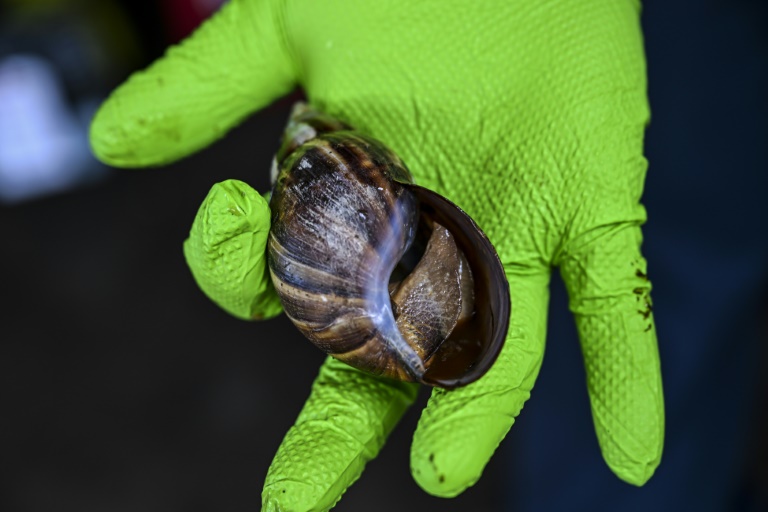
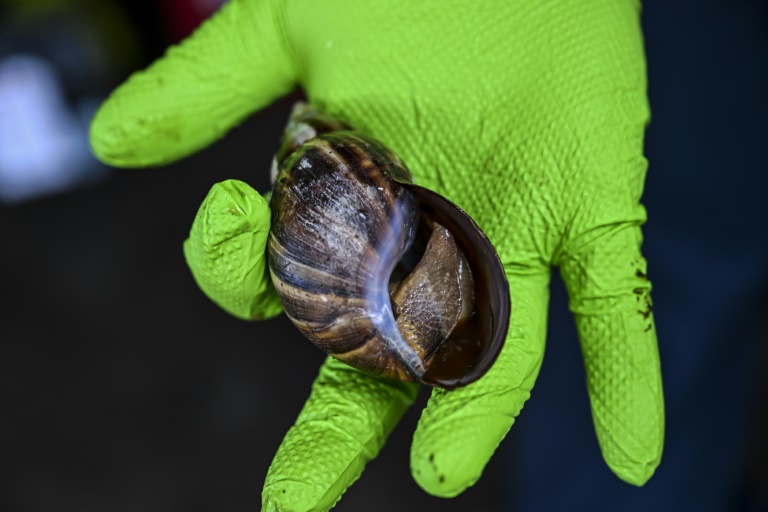
It might not be speedy, but it’s big, hungry and fast at reproducing: the giant African snail, a potential health risk to humans, has once again invaded the southern US state of Florida.

Jason Stanley, a biologist with Florida’s Department of Agriculture, says that the gastropod greedily “feeds on over 500 different kinds of plants.”

“We’re concerned with that being in our environment,” he told AFP.

Since June 23, employees from his agency have been combing through the gardens of New Port Richey, a small town on Florida’s west coast, where the invasive species has taken root.

A single giant African snail can lay up to 2,000 eggs each year, Stanley explains, which — coupled with its appetite — could spell disaster for the state’s robust agriculture industry.

In a grassy plot of land in New Port Richey, Mellon, a yellow Labrador trained to sniff out the snails, walks with his handler.

He darts under a tree and sniffs around in the grass. When Mellon eventually locates a snail, he sits directly on top of it, as he’s been trained to do.

Florida authorities believe that the snail, native to eastern Africa, was reintroduced to the state when someone brought it home as a pet.

Unlike other brown-tinted giant snails, this particular breed has white flesh.

“These white phenotypes are very popular in the pet trade,” Stanley noted.

Through the talents of Mellon and another snail-sniffing canine, more than 1,000 giant African snails have already been caught in Pasco County, where New Port Richey is located.

Authorities are also trying to stamp out the giant snails by applying metaldehyde, a pesticide that is harmless to humans and animals, according to the state.

The Florida Department of Agriculture has established a quarantine zone within New Port Richey: no plants or other vegetation can be removed from the area to try to prevent the snails from spreading further.

– Carries harmful disease –

“Another issue with this snail is that it carries the rat lungworm, which can cause meningitis in humans,” Stanley added.

That type of parasite, which has been detected among the snails caught in Pasco County, enters rats’ lungs when they eat the snails and then spreads when the rodents cough. 

If a human ingests one of the worms, Stanley says, it usually makes its way to the brain stem, where it can cause meningitis.

Local resident Jay Pasqua still can’t believe the stir caused by the giant African snail.

In late June, a Department of Agriculture official came to his lawn mower sales and repair store in New Port Richey to flag the presence of the invasive species.

“In the beginning, it was kind of funny to see all the attention that a snail was getting,” the 64-year-old told AFP.

“But (after) starting to understand the process of their growth, how they got here, and what diseases and what problems they cause, it did become a concern at that time.”

He has since found dozens of the pests in his garden, although he says he hasn’t seen any for three days.

The giant African snail has been eradicated from other parts of Florida twice before, first in 1975 and then again in 2021.

The latter extermination campaign took place in Miami-Dade County and was the result of 10 years of effort at a cost of $23 million.

Stanley says he’s optimistic that this time will be much easier.

“So far, it’s isolated in one area, and we’re already surveying and treating this area. So we’re very hopeful that it’s not going to take that amount of time here.”

Florida hurries to catch fast-spreading snail invasion

It might not be speedy, but it’s big, hungry and fast at reproducing: the giant African snail, a potential health risk to humans, has once again invaded the southern US state of Florida.

Jason Stanley, a biologist with Florida’s Department of Agriculture, says that the gastropod greedily “feeds on over 500 different kinds of plants.”

“We’re concerned with that being in our environment,” he told AFP.

Since June 23, employees from his agency have been combing through the gardens of New Port Richey, a small town on Florida’s west coast, where the invasive species has taken root.

A single giant African snail can lay up to 2,000 eggs each year, Stanley explains, which — coupled with its appetite — could spell disaster for the state’s robust agriculture industry.

In a grassy plot of land in New Port Richey, Mellon, a yellow Labrador trained to sniff out the snails, walks with his handler.

He darts under a tree and sniffs around in the grass. When Mellon eventually locates a snail, he sits directly on top of it, as he’s been trained to do.

Florida authorities believe that the snail, native to eastern Africa, was reintroduced to the state when someone brought it home as a pet.

Unlike other brown-tinted giant snails, this particular breed has white flesh.

“These white phenotypes are very popular in the pet trade,” Stanley noted.

Through the talents of Mellon and another snail-sniffing canine, more than 1,000 giant African snails have already been caught in Pasco County, where New Port Richey is located.

Authorities are also trying to stamp out the giant snails by applying metaldehyde, a pesticide that is harmless to humans and animals, according to the state.

The Florida Department of Agriculture has established a quarantine zone within New Port Richey: no plants or other vegetation can be removed from the area to try to prevent the snails from spreading further.

– Carries harmful disease –

“Another issue with this snail is that it carries the rat lungworm, which can cause meningitis in humans,” Stanley added.

That type of parasite, which has been detected among the snails caught in Pasco County, enters rats’ lungs when they eat the snails and then spreads when the rodents cough. 

If a human ingests one of the worms, Stanley says, it usually makes its way to the brain stem, where it can cause meningitis.

Local resident Jay Pasqua still can’t believe the stir caused by the giant African snail.

In late June, a Department of Agriculture official came to his lawn mower sales and repair store in New Port Richey to flag the presence of the invasive species.

“In the beginning, it was kind of funny to see all the attention that a snail was getting,” the 64-year-old told AFP.

“But (after) starting to understand the process of their growth, how they got here, and what diseases and what problems they cause, it did become a concern at that time.”

He has since found dozens of the pests in his garden, although he says he hasn’t seen any for three days.

The giant African snail has been eradicated from other parts of Florida twice before, first in 1975 and then again in 2021.

The latter extermination campaign took place in Miami-Dade County and was the result of 10 years of effort at a cost of $23 million.

Stanley says he’s optimistic that this time will be much easier.

“So far, it’s isolated in one area, and we’re already surveying and treating this area. So we’re very hopeful that it’s not going to take that amount of time here.”

Call for max working temperature cap after EU heatwave deaths

Trade unions called Monday for the European Commission to impose maximum temperature limits for outdoor workers, after three people died while on shift in Madrid during last week’s withering heatwave. 

While a handful of member states have legislation limiting working hours in excessive heat, the thresholds vary and many nations have no nationwide heat limits. 

According to research by the polling agency Eurofound, 23 percent of all workers across the EU were being exposed to high temperatures a quarter of the time. That figure rises to 36 percent in agriculture and industry and to 38 percent for construction workers. 

Previous research has linked high temperatures to a number of chronic conditions and an elevated risk of workplace injury. 

“Workers are on the frontline of the climate crisis every day and they need protections to match the ever-increasing danger from extreme temperatures,” said Claes-Mikael Stahl, deputy secretary general of the European Trade Union Confederation.

The ETUC said that most EU nations have no maximum temperature legislation for workplaces, although Belgium, Hungary and Latvia all have some curbs on activity. 

In France, where there are currently no working temperature limits, 12 workers died due to heat exposure in 2020 alone, the union said.

– ‘Can’t ignore the danger’ –

Spain, where three workers died in extreme heat last week, does have temperature limits in place, but only for certain professions. 

A 60-year-old street cleaner on a one-month contract died in Madrid on Saturday, after he collapsed in the street from heatstroke while working the previous day.

At the time temperatures in Madrid neared 40C.

A 56-year-old warehouse worker in a Madrid suburb also died on Saturday after suffering heatstroke while on the job.

Security forces on Thursday announced the death of a worker due to heat in Paracuellos de Jarama, on the outskirts of the capital.

Last week, the city reached a deal with unions to restrict manual street cleaning work to below 39C.

With global average temperatures more than 1.1C warmer than the pre-Industrial era, Europe is being hit with more and more record-breaking hot spells. 

Global heating will continue to make deadly heatwaves more frequent and intense with ever higher levels of atmospheric carbon pollution, scientists say. 

The UN’s climate science panel this year warned that tens of millions more people would be subjected to extreme heat days under 2C of warming; countries’ climate plans have Earth on course to warm by 2.7C.

“Heatwaves can be fatal for people working unprotected from the sun, as we’ve already witnessed in Spain this summer,” said Stahl.

“Workers are on the frontline of the climate crisis every day and they need protections to match the ever-increasing danger from extreme temperatures.”

He said the EU needed continent-wide legislation on maximum working temperatures, since “the weather doesn’t respect national borders”.

“Politicians can’t continue to ignore the danger to our most vulnerable workers from the comfort of their airconditioned offices,” he said.

Call for max working temperature cap after EU heatwave deaths

Trade unions called Monday for the European Commission to impose maximum temperature limits for outdoor workers, after three people died while on shift in Madrid during last week’s withering heatwave. 

While a handful of member states have legislation limiting working hours in excessive heat, the thresholds vary and many nations have no nationwide heat limits. 

According to research by the polling agency Eurofound, 23 percent of all workers across the EU were being exposed to high temperatures a quarter of the time. That figure rises to 36 percent in agriculture and industry and to 38 percent for construction workers. 

Previous research has linked high temperatures to a number of chronic conditions and an elevated risk of workplace injury. 

“Workers are on the frontline of the climate crisis every day and they need protections to match the ever-increasing danger from extreme temperatures,” said Claes-Mikael Stahl, deputy secretary general of the European Trade Union Confederation.

The ETUC said that most EU nations have no maximum temperature legislation for workplaces, although Belgium, Hungary and Latvia all have some curbs on activity. 

In France, where there are currently no working temperature limits, 12 workers died due to heat exposure in 2020 alone, the union said.

– ‘Can’t ignore the danger’ –

Spain, where three workers died in extreme heat last week, does have temperature limits in place, but only for certain professions. 

A 60-year-old street cleaner on a one-month contract died in Madrid on Saturday, after he collapsed in the street from heatstroke while working the previous day.

At the time temperatures in Madrid neared 40C.

A 56-year-old warehouse worker in a Madrid suburb also died on Saturday after suffering heatstroke while on the job.

Security forces on Thursday announced the death of a worker due to heat in Paracuellos de Jarama, on the outskirts of the capital.

Last week, the city reached a deal with unions to restrict manual street cleaning work to below 39C.

With global average temperatures more than 1.1C warmer than the pre-Industrial era, Europe is being hit with more and more record-breaking hot spells. 

Global heating will continue to make deadly heatwaves more frequent and intense with ever higher levels of atmospheric carbon pollution, scientists say. 

The UN’s climate science panel this year warned that tens of millions more people would be subjected to extreme heat days under 2C of warming; countries’ climate plans have Earth on course to warm by 2.7C.

“Heatwaves can be fatal for people working unprotected from the sun, as we’ve already witnessed in Spain this summer,” said Stahl.

“Workers are on the frontline of the climate crisis every day and they need protections to match the ever-increasing danger from extreme temperatures.”

He said the EU needed continent-wide legislation on maximum working temperatures, since “the weather doesn’t respect national borders”.

“Politicians can’t continue to ignore the danger to our most vulnerable workers from the comfort of their airconditioned offices,” he said.

Fed set for another big rate hike with economy on knife's edge

US central bankers face an increasingly difficult balancing act as they struggle to douse scorching inflation while still keeping the economy growing, though they have made it clear they are willing to risk a recession.

But with war still raging in Ukraine, and Covid-19 causing ongoing issues in Asia, avoiding an economic downturn will require luck and depend on many factors outside the Federal Reserve’s control.

As American families struggle to make ends meet amid surging prices for gas, food and housing, Fed officials have made clear that fighting inflation is their top priority even if that means inflicting pain.

The Fed will hold its two-day policy meeting beginning Wednesday, when it is expected to hike the benchmark borrowing rate by another three-quarters of a percentage point in its aggressive campaign to cool demand and ease price pressures.

Despite a healthy job market with near-record low unemployment, workers are seeing their wage gains overwhelmed by consumer prices that rose by a new 40-year high of 9.1 percent in June.

Slowing the economy is likely to cause more job losses, but policymakers want to avoid at all costs the greater pain of a price spiral that becomes entrenched or spins out of control.

Treasury Secretary Janet Yellen, herself a former Fed chief, has previously warned that such a soft landing will require good luck. On Sunday she stressed again that while “growth is slowing,” data does not necssarily point to a recession.

“I’m not saying that we will definitely avoid a recession, but I think there is a path that keeps the labor market strong and brings inflation down,” she told NBC.

– Aggressive rate hikes –

Former Fed vice chair Donald Kohn told AFP it was a “very complicated, multi-dimensional issue,” especially due to the ongoing supply chain uncertainty.

After flooding the world’s largest economy with support during the pandemic — zero interest rates and a steady stream of liquidity into the financial system — Fed policymakers were congratulating themselves on how quickly the economy recovered, regaining millions of jobs in a matter of months.

But they were caught flat-footed by the rapid run-up in prices, as Americans flush with cash due to massive government aid went on a spending spree, buying up cars, houses and other goods at a time when the global supply chain was still bogged down by pandemic lockdowns that continue in China.

The Fed finally began liftoff — taking the policy interest rate off zero — in March, starting with a 25-basis-point increase, followed by 50 in May and 75 in June.

Higher lending costs make it more expensive to borrow funds to buy cars and homes or expand businesses, which should cool demand, while also making it more attractive to save rather than spend.

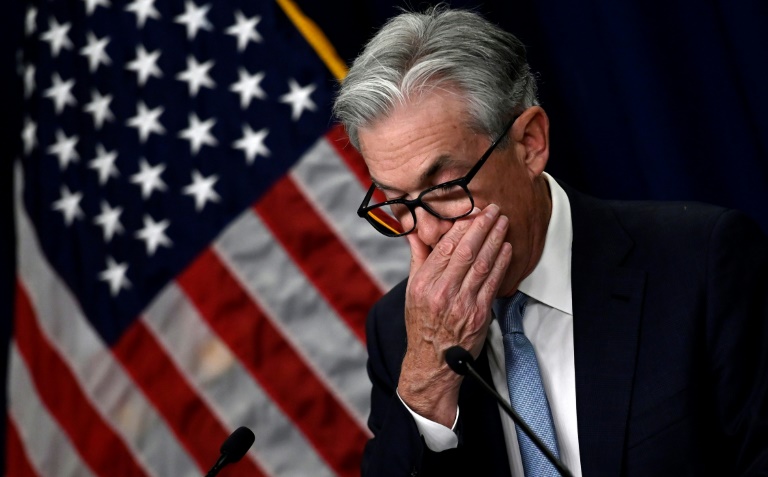
Fed Chair Jerome Powell last month said the policy-setting Federal Open Market Committee would consider either a 50 or 75 bps hike at the July meeting, and most economists expect a repeat of the June three-quarter-point increase.

Fed Governor Christopher Waller recently floated the idea of a mammoth 100-bps hike, which would be the first since the US central bank started using the federal funds rate for policy in the early 1990s.

The equivalent amount of tightening in a single move hasn’t been seen since the early 1980s, when then-Fed chief Paul Volcker was on a crusade to crush a wage-price inflationary spiral.

– Mixed data –

But even Waller noted it is important not to move too fast, and a full point hike would only be called for if data continue to show accelerating price increases.

“I think they will probably discuss 100 basis points just because the inflation picture is still very bad,” said Julie Smith, a Lafayette College economics professor.

But some recent data “indicate that previous rate increases have very likely started to work,” she said in an interview.

Housing prices have skyrocketed, hitting new records repeatedly, even as interest rates have risen, and consumer spending continues to increase, leading some economists to warn of a contraction in the second quarter.

But there are signs of cracks, including falling home sales, a dramatic drop in mortgage applications and an increasing share of spending going to necessities.

Officials have said the US economy is strong enough to withstand higher rates without a serious downturn, but others, including former Treasury secretary Lawrence Summers, say they are overly optimistic and job losses will have to rise sharply in order to tame inflation.

Kohn said it will be important for Powell to communicate clearly about what data the Fed is looking for to slow or pause the rate hike cycle.

“I think a fairly shallow recession,” with higher unemployment than the 3.7 percent the Fed projected last month, “will be necessary to break this inflation spiral,” he said.

“But, boy, the amount of uncertainty around it is just huge.”

Yep, 'Nope' rules at N.America box office

Universal’s new horror flick “Nope” opened atop the North American box office, hammering the latest edition of Marvel’s “Thor” franchise to earn an estimated $44 million, industry watcher Exhibitor Relations reported Sunday.

The alien-invasion sci-fi mystery, which features a Black family struggling to make ends meet on their bleached California horse ranch, is the highly-anticipated latest effort by writer and director Jordan Peele, whose 2017 debut “Get Out” earned rave reviews.

“This is an excellent opening for an original horror movie,” said analyst David A. Gross of Franchise Entertainment Research.

The film — which stars Daniel Kaluuya, who stole the show in “Get Out” — managed to bump “Thor: Love and Thunder” to second spot after the superhero blockbuster spent two weeks at number one.

The action comedy starring a muscle-clad, self-parodying Chris Hemsworth as the space viking who finds himself pining for his ex-girlfriend Jane Foster (Natalie Portman), pulled in $22.1 million for the Friday-to-Sunday period, for a worldwide cumulative total of $276 million.

Third spot belonged to “Minions: The Rise of Gru.” The latest goofy installment in Universal’s animated “Despicable Me” franchise took in $17.7 million, for a cumulative total of $298 million.

“Where the Crawdads Sing” also slipped one spot, to fourth. Sony’s adaptation of Delia Owens’ novel about an abandoned girl who grows up in marshland of 1950s and 60s North Carolina and, at a murder trial years later looks back on that rough and violent upbringing, earned $10.3 million.

Dropping from fourth to fifth was Paramount’s “Top Gun: Maverick,” the crowd-pleasing sequel to the original 1986 film that once again features Tom Cruise as cocky US Navy test pilot Pete “Maverick” Mitchell.

The fighter ace feature, in its ninth week in theaters, has now grossed an eye-popping $635 million worldwide.

Baz Luhrmann’s music biopic “Elvis” — starring Austin Butler as the King alongside Tom Hanks as his exploitative manager, Colonel Tom Parker — took sixth in the Warner Bros film’s fifth weekend of release, at $6.3 million.

Completing the top 10 were:

“Paws of Fury: The Legend of Hank” ($3.9 million)

“The Black Phone” ($3.4 million)

“Jurassic World: Dominion” ($3 million)

“Mrs Harris goes to Paris” ($1.3 million)

France to order air-conditioned shops to keep doors shut

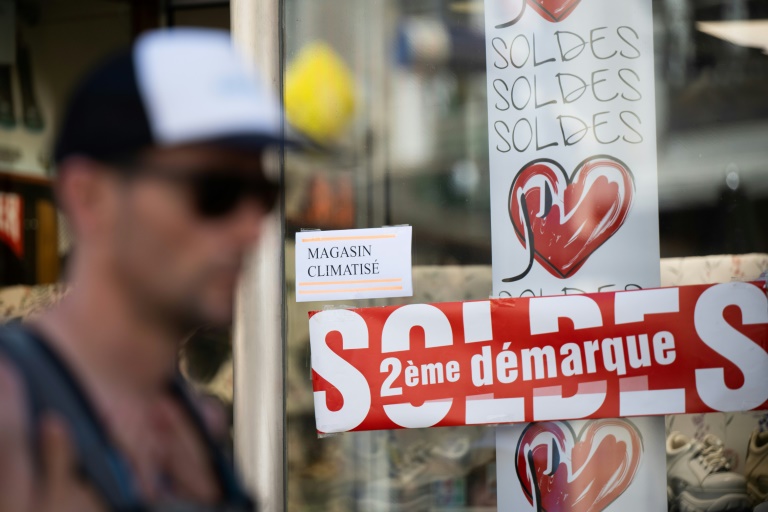
Air-conditioned shops in France will be ordered to keep their doors closed or risk being fined, a minister said Sunday announcing an upcoming rule to combat energy wastage.

Leaving the doors open when the air conditioning is on leads to “20 percent more consumption and… it’s absurd,” French Minister of Ecological Transition Agnes Pannier-Runacher told RMC radio.

The minister said there were also plans to restrict the use of illuminated signs.

“In the coming days, I will issue two decrees: the first will widen the ban on illuminated advertising, whatever the size of the city, between 1 am and 6 am”, with the exception of airports and stations, Pannier-Runacher told the Journal du Dimanche newspaper.

“The second will ban shops from having their doors open while the air conditioning and heating are working”.

Some cities in France — which like other parts of Europe has been gripped by a heatwave recently — passed municipal by-laws in July, imposing fines for offending air-conditioned shops.

The government now plans to extend this to the whole country, with a fine of up to 750 euros ($766) — but will emphasise the education of shopkeepers in the first instance.

Close Bitnami banner
Bitnami