AFP

Euro gets boost ECB supersizes rate hike, US stocks rise again

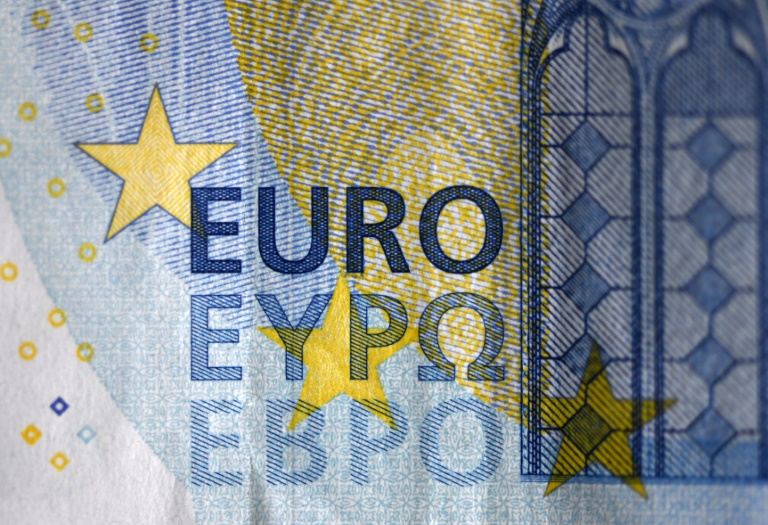
The euro advanced against the dollar on Thursday after Russia resumed gas supplies to Europe and the European Central Bank surprised markets with a 0.5-percentage-point rate hike.

The advance by the single currency came on a mixed day for European bourses but a good session on Wall Street, where equities advanced for a third straight day following strong Tesla results and the pullback in the dollar.

Quincy Krosby, chief global strategist at LPL Financial, said market sentiment has clearly improved some, but there were still several major earnings reports in the coming days that will be critical in determining what’s next for stocks.

“The question that I think hovers over the market is: Is the bear market over?,” she said. “Is this the end?”

While ECB policymakers had signaled they would hike rates at the meeting on Thursday to tame soaring inflation, analysts were divided about whether the traditionally cautious institution would proceed with a quarter-point or half-point move.

City Index analyst Fawad Razaqzada said the euro’s recent slump — it briefly fell under dollar parity last week — meant that the eurozone is now importing more inflation, which favored a bigger hike.

The jump in eurozone inflation to an annual rate of 8.6 percent in June also increased pressure on the ECB, as did the fact other central banks have moved more aggressively than markets had expected.

“The ECB had to surprise, otherwise the euro would have plunged -– and they couldn’t risk that,” Razaqzada said.

The ECB also introduced a new tool to counter spikes in the borrowing costs of some eurozone countries.

With the resignation of Prime Minister Mario Draghi increasing the political risk in Italy and sending Italian government bond yields climbing, the ECB may need to use its new tool.

The difference between Italian government bond yields and Germany’s, the eurozone benchmark, widened on Thursday.

The political crisis sent Milan’s FTSE MIB index down three percent, though it later pared those losses to close with a 0.7 percent decline.

Paris stocks managed a 0.3 percent gain, while Frankfurt’s DAX slid 0.3 percent despite the resumption of Russian gas flows.

Russia on Thursday restored critical gas supplies to Europe through Germany via the Nord Stream pipeline after 10 days of maintenance.

European officials had worried that Moscow would find a pretext to keep the gas shut off.

Uncertainty still lingers over whether the Kremlin might trigger an energy crisis on the continent this winter.

ECB President Christine Lagarde acknowledged that the fallout from Russia’s war in Ukraine and soaring inflation have darkened the eurozone’s economic outlook.

On commodities markets, oil prices extended their losses — with WTI below $100 — after data showed US stockpiles rose more than expected last week as pricey gasoline depressed demand for the fuel.

The figures come despite being at the height of the high-demand summer driving season.

– Key figures at around 2100 GMT –

New York – Dow: UP 0.5 percent at 32,036.90 (close)

New York – S&P 500: UP 1.0 percent at 3,999.10 (close)

New York – Nasdaq: UP 1.4 percent at 12,059.61 (close)

London – FTSE 100: UP 0.1 percent at 7,270.51 (close)

Frankfurt – DAX: DOWN 0.3 percent at 13,246.64 (close) 

Paris – CAC 40: UP 0.3 percent at 6,201.11 (close)

Milan – FTSE MIB: DOWN 0.7 percent at 21,196.59 (close)

EURO STOXX 50: UP 0.3 percent at 3,596.51 (close)

Tokyo – Nikkei 225: UP 0.4 percent at 27,803.00 (close)

Hong Kong – Hang Seng Index: DOWN 1.5 percent at 20,574.63 (close)

Shanghai – Composite: DOWN 1.0 percent at 3,272.00 (close)

Euro/dollar: UP at $1.0232 from $1.0180 on Wednesday

Pound/dollar: DOWN at $1.2002 from $1.1973 

Euro/pound: UP at 85.22 pence from 85.00 pence

Dollar/yen: DOWN at 137.34 yen from 138.21 yen

West Texas Intermediate: DOWN 3.7 percent at $96.14 per barrel

Brent North Sea crude: DOWN 2.9 percent at $103.87 per barrel

Mexico complains to China's SHEIN over Mayan motif

Mexico has demanded an explanation from Chinese fast-fashion online retailer SHEIN for using a design by Mayan artisans, the government said, in the latest case of alleged cultural appropriation.

The Latin American nation regularly denounces what it calls plagiarism by foreign companies of the motifs, embroidery and colors of its Indigenous communities.

The Mexican government has written to SHEIN asking for a public explanation of the commercialization of the floral design, the culture ministry said in a statement Wednesday.

The low-cost retailer made “use of cultural elements whose origin is fully documented,” it added.

“This type of action puts artisanal work at a disadvantage, faced with one that is mass produced,” the letter said.

Earlier the Mexican clothing brand YucaChulas shared pictures on social media of a SHEIN floral-print blouse, alleging that the “plagiarized design” was based on one of its own.

“It’s a major violation of intellectual property and above all culture,” the firm said.

Mexico has previously lodged similar complaints against major clothing brands including Zara and Mango.

It won an apology in 2020 from French designer Isabel Marant for the use of the traditional patterns from an Indigenous community in western Mexico.

Facebook removes Afghan media pages controlled by Taliban

Facebook has removed the accounts of at least two state-owned media outlets in Afghanistan, the company confirmed Thursday, saying it was complying with laws in the United States listing the Taliban as a “terrorist organisation”.

The Taliban have made liberal use of Facebook and Twitter since seizing power in August last year, and have a firm grip on state-owned media in the country — including radio and TV stations, and newspapers.

While Facebook parent Meta did not list the banned media outlets, state broadcaster National Radio Television Afghanistan (RTA) and the government-owned Bakhtar news agency both said that they had been blocked.

The Facebook pages of privately owned media houses seemed unaffected.

“The Taliban is sanctioned as a terrorist organisation under U.S. law and they are banned from using our services,” a Meta spokesperson told AFP in a statement.

“We remove accounts maintained by or on behalf of the Taliban and prohibit praise, support, and representation of them,” it added.

Government spokesman Zabihullah Mujahid criticised the blocking, saying it showed “impatience and intolerance” by the US firm.

“The slogan ‘Freedom of expression’ is used to deceive other nations,” he tweeted.

RTA director Ahmadullah Wasiq said in a video statement that the Pashto and Dari-language pages of the organisation on Facebook and Instagram had been closed “for unknown reasons”.

“RTA is a national institution — the voice of the nation,” he said.

Bakhtar also urged Facebook to reconsider, saying on Twitter: “The only goal of this news agency is to share accurate, timely and comprehensive information to its audiences.”

On Thursday, the hashtag “#BanTaliban” was trending on Twitter, with thousands of users calling for Taliban accounts on that platform to be blocked.

The Taliban have made prolific use of Twitter since seizing power.

While most accounts linked to the former Western-backed government have been dormant since the takeover, new “official” ones have proliferated — although none with Twitter’s blue tick of authenticity.

Fans return as Comic-Con awaits new 'Thrones' and 'Rings' shows

Tens of thousands of cosplaying fans will converge on San Diego Thursday for the first full-scale Comic-Con in three years, with new “Lord of the Rings” and “Game of Thrones” TV series set to be unveiled at the world’s most famous pop culture gathering.

Hollywood studios including Disney and Warner Bros. are also in town to show off their upcoming films, and have done nothing to quell frenzied rumors of a first look at Marvel superhero sequel “Black Panther: Wakanda Forever” and a new Superman movie announcement.

The past two editions of Comic-Con had to be held online due to the spread of Covid-19, while limited numbers attended a scaled-down “special edition” in San Diego last November.

But attendance this week is expected to match pre-pandemic levels, with more than 130,000 fans — whether dressed as hobbits, dragons or princesses — required to wear face masks as they pack into the sweaty convention center.

“I think it’ll look like Comic-Con from 2019,” said the event’s communications and strategy chief David Glanzer.

“We weathered it. And now coming back, maybe we’re going to have tears of joy… it’s very emotional,” he told AFP.

The comic book, science fiction and fantasy extravaganza begins this year with Paramount’s “Dungeons and Dragons: Honor Among Thieves.”

Marking the first time the world’s most popular role-playing game has received a mega-budget silver-screen adaptation, the movie out next March stars Chris Pine, Hugh Grant and former “Bridgerton” heartthrob Rege-Jean Page.

But the week’s headlines are set to be dominated by two huge fantasy series coming to television screens soon: Amazon Prime’s “Lord of the Rings: The Rings of Power” and HBO’s “House of the Dragon.” 

“The Rings of Power” is Amazon’s enormously ambitious saga taking place in the world of J.R.R. Tolkien’s books, and set long before the events of Peter Jackson’s Oscar-winning trilogy of films.

The series — playing out across five seasons, the first of which launches September 2 — is reported to have cost Amazon well over $1 billion, and is said to be a personal obsession of founder Jeff Bezos.

Much of that cost went into buying the rights to the Tolkien universe and investing in lavish production values, with a healthy sum set aside for “activations,” or immersive fan experiences, at Comic-Con.

Amazon on Friday will bring its cast of hobbits, elves and dwarves to the venue’s cavernous Hall H, where fans — who line up for hours, or even days — anticipate seeing the first detailed look at the series.

– Rings v Thrones – 

The following day, “House of the Dragon” — the first spin-off to “Game of Thrones” set in George R.R. Martin’s fictional world of Westeros, out August 21 — will be unveiled by HBO.

Martin has played down talk of a rivalry between the two mega-franchises, insisting, “I want both shows to find an appreciative audience, and give them great television. Great fantasy.”

“The more fantasy hits we have, the more great fantasy we are likely to get,” he wrote in a blog post.

But HBO hopes its prequel can match the wild popularity of the original “Thrones,” which over eight seasons became must-see television, spawned countless imitations and delivered 59 Emmys — a record for a drama at television’s equivalent of the Oscars.

Starring Matt Smith, Rhys Ifans and Emma D’Arcy, “House of the Dragon” tells the story of the murderous, dragon-breeding Targaryen family, some 300 years before the events of “Thrones.”

Its stars will appear in Hall H immediately after a movie presentation from HBO’s sister company Warner Bros., which is set to feature Dwayne “The Rock” Johnson, who is promoting his upcoming superhero flick “Black Adam.”

The week will also feature a send-off for AMC’s “The Walking Dead,” as the juggernaut zombie TV series bows out with its final season — and launches a new spin-off, the anthology-style “Tales of the Walking Dead.”

Fans return as Comic-Con awaits new 'Thrones' and 'Rings' shows

Tens of thousands of cosplaying fans will converge on San Diego Thursday for the first full-scale Comic-Con in three years, with new “Lord of the Rings” and “Game of Thrones” TV series set to be unveiled at the world’s most famous pop culture gathering.

Hollywood studios including Disney and Warner Bros. are also in town to show off their upcoming films, and have done nothing to quell frenzied rumors of a first look at Marvel superhero sequel “Black Panther: Wakanda Forever” and a new Superman movie announcement.

The past two editions of Comic-Con had to be held online due to the spread of Covid-19, while limited numbers attended a scaled-down “special edition” in San Diego last November.

But attendance this week is expected to match pre-pandemic levels, with more than 130,000 fans — whether dressed as hobbits, dragons or princesses — required to wear face masks as they pack into the sweaty convention center.

“I think it’ll look like Comic-Con from 2019,” said the event’s communications and strategy chief David Glanzer.

“We weathered it. And now coming back, maybe we’re going to have tears of joy… it’s very emotional,” he told AFP.

The comic book, science fiction and fantasy extravaganza begins this year with Paramount’s “Dungeons and Dragons: Honor Among Thieves.”

Marking the first time the world’s most popular role-playing game has received a mega-budget silver-screen adaptation, the movie out next March stars Chris Pine, Hugh Grant and former “Bridgerton” heartthrob Rege-Jean Page.

But the week’s headlines are set to be dominated by two huge fantasy series coming to television screens soon: Amazon Prime’s “Lord of the Rings: The Rings of Power” and HBO’s “House of the Dragon.” 

“The Rings of Power” is Amazon’s enormously ambitious saga taking place in the world of J.R.R. Tolkien’s books, and set long before the events of Peter Jackson’s Oscar-winning trilogy of films.

The series — playing out across five seasons, the first of which launches September 2 — is reported to have cost Amazon well over $1 billion, and is said to be a personal obsession of founder Jeff Bezos.

Much of that cost went into buying the rights to the Tolkien universe and investing in lavish production values, with a healthy sum set aside for “activations,” or immersive fan experiences, at Comic-Con.

Amazon on Friday will bring its cast of hobbits, elves and dwarves to the venue’s cavernous Hall H, where fans — who line up for hours, or even days — anticipate seeing the first detailed look at the series.

– Rings v Thrones – 

The following day, “House of the Dragon” — the first spin-off to “Game of Thrones” set in George R.R. Martin’s fictional world of Westeros, out August 21 — will be unveiled by HBO.

Martin has played down talk of a rivalry between the two mega-franchises, insisting, “I want both shows to find an appreciative audience, and give them great television. Great fantasy.”

“The more fantasy hits we have, the more great fantasy we are likely to get,” he wrote in a blog post.

But HBO hopes its prequel can match the wild popularity of the original “Thrones,” which over eight seasons became must-see television, spawned countless imitations and delivered 59 Emmys — a record for a drama at television’s equivalent of the Oscars.

Starring Matt Smith, Rhys Ifans and Emma D’Arcy, “House of the Dragon” tells the story of the murderous, dragon-breeding Targaryen family, some 300 years before the events of “Thrones.”

Its stars will appear in Hall H immediately after a movie presentation from HBO’s sister company Warner Bros., which is set to feature Dwayne “The Rock” Johnson, who is promoting his upcoming superhero flick “Black Adam.”

The week will also feature a send-off for AMC’s “The Walking Dead,” as the juggernaut zombie TV series bows out with its final season — and launches a new spin-off, the anthology-style “Tales of the Walking Dead.”

Chinese ride-hailing giant Didi hit with $1.2 bn fine

China has fined ride-hailing giant Didi 8 billion yuan ($1.2 billion), regulators announced Thursday, concluding a year-long investigation into alleged data security violations.

The probe found “conclusive evidence” that Didi had committed violations of an “egregious nature”, the Cyberspace Administration of China (CAC) said in a statement.

It accused Didi of illegally storing the ID information of more than 57 million drivers in plain text instead of a more secure format.

The regulator said the firm also analysed passenger details without their knowledge — including photos on their mobile phones and facial recognition data.

“Didi’s illegal operations have brought serious security risks to the security of the country’s key information infrastructure and data security,” CAC said.

“Even when regulatory authorities ordered corrections, comprehensive and in-depth corrections were not carried out,” it added.

Didi’s violations took place over seven years starting June 2015, according to the regulator.

CAC also accused Didi of unspecified national security violations in its data processing activities.

The firm was also found to have violated the Cybersecurity Law, Data Protection Law and Personal Information Protection Law –- a landmark code introduced last year that is modelled on the European Union’s GDPR legislation.

– Tech crackdown –

Didi has been one of the highest-profile targets of a widespread clampdown on China’s tech sector, which saw years of runaway growth and the emergence of supersized monopolies before regulators stepped in. 

The fine amounts to more than four percent of its $27.3 billion total revenue last year.

“We sincerely accept this decision (and will) resolutely obey it,” Didi said in a statement on social media.

“We sincerely thank the competent authorities for their inspection and guidance… We will take this as a warning… (and) further strengthen the construction of network security and data security.”

Didi’s fine is the largest imposed by Chinese authorities since e-commerce behemoth Alibaba was ordered to pay around $2.75 billion in April 2021 for anti-competitive practices.

The ride-hailing firm got into hot water in June last year after it pressed ahead with an initial public offering in the United States, reportedly against Beijing’s wishes.  

Days after it raised $4.4 billion in New York, Chinese authorities launched a cybersecurity probe into the company, sending its shares plunging.  

Since then, Didi’s app has been removed from Chinese stores and it has been unable to register new users.

China’s regulatory crackdown has eased this year as it grapples with the economic fallout from its zero-Covid strategy, with the country struggling to reach its 5.5 percent growth target.

However, there is still a strict regulatory environment for tech firms: President Xi Jinping last month called for stronger oversight and better security in the financial tech arena.

Russia resumes critical gas supplies to Europe via Nord Stream

Russia on Thursday resumed critical gas supplies to Europe through Germany, reopening the Nord Stream gas pipeline after 10 days, but uncertainty lingered whether the continent could avert an energy crisis this winter.

“It’s working,” a Nord Stream spokesman said, without specifying the amount of gas being delivered. 

The German government had feared that Moscow would not reopen the pipeline after the scheduled work. 

It believes Russia is squeezing supplies in retaliation for Western sanctions over Moscow’s invasion of Ukraine.

According to data provided by Russia’s state-owned energy giant Gazprom to Gascade, the German operator of the line, 530 gigawatt hours (GWh) would be delivered during the day.

This was only 30 percent of its capacity, Klaus Mueller, president of Germany’s energy regulator, the Federal Network Agency, said on Twitter.

Gazprom has cut flows to Germany via the vital Nord Stream 1 pipeline by some 40 percent in recent weeks, blaming the absence of a Siemens gas turbine that was undergoing repairs in Canada.

The German government has rejected Gazprom’s explanation.

The Nord Stream 1 pipeline under the Baltic Sea has been shut down since July 11 to undergo annual maintenance.

But the resumption of 40 percent of supplies would be insufficient to ward off an energy crisis in Europe this winter, according to experts.

The European Commission on Wednesday urged EU countries to reduce demand for natural gas by 15 percent over the coming months to secure winter stocks and defeat Russia’s “blackmail”.

Announcing an emergency plan, EU commissioners also asked member states to give Brussels special powers to impose compulsory energy rationing if Russia cuts off Europe’s gas lifeline.

A total shutdown of imports or a sharp reduction in the flow from east to west could have a catastrophic effect on the European economy, shutting factories and forcing households to turn down the heat.

Last year, Russia accounted for 40 percent of the EU’s total gas imports and any further disruption to supply would also push consumer prices higher and raise the risk of a deep recession.

“Russia is blackmailing us,” European Commission President Ursula von der Leyen told reporters. 

“Russia is using energy as a weapon and therefore, in any event, whether it’s a partial major cut-off of Russian gas or total cut-off… Europe needs to be ready.” 

Russian President Vladimir Putin has played hot and cold in recent days in his threats to cut off gas deliveries to the bloc of 27 members, but Brussels is asking EU countries to prepare for the worst.

France plans fashion revolution with climate-impact labels

Is it better for the environment if you buy a brand-new cotton T-shirt or a recycled one? 

Well, it depends. 

Recycling has obvious benefits, but the process shortens cotton fibres and so usually has to be mixed with some oil-based material to keep it from falling apart. 

Such trade-offs make it tricky to figure out the real sustainability rating of clothes — but brands in Europe will soon have no choice. 

By next year, every item of clothing sold in France will require a label detailing its precise climate impact — with a similar rule expected for the rest of the European Union by 2026. 

That means juggling many different and conflicting data points: Where and how were its raw materials grown? What was used to colour it? How far did it travel? Was the factory powered with solar energy or coal?

The French Agency for Ecological Transition (Ademe) is currently testing 11 proposals for how to collect and compare data — and what the resulting label might look like to consumers — using 500 real-life items of clothing. 

“The message of the law is clear — it will become obligatory, so brands need to prepare, to make their products traceable, to organise the automatic collection of data,” Erwan Autret, one of the coordinators at Ademe, told AFP. 

“Some say the models are too simple, some say they’re too complicated, but it’s a sign of the maturity of the debate that no one questions the need for these calculations anymore.”

– ‘Transparent and informed’ –

The need for change in fashion is urgent. 

Statistics are notoriously hard to verify, but the UN says the industry is responsible for 10 percent of global carbon emissions, as well as a significant portion of water consumption and waste.

Labels can be a key part of the solution, say campaigners. 

“It will force brands to be more transparent and informed… to collect data and create long-term relationships with their suppliers — all things they’re not used to doing,” said Victoire Sotto, of The Good Goods, a fashion and sustainability consultancy.

“Right now it seems infinitely complex,” she added. “But we’ve seen it applied in other industries such as medical supplies.”

Seeing how the winds are blowing, the textile industry has been racing to come up with technical solutions. 

A recent presentation by Premiere Vision, a Paris-based textiles conference, highlighted many new processes including non-toxic leather tanning, dyes drawn from fruits and waste — and even biodegradable underwear that can be thrown on the compost. 

But the key to sustainability is using the right fabric for the right garment, said Ariane Bigot, Premiere Vision’s deputy head of fashion. 

That means synthetic and oil-based fabrics will still have a place, she said: “A strong synthetic with a very long lifespan might be right for some uses, such as an over-garment that needs little washing.” 

Capturing all these trade-offs in one simple label on an item of clothing is therefore tricky.

“It’s very complicated,” said Bigot. “But we need to get the machine started.”

– Sustainable options –

The French agency is due to collate the results of its testing phase by next spring before handing the results to lawmakers.

While many welcome the labels, activists say this should only be part of a wider crackdown on the fashion industry. 

“It’s really good to put an emphasis on life-cycle analysis but we need to do something about it beyond just labels,” said Valeria Botta, of the Environmental Coalition on Standards.

“The focus should be on setting clear rules on product design to ban the worst products from the market, ban the destruction of returned and unsold goods, and set production limits,” she told AFP. 

“Consumers should not have to fight to find a sustainable option — that should be the default.”

France plans fashion revolution with climate-impact labels

Is it better for the environment if you buy a brand-new cotton T-shirt or a recycled one? 

Well, it depends. 

Recycling has obvious benefits, but the process shortens cotton fibres and so usually has to be mixed with some oil-based material to keep it from falling apart. 

Such trade-offs make it tricky to figure out the real sustainability rating of clothes — but brands in Europe will soon have no choice. 

By next year, every item of clothing sold in France will require a label detailing its precise climate impact — with a similar rule expected for the rest of the European Union by 2026. 

That means juggling many different and conflicting data points: Where and how were its raw materials grown? What was used to colour it? How far did it travel? Was the factory powered with solar energy or coal?

The French Agency for Ecological Transition (Ademe) is currently testing 11 proposals for how to collect and compare data — and what the resulting label might look like to consumers — using 500 real-life items of clothing. 

“The message of the law is clear — it will become obligatory, so brands need to prepare, to make their products traceable, to organise the automatic collection of data,” Erwan Autret, one of the coordinators at Ademe, told AFP. 

“Some say the models are too simple, some say they’re too complicated, but it’s a sign of the maturity of the debate that no one questions the need for these calculations anymore.”

– ‘Transparent and informed’ –

The need for change in fashion is urgent. 

Statistics are notoriously hard to verify, but the UN says the industry is responsible for 10 percent of global carbon emissions, as well as a significant portion of water consumption and waste.

Labels can be a key part of the solution, say campaigners. 

“It will force brands to be more transparent and informed… to collect data and create long-term relationships with their suppliers — all things they’re not used to doing,” said Victoire Sotto, of The Good Goods, a fashion and sustainability consultancy.

“Right now it seems infinitely complex,” she added. “But we’ve seen it applied in other industries such as medical supplies.”

Seeing how the winds are blowing, the textile industry has been racing to come up with technical solutions. 

A recent presentation by Premiere Vision, a Paris-based textiles conference, highlighted many new processes including non-toxic leather tanning, dyes drawn from fruits and waste — and even biodegradable underwear that can be thrown on the compost. 

But the key to sustainability is using the right fabric for the right garment, said Ariane Bigot, Premiere Vision’s deputy head of fashion. 

That means synthetic and oil-based fabrics will still have a place, she said: “A strong synthetic with a very long lifespan might be right for some uses, such as an over-garment that needs little washing.” 

Capturing all these trade-offs in one simple label on an item of clothing is therefore tricky.

“It’s very complicated,” said Bigot. “But we need to get the machine started.”

– Sustainable options –

The French agency is due to collate the results of its testing phase by next spring before handing the results to lawmakers.

While many welcome the labels, activists say this should only be part of a wider crackdown on the fashion industry. 

“It’s really good to put an emphasis on life-cycle analysis but we need to do something about it beyond just labels,” said Valeria Botta, of the Environmental Coalition on Standards.

“The focus should be on setting clear rules on product design to ban the worst products from the market, ban the destruction of returned and unsold goods, and set production limits,” she told AFP. 

“Consumers should not have to fight to find a sustainable option — that should be the default.”

ECB faces dilemma as it prepares historic hike

The European Central Bank is set to raise its interest rates for the first time in over a decade on Thursday as fears of a gas supply cut cloud the outlook for the eurozone economy.

In the face of soaring inflation, the central bank’s policymakers are committed to raising interest rates by at least a quarter point from their current historic lows.

Consumer prices rose at an 8.6-percent annual pace in June, a record for the eurozone and well above the ECB’s two-percent target. 

The broken supply chains and the rising cost of energy following Russia’s invasion of Ukraine that have driven the price surge are also weighing on economic activity in Europe. 

The continent’s dependence on Russian energy imports has eurozone members bracing for a difficult winter and planning to ration supplies if Moscow halts gas deliveries.

The European Commission on Wednesday put forward a plan to cut gas use by 15 percent to mitigate the worst potential impacts on the economy.

But with inflation showing no signs of slowing, the ECB lagging behind its peers in Britain and the United States, and the euro looking weak against the dollar, the pressure is on the ECB to think about bigger hikes.

– Giant steps –

Central banks would normally hesitate before raising rates with the economy in such a delicate position “but inflationary pressures have increased to a point where the ECB has to act whatever it breaks”, said Frederik Ducrozet, head of macroeconomic research at Pictet Wealth Management. 

Finding a way to balance growth and inflation risks looked like “an impossible equation to solve” for the ECB, he said.

The central bank’s deposit rate has been negative for the past eight years, with the key rate currently at minus 0.5 percent. 

The punitive interest rate, which effectively charges banks to park their money with the ECB overnight, was designed to encourage more lending, more economic activity and higher inflation rates.

ECB President Christine Lagarde has said the aim is to lift interest rates out of negative territory by the end of September as part of a “gradual but sustained” series of hikes.

Meanwhile, the US Federal Reserve and the Bank of England have already raced ahead of the ECB, beginning their hiking cycles sooner and cranking rates up more aggressively.

It would be difficult to explain why the ECB would “spend the summer with negative interest rates while inflation in the eurozone is climbing further”, said Franck Dixmier, head of fixed income at Allianz Global Investors.

– Lost transmission –

The last time the ECB raised rates in 2011, the emergence of a European debt crisis quickly forced the central bank to reverse course.

The ECB president that finally quelled the tensions on the bond market was Mario Draghi, who is now prime minister of Italy and at the centre of new concerns over government debt as his coalition teeters on the brink. 

The ECB’s announcement in early June that it would finally raise interest rates led borrowing costs for more highly indebted eurozone members like Italy to rise faster than others.

Limiting the divergence between the 19 different members is “critical” to make sure monetary policy moves were felt evenly across the eurozone, ECB vice-president Luis de Guindos said in early July.

To this end, the ECB has said it will “flexibly” reinvest maturing bonds from its portfolio to hoover up debt from more at-risk countries and ease the pressure.

The bank has also set about designing a new crisis tool to preserve the “transmission” of its monetary policy moves with targeted bond buys.

ECB policymakers could unveil more details about the “anti-fragmentation” tool Thursday but the idea has been met with scepticism by some governing council members, who would see it used only under strict conditions.

At the same time, a political crisis in Italy is a “textbook case of a situation where the ECB should not intervene”, said Ducrozet from Pictet.

Close Bitnami banner
Bitnami