AFP

Bank of Japan sticks to easing, raises inflation forecast

The Bank of Japan dug its heels in on its easy-money policies Thursday while raising its inflation forecast, even as other countries hike interest rates to tackle soaring prices.

Policymakers have refused to move away measures put in place a decade ago as the BoJ battles to achieve sustained price rises in the world’s third-largest economy.

But the decision leaves it increasingly alone as its peers raise rates, sending the yen tumbling to a 24-year low against the dollar.

Highlighting the different approaches, the European Central Bank is later Thursday expected to announce its first rate increase since 2011.

Prices are rising in Japan, and the BoJ raised its inflation forecast for fiscal 2022-23 to 2.3 percent, up from 1.9 percent in April, “due to rises in prices of such items as energy, food, and durable goods”.

“Thereafter, the rate of increase is expected to decelerate” as energy prices stabilise, it said.

The BoJ added that it would hold rates at minus 0.1 percent and continue buying unlimited government bonds to maintain a low cap on long-term yields.

These monetary easing policies are intended to achieve sustained two-percent inflation, a target the bank considers key for stable growth.

The central bank views current price increases, driven by pandemic supply snarls and higher commodity prices linked to the war in Ukraine, as temporary.

So while its counterparts elsewhere are moving to tame inflation, it sees no need to change tack.

“There is no sign of meaningful accelerations in the rate of increase in wages, which is necessary for a sustainable rise of prices,” said Ryutaro Kono, chief economist at BNP Paribas.

And some feel rate hikes would not address current inflationary pressure in Japan.

“Higher rates would do little to meaningfully change the situation”, Stefan Angrick, senior economist at Moody’s Analytics, told AFP.

“Inflation in Japan is driven predominantly by higher prices for imported food and energy, which are beyond the BoJ’s reach.”

Rate hikes are also not guaranteed to boost the yen, he added, noting that “many other currencies have depreciated against the dollar despite their respective central banks hiking rates.”

Following Friday’s announcement, the dollar jumped as high as 138.55 yen before easing slightly, though that still compares with 115 yen at the start of the year.

The BoJ cut its economic growth forecast for the current fiscal year to 2.4 percent, down from 2.9 percent in its previous forecast, warning that “extremely high uncertainties” remain, from Covid-19 to the situation in Ukraine.

Asian markets fail to extend rally, focus turns to Europe

Asian investors on Thursday struggled to maintain momentum from the previous day’s equity rally and keep up with another Wall Street advance as growth fears continue to haunt trading floors and sap risk sentiment.

While data last week suggested US consumer resilience appeared to be holding up despite surging inflation and rising interest rates, a closely watched oil stockpile report indicated elevated prices were keeping drivers off the road.

The figures highlighted the fluctuating landscape dealers are having to navigate as the global economy is rattled by a range of issues including the Ukraine war, an energy crisis and China’s slowdown and supply chain snarls.

And while corporate earnings have provided some much-needed relief so far, analysts remain cautious about the near-term outlook.

Focus is now on events in Europe, where the European Central Bank is set to hike rates for the first time in more than a decade, with most observers expecting a quarter-point lift and some speculating about a half-point move.

However, officials are walking a tightrope, as they must try to tame red-hot inflation while not tipping the economy over a cliff, all against the backdrop of an energy crisis sparked by Russia’s invasion of Ukraine.

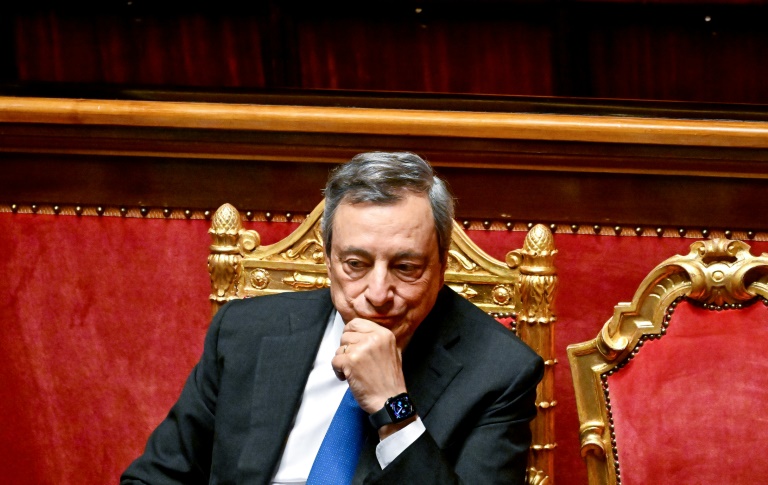
Added to the mix is a fresh political crisis in Italy that could see Prime Minister Mario Draghi ousted, leading to months of uncertainty.

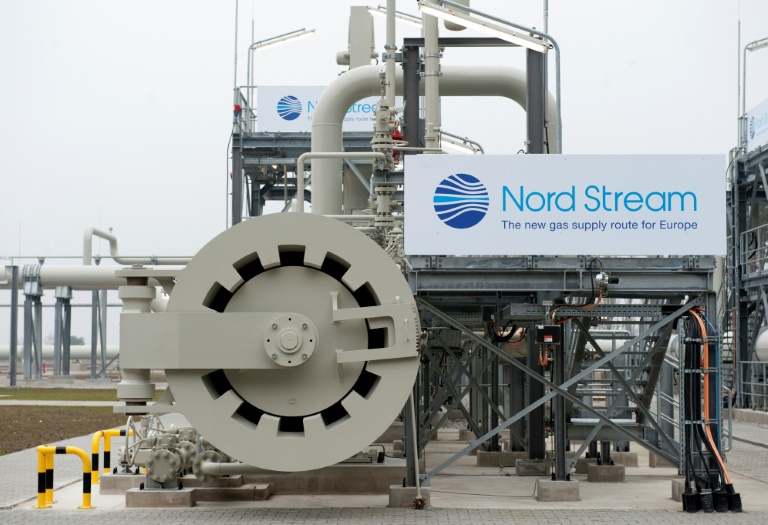
Europe is also awaiting the return of Russian gas supplies after 10 days of maintenance, with many fearing Moscow will keep the taps fully or partially shut — hammering the economy — as retaliation for sanctions imposed over its Ukraine invasion.

Vladimir Putin has said the Nord Stream 1 pipeline will be turned back on, but added that they would be limited unless a row over some elements of the sanctions is resolved.

– Energy as a weapon –

Western leaders remain cynical over his plans ahead of the northern hemisphere winter.

“Moscow is not shying away from using grain and energy deliveries as a weapon,” German Chancellor Olaf Scholz said this week, referring to allegations Moscow was also deliberately blocking food exports from Ukraine. 

The IMF warned Wednesday that a halt in supplies could slash 2022 GDP by 1.5 percent.

The European Commission has urged EU members to reduce demand for natural gas by 15 percent over the winter to counter Russia’s “blackmail”.

After Wednesday’s bounce across Asian markets, uncertainty returned to trading floors.

Hong Kong, Shanghai, Tokyo, Sydney, Singapore and Jakarta all fell, though Seoul, Taipei and Manila eked out gains.

There was little reaction to Joe Biden’s comments that he would hold talks with Xi Jinping “within the next 10 days” as he decides whether or not to remove some Trump-era tariffs on Chinese goods.

And Cameron Dawson, of NewEdge Wealth, said the recent gains could not yet be taken as a sign of a recovery.

He warned that many equities were “still in very distinct downtrends so you can see a rally off maybe an oversold level, but really if you are not starting to recover and break into a better uptrend it really remains to be seen if this can continue”.

“So it’s more a relief at this point and not necessarily a trend change.”

Oil markets extended Wednesday’s drop — with WTI below $100 — after data showed US stockpiles rose more than expected last week as Americans opted not to pay for expensive petrol.

The figures come despite being at the height of the high-demand summer driving season.

– Key figures at around 0230 GMT –

Tokyo – Nikkei 225: DOWN 0.1 percent at 27,657.53 (break)

Hong Kong – Hang Seng Index: DOWN 1.2 percent at 20,644.13

Shanghai – Composite: DOWN 0.5 percent at 3,288.51

Euro/dollar: DOWN at $1.0208 from $1.0175 Wednesday

Pound/dollar: DOWN at $1.1986 from $1.1975 

Euro/pound: DOWN at 85.16 pence from 84.96 pence

Dollar/yen: DOWN at 138.30 yen from 138.26 yen

West Texas Intermediate: DOWN 0.9 percent at $99.00 per barrel

Brent North Sea crude: DOWN 0.8 percent at $106.10 per barrel

New York – Dow: UP 0.2 percent at 31,874.84 (close)

London – FTSE 100: DOWN 0.4 percent at 7,267.97 (close) 

New AI tool that turns words into art enters testing phase

A million people eager to dabble with a new artificial intelligence tool that lets them create images simply by describing them with words will soon get their wish, its creators said Wednesday.

Artificial intelligence research firm OpenAI is conducting a wide-scale beta test of DALL-E, a cutting-edge software that creates images from textual descriptions.

Although the arrival of AI has led to fears of humans being replaced by machines in fields from customer care to journalism, enthusiasts see the technology more as an opportunity than a threat.

A video showcasing the tool on the company’s web site showed DALL-E generating an image of a polar bear playing a guitar, a photo of a koala dunking a basketball, and the famed Mona Lisa painting but with the subject sporting a mohawk hair style.

“We’ve already seen people use DALL·E to make music videos for young cancer patients, create magazine covers, and bring novel concepts to life,” the company said in a post.

OpenAI said invitations will be sent in coming weeks to a million people on a waiting list to try the tool’s latest version.

Amid concerns that this and similar tools could be misused in disinformation campaigns, OpenAI said it worked with researchers and developers to build in safeguards to curb abuses such as DALL-E being used for deception.

“We reject image uploads containing realistic faces and attempts to create the likeness of public figures, including celebrities and prominent political figures,” Open AI said.

Filters built into DALL-E block violent, political, sexual or other content barred by its policies, and the system is designed to avoid assumptions about race or gender, Open AI said.

New AI tool that turns words into art enters testing phase

A million people eager to dabble with a new artificial intelligence tool that lets them create images simply by describing them with words will soon get their wish, its creators said Wednesday.

Artificial intelligence research firm OpenAI is conducting a wide-scale beta test of DALL-E, a cutting-edge software that creates images from textual descriptions.

Although the arrival of AI has led to fears of humans being replaced by machines in fields from customer care to journalism, enthusiasts see the technology more as an opportunity than a threat.

A video showcasing the tool on the company’s web site showed DALL-E generating an image of a polar bear playing a guitar, a photo of a koala dunking a basketball, and the famed Mona Lisa painting but with the subject sporting a mohawk hair style.

“We’ve already seen people use DALL·E to make music videos for young cancer patients, create magazine covers, and bring novel concepts to life,” the company said in a post.

OpenAI said invitations will be sent in coming weeks to a million people on a waiting list to try the tool’s latest version.

Amid concerns that this and similar tools could be misused in disinformation campaigns, OpenAI said it worked with researchers and developers to build in safeguards to curb abuses such as DALL-E being used for deception.

“We reject image uploads containing realistic faces and attempts to create the likeness of public figures, including celebrities and prominent political figures,” Open AI said.

Filters built into DALL-E block violent, political, sexual or other content barred by its policies, and the system is designed to avoid assumptions about race or gender, Open AI said.

Europe on tenterhooks over return of Russian gas to Germany

Europe anxiously awaits the return of Russian gas supplies on Thursday at the end of scheduled work on a crucial pipeline, as heavily dependent Germany accuses the Kremlin of using energy as a “weapon”.

The Nord Stream 1 pipeline is due to reopen at 0400 GMT after 10 days of annual repairs, but Germany fears Russia will seize the opportunity to simply keep the taps entirely or nearly shut, plunging the continent into an energy crisis.

The showdown comes amid the worst tensions between Russia and the West in several years over the invasion of Ukraine.

“Moscow is not shying away from using grain and energy deliveries as a weapon,” German Chancellor Olaf Scholz told reporters this week, referring to allegations Moscow was also deliberately blocking food exports from Ukraine. 

“We have to be resolute in protecting ourselves.”

However, enduring German reliance on Russian gas coupled with distinctly negative signals from Moscow looked set to ratchet up the pressure on Europe’s top economy.

The IMF warned on Wednesday that a halt in supplies could slash 2022 GDP by 1.5 percent.

– ‘Will fulfil’ –

Russia’s state-owned energy giant Gazprom cut flows to Germany via the Nord Stream 1 pipeline under the Baltic Sea to some 40 percent of capacity in recent weeks, blaming the absence of a Siemens gas turbine that was undergoing repairs in Canada.

The repaired turbine is reportedly en route to Russia and expected to arrive on Sunday at the earliest.

Russian President Vladimir Putin insisted this week that Gazprom would meet all its delivery obligations.

“Gazprom has fulfilled, is fulfilling and will fulfil its obligations in full,” Putin told reporters in Tehran after holding talks with the leaders of Iran and Turkey.

However, he warned that as another gas turbine was due to be sent for maintenance at the end of this month, energy flows could fall to 20 percent of capacity from next week.

Since Putin sent troops to Ukraine on February 24 and the West responded with sanctions against Moscow, Russia has begun reducing its gas deliveries to prevent EU countries from replenishing reserves.

Gazprom has already blamed cuts in gas deliveries to Europe on “force majeure”, two major German customers said this week, adding to fears about further disruptions.

Force majeure is a legal measure allowing companies to free themselves from contractual obligations in light of circumstances beyond their control.

– ‘Blackmail’ –

The German government has rejected Gazprom’s turbine explanation as an “excuse”. However, Berlin acknowledges it would be largely powerless to dispute the force majeure claim and expect to be awarded damages from Russia.

As of Wednesday, German gas reserves were about 65 percent according to official estimates. Experts say that would leave Germany critically exposed if supplies via Nord Stream 1 didn’t resume before cold weather returns.

The European Commission on Wednesday urged EU countries to reduce their demand for natural gas by 15 percent over the coming winter months, and to give it special powers to force through needed demand cuts if Russia severs the gas lifeline.

“Russia is blackmailing us,” Commission president Ursula von der Leyen, a former German defence minister, told reporters. 

“Russia is using energy as a weapon and therefore, in any event, whether it’s a partial major cut off of Russian gas or total cut off… Europe needs to be ready.”

German Economy Minister Robert Habeck, who has said he’s started taking shorter showers to save energy, stressed that industry – but also consumers — would have to do their part to reduce Russia’s power in the current standoff.

“A decisive bit of leverage is reducing gas use,” he said in a statement. “We have to do everything in our power to work on that.” 

Peele skewers modern obsessions with 'Nope' film, theme park attraction

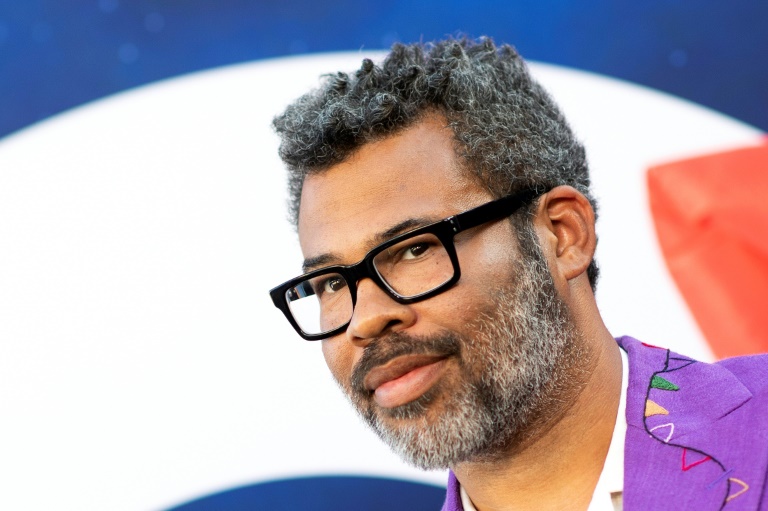
“Nope,” Jordan Peele’s latest withering horror-satire about our modern obsession with attention and spectacle, lands in movie theaters — and at a fittingly Instagram-friendly Los Angeles theme park attraction — this Friday.

The Oscar-winning writer-director — who is widely credited with elevating and revitalizing the horror genre with “Get Out” and “Us” — re-teams with Daniel Kaluuya, who plays OJ, a horse trainer spooked by otherworldly phenomena in the skies above his California ranch.

OJ and his sister Emerald (Keke Palmer) must juggle their fear of the mysterious and potentially dangerous UFO activity with their desire to achieve fame and wealth by capturing it on camera.

“The real villain is our addiction to attention and spectacle, and our inability to be able to actually react in real time,” Palmer told AFP on the red carpet at the film’s Hollywood premiere this week.

“It’s no different from all the rubbernecking on a freeway when there’s an accident — no one calls but everyone stops to watch.

“That’s the real horror that our film is talking about.” 

It builds on themes Peele introduced in his searing 2017 race satire “Get Out,” which was made for less than $5 million and grossed $255 million. It also earned him an Oscar for best original screenplay.

He followed that up with another hit, “Us,” securing a reputation as one of Hollywood’s most in-demand, daring directors and top Black filmmakers.

– ‘His vision’ –

Such was Universal Pictures’ confidence in Peele’s latest project, it took the unprecedented step of opening a permanent new “Nope” attraction at its Universal Studios theme park on the same day the movie opens.

“This is the first time that we’ve ever opened an attraction day-and-date with a new film,” said Universal Creative head Jon Corfino.

“It’s the first time I’ve ever heard of that happening.”

The actual movie set of Jupiter’s Claim — a fictional small Western-themed amusement park which features prominently in “Nope” — was carefully deconstructed when filming ended at the movie’s California desert shooting location, and meticulously rebuilt in the real-world Los Angeles theme park.

“This whole set was the actual authentic set that was used in the production,” said Corfino.

“It was actually broken apart and brought back here put together… it’s basically exactly his vision.”

Appropriately for the movie’s themes, visitors who pay for the VIP studio tour have the opportunity to wander around its fake but hyper-realistic streets, snapping selfies and shooting TikTok videos in front of the saloon, sheriff’s office and gold panning mill.

– ‘Ambitious’ –

It becomes the latest permanent attraction on Universal’s studio tour, where tourists are ferried around working soundstages, and sets from classic movies such as Steven Spielberg’s “Jaws” and Alfred Hitchcock’s “Psycho.”

“Jordan Peele takes his place among that lineage,” said Corfino.

Whether the film does so remains to be seen — early reviews have been mixed, with Empire praising an “ambitious, provocative swing,” but the Guardian describing Peele’s latest work as “clotted and heavy.”

“There’s a million storylines within this and metaphors that anyone in the audience can take differently,” said “Nope” star Brandon Perea.

“You can take it how you take it, and I think that’s great.”

'Severe' pain: a New Yorker's experience of monkeypox

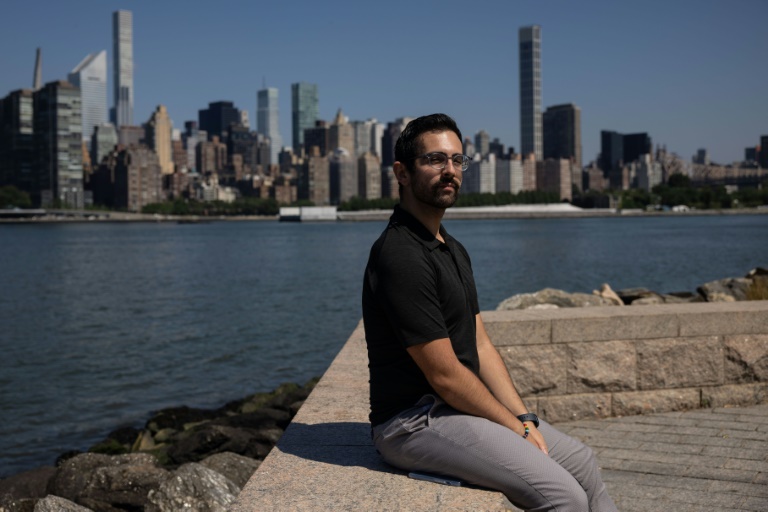
“It was the worst pain that I have experienced in my life,” says 26-year-old New Yorker Kyle Planck, recalling his recent monkeypox infection.

Although anyone can catch monkeypox, Planck first took note of the virus in spring when authorities said many of the first cases in Europe and America were in men who have sex with men.

“I was a little bit worried that it would eventually affect us here in the United States, especially being a member of the LGBTQ+ community,” he remembers.

At the end of June, the PhD candidate in pharmacology says he started to feel very sick.

A fever, swollen lymph nodes and a negative Covid-19 test made him think it could be monkeypox.

A doctor told him to wait and see how his symptoms evolved, but after four days of being feverish he developed spots that left him in no doubt.

“They had started on my arms and my hands and over the course of a day they spread all over my body.

“I had about 30 lesions develop at that point,” he says at his apartment in the borough of Queens.

Planck was able to get tested on July 5 and the following day started treatment with TPOXX, or Tecovirimat, an antiviral drug originally used against human smallpox but authorized in a trial against monkeypox.

Planck concedes that his proximity to the medical community made it easier for him to enroll in a study.

“I know that is not the reality for most people in New York, which is really unfortunate,” he says.

Monkeypox usually clears up on its own but can be extremely painful.

Planck was in intense pain for a week, especially from the lesions on his mucus membranes, before the drugs started to relieve his symptoms.

“The pain was so severe for me that I basically was taking warm baths six or seven times a day, just because that was the only thing that would make me feel better,” he says.

Planck found the experience “exhausting” and adding to his stress was a fear of contaminating his roommate, even though transmission occurs by close contact.

He believes his case was “relatively mild” because he was able to receive treatment and that “so many people are going through worse.”

Planck feels that US health authorities were too slow to react to the first outbreak of cases and says that preventative messaging has been too weak.

– Vaccine doses –

“I think the government was kind of like, ‘let’s wait and see what happens, let’s wait and see if this becomes a problem,’ and that really doesn’t take into account how infectious diseases work,” he says.

Planck has written multiple letters to elected officials asking them to increase access to the antiviral drug.

“We have millions of doses of the TPOXX treatment available. And months into this outbreak, we’re still not really able to mobilize those resources,” he says.

The United States initially had 100 million doses of the ACAM2000 vaccine. It is designed to treat human smallpox but can cause significant side effects and is not recommended for immunocompromised people.

Only a thousand doses of the newer and safer Jynneos vaccine were available as cases first started multiplying, largely because nearly 800,000 doses were blocked in Denmark pending approval by the Food and Drug Administration.

Availability is increasing, however. 

New York City — which has 711 confirmed cases, the highest concentrated number in the country — has received 21,500 doses and is awaiting a supply of 25,000 more.

Appointments have gone in minutes and long queues have formed outside clinics in recent days.

“I don’t want anyone to have to go through what I went through,” concludes Planck.

Alarm bells as US abortion ruling fuels rush on morning-after pill

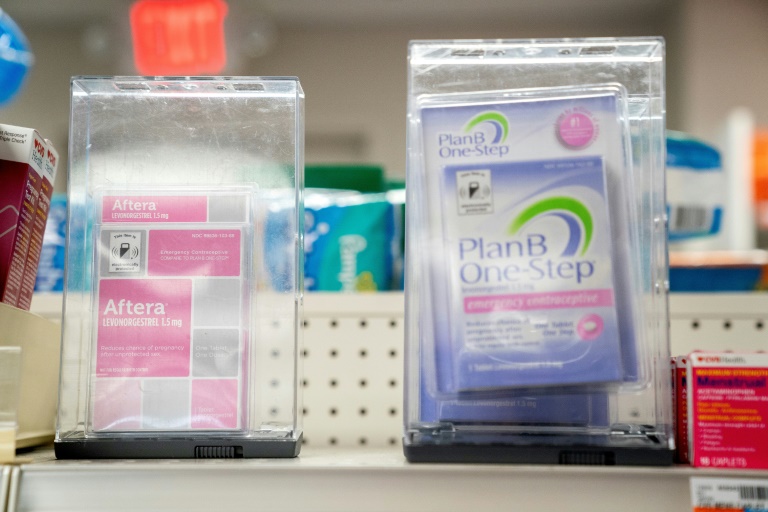
When the US Supreme Court overturned the nationwide right to abortion, Julie Crowe went straight online to do some shopping. She ordered 10 packs of the emergency contraceptive pill known as Plan B for immediate delivery.

Crowe, 52, is part of a larger trend of people who have rushed to purchase the so-called “morning-after” pill, often in bulk, following the loss of half a century of abortion rights.

Online reproductive and sexual health provider Wisp saw a 3,000 percent surge in emergency contraception sales in the 24 hours after the ruling — and they have kept rising in the month since, it told AFP.

But health experts warn that bulk-buying a medication that is legally sold over the counter nationwide is unnecessary, and risks taking pills away from those most in need.

Crowe, a public school teacher from Nashville, Tennessee, was eager to see if her largely conservative state would even allow the delivery to go through. But most of all, she wanted pills on hand to help anyone “in need of control of their own life.”

“It’s utterly ridiculous that as a nation we’re going backwards in time with civil rights and bodily autonomy,” she told AFP.

Distinct from the pills used to terminate pregnancies, emergency contraceptives prevent fertilization from occurring. They can be taken within five days, but the sooner a dose is taken, the more effective it will be.

Calls to stock up have rapidly gained traction on social media, leading both online giant Amazon and drugstore chains like CVS and Rite Aid to temporarily limit purchase quantities to avoid a shortage of the pills.

– ‘Really scary’ –

While healthcare professionals and reproductive health organizations like Planned Parenthood suggest having an extra emergency pill on hand, they do not advise stockpiling.

“I understand the urge,” said Hayley McMahon, a reproductive health researcher.

The prospect of being unable to terminate an unwanted pregnancy, she said, can trigger “a very visceral feel of having your body used against your will.”

But “pharmacies often have a fairly limited supply,” she told AFP. “You don’t want to buy up packs that you don’t need right now, when the next person who walks through the door could be running out of time.”

McMahon believes misinformation is driving the rush to stock up.

Morning-after pills are sometimes conflated with forms of abortion, she said, sometimes intentionally to spread confusion.

That can lead to uncertainty about their legal status, despite there being no legislation in the works to restrict emergency contraceptives.

Savannah Norvell, a nanny in Richmond, Virginia, did worry it could amount to hoarding when she bought a six-pack of Plan B.

But she ultimately decided that because she plans on giving the pills away, buying them would be justified.

Since she lives in a low-income area with a large student population, she ordered from Amazon so as not to decrease the local, immediately available stock.

It’s a particularly personal issue for Norvell, 27, who had to get an abortion at age 18 after she was raped.

She said she felt “ashamed” and alone, and didn’t know where to get Plan B until it was too late.

While she doesn’t regret her abortion, Norvell told AFP she wishes she’d had “another option.”

Norvell wrote on Twitter that she had extra pills to give away, and has requested to join Facebook groups whose members donate morning-after pills to people in need.

– ‘Reinvent the wheel’ –

However well-intentioned, experts say such actions are misguided.

“As long as emergency contraceptives are available from regular vendors, I don’t see the benefit of having individuals ship them to women out of state,” said Caroline Moreau, a reproductive health specialist and associate professor at the Johns Hopkins school of public health.

While it is legal to mail over-the-counter medication, she cautioned it will always be safer to buy the pills from a reliable vendor than from a stranger online.

“There’s no real reason to reinvent the wheel,” agreed McMahon, pointing out that abortion funds were already working to ensure access to emergency contraceptives obtained directly from manufacturers.

In one such initiative, a group called Students for Reproductive Freedom recently installed a Plan B vending machine on site at Boston University — and hopes to extend to other campuses.

Still, McMahon acknowledged that stockpiling was “an expression of autonomy” against the Supreme Court decision.

Norvell, meanwhile, wanted to feel she could somehow make a difference.

“It’s such an isolating feeling, not to be able to choose what’s best for you,” she said. “I don’t want anyone else to feel as alone as I did, and if I can help them, I will.”

Hit by China shutdown, Tesla boosts auto prices and sells bitcoin

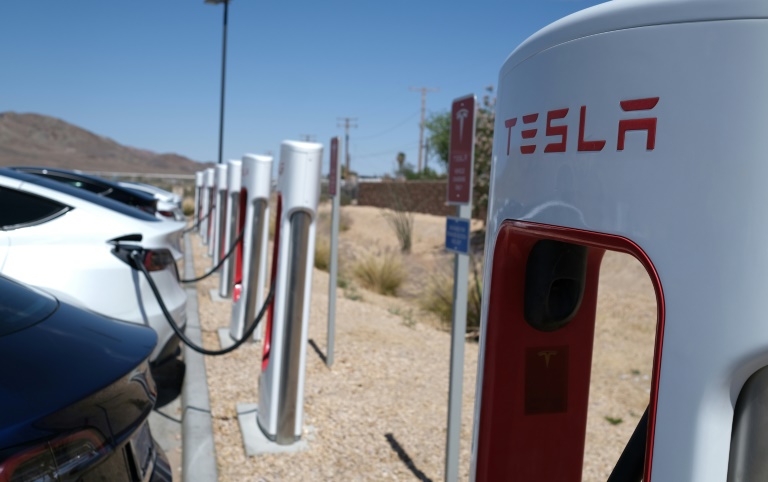
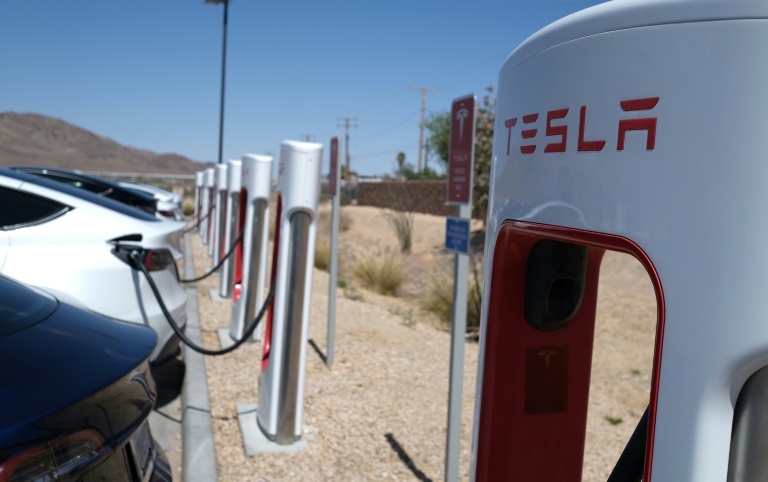
Tesla reported solid quarterly earnings Wednesday despite a hit from Covid-19 lockdowns in Shanghai that Chief Executive Elon Musk said prompted the company to liquidate most of its bitcoin holdings.

Musk, who has generated recent headlines over his controversial withdrawal from a $44 billion acquisition of Twitter, said the company had navigated a tricky environment with the Shanghai closure and lingering supply chain problems that have raised costs.

The electric vehicle maker reported second-quarter profits of $2.3 billion, about twice that in the year-ago period as the automaker lifted car prices to “embarrassing” levels, as Musk put it.

Although Tesla profits topped estimates, they lagged behind those in the first quarter, the first sequential profit drop since late 2020, which coincided with a fall in automotive profit margins due to rising costs.

And while revenues jumped 42 percent to $16.9 billion, they came in below the $17.1 billion projected by analysts.

Musk described the period as a “unique quarter,” but told investors and analysts on a conference call that the restart of the Shanghai plant and the ramp-up of new factories in Germany and Texas create “the potential for a record-breaking second half of the year.”

The company cited the drag from Shanghai, where its factory was shuttered for part of the quarter. But Tesla said it finished the three-month period with “a record monthly production level” after the China restart.

Tesla said supply chain challenges remain an ongoing headache, as factory shutdowns, labor shortages, logistics and other issues “limited our ability to consistently run our factories at full capacity.”

– Bitcoin sale –

During the quarter, Tesla liquidated about 75 percent of its holdings in bitcoin, the value of which has declined sharply in 2022.

The moves on bitcoin resulted in one-time costs of $106 million, said Chief Financial Officer Zachary Kirkhorn.

Musk attributed the move to the need to raise cash because of the uncertainty of when Shanghai operations would return.

The sale “should not be taken as some verdict on bitcoin,” Musk said at the outset of the call. 

But cryptocurrency is a “side show to the side show” compared with the goal of accelerating the energy transition, said Musk, who pointed to the scorching heat now plaguing many countries as underscoring the need for change.

Torrid demand for Musk’s electric vehicles has allowed Tesla to pass on higher prices to consumers. 

In the United States, Tesla’s cheapest vehicle, the Model 3, starts at nearly $50,000.

“We’ve raised our prices quite a few times, they’re frankly at embarrassing levels. ” Musk said. “But we’ve also had a lot of supply chain and production shocks and we’ve got crazy inflation.

“I am hopeful — this is not a promise or anything, but I’m hopeful that at some point we can reduce the prices a little bit,” he said.

– Bullish on rest of 2022 –

Several analysts had viewed the second quarter as the weakest of the year for Tesla in the aftermath of the Shanghai factory lockdown and other supply chain issues.

But many Tesla watchers are bullish on the second half of 2022 in light of the company’s growing production profile.

CFRA Research analyst Garrett Nelson told AFP the second quarter was “especially impressive” given the headwinds of the Shanghai closure and the costs of upping production at new plants.

Musk has shown boundless confidence in Tesla’s ability to shake up the auto market, leading the company as it has met production targets on its core product, even as the cars remain too expensive for many consumers.

But Musk has been less enthusiastic of late about the economy as a whole, saying last month that a recession “appears more likely than not” and confirming plans to reduce the company’s salaried work force by about 10 percent.

Most recently, the controversial CEO has become embroiled in a messy fight with Twitter after withdrawing his takeover bid. The case will go to trial in October to determine Musk will be forced to complete the transaction. 

Shares of Tesla added 1.6 percent to $754.45 in after-hours trading.

Hit by China shutdown, Tesla boosts auto prices and sells bitcoin

Tesla reported solid quarterly earnings Wednesday despite a hit from Covid-19 lockdowns in Shanghai that Chief Executive Elon Musk said prompted the company to liquidate most of its bitcoin holdings.

Musk, who has generated recent headlines over his controversial withdrawal from a $44 billion acquisition of Twitter, said the company had navigated a tricky environment with the Shanghai closure and lingering supply chain problems that have raised costs.

The electric vehicle maker reported second-quarter profits of $2.3 billion, about twice that in the year-ago period as the automaker lifted car prices to “embarrassing” levels, as Musk put it.

Although Tesla profits topped estimates, they lagged behind those in the first quarter, the first sequential profit drop since late 2020, which coincided with a fall in automotive profit margins due to rising costs.

And while revenues jumped 42 percent to $16.9 billion, they came in below the $17.1 billion projected by analysts.

Musk described the period as a “unique quarter,” but told investors and analysts on a conference call that the restart of the Shanghai plant and the ramp-up of new factories in Germany and Texas create “the potential for a record-breaking second half of the year.”

The company cited the drag from Shanghai, where its factory was shuttered for part of the quarter. But Tesla said it finished the three-month period with “a record monthly production level” after the China restart.

Tesla said supply chain challenges remain an ongoing headache, as factory shutdowns, labor shortages, logistics and other issues “limited our ability to consistently run our factories at full capacity.”

– Bitcoin sale –

During the quarter, Tesla liquidated about 75 percent of its holdings in bitcoin, the value of which has declined sharply in 2022.

The moves on bitcoin resulted in one-time costs of $106 million, said Chief Financial Officer Zachary Kirkhorn.

Musk attributed the move to the need to raise cash because of the uncertainty of when Shanghai operations would return.

The sale “should not be taken as some verdict on bitcoin,” Musk said at the outset of the call. 

But cryptocurrency is a “side show to the side show” compared with the goal of accelerating the energy transition, said Musk, who pointed to the scorching heat now plaguing many countries as underscoring the need for change.

Torrid demand for Musk’s electric vehicles has allowed Tesla to pass on higher prices to consumers. 

In the United States, Tesla’s cheapest vehicle, the Model 3, starts at nearly $50,000.

“We’ve raised our prices quite a few times, they’re frankly at embarrassing levels. ” Musk said. “But we’ve also had a lot of supply chain and production shocks and we’ve got crazy inflation.

“I am hopeful — this is not a promise or anything, but I’m hopeful that at some point we can reduce the prices a little bit,” he said.

– Bullish on rest of 2022 –

Several analysts had viewed the second quarter as the weakest of the year for Tesla in the aftermath of the Shanghai factory lockdown and other supply chain issues.

But many Tesla watchers are bullish on the second half of 2022 in light of the company’s growing production profile.

CFRA Research analyst Garrett Nelson told AFP the second quarter was “especially impressive” given the headwinds of the Shanghai closure and the costs of upping production at new plants.

Musk has shown boundless confidence in Tesla’s ability to shake up the auto market, leading the company as it has met production targets on its core product, even as the cars remain too expensive for many consumers.

But Musk has been less enthusiastic of late about the economy as a whole, saying last month that a recession “appears more likely than not” and confirming plans to reduce the company’s salaried work force by about 10 percent.

Most recently, the controversial CEO has become embroiled in a messy fight with Twitter after withdrawing his takeover bid. The case will go to trial in October to determine Musk will be forced to complete the transaction. 

Shares of Tesla added 1.6 percent to $754.45 in after-hours trading.

Close Bitnami banner
Bitnami