AFP

ADB slashes Asia growth forecast as fuel, food prices rise

The Asian Development Bank on Thursday slashed its 2022 growth forecast for developing Asia and warned economic conditions could worsen, as the war in Ukraine and supply chain disruptions drive up prices.

While the impact of Covid-19 had eased, the region was now grappling with the fallout from Russia’s invasion of Ukraine, lockdowns in China and aggressive interest rate hikes, the Philippines-based bank said.

To reflect the deterioration across developing Asia — which stretches from the Cook Islands in the Pacific to Kazakhstan in Central Asia — the bank cut its 2022 growth forecast to 4.6 percent.

That compares with its previous prediction in April of 5.2 percent and the 6.9 percent growth chalked up last year.

It also increased its inflation forecast for the region this year to 4.2 percent, from 3.7 percent, due to surging food and fuel prices.

Risks to the outlook “remain elevated”, the bank warned.

“A substantial slowdown in global growth could hurt exports, manufacturing activity and employment prospects, and cause turbulence in financial markets,” it said. 

Double-digit inflation has hit most of the Caucasus and Central Asia — which have close trade and financial ties to Russia — as well as Mongolia, Pakistan, Sri Lanka, Laos and Myanmar.

India’s inflation was above target at seven percent, but in the rest of the region’s large economies it was “manageable”.

But the bank warned: “A worsening fallout from the war in Ukraine could lead to a further surge in global energy and commodity prices, with likely knock-on effects on growth and inflation in developing Asia.”

Adding to the region’s woes was the strengthening US dollar, seen as a safe haven during periods of uncertainty, which the bank said was weighing on regional currencies and stock markets.

“With financial conditions tightening, growth in advanced economies is softening,” the bank said.

“And with activity in the PRC (China) hampered by supply chain disruptions, domestic demand and exports in developing Asia are set to face significant challenges.”

The growth forecast for East Asia, which includes China, was cut to 3.8 percent from 4.7 percent, as Covid-19 lockdowns batter the world’s second-biggest economy.

In South Asia, where bankrupt Sri Lanka is reeling from its worst economic crisis, the bank lowered its growth forecast to 6.5 percent from 7.0 percent previously.

But the bank revised up its forecast for the Pacific to 4.7 percent, from 3.9 percent, on a surprising rebound in tourism in Fiji.

Biden seeks to revive climate agenda as heat waves slam US, Europe

President Joe Biden, thwarted by lawmakers and the Supreme Court, sought Wednesday to revive his ambitions to tackle climate change as heat waves batter the United States and Europe.

Rocketing summer temperatures have highlighted the growing threat, with 100 million people in the United States currently under excessive heat alerts and devastatingly hot conditions causing misery across Europe.

“Climate change… is literally, not figuratively, a clear and present danger,” Biden said, announcing executive actions including $2.3 billion in investments to help build US infrastructure to withstand climate disasters.

“The health of our citizens and our communities is literally at stake… Our national security is at stake as well… And our economy is at risk. So we have to act.”

Biden, delivering a speech at a former coal-fired electricity plant in Massachusetts, said his administration would do whatever necessary, with or without lawmakers on board.

“Congress is not acting as it should… This is an emergency and I will look at it that way. As president, I’ll use my executive powers to combat the climate crisis,” he said.

But he stopped short of declaring a formal climate emergency, which would grant him additional policy powers. Upon his return home, when asked about the emergency designation, Biden told reporters: “I will make that decision soon.”

– Repeated setbacks –

Biden began his term last year promising to fulfill campaign pledges to tackle the global climate crisis, but his agenda has faced blow after blow.

His first day in office, Biden signed an executive order to bring the United States back into the Paris climate agreement, followed later by an ambitious announcement that he was targeting a 50-52 percent reduction from 2005 levels in US net greenhouse gas pollution by 2030.

But his signature Build Back Better legislation, which would have included $550 billion for clean energy and other climate initiatives, is all but dead after failing to receive the necessary backing in Congress as fellow Democrat Joe Manchin said he would not support the bill in a evenly divided Senate.

And last month, the conservative-leaning Supreme Court ruled that the Environmental Protection Agency (EPA) cannot issue broad greenhouse gas regulations without congressional approval.

“When it comes to fighting climate change, I will not take ‘no’ for an answer,” Biden said.

“I will do everything in my power to clean our air and water, protect our people’s heath, to win the clean energy future… Our children and grandchildren are counting on us. Not a joke.”

Among the new executive orders was funding to promote efficient air conditioning, and an order to advance wind energy development off the Atlantic Coast and Florida’s Gulf Coast.

The Biden administration has framed climate policies as a job creation project — and as a national security issue, made more urgent by soaring fuel prices in the wake of Russia’s invasion of Ukraine.

The White House said in a statement that Biden was seeking “to turn the climate crisis into an opportunity, by creating good-paying jobs in clean energy and lowering costs for families.”

His speech on Wednesday was at a shuttered coal-fired power plant that will be used for a cable manufacturing factory to supply offshore wind facilities.

State Department spokesman Ned Price this week pointed to the extreme heat wave tormenting Europe this week — with Britain recording a temperature of 104 degrees Fahrenheit (40 degrees Celsius) — as more proof that climate action cannot wait. 

“We are committed to taking advantage of this moment and doing everything we can, including on the world stage,” Price told reporters, “to ensure that this decisive decade does not go by without us taking appropriate action.”

Biden seeks to revive climate agenda as heat waves slam US, Europe

President Joe Biden, thwarted by lawmakers and the Supreme Court, sought Wednesday to revive his ambitions to tackle climate change as heat waves batter the United States and Europe.

Rocketing summer temperatures have highlighted the growing threat, with 100 million people in the United States currently under excessive heat alerts and devastatingly hot conditions causing misery across Europe.

“Climate change… is literally, not figuratively, a clear and present danger,” Biden said, announcing executive actions including $2.3 billion in investments to help build US infrastructure to withstand climate disasters.

“The health of our citizens and our communities is literally at stake… Our national security is at stake as well… And our economy is at risk. So we have to act.”

Biden, delivering a speech at a former coal-fired electricity plant in Massachusetts, said his administration would do whatever necessary, with or without lawmakers on board.

“Congress is not acting as it should… This is an emergency and I will look at it that way. As president, I’ll use my executive powers to combat the climate crisis,” he said.

But he stopped short of declaring a formal climate emergency, which would grant him additional policy powers. Upon his return home, when asked about the emergency designation, Biden told reporters: “I will make that decision soon.”

– Repeated setbacks –

Biden began his term last year promising to fulfill campaign pledges to tackle the global climate crisis, but his agenda has faced blow after blow.

His first day in office, Biden signed an executive order to bring the United States back into the Paris climate agreement, followed later by an ambitious announcement that he was targeting a 50-52 percent reduction from 2005 levels in US net greenhouse gas pollution by 2030.

But his signature Build Back Better legislation, which would have included $550 billion for clean energy and other climate initiatives, is all but dead after failing to receive the necessary backing in Congress as fellow Democrat Joe Manchin said he would not support the bill in a evenly divided Senate.

And last month, the conservative-leaning Supreme Court ruled that the Environmental Protection Agency (EPA) cannot issue broad greenhouse gas regulations without congressional approval.

“When it comes to fighting climate change, I will not take ‘no’ for an answer,” Biden said.

“I will do everything in my power to clean our air and water, protect our people’s heath, to win the clean energy future… Our children and grandchildren are counting on us. Not a joke.”

Among the new executive orders was funding to promote efficient air conditioning, and an order to advance wind energy development off the Atlantic Coast and Florida’s Gulf Coast.

The Biden administration has framed climate policies as a job creation project — and as a national security issue, made more urgent by soaring fuel prices in the wake of Russia’s invasion of Ukraine.

The White House said in a statement that Biden was seeking “to turn the climate crisis into an opportunity, by creating good-paying jobs in clean energy and lowering costs for families.”

His speech on Wednesday was at a shuttered coal-fired power plant that will be used for a cable manufacturing factory to supply offshore wind facilities.

State Department spokesman Ned Price this week pointed to the extreme heat wave tormenting Europe this week — with Britain recording a temperature of 104 degrees Fahrenheit (40 degrees Celsius) — as more proof that climate action cannot wait. 

“We are committed to taking advantage of this moment and doing everything we can, including on the world stage,” Price told reporters, “to ensure that this decisive decade does not go by without us taking appropriate action.”

United Airlines reports profit but sees higher recession risk

United Airlines reported a profitable second quarter Wednesday as strong travel demand boosted revenues, but signaled plans to rein in plane capacity as carriers confront operational challenges and recession worries.

The big US carrier said revenues “improved at a rapid pace” during the quarter and that it expects full-year profitability in light of still-strong demand.

But United said it expects full-year capacity in 2022 to be 13 percent below the 2019 level. It plans 2023 capacity growth of “no more than eight percent” from the 2019 level.

Chief Executive Scott Kirby cited the chance of a global recession as one of three major question marks facing the industry as the company reported quarterly profits of $329 million compared with a loss of $434 million in the year-ago period.

Revenues were $12.1 billion, more than twice that of the 2021 period and 6.2 percent above the 2019 level.

“It’s nice to return to profitability,” Kirby said. “But we must confront three risks that could grow over the next 6-18 months. 

“Industry-wide operational challenges that limit the system’s capacity, record fuel prices and the increasing possibility of a global recession are each real challenges that we are already addressing.”

Shares fell 6.8 percent to $38.84 in after-hours trading.

US to send more rocket systems to Ukraine, Moscow signals wider war aims

The United States on Wednesday promised to send more precision rocket systems to Kyiv, soon after Moscow signaled it was aiming to seize more Ukrainian territory beyond the eastern industrial region of Donbas.

The announcement came as the European Commission called on EU members to slash demand for natural gas to relieve dependence on Russian energy and the bloc agreed an embargo on Russian gold imports, measures that Kyiv nevertheless dismissed as insufficient.

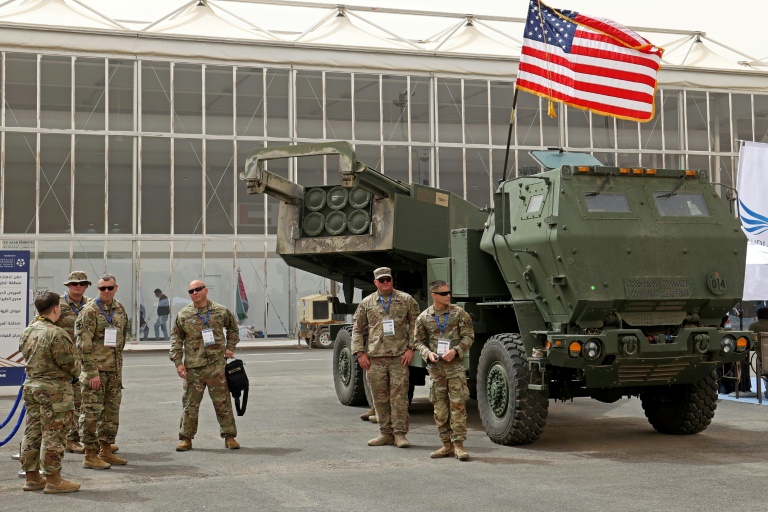
Pentagon chief Lloyd Austin said Washington would send four more M142 High Mobility Artillery Rocket System (Himars), which have notably boosted Kyiv’s capabilities on the battlefield in recent weeks by allowing Ukrainian forces to hit Russian targets from long distances.

“Ukraine needs the firepower and the ammunition to withstand this barrage and to strike back,” Austin told reporters, adding that the new shipment would bring the total of US Himars sent to Kyiv to 16.

Hours earlier, Russian Foreign Minister Sergei Lavrov said in an interview that Moscow’s military was no longer only focused on wresting control of the east Ukraine regions of Lugansk and Donetsk, which have been partially controlled by pro-Moscow rebels for years.

“The geography is different now. It is not only about the DNR and LNR, but also the Kherson region, the Zaporizhzhia region and a number of other territories,” he explained to state media.

On Tuesday, the United States said Russia was “beginning to roll out a version of what you could call an annexation playbook” — citing the same areas mentioned by Lavrov.

Russian forces, since invading Ukraine on February 24, have steadily advanced into each of those regions, wreaking destruction as they captured key cities and met fierce Ukrainian resistance.

In recent weeks, they have also hit Ukrainian civilian targets in cities and towns far away from the frontline, leaving scores of civilians dead, in what Ukrainian President Volodymyr Zelensky has called a terror campaign.

– ‘Russian terror must lose’ –

In an emotional speech before the US Congress on Wednesday, Ukrainian First Lady Olena Zelenska described the suffering of millions of Ukrainian parents and children, and asked Washington for air-defence systems to fend off Russian missiles.

Zelenska, stepping into a more public role after staying sheltered in the first weeks of the war, displayed images of children who were killed or maimed by Russia, including a four-year-old killed by a strike in the city of Vinnytsia.

Photos of her blood-spattered pink stroller and footage of her final moments went viral on social media.

“Help us to stop this terror against Ukrainians,” Zelenska said.

Later in the day, Zelensky expressed hope that Kyiv’s pleas for anti-missile systems would be heard, saying: ” I hope the answers to our requests won’t be long in coming.”

– Western arms a ‘direct threat’ to Russia –

The steady progress of Russian troops in the east has come after Moscow’s forces failed early in the invasion to capture the capital Kyiv and were pushed back from Ukraine’s second city Kharkiv.

But Russian artillery has pursued an almost constant shelling campaign on Kharkiv, and strikes on Wednesday killed three people, local officials said.

“There was a 13-year-old boy among them,” the regional governor Oleg Synegubov said in a statement on social media. 

AFP journalists saw a man in shock kneeling over the body, which was covered by a blue sweatshirt and surrounded by shards of broken glass.

While the brunt of recent fighting in Ukraine has focused on Donbas, a Ukrainian counter-offensive in the south has slowly clawed back some Russian-held territory, thanks in large part to Western-supplied long-range artillery.

Lavrov said that Western arms deliveries to Ukraine had been a factor in Moscow’s decision to focus beyond the east and said its ambitions could expand even more if the shipments continued. 

“We cannot allow the part of Ukraine that Zelensky will control or whoever replaces him to have weapons that will pose a direct threat to our territory and the territory of those republics that have declared their independence,” Lavrov said, referring to Donetsk and Lugansk.

– Emergency energy plans –

Lavrov also dismissed the idea of further peace talks with Ukraine, claiming that earlier rounds showed Kyiv was unwilling to negotiate in “earnest”. 

“It doesn’t make any sense in the current situation,” he told state media.

Russian and Ukrainian delegations are nevertheless expected in Istanbul in the coming days for more talks on unblocking Ukraine’s Black Sea grain exports.

Turkish President Recep Tayyip Erdogan said Wednesday he hoped an agreement could be formulated “this week”.

The West has responded to Russia’s invasion with several packages of damaging sanctions, which in turn has seen Russia cut natural gas supplies to the bloc, spurring a supply and cost crisis.

In its latest package of penalties Wednesday, the EU targeted gold exports and froze assets at Russia’s largest bank Sberbank.

And Brussels also asked EU members to reduce demand for natural gas by 15 percent in order to limit supplies from Russia, which last year accounted for 40 percent of EU’s imports.

Zelensky however criticized those measures as inadequate, saying in his address: “Russia must pay a much higher price for this war, which would force it to seek peace.”

burs-acl-jbr/md/sst

European stocks retreat, euro dips while US shares rise

European stocks retreated Wednesday as the EU took precautionary measures in the face of reduced Russian gas supplies, but Wall Street extended its rally for a second day.

The euro bobbed about before settling lower ahead of a key European Central Bank meeting on Thursday, when the ECB is expected to announce its first rate hike in more than a decade to join the fight to tame sky-high inflation.

US stocks had rebounded strongly Tuesday as companies’ earnings soothed concerns about the impact on their bottom lines from soaring inflation and rising interest rates, and the gains continued into Wednesday, a bright spot in a dismal year.

While several firms — such as Apple and Johnson & Johnson — have indicated they have concerns about the outlook, there is a feeling that the sell-off across markets could be reaching a bottom. Investors especially moved into tech shares.

And some commentators have suggested the second half of the year could see a healthy rally, despite official data continuing to show inflation continuing to rise strongly worldwide.

UK annual inflation hit a new 40-year high at 9.4 percent in June on surging fuel and food prices.

The Federal Reserve and Bank of England have raised lending rates multiple times, and all eyes now are on the ECB.

Officials have their work cut out for them as they must also try not to drive a stake through the eurozone economy, which has also been hammered by an energy crisis.

Talk of a half-point hike — instead of the quarter-point increase most expect ECB officials had signaled — has boosted the euro against the US dollar since it fell below parity last week for the first time in 20 years.

“The central bank has left the door open to super-charging the lift-off previously but given its past tendency to proceed with extreme caution, it would send quite the message about how concerned they’ve become,” said market analyst Craig Erlam at trading platform OANDA.

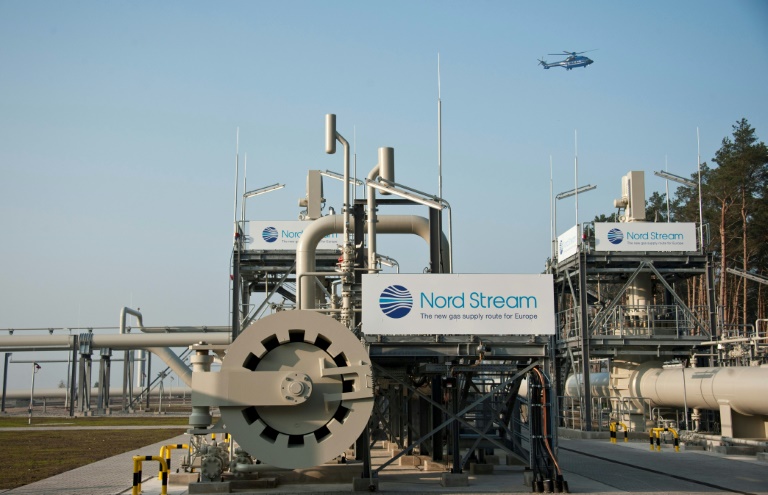
The European single currency caught an early updraft from a Bloomberg News article saying Russia’s Gazprom would resume deliveries through the Nord Stream 1 pipeline Thursday, albeit at reduced capacity.

Moscow shut down deliveries to Germany for technical reasons last week, but there had been fears it would keep the taps off in retaliation for European sanctions over its invasion of Ukraine.

The German pipeline manager on Wednesday said Russian gas deliveries are expected to resume at the previous level.

Taking no chances, the European Commission on Wednesday urged EU countries to reduce their demand for natural gas by 15 percent over the coming winter months to overcome Russia’s energy supply “blackmail.”

In a statement, the EU’s executive arm also asked member states to give it special powers to force through needed demand reductions if Russia cuts Europe’s gas lifeline.

“Russia is blackmailing us. Russia is using energy as a weapon and therefore, in any event, whether it’s a partial major cut off of Russian gas or total cut off… Europe needs to be ready,” Commission president Ursula von der Leyen told reporters.

Oil prices retreated modestly.

– Key figures at around 2030 GMT –

New York – Dow: UP 0.2 percent at 31,874.84 (close)

New York – S&P 500: UP 0.6 percent at 3,959.9 (close)

New York – Nasdaq: UP 1.6 percent at 11,897.65 (close)

London – FTSE 100: DOWN 0.4 percent at 7,267.97 (close) 

Frankfurt – DAX: DOWN 0.2 percent at 13,281.98 (close)

Paris – CAC 40: DOWN 0.3 percent at 6,184.66 (close)

EURO STOXX 50: DOWN less than 0.1 percent at 3,585.24 (close)

Tokyo – Nikkei 225: UP 2.7 percent at 27,680.26 (close)

Hong Kong – Hang Seng Index: UP 1.1 percent at 20,890.22 (close)

Shanghai – Composite: UP 0.8 percent at 3,304.72 (close)

Euro/dollar: DOWN at $1.0175 from $1.0226 Tuesday

Pound/dollar: DOWN at $1.1975 from $1.2002 

Euro/pound: DOWN at 84.96 pence from 85.19 pence

Dollar/yen: DOWN at 138.26 yen from 138.21 yen

West Texas Intermediate: DOWN 1.5 percent at $102.61 per barrel

Brent North Sea crude: DOWN 0.6 percent at $106.69 per barrel

burs-rl/pvh/hs/to

Trumps bid farewell to Ivana at funeral in New York

Ex-president Donald Trump and his eldest children gathered at a church in New York on Wednesday to say goodbye to his first wife Ivana who died last week aged 73.

Don Jr, Ivanka and Eric Trump joined their father and former first lady Melania for their mother’s funeral service at St. Vincent Ferrer Church on Manhattan’s Upper East Side.

The siblings and their partners and children looked on solemnly as Ivana Trump’s casket was carried into the church for the 1:30 pm (17:30 pm) service.

Donald Trump and Melania entered by a side door, an AFP photographer saw, as the funeral took place under heightened security.

Inside, Eric Trump told mourners that his Czech-born mom had been “the embodiment of the American dream” and “a force of nature,” the New York Post reported.

Ivanka Trump described her mother as a “trailblazer” during the Catholic service that was billed as a “celebration of life,” the tabloid added.

Ivana Trump, the first wife of the former US president, died of “blunt impact injuries” on Thursday, reportedly caused by a fall down the stairs at her home.

She was a model who grew up under communist rule in the former Czechoslovakia before marrying Donald Trump, then a budding real estate developer, in 1977.

Throughout the ’80s, the Trumps were one of New York’s highest-profile couples, their extravagant lifestyle exemplifying the flashy excesses of the decade.

Their power and celebrity grew as Donald Trump’s property business soared, with Ivana Trump taking on number of key roles in the business.

Their high-profile split in the early ’90s, rumored to have been caused in part by Donald Trump’s affair with actress Marla Maples, provided juicy content for New York’s tabloids.

Ivana Trump went on to enjoy a successful business career of her own, developing clothing, jewelry and beauty products and penning a number of books.

She was married four times in her life, once before her marriage to Donald Trump and twice after.

Alleged shooter of Lady Gaga's dog walker freed by mistake

US authorities were on Wednesday searching for the suspect accused of shooting Lady Gaga’s dog walker in 2021, after admitting he was accidentally released from custody months ago.

James Howard Jackson, 19, is charged with shooting Ryan Fischer with a handgun near Sunset Boulevard in Los Angeles during an attempted kidnapping of the star’s valuable French bulldogs.

Jackson was released in April due to a “clerical error,” the US Marshals Service acknowledged, describing him as armed and dangerous.

It offered $5,000 for information about Jackson, one of three men charged with attempted murder and robbery over the attack.

Two of the suspects got out of a vehicle and demanded Fischer hand over the pets at gunpoint. Fischer was shot in a struggle before the men fled with two of the dogs, Koji and Gustav.

A third dog, Miss Asia, ran away during the encounter before returning to Fischer, who suffered serious chest injuries.

Police said they do not believe the suspects targeted the dogs because of their famous owner, but because they are a coveted breed that can sell for thousands of dollars.

At the time, the three men were described by Los Angeles police as “documented gang members.”

A 50-year-old woman handed the two missing pets in to the police two days after the theft and was later also arrested. Lady Gaga had offered a $500,000 reward for the dogs’ safe return.

Webb telescope may have already found most distant known galaxy

Just a week after its first images were shown to the world, the James Webb Space Telescope may have found a galaxy that existed 13.5 billion years ago, a scientist who analyzed the data said Wednesday.

Known as GLASS-z13, the galaxy dates back to 300 million years after the Big Bang, about 100 million years earlier than anything previously identified, Rohan Naidu of the Harvard Center for Astrophysics told AFP.

“We’re potentially looking at the most distant starlight that anyone has ever seen,” he said.

The more distant objects are from us, the longer it takes for their light to reach us, and so to gaze back into the distant universe is to see into the deep past.

Though GLASS-z13 existed in the earliest era of the universe, its exact age remains unknown as it could have formed anytime within the first 300 million years.

GLASS-z13 was spotted in so-called “early release” data from the orbiting observatory’s main infrared imager, called NIRcam — but the discovery was not revealed in the first image set published by NASA last week.

When translated from infrared into the visible spectrum, the galaxy appears as a blob of red with white in its center, as part of a wider image of the distant cosmos called a “deep field.”

Naidu and colleagues — a team totaling 25 astronomers from across the world — have submitted their findings to a scientific journal. 

For now, the research is posted on a “preprint” server, so it comes with the caveat that it has yet to be peer-reviewed — but it has already set the global astronomy community abuzz.

“Astronomy records are crumbling already, and more are shaky,” tweeted NASA’s chief scientist Thomas Zurbuchen.

“Yes, I tend to only cheer once science results clear peer review. But, this looks very promising,” he added.

Naidu said another team of astronomers led by Marco Castellano that worked on the same data has achieved similar conclusions, “so that gives us confidence.”

– ‘Work to be done’ –

One of the great promises of Webb is its ability to find the earliest galaxies that formed after the Big Bang, 13.8 billion years ago.

Because these are so distant from Earth, by the time their light reaches us, it has been stretched by the expansion of the universe and shifted to the infrared region of the light spectrum, which Webb is equipped to detect with unprecedented clarity.

Naidu and colleagues combed through this infrared data of the distant universe, searching for a telltale signature of extremely distant galaxies.

Below a particular threshold of infrared wavelength, all photons — packets of energy — are absorbed by the neutral hydrogen of the universe that lies between the object and the observer.

By using data collected through different infrared filters pointed at the same region of space, they were able to detect where these drop-offs in photons occurred, from which they inferred the presence of these most distant galaxies.

“We searched all the early data for galaxies with this very striking signature, and these were the two systems that had by far the most compelling signature,” said Naidu.

One of these is GLASS-z13, while the other, not as ancient, is GLASS-z11.

“There’s strong evidence, but there’s still work to be done,” said Naidu.

In particular, the team wants to ask Webb’s managers for telescope time to carry out spectroscopy — an analysis of light that reveals detailed properties — to measure its precise distance.

“Right now, our guess for the distance is based on what we don’t see — it would be great to have an answer for what we do see,” said Naidu.

Already, however, the team have detected surprising properties. 

For instance, the galaxy is the mass of a billion Suns, which is “potentially very surprising, and that is something we don’t really understand” given how soon after the Big Bang it formed, Naidu said.

Launched last December and fully operational since last week, Webb is the most powerful space telescope ever built, with astronomers confident it will herald a new era of discovery.

Webb telescope may have already found most distant known galaxy

Just a week after its first images were shown to the world, the James Webb Space Telescope may have found a galaxy that existed 13.5 billion years ago, a scientist who analyzed the data said Wednesday.

Known as GLASS-z13, the galaxy dates back to 300 million years after the Big Bang, about 100 million years earlier than anything previously identified, Rohan Naidu of the Harvard Center for Astrophysics told AFP.

“We’re potentially looking at the most distant starlight that anyone has ever seen,” he said.

The more distant objects are from us, the longer it takes for their light to reach us, and so to gaze back into the distant universe is to see into the deep past.

Though GLASS-z13 existed in the earliest era of the universe, its exact age remains unknown as it could have formed anytime within the first 300 million years.

GLASS-z13 was spotted in so-called “early release” data from the orbiting observatory’s main infrared imager, called NIRcam — but the discovery was not revealed in the first image set published by NASA last week.

When translated from infrared into the visible spectrum, the galaxy appears as a blob of red with white in its center, as part of a wider image of the distant cosmos called a “deep field.”

Naidu and colleagues — a team totaling 25 astronomers from across the world — have submitted their findings to a scientific journal. 

For now, the research is posted on a “preprint” server, so it comes with the caveat that it has yet to be peer-reviewed — but it has already set the global astronomy community abuzz.

“Astronomy records are crumbling already, and more are shaky,” tweeted NASA’s chief scientist Thomas Zurbuchen.

“Yes, I tend to only cheer once science results clear peer review. But, this looks very promising,” he added.

Naidu said another team of astronomers led by Marco Castellano that worked on the same data has achieved similar conclusions, “so that gives us confidence.”

– ‘Work to be done’ –

One of the great promises of Webb is its ability to find the earliest galaxies that formed after the Big Bang, 13.8 billion years ago.

Because these are so distant from Earth, by the time their light reaches us, it has been stretched by the expansion of the universe and shifted to the infrared region of the light spectrum, which Webb is equipped to detect with unprecedented clarity.

Naidu and colleagues combed through this infrared data of the distant universe, searching for a telltale signature of extremely distant galaxies.

Below a particular threshold of infrared wavelength, all photons — packets of energy — are absorbed by the neutral hydrogen of the universe that lies between the object and the observer.

By using data collected through different infrared filters pointed at the same region of space, they were able to detect where these drop-offs in photons occurred, from which they inferred the presence of these most distant galaxies.

“We searched all the early data for galaxies with this very striking signature, and these were the two systems that had by far the most compelling signature,” said Naidu.

One of these is GLASS-z13, while the other, not as ancient, is GLASS-z11.

“There’s strong evidence, but there’s still work to be done,” said Naidu.

In particular, the team wants to ask Webb’s managers for telescope time to carry out spectroscopy — an analysis of light that reveals detailed properties — to measure its precise distance.

“Right now, our guess for the distance is based on what we don’t see — it would be great to have an answer for what we do see,” said Naidu.

Already, however, the team have detected surprising properties. 

For instance, the galaxy is the mass of a billion Suns, which is “potentially very surprising, and that is something we don’t really understand” given how soon after the Big Bang it formed, Naidu said.

Launched last December and fully operational since last week, Webb is the most powerful space telescope ever built, with astronomers confident it will herald a new era of discovery.

Close Bitnami banner
Bitnami