AFP

Musk and Twitter: Volatile liaison ends up in court

Elon Musk’s pursuit of Twitter was a melodrama from the beginning — a volatile courtship between a mercurial billionaire and an influential social media platform.

That relationship — a love-hate affair from both sides — is now set for an acrimonious court battle.

– The courtship –

It all began with an expensive first date: Musk — a longtime Twitter user known for inflammatory tweets — snapped up 73.5 million shares at a cost of nearly $2.9 billion.

The purchase, which was revealed in an April 4 regulatory filing and gave him a 9.2 percent stake in the company, sent Twitter shares soaring and sparked speculation that Musk was seeking an active role in the social media company’s operations.

It also earned him a seat on the board. CEO Parag Agrawal announced the offer — in a tweet, of course — and called Musk “a passionate believer and intense critic of the service which is exactly what we need.”

But the initial euphoria didn’t last: Agrawal said on April 10 that Musk had decided against joining the board, a move the Twitter CEO believed was “for the best.”

Rather than amicably parting ways, Musk launched a hostile takeover bid for the company, offering $54.20 a share, an April 13 filing showed.

After saying it would “carefully review” the offer, Twitter adopted a “poison pill” defense, announcing a plan that would allow shareholders to purchase additional stock.

– The engagement –

Then came the plans for a walk down the corporate aisle: Twitter reversed course and said on April 25 that it was selling to Musk in a deal valued at $44 billion.

Musk took action to cover the cost, parting with $8.4 billion in shares in electric carmaker Tesla. He pledged up to $21 billion from his personal fortune, with the rest financed by debt.

Musk was already planning his new life with Twitter, saying a few days later that he would lift the ban on Donald Trump, which was handed down after the January 2021 riot at the US Capitol by the then president’s supporters.

– The breakup –

But he soon began showing signs of cold feet, saying on May 13 that the deal to buy Twitter was “temporarily on hold” pending details on spam and fake accounts on the platform.

In early June, advocacy groups decided to speak now instead of forever holding their peace, launching a campaign to stop Musk from going through with the purchase, which they said would allow him to “hand a megaphone to demagogues and extremists.”

Musk meanwhile accused Twitter of failing to provide data on fake accounts, and threatened to withdraw his bid.

On June 16, however, he offered signs that the match was still a go, pitching a vision to Twitter staff of a one-billion-user platform. But he was hazy on issues such as potential layoffs and free-speech limits.

It all came crashing down on July 8, when Musk called off the deal and accused Twitter of making “misleading” statements about the number of fake accounts.

The breakup between the billionaire and the social media platform is set to be far from friendly.

Twitter’s chairman tweeted that the company will pursue legal action to enforce the deal, setting up a pricey showdown.

The first hearing of the lawsuit is due on Tuesday at the Delaware state Court of Chancery.

Musk and Twitter: Volatile liaison ends up in court

Elon Musk’s pursuit of Twitter was a melodrama from the beginning — a volatile courtship between a mercurial billionaire and an influential social media platform.

That relationship — a love-hate affair from both sides — is now set for an acrimonious court battle.

– The courtship –

It all began with an expensive first date: Musk — a longtime Twitter user known for inflammatory tweets — snapped up 73.5 million shares at a cost of nearly $2.9 billion.

The purchase, which was revealed in an April 4 regulatory filing and gave him a 9.2 percent stake in the company, sent Twitter shares soaring and sparked speculation that Musk was seeking an active role in the social media company’s operations.

It also earned him a seat on the board. CEO Parag Agrawal announced the offer — in a tweet, of course — and called Musk “a passionate believer and intense critic of the service which is exactly what we need.”

But the initial euphoria didn’t last: Agrawal said on April 10 that Musk had decided against joining the board, a move the Twitter CEO believed was “for the best.”

Rather than amicably parting ways, Musk launched a hostile takeover bid for the company, offering $54.20 a share, an April 13 filing showed.

After saying it would “carefully review” the offer, Twitter adopted a “poison pill” defense, announcing a plan that would allow shareholders to purchase additional stock.

– The engagement –

Then came the plans for a walk down the corporate aisle: Twitter reversed course and said on April 25 that it was selling to Musk in a deal valued at $44 billion.

Musk took action to cover the cost, parting with $8.4 billion in shares in electric carmaker Tesla. He pledged up to $21 billion from his personal fortune, with the rest financed by debt.

Musk was already planning his new life with Twitter, saying a few days later that he would lift the ban on Donald Trump, which was handed down after the January 2021 riot at the US Capitol by the then president’s supporters.

– The breakup –

But he soon began showing signs of cold feet, saying on May 13 that the deal to buy Twitter was “temporarily on hold” pending details on spam and fake accounts on the platform.

In early June, advocacy groups decided to speak now instead of forever holding their peace, launching a campaign to stop Musk from going through with the purchase, which they said would allow him to “hand a megaphone to demagogues and extremists.”

Musk meanwhile accused Twitter of failing to provide data on fake accounts, and threatened to withdraw his bid.

On June 16, however, he offered signs that the match was still a go, pitching a vision to Twitter staff of a one-billion-user platform. But he was hazy on issues such as potential layoffs and free-speech limits.

It all came crashing down on July 8, when Musk called off the deal and accused Twitter of making “misleading” statements about the number of fake accounts.

The breakup between the billionaire and the social media platform is set to be far from friendly.

Twitter’s chairman tweeted that the company will pursue legal action to enforce the deal, setting up a pricey showdown.

The first hearing of the lawsuit is due on Tuesday at the Delaware state Court of Chancery.
Harrowing video aired at death penalty trial of US school shooter

A harrowing video of the Valentine’s Day 2018 shooting at a high school in Florida that left 17 people dead was played at the sentencing trial on Monday of the man who admitted to carrying out the massacre.

Nikolas Cruz pleaded guilty in October to 17 counts of murder and 17 counts of attempted murder for the attack at Marjory Stoneman Douglas High School in Parkland, Florida.

A 12-person jury is to decide whether the now 23-year-old should receive the death penalty or a life sentence for what prosecutor Mike Satz called a “cold, calculated, manipulative and deadly” massacre.

“I’m going to speak to you about the unspeakable, about this defendant’s goal-directed, planned, systematic murder, mass murder, of 14 children, an athletic director, a teacher and a coach,” Satz said in opening arguments.

A cell phone video recorded by a student, Danielle Gilbert, was played for the jury. The audio was made available to the public gallery and reporters.

Screams, cries and moans were punctuated by multiple shots as students huddled in their classroom trying to seek cover from bullets coming through the door.

“This can’t be real,” someone was heard whispering.

Gilbert, who broke down in tears as the video was played, said one person was killed in the classroom and three wounded.

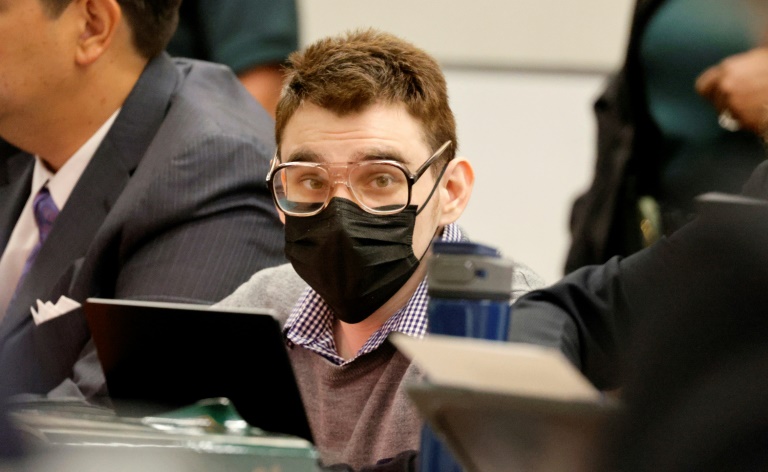
Cruz, who was wearing a black Covid mask, covered his face with his hands and stared down at the table in front of him as the video was played.

Several anguished relatives of the victims fled the courtroom while others wept openly and hugged their loved ones.

– ‘Next school shooter’ –

Satz, the prosecutor, told the jury that three days before the shooting, Cruz made a cellphone video in which he said  “I’m going to be the next school shooter of 2018.”

“My goal is at least 20 people with an AR-15 and some tracer rounds,” Cruz said in the video. “It’s going to be a big event and when you see me on the news, you’ll know who I am.”

Satz said that Cruz, after fleeing the school, ordered a drink at a Subway sandwich shop and then went to a McDonald’s, where he asked the brother of a girl he had just shot for a ride.

The boy, who was not aware at the time that Cruz was the assailant, declined. Cruz was arrested shortly afterwards.

The trial in Fort Lauderdale is the rare instance of a mass shooter facing a jury, as they often either take their own lives or are killed by police.

The death penalty requires that the jury be unanimous. Cruz will otherwise be handed life without parole.

The Florida shooting stunned a country accustomed to gun violence and sparked new efforts, led by students from the school itself, to get lawmakers to pass tougher gun control laws.

– ‘March for Our Lives’ –

Parkland survivors founded “March for Our Lives,” organizing a rally that drew hundreds of thousands of people to the nation’s capital, Washington, in 2018.

Thousands turned out for demonstrations organized by the group last month following two other mass shootings: one at a Texas elementary school that killed 19 children and two teachers, and another at a New York supermarket that left 10 Black people dead.

Those shootings helped galvanize support for the first significant federal bill on gun safety in decades.

President Joe Biden signed the bill into law in June but it fell far short of steps he had called for, including a ban on assault weapons.

Cruz bought the AR-15 semi-automatic he used in the attack legally, despite having a documented history of mental health problems.

Expelled from school for disciplinary reasons, Cruz was known to be fixated on firearms — and had been identified as a potential threat to his classmates.

On the day of the attack, he arrived at the school in an Uber, began shooting indiscriminately at students and staff, and fled nine minutes later, leaving behind a scene of carnage.

The Justice Department reached a $127.5 million settlement in March with survivors and relatives of Parkland victims who had accused the FBI of negligence for failing to act on tips received prior to the attack that Cruz was dangerous.

Indian rupee breaches 80 per dollar, hits new record low

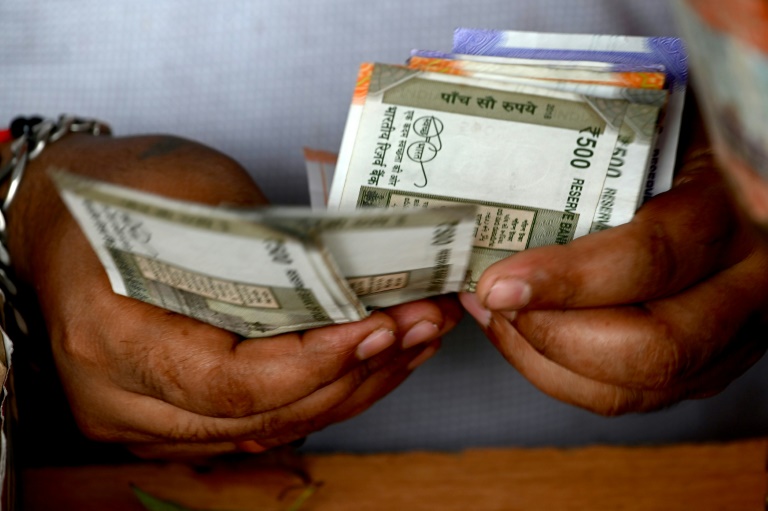
The Indian rupee fell to more than 80 per US dollar for the first time on record Tuesday, as the greenback extended its rally and foreign capital outflows intensified.

The rupee hit 80.0600 against the greenback soon after trading started, compared with the previous close of 79.9775, Bloomberg data showed.

High inflation and rising interest rates in the United States coupled with fears of an impending recession in the world’s biggest economy have fuelled a broad dollar rally in recent weeks as investors turn increasingly risk-averse.

Tighter US monetary policy has exacerbated outflows from emerging markets such as India, where foreign investors have withdrawn a net $30.8 billion in debt and equity this year.

Data released last week showed that US consumer price inflation hit a fresh four-decade high in June, exceeding market forecasts and stoking expectations of another large Federal Reserve rate hike next week.

In a written statement to the Indian parliament on Monday, finance minister Nirmala Sitharaman attributed the rupee’s sharp fall to external reasons.

“Global factors such as the Russia-Ukraine conflict, soaring crude oil prices and tightening of global financial conditions are the major reasons for the weakening of the Indian Rupee against the US dollar,” she said.

At the same time, the Indian currency has strengthened against the British pound, the Japanese yen and the euro in 2022 so far, Sitharaman added.

But higher crude prices have resulted in a deteriorating trade balance in a country that imports 80 percent of its oil.

India’s merchandise trade deficit widened to a record $26.18 billion in June, official data showed last week, largely because of higher crude and coal import prices.

In its monthly economic review, the Ministry of Finance said costlier imports could widen the current account deficit and cause the rupee to depreciate further.

“The near-term outlook for the rupee will continue to be weak as it tracks developments on the oil and gas front in international markets,” forex market expert K Harihar told AFP.

“The weakness will persist until trade deficit numbers come down or capital inflows counter it,” he said, adding that the rupee could fall to 81 per US dollar without an agreement between Europe and Russia on gas supply.

The rupee’s move followed Russia’s Gazprom telling Europe late Monday that it cannot guarantee gas supplies following maintenance work on its Nord Stream pipeline.

Consumer price inflation in India, the world’s sixth-largest economy, cooled off slightly to 7.01 percent in June after hitting an eight-year high of 7.79 percent in April.

But price rises have persisted well above the central bank’s two-to-six percent target range despite consecutive interest rate hikes in May and June.

The central bank has also sold more than $34 billion of its foreign currency reserves in an effort to stabilise the rupee.

India’s benchmark Sensex index opened lower, but recovered to trade 0.17 percent higher on Tuesday morning.

'Shocking' report lists devastation to Australia wildlife

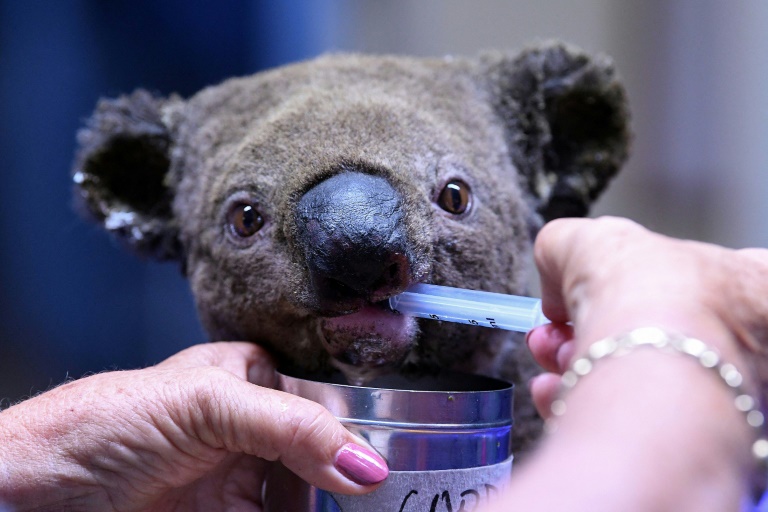
Australia’s unique wildlife is being devastated by bushfires, drought, habitat loss and global warming, a government report said Tuesday, warning that more species are headed for extinction.

The five-yearly State of the Environment report prompted calls for dramatic action to reverse the “poor and deteriorating” state of flora and fauna depicted by scientists on land and at sea.

The damage is being hastened by a climate that has warmed Australia’s average land temperature by 1.4 degrees Celsius since the early 20th century, the report said.

A failure to manage the pressures “will continue to result in species extinctions,” scientists warned in the report.

Australia’s environment minister, Tanya Plibersek, said it was a “shocking document”.

“If we continue on the trajectory that we are on now, we will see more threatened species, we will see drier rivers, we will see degraded landscape, we will see reefs dying,” she told journalists.

“The path we are on is not sustainable.”

Plibersek, a member of the centre-left Labor Party that came to power in May elections, criticised the previous conservative government for failing to publish the report, which it had received in December 2021.

She promised to carve out more of Australia’s land and oceans for protection, pursue “fundamental reform” of environmental laws and empower a new environmental protection agency.

– ‘Ecological bomb’ –

Australia’s 2019-2020 “Black Summer” bushfires burned more than eight million hectares of native vegetation and killed or displaced 1-3 billion animals, the report found.

The fires were an “ecological bomb ripping through southeastern Australia”, Plibersek said.

Marine heatwaves caused mass coral bleaching on the Great Barrier Reef in 2016, 2017 and 2020, scientists said in the report. Since then, a government report in March found the reef had again suffered mass bleaching.

Millions of hectares of primary forest had been cleared since 1990, the report said.

More than seven million hectares of habitat for threatened species were cleared between 2000 and 2017 without being assessed under Australia’s environmental conservation laws, it found.

In five years, more than 200 plant and animal species of national significance had been added to the list of threatened species under Australia’s environmental laws.

“Australia has lost more mammal species than any other continent,” the report said, with the number of new species listed as being under greater threat up by eight percent in five years.

– ‘Heartbreaking’ –

Australia’s cities are also growing at a rapid clip, scientists found, raising urban heat, pollution and waste while stretching water and energy resources.

“Sydney has lost more than 70 percent of native vegetation cover through development,” the report said.

Sydney Habour’s stormwater drains also created hotspots of pollution with concentrations 20 times higher than when the harbour was pristine.

“The findings of this report are heartbreaking, and the leadership failures that have led to loss at this scale devastating,” said WWF-Australia acting chief executive Rachel Lowry.

“If we ignore the warnings of this report then iconic species like koalas across eastern Australia, or our largest gliding mammal, the greater glider, will disappear forever on our watch.”

WWF-Australia said the report should be a “turning point” that lead to greater investment and stronger laws to protect Australia’s wildlife and wilderness.

Lowry urged the new government to act quickly, condemning existing environmental legislation for “failing miserably” to protect threatened species.

The “devastating” new report showed coasts and marine environments were deteriorating, the Australian Marine Conservation Society said.

“We need to do more now, or we put at risk everything we rely on our oceans for — our health, wellbeing, livelihoods and our culture,” said the society’s chief executive, Darren Kindleysides.

Europe burns as heatwave breaks temperature records

A fierce heatwave in western Europe has left much of the continent wilting under a scorching sun, feeding ferocious wildfires and threatening to smash more temperature records on Tuesday.

In Britain, forecasters said the current national record of 38.7 degrees Celsius (102 degrees Fahrenheit) could be broken and 40C breached for the first time, with experts blaming climate change and predicting more frequent extreme weather to come.

On Monday the 38.1C recorded in Suffolk, in eastern England, made it the hottest day of the year and the third-hottest day on record.

Across the Channel in France, a host of towns and cities recorded their highest-ever temperatures on Monday, the national weather office said.

The mercury hit 39.3C in Brest on the Atlantic coast of Brittany, in the far northwest of the country, smashing a previous record of 35.1C from 2002.

Saint-Brieuc, on the Channel coast, hit 39.5C beating a previous record of 38.1C, and the western city of Nantes recorded 42C, beating a decades-old high of 40.3C, set in 1949.

Firefighters in France’s southwest were still struggling in the crushing heat to contain two massive fires that have caused widespread destruction.

For nearly a week now, armies of firefighters and a fleet of waterbombing aircraft have battled blazes that have mobilised much of France’s firefighting capacity.

– Holiday makers evacuated –

Ireland saw temperatures of 33C in Dublin — the highest since 1887 — while in the Netherlands, temperatures reached 35.4C in the southern city of Westdorpe. Although that was not a record, higher temperatures are expected there on Tuesday.

Neighbouring Belgium also expected temperatures of 40C and over.

The European heatwave is the second to engulf parts of the southwest of the continent in recent weeks.

European Commission researchers, meanwhile, said nearly half (46 percent) of EU territory was exposed to warning-level drought. Eleven percent was at an alert level, and crops were already suffering from lack of water.

Blazes in France, Greece, Portugal and Spain have destroyed thousands of hectares of land.

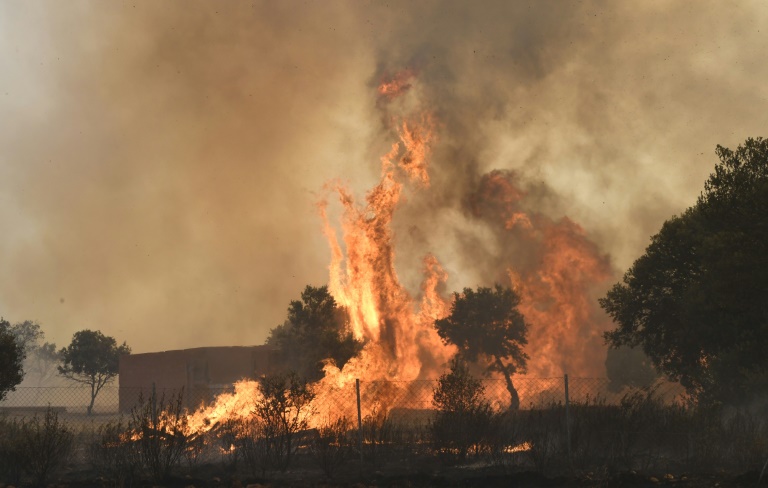
An area nine kilometres (5.5 miles) long and eight kilometres wide was still ablaze near France’s Dune de Pilat, Europe’s highest sand dune, turning picturesque landscapes, popular campsites and pristine beaches into a scorching mess.

The blaze was literally “blowing things up”, such was its ferocity, said Marc Vermeulen, head of the local fire service. “Pine trunks of 40 years are bursting.”

A total of 8,000 people were being evacuated from near the dune Monday as a precaution, as changing winds blew thick smoke into residential areas, officials said.

Hurriedly packing her car, Patricia Monteil said she would go to her daughter’s home in another part of the district. “But if that goes up in flames too, I don’t know what to do.”

Around 32,000 tourists or residents have been forced to decamp in France, many to emergency shelters.

On Monday evening, prosecutors in the southwest city of Bordeaux said a man suspected of having started one of the fires in the region had been taken into custody.

The two fires in the region have destroyed nearly 17,000 hectares (42,000 acres) of land.

At Avigon, in the southeast, a fire that first started last Thursday surged back to life on Monday, local firefighters reported, while a separate fire broke out up in the northwest, in Brittany.

In Spain, a fire burning in the northwestern province of Zamora claimed the life of a 69-year-old shepherd, regional authorities said. On Sunday, a fireman died in the same area.

Later on Monday it was reported an office worker in his fifties had died from heatstroke in Madrid.

Authorities have reported around 20 wildfires still raging from the south to Galicia in the far northwest, where blazes have destroyed around 4,500 hectares of land. 

– ‘Enjoy the sunshine’ –

The fires in Portugal claimed two more lives in the northern Vila Real region, after a car carrying two local villagers crashed off the road as they appeared to be trying to flee a fire zone, local officials said.

“We found the car and these two people, aged around 70 years, completely burnt,” the mayor of Murca, Mario Artur Lopez, told SIC Noticias television. The victims were from the nearby village of Penabeice, he added.

Almost the entire country has been on high alert for wildfires despite a slight drop in temperatures, which last Thursday hit 47C — a record for July.

The fires have already killed two other people, injured around 60 and destroyed between 12,000 and 15,000 hectares of land there.

In Britain, the government, already on the ropes after a series of scandals that forced Prime Minister Boris Johnson to quit, has been accused of taking the situation too lightly.

Johnson was criticised for having failed to attend an emergency meeting on the crisis on Sunday, instead hosting a farewell party at his state-funded country retreat.

And medics condemned comments by Deputy Prime Minister Dominic Raab, who appeared to minimise the threat from the extreme heat when he told Britons to “enjoy the sunshine”.

The Sun tabloid headlined its coverage of the heat “British Bake Off”, observing that the “scorcher” was making the UK hotter than Ibiza, where temperatures were a comparatively low 30C.

The extreme temperatures saw flights suspended at Luton Airport near London and at Royal Air Force base Brize Norton due to “defects” on the runway, with no let-up expected for Tuesday.

Trains were cancelled and schools closed in affected areas.

In Brighton, on England’s south coast, bank worker Abu Bakr put the heatwave in perspective.

“I come from Sudan,” he said. “Forty, forty-five degrees is just the norm. This is as good as it can be.”

burs-jh-phz/jwp/je/smw

SAS and pilots' unions reach agreement, ending strike

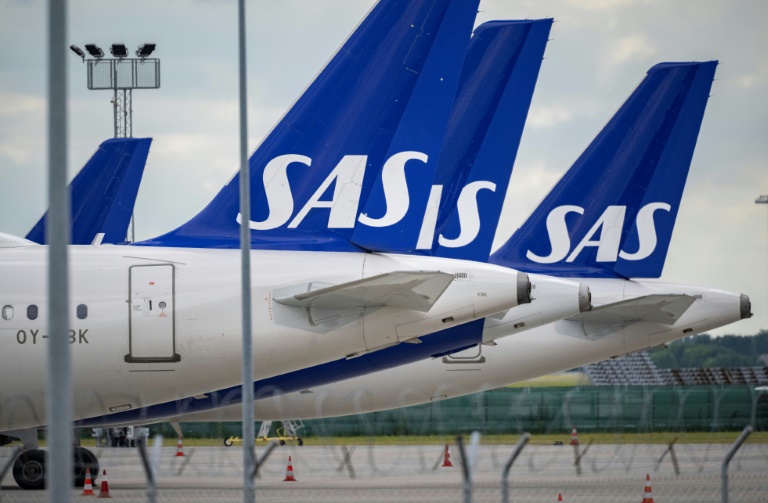
Scandinavian airline SAS and the unions representing their pilots said Tuesday that they had reached an agreement, ending a two-week strike that has cost the ailing airline between $9 and $12 million a day.

The agreement ending the strike after 15 days was confirmed by both the company and the unions after a negotiation session ran through Monday and into the early hours of Tuesday.

“I am pleased to report that we now have come to an agreement with all four pilot unions for SAS Scandinavia and the strike has ended,” chief executive Anko van der Werff said in a statement.

“Finally, we can resume normal operations and fly our customers on their much longed-for summer holidays. I deeply regret that so many of our passengers have been impacted by this strike,” he added.

A new agreement, covering the next five and half years, means that “flights operated by SAS Scandinavia will resume according to their regular traffic program as soon as possible”, the company said.

“SAS pilots have taken responsibility to sign a new agreement with SAS and the strike will cease,” the Swedish Air Line Pilots Association (SPF) said in a separate statement, adding that it had been “an extraordinary and very demanding negotiation.”

Pilots have been striking since July 4, when nearly 1,000 of them walked off the job after talks broke down. 

They were protesting against salary cuts demanded by management as part of a restructuring plan aimed at ensuring the survival of the company, and the firm’s decision not to re-hire pilots laid off during the Covid-19 pandemic. 

– Survival at stake –

Under the new deal, 450 pilots will be re-hired.

One day after the strike began SAS announced it was filing for Chapter 11 bankruptcy protection in the United States, and van der Werff last week warned that the prolonged strike was putting the Chapter 11 process in jeopardy and, “ultimately, the survival of the company at stake”.

When the stoppage was in its tenth day, SAS said it had already cost roughly 1 to 1.3 billion Swedish kronor ($94 million to $123 million, or 94 million to 123 million euros), with more than 2,500 flights cancelled.

The CEO also said the strike also had “a severe impact on our possibilities to succeed with SAS Forward”, the cost-saving programme launched by the ailing company in February. 

While the airline said it could meet its obligations in the near term it warned cash reserves “will erode very quickly in the face of a continuing pilot strike”.

SAS, which employs nearly 7,000 people, mainly in Denmark, Norway and Sweden, is also seeking to raise about 9.5 billion kronor in fresh capital.

“We now get on with the important work of progressing our transformation plan SAS FORWARD and building a strong and competitive SAS for generations to come,” van der Werff said Tuesday.

The summer is shaping up to be difficult overall for European airlines and airports, who are faced with staff shortages that are affecting air traffic. 

After widespread job losses linked to Covid-19, airlines and airports are struggling to recruit new staff in many countries.

'Thrones' and 'Rings' fans ready for battle as Comic-Con returns

Comic-Con finally returns to San Diego this week, where new “Lord of the Rings” and “Game of Thrones” TV series will compete before tens of thousands of cosplaying geeks and nerds at the world’s most famous pop culture gathering.

Disney and its Marvel superheroes will also preview their upcoming films and shows to adoring fans at the sprawling convention, which has not taken place in full for three years due to the pandemic. 

“I think it’ll look like Comic-Con from 2019,” said the event’s communications chief David Glanzer, even if guests — whether dressed as hobbits, dragons or princesses — will be required to wear face masks.

“We weathered it. And now coming back, maybe we’re gonna have tears of joy… it’s very emotional,” he told AFP.

In addition to 135,000 screaming fans, the comic book, science fiction and fantasy extravaganza draws Hollywood’s biggest studios and their A-list stars to show off upcoming titles — kicking off this year with Paramount’s “Dungeons and Dragons: Honor Among Thieves.”

Marking the first time the world’s most popular role-playing game has received a mega-budget silver-screen adaptation, the movie out next March stars Chris Pine, Hugh Grant and former “Bridgerton” heartthrob Rege-Jean Page.

But the week’s headlines are set to be dominated by two huge fantasy series coming to television screens soon: Amazon Prime’s “Lord of the Rings: The Rings of Power” and HBO’s “House of the Dragon.” 

“The Rings of Power” is Amazon’s enormously ambitious saga taking place in the world of J.R.R. Tolkien’s books, set long before the events of Peter Jackson’s Oscar-winning trilogy of films.

The series — playing out across five seasons, the first of which launches September 2 — is reported to have cost Amazon well over $1 billion, and is said to be a personal obsession of founder Jeff Bezos.

Much of that cost went into buying the Tolkien universe rights and on lavish production values, with a healthy sum set aside for “activations,” or immersive fan experiences, at Comic-Con.

Amazon on Friday will bring its cast of hobbits, elves and dwarves to the venue’s cavernous Hall H, where fans who line up for hours or even days anticipate seeing the first detailed look at the series.

– Rings v Thrones – 

The following day, “House of the Dragon” — the first spin-off to “Game of Thrones” set in George RR Martin’s fictional world of Westeros, out August 21 — will be unveiled by HBO.

Martin has played down talk of a rivalry between the two mega-franchises, insisting, “I want both shows to find an appreciative audience, and give them great television. Great fantasy.”

“The more fantasy hits we have, the more great fantasy we are likely to get,” he wrote in a blog post.

But HBO hopes its prequel can match the wild popularity of the original “Thrones,” which over eight seasons became appointment viewing, spawned countless imitations and delivered 59 Emmys — a record for a drama at television’s equivalent of the Oscars.

Starring Matt Smith, Rhys Ifans and Emma D’Arcy, “House of the Dragon” tells the story of the murderous, dragon-breeding Targaryen family, some 300 years before the events of “Thrones.”

Its stars will appear in Hall H immediately after a movie presentation from HBO’s sister company Warner Bros Pictures, which is set to feature Dwayne “The Rock” Johnson, who is promoting his upcoming superhero flick “Black Adam.”

Elsewhere, Disney is keeping its own Hall H presentation under wraps, but rumors abound that it will finally show off its much-anticipated “Black Panther 2” sequel.

The week will also feature a send-off for AMC’s “The Walking Dead,” as the juggernaut zombie TV series bows out with its final season — and launches a new spin-off, the anthology-style “Tales of the Walking Dead.”

But for Glanzer, the blockbuster studio showcases are secondary to what Comic-Con is all about: a community for its fans. 

“To be able to see people have a good time, enjoying comics and popular art is a gift that I look forward to. I really, really do… We get to come home,” he said.

“What better thing to be able to do than that — and share it with your friends.”

Asian markets drop as Apple report fans economic worries

Most stocks fell Tuesday after a Wall Street sell-off fuelled by fresh recession worries following a report that Apple planned to ease back on spending due to uncertainty over the economic outlook.

The drop across most markets in Asia also came as oil held a Monday surge caused by fading expectations that Joe Biden had convinced Saudi Arabia to pump more to ease a supply crisis and temper prices.

The losses among equities ate into Monday’s gains, which came after a forecast-beating US retail sales report suggested consumers — the key driver of growth — remained resilient despite decade-high inflation and rising interest rates.

And analysts warned that with the earnings season just getting under way, there could be more pain ahead for investors as firms report falling profits or warn about the outlook.

In a sign of concern among big-cap firms about an economic slowdown or recession, Bloomberg News said tech titan Apple was pulling back on hiring and some investments. 

The news follows similar belt-tightening moves by other Silicon Valley giants including Alphabet, Amazon and Facebook parent Meta.

“With Apple putting up their hand and acknowledging they have too many staff, it is a clear sign of caution from the mega-cap heavyweight giants amid an uncertain time,” said SPI Asset Management’s Stephen Innes.

“Investors are hoping for a ‘kitchen-sink’ quarter where corporates flush out all the bad news at once — but I am not sure that will happen, and I think this makes it difficult to put an absolute bottom on the equity selloff.”

The report led to a reversal on Wall Street, with all three main indexes ending in negative territory, having enjoyed most of the day well up.

And Asia struggled Tuesday.

Hong Kong, Shanghai, Sydney, Seoul, Singapore, Taipei, Wellington and Manila all fell, though Tokyo rose as investors there returned from a long weekend to play catch-up with Monday’s regional rally.

Innes added that markets were likely to face pressure for some time as central banks continue to lift borrowing costs to fight inflation, risking an economic downturn.

“The probability of recession is dominating US discussions, as inflation might have peaked in June while the Fed still has a couple of massive hikes ahead before possibly pausing,” he said.

“We always hear that the rate hikes are in the price, but they are always a shock when the market actualises the reality, especially when they are of the jumbo variety.”

While some are predicting inflation may have reached its peak, oil prices — the key driver of soaring prices — continues to hold its strength, despite recent losses.

Both main contracts rocketed more than five percent Monday on expectations that Riyadh will not open up the taps further, with Biden’s plea seeming to have fallen on deaf ears.

Traders are also keeping a nervous eye on Europe, where a 10-day maintenance shutdown of the Nord Stream 1 pipeline from Russia is due to come to an end.

Many fear Vladimir Putin will keep it shut down in retaliation for sanctions imposed on Moscow for its invasion of Ukraine. That would deal another blow to the already creaking eurozone economy and could send crude prices soaring.

Supply fears are trumping worries about a demand hit in China from another possible lockdown in Shanghai as officials struggle to contain another Covid-19 outbreak.

– Key figures at around 0230 GMT –

Tokyo – Nikkei 225: UP 0.7 percent at 26,977.37 (break)

Hong Kong – Hang Seng Index: DOWN 0.7 percent at 20,701.98

Shanghai – Composite: DOWN 0.2 percent at 3,270.56

Euro/dollar: DOWN at $1.0140 from $1.0146 on Monday

Pound/dollar: DOWN at $1.1940 from $1.1950 

Euro/pound: DOWN at 84.84 pence from 84.88 pence

Dollar/yen: UP at 138.24 yen from 138.13 yen

West Texas Intermediate: DOWN 0.2 percent at $102.45 per barrel

Brent North Sea crude: DOWN 0.2 percent at $106.02 per barrel

New York – Dow: DOWN 0.7 percent at 31,072.61 (close)

London – FTSE 100: UP 0.9 percent at 7,223.24 (close)

Mexico resumes building president's tourist train

Mexico has resumed building part of President Andres Manuel Lopez Obrador’s flagship tourist train project, an official said Monday, despite a judge suspending construction on that section on environmental grounds.

A judge indefinitely suspended construction of part of the Mayan Train in the Yucatan peninsula in late May.

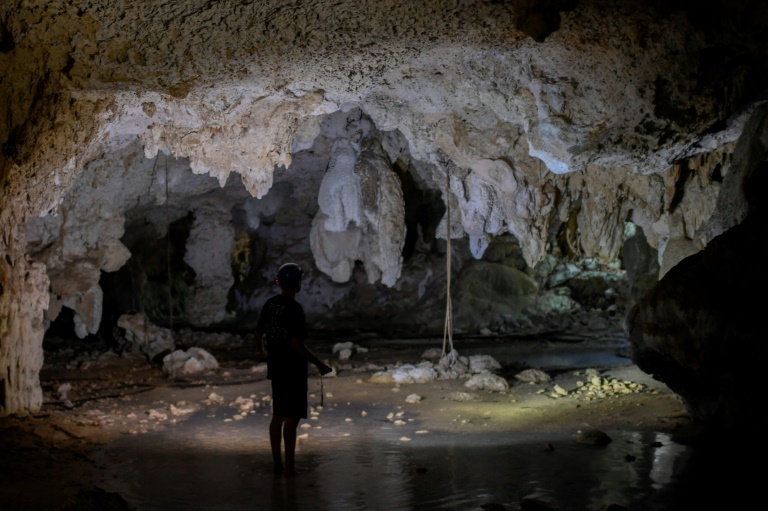
The ruling followed a legal challenge brought by opponents, including scuba divers, who are concerned about the effect of the train on wildlife, caves and water-filled sinkholes known as cenotes.

But construction resumed on July 13 under a measure implemented in November that deemed the government’s major infrastructure works “national security.”

Under that ordinance, Lopez Obrador intends to shield the train and other projects from lawsuits that have delayed construction, as well as to expedite obtaining permits and licenses.

The Mayan Train “is a work of national security because of the railroads,” said Javier May, head of the National Fund for the Promotion of Tourism, the government agency overseeing the project, on Monday.

The public security and interior departments are determined to resume construction of the 60-kilometer (37-mile) section between the resorts of Playa del Carmen and Tulum, May said.

Lopez Obrador hopes to inaugurate the roughly 1,500-kilometer rail loop linking popular Caribbean beach resorts and archeological ruins by the end of 2023.

In the May ruling, the federal judge cited the “imminent danger” of causing “irreversible damage” to ecosystems, according to one of the plaintiffs, the non-governmental group Defending the Right to a Healthy Environment

Authorities were found to have failed to carry out the necessary environmental impact studies before starting construction of the section, one of several being built by the military, the NGO said in a statement.

The government appealed the decision.

On Monday, environmental organizations Greenpeace and Save Me from the Train separately warned that the Mexican government had resumed work without waiting for the appeals process to be completed, which in their opinion both violates the law and poses a major risk to the Riviera Maya ecosystems.

Lopez Obrador has insisted the railroad will not affect the cenotes and alleged that environmentalists have been infiltrated by “impostors.”

Close Bitnami banner
Bitnami