AFP

America's Fauci to retire by end of Biden's current term

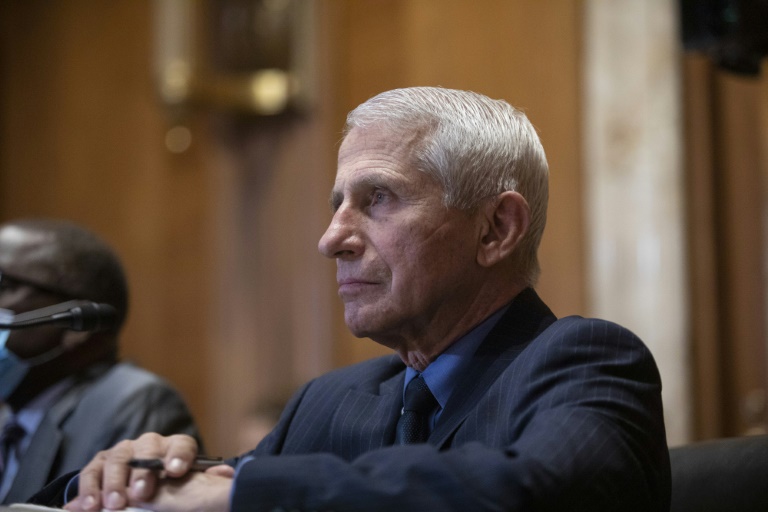
Anthony Fauci, who has helmed the United States’ response to infectious disease outbreaks since the 1980s, will retire by the end of President Joe Biden’s current term, he said in interviews Monday.

The 81-year-old told Politico and CNN he would step down from his position as director of the National Institute of Allergy and Infectious Diseases (NIAID) to pursue other avenues sometime before January 2025.

“Obviously, you can’t go on forever. I do want to do other things in my career, even though I’m at a rather advanced age,” Fauci, who is also Biden’s chief medical advisor, said to CNN.

He told Politico he did not plan to stay in office long enough to see out Covid-19 because the disease was not going away soon. 

“I think we’re going to be living with this,” said Fauci, who was appointed director of the National Institutes of Health’s NIAID in 1984 and has served under seven presidents.

When Covid first spread globally from China, he became a trusted source of reliable information, reassuring the public with his calm and professorial demeanor during frequent media appearances. 

But his honest takes on America’s failures to get to grips with the virus brought Fauci into conflict with former president Donald Trump, and turned the physician-scientist into a hated figure for some on the right.

Fauci now lives with security protection after his family received death threats and harassment.

But he was conciliatory toward his former nemesis Trump in his Politico interview.

“We developed an interesting relationship,” said the Italian-American.

“Two guys from New York, different in their opinions and their ideology, but still, two guys who grew up in the same environments of this city. I think that we are related to each other in that regard.”

During the 1980s, Fauci became a lightning rod for criticism that the government was not doing enough to stem the rise of HIV-AIDS — but later forged a close collaboration with activists.

His accomplishments include implementing a fast-track system that widened access to antiretroviral medicines, and working with former president George H.W. Bush to plough in more resources.

Under president George W. Bush, Fauci was the architect of the President’s Emergency Plan For AIDS Relief (PEPFAR), credited with saving millions of lives in sub-Saharan Africa.

As a scientist, he is credited with developing effective treatments for formerly fatal inflammatory diseases, as well as for contributions into understanding how HIV destroys the body’s defenses. 

Despite his many duties, he continues to treat patients at the NIH’s Clinical Center in Bethesda, Maryland.

America's Fauci to retire by end of Biden's current term

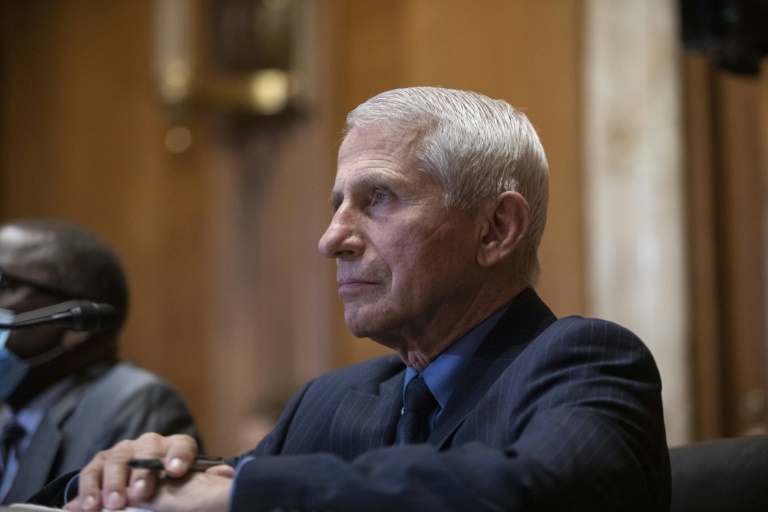
Anthony Fauci, who has helmed the United States’ response to infectious disease outbreaks since the 1980s, will retire by the end of President Joe Biden’s current term, he said in interviews Monday.

The 81-year-old told Politico and CNN he would step down from his position as director of the National Institute of Allergy and Infectious Diseases (NIAID) to pursue other avenues sometime before January 2025.

“Obviously, you can’t go on forever. I do want to do other things in my career, even though I’m at a rather advanced age,” Fauci, who is also Biden’s chief medical advisor, said to CNN.

He told Politico he did not plan to stay in office long enough to see out Covid-19 because the disease was not going away soon. 

“I think we’re going to be living with this,” said Fauci, who was appointed director of the National Institutes of Health’s NIAID in 1984 and has served under seven presidents.

When Covid first spread globally from China, he became a trusted source of reliable information, reassuring the public with his calm and professorial demeanor during frequent media appearances. 

But his honest takes on America’s failures to get to grips with the virus brought Fauci into conflict with former president Donald Trump, and turned the physician-scientist into a hated figure for some on the right.

Fauci now lives with security protection after his family received death threats and harassment.

But he was conciliatory toward his former nemesis Trump in his Politico interview.

“We developed an interesting relationship,” said the Italian-American.

“Two guys from New York, different in their opinions and their ideology, but still, two guys who grew up in the same environments of this city. I think that we are related to each other in that regard.”

During the 1980s, Fauci became a lightning rod for criticism that the government was not doing enough to stem the rise of HIV-AIDS — but later forged a close collaboration with activists.

His accomplishments include implementing a fast-track system that widened access to antiretroviral medicines, and working with former president George H.W. Bush to plough in more resources.

Under president George W. Bush, Fauci was the architect of the President’s Emergency Plan For AIDS Relief (PEPFAR), credited with saving millions of lives in sub-Saharan Africa.

As a scientist, he is credited with developing effective treatments for formerly fatal inflammatory diseases, as well as for contributions into understanding how HIV destroys the body’s defenses. 

Despite his many duties, he continues to treat patients at the NIH’s Clinical Center in Bethesda, Maryland.

Europe burns as heatwave breaks temperature records

A fierce heatwave in western Europe on Monday left much of the continent wilting under a scorching sun, smashing temperature records and feeding ferocious forest wildfires.

In Britain, the 38.1 Celsius (100.9 Fahrenheit) in Suffolk, eastern England, made it the hottest day of the year and the third-hottest day on record.

Expectations are now high that the current British record of 38.7C could be broken and 40C breached for the first time, with experts blaming climate change and predicting more frequent extreme weather to come.

Across the Channel in France, a host of towns and cities recorded their highest-ever temperatures on Monday, the national weather office said.

The mercury hit 39.3C in Brest on the Atlantic coast in the far northwest of the country, smashing a previous record of 35.1C from 2002.

Saint-Brieuc, on the Channel coast, hit 39.5C beating a previous record of 38.1C, and the western city of Nantes recorded 42C, beating a decades-old high of 40.3C, set in 1949.

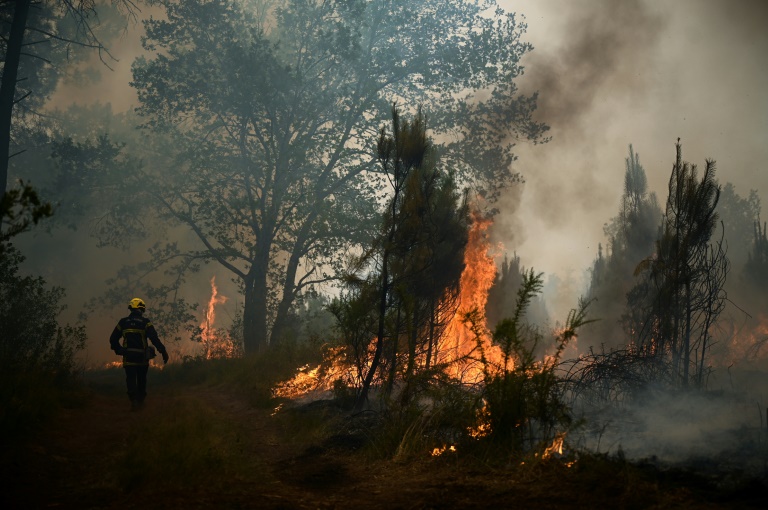
Firefighters in France’s southwest were still struggling to contain two massive fires that have caused widespread destruction.

For six days, armies of firefighters and a fleet of waterbombing aircraft have battled against blazes that have mobilised much of France’s firefighting capacity.

– France on ‘red alert’ –

Forecasters put 15 French departments on the highest state of alert for extreme temperatures Monday, including in the northwest Brittany region, where the Atlantic port of Brest hit 39.3C Monday — another record.

Ireland saw temperatures of 33C in Dublin — the highest since 1887 — while in the Netherlands, temperatures reached 35.4C in the southern city of Westdorpe. While that was not a record, higher temperature are expected there on Tuesday.

Neighbouring Belgium also expected temperatures of 40C and over.

The European heatwave, spreading north, is the second to engulf parts of the southwest of the continent in recent weeks.

European Commission researchers meanwhile said nearly half (46 percent) of EU territory was exposed to warning-level drought.

Eleven percent was at an alert level and crops were already suffering from lack of water.

– Holiday markers evacuated –

Blazes in France, Greece, Portugal and Spain have destroyed thousands of hectares of land and forced thousands of residents and holidaymakers to flee.

An area of nine kilometres (5.5 miles) long and eight kilometres wide was still ablaze near France’s Dune de Pilat, Europe’s highest sand dune, turning picturesque landscapes, popular campsites and pristine beaches into a scorching mess.

A total of 8,000 people were being evacuated from near the dune Monday as changing winds blew thick smoke into residential areas, officials said.

“The smoke is toxic,” firefighter spokesman Arnaud Mendousse told AFP. “Protecting the population is a matter of public health.”

A nearby zoo in Archachon evacuated its more than 1,000 animals, sending them to other facilities to escape the smoke.

The evacuations added to the 16,000 tourists or residents already forced to decamp in France, many to emergency shelters.

In Spain, fire burning in the northwestern province of Zamora claimed the life of a 69-year-old shepherd, regional authorities said.

The previous day a fireman died in the same area.

Later Monday it was reported that an office worker in his fifties had died from heatstroke in Madrid.

Authorities have reported around 20 wildfires still raging from the south to Galicia in the far northwest, where blazes have destroyed around 4,500 hectares (more than 11,000 acres) of land. 

– ‘Enjoy the sunshine’ –

In Portugal, almost the entire country remained on high alert for wildfires despite a slight drop in temperatures, which last Thursday hit 47C — a record for July.

Fires have killed two, injured around 60 and destroyed between 12,000 and 15,000 hectares of land in Portugal.

In Britain, the government, already on the ropes after a series of scandals that forced Prime Minister Boris Johnson to quit, was accused of not taking the situation seriously enough.

Johnson was criticised for having failed to attend an emergency meeting on the crisis on Sunday, instead hosting a farewell party at his state-funded country retreat.

Deputy prime minister Dominic Raab also drew flak from frontline medics by appearing to minimise the threat from the extreme heat after he told Britons to “enjoy the sunshine”.

The Sun tabloid headlined its coverage of the heat “British Bake Off”, observing that the “scorcher” was making the UK hotter than Ibiza where temperatures were a comparatively low 30C.

“It is a bit frightening,” Karina Lawford, 56, told AFP as she took a stroll by the sea in Tankerton on the north Kent coast, saying the heat reminded her of Australia where she lives.

The extreme temperatures saw flights suspended at Luton Airport near London and Royal Air Force base Brize Norton due to “defects” on the runway, with no let-up expected for Tuesday.

Trains were cancelled and schools closed in affected areas.

But some like 64-year-old plumber Dave Williams urged people to “just get on with it”.

“It’s nothing to get excited about, is it really? If it isn’t Brexit or the weather we don’t know what else to talk about, do we?” he said.

In Brighton, on England’s south coast, bank worker Abu Bakr put the heatwave in perspective.

“I come from Sudan,” he said. “Forty, forty-five degrees is just the norm. This is as good as it can be.”

burs-jh-phz/jwp/jj

Uber settles US lawsuit over disabled rider 'wait fees'

Uber will offer several million dollars in compensation to tens of thousands of passengers with disabilities who were charged extra fees, US prosecutors said Monday.

The case brought by the US Department of Justice centered on disabled passengers allegedly being made to pay wait charges because they needed extra time to board vehicles.

Under the settlement, Uber will issue credits to more than 65,000 eligible riders that are worth double the amount of wait time fees they were ever charged, which could potentially amount to millions of dollars.

The ride-share company also agreed to pay over $1.7 million to riders who complained to Uber about the fees, and $500,000 to other impacted people.

“People with disabilities should not be made to feel like second-class citizens or punished because of their disability, which is exactly what Uber’s wait time fee policy did,” said assistant attorney general Kristen Clarke.

Uber said it was “pleased” by the settlement.

“Prior to this matter being filed we made changes so that any rider who shares that they have a disability would have wait time fees waived automatically,” the company said.

Uber charges a fee if a driver has to wait more than two minutes to pick up any passenger, but the Department of Justice said applying those fees to riders with disabilities amounts to unlawful discrimination.

Under the terms of a two-year agreement, Uber will continue to waive wait time fees for riders who need more time to board because of disabilities, and ensure refunds are easily available in event such fees are wrongly charged, prosecutors said.

Uber settles US lawsuit over disabled rider 'wait fees'

Uber will offer several million dollars in compensation to tens of thousands of passengers with disabilities who were charged extra fees, US prosecutors said Monday.

The case brought by the US Department of Justice centered on disabled passengers allegedly being made to pay wait charges because they needed extra time to board vehicles.

Under the settlement, Uber will issue credits to more than 65,000 eligible riders that are worth double the amount of wait time fees they were ever charged, which could potentially amount to millions of dollars.

The ride-share company also agreed to pay over $1.7 million to riders who complained to Uber about the fees, and $500,000 to other impacted people.

“People with disabilities should not be made to feel like second-class citizens or punished because of their disability, which is exactly what Uber’s wait time fee policy did,” said assistant attorney general Kristen Clarke.

Uber said it was “pleased” by the settlement.

“Prior to this matter being filed we made changes so that any rider who shares that they have a disability would have wait time fees waived automatically,” the company said.

Uber charges a fee if a driver has to wait more than two minutes to pick up any passenger, but the Department of Justice said applying those fees to riders with disabilities amounts to unlawful discrimination.

Under the terms of a two-year agreement, Uber will continue to waive wait time fees for riders who need more time to board because of disabilities, and ensure refunds are easily available in event such fees are wrongly charged, prosecutors said.

US bank results highlight risk and resiliency

Despite mounting worries over inflation, just-released bank earnings painted a resilient picture of the US economy and consumer, generating talk that any recession might be milder than earlier downturns.

Reports from six US banking giants showed a significant drop in profits from the heady year-ago period, with most of the group establishing fresh provisions in case of defaults.

Executives expressed caution about what’s to come in light of the growing hit from higher gasoline and food prices, along with the burden of increased lending costs following several Federal Reserve interest rate hikes and persistent supply chain problems.

But banks still haven’t seen a significant rise in charge-offs from bad loans. They say many households still have a buffer of savings after conserving funds during the height of the pandemic when the federal government had generous relief programs.

Citigroup Chief Financial Officer Jane Fraser noted “sharply lower” consumer confidence compared with earlier in the year.

“That said, while sentiment has shifted, little of the data I see tells me the US is on the cusp of a recession,” Fraser said Friday, adding that households savings provided “a cushion for future stress” amid a tight job market. 

Fraser contrasted the backdrop in the United States with Europe, where vulnerability to Russian energy could make for a “difficult winter.” 

Executives acknowledged that the rising price of fuel and other essential goods poses burden to low-income households who are cutting back.

But most of the bank’s clients are not in this situation now.

“US consumers remain quite resilient,” Bank of America Chief Executive Brian Moynihan said Monday. “Consumers continue to spend at a healthy pace even as some time has passed since the receipt of any stimulus.”

JPMorgan Chase Chief Executive described the consumer as “in great shape,” which means that even if there is a recession, they’re entering it in “far better shape” compared with 2008 or 2009.

– Muted tone –

On Monday Bank of America reported $6.2 billion in second-quarter profits, a 34 percent drop compared with the year-ago period when results were lifted by a large reserve release amid a strengthening macroeconomic backdrop.

In spite of weakness in some parts of the business, results were boosted by higher net interest income following Fed rate hikes. 

Bank of America also enjoyed growth in overall loans and pointed to “improvement” in overall asset quality.

At Goldman Sachs — the final of the US banking giants to report — profits fell 48 percent to $2.8 billion, again due in part to its decision to set aside $667 million in provisions for credit losses.

Operations were mixed, with a big jump in revenues tied to trading amid volatile markets offsetting the hit from a drop in revenues connected to mergers and acquisition advising and loan underwriting. 

The reports came on the heels of similar releases last week from JPMorgan Chase, Citigroup, Morgan Stanley and Wells Fargo.

Stuart Plesser, a senior director at S&P Global Ratings described the industry’s overall tone as muted.

“They’re not saying anything’s disastrous, they’re not optimistic, either,” Plesser said.

“If you read the news, you got this possibility with inflation, the higher rate increases and all the other issues, but you can’t point to anything in the results,” he added.

US bank results highlight risk and resiliency

Despite mounting worries over inflation, just-released bank earnings painted a resilient picture of the US economy and consumer, generating talk that any recession might be milder than earlier downturns.

Reports from six US banking giants showed a significant drop in profits from the heady year-ago period, with most of the group establishing fresh provisions in case of defaults.

Executives expressed caution about what’s to come in light of the growing hit from higher gasoline and food prices, along with the burden of increased lending costs following several Federal Reserve interest rate hikes and persistent supply chain problems.

But banks still haven’t seen a significant rise in charge-offs from bad loans. They say many households still have a buffer of savings after conserving funds during the height of the pandemic when the federal government had generous relief programs.

Citigroup Chief Financial Officer Jane Fraser noted “sharply lower” consumer confidence compared with earlier in the year.

“That said, while sentiment has shifted, little of the data I see tells me the US is on the cusp of a recession,” Fraser said Friday, adding that households savings provided “a cushion for future stress” amid a tight job market. 

Fraser contrasted the backdrop in the United States with Europe, where vulnerability to Russian energy could make for a “difficult winter.” 

Executives acknowledged that the rising price of fuel and other essential goods poses burden to low-income households who are cutting back.

But most of the bank’s clients are not in this situation now.

“US consumers remain quite resilient,” Bank of America Chief Executive Brian Moynihan said Monday. “Consumers continue to spend at a healthy pace even as some time has passed since the receipt of any stimulus.”

JPMorgan Chase Chief Executive described the consumer as “in great shape,” which means that even if there is a recession, they’re entering it in “far better shape” compared with 2008 or 2009.

– Muted tone –

On Monday Bank of America reported $6.2 billion in second-quarter profits, a 34 percent drop compared with the year-ago period when results were lifted by a large reserve release amid a strengthening macroeconomic backdrop.

In spite of weakness in some parts of the business, results were boosted by higher net interest income following Fed rate hikes. 

Bank of America also enjoyed growth in overall loans and pointed to “improvement” in overall asset quality.

At Goldman Sachs — the final of the US banking giants to report — profits fell 48 percent to $2.8 billion, again due in part to its decision to set aside $667 million in provisions for credit losses.

Operations were mixed, with a big jump in revenues tied to trading amid volatile markets offsetting the hit from a drop in revenues connected to mergers and acquisition advising and loan underwriting. 

The reports came on the heels of similar releases last week from JPMorgan Chase, Citigroup, Morgan Stanley and Wells Fargo.

Stuart Plesser, a senior director at S&P Global Ratings described the industry’s overall tone as muted.

“They’re not saying anything’s disastrous, they’re not optimistic, either,” Plesser said.

“If you read the news, you got this possibility with inflation, the higher rate increases and all the other issues, but you can’t point to anything in the results,” he added.

US promises $1.2 bn to feed Horn of Africa, urges others to help

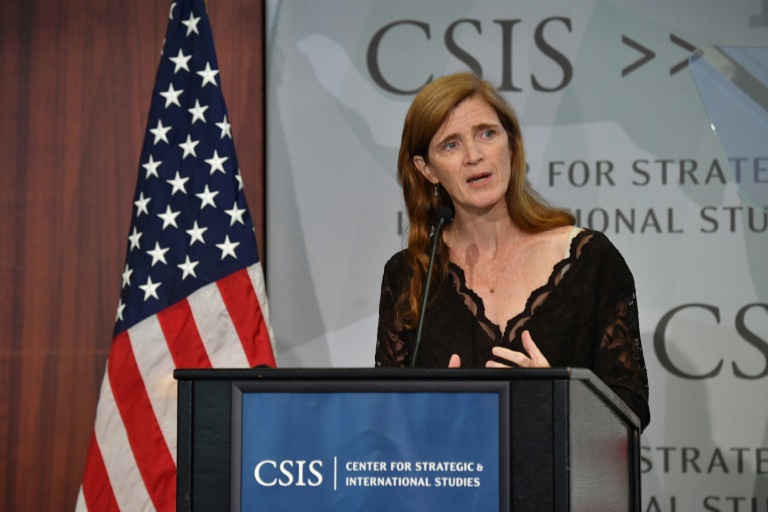
US aid chief Samantha Power on Monday promised $1.18 billion to help avert famine in the Horn of Africa and urged other nations including China to do more to fight a food crisis aggravated by Russia’s invasion of Ukraine.

Power voiced alarm that the war as well as climate change were worsening hunger around the world, just after a decade of progress had been “obliterated” by the Covid pandemic.

“Today we are confronting something even more devastating as not only are tens of millions more people facing that grave hunger, many of them are at risk of outright starvation,” she said at the Center for Strategic and International Studies.

Power, administrator of the US Agency for International Development, said the situation was especially dire in turbulent Somalia, conflict-hit Ethiopia and Kenya, the so-called Horn of Africa which is forecast to experience its fifth straight drought later this year.

Announcing a visit to the Horn of Africa this weekend, Power said that at least 1,103 children there are known to have died and some seven million other children are severely malnourished.

Power said the $1.18 billion in US aid would include emergency food — notably sorghum, a locally used grain more readily available than wheat — as well as a peanut-based supplement for malnourished children and veterinary services for dying livestock.

“Now we need others to do more, before a famine strikes, before millions more children find themselves on the knife’s edge,” she said.

Global prices of food have skyrocketed due to the war in Ukraine, a leading wheat exporter, with Russian warships blocking ports as Kyiv lays mines to avert a feared amphibious assault.

Power criticized the “sinister” policies of Russia but also pinned blame on China — seen by the United States as a leading global competitor — over its trade restrictions on fertilizer and “hoarding” of grain.

If China released fertilizer or grain to the global market or World Food Programme, it would “significantly relieve pressure on food and fertilizer prices and powerfully demonstrate the country’s desire to be a global leader and a friend to the world’s least developed economies,” she said.

She also issued a tacit criticism of India, which is seen by Washington as an emerging ally but has declined to shun historic partner Russia and has imposed its own export ban on wheat.

Praising Indonesia for lifting restrictions on palm oil, Power said, “We encourage other nations to make similar moves, especially since several of the countries instituting such bans have been unwilling to criticize the Russian government’s belligerence.”

“Countries that have sat out this war must not sit out this global food crisis,” she said.

African nations meet on 'critical' nature conservation

Delegates from across Africa launched Monday in Rwanda the first continent-wide gathering about the role of protected areas in ensuring the future of our planet.

The IUCN Africa Protected Areas Congress (APAC) is being held just a few months before the COP15 summit in December when global leaders are aiming to adopt a much-delayed pact to shield nature from the damage wrought by human activity.

“Protected areas are critical for the survival of the planet,” International Union for Conservation of Nature (IUCN) director general Bruno Oberle said on the opening day of the talks in the capital Kigali.

“And the more we manage them for the benefit of people and nature,the more we will build a future where everyone — human and animal — thrives,” he said on Twitter.

Organisers said APAC will aim to shape the role of protected and conserved areas in safeguarding Africa’s wildlife, delivering vital ecosystem services, and promoting sustainable development while conserving the continent’s cultural heritage and traditions. 

“It is high time that African policymakers put in place strong measures and strategies to ensure that the devastation of our rich biodiversity is stopped,” Rwandan Prime Minister Edouard Ngirente said.

Last month, the UN Convention on Biological Diversity’s (CBD) 196 members held negotiations on the draft global biodiversity framework in Nairobi, but made only limited progress in ironing out differences.

At the heart of the COP15 draft treaty is a provision to designate 30 percent of Earth’s land area and oceans as protected zones by 2030.

More than 90 world leaders have signed a pledge over the past two years to reverse nature loss by then, saying the interconnected threats of biodiversity loss and climate change are a “planetary emergency”.

According to the most recent Protected Planet report by the UN Environment World Conservation Monitoring Centre, only 17 percent of land habitats and around seven percent of marine areas were protected by 2020.

One million species are threatened with extinction, according to UN experts, and global warming is on track to make large swathes of the planet unliveable.

UN biodiversity experts warned this month that rampant exploitation of nature is a threat to the well-being of billions of people across the world who rely on wild species for food, energy and income.

The Kigali gathering runs until July 23 and has attracted more than 2,000 participants from across Africa and beyond, according to organisers.

First 'dormant' stellar black hole discovered by debunking team

A team of astrophysicists known for debunking previous supposed black holes announced a discovery of their own on Monday: the first “dormant” stellar-mass black hole spotted orbiting a star in a nearby galaxy.

While these black holes are thought to be common throughout the universe, they have proved difficult to find, and they have themselves rejected several possible candidates in recent years.

Now the international team has found a “needle in a haystack,” said Tomer Shenar, an astrophysicist at the University of Amsterdam and lead author of a new study in the Nature Astronomy journal.

The team was searching the skies for something that could eventually become a binary black hole, in which two black holes orbit each other after swallowing their stars in a supernovae explosion.

“We found a quite massive star, that weighs 25 times the mass of our Sun, that is orbiting around something that we do not see,” Shenar told AFP.

They believe the blue star, which is in the Large Magellanic Cloud galaxy that neighbours our Milky Way, is locked in a death dance with a black hole that has nine times the mass of our Sun.

These kinds of black holes are normally detected by the X-ray radiation they emit as they collect material from their companion star.

But this binary system, known as VFTS 243, is called dormant because it does not emit X-rays — it is not close enough to suck matter from its star.

– ‘Black hole destroyer’ –

Hugues Sana, astrophysicist at the KU Leuven University in Belgium, said the Milky Way alone is thought to have around 100 million stellar-mass black holes, which are far smaller than their supermassive big brothers.

However only 10 have been found, said Sana, a co-author of the study. 

This could be because many are laying dormant, biding their time to eventually swallow their companion star.

Sana said observing them was like watching two people dance in a dark room, one dressed in white and the other in black. You might only see one dancer, but you know the other one is there.

“We’ve never really detected such systems before,” Shenar told AFP. “There have been a few claims in the last years, but they have all more or less been refuted,” Shenar told AFP.

Indeed, members of his team were among those rejecting previous discoveries, by laying out alternatives for what the data could indicate.

Because of this, Shenar said they expected extra scrutiny.

So they went about meticulously eliminating all the other possibilities, Shenar said, until they were satisfied that “it’s either a fat, invisible alien — or a black hole”.

Then they called the most famous black hole debunker they knew.

Kareem El-Badry of the Harvard-Smithsonian Center for Astrophysics has been “debunking black holes one after another” over the last couple of years, Tomer said, dubbing him the “black hole destroyer”.

“I sent him the data and I told him, listen, we found this object — prove me wrong,” Tomer said.

“I had my doubts,” said El-Badry, who joined the team and ran his own simulations.

“But I could not find a plausible explanation for the data that did not involve a black hole.”

– Not with a bang, but a whimper –

The discovery could also give an insight into how black holes are formed.

Stellar-mass black holes are believed to be born during the death of a large star, in a massive supernovae explosion.

The force of the blast knocks black holes in a binary system into an elliptical, rather than circular orbit.

However, VFTS 243 has an orbit that is also perfectly circular.

“That means that the star immediately vanished into the black hole,” Shenar said.

“This has a lot of implications as to how these black hole pairs form,” he said, adding that VFTS 243’s star could eventually collapse in a similar way.

Andrew Norton, an astrophysicist at Britain’s Open University who was not involved in the study, said “this is important evidence that all such stars may not end their lives in supernovae explosions”.

Shenar said he welcomed other scientists trying to debunk the debunkers.

“If someone comes and debunks this as well, I’m sure they will have a pretty fantastic explanation — like the fat alien.”

Close Bitnami banner
Bitnami