AFP

Pop art sculptor Claes Oldenburg dies aged 93

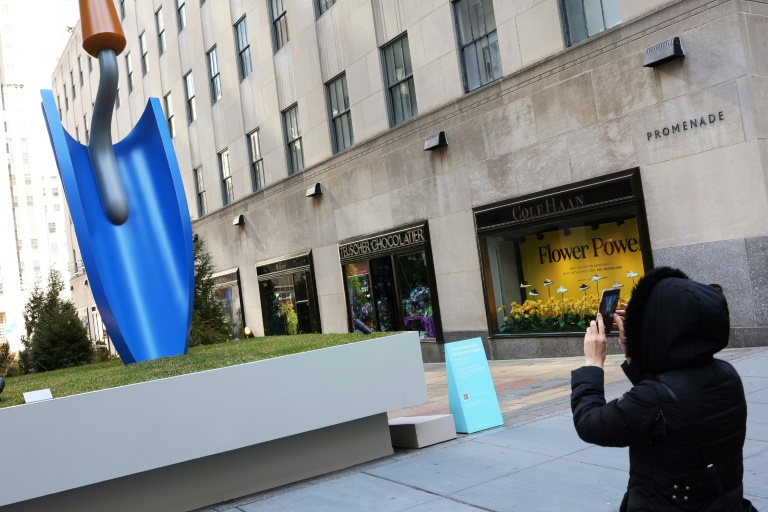
US-based pop art sculptor Claes Oldenburg, known for his giant work depicting everyday objects such as hamburgers, lipstick and electric plugs, has died aged 93.

Oldenburg’s sculpture was critically acclaimed and widely popular over his long career, often striking a lighthearted tone and seen by millions in open-air sites such as public squares.

Oldenburg was born in 1929 in Stockholm and moved to New York in 1956.

The Pace Gallery, which represented him, confirmed his death, hailing him as “one of the most radical artists of the 20th century (for) his inextricable role in the development of pop art.”

It said he had been recovering from a fall and passed away at his home and studio in New York. 

Other monumental objects that Oldenburg sculpted include ice cream cones in New York, a clothespin in Philadelphia that marked the 1976 bicentennial of the US Declaration of Independence, and a cherry balanced on a spoon in Minneapolis.

“My intention is to make an everyday object that eludes definition,” he was quoted as saying in The New York Times.

Heatwave-hit Farnborough airshow basks in bumper Boeing order

Britain’s Farnborough airshow flew into view Monday under a sweltering heatwave, as US planemaker Boeing basked in the glow of the first gigantic order in global aviation’s first get-together since Covid.

Visitors flocked to air-conditioned chalets and exhibition halls to escape the intense heat on the first day of one of the world’s biggest civil and defence shows, while queues snaked for ice cream vans under dizzying air displays.

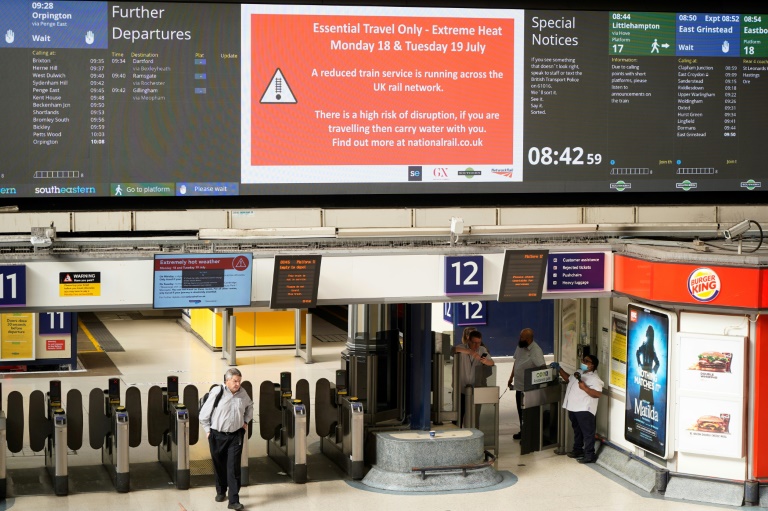
Tens of thousands of visitors are expected at this year’s event, which coincides with Britain’s first-ever “extreme heat” red alert that has been declared for both Monday and Tuesday, when temperatures set to soar further.

“People who come to visit are really happy to visit. Some of the stays are a little longer than they would normally be because it’s pretty relaxing inside,” said John Paul Frasier, adviser for Canadian manufacturer De Havilland Aircraft, speaking to AFP inside its business chalet.

“It’s pretty challenging and we know that tomorrow is going to be a little bit warmer.”

The business terraces were meanwhile deserted as some plucky visitors — clad in hats, shorts and sunglasses — headed to the tarmac to watch the commercial and military jets soar across the skies.

– Beads of sweat –

“It the hottest I’ve seen, we just have to power through,” said Aaron Rutter, vice president of sales at Lisi Aerospace, with beads of sweat dropping from his forehead as he watched Boeing’s new 777X jumbo jet make a series of twists and turns across the sky.

“There a few crazy (ones) of us out there. It’s all relative,” added Rutter, who hails from Arizona and kept his black jacket on.

This is the first Farnborough since 2018 because the 2020 edition was cancelled as the Covid health emergency ravaged the aviation sector.

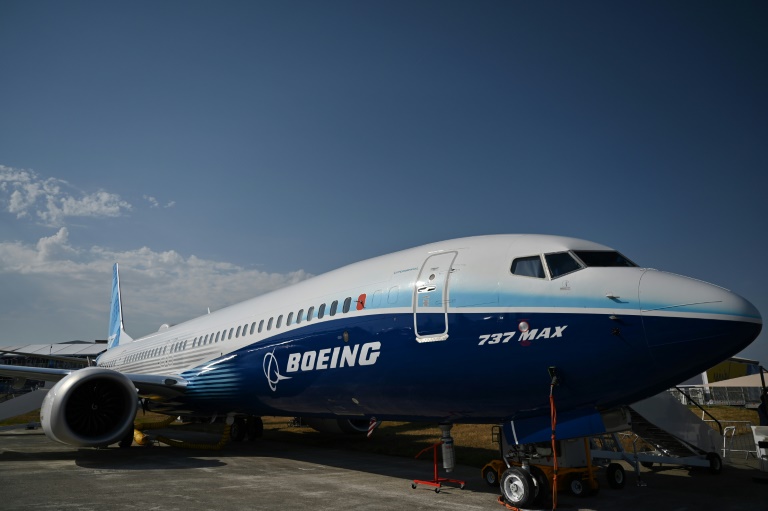
Boeing fired the first shot on Monday in its traditional orders battle with European rival Airbus, clinching a $13.5-billion deal for 100 MAX planes from Delta Airlines in a huge vote of confidence for the crisis-hit jet — and for the industry’s broader recovery from Covid.

Delta lodged its first-ever order for medium-haul MAX 10 aircraft, with options for 30 more of the fuel-efficient planes as it seeks to replace its ageing fleet and cut emissions.

The blockbuster deal marks a huge turnaround for the MAX jet which had suffered two deadly crashes in 2018 and 2019.

– Decarbonisation –

Delta, which has 222 Airbus aircraft due for delivery, was until now the only large US airline that had not yet ordered MAX jets.

The MAX 10 is the largest version of Boeing’s new generation of single-aisle aircraft, and competes with the commercially-successful Airbus A321.

Delta boss Ed Bastian added that the aircraft would help it improve fuel efficiency and secure a “more sustainable future for air travel”.

The news comes as airlines worldwide seek to replace ageing fleets with fuel-efficient planes that emit less carbon dioxide.

Airbus and a number of major airlines signed letters of intent to explore the possibility of capturing CO2 emissions from the air and storing them underground.

Boeing revealed also that Japanese airline ANA had agreed to purchase 20 of its smaller MAX 8 jets — worth $2.4 billion — plus two 777-8 freight planes.

– ‘Handing over controls’ –

Outgoing British Prime Minister Boris Johnson opened the prestigious five-day event as the aviation sector plots its post-Covid recovery.

The event coincides with fast-moving political turmoil in Britain after Johnson’s recent announcement that he is stepping down as Conservative party leader, sparking a divisive contest to replace him also as prime minister.

“This government believes in aviation and its power to bring jobs and growth to the entire country,” Johnson said Monday in opening remarks, before alluding to his exit from Downing Street.

“After three years in the cockpit… I am now handing over the controls seamlessly to someone else. I don’t know who,” he added, sparking laughter from delegates.

Britain, France face hottest day as Europe fires rage

Britain and France were in the grip of a fierce heatwave on Monday facing record temperatures as southwest Europe wilted under a scorching sun and ferocious wildfires devoured more forests.

Forecasters in Britain warned of havoc in a country unprepared for the onslaught of extreme heat that authorities said was putting lives at risk.

Temperatures climbed to 37.5 Celsius (99.5 Fahrenheit) at Kew Gardens in southwest London by 3:00 pm (1400 GMT), nudging towards the country’s all-time record of 38.7C.

Air traffic was suspended at Luton airport, north of London, due to “defects” on the runway

Meteorologists said the 40C mark could be breached for the first time by Tuesday, with climate change blamed and predictions of more frequent and intense episodes of extreme weather in years to come. 

Across the Channel in France, a host of towns and cities recorded their highest ever temperatures on Monday, the national weather office said.

The mercury hit 39.3 Celsius (102.7 Fahrenheit) in Brest on the Atlantic coast in the far northwest of the country compared with a previous record of 35.1 C from 2002.

Saint-Brieuc on the Channel coast sizzled in 39.5 C compared with a previous record of 38.1 C, while western Nantes recorded 42 C, beating a previous high of 40.3 C set in 1949.

“In some southwestern areas, it will be a heat apocalypse,” meteorologist Francois Gourand told AFP.

French  firefighters were struggling to contain two massive fires in France’s southwest that have created apocalyptic scenes of destruction.

For six days, armies of firefighters and a fleet of waterbombing aircraft have struggled against blazes that have mobilised much of France’s entire firefighting capacity.

Forecasters have put 15 French departments on the highest state of alert for extreme temperatures, including in the western Brittany region where the Atlantic coastal city of Brest was expected to hit 40C on Monday — nearly twice its usual July temperature average.

In Ireland, the mercury hit 33.0C in Phoenix Park, Dublin — 0.3C below the all-time record set way back in 1887, Met Eireann said.

The European heatwave, spreading north, is the second to engulf parts of the southwest of the continent in recent weeks.

Record temperatures were recorded in the Netherlands (33.6C) with warnings the mercury could reach 38-39C on Tuesday.

Neighbouring Belgium also expected temperatures of 40C and over.

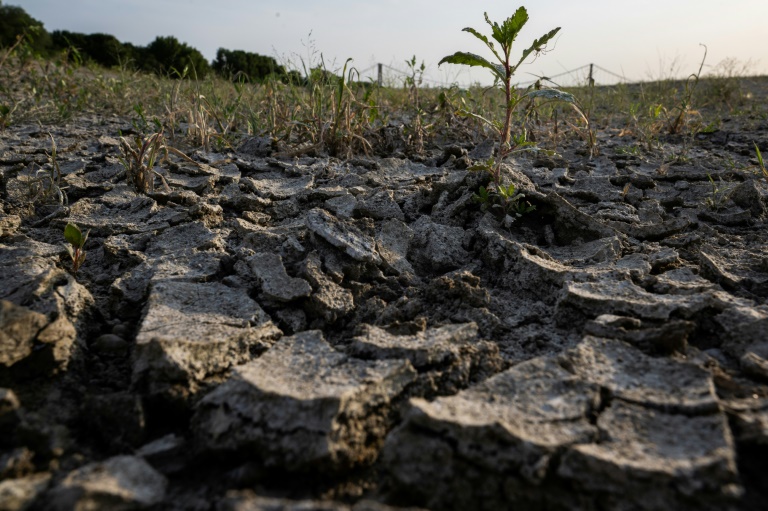
European Commission researchers meanwhile said nearly half (46 percent) of EU territory was exposed to warning-level drought.

Eleven percent was at an alert level and crops were already suffering from lack of water.

– ‘Heat apocalypse’ –

Blazes in France, Greece, Portugal and Spain have destroyed thousands of hectares of land and forced thousands of residents and holidaymakers to flee.

An area of nine kilometres (5.5 miles) long and eight kilometres wide was still ablaze near France’s Dune de Pilat, Europe’s highest sand dune, turning picturesque landscapes, popular campsites and pristine beaches into a scorching mess.

A total of 8,000 people were being evacuated from near the dune Monday as changing winds blew thick smoke into residential areas, officials said.

“The smoke is toxic,” firefighter spokesman Arnaud Mendousse told AFP. “Protecting the population is a matter of public health.”

A nearby zoo in Archachon evacuated its more than one thousand animals, sending them to other facilities to escape the smoke.

The evacuations added to the 16,000 tourists or residents already forced to decamp in France, many to emergency shelters.

In Spain, fire burning in the northwestern province of Zamora claimed the life of a 69-year-old shepherd, regional authorities said.

The previous day a fireman died in the same area.

Later Monday it was reported that an office worker in his fifties had died from heatstroke in Madrid.

Authorities have reported around 20 wildfires still raging from the south to Galicia in the far northwest, where blazes have destroyed around 4,500 hectares (more than 11,000 acres) of land. 

In Portugal, almost the entire country remained on high alert for wildfires despite a slight drop in temperatures which had hit 47C — a record for the month of July — last Thursday.

– ‘Get on with it’ –

Fires have killed two, injured around 60 and destroyed between 12,000 and 15,000 hectares of land in Portugal.

In Britain, the government, already on the ropes after a series of scandals that forced Prime Minister Boris Johnson to quit, drew fresh criticism for failing to take the situation seriously enough.

Johnson was criticised for failing to attend an emergency contingencies meeting on Sunday and instead hosting a farewell party at his state-funded country retreat.

Deputy prime minister Dominic Raab also drew flak from frontline medics by appearing to minimise the threat from the extreme heat after he told Britons to “enjoy the sunshine”.

The Sun tabloid headlined its coverage of the heat “British Bake Off”, observing that the “scorcher” was making the UK hotter than Ibiza where temperatures were a comparatively paltry 30C.

“It is a bit frightening,” Karina Lawford, 56, told AFP as she took a stroll by the sea in Tankerton on the north Kent coast, saying the heat reminded her of Australia where she lives.

Britain’s chief meteorologist Paul Davies said the heatwave was “entirely consistent with climate change”, telling Sky News the “brutality” of the heatwave was “astounding” but could become a regular occurrence by the end of the century.

Trains were cancelled and schools closed in affected areas.

But some like 64-year-old plumber Dave Williams urged people to “just get on with it”.

“It’s nothing to get excited about, is it really? If it isn’t Brexit or the weather we don’t know what else to talk about, do we?” he said.

And in Brighton, on England’s south coast, bank worker Abu Bakr put the heatwave in perspective.

“I come from Sudan,” he said. “Forty, forty-five degrees is just the norm. This is as good as it can be.”

burs-jh-phz/adp/pvh

World democracy and freedom under assault, Prince Harry tells UN

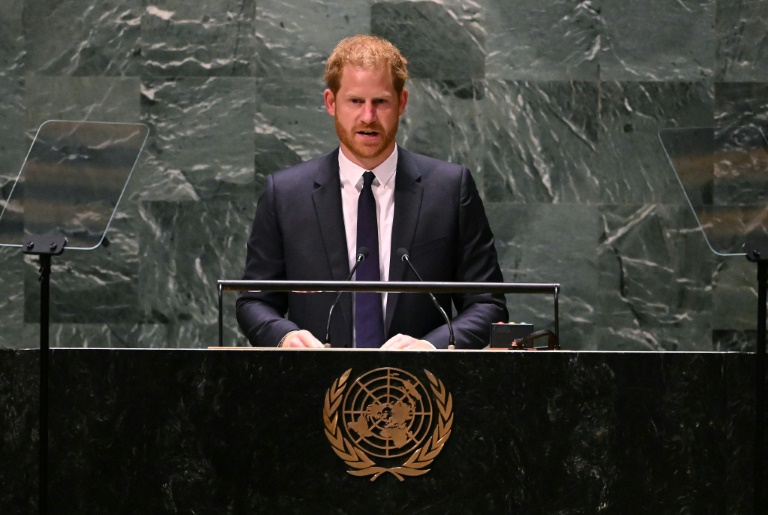
Britain’s Prince Harry told the UN Monday that the overturning of constitutional rights in the United States was part of “a global assault on democracy and freedom.”

The Duke of Sussex addressed the United Nations General Assembly in New York at an event marking Nelson Mandela International Day.

“This has been a painful year in a painful decade,” the royal told delegates.

He cited the continuing fallout from the pandemic, climate change, disinformation and Russia’s invasion of Ukraine before alluding to the Supreme Court’s recent overturning of America’s nationwide right to abortion.

“And from the horrific war in Ukraine to the rolling back of constitutional rights here in the United States, we are witnessing a global assault on democracy and freedom, the cause of Mandela’s life,” Harry said.

The royal paid tribute to Mandela, South Africa’s anti-apartheid hero who spent 27 years in prison before being elected the country’s first Black leader, as “not only a man of conscience” but “a man of action.”

Harry, 37, invoked that sentiment to urge leaders to tackle climate change, as his wife Meghan Markle looked on from the chamber.

“As we sit here today, our world is on fire again,” said the prince, adding that “historic weather events are no longer historic.”

“More and more, they are part of our daily lives. And this crisis will only grow worse unless our leaders lead.

“Unless the countries represented by the seats in this hallowed hall make the decisions, the daring, transformative decisions that our world needs to save humanity,” he added.

The General Assembly designated July 18, Mandela’s birthday, Nelson Mandela Day in 2009 to honor his life and legacy.

Assembly president Abdulla Shahid and New York City Mayor Eric Adams were among other delegates to make speeches.

In a personal moment, Harry said a photograph of his mother Princess Diana with Mandela is “on my wall and in my heart every day.”

It was taken in Cape Town in 1997, a few months before Diana’s death in a car crash in Paris.

“When I first looked at the photo, straightaway what jumped out was the joy on my mother’s face. The playfulness, cheekiness even, the pure delight to be in communion with another soul so committed to serving humanity,” said Harry.

US school shooter faces death penalty at sentencing trial

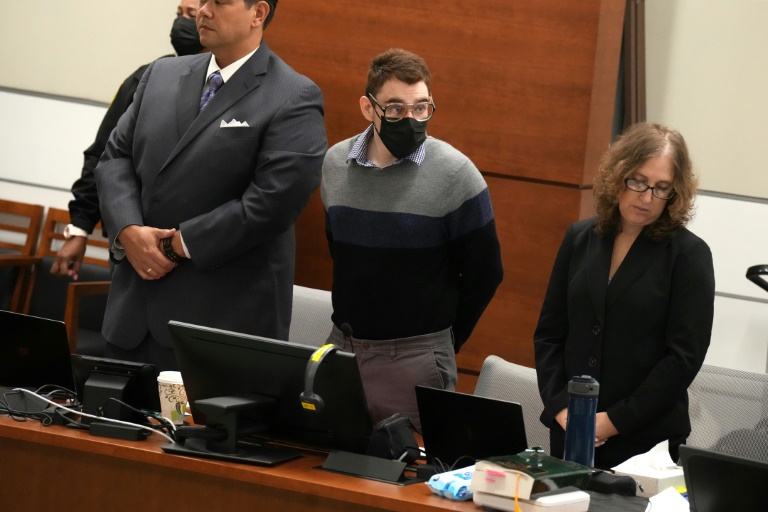
A prosecutor arguing for the death penalty denounced the “unspeakable” murders of 17 people at a Florida high school as the sentencing trial began Monday for the troubled young man who admitted to carrying out the Valentine’s Day 2018 shooting.

Nikolas Cruz pleaded guilty in October to 17 counts of murder and 17 counts of attempted murder for the attack at Marjory Stoneman Douglas High School in Parkland, Florida.

A jury is to decide whether the 23-year-old should receive the death penalty or a life sentence for what lead prosecutor Mike Satz called a “cold, calculated, manipulative and deadly” massacre.

“I’m going to speak to you about the unspeakable, about this defendant’s goal-directed, planned, systematic murder, mass murder, of 14 children, an athletic director, a teacher and a coach,” Satz said in opening arguments.

He told the jury that three days before the shooting, Cruz made a cellphone video in which he said: “I’m going to be the next school shooter of 2018.

“My goal is at least 20 people with an AR-15 and some tracer rounds,” Cruz said in the video. “It’s going to be a big event and when you see me on the news, you’ll know who I am.”

The brown-haired Cruz, who was wearing large glasses and a gray-, purple- and black-striped sweater, listened impassively as the prosecutor recounted the day of the shooting in excruciating detail.

Parents of some of the victims were in the public gallery. They wept, clasped hands and shook their heads as the prosecutor spoke.

Satz said that Cruz, after fleeing the school, ordered a drink at a Subway sandwich shop and then went to a McDonald’s, where he asked the brother of a girl he had just shot for a ride.

The boy, who was not aware at the time that Cruz was the assailant, declined. Cruz was arrested shortly afterwards.

The trial in Fort Lauderdale is the rare instance of a mass shooter facing a jury, as they often either take their own lives or are killed by police.

The death penalty requires a unanimous decision by the jury. Cruz will otherwise be handed life without parole.

– Nine-minute massacre –

The Florida shooting stunned a country accustomed to gun violence and sparked new efforts, led by students from the school itself, to get lawmakers to pass tougher gun control laws.

Parkland survivors founded “March for Our Lives,” organizing a rally that drew hundreds of thousands of people to the nation’s capital, Washington, in 2018.

Thousands turned out for demonstrations organized by the group last month following two other mass shootings: one at a Texas elementary school that killed 19 children and two teachers, and another at a New York supermarket that left 10 Black people dead.

Those shootings helped galvanize support for the first significant federal bill on gun safety in decades.

President Joe Biden signed the bill into law in June. It included enhanced background checks for younger buyers and federal cash for states introducing “red flag” laws that allow courts to temporarily remove weapons from people who are considered a threat.

But the measure fell far short of steps Biden had called for, including an assault weapons ban.

Cruz bought the AR-15 semi-automatic rifle he used in the attack legally, despite having a documented history of mental health problems.

Expelled from school for disciplinary reasons, Cruz was known to be fixated on firearms — and had been identified as a potential threat to his classmates.

On the day of the attack, he arrived at the school in an Uber, began shooting indiscriminately at students and staff, and fled nine minutes later, leaving behind a scene of carnage.

Cruz told a detective after his arrest that he heard demons ordering him to “buy weapons, kill animals and destroy everything.”

The US Justice Department in March announced that it had reached a $127.5 million agreement with survivors and relatives of victims of the shooting, settling all 40 related civil cases.

In lawsuits, survivors and relatives accused the FBI of negligence for failing to act on tips received prior to the attack that Cruz was dangerous.

Steve Bannon: Loyal to Trump, from White House to court

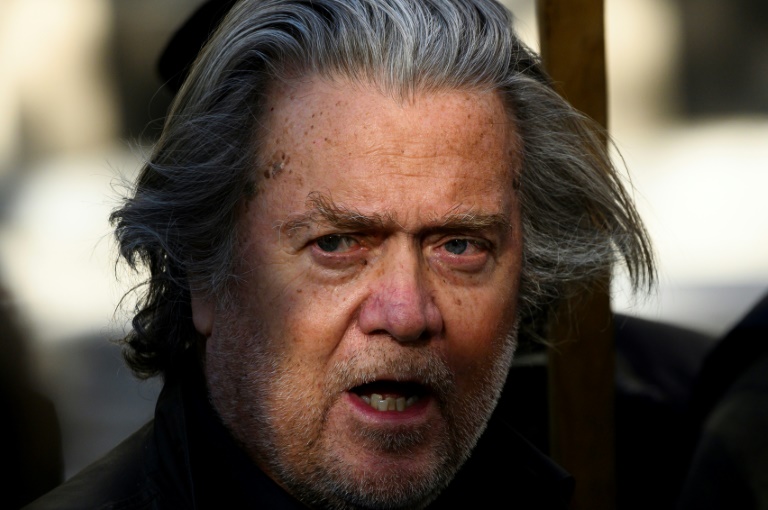
Steve Bannon — the anti-establishment outsider who helped bring Donald Trump to the White House — is now on trial for refusing to testify about the January 6, 2021 assault on the US Capitol.

The 68-year-old former investment banker rose to prominence as the head of far-right news outlet Breitbart before latching onto the Trump phenomenon and guiding the billionaire to the presidency.

Trump rewarded Bannon by naming him chief strategist, a major victory for the alt-right that sent shudders through the political mainstream.

He held the post for less than a year before being fired, but Bannon’s loyalty to Trump survived.

He vowed to fight for Trump from outside the White House, pushed the president’s discredited allegations of fraud in the 2020 election, and refused to testify to lawmakers investigating the Capitol attack, claiming to be covered by presidential executive privilege.

Bannon recently reversed course and agreed to testify after allegedly receiving Trump’s blessing, but it was too late.

If founded guilty, he faces up to a year in prison for each of two charges of contempt of Congress.

After serving in the US Navy and making his name at Goldman Sachs during the 1980s boom years, Bannon founded his own investment bank before selling it to Societe Generale in 1998 and going on to be a Hollywood producer.

Some of his projects were standard entertainment fare, but documentaries on late president Ronald Reagan, populist darling Sarah Palin and the Tea Party movement brought him into right-wing circles.    

He became an investor in Andrew Breitbart’s eponymous media venture, which aimed to buck what its founder saw as the progressive left’s grip on the news agenda. 

Democrats and liberals were in the site’s crosshairs, but moderate Republican lawmakers also felt its lash, accused of failing to stand up to president Barack Obama.

– Outsider to insider –

Breitbart died in 2012 and Bannon took over, promoting Trump’s candidacy before officially joining his campaign.

He was one of the most influential figures in the White House, and was behind some of Trump’s most controversial moves, including his ban on some travelers from abroad and pulling the United States out of the Paris climate change agreement.

After frequent clashes, including with Trump himself, Bannon was pushed out in August 2017, returning to Breitbart.

His participation in Michael Wolff’s gossipy and damaging book “Fire and Fury” angered the president, who dubbed him “Sloppy Steve” and suggested he “cried when he got fired and begged for his job” — but their relationship survived.

Bannon stepped down from Breitbart in early 2018.

In 2020, he was charged with conspiracy to commit wire fraud over funds raised to build a wall on the border with Mexico — a flagship Trump policy that the president had falsely promised would be paid for by the US’s southern neighbor.

Trump pardoned Bannon — who had pleaded not guilty to the fraud charge — on his last day in office, two weeks after Trump supporters stormed the US Capitol in an attempt to prevent the certification of Joe Biden’s election victory.

Bannon was one of dozens of people called to testify before the House committee about the assault. 

Investigators believe that he and other Trump advisors could have information on links between the White House and the rioters.

White House records show that Bannon spoke with Trump twice on January 6. The day before the attack, he told listeners of his podcast that “all hell is going to break loose tomorrow.”

Stocks climb, dollar slides as risk appetite returns

Stock markets pushed higher while the dollar slid against the euro and pound on Monday on returning risk appetite as recession fears eased slightly.

Oil prices jumped over four percent, even though investors continued to fret over Russia’s war in Ukraine, a Covid spike in China and central banks quickly raising interest rates.

“After a volatile week which ended on a high note, the positive momentum has spilled over across the major global markets,” noted Richard Hunter, head of markets at Interactive Investor.

“Investors will nonetheless remain on high alert this week, as further economic data provides further colour, while the need for caution against a further possible supply shock for oil and the likelihood of an interest rate hike from the ECB (European Central Bank) increases.”

Both Asian and European stock markets enjoyed strong gains following a positive session Friday on Wall Street after June retail sales came in above forecasts and banking giant Citigroup’s April-June results beat expectations.

Wall Street continued to move higher on Monday, with investors cheered by investment bank Goldman Sachs posting a big jump in revenue even if profits slid like they did at competitors.

Earnings season continues and investors “will want to be comforted with reassuring earnings guidance” given the concerns about the risk of recession due to rising interest rates to tame inflation. 

“That is the key more so than the actual results,” he added.

While a strong set of economic data has of late boosted bets on the US Federal Reserve lifting borrowing costs more, the latest figures were not seen as being large enough to warrant a sharper rate hike next week — easing recession fears.

Market analysts widely expect the US central bank to announce a 75 basis-point lift after its meeting next week, though some have suggested a one percentage-point increase could still be on the cards to try and cool decades-high inflation.

– ECB to act –

The ECB is set on Thursday to raise its interest rates for the first time in more than a decade.

To try and counteract a steep rise in prices, the central bank has said it intends to raise borrowing costs by a quarter point, the first such move since 2011. 

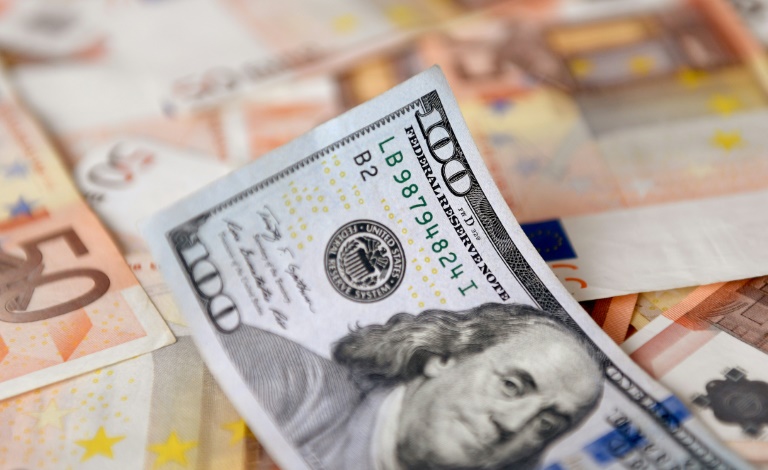
The ECB’s delay in acting compared with other central banks that have announced a series of increases — coupled with fears of a eurozone recession — saw the euro fall to parity with the dollar last week.

But on Monday, the European single currency was up around 0.8 percent against the dollar, while the British pound climbed 1.1 percent versus the greenback.

After falling under $100 per barrel last week on recession fears, they jumped back over that level on Monday.

“Oil prices are soaring again today, buoyed by an apparent easing in economic fears, stronger risk appetite and a failure by the White House to get any concrete commitment to increase oil output during the Middle East visit,” said market analyst Craig Erlam at trading platform OANDA.

“When the biggest talking point from President (Joe) Biden’s meeting with Saudi Crown Prince Mohammed bin Salman is a fist bump photo, you know it probably hasn’t gone to plan,” he added.

– Key figures at around 1530 GMT –

New York – Dow: UP 0.4 percent at 31,422.66 points

EURO STOXX 50: UP 1.0 percent at 3,511.86

London – FTSE 100: UP 0.8 percent at 7,218.69 (close)

Frankfurt – DAX: UP 0.7 percent at 12,959.81 (close)

Paris – CAC 40: UP 0.9 percent at 6,091.91 (close)

Hong Kong – Hang Seng Index: UP 2.7 percent at 20,846.18 (close)

Shanghai – Composite: UP 1.6 percent at 3,278.10 (close)

Tokyo – Nikkei 225: Closed for a holiday

Euro/dollar: UP at $1.0166 from $1.0088 on Friday

Pound/dollar: UP at $1.1991 from $1.1865 

Euro/pound: DOWN at 84.77 pence from 85.00 pence

Dollar/yen: DOWN at 138.18 yen from 138.54 yen

Brent North Sea crude: UP 4.8 percent at $106.06 per barrel

West Texas Intermediate: UP 4.6 percent at $102.04 per barrel

burs-rl/pvh

Boeing lands vast Delta MAX jets deal as Farnborough opens

US aerospace giant Boeing on Monday fired the first shot in an orders battle with European rival Airbus at Farnborough airshow, clinching a $13.5-billion deal for 100 MAX planes from Delta Airlines in a huge vote of confidence for the crisis-hit jet — and for the broader sector recovery from Covid.

The deal, announced on the first day of Farnborough amid a sweltering heatwave, marks a huge turnaround for the MAX jet which had suffered two deadly crashes in 2018 and 2019.

Outgoing British Prime Minister Boris Johnson meanwhile opened the prestigious five-day event as the aviation sector plots post-Covid recovery.

US carrier Delta lodged its first-ever order for medium-haul MAX 10 aircraft, with options for 30 more of the fuel-efficient planes as it seeks to replace its ageing fleet and cut emissions.

Boeing revealed also that Japanese airline ANA had agreed to purchase 20 of its smaller MAX 8 jets — worth $2.4 billion — plus two 777-8 freight planes.

– ‘Persuasive case’ –

“We always take pride in the quality of our customers and how good they are at their trade,” said Boeing chief executive Dave Calhoun, speaking to CNBC after the news.

“What that says about the evaluation of our airplane, vis-a-vis whatever we compete against, their selection of the (MAX 10) plane reflects that,” he said, adding that Boeing had made a “persuasive case” for the jet whose production still faces supply-chain issues.

Delta boss Ed Bastian added that the aircraft would help it improve fuel efficiency and secure a “more sustainable future for air travel”.

The news comes as airlines worldwide seek to replace ageing fleets with fuel-efficient planes that emit less carbon dioxide.

Defence aerospace companies are also expected to emerge as big winners at Farnborough, with Russia’s invasion of Ukraine boosting spending on armed forces worldwide.

Russian companies have been banned from the show due to the war.

The event also coincides with fast-moving political turmoil in Britain after Johnson’s recent announcement that he is stepping down as Conservative party leader, sparking a divisive contest to replace him also as prime minister.

– ‘Handing over controls’ –

“This government believes in aviation and its power to bring jobs and growth to the entire country,” Johnson said Monday in opening remarks, before alluding to his exit from Downing Street.

“After three years in the cockpit… I am now handing over the controls seamlessly to someone else. I don’t know who,” he added, sparking laughter from delegates.

Johnson also noted that his Conservative government was “investing massively in defence”.

This year’s event — one of the world’s largest civilian and defence shows — is the first global aviation get-together since the Paris airshow in 2019, before Covid hit.

Farnborough was cancelled in 2020 as the Covid health crisis grounded aircraft and ravaged the sector.

Global air traffic is gradually recovering and in May reached more than two-thirds of its pre-pandemic level, according to the International Air Transport Association.

That recovery has however faced headwinds from rocketing inflation fuelled by historically high energy prices and higher wages, while staff shortages constrain airports and have sparked summer flight cancellations.

– Air displays –

Visitors to Farnborough witnessed air displays by Britain’s Red Arrows and South Korea’s Black Eagles, as well as from the US-made F-35 stealth fighter.

Airbus and Boeing are showcasing their latest twin-aisle passenger aircraft, the A350-900 and the 777X.

Ahead of the event, Britain issued a historic red warning for extreme heat, with southern England temperatures potentially exceeding 40C for the first time on Tuesday.

“It’s pretty challenging and we know that tomorrow is going to be a little bit warmer,” said John Paul Frasier, special advisor for Canadian aircraft manufacturer De Havilland.

“People who come to visit are really happy to visit.”

Climate change's fingerprints on ever hotter heatwaves

Hotter, longer, more frequent. Heatwaves such as the one currently roasting much of Europe, or the record-shattering hot spell endured by India and Pakistan in March, are an unmistakable sign of climate change, experts said Monday. 

– Humans to blame –

“Every heatwave that we are experiencing today has been made hotter and more frequent because of human induced climate change,” said Friederike Otto, senior lecturer at Imperial College London’s Grantham Institute for Climate Change.

“It’s pure physics, we know how greenhouse gas molecules behave, we know there are more in the atmosphere, the atmosphere is getting warmer and that means we are expecting to see more frequent heatwaves and hotter heatwaves.”

In recent years, advances in the discipline known as attribution science have allowed climatologists to calculate how much global heating contributes to individual extreme weather events. 

The India-Pakistan heatwave, for example, was calculated to have been 30 times more likely with the more than 1.1 degrees Celsius of warming that human activity has caused since the mid-nineteenth century.

The heatwave that shattered records in North America in June 2021, leaving hundreds dead as temperatures soared to 50C in places, would have been virtually impossible without global heating. 

And the last major European heatwave, in 2019, was made 3C hotter by climate change.

“The increase in the frequency, duration, and intensity of these events over recent decades is clearly linked to the observed warming of the planet and can be attributed to human activity,” the World Meteorological Organisation said in a Monday statement. 

– Worse to come –

However unbearable temperatures get this week, scientists are unanimous: there is worse to come. 

At 1.5C of warming — the most ambitious Paris climate agreement goal — UN climate scientists calculate that heatwaves will be more than four times more likely than the pre-industrial baseline. 

At 2C or warming, that figure reaches 5.6 times more likely, and at 4C heatwaves will be nearly 10 times more likely to occur. 

Despite three decades of UN-led negotiations, countries’ climate plans currently put Earth on course to warm a “catastrophic” 2.7C, according to the UN.

Matthieu Sorel, a climatologist at Meteo-France, said that climate change was already influencing the frequency and severity of heatwaves. 

“We’re on the way to hotter and hotter summers, where 35C becomes the norm and 40C will be reached regularly,” he said.

– Danger of death –

The heatwaves of the future depend largely on how rapidly the global economy can decarbonise. 

The UN’s climate science panel has calculated that 14 percent of humanity will be hit with dangerous heat every five years on average with 1.5C of warming, compared with 37 percent at 2C.

“In all of places in the world where we have data there is an increase in mortality risk when we are exposed to high temperatures,” said Eunice Lo, a climate scientist at the University of Bristol’s Cabot Institute for the Environment.

It’s not only the most vulnerable people who are at risk of health impacts frim heat, it’s even the fit and healthy people who will be at risk.”

There is a real risk in future of so-called “wet bulb” temperatures — where heat combines with humidity to create conditions where the human body cannot cool itself via perspiration — breaching lethal levels in many parts of the world.

As well as the imminent threat to human health, heatwaves compound drought and make larger areas vulnerable to wild fires, such as those now raging across parts of France, Portugal, Spain, Greece and Morocco.

They also menace the food supply. 

India, the world’s second-largest wheat producer, chose to ban grain exports after the heatwave impacted harvests, worsening a shortage in some countries prompted by Russia’s invasion of key exporter Ukraine.

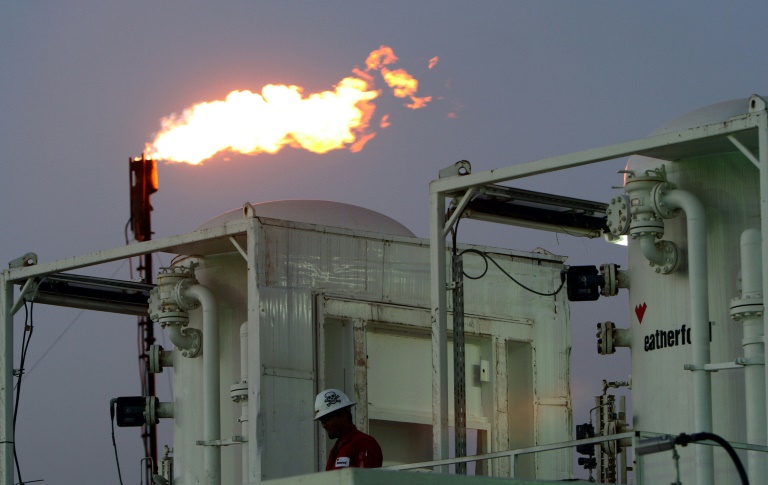
Oil dispute sharpens Baghdad-Kurd tensions amid deadlock

Iraq’s oil wealth is rekindling tensions between federal authorities and the autonomous Kurdish region, in a row that could compromise the lifeline industry and keep investors away, analysts say.

The long-simmering dispute came to a head in February — at a time of political deadlock in Baghdad — when the federal supreme court ordered Kurdistan to hand over oil extracted from its territories to the federal authorities.

Then earlier this month, a commercial court in the Iraqi capital annulled contracts between the Kurds and foreign firms, after the oil ministry in Baghdad filed a judicial complaint.

Authorities in the Kurdistan capital Arbil have cried foul, accusing Baghdad of heaping “unjust pressure” on them and announcing their own legal action.

Iraq, the second largest producer in the Organization of the Petroleum Exporting Countries, sits on enormous oil reserves, and revenues from the sector feed 90 percent of the federal government budget.

It exports an average of 3.3 million barrels of crude oil per day (bpd), while production in Kurdistan amounts to just over 450,000 bpd.

The February ruling stated that a 2007 law adopted by Arbil to regulate oil and gas was unconstitutional.

But analysts say politics play a major role in the dispute in Iraq, whose political barons have failed to reach agreement on choosing a president and a prime minister since October legislative elections.

“When it comes to oil, each side uses their respective powers as carrots and sticks depending on the political atmosphere of the day,” said Bilal Wahab of The Washington Institute for Near East Policy.

“At times when there was political accord, the courts were rather quiet. When there was political discord, however, the reverse was true,” he told AFP.

– ‘Reputation being damaged’ – 

The nullification of oil contracts between the Kurds and four international oil companies (IOCs) from Canada, Britain, Norway and the United States at the start of July has inflamed the row.

“For Baghdad to be chasing IOCs out of Iraqi Kurdistan does not serve to show Iraq as a major producer welcoming of foreign investment,” cautioned Yesar al-Maleki, an analyst at the Middle East Economic Survey.

In a fightback, the Kurdish regional authorities in June initiated judicial proceedings against the federal government.

One lawsuit targets Oil Minister Ihsan Ismail, accused by the Kurds of trying to “intimidate” foreign firms operating in the Kurdistan region of northern Iraq.

The Kurdish autonomous government has accused Baghdad of taking “illegal” and “politically motivated” actions.

For Wahab, Kurdish and federal government officials fail to appreciate “how much they are damaging the overall reputation of Iraq’s energy industry”.

“Questioning the sanctity of contracts … adds legal risk to a slew of other regulatory and governance risks that ail the Iraqi energy industry,” he added.

The dispute, he said, “repels much-needed foreign investment”.

Oil revenues are critical for Iraq, a country faced with widespread corruption but also mired in a financial crisis and in need of funds to rebuild infrastructure after decades of conflict.

– ‘Compromise’? –

Despite the legal actions, Kurdistan says it is open to a negotiated solution.

It is working on setting up two companies specialised in oil exploration and marketing that would coordinate with Baghdad, a spokesperson for the Arbil government said.

Baghdad’s oil ministry, meanwhile, marked a small victory after oil giants Baker Hughes, Halliburton and Schlumberger committed not to initiate new projects in Kurdistan.

The ministry says the companies are also working to “liquidate and close” existing contracts.

Baghdad has fought to regain control of output from lucrative oil fields in Kurdistan since the autonomous region began marketing oil independently more than a decade ago.

The two had struck a deal under which the Kurdish region would deliver 250,000 barrels per day to Baghdad, in return for a share of federal funds to pay the salaries of Kurdish civil servants. But Arbil never delivered the oil and has complained the funds were late.

In recent weeks, tensions have risen further after a series of unclaimed rocket attacks targeting oil and gas installations in Kurdistan.

Experts say the assaults aim to put pressure on the Kurdistan Democratic Party (KDP), the largest in Kurdistan. 

The KDP is allied to Shiite leader Moqtada Sadr, whose bloc won 73 seats in the October polls, making it the largest faction in the 329-seat parliament.

The party is eyeing the Iraqi presidency for one of its members, although traditionally the job has been held by a member of the rival Patriotic Union of Kurdistan.

“The timeline of events evidently shows that this whole crisis started because the KDP took the side of the Sadrist movement… opposing the Iran-backed Shiite Coordination Framework,” Maleki said.

He expects a “compromise” will be reached to resolve the oil dispute because “Iraq is a country of compromise”.

“Until then, the supreme court ruling will hang like the sword of Damocles over the Kurdish regional government,” he said.

Close Bitnami banner
Bitnami