AFP

Forest fires rage in scorching southwest Europe

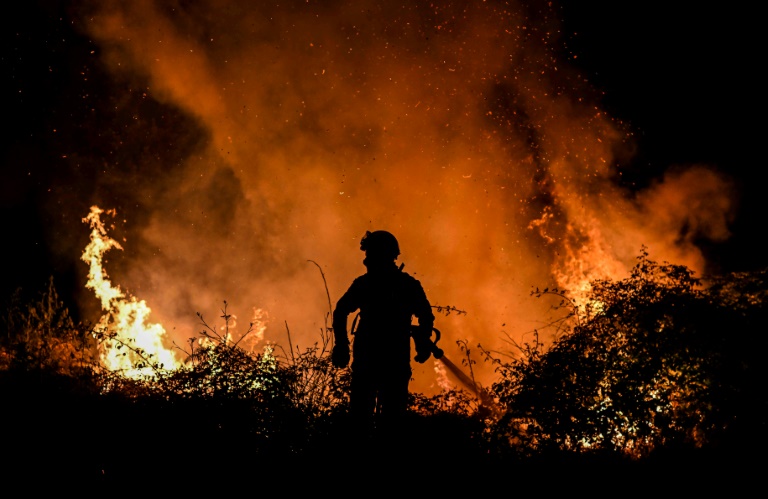
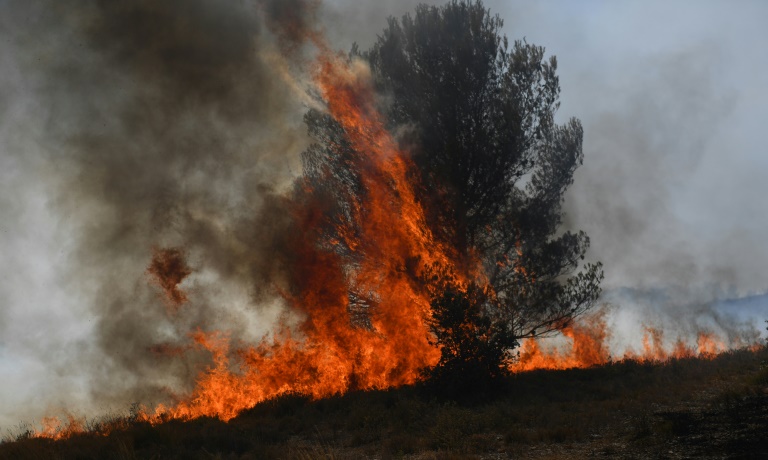
Southwest Europe endured a sixth day of a summer heatwave on Saturday that has triggered devastating forest fires as parts of the continent braced for new temperature records early next week.

Firefighters in France, Portugal, Spain and Greece battled forest blazes that have ravaged thousands of hectares of land and killed several personnel since the start of the week.

It is the second heatwave engulfing parts of southwest Europe in weeks as scientists blame climate change and predict more frequent and intense episodes of extreme weather.

Firefighters in the coastal town of Arcachon in France’s southwestern Gironde region were fighting to control two forest blazes that have devoured more than 10,000 hectares (24,700 acres) since Tuesday.

“It’s a Herculean job,” said Lieutenant-Colonel Olivier Chavatte from the fire and rescue service, which has 1,200 firefighters and five planes in action.

Further evacuation orders were given on Saturday for a few hundred residents, firefighter spokesman Arnaud Mendousse told AFP.

Since Tuesday, more than 12,000 people in total — residents and tourists combined — have been forced to decamp with five emergency shelters set up in order to receive evacuees.

Meteo France forecast temperatures of up to 40 degrees Celsius (104 degrees Fahrenheit) in the south of France on Saturday, with new heat records expected on Monday.

– ‘Extreme vigilance’ –

Authorities in the French Alps urged climbers bound for Mont Blanc, Europe’s highest mountain, to postpone their trip due to repeated rock falls caused by “exceptional climatic conditions” and “drought”.

The call comes after a section of Italy’s biggest Alpine glacier gave way at the start of the month, killing 11 people, in a disaster officials blamed on climate change.

In Portugal, the meteorological institute forecast temperatures of up to 42C with no respite before next week.

The civil defence, however, took advantage of a slight drop in temperatures after a July record of 47C on Thursday to try to stamp out one remaining major fire in Portugal’s north.

“The risk of fires remains very high,” civil defence chief Andre Fernandes warned.

“This is a weekend of extreme vigilance,” he added after a week which saw two people killed and more than 60 injured, and up to 15,000 hectares of forest and brushwood incinerated.

In Spain, the national meteorological agency maintained various levels of alert across the nation, warning of up to 44C in some regions.

Dozens of forest fires were raging Saturday in different parts of the country from the sweltering south to Galicia in the far northwest, which saw blazes lay waste to some 3,500 hectares, the regional government said.

– ‘So sad’ –

“So sad to see part of our natural heritage ablaze,” tweeted Spain’s Economy Minister and Deputy Prime Minister Nadia Calvino.

One blaze in the south caused the authorities to cordon off for more than 12 hours a section of a key highway connecting Madrid to the Portuguese capital Lisbon, before the road reopened.

The fires have scorched thousands of hectares in the Spanish region of Extremadura, while one near the southern city of Malaga forced the preventive evacuation of more than 3,000 people, rescue services said.

In Greece, the civil defence rushed to douse flames raging on the Mediterranean island of Crete, while Morocco was battling a deadly forest fire in its northern mountains.

In the United Kingdom, government ministers were to hold crisis talks after the state meteorological agency issued a first-ever “red” warning for extreme heat, cautioning there is a “risk to life”.

The Met Office said in southern England temperatures could exceed 40C on Monday or Tuesday for the first time, leading some schools to say they will stay closed next week.

Mayor Sadiq Khan advised Londoners to use public transport only if “absolutely necessary”. National train operators also warned passengers to avoid travel.

burs-tsc/cdw/jm

Social life helps orphaned elephants overcome loss: study

Orphaned elephants manage to overcome the loss of their mother by living in a herd, highlighting the importance of a social life for the species, according to a study.

Scientists investigated the consequences of a mother elephant’s death on her child by examining the level of stress hormones in the excrement of 37 young elephants in Kenya between 2015 and 2016.

Among the young elephants, 25 had lost their mother between one and 19 years before from poaching or drought.

Of the 25 orphans, 20 stayed within the same family unit after the mother’s death, while five joined an unrelated group.

The researchers found that stress hormones were at similar levels in the long term among orphans and the other elephants, even though the former were expected to show more stress symptoms in the absence of maternal care.

Any stress among the orphans did not last long, showing their “resilience” and the effect of social support from the other elephants, said Jenna Parker, the main author of the study published this week in the journal Communications Biology.

The importance of family links was obvious when observing elephant herds, Parker told AFP.

The young rarely stray more than 10 metres (33 feet) away from their mother and “incredible” reunions involving the entire group were seen after a few hours of separation, said the researcher at Colorado State University in the United States.

When poachers or hunters kill an elephant, that social cohesion disintegrates and threatens the group’s wellbeing, particularly the young ones left orphaned, she said.

The bond between a baby elephant and its mother is believed to be strong even after weaning.

– ‘Playmates’ –

Parker and her colleagues investigated how orphaned elephants felt by measuring the quantity of hormones they release when faced with stress.

The hormones can be found in blood, saliva, urine and faeces. The last option was chosen as the most reliable and widespread way to measure stress in wild animals because it is non-invasive, Parker said.

Only the excrement of young females aged between two and 20 in the Samburu and Buffalo Springs reserves in northern Kenya was used, with males less easy to track because they are less attached to their original herd.

Scientists also found lower stress levels among young elephants growing up in groups with more animals of a similar age, suggesting that “playmates” are essential for them.

The results could guide orphanages to provide companions of the same age to help orphaned elephants.

The study also concluded that releasing groups of orphaned elephants together after they were linked during captivity could facilitate their transition to living in the wild.

Forest fires rage in scorching southwest Europe

Southwest Europe entered a sixth day of a summer heatwave on Saturday that has triggered devastating forest fires as parts of the continent braced for new temperature records early next week.

Firefighters in France, Portugal and Spain, as well as Greece, battled forest blazes that have ravaged thousands of hectares of land and killed several firefighters since the start of the week.

“The fire is still not under control,” said Ronan Leaustic, an official in Arcachon in southwest France’s Gironde region where firefighters battled to put out two forest blazes that have devoured 9,000 hectares (22,200 acres) since Tuesday.

Meteo France said temperatures will range between 35 degrees Celsius (95 degrees Fahrenheit) and 40C in the south of France on Saturday, with new heat records expected on Monday.

Authorities in the French Alps have urged climbers seeking to ascend Mont Blanc, Europe’s highest mountain, to postpone their trip due to repeated rock falls caused by “exceptional climatic conditions” and “drought”.

The call comes after a section of Italy’s biggest Alpine glacier gave way at the start of the month, sending ice and rock hurtling down the mountain and killing 11 people, in a disaster officials blamed on climate change.

In Portugal, the meteorological institute forecast temperatures of up to 42C and thermometer readings were not expected to drop below 40C until next week.

– ‘Extreme vigilance’ –

The civil defence, however, took advantage of a slight drop in temperatures after a July record of 47C on Thursday to try to stamp out one last major fire in the north of the country.

“The risk of fires remains very high,” civil defence chief Andre Fernandes warned during a midday briefing.

“This is a weekend of extreme vigilance.”

He spoke after an air tanker that had been fighting fires in northern Portugal crashed on Friday, killing its pilot.

A day earlier, two people were killed when a firefighting helicopter plummeted into the sea off Greece.

In Spain, the national meteorological agency maintained various levels of alert across the nation, warning of up to 44C in some regions.

Dozens of forest fires continued to rage in different parts of the country.

– UK crisis meeting –

One blaze in the south caused the authorities to cordon off a section of a key highway connecting Madrid to the Portuguese capital Lisbon.

The fires have scorched thousands of hectares in the Spanish region of Extremadura.

In Greece, the civil defence rushed to douse flames raging on the Mediterranean island of Crete.

Further north, people were also bracing for more unusually warm weather.

In the United Kingdom, a crisis committee of government ministers was meeting later Saturday after the state meteorological agency issued a first-ever “red” warning for extreme heat, cautioning there is a “risk to life”.

The Met Office said that in southern England, temperatures could exceed 40C for the first time on Monday or Tuesday.

Mayor Sadiq Khan advised Londoners only to use public transport on those days if “absolutely necessary”. National train operators also warned passengers to avoid travel.

Some schools in southern England told parents they would stay closed during the heatwave early next week.

burs-tsc/ah/jm

G20 finance talks overshadowed by Ukraine end without joint communique

A two-day meeting of finance ministers from the Group of 20 major economies ended Saturday in Indonesia without a joint communique after Russia’s war in Ukraine divided the global forum.

During talks on the Indonesian resort island Bali, the finance chiefs looked for solutions to food and energy crises, while accusing Russian technocrats of exacerbating the problems.

US Treasury Secretary Janet Yellen, Australian Treasurer Jim Chalmers and Canadian Finance Minister Chrystia Freeland on Friday blamed the invasion of Ukraine for sending a shockwave through the global economy.

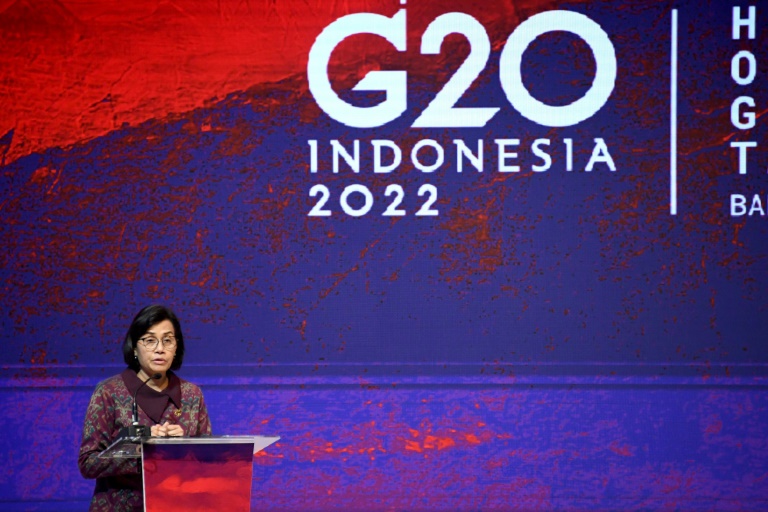
In place of a formal communique would be a 14-paragraph statement issued by Indonesia, the G20 chair’s Finance Minister Sri Mulyani Indrawati said in closing remarks.

She said there was consensus on most of the document but two paragraphs would focus on members’ differences regarding the war’s impacts and how to respond.

“I think this is the best result,” she said.

– No place at talks –

At the beginning of the second day of talks, Indonesian central bank governor Perry Warjiyo called on ministers and global finance leaders to concentrate on recovery in a world economy reeling from the Covid-19 pandemic.

The meeting took place after the International Monetary Fund slashed its global growth forecast, with another downgrade expected this month as US inflation stokes fears of a recession.

But the talks have been overshadowed by the Ukraine war after it roiled global markets, caused rising food prices and added to breakneck inflation.

The Kremlin calls the war a “special military operation” and blames retaliatory Western sanctions for blocking food shipments and rising energy prices.

Russian Finance Minister Anton Siluanov and Ukrainian Finance Minister Serhiy Marchenko participated virtually in the meeting.

Russian Deputy Finance Minister Timur Maksimov attended the talks in person a week after Foreign Minister Sergei Lavrov walked out of a G20 meeting over Western criticism of the invasion.

Maksimov was in the room as Western officials expressed their condemnation, according to a source present. Marchenko called for “more severe targeted sanctions” against Moscow.

– ‘Uncharted waters’ –

Indonesia has refrained from uninviting Russia from G20 meetings, including a leaders’ summit in November, even as Western nations repeated their calls for Moscow to be frozen out of the group.

Both Yellen and Freeland, who has Ukrainian heritage, said representatives of Russian President Vladimir Putin’s government had no place at talks.

Observers said the failure to agree on a joint communique would hinder coordinated efforts to solve rising inflation and food shortages.

“The lack of a G20 finance ministers’ communique means it will be more difficult for the G20 to forge a consensus on vital issues in the fall,” said Eric LeCompte, executive director of Jubilee USA Network, an NGO that lobbies for developing nation debt relief.

“Internal divisions hinder the G20’s ability to act decisively and leaves the world in uncharted waters.”

Yellen held bilateral meetings with counterparts from Indonesia, Saudi Arabia, South Africa, Australia, Singapore and Turkey, the Treasury said, lobbying their support for a price cap on Russian oil to cut off Putin’s war chest.

In response to the food crisis, the IMF, World Bank, World Food Programme, Food and Agriculture Organization and the World Trade Organization also called for action in four areas.

“Support the vulnerable, facilitate trade, boost food production & invest in climate-resilient agriculture,” IMF chief Kristalina Georgieva tweeted late Friday, summarising the call to action.

Members also discussed sustainable finance, cryptocurrencies and international taxation on Saturday.

Mulyani said “progress” was made on international tax rule changes that will set a global minimum corporate tax rate of 15 percent by 2024.

Russia has been to Iran twice in last month to assess drones: US

Russian officials have recently visited Iran twice to assess combat drones, US National Security Advisor Jake Sullivan said Saturday, as Moscow looks to bolster its arsenal for the war in Ukraine.

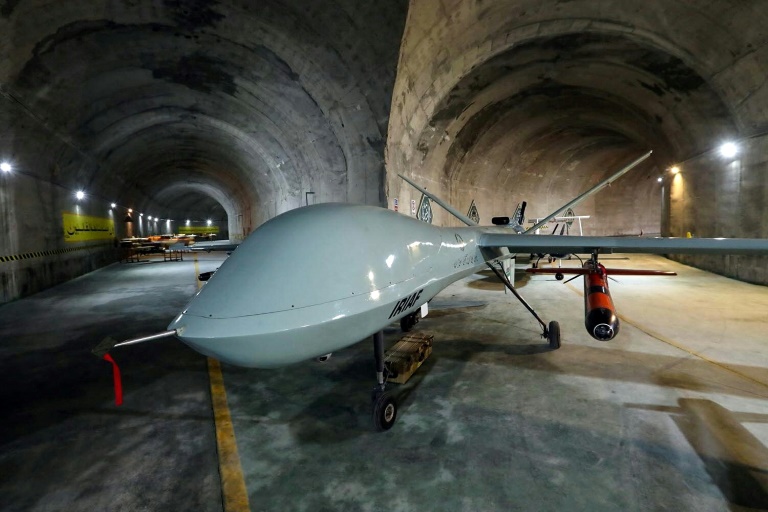
Iran’s military hosted two showcases for Russian delegations at the Kashan airfield, on June 8 and again on July 5, Sullivan said in a statement.

Satellite imagery released by the White House shows Shahed-191 and Shahed-129 drones at or flying near the site.

The White House said earlier this week that it believes Moscow is looking to acquire hundreds of the drones, or unmanned aerial vehicles (UAVs) — and that Tehran is set to train Russian forces to use them as soon as this month.

“We assess an official Russian delegation recently received a showcase of Iranian attack-capable UAVs,” Sullivan said Saturday.

“We are releasing these images captured in June showing Iranian UAVs that the Russian government delegation saw that day. This suggests ongoing Russian interest in acquiring Iranian attack-capable UAVs.

“To our knowledge, this is the first time a Russian delegation has visited this airfield for such a showcase,” Sullivan added.

John Kirby, a spokesman for the national security council, told CNN this week that the drones can be used both for reconnaissance and to deliver munitions.

“It was important to make it clear to the world that we know that Russia needs these additional capabilities,” Kirby said Tuesday. “They are expanding their resources at an accelerated rate.”

The United States and allies have recently provided longer-range precision weapons to Ukrainian forces, like the Himars precision-guided missiles, boosting their capability to strike Russian targets and repel Moscow’s intensifying attacks in the east.

Iran said Tuesday that “no special development” had taken place in technological cooperation with Russia following the invasion of Ukraine in February.

Drones have played a crucial role on both sides of the war in Ukraine, for everything from firing missiles from a distance, to dropping small bombs on targets, to conducting reconnaissance.

Ukraine’s forces have had particular success in using Turkish-made Bayraktar armed combat UAVs, and the United States and other allies have supplied Kyiv with many types of smaller drones.

Ukraine accuses Russia of shelling from captured nuclear plant

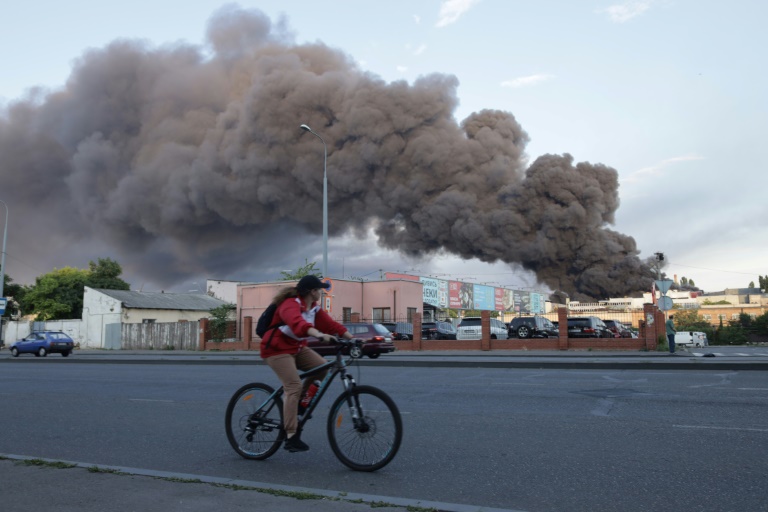
Ukraine’s atomic energy agency accused Russia of using Europe’s largest nuclear power plant to store weapons and shell the surrounding regions of Nikopol and Dnipro that were hit on Saturday.

Petro Kotin, president of Ukrainian nuclear agency Energoatom, called the situation at the Zaporizhzhia nuclear plant “extremely tense” with up to 500 Russian soldiers controlling the plant.

The plant in southeast Ukraine has been under Russian control since the early weeks of Moscow’s invasion, though it is still operated by Ukrainian staff.

“The occupiers bring their machinery there, including missile systems, from which they already shell the other side of the river Dnipro and the territory of Nikopol,” he said in a Ukrainian television interview broadcast on Friday.

On Saturday, Russian missiles struck residential buildings in the city of Nikopol, killing two people, Dnipro regional governor Valentin Reznichenko said.

In the northeast region around Ukraine’s second city of Kharkiv, governor Oleg Synegubov said an overnight Russian missile attack killed three people in the town of Chuguiv.

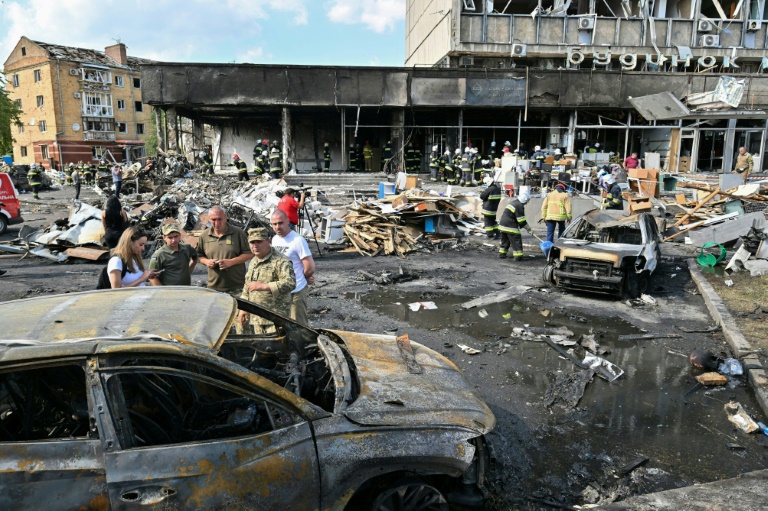
In the central Ukrainian city of Vinnytsia, officials said the death toll rose to 24 from Russian strikes after a woman died of her injuries in hospital on Saturday. Ukraine says three children are among the dead.

“Sixty-eight people continue treatment, including four children. Four people are still missing,” said Vinnytsia district chief Sergiy Borzov. 

– Outpouring for four-year-old –

President Volodymyr Zelensky accused the Russians of aiming to “cause maximum damage to Ukrainian cities”. 

“I’m urging you, once again: please don’t ignore the air raid signals now,” he said in his daily address on Friday.

Russia claimed the strikes in Vinnytsia — hundreds of kilometres away from frontline fighting — had killed Ukrainian military officials and foreign arms suppliers.

But Ukraine said the dead included four-year-old Liza Dmitrieva, who had Down’s syndrome and whose death spurred an outpouring after footage of her final moments alive went viral on social media.

Officials initially believed Liza’s mother was also killed, but have since confirmed she is in a “critical” condition after surgery.

The missile strikes on Vinnytsia were the latest attacks to carry a heavy civilian toll and came less than a week after strikes on Chasiv Yar in the Donetsk region left nearly 50 dead.

“I have no words to describe the horror I experienced today,” said Anastasiya, after rockets fell near her home in Kramatorsk, a major city and an administrative centre of the Donbas, on Friday.

“It’s good that it fell outside and did not fly into the house. That was lucky.”

– ‘Clearing’ Donbas town –

Moscow invaded Ukraine on February 24 and the conflict has killed thousands of people, destroyed cities and forced millions to flee their homes.

The heaviest fighting has recently focused on the industrial Donbas region in the east, where grinding trench battles and artillery duels are morphing into a war of attrition.

Britain said Friday that the Kremlin “must bear the full responsibility” for the death of a British captive in east Ukraine.

“I am shocked to hear reports of the death of British aid worker Paul Urey while in the custody of a Russian proxy in Ukraine,” Foreign Secretary Liz Truss said. 

Moscow-backed separatists said Friday they were closing in on their next target, Siversk, after wresting control of sister cities Lysychansk and Severodonetsk about 30 kilometres (18 miles) to its east.

And Donetsk separatist official Daniil Versonov said rebel fighters were “clearing” eastern districts of Siversk in small groups.

Ukraine has repeatedly urged allies to supply it with advanced, long-range precision artillery systems that would allow it to target Russian forces deeper inside Ukrainian-held territory.

Defence Minister Oleksiy Reznikov said Friday that Ukraine had taken delivery of its first batch of sophisticated M270 rocket systems, adding to a growing arsenal of Western-supplied artillery Kyiv says is changing dynamics on the battlefield.

burs-imm/jm

Russia accused of shelling from captured Ukraine nuclear plant

Russia is using Europe’s largest nuclear power plant as a base to store weapons including “missile systems” and shell the surrounding areas in Ukraine, an official with Kyiv’s nuclear agency said Friday, while nearly the entire country was placed on air raid alert.  

The president of Ukrainian nuclear agency Energoatom said the situation at the Zaporizhzhia nuclear plant was “extremely tense”, with up to 500 Russian soldiers controlling the plant. 

“The occupiers bring their machinery there, including missile systems, from which they already shell the other side of the river Dnipro and the territory of Nikopol,” Petro Kotin said in a televised interview, referring to the city across the water.

The plant in southwestern Ukraine has been under Russian control since the early weeks of Moscow’s invasion, though it is still being operated by Ukrainian staff.

The most recent attack in the Dnipro region left three dead and 15 wounded after Russian “missiles hit an industrial enterprise and lively street nearby”, regional governor Valentin Reznichenko said on Telegram.

The threat of air raids across most of Ukraine was also raised after strikes were reported in areas far from the front lines, with President Volodymyr Zelensky saying the Russian objective was to “cause maximum damage to Ukrainian cities”. 

“I’m urging you, once again: please don’t ignore the air raid signals now,” he said in his daily televised address.

Zelensky spoke after devastating Russian strikes in the central Ukrainian city of Vinnytsia killed nearly two dozen people, including three children, with rescue workers clearing debris throughout the day to locate survivors. 

Four people were still missing and over 200 wounded, Zelensky said. 

“Both at the national level and the international level, we will do everything to hold absolutely all Russian murderers responsible for what they have done,” he said.

– Outpouring for slain toddler –

Russia claimed the strikes in Vinnytsia — hundreds of kilometres away from frontline fighting — had killed Ukrainian military officials and foreign arms suppliers.

But among those killed was four-year-old Liza Dmitrieva, who had Down’s syndrome and whose death spurred an outpouring after footage of her final moments alive went viral on social media.

Officials initially believed Liza’s mother had also been killed, but announced Friday she was alive and in “critical” condition after surgery.

First Lady Olena Zelenska said early Friday she was “horrified” by Liza’s death and images of her overturned stroller released by local authorities.

The missile strikes on Vinnytsia are the latest attacks to carry a heavy civilian toll and come less than a week after strikes on Chasiv Yar in the Donetsk region left nearly 50 dead.

A strike on Friday hit the central square in Kramatorsk, a major city and an administrative centre of the Donbas. Authorities said no one was hurt since it happened during curfew.

“I have no words to describe the horror I experienced today,” said Anastasiya, after rockets fell near her residential building. 

“It’s good that it fell outside and did not fly into the house. That was lucky.”

Moscow launched its invasion on February 24 and the conflict has killed thousands of people, destroyed cities and forced millions to flee their homes.

The heaviest fighting recently in Ukraine has focused on the industrial Donbas region in the east, where grinding trench battles and artillery duels are morphing into a war of attrition.

– ‘Clearing’ Donbas town –

The United Kingdom said Friday that the Kremlin “must bear the full responsibility” for the death of a British captive in east Ukraine.

“I am shocked to hear reports of the death of British aid worker Paul Urey while in the custody of a Russian proxy in Ukraine,” Foreign Secretary Liz Truss said. 

Moscow-backed separatists said Friday they were closing in on their next target, Siversk, after wresting control of sister cities Lysychansk and Severodonetsk — about 30 kilometres (18 miles) to its east — two weeks ago.

And Donetsk separatist official Daniil Versonov said rebel fighters were “clearing” eastern districts of Siversk in small groups.

Ukraine has repeatedly urged allies to supply it with advanced, long-range precision artillery systems that would allow it to target Russian forces deeper inside Ukrainian-held territory.

Defence Minister Oleksiy Reznikov said Friday that Ukraine had taken delivery of its first batch of sophisticated M270 rocket systems, adding to a growing arsenal of Western-supplied artillery Kyiv says is changing dynamics on the battlefield.

In his address, Zelensky said the United States would include additional aid for his country in a new budget bill, including the development of Ukraine’s air capabilities to “significantly strengthen our defence potential”.

burs-jbr/ssy/cwl

G20 finance talks to end without joint communique: officials

A two-day meeting of G20 finance ministers in Indonesia is expected to end Saturday without a joint communique, two officials said, after Russia’s war in Ukraine overshadowed proceedings.

During talks on the Indonesian resort island of Bali, finance chiefs from Western nations accused Russian technocrats of complicity in the invasion.

US Treasury Secretary Janet Yellen and Australian Treasurer Jim Chalmers on Friday blamed the invasion for sending a shockwave through the global economy.

In place of a formal communique will be a statement by Indonesia, which holds the G20 presidency, said one official who spoke on condition of anonymity.

Another source at the meeting said the host would summarise the talks in a declaration that would not fall under the G20 banner.

Indonesian officials did not respond to a request for comment.

At the beginning of the second day of talks, Indonesian central bank governor Perry Warjiyo called on ministers and global finance leaders to concentrate on recovery in a world economy still reeling from the Covid-19 pandemic.

“It is important that we remain focused on what we have planned to achieve this year, as this will also send a positive message to the global community on the G20’s role and efforts to support global recovery,” Warjiyo said.

But the talks have been under the shadow of the Ukraine war — which Russia calls a “special military operation” — after it roiled global markets, caused rising food prices and added to breakneck inflation.

It has left the forum unable to agree on a text with Russia disagreeing with Western nations over its invasion of Ukraine being the cause of the global economic headwinds.

The Kremlin instead blames subsequent Western sanctions for blocked food shipments and rising energy prices.

“Russia tried to say that the world economic situation had nothing to do with the war,” a French delegation source told AFP on Friday.

Russian Finance Minister Anton Siluanov and Ukrainian Finance Minister Serhiy Marchenko participated virtually in the meeting.

Russian Deputy Finance Minister Timur Maksimov attended the talks in person.

He was in the room as Western officials expressed their condemnation, according to a source present at the talks.

Marchenko said the Russian invasion “clearly marks the end of the existing world order”, and called for “more severe targeted sanctions” against Moscow.

Members will also discuss sustainable finance, cryptocurrencies and international taxation on Saturday.

Jan 6 Capitol riot committee subpoenas Secret Service over missng texts

The US House committee investigating the January 6 assault on the Capitol said late Friday night it had subpoenaed the Secret Service over questions surrounding missing text messages from the days surrounding the riot last year.

The inspector general of the Department of Homeland Security (DHS), Joseph Cuffari, told Congress earlier this week that his office has had difficulties obtaining records of text messages from the Secret Service, the law enforcement agency that protects the president, from January 5 and 6, 2021. 

Representative Bennie Thompson, chairman of the January 6 committee, informed the agency’s director James Murray in a letter Friday of the subpoena compelling the Secret Service to hand over the missing texts by Tuesday. 

“The Select Committee seeks the relevant text messages, as well as any after action reports that have been issued in any and all divisions of the USSS pertaining or relating in any way to the events of January 6, 2021,” the letter, posted to the committee’s website, said.

The messages could be important in the House of Representatives and Justice Department investigations into whether Donald Trump and his close advisors encouraged the deadly insurrection by the former president’s supporters, which aimed to prevent the certification of his Democratic rival Joe Biden as the winner of the November 2020 election.

Secret Service agents were with Trump during the day of the uprising, and were also with vice president Mike Pence, who went into hiding at the Capitol after pro-Trump rioters called for him to be hanged.

On June 29 a former White House staffer told the House January 6 investigation that Trump had attempted to force the Secret Service to take him to the Capitol to join his supporters on that day. 

According to Secret Service spokesman Anthony Guglielmi, agents’ phones were wiped as part of a planned replacement program that began before the DHS Office of the Inspector General (OIG) first asked for the data, six weeks after the insurrection.

“The Secret Service notified DHS OIG of the loss of certain phones’ data, but confirmed to OIG that none of the texts it was seeking had been lost in the migration,” he said in a statement.

The Secret Service has been criticized for not adequately anticipating the threat of the violent action by armed Trump supporters on January 6.

Trump had made a senior Secret Service official at the time, Tony Ornato, his personal deputy chief of staff.

Ornato has denied the account given to the January 6 committee by former Trump aide Cassidy Hutchinson that Trump tried to force the Secret Service to drive him to the Capitol as his supporters massed at the building, the seat of the US legislature.

But other then White House officials have backed Hutchinson’s story.

GSK spin-off to create consumer healthcare giant

British drugs giant GlaxoSmithKline on Monday demerges its newly-named consumer healthcare unit Haleon, resulting in what is set to be London’s largest new stock market listing in more than a decade.

The new company — owning brands including Sensodyne toothpaste, pain relief drug Panadol and cold treatment Theraflu — is set for a valuation of about £40 billion ($47.4 billion) when it begins trading on the London stock market, according to Bloomberg. 

The major strategy shift by GSK chief executive Emma Walmsley comes after she has faced intense activist shareholder pressure over the company’s delays in producing Covid jabs and treatments.

– ‘Landmark London listing –

“This will be the largest London stock market listing in a decade, with the new company becoming a big beast with a new skin in the consumer goods world,” said Susannah Streeter, senior investment and markets analyst at Hargreaves Lansdown.

It is set to be the capital’s biggest listing since Swiss mining giant Glencore was valued at £38 billion on entry in 2011.

GSK, which owns 68 percent of Haleon, plans to retain six percent of the group following the spin-off.

US pharmaceutical titan Pfizer has said it plans to sell its 32-percent minority stake.

Walmsley, who had led the consumer unit prior to her promotion as head of GSK in 2017, has described the demerger as the group’s most significant corporate change in 20 years.

The split sees GSK “parcelling off a considerable quantity of its sizeable debt pile into Haleon, expected to be around £10 billion”, Streeter said.

Haleon could join London’s top-tier FTSE 100 depending on its market valuation.

Walmsley, part of a group of less than 10 women chief executives running companies on the benchmark index, sees more long-term value in the demerger than a sale.

GSK at the start of the year rejected a £50 billion bid for the unit from consumer goods titan Unilever.

– Vaccine push –

Alongside the demerger, GSK is expanding further into the field of vaccines, having in May snapped up US biopharmaceutical firm Affinivax for up to $3.3 billion.

Also this year, the British company spent $1.9 billion on US group Sierra Oncology, a specialist in medicines for rare forms of cancer.

Keith Bowman, analyst at Interactive Investor, said the demerger was aimed at giving GSK “increased management focus to each respective business”.

This was the case “particularly for its pharma business which has underperformed rivals such as (Covid vaccine-maker) AstraZeneca over recent years”, he told AFP.

GSK is set to receive £7 billion in dividends at separation.

The consumer healthcare division, whose portfolio of products includes also Centrum multivitamins and anti-inflammatory Voltaren, generates annual sales of about £10 billion.

Haleon will be headquartered in Weybridge, southwest of London.

“The idea is that a more focused consumer business will help boost sales,” said Streeter.

“There will be no change at the top… which is a vote of confidence in Brian McNamara, a former Procter & Gamble executive who has led the division for eight years.”

Close Bitnami banner
Bitnami