AFP

Mexico captures drug lord wanted for murder of US agent

Mexico on Friday captured a notorious drug kingpin on the FBI’s list of 10 most-wanted fugitives for the murder of a US undercover agent that strained the countries’ diplomatic relations.

Rafael Caro Quintero, 69, is accused by the United States of ordering the kidnap, torture and murder of Drug Enforcement Administration (DEA) special agent Enrique “Kiki” Camarena in 1985.

He was detained by Mexican marines in the town of Choix in the northwestern state of Sinaloa, for “the purpose of extradition,” the navy said in a statement.

Caro Quintero had already been arrested in 1985, tried in Mexico and sentenced to 40 years in prison for Camarena’s murder.

But in 2013, a Mexican court ordered his release on a legal technicality after he served 28 years, a move that angered US authorities.

By the time Mexico’s Supreme Court overturned the decision, Caro Quintero had already gone into hiding.

The case plunged US-Mexican relations into a crisis, and it took decades for anti-drug agencies on both sides of the border to rebuild trust.

Caro Quintero, alias “Rafa,” has a $20 million bounty on his head and is described by the FBI as “extremely dangerous.”

He is accused of co-founding the now-defunct Guadalajara drug cartel and currently runs an arm of the infamous Sinaloa cartel, according to US authorities.

The US Department of Justice expressed gratitude Friday to Mexican authorities over Caro Quintero’s arrest, confirming the US plans to seek his extradition.

“There is no hiding place for anyone who kidnaps, tortures, and murders American law enforcement,” Attorney General Merrick Garland said in a statement. 

– Denial of guilt –

In 2016, in an interview published by news magazine Proceso, Caro Quintero denied killing Camarena, whose story was depicted in the Netflix show “Narcos: Mexico.”

“I did not kidnap, did not torture and did not kill him,” Caro Quintero said, adding that he wanted to “live in peace” and work as a cattle rancher.

“I apologize to the society of Mexico for the mistakes I made, to the Camarena family, the DEA, the US government. I apologize,” he added.

Camarena’s murder was considered a vendetta for investigations by the DEA agent that led to the seizure of a massive marijuana field in Chihuahua.

Last year a Mexican court ruled that Caro Quintero could be extradited to the United States if caught, rejecting an appeal from his lawyers who argued that he had already been tried in his home country.

The Guadalajara drug cartel, powerful in the 1980s, is considered the forefather of modern Mexican drug cartels.

It was one of the first to establish contacts with Colombian drug lords to transport cocaine from the South American country to the United States.

The cartel’s other founders, Miguel Angel Felix Gallardo and Ernesto Fonseca Carillo, were also handed long prison sentences in Mexico for Camarena’s murder.

The organization’s disappearance led to the rise of the powerful Sinaloa drug cartel led by Joaquin “El Chapo” Guzman.

In 2017, Mexico extradited Guzman to the United States where he is serving a life sentence.

A wave of cartel-related violence has left more than 340,000 people dead in Mexico since the government deployed the military in the war on drugs in 2006.


From catwalk to perp walk: Colombian designer awaits fate on smuggling charges

Colombian celebrity designer Nancy Gonzalez’s fall from grace was sudden and spectacular: taken in handcuffs from her luxury home in Cali last week to a Bogota jail cell, accused of smuggling protected animal skin purses into the United States.

The 77-year-old is now awaiting a ruling by a Colombian judge on whether she should be extradited to the United States, where she risks a 25-year jail sentence.

Gonzalez’s purses, clutches and wallets sell for thousands of US dollars apiece, have appeared on catwalks and TV shows and grace the shelves of high-end shops around the globe.

But according to an indictment from prosecutors in the Southern District of Florida, dated April 26, more than 200 of the caiman- and python-skin products sold in the United States were imported illegally. 

Gonzalez and two employees of her Gzuniga company, the charge sheet states, conspired to smuggle bags made of protected animal skins between February 2016 and April 2019 without the permit required under the Convention on International Trade in Endangered Species (CITES).

The goods were brought to the Gzuniga showroom in New York City by the accused for the purpose of “enriching themselves upon the sale of the contraband products in the United States,” said the indictment.

Individuals were allegedly paid to bring the bags from Colombia to New York on commercial flights, and coached to lie about the provenance of the goods if asked.

Gonzalez and her co-accused face one charge of conspiracy and two counts of smuggling.

– Not ‘black market’ –

According to her website, Gonzalez’s bags are handcrafted in her native Cali by a team of artisans.

The site says her bags are sold at over 300 luxury retailers, including Bergdorf Goodman, Neiman Marcus, Saks Fifth Avenue, Harrod’s and Tsum.

Her designs were also featured in an exhibition by the Metropolitan Museum of Art in New York.

Among Gonzalez’s famous clients are Salma Hayek, Britney Spears and Victoria Beckham, according to specialized portals.

According to the Florida indictment, the animals that provided the skins were not on the CITES endangered list but fell under a category of species “that had to be controlled in order to avoid utilization incompatible with survival.”

This means that trade in products obtained from such an animal required a permit, which Gonzalez allegedly failed to obtain.

Elmer Montana, a lawyer for one of Gonzalez’s employees, told AFP that the skins used to make the bags were “obtained by Nancy Gonzalez… from certified farms which are supervised by the Ministry of the Environment.

“These are not skins that she buys on the black market” in one of the world’s most biodiverse countries, where reptile trafficking is rife. 

Footage released by the Colombian prosecutor’s office showed the glamorous businesswoman led away in handcuffs after a raid on her luxury home in Cali last week.

A court must now decide on her extradition to the United States, a process that can take weeks or even months, according to defense lawyers.

A judge had denied Gonzalez’s request for bail pending a ruling.

Rattled and uncertain of its future, Twitter stumbles on

Anxious employees, wary advertisers and hamstrung management: Twitter is limping along as it waits to learn how the fight over Elon Musk’s buyout bid will end.

Just days before the first court hearing in Twitter’s lawsuit seeking to force the Tesla boss to close the $44 billion deal, the firm is stuck in limbo.

“The best conclusion for me would be that he leaves us alone, so that we can go on our merry way,” an engineer at the key social media network told AFP on condition of anonymity. 

The engineer spoke of employees departing and a “climate of uncertainty that does not leave one with a peaceful state of mind.” 

“We’re still trying to do our work normally, because the main reasons why we chose to work for Twitter still hold true,” he added.

But there’s been nothing normal about Musk’s unsolicited bid that he’s now backed away from, saying Twitter has obfuscated on the number of fake accounts on the platform.

He has harangued the network, on its own platform no less, with mocking tweets about its management and direction.

“Musk’s repeated disparagement of Twitter and its personnel, create uncertainty… that harm Twitter and its stockholders,” the firm’s lawyers argued in their lawsuit lodged this week.

The billionaire’s comments “also expose Twitter to adverse effects on its business operations, employees, and stock price,” the lawyers added.

A judge has set the first hearing in the case for Tuesday in a court in the eastern state of Delaware.

– Sluggish ad sales – 

“Twitter is facing a huge image crisis, and confidence in its leadership is wavering,” eMarketer analyst Debra Williamson told AFP. “But whether the Musk situation has affected its revenues is unclear.”

She said the most loyal advertisers have likely stuck around, but those less committed to Twitter may have scaled back their spending while waiting for the endgame.

Angelo Carusone, president of watchdog group Media Matters, thinks the damage is already done because Musk has been a frequent critic of content moderation.

The fight against hate and disinformation is widely defended internally, but also by many advertisers, concerned that their brands are not associated with toxic messages. 

Carusone said that in early May, at an annual marketing event where companies negotiate large advertising deals, Twitter was “not able to give advertisers any clarity or confidence” that it would continue to be safe showcase for them.

“They didn’t go anywhere close to what they normally sell at that event. And it’s obviously been sluggish since then,” he added. 

The San Francisco-based social network cannot afford to lose customers. 

Unlike big fish such as Google and Facebook parent Meta, which dominate online advertising and make billions in profits, Twitter lost hundreds of millions of dollars in 2020 and 2021.

The group will capture less than one percent of global ad revenue in 2022, according to eMarketer, compared to 12.5 percent for Facebook, 9 percent for Instagram and nearly two percent for booming upstart TikTok. 

On top of that, Twitter’s user base is barely expected to grow and may even shrink in the United States, noted Williamson, the eMarketer analyst.

– ‘Twitter can’t meaningfully respond’ – 

Musk once had potential Twitter investors salivating with his talk of growing revenue fivefold and aiming for a billion users by 2028.

Instead, a court battle is building to “end either with Twitter being owned by an unhappy investor who decided he didn’t want it after all, or with Twitter on its own and weaker than it was before this all started,” Williamson added.

The battle is set to last for months, and at a time when economic headwinds are steady and firms need to be nimble to monetize new audio and video formats, diversify revenue sources and attract younger audiences.

“At least Facebook can respond to current threats, even if they’re responding poorly, they can respond,” said Carusone, the Media Matters president.

“What Twitter cannot do right now is meaningfully respond to anything.”

The social network’s lawyers have blamed Musk for withholding consent for two employee retention programs “designed to keep selected top talent during a period of intense uncertainty generated in large part by Musk’s erratic conduct.” 

Internally, some employees have also lost confidence in management, which they would have liked to be more combative in dealing with the world’s richest person. 

Parker Lyons, a financial analyst at Twitter, went so far as to tweet several memes that took aim at the firm’s board for its deal with Musk.

In one, the board is shown firing bullets into Twitter above the sarcastic caption: “Who could have done this?”

Rattled and uncertain of its future, Twitter stumbles on

Anxious employees, wary advertisers and hamstrung management: Twitter is limping along as it waits to learn how the fight over Elon Musk’s buyout bid will end.

Just days before the first court hearing in Twitter’s lawsuit seeking to force the Tesla boss to close the $44 billion deal, the firm is stuck in limbo.

“The best conclusion for me would be that he leaves us alone, so that we can go on our merry way,” an engineer at the key social media network told AFP on condition of anonymity. 

The engineer spoke of employees departing and a “climate of uncertainty that does not leave one with a peaceful state of mind.” 

“We’re still trying to do our work normally, because the main reasons why we chose to work for Twitter still hold true,” he added.

But there’s been nothing normal about Musk’s unsolicited bid that he’s now backed away from, saying Twitter has obfuscated on the number of fake accounts on the platform.

He has harangued the network, on its own platform no less, with mocking tweets about its management and direction.

“Musk’s repeated disparagement of Twitter and its personnel, create uncertainty… that harm Twitter and its stockholders,” the firm’s lawyers argued in their lawsuit lodged this week.

The billionaire’s comments “also expose Twitter to adverse effects on its business operations, employees, and stock price,” the lawyers added.

A judge has set the first hearing in the case for Tuesday in a court in the eastern state of Delaware.

– Sluggish ad sales – 

“Twitter is facing a huge image crisis, and confidence in its leadership is wavering,” eMarketer analyst Debra Williamson told AFP. “But whether the Musk situation has affected its revenues is unclear.”

She said the most loyal advertisers have likely stuck around, but those less committed to Twitter may have scaled back their spending while waiting for the endgame.

Angelo Carusone, president of watchdog group Media Matters, thinks the damage is already done because Musk has been a frequent critic of content moderation.

The fight against hate and disinformation is widely defended internally, but also by many advertisers, concerned that their brands are not associated with toxic messages. 

Carusone said that in early May, at an annual marketing event where companies negotiate large advertising deals, Twitter was “not able to give advertisers any clarity or confidence” that it would continue to be safe showcase for them.

“They didn’t go anywhere close to what they normally sell at that event. And it’s obviously been sluggish since then,” he added. 

The San Francisco-based social network cannot afford to lose customers. 

Unlike big fish such as Google and Facebook parent Meta, which dominate online advertising and make billions in profits, Twitter lost hundreds of millions of dollars in 2020 and 2021.

The group will capture less than one percent of global ad revenue in 2022, according to eMarketer, compared to 12.5 percent for Facebook, 9 percent for Instagram and nearly two percent for booming upstart TikTok. 

On top of that, Twitter’s user base is barely expected to grow and may even shrink in the United States, noted Williamson, the eMarketer analyst.

– ‘Twitter can’t meaningfully respond’ – 

Musk once had potential Twitter investors salivating with his talk of growing revenue fivefold and aiming for a billion users by 2028.

Instead, a court battle is building to “end either with Twitter being owned by an unhappy investor who decided he didn’t want it after all, or with Twitter on its own and weaker than it was before this all started,” Williamson added.

The battle is set to last for months, and at a time when economic headwinds are steady and firms need to be nimble to monetize new audio and video formats, diversify revenue sources and attract younger audiences.

“At least Facebook can respond to current threats, even if they’re responding poorly, they can respond,” said Carusone, the Media Matters president.

“What Twitter cannot do right now is meaningfully respond to anything.”

The social network’s lawyers have blamed Musk for withholding consent for two employee retention programs “designed to keep selected top talent during a period of intense uncertainty generated in large part by Musk’s erratic conduct.” 

Internally, some employees have also lost confidence in management, which they would have liked to be more combative in dealing with the world’s richest person. 

Parker Lyons, a financial analyst at Twitter, went so far as to tweet several memes that took aim at the firm’s board for its deal with Musk.

In one, the board is shown firing bullets into Twitter above the sarcastic caption: “Who could have done this?”

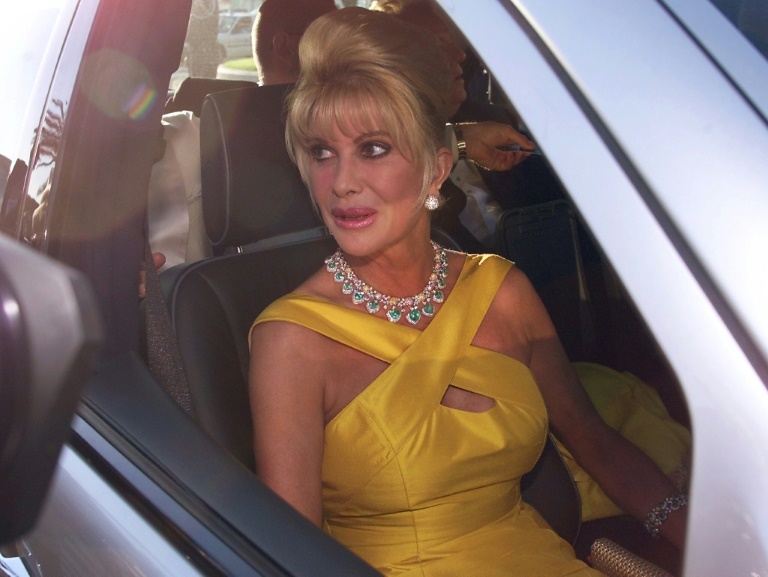
Ivana Trump died of accidental 'blunt impact' to torso: official

Ivana Trump, the first wife of the former US president, died of “blunt impact injuries” to the torso in an accident, New York’s chief medical examiner said on Friday. 

The statement did not specify the circumstances, but US media reported that police had been investigating whether the 73-year-old died falling down the stairs at her Manhattan home.

A spokesperson for the New York Police Department told AFP in an emailed statement Thursday that officers responded to a call at Ivana Trump’s address on the Upper East Side, and found her “unconscious and unresponsive.”

She was pronounced dead at the scene, and the statement added that “there does not appear to be any criminality.”

Donald Trump announced her death on Thursday, calling her a “wonderful, beautiful, and amazing woman, who led a great and inspirational life.”

He said her “pride and joy” were the couple’s three children, Donald Jr, Ivanka and Eric Trump.

Ivana Trump, a model who grew up under communist rule in the former Czechoslovakia, married Donald Trump, then a budding real estate developer, in 1977.

Their first child, Donald Jr., was born later that year. Ivanka was born in 1981 and Eric followed in 1984.

Throughout the ’80s, the Trumps were one of New York’s highest-profile couples, their extravagant lifestyle exemplifying the flashy excesses of the decade.

Their power and celebrity grew as Donald Trump’s property business soared, with Ivana Trump taking on number of key roles in the business.

Their high-profile split, rumored to have been caused in part by Donald Trump’s affair with actress Marla Maples, provided juicy content for New York’s tabloids.

Donald Trump and Ivana Trump divorced in the early ’90s and in 1993 the future president married Maples.

Ivana Trump went on to enjoy a successful business career of her own, developing clothing, jewelry and beauty products and penning a number of books.

She was married four times in her life, once before her marriage to Donald Trump and twice after.

On Friday, a US justice official said depositions of Donald Trump, Donald Jr and Ivanka in New York’s civil probe into alleged fraud at his family business had been postponed following her death.

Elon Musk asks to delay start of Twitter court battle

Tesla chief Elon Musk asked a Delaware court Friday to reject a bid by Twitter to put their $44 billion merger lawsuit on trial in September, instead asking to push it back until next year.

In a court document cited by US media, Musk’s lawyers accuse Twitter’s board of directors of wanting to expedite the case. 

Twitter on Tuesday sued Musk for breaching the contract he signed to buy the tech firm, calling his exit strategy “a model of hypocrisy.”

The suit filed in the US state of Delaware urges the court to order the billionaire to complete his deal to buy Twitter, arguing that no financial penalty could repair the damage he has caused.

The social media giant wants to hold the trial in September so as not to prolong the period of uncertainty currently threatening the company. 

But Musk asked that the trial not start before February 13, citing the complexities involved.

Musk’s lawyers did not immediately respond to a request by AFP for comment. 

The billionaire had agreed to buy Twitter at the end of April.

But after weeks of threats, Musk last week tried to pull the plug on the deal, accusing Twitter of “misleading” statements about the number of fake accounts.

That set the stage for a potentially lengthy court battle with Twitter, which has defended its fake account oversight and vowed to force Musk to complete the deal, which contained a $1 billion breakup fee.

The social network says the number of fake accounts is less than five percent, a figure challenged by Musk, who says he believes the percentage is much higher.

His lawyers say proving that will require analyzing mountains of data.

A preliminary hearing is scheduled for Tuesday in a business law court in Delaware.

Elon Musk asks to delay start of Twitter court battle

Tesla chief Elon Musk asked a Delaware court Friday to reject a bid by Twitter to put their $44 billion merger lawsuit on trial in September, instead asking to push it back until next year.

In a court document cited by US media, Musk’s lawyers accuse Twitter’s board of directors of wanting to expedite the case. 

Twitter on Tuesday sued Musk for breaching the contract he signed to buy the tech firm, calling his exit strategy “a model of hypocrisy.”

The suit filed in the US state of Delaware urges the court to order the billionaire to complete his deal to buy Twitter, arguing that no financial penalty could repair the damage he has caused.

The social media giant wants to hold the trial in September so as not to prolong the period of uncertainty currently threatening the company. 

But Musk asked that the trial not start before February 13, citing the complexities involved.

Musk’s lawyers did not immediately respond to a request by AFP for comment. 

The billionaire had agreed to buy Twitter at the end of April.

But after weeks of threats, Musk last week tried to pull the plug on the deal, accusing Twitter of “misleading” statements about the number of fake accounts.

That set the stage for a potentially lengthy court battle with Twitter, which has defended its fake account oversight and vowed to force Musk to complete the deal, which contained a $1 billion breakup fee.

The social network says the number of fake accounts is less than five percent, a figure challenged by Musk, who says he believes the percentage is much higher.

His lawyers say proving that will require analyzing mountains of data.

A preliminary hearing is scheduled for Tuesday in a business law court in Delaware.

Wildfires blaze across sweltering southwest Europe

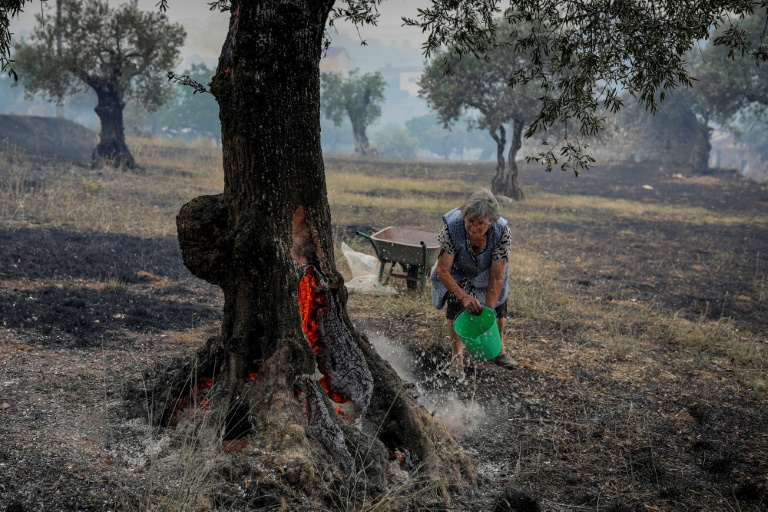
Southwest Europe baked under sweltering temperatures on Friday for a fifth day, with the heat sparking devastating wildfires, forcing the evacuations of thousands and ruining holidays.

Armies of firefighters battled blazes in France, Portugal and Spain as Britain braced for “extreme heat” in coming days and even Irish forecasters predicted a taste of blistering Mediterranean-style summer temperatures.

As French President Emmanuel Macron vowed authorities would do everything to mobilise resources to fight the fallout, the Bordeaux public prosecutor indicated a “criminal” origin was its main line of inquiry for at least one fire near the southwestern city.

The furnace engulfing swathes of southwest Europe is the second in weeks, with scientists blaming climate change and predicting more frequent and intense episodes of extreme weather.

In Portugal, five regions in the centre and north — where temperatures hit a July record 47 Celsius on Thursday before dropping back  — were on red alert again Friday as more than 2,000 firefighters tackled four major blazes.

A plane that was battling forest fires in the Braganca region crashed on Friday near Vila Nova de Foz Coa in northern Portugal, killing its pilot, the civil defence said.

As of late Thursday, the fires had killed one person and injured around 60. Nearly 900 people had been evacuated and several dozen homes damaged or destroyed, authorities said.

Wildfires have destroyed 30,000 hectares (75,000 acres) of land this year, the largest area since Portugal’s horrific summer of 2017 when around 100 people died.

In neighbouring Spain, where temperatures were as high as 37C by 7:00 am, a fire that broke out Thursday near the Monfrague National Park, a protected area renowned for wildlife in the Extremadura region, continued to blaze.

Spanish authorities reported close to 20 fires still raging out of control with one near Mijas in the deep south, inland from regional capital Malaga, forcing some 2,300 people to evacuate their homes.

Spanish Prime Minister Pedro Sanchez tweeted he was “closely following the evolution of active fires” posing an “extreme risk”.

The mercury reached 45.4C in Spain on Thursday, shy of the all-time high of 47.4C registered in August last year.

In southwestern France, flames have destroyed some 7,700 hectares since Tuesday and forced the evacuation of 11,000 people — including many holidaymakers who decided to abandon their vacation rather than remain in makeshift shelters set up by local authorities.

Southern France, battling temperatures around 40C on Friday, is bracing for more heat next week with 16 departments already on orange, a severe alert.

Across the Mediterranean, authorities said one person was found dead in northern Morocco as forest fires raged. Authorities also evacuated hundreds of people from more than a dozen villages in northwestern Morocco.

– ‘Post-apocalyptic’ –

One fire was raging in pine forests near France’s Dune du Pilat, Europe’s tallest sand dune and a magnet for tourists.

“I’ve never seen this before and you get the feeling that it’s post-apocalyptic,” said resident Karyn on Thursday shortly before the preventative evacuation order at Cazaux village near the dune.

Fire commander Laurent Dellac spoke of “tunnels of fire” around Teste-de-Buch, in the middle of the Landes forest to Bordeaux’s southwest — although nobody was reported hurt.

“The blazes are still not under control, and unfortunately conditions are windy again,” firefighter spokesman Matthieu Jomain told AFP.

Britain’s meteorological agency meanwhile issued its first ever “red” warning for exceptional heat with nights exceptionally warm.

The Met Office said there was a 50 percent chance on Monday or Tuesday of temperatures topping 40C for the first time, and an 80 percent chance that the country’s previous record of 38.7C set in 2019 will be exceeded.

– ‘Risk to life’ –

UK hospitals have warned of a surge in heat-related admissions and train operators have told passengers to expect cancellations.

The Irish meteorological office issued a weather warning for Sunday, Monday and Tuesday with “exceptionally warm weather”.

A high of 32C was possible on Monday, Met Eireann said, just short of Ireland’s record high 33.3C set in 1887.

Belgian authorities said they expected much higher temperatures next week, with a high of 38C in parts of the country forecast for Tuesday.

Scientists blame the increasing regularity of heatwaves on global warming.

“Climate change is driving this heatwave, just as it is driving every heatwave now,” said Friederike Otto, senior lecturer in climate science at the Grantham Institute at Imperial College London.

“Greenhouse gas emissions, from burning fossil fuels like coal, gas and oil, are making heatwaves hotter, longer-lasting and more frequent,” she said.

burs/raz/st

Stocks jump as US consumers keep spending

Stocks soared Friday after retail sales data showed that US consumers continue to spend more in the latest signal of the economy’s resilience despite high inflation and rising interest rates.

Better-than-expected results from Citigroup also helped temper concerns about what lies ahead for investors as more companies report second-quarter results.

The euro held above $1.00, having sunk below parity this week on fears Russia would cut off Europe’s gas supplies in retaliation for Ukraine war sanctions.

Oil prices rebounded, after slumping Thursday on recession fears.

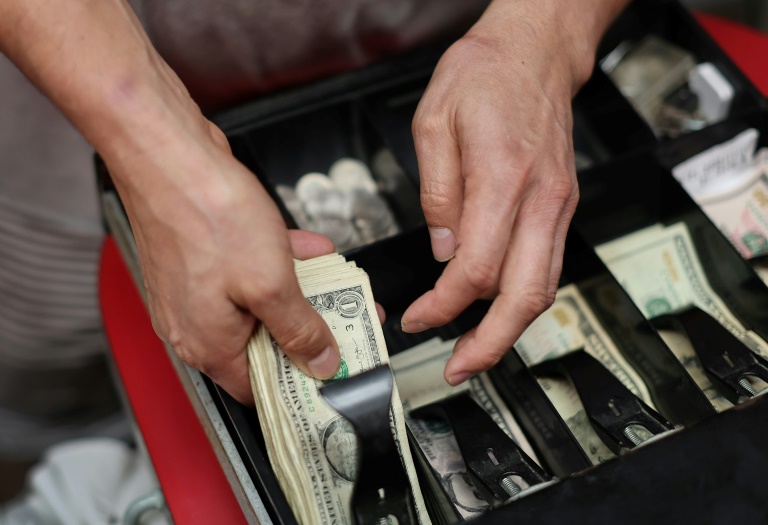
Wall Street pushed higher on a better-than-expected 1.0 percent rise in retail sales in June.

While not adjusted for inflation, sales were still up 0.7 percent even when gasoline was removed from the calculation, according to the Commerce Department data.

“This could be good news for US GDP which suggests that the economy may well avoid a contraction in (the second quarter), and ergo a technical recession,” said analyst Michael Hewson at CMC Markets.

The figure was also looked at through the prism of how it might affect the US Federal Reserve’s decision later this month on interest rates, with the solid growth giving policymakers license to hike rates more aggressively.

Markets had taken a major knock this week from news that annual US inflation zoomed to a new 40-year high of 9.1 percent in June on energy costs.

After rate increases by several countries, investors now expect the Fed to hike  by 75 basis points later this month, as officials battle to cool soaring prices, though some observers suggest a one-percentage-point move could even be on the cards.

While experts warn that raising US rates risks hammering the economy, the Fed has made it clear the number-one priority is bringing down inflation.

Meanwhile, Citigroup’s net profits fell by 27 percent to $4.5 billion, yet earnings per share easily beat expectations. The banking group took in more revenue and benefited from rising interest rates.

Citigroup shares jumped more than 13 percent.

The blue-chip Dow Jones Industrial Average led the major US indices, climbing 2.2 percent to 31,288.26, snapping a five-day losing streak.

European stocks also finished the day sharply higher.

In Asia, Hong Kong and mainland Chinese equity markets led losses after data showed China’s economy grew just 0.4 percent in the second quarter, battered by Covid lockdowns in major cities including Shanghai and Beijing.

The reading was well off the 1.6-percent growth predicted by analysts in an AFP survey

– Key figures at around 2030 GMT –

New York – Dow: UP 2.2 percent at 31,288.26 (close)

New York – S&P 500: UP 1.9 percent at 3,863.16 (close)

New York – Nasdaq: UP 1.8 percent at 11,452.42 (close)

London – FTSE 100: UP 1.7 percent at 7,159.01 (close)

Frankfurt – DAX: UP 2.8 percent at 12,864.72 (close)

Paris – CAC 40: UP 2.0 percent at 6,036.00 (close)

EURO STOXX 50: UP 2.4 percent at 3,477.20 (close)

Tokyo – Nikkei 225: UP 0.5 percent at 26,788.47 (close)

Hong Kong – Hang Seng Index: DOWN 2.2 percent at 20,297.72 (close)

Shanghai – Composite: DOWN 1.6 percent at 3,228.06 (close)

Euro/dollar: UP at $1.0088 from $1.0018 Thursday

Pound/dollar: UP at $1.1865 from $1.1824 

Euro/pound: UP at 85.00 pence from 84.73 pence

Dollar/yen: DOWN at 138.54 yen from 138.96 yen

West Texas Intermediate: UP 1.9 percent at $97.59 per barrel

Brent North Sea crude: UP 2.1 percent at $101.16 per barrel

burs-jmb

'Booked, blessed and busy': Lizzo returns

Lizzo’s summer turned up a notch Friday, with the poster child of self-love dropping her long-awaited album “Special” fresh off an Emmy nomination and ahead of a forthcoming tour.

The 12-track record brings back the soulful pop-rap blends that made the effervescent performer a household name with her messages of body positivity, feminist empowerment and sexual freedom.

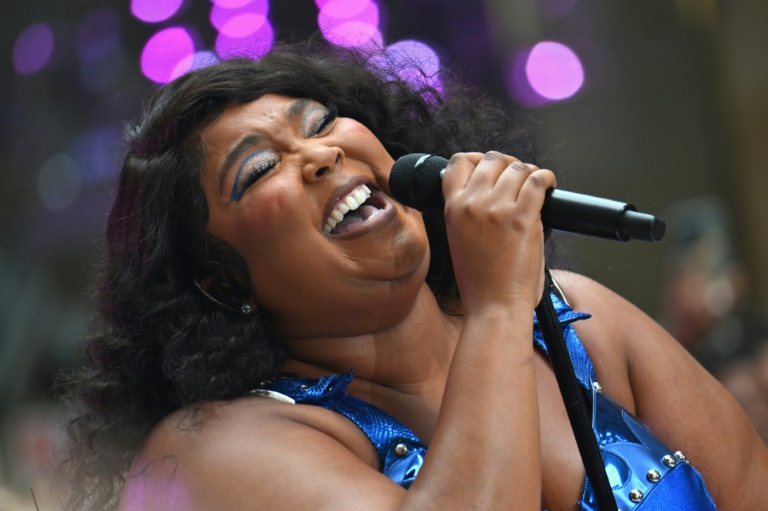
The hitmaker, whose 2017 song “Truth Hurts” became a viral sleeper smash and boosted her to global fame two years later, promoted the release of her fourth album with a “Today” show performance in Manhattan outside of NBC’s studios.

“I’m so proud of this album,” she told the show Friday. “It was three years in the making. It’s literally a classic, no-skips album. It’s the best thing I’ve ever done.”

Lizzo’s week had already kicked off to a banner start after she scored an Emmy Awards nomination for her show “Watch Out for the Big Grrrls,” a reality show where she searches for her tour’s back-up dancers.

“We didn’t do this for awards, we did this for ourselves. For the lives we touched making this… To shake up the industry.. and show the world how BEAUTIFUL AND TALENTED WE AREEEEE!” she posted on Instagram after learning of the nomination.

“BIG GRRRLS ARE BOOKED, BLESSED AND BUSY.”

The 34-year-old artist born Melissa Viviane Jefferson debuted in 2013 but did not achieve mainstream success until the release of her third album “Cuz I Love You,” which found runaway success and earned the Detroit-born, Houston-raised performer eight Grammy nominations with three wins.

She’s set to kick off a North American tour in September, with stops including New York’s Madison Square Garden and Los Angeles’ Kia Forum.

“It takes 10 years to become an overnight success,” she told Today. 

“I needed to discover my self-love,” she continued, elated fans cheering her along. “The music that’s connecting to people is about my self-love.”

Close Bitnami banner
Bitnami