AFP

After sensational trial, Johnny Depp releases an album

Fresh off his highly publicized, controversial defamation suit, actor Johnny Depp sought to show his creative career was back on track Friday, releasing an album with English rocker Jeff Beck.

The 13-track album “18” on which Depp sings and plays guitar features mainly covers, and so far it has been critically panned. 

It’s a record unlikely to figure prominently in the repertoire of Beck, the 78-year-old former member of The Yardbirds.

The album includes renditions of Marvin Gaye’s “What’s Going On” and John Lennon’s “Isolation,” as well as the Velvet Underground classic “Venus In Furs.”

The choice to include a song focused on sado-masochism might seem bizarre to some, given the ultra-mediatized trial centered on alleged domestic abuse between Depp and his ex-wife Amber Heard, the actor best known for her role in “Aquaman.”

The album also includes two songs the 59-year-old “Pirates of the Caribbean” star penned himself: “This is a Song for Miss Hedy Lamarr,” and “Sad Motherfuckin’ Parade.”

“Erased by the same world that made her a star / Spun out of beauty, trapped by its web,” Depp sings of Lamarr, who secluded herself in the final years of her life.

– Bad Boys, Hollywood Vampires –

Depp and Beck met in 2016, bonding “over cars and guitars” before the latter said he began to appreciate “Depp’s serious songwriting skills and ear for music.”

They began working on this LP in 2019.

It’s far from Depp’s first foray into music: the actor for more than a decade has recorded and toured with the Hollywood Vampires, a supergroup he started with Alice Cooper and Joe Perry.

Beck is currently on tour in Europe with Depp as a special guest.

This spring Depp won $15 million in the defamation suit against Heard, who was awarded $2 million.

The jury found that Heard, 36, defamed Depp in describing herself as a “public figure representing domestic abuse” in a 2018 op-ed published in The Washington Post, although she did not identify the actor by name. Depp held he suffered reputational damage following its publication.

Heard received $2 million in damages because the jury found that one of Depp’s lawyers had defamed her.

The six-week trial gained widespread attention not least because it was televised and livestreamed, with clips making their way to social media as Heard became a target of online vitriol and mockery.

In its aftermath Depp is embarking on a return to acting, set to star in the forthcoming French movie “La Favorite.”

He will play King Louis XV, with filming locations including Versailles.
US House committee to consider assault weapons ban

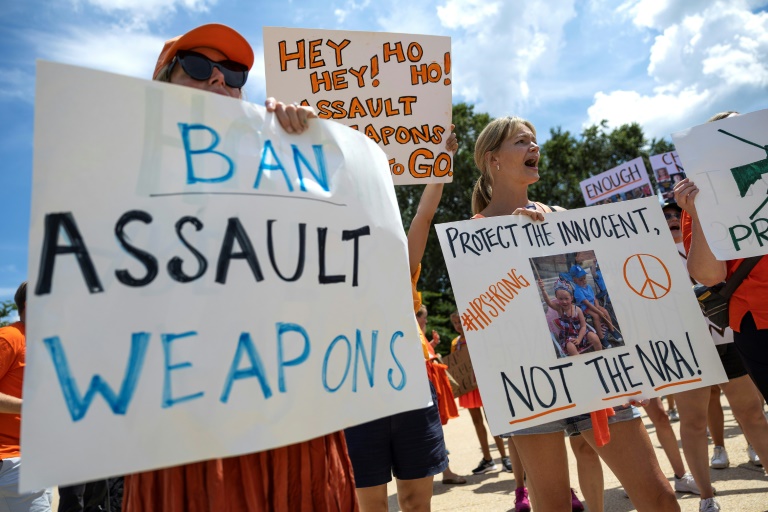
A committee of the US House of Representatives is set to vote next week for the first time in nearly 20 years on a bill that would ban assault weapons.

“Our country has witnessed senseless killing after senseless killing and each time one fact has remained remarkably consistent — the weapon of choice for mass slaughter is a high-powered assault weapon,” Jerold Nadler, the chairman of the House Judiciary Committee, said in a statement.

The Democrat from New York said the bill, which would ban the sale, import, manufacture or transfer of certain semi-automatic weapons, would be considered by the committee on Wednesday.

If the “Assault Weapons Ban of 2021” passes the Democratic-controlled committee it would go to the full House, where Democrats are in the majority.

It would be likely doomed to fail in the Senate, however.

Democrats have 50 seats in the 100-member Senate and 10 Republican votes would be needed to bring the measure to the floor.

Nadler said it is “beyond frightening and disturbing that a weapon that was designed as a tool of war has found its way into the hands of 18 year olds and onto our streets.”

An 18-year-old in Texas killed 19 children and two teachers in Uvalde, Texas, on May 24 using a semi-automatic rifle he purchased legally.

“Any weapon that allows for the quick and efficient slaughter of children in our schools has no place in our communities,” Nadler said.

Nancy Pelosi, the Democratic speaker of the House, said there is “great support in our caucus for an assault weapons ban.”

Congress passed a 10-year ban on assault rifles and certain high-capacity magazines in 1994.

But lawmakers let it expire in 2004 without renewing the ban and sales of those weapons have soared since then.

After the Uvalde massacre, President Joe Biden appealed to lawmakers to again ban assault rifles or at least raise the minimum age for buying them from 18 to 21.

But Republican lawmakers, who see such a restriction as going against the constitutional right to bear arms, have refused to go along with Biden’s proposal.

Survivors of recent mass shootings and relatives of people killed in them pleaded with lawmakers at the US Capitol on Wednesday to ban the powerful assault weapons used in the attacks.

US retail sales zoom higher in June despite high prices

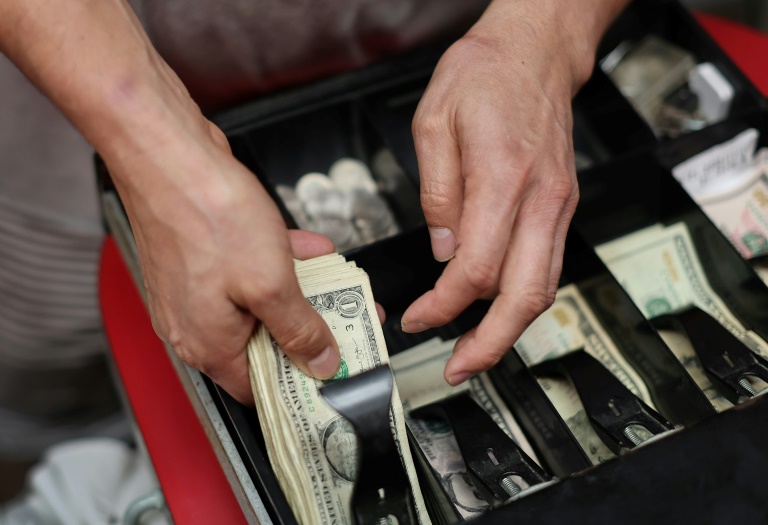
US retail sales shot up in June amid the ongoing surge in prices, according to new data Friday that spelled more bad news for the Federal Reserve as it struggles to rein in rampant inflation.

The data showed that after pausing in May, American consumers last month were still eating out and buying furniture and cars, even amid the fastest inflation in more than four decades. 

That poses a challenge for the US central bank, which has been hoping to see more decisive signs that its aggressive interest rate hikes were starting to take the economy off the boil and tamp down high prices.

Increased costs for gas, food and housing have squeezed American families and heaped pressure on President Joe Biden, whose approval ratings have taken a battering from the relentless rise in prices and fears of recession.

While inflation was already picking up speed last year as the world’s largest economy emerged from the pandemic and demand outstripped supply, the price surge worsened in the wake of the Russian invasion of Ukraine that has led to increased costs for energy and food.

Meanwhile, the US manufacturing sector, which has struggled with global pandemic supply constraints, saw output drop again in June, according to new Fed data Friday.

But consumers appear to be feeling a bit better about the current state of the economy, according to a new survey, defying expectations of a continued slump.

– Back with a vengeance –

After total retail sales dipped 0.1 percent in May, they recovered with a vengeance last month, climbing one percent to $680.6 billion, the Commerce Department said.

Record gas prices at the pump in June were a major factor, boosting sales at gasoline stations 3.6 percent in the month, and an eye-watering 49.1 percent over the past year, the report said.

But the data showed increases were widespread, and sales were still up 0.7 percent even when gasoline is removed from the calculation.

As inflation picked up speed, the Fed started raising the benchmark borrowing rate in March, and last month increased it by 0.75 percentage point, the biggest hike in nearly 30 years. 

But talk has now shifted to the possibility of a massive, full-point increase later this month, and higher borrowing costs have raised fears that the Fed’s efforts could push the economy into recession.

Fed Governor Christopher Waller on Thursday said he could favor the mega step — which would be the biggest such move in four decades — if there were no signs of cooling in the retail sales data and the new home sales report due out in two weeks.

In other data, manufacturing output fell 0.5 percent in June, the second consecutive drop, which led to decline overall industrial production, according to the Fed.

But the University of Michigan’s consumer sentiment index rose unexpectedly rose by 2.2 percent in July to a still-low 51.1, amid a big jump in feelings about the current situation, but another dip in the expectations index.

The preliminary reading showed current assessments of personal finances continued to deteriorate, reaching its lowest point since 2011, survey director Joanne Hsu said, noting a worrying trend of shoppers buying now to get ahead of price increases.

– Mega rate hike in play –

The Fed’s policy-setting Federal Open Market Committee is due to meet July 26-27 to debate the next move in its war on inflation.

Kathy Bostjancic of Oxford Economics said the strong sales data “keeps the Fed in an aggressive policy tightening mode — the debate at the July FOMC meeting will be between a 75bps or 100bps rate hike.”

High prices mean Americans have to shift spending more to necessities.

Neil Saunders, Managing Director of GlobalData, noted that “consumers did not buy more stuff in June — they bought less product but paid more for it. This is not a comfortable position.”

Waller downplayed recession fears saying the very US strong job market means the Fed can slow the economy without causing a downturn or a huge increase in joblessness.

Economist Nancy Vanden Houten agreed the United States “still has a fighting chance to avoid a recession, but the pathway to a soft landing is admittedly narrowing.”

US retail sales zoom higher in June despite high prices

US retail sales shot up in June amid the ongoing surge in prices, according to new data Friday that spelled more bad news for the Federal Reserve as it struggles to rein in rampant inflation.

The data showed that after pausing in May, American consumers last month were still eating out and buying furniture and cars, even amid the fastest inflation in more than four decades. 

That poses a challenge for the US central bank, which has been hoping to see more decisive signs that its aggressive interest rate hikes were starting to take the economy off the boil and tamp down high prices.

Increased costs for gas, food and housing have squeezed American families and heaped pressure on President Joe Biden, whose approval ratings have taken a battering from the relentless rise in prices and fears of recession.

While inflation was already picking up speed last year as the world’s largest economy emerged from the pandemic and demand outstripped supply, the price surge worsened in the wake of the Russian invasion of Ukraine that has led to increased costs for energy and food.

Meanwhile, the US manufacturing sector, which has struggled with global pandemic supply constraints, saw output drop again in June, according to new Fed data Friday.

But consumers appear to be feeling a bit better about the current state of the economy, according to a new survey, defying expectations of a continued slump.

– Back with a vengeance –

After total retail sales dipped 0.1 percent in May, they recovered with a vengeance last month, climbing one percent to $680.6 billion, the Commerce Department said.

Record gas prices at the pump in June were a major factor, boosting sales at gasoline stations 3.6 percent in the month, and an eye-watering 49.1 percent over the past year, the report said.

But the data showed increases were widespread, and sales were still up 0.7 percent even when gasoline is removed from the calculation.

As inflation picked up speed, the Fed started raising the benchmark borrowing rate in March, and last month increased it by 0.75 percentage point, the biggest hike in nearly 30 years. 

But talk has now shifted to the possibility of a massive, full-point increase later this month, and higher borrowing costs have raised fears that the Fed’s efforts could push the economy into recession.

Fed Governor Christopher Waller on Thursday said he could favor the mega step — which would be the biggest such move in four decades — if there were no signs of cooling in the retail sales data and the new home sales report due out in two weeks.

In other data, manufacturing output fell 0.5 percent in June, the second consecutive drop, which led to decline overall industrial production, according to the Fed.

But the University of Michigan’s consumer sentiment index rose unexpectedly rose by 2.2 percent in July to a still-low 51.1, amid a big jump in feelings about the current situation, but another dip in the expectations index.

The preliminary reading showed current assessments of personal finances continued to deteriorate, reaching its lowest point since 2011, survey director Joanne Hsu said, noting a worrying trend of shoppers buying now to get ahead of price increases.

– Mega rate hike in play –

The Fed’s policy-setting Federal Open Market Committee is due to meet July 26-27 to debate the next move in its war on inflation.

Kathy Bostjancic of Oxford Economics said the strong sales data “keeps the Fed in an aggressive policy tightening mode — the debate at the July FOMC meeting will be between a 75bps or 100bps rate hike.”

High prices mean Americans have to shift spending more to necessities.

Neil Saunders, Managing Director of GlobalData, noted that “consumers did not buy more stuff in June — they bought less product but paid more for it. This is not a comfortable position.”

Waller downplayed recession fears saying the very US strong job market means the Fed can slow the economy without causing a downturn or a huge increase in joblessness.

Economist Nancy Vanden Houten agreed the United States “still has a fighting chance to avoid a recession, but the pathway to a soft landing is admittedly narrowing.”

'Booked, blessed and busy': Lizzo returns

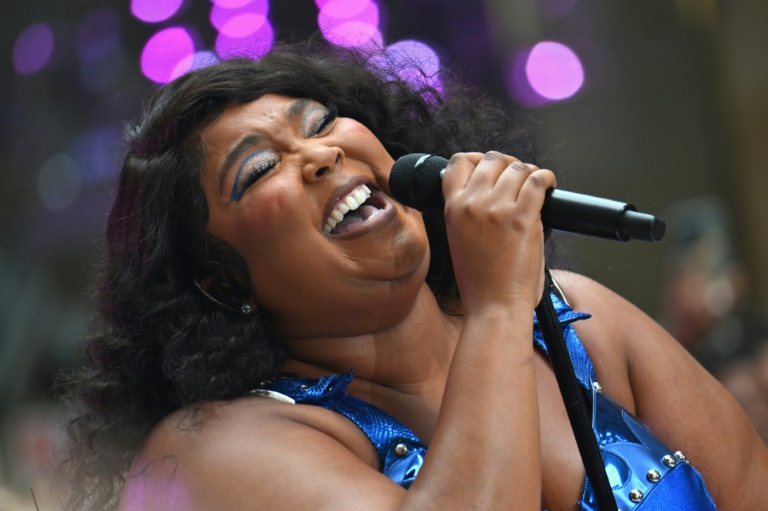
Lizzo’s summer turned up a notch Friday, with the poster child of self-love dropping her long-awaited album “Special” fresh off an Emmy nomination and ahead of a forthcoming tour.

The 12-track record brings back the soulful pop-rap blends that made the effervescent performer a household name with her messages of body positivity, feminist empowerment and sexual freedom.

The hitmaker, whose 2017 song “Truth Hurts” became a viral sleeper smash and boosted her to global fame two years later, promoted the release of her fourth album with a “Today” show performance in Manhattan outside of NBC’s studios.

“I’m so proud of this album,” she told the show Friday. “It was three years in the making. It’s literally a classic, no-skips album. It’s the best thing I’ve ever done.”

Lizzo’s week had already kicked off to a banner start after she scored an Emmy Awards nomination for her show “Watch Out for the Big Grrrls,” a reality show where she searches for her tour’s back-up dancers.

“We didn’t do this for awards, we did this for ourselves. For the lives we touched making this… To shake up the industry.. and show the world how BEAUTIFUL AND TALENTED WE AREEEEE!” she posted on Instagram after learning of the nomination.

“BIG GRRRLS ARE BOOKED, BLESSED AND BUSY.”

The 34-year-old artist born Melissa Viviane Jefferson debuted in 2013 but did not achieve mainstream success until the release of her third album “Cuz I Love You,” which found runaway success and earned the Detroit-born, Houston-raised performer eight Grammy nominations with three wins.

She’s set to kick off a North American tour in September, with stops including New York’s Madison Square Garden and Los Angeles’ Kia Forum.

“It takes 10 years to become an overnight success,” she told Today. 

“I needed to discover my self-love,” she continued, elated fans cheering her along. “The music that’s connecting to people is about my self-love.”

US renews space flights with Russia in rare cooperation

The United States and Russia said Friday they would renew flights together to the International Space Station, preserving one of the last areas of cooperation amid Western attempts to isolate Moscow over the invasion of Ukraine.

“To ensure continued safe operations of the International Space Station, protect the lives of astronauts and ensure continuous US presence in space, NASA will resume integrated crews on US crew spacecraft and the Russian Soyuz,” the US space agency said in a statement.

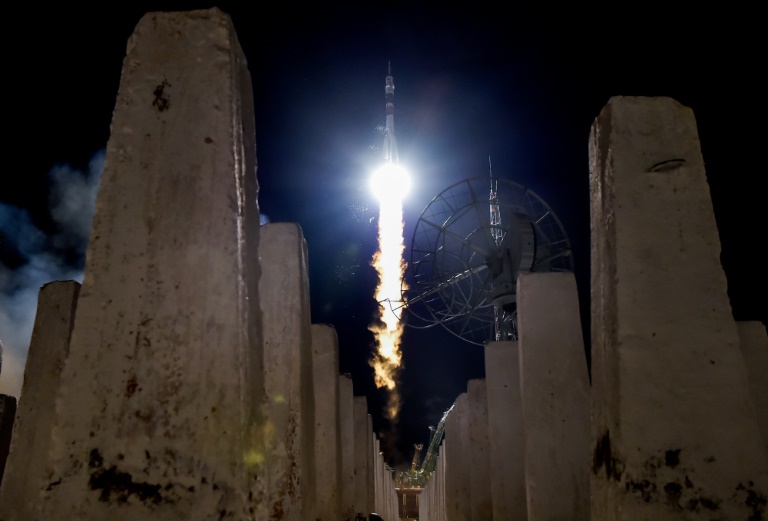
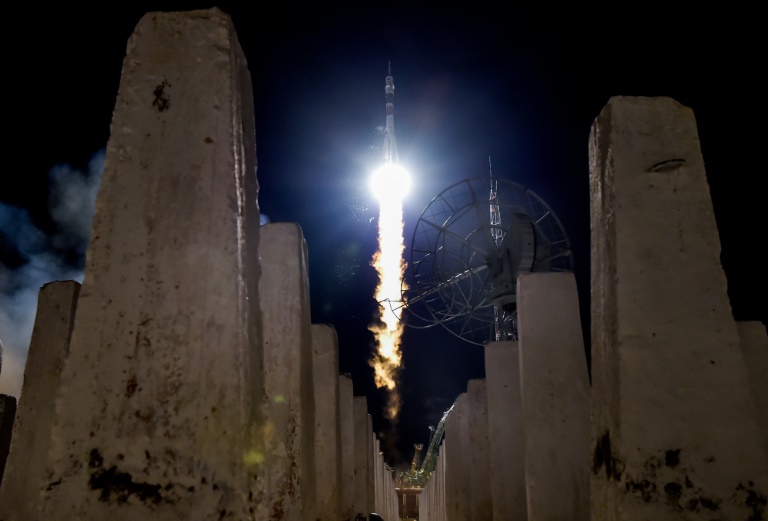
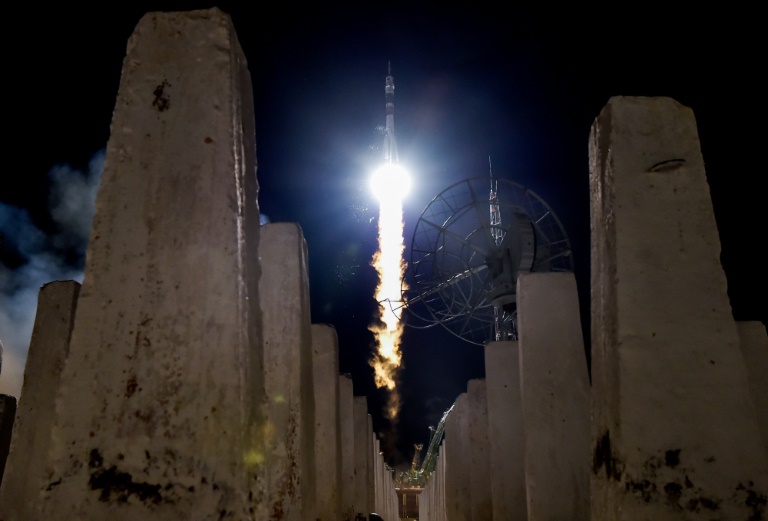
NASA said that astronaut Frank Rubio would fly with two Russian cosmonauts on a Soyuz rocket scheduled to launch on September 21 from Kazakhstan, with another astronaut, Loral O’Hara, taking another mission in early 2023.

In a first, Russian cosmonauts will join NASA astronauts on SpaceX’s new Crew-5 which will launch in September from Florida with a Japanese astronaut also on the mission.

Another joint mission on the SpaceX Crew-6 will fly out in early 2023, NASA said.

The move comes despite the European Space Agency earlier this week terminating its relationship with Russia on a mission to put a rover on Mars, infuriating Russian space chief Dmitry Rogozin who banned cosmonauts on the ISS from using a European-made robotic arm.

But hours before NASA’s announcement, President Vladimir Putin dismissed Rogozin, a firebrand nationalist and ardent backer of the Ukraine invasion who once quipped that US astronauts should get to the space station on trampolines rather than Russian rockets.

Roscosmos, the Russian space agency, said the agreement with NASA was in the interests of both countries and “will promote cooperation” on space.

“The agreement seeks to guarantee that in the event of an emergency caused by the cancellation or major delay in a Russian or American space launch, at least one Roscomos cosmonaut and one NASA astronaut will be present to service the Russian and American sections respectively,” it said.

NASA said that the ISS was set up for joint participation by the United States and Russia along with Europe, Japan and Canada.

“The station was designed to be interdependent and relies on contributions from each space agency to function. No one agency has the capability to function independent of the others,” NASA said.

– ‘Dear friends’ in space –

Soyuz rockets were the only way to reach the space station until SpaceX, run by the billionaire Elon Musk, debuted a capsule in 2020.

The last NASA astronaut to take a Soyuz to the station was NASA astronaut Mark Vande Hei in 2021. 

He returned to Earth in March this year alongside Russian cosmonauts, also on a Soyuz. 

Speaking to reporters afterward, Vande Hei said that the cosmonauts remained his “very dear friends” despite their nations’ tense relationship.

“We supported each other throughout everything,” he said. “And I never had any concerns about my ability to continue working with them.”

The United States has imposed sweeping sanctions on Russia after Putin on February 24 invaded Ukraine, defying Western warnings.

The sanctions, which include tough restrictions on financial interactions, have led to an exodus of leading US brands from Russia including Starbucks and McDonald’s.

But the International Space Station is unique. It was launched in 1998 at a time of hope for US-Russia cooperation following their Space Race competition during the Cold War.

The ISS is expected to wind down in the next decade.

Rogozin had warned that Western sanctions could affect cooperation.

“If you block cooperation with us, who will save the ISS from uncontrolled deorbiting and falling on US or European territory?” Rogozin wrote in a tweet earlier this year.

Kremlin spokesman Dmitry Peskov did not indicate that his removal meant Putin was unhappy with Rogozin.

One independent media outlet said he would be promoted and could be put in charge of occupied territories in Ukraine.

US renews space flights with Russia in rare cooperation

The United States and Russia said Friday they would renew flights together to the International Space Station, preserving one of the last areas of cooperation amid Western attempts to isolate Moscow over the invasion of Ukraine.

“To ensure continued safe operations of the International Space Station, protect the lives of astronauts and ensure continuous US presence in space, NASA will resume integrated crews on US crew spacecraft and the Russian Soyuz,” the US space agency said in a statement.

NASA said that astronaut Frank Rubio would fly with two Russian cosmonauts on a Soyuz rocket scheduled to launch on September 21 from Kazakhstan, with another astronaut, Loral O’Hara, taking another mission in early 2023.

In a first, Russian cosmonauts will join NASA astronauts on SpaceX’s new Crew-5 which will launch in September from Florida with a Japanese astronaut also on the mission.

Another joint mission on the SpaceX Crew-6 will fly out in early 2023, NASA said.

The move comes despite the European Space Agency earlier this week terminating its relationship with Russia on a mission to put a rover on Mars, infuriating Russian space chief Dmitry Rogozin who banned cosmonauts on the ISS from using a European-made robotic arm.

But hours before NASA’s announcement, President Vladimir Putin dismissed Rogozin, a firebrand nationalist and ardent backer of the Ukraine invasion who once quipped that US astronauts should get to the space station on trampolines rather than Russian rockets.

Roscosmos, the Russian space agency, said the agreement with NASA was in the interests of both countries and “will promote cooperation” on space.

“The agreement seeks to guarantee that in the event of an emergency caused by the cancellation or major delay in a Russian or American space launch, at least one Roscomos cosmonaut and one NASA astronaut will be present to service the Russian and American sections respectively,” it said.

NASA said that the ISS was set up for joint participation by the United States and Russia along with Europe, Japan and Canada.

“The station was designed to be interdependent and relies on contributions from each space agency to function. No one agency has the capability to function independent of the others,” NASA said.

– ‘Dear friends’ in space –

Soyuz rockets were the only way to reach the space station until SpaceX, run by the billionaire Elon Musk, debuted a capsule in 2020.

The last NASA astronaut to take a Soyuz to the station was NASA astronaut Mark Vande Hei in 2021. 

He returned to Earth in March this year alongside Russian cosmonauts, also on a Soyuz. 

Speaking to reporters afterward, Vande Hei said that the cosmonauts remained his “very dear friends” despite their nations’ tense relationship.

“We supported each other throughout everything,” he said. “And I never had any concerns about my ability to continue working with them.”

The United States has imposed sweeping sanctions on Russia after Putin on February 24 invaded Ukraine, defying Western warnings.

The sanctions, which include tough restrictions on financial interactions, have led to an exodus of leading US brands from Russia including Starbucks and McDonald’s.

But the International Space Station is unique. It was launched in 1998 at a time of hope for US-Russia cooperation following their Space Race competition during the Cold War.

The ISS is expected to wind down in the next decade.

Rogozin had warned that Western sanctions could affect cooperation.

“If you block cooperation with us, who will save the ISS from uncontrolled deorbiting and falling on US or European territory?” Rogozin wrote in a tweet earlier this year.

Kremlin spokesman Dmitry Peskov did not indicate that his removal meant Putin was unhappy with Rogozin.

One independent media outlet said he would be promoted and could be put in charge of occupied territories in Ukraine.

US renews space flights with Russia in rare cooperation

The United States and Russia said Friday they would renew flights together to the International Space Station, preserving one of the last areas of cooperation amid Western attempts to isolate Moscow over the invasion of Ukraine.

“To ensure continued safe operations of the International Space Station, protect the lives of astronauts and ensure continuous US presence in space, NASA will resume integrated crews on US crew spacecraft and the Russian Soyuz,” the US space agency said in a statement.

NASA said that astronaut Frank Rubio would fly with two Russian cosmonauts on a Soyuz rocket scheduled to launch on September 21 from Kazakhstan, with another astronaut, Loral O’Hara, taking another mission in early 2023.

In a first, Russian cosmonauts will join NASA astronauts on SpaceX’s new Crew-5 which will launch in September from Florida with a Japanese astronaut also on the mission.

Another joint mission on the SpaceX Crew-6 will fly out in early 2023, NASA said.

The move comes despite the European Space Agency earlier this week terminating its relationship with Russia on a mission to put a rover on Mars, infuriating Russian space chief Dmitry Rogozin who banned cosmonauts on the ISS from using a European-made robotic arm.

But hours before NASA’s announcement, President Vladimir Putin dismissed Rogozin, a firebrand nationalist and ardent backer of the Ukraine invasion who once quipped that US astronauts should get to the space station on trampolines rather than Russian rockets.

Roscosmos, the Russian space agency, said the agreement with NASA was in the interests of both countries and “will promote cooperation” on space.

“The agreement seeks to guarantee that in the event of an emergency caused by the cancellation or major delay in a Russian or American space launch, at least one Roscomos cosmonaut and one NASA astronaut will be present to service the Russian and American sections respectively,” it said.

NASA said that the ISS was set up for joint participation by the United States and Russia along with Europe, Japan and Canada.

“The station was designed to be interdependent and relies on contributions from each space agency to function. No one agency has the capability to function independent of the others,” NASA said.

– ‘Dear friends’ in space –

Soyuz rockets were the only way to reach the space station until SpaceX, run by the billionaire Elon Musk, debuted a capsule in 2020.

The last NASA astronaut to take a Soyuz to the station was NASA astronaut Mark Vande Hei in 2021. 

He returned to Earth in March this year alongside Russian cosmonauts, also on a Soyuz. 

Speaking to reporters afterward, Vande Hei said that the cosmonauts remained his “very dear friends” despite their nations’ tense relationship.

“We supported each other throughout everything,” he said. “And I never had any concerns about my ability to continue working with them.”

The United States has imposed sweeping sanctions on Russia after Putin on February 24 invaded Ukraine, defying Western warnings.

The sanctions, which include tough restrictions on financial interactions, have led to an exodus of leading US brands from Russia including Starbucks and McDonald’s.

But the International Space Station is unique. It was launched in 1998 at a time of hope for US-Russia cooperation following their Space Race competition during the Cold War.

The ISS is expected to wind down in the next decade.

Rogozin had warned that Western sanctions could affect cooperation.

“If you block cooperation with us, who will save the ISS from uncontrolled deorbiting and falling on US or European territory?” Rogozin wrote in a tweet earlier this year.

Kremlin spokesman Dmitry Peskov did not indicate that his removal meant Putin was unhappy with Rogozin.

One independent media outlet said he would be promoted and could be put in charge of occupied territories in Ukraine.

Stocks jump as US consumers keep spending

Stocks soared Friday after the latest data showed that US consumers continue to spend more in the latest signal of the strength of the economy despite high inflation and rising interest rates.

Better-than-expected results from Citigroup also helped allay somewhat concerns about what waits in store for investors as companies begin to report their next quarterly results.

The euro held above $1.00, having sunk below parity this week on fears Russia would cut off Europe’s gas supplies in retaliation for Ukraine war sanctions, pushing the region into recession.

Oil prices rebounded having slumped Thursday on renewed fears of a global recession that would dent demand for energy.

Wall Street pushed higher on a better-than-expected 1.0 percent rise in retail sales in June.

While not adjusted for inflation, sales were still up 0.7 percent even when gasoline was removed from the calculation, according to the Commerce Department data.

“This could be good news for US GDP which suggests that the economy may well avoid a contraction in (the second quarter), and ergo a technical recession,” said analyst Michael Hewson at CMC Markets.

The figure was also looked at through the prism of how it might affect the US Federal Reserve’s decision later this month on raising interest rates, with the solid growth giving policymakers licence to hike rates more aggressively.

“The key takeaway from the report is that it was strong enough to keep concerns about weakening consumer spending at bay for the time being,” said analysts at Briefing.com.

Markets had taken a major knock this week from news that US inflation zoomed to a 40-year high of 9.1 percent in June on energy costs.

After rate hikes by several countries, investors now expect the Federal Reserve to lift rates later this month by 75 basis points as officials battle decades-high inflation, though some observers suggest a one-percentage-point move could even be on the cards.

While experts warn that raising US rates risks hammering the economy, the Fed has made it clear the number-one priority is bringing down prices.

The retail sales figures join other data showing that the US economy is holding up relatively well so far despite high inflation and rising interest rates.

Meanwhile, Citigroup’s net profits fell by 25 percent to $4.5 billion, yet earnings per share easily beat expectations. The banking group took in more revenue and benefited from rising interest rates.

Citigroup shares jumped more than 10 percent.

Wall Street stumbled Thursday with sentiment weighed down by disappointing reports from JPMorgan Chase & Co. and Morgan Stanley.

Those compounded worries that company profits would be hit by the fallout from a number of issues including rocketing consumer prices, monetary policy tightening and the war in Ukraine.

European stocks finished the day sharply higher.

In Asia, Hong Kong and mainland Chinese equity markets led losses after data showed China’s economy grew just 0.4 percent in the second quarter, battered by Covid lockdowns in major cities including Shanghai and Beijing.

The reading was well off the 1.6-percent growth predicted by analysts in an AFP survey.

Elsewhere, traders are keeping tabs on US President Joe Biden’s visit to the Middle East as he tries to persuade Saudi Arabia to bring down high oil prices by pumping more crude.

– Key figures at around 1530 GMT –

New York – Dow: UP 1.9 percent at 31,225.63 points

EURO STOXX 50: UP 2.4 percent at 3,477.20

London – FTSE 100: UP 1.7 percent at 7,159.01 (close)

Frankfurt – DAX: UP 2.8 percent at 12,864.72 (close)

Paris – CAC 40: UP 2.0 percent at 6,036.00 (close)

Tokyo – Nikkei 225: UP 0.5 percent at 26,788.47 (close)

Hong Kong – Hang Seng Index: DOWN 2.2 percent at 20,297.72 (close)

Shanghai – Composite: DOWN 1.6 percent at 3,228.06 (close)

Euro/dollar: UP at $1.0098 from $1.0022 Thursday

Pound/dollar: UP at $1.1863 from $1.1826 

Euro/pound: UP at 85.07 pence from 84.72 pence

Dollar/yen: DOWN at 138.53 yen from 138.93 yen

West Texas Intermediate: UP 2.9 percent at $98.53 per barrel

Brent North Sea crude: UP 2.8 percent at $101.90 per barrel

burs-rl/bp

Western nations condemn Russia over Ukraine at G20 Indonesia talks

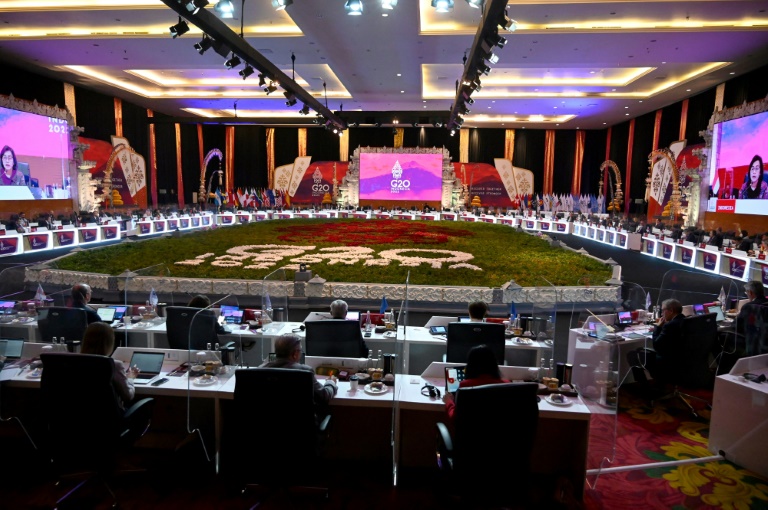
Western finance chiefs condemned Moscow’s invasion of Ukraine at G20 talks in Indonesia Friday, accusing Russia of sending a “shockwave” through the world economy and its technocrats of complicity in the war’s alleged atrocities.

The two-day meeting on the island of Bali began under the shadow of a Russian military assault that has roiled markets, spiked food prices and stoked breakneck inflation, a week after Moscow’s top diplomat walked out of talks with the forum’s foreign ministers.

“Russia is solely responsible for negative spillovers to the global economy,” US Treasury Secretary Janet Yellen told the Russian delegation in the opening session, according to a US official, who spoke on condition of anonymity.  

“Russia’s officials should recognise that they are adding to the horrific consequences of this war through their continued support of the Putin regime. You share responsibility for the innocent lives lost,” Yellen added, according to the official.

The official did not comment on whether the Russian delegation responded. Russian officials did not immediately respond to an AFP request for comment. 

Russia calls its invasion of Ukraine a “special military operation” and blames subsequent Western sanctions for blocked food shipments and rising energy prices.

“Russia tried to say that the world economic situation had nothing to do with the war,” a French delegation source told AFP.

Australian Treasurer Jim Chalmers condemned Russia’s “immoral transgression” against Ukraine, saying that Moscow must take the blame for the impacts on the global economy caused by the war.

“Russia’s unjust actions have had terrible human cost but they’ve also increased global uncertainty,” Chalmers said, according to a transcript. “Russia must take full responsibility.”

Canadian Finance Minister Chrystia Freeland told Russia’s delegation they were responsible for “war crimes” in Ukraine because of their support for the invasion, a Canadian official said. 

“It is not only generals who commit war crimes, it is the economic technocrats who allow the war to happen and to continue,” said Freeland, according to the official.

Both Russian Finance Minister Anton Siluanov and Ukrainian Finance Minister Serhiy Marchenko participated virtually in the meeting. 

Moscow sent Russian Deputy Finance Minister Timur Maksimov to attend the talks in person. He was in the room as Western officials expressed their condemnation, according to a source present at the talks.

Ukraine’s Marchenko said Russia’s invasion of Ukraine “clearly marks the end of the existing world order”, and blamed Moscow for the world facing hunger, inflation and energy insecurity.

“We need to stop the cause of these problems. The true practical solution… is imposing more severe targeted sanctions,” he told ministers, according to the Ukrainian finance ministry.

– ‘Weaponising’ food –

Indonesian Finance Minister Sri Mulyani Indrawati warned her counterparts that failure to tackle energy and food crises would be “catastrophic”.

The meeting has largely focused on those impacts of the war that are weighing on an already brittle global recovery from the Covid-19 pandemic.

“(Russian President Vladimir) Putin’s actions… amounts to using food as a weapon of war,” Yellen said in an afternoon seminar.

In another session, she said Russia’s “unjustified war” has sent a “shockwave” through the global economy. 

Indrawati said members had “identified the urgent need for the G20 to take concrete steps” to address food insecurity and to help countries in need.

Yellen has pressed G20 allies for a price cap on Russian oil to choke off Putin’s war chest and pressure Moscow to end its invasion while bringing down energy costs.

In April, the US treasury secretary led a multinational walkout of finance officials as Russian delegates spoke at a G20 meeting in Washington, but there was no such action on Friday.

There is unlikely to be a final communique issued when talks end on Saturday because of the disagreements with Russia.

– ‘Act together’ – 

G20 chair Indonesia -– which pursues a neutral foreign policy –- refrained from disinviting Russia despite Western pressure.

Chinese Finance Minister Liu Kun, Britain’s new Finance Minister Nadhim Zahawi and European Central Bank President Christine Lagarde attended the meeting virtually. 

World Bank chief executive David Malpass did not attend, while International Monetary Fund chief Kristalina Georgieva appeared in person after saying Wednesday that the global economic outlook had “darkened significantly” because of Moscow’s invasion.

The meeting is a prelude to the leaders’ summit on the Indonesian island in November that was meant to focus on the global recovery from the Covid-19 pandemic.

Other issues being tackled by the ministers included digital financial inclusion –- with more than a billion of the world’s population still without access to a bank account -– and the deadline for an international tax rules overhaul.

Close Bitnami banner
Bitnami