AFP

New chief at Libya's key oil firm, US warns against confrontation

Libya’s government replaced the head of the key National Oil Corporation on Thursday in a dramatic move that prompted the United States to warn against any “armed confrontation” over the sector.

The North African country’s vast oil reserves have often been at the heart of political disputes, but the NOC had largely stayed neutral despite years of division since the 2011 toppling of dictator Moamer Kadhafi in a NATO-backed rebellion.

However, in a decree made public on Wednesday, the unity government of Abdulhamid Dbeibah appointed former central banker Farhat Bengdara to replace NOC head and veteran technocrat Mustafa Sanalla.

On Thursday morning, Bengdara took up office at NOC headquarters in Tripoli, where he gave a news conference.

“It’s vitally important under the current conditions that Libya regains its oil and gas export capacity as quickly as possible,” he told journalists.

“The oil sector has fallen prey to political struggles, but we will work to prevent political interference in the sector.”

– ‘Vital’ to stability –

Dbeibah’s move against Sanalla follows months of rising tensions in Libya after the country’s eastern-based parliament appointed a rival government, led by former interior minister Fathi Bashagha and seen as backed by military strongman Khalifa Haftar.

Dbeibah has refused to cede power before elections, and Bashagha has so far failed to take office in Tripoli, raising fears of renewed conflict just two years after a landmark truce ending a ruinous attempt by Haftar to seize the capital by force.

The US embassy said Thursday it was following developments “with deep concern” and stressed that the NOC was vital to Libya’s “stability and prosperity”.

Since April, pro-Haftar groups have blockaded key eastern oil facilities to put pressure on Dbeibah.

As a result, Libya’s crude and condensate exports have fallen from around one million barrels per day in March to just over 400,000 so far in July, according to data intelligence firm Kpler.

The blockade has also contributed to crippling power shortages that sparked angry protests earlier this month.

The blockade also comes amid a supply crunch on global oil markets, rattled by the war in Ukraine, in turn prompting consumer nations to pressure other producers to ramp up output. 

US President Joe Biden is expected to press Saudi Arabia on the subject when he visits the kingdom this weekend.

– Blockade to end? –

Libya meanwhile sits on Africa’s biggest proven crude reserves, with easy access to European markets.

US Ambassador Richard Norland, who has been working on a mechanism to manage the highly disputed revenues from Libya’s crude sales, said Sanalla’s replacement “may be contested in court but must not become the subject of armed confrontation”.

However, the appointment of Bengdara, a Kadhafi-era central banker reportedly close to Haftar, has triggered speculation that Dbeibah made a deal with the military strongman to allow him to keep power in Tripoli.

Emadeddin Badi, a senior fellow at the Atlantic Council, said Bengdara’s appointment was “the product of a momentary convergence between Dbeibah and Haftar, but it could be the basis for a broader deal”.

“Dbeibah gets several things from it,” Badi told AFP. 

“He regains access to state funds, it stymies the US financial mechanism or the momentum to implement it, and Haftar will presumably lift the (oil) blockade and limit, if not completely halt, his support for Bashagha.”

Aydin Calik, an energy analyst at the Middle East Economic Survey (MEES), said he expected the oil blockade would be lifted “very shortly”.

But he warned that the new board was contested, including by Sanalla, who has long mediated disputes to keep Libya’s crude flowing and positioned himself as an interlocutor with foreign powers and oil firms.

Calik told AFP that “uncertainty over who is in charge at NOC raises questions: Who can legitimately export oil? Will international oil companies recognise the new NOC board? What might this mean for their contracts?.”

In a defiant video message on Wednesday evening, Sanalla told Dbeibah that “this institution belongs to the Libyan people, not to you or the Dbeibah family” adding that “the mandate of your government has expired”.

Bengdara insisted Thursday that he had been picked for the job because he was “non-partisan” and “can travel anywhere in Libya”.

Kevin Spacey pleads not guilty to sexual assault in UK

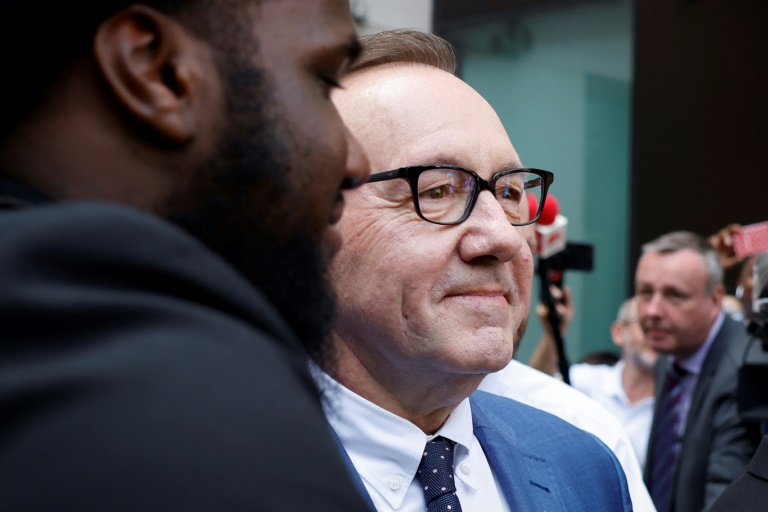
Hollywood star Kevin Spacey on Thursday pleaded not guilty at London’s Old Bailey court to four charges of sexual assault against three men.

The 62-year-old star was wearing a blue suit and blue tie as he stood in the dock at the UK’s top criminal court.

He spoke to confirm his name and age before pleading not guilty to four charges of sexual assault and one count of causing a person to engage in penetrative sexual activity without consent.

The Crown Prosecution Service, which is responsible for bringing prosecutions in England and Wales, said in May that it had authorised charges against Spacey.

A two-time Oscar winner for “The Usual Suspects” and “American Beauty”, he was formally charged by police in the British capital the following month and voluntarily appeared in court within days.

At a hearing last month, Spacey’s lawyer Patrick Gibbs told the court his client “strenuously denies any and all criminality in this case”.

“He needs to answer these charges if he is to proceed with his life,” Gibbs added at the time.

The deputy chief magistrate at the initial hearing was told that the actor lives in the United States, where he has family and a nine-year-old dog.

The magistrate formally withdrew an arrest warrant that had been issued two weeks prior after learning Spacey had travelled to London to appear in person.

Reporting restrictions prevent the media going into detail about the charges to avoid prejudicing a jury at any trial.

– ‘Prove my innocence’ –

The first two charges of sexual assault date from March 2005 in London and concern the same man, who is now in his 40s.

The third is alleged to have happened in London in August 2008 against a man who is now in his 30s. 

Spacey has also been charged “with causing a person to engage in penetrative sexual activity without consent” against the man in his 30s.

The fourth sexual assault is alleged to have occurred in Gloucestershire, western England, in April 2013 against a third man, who is also now in his 30s.

None of the alleged victims can be identified under English law.

After the prosecutors’ May announcement, Spacey said he was “disappointed” with the decision.

“I will voluntarily appear in the UK as soon as can be arranged and defend myself against these charges, which I am confident will prove my innocence.”

Spacey was artistic director of The Old Vic theatre in London between 2004 and 2015.

Allegations against him emerged in the wake of the #MeToo movement that saw numerous claims of sexual assault and harassment in the movie industry.

That prompted an investigation by London’s Metropolitan Police and a review by The Old Vic of his time in charge there.

Claims against Spacey in 2017 led to the end of his involvement in the filming of the final season of the Netflix drama “House of Cards”.

He was also dropped from a Gore Vidal biopic on the TV streaming network and as the industrialist J. Paul Getty in “All the Money in the World”.

Outage briefly hits Twitter service around the world

Twitter experienced a widespread but brief outage in nations around the globe on Thursday — fresh turbulence for the firm locked in a buyout battle with Elon Musk.

The Downdetector website showed that outage reports spiked in the United States around 8:00 am (1200 GMT), while users reported service interruptions in France, Germany, Britain, Iraq, Libya and elsewhere.

However, by around 1300 GMT reports of disruptions to Downdetector had plunged and users took to the social media platform with jokes.

“People posting on Twitter that Twitter is down,” @NorthmanTrader tweeted.

Another user, @joelyagar, joked: “I’ve just had my most productive 30 minutes for years. In unrelated news, it seems Twitter went down for 30 minutes.”

Twitter did not immediately respond to a request for comment, but acknowledged the service disruption in a tweet.

“Some of you are having issues accessing Twitter and we’re working to get it back up and running for everyone. Thanks for sticking with us,” the firm tweeted.

Service disruptions on social media platforms happen periodically, but major and long-term service outages are not common.

The service problems on Twitter came as the company has embarked on a legal fight with Musk over his moves to walk away from his $44 billion buyout bid that has roiled the company.

Twitter has sued to force Musk to complete the deal after he said he was terminating it over issues including his argument that the company has not been forthcoming about the number of fake accounts.

Musk made his unsolicited bid to buy Twitter without asking for estimates regarding spam or fake accounts, and even sweetened his offer to the board by withdrawing a diligence condition, Twitter’s lawsuit alleged.

The social media platform has defended its fake account oversight and has vowed to force Musk to complete the deal, which contained a $1 billion breakup fee.

Twitter says the number of fake accounts is less than five percent, a figure challenged by Musk.

The firm’s shares, like those of other tech firms, have dropped in value since May.

However, the platform’s shares jumped Wednesday after a hedge fund revealed it had taken a stake in the firm based on its “strong case” against Musk.

Shares were down less than one percent in early trading on Thursday.

The termination of the takeover agreement sets the stage for a potentially lengthy court battle with Twitter, which initially had opposed a transaction with the unpredictable billionaire entrepreneur.

JPMorgan Chase reports lower profits, gives cautious economic outlook

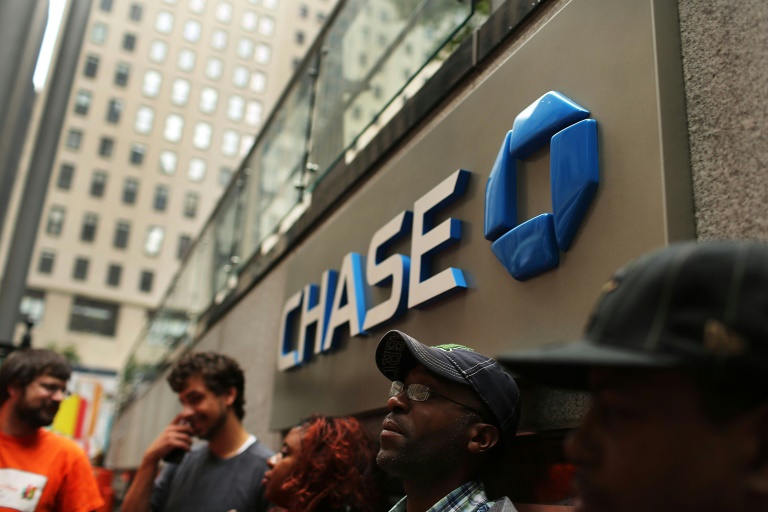
JPMorgan Chase reported a drop in second-quarter profits on Thursday as it warned of a weakening global economic outlook that prompted it to set aside additional funds to cover potential bad loans.

Executives sketched out a complex economic picture, with US households still relatively well off in terms of savings, a strong job market and robust consumer spending.

But headwinds — including high inflation, geopolitical uncertainty and fast-changing Federal Reserve policy to sharply curtail liquidity — “are very likely to have negative consequences on the global economy sometime down the road,” said Chief Executive Jamie Dimon in an earnings press release.

While consumers are “in very good shape,” there are “a serious set of issues” that threaten the outlook, Dimon told reporters on a conference call.

These include the worry that Russia will cut off Germany’s natural gas supply and the possibility that the Federal Reserve’s aggressive plan may not be sufficient to rein in inflation.

“The markets will be volatile,” Dimon predicted. “You can’t have all these kind of things going on and not have volatile markets.”

The big US bank’s earnings came in at $8.6 billion for the second quarter, down 28 percent from the year-ago period in results that missed analyst expectations.

Revenues were $30.7 billion, up one percent.

The bank said it added $428 million in credit reserves due to a “modest deterioration in the economic outlook.” In the year-ago period, JPMorgan’s profits were boosted by a $3 billion release in reserves.

The bank experienced $657 million in charge-offs for bad loans, up only modestly from the level in the previous quarter.

JPMorgan enjoyed a boost from higher net interest income following Fed interest rate increases. But the bank also incurred higher expenses on salaries, technology and marketing.

In corporate and investment banking, JPMorgan posted higher revenues in its trading businesses, but lower investment banking fees.

JPMorgan temporarily suspended share buybacks to meet new federal stress test requirements for managing risk assets, Dimon said.

– Consumers still spending –

The results came as the Labor Department reported another large spike in wholesale prices, one day after US consumer prices jumped the most in more than four decades.

Rising prices are the heart of investor fears about the consumer-driven US economy.

But JPMorgan Chief Financial Officer Jeremy Barnum said “there’s essentially no evidence” at this point of a drop-off in consumption.

The bank’s credit card data confirms that consumers are spending more on food and gasoline, but that they are still also spending on travel and dining.

“That indicates to us that consumers still don’t feel so pinched by inflation that they’re cutting back on discretionary spending, and that’s a relatively positive sign,” Barnum said.

Persistently high inflation has also raised fears that the Fed will adopt an even tougher line on monetary policy after the central bank announced a 0.75-percentage-point hike, its biggest since 1994.

The latest inflation readings have prompted talk of a potential one percent increase at the Fed meeting later this month — one that Federal Reserve Governor Christopher Waller said Thursday he would support.

Dimon said the 20 percent drop in the stock market in 2022 and the anemic state of initial public offerings and other corners of the financial system are evidence of the hit from the Fed shift.

But the impacts could worsen if the US central bank is unable to slow the economy with a “soft landing,” Dimon said.

Shares fell 4.6 percent to $106.78 in morning trading.

Wildfires spread across heatwave-hit Europe

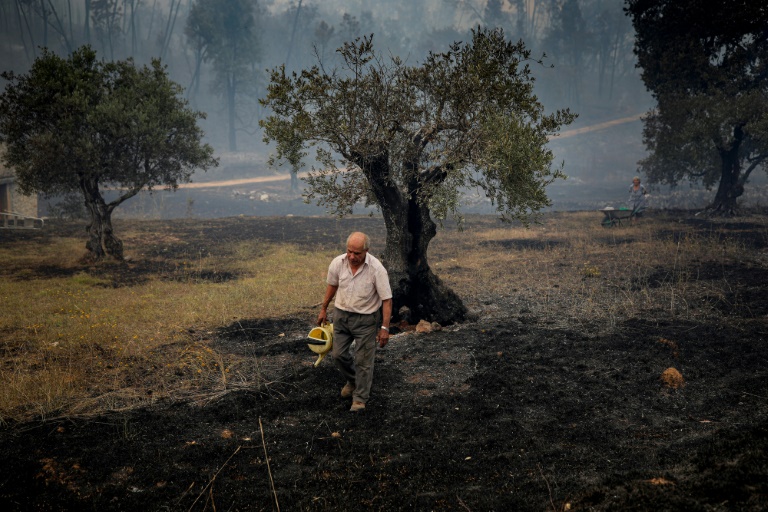
A heatwave sweeping southwestern Europe was expected to peak on Thursday in Spain, with the scorching temperatures fuelling stubborn wildfires ravaged several countries.

Temperatures soared in Greece, Spain and Portugal, while the heatwave was expected to continue in Britain and France into next week. 

It is the second heatwave to hit the region in a matter of weeks, as scientists say they are becoming more frequent and intense due to climate change. 

Southern Spain was bracing for temperatures to rise again Thursday as the stifling heat continued.   

“For Thursday, we expect it to be the hottest day of this heatwave,” said Spain’s state meteorological agency AEMET.

The valleys around three major rivers — the Guadiana, Guadalquivir and Tagus — will experience temperatures of 44 Celsius (111 Fahrenheit) to 45 Celsius, it said. 

The health ministry told people to drink plenty of fluids, wear light clothes and stay in the shade or air-conditioning.

The city of Almonte in the southern region of Andalusia saw the mercury hit 45.6 degrees Celsius at 5:30 pm on Wednesday.

Several other southern cities such as Seville and Cordoba recorded temperatures above 44C.

– ‘Major’ fires –

A fire in Spain which started in the eastern region of Extremadura on Monday has so far ravaged at least 4,000 hectares of land, local officials said.

Between January 1 and July 3, more than 70,300 hectares of forest went up in smoke in Spain, the government said — almost double the average of the past 10 years.

Italy, Croatia, France and Portugal all reported forest fires linked to the heat this week. 

In Greece, a helicopter helping to fight a forest fire on the island of Samos on Wednesday crashed into the Aegean Sea, killing two crew members, the coastguard said Thursday.

In Portugal, over 2,000 firefighters were battling dozens of wildfires across Portugal, including four deemed “major”.

One person died in a forest blaze, authorities said Wednesday, after a body was found in a burned area in the northern region of Aveiro.

Around 60 others have been injured, some 860 people evacuated and roughly 60 homes destroyed or damaged.

Portuguese Prime Minister Antonio Costa warned that Thursday would be the “most serious” day of the heat wave because temperatures were expected to rise and winds were stronger.

“Today is the day where we have to be the most careful,” he said.

– Fireworks cancelled – 

Meteorological services in France also warned the situation would “become intense between Sunday and Tuesday” — possibly exceeding 40C before dipping by Wednesday. 

Although temperatures eased by a few degrees Celsius across France, wildfires continued in the Gironde region near the southwestern city of Bordeaux, destroying some 3,700 hectares of forest in three days, with firefighters still unable Thursday to stop the blazes.

Tourist magnet the Dune de Pilat, Europe’s highest sand dune, was closed to visitors after several thousands were evacuated from campsites this week.

“The situation is stable, but not yet under control,” the region’s authorities said Thursday as temperatures were forecast to hit 38C.

However, no additional evacuation of residents was planned, after hundreds were moved from their homes in recent days as a precaution in the region.

Further south, the Landes region and the city of Nimes cancelled all fireworks for Bastille Day, France’s national holiday.

Temperatures were expected to reach 36C in southern France, 25C in the north of the country, and 32C in Paris on Thursday.

London meanwhile has issued an “amber” alert — the second highest of three levels — while one UK climate official said there was a chance Britain’s highest temperature — 38.7C recorded on July 25, 2019 in Cambridge — could be surpassed.

London mayor Sadiq Khan announced an emergency plan to help homeless people deal with the extreme heat which includes distributing water and suntan lotion.

EU to seek cuts in heating, cooling of buildings to save gas

The European Commission is expected next week to ask EU countries to reduce heating and cooling of public buildings and offices to cut demand for gas, according to a document seen by AFP.

In order to better to withstand the drastic fall in Russian gas supplies, which could be cut off altogether, the commission is expected to urge governments across the 27-nation bloc to set limits on the amount of energy used by public buildings, offices, commercial properties and outdoor terraces.

For optimal energy use, it will recommend the rules require that public buildings be heated to no more than 19 degrees Celsius (66 degrees Fahrenheit) and cooled by air conditioning units set no lower than 25°C (77°F°).

“Energy saved during the summer is energy that can be used in winter,” the commission points out in the document.

Energy experts say lowering the thermostat by one degree could cut a building’s heating bill by about 10 percent. Air conditioning units generally struggle and fail to cool a room below 20°C so they waste energy trying. 

The recommendation is part of a series of measures Brussels is investigating to cut the EU’s gas consumption by 25 to 60 billion cubic metres (880 to 2,120 billion cubic feet) per year. 

The EU imported around 140 bcm of gas by pipeline from Russia last year, according to the International Energy Agency.

“Acting now could reduce the impact of a sudden supply disruption by one third,” says the document, which is due to be published on July 20 and could be modified in the interim.

It calculates that 11 billion cubic metres of gas could be directly saved from reducing excessive heating and cooling, and between four and 40 bcm via reduced electricity demand. Another 10-11 bcm could be saved from use by industries, which have already slowed production due to soaring prices.

The document urges EU governments, where this is “technically feasible and enforceable” to introduce binding limits on heating and cooling in “public buildings, offices, commercial buildings (in particular large buildings) … and open spaces like outdoor terraces”. 

“The role of public authorities in leading by example and as an important gas consumer -– 30 percent of the energy consumption — is key in this regard,” the document states.

The commission says that during the “gas winter” — October to March — “large savings can be achieved by deploying alternative heat sources for district heating, heat pumps in households” and energy saving campaigns urging the public to turn their thermostats down by one degree Celsius this winter.

But such “protected” energy customers — under EU legislation that means households, district heating that cannot switch to other fuels and certain essential social services — represent just 37 percent of total EU gas consumption. And simulations show these customers would be the last to be seriously affected by large-scale Russian gas disruptions, the commission says.

It is therefore concentrating most of its efforts on power stations and industry, which use huge amounts of gas.

“Abrupt cuts could damage specific branches of those industries which have little room to switch to other fuels — because gas is being used as feedstock for industrial processes –- or to reduce production without heavy damage,” the commission warns.

“It would be significantly less costly to moderately reduce natural gas demand for a longer period of time, starting earlier, than having to drastically curtail demand suddenly and without proper preparation,” it explains.

By way of encouragement, Brussels urges EU governments to set up “auction systems”, perhaps involving several countries, to compensate industrial consumers who agree to reduce their gas consumption.

If there is a total cut in Russian gas supply from July onwards, EU states might only be able to replenish 65-71 percent of their gas reserves percent before winter, the commission said, quoting forecasts by European gas transmission system operators (ENTSOG).

The commission’s energy saving proposals are due to be discussed by EU energy ministers at a meeting in Brussels on July 26.

Germans demand change a year on from deadly floods

Germany on Thursday paid tribute to more than 180 people killed in severe floods a year ago, as those left behind charged that help with the reconstruction effort has been too slow to arrive.

President Frank-Walter Steinmeier embarked on a tour of the Ahr valley in the morning, while Chancellor Olaf Scholz was due to attend a memorial ceremony in hard-hit Bad Neuenahr-Ahrweiler later in the day.

In the town of Altenahr, Steinmeier said he wanted to “show that we haven’t forgotten the people of the Ahr valley” and “how many are still struggling to rebuild their homes”.

In nearby Dernau, gardener Wilhelm Hartmann, 49, said he had been averaging two hours’ sleep a night for the past 12 months while working as a volunteer for the relief effort.

“There have been so many emotional moments,” he said, hailing the region’s “great network” of willing helpers.

However, a year on from the disaster, frustration is building at the sluggish pace of help promised by the government.

Alfred Sebastian, the mayor of Dernau, said the town was “still at the very beginning” of the reconstruction process.

“We need to be financially supported by the state… We need it now. If not now, when? We have to move forward,” he said. 

– Trail of destruction –

Severe floods pummelled western Germany over two days in July last year, ripping through entire towns and villages and destroying bridges, roads, railways and swathes of housing.

Between 100 and 150 millimetres (four and six inches) of rain fell between July 14 and 15, according to the German weather service — an amount that would normally be seen over two months. 

Forecasters had issued warnings, yet many residents were simply unaware of the risks of such violent flooding, with dozens found dead in their cellars.

With former chancellor Angela Merkel still in charge at the time of the floods, the government pledged a total of 30 billion euros ($30 billion) in federal and state aid to help with the reconstruction effort. 

But in the state of Rhineland-Palatinate, only 500 million euros in aid has been handed out of the total 15 billion euros set aside.  

In neighbouring North Rhine-Westphalia, 1.6 billion euros of government support has been approved for use, out of a total of 12.3 billion euros.

The disaster prompted criticism of Germany’s flood warning system and a criminal inquiry was opened into local officials for “negligent homicide”.

The government has since pledged to introduce phone alerts in the form of “cell broadcasting” and to reinstall sirens, many of which have been taken down in recent years.

– Climate concerns –

Introducing a new disaster management plan on Wednesday, Interior Minister Nancy Faeser admitted there had been “major failures over the past years and decades”.

The government is planning a new annual civil protection day from 2023 to raise awareness of how to respond in a disaster and “make our country more crisis-proof”, Faeser said.

The disaster also raised concerns about climate change, with one international study showing that man-made global warming had made the floods up to nine times more likely.

A year on, Germany is set for more extreme weather with temperatures of up to 40 degrees Celsius (104 degrees Fahrenheit) expected this week as a heatwave sweeps across Europe. 

Ralph Tiesler, president of the BBK federal disaster management agency, told the Funke media group on Wednesday he believed some areas in Germany may become uninhabitable due to extreme weather events. 

“I say that some areas should not be resettled due to climate change and the acute threat of severe weather disasters and floods,” he said. 

In neighbouring Belgium, where 39 people were also killed in the deluge, King Philippe and Queen Mathilde attended a ceremony in Liege.

Belgian Prime Minister Alexander De Croo paid tribute to the “heroes” who came to the aid of the victims, including a 14-year-old boy who threw himself into a river in an unsuccessful attempt to save a fellow scout camp member.

Amazon offers to settle EU antitrust cases over rival data

Amazon has offered a settlement against EU charges that the online giant undermined rivals by misusing the sensitive information of independent sellers to benefit its own retail business, the EU said Thursday.

The offer by Amazon is a huge step by the US-based behemoth that has denied for years accusations by rivals and regulators that it unfairly uses the troves of data parked on its platform to benefit its own products and services.

In its offer, the US tech giant commits to stop using non-public data such as sales performance and revenue that are “relating to or derived from the activities of independent sellers on its marketplace,” an EU statement said.

Amazon also made an offer to end a second EU investigation on whether its hugely popular Prime service unfairly pushes buyers towards sellers using Amazon’s logistics service.

This probe also looked into the Buy Box in which a user can swiftly make a purchase, skipping through the inconvenience of several screens and choices.

The company said it would display an alternative offer in the Buy Box feature if there is a substantial difference in price or delivery from the first one.

Amazon said while “we… disagree with several conclusions the European Commission made, we have engaged constructively with the Commission to address their concerns.”

This will “preserve our ability to serve European customers and the more than 185,000 European small and medium-sized businesses selling through our stores”.

– ‘Win-win’ –

The EU said it was asking rivals for feedback on Amazon’s concessions by September 9 and, if approved, they would remain in place for five years under close monitoring by Brussels.

Many of these accusations towards Amazon are being answered separately in the EU’s landmark Digital Markets Act (DMA), a major EU legislation set to come into force next year.

The DMA imposes a long list of do’s and don’ts on tech giant gatekeepers, including how they handle the sensitive data of competitors who use their platforms.

Alfonso Lamadrid, a competition lawyer at Garrigues in Brussels said the settlement offer was “a win-win” for both the Commission and Amazon.

On the one hand, it kept the commission from potentially fighting a long battle in court, and “at the same time the commitments essentially anticipate what Amazon would have needed to do to comply with the upcoming DMA,” he said.

Amazon had previously settled a case with the EU commission over e-books and still faces scrutiny with national regulators in Germany, as well as non-EU Britain.

The commission said the settlement would not apply in Italy, where Amazon paid a huge fine and changed its business practices over similar concerns.

US vows to use all means to stop Iran nuclear bomb in new Israel pact

The US and Israel signed a new security pact on Thursday reinforcing their common front against Iran, as President Joe Biden pledged to use “all” American power to stop the Islamic republic from acquiring nuclear weapons.

The declaration was inked by Israeli Prime Minister Yair Lapid and Biden, who was making his first trip to the Middle East as president.

It commits the United States to “never to allow Iran to acquire a nuclear weapon”, stating that it “is prepared to use all elements of its national power to ensure that outcome”.

A landmark deal that imposed curbs on Iran’s suspect nuclear programme in exchange for sanctions relief was torpedoed in 2018 by former US president Donald Trump. Efforts to revive the accord have been stalled since March.

Asked on Thursday how long the US was prepared to give those efforts, Biden said “we’re not going to wait forever” for a response from the Islamic republic.

A day after Israeli officials presented Biden with their latest military hardware, the president said the two countries would co-operate on developing “high-energy laser weapon systems”.

Israel, which has the Middle East’s sole but undeclared nuclear arsenal, is staunchly opposed to the deal with Iran, which has always denied seeking the bomb.

Lapid warned “words” and “diplomacy” were not enough to thwart Iran’s alleged nuclear ambitions.

“The only thing that will stop Iran is knowing that if they continue to develop their nuclear programme the free world will use force,” he said.

Iran’s ultra-conservative President Ebrahim Raisi warned the US and its allies that his country “will not accept any crisis or insecurity in the region”.

“Any mistake made in this region will be met with a harsh and regrettable response,” Raisi said in televised remarks.

– Saudi oil –

Biden touched down in Israel on Wednesday, his 10th visit to the Jewish state since 1973, when he came as a newly elected senator.

He held talks with Israeli President Isaac Herzog later Thursday and was due to meet an old acquaintance, opposition leader Benjamin Netanyahu.

On Friday the US president will travel to the occupied West Bank to meet Palestinian president Mahmud Abbas, before Air Force Once makes the first publicly acknowledged direct flight from Israel to Saudi Arabia.

Biden said the journey itself “represents important progress”, following Israel launching diplomatic ties in 2020 with Riyadh’s Gulf neighbours the United Arab Emirates and Bahrain.

“Israel’s integration in the region, Israel’s peace with its neighbours, these are essential goals,” Biden said.

Russia’s invasion of Ukraine will be a top priority for the president’s meetings with Arab leaders, with volatile oil prices due to be the focus of talks with Saudi officials in particular.

The president will seek to persuade Saudi Arabia to pump more oil in order to drive down prices, which have fuelled US inflation to the highest levels in decades.

– ‘Israel wants peace’ –

On Thursday, Biden reaffirmed Washington’s policy of pressing for “a two-state solution for two people, both of whom have deep and ancient roots in this land, living side by side in peace and security.”

But he made it clear he has no plans to reverse Trump’s controversial decision to recognise Jerusalem as Israel’s capital.

Lapid is serving as caretaker prime minister ahead of elections in November — Israel’s fifth vote in less than four years — and is therefore not expected to launch new talks with Palestinians.

“I haven’t changed my position,” the centrist politician said alongside Biden. “A two-state solution is a guarantee for a strong, democratic state of Israel, with the Jewish majority.”

A US official said the administration would announce during the visit “a significant funding package” for hospitals that serve Palestinians in Israeli-annexed east Jerusalem, which Palestinians claim as their future capital.

It will also announce measures towards providing 4G internet access in the West Bank and Israeli-blockaded Gaza Strip, the official said, addressing a persistent Palestinian frustration.

But long-term peace negotiations were not on this week’s agenda, the official said.

“We are not going to come in with a top down peace plan because we don’t believe that would be the best approach.”

aue-bs/rsc/dv

Stocks, oil drop on fresh inflation spikes

Stock markets mostly retreated Thursday as fresh evidence of runaway global inflation ramped up expectations of more aggressive interest rate hikes by central banks.

Eurozone inflation will end the year at 7.6 percent, much higher than previously forecast, the EU said Thursday.

The prediction comes one day after US inflation came in at a blistering 9.1 percent last month, the highest level for more than 40 years, as the Ukraine war fuelled energy prices.

US producer prices rose by a faster-than-expected 1.1 percent in June from the previous month, data released Thursday showed.

Market watchers are now wondering whether the Federal Reserve could hike US borrowing costs by a full percentage point at a scheduled policy meeting this month.

The central bank in June unveiled its first 75 basis-point rise in three decades and is one of dozens to hike rates. 

Singapore and the Philippines became the latest to tighten policy Thursday, a day after Canada, New Zealand, Chile and South Korea announced hikes.

The US inflation reading followed last week’s news of a surprise spike in jobs creation, which suggested the world’s top economy was withstanding the rate hikes, giving the Fed more room for further increases.

“Stubbornly high inflation increases the risk that the (Fed) continues to hike aggressively and triggers a recession,” said Kristina Clifton at Commonwealth Bank of Australia, adding that belief was picking up momentum on trading floors.

The European Commission on Thursday slashed growth forecasts for the eurozone, saying the consequences from the war in Ukraine were continuing to destabilise the economy.

Growing fears of a global recession sent oil prices tumbling, with the main US contract, WTI, losing more than five percent.

Federated Hermes senior economist Silvia Dall’Angelo said that while commodity prices were off their recent peaks, they remained elevated amid risks of further supply shocks.

The Fed’s drive to tighten monetary policy continues to send the dollar higher, and on Wednesday it finally rose above parity with the euro for the first time since late 2002, before falling again.

The euro fell back below parity once again shortly after US markets opened.

Europe’s main stock indices were down around 1.5 percent in afternoon trading, with Milan down more than three percent over fears political tensions within Prime Minister Mario Draghi’s coalition government could bring it crashing down and spark snap elections.

Former anti-establishment Five Star Movement did not support the government in a confidence vote, despite Draghi’s warning that his cabinet would not carry on without it.

On Wall Street stocks tumbled with the Dow falling two percent as data showed wholesale price rises accelerating and bank earnings disappointing. 

JPMorgan Chase reported a drop in second-quarter profits, reflecting the impact of a weakening macroeconomic outlook that led it to set aside funds in case of bad loans.

The big US bank’s earnings came in at $8.6 billion for the quarter, down 28 percent from the year-ago period in results that missed analyst expectations.

Chief Executive Jamie Dimon said key elements in the US economy remained healthy, but that macroeconomic headwinds including inflation “are very likely to have negative consequences on the global economy sometime down the road”.

The bank’s shares fell 3.8 percent as trading got underway.

– Key figures at around 1330 GMT –

London – FTSE 100: DOWN 1.5 percent at 7,052.94 points

Frankfurt – DAX: DOWN 1.6 percent at 12,548.59

Paris – CAC 40: DOWN 1.4 percent at 5,917.51

EURO STOXX 50: DOWN 1.5 percent at 3,401.76

New York – Dow: DOWN 2.0 percent at 30,155.37

Tokyo – Nikkei 225: UP 0.6 percent at 26,643.39 (close)

Hong Kong – Hang Seng Index: DOWN 0.2 percent at 20,751.21 (close)

Shanghai – Composite: DOWN 0.1 percent at 3,281.74 (close)

Euro/dollar: DOWN at $0.9956 from $1.0061 Wednesday

Pound/dollar: DOWN at $1.1770 from $1.1893 

Euro/pound: DOWN at 84.57 pence from 84.59 pence

Dollar/yen: UP at 139.21 yen from 137.36 yen

West Texas Intermediate: DOWN 5.2 percent at $91.32 per barrel

Brent North Sea crude: DOWN 4.4 percent at $95.21 per barrel

burs-rl/bp

Close Bitnami banner
Bitnami