AFP

Flood anniversary prompts sadness and soul-searching in Germany

Germany will on Thursday remember more than 180 people killed in severe floods a year ago, as concerns mount over climate change and the country looks to overhaul its planning for future disasters.

President Frank-Walter Steinmeier will embark on a tour of the Ahr valley, while Chancellor Olaf Scholz will attend a memorial event in the hard-hit town of Bad Neuenahr-Ahrweiler. 

A series of events are also planned in neighbouring Belgium, where 39 people were killed in the deluge.

Severe floods pummelled parts of the German Rhineland over two days in July last year, ripping through entire towns and villages and destroying bridges, roads, railways and swathes of housing.

Between 100 and 150 millimetres (four and six inches) of rain fell between July 14 and 15, according to the German weather service — an amount that would normally be seen over two months. 

Forecasters had issued warnings, yet many residents were simply unaware of the risks of such violent flooding, with dozens found dead in their cellars.

The disaster prompted criticism of Germany’s flood warning system and a criminal inquiry was opened into local officials for “negligent homicide”.

The government has since pledged to introduce phone alerts in the form of “cell broadcasting” and to reinstall sirens, many of which have been taken down in recent years.

– ‘Major failures’ –

Introducing a new disaster management plan on Wednesday, Interior Minister Nancy Faeser admitted there had been “major failures over the past years and decades”.

The government is planning a new annual civil protection day from 2023 to raise awareness of how to respond in a disaster and “make our country more crisis-proof”, Faeser said.

The disaster also raised concerns about climate change, with one international study showing that man-made global warming had made the floods up to nine times more likely.

A year on, Germany is set for more extreme weather with temperatures of up to 40 degrees Celsius (104 degrees Fahrenheit) expected this week as a heatwave sweeps across Europe. 

Ralph Tiesler, president of the BBK federal disaster management agency, told the Funke media group on Wednesday he believed some areas in Germany may become uninhabitable due to extreme weather events. 

“I say that some areas should not be resettled due to climate change and the acute threat of severe weather disasters and floods,” he said.

Bad Neuenahr-Ahrweiler, a town of 30,000 people famed for its thermal baths and wellness tourism, was among the areas hardest hit by the floods.

Over 2,000 people have since left the town, but the majority have chosen to stay and rebuild their homes — even as promised help is slow to arrive.

– Relief package –

A return to the way things were “will still take time”, town mayor Guido Orthen told AFP, with the rebuild very much a work in progress. 

“We still have temporary infrastructure, temporary playgrounds, temporary schools, temporary roads that make life possible,” he said.

With former chancellor Angela Merkel still in charge at the time of the floods, the government pledged a total of 30 billion euros ($30 billion) in federal and state aid to help with the reconstruction effort. 

But in the state of Rhineland-Palatinate, only 500 million euros in aid has been handed out of the total 15 billion euros set aside.  

In neighbouring North Rhine-Westphalia, 1.6 billion euros of government support has been approved for use, out of a total of 12.3 billion euros.

Frustration is building among those trying to rebuild their lives.

“We want to exist in the eyes of Germany,” Iris Muenn-Buschow told AFP from the dilapidated ground floor of her home in the town of Sinzig.

“We have the impression that everything else that goes on in the world is more important than what happens here in Germany,” she said.  

Asian markets swing as US inflation spike leaves mixed feelings

Asian markets fluctuated Thursday as another forecast-busting US inflation print ramped up bets on a quick series of sharp interest rate hikes that traders hope can be quickly walked back once prices are brought under control.

The keenly awaited consumer price index came in at a blistering 9.1 percent in June, the highest since November 1981, as energy costs continued to rocket on the back of rising demand and weak supplies partly caused by the Ukraine war.

Months of soaring inflation have rocked global markets as central banks, fearing prices will run too high, are forced to quickly withdraw the ultra-cheap cash policies put in place at the start of the pandemic.

But that has fanned fears that policymakers could go too far and tip leading economies into recession.

Wednesday’s CPI reading was followed by speculation the Fed could hike borrowing costs a full percentage point at its next meeting this month, with some top officials refusing to rule it out just yet.

The bank last month unveiled its first 75 basis point rise for three decades and is one of dozens to hike rates. Canada, New Zealand and South Korea announced hikes Wednesday.

The inflation reading followed Friday’s surprise spike in US jobs creation, which suggested the world’s top economy was withstanding the rate hikes, giving the Fed more room for further increases.

“Stubbornly high inflation increases the risk that the (Fed) continues to hike aggressively and triggers a recession,” said Kristina Clifton at Commonwealth Bank of Australia, adding that that belief was picking up momentum on trading floors.

And Federated Hermes senior economist Silvia Dall’Angelo said the reading suggested “inflation will likely remain sticky at elevated levels for the balance of the year, as external and domestic price pressures continue to pass through to consumer prices”.

She added that while commodity prices were off their recent peaks, they were still elevated and were at risk of further supply shocks.

With the jobs market still strong and inflation resiliently high, “the Fed will likely resort to hawkish rhetoric and further front-loading of tightening at least until late autumn, as it fights to maintain its credibility”, she said.

Wall Street’s three main indexes ended in the red, though they were off their intra-day lows on hopes the Fed will see results by the end of the year begin to cut rates in the new year.

– ‘Glimmers of hope’ –

Asia was mixed, with Tokyo, Sydney, Wellington, Taipei and Jakarta all up but Hong Kong, Shanghai, Singapore, Seoul and Manila down.

While there is a general sense of gloom, eToro global markets strategist Ben Laidler said there were some “glimmers of hope” in the CPI data.

“Recent falls in super-charged oil and agricultural prices, along with a decline in airfares, provide hope we are near the peak of headline inflation,” he said in a note, adding that inflation was “the most important number in global markets right now”.

“But early signs of easing inflation pressure give some hope of an end to dramatic interest rate hikes and stronger financial markets by Christmas.”

The Fed’s drive to tighten monetary policy continues to send the dollar higher, and on Wednesday it finally broke parity with the euro before easing slightly.

Still, an energy crisis in the eurozone and the European Central Bank’s decision to move slower in lifting rates, has led commentators to forecast the single currency could fall to as low as $0.95.

– Key figures at around 0230 GMT –

Tokyo – Nikkei 225: UP 0.7 percent at 26,664.20 (break)

Hong Kong – Hang Seng Index: DOWN 0.2 percent at 20,758.19

Shanghai – Composite: DOWN 0.1 percent at 3,281.83

Euro/dollar: DOWN at $1.0025 from $1.0061 Wednesday

Pound/dollar: DOWN at $1.1870 from $1.1893 

Euro/pound: DOWN at 84.47 pence from 84.59 pence

Dollar/yen: UP at 138.00 yen from 137.36 yen

West Texas Intermediate: FLAT at $96.30 per barrel

Brent North Sea crude: FLAT at $99.57 per barrel

New York – Dow: DOWN 0.7 percent at 30,772.79 (close)

London – FTSE 100: DOWN 0.7 percent at 7,156.37 (close)

IMF agrees to resume Pakistan loan after fuel, tax hikes

The International Monetary Fund (IMF) said Thursday it had agreed with Pakistan to resume a suspended loan programme that will inject $1.17 billion into the struggling economy.

A statement from the IMF said a “staff level agreement” — which is still subject to board approval — will bring to $4.2 billion the amount dispersed under an extended fund facility (EFF) that could increase to $7 billion and stretch until June next year. 

An original $6 billion bailout package was signed by former prime minister Imran Khan in 2019, but repeatedly stalled when his government reneged on subsidy agreements and failed to significantly improve tax collection.

The new agreement follows months of deeply unpopular belt-tightening by the government of Shehbaz Sharif, which took power in April and has effectively eliminated fuel subsidies and introduced new measures to broaden the tax base.

“Pakistan is at a challenging economic juncture,” Nathan Porter, who headed the IMF team, said in a statement, adding external factors and domestic policies were to blame.

Pakistan is desperate for international support for its economy, which suffers from poor revenue collection and dwindling foreign reserves to pay its crippling debt.

The new government has slashed a raft of subsidies to meet the demands of global financial institutions but risks the wrath of an electorate already struggling under the weight of double-digit inflation.

A new coalition government — which came to power after Khan was ousted by a parliamentary no-confidence vote — has said it will make the tough decisions needed to turn the economy around.

Successive administrations blame their predecessors for the country’s economic woes, but analysts say the malaise stems from decades of poor management and a failure to tackle endemic corruption and widespread tax avoidance.

In a bid to secure the IMF loan, Prime Minister Sharif has imposed three fuel price hikes -– cumulatively totalling 50 percent -– and raised the cost of electricity to effectively end the subsidies introduced by Khan.

Islamabad has so far received $3 billion from the programme, but with the facility due to end later this year, officials sought an extension until June 2023. 

“It became essential to resume the IMF programme to save the country from default,” finance minister Miftah Ismail told the national assembly last month.

“We knew it would damage our political reputation, but still we did it.” 

The latest budget has earmarked 3.95 trillion rupees ($18.8 billion) just to service the country’s whopping debt of $128 billion.

Agreed policy priorities included steadfast implementation of the budget, the IMF’s Porter said in the statement.

Pakistan also agreed to continue power sector reforms, introduce a proactive monetary policy to tackle inflation, strengthen governance, combat corruption, and improve the social security net.

“The authorities should nonetheless stand ready to take any additional measures necessary to meet program objectives, given the elevated uncertainty in the global economy and financial markets,” the statement added.

Biden to meet with Israeli leaders in Jerusalem on second day of Mideast tour

US President Joe Biden will hold bilateral talks on Thursday with Israeli officials in Jerusalem, where the two allies are expected to declare a “united stand” on common foe Iran.

Biden touched down in Tel Aviv on Wednesday for the first Middle East tour of his presidency, which will see him meet Israeli and Palestinian leaders before flying onwards to Saudi Arabia.

Tehran will top the agenda of talks slated for Thursday, according to Israeli Prime Minister Yair Lapid, while a senior official said the two leaders were due to sign a joint declaration.

The document “is going to be a living testimony to the unique quality, health, scope, depth and intimacy of the US-Israel relationship”, the Israeli official said, speaking on condition of anonymity.

“It takes a very clear and united stand against Iran, its nuclear programme and its aggression across the region,” the official added.

Israel is staunchly opposed to a nuclear deal Tehran signed with world powers in 2015 and which Biden is trying to get back on track after his predecessor Donald Trump withdrew US support.

Biden said pulling out of the landmark accord was a “gigantic mistake”.

Iran is “closer to a nuclear weapon now than they were before,” the president said in an interview aired Wednesday by Israel’s Channel 12.

Asked whether the US would use force to prevent Iran from acquiring nuclear weapons, Biden said: “If that was the last resort, yes.”

The president’s meeting with Lapid will be followed by multilateral talks on investment with India and the United Arab Emirates, which will join remotely.

– Saudi oil talks –

In addition to meeting with Israeli President Isaac Herzog, Biden will hold brief talks with Israeli opposition leader Benjamin Netanyahu.

The former premier is readying for another election campaign, with Israelis set to go to the polls for the fifth time in less than four years on November 1.

Biden is marking his tenth visit to Israel and is well-acquainted with Netanyahu.

Russia’s invasion of Ukraine will remain a top priority for the Biden administration during his regional tour, with volatile oil prices due to be the focus of talks with Saudi officials.

The president will seek to persuade Riyadh to pump more oil in order to drive down prices, which have fuelled US inflation to the highest levels in decades.

Israel has broadly stayed on the sidelines of the Ukraine war, cautious of Russia’s military presence in neighbouring Syria.

Israeli officials have condemned the conflict in broad terms but the government has refused to send weapons to the Ukrainian army.

With Israel in political limbo ahead of elections, Biden is not expected to push Lapid for significant policy changes regarding the Palestinians.

The president on Wednesday renewed Washington’s long-standing call for a two-state solution, but has not reversed Trump’s controversial decision to recognise Jerusalem as Israel’s capital.

Biden is due to meet Palestinian president Mahmud Abbas on Friday in Bethlehem, in the occupied West Bank, and pledge US financial support.

UK 'jobs miracle' turns into employers' nightmare

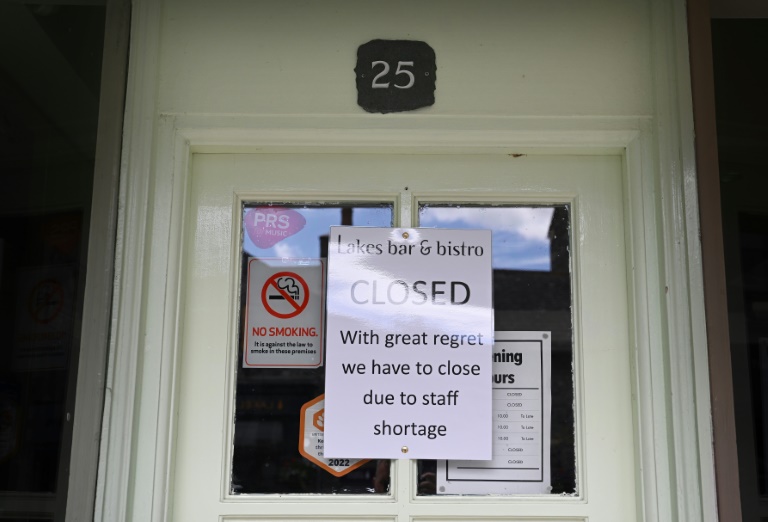
Job vacancies seem to come ten-a-penny in Keswick, a tourist town in England’s picturesque Lake District, as the hospitality sector cries out for staff — shortages which are a direct result, critics say, of the coronavirus pandemic and of Brexit.

“Two live-in chef positions available. Excellent rates of pay,” reads one advert in a restaurant window.

“Hiring. No experience needed,” says another in a fish-and-chip shop.

Britain’s ruling Conservative party claims to have engineered a “jobs miracle” since coming to power in 2010, with the national unemployment rate currently standing at 3.8 percent, the lowest level in almost 50 years. 

That is, in fact, better than the International Labour Organization’s definition of “full employment” — a jobless rate of five percent.

But for Tony Wilson, director of the Institute for Employment Studies, while the current situation in Britain may be “the best context in 20 years for workers”, it is not good for the economy as a whole.

The shortage of workers may be “leading to pay growth and some improvements in employment terms, but it doesn’t help the economy at all,” he said.

If companies are unable to fulfil their potential then profits and overall growth take a hit, he argued. 

– Low growth –

Indeed, Britain is set to have the lowest economic growth of any Group of Seven country, projections show.

Back in Keswick, Alison Lamont, the 60-year-old co-owner of the Relish cafe, does not have a minute to spare as she juggles serving with taking payments.

Since Covid lockdowns were lifted, the small eatery has switched to takeaway services only. 

There is simply no “time for clearing the tables”, says Lamont.

Despite attempts to recruit via social media or simply by word-of-mouth, she cannot find the extra staff needed to run the cafe properly.

Young people “all want to be influencers or work from home”, Lamont complains. 

“The main impact on family life is that we don’t get weekends together and no time away, we have to work and work and work,” she tells AFP, as her husband, who prepares the food upstairs, runs down to bring a sandwich.

Lamont, welcoming each customer like an old friend, says she bought the cafe with her husband around a year before Covid struck.

She struggles to sleep some nights and sees no end to the current situation.

“You can only do this for so long,” Lamont says. 

– No luck –

Further up the street, the restaurant at George Hotel was forced to shut for three-and-a-half months this year because it had no chef, costing the business £30,000 ($35,000) a week, a situation that is seen again and again across the UK. 

The owner of a London beauty salon told AFP she had even resorted to using a headhunter, typically used for recruiting senior management positions, to find a beautician — with no luck so far.

In other sectors, airlines such as British Airways and EasyJet are struggling to re-hire the staff they laid off in their thousands at the start of the pandemic. 

The result: mass flight cancellations and a situation that is only set to become worse during the upcoming summer holiday season.

The reasons for Britain’s current labour market woes are widely blamed on the country’s decision to quit the European Union and on the economic fallout from the coronavirus pandemic. 

“Since the economy reopened… the demand for workers is much higher than the job seekers, especially in low-paid, low-skill sectors” such as cleaning, construction, distribution and warehousing, said Jack Kennedy, UK economist at recruitment group Indeed.

The fallout from Covid has caused almost half-a-million UK workers to leave the labour market, the expert said.

While employment rates in both France and Germany are currently “higher than before the pandemic,” in the UK and US “it is still below pre-pandemic levels,” said Wilson at IES.

– No Brits –

Seasonal farm jobs — which outgoing Prime Minister Boris Johnson claimed would be filled by Britons following Brexit — remain vacant.

“I don’t think it has ever been so difficult,” says Derek Wilkinson, managing director of vegetable grower Sandfields Farms in central England.

Prior to Brexit, Britain’s agricultural and construction sectors had relied heavily on workers from central and eastern Europe, many of whom have since returned home.

Wilkinson, 55, points out that seasonal labourers must now apply for a special visa, which can take seven weeks to come through. 

According to Indeed economist Kennedy, there is a total shortfall of around 200,000-300,000 European workers, including many Ukrainians who have stayed home to fight in the war against Russia.

With other eastern Europeans going back to home countries that have recently become more prosperous — and Britons themselves showing little inclination to take on such back-breaking work — many employers are having to look further afield for seasonal staff, from the Philippines, South Africa and Uzbekistan.

Wilkinson said that with a shortfall of 120 staff in May, Sandfields Farms would have to let 40,000 kilos of asparagus and 750,000 bunches of spring onions go to waste.

And coupled with Britain’s cost-of-living crisis, that means his annual profits this year will be halved.

In order to woo workers, companies are having to offer better pay and conditions.

Wilkinson has renovated 400 mobile homes for seasonal workers, and a restaurant owner in Keswick has purchased a building to house their staff.

Gary Marx, owner of Keswick’s George Hotel, has awarded pay rises far above the rate of inflation.

– New perks –

Other firms are offering different kinds of perks. 

Accountancy giant PricewaterhouseCoopers, for example, allows employees to finish work early on Fridays. But some smaller companies are offering massage and aromatherapy treatments to staff, while dozens of other firms are trialling four-day weeks.

All this comes at a time when many Britons are re-thinking their careers completely.

With many workers on precarious contracts, one million people switched jobs in the last quarter, seeking better pay and a better life.

Before becoming pregnant, Lorna Roberts, 26, worked in hospitality. But with the arrival of her baby and the stresses of restaurant work, she moved to retail.

“It started to become more difficult after lockdown,” says Roberts, who now sells outdoor gear for Alpkit in Keswick. 

“A lot of people were rude, we were short-staffed constantly,” she says, describing how former colleagues suffered panic attacks and breakdowns.

Her new, less stressful job also fits in better with her interest in nature. And Roberts says her hourly wage has also increased. 

“I saw an ad outside and I just thought to pop in and ask,” she says, highlighting the ease with which people are able to switch jobs in the current climate.

Race to find Brazil Amazon species before they disappear

In a remote part of the Brazilian Amazon, a scientific expedition is cataloguing species. Time is of the essence.

“The rate of destruction is faster than the rate of discovery,” says botanist Francisco Farronay, of the National Institute of Amazonian Research (INPA), as he cuts into the bark of an enormous tree and smells its insides.

“It is a race against time.”

The largest rainforest on Earth, still largely unexplored by science, is assailed by deforestation for farming, mining and illegal timber extraction.

According to a MapBiomas study last year, the Amazon lost some 74.6 million hectares of native vegetation — an area equivalent to the entire territory of Chile — between 1985 and 2020.

The destruction accelerated under the government of far-right President Jair Bolsonaro, accused by environmentalists of actively encouraging deforestation for economic gain.

The rainforest is considered vital to curbing climate change for its absorption of Earth-warming CO2.

Since 2019, when Bolsonaro took power, average annual deforestation in the Brazilian Amazon increased by 75 percent compared to the previous decade, according to official figures.

– ‘Science denialism’ –

“Most plant species in the Amazon are to be found in encroached areas,” said Alberto Vicentini, another member of the expedition launched by Greenpeace. 

It is estimated that “we do not know 60 percent of the tree species, and every time an area is deforested, it destroys a part of the biodiversity that we will never know,” said the INPA scientist.

For their research in this remote part of the northern Brazilian state of Amazonas, the team of took a plane from Manaus, flying over hundreds of kilometers of green forest cut by meandering rivers, to Manicore.

From there, a five-hour boat trip by river for a weeks-long expedition to collect plant samples and observe animal behavior, for which they installed cameras and microphones.

The group includes experts in mammals, birds, amphibians, reptiles and fish, trees and flowers. But it is a tough time to be a scientist in Brazil, they say.

“We are living in a moment of science denialism, as we saw with the pandemic in Brazil,” with Bolsonaro railing against masks and vaccines, said Vicentini.

“Research institutions in Brazil are under attack by the policies of this government, universities are suffering many cuts,” he added.

A sheet of newspaper used by one of the botanists in the group to press a flower has the headline: “Increase in wood extraction in Amazonas” with a photo of two trucks leaving the rainforest loaded with logs.

“There are places where no one has ever been, we have no idea what is there,” said INPA biologist Lucia Rapp Py-Daniel.

“Without the resources to investigate, we do not have the necessary information to even explain why we have to conserve” the area, she said.

Resources have been dwindling for a decade — another phenomenon that has sped up under Bolsonaro, according to critics.

In May, Brazil’s two main scientific societies, the Brazilian Academy of Sciences (ABC) and the Brazilian Society for the Advancement of Science (SBPC) warned that funding for scientific research in the country would be cut by almost 3.0 billion reais (about $560 million) this year.

“We should accelerate the pace of research in the face of the destruction, but instead we are slowing down,” says Py-Daniel.

Twitter shares up after hedge fund bets against Musk

Twitter shares jumped Wednesday after a hedge fund revealed it had taken a stake in the firm based on its “strong case” against Elon Musk for moving to back out of his $44 billion buyout bid.

Stocks in the social media platform, which sued Tuesday to force the mercurial billionaire to stick to the deal, were up around eight percent in trading.

The hedge fund, Hindenburg Research, took a “significant” stake in Twitter, but one which is below the five percent line that requires reporting to US market watchdog Securities and Exchange Commission, the fund’s founder Nathan Anderson confirmed to AFP.

Anderson said it was the first time that Hindenburg had publicly revealed the purchase of shares.

“Twitter is suing to enforce the entire $44 billion merger price and they have a strong case,” Anderson said.

The suit filed in the US state of Delaware urges the court to order the Tesla boss to complete his deal to buy Twitter, arguing that no financial penalty could repair the damage he has caused.

After weeks of threats, Musk last week pulled the plug on the deal, accusing Twitter of “misleading” statements about the number of fake accounts, according to a letter from his lawyers included in a US securities filing.

“Twitter’s bot issue is perhaps the worst pretext Musk could have chosen for terminating the deal given that it was clearly and publicly a reason he entered the agreement in the first place,” Anderson added.

A few days after he made an offer in April to buy the company, Musk said that if the acquisition was finalized, he would “defeat the spam bots or die trying!”

For Anderson, Twitter has “more leverage” given the potential threat to Musk’s empire in the event of an outright win in court.

Wedbush Securities analyst Dan Ives said in a note that Wall Street is “interpreting the Twitter suit against Musk filed last night as ‘extremely compelling.'” 

“The stock is now factoring in some significant chance that Musk will ultimately have to pay Twitter a settlement well north of $1 billion,” said Ives, referring to the breakup fee in the original agreement between the entrepreneur and Twitter.

Netflix partners with Microsoft to offer cheaper streaming plan

Netflix will work with Microsoft to launch a cheaper subscription plan that includes advertisements, the firms said Wednesday, as the streaming giant fights to attract customers.

Netflix opted to develop the lower-cost offering after a disappointing first quarter in which it lost subscribers for the first time in a decade, and after years of resistance against the very idea of running ads. 

The ad-supported subscription will be in addition to the three options already available, the cheapest being $10 per month in the United States.

Microsoft will be responsible for designing and managing the platform for advertisers who want to serve ads to Netflix users. 

“It’s very early days and we have much to work through,” Greg Peters, Netflix’s chief operating officer, said in a statement. 

Microsoft added that advertisers “will have access to the Netflix audience and premium connected TV inventory.”

Adding advertising means Netflix will expose itself to some thorny issues, including debates around consumers’ personal data being harvested on a massive scale to target them with more lucrative, personalized pitches. 

Analysts were not surprised by Netflix’s choice in Microsoft because it offers fewer conflicts of interest for Netflix than some other companies.

“Unlike the top three ad sellers in Google, Meta, and Amazon, Microsoft hasn’t pushed competing streaming products,” wrote analyst Ross Benes.

After years of amassing subscribers, Netflix lost 200,000 customers worldwide in the first quarter compared to the end of 2021, which sent its share plunging. 

The streaming giant reacted by announcing the arrival of advertising on the service, with the aim to finance the investments necessary to maintain its position as leader in the industry that it launched. 

Netflix indicated it would get tougher on sharing logins and passwords, which allow many people not to pay to access the platform’s content. 

Rape of 10-year-old jolts US abortion debate

Ohio police have confirmed a 10-year-old rape victim crossed state lines to terminate her pregnancy, local media reported Wednesday, in a case drawing broad attention after the US Supreme Court overturned a federal right to abortion.

The girl’s ordeal of travelling to neighboring Indiana for the medical procedure was highlighted by President Joe Biden recently as he signed legislation aimed at helping women seeking abortions.

A trigger law banning all abortions after six weeks, with no exceptions for rape or incest, came into force in Ohio last month after the nation’s high court ended decades of constitutional protection for the right to end a pregnancy.

The shocking case was questioned by conservative-leaning media outlets and Ohio’s attorney general, who cast doubt on the story’s veracity.

But Columbus, Ohio police detective Jeffrey Huhn testified in court early Wednesday that the unidentified girl underwent an abortion in Indianapolis on June 30, the Columbus Dispatch reported.

According to the paper, Huhn was testifying at the arraignment of a man arrested Tuesday by police who say he confessed to raping the child.

Huhn also told the court that DNA samples obtained from the Indiana clinic were being tested against the 27-year-old suspect, the Dispatch said.

Franklin County, Ohio court documents confirm that a Gerson Fuentes, 27, was arraigned Wednesday on charges of rape of a person under 13.

The disturbing story, first reported by the Indianapolis Star, has drawn international scrutiny and become a flashpoint in the deeply divisive issue of abortion rights in America.

Biden spoke of the Ohio rape victim during a July 8 ceremony where he signed reproductive right protections into law and urged Congress to codify Row v Wade, the 1973 ruling that established the nationwide right to abortion.

“Just last week it was reported that a 10-year-old girl was a rape victim in Ohio — 10 years old — and she was forced to have to travel out of the state, to Indiana, to seek to terminate the pregnancy,” Biden said, noting the girl was six weeks pregnant.

“Just imagine being that little girl.”

– Reversing course –

The Wall Street Journal’s editorial board criticized Biden Tuesday for giving his “presidential seal of approval on an unlikely story from a biased source that neatly fits the progressive narrative but can’t be confirmed.”

On Wednesday it added an editorial note to the piece noting that the Columbus Dispatch had confirmed the story — but did not immediately change the article or its headline, which was “An Abortion Story Too Good To Confirm.”

Ohio Attorney General Dave Yost, a Republican, strongly suggested to Fox News late Monday that the case was a fabrication, and there was “not a whisper” of evidence to back up the claims that a 10-year-old rape victim had left Ohio to have an abortion.

On Wednesday he reversed course, saying in a statement after the arrest that he praised the Columbus Police Department for “securing a confession and getting a rapist off the street.”

Thirteen states have already passed trigger laws to ban abortion, in some states even in the case of rape or incest.

Biden, a Democrat and staunch Catholic turned abortion rights proponent, has not contained his anger, calling the abortion bans in the case of rape or incest “extreme.”

A majority of Americans — 56 percent, according to an NPR/Marist poll — oppose the overturning of Roe v Wade.

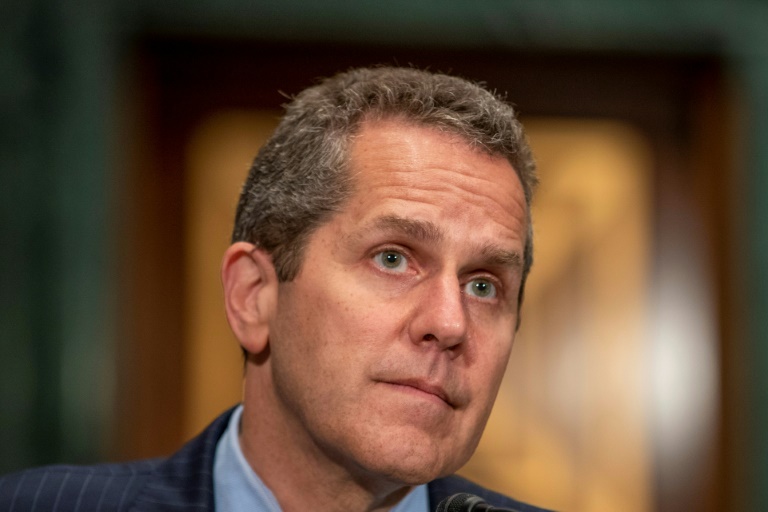
US Senate confirms Biden nominee Michael Barr to central bank

The US Senate on Wednesday confirmed President Joe Biden’s nominee for the role of the top Federal Reserve banking cop, a key oversight role for the country’s fiscal policy.

Michael Barr, a former Treasury official who worked on banking reform and the creation of the consumer protection agency in the wake of the 2008 global financial crisis, was approved by a vote of 66-28. His term as Fed vice chair for supervision will last four years.

Barr’s confirmation “is important progress for my plan to tackle inflation and for sound oversight as we transition to steady and stable growth,” Biden said in a statement after the vote.

During his nomination hearing, Barr stressed his commitment to bringing down sky-high inflation and ensuring the resilience of the US economy.

He also downplayed the central bank’s influence over climate change policies, an issue that torpedoed the US president’s first choice for the role.

Barr was nominated in April after Senate Republicans blocked a vote on Sarah Bloom Raskin, who became a lightning rod for critics who said she was hostile to the oil industry.

She withdrew from consideration in March after a key Democratic senator said he would not support her.

The opposition to Bloom Raskin helped to delay Biden’s efforts to fill the vacant seats at a time when monetary policymakers are waging war against inflation that has hit a 40-year high.

The world’s largest economy is being buffeted by ongoing shocks from the Covid-19 pandemic and the war in Ukraine that have driven prices higher and threaten to worsen supply chain issues.

Tight labor markets have created a shortage of workers, causing employers to bid up wages, adding to the inflation pressures.

The Fed last month implemented a three-quarter-point rate hike, the biggest in nearly 30 years, and economists say a similarly large increase is likely later this month.

Barr’s appointment fills the last spot on the Fed’s seven-seat board.

Close Bitnami banner
Bitnami