Africa Business

Egypt tycoon dies serving sentence for sexually assaulting minors

Egyptian businessman Mohamed el-Amin has died while serving a three-year sentence for trafficking and sexually assaulting girls at an orphanage he had founded, his lawyer and a lawmaker said Sunday.

The former media and real estate tycoon was transferred to hospital from prison “several months ago” and died “due to his illness”, parliamentarian Mostafa Bakry said on Twitter.

Amin, who owned the popular CBC television network before it was sold in 2018, was convicted in May of sexually assaulting seven underage girls at an orphanage in Beni Suef, some 100 kilometres (60 miles) south of Cairo.

His sentence is the lightest penalty provided by Egyptian law, which lays out a maximum 15-year sentence for sexual assault, or more in cases involving minors or if the perpetrator wields power over the victim.

Voting for S.Africa's ruling party leader to get underway

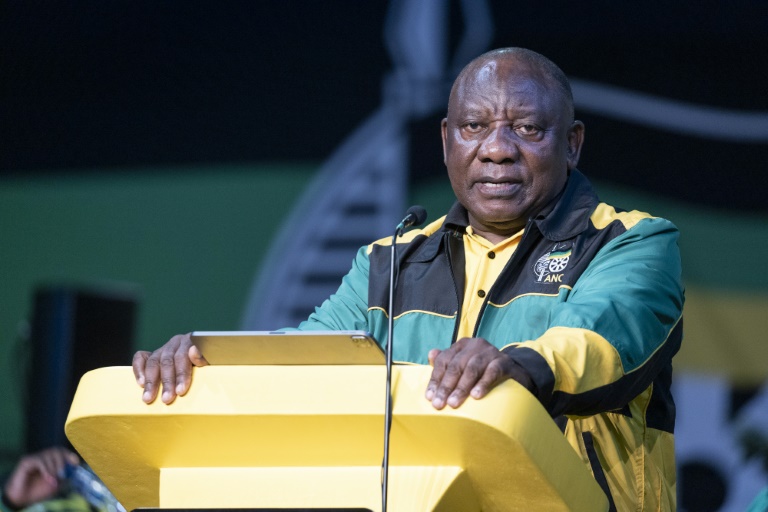
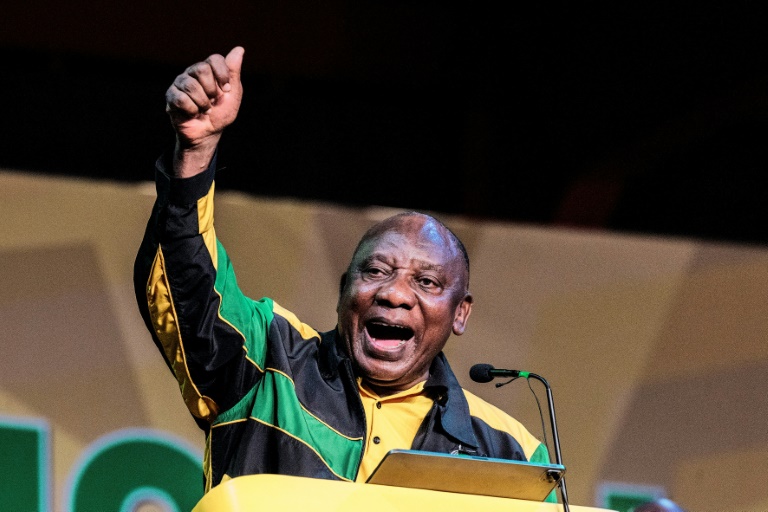
Voting to elect a new leader of South Africa’s ruling party was to get underway on Sunday, with President Cyril Ramaphosa squaring off against his former health minister Zweli Mkhize.

Ramaphosa, 70, is expected to be confirmed in the role that opens the way to being head of state, despite a damaging cash-heist scandal and vociferous internal opposition.

But observers said the race looked closer than expected, with local media reporting party delegates from several provinces had shifted support to Mkhize. 

“We’re seeing Ramaphosa moving from enjoying a comfortable lead, to having Mkhize right behind him. It’s up in the air right now,” independent political analyst Pearl Mncube told AFP. 

More than 4,000 delegates are to cast their ballot to appoint seven top leadership roles, including party president, deputy president, chair and secretary general, at a conference near Johannesburg.

After 28 years in power, the African National Congress (ANC), which was shaped by Nelson Mandela to spearhead the struggle to end apartheid, faces deep rifts and declining support.

Its image has been stained by corruption, cronyism, nepotism and a lacklustre economic record.

Some of those divisions played out in the open at the conference that opened on Friday, with Ramaphosa heckled by some delegates before his opening address.

Much of the disturbance came from supporters of corruption-tainted former president Jacob Zuma who was forced out by Ramaphosa.

“(Ramaphosa) is going to win, we know that. But because of Phala Phala, he must step aside,” said one of the disruptive delegates, Thami Chamane, 30, referring to the farm at the centre of the scandal engulfing the president. 

– Dented image –

Chants, shouting and celebratory dances also marked the process to confirm all nominations in the early morning, with senior party officials repeatedly calling for order.

Some delegates rolled their hands as a sign for “change” while others made the number two with their fingers in support of a second term for Ramaphosa.

Mkhize, hails from the same province as Zuma, the southeastern KwaZulu-Natal, which has the largest number of party delegates.

A 66-year-old doctor by training, he is among those whose image has been tainted by corruption allegations that he denies. 

As health minister, he was lauded for his handling of the coronavirus pandemic, but his two-year spell ended abruptly when Ramaphosa replaced him in August 2021.

He was placed on special leave after investigators opened a probe into a 150-million-rand ($10.4-million) contract for a Covid awareness campaign.

Ramaphosa’s clean-hands image has also been dented by accusations he concealed a huge cash burglary at his farm in 2020, rather than report it to the authorities.

Portraying himself as a graft-busting champion, he took control of the ANC in 2017 after his then boss Zuma became mired in corruption allegations.

Ramaphosa, who denies any wrongdoing, won a reprieve ahead of the conference when the ANC used its majority in parliament to block a possible impeachment inquiry.

An ex-trade unionist, he fronted the historic negotiations to end apartheid in 1994 and helped draft the constitution — considered to be one of Africa’s most progressive charters.

Paul Mashatile, 61, the current party treasurer and acting secretary general, is seen as the leading contender for the role of deputy president. 

China set to offer compromise to save summit nature accord

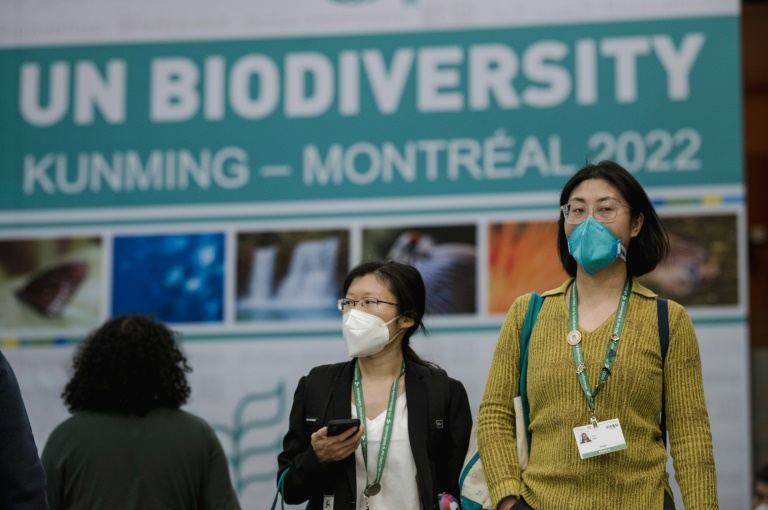
China, which chairs a high-stakes UN biodiversity summit in Montreal, is due to present a long-awaited compromise text on Sunday in an attempt to seal the “peace pact with nature” that the planet sorely needs.

More than 10 days of fraught biodiversity negotiations look to be coming to a head as delegates prepare to wrangle over the compromise draft agreement.

“It is not a perfect document, not a document that will make everyone happy, however it is a document that is based on the efforts of all of us over the last four years,” said China’s Environment Minister Huang Rinqiu.

“It is a document that must be adopted at this meeting that is highly expected by the international community.”

Observers had warned the COP15 conference risked collapse as countries squabbled over how much the rich world should pay to fund the efforts, with developing countries walking out of talks at one point.

But conference leaders turned upbeat Saturday on their chances of securing a deal.

Huang said he was “greatly confident” of a consensus and his Canadian counterpart Steven Guilbeault said “tremendous progress” had been made.

Huang said he would publish a draft agreement at 8:00 am EST (1300 GMT) on Sunday and hear lead delegates’ feedback later in the day.

The negotiations officially run until December 19, but could go longer if needed.

“Now is not the time for small decisions, let’s go big!” tweeted French President Emmanuel Macron.

“Let’s work together to achieve the most ambitious agreement possible. The world is depending on it.”

– Million species threatened –

Delegates are working to roll back the destruction and pollution that threaten an estimated one million plant and animal species with extinction, according to scientists that report to the UN.

The text is meant to be a roadmap for nations through 2030. The last 10-year plan, signed in Aichi, Japan in 2010, did not achieve any of its objectives — a failure blamed widely on its lack of monitoring mechanisms.

Major goals in the draft under discussion include a cornerstone pledge to protect 30 percent of the world’s land and oceans by 2030.

The more than 20 targets also include reducing environmentally destructive farming subsidies, requiring businesses to assess and report on their biodiversity impacts, and tackling the scourge of invasive species.

Representatives of Indigenous communities, who safeguard 80 percent of the world’s remaining biodiversity, want their rights to practice stewardship of their lands to be enshrined in the final agreement.

“We are the ones doing the work. We protect biodiversity,” said Valentin Engobo, leader of the Lokolama community in the Congo Basin, in a statement released by Greenpeace. “You won’t replace us. We won’t let you.”

– Money matters –

The issue of how much money the rich countries will send to the developing world, home to most of the world’s biodiversity, has been the biggest sticking point.

Several countries have announced new commitments. The European Union has committed seven billion euros ($7.4 billion) for the period until 2027, double its prior pledge.

But campaigners and developing countries say more is needed — and delegates have not reached agreement on what form the new funding flows should take.

Brazil has proposed flows of $100 billion annually, compared to the roughly $10 billion at present.

“We will be able to specify our financial ambitions once we have seen the text,” France’s Environment Minister Christophe Bechu told AFP on Saturday.

“An agreement on paper without numbers would be worse than no agreement. We need an ambitious agreement that is quantified and with verifiable aims and dates.”

'Be good ancestors,' youth activists tell ministers at UN nature talks

As the world’s environment ministers try to thrash out a new deal for nature, youth activists gathered at a UN summit in Montreal are making it clear that actions taken today will affect generations to come.

Here is what some had to say.

– Prisca Daka –

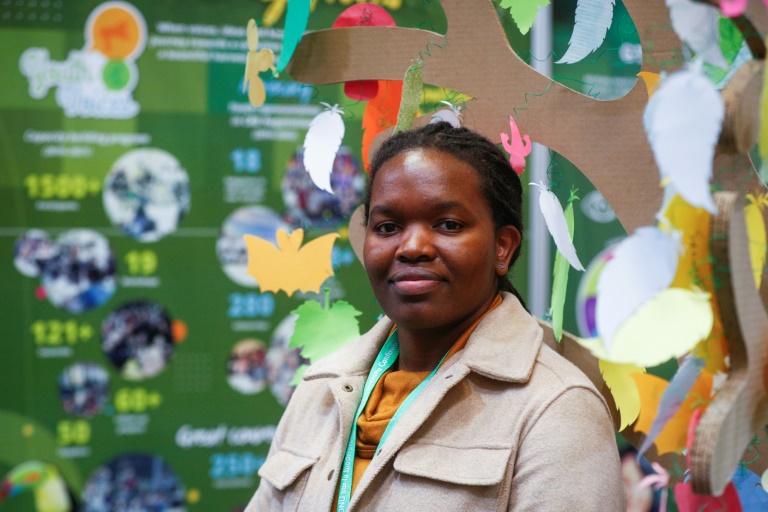
Prisca Daka, a 31-year-old from Zimbabwe now based in the US, is regional coordinator for Global Youth Biodiversity Network (GYBN) Africa. 

She works with local communities to help preserve the Samango monkey, a species that is unique to Zimbabwe but whose habitat is being threatened by deforestation and banana plantations.

Daka has been formally involved in activism since 2017, but says her love of nature began when she was six years old and visited national parks with her family.

“We don’t talk much about biodiversity, which is the web of life — everything we see, the air we breathe, the water we drink,” she said. 

“Extinction is forever, so as young people we’re bringing attention to the biodiversity crisis and showing what the future could look like if we do not act now.”

She added she felt proud that this COP has more African youth than ever before, something she hopes will “become the norm.”

– Eshadi Mendis –

As a member of GYBN in Sri Lanka, Eshadi Mendis, 30, focuses on beach and ocean clean-up projects in her island nation.

“Because of the way Sri Lanka is situated, all the inland pollution is going to the sea. So we need to find ways to clean it and stop it,” she says.

Unfortunately, she adds, awareness about the COP15 summit is limited in her home country, something Mendis is working hard to change.

She also thinks it’s important for the United Nations to stop treating climate and biodiversity as distinct issues requiring distinct summits, with the latter receiving less attention as a result.

“They’re very interconnected,” she says. Her take-home message, though, is to prioritize young people in the negotiation process.

“Our word should be considered… older people should know that they should be good ancestors for us so when they leave this Earth, we have something to utilize as well.”

– Flavia Gonzales –

Flavia Gonzales studied biology to understand “how I could save nature”. Along the way, she realized that the best way was to make people aware of their own relationship with the environment.

The Bolivian activist, who wears her hair in colored braids, was moved as a teenager by the mistreatment of animals in her hometown La Paz. But “little by little you see that not only animals are being mistreated, but all of nature is being mistreated.”

Now 24 years old, she has dedicated herself to educating people about the environment, empowering girls and young people about their rights.

Gonzales was one of a few dozen youths who painted their faces and took part in a protest outside the Montreal Convention Centre on Friday, demanding policymakers reach a deal that “achieves the objectives that can help us improve as a society.”

“If we don’t, what’s the point?”

Uganda lifts lockdown in Ebola epicentre

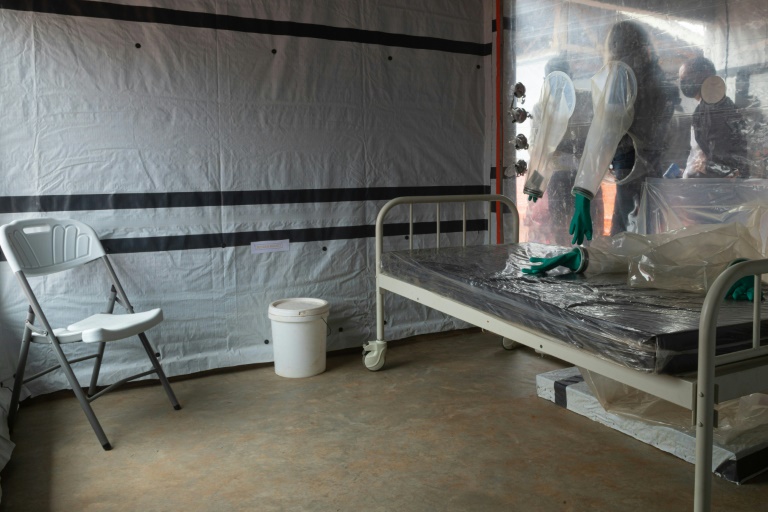
Uganda on Saturday lifted a two-month lockdown on two districts at the epicentre of the country’s Ebola epidemic, amid cautious hope that the outbreak could end soon.

Since authorities declared an Ebola outbreak on September 20, the East African nation has registered 142 confirmed cases and 56 deaths, with the disease spreading to the capital Kampala.

The two central districts at the heart of the outbreak, Mubende and Kassanda, were placed under lockdown by President Yoweri Museveni on October 15.

But on Saturday, Vice President Jessica Alupo announced that the government was “lifting all movement restrictions and curfew in Mubende and Kassanda districts with immediate effect”.

The two hotspots were under a dusk-to-dawn curfew, with markets, bars and churches closed as well as personal travel banned. 

“The lifting of the restrictions is based on the fact that currently there is currently no transmission, no contact under follow-up, no patients in the isolation facilities, and we are progressing well”, Alupo said in a televised address delivered on behalf of Museveni. 

Ugandan authorities said last month that new cases were falling, and the last confirmed patient with the disease was discharged from hospital on November 30.

Alupa warned however that the government remained on “high alert” for any resurgence in cases.

– Trial vaccine –

The announcement came after local leaders in the two districts appealed last month for the lockdown to be lifted and implored the central government to provide aid to citizens hit hard by the curbs on business.

The outbreak has been caused by the Sudan strain of the virus, for which there is currently no vaccine.

Uganda earlier this month received its first shipment of trial vaccines against the Sudan strain, with more doses expected in the coming weeks.

They will be used in a so-called ring vaccination trial, where all contacts of confirmed Ebola patients, and contacts of contacts, are jabbed along with frontline and health workers.

However, the absence of active Ebola cases in recent days has held up the vaccine trials, according to international health experts working in Uganda.

According to the World Health Organization, an outbreak of the disease ends when there are no new cases for 42 consecutive days — twice the incubation period of Ebola.

Ebola spreads through bodily fluids. Common symptoms are fever, vomiting, bleeding and diarrhoea. 

Outbreaks are difficult to contain, especially in urban environments.

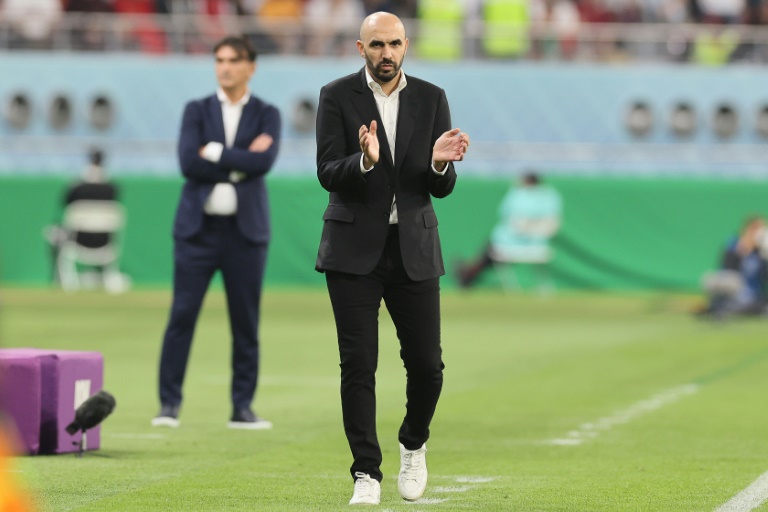
African team to win World Cup in '15-20 years', says Morocco coach

Morocco coach Walid Regragui said he believes an African team will win the World Cup in the next “15 to 20 years” after his team finished fourth in Qatar.

The Atlas Lions, who became the first African World Cup semi-finalists in history, lost Saturday’s third place play-off 2-1 against 2018 runners-up Croatia but captured the imagination in Qatar.

The next World Cup in 2026, held across the USA, Canada and Mexico, will be expanded to 48 teams and Africa will have at least nine slots — up from five at present.

“With nine participants, we’re going to learn. In 15, 20 years, I’m sure an African team will win the World Cup because we’ll have learned,” said Regragui.

“We have a stage to get past. We need to build on that, with hard work and desire. This DNA is not just being built for Morocco, but for the continent.”

Morocco finished top of a group including Croatia and Belgium, who came third at the 2018 World Cup, before knocking out Spain and Portugal to reach the last four.

Their run was ended in the semi-finals by defending champions France, but Regragui has urged his players to back up their historic display by winning next year’s Africa Cup of Nations.

“I said to the players in the changing room, if you want to go down in history then you’re going to have to win the Africa Cup of Nations,” said Regragui.

“We need to dominate our continent.”

Morocco have been crowned African champions just once, in 1976, but their performances at the World Cup demonstrated they are a team on the rise under Regragui, who was only appointed in August.

“Tomorrow morning we’ll take stock and all realise we’ve pulled off a fantastic achievement here. We’ve earned a great deal of experience in a short space of time,” said Regragui.

“We’ve gone further than expected but it’s not enough. It needs to set an example for the future. I hope that everybody (in Africa) will learn from the experience.

“We’ve got a great future ahead of us and we’ll keep moving forward. 

“Of course we have the objective of winning the World Cup one day. There’s going to be more pressure on us going forward and hopefully there will be more African teams following our example. 

“We’ve shown we can go toe to toe with top teams. Really very small details determine these games.”

S.Africa's Ramaphosa seeks re-election as ruling party boss

South Africa’s ruling ANC was due to elect a new leader this weekend after the country’s embattled president Cyril Ramaphosa pitched to steer the graft-tainted party for a second term.

Despite a damaging cash-heist scandal and vociferous internal opposition, Ramaphosa, 70, is tipped to win re-election as the head of the African National Congress (ANC) at a five-day party conference that kicked off on Friday.

After 28 years in power, the party shaped by Nelson Mandela to spearhead the struggle to end apartheid faces deep rifts and declining support.

Its image has been stained by corruption, cronyism, nepotism and a lacklustre economic record.

In a three-hour-long address on Friday, Ramaphosa sought to project confidence and authority, cautioning South Africans “expect us to have the courage and the honesty to recognise our shortcomings and the resolve to correct them”.

Almost three decades after the end of white-minority rule, unemployment and crime rates are sky high, poverty and inequality remain widespread, and power cuts have hit record levels amid a worsening energy crisis.

The conference was running well behind schedule on Saturday, after starting several hours late the day before. 

But party officials said the party’s more than 4,000 delegates were still expected to vote for their new leader.

The delays caused some to grumble.

“It is extremely frustrating,” one delegate from the eastern KwaZulu-Natal province who preferred not to give his name.

On Friday, dozens of delegates — largely supporters of corruption-tainted former president Jacob Zuma who was forced out by Ramaphosa — heckled the current South African leader, chanting “Change! Change!” and banging on their tables.

Ramaphosa called for “discipline” and “political consciousness” urging attendees to debate issues instead of “shouting” and “howling at each other”.

– Ramaphosa will ‘come back’ –

Portraying himself as a graft-busting champion, Ramaphosa took control of the ANC in 2017 after his then boss Zuma became mired in corruption allegations.

But his clean-hands image has been dented by accusations he concealed a huge cash burglary at his farm in 2020, rather than report it to the authorities.

Ramaphosa won a reprieve ahead of the conference when the ANC used its majority in parliament to block a possible impeachment inquiry.

Despite calls from some in his party to step down over the scandal, he still leads the list of only two nominated presidential candidates so far.

Senior ANC executive committee member and former cabinet minister Derek Hanekom said calling for Ramaphosa to resign over the farm controversy without being charged wasn’t how things were done in the 110-year-old party.

“We’ve never done that in the ANC,” Hanekom told AFP on the sidelines of the conference.

Party delegate Mike Mtsweni, 28, was confident Ramaphosa would “come back” as party leader.

Ramaphosa’s rival is his former health minister Zweli Mkhize, who is facing corruption allegations linked to Covid-19 funds.

An ex-trade unionist, Ramaphosa fronted the historic negotiations to end apartheid in 1994 and helped draft the constitution — considered to be one of Africa’s most progressive charters.

On Friday, he was captured on camera laughing and shaking hands with Zuma, who is leading internal opposition to his rule.

Earlier, Zuma had made a grand entrance in the conference hall just as Ramaphosa begun delivering his speech, forcing the president to briefly pause.

On the eve of the conference, Zuma announced he was seeking to sue Ramaphosa over a leaked medical report linked to a corruption trial involving him in the 1990s.

But the action is unlikely to hamper Ramaphosa’s chances of securing a second term as ANC chief. 

The party has lost its grip over key cities in municipal elections and its local government electoral showing slumped last year to under 50 percent for the first time in its history.

But it remains the country’s largest party.

Germany cuts the ribbon on first LNG terminal

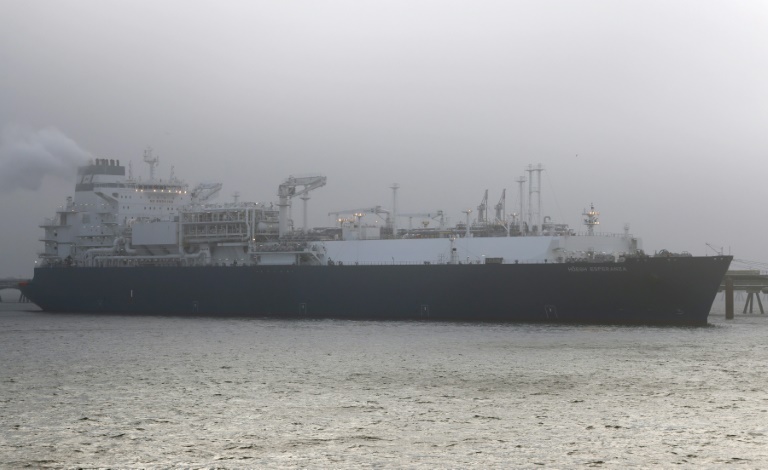
Germany on Saturday inaugurated its first liquefied natural gas (LNG) terminal, built in record time, as the country scrambles to adapt to life without Russian energy.

The rig in the North Sea port of Wilhelmshaven was opened by Chancellor Olaf Scholz at a ceremony on board a specialist vessel known as an FSRU, named the Hoegh Esperanza.

“It’s a good day for our country and a sign to the whole world that the German economy will be able to remain strong,” Scholz said from the boat.

The Hoegh Esperanza sounded its horn as the chancellor, dressed in a high visibility jacket, approached.

The ship has already been stocked with gas from Nigeria that could supply 50,000 homes for a year, and the terminal is set to begin deliveries on December 22.

Germany plans to open four more government-funded LNG terminals over the next few months as well as a private terminal in the port of Lubmin.

Together, the terminals could deliver 30 billion cubic metres of gas a year from next year, or a third of Germany’s total gas needs — if Berlin can find enough LNG to service them.

LNG terminals allow for the import by sea of natural gas which has been chilled and turned into a liquid to make it easier to transport.

The FRSU stocks the LNG, then turns it back into a ready-to-use gas.

Until now, Germany had no LNG terminals and relied on cheap gas delivered through pipelines from Russia for 55 percent of its supply.

– Supply worries –

But since Russia’s invasion of Ukraine, gas supplies to Germany have been throttled and Berlin has been forced to rely on LNG processed by Belgian, French and Dutch ports, paying a premium for transport costs.

The government decided to invest in building its own LNG terminals as quickly as possible and has spent billions of euros (dollars) on hiring FSRUs to service them.

However, Germany has not yet signed a single major long-term contract to begin filling the terminals from January.

“The import capacity is there. But what worries me are the deliveries,” Johan Lilliestam, a researcher at the University of Potsdam, told AFP.

A contract has been signed with Qatar for LNG to supply the Wilhelmshaven terminal but deliveries are not set to begin until 2026.

Suppliers want long-term contracts, while the German government is not keen to be locked into multi-year gas deals as it wants the country to become climate-neutral by 2045. 

“Companies need to know that the purchasing side in Germany will eventually diminish if we want to meet climate protection targets,” economy minister Robert Habeck has said.

Environmental campaigners have criticised the LNG project, with the DUH association announcing it will take legal action. A handful of protestors turned out in Wilhelmshaven with placards demanding an “End to gas”.

– Cold winter –

Germany could initially be forced to buy LNG from the expensive spot markets, which would lead to higher prices for consumers.

The market could also be squeezed next year by renewed demand in China as it emerges from strict Covid-19 curbs, Andreas Schroeder, an expert at the ICIS energy research institute, told AFP. 

“If Europe has been able to receive so much LNG in recent months, it is because Chinese demand was low,” Schroeder said. 

China recently signed a deal to buy gas from Qatar for 27 years — the longest such deal in history, according to Doha.

Germany has also had a cold winter so far, meaning the gas tanks have been emptying faster than expected.

“Gas consumption is increasing. This is a risk, especially if the cold spell continues,” said Klaus Mueller, the head of the country’s Federal Network Agency regulatory body, in a recent interview.

As a result, there is a real risk that Germany could experience temporary supply disruptions next winter, according to Schroeder.

Gas usage is currently down 13 percent compared to last year but the government wants that figure to be closer to 20 percent.

In Europe, the gap between supply and demand could reach 27 billion cubic metres (950 billion cubic feet) in 2023, according to an IEA report — equivalent to 6.5 percent of the European Union’s annual consumption.

S.Africa's Ramaphosa seeks re-election as ruling party boss

South Africa’s ruling ANC was due to elect a new leader this weekend after the country’s embattled president Cyril Ramaphosa pitched to steer the graft-tainted party for a second term.

Despite a tarnishing cash-heist scandal and vociferous internal opposition, Ramaphosa, 70, is tipped to win re-election as the head of the African National Congress (ANC) at a five-day party conference that kicked off on Friday. 

But after 28 years in power, the party shaped by Nelson Mandela to spearhead the struggle to end apartheid faces deep rifts and declining support.

Its image has been stained by corruption, cronyism, nepotism and a lacklustre economic record.

In a three-hour-long address on Friday, Ramaphosa sought to project confidence and authority.  

South Africans “expect us to have the courage and the honesty to recognise our shortcomings and the resolve to correct them,” he told some 4,500 ANC delegates at an events centre near Johannesburg.

Almost three decades after the end of white-minority rule, unemployment and crime rates are sky high, poverty and inequality remain widespread, and power cuts have hit record levels amid a worsening energy crisis.

The conference was running well behind schedule on Saturday, after starting several hours late the day before. 

But party officials said voting was still expected to take place.

“Our delegates just have to understand that we may have to work for much longer than we had anticipated,” said national spokesman Pule Mabe.

That caused some to grumble

“It is extremely frustrating,” one delegate from the eastern KwaZulu-Natal province who preferred not to give his name said of the delays.

Dozens of delegates — largely supporters of corruption-tainted former president Jacob Zuma who was forced out by Ramaphosa — heckled the current South African leader, chanting “Change! Change!” and banging on their tables.

“Let us exercise discipline, let us exercise political consciousness,” Ramaphosa said, urging attendees to debate issues instead of “shouting” and “howling at each other”.

– ‘Going to come back’ –

Portraying himself as a graft-busting champion, Ramaphosa took control of the ANC in 2017 after his then boss Zuma became mired in corruption allegations.

But his clean-hands image has been dented by accusations he concealed a huge cash burglary at his farm in 2020, rather than report it to the authorities.

Ramaphosa won a reprieve ahead of the conference when the ANC used its majority in parliament to block a possible impeachment inquiry.

He is still leading the list of only two nominated presidential candidates so far and is seen to be the most viable in the absence of better options to lead the 110-year-old party.

“The president’s term came with a lot of challenges like Covid-19 and he has really tried to pull through,” said ANC delegate Mike Mtsweni, 28.

“He is going to come back… as the (party) president”.

Ramaphosa’s rival is his former health minister Zweli Mkhize, who is facing corruption allegations linked to Covid-19 funds.

An ex-trade unionist, Ramaphosa fronted the historic negotiations to end apartheid in 1994 and helped draft the constitution — hailed as one of Africa’s most progressive charters.

On Friday, he was captured on camera laughing and shaking hands with Zuma, who is leading internal opposition to his rule.

Earlier, Zuma had made a grand entrance in the conference hall just as Ramaphosa begun delivering his speech, forcing the president to briefly pause.

On the eve of the conference, Zuma announced he was seeking to sue Ramaphosa over a leaked medical report linked to a corruption trial involving him in the 1990s.

But the action is unlikely to hamper Ramaphosa’s chances of securing a second term as ANC chief. 

The party has lost its grip over key cities in municipal elections and its electoral showing slumped last year to under 50 percent for the first time in its history.

But the ANC remains South Africa’s largest party.

Nigeria leader confident of free elections despite poll office attack

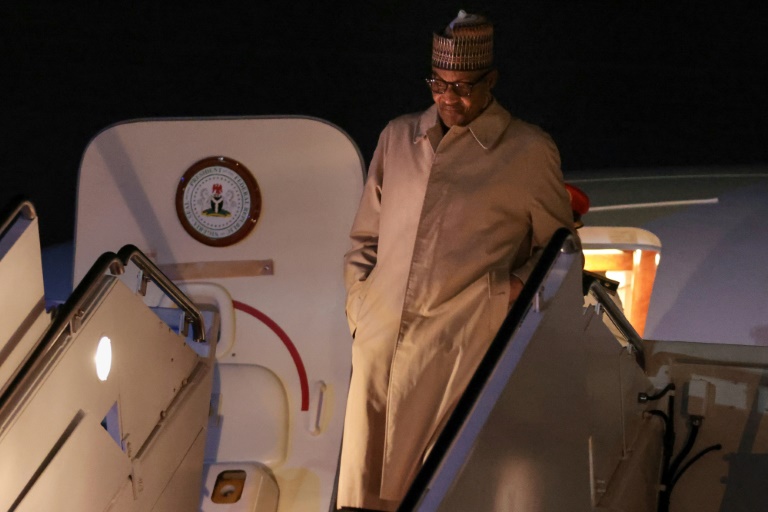
Nigerian President Muhammadu Buhari voiced confidence Friday in free polls in February, brushing aside any impact from recent attacks on electoral offices.

“I am resolute in my determination to enable the conduct of free, fair and transparent national elections in the first quarter of 2023, whose outcome would be largely accepted to the contestants,” he said at the US Institute of Peace in Washington.

Three gunmen were killed earlier this week in an attack on the main office of the Independent National Electoral Commission in Owerri, capital of Imo state, following similar assaults in the restive region.

Buhari said such violence was limited and that he was committed to ensure that electoral offices were adequately funded.

“I think, in relative terms, security is good,” he said.

Buhari is stepping down after two terms. In 2015, he was the first president to peacefully succeed an incumbent from a rival party in Africa’s most populous country.

Buhari was visiting Washington for a three-day summit of African leaders by President Joe Biden, who has vowed a renewed effort to preserve democracy on the continent.

Biden met with Buhari and the leaders of five other countries that hold elections next year to call for free and fair polls.

Close Bitnami banner
Bitnami