Africa Business

Bomb wounds Russian in C.Africa, France denies claim it was responsible

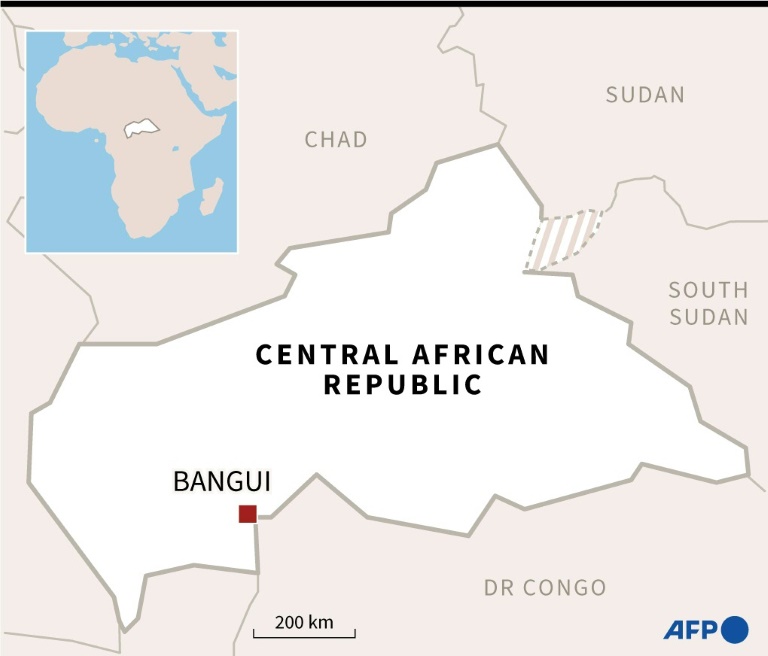
A Russian representative in the Central African Republic was badly wounded Friday after opening a parcel bomb, Moscow’s embassy said, as a prominent pro-Kremlin figure claimed France was behind the blast, which Paris denied.

France rejected the claim by the boss of Russia’s Wagner mercenary group, Yevgeny Prigozhin, that Paris was involved and should be designated a state sponsor of terrorism.

Central Africa has been battling civil war since 2013 and is at the heart of Russia’s bid for strategic influence in Africa.

The last French troops deployed in CAR left on Thursday following a chill in relations caused by closer ties between Bangui and Moscow and the deployment of Russian forces, which some countries say includes Wagner mercenaries.

“The head of the Russia House (cultural centre) received an anonymous parcel on Friday, opened it and an explosion happened,” the embassy said, quoted by the official TASS news agency.

The centre’s head Dmitry Sytyi was hospitalised with “serious injuries,” it added.

“I have already requested the Russian foreign ministry to initiate the procedure to declare France a state sponsor of terrorism,” Prigozhin was quoted as saying in a statement released by his company, Concord.

He called for a “thorough investigation” into “the terrorist methods of France and its Western allies — the United States and others.”

France’s top diplomat on Friday denied Prigozhin’s claims.

“This information is false and is a good example of Russian propaganda and the fanciful imagination that sometimes characterises it,” Foreign Minister Catherine Colonna told AFP during a visit to Morocco.

– ‘Son’s head’ –

Prigozhin, an ally of Russian President Vladimir Putin, said it was unclear if Sytyi would make it.

“Russian doctors are doing everything they can in the Bangui hospital to save him,” Prigozhin said.

Before losing consciousness, Prigozhin claimed Sytyi saw a note that allegedly said: “This is for you from all the French, the Russians will get out of Africa.”

Prigozhin said Sytyi first received a parcel from Togo on November 11. It contained a picture of his son residing in France and a note saying “next time he will receive his son’s head” if the Russians do not leave Africa.

Prigozhin said Sytyi opened a new package on Friday because he had thought it would contain his son’s head.

Russia’s RIA Novosti agency quoted a Russian diplomat saying Sytyi received the parcel at his home, away from the cultural centre. “He received it, took it into his house and opened it,” the diplomat said.

The centre in downtown Bangui remained open on Friday. No police presence could be seen around the building where traffic was normal, AFP reporters said.

France, the former colonial power, dispatched up to 1,600 troops to help stabilise CAR after a coup in 2013 unleashed a civil war along sectarian lines.

Over the last few years, friction has grown between the two nations over a mounting Russian military presence.

In 2018, Moscow sent instructors to the country, and in 2020 followed this with hundreds of paramilitaries to help President Faustin Archange Touadera defeat rebels advancing on the capital.

France, the UN and others say they are mercenaries from the Kremlin-backed Wagner group, who have been linked with atrocities and looting of resources.

Sanctioned by Washington and Brussels, Prigozhin has emerged as one of Putin’s most loyal lieutenants after Moscow sent troops to Ukraine on February 24.

In November, the European Parliament recognised Russia as a “state sponsor of terrorism”, accusing its forces of carrying out atrocities during its offensive in Ukraine.
S.Africa's Ramaphosa favourite to keep ANC leadership despite scandal

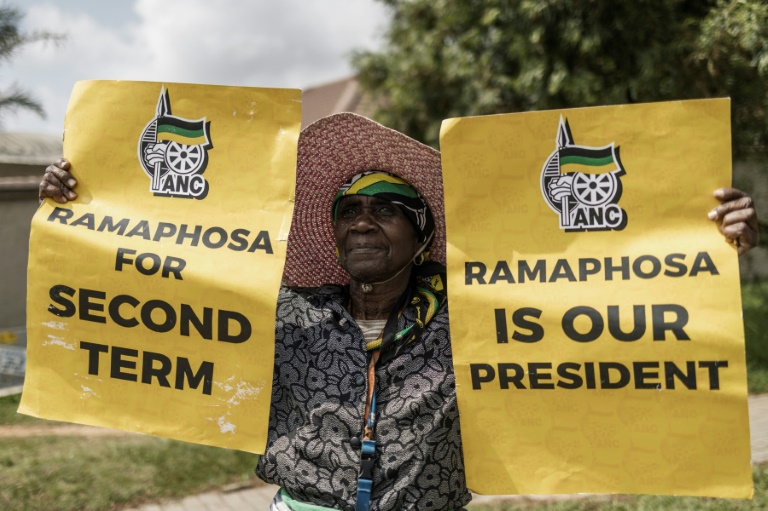
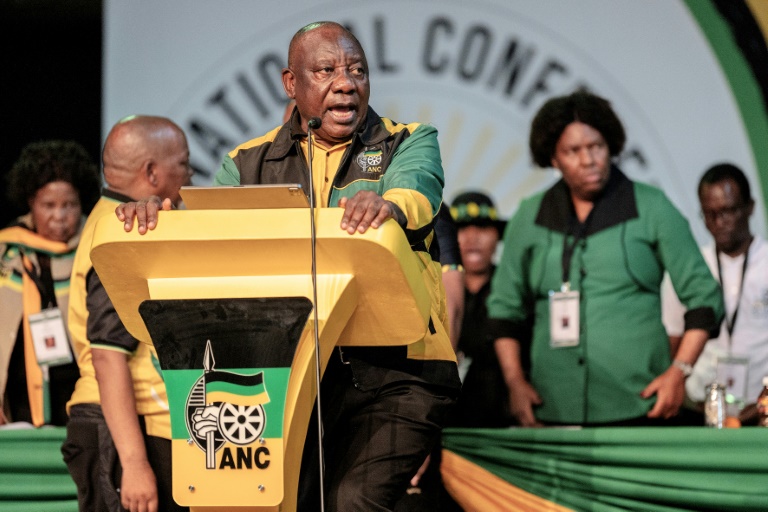
South Africa’s President Cyril Ramaphosa sought to project confidence and authority on Friday at the opening of a ruling ANC party conference, where he is seeking re-election as party leader despite a tarnishing cash-heist scandal.

In a three-hour-long opening address, amid chants and heckling from a few delegates, Ramaphosa chronicled his government’s challenges and achievements over the past five years.

The venerable party, shaped by Nelson Mandela into the main weapon that ended apartheid, has governed South Africa for 28 years. Its image today is stained by corruption, factionalism and declining support.

Ramaphosa told some 4,500 African National Congress (ANC) delegates at an events centre near Johannesburg to have the “courage and the honesty to recognise our shortcomings and resolve to correct them”.

Among its failures, he cited rising poverty which gives “rise to a sense of hopelessness amongst our people”.

But as he eyes a new term at the top of the ANC, he sounded a note of hope saying “green shoots are starting to sprout, I do believe better days lie ahead”.

Ramaphosa is the favourite to continue leading the storied party.

Portraying himself as a graft-busting champion, Ramaphosa took control of the ANC in 2017 after his boss Jacob Zuma became mired in corruption.

The party’s majority in parliament means that it also has control over the process to approve the national president.

But Ramaphosa’s clean-hands image has been dented by allegations he concealed a huge cash burglary at his farm rather than report the matter to the authorities.

Despite this, the 70-year-old leader appears on track to win the party leadership election.

A small group of heckling delegates tried to disrupt his address, chanting “Change! Change!” while also banging on their tables.

– ‘Fix corruption’ –

“Let us exercise discipline, let us exercise political consciousness,” he said in his remarks urging delegates to debate issues instead of “shouting” and “howling at each other”. 

The conference started several hours behind schedule and was adjourned after Ramaphosa’s speech. Voting would be delayed but was still expected to take place on Saturday, according to a senior ANC official.

Party delegate Sipho Pieterse, 36 and unemployed, said he was comforted by Ramaphosa’s repeated commitment to tackle graft and pull the country out of a prolonged energy crisis. 

“When he comes back as president tomorrow… the thieves of corruption are going to shiver and to shake,” he said. 

But Thami Chamane, 30, unemployed, and one of the delegates disrupting the speech, wanted Ramaphosa to “step aside” over the farm scandal.

A victory would secure Ramaphosa a ticket to a fresh term as president after the 2024 elections, if his party wins that vote.

Ramaphosa won a reprieve ahead of the conference when the ANC used its majority in parliament to block a possible impeachment inquiry.

He is leading the list of only two nominated presidential candidates so far and is seen to be the most viable in the absence of better options in the 110-year-old party.

– Declining vote share –

The ex-trade unionist fronted the historic negotiations to end apartheid and helped draft the constitution — hailed as one of Africa’s most progressive charters.

Dodging the impeachment bullet likely emboldened his re-election bid, analysts say.

His rival is his former health minister Zweli Mkhize, who is facing corruption allegations linked to Covid-19 funds.

Over the past decade, the party has lost its grip over key cities in municipal elections.

Its showing in this battlefield slumped last year under 50 percent for the first time.

On a national level, the ANC won the 2019 election with 57.5 percent of the vote, down from 62.15 percent in 2014.

But it remains South Africa’s largest party.

Whoever emerges victorious in the vote will have to defuse anger at crippling power cuts and entrenched poverty.

Moise Katumbi to stand in DR Congo vote in 2023

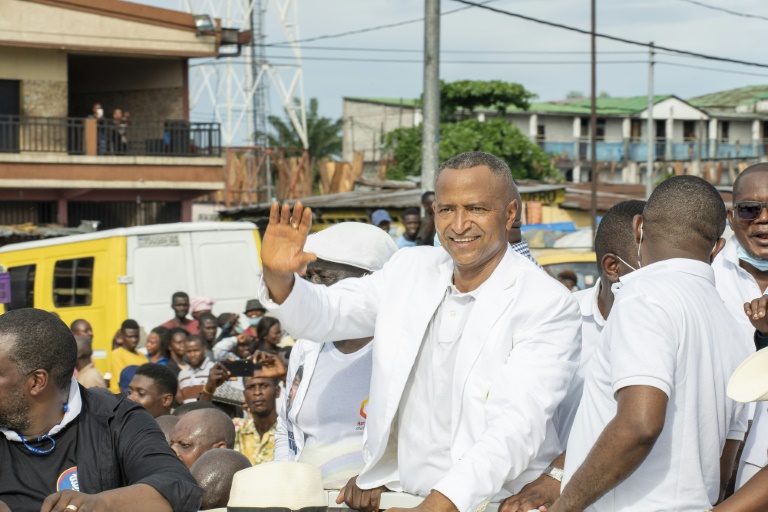
Moise Katumbi, a businessman and former governor in the Democratic Republic of Congo, announced Friday he will stand in the country’s presidential election in December 2023. 

His announcement came against a backdrop of violence in the country’s east after fighting resumed on Friday between M23 rebels and rival armed groups after 10 days of relative calm.

“I am a candidate because I have a vision for my country,” Moise Katumbi told the France 24 and RFI broadcasters, adding that the record of current president, Felix Tshisekedi, was “chaotic”.

“We are going to continue with real fighters, who want us to change the situation of our country together, for a better Congo,” said Katumbi, who is also the president of the TP Mazembe football club in Lubumbashi.

In the DRC, the presidential poll is held at the same time as parliamentary, provincial and local elections.

The president-elect would then take office in January 2024.

President Felix Tshisekedi came to power in January 2019, succeeding Joseph Kabila after 18 turbulent years as leader.

It was the country’s first peaceful handover of power.

He has already announced his intention to run for a second term, despite clashes over the results.

Other possible contenders could include Martin Fayulu, the runner-up in the 2018 presidential polls who claims he was deprived of a victory in the vote.

Augustin Matata Ponyo, another ex-premier, has said he will run.

Tshisekedi’s inauguration ceremony in 2019 capped more than two years of turmoil sparked by Kabila’s refusal to step down when he reached the constitutional limit on his term in office.

The last two presidential elections before that, in 2006 and 2011 — both won by Kabila — were marred by bloodshed and dozens died in a crackdown on protests after he chose to remain in office in 2016.

A country the size of continental western Europe, the former Belgian colony lived through two regional wars in 1996-97 and 1998-2003.

M23 rebels, a mostly Congolese Tutsi group, resumed fighting in late 2021 after accusing the DRC of having failed to honour an agreement to integrate its fighters into the army.

France and Morocco mend ties after visa spat

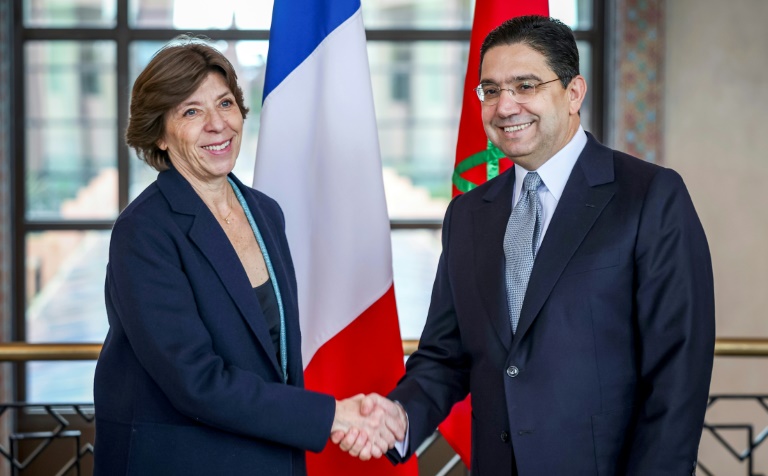
France and Morocco announced Friday they were mending fences after months of tensions over visas, and said President Emmanuel Macron would visit the North African kingdom in early 2023.

Speaking in Rabat alongside her Moroccan counterpart Nasser Bourita, French Foreign Minister Catherine Colonna said it was time to “write a new page together”. 

The two countries have been at loggerheads since September 2021, when Paris halved its visa quota for Moroccans in retaliation for the kingdom’s alleged refusal to repatriate citizens living as irregular migrants in France.

The move sparked widespread public anger in Morocco and was labeled as “unjustified” by Rabat.

But Colonna said the countries had returned to “full consular cooperation” since Monday.

French Interior Minister Gerald Darmanin was expected to arrive in Morocco’s neighbour and arch-rival Algeria on Friday to discuss similar visa issues.

Macron and Morocco’s King Mohammed VI spoke by phone on Wednesday night after their countries’ dramatic World Cup semi-final clash in Qatar which France won 2-0.

Asked about the spiky issue of the Western Sahara, the two ministers played down any tensions. 

Morocco sees the desert region as part of its territory, but the Algerian-backed Polisario movement seeks an independent state.

King Mohammed reiterated in August that “the Sahara issue is the prism through which Morocco views its international environment”, demanding that governments “clarify” their position on the subject.

But Colonna said Friday that the kingdom could “count on France’s backing”.

Bourita added that Morocco had “never seen France’s position (on the Western Sahara) as negative”.

Rebel clashes break out in DR Congo's east

Fighting resumed on Friday in eastern DR Congo between M23 rebels and rival armed groups after 10 days of relative calm, civilian and security sources said.

The engagement was reported around Bwiza, some 40 kilometres (25 miles) north of the provincial capital Goma on M23’s western front into Masisi territory.

Similar clashes were reported from the area on December 6 when M23 accepted a ceasefire with the Democratic Republic of Congo’s (DRC) army and announced readiness to withdraw from areas it had captured recently.

No withdrawal has taken place but the ceasefire has more or less held. But it does not include other armed groups in the region, some of which are trying to stop M23’s advance.

“Fighting has resumed around us at Bwiza”, in the villages of Swagara, Mudugudu and Kabarozi, a Bizwa resident told AFP by telephone. M23 militia had launched the attack, he added.

Th group issued a statement accusing the government coalition of violating the ceasefire.

But a security source said the federal armed forces “are not implicated” in the skirmishes between M23 and other armed groups.

The groups included the pro-Hutu Nyatura and the Patriotic Alliance for a Free and Independent Congo (APCLS), mostly made up of fighters from the Hunde ethnic group, in a coalition dedicated to thwarting M23.

“We have just dislodged the enemy at Swagara,” APCLS spokesman Heritier Ndangendange said.

M23 rebels, a mostly Congolese Tutsi group, resumed fighting in late 2021 after accusing the DRC of having failed to honour an agreement to integrate its fighters into the army.

The group has in recent months conquered part of Rutshuru territory near the borders with Uganda and Rwanda, coming within 20 kilometres (12 miles) of north of Goma.

The UN mission in DRC found that 131 men, women and children were shot dead or hacked to death late last month as part of reprisals against the civilian population by M23.

Kinshasa accuses neighbouring Rwanda of supporting the rebels, but Kigali denies the accusation.

Wagner chief blames France after parcel attack on Russian in C.Africa

The head of Russia’s Wagner mercenary group, Yevgeny Prigozhin, on Friday urged Moscow to declare France a “sponsor of terrorism” after a parcel bomb wounded a Russian official in the Central African Republic.

“I have already requested the Russian foreign ministry to initiate the procedure to declare France a state sponsor of terrorism,” Prigozhin was quoted as saying in a statement released by his company, Concord.

He said that a “thorough investigation” should be conducted into “the terrorist methods of France and its Western allies — the United States and others.”

Prigozhin, an ally of Russian President Vladimir Putin, released a statement after a parcel attack injured the head of a Russian cultural centre, Dmitry Sytyi, in the Central African Republic on Friday. The spokesman of the Russian embassy in Bangui confirmed the attack on Sytyi, saying he was hospitalised.

Prigozhin said it was unclear if Sytyi would make it.

“Russian doctors are doing everything they can in the Bangui hospital to save him,” Prigozhin said.

“Before losing consciousness, Prigozhin claimed that Sytyi saw a note that allegedly said: “This is for you from all the French, the Russians will get out of Africa.”

Prigozhin said that Sytyi first received a parcel from Togo on November 11. The parcel contained a picture of his son residing in France and a note saying that “next time he will receive his son’s head” if the Russians do not leave Africa.

Prigozhin said he opened a new package on Friday because he had thought it would contain his son’s head.

“If Dmitry Sytyi remains alive, he will continue the struggle and see with his own eyes how those who made the attempt on his life will burn in the flames of history,” Prigozhin added.

“If he dies, he will forever remain a symbol of this struggle.”

Over the last few years, friction has grown between France and CAR over a mounting Russian military presence.

In 2018, Moscow sent instructors to the country, and in 2020 followed this with hundreds of paramilitaries to help President Faustin Archange Touadera defeat rebels advancing on the capital.

France, the UN and others say they are mercenaries from the Kremlin-backed Wagner group, who have been linked with atrocities and looting of resources.

The last French troops deployed in the Central African Republic left in December. 

Sanctioned by Washington and Brussels, Prigozhin has emerged as one of Putin’s most loyal lieutenants after Moscow sent troops to Ukraine on February 24.

In November, the European Parliament recognised Russia as a “state sponsor of terrorism”, accusing its forces of carrying out atrocities during its offensive in Ukraine.
Brain drain: Zimbabwe fears losing teachers to the UK

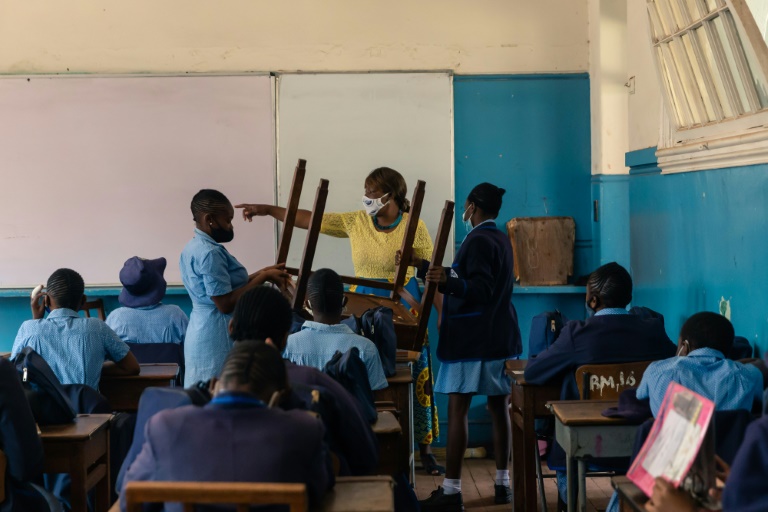
After an exodus of nurses, Zimbabwe now faces losing its teachers as a new British recruitment policy threatens a fresh brain drain in the southern African country confronting a devastated economy.

A British government update posted earlier this month listed teachers who qualified in Zimbabwe as eligible to apply directly for “qualified status” — allowing succesful candidates to go straight into classrooms without further training. 

The new policy, which the British government says will boost “opportunities for highly qualified teachers wherever they trained”, will begin in February 2023 and also applies to teachers who qualified in Ghana, Nigeria and South Africa.

For decades Zimbabwe’s education system was respected as one of the best on the continent — one of the few accomplishments of former president Robert Mugabe’s regime. 

Years of unstinting economic decline blamed mainly on misgovernance have taken off the shine but the country still retains a pool of highly educated and skilled teachers.

Yet, like most public workers, they earn meagre salaries. Some have already moved to other countries including South Africa and Rwanda.

“This is great news,” said Nyasha, a teacher who asked to be identified only by her first name. “The conditions here are unbearable”.

In Zimbabwe teachers can make up to 50,000 Zimbabwean dollars ($75) a month, a tiny fraction of what they can hope to earn in Britain, Zimbabwe’s former colonial ruler. 

Qualified teachers in England, where the cost of living is significantly higher, are paid at least £2,300 ($2,800) per month according to the Department for Education.

But an analysis by Schools Week, an outlet covering the sector, suggested just 73 percent of a key recruiting target for new teachers in English secondary schools would be met this year.

Some in Zimbabwe have warned that the prospect of its teachers relocating to the UK threatened to tip over an already wobbly schooling system. 

– ‘What will happen?’ –

“Where does that leave us as a country?” asked Obert Masaraure, the head of a rural teachers’ union. 

Zimbabwe, with a population of 15 million people of which 41 percent are under the age of 14, has about 150,000 teachers for more than 10,000 schools.

The government says that it is at least 25,000 short of the number required. 

“If we all leave, what will happen to our own children?” asked Tafadzwa Munodawafa, who leads another educators’ union fighting for better pay.  

The education ministry refused to comment saying the government was unaware of the United Kingdom’s recruiting policy.

To try to stem an outflow of doctors and nurses, who have moved aboard en masse in recent years, authorities have made it more difficult to obtain the necessary paperwork to prove their qualifications. 

But some say this misses the point. 

“Government should do the right thing and prioritise paying our professionals well so that we can stem the brain drain,” Dr Henry Madzorera, a former health minister and opposition official, told AFP.

The latest statistics from Zimbabwe’s health watchdog show that over 4,000 healthcare workers resigned from public institutions in the year to November — with many thought to have emigrated.

Burkina army says air-land sweep kills 39 'terrorists', one soldier

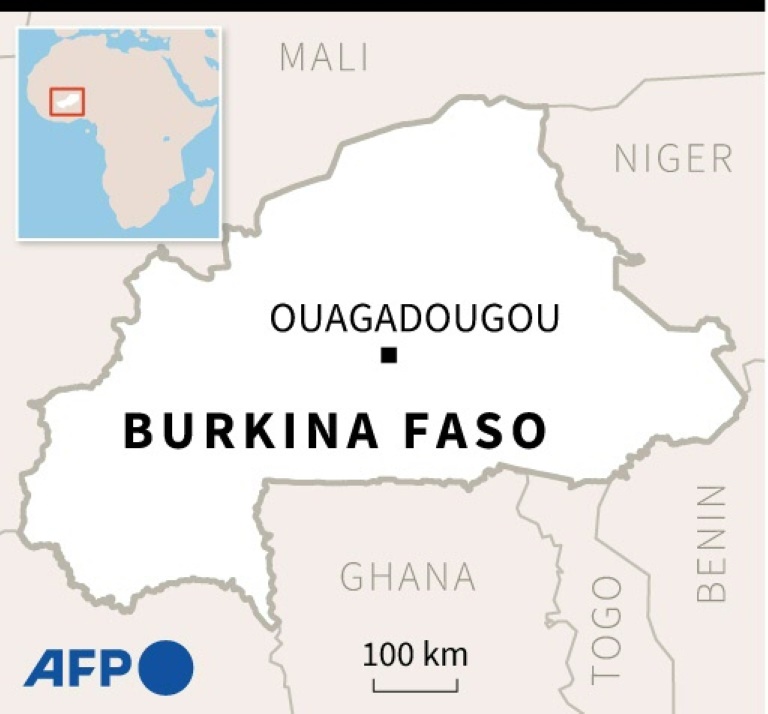
A single soldier and 39 suspected jihadists died in a 10-day security operation in volatile northwestern Burkina Faso, the army said on Friday.

The sweep completed last Saturday was planned to restore security to Banwa province near the Mali border, an area which has been wracked by violence.

“Offensive land operations combined with air strikes and artillery brought major tactical results,” an army statement said.

“Terrorist bases” had been dismantled and their occupants “put out of action”.

The statement listed “at least 15 terrorists killed” on December 2 at Bolomakote in Bondokuy department and a military ambush on December 7 in which 24 suspects were killed near Ouarkoye.

“Unfortunately one soldier lost his life at the very start of the operation. We also registered a dozen soldiers wounded,” the army said.

One of the world’s poorest countries, Burkina has been battling a jihadist insurgency since 2015.

Thousands of civilians and members of the security forces have died and around two million people have been displaced.

Disgruntled army officers have carried out two coups this year in a show of anger at failures to roll back the insurgency.

Captain Ibrahim Traore, who took over as president after a coup on September 30, has declared his intention to win back territory occupied by the “terrorist hordes”.

S. Africa's Ramaphosa set to win ANC leadership vote despite scandal

South Africa’s ruling party went into a closely watched conference Friday that looks set to re-elect Cyril Ramaphosa as leader, despite a tarnishing cash-heist scandal.

Some 4,500 African National Congress (ANC) delegates sporting bright yellow and green T-shirts gathered at an events centre near Johannesburg where they will vote for a new leader on Saturday.

Ramaphosa is bidding to retain the reins of the ANC as the storied party struggles with rifts and declining support after 28 years in power.

Portraying himself as a graft-busting champion, Ramaphosa took control of the ANC in 2017 after his boss Jacob Zuma became mired in corruption.

The party’s majority in parliament means that it also has control over the process to approve the national president.

But Ramaphosa’s clean-hands image has been dented by allegations he concealed a huge cash burglary at his farm rather than report the matter to the authorities.

Despite this, the 70-year-old leader appears on track to win the party leadership election, expected to take place among delegates on Saturday. 

The start of the conference was several hours behind schedule, but a party official said that, despite the delay, voting will be on time, and results will be released around five hours later.

ANC member Tumi Mogotla, 37, a street vendor selling ANC paraphernalia on the fringes of the conference centre, believes Ramaphosa deserves a second term

“My wish is that Ramaphosa wins again. I believe he is the best person to fix corruption in the country,” said Mogotla, standing next to shirts, hats and flags in ANC colours.

But Ntombikayise Shabalala, 52, an unemployed party delegate angered by rolling electricity blackouts, wanted a change of leadership.

– ‘A watershed moment’ –

“We need a strong leadership,” she told AFP.

Outside the imposing conference venue, a group of delegates chanted that Ramaphosa should leave the presidency over the farmgate scandal. They also sang a pro-Zuma song.

On the eve of the conference Zuma announced he was seeking to bring a prosecution against Ramaphosa over a leaked medical report linked to a 1990s arms corruption trial.

But the action is unlikely to hamper Ramaphosa’s chances of securing a second term as ANC leader.

A victory would secure him a ticket to a fresh term as president after the 2024 elections, if his party wins that vote.

Ramaphosa won a reprieve ahead of the conference when the ANC used its majority in parliament to block a possible impeachment inquiry.

He is leading the list of only two nominated presidential candidates so far and is seen to be the most viable in the absence of better options in the 110-year-old party.

The ex-trade unionist fronted the historic negotiations to end apartheid and helped draft the constitution — hailed as one of Africa’s most progressive charters.

Dodging the impeachment bullet likely emboldened his re-election bid, analysts say.

His rival is his former health minister Zweli Mkhize, who is facing corruption allegations linked to Covid-19 funds.

The venerable party was shaped by Nelson Mandela into the main weapon that ended apartheid.

But its image today is stained by corruption and factionalism.

– Declining vote share –

Protests spiralled into looting last year when Zuma was jailed for contempt of court for snubbing a probe into state corruption.

Ramaphosa told a party fundraising dinner Thursday night that the conference was “a watershed moment” which will “determine where South Africa goes not only (for) the next five years but in the next decade and beyond that”.

Over the past decade, the party has lost its grip over key cities in municipal elections.

Its showing in this battlefield slumped last year under 50 percent for the first time.

On a national level, the ANC won the 2019 election with 57.5 percent of the vote, down from 62.15 percent in 2014.

But it remains South Africa’s largest party with 230 out of 400 seats in the National Assembly.

Whoever emerges victorious in the vote will have to defuse anger at crippling power cuts and entrenched poverty.

bur-sn/gw

M23 rebels tighten economic vice around east Congo city

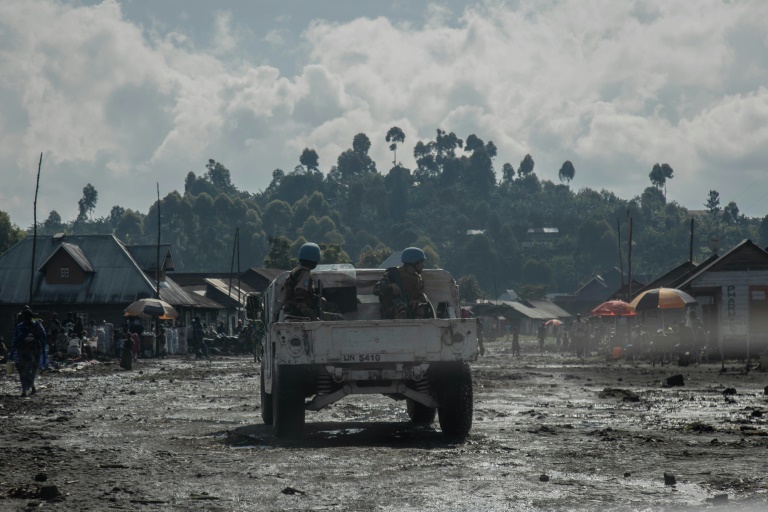
M23 rebels have cut major supply routes to Goma, eastern DR Congo, sending prices in the city surging and sparking fears that a future offensive will cripple its economy.

A Tutsi-led group that lay dormant for years, the M23 took up arms again late last year, seizing swaths of territory in North Kivu province.

Last month, the rebels came within several dozen kilometres of Goma, a commercial hub of over one million people, on the border with Rwanda. 

Their advance has cut off the RN2 highway, which leads to Goma from the north, and with it access to farm produce from North Kivu’s Rutshuru region. 

Goods from nearby Uganda also provisioned Goma from the RN2, before the conflict erupted.

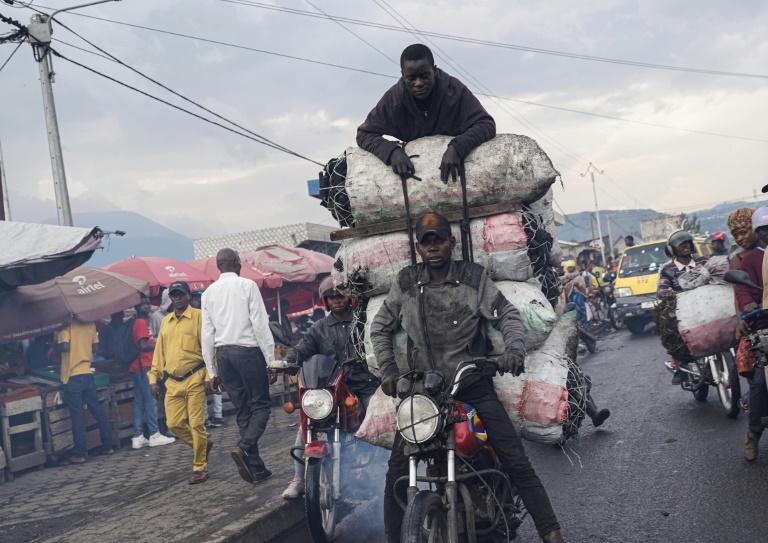
Charcoal trader Pascaline Kahongya, 40, said prices had recently soared for the fuel commonly used to cook in the impoverished Democratic Republic of Congo (DRC).

“When you tell people the price, they go home,” said Kahongya, sheltering from the rain in her storeroom in a Goma market. 

Charcoal sourced from Rutshuru must now take a long road through militia-riddled areas to reach Goma from the west. 

“The kids aren’t going to school at the moment, we can’t pay the fees,” said Kahongya, a mother of eight.

Boats can also reach Goma from Bukavu, a city on the other side of Lake Kivu. And goods can still enter from Rwanda.

But inside the DRC, only the road leading to the city from the west remains viable, slashing trade volumes and driving up prices.  

Some fear M23 rebels plan to block this artery too in order to exert pressure on the government.  

Onesphore Sematumba, a DRC analyst for the International Crisis Group (ICG), said the rebels aim to sweep into Masisi territory — west of Goma — to this end.

“If we can’t negotiate a humanitarian corridor for the city, it will be a catastrophe,” he said.

– ‘Asphyxiated’ –

The M23 first leapt to prominence ago when it captured Goma in 2012, before being driven out and going to ground. 

It re-emerged late last year, claiming the DRC had failed to honour a pledge to integrate its fighters into the army, among other grievances.

In June, the rebels seized Bunagana, a strategic town on the border with Uganda. After a period of calm, the rebels went on the offensive again in October, forcing hundreds of thousands to flee.

Lieutenant-Colonel Guillaume Ndjike, the DRC’s army spokesman in North Kivu, also said the M23 planned to strangle Goma.

The military were making sure Goma “was not totally asphyxiated,” he added, explaining that it was “inconceivable” the army would let goods pass through the RN2, for security reasons. 

An M23 spokesman did not respond to questions.

The DRC accuses its smaller central African neighbour Rwanda of backing the rebels, something US officials and United Nations experts agree with, but which is strongly denied by Kigali.

– ‘We can’t go on’ –

Prices for basic items such as soap surged 20 percent in some Goma markets between October and November, according to a food security group led by the UN’s Food and Agriculture Organisation (FAO) and World Food Programme (WFP). 

Several people interviewed by AFP also said the cost of a cup of beans had tripled from the equivalent of about $0.5 to $1.5. 

About 70 percent of Congolese survive on under $2 a day, according to the World Bank. 

Sitting in front of buckets of soya and sorghum flour in a nearly empty Goma market, Adela Lubala said clients had disappeared. 

Her small business survived the pandemic and the 2021 eruption of the Mount Nyiragongo volcano, which looms over Goma. 

But the current crisis is the worst yet, Lubala said, adding that five of her nine children are no longer studying due to lack of money.

“What you see here is our old stock,” said the 53-year-old, gesturing to her wares. “When we run out, there’s no where else to buy.”

Claudia Ngowa, 36, said she had had to shutter her small soap factory and furlough four employees because she imported raw materials from Uganda along the RN2. 

The entrepreneur also owns a farm in Masisi, but said rampant insecurity makes it difficult to transport goods despite the road remaining untouched by the M23.

“We can’t go on without selling,” she said. “It’s really precarious for everyone.”

Close Bitnami banner
Bitnami