Africa Business

Springboks end 2022 with decisive win over England

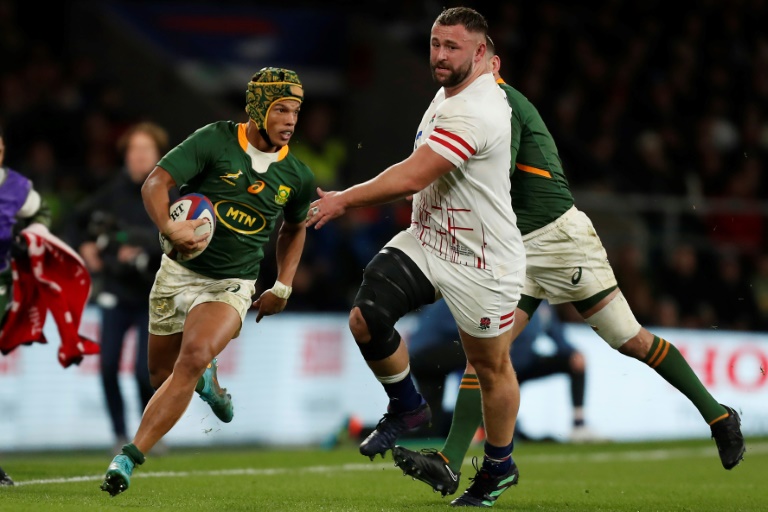
World champions South Africa ended 2022 with a 27-13 win over England in their concluding Autumn Nations Series international at Twickenham on Saturday.

The Springboks outscored England two tries to one, wing Kurt-Lee Arendse and veteran lock Eben Etzebeth both crossing, with fly-half Damian Willemse landing two drop-goals.

South Africa, who overwhelmed England 32-12 in the 2019 World Cup final in Japan before losing by a point at Twickenham last year, held out despite playing the final 20 minutes down to 14 men after Thomas du Toit was sent off for a high tackle on Luke Cowan-Dickie. 

England, who had come from 19 points down late on to snatch a stunning 25-25 with New Zealand last week, then cut South Africa’s lead to 14 points nine minutes from time when replacement back Henry Slade went over for a converted try.

But the Springboks, unlike the All Blacks, held firm for their second victory in four Autumn matches as they ended the calendar year with nine wins from 14 Tests ahead of their 2023 World Cup defence in France.

By contrast, the result meant England had won just one of their November matches as they suffered a sixth defeat in 12 internationals this year.

South Africa’s victory was all more impressive as they were missing several players for a Test taking place outside World Rugby’s international window, with coach Jacques Nienaber making four personnel changes to the side that thrashed Italy 63-21 last week.

England coach Eddie Jones brought back Mako Vunipola and hooker Jamie George to the front row as centre Manu Tuilagi won the 50th cap of an injury-plagued Test career that started back in 2011. 

Jones’ men had won just one of their previous November matches, overwhelming Japan following a shock opening loss to Argentina. 

The Springboks had suffered defeats by Ireland and France during the Autumn campaign — with director of rugby Rassie Erasmus receiving a two-game matchday ban following his social media posts regarding refereeing decisions following those losses.

– Off target –

South Africa’s Faf de Klerk and England captain Owen Farrell were off-target with early penalty chances at a rainswept Twickenham.

Farrell’s miss, from a central position, was all the more surprising as he had been successful with all 15 of his previous goal-kicks during this month’s campaign.

Both men then found their range before Farrell missed again to the dismay of a capacity crowd as the Springboks started to establish territorial dominance.

Their pressure was rewarded when Willemse landed a 30-metre drop-goal just after the half-hour mark and barely 60 seconds later the Springboks had a try.

England fly-half Marcus Smith’s clearing kick was safely gathered in his own 22 by Willemse, who evaded onrushing home full-back Freddie Steward and George with a clever step before finding full-back Willie le Roux on his inside.

Le Roux then released Arendse, sprinting up on his outside, the wing standing up Smith and then speeding past him for a seventh try in seven Tests.

De Klerk missed the conversion but South Africa were 14-3 ahead at the interval when the scrum-half landed a penalty.

Willemse then caught England cold with a second drop-goal a minute into the second half, again from 30 metres.

Farrell was on target with a penalty only for a fresh England ruck infringement to see Tom Curry sin-binned minutes later.

South Africa won possession from the close-range line-out and lock Etzebeth was then driven over for a try between the posts in the 49th minute that De Klerk converted to put the Springboks 24-6 ahead.

England then gave away their tenth penalty of the match and, from just inside the half-way line, the diminutive de Klerk made no mistake with an excellent kick.

Du Toit then saw red and Slade, after a break by replacement wing Jack Nowell, scored a well-worked try that converted by Farrell.
I.Coast 'street general' Ble Goude returns after acquittal

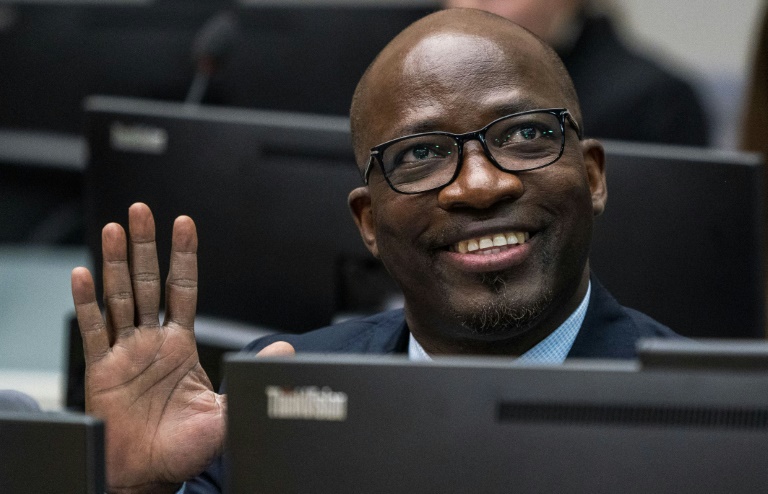
Charles Ble Goude, a key figure in post-electoral violence in Ivory Coast 11 years ago, returned to the country Saturday for the first time in more than eight years, hinting that his political ambitions remained undimmed.

The former right-hand man to ex-president Laurent Gbagbo, dubbed the “street general” for his ability to organise a crowd, was acquitted along with Gbagbo of crimes against humanity charges by the International Criminal Court last year.

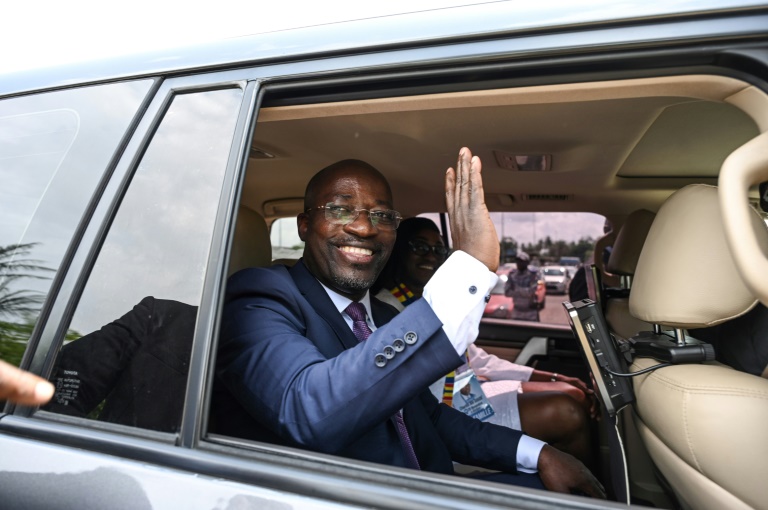
Wearing a suit and tie, the 50-year-old landed at the airport in the economic hub of Abidjan after flying in on a commercial flight from neighbouring Ghana, according to an AFP reporter on the scene.

Later addressing thousands of his supporters in Abidjan, Ble Goude thanked the Ivorian authorities for facilitating his return and said his “duty” was to “support the peace process”.

“I am not passing through, I have come here for good. Your leader has arrived. You are no longer orphans,” he added in a speech regularly marked by rapturous ovations from the crowd.

Ble Goude hailed his supporters in heavy rain from the retractable roof of his car as it travelled through the streets, where people welcomed him with banners and cheers.

The office of Ivorian President Alassane Ouattara, who earlier this year pardoned his predecessor Gbagbo in the name of national reconciliation, has approved the return.

– ‘A nation to build’ –

Around a dozen people including Simone Gbagbo — wife of the ex-president — had gathered to welcome the controversial figure at the airport.

“We are very happy, we waited for so long. We have a nation to build… with your energy, I am sure you are going to play your part with us,” she said at the event in Abidjan.

The West African state remains deeply scarred by the 2010-11 conflict, which erupted after Gbagbo refused to concede electoral defeat to Ouattara.

Some 3,000 people were killed, with Gbagbo arrested in April 2011. Ble Goude was detained in Ghana in 2013 and transferred to The Hague the following year before his acquittal in March 2021.

Ble Goude is the last major pro-Gbagbo figure from the post-electoral crisis to return to Ivory Coast.

Security was tight around the airport on Saturday. A few hours before Ble Goude’s arrival, police shooed away most journalists, and a planned press statement was cancelled.

In 2015, he launched his own political party, the Pan-African Congress for the Justice and Equality of Peoples. Like Simone Gbagbo, he has not joined Laurent Gbagbo’s African Peoples’ Party — Ivory Coast.

Ibrahim Sorie Yillah, vice president of the ICC’s victims’ fund, said Ble Goude’s return was a significant moment but did not draw a line under the post-electoral violence.

“A large number of victims of crimes committed during that period continue to wait for reparations for the harm they suffered,” he said.

Equatorial Guinea's poor lose hope in promised social housing

Brand new homes intended for Equatorial Guinea’s lower-income families have cropped up across the capital Malabo, but shanty town residents say they are going to the middle class and wealthy instead.

President Teodoro Obiang Nguema Mbasogo on Saturday won a sixth term in office, a much-expected result in an authoritarian country with next to no political opposition.

The 80-year-old has been in power for 43 years — the longest rule of any leader alive in the world today except monarchs.

During his election campaign in 2009, Obiang promised “social housing for all” in the oil-rich central African state.

Obiang planned to provide enough housing to raise Malabo’s shanty towns, including Nubili, a mass of tin-roofed shacks along narrow paths that is home to thousands of families in the heart of the city.

Since, some 20,000 housing projects have sprung up in the country of around 1.5 million residents.

But sitting outside his shack in Nubili, 70-year-old Julio Ondo said none of them appeared to be for people like him.

“They’ve made fools of the poor,” he said. I’ve lost all hope of one day living in “dignified housing”.

Most people live in poverty in Equatorial Guinea, the World Bank estimates, while wealth is concentrated in the hands of just a few families.

– ‘I’ll be dead’ –

In some parts of Malabo today, lines of identical apartment blocks have sprung up as far as the eye can see, built with the profits of high international oil prices.

In the suburb of Buena Esperanza, some 2,300 small detached homes appeared during the 2010s, supposed to welcome families from Nubili.

But today, shiny four-wheel drives and other expensive cars line the neighbourhood’s streets, appearing to indicate the wealth of its new residents.

The homes are being sold for around $15,500, payable in monthly instalments of $78.

But that is astronomical for many in Nubili.

Plantain farmer Antonio Omecha, 72, is one of many who had hoped the housing plan would allow him to leave a slum plagued with disease and frequent fires.

He said he did receive a housing coupon to go and live in Buena Esperanza.

“But we had to pay 1.5 million francs (more than $2,350)” upfront first, he said.

It was impossible on his monthly income of $30.

His neighbour Tobias Ondo, 65, said the new homes were simply too expensive.

“Do you really think someone who works seven days and barely makes 2,000 francs can afford to own such a home?” he said.

“I’ll be dead before I go and live in the public housing promised by the president.”

– ‘Powerful’ landlords –

Equatorial Guinea is the region’s third richest country, with a GDP per capita of $8,462 last year, after the Seychelles and Mauritius, the World Bank says.

But in 2006, when the oil boom was in full swing, more than three quarters of the population lived in “extreme poverty”, or on less than $1.90 a day, the international financial body said. There have been no new figures since.

The country ranked 172 out of 180 in Transparency International’s 2021 Corruption Perceptions Index.

During his election campaign at the start of the month, Obiang admitted that social housing intended for “people without great means” had been snapped up instead by “people able to build their own home”.

But he did not offer a solution.

Martinez Obiang, of micro-financing firm Atom Finances, says he thinks the homes should have cost no more than the equivalent of $780, payable in tiny monthly instalments of less than $3.

Sociologist Nsogo Eyi said the new homes, including those in Buena Esperanza, did not seem to be serving their intended purpose.

“Some powerful men have bought them to rent them out, including to expats,” he said.

AFP reached out to several of these new owners, but they refused to comment.

sam-lad-gir-tg/ah/imm

Benin troops kill four gunmen near border

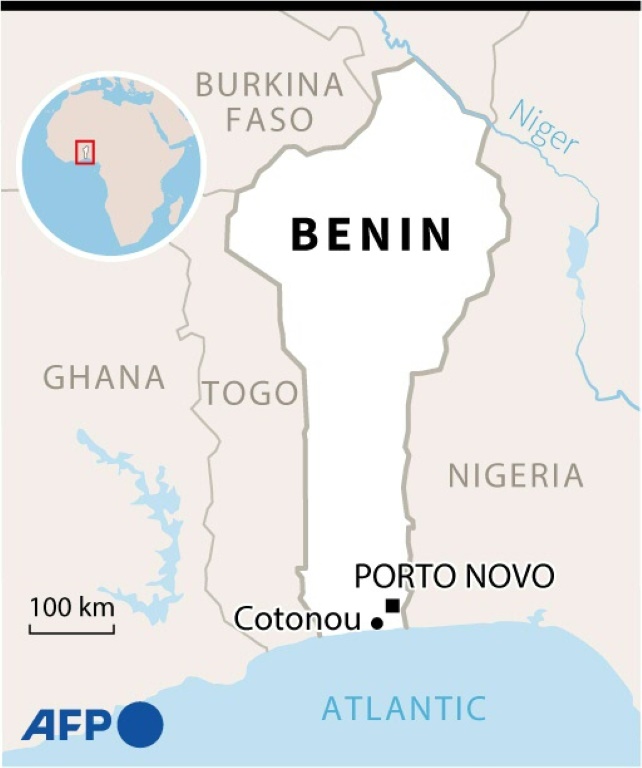
Benin forces have clashed with gunmen near the country’s northern border with Burkina Faso leaving four attackers dead, the army said.

It did not identify a specific group, but Gulf of Guinea states Benin, Togo, Ghana and Ivory Coast are facing a growing threat from Sahel jihadists over their northern borders.

The army said a dozen gunmen attacked a military post early Friday in Kaobagou near the border, but troops resisted and pushed them back in a counter-offensive.

“After fleeing, the enemy left behind four bodies, and a large amount of weapons and ammunition,” the army’s statement said.

The border area is also troubled by armed smuggling gangs.

Benin forces say they have faced more than 20 incursions since 2021 while neighbouring Togo has suffered at least five attacks in that time.

The Sahel conflict began in Mali in 2012 and spread to Burkina Faso and Niger. 

Gulf of Guinea states met in Ghana’s capital Accra earlier this week to discuss boosting cooperation with European partners to contain the spillover from conflicts in Burkina Faso and Niger.

Across the three Sahel nations, thousands of people have been killed, more than two million displaced and devastating damage has been inflicted on three of the poorest economies in the world.

Roadside bomb kills four Burkina troops in north: army

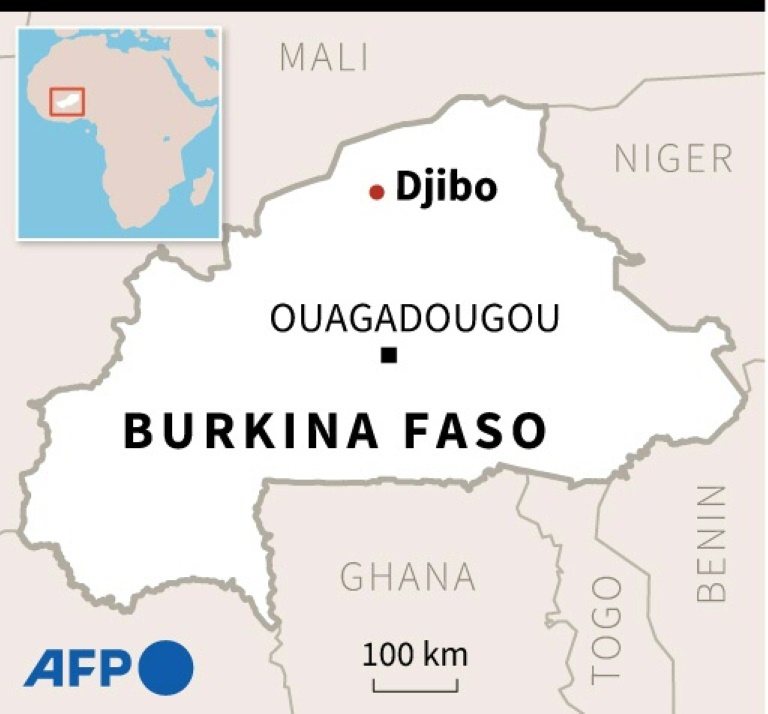
A roadside bomb killed four troops in the north of Burkina Faso, an area wracked by a jihadist insurgency for years, the army said on Saturday.

The troops were killed when an improvised explosive device went off as an army escort drove along the Bourzanga-Kongoussi road, the army said in a statement, adding that one person was also wounded.

The troops were returning after having escorted an aid convoy into the town of Djbo, a security source told AFP.

One of the world’s poorest countries, Burkina has been struggling with a jihadist offensive since 2015.

Thousands of civilians and members of the security forces have died and around two million people have been displaced.

Disgruntled army officers have carried out two coups this year in a show of anger at failures to roll back the insurgency.

The first, in January, saw a military junta led by Lieutenant-Colonel Paul-Henri Sandaogo Damiba overthrow elected president Roch Marc Christian Kabore.

The second, in September, saw Captain Ibrahim Traore come to power as he and his supporters ousted Damiba.

Traore has been appointed transitional president with the declared aim of taking back swathes of territory held by the jihadists.

I.Coast's 'street general' Ble Goude returns after acquittal

Charles Ble Goude, a key figure in post-electoral violence in Ivory Coast 11 years ago, returned to the country Saturday for the first time in more than eight years, an AFP reporter said. 

The former right-hand man to ex-president Laurent Gbagbo, dubbed the “street general” for his ability to organise a crowd, was acquitted along with Gbagbo of crimes against humanity charges by the International Criminal Court last year.

Wearing a suit and tie, the 50-year-old Ble Goude landed at the airport in the capital Abidjan after flying in on a commercial flight from neighbouring Ghana, according to an AFP reporter on the scene.

Around a dozen people including Simone Gbagbo — wife of the ex-president — had gathered to welcome the controversial figure.

Ble Goude soon disappeared into a vehicle and out of sight.

Members of his circle said he would head to the capital’s district of Yopougon for a “party” — not a “political gathering” — in the afternoon.

Security was tight around the airport. A few hours before his arrival, police shooed away most journalists, and a planned press statement was cancelled.

President Alassane Ouattara’s office has approved the return.

The West African state remains deeply scarred by the 2010-11 conflict, which erupted after Gbagbo refused to concede electoral defeat to Ouattara.

Some 3,000 people were killed.

Gbagbo was arrested in April 2011.

Ble Goude was detained in Ghana in 2013 and transferred to The Hague the following year.

S.African parties protest parole for anti-apartheid hero's killer

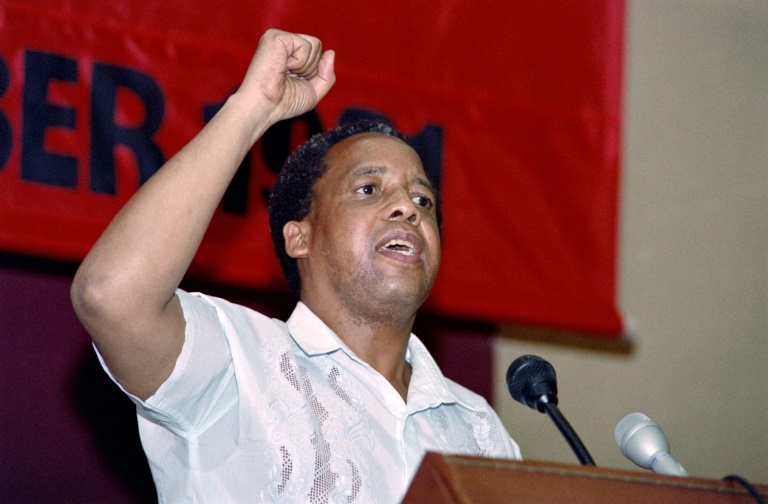
South Africa’s ruling party protested outside a top court Saturday after it ordered the release of a Polish immigrant whose killing of an anti-apartheid hero in 1993 almost sparked civil conflict.

The shooting of Chris Hani took the country to the brink of a race war as negotiations to end apartheid entered their final phase.

The Constitutional Court in Johannesburg on Monday ordered the release on parole of Janusz Walus, 69, who has served nearly three decades of a life sentence for the murder.

On Saturday, the ruling African National Congress (ANC) party and the South African Communist Party (SACP) — both of which have ties to Hani — led a gathering outside the court to protest the decision.

Some protestors sported T-shirts with Hani’s face on them, chanting anti-apartheid protest songs.

“Obviously I am outraged,” demonstrator Lenin Mpesi told AFP.

“I don’t see why that man, Walus, needs to be released.”

“How Hani died is still undisclosed… We don’t know who paid him (Walus) and what was the reason behind it.”

Senior ANC member Panyaza Lesufi said more demonstrations were planned for his release — likely next week.

“Even when he leaves that prison… he must know South Africans are not happy,” he told local media outside the court.

“We have the right to send the message to him that you assassinated our hero. He is a murderer, and he must know that.”

South Africa’s Chief Justice Raymond Zondo on Monday ordered the country’s correctional services minister to place Walus “on parole on such terms and conditions as he may deem appropriate”.

The right-wing gunman killed Hani, a hugely popular leader of the SACP and fierce opponent of the apartheid regime, one year before South Africa’s first multi-racial elections.

Hani was also the chief of staff of Umkhonto we Sizwe, the armed wing of the ANC.

He was shot dead in the driveway of his house on April 10, 1993, in Boksburg, a suburb east of Johannesburg. The incident led to protests and rioting in black townships.

DR Congo to hold next presidential polls in December 2023

The Democratic Republic of Congo will hold its next presidential polls on December 20, 2023, the country’s electoral commission said Saturday.

The announcement comes as rebels have advanced in the restive east of the African country, displacing tens of thousands of people from their homes.

The electoral commission’s president said “persisting insecurity in some parts of the territory” would be a challenge to holding a “free, democratic and transparent” vote.

In the DRC, the presidential poll is held at the same time as parliamentary, provincial and local elections.

The president-elect would then take office in January 2024.

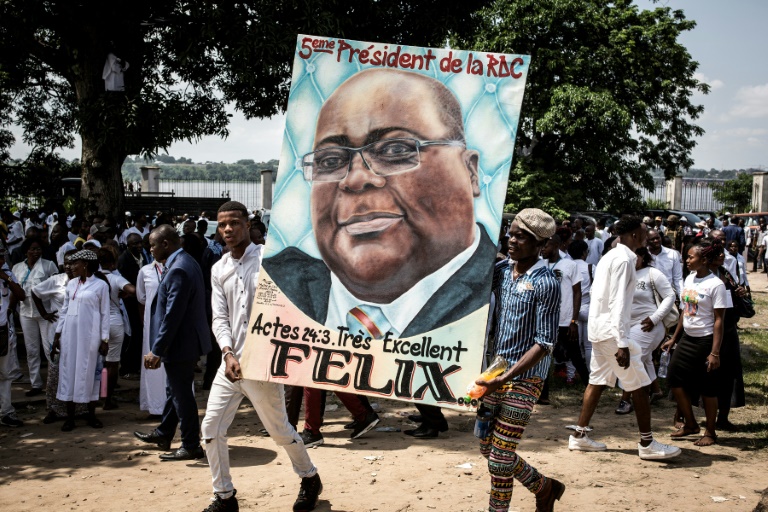
President Felix Tshisekedi came to power in January 2019, succeeding Joseph Kabila after 18 turbulent years as leader.

It was the country’s first peaceful handover of power.

He has already announced his intention to run for a second term, despite clashes over the results.

Other possible contenders could include Martin Fayulu, the runner-up in the 2018 presidential polls who claims he was deprived of a victory in the vote.

There has been no immediate announcement from former prime minister, Adolphe Muzito, and the ex-governor of the southern region of Katanga, Moise Katumbi, who are also seen as potential candidates.

Augustin Matata Ponyo, another ex-premier, has said he will run.

Ponyo last year went on trial on charges he embezzled public funds, but the constitutional court ruled it did not have the authority to judge him.

The court’s line-up has however now changed, and has said it could try him.

– Violent elections past –

Tshisekedi’s inauguration ceremony in 2019 capped more than two years of turmoil sparked by Kabila’s refusal to step down when he reached the constitutional limit on his term in office.

The last two presidential elections before that, in 2006 and 2011 — both won by Kabila — were marred by bloodshed and dozens died in a crackdown on protests after he chose to remain in office in 2016.

A country the size of continental western Europe, the former Belgian colony lived through two regional wars in 1996-97 and 1998-2003.

The March 23 (M23) rebel group took up arms in late 2021 after years of dormancy, claiming the DRC had failed to honour a pledge to integrate its fighters into the army, among other grievances.

After four months of relative calm, the conflict erupted again on October 20 and the rebels made a push towards Goma. 

The fighting has dashed relations between the DRC and Rwanda, with Kinshasa accusing its smaller neighbour of backing the M23 — something UN experts and US officials have also said. Kigali denies the charges.

Tshisekedi and Rwandan Foreign Minister Vincent Biruta met in Angola on Wednesday, agreeing to a cessation of hostilities in eastern DRC from Friday evening.

M23 rebels were to withdraw from “occupied zones”, failing which an East African regional force would intervene.

But the rebels, a largely Congolese Tutsi militia, said Thursday the ceasefire “doesn’t really concern us”, and called for “direct dialogue” with DRC’s government.

The frontlines seemed quiet on Saturday morning, but residents in the eastern DRC remained sceptical that it would hold.

Morocco's Belgian-born players prepare for 'special' World Cup match

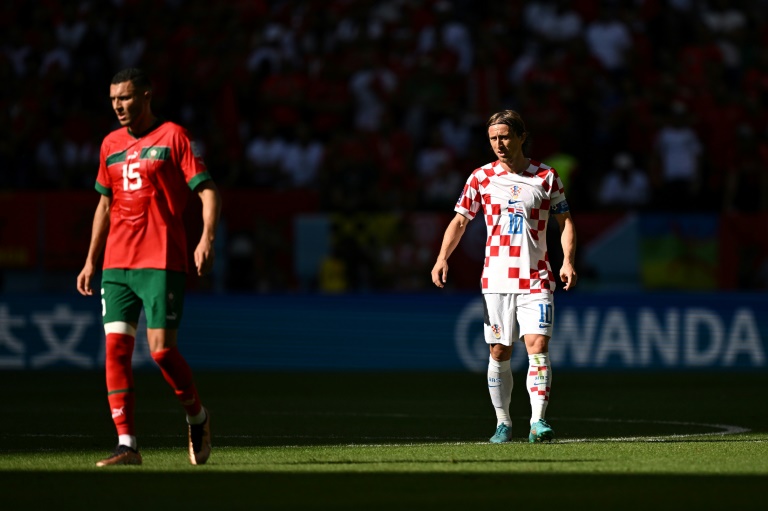
Morocco coach Walid Regragui said his team would try and draw on the “special emotions” of their Belgian-born players when they take on Roberto Martinez’s side at the World Cup on Sunday.

The north Africans drew their opening game with Croatia 0-0 and victory over Belgium would put them on the brink of reaching the knockout stage for the first time since 1986.

Morocco have four players in their squad who were born in Belgium including Selim Amallah, who started against Croatia and plays his club football for Standard Liege.

Bilal El Khannouss and Anass Zaroury, who both played for Belgium’s youth teams, and Ilias Chair were also born in the European country.

“They have a special emotion and a positive energy and you have to try and draw from that,” Regragui said at his pre-match press conference on Saturday.

“It’s a special match for them and we all know that.

“But what we have to do is try and put that into context…. I almost brought one of those players into the press conference and then I realised I shouldn’t do that as it would put pressure on them.”

Fourteen of Morocco’s 26-man squad were born outside the country, including star players Hakim Ziyech and Achraf Hakimi, who were born in the Netherlands and Spain.

“You need to represent the country that you feel,” said Belgium coach Martinez, speaking in his press conference.

“At club level you play for different reasons. Sometimes it’s a coach, sometimes it’s a project, sometimes it’s a challenge, sometimes it’s where you are in your career.

“When you play for your national team it comes from the heart.”

Morocco are sweating on the fitness of full-backs Hakimi and Noussair Mazraoui but Regragui said they could both be ready to start at the Al Thumama Stadium.

“We must decide whether we take the risk to start them, but we will see tomorrow,” he said.

Belgium kicked off their World Cup campaign with a 1-0 win over Canada, despite being outplayed for long periods, in what looks a wide-open Group F.

“We’re in the group of death,” said Regragui. “Everyone thought Canada would be an easy team but we can see now that won’t be the case.

“It’s the group of death and we want to get out of it.”

Belgium are still ranked second in the world but many of their “golden generation” of players are in their 30s and they struggled with the pace of a young Canada side.

However, Regragui was keen to insist that his team were going into the game as underdogs.

“Belgium are the favourites,” he said. “They have an excellent coach. They have excellent players.

“(Kevin) De Bruyne, (Eden) Hazard, (Axel) Witsel. They have great players on the bench — (Romelu) Lukaku or (Michy) Batshuayi. Let’s call a spade a spade, they’re the favourites.”

Army foils coup bid in Sao Tome: prime minister

The military has foiled a coup attempt in Sao Tome and Principe, the prime minister of the island nation off the western coast of Africa said in a video message confirmed by AFP on Friday.

Four men, including the former president of the outgoing National Assembly Delfim Neves, tried to attack army headquarters overnight, Prime Minister Patrice Trovoada said in a video message confirmed by the justice minister.  

He said Neves was one of several people arrested.

A resident speaking to AFP anonymously by phone said she had heard “automatic and heavy weapons fire, as well as explosions, for two hours inside the army headquarters” in the nation’s capital.

In the video message, authenticated and sent to AFP by the press office of Sao Tome’s prime minister, Trovoada is seen sitting at a desk saying he wants to “reassure” the population and “the international community”. 

“There was an attempted coup d’etat which began around 00:40 am and… ended shortly after 6 am,” he said, adding that “armed forces were attacked in a barracks.”

“The situation in the barracks is under control, but we must be sure that the country is completely under control,” Trovoada said.

– Soldier taken hostage –

He said a soldier had been “taken hostage” and wounded but “would be able to resume his activities in a few days”.

Military personnel were deployed overnight to secure the homes of members of the government and the president, according to the resident who spoke to AFP.

She added that the city was now calm: “People are going about their normal business but schools have asked parents not to send their children.”

Trovoada said: “The operation was ordered by certain personalities from the country in complicity with certain others from within the army.

“The four attackers have been arrested and have denounced certain others, including Delfim Neves and Arlecio Costa.”

Costa is a former Santomean mercenary connected with South Africa’s Buffalo Battalion security group, which was dismantled by Pretoria in 1993. He was also arrested and accused of leading a coup bid in Sao Tome in 2009.

But a group of accomplices who waited aboard vans outside the barracks had not been caught, Trovoada added.

The prime minister announced an inquiry was under way and said the army was “obliged to clarify the situation if there are other ramifications within the armed forces”.

A former Portuguese colony in the Gulf of Guinea, the nation of some 215,000 people is desperately poor and depends on international aid, but is also praised for its political stability and parliamentary democracy.

Neves lost his position on November 11 when the new chamber was installed following elections in September, won with an absolute majority by Trovoada’s centre-right Independent Democratic Action (ADI) party.

Neves also failed in an attempt to be elected president, losing to the ADI’s Carlos Vila Nova in July last year.

The ADI is one of two major parties that have vied to run the nation since independence in 1975, along with the Movement for the Liberation of Sao Tome and Principe-Social Democratic Party (MLSTP-PSD).

The ADI’s electoral triumph saw ex-prime minister Trovoada return to the top job for a third time.

Close Bitnami banner
Bitnami