Africa Business

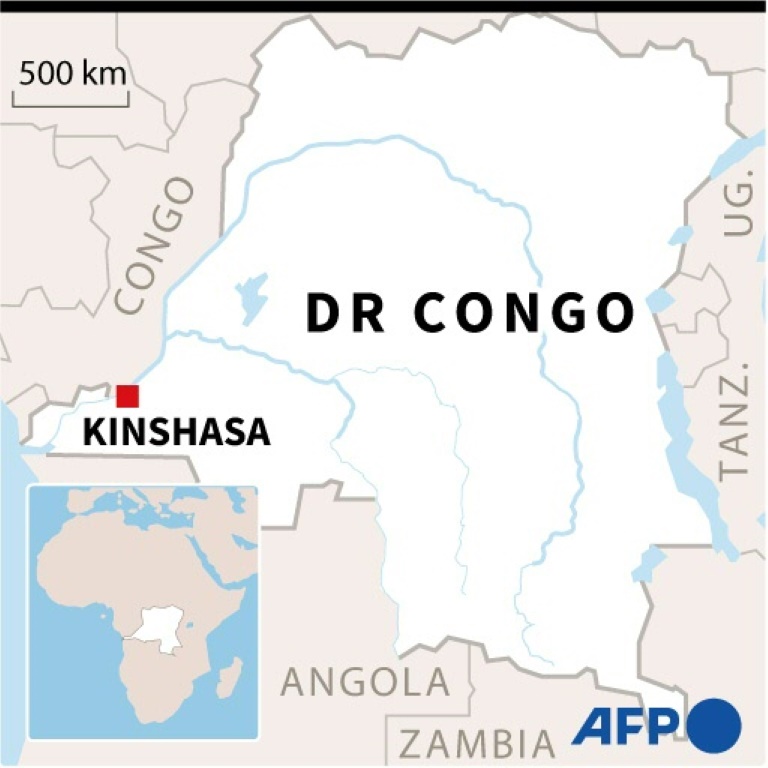
40 Burundi rebels killed in east DR Congo

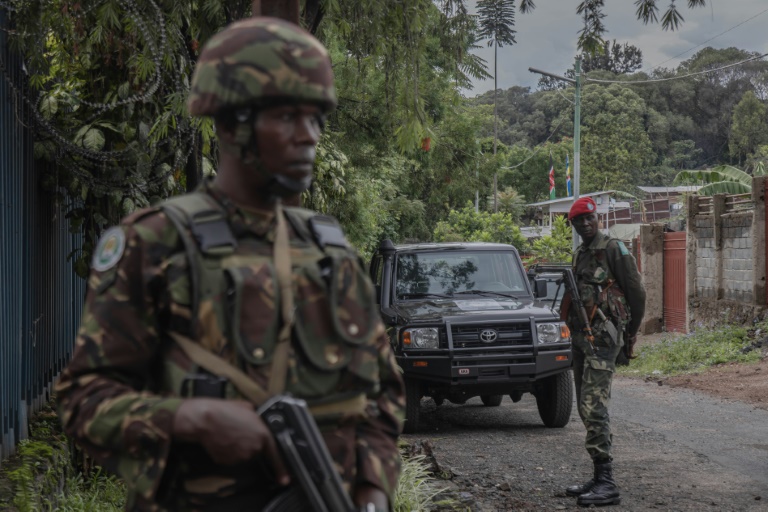
Forty Burundian rebels have been killed in a joint offensive by the militaries of Democratic Republic of Congo and Burundi in eastern DRC, a Congolese army spokesman said on Sunday. 

The two armies “carried out a high-intensity offensive operation” against Burundian rebels of the National Liberation Forces (FNL), Lieutenant Marc Elongo-Kyondwa said in a statement. 

The enemy “suffered a heavy loss of men and equipment: 40 attackers neutralised (killed),” he said. 

The two armies “dislodged” the FNL “from all the four hills overlooking the town of Nabombi,” considered a command post of the FNL’s self-proclaimed general Aloys Nzabampema, he added. 

The Congolese army called on local people to cooperate with the regular forces and “young people to dissociate themselves from armed groups”, the statement quoted Congolese General Major Ramazani Fundi, commander of operations in the southern part of the province, as saying. 

The FNL is a branch of Agathon Rwasa’s former rebel group, now the main political opposition in Burundi. 

Since August, Burundian soldiers charged with fighting armed groups have been officially present in DRC’s South Kivu region, as part of the Community of East African States (EAC) force. 

In June, the EAC decided to set up a regional force, comprising the Kenyan and Ugandan armies alongside Congolese soldiers in North Kivu and Ituri, the South Sudanese army in Haut-Uele and Burundians in South Kivu.  

Kinshasa, which accuses Rwanda of actively supporting M23 rebels in North Kivu, has refused to allow Kigali to take part in the force. 

For nearly 30 years, the east of the DRC has been plagued by violent armed groups, some local, others made up of militiamen from neighbouring countries. 

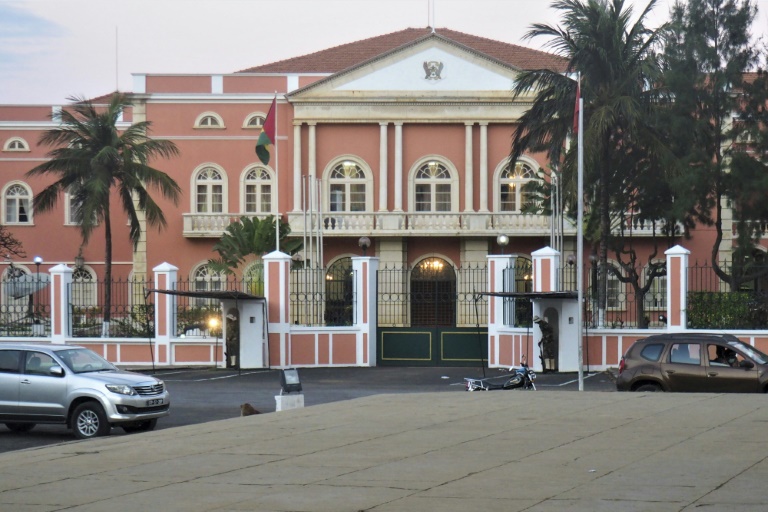
Four killed in Sao Tome's failed coup bid: state media

Four people were killed in a failed coup attempt on Sao Tome, the state news agency STP-Press said on Sunday reporting a toll from the armed forces chief of staff.

The military, which on Friday thwarted a coup bid in the tiny Portuguese-speaking archipelago off central Africa considered a beacon of democracy, announced “four human lives were lost” after “exchanges of fire” at a military site.

Prime Minister Patrice Trovoada told STP-Press that “four citizens” and 12 soldiers and fighters from South Africa’s officially disbanded Buffalo Battalion were involved in the attempted overnight putsch.

The army on Sunday said 12 serving soldiers were involved.

They were “neutralised and captured” after trying to storm military sites and three of them died from their wounds despite the army’s efforts to preserve their lives by taking them to hospital, Trovoada added.

One of the victims was Arlecio Costa, who once served as a mercenary in apartheid South Africa’s Buffalo Battalion, disbanded in 1993. Trovoada accused him of being one of the ringleaders.

The army said Costa — also held in 2009 over accusations of plotting a coup — died following his arrest on Friday after he “jumped from a vehicle”, without giving further details.

Trovoada said the former president of the outgoing National Assembly Delfim Neves was also one of several people arrested after the attack on army headquarters, in a Friday video message confirmed by the justice minister.

A judicial source told AFP two inquiries had been launched to investigate the alleged attack on a military barracks in Sao Tome and the “torture” and “murder” of four suspects.

– ‘Subversion’ –

The government on Sunday condemned what it called a “violent attempt to subvert the constitutional order”, saying the deaths and the coup attempt would be investigated.

It added that an international team was coming to the archipelago to support investigators and called on the hospital services to look after the victims’ bodies.

A resident speaking to AFP anonymously by phone said she had heard “automatic and heavy weapons fire, as well as explosions, for two hours inside the army headquarters” in the nation’s capital.

In the video message, authenticated and sent to AFP by the press office of Sao Tome’s prime minister, Trovoada is seen sitting at a desk saying he wants to “reassure” the population and “the international community”. 

Trovoada initially said a soldier had been “taken hostage” and wounded but “would be able to resume his activities in a few days”. 

A former Portuguese colony in the Gulf of Guinea, the nation of some 215,000 people is deeply poor and depends on international aid, but is also praised for its political stability and parliamentary democracy.

Kenya Sevens appeal for donors to cover unpaid salaries

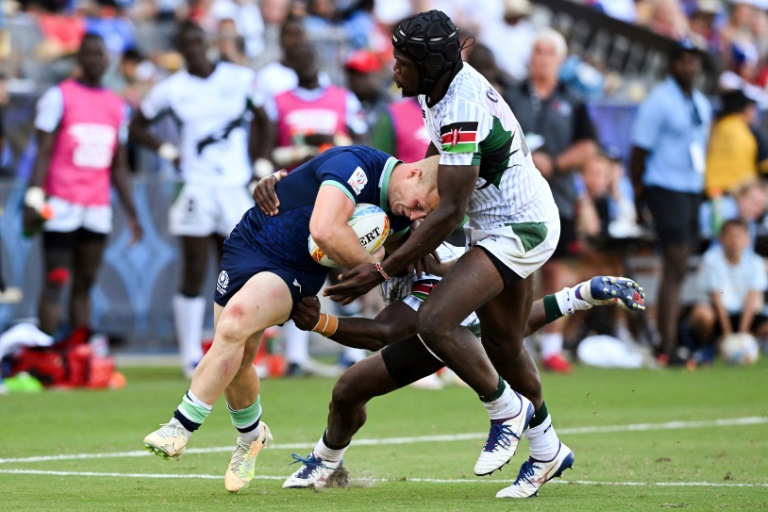
Kenya’s Rugby Sevens launched a public appeal for donations on Sunday, claiming the team has not been paid in months and players badly needed money ahead of several international matches.

A number of Shujaa stars shared the fundraiser on social media and described a “desperate situation” in which players were eating into their savings to cover daily costs.

“As some of you may have heard we are now going on our third month without pay,” the Shujaa’s centre Willy Ambaka posted on Twitter.

“Our lives and those of our loved ones have been greatly strained, even in our persistent effort to give you the desired outcomes on the pitch.”

The appeal comes as Kenya prepares for the Dubai Sevens series on December 2-3 and the Cape Town fixture on December 9-11.

“We are struggling but we have to represent you people at the Dubai and Capetown Legs,” Billy Odhiambo posted on Twitter.

Kenya head coach Damian McGrath spoke of his team’s financial woes in October ahead of their departure for the Hong Kong Sevens where they lost every match.

The team were “fighting to find a field we can train in” and lacked a proper gym let alone the support and amenities enjoyed by their global competitors.

“I knew life wasn’t going to be straightforward here in Kenya but I had no idea that these last couple of months would be so difficult,” said the Englishman who signed a two-year contract with Kenya in May.

“They’re so proud to represent the country, they push themselves hard, and yet they can’t always get to train because they don’t have the money to get here.”

Nairobi senator Edwin Sifuna pledged 100,000 Kenyan shillings ($820) to the Shujaa and assured help was on the way with the issue being raised in parliament last week.

“We are proud of the work you are doing despite the difficulties,” he said on Twitter on Sunday.

Kenya Sevens have struggled to attract sponsorship and it is not the first time the side have been strapped for cash.

The team publicly protested against unpaid salaries in 2018 during the World Rugby Sevens Series in Paris, prompting the government to withdraw its sponsorship deal for the team.

Ceasefire holding in eastern DR Congo, residents say

The frontlines between government troops and M23 rebels remained calm in the east of the Democratic Republic of Congo on Sunday for a second day running, local residents told AFP, after a ceasefire came into force.

DRC President Felix Tshisekedi attended a regional mini-summit in Luanda on Wednesday, agreeing a deal on the cessation of hostilities in DRC’s war-torn east from Friday evening.

M23 rebels, who have seized swaths of territory in recent weeks, were to withdraw from “occupied zones”, failing which the East African regional force would intervene.

Local people reported no sign of a rebel pullout by midday Sunday.

Clashes had continued right up to the ceasefire deadline north of the provincial capital Goma, but on Sunday both sides were holding their positions, locals told AFP by telephone.

On Saturday, Mai Mai militia and the Democratic Forces for the Liberation Rwanda (FDLR) fought with M23 for control of a zone northeast of the provincial capital Goma where the national army is not present.

As a result M23 took over the town of Kisharo, 30 kilometres (18 miles) from the Uganda border, residents said.

AFP was unable to independently confirm the accounts from the locals.

The March 23 group had been dormant for years, but took up arms again late last year accusing government of failing to honour a disarmament deal.

M23 has overrun large tracts of mountainous Rutshuru territory north of Goma, a city of one million which they briefly captured 10 years ago.

The DRC accuses Rwanda of supporting the rebels — charges Kigali denies and in turn alleges Kinshasa works with the FDLR, a Hutu faction present in the sprawling country since the 1994 genocide of Tutsis in neighbouring Rwanda.

The M23 is among scores of armed groups that have turned eastern DRC into one of Africa’s most violent regions.

Many are legacies of two wars before the turn of the century that sucked in countries from the region and left millions dead.

Qatar's migrant workers enjoy World Cup on the cheap

Shafeeq Saqafi paid $3 for the Argentina shirt he proudly wore when he sat with 15,000 other migrant workers in a hidden corner of Doha to watch Lionel Messi’s side salvage their World Cup.

Messi’s goal in the 2-0 win over Mexico late Saturday brought the biggest crowd seen at the Asian Town stadium to their feet and Saqafi beat his chest in delight.

Saqafi and his friends bristle at European media suggestions that they are “fake fans” but readily acknowledge that they buy counterfeit team shirts for $3 or less, instead of the $90 which official kit costs.

“I could not afford to have the letters printed on the back, but the shirt was something I really wanted,” said the 32-year-old hotel worker who earns just over $400 a month and sends more than half of that back to his family in Bangladesh.

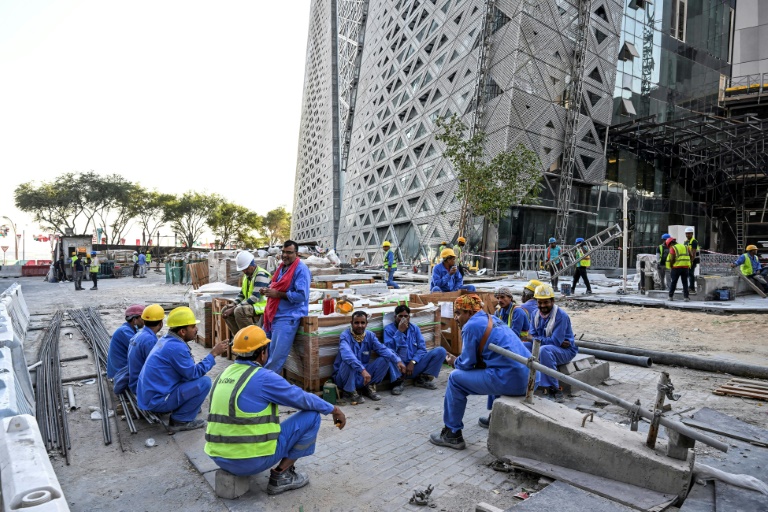
Saqafi is one of the 2.5 million foreign workers who have been the foundation of Qatar’s economic miracle — helping pump oil and gas, building its World Cup stadiums and infrastructure and staffing the dozens of new hotels that have opened in the past five years.

Rights groups say the workers have been massively abused. 

Qatar responds by citing the increased safety standards and salary protections in factories and at outdoor work sites, and reduced working hours in Qatar’s notoriously hot summer.

– Hindi pop and football – 

The stadium, in the Asian Town shopping complex on the outskirts of Doha, has become a daily draw for thousands of the poorest workers who live in nearby dormitories away from Doha’s glitzy shopping malls and restaurants.

An Indian woman DJ revs up the overwhelmingly male and South Asian crowd before each match with Hindi pop songs and Bollywood videos.

Many, like Saqafi, wear Argentina shirts. For most, the fan zone on the cricket pitch is the nearest they will get to the World Cup. The legal minimum wage is 1,000 riyals (around $260), which many still earn.

A few thousand 40-riyal ($10) World Cup tickets were put on sale and quickly snapped up. Those remaining are too expensive for the average construction worker in Qatar. 

Buying an official team shirt is also out of the question. So Saqafi and many of his friends bought one of the high quality fakes on sale in backstreet stores.

Yaseen Gul, who has worked for a Doha electrical firm for a decade, said he comes to the stadium “to enjoy myself — cheaply.”

“Qatar is very hard. The work is hard. In summer it is very hot,” he said. “But my salary has improved and I will not go home.”

Shaqeel Mahmoud said he could not afford to buy match tickets and he had to leave the Argentina game before the end because he had to go work.

A cup of hot milky tea at the stadium beverage stand costs $1, but many workers said this was too much and there were no queues. Hundreds line up at the FIFA Fan Festival 10 kilometres (six miles) away to pay $13.50 for a beer.

“There is no pressure to buy anything so I am grateful for that,” said Shaqeel.

Odds stacked against African teams at World Cup, says Ghana coach

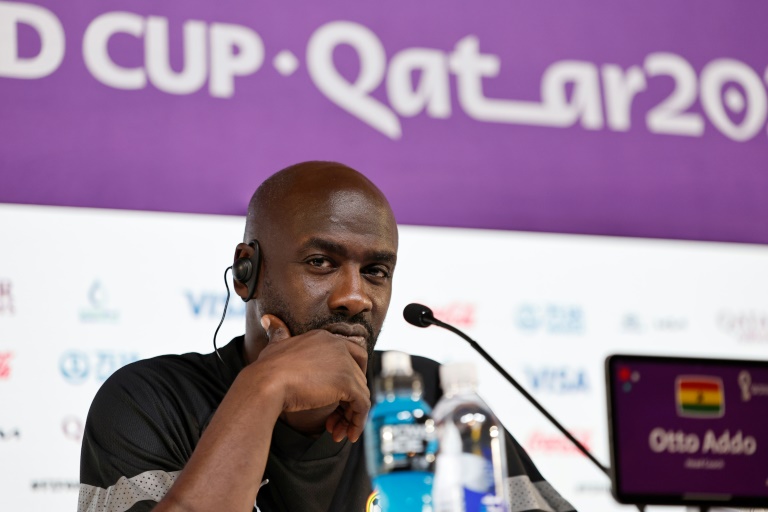
Ghana coach Otto Addo said Sunday the chances of an African team reaching the latter stages of the World Cup will remain limited until the continent is awarded more places at the tournament.

No African side has ever gone beyond the quarter-finals at a World Cup, although Ghana were a missed penalty away from reaching the last four at South Africa in 2010.

Addo, speaking on the eve of his team’s Group H match against South Korea, said Africa, with 54 teams, deserved more slots.

“There was never a point where everybody had an equal chance at the start. Never in FIFA history,” Addo said in Doha.

“It’s very, very difficult if you have five slots to get far. If you have 12 or 14 slots — I don’t know how many Europe get — the probability that a team will get further is much, much higher.”

Thirteen of the 32 nations present in Qatar come from Europe. Asia has six representatives, with South America and the CONCACAF region sending four each.

Senegal are the only African side to have won a match at the Qatar World Cup. None of the five African teams who took part four years ago in Russia made it out the group stage.

“Everybody still has chances, some more, some less, but I’m hoping and praying at least one or two (African) teams can advance to the next stage,” said Addo, who played for Ghana when they made the last 16 on their World Cup debut in 2006.

The Black Stars play South Korea in their second match on Monday after losing their opening game 3-2 to Portugal.

Addo had criticised the performance of American referee Ismail Elfath, insisting the penalty Portugal were awarded for a challenge on Cristiano Ronaldo was a “gift”.

But he said he had had time to reflect on the defeat.

“I can use this stage to apologise if I was a little rude, I was very emotional after the match,” said Addo.

“It’s in the past. It’s over, you can’t change it. Everybody on the pitch is a human, everybody makes mistakes. I do mistakes too. 

“I was surprised the VAR didn’t come but there’s nothing we can do. The day after the match we cut it off and we concentrated on South Korea.”

Springboks hail 'special' Twickenham triumph as Jones defends record

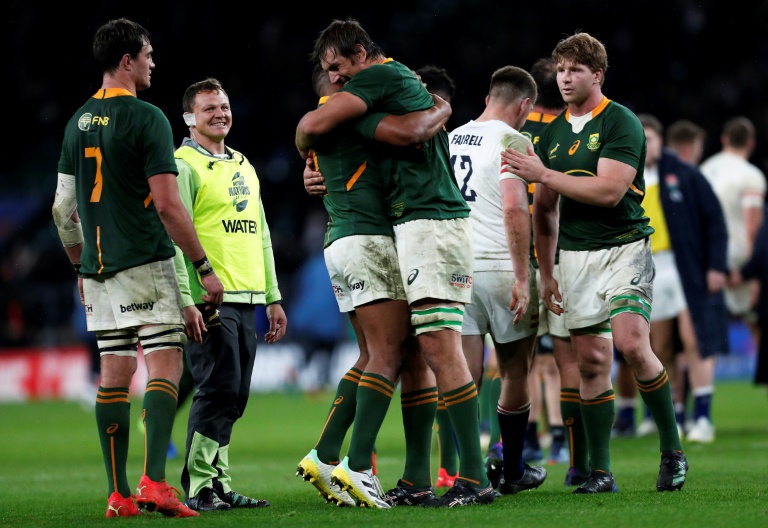
South Africa captain Siya Kolisi hailed a “very special” success at Twickenham as England coach Eddie Jones defended his credentials after the world champions ended 2022 with a dominant 27-13 win on Saturday.

Tries from Kurt-Lee Arendse and Eben Etzebeth either side of half-time helped the Springboks to a first victory over England at Twickenham in eight years, with Damian Willemse landing two drop-goals and Faf de Klerk kicking 11 points.

South Africa were eager to finish the year on a high after narrow losses to France and Ireland in this month’s Autumn Nations Series.

But this win meant they ended the calendar year with nine wins from 14 Tests ahead of their 2023 World Cup title defence in France.

And a dominant display at the set-piece, allied to a sharp cutting edge in the backs, was reminiscent of South Africa’s crushing 32-12 win over England in the 2019 World Cup final in Japan.

“I told the guys we have to enjoy moments like this because we don’t know if we’re going to make it to the World Cup, it could have been some guys’ last games but I thought it was special,” Kolisi said.

South Africa were without several players for a match taking place outside World Rugby’s official window, while they were also missing director of rugby Rassie Erasmus, who was completing a two-game ban following his outspoken social media criticism of referees following the France and Ireland defeats.

“It (Twickenham) is a tough place to get a result,” said South Africa coach Jacques Nienaber. “It is Siya’s first result here and obviously mine so it’s very special.”

The Springboks played the final quarter a man down after Thomas du Toit’s red card for a dangerous tackle on Luke Cowan-Dickie.

But Henry Slade’s late converted try was all the hosts could manage, with lightning failing to strike twice after England’s stunning come from behind 25-25 draw with New Zealand last week.

“Everyone knew they had to work harder to make up for the extra man, and the way the forwards played was great,” said flanker Kolisi.

– ‘Good base’ –

Defeat meant England had lost six out of 12 Tests in the calendar year, their worst run since 2008.

Nevertheless, Jones insisted England could still have a “really good go” at next year’s World Cup.

“We want to win,” he said. “We don’t want to get beat by a big score to South Africa and don’t want to have the worst record since 2008 so it is a problem but I accept full responsibility for that.”

The veteran Australian coach added: “Obviously on results we are not happy but I feel like we are building a really good base to have a really good go at the World Cup, a really good go.”

An error-strewn England display was exemplified by the way usually reliable captain Owen Farrell missed two routine penalties early on.

“We weren’t accurate enough in some bits and that was across the board,” said Farrell.

“Obviously I played a role in that with the two missed easy kicks early on, so, yeah, we’re hurting.”

England, who will have to nurse this defeat until they begin their 2023 Six Nations at home to Scotland in February, saw Will Stuart (elbow), Marcus Smith (ankle) and Kyle Sinckler (hip) forced off in another bruising encounter with the Springboks.

“It was just one of those days where nothing seemed to go right,” Jones said.

Teodoro Obiang, Equatorial Guinea's iron-fisted ruler

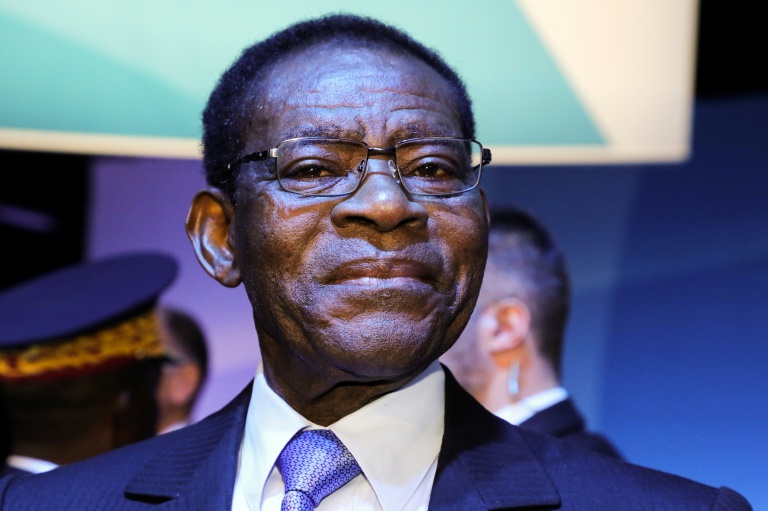
Confirmed for a sixth term as president, Teodoro Obiang Nguema Mbasogo has ruled oil-rich Equatorial Guinea since August 1979, overseeing a regime notorious for crushing dissent and fearing coups.

The 80-year-old’s 43 years in power are the longest of any leader alive in the world today, with the exception of monarchs.

He seized power from Francisco Macias Nguema, who in 1968 had become Equatorial Guinea’s first president upon independence from Spain and later declared himself president for life. Macias — Obiang’s uncle — was executed by firing squad two months after the coup.

Obiang’s opponents say that under his iron-fisted, hermetic tenure, the country has become the “North Korea of Africa”.

The regime’s ruthlessness is regularly condemned by rights watchdogs, who have documented mass, arbitrary arrests, dissidents held in nightmarish prison conditions and frequent sweeps against suspected plotters.

In a country where there is just a single authorised opposition party, Obiang exercises near-total political control.

In 2016, he was re-elected with 93.7 percent of the vote: this time, the official result gave him 94.9 percent, on a turnout of 98 percent.

– Son in the wings –

Obiang’s son, Teodoro Nguema Obiang Mangue, known as Teodorin, is widely seen as his successor, and has ascended the ranks to the position of vice president today.

In an interview ahead of the 2016 vote, the elder Obiang told the French-language Jeune Afrique magazine that this would be the last time he would run.

“I have been in power for too long, but the people want me to be their president,” he said.

Asked whether Teodorin was being groomed for power, he said: “Equatorial Guinea isn’t a monarchy… but if he’s got talent, there’s nothing I can do.”

Speculation that he would hand over the reins in the upcoming vote gained pace as his public appearances became rarer.

But those expectations were quashed after Teodorin was enveloped in scandals abroad and a conviction in France for ill-gotten gains — state assets acquired illegally.

France, Britain and the United States have ordered him to forfeit millions of dollars in assets, from mansions to luxury cars, while France also handed him a three-year suspended sentence and a fine of 30 million euros.

The storm, coinciding with a downturn in oil revenue and the economic blow inflicted by Covid, may have prompted the elder Obiang’s inner circle to advise against leadership change.

The PDGE unanimously chose Obiang as its candidate “because of his charisma, his leadership and his political experience”, Teodorin wrote on Twitter. The party’s election slogan, seen universally on posters and state TV, was “continuity”.

– Fear of coups –

Obiang graduated from military school while the country, as Spanish Guinea, was still under the rule of Spain’s fascist dictator, General Francisco Franco.

He then held a string of key jobs, including head of the notorious Black Beach prison — a place of “living hell”, in the words of Amnesty International.

His violent path to power has bequeathed a deep fear of coups.

His bodyguard comprises soldiers who are members of his clan, but — for additional security — he has a close-protection unit who are reputedly Israelis. Zimbabweans and Ugandans have also been brought in to help guard the presidential palace.

Obiang says he has foiled at least 10 attempted coups and assassinations during his long spell in power, often blaming dissidents living in exile or “foreign powers”. 

The authorities closed the borders ahead of the elections to thwart suspected plotters.

Obiang has been buttressed by the discovery of oil in territorial waters in mid-1996.

The bonanza has turned Equatorial Guinea into sub-Saharan Africa’s third-richest country, in terms of per capita income.

But the wealth is very unequally distributed — four-fifths of the population of 1.4 million live below the poverty threshold according to World Bank figures for 2006, the latest available.

The country has a long-established reputation internationally for graft, ranking 172 out of 180 nations on Transparency International’s 2021 Corruption Perceptions Index.

Obiang wins sixth term as E.Guinea ruler

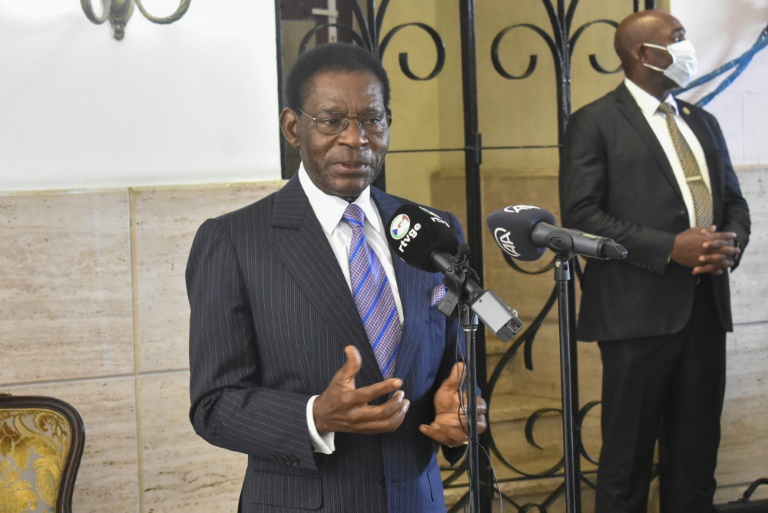
Equatorial Guinea’s ruler Teodoro Obiang Nguema Mbasogo has been re-elected to a sixth term as president with 94.9 percent of the votes cast, election officials announced on Saturday, putting turnout for the vote at 98 percent.

Obiang, 80, who seized power in a 1979 coup, is the longest-ruling head of state in the world excluding monarchs. He has never officially been re-elected with less than 93 percent of the vote.

Electoral commission head Faustino Ndong Esono Eyang confirmed that Obiang would serve another seven years in the top job. The commission said the turnout rate for the election was 98 percent.

The landslide result was widely expected in the oil-rich and authoritarian Central African nation, where the political opposition is extremely weak.

Obiang had the backing of a coalition of 15 parties, including his all-powerful ruling Democratic Party of Equatorial Guinea (PDGE).

The PDGE, which was the country’s only legal political movement until 1991, also swept all seats in the National Assembly and the Senate.

The percentages won by the opposition candidates, Andres Esono Ondo of the Convergence for Social Democracy and Buenaventura Monsuy Asumu of the Social Democratic Coalition Party, were not announced, with both garnering just a few thousand votes.

“The definitive results of the vote find in our favour once more,” Obiang’s son, Vice President Teodoro Nguema Obiang Mangue, wrote on Twitter.

“We will continue to prove that we are a great political party.”

– ‘History repeating itself’ –

Obiang has ruled Equatorial Guinea for more than 43 years after ousting his uncle, Francisco Macias Nguema, who was then executed by a firing squad.

He has suppressed dissent and seen off a string of attempted coups in the Spanish-speaking nation.

Security forces arrested opposition figures in the weeks before the result, with the regime saying it was thwarting a “conspiracy” to commit attacks in the capital Malabo and economic hub Bata.

The authorities also closed the country’s land borders with neighbouring Gabon and Cameroon before campaigning began, saying it was foiling infiltrators from disrupting the vote.

Obiang is just the second president in Equatorial Guinea’s history since it gained independence in 1968 from Spain, its colonial power for nearly two centuries.

“Equatorial Guinea’s history has been repeating itself for 43 years and the political vision established by the government will continue after this election,” Justo Bolekia, a professor at Spain’s University of Salamanca, told AFP.

“It was predictable, including for the opposition. We were even expecting a score closer to 98 percent,” he added.

The discovery of offshore oil in the mid-1990s turned Equatorial Guinea into sub-Saharan Africa’s third-richest country in terms of per-capita income in 2021.

But the wealth has remained concentrated in the hands of a few families. 

In 2006, when the oil boom was in full swing, more than three quarters of the population lived in extreme poverty, or on less than $1.90 a day, according to the World Bank. There have been no new figures since.

The country also has a reputation for graft, ranking 172 out of 180 nations on Transparency International’s 2021 Corruption Perceptions Index.
Four Burkina troops, three civilians killed in jihadist-hit north

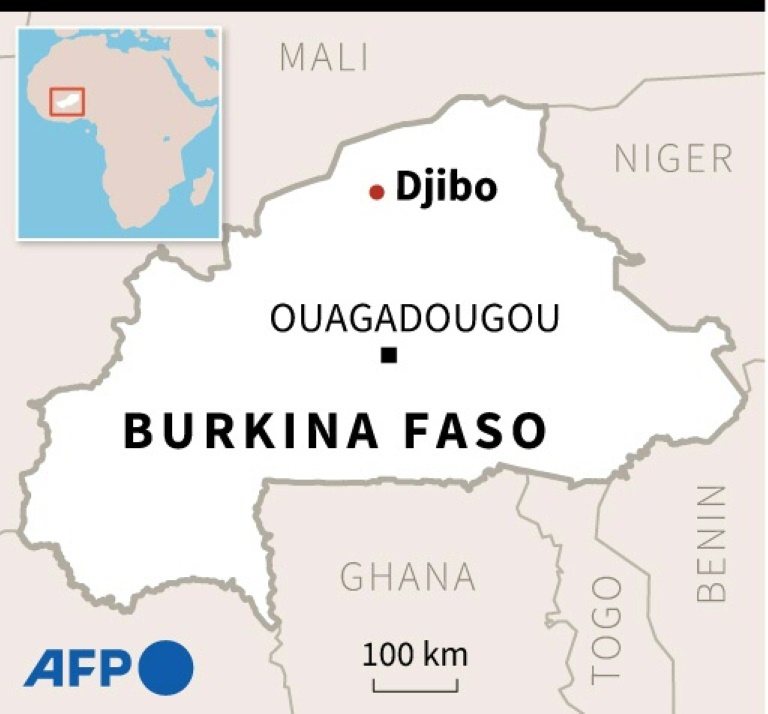
A roadside bomb killed four troops in northern Burkina Faso, an area wracked by jihadist insurgency, the army said on Saturday, while three civilians died in another strike in the same region.

The troops were killed on Friday when an improvised explosive device went off as an army escort drove along the Bourzanga-Kongoussi road, the army said in a statement, adding that one person was also wounded.

The troops were returning after having escorted an aid convoy into the town of Djibo, a security source told AFP.

A security source said armed men attacked the northeastern town of Falangoutou on Friday, killing three civilians.

A former lawmaker said jihadist forces returned to the town on Saturday, attacking local self-defence teams who were organising themselves to protect it.

One of the world’s poorest countries, Burkina has been struggling with a jihadist offensive since 2015.

Thousands of civilians and members of the security forces have died and around two million people have been displaced.

Disgruntled army officers have carried out two coups this year in a show of anger at failures to roll back the insurgency.

The first, in January, saw a military junta led by Lieutenant-Colonel Paul-Henri Sandaogo Damiba overthrow elected president Roch Marc Christian Kabore.

The second, in September, saw Captain Ibrahim Traore come to power as he and his supporters ousted Damiba.

Traore has been appointed transitional president with the declared aim of taking back swathes of territory held by the jihadists.

Close Bitnami banner
Bitnami