Africa Business

Rebels fight on in eastern DR Congo despite truce

M23 rebels were still fighting and advancing on one front of their offensive in east of the Democratic Republic of Congo on Friday as a ceasefire came into force, civilian and military sources said.

Clashes continued after the 1700 GMT deadline to cease fire near Bwiza, about 40 kilometres (25 miles) north of the provincial capital Goma, local people told AFP by telephone.

“M23 is at Bwiza,” an administrative source said, adding that the rebels had taken over several villages in the area.

AFP was unable to independently confirm the account.

During the morning, fighting was also reported near Bwiza,  the former stronghold of former Congolese Tutsi rebel leader Laurent Nkunda who operated there in the 2000s.

Fighting also took place during the day between the M23 and a Hutu militia in Bambo, 70 kilometres (45 miles) from Goma.

“Heavy weapons fire can be heard, people are in a panic,” a civil society representative told AFP.

A security source confirmed the firing between the M23 and combatants from the Democratic Forces for the Liberation Rwanda (FDLR), a Hutu faction present in the DRC since the 1994 genocide of Tutsis in Rwanda.

Calm seemed to have returned to Bambo as evening fell.

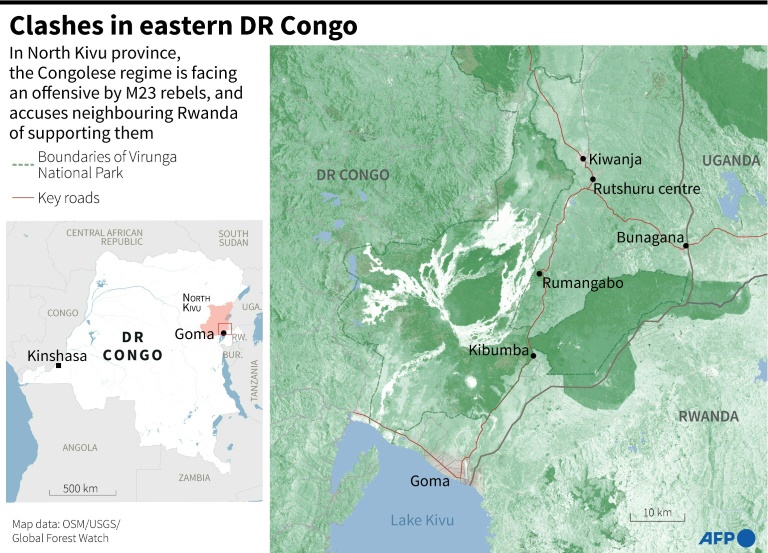
The situation appeared more settled 20 kilometres north of Goma, where a frontline has formed over the last two weeks close to the town of Kibumba on national highway two.

– ‘Respect ceasefire’ –

DRC’s President Felix Tshisekedi and Rwandan Foreign Minister Vincent Biruta met in Angola on Wednesday, agreeing a deal on the cessation of hostilities in eastern DRC from Friday evening.

M23 rebels were to withdraw from “occupied zones”, failing which the East African regional force would intervene.

But the rebels, a largely Congolese Tutsi militia, said Thursday the ceasefire “doesn’t really concern us”, and called for “direct dialogue” with DRC’s government.

“Normally when there is a ceasefire it is between the two warring sides,” a spokesman for the rebels added.

Then on Friday, M23 president Bertrand Bisimwa put out a statement in English saying, “Yet again, the M23 accepts the ceasefire as recommended” by the Luanda summit.

But he called on Kinshasa “to respect the said ceasefire, otherwise the M23 reserves itself the full right to defend itself”.

The March 23 group had been dormant for years, but took up arms again late last year.

The DRC accuses Rwanda of supporting the rebels — charges Kigali denies.

The rebels have recently seized swaths of mountainous Rutshuru territory north of Goma, a city of one million which they briefly captured 10 years ago.

Kinshasa has refused to engage with the M23, which it calls a “terrorist movement”, as long as it occupies territory in the DRC.

The M23 is among scores of armed groups that have turned eastern DRC into one of Africa’s most violent regions.

Many such armed groups are legacies of two wars before the turn of the century that sucked in countries from the region and left millions dead.
DR Congo rebellion leaves rape victims and war wounded in its wake

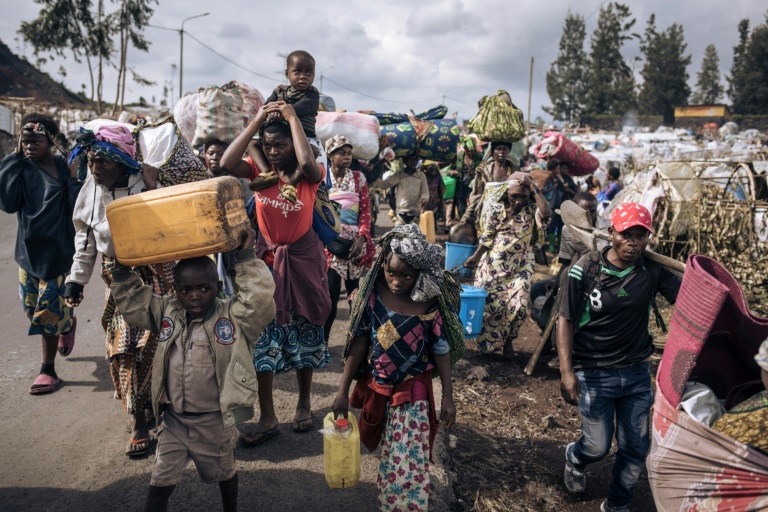
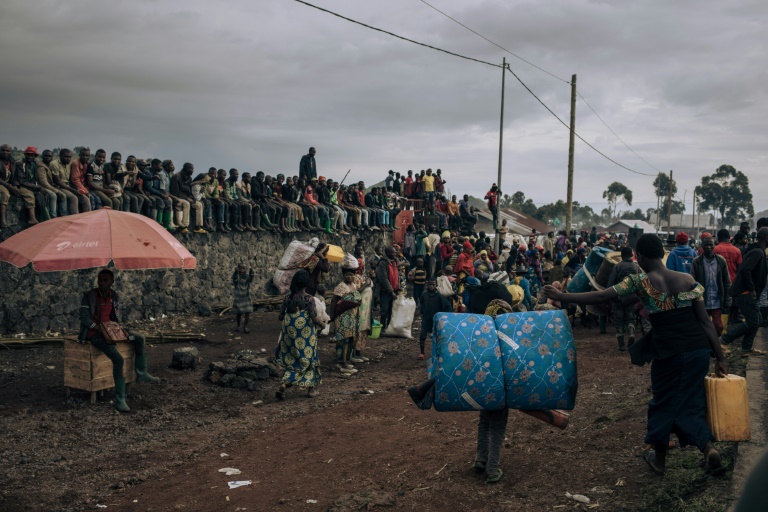
In the chaotic displacement camps near the eastern DR Congo city of Goma, war victims recount brutal stories of rape and brushes with death in their flight from advancing rebels. 

M23 rebels have surged across eastern Democratic Republic of Congo’s North Kivu province, winning a string of victories against the army.

The offensive has seen the mostly Congolese Tutsi group conquer swaths of territory and come within just 20 kilometres (7 miles) of eastern DRC’s main city Goma.

Fighting has displaced at least 262,000 people since March, according to the UN’s humanitarian agency OCHA, with many of them gathering in squalid camps near Goma.

AFP has changed the names of people cited in the article to protect their safety.

In one camp for the displaced in Kanyaruchinya, Furaha described in tears how rebels kidnapped her 15-year-old daughter in May, before releasing her two days later. 

“She refused the advances of the militiamen,” the 45-year-old mother said, inside a makeshift hut of wooden sticks and tarpaulin.

Fighters came to her home in the dead of night and snatched her daughter, then raped her, she said.

Just a few days later, Furaha too was sexually assaulted, she said.

Men in military uniform attacked her and a friend while they were harvesting potatoes in the village of Nyesisi, north of Goma. 

“Three men raped me, and six raped my friend,” she said.

AFP was unable to independently confirm the account, and the identity of the attackers is not clear. 

The M23 took up arms in late 2021 after years of dormancy, claiming the DRC had failed to honour a pledge to integrate its fighters into the army, among other grievances.

After four months of relative calm, the conflict erupted again on October 20 and the rebels made a push towards Goma. 

The fighting has cratered relations between the DRC and Rwanda, with Kinshasa accusing its smaller neighbour of backing the M23 — something UN experts and US officials have also said. Kigali denies the charges.

– ‘Point-blank range’ –

Some 70,000 people live in the Kanyaruchinya camp, in ramshackle tents and makeshift dwellings built on top of mud.

Another woman, Mwiza, who is also from Nyesisi, told AFP that two men in “Rwandan army uniform” had raped her in June. 

“I ran away to go to the hospital,” she said, her head bowed while she fiddled with rosary beads. 

The doctors advised her not tell her husband about what happened, Mwiza said, “so that he wouldn’t chase me away”. 

Didier Buindo, a doctor in the camp, said he’d treated about ten rape victims in November alone. 

Sexual violence is also occurring in the displacement camps, according to the doctor, who pointed to a case in another camp where two girls aged five and 16 had been raped. 

War-wounded also live in the displacement camps, a testament to the brutality of the conflict.

Augustin, 32, is still limping after being shot in the leg in his field north of Goma, for example. He received surgery to remove the bullet.

Mutoni, 22, also has a scar on her face from where she was grazed by a bullet in August. 

“An M23 fighter shot me at point-blank range,” said the woman, who fled her village to seek refuge in the displacement camps.  

Mutoni survived the attack.

But her young niece, whom she was cradling in her arms, was killed instantly by the same bullet.   

Army foils coup bid in Sao Tome: prime minister

The military has foiled a coup attempt in Sao Tome and Principe, the prime minister of the island nation off the western coast of Africa said in a video message confirmed by AFP on Friday.

Four men, including the former president of the outgoing National Assembly Delfim Neves, tried to attack army headquarters overnight, Prime Minister Patrice Trovoada said in a video message confirmed by the justice minister.  

He said Neves was one of several people arrested.

A resident speaking to AFP anonymously by phone said she had heard “automatic and heavy weapons fire, as well as explosions, for two hours inside the army headquarters” in the nation’s capital.

In the message, authenticated and sent to AFP in Libreville by Sao Tome’s justice minister, Trovoada is seen sitting at a desk saying he wants to “reassure” the population and “the international community”. 

“There was an attempted coup d’etat which began around 00:40 am and… ended shortly after 6 am,” he said, adding that “armed forces were attacked in a barracks.”

“The situation in the barracks is under control, but we must be sure that the country is completely under control,” Trovoada said.

– Soldier taken hostage –

He said a soldier was “taken hostage” and wounded, “but he will be able to resume his activities in a few days”.

Military personnel were deployed overnight to secure the residences of members of the government and the president, the resident noted.

She added that the city was now calm: “People are going about their normal business but schools have asked parents not to send their children.”

Trovoada said: “The operation was ordered by certain personalities from the country in complicity with certain others from within the army.

“The four attackers have been arrested and have denounced certain others, including Delfim Neves and Arlecio Costa.”

Costa was a mercenary connected with South Arica’s Buffalo Battalion security group that was dismantled by Pretoria in 1993. He was also arrested and accused of leading a coup bid in Sao Tome in 2009.

But a group of accomplices who waited aboard vans outside the barracks had not been caught, Trovoada added.

The prime minister announced an inquiry was under way and said the army was “obliged to clarify the situation, if there are other ramifications within the armed forces”.

A former Portuguese colony in the Gulf of Guinea, the nation of some 215,000 people is deeply poor and depends on international aid, but is also praised for its political stability and parliamentary democracy.

Neves lost his position on November 11 when the new chamber was installed following elections in September, won with an absolute majority by Trovoada’s centre-right Independent Democratic Action (ADI) party.

Neves also failed in an attempt to be elected president, losing to the ADI’s Carlos Vila Nova in July last year.

The ADI is one of two major parties that have vied to run the nation since independence in 1975, along with the Movement for the Liberation of Sao Tome and Principe-Social Democratic Party (MLSTP-PSD).

The ADI’s electoral triumph saw ex-prime minister Trovoada return to the top job for a third time.

Mali junta hits out at critical rights report

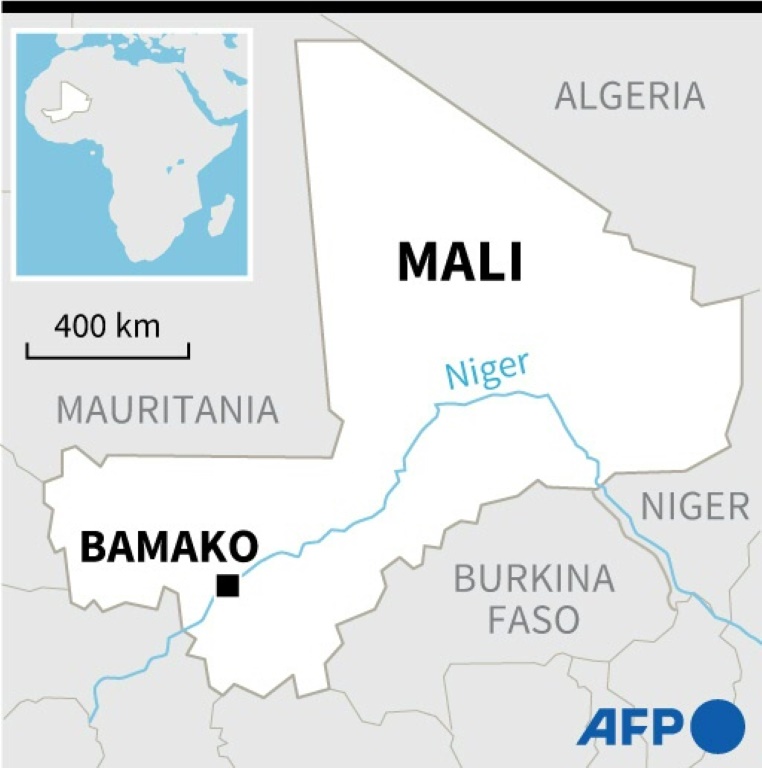
Mali’s junta has hit back at a new report accusing the army and Russian paramilitaries as well as rebels of “grave crimes” against civilians, saying it “totally rejects” the charges.

The International Federation for Human Rights (FIDH) published the report on Thursday listing an unprecedented increase this year in the number of attacks on civilians in central Mali.

“Community self-defence groups, jihadists insurgents… the Malian armed forces and their international partners in the Russian paramilitary group Wagner continue to commit grave crimes, fuelling the cycle of violence,” the report said.

“Attacks, summary executions, sexual violence: in central Mali the civilian population is in a living hell,” it said.

The report also highlights “the impunity of those responsible” and “slowness of judicial proceedings”.

“These allegations are mostly tendentious, unconnected and deliberate, with the aim of tarnishing the image of the Malian defence and security force,” the junta-controlled government said in a document published late Thursday.

“Facts are presented on the basis of… witness accounts backed by no real evidence and often made under the threat of terrorist groups.”

The document said the army operated “with strict respect for human rights and international humanitarian law” and any alleged violations were always followed by “diligent treatment” and investigations.

The use of Wagner’s services involves “Russian trainers and advisers” who have been in Bamako since 1960, according to the document, when “certain instructors” helped build the national army.

The officers who took over Mali in an August 2020 coup have brought in the Russians, which prompted France to pull out troops who had been battling jihadists for nine years.

The government said it “totally rejects” the FIDH charges of persecution against the Peul community, which is often accused of supplying men for jihadist groups.

The FIDH had ignored the “remarkable progress” the government has achieved against the jihadists, as well as efforts to stop impunity for crimes with changes underway in penal and military law, and a plan to set up a special court to handle gender crime.

The Malian Association for Human Rights (AMDH), which is a member of FIDH and worked with it on a report in 2018, issued a statement saying it “dissociates itself” with the latest report because of “serious failings” involving “impartiality, objectivity and loyalty”.

Mali has since 2012 seen thousands killed and hundreds of thousands flee their homes, in an insurgency that has spread to neighbouring Niger and Burkina Faso.

Benin opposition gets green light for legislative election

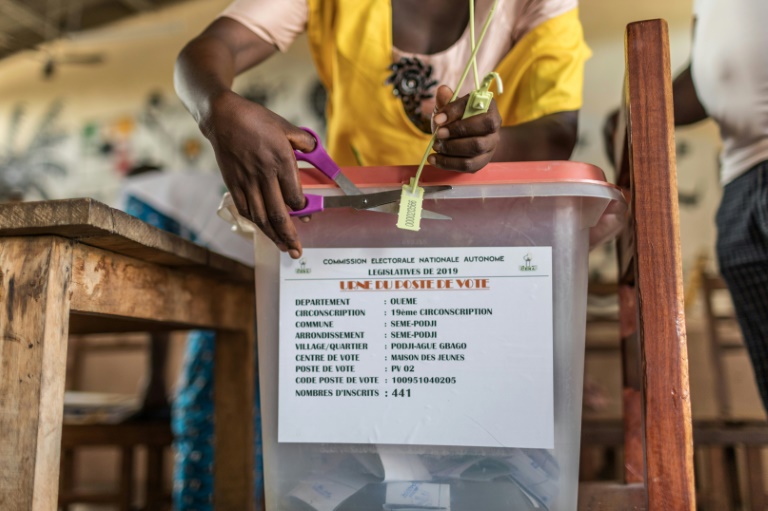
Benin’s opposition, weakened by arrests and the exile of its leaders, has been allowed to participate in January’s legislative elections, four years after they were excluded from taking part in the last vote.

Electoral authorities have authorised seven political parties, including three claiming to be opposition, to take part in the January 8 ballot for lawmakers.

Elected in 2016, then re-elected in 2021, Benin’s President Patrice Talon has launched all-out political and economic reforms to put his West African country on the path to development. 

But his modernization programme has also been accompanied by a significant erosion of democracy, according to the opposition, with its leaders prosecuted, jailed or exiled.

The opposition parties given the green light include the Democrats, who managed to win a last-minute constitutional court ruling on Saturday, allowing its candidates to run. 

“The Constitutional Court wanted to spare Benin a new tragedy by accepting that our party finally can go to the elections,” said Gandonou Eudes, an activist for the Democrats.

Legislative elections in 2019 ended in clashes that left several people dead, after the opposition was banned and security forces violently repressed its supporters who took to the streets in the centre of the country. 

Only the two political parties supporting Talon were allowed to take part. 

In 2021, the main opposition leaders also failed to participate in the presidential ballot that re-elected Talon, prompting more protests in opposition strongholds.

Two of the president’s main opponents are still in prison, sentenced to heavy sentences. 

Reckya Madougou was sentenced to 20 years in prison for “terrorism”, while Joel Aivo — an academic — was given 10 years in prison for “conspiracy against the authority of state” in December 2021.

“We tried to get on the ballot in 2019, 2020, 2021 — impossible,” said Democrats party chief Eric Houndete, during a meeting this week in the capital Porto-Novo.

Now “our time has come,” he said.

“You have the opportunity to choose, to avoid having a one-colour parliament.”

The Cauris Forces for an Emerging Benin or FCBE party and the Popular Liberation Movement or MPL party are the two other opposition movements that will take part.

All three will look to win as many seats as possible in the 109-member parliament, which is currently controlled by pro-Talon parties.

“If the legislative elections are transparent, the parties in power will not have an easy task,” said Beninese political scientist Expedit Ologou. 

For Marie Yaya, a young Democrats activist and former student of opposition leader Joel Aivo, the election should not make us “forget the fate of those who are still languishing in prison”.

Uganda closes schools to fight Ebola, new cases fall

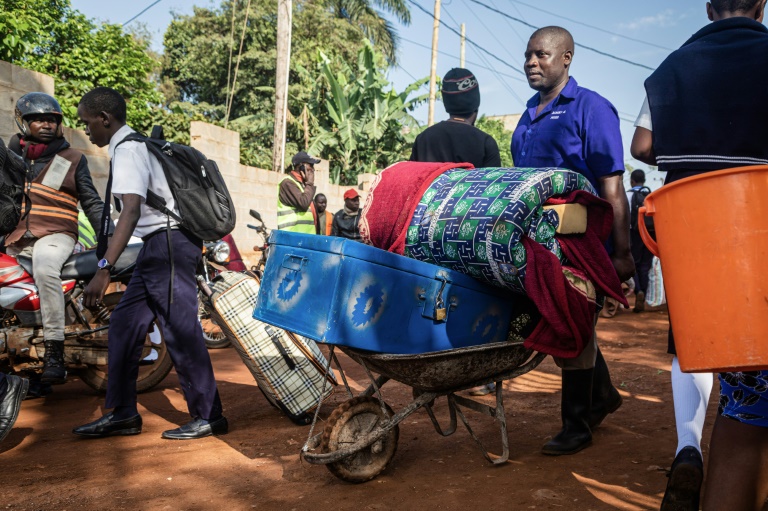
Uganda closed schools nationwide on Friday to curb the spread of Ebola, despite the health minister insisting to AFP that new cases had declined.

The directive to close schools two weeks before the end of term was announced earlier this month following the deaths of eight children from the highly contagious disease. 

But in recent weeks, the number of new infections registered in the capital Kampala and the epicentres of Mubende and Kassanda has declined, Health Minister Jane Ruth Aceng told AFP.

“The major breakthrough in this fight against Ebola for Uganda is that the communities have realised that Ebola is deadly and it kills,” she said. 

“We encourage the population to remain alert and cooperate with the health teams if we are to win this battle and there are signs Uganda is winning,” she added.

Uganda’s WHO office said Thursday that as of November 22, no case had been declared for nine days in Kamapala, 10 days in Mubende and 12 days in Kassanda.

The outbreak has claimed 55 lives out of 141 cases according to Ugandan authorities, who have imposed lockdowns in Mubende and Kassanda.

The measures include a dusk-to-dawn curfew, a ban on personal travel and the closure of markets, bars and churches.

At a school in Kampala, one parent told AFP he was relieved to take his child home.

“I think this early closure was really necessary, because of the situation, the Ebola situation in the country,” said banker Joab Baryayaka.

“We trust they are safer with us than staying at school, where we cannot guarantee the situation.”

Since the outbreak was declared in Mubende on September 20, the disease has spread across the East African nation.

President Yoweri Museveni has repeatedly ruled out imposing nationwide Covid-like restrictions.

According to WHO criteria, an outbreak of the disease ends when there are no new cases for 42 consecutive days — twice the incubation period of the disease.

The strain now circulating is known as the Sudan Ebola virus, for which there is no vaccine, although several would-be jabs are heading towards clinical trials.

Ebola is spread through bodily fluids. Common symptoms are fever, vomiting, bleeding and diarrhoea. 

Outbreaks are difficult to contain, especially in urban environments.

Civilians flee as jihadists advance in northeast Mali

Jihadists aligned with the Islamic State group are advancing in northeastern Mali, prompting terrified citizens to flee their homes, sources there say.

The Islamic State in the Greater Sahara (ISGS) launched an offensive in the Gao and Menaka regions in March, triggering heavy fighting with local armed groups and rival jihadists.

“If nothing is done, the whole region will be occupied” by jihadists, a human rights campaigner, contacted by AFP on WhatsApp, said on condition of anonymity.

Witnesses and other sources contacted by AFP confirmed the ISGS’ sustained push in this remote and dangerous area, and rights campaigners say civilians have been massacred.

The strategic towns of Gao and Menaka have long been in the forefront of Mali’s decade-long jihadist crisis.

Since 2012, thousands have died and hundreds of thousands have fled their homes, in an insurgency that has spread to neighbouring Niger and Burkina Faso.

Despair at the toll prompted Malian army officers to mount a coup in 2020. 

The junta has brought in Russian paramilitaries — a move that prompted France to pull out troops who had been battling jihadists for nine years.

– Massacres –

Outside the two towns, the region is largely desert, populated mainly by nomads.

They bore the brunt of clashes between pro-independence Tuaregs and the Malian army between 2012 and 2015.

They are now caught in the crossfire between the ISGS on the one side and a motley array of armed groups on the other.

The latter comprise Al-Qaeda jihadists; pro-independence fighters who signed up to a peace deal with the government in 2015; and pro-government Tuareg combatants who had previously fought the pro-independence groups.

The UN and NGOs have reported repeated attacks against communities accused of abetting the enemy or refusing to join the jihadists.

Hundreds of villagers have died in massacres by ISGS fighters, Human Rights Watch (HRW) said last month.

Eleven were killed on Monday in a raid by gunmen on motorbikes on a camp for displaced people at Kadji, just outside Gao, local officials and humanitarian workers told AFP.

Moussa Ag Acharatoumane, head of the loyalist Movement for the Safety of Azawad (MSA), said a “climate of terror” prevailed.

“All economic life has come to a halt, the roads have been destroyed,” he said. 

“(It’s) an unprecedented humanitarian crisis,” he said, adding that the town of Menaka was being swamped by displaced people.

A mayor in the Menaka administrative region said that in his district, “there’s nobody left.”

A UN document issued this month said that in the town of Gao, nearly 60,000 people had arrived.

Several sources said that the jihadists had moved into a vacuum left when France pulled its forces out of the region.

The border with neighbouring Niger marks the limit of the fighting. 

Niger’s army is being supported in the air and on the ground by foreign forces, including France’s Barkhane mission.

On the Malian side, the army has holed up in the town of Menaka, a tactic that leaves “the way open” for the jihadists, a local elected official who has fled to Bamako told AFP.

– Stoning –

He and others painted a gruesome picture of life in areas under jihadist control.

“If you’re not with them, you’re against them,” the official said.

Villages seized by the militants have to pay an Islamic tax and submit to a brutal interpretation of Sharia.

An aid worker in Ansongo said that in the village of Tin-Hama, an unmarried couple aged 50 and 36 were stoned to death in September.

“They dug a hole on weekly market day and placed (them)… in it up to their hips and then threw rocks at them,” the source said. 

Pro-government forces are trying to muster outside help for their cause, a security source in Niger said.

One idea is to forge an alliance with the former rebels of the Coordination of Azawad Movements (CMA) and Support Group for Islam and Muslims (GSIM), a shadowy group led by an Al-Qaeda-linked Tuareg, Iyad Ag Ghali.

But the chances of creating a joint front are low, an African diplomat in Bamako said.

“Politically, it would seem quite a stretch for people to team up openly with Al-Qaeda today,” the diplomat said.

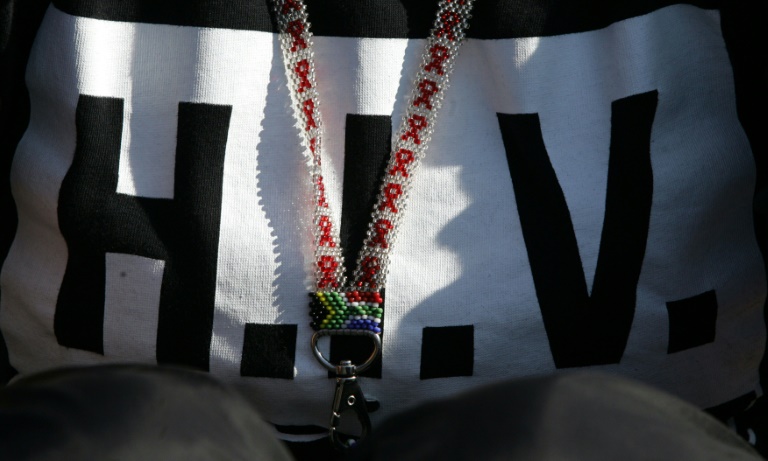
'Army of orphans': The price of S.Africa's AIDS scourge

At the age of 13, Ndumiso Gamede was orphaned when his parents died at the peak of the AIDS epidemic in South Africa.

He was left to raise his two young brothers — a gruelling battle against isolation, stigma and poverty.

Gamede, now aged 28, points to pictures of his parents hanging on the wall in a low-lit boxy garage he calls home.

“They were both HIV positive,” he said. 

He said he had no-one to guide him during his most vulnerable teenage years and “almost did crime” just to survive, and “drugs” to cope.

As World AIDS Day looms on December 1, the plight of South Africa’s AIDS orphans remains a stain on a country that has otherwise made huge inroads into epidemic.

National prevalence of the human immuno-deficiency virus (HIV) that causes AIDS is still among the highest on the globe, at 13.7 percent.

But deaths have dramatically fallen, thanks to a rollout of anti-retrovirals (ARVs) — drugs that, through a tragic combination of cost and political denial, were not available to poor South Africans when the disease was at its zenith.

More than 5.4 million out of an estimated 8.2 million infected people take ARVs in South Africa, which has one of the world’s biggest HIV treatment programmes.

The lifesaving drugs also mean that the number of infected AIDS orphans has declined, said Agnes Mokoto, who runs an orphan programme at the Cape Town-based charity Networking HIV and AIDS Community of Southern Africa.

– ‘Army of orphans’ –

According to UNAIDS, there were 960,000 AIDS orphans in South Africa, compared to 1.9 million in 2009. Any child who has lost one or both parents to HIV is defined as an orphan.

The gap in the country’s population pyramid due to the epidemic created a lost generation, particularly of young parents.  

“(In) the dark days at the beginning of the millennium, people were dying in droves, and that created an army of orphans,” said Professor Linda-Gail Bekker, head of the Desmond Tutu HIV Foundation.

Gamede’s parents died at a particular painful time, when AIDS denialism was rooted in South Africa’s government, starting with the then president, Thabo Mbeki. 

According to a Harvard University study, misguided policies and the promotion of quack cures caused more than 330,000 deaths. 

Discrimination against people with HIV was intense, and those orphaned by the disease felt it most. 

Gamede and his two brothers had to fight to survive after they were shunned by his extended family.

“After my parents died, they turned their back on us, they did not want to know… what we lacked,” he said deep in thought.

He lives in Vosloorus, a township 30 kilometres (18 miles) southeast of Johannesburg, filled with dusty streets and makeshift dwellings. 

– Identity papers –

Even getting documented is an added battle for some orphans. 

Nonhlanhla Mazaleni who heads a shelter for AIDS orphans in Johannesburg says she cares for 21 young people who are living with HIV and don’t have IDs” because they were abandoned after being orphaned.

“One of the kids is deaf, he came to us when he was two years old, he’s now 24 with no job and because he has no ID, he can’t claim for a disability grant,” she said.

Now a new father of one, Gamede looks proudly at his computer screen as he plays his music video, singing along as he nods to the beat.

A grey baby crib stands next to Gamede’s bed, a foam mattress placed on the floor. 

He finds solace in rap music while looking for employment, which he says has proven difficult because he could not further his studies. 

He also hosts groups of young people orphaned by HIV/AIDS and offers gardening classes as a form of therapy.

But his life is hard.

Had AIDS not ravaged his family, Gamede believes “opportunities… would have been easy. Life would not be like this.”

M23 rebels say Rwanda-DR Congo ceasefire deal does not affect them

The M23 rebel group said Thursday that a ceasefire announced a day earlier “doesn’t really concern us,” while calling for “direct dialogue” with Democratic Republic of Congo’s government.

“M23 has seen the document on social media… There was nobody in the summit (from M23) so it doesn’t really concern us,” Lawrence Kanyuka, political spokesman for the M23 (March 23) movement, told AFP.

“Normally when there is a ceasefire it is between the two warring sides,” he added.

DRC’s President Felix Tshisekedi and Rwandan Foreign Minister Vincent Biruta attended a mini-summit in the Angolan capital on Wednesday.  

At a media briefing in Kinshasa on Thursday, Congolese Foreign Minister Christophe Lutundula said: “Tomorrow, 6:00 pm, the M23 must stop all its attacks.”

M23 rebels had been dormant for years, but took up arms again late last year and have been seen from the start by Kinshasa as actively supported by Rwanda, which denies the charges.

The rebels recently seized large portions of territory north of Goma, the provincial capital of DRC’s Nord-Kivu province. 

The Luanda mini-summit concluded with a deal on the cessation of hostilities in eastern DRC from Friday evening, followed by the withdrawal of M23 rebels from “occupied zones” and their “withdrawal to their initial positions”. 

If the rebels refuse, the east African regional force being deployed in Goma “will use force” to push them out, the deal said.

Kanyuka said the rebels declared a “unilateral ceasefire” in April and believed it was still in force.

“If tomorrow at 6:00 pm (1600 GMT), or in the morning, the government doesn’t attack us, we will still be there,” he said. 

Otherwise, “we are defending ourselves,” he said. 

“We are always ready for a direct dialogue with the Congolese government to resolve the root causes of conflicts,” he added.

The government in Kinshasa has refused to engage with the M23 group, which it calls a “terrorist movement”, as long as it occupies territory in DRC.

In response to a question, Lutundula ruled out direct negotiations with the M23 group.

Libya expels over 200 migrants across land borders

Libya on Thursday sent more than 200 illegal migrants back across its land borders, in a rare display of cooperation from the country’s divided political institutions. 

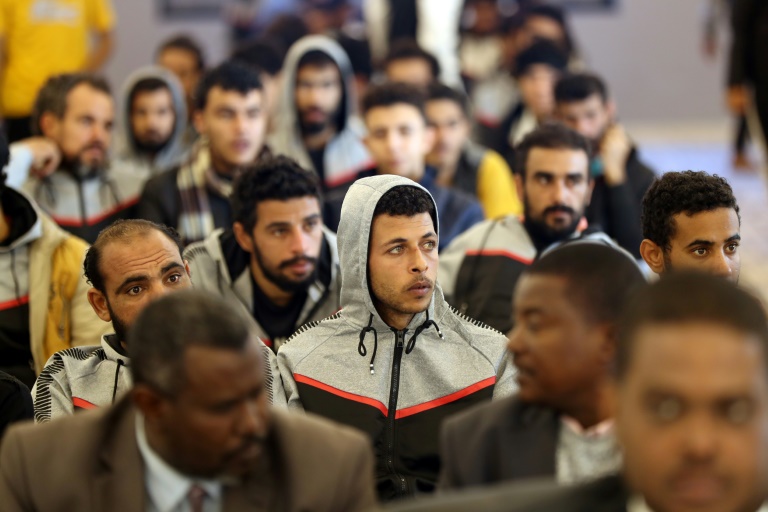
The migrants, dressed in differing tracksuits to identify their nationalities, were handed biscuits, milk and bottles of water by police in Tripoli, before being bused in convoys to Libyan border crossings.

The group of returnees included “105 Egyptians, 101 Chadians and 20 Sudanese,” Badreddine al-Sed Ben Hamed, deputy chief of the bureau in charge of the operation, told AFP.

Embassy staff from the migrants’ home countries watched the process, with each group driven to border crossings with their home country.

The operation was organised by the Interior Ministry of Prime Minister Abdulhamid Dbeibah’s Tripoli-based government, whose authority is contested by a rival administration in Libya’s east. 

But a deal with authorities there and in the south enabled coordination of the expulsions.

War-ravaged Libya is a conduit for thousands of people each year fleeing conflict and poverty across Africa, seeking refuge across the Mediterranean in Europe.

Most enter via the country’s vast southern borders in the Sahara desert.

Police spokesman General Ahmad Abu Kraa said holding centres for detained migrants had become “overwhelmed, which is creating a lot of problems”.

Libya is regularly criticised for its treatment of migrants, with rights groups alleging horrific treatment at the hands of smuggling gangs and inside state-run detention centres.

Authorities and armed groups operating under state auspices have repeatedly been accused of torture, rape and other abuses.

The United Nations had previously handled the repatriation of refugees from Libya, but the deal between authorities in the west, east and south has enabled the Interior Ministry’s agency tackling illegal migration to work in a unified way across the country.

Still, Libya remains violently fragmented and facing multiple crises following a 2011 NATO-backed revolt that overthrew dictator Moamer Kadhafi.

Tensions between the rival administrations in August spilled over into deadly gun battles between their militias that left more than 30 people dead in Tripoli.

Close Bitnami banner
Bitnami