Africa Business

Jones calls for referee respect as Springboks' Erasmus misses England game

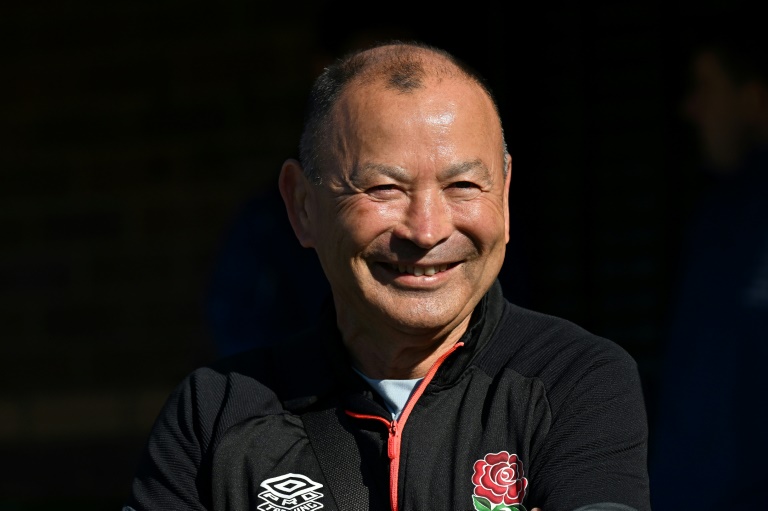
England coach Eddie Jones said referees had to be treated with respect as his team prepared to face a South Africa side who will be without Rassie Erasmus at Twickenham.

Erasmus, the Springboks director of rugby, will complete a two-game matchday ban on Saturday after publishing a series of tweets that appeared to mock decisions made by officials during the Autumn Nations Series.

Experienced English referee Wayne Barnes, who oversaw South Africa’s 30-26 defeat by France in Marseille this month, received threats on social media after comments by Erasmus, the man behind the Springboks’ 2019 World Cup triumph.

Erasmus had only just returned from a year-long suspension following his infamous hour-long video criticising referee Nic Berry’s performance during the 2021 tour by the British and Irish Lions.

Jones refused to criticise Erasmus’ conduct directly, with the veteran Australian coach, known for making outspoken comments during a lengthy career, accepting his record was far from flawless.

“I’m not perfect,” he said. “I’ve said things that probably haven’t been right but the longer I’ve coached the more I accept we’ve got to look after the referees.

“I remember back in 2007 I got fined Aus$10,000 (US$6,766, £5,583) for criticising a referee. 

“In Queensland that’s a lot of money and I had to pay it myself because the union didn’t pay it for me.”

Jones added: “Since then I have accepted the fact we shouldn’t speak about referees so I’ve got a blanket rule that I don’t speak about referees — I try not to — and I don’t speak about coaches who speak about referees.

“To me it’s simple. There’s the game, play the game, the referee’s in charge, if he makes mistakes let’s accept it. If we don’t want a contest let’s play basketball.”

Jones suggested Erasmus’ comments could be a way to create a siege mentality that would aid the Springboks’ “motivation” ahead of defending a World Cup title won with a decisive 32-12 victory over England in a Yokohama final three years ago.

– ‘Fight and fight’ –

But the teams’ most recent meeting was a far closer contest, England edging the Springboks 27-26 at Twickenham last year.

Jones has revamped his front row, recalling prop Mako Vunipola and hooker Jamie George after they starred off the bench as England came from 19 points behind in the closing 10 minutes of last weekend’s dramatic 25-25 draw with New Zealand at Twickenham. 

England launched their November programme with a narrow 30-29 loss to Argentina before thrashing Japan, another of their pool rivals at next year’s World Cup in France, 52-13 prior to sharing the spoils with the All Blacks.

Jones said playing the Springboks would be a “completely different game”.

“We’ve got to meet the challenge of them coming through the front door,” he added ahead of England’s last match of 2022. 

“We’re going to have to fight and fight and when we get a chance to break them, we’re going to have to go for it.”
Comoros seeks life term for ex-president Sambi for high treason

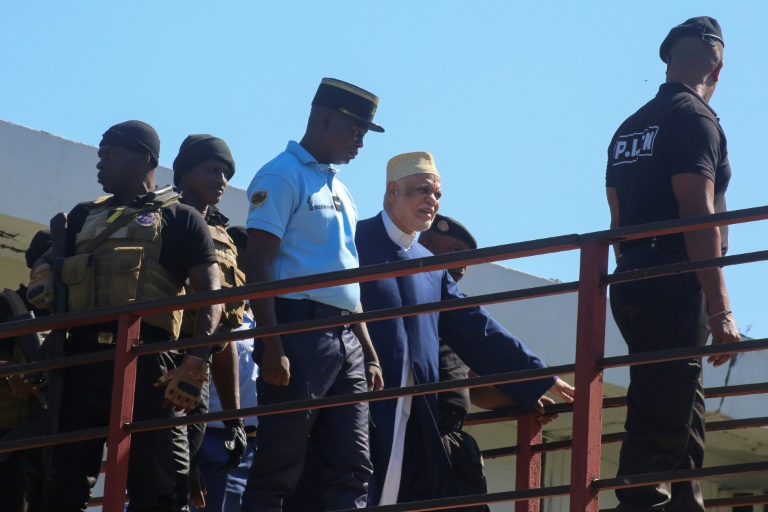
Prosecutors in the Comoros on Thursday sought a life sentence for former president Ahmed Abdallah Sambi who was tried in absentia for high treason.

Sambi, 64, the arch opponent to current president Azali Assoumani, faces charges related to the alleged sale of Comorian passports to stateless people living in Gulf nations.

“He betrayed the mission entrusted to him by the Comorians,” said public prosecutor Ali Mohamed Djounaid before the elite State Security Court.

He demanded life imprisonment for Sambi and a verdict is expected on November 29.

Sambi, who led the small Indian Ocean archipelago between 2006 and 2011, passed a law in 2008 allowing the sale of passports at an exorbitant fee.

“They gave thugs the right to sell Comorian nationality like we would sell peanuts,” said Togolese lawyer Eric Emmanuel Sossa, who is sitting on the prosecution bench.

The ex-leader is accused of embezzling millions of dollars under the scheme, which the prosecution said cost the government over 1.8 million dollars — more than the GDP of the impoverished archipelago.

But Sambi’s French lawyer Jean-Gilles Halimi said there is no evidence of this money — “no account discovered”.

Sambi was originally prosecuted for corruption, but the charges were reclassified as high treason, a crime that “does not exist in Comorian law”, according to Halimi. 

Sambi refused to attend the trial, as his lawyers said there were no guarantees he would be judged fairly.

He only appeared on Monday with his lawyers asking the judge to recuse himself because he had previously sat on the panel that decided to indict him.

Sambi had already spent four years behind bars before he faced trial, far exceeding the maximum eight months. He was originally placed under house arrest for disturbing public order.

Three months later he was put under pre-trial detention for embezzlement, corruption and forgery, in the so-called “economic citizenship” scandal before being slapped with the high treason charges. 

“It is clear that Sambi is a hindrance to Azali Assoumani’s political agenda and that he is doing everything to remove it,” Sambi’s daughter Tisslame Sambi told AFP.

Among the defendants was French Syrian businessman Bashar Kiwan who accused the government of seeking to pressure him into testifying against the former president in exchange for a pardon.

The presidency has formally denied these accusations but the defence has indicated to AFP its intention to file a complaint for tampering with witnesses.

The Comoros islands — Anjouan, Grande Comore and Moheli — have endured years of grinding poverty and political turmoil, including about 20 coups or attempted coups, since independence from France in 1975.

Algeria sentences scores to death over forest fire lynching: media

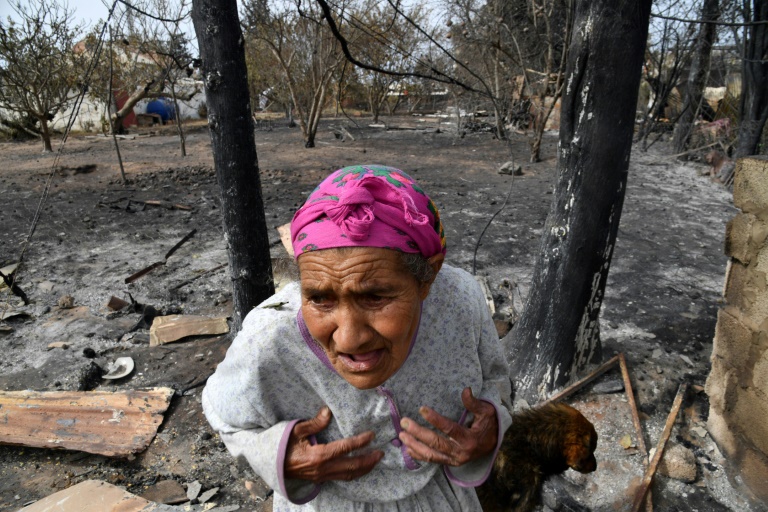
An Algerian court Thursday sentenced 49 people to death over the lynching of a man falsely accused of starting deadly forest fires during an extended heatwave last year, state media reported.

The North African country has, however, maintained a moratorium on carrying out death sentences since the last executions in 1993.

Onlookers had beaten 38-year-old Djamel Ben Ismail to death after he turned himself in at a police station in the Tizi Ouzou region.

He had gone there upon hearing that he was suspected of arson, at the height of blazes, which killed at least 90 people nationwide.

It later emerged that Ben Ismail, an artist from Miliana (230 kilometres or 140 miles further west), had headed to the region as a volunteer to help put out the fires.

Algeria, Africa’s biggest country, was one of several Mediterranean nations to face devastating wildfires last year.

The court in Dar El Beida on Thursday “sentenced 49 people to execution over (Ben Ismail’s) murder and mutilation of his body”, the APS news agency reported.

The court also handed 28 other defendants jail terms of two years to a decade without parole, APS said. 

Videos posted online at the time showed a crowd surrounding a police van and beating a man inside it, then dragging him out and setting him on fire, with some taking selfies.

The shocking images were widely shared and sparked outrage in Algeria.

Algeria’s LADDH human rights group called for calm and for those responsible for the “despicable murder” to be brought to justice.

“These images constitute yet another trauma for the family and for the Algerian people, already shocked” by the fires, it said.

The victim’s father, Noureddine Ben Ismail, was widely praised for calling for calm and “brotherhood” among Algerians despite his son’s murder.

The fires were spurred by a blistering heatwave, but authorities also blamed arsonists and “criminals” for the outbreaks.

They also blamed the independence movement of the Berber-majority region of Kabylie that extends along the Mediterranean coast, east of Algiers.

The Movement for the Autonomy of Kabylie (MAK), which Algiers classifies as a “terrorist organisation”, rejected the accusations.

The court on Thursday also passed a life sentence against MAK president Farhat Mehenni, in absentia as he lives in exile in France.

Although much of Algeria’s interior is desert, the north has more than four million hectares (10 million acres) of forest, which is hit every summer by fires.

Critics say the authorities failed to prepare for the blazes.

Algeria’s army mobilised five helicopters, while its emergency services used three water-bombing helicopters to fight the flames, with firefighting aircraft also coming to help from Europe.

Climate scientists have repeatedly warned that man-made global warming will bring higher temperatures and more extreme weather events across the world.

ICC prosecutor seeks charges against fugitive warlord Kony

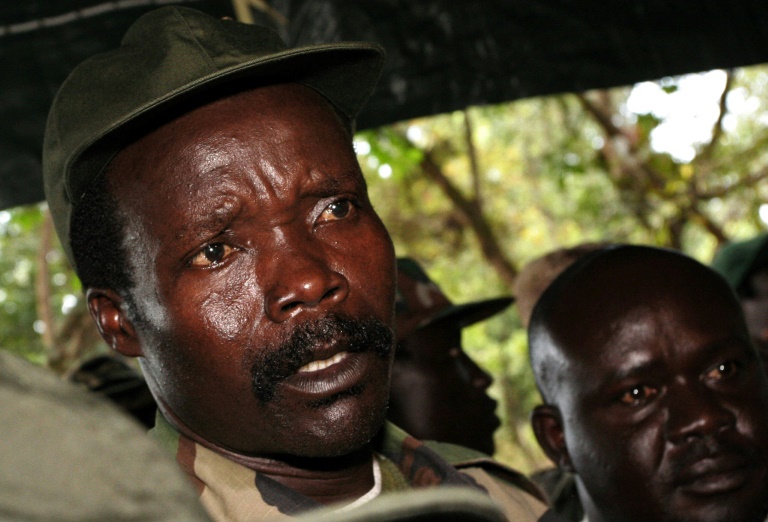
The International Criminal Court’s chief prosecutor said Thursday he would ask judges to confirm charges against Ugandan warlord Joseph Kony, head of the notorious Lord’s Resistance Army (LRA), even though Kony remains at large.

Kony launched a bloody rebellion more than three decades ago seeking to impose his own version of the Ten Commandments in northern Uganda, unleashing a campaign of terror that spread to several other countries.

The Hague-based ICC issued an arrest warrant for Kony in 2005 on allegations of war crimes and crimes against humanity, and US president Barack Obama in 2011 launched a small number of US troops to help regional armies try to capture him.

“However, this arrest warrant remains unexecuted to this day. Mr Kony has sought to evade judicial proceedings at this court for more than 17 years despite continuing efforts,” ICC prosecutor Karim Khan said in a statement.

Khan said he had asked judges for authorisation to hold a hearing to confirm the charges against Kony in his absence.

“This is the first time that my Office has made such a request since the establishment of the ICC,” he said.

“I have determined it is both necessary and appropriate to seek to advance proceedings against him to the fullest extent compatible with the Rome Statute,” the charter which governs the ICC, he said.

Suspects cannot be tried in absentia at the ICC, but it is possible to hold confirmation hearings while they are still fugitives, Khan explained.

– ‘Meaningful milestone’ –

Confirming the charges against Kony would make it easier and quicker to put him on trial should he be captured, the prosecutor added.

Any hearing involving Kony would be a “meaningful milestone for victims of Mr Kony’s crimes who have waited patiently for justice for almost two decades,” Khan said.

Starting with a bloody rebellion in northern Uganda against President Yoweri Museveni, the LRA’s campaign of violence has claimed more than 100,000 lives and seen 60,000 children abducted.

The violence eventually spread to Sudan, the Democratic Republic of Congo and Central African Republic.

The allegations against Kony in the arrest warrant include murder, cruel treatment, enslavement, rape, and attacks against civilian population, the ICC said.

In 2021, the ICC convicted a LRA child soldier-turned commander, Dominic Ongwen, of war crimes and crimes against humanity and sentenced him to 25 years in jail.

He has appealed against the verdict and sentence, arguing that he was scarred by his own history and still believed he was “possessed” by the spirit of Kony.

The ICC was set up in 2002 to bring perpetrators of the world’s worst crimes to justice, but has been criticised for choosing many of its cases from African nations.

I.Coast's Ble Goude says he wants to make low-key return

Charles Ble Goude, a key figure in post-electoral violence that swept Ivory Coast 11 years ago, wants to make a low-key homecoming this weekend, his representatives said on Thursday.

The former right-hand man to ex-president Laurent Gbagbo is set to fly back on Saturday morning after being acquitted last year with his erstwhile boss by the International Criminal Court (ICC).

Some have feared his arrival could spark a return to confrontation in a country still nursing the wounds of the 2010-11 conflict, which claimed several thousand lives.

But Boga Sako, who heads the welcoming committee, told a press conference that Ble Goude “wishes to make a sober return.”

“The welcoming committee urges friends, relatives, campaigners, admirers or sympathisers to scrupulously observe security measures and Mr. Ble Goude’s wishes so that this return is part of the process of national reconciliation and cohesion,” he said.

“There’s no point in going to the airport,” he warned.

In a statement to AFP, Ble Goude said he was “very happy” to be returning to his home country, but also appealed for “discipline and a spirit of reunion.”

Gbagbo, a fiery left-wing orator from a humble background who portrayed himself as champion of the poor, was Ivory Coast’s president for 10 turbulent years.

In October 2010 he lost in elections to Alassane Ouattara but refused to accept the result.

Their showdown split the country along north-south lines, triggering violence in 2011 that claimed an estimated 3,000 lives.

Ble Goude at the time was head of a pro-Gbagbo nationalist group called the Young Patriots — his nickname was “the General of the Streets” for his ability to raise and rouse angry crowds.

After Gbagbo was detained, Ble Goude fled to Ghana, where he was arrested in 2014 and transferred to The Hague.

He and his former boss were placed on trial in 2016 for crimes against humanity.

They were acquitted in 2019, a ruling that was upheld definitively in March last year.

Gbagbo, 77, who still has a groundswell of support in Ivory Coast, negotiated his return with Ouattara and came home in June 2021.

He donned the role of elder statesman to help “reconciliation” in a country shaken by deadly violence that erupted when Ouattara in October 2020 mounted a bid for a third term in office — a move that critics said breached the constitution.

– Low profile –

Ble Goude, 50, was issued with a passport in May but his return is also being scripted by behind-the-scenes contacts.

Sako said Ble Goude would be arriving on a regular commercial flight and exit through normal channels, not via a presidential or ministerial suite.

He will be greeted by about 10 people, including former first lady Simone Gbagbo, he said. 

He will then go to Yopougon, a working-class area of Abidjan, “for a party, not a (political) rally,” he said.

Ble Goude, like Gbagbo previously, also has the shadow of legal proceedings over him.

In 2019, shortly after his acquittal by the ICC, an Ivorian court sentenced him to 20 years in absentia on charges of murder, rape and torture in the 2010-11 violence.

Gbagbo had received a 20-year term in absentia for the “looting” of the local branch of the Central Bank of the West African States during the crisis. He was pardoned by Ouattara in August.

Struggling Ghana plans tax rise, debt swap to secure IMF aid

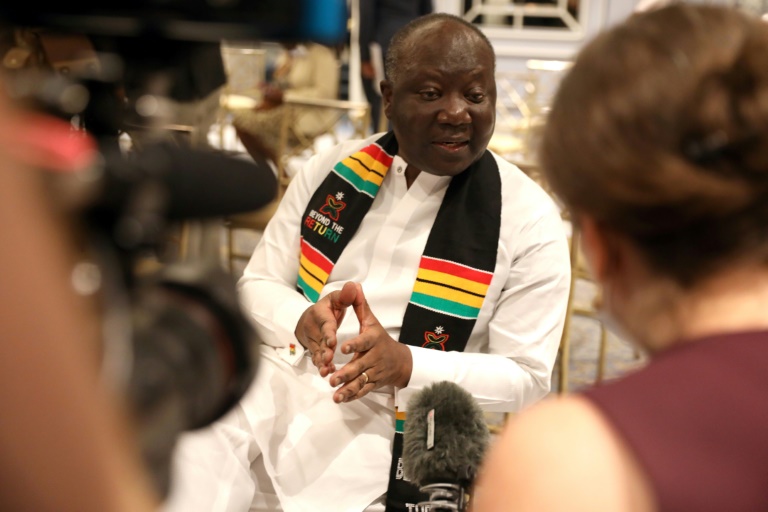
Ghana’s finance minister, Kenneth Ofori-Atta, presented the 2023 budget to parliament on Thursday, hiking tax and planning a debt swap as the country’s negotiates an International Monetary Fund (IMF) loan.

Ofori-Atta is facing calls for his dismissal as the West African state battles an economic crisis, with inflation at more than 40 percent and the cedi currency falling sharply.

Ghana hopes to secure up to $3 billion in IMF credit this year to shore up public finances after the government initially said it would not need to go to the multilateral lender.

“The challenges we face are daunting,” the minister said in a statement to lawmakers. “I, therefore, ask all of us to play a constructive role in getting our nation back on track.”

To increase revenues, the 2023 budget will raise value-added tax by 2.5 percent to 15 percent. The so-called E-levy on electronic transactions will be reduced from 1.5 percent to 1.0 percent in a bid to encourage more transactions.

The government will also freeze hiring of public workers for next year.

Ghana, a top cocoa and gold producer, also has oil and gas reserves but its debt service payments are high and its revenues low. Like the rest of Africa, it has been hit hard by economic fallout from the global pandemic and the Ukraine war. 

Since the start of the year, the cedi currency has depreciated more than 53 percent. That compared to an average seven percent average annual depreciation between 2017 and 2021, the finance minister said. 

Inflation in October hit 40.2 percent.

The local currency’s depreciation against the dollar has increasing Ghana’s foreign debt stock by 93 billion cedi or $6 billion this year alone, the minister said. 

He said the government would start a debt exchange programme but did not give details of how that would happen.

Earlier this year, President Nana Akufo-Addo reversed his government’s position and said the country would go to the IMF for help.

Critics have questioned what austerity measures may have to accompany any loan deal. Ghanaians already struggling with high costs of living.

Ofori-Atta said the IMF talks had made “substantial progress”, with agreement on “fiscal adjustment path, debt strategy and financing”.

The government is under increasing pressure over the country’s economic woes and Ofori-Atta faced an enquiry from lawmakers last week over his financial management.

Speaking in parliament on Friday, he apologised to Ghanaians for the struggles they faced. 

Earlier this month, Akufo-Addo fired the government’s junior finance minister, Charles Adu Boahen, over graft allegations after he appeared in a documentary on illegal gold mining.

Algeria sentences scores to death over forest fire lynching: media

An Algerian court Thursday sentenced 49 people to death over the lynching of a man falsely accused of starting deadly forest fires during an extended heatwave last year, state media reported.

The North African country has, however, maintained a moratorium on carrying out death sentences since the last executions in 1993.

Onlookers had beaten 38-year-old Djamel Ben Ismail to death after he turned himself in at a police station in the Tizi Ouzou region.

He had gone there upon hearing that he was suspected of arson, at the height of blazes which killed at least 90 people nationwide.

It later emerged that Ben Ismail, an artist from Miliana (230 kilometres or 140 miles further west), had headed to the region as a volunteer to help put out the fires.

Algeria, Africa’s biggest country, was one of several Mediterranean nations to face devastating wildfires last year.

The court in Dar El Beida on Thursday “sentenced 49 people to execution over (Ben Ismail’s) murder and mutilation of his body,” the APS news agency reported.

The court also handed 28 other defendants jail terms of two years to a decade without parole, APS said. 

Videos posted online at the time showed a crowd surrounding a police van and beating a man inside it, then dragging him out and setting him on fire, with some taking selfies.

The shocking images were widely shared and sparked outrage in Algeria.

Algeria’s LADDH human rights group called for calm and for those responsible for the “despicable murder” to be brought to justice.

“These images constitute yet another trauma for the family and for the Algerian people, already shocked” by the fires, it said.

The victim’s father, Noureddine Ben Ismail, was widely praised for calling for calm and “brotherhood” among Algerians despite his son’s murder.

The fires were spurred by a blistering heatwave, but authorities also blamed arsonists and “criminals” for the outbreaks.

The Movement for the Autonomy of Kabylie (MAK), which Algiers classifies as a “terrorist organisation”, rejected the accusations.

Authorities also blamed the independence movement of the Berber-majority region of Kabylie that extends along the Mediterranean coast east of Algiers.

Although much of Algeria’s interior is desert, the north has more four million hectares (10 million acres) of forest, which is hit every summer by fires.

Critics say the authorities failed to prepare for the blazes.

Algeria’s army mobilised five helicopters, while its emergency services used three water-bombing helicopters to fight the flames, with firefighting aircraft also coming to help from Europe.

Climate scientists have repeatedly warned that man-made global warming will bring higher temperatures and more extreme weather events across the world.

S.African president ready to face crunch probe finding

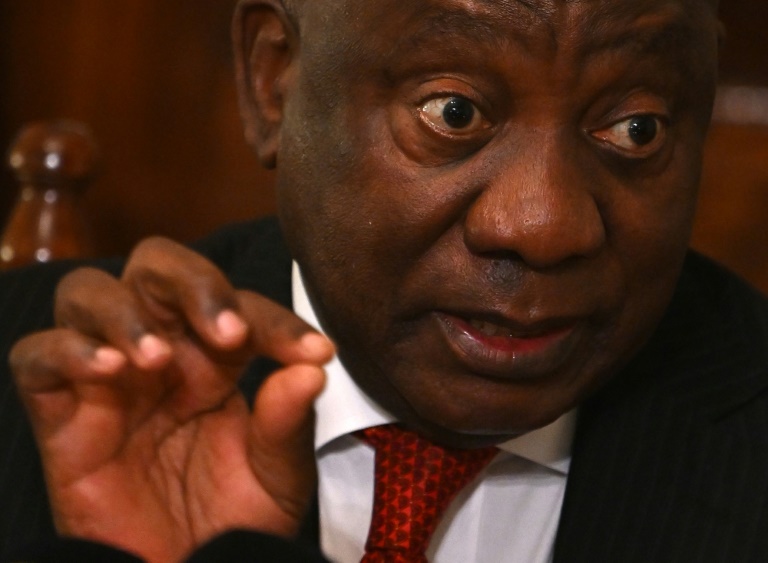
South African President Cyril Ramaphosa addressed domestic corruption claims that have prompted questions over his future during a visit to the UK on Thursday, but rejected suggestions they could cut short his presidency.   

Lawmakers in Pretoria will next month debate the findings of a special panel probing whether he should face impeachment over allegations that he covered up a crime.

The controversy risks derailing his bid for a second term as African National Congress (ANC) president.

It is alleged he failed to report a heist at his luxury cattle farmhouse in which robbers took $4 million in cash, and instead organised for the robbers to be kidnapped and bribed into silence.

Asked if he was concerned that the panel’s findings could put an end to his presidency, he said “no” and told reporters he had faith in South Africa’s “democracy and institutions”.

“I have put my case forward, let us leave it to the panel to come up with the outcome,” he said as he wrapped up his two-day state visit, the first to be hosted by King Charles III.

“We cannot prejudge it… let’s leave it to the panel to report and anything else that flows from that we handle then,” he said.

The scandal has stained the image of Ramaphosa, a protege of anti-apartheid icon Nelson Mandela. In 2018 Ramaphosa had been trumpeted as a clean pair of hands after the graft-tainted era of former president Jacob Zuma.

The panel’s findings are due to come just weeks before the deeply divided ruling ANC gathers to elect a leader.

Ramaphosa on Thursday also defended his visit to Britain at a time when South Africa is suffering from the loss of two million jobs caused by the Covid pandemic and rolling power cuts causing misery for citizens.

Blackouts are costing the country hundreds of millions of dollars in lost output, disrupting commerce and industry.

Ramaphosa said the country was “reaping the whirlwind” of years of lack of maintenance, investment and expertise.

But he said such visits were vital to promote investment and cooperation opportunities that would have positive benefits for the people of South Africa.

“We had a really great meeting with the prime minister (Rishi Sunak). We put our message across very strongly that we want investment to be upgraded and more and more British companies to invest in our country,” he said.

Comoros seeks life term for ex-president Sambi for high treason

Prosecutors in the Comoros on Thursday sought a life sentence for former president Ahmed Abdallah Sambi who was tried in absentia for high treason.

Sambi, 64, the arch opponent to current president Azali Assoumani, faces charges related to the alleged sale of Comorian passports to stateless people living in Gulf nations.

“He betrayed the mission entrusted to him by the Comorians,” said public prosecutor Ali Mohamed Djounaid before the elite State Security Court.

He demanded life imprisonment for Sambi, who will be sentenced on November 29.

Sambi, who led the small Indian Ocean archipelago between 2006 and 2011, passed a law in 2008 allowing the sale of passports at an exorbitant fee.

“They gave thugs the right to sell Comorian nationality like we would sell peanuts,” said Togolese lawyer Eric Emmanuel Sossa, who is sitting on the prosecution bench.

The ex-leader is accused of embezzling millions of dollars under the scheme. 

But Sambi’s French lawyer, Jean-Gilles Halimi said there is no evidence of this money — “no account discovered”.

Sambi refused to attend the trial, as his lawyers said there were no guarantees he would be judged fairly.

He only appeared on Monday with his lawyers asking the judge to recuse himself because he had previously sat on the panel that decided to indict him.

Sambi has already spent four years behind bars and was originally placed under house arrest for disturbing public order.

Three months later he was put under pre-trial detention for embezzlement, corruption and forgery, in the so-called “economic citizenship” scandal.

He was then charged with high treason. 

Among the defendants was French Syrian businessman Bashar Kiwan who accused the government of seeking to pressure him into testifying against the former president in exchange for a pardon.

The presidency has formally denied these accusations but the defence has indicated to AFP its intention to file a complaint for tampering with witnesses.

The Comoros islands — Anjouan, Grande Comore and Moheli — have endured years of grinding poverty and political turmoil, including about 20 coups or attempted coups, since independence from France in 1975.

Experts warn against bringing rebels into army to end Congo fighting

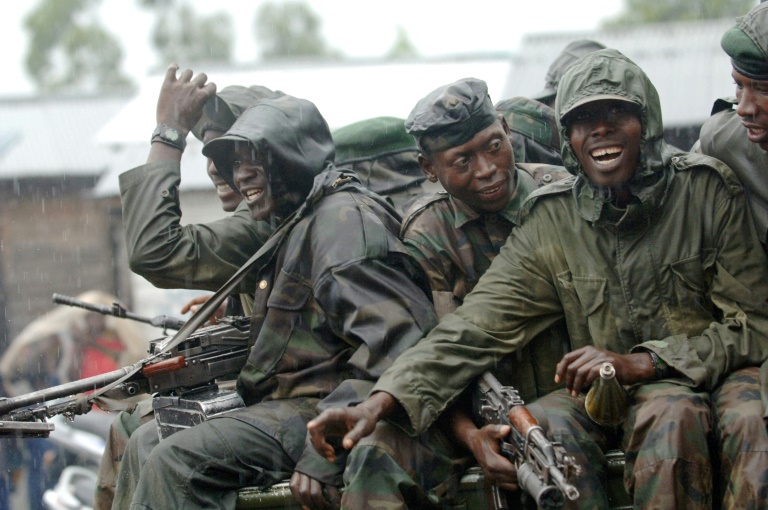
DR Congo’s army once absorbed rebels into its ranks as a way to end conflict, but as the country struggles with an offensive by the M23 militia in the east, experts caution against reviving the policy.

A mostly Congolese Tutsi rebel group, the M23 has staged a raging comeback after laying dormant for years. 

Its combatants took up arms again in late 2021, claiming that the Democratic Republic of Congo had failed to honour a pledge to integrate them into the army, among other grievances. 

M23 fighters have since captured swathes of territory in the east of the vast central African nation, edging close to the city of Goma, an important commercial hub.

On Wednesday, the DRC and its neighbour Rwanda — which it accuses of backing the rebels — struck a deal for a ceasefire that would take effect on Friday, according to Angola, which mediated in their talks. 

But, in the search for a durable peace, experts warn that the DRC’s practice of putting rebels in army uniforms is no solution. 

The tactic has never brought stability and weakened the army, security specialist Jacques Djoli told AFP. 

Known in Congo by the French term “brassage” — or “mixing” — the idea of integrating rebel groups into the army was borne out of a 2003 agreement at the end of the five-year Second Congo war. 

Congolese leaders put an end to the policy in 2013, judging it ineffective, but Djoli went further, saying its “ramshackle” implementation had led to the army being “infiltrated.”

In some instances, rebels who had been brought into the army launched mutinies — in the mid-200s, integrated members of the Congolese Tutsi CNDP militia, a precursor of the M23, began clashing with regular troops in the mid-2000s, for example. 

A security official who spoke on condition of anonymity agreed that bringing rebels into the ranks had sapped the army’s effectiveness.

Another critic is Juvenal Munubo, a member of the National Assembly’s defence committee.

Mixing rebels with soldiers had failed to build a “republican army,” he said, meaning a force that was loyal to the DRC and its constitution. 

In the current crisis, the M23 could use its leverage to seek positions in government, he feared.

“It would be a historic mistake to integrate the M23 or other groups into the army,” Munubo said. 

The only solution is for the rebels to surrender, disarm and return to civilian life, he said.

– Weak army –

The M23 first leapt to prominence 10 years ago when it captured Goma in 2012, before being driven out and going to ground. 

Its resurgence has turned a stark light on the weaknesses of the armed forces, which Djoli said had their heydey between 1977 and 1988 —  under former dictator Mobutu Sese Seko.

Poor pay and equipment feature among the army’s many problems. The security official pointed the finger especially at lack of training for special forces and airborne units.

President Felix Tshisekedi has urged young Congolese to enrol in the face of the M23 advance. 

Government spokesman Patrick Muyaya said Tuesday that thousands of people had responded to the call. They will undergo six to nine months of training before being “ready for the front,” he said. 

“Rebuilding an army is a time-consuming and arduous task,” Muyaya said. 

Close Bitnami banner
Bitnami