Africa Business

At COP27, US says election won't disrupt climate plan

The United States sought to reassure the UN climate summit in Egypt on Tuesday that it will stick to its energy transition even if Republicans triumph in midterm elections.

The COP27 talks have been dominated by calls for wealthier nations to step up their commitments to cut greenhouse gas emissions, while fulfilling pledges to financially help poorer nations green their economies and build resilience.

Developing nations devastated by natural disasters demanded that rich polluters compensate them for the damage caused by their emissions, with calls for a windfall tax on the profits of oil companies to help pay.

But stiff international criticism of Egypt’s treatment of a hunger-striking activist Alaa Abdel Fattah and the US midterm election also loomed large over the summit.

US President Joe Biden’s Democrats face a tough battle to hang on to their majority in Congress against Republicans, who are less favourable to international climate action.

A Republican victory could be a boon to the ambitions of former president Donald Trump, who is expected to make another bid for the White House.

Trump had pulled the United States out of the 2015 Paris Agreement on climate change. Biden returned the United States — the second-largest emitter of greenhouse gases after China — to the pact on his first day in office in 2020.

Biden won a major victory earlier this year when Congress passed the “Inflation Reduction Act”, which will see vast spending on green energy initiatives.

– ‘More determined than ever’ –

The “climate crisis doesn’t just threaten our infrastructure, economy and security — it threatens every single aspect of our lives on a daily basis,” US climate envoy John Kerry said on the sidelines of the summit, in the Red Sea resort of Sharm el-Sheikh.

He said that even if Democrats lose the election, “President Biden is more determined than ever to continue what we are doing.” 

“And most of what we are doing cannot be changed by anybody else who comes along,” Kerry said. “The marketplace has made its decision to do what we need to do to respond to the climate crisis.”

Some 100 world leaders were attending the summit on Monday and Tuesday, but Biden will only come on Friday after the midterms.

The first day of the summit was marked by dire warnings from UN chief Antonio Guterres, who told the COP27 that humanity faces a stark choice: “cooperate or perish”.

Nations worldwide are coping with increasingly intense natural disasters that have taken thousands of lives this year and cost billions of dollars.

They range from devastating floods in Nigeria and Pakistan to droughts in the United States and several African nations, as well as unprecedented heatwaves across three continents.

The world is “burning up faster than our capacity for recovery,” Pakistani Prime Minister Shehbaz Sharif told fellow leaders.

– ‘Planet is burning’ –

Countries are under pressure to step up efforts to reduce emissions, in order to meet the most ambitious Paris Agreement goal of preventing temperatures from rising by more than 1.5 degrees Celsius above the pre-industrial era.

A UN-backed report said Tuesday that developing countries and emerging economies, excluding China, need investments well beyond $2 trillion per year by 2030 if the world is to stop the global warming juggernaut and cope with its impacts.

One after the other, leaders of developing nations called for the establishment of a “loss and damage” fund that would compensate them for the here-and-now destruction caused by natural disasters, arguing that rich nations are responsible for the biggest share of planet-heating emissions.

Sharif said the recent floods in Pakistan had cost his country more than $30 billion in loss and damage.

“This all happened despite our very low carbon footprint, and yet we became a victim of something with which we have nothing to do and of course it was a man-made disaster,” Sharif said.

With his country having to spend billions to feed its people and protect them from floods, he asked: “How on earth can one expect from us that we will undertake this gigantic task on our own?”

Antigua and Barbuda Prime Minister Gaston Browne — speaking on behalf of a group of small island nations endangered by rising sea levels and tropical storms — said it was time to tax the windfall profits of oil companies to pay for loss and damage.

“While they are profiting, the planet is burning,” Browne said.
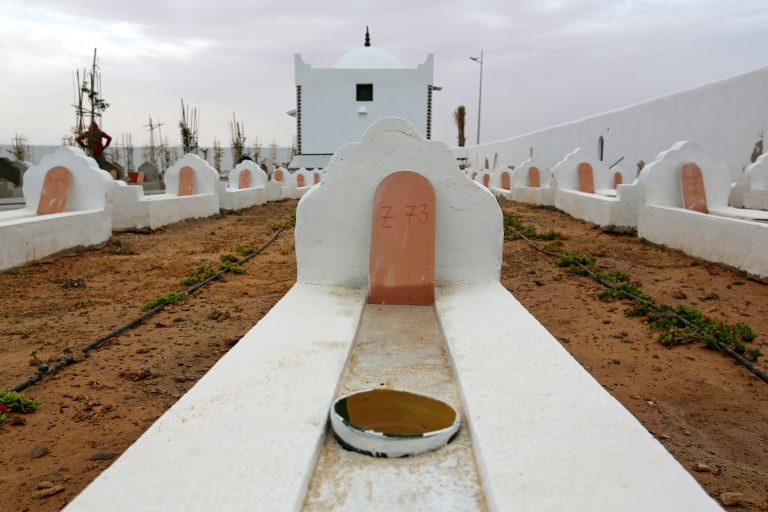
Parents of missing Tunisians dig up migrant graves: witnesses

The parents of Tunisian migrants missing since their boat sank in September have dug up graves in a cemetery hoping to locate and retrieve their dead offspring, witnesses said Tuesday.

In late September, a small boat sank after departing Zarzis in southeastern Tunisia with 18 migrants on board. Eight bodies, including several Tunisians, were subsequently recovered. 

Four bodies of Tunisians were buried by mistake in the Garden of Africa, a cemetery for drowned migrants from elsewhere on the continent — many of whom remain unidentified and or unclaimed.

Those four bodies were exhumed and transferred to other resting places under pressure from families.

But the parents of other Tunisian migrants who remain missing, in the belief that their children are buried in the same cemetery, began digging up graves on Monday in an attempt to identify bodies, according to witnesses and videos shared on social media.

The Garden of Africa, the initiative of Algerian artist Rachid Koraichi, was formally opened last year to provide a dignified resting place for migrants who died at sea.

Around 500 people protested on October 12 in Zarzis to press the authorities into intensifying searches for migrants who are still missing.

Tunisian authorities say they struggle to intercept or rescue migrants due to a lack of funding.

On Tuesday, the Tunisian National Guard said a migrant had drowned and 10 others were rescued from the sea off Bizerte overnight, after the boat carrying them sank. Five others are missing.

Favourable weather conditions in the spring and summer generally contribute to more attempts to cross the Mediterranean Sea from Tunisia and neighbouring Libya heading to Europe than other times of the year.

Since the start of this year, more than 22,500 migrants have been intercepted off the coast of Tunisia, of whom just under half originate from sub-Saharan Africa, according to official figures.

A deep economic crisis is pushing growing numbers of Tunisians to attempt to reach Europe, particularly Lampedusa which is less than 130 kilometres (80 miles) off the coast.

Court orders striking Kenya Airways pilots back to work

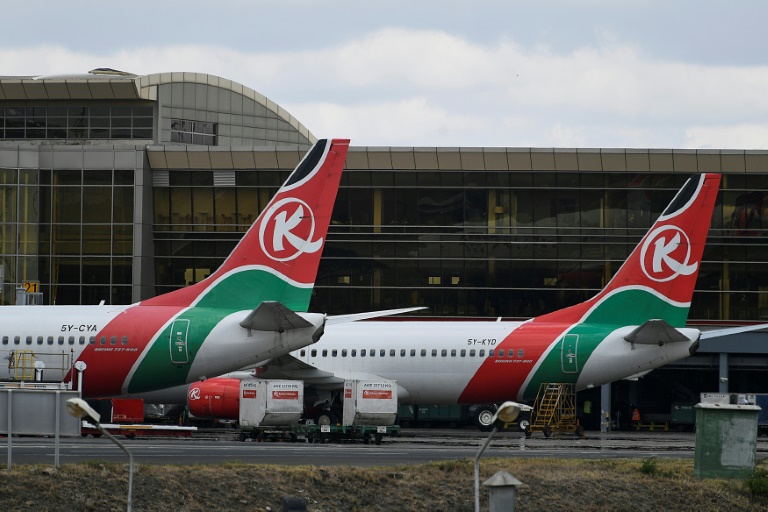
A Nairobi court has ordered striking Kenya Airways pilots to return to work by Wednesday morning, a breakthrough for the beleaguered carrier after the days-long walkout forced flight cancellations and left thousands of passengers stranded.

The Kenya Airline Pilots Association (KALPA) launched the strike at Nairobi’s Jomo Kenyatta International Airport on Saturday, defying a court order issued last week against the industrial action.

Justice Anna Mwaure on Tuesday ordered “the Kenya Airways pilots to resume their duties as pilots by 6:00 am on 9th November 2022 unconditionally”.

The walkout has exacerbated the woes facing the troubled national carrier, which has been running losses for years, despite the government pumping in millions of dollars to keep it afloat.

There was no immediate response from KALPA to the court order, which was welcomed by the airline’s management who vowed to intensify efforts to “recover the time, money and reputation lost”.

The carrier on Monday announced that it was ending its recognition of the union and withdrawing from their collective bargaining deal, accusing KALPA of “exposing the airline to irreparable damage”.

Mwaure said the court would now consider the issue and ordered the airline’s management to allow the pilots “to perform their duties without harassing them or intimidating them and especially by not taking any disciplinary action against any of them”.

In a statement released Tuesday evening, the airline’s CEO Allan Kilavuka said: “We commit to complying with the Court’s directions.”

The carrier had earlier said that the strike had forced it to cancel most of its flights but Kilavuka vowed that the airline would “do everything possible to return to normalcy in the shortest time”.

Kenya Airways, which is part owned by the government as well as Air France-KLM, is one of the biggest in Africa, connecting multiple countries to Europe and Asia. 

The dispute has added to the challenges facing Kenya’s recently elected government, with Transport Minister Kipchumba Murkomen on Sunday threatening the pilots with disciplinary action unless they returned to work.

Mwaure had summoned KALPA officials to appear in court on Tuesday for disobeying last week’s injunction against the strike.

– ‘Economic sabotage’ –

The airline and the government have accused the union of engaging in “economic sabotage”, with Kenya Airways warning that the strike would lead to losses estimated at $2.5 million per day.

“Due to this unlawful action by KALPA, the customers of KQ both locally and globally have suffered and continue to suffer immeasurable inconvenience and losses,” Kenya Airways said in a statement Monday using the shorthand airline code.

On Sunday, the airline said 56 flights had been cancelled due to the strike, disrupting 12,000 passengers’ plans.

The pilots in turn have accused the airline’s management of making “no concessions” to end the stalemate.

The protesting pilots, who make up 10 percent of the workforce, are pressing for the reinstatement of contributions to a provident fund and payment of all salaries stopped during the Covid-19 pandemic.

It was founded in 1977 following the demise of East African Airways, and flies more than four million passengers to 42 destinations annually.

It has been operating in large part thanks to state bailouts following years of losses.

Sudan forces fire tear gas at pro-democracy protesters

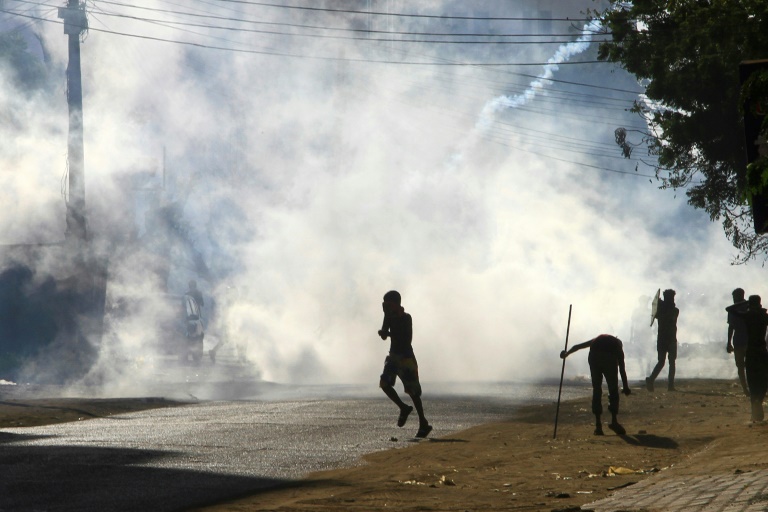
Sudanese security forces fired tear gas Tuesday as they confronted thousands of pro-democracy demonstrators in the capital Khartoum, an AFP correspondent said.

Protesters chanted “No to military rule” as they marched towards the presidential palace, denouncing a coup last year led by army chief Abdel Fattah al-Burhan that derailed a transition to civilian rule.

Burhan seized power in October 2021 and arrested civilian leaders appointed following the 2019 ouster of long-time autocrat Omar al-Bashir, plunging Sudan into a political and economic crisis.

“We will not stop until the military power is toppled and replaced with a civilian government,” said protester Hadia Mohammed.

“We will not leave the streets until we achieve the goals of the revolution: liberty, peace and justice,” said Samer Omar, another activist, draped in a Sudanese flag and wearing a yellow helmet for protection. 

Eyewitnesses said thousands also demonstrated in the city of Wad Madani, south of Khartoum, and Gedaref in the east.

Security forces have cracked down on near-weekly protests since the 2021 coup, resulting in at least 119 deaths, according to pro-democracy medics.

Since the military power grab, activists have warned that several Bashir-era loyalists had been appointed to official positions, including in the judiciary, which is currently trying the former dictator.

Burhan’s pledge of elections next year is seen as far-fetched, and no civilian leaders have taken up the mantle of the army chief’s promised civilian government.

Meanwhile, experts said a surge in ethnic violence in recent months has highlighted a security breakdown in Sudan, with the United Nations reporting over 370 people killed in clashes and at least 210,000 forced from their homes this year.

In Sudan, one of the world’s poorest countries, a third of the country’s 45 million inhabitants suffer from hunger, a 50 percent increase compared with 2021, according to the World Food Programme.

Tanzania plane wreckage removed from Lake Victoria

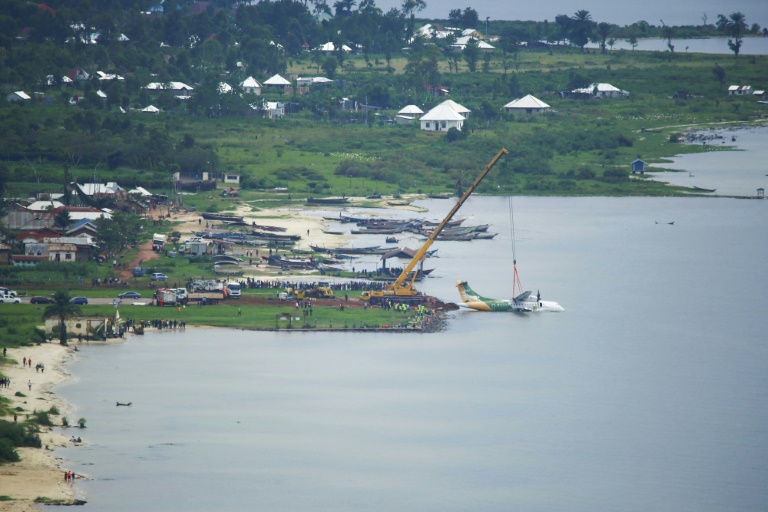
Tanzanian authorities on Tuesday said the wreckage of a plane that crashed in Lake Victoria has been pulled out of the water, following the country’s deadliest air accident in decades.

Nineteen people died when the Precision Air plane went down on Sunday as it approached the northwestern city of Bukoba, prompting a frantic rescue effort by emergency workers, fishermen and residents to pluck people to safety from the largely submerged aircraft.

“We have completely removed the plane out of water and now the professional investigation into the cause of the accident is under way,” the Tanzania Airports Authority (TAA) said in a statement.

“Bukoba Airport will also be reopened soon to allow aviation operations to continue as usual,” it added.

Video footage broadcast on local media showed the plane’s twisted wreckage being pulled up by a crane, its nose collapsing towards the ground, before it was deposited on a patch of grass.

Precision Air, a publicly listed company and Tanzania’s largest private carrier, said the aircraft was an ATR 42-500, manufactured by Toulouse-based Franco-Italian firm ATR, and had 39 passengers — including an infant — and four crew members on board.

Twenty-four survived out of the 43 people aboard flight PW 494 from financial capital Dar es Salaam.

The victims included a Kenyan citizen and a British national, government spokesman Gerson Msigwa told reporters in Bukoba.

“We are communicating with the respective embassies to transport the bodies,” he said.

Msigwa said investigators from ATR were expected in Tanzania on Tuesday to join their counterparts from Precision Air and the TAA, who arrived in the lakeside city on Sunday.

Police blamed bad weather for the accident amid questions about the government’s handling of the rescue effort.

Prime Minister Kassim Majaliwa said the government would do more “to ensure safety in the aviation transport sector”.

Precision Air, which is partly owned by Kenya Airways, was founded in 1993 and operates domestic and regional flights as well as private tourist charters.

The accident comes five years after 11 people died when a plane belonging to safari company Coastal Aviation crashed in northern Tanzania.

In 1999, a dozen people, including 10 US tourists, died in a plane crash in northern Tanzania while flying between Serengeti National Park and Kilimanjaro airport.

Macron accused of 'U-turn' over Maduro encounter

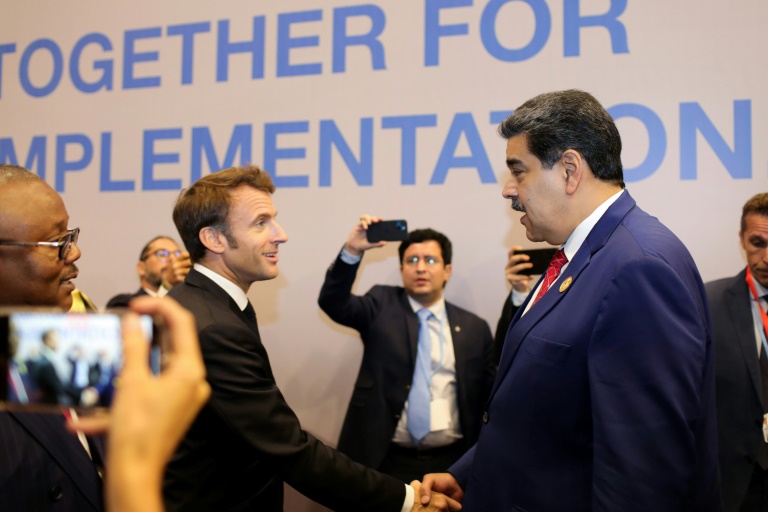
French President Emmanuel Macron faced accusations Tuesday of making a major foreign policy reversal after an apparently cordial encounter with his Venezuelan counterpart Nicolas Maduro on the sidelines of the COP27 climate summit in Egypt.

The one-and-a-half-minute handshake and chat on the sidelines of the summit in Sharm el-Sheikh on Monday may have been brief, but they were a stark contrast to previous comments by Macron, who in 2019 had described Maduro as “illegitimate.”

“I would be happy if we could talk to each other for longer to engage in useful bilateral work for the region,” Macron told Maduro, according to a video recording of the encounter.

Addressing Maduro as “president,” he added that “I will call you.”

France, the US and several European allies never recognised Maduro’s re-election to a second term in 2018 elections and instead recognised his rival Juan Guaido as acting president.

But Guaido’s influence has ebbed after Maduro clung onto power, and Western countries are also keenly aware of Venezuela’s status as a key OPEC oil producer at a time of global energy crisis.

In 2019, Macron had recognised Guaido as acting president, describing Maduro’s election as “illegitimate” and calling for “a restoration of democracy” in the country.

“Excellent handshake with the President of France Emmanuel Macron,” Maduro tweeted after the meeting. “The doors of Venezuela are open for the French people.”

“Macron’s Big U-turn on Maduro’s Venezuela,” commented France’s left-wing daily Liberation.

The leader of France’s ultra-left wing France Unbowed party (LFI) Jean-Luc Melenchon, a longtime admirer of Venezuela under Maduro and his predecessor Hugo Chavez, tweeted that the “need for oil makes people polite.” 

He said that Macron had “finally” recognised the election of Maduro.

The encounter also came as Macron prepares this week to host Colombia’s first left-wing President Gustavo Petro, who has renewed diplomatic relations with its neighbour Venezuela and wants to normalise ties after a three-year rupture.

Venezuela is also sending a senior official to attend the Paris Peace Forum, a major annual conference backed by Macron that starts on Friday.

During the discussion between the two presidents, Maduro said that “France should play a positive role” in Latin America.

The occasionally surreal exchange between the two men — where the presidents rigidly stare at each other — also saw Maduro declare that “we have very good friends in common” and ask Macron “when do you visit us?”

Asked if the encounter represented a change of policy by France, the French foreign ministry said all questions should be addressed to the Elysee.

Tax oil firms to pay for climate damage, island nations say

A group of small island nations joined calls on Tuesday for a windfall tax on oil companies to compensate developing countries for the damage caused by climate change-induced natural disasters.

Developing nations have pressed their case at the UN’s COP27 climate summit in Egypt for the creation of a “loss and damage” fund, arguing that rich nations are to blame for the biggest share of greenhouse gas emissions.

Oil companies have scored tens of billions of dollars in profits this year as crude prices have soared in the wake of Russia’s invasion of Ukraine.

“It is about time that these companies are made to pay a global COP carbon tax on these profits as a source of funding for loss and damage,” the prime minister of Antigua and Barbuda, Gaston Browne, told fellow leaders at the summit in the seaside resort of Sharm el-Sheikh.

“While they are profiting, the planet is burning,” said Browne, who was speaking on behalf of the 39-nation Alliance of Small Island States, many of whose very existence is threatened by rising sea levels and increasingly intense tropical storms.

Barbados Prime Minister Mia Mottley called Monday for a 10 percent tax on oil companies to fund loss and damage.

The contentious issue of loss and damage was added to the COP27 agenda after intense negotiations.

The United States and European Union have dragged their feet on the issue in the past, fearful of creating an open-ended reparations regime.

– ‘Fossil fuel non-proliferation’ –

Browne acknowledged that the adoption of the agenda was “just one step” in the process, which gives a two-year space to negotiate.

“We look forward to the establishment and officialisation of the fund by 2024,” he said.

Browne also said a group of four island nations had registered a commission with the UN to “explore the responsibility of states for injuries arising from their climate actions and breaches in the obligations”.

“As small countries this is a new dynamic pathway of justice where the polluter pays,” he said.

Browne said small island states “will fight unrelentingly this climate crisis, and this includes fighting in the international courts and under international law”.

Another island nation, Tuvalu, announced it was joining calls for a fossil fuel non-proliferation treaty, an initiative that seeks to stop new investments in coal, oil and gas globally and phase out production.

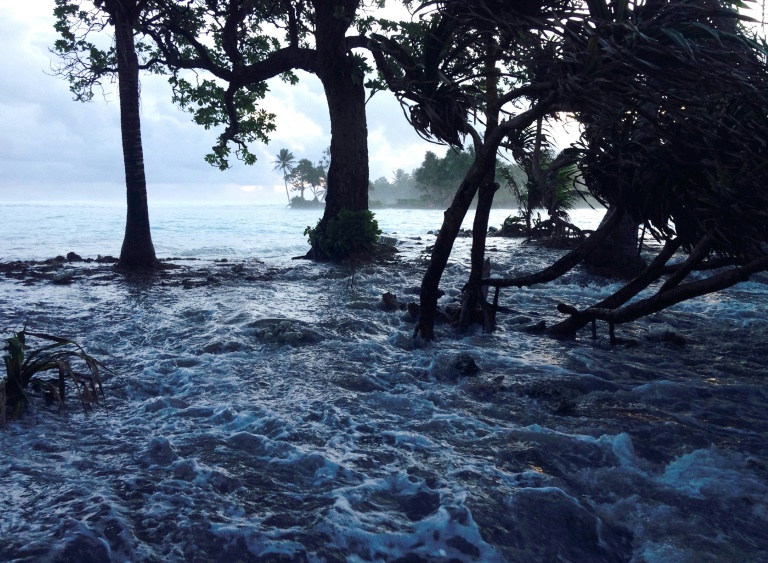
“The warming seas are starting to swallow our lands –- inch by inch,” Tuvalu’s Prime Minister Kausea Natano said in a statement.

“But the world’s addiction to oil, gas and coal can’t sink our dreams under the waves,” he said.

A Pacific neighbour, Vanuatu, was the first nation to join the treaty in September.

“Vanuatu and Tuvalu are the first countries to call for a new treaty as a companion to the Paris Agreement to align oil, gas and coal production with a global carbon budget,” said Tzeporah Berman, chair of the Fossil Fuel Non-Proliferation Treaty initiative.

“We will look back on this in history as the moment of reckoning, with overproduction that is locking in further emissions and holding us back from bending the curve,” Berman said.

S.Africa slams 'out of reach' climate aid for poorer nations

South Africa’s president, whose coal-dependent country is among the world’s top polluters, Tuesday criticised international funders for making it difficult for poorer nations to access aid to fight climate change.

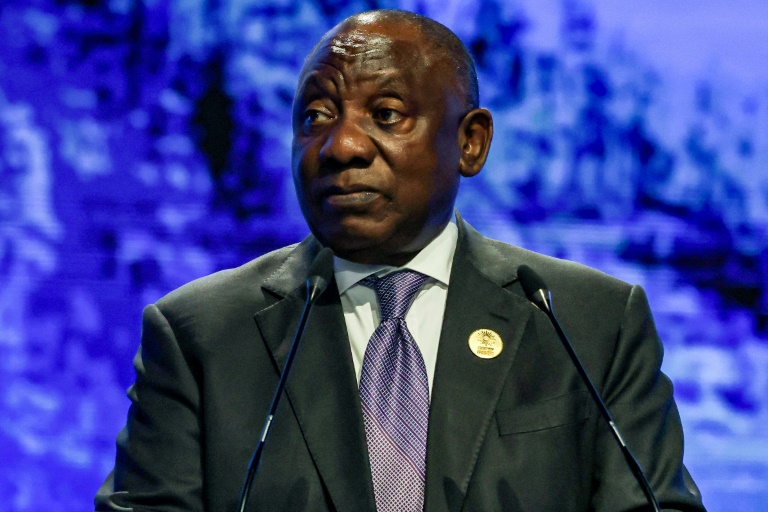
Support from multilateral organisations “is out of reach of the majority of the world’s population due to lending policies that are risk-averse and carry onerous costs as well as conditionalities,” Cyril Ramaphosa told the UN COP27 climate summit.

Addressing the meeting in Egypt’s Sharm el-Sheikh, he said “funding institutions need to transform … the way in which they fund projects that will enable us to develop with regard to climate change”.

According to a UN-backed report released Tuesday, developing countries and emerging economies need investments well beyond $2 trillion annually by 2030 if the world is to stop the global warming juggernaut.

South Africa, one of the world’s top 12 polluters, last week revealed that it will require about $98 billion over the next five years to transition to net zero.

Last year, at the COP26 in Glasgow, Pretoria secured $8.5 billion in loans and grants from a group of rich countries towards its green transition — very little of which is grant funding.

“We found in the end that only 2.7 percent was grant money, other portions were concessional loans …offered by development funding institutions as well as normal commercial institutions,” Ramaphosa told a news conference after his address.

He called on rich nations to honour their commitments “because failing to honour these commitments breaks trust and confidence in the process”.

“More industrialised countries need to live up to the commitments they have made, knowing fully well that they have, through the development of their own economies, contributed a great deal more to the damage that many countries on our continent now labour under,” he told reporters.

The head of state assured the summit that South Africa, which generates about 80 percent of its electricity through coal, was on course to retire several of its ageing coal-fired power plants in the next eight years.

The World Bank last week granted South Africa $497 million to decommission one of its largest coal-fired power plants and promote renewable energy.

“Because South Africa already carries a fairly sizeable loan burden that it has to service … we require more grant funding” Ramaphosa said.

South Africa will require at least $500 billion dollars to achieve carbon neutrality by 2050, according to the bank.

burs-zam/sn/fz

Court orders striking Kenya Airways pilots back to work

A Nairobi court has ordered striking Kenya Airways pilots to return to work by Wednesday morning after the days-long walkout forced dozens of flight cancellations and left thousands of passengers stranded.

The Kenya Airline Pilots Association (KALPA) launched the strike at Nairobi’s Jomo Kenyatta International Airport on Saturday, defying a court order issued last week against the industrial action.

Justice Anna Mwaure on Tuesday ordered “the Kenya Airways pilots to resume their duties as pilots by 6:00 am on 9th November 2022 unconditionally”.

The walkout has exacerbated the woes facing the troubled national carrier, which has been running losses for years, despite the government pumping in millions of dollars to keep it afloat.

There was no immediate response from KALPA to the court order, which came as the airline announced that most of its flights had been cancelled due to the strike.

The carrier on Monday announced that it was ending its recognition of the union and withdrawing from their collective bargaining deal, accusing KALPA of “exposing the airline to irreparable damage”.

Mwaure said the court would now consider the issue and ordered the airline’s management to allow the pilots “to perform their duties without harassing them or intimidating them and especially by not taking any disciplinary action against any of them”.

The airline, which is part owned by the government as well as Air France-KLM, is one of the biggest in Africa, connecting multiple countries to Europe and Asia. 

The dispute has added to the challenges facing Kenya’s recently elected government, with Transport Minister Kipchumba Murkomen on Sunday threatening the pilots with disciplinary action unless they returned to work.

Mwaure had summoned KALPA officials to appear in court on Tuesday for disobeying last week’s injunction against the strike.

The airline and the government have accused the union of engaging in “economic sabotage”, with Kenya Airways warning that the strike would lead to losses estimated at $2.5 million per day.

– ‘Immeasurable losses’ –

“Due to this unlawful action by KALPA, the customers of KQ both locally and globally have suffered and continue to suffer immeasurable inconvenience and losses,” Kenya Airways said in a statement Monday using the shorthand airline code.

On Sunday, the airline said 56 flights had been cancelled due to the strike, disrupting 12,000 passengers’ plans.

The pilots in turn have accused the airline’s management of making “no concessions” to end the stalemate.

The protesting pilots, who make up 10 percent of the workforce, are pressing for the reinstatement of contributions to a provident fund and payment of all salaries stopped during the Covid-19 pandemic.

It was founded in 1977 following the demise of East African Airways, and flies more than four million passengers to 42 destinations annually.

It has been operating in large part thanks to state bailouts following years of losses.

Pressure mounts on Egypt to release hunger-striking dissident

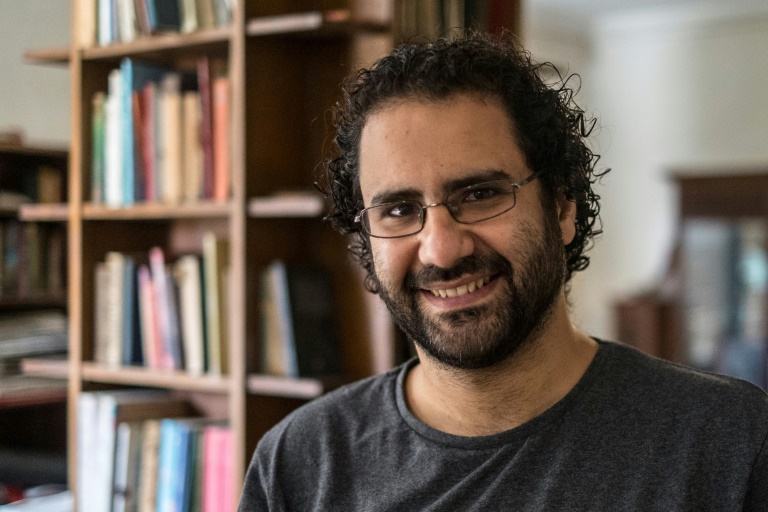
International pressure mounted Tuesday for the “immediate release” of Egyptian activist Alaa Abdel Fattah, whose family fears for his life after he escalated his hunger strike by refusing water too as COP27 opened.

After a seven-month stint during which he consumed only “100 calories a day”, the 40-year-old British-Egyptian stopped drinking water on Sunday as world leaders gathered for the opening of the global climate summit in Egypt.

On Tuesday, a day after British Prime Minister Rishi Sunak and French President Emmanuel Macron met with Egypt’s President Abdel Fattah al-Sisi and raised his plight, UN rights chief Volker Turk and German Chancellor Olaf Scholz demanded his release.

Abdel Fattah, currently serving a five-year sentence for “spreading false news” for reposting a Facebook post about police brutality, has been leading headlines during the UN summit, intensifying international attention on Egypt’s rights record.

A key figure of the 2011 uprising that toppled longtime autocrat Hosni Mubarak, Abdel Fattah gained British citizenship this year through his UK-born mother, Laila Soueif.

– ‘Dreadful consequences’ –

Soueif — who has been camped out in front of the prison for two days in the hope of receiving a letter as proof of life, according to daughter Mona Seif — warns her son many only have “a day or two or three at most”.

In a message posted on Facebook, Soueif directed an appeal to world leaders at the COP27 summit rather than the Egyptian authorities, who she accused of already having “so much blood on their hands.”

Activists at COP27 have posted prolifically on Twitter under the hashtag #FreeAlaa and several speakers have ended their speeches with the words “you have not yet been defeated” — the title of his book, prefaced by Canadian author Naomi Klein.

Sunak said Monday that the case is “a priority”, demanding it be “resolved as soon as possible.”

Macron said he had received an assurance that Sisi is “committed to ensuring that (the) health of Alaa Abdel Fattah is preserved” and that the situation will be resolved “in the coming weeks and months.”

German Chancellor Olaf Scholz on Tuesday said that “his release must be possible, so that this hunger strike does not end in death,” adding that “we should be afraid that this could lead to dreadful consequences”.

Turk said he “deeply regrets” Egypt had not released Abdel Fattah, warning that his “life is in great danger”.

On Tuesday, a press conference led by Abdel Fattah’s sister Sanaa Seif — on the sidelines of the COP27 summit in the Red Sea resort of Sharm el-Sheikh — was disrupted by an Egyptian parliamentarian.

“We are talking about an Egyptian citizen detained for a criminal offence, he is not a political prisoner,” said pro-government lawmaker Amr Darwish, who was escorted out of a COP27 hall by UN security. “Do not try to use the West against Egypt.”

– ‘Force fed’? –

Egypt’s Foreign Minister Sameh Shoukry, the COP27 president, told CNBC television that Abdel Fattah — whose dual citizenship Cairo does not recognise — has access to “all the necessary care in prison”.

Sanaa Seif said Shoukry’s talk of “care” raises concerns her brother is potentially being “force fed” with intravenous drips.

“Is he handcuffed to a bed, on IVs against his will?” she said.

Cairo has faced intensifying criticism of its long deplored human rights record since it was announced as the host of the COP27 climate summit last year, a move rights groups said “rewards the repressive rule” of Sisi.

Three Egyptian journalists also continued a hunger strike for a second day, demanding “the release of all political prisoners in Egypt”.

Rights groups say such prisoners number some 60,000, a claim denied by Cairo.

Abdel Fattah’s continued detention comes despite Egypt having granted presidential pardons to a total of 766 political prisoners since the reactivation of a pardon policy in April this year, according to data compiled by Amnesty. 

But over the same period close to double that number have been jailed for their activism, Amnesty says.

Close Bitnami banner
Bitnami