Africa Business

Angolan president leads in poll results

Angolan President Joao Lourenco was Thursday heading for likely victory over his charismatic rival after the country’s most hotly contested election in its democratic history, with most of the ballots counted.

Vote counting began after polls closed on Wednesday in the oil-rich nation, where multi-party elections were only introduced in 1992.

The election had been overshadowed by Angola’s many woes — a struggling economy, inflation, poverty and drought, compounded by the death of a former strongman president.

Preliminary results published on Thursday by Angola’s electoral commission gave the ruling People’s Movement for the Liberation of Angola (MPLA) 52.08 percent of the vote with more than 86 percent of ballots counted. 

The main opposition group, the National Union for the Total Independence of Angola (UNITA), led by Adalberto Costa Junior, 60, was at 42.98 percent.

An earlier count released overnight had given a much wider margin to the MPLA, which has ruled Angola for nearly 50 years after the country gained independence from Portugal.

Residents in Luanda reacted with mixed feelings to the preliminary count that was given ample coverage by local media, with state newspaper Jornal de Angola’s front page on Thursday saying: “MPLA leads the count.”

“I voted for UNITA, and I do not believe in these results,” said Jorge, a 40-year-old mechanic who did not give his surname, accusing the electoral commission of being in cahoots with the ruling party. 

“I feel really bad. The country is not going to change, it’s always the same story.”

Lourenco, 68, a Soviet-educated former general who had promised a new era for the southern African nation when he succeeded veteran leader Jose Eduardo dos Santos five years ago, has trumpeted a list of achievements.

The incumbent is credited with making far-reaching reforms, including boosting financial transparency and efficiency in parastatal organisations, fighting sweeping nepotism and corruption, and promoting business-friendly policies to lure foreign investors.

“I am happy, the MPLA has given young people opportunities, there is more work and transparency,” said 27-year-old shopkeeper Madalena Antonio commenting on the early results. 

“The government did what it could do. Things will get better.”

– Voter tampering fears –

The MPLA traditionally wields a grip over the electoral process, and state media and opposition and civic groups have raised fears of voter tampering.

Results in past elections have been contested, in a process that can take several weeks.

UNITA’s deputy leader Abel Chivukuvuku had said earlier the party’s own tally showed it was ahead.

“Our poll counting centres… give us clear provisional indication of a winning trend for UNITA in all provinces of the country,” he told a live streamed night conference. “We are confident, calm and tranquil.”

More than 14 million people were registered to vote.

Angola is Africa’s second largest crude producer, but the oil bonanza also nurtured corruption and nepotism under dos Santos, who died in Spain last month.

The low-key, night-time repatriation of his remains in the final leg of campaigning has added a macabre touch to the election. 

Dos Santos will be buried on Sunday, which would have been his 80th birthday.
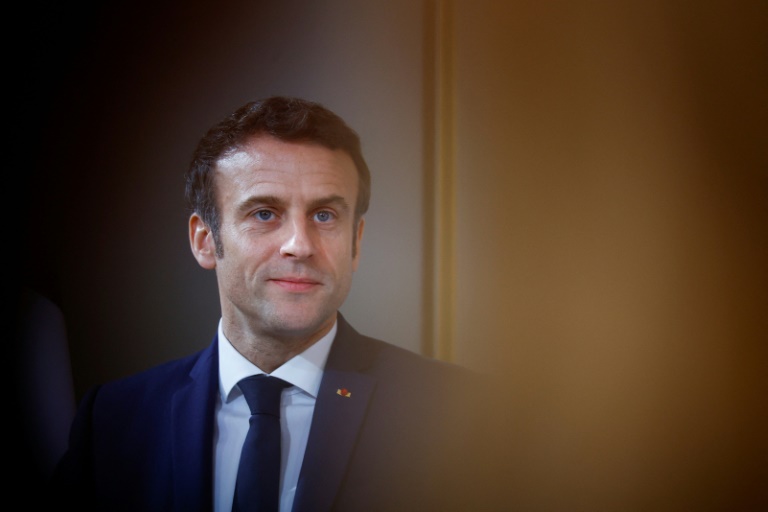
France's Macron looks to 'future' on Algeria trip to mend ties

President Emmanuel Macron starts a three-day visit Thursday to Algeria to help mend ties with the former French colony, which this year marks its 60th anniversary of independence.

The first French president to be born after Algerian independence, Macron is hoping “to lay a foundation to rebuild and develop” a sometimes difficult relationship with the North African nation, his office said.

Accompanied by seven ministers, Macron will be met at the airport in the capital Algiers by President Abdelmadjid Tebboune at around 3:00 pm (1400 GMT).

The two heads of state will visit a monument to martyrs of the country’s war for independence, which ended more than 130 years of French colonial rule in 1962.

Franco-Algerian relations have seen repeated crises since then.

The French leader, on his second visit to Algeria since he took power in 2017, “has chosen to direct this visit towards the future, (focusing on) start-ups, innovation, youth, new sectors,” the Elysee said.

Macron, who will meet entrepreneurs in Algiers as well as young people in the second city Oran, is accompanied by a 90-strong delegation.

France’s chief rabbi Haim Korsia, the son of Algerian-born Jews, withdrew from the trip at the last moment after testing positive for Covid-19.

His planned attendance had been criticised by prominent Islamist politician Abderrazak Makri and social media users in Algeria, where the Palestinian cause is widely supported.

Ties between Paris and Algiers have been particularly stormy since last year, when Macron questioned Algeria’s existence as a nation before the French occupation and accused the government of fomenting “hatred towards France”.

Tebboune withdrew his country’s ambassador in response and banned French military aircraft from its airspace.

– Better ties ‘a necessity’ –

But Macron’s office said he “regretted” the misunderstandings caused by his comments, and his aides believe both sides have moved on.

They note the resumption of normal diplomatic relations and overflights to French army bases further south in Africa.

Analyst Mansour Kedidir said that “given instability in the Maghreb region, conflicts in the Sahel and the war in Ukraine, improving ties between France and Algeria is a political necessity”.

Macron and Tebboune will discuss the situation in Algeria’s southern neighbour Mali, as well as the growing influence in the region of Russia, Algeria’s top arms supplier.

France’s latest efforts to mend ties comes as Algeria moves to fill a vast shortfall in gas supplies to Europe following Russia’s invasion of Ukraine.

European nations are seeking to end their dependence on Russian hydrocarbons, giving Algeria — Africa’s biggest gas exporter with direct pipelines to Spain and Italy — renewed clout.

“The French president will certainly ask Algeria to make an effort to try to increase its gas production,” said Algerian economist Abderrahmane Mebtoul.

But Macron’s office has said gas is not a major feature of the visit, and an adviser said the trip is “about being oriented towards the future”.

– ‘Different discourse’ –

Macron has long ruled out issuing an apology for the highly sensitive issue of colonialism, but he has made a series of gestures aimed at healing past wounds.

In Algiers, few have much sympathy towards Macron, who during his first election campaign had described French colonialism as a “crime against humanity”.

“Before he was president, he used nice words, he visited (Algeria), but right after he went back to France, he changed,” said computer scientist Othmane Abdellouche, 62. “He used a totally different discourse”.

French historians say half a million civilians and combatants died during Algeria’s bloody war for independence, 400,000 of them Algerian. The Algerian authorities say 1.5 million were killed.

Tebboune’s office said in October that over 5.6 million Algerians were killed during the colonial period.

Algerian rights groups have also urged Macron not to overlook human rights abuses by the government that came to power after long-time leader Abdelaziz Bouteflika stepped down in 2019.

Tebboune, a prime minister under Bouteflika, has clamped down on the Hirak opposition movement that forced his predecessor to resign.

South Africa recall Harmer as they bat against England in 2nd Test

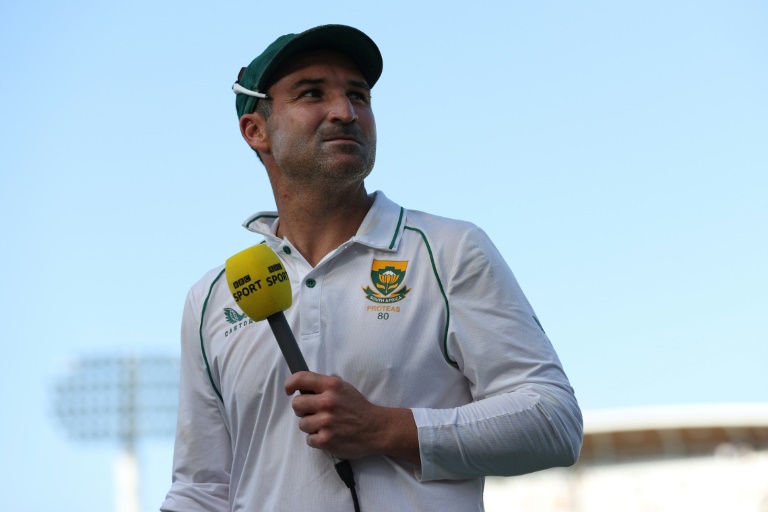
South Africa captain Dean Elgar won the toss and elected to bat against England in the second Test at Old Trafford on Thursday as the Proteas recalled off-spinner Simon Harmer.

Harmer, a stalwart wicket-taker with English county side Essex, returned in place of towering left-arm quick Marco Jansen in the only change to the XI that overwhelmed England by an innings and 12-runs in the first Test at Lord’s last week.

The pitch at Old Trafford should offer more assistance to spinners as the game goes on, with Harmer joining an attack that already features slow left-armer Keshav Maharaj.

Although Thursday’s overcast conditions promised to aid fast bowlers, history was on Elgar’s side — no team has ever won the toss in a Test at Old Trafford, chosen to bowl and gone on to win the match.

“There’s a little bit overhead but we’ve got to play what’s in front of us and it looks quite dry, hence why we’ve gone with the extra spin option with Simon Harmer,” said Elgar at the toss.

“When you go with two spinners, you have to back yourself, go positive and bat first…Marco Jansen misses out, he did nothing wrong in the first game but it is just horses for courses.”

Defeat in the first Test was England’s first loss under their new red-ball leadership team of captain Ben Stokes and coach Brendon McCullum following a run of four successive wins.

“We were going to have a bowl so it worked out okay!,” said Stokes. “I think it looks fantastic bowling conditions with the attack we have.”

England had already recalled Ollie Robinson on Wednesday in the only change to their side at Lord’s. The Sussex seamer replaced fellow paceman Matthew Potts.

Robinson enjoyed an impressive first year in Test cricket after making his debut in the 2021 English season, taking 39 wickets in nine matches at an average of 21.

However, his fitness was publicly criticised by England bowling coach Jon Lewis during the Ashes and he has been hampered by injuries since then.

“It’s great for Ollie Robinson to be back in,” said Stokes. “The dedication he has shown to get back in is a sign of what he can bring, along with a great skill set. He has that added bounce which could be an asset at Old Trafford.”

Victory in Manchester would put South Africa 2-0 up in a three-match contest and give them their first series win over England since 2012.

But South Africa have only won one of their nine Tests at Old Trafford, back in 1955, when three of their batsmen scored centuries and Peter Heine took eight wickets in the match.

Teams

England: Zak Crawley, Alex Lees, Ollie Pope, Joe Root, Jonny Bairstow, Ben Stokes (capt), Ben Foakes (wkt), Stuart Broad, Jack Leach, Ollie Robinson, James Anderson

South Africa: Dean Elgar (capt), Sarel Erwee, Keegan Petersen, Aiden Markram, Rassie van der Dussen, Kyle Verreynne (wkt), Simon Harmer, Keshav Maharaj, Kagiso Rabada, Anrich Nortje, Lungi Ngidi

Umpires: Chris Gaffaney (NZL), Richard Illingworth (ENG)

TV umpire: Nitin Menon (IND)

Match referee: Ranjan Madugalle (SRI)

Angolan president secures strong lead in early poll results

Angola on Thursday eagerly awaited the outcome of the most tightly contested vote in its democratic history, with early results showing a wide margin for incumbent Joao Lourenco but the opposition also claiming a lead. 

Ballot counting began after polls closed on Wednesday in the oil-rich nation, where multi-party elections were only introduced in 1992.

Preliminary results published overnight by Angola’s electoral commission gave the ruling People’s Movement for the Liberation of Angola (MPLA) 60.65 percent of the vote with 33 percent of ballots counted. 

The main opposition group, the National Union for the Total Independence of Angola (UNITA), led by charismatic leader Adalberto Costa Junior, was at 33.85 percent.

The MPLA has ruled Angola for nearly 50 years after the country gained independence from Portugal.

Residents in Luanda reacted with mixed feelings to the preliminary count that was given ample coverage by local media, with state newspaper Jornal de Angola’s front page on Thursday saying: “MPLA leads the count.”

“I voted for UNITA, and I do not believe in these results,” said Jorge, a 40-year-old mechanic who did not give his surname, accusing the electoral commission of being in cahoots with the ruling party. 

“I feel really bad. The country is not going to change, it’s always the same story.”

Lourenco, a Soviet-educated former general who had promised a new era for the southern African nation when he succeeded veteran leader Jose Eduardo dos Santos five years ago, has trumpeted a list of achievements.

He is credited with making far-reaching reforms, including boosting financial transparency and efficiency in parastatal organisations, fighting sweeping nepotism and corruption, and promoting business-friendly policies to lure foreign investors.

“I am happy, the MPLA has given young people opportunities, there is more work and transparency,” said 27-year-old shopkeeper Madalena Antonio commenting on the early results. 

“The government did what it could do. Things will get better.”

– Economic woes –

But UNITA’s deputy leader Abel Chivukuvuku said the party’s own tally showed it was ahead.

“Our poll counting centres… give us clear provisional indication of a winning trend for UNITA in all provinces of the country,” he told a live streamed night conference. “We are confident, calm and tranquil.”

The MPLA traditionally wields a grip over the electoral process, and state media and opposition and civic groups have raised fears of voter tampering.

Results in past elections have been contested, in a process that can take several weeks.

More than 14 million people were registered to vote.

The election has been overshadowed by Angola’s many woes — a struggling economy, inflation, poverty and drought, compounded by the death of a former strongman president.

Angola is Africa’s second largest crude producer, but the oil bonanza also nurtured corruption and nepotism under dos Santos, who died in Spain last month.

The low-key, night-time repatriation of his remains in the final leg of campaigning has added a macabre touch to the election. 

Dos Santos will be buried on Sunday, which would have been his 80th birthday.
Malians 'caught in the crossfire' flee to Mauritania

Ehya sits down under a makeshift tent and prepares tea. 

The herder in his fifties had lived in the bush of central Mali his entire life.

But in May, security in his home region had become untenable. Mali’s decade-long conflict was now too close. 

Ehya made the grim choice to flee, becoming one of thousands of Malians who this year have fled to the safety of Mbera refugee camp just across the border in Mauritania.

“For years we tried to bide our time, to stay on our land, telling ourselves that it would blow over,” said Ehya, his head wrapped in a long white turban that falls over his chest.  

But, he said, “people are killing like they slaughter chickens”.

Central Mali is a hotspot of the violence that has metastasised across the Sahel, leaving thousands dead and millions displaced.

Ehya — whose name, like others interviewed for this article, has been changed by AFP for his safety — recalled the day when a neighbouring settlement was attacked by jihadists.

“We knew that if we didn’t run, it would be our turn”, the pastoralist said. “We ran for our lives.”

Some of the displaced crowd into the outskirts of towns. 

Many others head to Mbera — a haven not only from jihadists affiliated with Al-Qaeda or the Islamic State group (IS) but also from inter-communal reprisals and violent criminals.

Opened in 2012 not long after Mali’s conflict began, the camp is one of the largest in the Sahel, hosting more than 78,000 people. Some 8,000 Malians have fled there this year, according to the UN’s refugee agency.

“For the past six months, the camp has been receiving a large number of people from the areas of Sokolo, Dogofry, Ouagadou and Nampala” in central Mali, Abdoul Aziz Ag Mohamed, a camp administrator, told AFP.

Others have come from the Timbuktu region in the north of Mali. 

“The camp has two speeds,” Mohamed said: “Old refugees”, who are now more autonomous, and “new refugees, who are in a state of emergency”.

– ‘White men’ –

Violence, initially confined to the north, spread to the centre of the country in 2015, and then to neighbouring Niger and Burkina Faso. Mauritania has so far been able to stem the expansion.

In Mali’s vast rural and desert wastelands, the Malian state has no permanent authority, and inhabitants — mostly nomads — live among the fighters.

“Daesh arrive in the camps, kill women, men and children indiscriminately then leave, taking the livestock,” Ehya said, using the Arabic acronym for IS.

AFP spoke to 10 refugees in the Mbera camp who all described the same pattern of attacks on civilians, which they say are increasing.

They also denounced deadly reprisals by all actors in the conflict: the “mujahideen” or jihadists, as well as by the military and a new force — Russia’s Wagner paramilitary group or, as it is sometimes described, the “white men”. 

“The Malian army, the Wagner army, the mujahideen: we are caught in the crossfire,” Ehya said.

“The Malian army accuses us of supporting the mujahideen when we refuse to tell them where the jihadists are, and the mujahideen accuse us of being with the Malian state if we don’t become mujahideen.”

Mali’s ruling junta has brought in Russian operatives it describes as military trainers, while Western countries describe them as mercenaries from the pro-Kremlin Wagner group. 

Rights monitors have implicated “white-skinned” fighters in massacres in central Mali in March. 

– Sexual violence –

Another resident at the refugee camp, Seghad, recently arrived from Sokolo, some 200 kilometres (125 miles) south of Mbera. 

The 25-year-old said she fled fighting between the army and jihadists — and violence committed against women.

“In neighbouring villages, (armed men) would come, blindfold women, take them to do what they have to do and then bring them back,” Seghad said. 

Seghad described the assailants as Fulani, an ethnic group also known as Peul. Members of this group have been recruited by jihadists, prompting the Fulani community as a whole to be often accused of “terrorism”, say experts.

Ehya, Seghad and eight others interviewed by AFP all referred to Wagner, whose presence in Mali the government denies.

It “never operates alone. They are always with the Malian army,” said Ehya.

In Hombori, some 1,000 km (600 miles) from Mbera, Wagner fighters “came on market day and opened fire on herders who had come to pay for their livestock”, said Ehya, who comes from nearby and had relatives present during the attack.

The UN says it has opened an investigation into the alleged summary execution of numerous civilians by Malian soldiers “allegedly accompanied by foreign security personnel” in Hombori on April 19.

The Malian authorities have maintained that they respect human rights and will investigate if necessary.

Angolan president secures strong lead in early poll results

Angola on Thursday eagerly awaited the outcome of the most tightly contested vote in its democratic history, with early results showing a wide margin for incumbent Joao Lourenco but the opposition also claiming a lead. 

Ballot counting began after polls closed on Wednesday in the oil-rich nation, where multi-party polls were only introduced in 1992.

Preliminary results published overnight by Angola’s electoral commission gave the ruling People’s Movement for the Liberation of Angola (MPLA) 60.65 percent of the vote with 33 percent of ballots counted. 

The main opposition the National Union for the Total Independence of Angola (UNITA) led by charismatic leader Adalberto Costa Junior was at 33.85 percent.

The MPLA has ruled Angola for nearly 50 years after the country gained independence from Portugal.

Lourenco, a Soviet-educated former general who had promised a new era for the southern African nation when he succeeded veteran leader Jose Eduardo dos Santos five years ago, has trumpeted a list of achievements.

He is credited with making far-reaching reforms, including boosting financial transparency and efficiency in parastatal organisations, fighting sweeping nepotism and corruption, and promoting business-friendly policies to lure foreign investors.

But UNITA’s deputy leader Abel Chivukuvuku said the party own tally showed it was ahead.

– Economic woes –

“Our poll counting centres … give us clear provisional indication of a winning trend for UNITA in all provinces of the country,” he told a live streamed night conference. “We are confident, calm and tranquil”.  

The MPLA traditionally wields a grip over the electoral process and state media and opposition and civic groups have raised fears of voter tampering.

Results in past elections have been contested, in a process that can take several weeks.

The election has been overshadowed by Angola’s many woes — a struggling economy, inflation, poverty and drought, compounded by the death of a former strongman president.

More than 14 million people were registered to vote.

Angola is Africa’s second largest crude producer, but the oil bonanza also nurtured corruption and nepotism under dos Santos, who died in Spain last month.

The low-key, night-time repatriation of his remains in the final leg of campaigning has added a macabre touch to the election. 

Dos Santos will be buried on Sunday, which would have been his 80th birthday.
Japan seeks 'sustainable world' in Africa aid forum

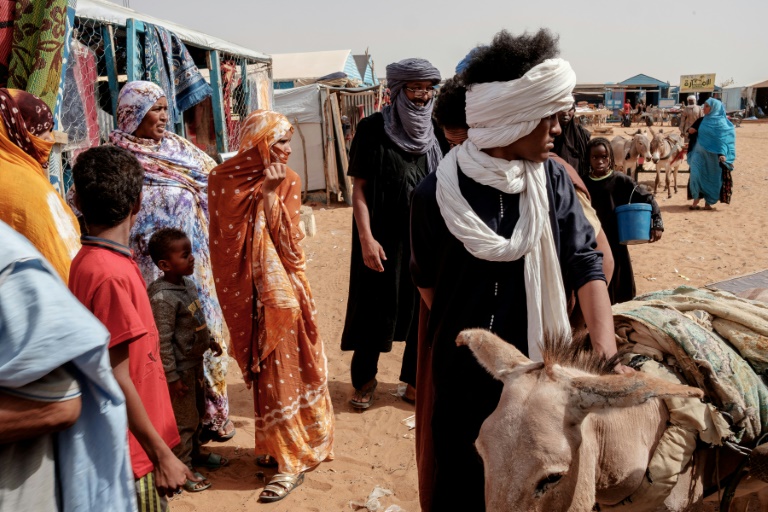
With its stated purpose to “create a sustainable world together”, Japan on Saturday kicks off its aid conference for Africa, where rival China has invested heavily in recent years.

The eighth Tokyo International Conference on African Development (TICAD8) comes against the backdrop of China’s rising influence, cemented on the continent by its “Belt and Road” infrastructure initiative.

A “complex” international environment caused by issues including “the situation in Ukraine” surrounds the meeting in Tunisia’s capital, the Japanese foreign ministry said.

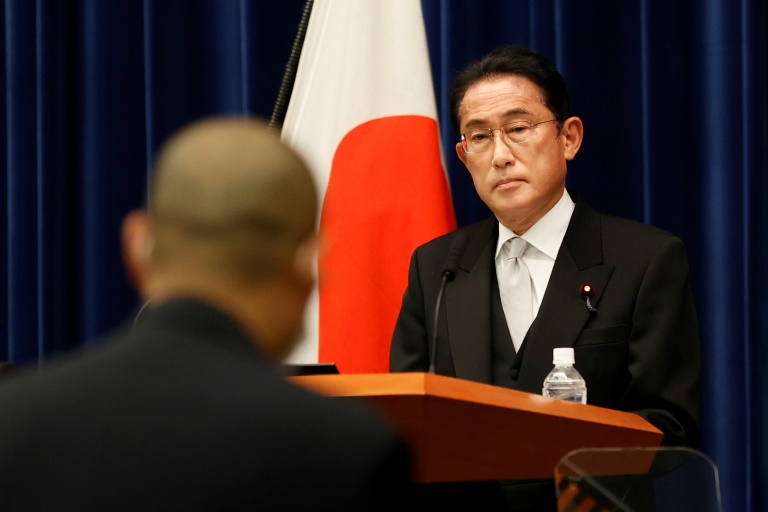
It is the first TICAD — held every three years either in Japan or an African country — since the pandemic began and Prime Minister Fumio Kishida will be attending remotely after testing positive for Covid-19.

Replacing him at the head of the Japanese delegation will be his Foreign Minister Yoshimasa Hayashi, and about 5,000 participants are expected to attend.

Among them will be 30 heads of state and government, converging on the Tunisian capital from across the continent.

Alongside the summit, businesspeople will attend an economic conference while various parallel events and workshops will address civil society and women’s inclusion.

Since their inception in 1993, the TICAD conferences, co-sponsored by the United Nations, World Bank and African Union, have generated 26 development projects in 20 African countries, largely funded by the Japan International Cooperation Agency (JICA).

– An alternative to China –

With a view to “accelerating Japanese investment in Africa”, the conference will focus on three pillars: economy; society; and peace and stability, according to the official presentation.

With more than $130 million already set to be delivered in food aid, Japan will also provide assistance for “rice production and food security” in view of the food crisis worsened by the Ukraine war.

Japanese economic paper Nikkei reported that aid to Africa could increase by 40 percent over the next three years, compared to 2020-2022.

Such assistance comes “in response” to other powers that have bolstered their presence in Africa, namely the United States, Europe and in particular China, Nikkei said.

In response to competition from China, a Japanese foreign ministry official said Tokyo’s “African diplomacy… can be boiled down to two words: ownership and partnership”.

“Japan has a 30-year history of involvement” in the continent through TICAD, he said.

“The core message we would like to get across this time is that Japan wants to remain Africa’s partner.”

At the closing of the last TICAD in 2019, former premier Shinzo Abe — who was assassinated at a campaign event last month — warned investors in Africa that they must beware of burdening countries with “excessive” debt, in an apparent swipe at China.

– Production hub –

On the Tunisian side, authorities hope to profit from holding the summit, particularly as Tunis is a two-hour flight from many major European capitals.

Tunisia hopes to attract Japanese investment domestically, particularly for its health, automotive and renewable energy sectors.

More than 80 projects are on the table with a value of $2.7 billion, according to Hedi Abbes, head of the Tunisian-Japanese chamber of commerce.

These projects, on offer to Tunisian and other African private investors, are expected to create about 35,700 jobs, he said.

With its industrial capacities, Tunisia hopes to become a hub for the production of medicines and vaccines, as some African countries have lagged far behind in vaccination efforts.

During a global Covid-19 summit in May, the Japanese premier stressed the importance of promoting “local production capacity for pharmaceuticals and medical products, including vaccines”.

“To that end, we have decided to provide assistance of up to $200 million through JICA to enhance the capacity in Africa,” Kishida said.

France's Macron looks to 'future' on Algeria trip to mend ties

President Emmanuel Macron starts a three-day visit Thursday to Algeria to help mend ties with the former French colony, which this year marks its 60th anniversary of independence.

The first French president to be born after Algerian independence, Macron is hoping “to lay a foundation to rebuild and develop” a sometimes difficult relationship with the North African nation, his office said.

Accompanied by seven ministers, Macron will be met at the airport in the capital Algiers by President Abdelmadjid Tebboune at around 3:00 pm (1400 GMT).

The two heads of state will visit a monument to martyrs of the country’s war for independence, which ended more than 130 years of French colonial rule with Algeria’s independence in 1962.

Franco-Algerian relations have seen repeated crises since then.

The French leader, on his second visit to Algeria since he took power in 2017, “has chosen to direct this visit towards the future, (focusing on) start-ups, innovation, youth, new sectors,” the Elysee said on Tuesday.

Macron, alongside a 90-strong delegation, will meet entrepreneurs in Algiers as well as young people in the second city Oran.

Ties between Paris and Algiers have been particularly stormy since last year, when Macron questioned Algeria’s existence as a nation before the French occupation and accused the government of fomenting “hatred towards France”.

Tebboune withdrew his country’s ambassador in response and banned French military aircraft from its airspace.

– Better ties ‘a necessity’ –

But Macron’s office issued a statement saying he “regretted” the misunderstandings caused by his comments, and his aides believe that both sides have moved on.

They note the resumption of normal diplomatic relations and overflights to French army bases further south in Africa.

Analyst Mansour Kedidir said that “given instability in the Maghreb region, conflicts in the Sahel and the war in Ukraine, improving ties between France and Algeria is a political necessity”.

Macron and Tebboune will discuss the situation in Algeria’s southern neighbour Mali, as well as the growing regional clout of Russia, Algeria’s top arms supplier.

France’s latest efforts to mend ties comes as Algeria moves to fill a vast shortfall in gas supplies to Europe following Russia’s invasion of Ukraine.

European nations are seeking to end their dependence on Russian hydrocarbons, giving Algeria — Africa’s biggest gas exporter with direct pipelines to Spain and Italy — renewed clout.

“The French president will certainly ask Algeria to make an effort to try to increase its gas production,” said Algerian economist Abderrahmane Mebtoul.

But Macron’s office has said that gas is not a major feature of the visit, and an advisor said the trip is “about being oriented towards the future”.

– ‘Different discourse’ –

Macron has long ruled out issuing an apology for the highly sensitive issue of colonialism, but he has made a series of gestures aimed at healing past wounds.

In Algiers, few have much sympathy towards the French leader, who during his first election campaign in 2017 had described French colonialism as a “crime against humanity”.

“Before he was president, he used nice words, he visited (Algeria), but right after he went back to France, he changed,” said computer scientist Othmane Abdellouche, 62. “He used a totally different discourse”.

French historians say half a million civilians and combatants died during Algeria’s bloody war for independence, 400,000 of them Algerian. The Algerian authorities say 1.5 million were killed.

Tebboune’s office said in October that over 5.6 million Algerians were killed during the colonial period.

Algerian rights groups have also urged Macron not to overlook human rights abuses by the government that came to power after long-time leader Abdelaziz Bouteflika stepped down in 2019.

Tebboune, a prime minister under Bouteflika, has clamped down on the Hirak opposition movement that forced his predecessor to resign.

Fighting flares up in northern Ethiopia after five-month lull

Fighting erupted between government forces and Tigrayan rebels in northern Ethiopia on Wednesday, shattering a five-month truce and dealing a blow to peace efforts. 

Reports of fresh offensives were followed by Ethiopia’s air force announcing it had downed a plane carrying weapons for the Tigray People’s Liberation Front (TPLF).

The government of Prime Minister Abiy Ahmed and the rebels have accused each other of undermining efforts to peacefully resolve the brutal 21-month war in Africa’s second most populous nation, and traded blame over who was responsible for returning to combat.

UN chief Antonio Guterres said he was “deeply shocked” by the renewed fighting and appealed for an “immediate cessation of hostilities and for the resumption of peace talks”.

The head of the African Union Commission, Moussa Faki Mahamat, called for a “de-escalation” and the resumption of “talks to seek a peaceful solution”.

The United States urged both sides “to redouble efforts to advance talks to achieve a durable ceasefire”, a US State Department spokesman said.

The TPLF said government forces and their allies had launched a “large scale” offensive towards southern Tigray early Wednesday after a months-long lull in fighting.

But the government accused the TPLF of striking first and violating the ceasefire.

“Ignoring all of the peace alternatives presented by the government, the terrorist group TPLF armed group continued its recent provocations and launched an attack this morning at 5 am (0200 GMT)” around southern Tigray, the Government Communication Service said in a statement.

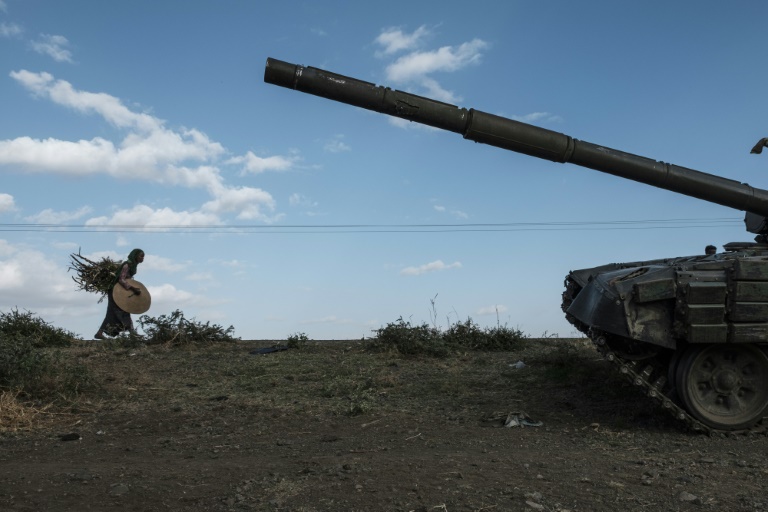
The rival claims could not be independently verified as access to northern Ethiopia is restricted, but there were reports of fighting around southern Tigray in areas bordering the Amhara and Afar regions.

“They launched the offensive early this morning around 5 am local time. We are defending our positions,” TPLF spokesman Getachew Reda told AFP.

He said on Twitter that the “large-scale” offensive was launched “against our positions in the southern front” by the Ethiopian army and special forces as well as militias from neighbouring Amhara.

– ‘Violated our airspace’ –

The air force said Wednesday it had shot down a plane “believed to be a property of historical enemies who want Ethiopia’s weakness”.

“The airplane which violated our airspace from Sudan… and aimed to supply weapons to the terror group was shot down by our heroic air force,” the Ethiopian News Agency quoted armed forces spokesman Major General Tesfaye Ayalew as saying.

The date of the incident, the type of aircraft and how it was downed were not detailed.

The TPLF said it was a “blatant lie”.

The March truce had paused fighting in a war that first began in November 2020, allowing a resumption of some international aid to Tigray after a three-month break.

Both sides in recent weeks had evoked possible peace talks. 

But they disagree on who should lead negotiations, and the TPLF also insists basic services must be restored to Tigray’s six million people before dialogue can begin.

Abiy’s government says any talks must be brokered by the African Union’s Horn of Africa envoy Olusegun Obasanjo, who is leading the international push for peace, but the rebels want outgoing Kenyan President Uhuru Kenyatta to mediate.

In a statement dated August 23, TPLF leader Debretsion Gebremichael said “two rounds of confidential face-to-face” meetings with top civilian and military officials had taken place, the first acknowledgement by either side of direct talks.

No time or place was given for these talks, which the government has not confirmed. 

William Davison, senior Ethiopia analyst for the International Crisis Group (ICG) think tank, urged all parties to cease fighting to avert “a return to full-blown war”.

“This serious breach of the truce agreed earlier this year demonstrates the need for the two parties to arrange unconditional face-to-face negotiations as soon as these hostilities cease,” Davison said in a statement.

– ‘Enough of this war’ –

“I was shocked when I heard the news this morning. We had hoped they were ready for peace, but now our hope is gone,” said Addis Ababa resident Teklehaimanot Mezgebu. 

“If they start the war, that will not be good for the people of Ethiopia and Tigray.”

The conflict has killed untold numbers, with widespread reports of atrocities including mass killings and sexual violence.

Millions of people need humanitarian assistance in Tigray, the country’s northernmost region, as well as Afar and Amhara.

The UN’s World Food Programme said last week that nearly half the population in Tigray is suffering from a severe lack of food and rates of malnutrition had “skyrocketed”.

Tigray is largely cut off from the rest of Ethiopia, without basic services such as electricity, communications and banking.

Abiy sent troops into Tigray in November 2020 to topple the TPLF after months of tensions with the party that had dominated Ethiopian politics for three decades.

The 2019 Nobel Peace Prize winner said the move came in response to rebel attacks on army camps. 

The TPLF mounted a comeback, recapturing Tigray and expanding into Afar and Amhara, before the war reached a stalemate.

Last Wednesday, an Ethiopian government committee tasked with looking into negotiations called for a formal ceasefire as part of a proposal it planned to submit to the AU.

Vote counting underway in tightest ever Angolan election

Ballot counting began in Angola Wednesday after polls closed in what was widely seen as the most competitive vote in the country’s democratic history, with incumbent President Joao Lourenco squaring up against charismatic opposition leader Adalberto Costa Junior.

The election has been overshadowed by Angola’s many woes — a struggling economy, inflation, poverty and drought, compounded by the death of a former strongman president.

“All votes have been cast,” said Lucas Quilundo, a spokesman for Angola’s electoral commission after polls closed.

“We can consider that the elections were a success and took place in an exemplary manner”.

Results are expected within a few days. In past elections, results have been contested, in a process that can take several weeks.

The People’s Movement for the Liberation of Angola (MPLA), which has ruled the oil-rich nation for nearly five decades, faced its most serious challenge since the first multi-party vote in 1992.

Eight political parties were running, but the real contest lay between the MPLA and long-standing rival and ex-rebel movement the National Union for the Total Independence of Angola (UNITA).

Pre-voting opinion polls suggested that support for the MPLA — which won 61 percent of the vote in 2017 elections — would dwindle, while  UNITA — which has entered an electoral pact with two other parties — would make gains. 

But UNITA’s inroads might not be enough to unseat Lourenco, 68, who succeeded veteran leader Jose Eduardo dos Santos five years ago.

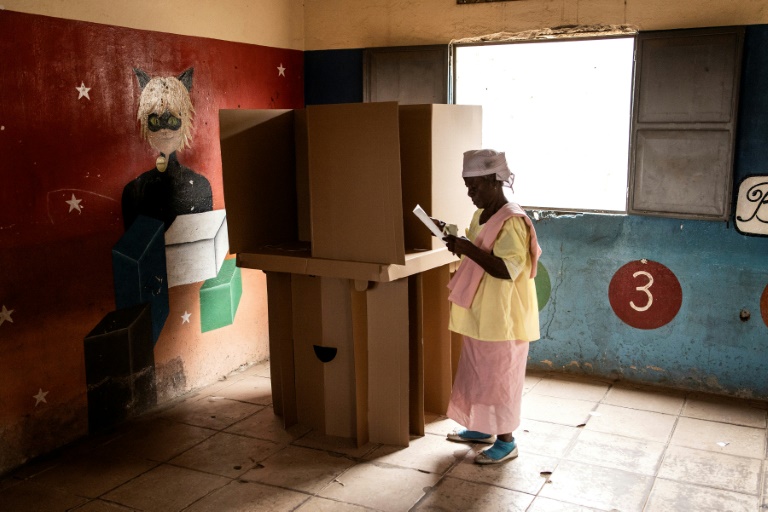
Dozens of voters lined up at polling stations in the early morning, but by midday they had slowed to a trickle. 

Both leading candidates — Lourenco at the capital’s Lusiada University and Costa Junior in the working-class Nova Vida district — called on the public to make their voices heard while casting their ballots.

Some stations started to close in the early evening about an hour before the scheduled time, AFP reporters said.

– ‘Closer than ever’ –

Costa Junior, 60, is popular among youth — a significant and growing voting bloc — and has pledged to “eradicate poverty” and create jobs.

Analyst Justin Pearce said the race looked “very competitive”.

“The further we’ve gotten from the civil war, the less currency… the MPLA has had,” said the history lecturer at South Africa’s Stellenbosch University.

“The outcome looks like it’s going to be closer than ever before.” 

The MPLA traditionally wields a grip over the electoral process and state media in Angola, and opposition and civic groups have raised fears of voter tampering. 

In the working-class district of Cazenga, 57-year-old Miguel said he would welcome the vote’s outcome, whatever it was.

“We have to accept the results, it’s the democratic game,” he said, without giving his surname.

But Alberto Bernardo Muxibo, another voter, disagreed.

“We don’t have a real democracy. The government oppresses the people,” he said.

– Poverty and graft –

Lourenco, a Soviet-educated former general who promised a new era for Angola when he was first elected, is credited with making far-reaching reforms in one of southern Africa’s economic powerhouses.

“The West would not mind an MPLA victory — even with concerns of vote rigging,” said Johannesburg-based analyst Marisa Lourenco said.

“Governments and companies abroad prefer stability over change”.

And little has changed for most of Angola’s 33 million people, for whom life is a daily grind.

Angola is Africa’s second largest crude producer, but the oil bonanza also nurtured corruption and nepotism under dos Santos, who died in Spain last month.

The low-key, night-time repatriation of his remains in the final leg of campaigning has added a macabre touch to the election. 

Dos Santos will be buried on Sunday, which would have been his 80th birthday.
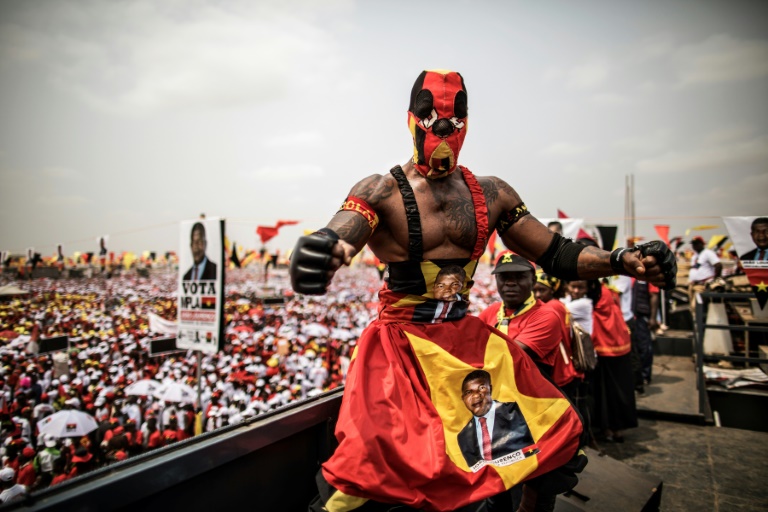
More than 14 million people were registered to vote across the vast southern African nation.

The United States commended Angola for holding a competitive vote.

“Efforts to strengthen democratic institutions will provide a foundation for a safe, prosperous, healthy and inclusive future,” State Department spokesman Vedant Patel told reporters.

Close Bitnami banner
Bitnami