Africa Business

Millions at risk of severe hunger in South Sudan: UN

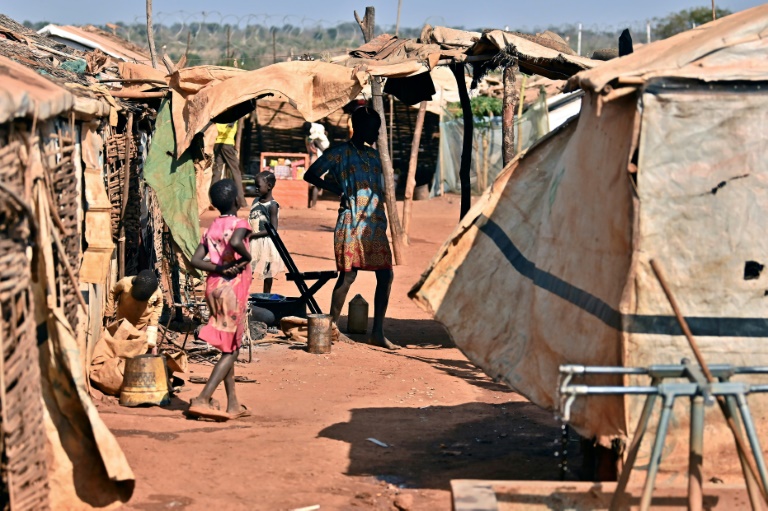
Almost eight million people in South Sudan, or two-thirds of the population in the deeply troubled country, are at risk of severe hunger, the United Nations warned on Thursday.

The misery in one of the poorest nations on the planet is being compounded by widespread flooding which has now affected more than one million people, according to the UN.

The world’s youngest country has grappled with deadly conflict, natural disasters, economic malaise and relentless political infighting since it won independence from Sudan in 2011.

“Hunger and malnutrition are on the rise across the flood, drought, and conflict-affected areas of South Sudan, with some communities likely to face starvation if humanitarian assistance is not sustained and climate adaptation measures are not scaled-up,” the UN said.

In a joint report, the Food and Agriculture Organization, the UN children’s fund UNICEF and the World Food Programme said the proportion of people facing high levels of food insecurity and malnourishment “is at the highest level ever”, surpassing levels seen even during the conflict in 2013 and 2016.

The report said 7.76 million people are likely to face acute food insecurity during the April-July 2023 lean season while 1.4 million children will be malnourished.

– ‘Famine prevention mode’ –

The report blamed a combination of conflict, poor macroeconomic conditions, extreme climate events, and spiralling costs of food and fuel as well as a decline in funding for humanitarian programmes.

“We’ve been in famine prevention mode all year and have staved off the worst outcomes, but this is not enough,” Makena Walker, acting country director for WFP in South Sudan, said in a statement.

“South Sudan is on the frontlines of the climate crisis and day in, day out families are losing their homes, cattle, fields and hope to extreme weather,” Walker said.

“Without humanitarian food assistance, millions more will find themselves in an increasingly dire situation and unable to provide even the most basic food for their families.”

South Sudan has spent more than half of its life as a nation at war, with nearly 400,000 people dying during a five-year civil war that ended in 2018.

Famine was declared in South Sudan in 2017 in Leer and Mayendit counties in Unity State, areas that have often been a flashpoint for violence.

South Sudan’s Agriculture and Food Security Minister Josephine Lagu said the latest findings presented at a briefing in Juba were “worrying” but that the government had to focus on peace building to resolve the crisis.

In August, the country’s leaders announced, to the dismay of the international community, that they were extending a transitional government two years beyond a deadline agreed under a 2018 peace deal.

Lagu told reporters the move was aimed at giving “more time to stabilise the country”.

“If we can actually achieve peace across the country including the current areas where there are hotspots… we will be halfway really to addressing the issues of food insecurity, so peace building is paramount.”

In another report issued on Thursday, the UN’s humanitarian response agency OCHA said that more than one million people had been affected by torrential rain and flooding in 36 counties as well as Abyei, a disputed region between South Sudan and Sudan.

“The ongoing flood response is hampered by renewed violence and insecurity, inaccessibility due to impassable roads, broken bridges, flooded airstrips, the lack of air assets, the lack of critical core pipeline supplies and funding constraints,” it said.

It cited media reports that the government of neighbouring Uganda may open dams on the White Nile to relieve congesting, warning that if the water is released, “it will likely exacerbate flooding downstream in South Sudan”.
10 years after rebel occupation, east DR Congo city fears new assault

In the eastern DR Congo city of Goma, fears are rising of an imminent assault by a bloody rebel group whose resurgence has stoked diplomatic tensions in central Africa.

A predominantly Congolese Tutsi militia called the M23 has returned after years of dormancy, conquering swathes of territory in troubled North Kivu province.

After a string of victories over the army, the M23 fighters are as close as several dozen kilometres from Goma, a commercial hub of a million people that it briefly captured a decade ago.

Militiamen over the weekend were in control of Rugari, a settlement about 30 kilometres (18 miles) north of the city, according to violence monitor Kivu Security Tracker (KST).

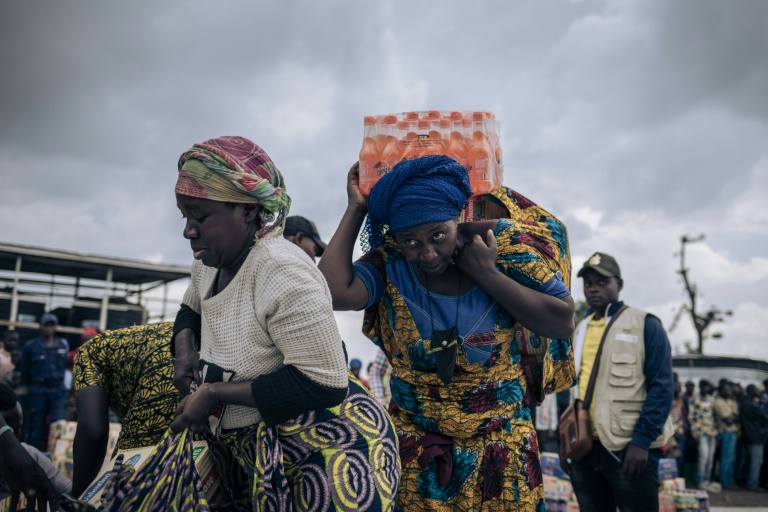
Many citizens now dread what could come next, and food prices are rocketing.

“My children refuse to go to school, they think it (the assault) could happen at any moment,” said Nsimire Foybe, a 58-year-old mother of eight, who sells potatoes and beans in Goma’s lively Birere market.

She added that a fellow vendor was so shocked on hearing of the M23’s vow to capture the city that she suffered a miscarriage and was still in hospital.

The M23 captured Goma in 2012, a move that gave it global prominence, but was beaten back by a joint Congolese-UN offensive and went into the sidelines.

The group took up arms again in late 2021, claiming that the Democratic Republic of Congo had failed to honour a pledge to integrate them into the army, among other grievances.

In June, it captured the strategic town of Bunagana, which lies on the border with Uganda.

Months of relative stasis have ended with the M23 capturing a string of settlements and a large army base, dramatically increasing the territory under its command. 

The militia has also cemented control over the highway leading out of Goma, sending the prices of basic goods such as rice and flour soaring in the city. Many people are afraid that food will run out. 

“The situation is going to become untenable,” said Giramata Mwiza, a wholesaler in Birere, one of Goma’s biggest markets. 

– ‘Criminals’ –

The M23’s resurgence has destabilised regional relations in central Africa, with the DRC accusing its smaller neighbour Rwanda of backing the militia.

Despite official denials from Kigali, an unpublished report for the United Nations seen by AFP in August pointed to Rwandan involvement with the M23.

The report added that the M23 plans to capture Goma in order to extract political concessions from the government in Kinshasa. 

On Saturday, amid fresh M23 victories, the DRC decided to expel Rwanda’s ambassador. 

Goma lies at the foot of an active volcano, Mount Nyiragongo, and is surrounded by rich, fertile soil.

Within the city, residents anxiously trade news about the front, although the situation remains relatively calm. 

Some have been cut off from loved-ones, such as motorbike driver Emmanuel Bahati, whose wife and children are stuck in Rutshuru, 70 kilometres (43 miles) to the north.

“We’re afraid — they’re criminals,” Issa Ruchekere, another motorcycle driver, said of the M23.  

If the group enters the city, blood will flow, he predicted.

“They consider us all FDLR,” he explained, referring to the Forces for the Liberation of Rwanda (FDLR) — a notorious Hutu rebel movement involved in the 1994 genocide of Tutsis in Rwanda. 

Kigali argues that the DRC works alongside the FDLR, something which Kinshasa has denied. 

Human Rights Watch said last month that the DRC army had fought alongside several armed groups, including the FDLR, in recent clashes with the M23. 

– ‘We’ll exterminate them’ –

Mwisha Dina, who lives in a western district of Goma, said he vividly remembered the day in 2012 when the M23 entered the city. 

“We were under heavy gunfire all night and the next day. I don’t want to see those days again,” he said.

On Monday, thousands in Goma protested against Rwanda and demanded weapons in order to be able to resist an attack on the city. 

Fiston Ketha, 36, who attended the demonstration, said that residents will be targeted because “the rebels know that the population is against them.” 

Denise Kahambu, a cloth merchant in the north of the city, said she wasn’t afraid of an assault. 

“If they come, we’ll exterminate them,” she said. 

Guinea junta gives order to prosecute ex-president Conde

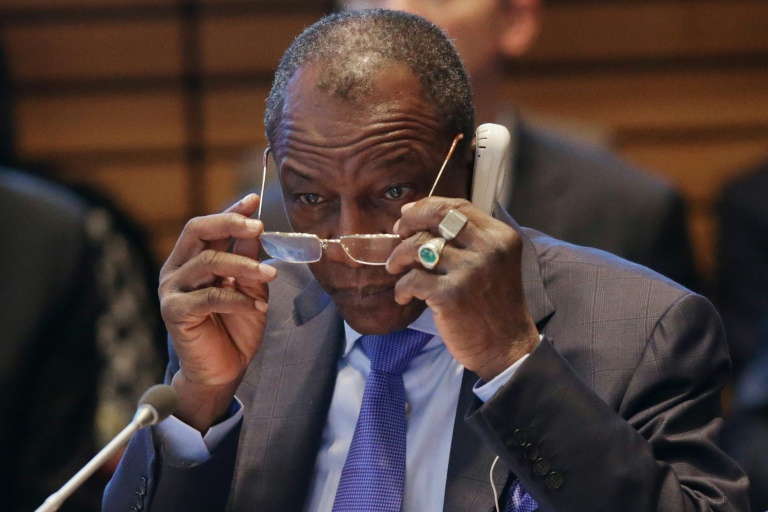
Guinea’s ruling junta on Thursday ordered prosecutors to take legal action against former president Alpha Conde, whom it overthrew in a 2021 coup, and more than 180 other officials and ex-ministers, notably for alleged corruption.

The military, which seized power on September 5, 2021, has made the fight against corruption — reputed to be endemic in the West African nation — one of its key battles.

But the announcement, made in a letter from the justice minister to public prosecutors, marks a new stage in the fight, targeting Conde by name — as well as many of his senior officials and former ministers.

They include ex-prime minister Ibrahima Kassory Fofana and the former ministers of defence, economy and trade as well as a number of presidential advisers from the Conde regime.

The letter orders prosecutors to pursue the people listed for alleged acts of “corruption, illicit enrichment, money laundering, forgery and use of forgeries in public writing, embezzlement of public funds and complicity”.

The list includes 188 names in total, though some are mentioned more than once. Their bank accounts have been frozen, the letter said.

“The Guinean government, in its policy of raising the moral standards of public life, has set itself the objective of fighting against economic and financial infractions,” Justice Minister Alphonse Charles Wright said in the letter.

“It is imperative to open judicial investigations to clarify the origin of the funds in these various accounts.”

– Campaign against graft –

This is not the first time that proceedings have been brought against the 84-year-old former president.

He was indicted in May for alleged acts including murder, torture, kidnapping and rape, in a country where the repression of political demonstrations is often brutal.

Several former officials have been detained as part of the junta’s anti-corruption campaign, including some cited in the letter.

The poor but mineral-rich West African state has been under military government since the coup that ousted Conde after more than 10 years in power.

Military leader Colonel Mamady Doumbouya has since appointed himself president and promised to restore civilian rule within two years from January 2023.

He has previously said there would be no “witch-hunts” under his rule but that justice would serve as a “compass”.

Meanwhile, a trial is underway of the former dictator Moussa Dadis Camara and a dozen former military and government officials accused over a September 28, 2009 stadium massacre. 

On that date, and in the following days, 156 people were killed and at least 109 women were raped, according to a UN-mandated report.

A home for the dead: The quest for burials in flood-stricken Chad

First came the torrential rains, which burst river banks, swept away homes and upended hundreds of thousands of lives.

Now, in a further cruel twist, the floods that have struck Chad, one of the world’s poorest countries, are hampering people from burying the dead.

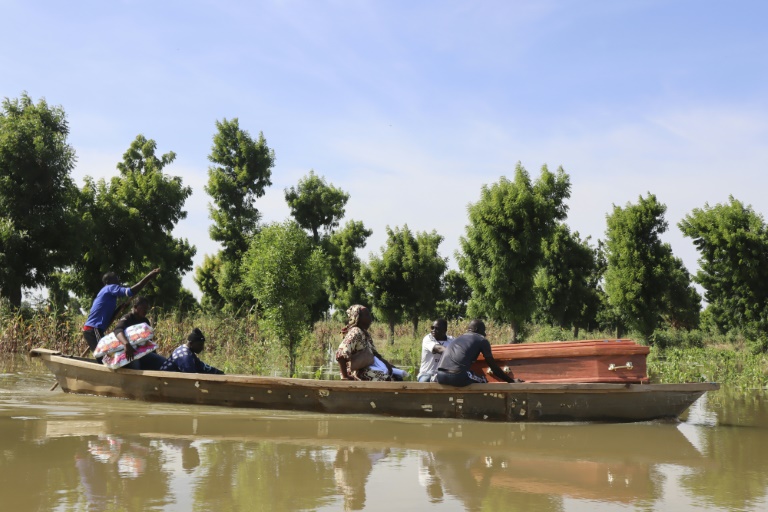
Many cemeteries in the capital N’Djamena have been cut off by road, and others are awash, forcing mourners to look further afield for places where they can bury loved ones.

Yamadji Mobaye’s young niece had died several days before, and now the 60-year-old was aboard a canoe on a swollen river, with her elaborate coffin perched perilously on top.

The boat was heading to Toukra cemetery, the city’s biggest graveyard for Christians.

“It’s hard when God calls one of us back during this time of floods. The canoe is our only chance of getting there,” she said.

After a 20-minute ride, the large cemetery came into view. Around a quarter of the site, including many graves, was under water. Around 100 mourners were there, also brought by canoes.

“We paid 3,000 CFA francs ($4.50) for transporting the body, and the relatives who came with us paid 500 francs a head,” said Mobaye. “For families who are poor it’s an even harder blow.”

– State of emergency –

Floods fuelled by exceptional rains have struck 18 out of the 23 provinces in this vast, arid central African country, affecting more than a million people, according to the government.

Chad’s leader, General Mahamat Idriss Deby, on October 20 declared a state of emergency and called for “friendly countries” to help it provide shelter, medical aid and basic needs.

N’Djamena has borne the brunt of the misery, with more than 98,000 people hit by the swollen waters of the Chari river, according to the UN’s humanitarian agency, OCHA. 

Water levels in some districts rose by up to five metres (16.4 feet) and swept aside makeshift defences erected by desperate inhabitants.

The death toll is unknown, although Deby said, “We should thank the Almighty who has so far spared us losses in human lives.”

Ferryman Timothee Mbaississem, 52, said he had transported seven coffins on his canoe since the start of the week, and insisted he did not gouge on prices.

“I’m happy to take the money they give me without complaining,” he said.

Another ferryman, sitting under a tree at the cemetery, said he did the trip for 500 francs, but “some of my colleagues are asking for exorbitant amounts.”

The flooding was even worse at Ngonba cemetery, a few kilometres (miles) away. It was completely inundated.

“For burials, people can go to the Farcha cemetery,” a bigger site west of the city, Amina Kodjiana, a city official, told AFP.

Chad is the world’s third poorest country, according to the benchmark of the UN’s Human Development Index.

The World Bank says 42 percent of the 16 million population live in poverty, while the United Nations says 5.5 million need emergency humanitarian aid.

The rainy season in the Sahel typically runs from June to September and routinely claims lives.

But experts say this year’s rainfall has been exceptional.

In neighbouring Niger, nearly  200 people died and a quarter of a million were affected.

“All our studies say that these rains can be linked with climate change,” Katiellou Gaptia Lawan, head of Niger’s national meteorological agency, told AFP earlier this month.

Irish tougher under Farrell, says Springbok boss Erasmus

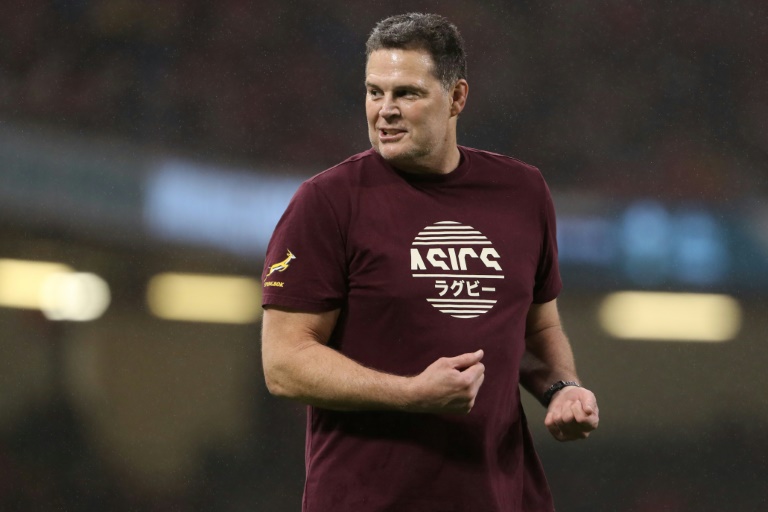
Rassie Erasmus stirred things up in Ireland in 2019 when he labelled their Rugby World Cup team ‘softies’ but South Africa’s director of rugby says the present team are quite the opposite.

Erasmus’s world champions face Ireland — presently ranked world number one — at Lansdowne Road on Saturday with added spice as he put it that they are both in the same pool at next year’s World Cup.

Erasmus, who was head coach at the time before giving way to his assistant Jacques Nienaber after the World Cup, made the ‘softie’ remark as he fired up his side ahead of their semi-final with Wales.

For good measure he also inferred that England ran for cover when the heat was on — the Springboks went on to overwhelm Eddie Jones’s fancied team in the final.

However, he now believes that the Irish under Andy Farrell are considerably tougher than the 2019 team coached by Joe Schmidt.      

“I didn’t particularly think that team had a very hard edge to be honest with you,” said Erasmus who had a bird’s eye view of Irish rugby when he and the ever-present Nienaber were in charge of Munster from 2016-2017. 

“I know people will think it’s covering up, I thought the technicality they used to play with was their major thing that one had to counter.

“It wasn’t maybe robustness and in your face, that kind of play, it was that these guys will outsmart you.

“That’s the way they played but obviously I wouldn’t say that about the current team. They are where they are.”

Erasmus, who turns 50 on the day of the match, was sitting in the stands with Nienaber the last time the two teams faced each other in Dublin in 2017.

Erasmus had been persuaded to leave Munster and become Springbok director of rugby and watched appalled as the Irish inflicted a record 38-3 thrashing of hapless South Africa, who at that point were still under the mantle of Allister Coetzee. 

“Maybe they thought when they gave us a 38-3 thrashing we didn’t have a physical edge or that we were soft,” said Erasmus, who replaced Coetzee as coach in February 2018. “Things change quickly.”

– ‘Red hot’ –

The former Springbok backrow forward — who was part of the team that reached the 1999 World Cup semi-finals — said he did not wish to offend Schmidt who he is “big friends with” but Farrell had definitely added something to the side.

The Irish were runners-up to France in the 2022 Six Nations before sealing an historic 2-1 series win in New Zealand in July. 

“I think this team has got a physical edge on them,” he said.

“I think this team has got a tactical edge on them. I think this team is confident.

“I think if you take the experience of Johnny (Sexton) and some of the other guys in the team, that it’s well-balanced and they’re playing at home.

“I think both of them had tactics. They beat us 38-3, so that’s how good Joe was, and now Andy has them number one in the world, so it’s difficult to compare.

“I just think this team has, apart from the technicalities, has got a real good physical edge on them as well.”

The ultra-competitive and hard taskmaster Sexton has said the number one ranking means little and that you only earn it if you win the World Cup.

Erasmus was equally sceptical of the rankings system but said Ireland are the form team.  

“We don’t always understand how the world rankings work but when you look at the team and you analyse their team, they are red hot,” he said. 

“I’m not blowing smoke up their arse, but they are just really competitive in all areas of the game.

“That’s why I think if you look at our team, there is not a lot of unsettled players in this team because we know we are playing Ireland.”

Ethiopia fractured and fragile after two years of war

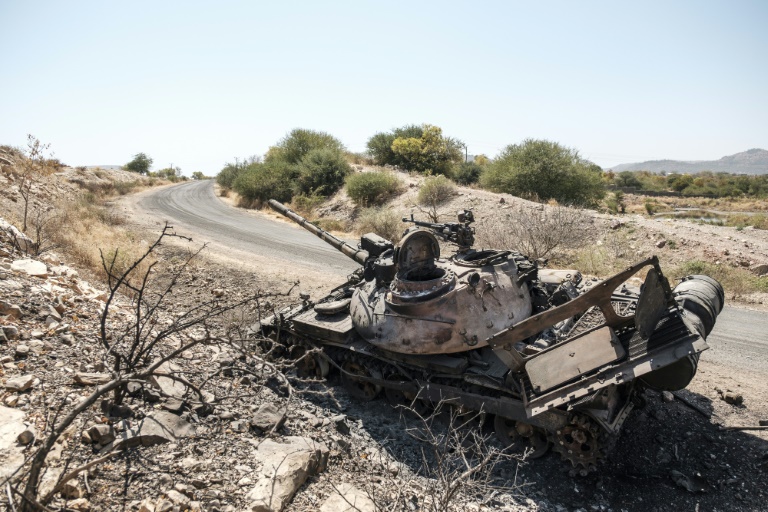
Two years after war broke out in northern Ethiopia between federal forces and Tigrayan rebels, the country remains in deep crisis, with its once-vibrant economy in ruins and a humanitarian disaster roiling Tigray.

A breakthrough agreement announced Wednesday between the federal government and Tigrayan regional authorities to cease hostilities has been hailed as “a welcome first step” by UN chief Antonio Guterres but crucial details remain unclear, with no mention of Eritrea, a key player in the conflict.

– ‘Half a million dead’ –

The war’s toll is unknown, but the US envoy to the UN, Linda Thomas-Greenfield, recently said that the devastation and deaths “rival what we’re seeing in Ukraine”.

“Over two years of conflict, as many as half a million… people have died, and the United States is deeply concerned about the potential for further mass atrocities.” 

The war erupted on November 4, 2020, following tensions between the federal government and the Tigray People’s Liberation Front (TPLF), which dominated Ethiopian politics for nearly three decades until the election of Prime Minister Abiy Ahmed in 2018.

The violence has drawn in regional militias from Amhara and Afar in northern Ethiopia as well as forces from Eritrea, whose leader Isaias Afwerki has a longstanding enmity with the TPLF.

Tigray has faced severe shortages of food and medicines and limited access to electricity, banking and communications, with UN warnings that hundreds of thousands of people were on the brink of famine.

UN investigators have accused Abiy’s government of crimes against humanity in Tigray, including the use of starvation as a weapon — claims rejected by the authorities.

The region of six million people has been largely closed off to the outside world for well over a year, making it very difficult to assess conditions on the ground.

“We will never know the real toll,” said Patrick Ferras, a geopolitical researcher and president of Strategies Africaines, who told AFP that at least 300,000 people had likely lost their lives in the conflict.

A military source who spoke to AFP on condition of anonymity said it was impossible to count the fighters involved but analysts believe the number extends into several hundred thousand. 

– A fractured country –

The war has exposed underlying fissures within Africa’s second most populous nation, with both sides accused of abuses against civilians based on their ethnicity.

A mosaic of more than 80 ethno-linguistic communities, Ethiopia has long struggled to manage the diversity within its borders, with its most populated region Oromia witnessing constant clashes even as the war in Tigray dominates headlines.

Abiy, who was awarded the Nobel Peace Prize for engineering a rapprochement with Eritrea, now presides over a country fractured along ethnic lines.

The non-profit ACLED, which focuses on conflict, has pointed to “rising levels of violence in many areas throughout Ethiopia”, singling out the regions of Oromia, Gambella and Benishangul-Gumuz.

With federal forces focused on northern Ethiopia, the risk of violence elsewhere flaring into prolonged instability poses yet another threat to the country of 120 million people.

– An economy in ruins –

When Abiy took the reins in 2018, Ethiopia’s economy was growing at breakneck speed, expanding annually by nearly 10 percent from 2010 onwards.

Since then, the economy has encountered several roadblocks, including the war and the Covid pandemic, to name two.

This year GDP is projected to grow less than four percent, according to the International Monetary Fund.

“The economic situation is disastrous,” said Ferras. 

Annual inflation, which already averaged 13.5 percent between 2010 and 2018, exploded to around 33 percent this year, driven by rising food prices. 

“This is largely due to the setbacks of Ethiopian agriculture,” a diplomat told AFP on condition of anonymity, referring to a locust invasion, flooding and drought.

The situation will likely worsen as the war in Ukraine drags on, with the Ethiopian currency’s value plummeting against the US dollar and the import-dependent nation’s foreign exchange reserves drying up.

The IMF estimates that Ethiopia only has enough reserves to pay for about three weeks of imports as it struggles with a shortfall in development aid given by foreign nations.

“Since the beginning of the conflict, Ethiopia has lost half of its official development assistance,” the diplomat said. 

– Faint hopes for peace –

Even as peace talks opened in South Africa last week, observers were pessimistic, with fighting showing no signs of letting up after a resumption of combat in August shattered a five-month truce.

In recent weeks, federal forces — backed by Eritrean soldiers — captured a string of towns in Tigray, piling pressure on the TPLF.

Wednesday’s surprise announcement of a deal to end hostilities was greeted with cautious hope, with the United States calling it an “important step towards peace”.

But there are “too many unknowns” surrounding the agreement, said Benjamin Petrini, a research fellow at the International Institute for Strategic Studies in Washington.

It is unclear how the implementation of the deal will be monitored and crucially, no mention has been made of a withdrawal by Eritrean troops, who have been accused of gruesome abuses against Tigrayan civilians.

“If someone wants to be sceptical you would say that solving it all in eight days of negotiations is not a serious effort,” Petrini told AFP. 

“You may have only scratched the surface.”

Kenyan athletics mired in new doping scandal

Kenya’s athletics reputation is once again taking a pummelling after the suspension this year of an unusually large number of long distance runners for suspected doping.

A top Athletics Kenya official even warned that the nation was at risk of an international ban, with 25 athletes hit with sanctions and 19 active cases pending in 2022 alone despite renewed efforts to stamp out the scourge.

Top Kenyan sportsmen have spoken out against the use of performance-enhancing drugs, with marathon star Eliud Kipchoge branding it a national “embarrassment”.

The problem is not new — the athletics powerhouse has been in the top category of the World Anti-Doping Association’s (WADA) compliance watch list since February 2016.

“Right now we’re in the intensive care unit,” said Athletics Kenya official Barnabas Korir, warning the country was moving precariously close to joining Russia as a sporting pariah.

“At this rate Kenya may not survive this year. The writing is on the wall: Kenya is facing a ban and its athletes will not be able to compete internationally,” Korir told AFP. 

Most of those suspended or banned for violating Athletics Integrity Unit (AIU) anti-doping rules this year are involved in road and marathon running, where the huge prize money up for grabs has helped fuel the corrupt practice.

Among the top names are 2021 Boston marathon champion Diana Kipyokei and marathon and mountain racer Mark Kangogo.

– ‘Aggressive education’ –

Two popular drugs of choice are Norandrosterone and triamcinolone acetonide — the latter is used for weight loss, muscle building and endurance and has long been part of doping in cycling.

The AIU said last month that 10 Kenyan athletes had tested positive in 2021-22 for triamcinolone acetonide, which was still allowed in some forms last year before being banned in January.

Anti-Doping Agency of Kenya (ADAK) head Sarah Shibutse attributed the surge in cases in part to the long Covid-enforced lull in competitions that left runners idle.

Shibutse noted that many Kenyan athletes come from poor backgrounds, and rely on their sport to earn livelihoods for themselves and their extended families.

And when races finally resumed after the lifting of pandemic restrictions, competition was stiff, Shibutse said in an interview with AFP. 

“This gave quite a number of them the impetus that ‘I would rather dope so that I can participate in these competitions and win, than just say that I have trained enough and my talent will get me there’.”

She also blamed agents, coaches and managers for pushing the athletes too hard to succeed and make up for their own lost earnings.

But she said she saw a light at the end of the tunnel, with increased testing, intelligence gathering on athletes and awareness programmes.

“We want to treat doping with aggressive education the way we treated the anti-HIV campaign,” she added. “We’re going to the churches, talking to the politicians to enlighten Kenyans of the dangers of doping.” 

– ‘Slay the doping dragon’ – 

According to the AIU, a total of 138 Kenyan athletes across all sports had tested positive for prohibited substances between 2004 and August 2018.

Rita Jeptoo, a multiple Chicago and Boston marathon winner, and Jemima Sumgong, who won the Rio Olympic title in 2016, were among those banned for taking the bloodboosting Erythropoietin (EPO).

And in 2019, Asbel Kiprop, the 2008 Olympic and three-time world 1500m champion, was given a four-year ban after testing positive for the drug. 

“We’ve been doing a good job getting Kenyan dopers using other substances like steroids, EPO and blood doping,” AIU head Brett Clothier said in a recent television interview.

“But there’s an attempt to evade detection by using a substance that can be used therapeutically with the right medical excuse,” he added.

“Fortunately with our intelligence, in assistance with our local partner in ADAK, we’ve managed to get on top of this quickly and discovered what was going on.”

Last month, Athletics Kenya unveiled a raft of measures including tightening registration rules at training camps for agents, support staff and clinical officers — those who administer medication.

It has also organised educational workshops, targeting the under-20s in particular.

Kenya’s new Sports Minister Ababu Namwamba has promised to move with haste and start cleaning up the mess.

But in an editorial last month headlined “Slay the doping dragon”, Kenya’s leading newspaper the Daily Nation lamented: “The spiralling cases appear to be a mockery of the efforts.”

– Plea to ‘run clean’ –  

Korir said senior athletes had already gone through the awareness process. “But they’re the ones being nabbed for using the banned substances and showing the juniors a bad example.

“It’s undoubtedly sad to see that some of those being slapped with suspensions and bans have been common participants at many of these workshops and were aware of the repercussions.”

Kenya has only one WADA-approved blood testing laboratory so it still sends urine tests to Qatar and South Africa for analysis.

The head of legal services at ADAK, Bildad Rogoncho, said the body was currently conducting 1,500 urine tests a year but could double that and add another accredited lab if the government gave it more money.

Kipchoge, Kenya’s world and Olympic marathon champion, voiced concern after three of his pacesetters in his record-breaking sub-two hour marathon race in Vienna in 2019, including training partner Philemon Kacheran, were suspended.

The level of doping in Kenya was, he said, an “embarrassment” and “immoral”.

“Doping is a menace which kills the credibility of Kenyan athletes and the country. I encourage every Kenyan athlete to run clean and leave a legacy.”

France court hands Liberian rebel life in prison

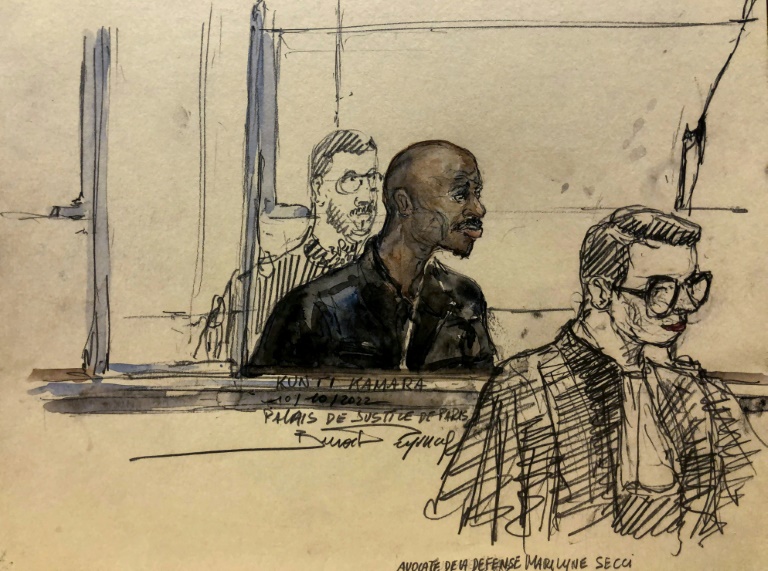
A Paris court on Wednesday sentenced a former Liberian rebel commander to life in jail for violence against civilians and complicity in crimes against humanity after France’s first trial linked to Liberia’s civil wars.

The criminal court found Kunti Kamara guilty of crimes against civilians between 1993 and 1994, including a teacher whose heart he reportedly ate, and for not preventing soldiers under his command from repeatedly raping two teenage girls.

The 47-year-old defendant betrayed little emotion when the verdict was pronounced.

The allegations against Kamara date back to the early years of the back-to-back conflicts that would ultimately kill 250,000 people in the West African nation between 1989 and 2003.

The fighting was marked by mass murders, rape and mutilations, in many cases by child soldiers conscripted by warlords, with atrocities against civilians common.

Kamara was a regional commander of the United Liberation Movement of Liberia for Democracy (ULIMO), a rebel group that fought the National Patriotic Front of ex-president Charles Taylor.

– ‘Good news for victims’ –

In Monrovia, Adama Dempster, secretary general of the Civil Society Human Rights Group, hailed “good news for the numerous victims of atrocities during the Liberian civil war”.

“We hope that all those who were perpetrators of savage brutality will have their days in court without exception,” he told AFP.

Siah Tamba, 37, saw her father gunned down during the conflicts.

“Every day when I get up, I pray that one day the killers of my father will also be judged,” she told AFP in the Liberian capital.

The case was brought by the crimes against humanity division of the Paris court after Kamara was arrested in France in 2018.

It was set up in 2012 to try suspected perpetrators of war crimes, crimes against humanity and genocide detained on French soil, irrespective of where their alleged crimes were committed.

This is the first case taken by the unit that is not related to the 1994 Rwanda genocide.

The prosecution had sought a life sentence against Kamara during the three-week trial, which involved witnesses who came from Liberia.

NGO Civitas Maxima, which took legal action against Kamara in 2018, paid tribute in a statement to the “courage of the victims and witnesses who came to Paris to testify”.

They “further contributed to this extraordinary quest for justice undertaken by Liberian victims who have been forgotten by both their government and the international community”.

Kamara consistently denied the allegations and claimed he was the victim of a conspiracy, with his defence team questioning the trustworthiness of the evidence against him.

In his last words to the court on Wednesday, he said he was innocent and merely a simple soldier.

Prosecutors had also accused Kamara of executing civilians and organising forced marches, describing ULIMO’s control of Lofa county in northwestern Liberia in the 1990s as a “governance by terror”.

Prosecution lawyer Aurelie Belliot told the court of public executions and the distribution of human flesh and intestines used to mark checkpoints.

A truth and reconciliation commission was set up in 2006 to probe crimes committed during the fighting, but its recommendations, published in 2009, have remained largely unimplemented in the name of keeping the peace.

And many warlords who were incriminated are still considered heroes in their communities.

So far only a handful of people have been convicted in Liberia itself for their part in the conflict, and efforts to establish a war crimes court in the country have stalled.

Former Liberian warlord-turned-president Taylor was imprisoned in 2012, but for war crimes committed in neighbouring Sierra Leone, not in his own country, where he also rampaged. 

Other former participants in the Liberian wars have been tried abroad in recent years.

Burkina junta chief holds talks in Mali on first foreign trip

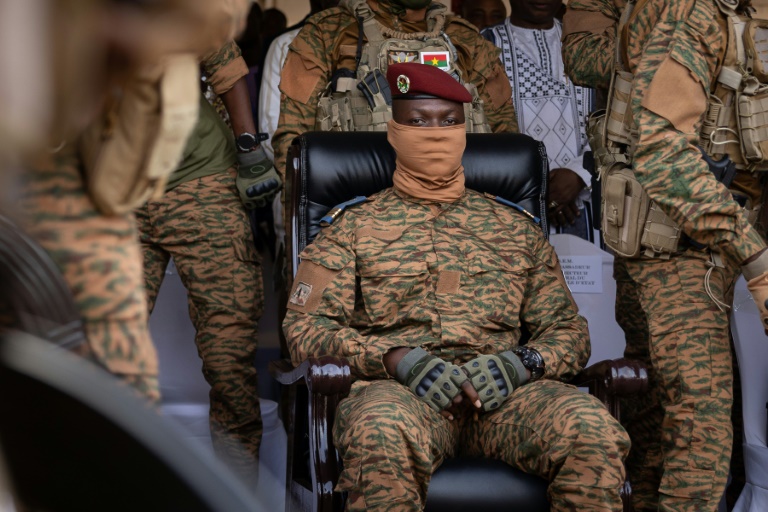
Burkina Faso’s new military leader on Wednesday visited Mali for his first foreign trip since taking power, holding what his Malian counterpart hailed as “fruitful” exchanges on peace and security.

Captain Ibrahim Traore, who seized power in Burkina Faso in a September 30 coup, flew to the Malian capital Bamako for what Mali’s foreign ministry said would be a roughly three-hour “friendship and working visit”.

Traore left Mali for Burkina’s capital Ouagadougou Wednesday evening, an AFP journalist reported.

“With a view to improving the security of our respective populations, (Traore) and I had fruitful exchanges this afternoon on the major challenges that impact the peace and stability of our states,” Mali’s Colonel Assimi Goita, who came to power in an August 2020 putsch, said on Twitter late Wednesday.

He greeted 34-year-old Traore in the afternoon as he dismebarked from the plane at the airport in the capital Bamako.

The two men then headed to a VIP airport lounge for private talks before continuing on to the presidency for further meetings with their respective delegations.

A Burkinabe official had earlier said the main issue discussed would be “the fight against terrorism”, referring to the two countries’ bloody struggle against jihadists.

The two Sahel states rank among the poorest and most volatile nations in the world.

Both leaders came to power at the head of army officers angered by failures to roll back Islamists linked to Al-Qaeda and the Islamic State group.

Along with neighbouring Niger, the two countries have suffered thousands of fatalities and more than two million people have fled their homes.

Traore ousted Lieutenant-Colonel Paul-Henri Sandaogo Damiba, who in January had toppled Burkina’s last elected president, Roch Marc Christian Kabore.

Under Goita, Mali began to weave closer ties with the Kremlin, acquiring aircraft to strengthen its beleaguered armed forces and bringing in Russian “trainers”, described by Western countries as Wagner mercenaries.

As this relationship intensified, ties with Paris, Mali’s traditional ally, deteriorated and France became a target of vilification.

Paris this year pulled out the last troops it had deployed in Mali as part of its Barkhane anti-jihadist force in the Sahel.

The latest coup in Burkina has been marked by anti-French protests in which some demonstrators have waved Russian flags and demanded the departure of a contingent of 400 French special forces.

On Sunday, Burkina Faso’s new prime minister hinted that his country may look at stronger connections with Russia, in the light of “the new deal” in security.

Ethiopia warring parties agree to cease hostilities

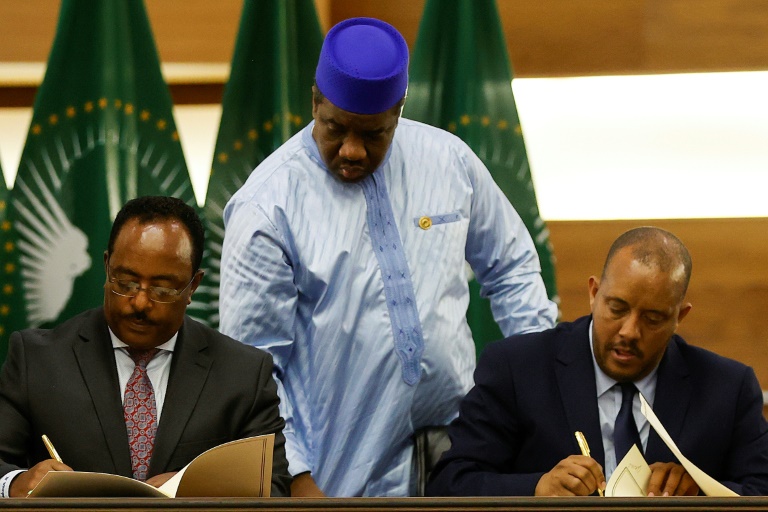
The warring sides in Ethiopia announced Wednesday an agreement to silence their guns after two years of devastating conflict that have claimed thousands of lives and left millions needing aid in Africa’s second most populous country.

The surprise deal between Prime Minister Abiy Ahmed’s government and Tigrayan rebels was unveiled after little over a week of negotiations led by the African Union in South Africa and was hailed by the UN and the US among others.

“We have agreed to permanently silence the guns and end the two years of conflict in northern Ethiopia,” the government and Tigray People’s Liberation Front (TPLF) said in a joint statement after marathon talks.

The breakthrough was announced by the African Union’s mediator, former Nigerian president Olusegun Obasanjo, almost exactly two years to the day since the war erupted in November 2020.

“Today is the beginning of a new dawn for Ethiopia, for the Horn of Africa and indeed for Africa as a whole,” he said.

“The two parties in the Ethiopian conflict have formally agreed to the cessation of hostilities as well as the systematic, orderly, smooth and coordinated disarmament,” Obasanjo said at a briefing in Pretoria.

They also agreed on a “restoration of law and order, restoration of services, unhindered access to humanitarian supplies, protection of civilians… among other areas of agreement”, he added.

It was not immediately clear how the deal would be monitored to ensure it was implemented, and there was no mention by Obasanjo of international and rebel calls for Eritrea’s feared army to withdraw from the battlefield.

– ‘Welcome first step’ –

Diplomatic efforts to bring Abiy’s government and the TPLF to the negotiating table had taken on renewed urgency after combat resumed in late August, torpedoing a five-month truce that had allowed limited amounts of aid into war-stricken Tigray.

The talks were launched on Tuesday last week and were initially scheduled to run until Sunday but were extended.

They were the first formal dialogue between the two sides since the start of the conflict that had raised concerns about the stability of Ethiopia and the volatile Horn of Africa region.

UN Secretary-General Antonio Guterres hailed Obasanjo’s announcement as “a welcome first step” that could “bring some solace” to millions of suffering civilians, his spokesman Stephane Dujarric told reporters.

The United States also described it as an “important step towards peace”, with State Department spokesman Ned Price hoping it would lead to a “durable cessation of hostilities to set the stage for an end to human rights abuses and atrocities”.

The delegations in Pretoria said it was now up to both sides to honour the agreement, while Abiy himself vowed a “strong” commitment to its implementation.

The head of the government team, Abiy’s national security adviser Redwan Hussein, praised the sides for their “constructive engagement to allow the country to put this tragic period of conflict behind us”.

Tigrayan delegation chief Getachew Reda said they were ready to “implement and expedite this agreement”, adding: “In order to address the pains of our people, we have made concessions because we have to build trust.”

– Dire shortages –

The war has forced well over two million people from their homes, and according to US estimates killed as many as half a million.

Despite the peace process in Pretoria, intense fighting had continued unabated in Tigray, where government troops backed by the Eritrean army and regional forces waged artillery bombardments and air strikes, capturing a string of towns from the rebels.

The international community had voiced increasing alarm over the combat and the toll among civilians caught in the crossfire.

Asked about Eritrea, South Africa’s former vice president Phumzile Mlambo-Ngcuka, who was facilitating the negotiations, said only: “These two parties (Ethiopia’s government and Tigrayan authorities) are not the only two groups that are relevant for peace to happen in Ethiopia.

“So we are entrusting them with the responsibility of going back home to socialise this agreement… to ensure that many more people embrace this agreement.”

Tigray, a region of six million people, has been under a communications blackout for much of the conflict, lacking basic services and facing dire shortages of food, fuel and medicines.

The conflict erupted on November 4, 2020, when Nobel peace laureate Abiy sent troops into Tigray after accusing the TPLF, the regional ruling party, of attacking federal army camps.

The fighting followed months of seething tensions between Abiy and the TPLF, which had dominated the ruling coalition in Ethiopia for almost three decades before he came to power in 2018.

Close Bitnami banner
Bitnami