Africa Business

Senegal opposition leader calls for calm ahead of court hearing

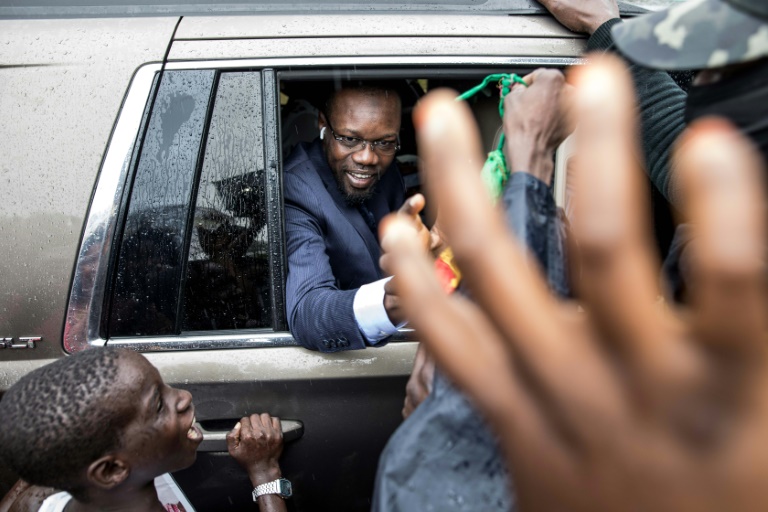
Senegal’s main opposition leader Ousmane Sonko on Wednesday urged his supporters to remain calm on the eve of a court hearing in a rape case against him that has previously sparked deadly riots.

“I solemnly ask everyone to stay quietly at home or to go about their business quietly,” said the 48-year-old politician, who came third in the last presidential election and plans to run again in 2024.

He was accused last year of raping an employee of a beauty salon where he was getting a massage. 

His arrest and indictment in March 2021 led to several days of riots, looting and destruction that left about a dozen dead.

“If we accept to fight, we will do it,” Sonko — who claims he was set up by President Macky Sall’s government to knock his 2024 presidential bid off course — said in a livestreamed address Wednesday. 

“We are not there yet, my fellow citizens.”

Sonko, who is expected in court at noon (GMT and local) Thursday, told his supporters that the summons would be an “ordinary” procedure that he had in fact been “demanding for a very long time”.

“We have wanted it because this system must be definitively dealt with — because it is a plot hatched at the top of the state,” he said.

Earlier Wednesday, members of Sonko’s political coalition expressed their solidarity with him, promising to “stand together” in the face of “any injustice”.

– ‘Tactical game’ –

Sonko claims the president is attempting to set a trap for him and his supporters.

“Don’t go to my house, don’t go to court — we don’t have to fall into Macky Sall’s trap,” he said.

“(Sall) is in a dynamic of creating chaos… We are now in a tactical game; they must not be more intelligent than us.”

Sonko, who was elected mayor of the southern city of Ziguinchor in January, has enjoyed a rapid political rise in part thanks to his popularity with young people — half of Senegal’s population is under 20 years old. 

But critics characterise him as a populist firebrand. He regularly tears into social elites and corruption, slamming the economic and political grip of multinational firms and former colonial power France.

He attempted to contest the July legislative elections, but the candidate list he was named on was invalidated over a technicality.

That led to fresh clashes in June that left several people dead.

Senegal has a general reputation for stability in a region where political turbulence is widespread.

In recent years, several other prominent opponents of the president have seen their political careers cut short by legal cases.

Sall, who was elected in 2012 and again 2019, has remained vague on whether he intends to run for a controversial third term in 2024.

Ethiopia warring parties agree to cease hostilities

The warring sides in Ethiopia announced Wednesday an agreement to silence their guns after two years of devastating conflict that have claimed thousands of lives and left millions needing aid in Africa’s second most populous country.

The surprise deal between Prime Minister Abiy Ahmed’s government and Tigrayan rebels was unveiled after little over a week of negotiations led by the African Union in South Africa.

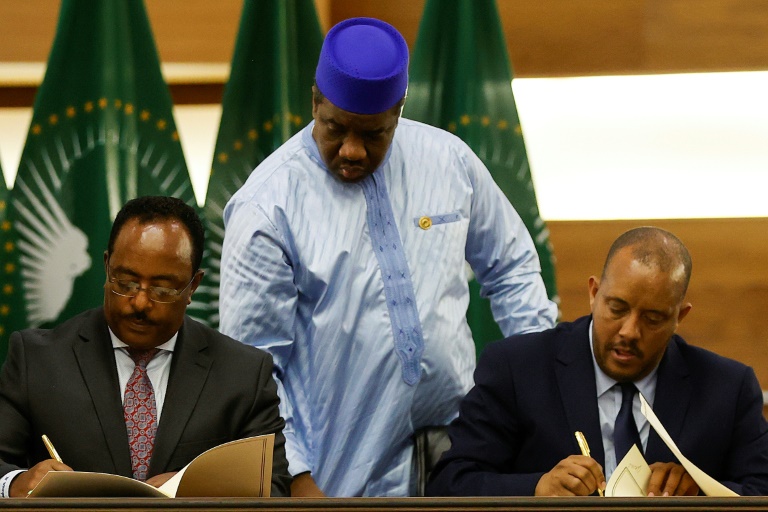
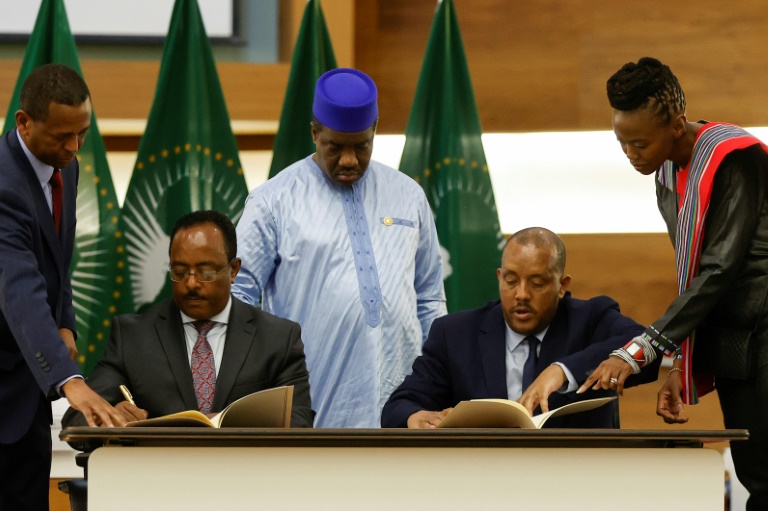
“We have agreed to permanently silence the guns and end the two years of conflict in northern Ethiopia,” the government and Tigray People’s Liberation Front (TPLF) said in a joint statement after marathon talks.

The breakthrough was announced by the African Union’s mediator, former Nigerian president Olusegun Obasanjo, almost exactly two years to the day since the war erupted in November 2020. 

“Today is the beginning of a new dawn for Ethiopia, for the Horn of Africa and indeed for Africa as a whole,” he said.

“The two parties in the Ethiopian conflict have formally agreed to the cessation of hostilities as well as the systematic, orderly, smooth and coordinated disarmament,” Obasanjo said at a briefing in Pretoria.

They also agreed on a “restoration of law and order, restoration of services, unhindered access to humanitarian supplies, protection of civilians… among other areas of agreement”, he added.

But, he cautioned: “This moment is not the end of the peace process but the beginning of it. Implementation of the peace agreement signed today is critical.”

It was not immediately clear how the deal would be monitored to ensure it was implemented, and there was no mention by Obasanjo of international and rebel calls for Eritrea’s feared army to withdraw from the battlefield.

– ‘Welcome first step’ –

Diplomatic efforts to bring Abiy’s government and the TPLF to the negotiating table had gathered pace after combat resumed in late August, torpedoing a five-month truce that had allowed limited amounts of aid into war-stricken Tigray.

The negotiations were launched on Tuesday last week and were initially scheduled to run until Sunday but were extended.

They were the first formal dialogue between the two sides since the start of the conflict that had raised concerns about the stability of the country as well as the volatile Horn of Africa region.

UN Secretary-General Antonio Guterres hailed Obasanjo’s announcement.

“It is very much a welcome first step, which we hope can start to bring some solace to the millions of Ethiopian civilians that have really suffered during this conflict,” his spokesman Stephane Dujarric told reporters.

The delegations in Pretoria said it was now up to both sides to honour the agreement.

The head of the government team, Abiy’s national security adviser Redwan Hussein, praised the sides for their “constructive engagement to allow the country to put this tragic period of conflict behind us”.

Tigrayan delegation chief Getachew Reda said they were ready to “implement and expedite this agreement”, adding: “In order to address the pains of our people, we have made concessions because we have to build trust.”

– Dire shortages –

Despite the peace process in Pretoria, intense fighting had continued unabated in Tigray, where government troops backed by the Eritrean army and regional forces waged artillery bombardments and air strikes, capturing a string of towns from the rebels.

The international community had voiced increasing alarm over the combat and the toll among civilians caught in the crossfire.

Asked about Eritrea, South Africa’s former vice president Phumzile Mlambo-Ngcuka, who was facilitating the negotiations, said only: “These two parties (Ethiopia’s government and Tigrayan authorities) are not the only two groups that are relevant for peace to happen in Ethiopia.

“So we are entrusting them with the responsibility of going back home to socialise this agreement… to ensure that many more people embrace this agreement.”

Tigray, a region of six million people, has been under a communications blackout for much of the conflict, lacking basic services and facing dire shortages of food, fuel and medicines.

The conflict erupted on November 4, 2020, when Nobel peace laureate Abiy sent troops into Tigray after accusing the TPLF, the regional ruling party, of attacking federal army camps.

The fighting followed months of seething tensions between Abiy and the TPLF, which had dominated the ruling coalition in Ethiopia for almost three decades before he came to power in 2018.

The war has forced well over two million people from their homes, and according to US estimates killed as many as half a million.

Ethiopia's warring sides agree to end fighting in breakthrough deal

Warring sides in the brutal two-year conflict in Ethiopia’s Tigray on Wednesday declared they had set the goal of “permanently” ending the fighting, agreeing to a truce backed by a programme of disarmament and integration of rebels.

“We have agreed to permanently silence the guns and end the two years of conflict in northern Ethiopia,” the Ethiopian government and Tigray People’s Liberation Front (TPLF) said in a joint statement after marathon talks in South Africa.

The breakthrough was announced by the African Union’s mediator, former Nigerian president Olusegun Obasanjo. 

“The two parties in the Ethiopian conflict have formally agreed to the cessation of hostilities as well as the systematic, orderly, smooth and coordinated disarmament,” he said at a press conference in Pretoria.

The agreement marked a new “dawn” for Ethiopia, he said. 

The joint statement said the two sides “concluded a peace agreement” following “intensive negotiations.”

They notably agreed on a programme of “disarmament, demobilisation, and reintegration for TPLF combatants, taking into account the security situation on the ground,” it said.

The more than week-long talks marked the first formal dialogue for ending a war that has killed hundreds of thousands and unleashed a humanitarian crisis.

The Tigrayan rebels hailed the deal and said they had made “concessions.”

“We are ready to implement and expedite this agreement,” said the head of their delegation, Getachew Reda.

“In order to address the pains of our people, we have made concessions because we have to build trust.”

“Ultimately, the fact that we have reached a point where we have now signed an agreement speaks volumes about the readiness on the part of the two sides to lay the past behind them to chart a new path of peace,” said Getachew. 

The conflict erupted on November 4, 2020, when Addis Ababa sent troops into Tigray after accusing the TPLF, the regional ruling party, of attacking federal army camps.

According to US estimates, as many as half a million people have died in the war.

The conflict also triggered a humanitarian crisis, forcing well over two million people from their homes.

“We’ve agreed that the government of Ethiopia will further enhance its collaboration with humanitarian agencies to continue expediting aid towards those in need of assistance,” the joint statement said.

Burkina junta chief arrives in Mali in first foreign trip

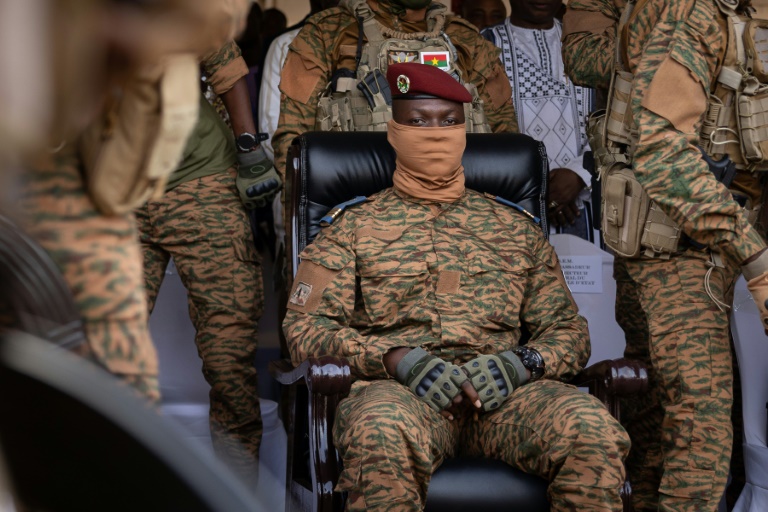
Burkina Faso’s new military leader, Captain Ibrahim Traore, on Wednesday arrived in the Malian capital Bamako for his first foreign trip since taking power on September 30, an AFP journalist reported.

The head of Mali’s junta, Colonel Assimi Goita, who came to power in a putsch in August 2020, greeted 34-year-old Traore as he dismounted the plane at Bamako airport.

The two men then headed to a VIP airport lounge for private talks before continuing on to the presidency for further meetings with their respective delegations.

“The main issue will be the fight against terrorism,” a Burkinabe official said, referring to the two countries’ bloody struggle against jihadists.

The Malian foreign ministry said Traore’s “friendship and working visit” was scheduled to last around three hours.

The two Sahel states rank among the poorest and most volatile nations in the world.

Both leaders came to power at the head of army officers angered by failures to roll back Islamists linked to Al-Qaeda and the Islamic State group.

Along with neighbouring Niger, the two countries have suffered thousands of fatalities and more than two million people have fled their homes.

Traore ousted Lieutenant-Colonel Paul-Henri Sandaogo Damiba, who in January had toppled Burkina’s last elected president, Roch Marc Christian Kabore.

Under Goita, Mali began to weave closer ties with the Kremlin, acquiring aircraft to strengthen its beleaguered armed forces and bringing in Russian “trainers”, described by Western countries as Wagner mercenaries.

As this relationship intensified, ties with Paris, Mali’s traditional ally, deteriorated and France became a target of vilification.

Paris this year pulled out the last troops it had deployed in Mali under its Barkhane anti-jihadist force in the Sahel.

The latest coup in Burkina has been marked by anti-French protests in which some demonstrators have waved Russian flags and demanded the departure of a contingent of 400 French special forces.

On Sunday, Burkina Faso’s new prime minister hinted that his country may look at stronger connections with Russia, in the light of “the new deal” in security.

Tanzania Maasai file case over wildlife protection area

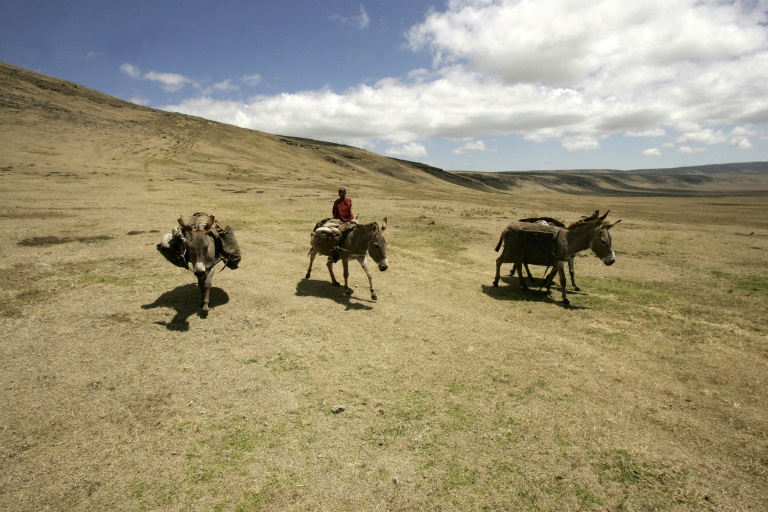
Maasai pastoralists have filed a court case against Tanzania’s government, challenging its decision to cordon off land for wildlife protection, a lawyer representing the community said Wednesday.

The nomadic community in Loliondo in the northern district of Ngorongoro has accused the government of trying to force them off their ancestral land in order to organise safaris and hunting expeditions.

But the government has rejected the accusations, claiming it wants to “protect” 1,500 square kilometres (580 square miles) of the area from human activity.

“The case is crucial for the Loliondo residents,” lawyer Yonas Masiaya told AFP in a message.

“The area is strictly prohibited to graze or enter and the residents of the area were depending (on) it for grazing, water, rituals and herbs,” he said, adding that the community wants judges to nullify the government’s decision.

The case was filed in September, he said, weeks before a regional court ruled in favour of the government in a separate petition.

The Arusha-based East African Court of Justice upheld the government’s decision in a verdict announced on September 30, saying that no compensation was due to the pastoralists who have complained of being evicted from their land.

Tensions have soared in recent months with violent clashes breaking out in June in Loliondo between police and Maasai demonstrators.

More than two dozen Maasai protesters were charged with murder over the death of a policeman in the clashes.

Tanzania has historically allowed indigenous communities such as the Maasai to live within some national parks, including the Ngorongoro conservation area, a UNESCO World Heritage site. 

But the authorities say their growing population is encroaching on wildlife habitat and began moving the pastoralists out of Ngorongoro in June, calling it a voluntary relocation.

The move has sparked concern, with a team of UN-appointed independent rights experts warning in June that “it could jeopardise the Maasai’s physical and cultural survival.”

Since 1959, the number of humans living in Ngorongoro has shot up from 8,000 to more than 100,000.

As climate change leads to prolonged droughts and low crop yields, pressure on the pastoralists has increased, forcing them into conflict with wildlife over access to food and water.

In 2009, thousands of Maasai families were moved out of Loliondo to allow an Emirati safari company, Otterlo Business Corporation, to organise hunting expeditions there.

The government cancelled that deal in 2017, following allegations of corruption.

Kenya sending troops to DR Congo to fight rebel advance

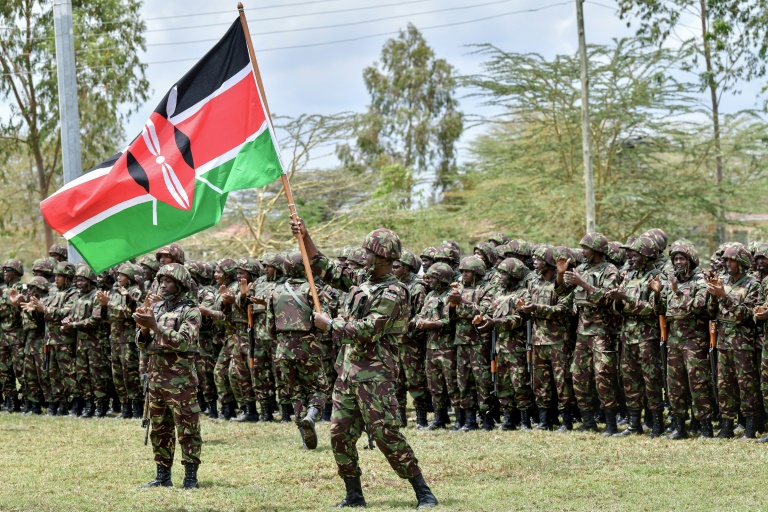
Kenya’s President William Ruto announced Wednesday that Nairobi was deploying troops to eastern Democratic Republic of Congo in a joint regional operation against a rebel offensive.

The mineral-rich DRC is struggling to contain dozens of armed groups whose recent advances in the country’s east have revived old animosities and led to a surge in tensions with neighbouring Rwanda.

Leaders of the seven-nation East African Community (EAC) bloc, in which Kenya is the regional heavyweight, agreed in April to establish a joint force to help restore security in the DRC.

Speaking at a ceremony in Nairobi to flag off the deployment, Ruto said the troops were “on a mission to protect humanity”.

“The destiny of DRC is intertwined with ours,” he added, without giving details of the deployment schedule.

“We will not allow any armed groups, criminals and terrorists to deny us our shared prosperity. We owe our brotherly duty to DRC until the job is done.”

Kenya will command the force, which will also include soldiers from Burundi, South Sudan and Uganda.

A Rwandan contingent will be deployed along the border, after Kinshasa objected to Kigali’s participation in any operations within the DRC.

The Kenyan contingent will be deployed for an initial period of six months and will set up its command base in Goma, the Kenya Defence Forces (KDF) said. 

– ‘Military escalation’ –

Military officials in Nairobi declined to reveal the number of Kenyan soldiers involved, citing “obvious security reasons”.

But the KDF said “close to a thousand” soldiers had undertaken the mandatory pre-deployment training.

A UN force, known by its French acronym of MONUSCO, is already operating in the DRC. 

Burundi and Uganda also sent troops to the DRC earlier at the invitation of the Congolese government.

The M23 rebels, a mostly Congolese group, resumed fighting in late 2021 after lying dormant for years, accusing the DRC government of failing to honour an agreement to integrate its fighters into the army.

Fresh advances by the militia across North Kivu province last month prompted the UN peacekeeping mission there to increase its alert level and boost support for the Congolese army.

The M23’s resurgence has had resounding repercussions for relations in central Africa.

The DRC accuses Rwanda of backing the militia, claims denied by Kigali.

On Saturday, Kinshasa decided to expel Rwanda’s ambassador. In turn, Kigali accused its neighbour of being “on the path of continued military escalation”.

As tensions have spiked, DRC residents have staged angry protests against M23 and Kigali, with hundreds taking to the streets in South Kivu province on Wednesday and chanting: “Let the Rwandans go home!”

The demonstration followed a protest on Monday in Goma, the capital of North Kivu province, where thousands marched through the city demanding weapons to fight Rwanda.

– Calls for ceasefire –

The increase in violence has alarmed the international community, with the African Union appealing for a ceasefire.

Current EAC chairman, Burundi’s President Evariste Ndayishimiye, said on Tuesday he held talks with his regional counterparts on “managing the security crisis” and agreed to hold a summit at a date yet to be announced.

The EAC comprises Burundi, the DRC, Kenya, Rwanda, South Sudan, Tanzania and Uganda.

M23 first leapt to prominence in 2012 when it briefly captured Goma before a joint Congolese-UN offensive drove it out.

The militia is one of scores of armed groups in eastern DRC, many of them a legacy of two regional wars that flared late last century.

The groups include the FDLR, a Rwandan Hutu rebel group based in the DRC which Kigali views as a threat and has regularly accused Kinshasa of supporting.

While Rwanda has denied backing M23, a report by independent UN experts seen by AFP in August found that Kigali had provided direct support to the militia.

The Allied Democratic Forces (ADF) — which the Islamic State group claims as its Central African offshoot — is also active in the region and is accused of slaughtering thousands of Congolese civilians and carrying out bombings in neighbouring Uganda.  

Burkina junta chief heading to Mali in first foreign trip

Burkina Faso’s new military leader, Captain Ibrahim Traore, was heading to Mali on Wednesday for his first foreign trip since taking power on September 30, officials in both countries said.

The 34-year-old junta chief will meet his Malian counterpart, Assimi Goita, who came to power in a putsch in August 2020, they said.

“The main issue will be the fight against terrorism,” a Burkinabe official said, referring to the two countries’ bloody struggle against jihadists.

The Malian foreign ministry said Traore’s “friendship and working visit” in the capital Bamako was scheduled to last around three hours.

The two Sahel states rank among the poorest and most volatile nations in the world.

Both leaders came to power at the head of army officers angered by failures to roll back Islamists linked to Al-Qaeda and the Islamic State group.

Along with neighbouring Niger, the two countries have suffered thousands of fatalities and more than two million people have fled their homes.

Traore ousted Lieutenant-Colonel Paul-Henri Sandaogo Damiba, who in January had toppled Burkina’s last elected president, Roch Marc Christian Kabore.

Under Goita, Mali began to weave closer ties with the Kremlin, acquiring aircraft to strengthen its beleaguered armed forces and bringing in Russian “trainers”, described by Western countries as Wagner mercenaries.

As this relationship intensified, ties with Paris, Mali’s traditional ally, deteriorated and France became a target of vilification.

Paris this year pulled out the last troops it had deployed in Mali under its Barkhane anti-jihadist force in the Sahel.

The latest coup in Burkina has been marked by anti-French protests in which some demonstrators have waved Russian flags and demanded the departure of a contingent of 400 French special forces.

On Sunday, the new prime minister, Apollinaire Kyelem de Tembela, hinted that Burkina may look at stronger connections with Russia, in the light of “the new deal” in security.

Kenya sending troops to DRCongo to fight rebel advance

Kenya’s President William Ruto announced Wednesday that Nairobi was deploying troops to eastern Democratic Republic of Congo in a joint regional operation against a rebel offensive.

The mineral-rich DRC is struggling to contain dozens of armed groups whose recent advances in the country’s east have revived old animosities and led to a surge in tensions with neighbouring Rwanda.

Leaders of the seven-nation East African Community (EAC) bloc, in which Kenya is the regional heavyweight, agreed in April to establish a joint force to help restore security in the DRC.

Speaking at a ceremony in Nairobi to announce the deployment, Ruto said the troops were “on a mission to protect humanity”.

“The destiny of DRC is intertwined with ours,” he added, without giving details of the deployment schedule.

“We will not allow any armed groups, criminals and terrorists to deny us our shared prosperity.”

Kenya will command the force, which will also include soldiers from Burundi, South Sudan and Uganda. 

A Rwandan contingent will be deployed along the border, after Kinshasa objected to Kigali’s participation in any operations within the DRC.

– ‘Military escalation’ –

Military officials in Nairobi declined to reveal the number of Kenyan soldiers involved, citing “obvious security reasons”.

A UN force, known by its French acronym of MONUSCO, is already operating in the DRC. 

Burundi and Uganda also sent troops to the DRC earlier at the invitation of the Congolese government.

The M23 rebels, a mostly Congolese group, resumed fighting in late 2021 after lying dormant for years, accusing the DRC government of failing to honour an agreement to integrate its fighters into the army.

Fresh advances by the militia across North Kivu province last month prompted the UN peacekeeping mission there to increase its alert level and boost support for the Congolese army.

The M23’s resurgence has had resounding repercussions for relations in central Africa.

The DRC accuses Rwanda of backing the militia, claims denied by Kigali.

On Saturday, Kinshasa decided to expel Rwanda’s ambassador. In turn, Rwanda accused Kinshasa of being “on the path of continued military escalation.”

– Calls for ceasefire –

The increase in violence has alarmed the international community, with the African Union appealing for a ceasefire.

Burundi President Evariste Ndayishimiye and current EAC chairman said on Tuesday he held talks with his regional counterparts on “managing the security crisis” and agreed to hold a summit at a yet-to-be-announced date.

The EAC comprises Burundi, the DRC, Kenya, Rwanda, South Sudan, Tanzania and Uganda.

M23 first leapt to prominence in 2012 when it briefly captured Goma before a joint Congolese-UN offensive drove it out.

The militia is one of scores of armed groups in eastern DRC, many of them a legacy of two regional wars that flared late last century.

The groups include the FDLR, a Rwandan Hutu rebel group based in the DRC which Kigali views as a threat and has regularly accused Kinshasa of supporting.

While Rwanda has denied backing M23, a report by independent UN experts seen by AFP in August found that Kigali had provided direct support to the militia.

The Allied Democratic Forces (ADF) — which the Islamic State group claims as its Central African offshoot — is also active in the region and is accused of slaughtering thousands of Congolese civilians and carrying out bombings in neighbouring Uganda.  

Floods wash away salt industry and tourism at Senegal's 'Pink Lake'

Maguette Ndiour stands on the edge of Senegal’s Lake Retba, famous for its pink-hued waters, and points to a mound of salt slowly being shovelled into bags by men toiling under the hot midday sun.

“This is the last of what we were able to save as the waters rose,” Ndiour, the head of an association of artisanal salt collectors, says of the 200-tonne pile.

In two months, he says, they will have sold all the salt they were able to rescue before the lake swallowed up the rest.

After that, it could take up to four years before the coveted mineral can be harvested again, he adds.

That’s because of torrential rains this year that a top meteorological expert says could be in line with warnings about climate change.

Widely known as the “Pink Lake,” Retba is a magnet for tourists, lying 25 miles (40 kilometres) northeast of the capital Dakar.

Separated from the Atlantic by a narrow dune, the shallow lake is so densely laden with salt that, as in the Dead Sea, bathers float like corks. Harvesting and selling the salt from its famed waters is a lucrative sideline.

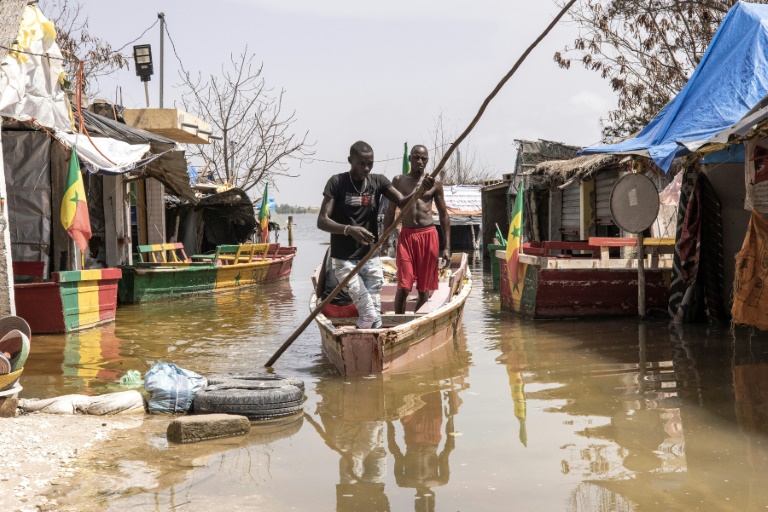
At the height of the rainy season in August, water cascaded into the lake, nearly tripling its usual depth to around six metres (20 feet), according to Ndiour and an environmental activist, Ibrahima Khalil Mbaye.

The influx washed away some 7,000 tonnes of salt that had been harvested, a financial hit of nearly a quarter of a million dollars, according to Ndiour. 

Around three thousand families earn their livelihoods extracting bucketfuls of salt from the lake bed, which are then hauled back in boats and dried on the shore. 

But the salt deposits are now more dilute because of the greater water volume — and the greater depth now means they are out of reach for the diggers, who stand in the lake’s shallows.

– No more pink –

Worse, said Ndiour, the salt plays a key role in imbuing the lake with its signature tinge — “so if there is no more salt, we can’t have the pink.”

That spells bad news for tourism.

On a clear October afternoon at the height of Senegal’s hot season, Julien Heim, a 21-year-old French tourist, disembarked from a wooden fishing boat after a row around the lake.

“It was cool,” he said. “It’s just that there are no more terraces on the banks — and the lake isn’t pink.”

Standing in the village where Heim’s tour ended, Maimouna Fedior, a 47-year-old owner of a lakefront store, said the floods had caused misery.

The mother of four lost much of her merchandise, including paintings, masks and wooden knick-knacks. 

Now she borrows another space further inland and hopes the state will step in to help.

“Tourism is all we know,” she told AFP. “I’ve been here for 30 years — all my children, I pay for their schooling with this, I feed them with this.”

– ‘Choked’ –

Ousmane Ndiaye, director of meteorology at the National Agency for Civil Aviation and Meteorology, said this year’s rainy season was “exceptional”.

“The intense nature of the rain is consistent with the outcome of the latest IPCC report… (on) the frequency of extreme weather events,” he said referring to the UN’s expert panel on climate change.

Mbaye said the water had been pumped into the lake from the suburbs of Dakar, fuelling concern that it carried toxic residues.

“This water passed through streets, alleyways, petrol stations,” he said.

Mamadou Alpha Sidibe, director of flood prevention and management at the ministry of water, denied that the water had been pumped.

No pipelines or drains had been installed and ditches that brought the water into the lake from the surrounding areas had been formed naturally, he said.

Sidibe blamed the rains for triggering the flooding but said it was aggravated by exponential urbanisation.

“The area began to experience development around the early 2000s,” Sidibe told AFP. 

“All this was done in a context in which we didn’t have so much rain, so people (built) on waterways.”

Environment Minister Alioune Ndoye visited the area in early October and spoke with salt miners and those in the tourism industry.

His ministry has collected water samples for a quality analysis, the results of which have not yet been released.

But as things stand, Mbaye said the lake “is being choked… it’s a catastrophe.”

DR Congo's faltering fight against illegal cobalt mines

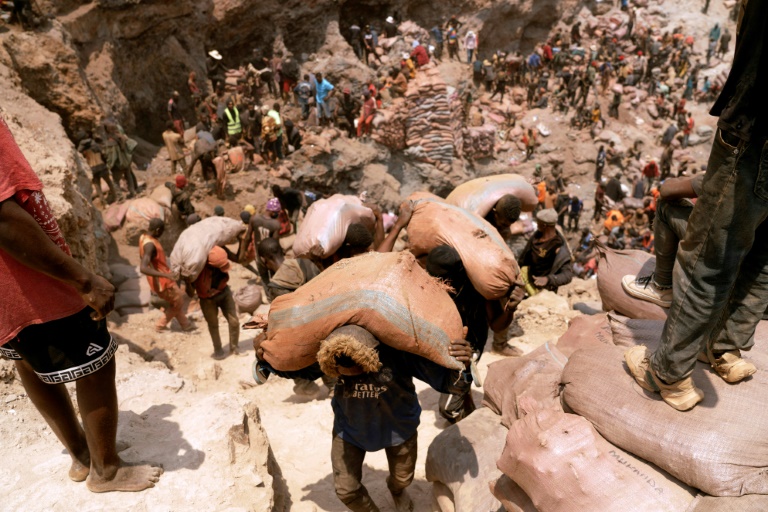
Five thousand diggers pack tightly together at the bottom of a crater in southeastern DR Congo, swinging hammers and picks to prise chunks of speckled blue-gold ore from the earth.

In this scene of almost biblical toil, the prize is cobalt — a strategic metal found in abundance in the impoverished central African nation. 

But the huge pit in Shabara, about 45 kilometres (30 miles) from Kolwezi, is also emblematic of a headache.

Around 20,000 people work at the mine, in shifts of 5,000 at a time. The mining has been carrying on for years in flagrant violation of DRC laws and in defiance of the site’s owner, a subsidiary of mining and commodities giant Glencore. 

As the diggers gouge at blue-tinged soil, hundreds of dust-covered porters trudge up a ramp leading out of the pit, their backs bent under the weight of sacks of ore.  

Marcel Kabamba, 31, taking a break amid the sounds of clanging and the shouts of his fellow diggers, said he could make the equivalent of $200 on a good week — a small fortune in a country where most live on under $2 a day.

“We’re fighting to be left in peace,” he said. 

According to market specialist Darton Commodities, the Democratic Republic of Congo last year produced 72 percent of the world’s cobalt, a key ingredient in rechargeable batteries in electric cars and mobile phones. 

But the sector’s image is tarnished by artisanal mining, where accusations of child labour, dangerous working conditions and corruption are rampant. 

“It’s the Wild West of mining,” said one industry analyst.

– Tensions –

Under Congolese law, artisanal diggers are only allowed to work in government-designated zones and as part of approved cooperatives. 

But most diggers say the designated areas are unviable.

Many prefer to operate on industrial concessions where there are large, identified deposits, even though this can lead to a showdown with powerful multi-billion-dollar corporations.

“We’re not going to give in,” said Michel Bizimungu Lungundu, deputy of the highly organised cooperative at Shabara known as COMAKAT, arguing that locals had the right to exploit the lucrative ore.

In 2018, the DRC enacted mining reforms aimed in part at strengthening control over the roaring cobalt trade. 

The country declared the metal “strategic” and hiked taxes on industrially produced cobalt.

In 2019, as a storm over rights and working conditions mounted, it also established the state-owned Enterprise Generale du Cobalt (EGC), giving it a monopoly on buying and marketing artisanally produced ore from the designated zones. 

The idea was multi-pronged: develop the artisanal sector, boost standards and profit from the trade.

“Your Teslas, Samsungs and Apples had started to balk at cobalt,” said EGC’s compliance and environment director, Tosi Mpanu Mpanu, referring to the reputational cost of buying ore from the DRC.

“This was starting to create a real problem.” 

Today, though, efforts to clear up the illegal mines are at near standstill.

Most diggers are refusing to move into the designated artisanal zones and EGC has yet to start buying cobalt.

“It’s a mess,” admitted a senior government official in Kolwezi, the capital of Lualaba province, who said Kinshasa had decided the zones seemingly at random.

The DRC mines ministry did not respond to questions. 

– ‘Glaring problem’ –

For the diggers at Shabara, there is no question over what they see as their right to stay put.

In 2010, COMAKAT signed a deal with the site’s then majority owners, Dino Steel, entitling them to keep exploiting the pit. 

This deal could be renounced only if both parties agreed, according to a copy of the agreement shared with AFP.

In 2015 came a shock: news of Shabara’s sale, and with it the expectation that the diggers would leave.

Seven years on, their stubborn presence is also frustrating to Glencore, which says it cannot fully develop its concession and that the illegal mine poses a safety risk.

“It’s a glaring problem,” said Marie-Chantal Kaninda, Glencore DRC’s head of corporate affairs.

The Anglo-Swiss company is “engaging” with the government to gain access to the site, according to a spokesman, and it supports diggers moving to artisanal mining zones.

“With up to 40 trucks leaving the site to deliver ore to other companies in the region every day, it is clear that these activities are organised and are not the work of small-scale artisanal miners,” the spokesman added. 

AFP was unable to reach Groupe Bazano, which owns Dino Steel.

–  ‘Vested interests’ –

An estimated 200,000 people work as informal cobalt diggers, making shifting them en masse a tough proposition.

“Many reforms … have gotten railroaded because of vested interests in maintaining the status quo,” said Sasha Lezhnev at an NGO called The Sentry.

Some politicians also appear to have close ties to artisanal mines. Lualaba Mining Minister Jacques Kaumba Mukumbi is the former president of COMAKAT, according to press reports. He did not respond to several AFP requests for comment. 

Artisanal cobalt comprises 4-5 percent of Congolese production, according to price-reporting houses, with an output of several thousand tonnes per year. 

Those figures would make Congo one of the world’s top cobalt producers from its informal diggers alone. 

Glencore’s Mutanda mine, which lies five kilometres (three miles) away from Shabara on the same land concession, is the world’s largest cobalt mine.

But it has been closed since 2019 partly because of higher taxes and a market slump, the company says. Cobalt spot prices have fallen from about $70,000 per tonne at the start of the year to $50,000.

Despite such fluctuations, analysts say the metal’s future is strong given demand from the energy transition — and which in turn will sustain the mining frenzy. 

All this means that mining firms and diggers share an interest in cleansing Congolese cobalt of its tainted image, said David Sturmes at the Fair Cobalt Alliance, a multi-stakeholder initiative.

“Conditions do not yet meet international expectations,” he said. 

“But they won’t improve until we invest — and we can only invest if we solve the legalisation.” 

Close Bitnami banner
Bitnami