Africa Business

Netherlands beat Zimbabwe for consolation win at T20 World Cup

Paul van Meekeren’s three wickets helped the Netherlands claim their first victory of the T20 World Cup Super 12 stage Wednesday as their five-wicket win all but eliminated Zimbabwe.

The Dutch, who are already out of the semi-final race, bowled out Zimbabwe for 117 in 19.2 overs at the Adelaide Oval and, led by Max O’Dowd’s 52, achieved their target by reaching 120-5 with 12 balls to spare.

“It’s awesome,” said captain Scott Edwards. 

“We came here to win some games at the Super 12. Good to get the ball rolling after a rocking start.”

Zimbabwe, who just have a one win from their four matches, need a mathematical miracle to make the semi-finals as one of the top two teams in Group 2, currently led by South Africa who next play Pakistan on Thursday.

O’Dowd and Tom Cooper, who made 32, put on a second-wicket stand of 73 to guide the team home as the fans poured in for the evening match of the Adelaide double-header between India and Bangladesh.

“I was quite scrappy at the start. It was important to adapt to the wicket,” said player of the match O’Dowd. 

“Zimbabwe have some tall boys, so they have extra bounce. I took time to adapt but eventually adapted well to bat as long as I could.”

Stephan Myburgh fell to Blessing Muzarabani for eight in the fourth over before O’Dowd and Cooper began to score freely chasing a modest 118-run target.

Luke Jongwe had Cooper caught out to end a 29-ball knock, which included two fours and a six.

O’Dowd reached his second fifty of the tournament with two straight boundaries but soon got out to Muzarabani and Richard Ngarava sent back skipper Scott Edwards but Bas de Leede stood firm to hit the winning four.

– ‘Sensational’ O’Dowd –

“Our bowlers were sensational, the top four got us pretty close to the total too,” said Edwards.

“Max has been sensational for the past four to five years. He rocks up at big occasions.”

The Netherlands bowled out Zimbabwe, who elected to bat first, in 19.2 overs despite a 24-ball 40 by the in-form Sikandar Raza.

Van Meekeren bowled Wesley Madhevere for one with the batsman playing all over a fast and straight delivery.

The quicks kept up the pressure with disciplined bowling and Brandon Glover got Zimbabwe skipper Craig Ervine caught for three. Zimbabwe soon slipped to 20-3 in six overs.

Raza hit back with a six and a four in a 14-run ninth over from Glover and put on 48 runs with Sean Williams, before Van Meekeren broke through.

The left-handed Williams made 28 off 23 balls but got out to Van Meekeren, caught in his attempt to ramp up the scoring.

Raza, an all-rounder who starred with the ball in his team’s shock win over Pakistan in Perth, revived Zimbabwe and smashed Glover for a huge six over midwicket.

De Leede, who bowled with a bandaged cheek bone after he was hit by a nasty bouncer from Pakistan’s Haris Rauf in the team’s previous loss, got Raza’s prized wicket in the 15th over.

Zimbabwe laboured past 100 as none of their batsmen failed to make double figures apart from Williams and Raza.

Glover, de Leede and Logan van Beek took two wickets each while pace spearhead Fred Klaassen returned figures of 1-17 from his four overs.

DR Congo's faltering fight against illegal cobalt mines

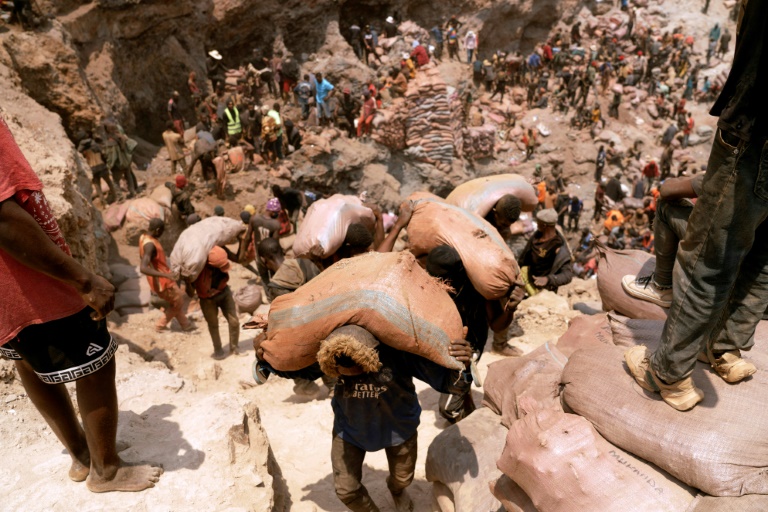
Five thousand diggers pack tightly together at the bottom of a crater in southeastern DR Congo, swinging hammers and picks to prise chunks of speckled blue-gold ore from the earth.

In this scene of almost biblical toil, the prize is cobalt — a strategic metal found in abundance in the impoverished central African nation. 

But the huge pit in Shabara, about 45 kilometres (30 miles) from Kolwezi, is also emblematic of a headache.

Around 20,000 people work at the mine, in shifts of 5,000 at a time. The mining has been carrying on for years in flagrant violation of DRC laws and in defiance of the site’s owner, a subsidiary of mining and commodities giant Glencore. 

As the diggers gouge at blue-tinged soil, hundreds of dust-covered porters trudge up a ramp leading out of the pit, their backs bent under the weight of sacks of ore.  

Marcel Kabamba, 31, taking a break amid the sounds of clanging and the shouts of his fellow diggers, said he could make the equivalent of $200 on a good week — a small fortune in a country where most live on under $2 a day.

“We’re fighting to be left in peace,” he said. 

According to market specialist Darton Commodities, the Democratic Republic of Congo last year produced 72 percent of the world’s cobalt, a key ingredient in rechargeable batteries in electric cars and mobile phones. 

But the sector’s image is tarnished by artisanal mining, where accusations of child labour, dangerous working conditions and corruption are rampant. 

“It’s the Wild West of mining,” said one industry analyst.

– Tensions –

Under Congolese law, artisanal diggers are only allowed to work in government-designated zones and as part of approved cooperatives. 

But most diggers say the designated areas are unviable.

Many prefer to operate on industrial concessions where there are large, identified deposits, even though this can lead to a showdown with powerful multi-billion-dollar corporations.

“We’re not going to give in,” said Michel Bizimungu Lungundu, deputy of the highly organised cooperative at Shabara known as COMAKAT, arguing that locals had the right to exploit the lucrative ore.

In 2018, the DRC enacted mining reforms aimed in part at strengthening control over the roaring cobalt trade. 

The country declared the metal “strategic” and hiked taxes on industrially produced cobalt.

In 2019, as a storm over rights and working conditions mounted, it also established the state-owned Enterprise Generale du Cobalt (EGC), giving it a monopoly on buying and marketing artisanally produced ore from the designated zones. 

The idea was multi-pronged: develop the artisanal sector, boost standards and profit from the trade.

“Your Teslas, Samsungs and Apples had started to balk at cobalt,” said EGC’s compliance and environment director, Tosi Mpanu Mpanu, referring to the reputational cost of buying ore from the DRC.

“This was starting to create a real problem.” 

Today, though, efforts to clear up the illegal mines are at near standstill.

Most diggers are refusing to move into the designated artisanal zones and EGC has yet to start buying cobalt.

“It’s a mess,” admitted a senior government official in Kolwezi, the capital of Lualaba province, who said Kinshasa had decided the zones seemingly at random.

The DRC mines ministry did not respond to questions. 

– ‘Glaring problem’ –

For the diggers at Shabara, there is no question over what they see as their right to stay put.

In 2010, COMAKAT signed a deal with the site’s then majority owners, Dino Steel, entitling them to keep exploiting the pit. 

This deal could be renounced only if both parties agreed, according to a copy of the agreement shared with AFP.

In 2015 came a shock: news of Shabara’s sale, and with it the expectation that the diggers would leave.

Seven years on, their stubborn presence is also frustrating to Glencore, which says it cannot fully develop its concession and that the illegal mine poses a safety risk.

“It’s a glaring problem,” said Marie-Chantal Kaninda, Glencore DRC’s head of corporate affairs.

The Anglo-Swiss company is “engaging” with the government to gain access to the site, according to a spokesman, and it supports diggers moving to artisanal mining zones.

“With up to 40 trucks leaving the site to deliver ore to other companies in the region every day, it is clear that these activities are organised and are not the work of small-scale artisanal miners,” the spokesman added. 

AFP was unable to reach Groupe Bazano, which owns Dino Steel.

–  ‘Vested interests’ –

An estimated 200,000 people work as informal cobalt diggers, making shifting them en masse a tough proposition.

“Many reforms … have gotten railroaded because of vested interests in maintaining the status quo,” said Sasha Lezhnev at an NGO called The Sentry.

Some politicians also appear to have close ties to artisanal mines. Lualaba Mining Minister Jacques Kaumba Mukumbi is the former president of COMAKAT, according to industry-initiative Fair Cobalt Alliance (FCA). He did not respond to several AFP requests for comment. 

Artisanal cobalt comprises 4-5 percent of Congolese production, according to price-reporting houses, with an output of several thousand tonnes per year. 

Those figures would make Congo one of the world’s top cobalt producers from its informal diggers alone. 

Glencore’s Mutanda mine, which lies five kilometres (three miles) away from Shabara on the same land concession, is the world’s largest cobalt mine.

But it has been closed since 2019 partly because of higher taxes and a market slump, the company says. Cobalt spot prices have fallen from about $70,000 per tonne at the start of the year to $50,000.

Despite such fluctuations, analysts say the metal’s future is strong given demand from the energy transition — and which in turn will sustain the mining frenzy. 

All this means that mining firms and diggers share an interest in cleansing Congolese cobalt of its tainted image, said David Sturmes at FCA.

“Conditions do not yet meet international expectations,” he said. 

“But they won’t improve until we invest — and we can only invest if we solve the legalisation.” 

South Africa target fragile Pakistan confidence at T20 World Cup

South Africa’s David Miller warned Wednesday they will look to “exploit” Pakistan’s fragile confidence as they strive to seal a Twenty20 World Cup semi-final spot and send their opponents packing.

The Proteas were touted as dark horses in the lead-up to the showpiece in Australia and have showed why with a fearsome pace attack and batsmen in form.

Ahead of other matches in Group 2 later Wednesday, they topped the table with two wins from three matches including victory over India. South Africa’s third game was washed out.

In contrast, Pakistan are fifth and their World Cup fate will be sealed if South Africa beat them at the Sydney Cricket Ground on Thursday.

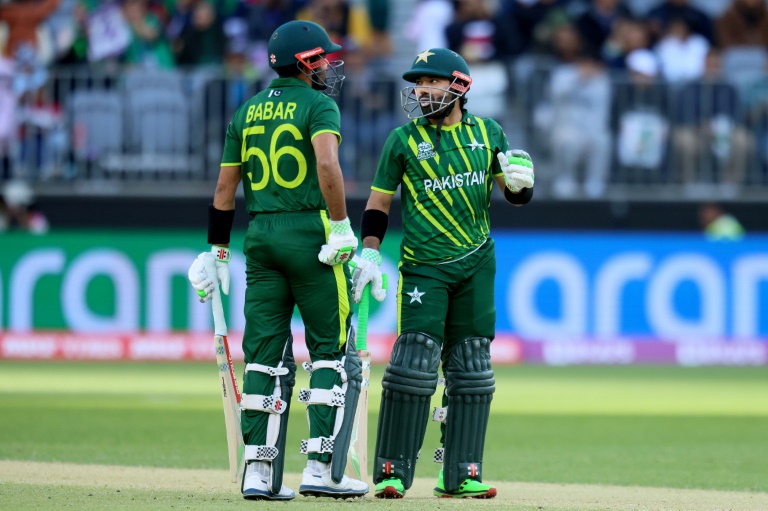
Pakistan’s much-vaunted opening pair of Babar Azam and Mohammad Rizwan have failed to fire in three matches at the World Cup and are under pressure to find form, and fast.

“I think it is an area to exploit,” said middle-order batsman Miller.

“This game is all about confidence and they haven’t probably performed the way they’ve wanted to.

“But they’re world-class players and we’re expecting them to come out and bring their A-game and be up for the challenge.”

Pakistan bowler Naseem Shah denied that his side are still dwelling on their agonising opening defeat to India.

Pakistan were beaten on the last ball by their arch-rivals and followed that up with a shock defeat to Zimbabwe, before thrashing the Netherlands.

Put to him by reporters that Pakistan have failed to recover mentally from the India defeat, fast bowler Naseem replied: “No, I don’t think so because everyone is professional and everyone knows about oneself. 

“We lost against India, but I don’t think anyone is thinking about the India game because as a professional you can’t think about the past when you lose, then especially, you can’t be thinking that.”

Miller hit an unbeaten half-century in a nervy five-wicket win over India which underlined South Africa’s title credentials — and their resilience.

“I suppose we are finding lots of ways to win,” he said.

“We’ve done it over a period of time now. I’d say probably the last year, we’ve found ourselves in tricky situations and managed to get over the line.

“I think the continuity of the squad over time, guys have managed to sort of find their roles and if one guy isn’t doing well, another guy picks up the slack.”

Choking on factory waste: the Nile's rising scourge

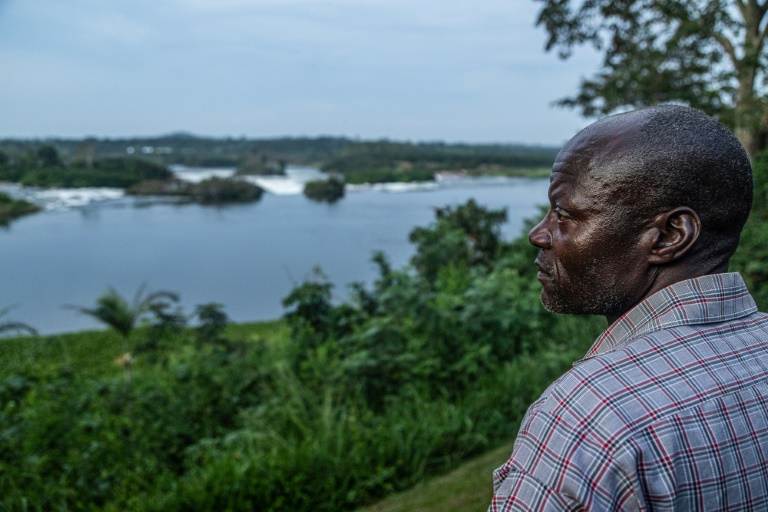
As tourists pose for selfies on the shores of Lake Victoria in Uganda, factories within spitting distance of the source of the Nile dump their waste directly into Africa’s longest river.

AFP journalists watched as staff at a tannery shovelled garbage into the river, while dirty water flowed into the Nile through plastic pipes leaving a brown sheen, in a vivid illustration of the mounting scourge. 

The town of Jinja, where the Nile begins its 6,500-kilometre (4,000-mile) journey to the Mediterranean, is a jumble of small houses squeezed between textile and fish processing factories, boatbuilders, maize millers, brewers and coffee processors. 

Smoke billows from a factory chimney as fishermen nearby land meagre catches from their small boats.

Rising industrial pollution in the area set off alarm bells last year, with a report by the 10-nation Nile Basin Initiative (NBI) warning that “the rich natural resources and outstanding biodiversity in the Nile Basin face unprecedented threats”. 

It blamed population growth, urbanisation and water contamination, saying the “discharge of untreated wastewater and sludge, fertiliser and pesticides from farming and sediments from land degradation comprise the prime pollutants”.

– ‘The fish die’ –

Young men and women take turns to swim in the waters of the Nile, oblivious to its dangers. 

But fishermen like Stanley Ojakol know the changes wrought by pollution all too well.

“We have seen fish stocks disappear… This is largely because of the chemicals the factories pour into the river,” the father of 12 told AFP.

“At times the fish die in the water,” he added. 

Jowali Kitagenda, 40, has been fishing the river since childhood, and has endured many beatings from soldiers assigned to guard restricted areas of the Nile.

“The government sent the army to stop us from fishing in the deep section of the Nile… but they let the factories pour tonnes of chemicals into the water and the fish die,” Kitagenda told AFP.

“When we try to search for fish, we only get a few.”

With drinking water also polluted, anger at the authorities and the factory owners is rising around Jinja, a town of an estimated 300,000 people, where many households have more than 10 members. 

“We were advised by the ministry of health to stop fetching the water from the Nile. It got polluted,” said 50-year-old Ali Tabo, a member of the local council executive committee. 

“It started itching our skin. The government said it was not good for the kids and domestic use. They sank boreholes and we now draw water from the boreholes, not the river,” he added. 

– ‘Dirty water’ –

Based in the Ugandan town of Entebbe, the Nile Basin intergovernmental partnership brings together 10 nations in the Nile basin to discuss ways to best manage their shared water resources.

“When you have a problem of water quality without the systems to clean it, it becomes complicated,” NBI’s executive director Sylvester Anthony Mutemu told AFP.

Climate change may pose a serious threat to the Nile’s levels, but pollution is increasingly emerging as “a bigger issue” in Uganda, said Callist Tindimugaya of the country’s ministry of water and environment.

“Pollution is a very big issue with growing population and industries,” Tindimugaya told AFP.

Under a Ugandan environmental law adopted in 2000, factories must be no closer than 100 metres from a river’s highest watermark, but many are much closer, often hugging the banks.

“We have laws but implementation is a different issue. (The factories) need water treatment plants but some discharge dirty water at night,” he added.

Tindimugaya said the government had come up with a very direct way to show businesses the environmental consequences of their actions. They want factories to release their treated wastewater into the same section of the Nile from which they draw their own supplies.

That way “they are the first to suffer if they pollute”, he said.

Sinking Alexandria faces up to coming catastrophe

Alexandria, Egypt’s fabled second city and its biggest port, is in danger of disappearing below the waves within decades.

With its land sinking, and the sea rising due to global warming, the metropolis Alexander the Great founded on the Nile Delta is teetering on the brink.

Even by the United Nations’ best case scenario, a third of the city will be underwater or uninhabitable by 2050, with 1.5 million of its six million people forced to flee their homes.

Its ancient ruins and historic treasures are also in grave danger from the Mediterranean.

Already hundreds of Alexandrians have had to abandon apartments weakened by flooding in 2015 and again in 2020.

Every year the city sinks by more than three millimetres, undermined by dams on the Nile that hold back the river silt that once consolidated its soil and by gas extraction offshore.

Meanwhile, the sea is rising.

The Mediterranean could rise a metre (3.2 feet) within the next three decades, according to the most dire prediction of the UN’s panel of climate experts, the IPCC.

That would inundate “a third of the highly productive agricultural land in the Nile Delta”, as well as “cities of historical importance, such as Alexandria”, it said.

– Third of city could go –

UN experts say the Mediterranean will rise faster than almost anywhere else in the world.

“Climate change is a reality and no longer an empty threat,” said Ahmed Abdel Qader, the head of the authority protecting Egypt’s coastline.

Even under the best-case scenario outlined by other Egyptian and UN studies, the Mediterranean will rise 50 centimetres by 2050. 

That would leave 30 percent of Alexandria flooded, a quarter of the population having to be rehoused and 195,000 jobs lost.

Such a catastrophe will have dramatic repercussions for Egypt’s 104 million people because “Alexandria is also home to the country’s biggest port” and is one of the main hubs of the economy, Abdel Qader said.

Across the Delta, the sea has already advanced inland more than three kilometres since the 1960s, swallowing up Rosetta’s iconic 19th-century lighthouse in the 1980s.

All this is happening as Alexandria’s population is exploding, with nearly two million more people arriving in the last decade, while investment in infrastructure, as elsewhere in Egypt, has lagged.

The city’s governor, Mohamed al-Sharif, said the drainage system for its roads was built to absorb one million cubic metres (35 million cubic feet) of rain. But with the more violent storms that have come with climate change, “today we can get 18 million cubic metres falling in a single day”.

The changing climate is also playing havoc with Alexandria’s weather, which can veer from unseasonal heat to snow.

“We have never experienced such heat at the end of October,” resident Mohamed Omar, 36, told AFP, with the temperature rising to 26 degrees Celsius (78.8 Fahrenheit), five degrees above normal.

– ‘Lost beneath the waves’ –

The looming threat has also been a hammer blow to the image of a city that likes to celebrate its cosmopolitan golden age at the start of the 20th century, with its art deco cafes and elegant avenues of Paris-style apartment buildings.

Many Egyptians were horrified when Britain’s then-prime minister Boris Johnson warned that Alexandria was at risk of being lost “beneath the waves” at the COP26 climate change conference in Glasgow last year.

“Yes, the threat exists and we don’t deny it, but we’re launching projects to attenuate it,” Abdel Qader said.

A huge belt of reeds is being planted along 69 kilometres of coastline. “Sand sticks around them and together they form a natural barrier,” he said.

Alert mechanisms and wave measuring systems are also soon to be put in place, Abdel Qader added.

– Treasures in jeopardy –

Alexandria’s rich and ancient heritage is particularly vulnerable. Most exposed is the 15th-century Mamluk citadel of Qaitbay, built on a neck of land that was once the site of the Lighthouse of Alexandria, one of the seven wonders of the ancient world.

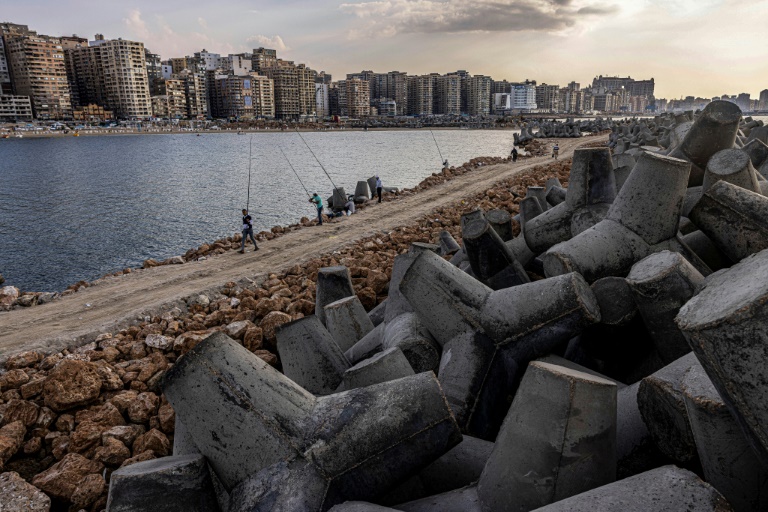
Lashed relentlessly by the sea, a breakwater made up of 5,000 huge concrete blocks has been installed to protect it.

More have been put in place to limit damage to the 19th-century corniche.

Destruction and rebuilding is nothing new to a city that once was home to the Library of Alexandria, the world’s greatest temple of knowledge until it was accidentally burned by Julius Caesar’s troops.

Neither its modern heir, a gleaming edifice on the corniche tilting like a solar disc toward the Mediterranean, nor the rest of the city can be left to a watery grave, Abdel Qader insisted.

“The West has a moral responsibility: it must help to counter the negative effects of climate change, which are the result of its civilisation” and industrialised model.

And Egypt will be hammering that message home when the UN COP27 climate talks open there on November 6.

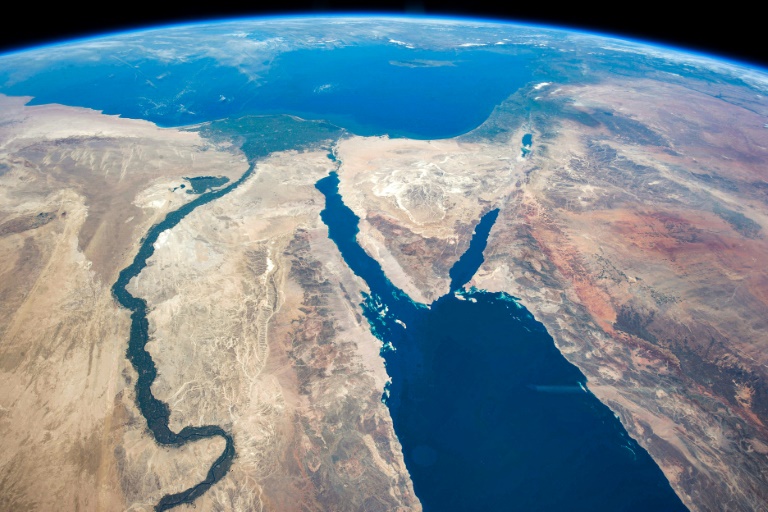
Nile is in mortal danger, from its source to the sea

The pharaohs worshipped it as a god, the eternal bringer of life. But the clock is ticking on the Nile.

Climate change, pollution and exploitation by man are putting existential pressure on the world’s second longest river, on which half a billion people depend for survival.

All along its 6,500-kilometre (4,000-mile) length, alarm bells are ringing.

From Egypt to Uganda, AFP teams have gone out on the ground to gauge the decline of a river that drains a tenth of the African continent. 

At its mouth on the Mediterranean, Sayed Mohammed is watching Egypt’s fertile Nile Delta disappear. In Sudan, fellow farmer Mohammed Jomaa fears for his harvests, while at its threatened source in Uganda, there is less and less hydroelectric power for Christine Nalwadda Kalema to light her mud and wattle home.

“The Nile is the most important thing for us,” said Jomaa, who at 17 is the latest generation of his family to work the river’s rich banks at Alty in Gezira state.

“We certainly do not wish for anything to change,” he said.

But the Nile is no longer the unperturbable river of myth. In half a century its flow has dropped from 3,000 cubic metres (10,600 cubic feet) per second to 2,830 cubic metres.

Yet it could get much, much worse. With multiple droughts in east Africa, its flow could fall by 70 percent, according to the United Nations’ most dire predictions.

Every year for the past six decades, the Mediterranean has eaten away between 35 and 75 metres (38-82 yards) of the Nile Delta. If the sea level rises even by a metre, a third of this intensely fertile region could disappear, the UN fears, forcing nine million people from their homes.

What was once a bread basket has become the third most vulnerable place on the planet to climate change. 

Lake Victoria, the Nile’s biggest source of water after rainfall, could also dry up due to drought, evaporation and slow tilts in the Earth’s axis.

With such grim scenarios in store, governments have scrambled to capture its flow. But experts say dams are only hastening the coming catastrophe.  

– Land lost to sea –

At the mouth of the Nile, the promontories of Damietta and Rosetta that once stuck out into the Mediterranean in northern Egypt have disappeared.

The concrete barriers that were supposed to protect them are half covered by water and sand.

The sea ate three kilometres into the Nile Delta between 1968 and 2009, with the river’s weaker flow unable to hold back the Mediterranean, which rose some 15 centimetres (six inches) over the last century due to climate change. 

The silt that for millennia formed a barrier to protect the land no longer makes it to the sea.

This rich dark sediment that was once swept along the river’s bed has struggled to get beyond southern Egypt since the Aswan dam was built in the 1960s to regulate the Nile’s floods.

Before its construction “there was a natural balance”, Ahmed Abdel Qader, the head of Egypt’s coast protection authority, told AFP. 

“Every Nile flood would deposit silt bulking up the promontories at Damietta and Rosetta. But this balance has been disturbed by the dam,” he said.

If temperatures keep rising, the Mediterranean will advance a further 100 metres a year into the Delta, the UN’s environment agency UNEP has warned.

– Poisoned by salt –

Fifteen kilometres inland, the bustling farming community of Kafr El-Dawar seems as yet far from danger.

But all is not well, said Sayed Mohammed, 73, who supports his 14 children and grandchildren growing rice and corn in fields sandwiched between the Nile and a road cacophonous with car horns.

Salt from the Mediterranean has already seeped into large swathes of land, killing and weakening plants. Farmers say their vegetables no longer taste the same. 

To compensate for the salination of the soil, they have to pump more fresh water onto it from the Nile. 

For 40 years Mohammed and his neighbours used pumps that guzzled diesel and electricity. The cost strangled villagers whose income was already being eaten up by inflation and devaluations of the Egyptian pound.

So much so that in some parts of the Delta fields were abandoned.

But the old man, who sports a djellaba and a traditional woollen cap, has been helped by a new irrigation system driven by solar energy which aims to increase farmers’ incomes to stop more people fleeing the land.

Thanks to the 400 solar panels the UN’s Food and Agriculture Organization financed for Kafr El-Dawar, he can water his half hectare (1.2 acres) of ground.

Solar power saves “farmers about 50 percent” of pumping costs,  local irrigation chief Amr al-Daqaq told AFP. And they can also sell the surplus power the panels produce to the national grid.

Even so, none of Mohammed’s descendants want to take on the farm. 

For the Mediterranean may eventually swallow up 100,000 hectares of the region’s prime agricultural land, according to UNEP, covering an area nearly 10 times the size of Paris.

Which would be a disaster for Egypt, with the Delta the source of between 30 and 40 percent of the nation’s agricultural output.

– Power cuts –

All but three percent of Egypt’s 104 million people live along the river on just eight percent of the country’s territory. It is a similar story in neighbouring Sudan, with half its 45 million people living along its banks, and the Nile supplying two-thirds of its water. 

By 2050 the population of both countries will have doubled, and it will be two or three degrees hotter.

The UN’s group of climate experts, the IPCC, say the impact on the Nile will be catastrophic. They predict it will lose 70 percent of its flow by the end of the century, with the water supply available to every person along it plummeting to a third of what they have now.

Floods and other violent storms likely to lash East Africa as the climate warms will only make up 15 to 25 percent of that lost water, the IPCC has warned. 

Which will leave the 10 countries who rely on the Nile for their crops and power in dire straits.

More than half of Sudan’s power comes from hydroelectricity, with 80 percent of Uganda’s generated from the river.

It is thanks to the Nile that Christine Nalwadda Kalema, a 42-year-old single mother, can light her humble shop and home in a poor part of the village of Namiyagi near Lake Victoria.

– Source threatened –

But the electricity that radically changed her life in 2016 may not last, said Revocatus Twinomuhangi, from Makerere University’s Center for Climate Change in Kampala.

“If we have a reduction in rainfall… it will translate into reduced hydroelectric power potential,” he said.

Already over “the last five to 10 years we have seen an increase in the frequency and intensity of drought, intense rainfall and flooding and also heat intensity, so it is becoming hotter and hotter”.

Indeed, Lake Victoria could disappear entirely within the next 500 years, according to a study by British and American scientists based on geological data from the last 100,000 years.

But for Kalema, who grows bananas, manioc and coffee in her little garden to feed her family, such statistics remain abstract. 

What concerns her are more and more frequent power cuts.

“Because of the cuts my son struggles to keep up with his homework. He has to read before nightfall,” she said, dressed in colourful local “kitenge” cloth. “Candles are very expensive to me as a single mother with limited income.”

– Mega dams – 

More than half of Ethiopia’s 110 million people have no choice but to live without electricity despite the country’s having one of the fastest growth rates in Africa.

Addis Ababa is hoping that its GERD mega dam project on the Nile will remedy that, and is ready to burn bridges with its neighbours if it has to. 

Begun in 2011, the Grand Ethiopian Renaissance Dam on the Blue Nile — which joins the White Nile in Sudan to form the Nile — already holds nearly a third of its 74-billion-cubic-metre capacity.

Addis Ababa claims it is the biggest hydroelectric project in Africa. 

“The Nile is a gift of God given to us for Ethiopians to make use of it,” Prime Minister Abiy Ahmed insisted in August.

But for Cairo it is a major headache, calling into question a deal signed with Sudan in 1959 which gave 66 percent of the Nile’s annual flow to Egypt and 22 percent to Khartoum.

Although Ethiopia was not part of the accord, advisers to former Egyptian president Mohamed Morsi publicly floated bombing the dam back in 2013 to protect Cairo’s vital interests.

The Egypt of President Abdel Fattah al-Sissi still fears a drastic fall in the Nile’s flow because of the GERD dams.

And how much water Egypt is losing has sparked a heated debate within the scientific community, with some Egyptian researchers who minimise the effects accused of “betraying” their country.

– Disappearing silt –

But having already seen how the Aswan dam has reduced the flow of silt, farmers worry about being deprived of this precious natural fertiliser.

Over the years, Sudanese farmer Omar Abdelhay has found it harder and harder to grow the cucumbers, aubergines and potatoes in his luxuriantly green fields watered by the brown Nile water that passes close by his mud-brick home.

Eight years ago when this 35-year-old father began to cultivate his family’s land, “there was good silt” to nurture his crops, he told AFP.

But little by little as dam-building has increased, “the water has got clearer. Even if the water level rises” during floods, it “comes without silt”, he added.

Stuck in a political and economic slump, and with ongoing protests against its military leaders, Sudan is struggling to manage its water resources.

– Stalked by hunger –

Every year the country is lashed by rainstorms that killed 150 people this summer and washed away entire villages. But the deluges are no help to its agriculture because of the lack of a system to store and recycle rainwater.

Famine now threatens a third of its people despite Sudan long being a major player in world markets for peanuts, cotton and gum arabic.

Modest irrigation canals built during the colonial era mean even a small flow is enough to water its fertile land. But the development of this system through the Gezira Scheme has been long delayed.

Vast fields cultivated under the corrupt command economy of dictator Omar al-Bashir, who was overthrown in 2019, have fallen fallow, and in their place families grow peppers and cucumbers on small parcels of land.

Sudan, like other countries along the Nile  — and many other east African states — is near the bottom of Notre Dame University’s GAIN rankings, which measure resilience to climate change.

For Callist Tindimugaya, of Uganda’s ministry of water and the environment, rising temperatures will impact not just the country’s ability to feed itself but to generate electricity to power homes and industry.

“Short heavy rains can cause flooding. Long dry periods will bring loss of water… And you cannot survive without water,” he said.


S.Africa will need $500 bn to reach net zero: World Bank

South Africa, one of the world’s largest greenhouse gas emitters, will require at least half-a-trillion dollars to achieve carbon neutrality by 2050, the World Bank said Tuesday.

“Financing requirements associated with the transitions could amount to 4.4 percent of GDP per year — or 8.5 trillion rand (about $500 billion)” between this year and 2050, said the bank in a report published Tuesday.

In light of the government’s limited fiscal capacity, the domestic private sector and external financing will be required for the transition, it said.

Last year, South Africa, the continent’s most industrialised economy, secured $8.5 billion in loans and grants from a group of rich nations to finance the transition to cleaner energy sources.

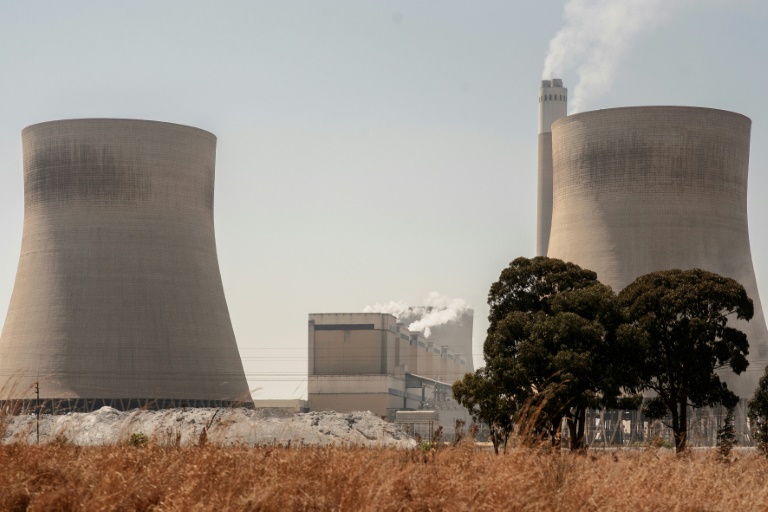
The bank said South Africa accounts for 1.2 percent of global greenhouse gas emissions — with the coal-dominated energy sector responsible for nearly half of its discharges.

“The power sector… will need to transform radically by moving away from coal toward renewables,” it said, projecting that solar and wind will provide about 85 percent of the country’s energy by 2050.

The country “is one of the most carbon- and energy intensive economies in the world”, the bank added, noting that South Africa’s carbon intensity was 3.2 times higher than the global average in 2019.

“This shift should start immediately to address the ailing generation capacity, accompanied by (an) enhanced regional energy market,” said the bank.

A shift away from coal for renewable sources of energy will help the country tackle its ongoing energy crisis “most urgently and cost-competitively”.

But transitioning from coal will come at a heavy cost.

The bank estimates that at least 300,000 jobs in high-emitting sectors will be lost, urging the government to find ways to alleviate the potential negative effects of the transition.

For every job lost, the bank estimated that between two and three jobs could be created in renewables, green manufacturing and non-coal mining sectors.

Fleeing jihadist violence, Niger pupils return to school

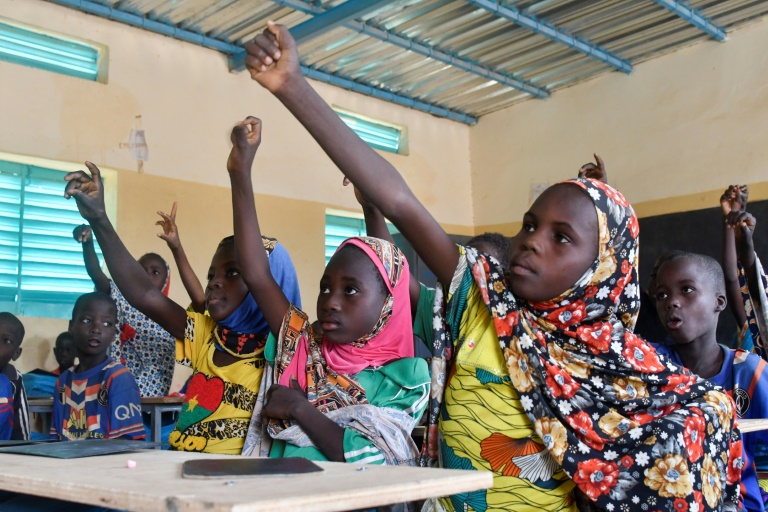
With blue schoolbags bouncing off their backs, hundreds of schoolchildren hurtle down small sand dunes eager to attend class again.

But these boys and girls are survivors of suffering and trauma that few children of their age could conceive.

Their new school is in the town of Ouallam in southwestern Niger, a region that for five years has been plagued by attacks unleashed by groups linked with Al-Qaeda and the Islamic State group.

The pupils come from 18 villages near Mali whose inhabitants fled to the relative safety of Ouallam in 2021 after jihadist killings that also forced the closure of schools.

The UN children’s agency UNICEF says 817 schools with 72,421 pupils — including 34,464 girls — have closed in Niger, mostly in the Tillaberi, the border region where Ouallam is located.

In Ouallam alone, around one hundred schools have had to shut their doors.

The chronic insecurity has prompted the authorities to create dedicated educational centres where displaced children can resume their schooling, Mahamadou Illo Abarchi, an education official in Ouallam, told AFP.

Some 17,000 pupils have already re-entered the school system and another 55,300 are set to follow suit, enrolling in around 20 centres for displaced children across southwestern Niger, the government says.

– ‘Killed by the bandits’ –

In Ouallam, almost 1,600 schoolchildren — some of whom had not attended class for three years — are registered with three centres built near a site for displaced people.

The sites offer free canteens, a vital resource for families who have escaped violence in a nation that, by the UN’s human development index, is the poorest in the world.

Lessons take place in shelters or classrooms equipped with tables and benches provided by NGOs. But in others, the pupils must learn on the floor.

Fatima and Aissa, two young girls from Ngaba, a settlement near Mali, expressed their delight at returning to school as they clutched their slate boards.

But the euphoria of returning to school cannot wipe out the painful memories.

“My uncle was a village chief, he was killed by the bandits in front of our eyes,” said Mariama, who also lived in Ngaba. “There was a lot of blood.” 

Nassirou, Malick, Hasane, Abdou and their parents fled their village of Adabdab on foot after a series of jihadist attacks, the last of which on October 22 claimed the lives of 11 civilians.

“It was the bandits who chased us away, they killed many men,” Nassirou said quietly in the playground.

Moussa, who hails from a hamlet in the same area, said: “I’m not afraid anymore, I no longer hide when I hear the sound of motorcycles” often used by jihadists to attack villages.

– ‘Encouraging results’ –

When they first arrived at the new centres, many children showed “signs of distress and trauma, others were very aggressive”, said education official Morou Chaibou.

He spoke of how some pupils recounted harrowing memories — including seeing their parents being shot.

Adamou Dari, the regional director of the centres, said they also offered the children psychological and social support to give them some stability after their traumatic experience.

“Now they concentrate in class and the results are encouraging,” said a teacher as she played in the courtyard with some of her pupils.

Absenteeism is minor but a source of worry, Dari said, explaining that some pupils played truant to work in the town and feed their families.

Harlem Desir of the International Rescue Committee, who recently visited the site for displaced people in Ouallam, said impoverished families often put their children to work or marry their daughters at a young age.

Chaibou warned that neglected children could become prime recruitment targets for the very jihadist groups whose depredations have left their families in such difficulties.

In 2021, Amnesty International warned that boys aged between 15 and 17 were filling the ranks of armed groups, especially the Al-Qaeda-affiliated GSIM, in the Torodi region near Burkina Faso — with the blessing of their parents.

Invasive malaria mosquito spreading in Africa, researchers warn

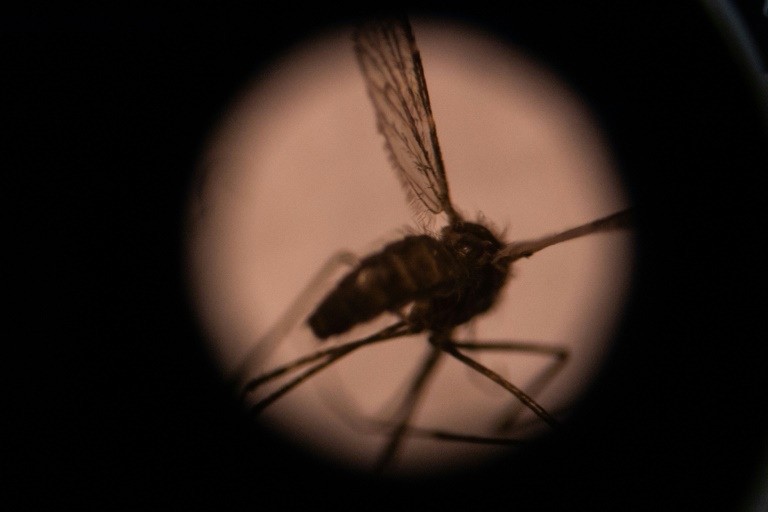
New evidence has emerged that an invasive species of malaria-carrying mosquito from Asia is spreading in Africa, where it could pose a “unique” threat to tens of millions of city-dwellers, researchers warned Tuesday.

In Africa, home to more than 95 percent of the world’s 627,000 malaria deaths in 2020, the parasite is mostly spread in rural areas preferred by the dominant Anopheles gambiae group of mosquitoes.

However the Anopheles stephensi mosquito, which has long been a main malaria spreader in Indian and Iranian cities, can breed in urban water supplies, meaning it can thrive during the dry season. It is also to resistant to commonly used insecticides.

Modelling research in 2020 found that if Anopheles stephensi spread widely in Africa it would put more than 126 million people in 44 cities at risk of malaria. 

Djibouti became the first African nation to detect Anopheles stephensi in 2012. It had been close to eradicating malaria with just 27 reported cases that year. 

However the number has skyrocketed since Anopheles stephensi’s arrival, hitting 73,000 cases in 2020, according to the World Health Organization.

On Tuesday, researchers revealed the first evidence that a malaria outbreak in neighbouring Ethiopia earlier this year was caused by Anopheles stephensi.

In the eastern Ethiopian city of Dire Dawa, a transport hub between the capital Addis Ababa and Djibouti, 205 malaria cases were reported in all of 2019.

However this year more than 2,400 cases were reported between January and May. The outbreak was unprecedented because it took place during the country’s dry season, when malaria has usually been rare.

– ‘Surprising’ –

As the numbers were rising, Fitsum Girma Tadesse, a molecular biologist at Ethiopia’s Armauer Hansen Research Institute, and other researchers “jumped in to investigate,” he told AFP.

They quickly determined that “Anopheles stephensi mosquitoes are responsible for the increase in cases,” Tadesse said.

They linked Anopheles stephensi to the infections of the patients, and also found the mosquitoes — carrying malaria — in nearby water containers.

Tadesse warned that the mosquito’s preference for open water tanks, common across many African cities, “makes it unique”.

The research, which has not been peer reviewed, was presented at the Annual Meeting of the American Society of Tropical Medicine and Hygiene being held this week in Seattle, US.

Also presented at the conference were early findings that identified Anopheles stephensi at 64 percent of 60 test sites in nine states of neighbouring Sudan.

“In some instances, we have found that up to 94 percent of households have stephensi” mosquitoes nearby, Hmooda Kafy, the head of the integrated vector management department at Sudan’s health ministry, said in a statement.

The findings come after the Nigerian Institute of Medical Research confirmed in July it had detected Anopheles stephensi in West Africa for the first time.

Sarah Zohdy, an Anopheles stephensi specialist at the US Centers for Disease Control and Prevention, told AFP it was “surprising” that the mosquito was detected so far west, as the focus had been on the Horn of Africa.

– ‘A major threat’ – 

In the last couple of months it has been shown that Anopheles stephensi “is no longer a potential threat” in Africa, Zohdy said.

“In the Ethiopian context, this is a threat — we now have data to show that,” said Zohdy, who also works with the US President’s Malaria Initiative, a partner of the Dire Dawa study.

“The evidence now exists to suggest that this is something that the world needs to act on,” she added.

Anopheles stephensi has also been reportedly detected in Somalia, according to the WHO, which in September launched an initiative aimed at stopping the spread of the mosquito in Africa.

Because Anopheles stephensi can thrive in urban water tanks, “you get a shift from a seasonal disease to one that can persist year round,” Zohdy said.

That shift poses “a major threat” to recent gains made against malaria, she added. 

Deaths from malaria had more than halved from the start of the century to 2017 — largely due to insecticide-treated mosquito nets, testing and drugs — before progress stalled during the Covid-19 pandemic.

Zohdy called for increased surveillance to find out exactly how far Anopheles stephensi has spread across the continent.

“The true extent of the distribution of the mosquito is unknown,” she said.

Tanzania deploys army to battle Mount Kilimanjaro fire

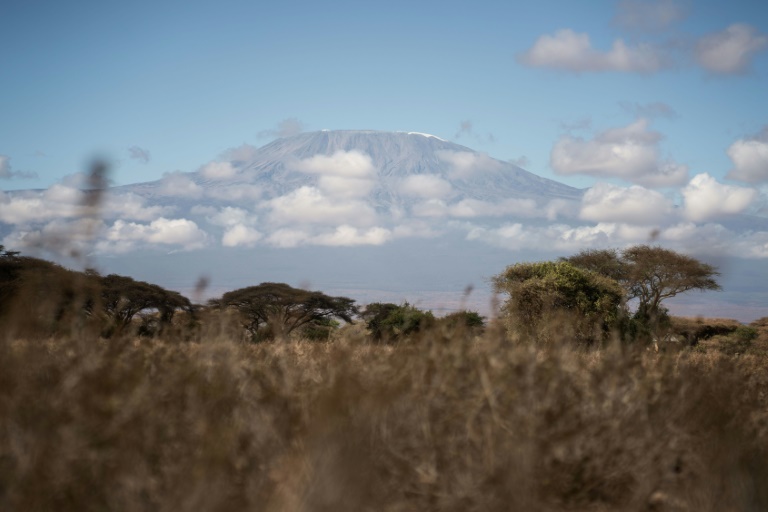
Tanzania on Tuesday mobilised soldiers to reinforce civilian firefighters and volunteers stretched thin by a wildfire on Africa’s highest peak, Mount Kilimanjaro, which has been blazing for more than 10 days. 

The fire started on October 21 near the Karanga site used by climbers ascending the famous peak, at about 4,000 metres (13,000 feet) altitude on its south side.

It has since lit up in other pockets and overwhelmed a team of nearly 600 people, including students using twigs and branches to put out the fire. 

“The officers have already arrived at the mountain and are ready to put out the fire,” Tanzania People’s Defence Forces (TPDF) said in a statement, without giving numbers.

The government last week thought the fire was under control before high winds spread it to three other places. 

“We will cooperate with the other forces and volunteers to make sure that the fire is quickly put under control before it causes serious damage,” the TPDF said.

So far, no injuries or deaths have been reported and tourism has not been affected, according to the government.  

Two to four square kilometres (0.7 to 1.5 square miles) of bushland had been consumed by the fire, the natural resources and tourism ministry said last week. 

Mount Kilimanjaro, with its snow-capped peak, is famed around the world. Situated in the northeast of the country, it is the highest free-standing mountain in the world at 5,895 metres (19,340 feet).

The forests surrounding it form part of a national park, and Kilimanjaro National Park is listed as a UNESCO World Heritage site, in part because many endangered species live there.

Officials have not yet established how the fire started, but it comes exactly two years after another blaze, which raged for a week in October 2020 across 95 square kilometres (37 square miles).

Close Bitnami banner
Bitnami