Africa Business

War in Ukraine strains ties between Africa and West

Russia’s invasion of Ukraine has dug a rift between African countries and supporters in the West who are urging the continent to show solidarity with Europe.

The problems were on uncomfortable display this week at the Dakar International Forum on Peace and Security, where the conflict was a major theme.

Russia’s invasion is “an existential threat to the stability and integrity of our continent”, French minister of state Chrysoula Zacharopoulou told the conference.

“That’s why we expect solidarity from Africa,” she said.

She pinned the blame on the Kremlin for soaring energy and food costs that have buffeted the world economy but hit African countries most of all.

“Russia is solely responsible for this economic, energy and food crisis,” she said.

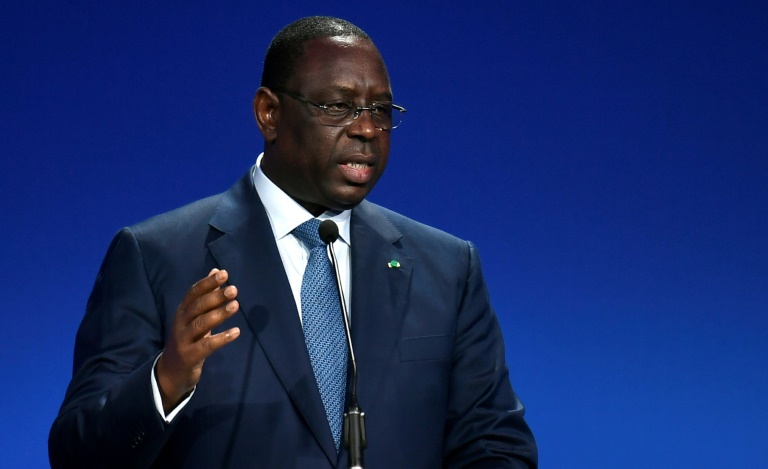
Senegal’s President Macky Sall, who is also current head of the African Union, said Africa was “not against Ukraine,” and Africans were not “insensitive to the situation” there.

But, like others at the conference, he said that many Africans felt that their own problems, such as security, the economy or health, were being ignored.

“Africans say that even while Ukraine is at war, is being invaded, is being attacked, Africa is under permanent attack from terrorism,” Sall said.

“This is 2022, this is no longer the colonial period… so countries, even if they are poor, have equal dignity. Their problems have to be handled with respect.”

– ‘Western patronising’ –

Former Nigerien president, Mahamadou Issoufou, said it was disheartening to see so much support for the Ukrainian army, when the Sahel region from which he hails was scrambling to find funds to battle jihadists.

“It’s shocking for Africans to see the billions that have rained down on Ukraine while attention has been diverted from the situation in the Sahel,” he said.

In contrast, he added, the G5 anti-jihadist force originally supposed to bring together troops from Burkina Faso, Mauritania, Niger, Chad and Mali had found it much harder to drum up $400 million.

Malian Foreign Minister Abdoulaye Diop, who said his junta-ruled country this year left the G5 over it coming under too much “French pressure”, also saw a disparity.

“For Ukraine, where they have asked Africa to take a stand, in just a few days they raised more than eight billion (dollars),” he said.

“It’s a policy of double standards. All human lives — black, white, red and yellow — are equal.”

Conference host Senegal, which has close ties with Western countries, caused a stir on March 2 by abstaining, like many other African states, from a UN General Assembly vote on a resolution demanding Russia stop using force against Ukraine.

Foreign Minister Aissata Tall Sall this week told TV5 Monde the move had reflected the need to “seek a common African position” at a time when her country had just taken over the chair of the AU.

Nearly half of African countries either abstained or did not vote in a UN resolution on October 13 on whether to condemning Russian annexation of more Ukrainian territory.

Aude Darnal, a non-resident fellow at the Stimson Center, a US think tank on international security, said Africa had been seeking new partners in recent years.

“African states have sought to diversify their partnerships with other smaller and emerging powers, like India and Turkey” — both at the forum — “and great powers like China and Russia, all posing as equal partners,” she said. 

“There has also been growing fatigue towards a sense of Western patronising,” she added.

African states were seeking “to protect and advance their interests and partnerships with all sides”.

– ‘Self-centred’? –

But Niagale Bagayoko, the president of the African Security Sector Network (ASSN), dismissed the argument that the world had abandoned Africa as “very difficult to accept”.

“Africa is at the heart of the international agenda,” she said. 

“If we really look at the budget for peacekeeping operations, external interventions, then apart from the Middle East, Africa over the past 10 years is the region that has received the most interventions, including sporadic interventions from the Americans.”

She said she feared that recent reactions of African politicians “give the impression that Africans’ only concern with a conflict that is having consequences on the whole world is its repercussions on their own security.”

“It reminds me of Europeans who believe that the only point in being concerned by the conflict in the Sahel, for example, is to protect the (European) continent from migration.”

The risk, she said, is that Western countries too could respond “in the same self-centred manner” when the next international call comes for investment to help Africa.
Kenya's new cabinet sworn in two months after vote

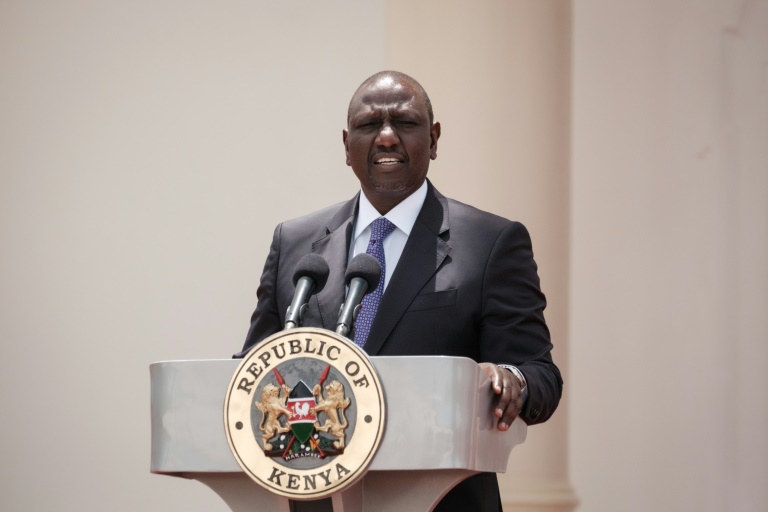
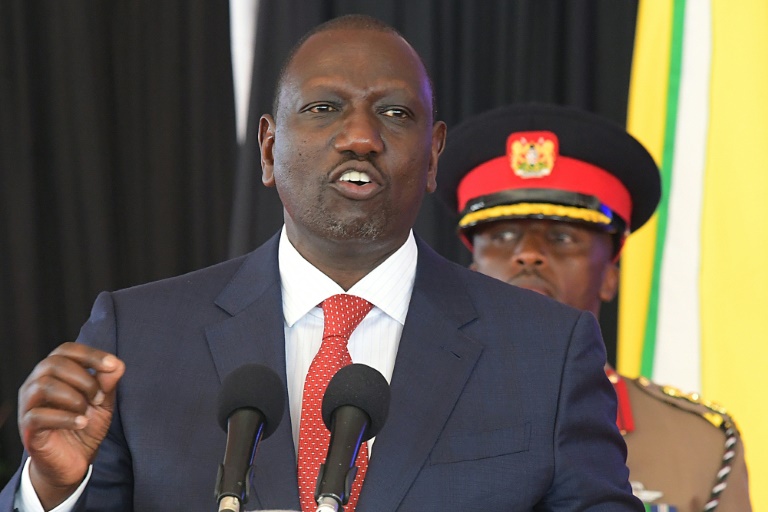
Kenyan President William Ruto’s cabinet was sworn in on Thursday, two months after he narrowly won a bitterly-fought but largely peaceful election.

The 22-member line-up will be tasked with tackling the cost of living crisis and other economic issues in the East African country, the cornerstone of Ruto’s election campaign manifesto.  

“You will have my support because you have no other option but to succeed. Failure is not an option, we have a country to look after,” Ruto told the new ministers at the event in Nairobi.

Ruto vowed to run an inclusive, transparent and accountable government as he aims to transform the regional powerhouse.

“We have no grey areas, we have nothing to hide. We want to serve the people of Kenya,” he said.

However, the new cabinet did not achieve the gender parity Ruto had promised on the campaign trail, naming just seven women to the team. 

Musalia Mudavadi, a former vice president who broke ranks with defeated presidential candidate and opposition chief Raila Odinga to back Ruto, assumed the newly-created position of prime cabinet secretary. 

The 62-year-old will be the most senior government minister and answer directly to the president and his deputy.

Alfred Mutua, a former governor whose party also sided with Ruto, will take charge of the foreign ministry, while former central bank governor Njuguna Ndung’u is the new treasurer.

Kithure Kindiki, a lawyer who served on the legal team that defended Ruto’s August election win at the Constitutional Court, will head the powerful interior ministry.

The August 9 vote concluded largely peacefully despite the slow transmission of results, a damaging dispute within the election body and the ultimately unsuccessful court challenge by Odinga.

In its final report on the vote, the European Union’s observer mission on Thursday said the election “highlighted many positive elements in Kenya’s continued democratic development and desire to improve the electoral process.”

It nevertheless raised concerns about the running of the vote and pointed to several areas that it said needed urgent reform.

These include election technology, funding for the Independent Electoral and Boundaries Commission and improvements to the tallying process.

– Tough going –

Ruto’s ministers were unanimously approved by parliament Wednesday despite the committee which vetted the nominees rejecting the appointment of Penina Malonza as tourism minister. 

But Malonza sailed through a vote in the 349-member parliament, riding on the majority that Ruto commands. 

The immediate focus of the new cabinet will be to lower the cost of living and tackle Kenya’s $70-billion debt mountain.

Ruto, who campaigned as a champion of the poor, has found the going tough on implementing his promises, instead laying the blame on inheriting a dilapidated economy even though he was deputy president in the previous administration.

This week he asked for a year to lower the price of maize flour used to prepare ugali, a dense porridge that is Kenya’s staple food, renouncing a pledge to do so immediately he took office. 

Among his first acts after assuming power was to slash food and fuel subsidies introduced by former president Uhuru Kenyatta.

The rags-to-riches businessman last month said he would overhaul Kenya’s income tax regime and introduce reforms that would press high earners to pay more to help reduce inequality.

Kenya is the most dynamic economy in East Africa but many of its people are suffering financial hardship, with about a third of the population living in poverty. 

Prices for basic goods rocketed following the Covid pandemic and in response to the war in Ukraine, and unemployment remains a major problem, particularly among the young.

Inflation soared to a five-year high of 9.2 percent in September, while the currency is at record lows at around 122 shillings to the US dollar.

Air pollution 'silent killer' in African cities: study

Pollution in Africa’s fast-expanding cities is deadlier than thought, yet green solutions could save tens of thousands of lives and avert billions of dollars in damage, a report said Thursday.

“Air pollution (in African cities) is high and rising, it’s rising pretty quickly,” said Desmond Appiah, Ghana director at the Clean Air Fund, a British NGO which published the study. “It is a silent killer.” 

Urban pollution has been widely overlooked in Africa, the study says.

Africa’s population is mostly rural and only recently followed other continents in making the exodus to the city.

Previous research published in the journal The Lancet Planetary Health estimated that toxic air — especially particulates and gases from industry and transport, but also from wood-burning stoves — led to 1.1 million premature deaths in 2019.

By comparison, HIV-AIDS related illnesses claimed 650,000 deaths globally the same year, according to UN figures.

The report looked at four fast-growing cities on the continent — Accra, Cairo, Johannesburg and Lagos — to factor in health, environmental and economic costs.

It compared outcomes between a “business-as-usual” trajectory to 2040 with a green scenario in which the cities adopt clean air measures, such as upgrading public transport, introducing cleaner cooking stoves and industrial technology.

Taking the greener path could save 125,000 lives and $20 billion in economic costs, and cut those cities’ emissions by around 20 percent by 2040, the report said.

On the “business-as-usual” trajectory, the financial bill will soar more than sixfold.

“Africa’s economic growth will be driven by fast-expanding cities,” Clean Air Fund said.

“Over 65 percent of the continent’s population is expected to live in urban areas by 2060. 

“By the end of the century, Africa will host five of the 10 largest megacities in the world. The big question now is how fast, fair and sustainable this growth will be. “

Separately, a Boston-based research group, the Health Effects Institute (HEI), said Thursday the disease burden of air pollution in Africa was  among the highest in the world.

In sub-Saharan Africa, the rate of deaths linked to air pollution is 155 deaths for every 100,000 people — almost twice the global average of 85.6 deaths in 100,000 people, the HEI said in a report.

US terror alert in S.Africa 'unfortunate': Ramaphosa

South Africa’s President Cyril Ramaphosa on Thursday regretted as “unfortunate” the US embassy’s issuing of a warning of a possible weekend “terrorist” attack in the country without consulting his government.

The US embassy on Wednesday posted the alert on its website and identified the potential target as Sandton, a suburb in the country’s financial hub of Johannesburg.

Sandton, a collection of high-end shops and lofty office blocks and banks, is commonly referred to as the richest square mile on the African continent.

The alert said the attack could occur there on Saturday.

“It is quite unfortunate the US issued that type of warning without having any type of discussion with us,” he said during a press conference.

“Any form of alert will come from the government of the republic of South Africa and it is unfortunate that another government should issue such a threat as to send panic amongst our people,” said Ramaphosa.

He was answering a question during a joint press conference with Spanish Prime Minister Pedro Sanchez, who is visiting the country.

He said Pretoria is “working around the clock to verify and to look very closely at this message that came from the United States”.

– Parade proceeding –

The embassy said the US government had “received information that terrorists may be planning to conduct an attack targeting large gatherings of people at an unspecified location in the greater Sandton area of Johannesburg”.

The alert was quickly shared on social media and on WhatsApp groups across Johannesburg.

Pretoria had on Wednesday appeared to downplay the alert, calling it “part of the US government’s standard communication to its citizens”.

Several alerts have been issued about possible imminent attacks in South Africa in recent years, but none have materialised.

A respected local news website, News24, cited unnamed sources Thursday suggesting that a gay parade slated for Saturday in Sandton and a comedy show by a leading South African comedian of Jewish descent could have been the potential targets.

Organisers of the Johannesburg Pride vowed to forge ahead with the parade, which is returning after a two-year break due to Covid-19 pandemic restrictions.

The event “has not been directly threatened, nor have we received any communication from outside parties other than what the media assumed via the US embassy’s website,” they said in a statement.

“Gay pride began as a defiant campaign, and we will not be subjected to any threats based on sexual orientation and gender identity. We believe that all lives matter,” they said.

“It is critical for us to occupy the space we intend to occupy on October 29. We must take to the streets and… assert our visibility,” they added.

– ‘Very concerned’ –

The News24 website said ongoing peace talks between warring Ethiopian parties in the capital Pretoria had also been “flagged by South Africa’s intelligence agencies as a potential target”.

“We are very concerned about terrorism,” Foreign Minister Naledi Pandor said Thursday.

“Our security organs are paying attention to this matter.”

The US embassy on Sunday also issued a security alert in Nigeria, urging US citizens to limit their movements due to an “elevated risk of terror attacks in Nigeria, specifically in Abuja”.

South African is helping neighbouring Mozambique fight an Islamist insurgency and has deployed more than 1,000 troops there since July last year.

After the United States and Britain issued a similar security alert in 2016, South Africa reacted angrily to what it described as “attempts to generate perceptions of government ineptitude, alarmist impressions and public hysteria on the basis of a questionable single source”.

Sudan security forces fire tear gas at pro-democracy protesters

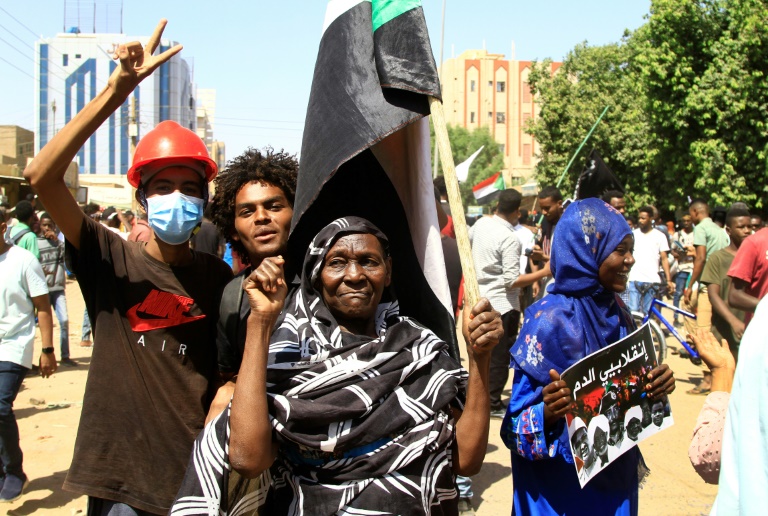
Sudanese security forces fired tear gas Thursday as thousands of protesters marched against last year’s coup, which sparked political and economic crises and exacerbated a wider security breakdown that has left hundreds dead.

Chanting slogans and waving Sudanese flags, protesters demanded justice for 119 people killed during intense crackdowns since the military power grab in October last year.

In addition, a broader security breakdown nationwide has also left nearly 600 dead and more than 210,000 displaced as a result of ethnic violence this year, according to the United Nations.

Army chief Abdel Fattah al-Burhan seized power on October 25, 2021, arresting the civilian leaders with whom he had agreed to share power in 2019, when mass protests compelled the army to depose one of its own, long-time autocrat Omar al-Bashir.

In the capital Khartoum, thousands in the suburb of Al-Deim marched carrying posters of activists killed by security forces.

In North Khartoum, thousands of pro-democracy activists erected barricades to block the security forces, who fired barrages of tear gas canisters towards them.

“Soldiers go back to the barracks”, protesters chanted.

For 12 months, near weekly anti-coup protests have been met with force. Ahead of protests on Thursday, security forces blocked the bridges across the Nile linking Khartoum to its satellite cities, including Omdurman.

On Tuesday, in giant marches to mark the anniversary of the coup, a protester was killed when he was crushed by a military vehicle in Omdurman, according to the Central Committee of Sudan Doctors said, a pro-democracy group of medics. 

– Hunger –

Already one of the world’s poorest countries, Sudan has plunged into a worsening economic crisis since the coup.

Western governments say Sudan must return to civilian rule before crucial aid halted in response to the coup can resume.

Between three-digit inflation and chronic food shortages, a third of the country’s 45 million inhabitants suffer from hunger, a 50 percent increase compared with 2021, according to the World Food Programme (WFP).

On Thursday, in separate demonstrations, some 150 Sudanese protesters rallied in front of the UN headquarters in Khartoum, to denounce clashes that have left at least 200 people dead this month in Blue Nile state.

Violence erupted earlier this month in the southern state over reported land disputes between members of the Hausa people and rival groups.

“We protest to tell the international community to put an end to violence in Blue Nile because the Sudanese authorities are doing nothing,” said Mawaheb Ibrahim, one of those in the crowd.

– ‘Besieged’ –

Conflict in Sudan has continued despite a 2020 peace deal with key rebel forces.

Much of the violence between neighbouring ethnic group is rooted in grievances over land, water or livestock grazing, in regions still reeling after decades of civil war and left awash with automatic rifles.

Access to land is highly sensitive in the impoverished country, where agriculture and livestock account for 43 percent of employment and 30 percent of GDP, according to UN and World Bank statistics.

Sudan is the world’s fifth most vulnerable country to the impacts of climate change, according to a 2020 ranking in the Global Adaptation Index, compiled by the Notre Dame University in the United States.

Health officials in Blue Nile, which borders South Sudan and Ethiopia, said 237 had been killed in intense fighting last week in the Wad al-Mahi area, about 500 kilometres (300 miles) south of Khartoum.

The toll is expected to rise further, state health minister Jamal Nasser said, warning that “there are still bodies in the rubble of homes”.

Some 40,000 people, “mainly women, children and the elderly” have sought refuge in schools in the nearby cities of Roseires and Damazin, he added.

Mohammed Nureddine, a Hausa leader, said many residents were “besieged” and cut off from help, adding that they included “some of whom are injured, but no one can access them.”

Climate plans would allow up to 2.6C of global warming: UN

Country climate pledges leave the world on track to heat by as much as 2.6 degrees Celsius this century, the United Nations said on Wednesday, warning that emissions must fall 45 percent this decade to limit disastrous global warming.

The United Nations Environment Programme, in its annual Emissions Gap report, found that updated national promises since last year’s COP26 summit in Glasgow would only shave less than one percent off global greenhouse gas emissions by 2030.

The world has warmed nearly 1.2C since the start of the Industrial Revolution and already faces increasingly ferocious climate-enhanced weather extremes like heatwaves, storms and floods.

The Emissions Gap report examines the difference between the planet-heating pollution that will still be released under countries’ decarbonisation plans and what science says is needed to keep to the Paris Agreement goal of limiting warming to between 1.5-2.0C.

A day after the UN’s climate change agency said governments were still doing “nowhere near” enough to keep global heating to 1.5C, UNEP found progress on emissions cutting had been “woefully inadequate”.

It said that additional pledges made since the COP26 summit in Glasgow last year would not even cut emissions by one percent by 2030. 

Failure left the world “hurtling towards” a temperature rise far in excess of the Paris goals, it added. 

“It’s another year squandered in terms of actually doing something about the problem,” the report’s lead author, Anne Olhoff, told AFP.

“That’s not to say that all nations have not taken this seriously. But from a global perspective, it’s definitely very far from adequate.”

The report found that in order for temperature rises to be capped at 2C, emissions would need to fall 30 percent faster by 2030 than envisioned under countries’ most up-to-date plans. 

To limit heating to 1.5C, the gap is 45 percent.

Under the 2015 Paris deal, countries are required to submit ever deeper emission cutting plans, known as Nationally Determined Contributions, or NDCs. 

UNEP found that “unconditional” NDCs — which countries plan regardless of external support — would probably lead to Earth’s average temperature rising by 2.6C by 2100. Scientists warn that level would be catastrophic for humanity and for nature. 

Conditional NDCs — which rely on international funding to achieve — would probably lead to a 2.4C temperature rise this century, it said. 

All told, current plans are likely to see a five- to 10-percent reduction in emissions by 2030 — a far cry from the drop of nearly 50 percent required for 1.5C. 

– ‘Missed opportunity’ –

UNEP said that in 2020, carbon pollution fell more than seven percent, largely thanks to Covid-19 lockdowns and travel restrictions. A fall of that magnitude is needed every year this decade to stay on track for 1.5C. 

But it said greenhouse gas emissions in 2021 could end up being the highest on record — some 52.8 billion tonnes — because countries threw themselves into fossil-fuelled pandemic recoveries.

“We see a full bounce-back in emissions after Covid,” said Olhoff. 

“It’s a missed opportunity in terms of utilising these unprecedented recovery funds to accelerate a green transition.”

Separately, the International Energy Agency said on Thursday it believed global energy emissions would peak in 2025 as surging oil and gas prices spurred a drive to renewables.

But UNEP said that while the switch to greener tech in the power sector was accelerating, several industries were lagging behind in the push towards net-zero emissions.  

For example, in the food sector, which is responsible for around a third of emissions, dietary changes and cutting food loss could help reduce the sector’s footprint by more than 30 percent by 2050.

– ‘Avoid as much damage as possible’ – 

Olhoff said the financial sector was “part of the problem rather than part of the solution” to climate change, with hundreds of billions funnelled annually to fossil fuel projects. 

UNEP suggested the introduction of an effective carbon price under a global cap and trade system that would push investors to consider the environmental impact of their portfolios.

It also called for central banks to make more funds available and help create global low-carbon technology markets.

UN Secretary General Antonio Guterres said Thursday’s report showed the world “cannot afford any more greenwashing”.

“Commitments to net zero are worth zero without the plans, policies and actions to back it up,” he said in a video message. 

Last year the Intergovernmental Panel on Climate Change said that the world was likely to reach and even exceed 1.5C within decades, no matter how quickly emissions fall in the short term. 

Olhoff said that for every year that passed without significant emissions cuts, 1.5C was getting “less realistic and less feasible”.

But she insisted that governments needed to accelerate the green transition to avoid as much damage as possible. 

“The more we learn, it’s absolutely clear that we should aim to get (temperature rises) as low as possible,” Olhoff said. 

“Even if that means 1.6C instead of 1.5C, that’s definitely better than 2C degrees, just as 1.7C is worse than 1.6C.”

Kenya's new cabinet sworn in two months after vote

Kenyan President William Ruto’s cabinet was sworn in on Thursday, two months after he narrowly won a bitterly-fought but largely peaceful election.

The 22-member line-up will be tasked with tackling the cost of living crisis and other economic issues in the East African country, the cornerstone of Ruto’s election campaign manifesto.  

“You will have my support because you have no other option but to succeed. Failure is not an option, we have a country to look after,” Ruto told the new ministers at the event in Nairobi.

Ruto vowed to run an inclusive, transparent and accountable government as he aims to transform the regional powerhouse.

“We have no grey areas, we have nothing to hide. We want to serve the people of Kenya,” he said.

However, the new cabinet did not achieve the gender parity Ruto had promised on the campaign trail, naming just seven women to the team. 

Musalia Mudavadi, a former vice president who broke ranks with defeated presidential candidate and opposition chief Raila Odinga to back Ruto, assumed the newly-created position of prime cabinet secretary. 

The 62-year-old will be the most senior government minister and answer directly to the president and his deputy.

Alfred Mutua, a former governor whose party also sided with Ruto, will take charge of the foreign ministry.

Kithure Kindiki, a lawyer who served on the legal team that defended Ruto’s August election win in court, will head the powerful interior ministry.

Kindiki also represented Ruto at his trial at The Hague-based International Criminal Court for his alleged role in orchestrating the 2007-2008 post-election unrest that killed at least 1,100 people and displaced more than 600,000.

Former central bank governor Njuguna Ndung’u is the new treasurer.

– Tough going –

The ministers were unanimously approved by parliament Wednesday despite the committee which vetted the nominees rejecting the appointment of Penina Malonza as tourism minister. 

But Malonza sailed through a vote in the 349-member parliament, riding on the majority that Ruto commands. 

The immediate focus of the new cabinet will be to lower the cost of living and tackle Kenya’s $70-billion debt mountain.

Ruto, who campaigned as a champion of the poor, has found the going tough on implementing his promises, instead laying the blame on inheriting a dilapidated economy even though he was deputy president in the previous administration.

This week he asked for a year to lower the price of maize flour used to prepare ugali, a dense porridge that is Kenya’s staple food, renouncing a pledge to do so immediately he took office. 

Among his first acts after assuming power was to slash food and fuel subsidies introduced by former president Uhuru Kenyatta.

The rags-to-riches businessman last month said he would overhaul Kenya’s income tax regime and introduce reforms that would press high earners to pay more to help reduce inequality.

Kenya is the most dynamic economy in East Africa but many of its people are suffering financial hardship, with about a third of the population living in poverty. 

Prices for basic goods rocketed following the Covid pandemic and in response to the war in Ukraine, and unemployment remains a major problem, particularly among the young.

Inflation soared to a five-year high of 9.2 percent in September, while the currency is at record lows at around 122 shillings to the US dollar.

Namibia asks Germany to negotiate genocide deal 

Namibia said Thursday it had asked Germany to renegotiate the genocide agreement reached last year between the two governments, but gave no details of the changes being sought.

Germany last year acknowledged it had committed genocide in colonial-era Namibia and promised more than a billion euros (dollars) in financial support to descendants of the victims.

But government has been under pressure from opposition which said the deal was flawed.

The request to review the deal was made in July following discussions in the Namibian National Assembly, Vice President Nangolo Mbumba announced on Thursday.

“Technical committees of Namibia and Germany discussed the issue and proposed that amendments be made to the joint declaration in the form of an addendum which was submitted to the German government,” Mbumba told a meeting of traditional leaders in the capital Windhoek.

“The government of Namibia is awaiting a response from the German side on what we have proposed,” he said.

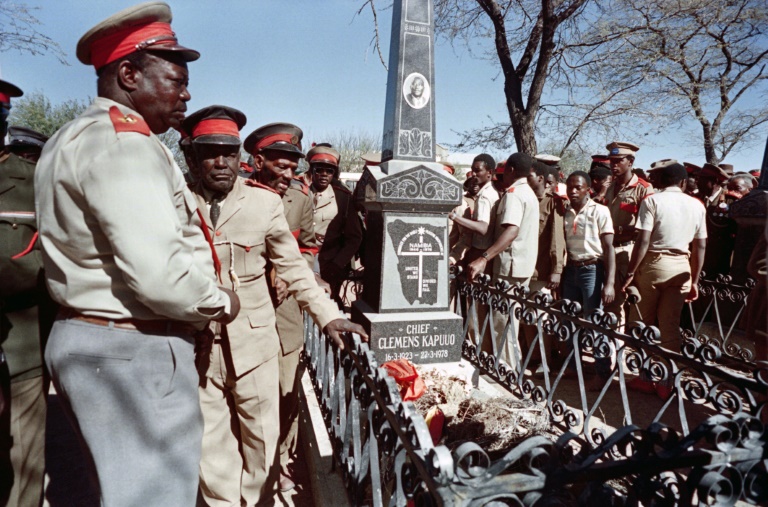
In May 2021, after more than five years of bitter negotiations, Germany announced that it recognised that it had committed “genocide” in this southern African territory, which it colonised between 1884 and 1915.

It offered 1.1 billion euros in development aid spread over 30 years to benefit descendants of the indigenous Herero and Nama ethnic groups.

Germany stressed that the aid would be paid on a “voluntary basis” and that the agreement was not comparable to “reparations”.

Many Namibians rejected the agreement, saying that the descendants of the Herero and Nama had not been sufficiently involved in the negotiations.

Kenya's new cabinet sworn in two months after vote

Kenyan President William Ruto’s cabinet was sworn in on Thursday, two months after he narrowly won a bitterly-fought but largely peaceful election.

The 22-member line-up will be tasked with tackling the cost of living crisis and other economic issues in the East African country, the cornerstone of Ruto’s election campaign manifesto.  

“You will have my support because you have no other option but to succeed. Failure is not an option, we have a country to look after,” Ruto told the new ministers at the event in Nairobi.

Ruto vowed to run an inclusive, transparent and accountable government as he aims to transform the regional powerhouse.

“We have no grey areas, we have nothing to hide. We want to serve the people of Kenya,” he said.

However, the new cabinet did not achieve the gender parity Ruto had promised on the campaign trail, naming just seven women to the team. 

Musalia Mudavadi, a former vice president who broke ranks with defeated presidential candidate and opposition chief Raila Odinga to back Ruto, assumed the newly-created position of prime cabinet secretary. 

The 62-year-old will be the most senior government minister and answer directly to the president and his deputy.

Alfred Mutua, a former governor whose party also sided with Ruto, will take charge of the foreign ministry.

Kithure Kindiki, a lawyer who served on the legal team that defended Ruto’s August election win in court, will head the powerful interior ministry.

A law professor, Kindiki also represented Ruto at his trial at The Hague-based International Criminal Court for his alleged role in orchestrating the 2007-2008 post-election unrest that killed at least 1,100 people and displaced more than 600,000.

Former central bank governor Njuguna Ndung’u is the new treasurer.

Rossouw blasts century as South Africa crush Bangladesh

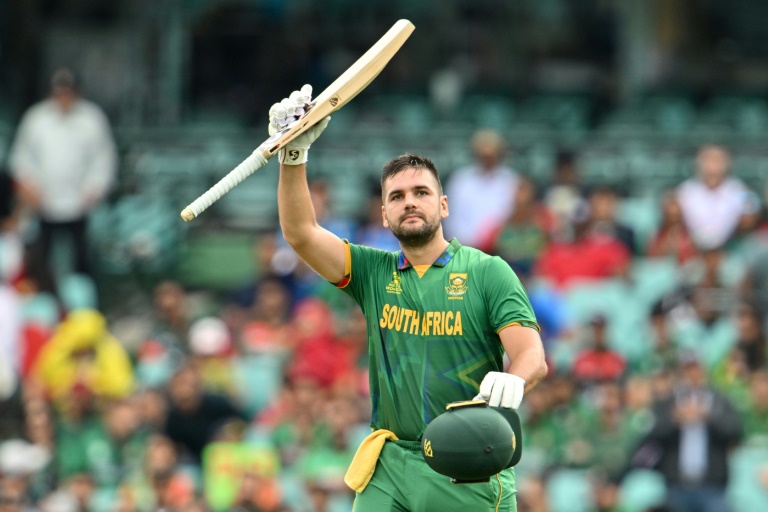
Rilee Rossouw blasted 109 and shared in a record-breaking stand with Quinton de Kock as South Africa crushed Bangladesh to kickstart their Twenty20 World Cup title charge in Sydney on Thursday.

The pair came together after Temba Bavuma fell in the first over and powered their team to 205-5. Bangladesh were dismissed for just 101 in the 17th over with Anrich Nortje taking 4-10.

Rossouw and De Kock amassed 168 for the second wicket — the highest-ever T20 World Cup partnership — surpassing the 166 that Sri Lanka’s Mahela Jayawardene and Kumar Sangakkara made against the West Indies in 2010.

De Kock fell for 63 but Rossouw charged on, bringing up the first century of the tournament and only the 10th scored at any T20 World Cup.

He was eventually out going for another big hit, ending a 56-ball knock which included eight sixes and seven fours. It was the fifth-highest score at a T20 World Cup.

“Sometimes things go your way. And this year has been like an unbelievable rollercoaster ride for me,” said Rossouw. 

“So happy. So proud to be sitting here. Never thought about it (a century) in a million years.

“Today where I thought we did really well was we took on the spin … and we really took charge and wanted to control that area and we did well.”

The blitz set up the Proteas for a much-needed Group 2 victory after their opening match on Monday against Zimbabwe in Hobart was washed out and the points were shared.

Bangladesh opened their campaign with a nine-wicket win over the Netherlands, but they have a poor record against top teams at World Cups.

“Credit goes to Rilee and Quinton de Kock, I think that partnership took the game away from us,” said Bangladesh captain Shakib Al Hasan.

“Obviously when you lose by this margin, it is difficult. But we cannot sit back and say, okay, we are done. We have three more matches.”

– Cavalier approach –

Bavuma won the toss and batted first but the South African skipper was out cheaply again as his awful form continued.

Speedster Taskin Ahmed was coming off career-best figures of 4-25 against the Dutch and coaxed an edge that carried to Nural Hasan behind the stumps.

But that was as good as it got for Bangladesh as De Kock and Rossouw pummelled Ahmed for 21 in his next over.

The pair bludgeoned fours and sixes around the ground and brought up their 50-partnership in four overs, only to be interrupted at 60-1 in the sixth over when light rain began falling.

They resumed the onslaught after a 22-minute break, where no overs were lost.

Rossouw reached his 50 first, off 30 balls, with De Kock taking four balls longer.

They went on to demolish the Bangladesh attack before De Kock was caught at long-on off Afif Hossain for 63 off 38 balls in the 15th over with the score on 170. Rossouw brought up three figures before ballooning a catch to Liton Das.

Bangladesh’s intent was clear when they began their chase, with the openers taking 17 off the first over from Kagiso Rabada.

But the cavalier approach cost them with Nortje picking up two wickets in the same over. Soumya Sarkar (15) edged to wicketkeeper De Kock and Najmul Shanto was clean bowled.

Nortje bagged a third in his next over with Al Hasan trapped lbw for one. Then Rabada took care of Afif Hossain (1), top-edging a pull to Wayne Parnell at mid-off.

It left Bangladesh teetering at 47-4 in the sixth over. Mehidy Hasan lasted 13 balls and Mosaddek Hossain just three before the tail was quickly cleaned up.

Close Bitnami banner
Bitnami