Africa Business

Second day of Ethiopia peace talks in South Africa

The first formal peace talks between the warring sides in the brutal two-year conflict in Ethiopia’s Tigray region went into a second day in South Africa on Wednesday.

Led by the African Union (AU), the negotiations in Pretoria follow a surge in fierce fighting in recent weeks that has alarmed the international community and triggered fears for civilians caught in the crossfire.

The talks are being held at South Africa’s foreign affairs ministry headquarters.

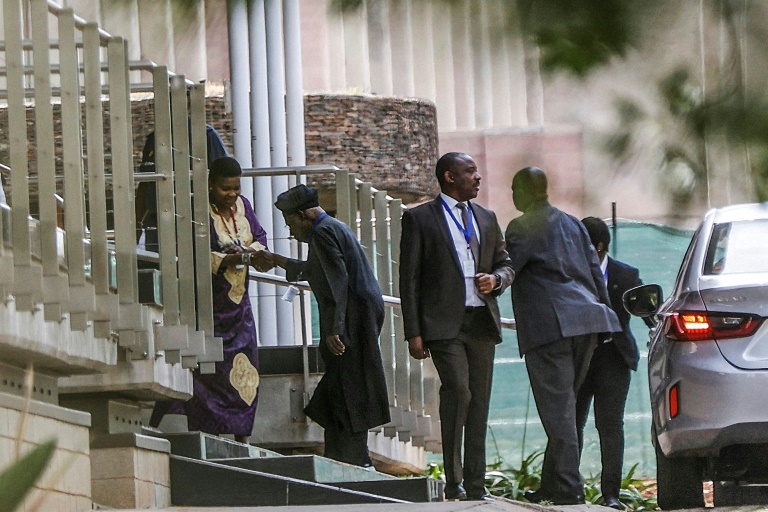
AU Horn of Africa envoy and Nigerian former president Olusegun Obasanjo, who is the talks’ chief facilitator, was filmed and photographed by AFP journalists entering the venue on Wednesday morning.

Kenya’s ex-president Uhuru Kenyatta who is part of the mediating team, was also seen going into the building so was South Africa’s ex-vice president Phumzile Mlambo-Ngcuka.

US special envoy for the Horn of Africa Mike Hammer, is also participating in the talks.

The Pretoria dialogue — the first publicly announced talks between the rivals — opened on Monday and is due to run until Sunday, according the South African presidency.

But there has been a media blackout with journalists kept outside the venue’s perimeter fence.

The dialogue between negotiators from the Ethiopian government of Prime Minister Abiy Ahmed and the regional authorities in war-stricken Tigray came almost two months to the day since fighting resumed, shattering a five-month truce.

The international community has been calling for a ceasefire, humanitarian access to Tigray where many face hunger, and a withdrawal of Eritrean forces, whose return to the conflict has raised fears of renewed atrocities against civilians. 

Amnesty International called Wednesday for a probe into abuses saying every party involved has committed crimes against humanity.

“Documented violations of human rights violations… (include) rapes, sexual violence, (…) lootings, torture and extrajudicial killings,” said Fisseha Tekle, an Amnesty specialist on Ethiopia and Eritrea.

“All the parties, Tigrayans, Amharas, Eritreans, have committed serious human rights violations, including crimes against humanity,” he  told a Nairobi press conference.

At present, “we are ruling out genocide, just because the level of evidence is not enough at the moment,” he added.

– ‘No military solution’ –

US Secretary of State Antony Blinken had issued an overnight statement welcoming the negotiations.

“There is no military solution to this conflict, and these talks represent the most promising way to achieve lasting peace and prosperity for all Ethiopians,” he said.

AU Commission chair Moussa Faki Mahamat welcomed the launch of the process.

He said he was “encouraged by the early demonstration of commitment to peace by the parties” and reiterated the AU’s continued support for a process “to silence the guns towards a united, stable, peaceful and resilient Ethiopia.”

Diplomatic pressure has ratcheted to try to end a war which has left millions in need of humanitarian aid and, according to a US estimate, as many as half a million dead.

The talks come as federal forces and their allies in the Eritrean army appear to be gaining the upper hand, seizing a string of towns in Tigray including the strategic city of Shire.

It is impossible to verify battleground developments as Tigray — a region of six million people — is largely cut off by a communications blackout and access to northern Ethiopia is severely restricted.

An initial AU effort to bring the two sides to the negotiating table earlier this month failed, with diplomats suggesting logistical issues and a lack of preparedness were to blame.

A Western official has said secret contacts have taken place organised by the United States in the Seychelles and twice in Djibouti.

Abiy sent troops into Tigray in November 2020, promising a quick victory over the northern region’s dissident leaders, the TPLF, after what he said were attacks by the group on federal army camps.

The move followed long-running tensions with the TPLF, which had dominated Ethiopia’s ruling coalition before Abiy came to power in 2018.

Kindeya Gebrehiwot, a spokesman for the rebel authorities in Tigray, at the weekend listed their expectations from the talks.

“Pressing: immediate cessation of hostilities, unfettered humanitarian access & withdrawal of Eritrean forces. There can’t be a military solution!” he said.
Records tumble as South Africa make 205-5 against Bangladesh

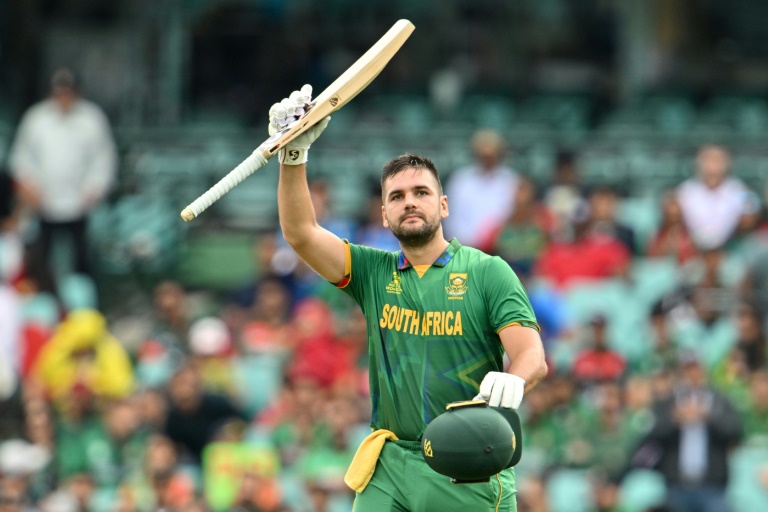
Rilee Rossouw blasted 109 and shared in the highest stand in Twenty20 World Cup history Thursday with Quinton de Kock as South Africa amassed 205-5 against Bangladesh in Sydney.

The pair came together after opener and captain Temba Bavuma again failed with the bat, out for two in the first over.

From there it was all South Africa with the pair putting on 168 for the second wicket, surpassing the 166 that Sri Lanka’s Mahela Jayawardene and Kumar Sangakkara made against the West Indies in 2010.

De Kock fell for 63 the next ball but Rossouw powered on, bringing up the first century of the Australian tournament and only the 10th ever at a T20 World Cup.

He was eventually out going for another big hit, ending a 56-ball knock in which he smashed eight sixes and seven fours. It was the fifth highest score at a T20 World Cup.

The blitz put the Proteas on track for victory after their opening match on Monday against Zimbabwe in Hobart was washed out and the points were shared.

In contrast, Bangladesh opened their campaign with a nine-wicket win over the Netherlands and currently sit on top of Group 2 on two points with India.

But they have a poor record against top teams at World Cups, and have not won any of their seven T20s against South Africa.

Bavuma won the toss and batted first but the South African skipper was out cheaply again as his awful form continued.

Speedster Taskin Ahmed was coming off career-best figures of 4-25 against the Dutch and coaxed an edge with his raw pace that carried to Nural Hasan behind the stumps.

But that was as good as it got for Bangladesh as De Kock and Rossouw attacked Ahmed in his next over, pummelling 21 to assert their authority.

The pair were bludgeoned fours and sixes around the ground, bringing up their 50-partnership in four overs.

Their blitz was interrupted at 60-1 in the sixth over when light rain began falling.

But they resumed after a 22-minute break, with no overs lost, and carried on where they left off.

Rossouw reached his 50 first, off 30 balls, with De Kock taking four balls longer.

They went on to demolish the Bangladesh attack, setting the new partnership record before De Kock was caught at long-on off Afif Hossain for 63 off 38 balls.

Rossouw carried on and brought up three figures before ballooning a catch to Liton Das.

S.Africa to swallow part of Eskom's debt to keep it afloat

South Africa’s treasury vowed Wednesday to take over more than half of Eskom’s multi-billion-dollar debt to ensure the embattled energy utility’s viability and curb the energy crisis that has put a break on growth.

In a mini budget statement, Finance Minister Enoch Godongwana said government has decided to give Eskom 225 billion rand ($12.4 billion) towards debt for the period 2019 to 2026.

“The programme will allow Eskom to focus on plant performance and capital investment,” the minister said before parliament, adding the debt takeover will ensure the company no longer relies on government bailouts. 

Eskom, which he labelled the biggest risk to the economy, is bucking under a 400-billion-rand debt.

“The debt takeover, once finalised, together with other reforms will ensure that Eskom is financially sustainable,” he said.

The government has for more than a decade poured billions of rands into Eskom, “with limited improvements in the reliability of the electricity supply or the financial health of the company,” he said.

Sweeping power outages, caused by failures at ageing and poorly maintained infrastructure at Eskom — which provides almost all of South Africa’s electricity — have worsened in recent months.

Projected economic growth for this year is 1.9 percent, falling from 4.9 percent in 2021.

– ‘Disastrous’ –

“The intensity of load shedding is having a disastrous effect on our economy,” said the minister. 

Economists have welcomed the government’s move on Eskom, but said more needs to be done.

“Transferring between one-third and two-thirds of Eskom’s debt to the government will support the corporation’s financial sustainability,” said Aurelien Mali, of Moody’s Investors Service.

“But will not alone resolve its maintenance and operational challenges, which continue to be a drag on the South African economy,” added Mali.

For Godongwana, constraints in transport industries have also severely impacted economic activity. 

In October workers at Transnet, state rail and port logistics firm, went on a weeks long strike that crippled South Africa’s economy and stranded mineral and fresh fruit exports.

The strike cost mining firms $45 million in exports a day, according to the Minerals Council South Africa, an industry group.

Looming labour strikes by public service workers demanding wage hikes further threaten the nation’s prospects of cleaning up its economy.

In addition to recurring power cuts economic recovery has also been hampered by a series of shocks.

These include massive damage caused by riots, which broke out in July 2021 following former president Jacob Zuma’s jailing and left more than 350 dead.

Unprecedented floods that swept through the third largest city of Durban, killing hundreds, also put a damper on growth.

President Cyril Ramaphosa’s Sunday promises to crack down on graft, following a probe into state corruption under his predecessor Zuma, saw the finance minister state the government would act against implicated individuals and companies.

He also targeted reducing inflation to 5.1 percent in 2023, following a peak of 7.8 percent last July — the highest level in 13 years.

Soaring fuel prices triggered by the Russia-Ukraine war, as well as food inflation have been “a key source of inflationary pressure” in South Africa, the minister added.

Second day of Ethiopia peace talks in South Africa

The first formal peace talks between the warring sides in the brutal two-year conflict in Ethiopia’s Tigray region went into a second day in South Africa on Wednesday.

Led by the African Union (AU), the negotiations in Pretoria follow a surge in fierce fighting in recent weeks that has alarmed the international community and triggered fears for civilians caught in the crossfire.

The talks are being held at South Africa’s foreign affairs ministry headquarters.

AU Horn of Africa envoy and Nigerian former president Olusegun Obasanjo, who is the talks’ chief facilitator, was filmed and photographed by AFP journalists entering the venue on Wednesday morning.

Kenya’s ex-president Uhuru Kenyatta who is part of the mediating team, was also seen going into the building so was South Africa’s ex-vice president Phumzile Mlambo-Ngcuka.

US special envoy for the Horn of Africa Mike Hammer, is also participating in the talks.

The Pretoria dialogue — the first publicly announced talks between the rivals — opened on Monday and is due to run until Sunday, according the South African presidency.

But there has been a media blackout with journalists kept outside the venue’s perimeter fence.

The dialogue between negotiators from the Ethiopian government of Prime Minister Abiy Ahmed and the regional authorities in war-stricken Tigray came almost two months to the day since fighting resumed, shattering a five-month truce.

The international community has been calling for a ceasefire, humanitarian access to Tigray where many face hunger, and a withdrawal of Eritrean forces, whose return to the conflict has raised fears of renewed atrocities against civilians. 

Amnesty International called Wednesday for a probe into abuses saying every party involved has committed crimes against humanity.

“Documented violations of human rights violations… (include) rapes, sexual violence, (…) lootings, torture and extrajudicial killings,” said Fisseha Tekle, an Amnesty specialist on Ethiopia and Eritrea.

“All the parties, Tigrayans, Amharas, Eritreans, have committed serious human rights violations, including crimes against humanity,” he  told a Nairobi press conference.

At present, “we are ruling out genocide, just because the level of evidence is not enough at the moment,” he added.

– ‘No military solution’ –

US Secretary of State Antony Blinken had issued an overnight statement welcoming the negotiations.

“There is no military solution to this conflict, and these talks represent the most promising way to achieve lasting peace and prosperity for all Ethiopians,” he said.

AU Commission chair Moussa Faki Mahamat welcomed the launch of the process.

He said he was “encouraged by the early demonstration of commitment to peace by the parties” and reiterated the AU’s continued support for a process “to silence the guns towards a united, stable, peaceful and resilient Ethiopia.”

Diplomatic pressure has ratcheted to try to end a war which has left millions in need of humanitarian aid and, according to a US estimate, as many as half a million dead.

The talks come as federal forces and their allies in the Eritrean army appear to be gaining the upper hand, seizing a string of towns in Tigray including the strategic city of Shire.

It is impossible to verify battleground developments as Tigray — a region of six million people — is largely cut off by a communications blackout and access to northern Ethiopia is severely restricted.

An initial AU effort to bring the two sides to the negotiating table earlier this month failed, with diplomats suggesting logistical issues and a lack of preparedness were to blame.

A Western official has said secret contacts have taken place organised by the United States in the Seychelles and twice in Djibouti.

Abiy sent troops into Tigray in November 2020, promising a quick victory over the northern region’s dissident leaders, the TPLF, after what he said were attacks by the group on federal army camps.

The move followed long-running tensions with the TPLF, which had dominated Ethiopia’s ruling coalition before Abiy came to power in 2018.

Kindeya Gebrehiwot, a spokesman for the rebel authorities in Tigray, at the weekend listed their expectations from the talks.

“Pressing: immediate cessation of hostilities, unfettered humanitarian access & withdrawal of Eritrean forces. There can’t be a military solution!” he said.
US accuses Russia's Wagner of worsening security in Mali

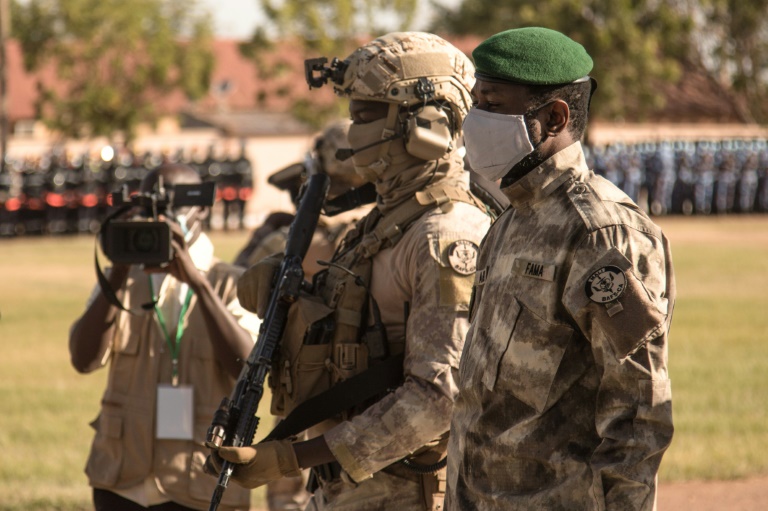
Mali’s security situation has become “significantly worse” due to the ruling junta’s choices, including an alleged decision to partner with Wagner, a Russian private security firm, a senior US official said Wednesday.

Mali’s ruling junta, which seized power in 2020, has turned away from its traditional ally France and towards Russia in its fight against a decade-long jihadist insurgency but it denies links to Wagner.

“The United States’ ability to help Mali on the security side is greatly constrained now… by the choice that the Mali government made to get into bed with Wagner,” Victoria Nuland, the US State Department’s under secretary for political affairs, told reporters from Washington in an online press briefing following a four-day visit to the Sahel.

The United States, France and other Western nations accuse the junta of hiring Wagner, which Malian authorities deny. They say they are cooperating with Russia’s army on a state-to-state level.

“The Malian junta has invited in Wagner and terrorism has gotten signficantly worse”, Nuland said, claiming that “incidents of terror” had risen some 30 percent over the past six months.

The junta claims to have turned a corner in the fight against the insurgency and put jihadist groups on the run in recent months.

– ‘Bad security choices’ –

Nuland said there were “broad reports of human rights abuses across the region where (Wagner forces) are working” and accused the operatives of giving “malfunctioning” equipment to Mali’s army and encouraging it to deny the UN peacekeeping mission access to “large swathes” of the country.

The mission, MINUSMA, has itself complained that the junta is limiting its operations.

“We worry that these forces are not interested in the safety and security of the people of Mali, but instead are interested in enriching themselves and strip-mining the country — and are making the terrorism situation worse.”

She said their presence had constrained American operations in the country.

“We are just not going to operate in the same space, even if we were invited to or able to, because of the negative way (Wagner forces) operate, their human rights abuses, the way they treat people”, she said. “We are limited by the bad security choices that the junta has made”.

She also said the United States was limited in how it could support Malian authorities due to the fact they had seized power in a coup.

French forces, which had been operating for about a decade in Mali, completely withdrew earlier this year.

The United States had provided logistical and intelligence support to France’s Barkhane force before it relocated to Niger. Nuland said the American army continued to work very closely with the force despite its redeployment.

– Meeting with Traore –

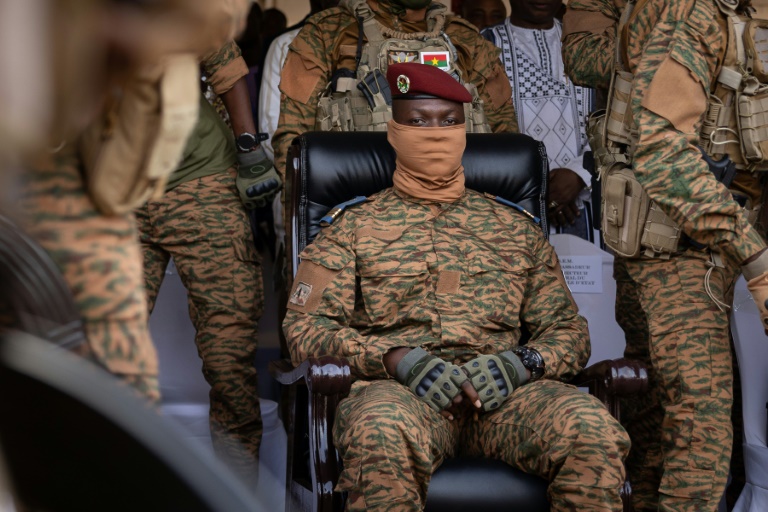
In neighbouring Burkina Faso, Nuland said she met with the interim president, Ibrahim Traore, who seized power in a coup last month, and was reassured that that country would not turn to Russian operatives for support in fighting jihadists.

“He was unequivocal in saying that it is Burkinabe who will defend the security of their nation and that they have no intention of inviting Wagner in”, she said. 

“We talked intensively, even within the constraints that we have in a situation where a coup has happened — or in this case, a coup within a coup — (of) how we can continue to support strong efforts by the Burkina military to push back terrorism in its midst without outside support from Russia and Wagner”, she said.

The ambassador also visited Niger and Mauritania, referring to the latter as an “island of stability in a very, very rough neighbourhood”.

She said Mali’s neighbouring countries are “extremely concerned” and want to “ensure that Wagner and terrorism both stay on the Malian side of the border.” 

Nuland, who said she met with Mali’s interim prime minister and government, said the junta appeared to remain committed to its promise to hold elections in 2024.

Burkina sets up government on 'war footing'

Burkina Faso’s new government on Wednesday declared its top priority would be to secure the nation’s territory, after the latest coup to rock the jihadist-torn Sahel state.

A UN envoy warned in New York that around 4.9 million, or a fifth of the population, need urgent aid in Burkina Faso as many “mothers were forced to feed their children with leaves and salt”.

Prime Minister Apollinaire Kyelem de Tembela outlined the nation’s priorities at the first cabinet meeting chaired by Captain Ibrahim Traore, who seized power this month.

“It’s a government on a war footing that has been formed. It’s not a gala dinners government,” Tembela said in the capital Ouagadougou.

“The main and priority objective is securing the territory,” Tembela said.

“The second will be to do what is needed to improve the quality of life for the Burkina people,” he said.

The third aim will be to “improve the system of governance”, he added.

“Every Burkinabe who calls himself a patriot can contribute,” the prime minister said.

Named premier on Friday, the 64-year-old lawyer heads a 23-member government — including three military officers and five women — to lead the country until its promised return to civilian rule.

Of the key positions in the cabinet unveiled late Tuesday, Colonel Kassoum Coulibaly was appointed minister of defence and military veterans, a key post in a country ravaged by jihadist violence.

The two other officers are Colonel Boukare Zoungrana who oversees territorial administration, decentralisation and security, and Colonel Augustin Kabore for the environment.

– ‘Leaves and salt’ diet –

Five ministers in the previous government under Lieutenant Colonel Paul-Henri Sandaogo Damiba, who was toppled in the latest coup, have stayed on.

Traore mounted the coup at the head of group of disgruntled junior officers on September 30, although his tussle for control with Damiba lasted several days.

He was sworn in as interim president last Friday, vowing to win back territory and support a transition leading to elections in July 2024. At 34, he is the world’s youngest leader.

Damiba, who has fled to Togo, had seized power only in January, forcing out elected president Roch Marc Christian Kabore.

The motive for both coups was anger at failures to stem a seven-year jihadist insurgency that has claimed thousands of lives and driven nearly two million people from their homes.

More than a third of national territory remains outside government control.

On Monday, at least 10 soldiers were killed and 50 wounded in Djibo, a northern city that has been under a jihadist blockade for three months. 

The authorities have launched a drive to recruit 50,000 civilian defence volunteers to help the army fight the militants.

UN envoy Martin Griffiths painted an alarming picture of Djibo, whose population has tripled to 300,000 with people displaced by jihadist attacks.

“There were no goods in the market,” as little food could grow in the area and cattle had been driven out, the undersecretary general for humanitarian affairs said in New York following a trip to Djibo.

“Mothers were forced to feed their children with leaves and salt,” he said.

But trees were becoming bare and women were now risking “attacks, rape and death” to travel to nearby villages under cover of darkness to find leaves for their “sick and hungry children,” he said.

Dozens of other parts of Burkina Faso, he added, were experiencing a similar fate. 

He spoke of “road closures due to the presence of armed groups, leaving people without food, medicine and other vital services.”

Even though the UN had been able to provide food to 1.8 million people this year, he said, “Nearly 4.9 million men, women and children in Burkina Faso ….need urgent assistance.” 

That amounts to more than a fifth of the population.

And nearly 10 percent have been forced to leave their homes.

Ethiopia peace talks enter day two in South Africa

The first formal peace talks between the warring sides in the brutal two-year conflict in Ethiopia’s Tigray region entered day two in South Africa on Wednesday.

Led by the African Union (AU), the negotiations in Pretoria follow a surge in fierce fighting in recent weeks that has alarmed the international community and triggered fears for civilians caught in the crossfire.

The talks are being held at South Africa’s foreign affairs ministry headquarters.

AU Horn of Africa envoy and Nigerian former president Olusegun Obasanjo, who is the talks’ chief facilitator, was filmed and photographed by AFP journalists entering the venue on Wednesday morning.

Kenya’s ex-president Uhuru Kenyatta who is part of the mediating team, was also seen going into the building so was South Africa’s ex-vice president Phumzile Mlambo-Ngcuka.

US special envoy for the Horn of Africa Mike Hammer, is also participating in the talks.

The Pretoria dialogue — the first publicly announced talks between the rivals — opened on Monday and is due to run until Sunday, according the South African presidency.

But there has so far been a media blackout with journalists kept outside the venue’s perimeter fence, and no updates issued.

The dialogue between negotiators from the Ethiopian government of Prime Minister Abiy Ahmed and the regional authorities in war-stricken Tigray came almost two months to the day since fighting resumed, shattering a five-month truce.

The international community has been calling for an immediate ceasefire, humanitarian access to Tigray where many face hunger, and a withdrawal of Eritrean forces, whose return to the conflict has raised fears of renewed atrocities against civilians. 

– ‘No military solution’ –

“There is no military solution to this conflict, and these talks represent the most promising way to achieve lasting peace and prosperity for all Ethiopians,” US Secretary of State Antony Blinken said in an overnight statement welcoming the negotiations.

AU Commission chair Moussa Faki Mahamat welcomed the launch of the process.

He said he was “encouraged by the early demonstration of commitment to peace by the parties” and reiterated the AU’s continued support for a process “to silence the guns towards a united, stable, peaceful and resilient Ethiopia.”

Diplomatic pressure has ratcheted up in recent weeks to end a war which has left millions in need of humanitarian aid and, according to a US estimate, as many as half a million dead.

The talks come as federal forces and their allies in the Eritrean army appear to be gaining the upper hand, seizing a string of towns in Tigray including the strategic city of Shire in offensives that have sent civilians fleeing.

It is impossible to verify battleground developments as Tigray — a region of six million people — is largely cut off by a communications blackout and access to northern Ethiopia is severely restricted.

An initial AU effort to bring the two sides to the negotiating table earlier this month failed, with diplomats suggesting logistical issues and a lack of preparedness were to blame.

A Western official has said secret contacts have taken place organised by the United States in the Seychelles and twice in Djibouti.

Abiy first sent troops into Tigray in November 2020, promising a quick victory over the northern region’s dissident leaders, the TPLF, after what he said were attacks by the group on federal army camps.

The move followed long-running tensions with the TPLF, which had dominated Ethiopia’s ruling coalition before Abiy came to power in 2018 and sidelined the party.

Kindeya Gebrehiwot, a spokesman for the rebel authorities in Tigray, at the weekend listed their expectations from the talks.

“Pressing: immediate cessation of hostilities, unfettered humanitarian access & withdrawal of Eritrean forces. There can’t be a military solution!” he said in a tweet.

Cameroon World Cup kit clash leaves traders in despair

With the World Cup due to kick off in Qatar just weeks from now, Cameroon’s famously raucous fans are gearing up to give the Indomitable Lions every show of support.

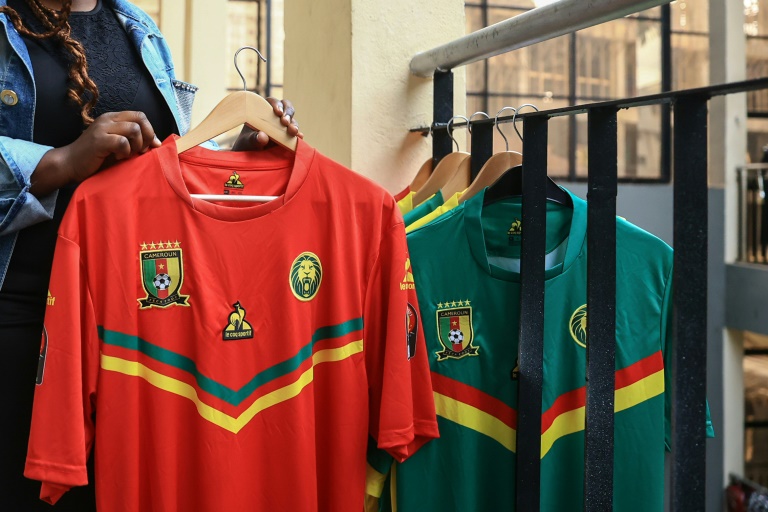
But worry, and not jubilation, is etched on the face of Zobel Wansi — a trader who has become a collateral victim in an ugly row between the Cameroonian Football Federation (FECAFOOT) and France’s Le Coq Sportif kit maker.

In July, FECAFOOT renounced the contract it had with Le Coq Sportif that ran until 2023, accusing the firm of failing to provide gear for all Cameroonian teams and open promised stores in Cameroon. 

Thus began Wansi’s nightmare. The following month, FECAFOOT announced a tie-up with America’s One All Sports, and all his stock was now out of date.

“We laid in big stocks of jerseys before the World Cup,” Wansi said, casting a forlorn look at the Coq Sportif shirts in green, yellow and red in his store at Doula, Cameroon’s economic hub.

At best, he said, “one or two a day” might find a purchaser.

Wansi, who has four children to feed, says his daily turnover has slumped from 100,000 CFA francs (about $150/euros) to under 20,000 francs.

Thomas Djingo, a rival trader on the same street, was equally bitter, although none of the new One All Sports kit can yet be found in the shops.

“Some people are holding back from buying, saying that the new jerseys will be on sale any time soon,” he said. 

“If the (new) contract had been signed after the World Cup, we would at least have been able to get rid of our stock,” he sighed.

– ‘National colours’ –

In the Cameroonian capital Yaounde, the biggest sports goods outlet, City Sport, was almost empty when an AFP reporter visited. Racks of Indomitable Lions shirts with the Coq Sportif logo awaited customers.

A store manager who asked not to be identified questioned whether Cameroon had in fact switched suppliers. Le Coq Sportif on September 27 announced it had filed a lawsuit in France against FECAFOOT for illegal breach of contract, but gave no further details.

In a local bar, fan Boris Essomba was decked out in jersey and shorts by Coq Sportif, and seemed unfazed by the controversy.

“The most important thing is the national colours,” he said, sipping a beer.

Cameroon have qualified eight times for the World Cup — the highest of any African team — although they have never reached the knockout stages. 

They have won the Africa Cup of Nations five times. In Qatar, they are grouped with Switzerland, Serbia and mighty Brazil.

– Anti-counterfeit push –

Marketing analyst Bouba Kaela said FECAFOOT was keen to squeeze “higher profits” from merchandise. 

After signing its deal with One All Sports, FECAFOOT last month issued a call to tender for “entrepreneurs wishing to sell the Indomitable Lions jersey on the national market” — and warning that bidders would be closely scrutinised for their plans to combat counterfeit goods.

“The goal is to prevent forgery by controlling the distribution network in Cameroon, which has never been done before,” a FECAFOOT source, speaking on condition of anonymity, told AFP.

At present, most of the jersey sales in Cameroon appear to be illegal copies, although the true picture is impossible to know.

A customs official, also asking not to be identified, said the counterfeit jerseys were typically smuggled into the country inside bigger shipments “from China, Turkey or Hong Kong that have been tagged ‘various articles of clothing’.”

FECAFOOT says the tendering process will culminate in the choice of three official jersey distributors — which means that smaller vendors like Wansi will be left on the sidelines.

UN warns Somalia humanitarian crisis remains 'dire'

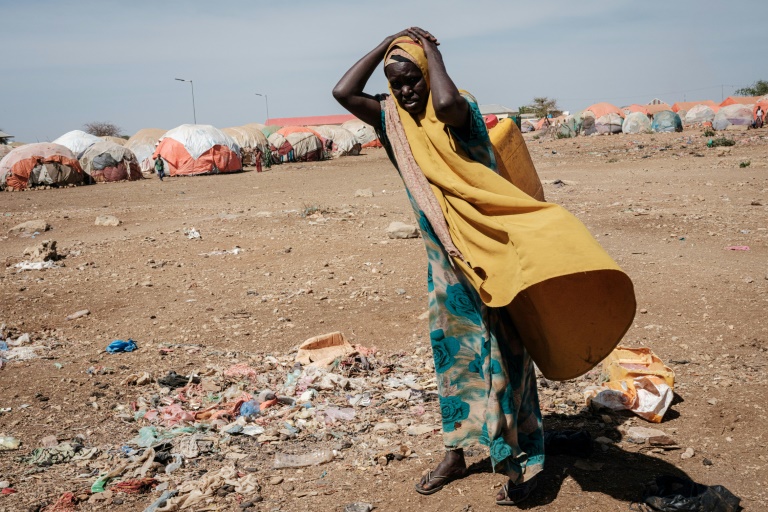
The United Nations said on Wednesday that the humanitarian response to the crisis in Somalia where a historic drought is threatening famine has gathered pace but warned the situation remained “dire”.

The impoverished Horn of Africa nation is on the brink of a famine for the second time in just over a decade, with UN humanitarian chief Martin Griffiths stressing in September that time was running out to save lives.

The humanitarian response has intensified since then but some 7.8 million people or nearly half Somalia’s population  still need assistance, including 230,000 at serious risk of starvation, according to the UN.

“We believe that approximately 6.5 million are reached with some level of assistance and that amount has increased very significantly since the beginning of the summer,” the UN special representative for Somalia, James Swan, said Wednesday.

“There have been very substantial additional contributions of donor assistance, particularly since the beginning of August, with something in the order of $800 million in new commitments,” he told reporters.

But, Swan added, “We are confronting a situation that for reasons of the continuing drought and an existing relatively fragile population… the risks remain severe.”

Somalia, much like neighbours Kenya and Ethiopia, is in the grip of the worst drought in four decades after four failed rainy seasons wiped out livestock and crops.

Since January 2021, 1.1 million people in Somalia have left their homes in search of food and water, according to the United Nations.

The conflict-wracked nation is considered one of the most vulnerable to climate change but is particularly ill-equipped to cope with the crisis as it battles a deadly Islamist insurgency.

– ‘Efforts cannot stop’ –

UN High Commissioner for Refugees Filippo Grandi on Tuesday rallied international donors to keep their wallets open to fight the crisis. 

“Some of it (the drought) has been contained but unfortunately this is not an effort that can stop,” he told reporters in Nairobi after a trip to Somalia and northeastern Kenya.

“If it stops now, then we go back to the very dangerous situation of people dying, especially children, in large numbers.”

On Wednesday, the UN’s World Food Programme (WFP) said only 46.7 percent of its $2.26 billion funding needs had been met. 

“There are some hard to reach areas where we are, where we are going, also hard to reach populations — minorities, displaced people, people with different abilities,” said El-Khidir Daloum, WFP’s country director in Somalia. 

“The situation is dire.”

Somalia was hit by a famine in 2011 which killed 260,000 people, more than half of them children under five.

In 2017, more than six million people in the country, more than half of them children, needed aid because of a prolonged drought across East Africa.

But early humanitarian action averted famine that year.

Ethiopia peace talks enter day two in South Africa

The first formal peace talks between the warring sides in the brutal two-year conflict in Ethiopia’s Tigray region entered day two in South Africa on Wednesday.

Led by the African Union (AU), the negotiations in Pretoria follow a surge in fierce fighting in recent weeks that has alarmed the international community and triggered fears for civilians caught in the crossfire.

The talks are being held at South Africa’s foreign affairs ministry headquarters in Pretoria.

AU Horn of Africa envoy and Nigerian former president Olusegun Obasanjo, who is the talks’ chief facilitator, was photographed entering the meeting venue on Wednesday morning.

Kenya’s ex-president Uhuru Kenyatta who is part of the mediating team, was also seen entering the building.

South Africa’s ex-vice president Phumzile Mlambo-Ngcuka and a US envoy, Mike Hammer, are also participating.

The talks opened on Monday and are due to run until Sunday, according the South African presidency.

But there has so far been a media blackout with journalists kept outside the venue’s perimeter fence.

The dialogue between negotiators from the Ethiopian government of Prime Minister Abiy Ahmed and the regional authorities in war-stricken Tigray came almost two months to the day since fighting resumed, shattering a five-month truce.

The international community has been calling for an immediate ceasefire, humanitarian access to Tigray where many face hunger, and a withdrawal of Eritrean forces, whose return to the conflict has raised fears of renewed atrocities against civilians. 

“There is no military solution to this conflict, and these talks represent the most promising way to achieve lasting peace and prosperity for all Ethiopians,” US Secretary of State Antony Blinken said in an overnight statement welcoming the negotiations.

AU Commission chair Moussa Faki Mahamat welcomed the launch of the eagerly-awaited process.

He said he was “encouraged by the early demonstration of commitment to peace by the parties” and reiterated the AU’s continued support for a process “to silence the guns towards a united, stable, peaceful and resilient Ethiopia.”

Close Bitnami banner
Bitnami