Africa Business

UN urges 'complete transformation' of global energy system

Climate change risks undermining global energy security unless the use of renewables is dramatically scaled up, the UN warned Tuesday, suggesting the Ukraine conflict’s ripple effects could speed up the green transition.

Not only is the energy sector a major source of the carbon emissions that drive climate change, it is also increasingly vulnerable to the shifts that come with a heating planet, the UN’s World Meteorological Organization stressed.

In its State of Climate Services annual report, the WMO warned that increasingly intense extreme weather events, droughts, floods and sea-level rise — all linked to climate change — were already making energy supply less reliable.

It pointed, for instance, to a historic heatwave that sparked massive power outages in Buenos Aires in January, while experts mentioned recently disrupted electricity production amid heatwaves and shrinking reservoirs in Europe and China.

WMO Secretary-General Petteri Taalas warned that “in the future these kinds of events will become more and more frequent”, pointing out that much of the world’s energy infrastructure is today in areas vulnerable to climate change.

In 2020, a massive 87 percent of global electricity generated by thermal, nuclear and hydroelectric power plants directly depended on having freshwater for cooling, the WMO said.

– ‘Changing before our eyes’ –

But a third of power plants running on fossil fuels are in areas of high water stress, as are 15 percent of existing nuclear power plants — a share expected to swell to 25 percent in the next 20 years.

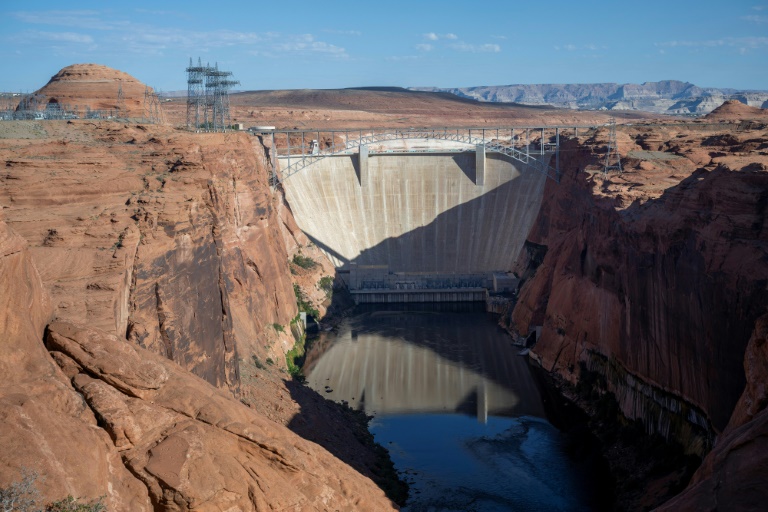
Eleven percent of hydroelectric dams are also located in highly water-stressed areas, while more than a quarter of hydropower plants are in river basins struggling with water scarcity, the WMO said. 

“Time is not on our side and our climate is changing before our eyes,” Taalas said.

“We need a complete transformation of the global energy system.” 

Taalas pointed out that the energy sector is itself a part of the problem since it is the source of around three quarters of global greenhouse gas emissions that are changing the climate.

“Switching to clean forms of energy generation… and improving energy efficiency is vital,” he said.

But he cautioned that reaching net-zero emissions by 2050 would only be possible “if we double the supply of low-emissions electricity within the next eight years”.

– ‘A blessing’ –

The report, which WMO drafts with input from more than two dozen organisations, said shifting to renewable energy would help alleviate growing global water stress, pointing out that the amount of water used by solar and wind is much lower than for traditional power plants.

The energy security crisis caused by the war in Ukraine and disrupted access to Russian gas has sparked fears that countries will fall back on dirty fuel sources like coal.

Taalas acknowledged this could be the case in the short term, but said the war was demonstrating the dangers of dependence on unreliable energy sources, and would surely speed up the green transition.

“From a climate perspective, the war in Ukraine may be seen as a blessing,” he said. 

– Invest in Africa –

WMO warned that the current pledges by countries to cut carbon emissions “fall well short” of what is needed to meet the objectives set by the 2015 Paris Agreement on climate change.

The report said global investments in renewable energy “need to triple by 2050 to put the world on a net-zero trajectory”.

It called in particular for more clean energy investments in Africa.

The continent, which is already facing massive droughts and other severe effects from climate change, has seen only two percent of clean energy investment in the past two decades.

And yet with 60 percent of the best solar resources on the planet, it has the potential to become a major player in solar energy production, the report said.

However, significant investments are required.

“Bringing access to modern energy for all Africans calls for an investment of $25 billion annually,” the report said.

That is the equivalent of around one percent of global energy investment today.
Lesotho tycoon forges coalition after poll breakthrough

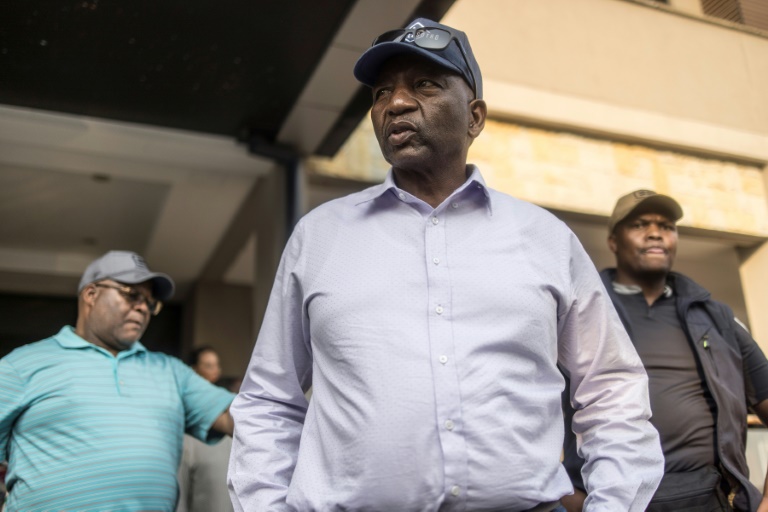
A diamond millionaire who scored a stunning breakthrough in nationwide elections in Lesotho last week announced Tuesday that he would head a three-party coalition government.

Tycoon Sam Matekane confounded expectations that the southern African mountain kingdom would remain politically gridlocked after last Friday’s ballot.

His pro-business Revolution for Prosperity (RFP) party, founded just six months ago, picked up 56 seats in the legislature — five seats short of an absolute majority.

At a press conference, Matekane said the RFP had formed a coalition government with the Alliance of Democrats (AD) and Movement for Economic Change (MEC).

“The leaders of RFP, AD and MEC inform the Basotho nation that we have agreed to form a new coalition government following the announcement of the general election results,” Matekane, 64, said.

Matekane was flanked by AD deputy leader Ntoi Rapapa and MEC leader Selibe Mochoboroane as he made the announcement at a hotel in the capital Maseru.

The AD won six seats in the elections, and MEC five.

Outside, supporters of the parties dressed in their party colours sang and chanted slogans, as car drivers hooted their backing. 

A constitutional monarchy entirely surrounded by South Africa on which it depends economically, Lesotho has been governed by a string of rickety coalition governments for the past decade.

The outgoing parliament failed to pass a law aimed at strengthening political stability.

The bill would ban lawmakers from switching party allegiance within the first three years of their tenure.

The Matekane-led government promises that pushing through this reform will be part of its agenda in its first 100 days in office.

'Our home': Lesotho's last cave dwellers

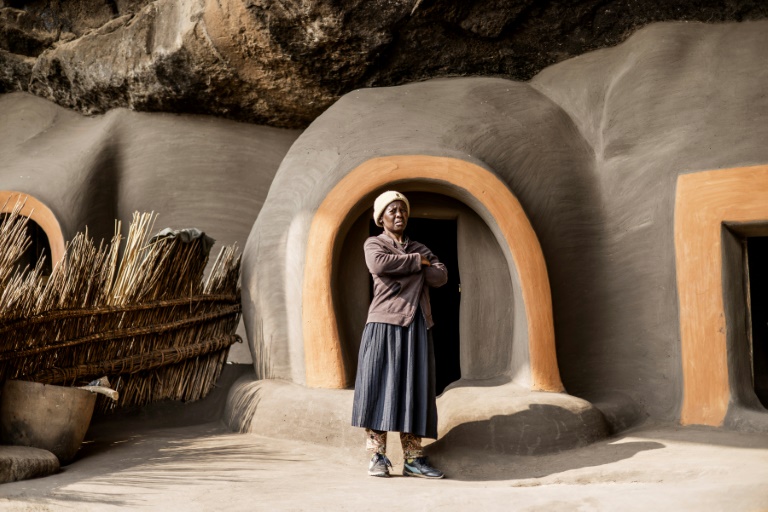
Inside a dimly-lit mud dwelling nestled within a rocky mountain in the southern African kingdom of Lesotho, Mamotonosi Ntefane, 67, dusts off an animal skin. 

Her household is among a handful of families who still inhabit the Kome Caves, a heritage site in the north of the country, first occupied about 200 years ago by local tribes seeking shelter from conflict and cannibalism. 

“Life is good, we grow our own vegetables, I can pray anytime I want,” Ntefane, a rosary around her neck, tells AFP. 

More than 1,800 metres above sea level, some 50 kilometres (30 miles) from the capital Maseru, the settlement is surrounded by barren pastures, where shepherds draped in long woollen blankets graze cattle in the morning mist.

Thin white smoke billows from outside the caves as “papa”, a traditional corn porridge, boils in a black cast iron pot over a wood fire.  

The cave is divided into several round houses propped against the basalt rock.

Open passages just high enough for a person to walk through serve as doorways. Walls and floors are made of a mix of mud and manure that require regular upkeep. 

Inside are basic items including pots, plastic buckets to store water and a cowhide for a bed.   

“There’s no electricity and no fridge but this is our home, it’s our history,” says 44-year-old Kabelo Kome who is descended from the first people to settle the caves, after whom the place is named. 

– Hideout –

The caves became a hideout for members of the Basia and Bataung tribes in the 19th century, when conflict and a severe drought ravaged the region. 

Christian missionaries travelling the area at the time reported some groups resorted to cannibalism to survive, as livestock and grain reserves dwindled. 

It was in this period that Lesotho emerged as a single entity, as the Sotho, the region’s largest ethnic group, united to fight Zulu raiders and European settlers.

Today, most of the country’s two million people live off subsistence farming. 

Inhabitants of the Kome Caves grow corn, sorghum and beans and raise chickens and cattle. 

The elderly receive a state allowance, while others make money showing their homes to tourists. 

Some like Mamatsaseng Khutsoane, a 66-year-old former teacher, have moved to a nearby village with greater creature comforts.  

“I come here to eat, or with my grandchildren,” she says. 

There is mobile phone coverage, but no fixed internet or running water.  

“None of that here,” scoffs Ntefane, as she stands outside her home, gazing at the mountains, while cow bells ring in the distance. 

Algeria, France hail 'new dynamic' in economic ties

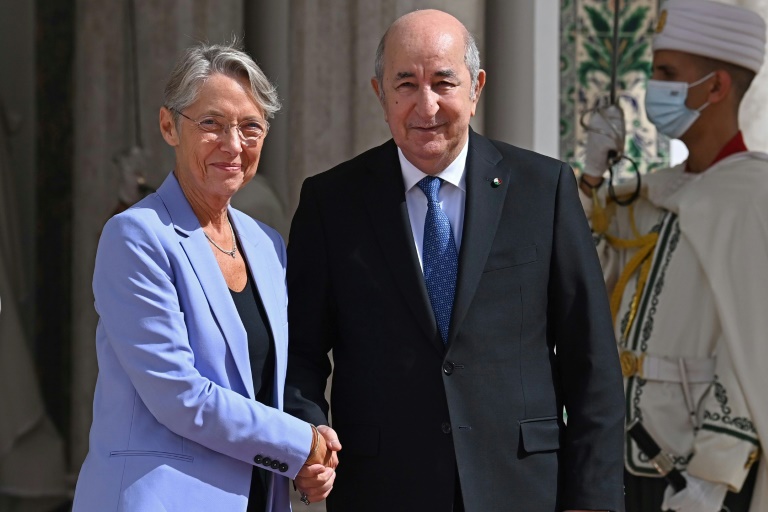
The Algerian and French prime ministers on Monday hailed a “new dynamic” as they launched a joint economic forum during a visit to Algiers by France’s Elisabeth Borne.

Borne’s two-day trip to the former French colony and major gas exporter comes just weeks after President Emmanuel Macron concluded his own three-day visit in August, following months of tensions.

In remarks during the forum’s inauguration, Algerian Prime Minister Aimene Benabderrahmane called for “a sustainable dynamic” in trade with France based on “reciprocity and mutual interests”.

Borne called for “a new dynamic of economic cooperation”.

Before returning to Paris, she also met with President Abdelmajid Tebboune and said bilateral ties will continue with “regular visits and exchanges on the economic, political and technical levels”.

Borne and her cohort are the latest in a string of top European officials to visit Algeria, Africa’s top natural gas exporter, as officials seek alternatives to Russian energy supplies since the start of the war in Ukraine.

The European Union’s energy commissioner, Kadri Simson, is also expected in Algiers on Monday and Tuesday.

But ahead of her trip, Borne’s office said deliveries of natural gas to France were “not on the table”.

– Economic diversification –

Both Borne and Benabderrahmane stressed the need for Algeria to pursue economic diversification. 

France is “the first investor in Algeria, excluding hydrocarbons”, Borne told the forum, adding that French businesses are “ready to support the diversification” of Algeria’s economy.

Benabderrahmane said Algeria must “end its dependence on natural gas and attract foreign investment” in agriculture, pharmaceutical and vaccine production, and renewable energy, which “offer positive prospects for French businesses”.

The two-day business forum was organised by the Algerian Chamber of Commerce and Industry and Business France, a government agency promoting international investment, which brought representatives of some 70 French firms to the event.

Ties between the North African country and its former colonial ruler had deteriorated after Macron last year questioned Algeria’s existence as a nation before the French occupation, and accused the government of fomenting “hatred towards France”.

But the contentious subject of the two countries’ history, particularly during the war, was not set to feature prominently on Borne’s agenda.

Algiers and Paris maintain bilateral trade at a large scale, with France being the second largest investor in Algeria, according to the International Monetary Fund.

Fabrice Le Sache, the vice president of French business lobby group Medef, on Monday hailed “the dynamic created by the president” during his August visit.

Macron produced a good “atmosphere” for the business community, he told AFP at the forum on Monday.

Millionaire wins Lesotho vote but no majority

A millionaire political novice won the most votes in legislative elections in Lesotho but fell short of securing a parliamentary majority that could have ended long-running political gridlock, officials said on Monday.

Revolution for Prosperity (RFP), a party set up only six months ago by businessman Sam Matekane, 64, won 56 out of 120 seats in parliament, according to final results published by the southern African country’s electoral commission.

The small mountain kingdom has been governed for the past decade by a string of coalition governments that have proved fractious and frail, and no premier has served out a full five-year term. 

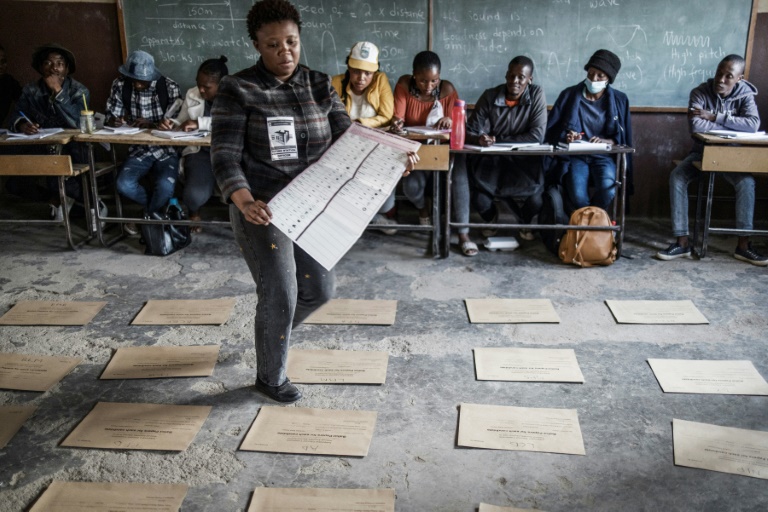
“Thousands of voters across the entire country endured long queues to exercise their democratic right,” said Mphasa Mokhochane, chairman of the Independent Electoral Commission. 

Matekane, who styles himself as a champion of the country’s business community and was considered an outsider in the vote, came close to an outright win but will now have to secure the support of smaller parties to form a government.

“His track record and people’s anger towards other parties won him votes,” said Tlohang Letsie, a politics lecturer at the National University of Lesotho.

“People see him as their messiah and that has its own pressure. He will have to work hard to make people… happy.” 

The Democratic Congress party led by Mathibeli Mokhothu came in second securing 29 lawmakers. 

The All Basotho Convention party, which led the outgoing government, suffered a sharp drop in support, winning only eight seats. 

Lesotho, which is completely surrounded by South Africa, ranks among the world’s poorest countries, with more than 30 percent of its population living on less than $1.90 a day.

– ‘Prosperity is life’ –

In an interview with AFP before the elections, Matekane said he hoped to turn things around, bringing his business skills to the government to relaunch the economy and tackle public debt and unemployment. 

“Our country is sinking. So, we have to try and save (it) as business people,” he said.

A philanthropist, he has become a popular figure in the kingdom, building schools, a stadium and even a theatre. 

He funds scholarships, sponsors the national football federation and has helped with the purchase of vaccines during the coronavirus pandemic. 

About 1.5 million people were registered to vote in the October 7 election. More than 50 parties were in the running.

Outgoing Prime Minister Moeketsi Majoro of the ABC did not seek another term, after being ousted as party head earlier this year. 

His predecessor Thomas Thabane was forced to step down in 2020 after being accused of ordering the murder of his estranged wife. Charges against him were dropped in July. 

On Saturday, the day after the vote, a small crowd of Matekane’s supporters gathered in the capital, Maseru, chanting “Prosperity is life!” to celebrate an early lead in the count. 

“We did it, we are winning,” said 40-year-old Mamamello Shoaepane. 

“I come from the mountains, we have no food, no water, no nothing. The RFP is going to change that”. 

The 120-seat parliament is chosen by a mixed electoral system — 80 lawmakers are voted in by constituents, while another 40 seats are distributed proportionally.

A constitutional monarchy where the king has no formal power, Lesotho has long been beset by political turmoil that has hampered development.

It has been buffeted by coups and attempted coups since independence from Britain in 1966.

Chad ruler Deby says unity govt 'in next few days'

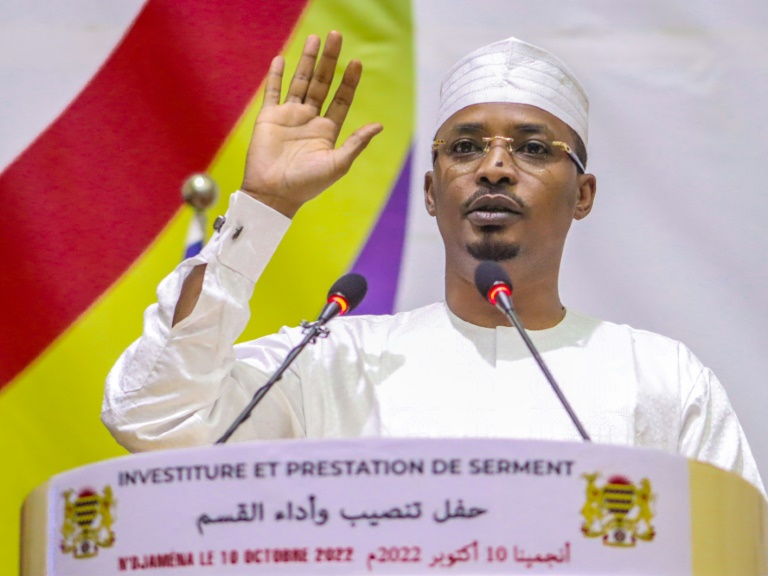
Chad’s ruler Mahamat Idriss Deby Itno on Monday said a “government of national union” would be created in the coming days to steer the course toward new elections following a forum on the country’s future.

The government “will put its heart and soul into ensuring that the will of the Chadian people is fully upheld,” said Deby at ceremonies where he was appointed “transitional president” after the forum which ended on Saturday.

Chad, one of the world’s poorest countries, has endured repeated uprisings and unrest since gaining independence from France in 1960.

Deby, a 38-year-old five-star general, took the helm in April 2021 after his father, Idriss Deby Itno, who had ruled with an iron fist for three decades, was killed during an operation against rebels.

Parliament was dissolved and the constitution suspended as Deby was proclaimed president.

He headed a junta of 15 generals whose declared plan was to hand over power after 18 months — a period that without extension would have ended this month.

Deby then organised a “national inclusive dialogue” that he said would chart the country’s return to civilian rule.

It wound up on Saturday after endorsing a further two-year period leading to elections during which Deby would become “transitional president” and be allowed to stand as a candidate in the future polls. 

The conference opened on August 20 after repeated delays but was boycotted by the main political opposition and two out of the three biggest armed rebel groups.

– ‘Stronger democracy’ –

Promising “democratic” elections, Deby on Monday said the new government would be formed “in the next few days… (ahead of) the second phase of transition.”

This phase should lead to “the strengthening of our democracy,” he said.

“Elections will be held, transparently and peacefully, to enable the men and women of Chad to put an end to the transition and ensure the return to constitutional order,” he said.

Deby had initially pledged an 18-month transition period and said he would not run in the presidential elections that followed.

But in June 2021, he floated the possibility of extending the transition by a further 18 months “if the Chadians do not manage to reach an agreement” on the way forward.

He also said he would leave the question of his presidential candidacy to God.

Deby, usually seen in military regalia, appeared for his swearing-in in a traditional long white gown.

VIPs who attended the inauguration included Nigerian President Muhammadu Buhari and ministers from Niger, the Central African Republic and Democratic Republic of Congo.

France, the former colonial power and long-term ally of Deby’s father, was represented by its ambassador, as was the European Union (EU). 

But there was notably no representative from the African Union (AU).

On September 19 the continent-wide bloc had urged the junta not to extend its stay in power beyond the initial 18 months.

It also said “unequivocally that no member of the Transitional Military Council (the junta) may be a candidate for the elections at the end of the transition.”

The AU did not respond to AFP requests for comment.

– International support –

In his speech, Deby urged the international community “to support Chad in its ongoing quest for security and stability, both inside and outside its borders, notably in the theatres of peacekeeping operations and fighting terrorism.”

France and other western countries consider Chad, which has a relatively well-equipped and well-trained army, to be a linchpin in efforts to combat jihadism in the Sahel.

The West has largely muted criticism of the military takeover, in a region where coups in Guinea, Burkina Faso and Mali have sparked a clamour for a swift return to civilian rule.

Enrica Picco of the International Crisis Group (ICG) think tank said the junta had been formally dissolved as a result of the forum, which meant Deby’s powers would be “widened and extended” as transitional president, enabling him to directly determine key appointments such as that of the prime minister.

Many Chadians seemed doubtful about much change or said basic issues took precedence.

“Deby has to improve his way of running things. It’s the same system that his father had,” said Hissein Adam, a storekeeper in N’Djamena.

“We want him to build roads, invest in agriculture and stock-breeding and give a special place for education, because there is no development if you don’t promote education,” said Halime Ibrahim, a man aged in his sixties.

Guinea massacre trial puts ex-strongman Camara in custody

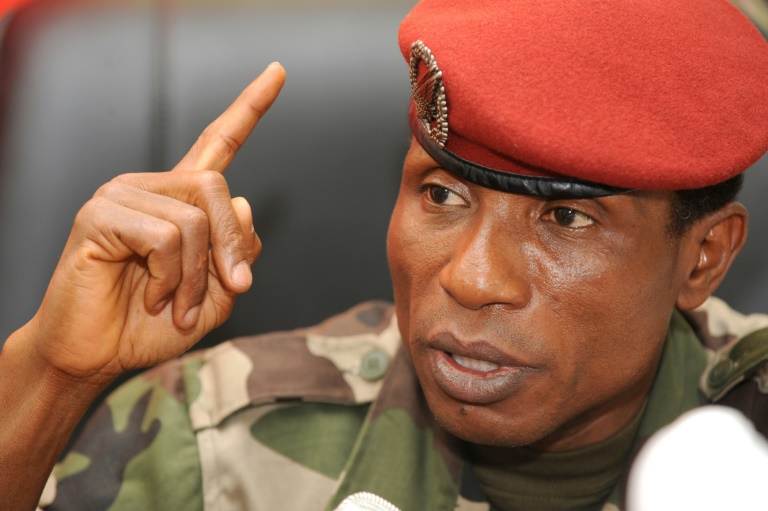
A Guinean court trying suspects in a 2009 massacre on Monday threw out a bid by former dictator Moussa Dadis Camara to be detained under house arrest and ordered him to be held in custody.

Camara and 10 other former military and government officials are accused over the killing of 156 people and the rape of at least 109 women by pro-junta forces at a political rally in a Conakry stadium in September 2009.

They face charges ranging from murder to sexual violence, kidnappings, arson and looting, while Camara himself is charged with “personal criminal responsibility and command responsibility”.

The 58-year-old former strongman was detained on September 27, a day before the long-awaited trial began in a purpose-built court in the capital Conakry.

He had returned to the West African state only a few days before after living in exile in Burkina Faso.

Defence attorneys last Tuesday had asked the court for Camara to be released from custody or placed under house arrest during the proceedings, in line with the “respect” due to a former head of state.

They also said another leading defendant, Lieutenant Aboubacar Sidiki Diakite, who was former head of Camara’s bodyguard, was too ill to face trial and needed medical treatment abroad.

But Judge Ibrahima Sory Tounkara rejected these petitions and ruled that the proceedings could get fully underway.

In Camara’s case, house arrest could only be offered to foreign defendants, and in Diakite’s case, “he did not submit any medical certificate to support his release on the grounds of ill health”, the judge said.

Camara, at the time an unknown captain in the army, seized power in December 2008 shortly after the death of Guinea’s second post-independence president, General Lansana Conte, who had ruled for 24 years.

In December 2009, Camara was wounded in the head in an attempted assassination and headed to Morocco for medical treatment. 

He fled into exile in Burkina Faso, where he was indicted in July 2015 by Guinean magistrates for his alleged role in the stadium massacre.

Chad ruler Deby says unity govt 'in next few days'

Chad junta chief Mahamat Idriss Deby Itno on Monday said a “government of national union” would be created in the coming days to steer the course toward elections, following a forum on the country’s future.

The government “will put its heart and soul into ensuring that the will of the Chadian people is fully upheld,” said Deby at ceremonies where he was appointed “transitional president” after the forum which ended on Saturday.

Chad, one of the world’s poorest countries, has endured repeated uprisings and unrest since gaining independence from France in 1960.

Deby, a 38-year-old five-star general, took the helm in April 2021 after his father, Idriss Deby Itno, who had ruled with an iron fist for three decades, was killed during an operation against rebels.

Parliament was dissolved and the constitution suspended as Deby was proclaimed president.

He headed a junta of 15 generals that, he said, would rule for 18 months — a period that without extension would have ended this month.

Deby then organised a “national inclusive dialogue” that he said would chart the country’s return to civilian rule.

It wound up on Saturday after endorsing a further two-year period leading to elections during which Deby would become “transitional president” and be allowed to stand as a candidate in the future polls. 

The conference opened on August 20 after repeated delays and was boycotted by the main political opposition movement and by two out of the three biggest armed rebel groups.

Deby on Monday said the government would be formed “in the next few days” and oversee what he called “the second phase of transition… (leading to) the strengthening of our democracy”.

“Elections will be held, transparently and peacefully, to enable the men and women of Chad to put an end to the transition and ensure the return to constitutional order,” he said.

VIPs who attended his inauguration included Nigerian President Muhammadu Buhari and ministers from Niger, the Central African Republic and Democratic Republic of Congo.

France, the former colonial power and long-term ally of Deby’s father, was represented by its ambassador, as was the European Union (EU).

Deby had initially pledged an 18-month transition period and said he would not run in the presidential elections that followed.

Bu in June 2021, he floated the possibility of extending the transition by a further 18 months “if the Chadians do not manage to reach an agreement” on the way forward.

He also said he would leave the question of his presidential candidacy to God.

African players in Europe: Brilliant Iwobi goal in vain

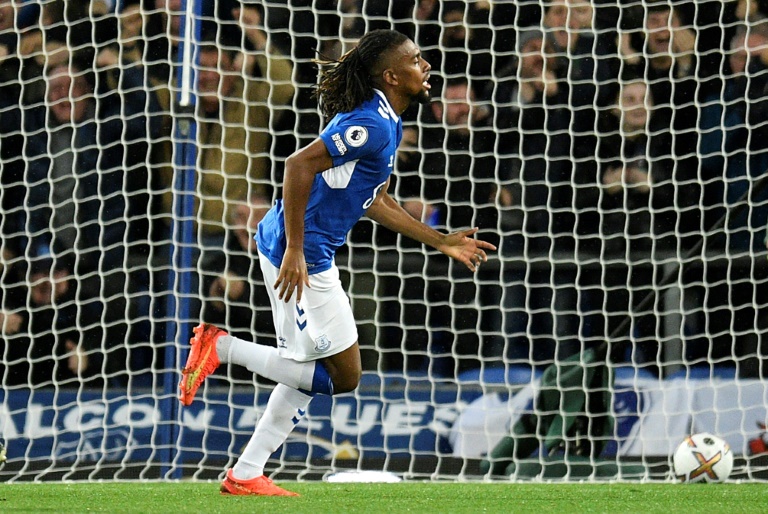
Nigerian Alex Iwobi scored a superb goal at the weekend, but could not prevent Everton losing 2-1 at home to Manchester United in their Premier League clash.

The midfielder struck after just five minutes, curling a shot past David De Gea from outside the box, but goals from Antony and Cristiano Ronaldo before half-time gave United victory.

Here, AFP Sport highlights African headline-makers in the major European leagues:

ENGLAND

ALEX IWOBI (Everton)

Amadou Onana won the ball from Casemiro and Demarai Gray teed up Iwobi, who curled in a fine finish from the edge of the area for his first goal this season.

RIYAD MAHREZ (Manchester City)

The Algeria winger scored his second goal in successive games as the Premier League champions crushed Southampton 4-0. City were already two goals up when Mahrez netted in the 49th minute with a left-footed volley from a tight angle. 

PATSON DAKA (Leicester)

The Zambia striker’s third goal this season couldn’t stop struggling Leicester losing 2-1 at Bournemouth. In the 10th minute, Youri Tielemans crossed and, after Harvey Barnes’ initial effort was blocked, Daka celebrated his recall by sweeping home on the turn. 

SPAIN

EL BILAL TOURE (Almeria)

Toure netted his first goal of the season in a 3-1 win against Rayo to help his team triumph for only the second time this season. The Mali striker finished emphatically from close range when the ball dropped to him in the box.

MOUCTAR DIAKHABY (Valencia)

Defender Diakhaby impressed for Valencia in a 2-1 win at Osasuna and netted his team’s second goal shortly after the break, finishing nicely when a loose ball fell to him. While sitting on the bench having been substituted, the Guinea defender enraged coach Gennaro Gattuso when he was booked for protesting, resulting in a red card as he was already on a yellow.

ITALY

ADEMOLA LOOKMAN (Atalanta)

Nigeria forward Lookman scored for the second time in as many games as Atalanta drew 2-2 at Udinese. The 24-year-old tapped in a sumptuous pass from Luis Muriel to put Atalanta ahead nine minutes before the break.

BOULAYE DIA (Salernitana)

Dia struck his fourth goal since moving to Salernitana on loan from Villarreal to claim a stoppage-time 2-1 win over Verona for his new team. The Senegal attacker’s beautifully struck winner sparked wild celebration and an on-pitch brawl as Salernitana rose to 11th with their second win of the season.

GERMANY

SADIO MANE (Bayern Munich)

Opportunities were rare for Mane in Bayern Munich’s 2-2 draw at Borussia Dortmund, although the former Liverpool striker spurned a golden chance to put Bayern two goals up just after half-time. Facing an open goal, Mane headed the ball just wide of the upright.  

RAMY BENSEBAINI (Borussia Moenchengladbach)

Moenchengladbach’s Algerian defender scored twice as they thrashed 10-man Cologne 5-2. Bensebaini converted a penalty after 45 minutes and gave his side a commanding 4-1 lead on 76 minutes.  

FRANCE

TEREM MOFFI (Lorient)

The Nigerian forward grabbed both goals as Lorient came from behind to win 2-1 at Brest and climb to within a point of leaders Paris Saint-Germain. The 23-year-old has already matched his tally from last season and sits alongside Kylian Mbappe and Neymar atop the Ligue 1 scoring charts with eight. 

Show of force in Mozambique's north, but jihadist threat remains

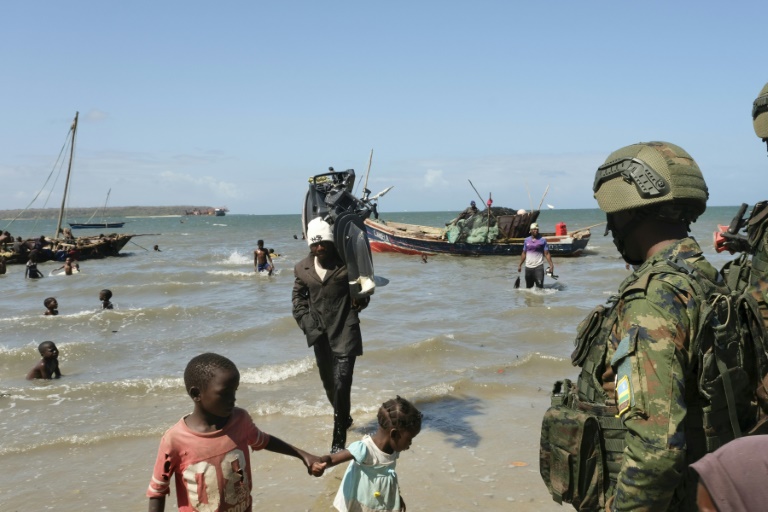
A column of brand-new armoured vehicles is parked outside what remains of a government building in Quionga, a village in Mozambique’s restive northern province of Cabo Delgado.

Kalashnikovs on their shoulders, Mozambican soldiers stare at the convoy — an unusual sight in this northern settlement, which just a year ago was controlled by Islamist insurgents who have wreaked havoc across the region. 

Senior Rwandan officers are visiting today.

They have come to oversee a joint military operation with their more poorly equipped local counterparts, a show of force to impress residents and the journalists accompanying them.

“We can say to a large extent that the insurgents have been defeated,” says Rwandan army spokesman, general Ronald Rwivanga.  

But the display of confidence belies a still precarious security situation in the gas-rich region. Only last week, the United Nations warned that the conflict had not subsided.

It has been five years since jihadists affiliated to the Islamic State launched an insurgency that monitoring groups say has killed more than 4,000 people.

Forces from Rwanda and other African countries, deployed in July 2021 after years of jihadist attacks, have helped Mozambique retake control of much of the province. 

The militants had raided Quionga last year, burning down the local government office and setting up shop in the village. They were using it as a base to carry out attacks on both sides of the nearby Tanzanian border.

Rwandan forces eventually ousted them in August 2021. 

– ‘Isolated attacks’ –

A year on, calm has returned to the area, and so have most of Quionga’s inhabitants.

Outside a field hospital for civilians, Rwandan and Mozambican generals pat each other on the shoulder.

Rwandan troops have secured the key districts of Palma and Mocimboa da Praia, formerly jihadist strongholds.

“The only incidents recorded are now isolated attacks involving very few individuals,” says general Rwivanga. “The insurgents no longer have major bases.”

Yet only last week, conflict tracker ACLED recorded a string of attacks, including the beheading of a farmer, and clashes between the militants and security forces.

Known locally as al-Shabab (‘the young ones’), analysts say the jihadist group has splintered into smaller cells and started to stage incursions further south.

“The conflict has now spilled into the neighbouring province of Nampula, which witnessed four attacks by armed groups in September affecting at least 47,000 people and displacing 12,000,” the UN said in a statement last week.

Since 2017, almost a million people have been forced to flee their homes because of the fighting, it added. 

– Gas and checkpoints – 

The government is hoping energy giants will resume work on gas projects in the region, where the largest deposits south of the Sahara were found in 2010. 

TotalEnergies halted a $20 billion project last year, after a deadly raid on the coastal town of Palma. 

The French oil giant’s base is a heavily protected enclave built on the sandy coast of the Afungi peninsula. 

Its powerful neon lights shine through the night, creating a halo that can be seen for miles. 

Some excavators are still at work near the shore, where building barges lie waiting to be shipped offshore where the gas extraction is to take place. 

Inside the compound, the large dormitories and a high-end gym stand empty. 

Mozambican and Rwandan soldiers guarding the facilities, as well as the few employees who remain on site, are instructed not to give interviews. 

Rumours at the camp hold that operations could soon resume.

But last month TotalEnergies said that would not happen until “security and safety conditions have been permanently restored in the region”.

The jihadists’ leaders are yet to be apprehended and the group’s inner working remain a mystery. 

“We do not understand how they work and how they manage to entice the population, there is a lack of intelligence,” said Mirko Manzoni, the UN’s special envoy to Mozambique.

– Mozambican forces mistrusted –

Mozambique’s security forces are ill-trained and equipped compared to their Rwandan colleagues — and they are little trusted by locals. 

Outside some villages, makeshift checkpoints made of wooden poles are guarded with old rifles. Some soldiers wait for passing vehicles sitting under the vegetation.

“Who are they going to arrest with this? It’s only to tax local people,” said one Rwandan officer on condition of anonymity.

Mozambican forces are responsible for about 20 percent of the incidents reported in the area, according to ACLED.

As AFP visited the village of Mute, residents gathered to discuss the funeral of an old man beaten to death by a soldier.

The European Union is training Mozambican troops and Rwanda has also pledged assistance to smoothen a future handover to local forces.

But asked when that might happen, general Rwivanga is evasive.   

“I don’t think I can give a timeline, it’s a long process,” he said.

Close Bitnami banner
Bitnami