Africa Business

Calm returns to Burkina capital after junta chief flees to Togo

Calm returned to Burkina Faso’s capital on Monday after the country’s military leader fled to neighbouring Togo following the second coup in less than nine months.

The streets of Ouagadougou were quiet after a two-day standoff between junta chief Lieutenant-Colonel Paul-Henri Sandaogo Damiba and a newly-emerged rival for power, 34-year-old Captain Ibrahim Traore.

After a jittery weekend that also saw violent protests at the French embassy and culture centre, Damiba agreed on Sunday to step down.

Diplomats said Damiba had gone to the Togolese capital Lome, and this was confirmed on Monday by the Togolese government, which said it had accepted him in order to support “peace in the sub-region.”

West Africa’s regional bloc ECOWAS issued a statement late Sunday welcoming “a peaceful settlement of… differences” and announced it would dispatch a delegation to Ouagadougou the following day.

But sources at the Burkina foreign ministry and president’s office said the mission had been postponed until Tuesday, while an ECOWAS diplomat said the delay was because of “logistical reasons.”

Burkina is struggling with a seven-year-old jihadist campaign that has claimed thousands of lives, forced nearly two million people to flee their homes and left more than a third of the country outside government control.

Anger within the beleaguered armed forces prompted Damiba’s coup against the elected president, Roch Marc Christian Kabore, on January 24.

Appointing himself transitional president, Damiba vowed to make security the country’s top priority but after a brief lull the attacks revived, claiming hundreds of lives.

Traore dramatically emerged on Friday at the head of a faction of disgruntled junior officers, which proclaimed that Damiba had been deposed — also for failing to roll back the insurgency.

– Transition pledge –

Damiba set “seven conditions” for stepping down, according to religious and community leaders who mediated in his standoff with Traore.

These included safety guarantees for him and his allies in the military, and that a pledge he had given to ECOWAS for a return to civilian rule within two years be respected.

Speaking on the French radio station RFI on Monday, Traore vowed to uphold the July 2024 timeline for restoring civilian rule.

This could even happen “before that date” if conditions were right, Traore said.

He said that he would simply carry out “day-to-day business” until a new civilian or military transitional president was appointed.

The appointment would be made by a national forum gathering political and social representatives, the pro-Traore faction in the military said on Sunday.

Traore told RFI that this meeting would take place “well before the end of the year.”

Analysts said that his position, if carried out, would be acceptable to ECOWAS. 

The Economic Community of West African States was created to shore up democracy in one of the world’s most volatile regions, yet has suffered five coups in three of its 15 members since August 2020.

– Anti-French protests –

Burkina’s latest bout of turmoil coincided with a surge of violent protests against France, the former colonial power and ally in its struggle against the jihadists.

Pro-Traore officers accused Damiba of having taken refuge at a French military base near Ouagadougou in order to plot a “counter-offensive” — charges he and France denied.

On Sunday, security forces fired tear gas from inside the French embassy to disperse angry protesters, and the French Institute, which promotes French culture, was also attacked.

The foreign ministry in Paris blamed the violence on “hostile demonstrators manipulated by a disinformation campaign against us.”

Traore on Monday condemned what he called “acts of violence and vandalism” against those buildings and urged “calm and restraint.”

Damiba’s ouster was proclaimed on Friday just hours after a protest rally that also demanded the end of France’s military presence in the Sahel and closer military cooperation with Russia. Some of the demonstrators waved Russian flags.

Russian paramilitaries are supporting fragile regimes in Mali and Central African Republic, sidelining France, those countries’ traditional backer. The Russians have also been tarred with accusations of massacres and other abuses.

On Monday, the Kremlin said Russia wanted the situation in Burkina “to normalise as soon as possible, for complete order to be ensured in the country and for a return to the framework of legitimacy as soon as possible.”
Tanzania's president issues warning to rivals as cabinet shuffled again

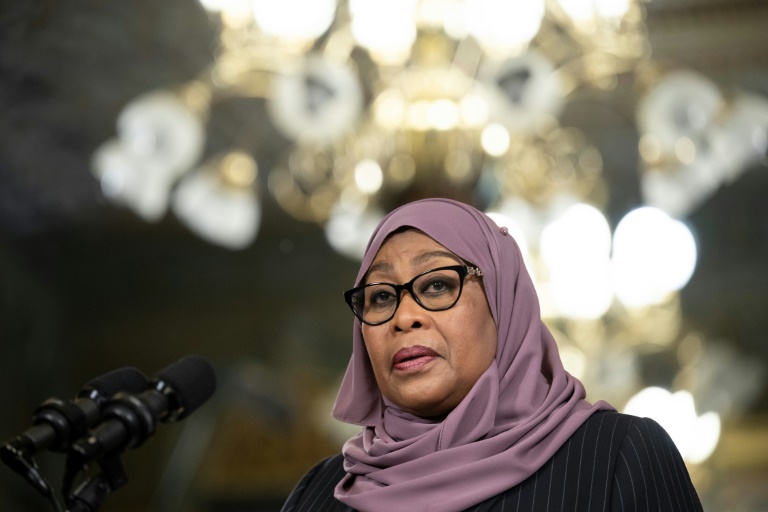
Tanzanian President Samia Suluhu Hassan on Monday cautioned critics inside her government against overstepping their authority, after shuffling her cabinet again and unexpectedly firing a respected foreign minister.

Hassan, who has battled division within the ruling party since taking office, sounded the warning while swearing in three ministers after a surprise shake-up to her cabinet late Sunday.

“Once we agree on something, you are part of it. You can’t go out and claim that the decision was just a directive, not your will,” said Hassan, who became president after the death of John Magufuli in March 2021.

“You need to know the scope of your powers so that when you want to go beyond, you seek permission from higher authorities.”

Hassan gave no explanation for the firing of foreign minister Liberata Mulamula, who was handpicked by the president last year and was respected as a principled, though politically inexperienced technocrat. 

Innocent Bashungwa was appointed defence minister to replace Stergomena Tax, who is taking over foreign affairs.

Angellah Kairuki, who has not sat in cabinet since 2020, was elevated to oversee local government in Bashungwa’s place.

Analysts said the moves pointed to a breach of trust in the upper echelons of government, where Hassan has been struggling to rein in rivals.

It was the third cabinet reshuffle this year, with Hassan previously firing several senior members of her administration as fissures within the Chama Cha Mapinduzi (CCM) party broke into the open.

The speaker of parliament resigned in January after criticising Hassan for “excessive” foreign borrowing.

Hassan, who became Tanzania’s first female president when she took over from Magufuli, has accused rivals inside the government of trying to damage her leadership as the ruling party prepares for elections due in 2025.

Observers hoped that Hassan would turn the page on the autocratic rule of Magufuli, nicknamed the “Bulldozer” for his uncompromising style and crackdown on dissent.

She has since sought to break with some of Magufuli’s policies, but has previously been branded a “dictator” by the opposition, and fears remain about the state of political and media freedoms.

Last year, a newspaper owned by the ruling party was suspended for publishing a story saying Hassan would not run for office in 2025.

OPEC+ tipped to make big cut in oil output

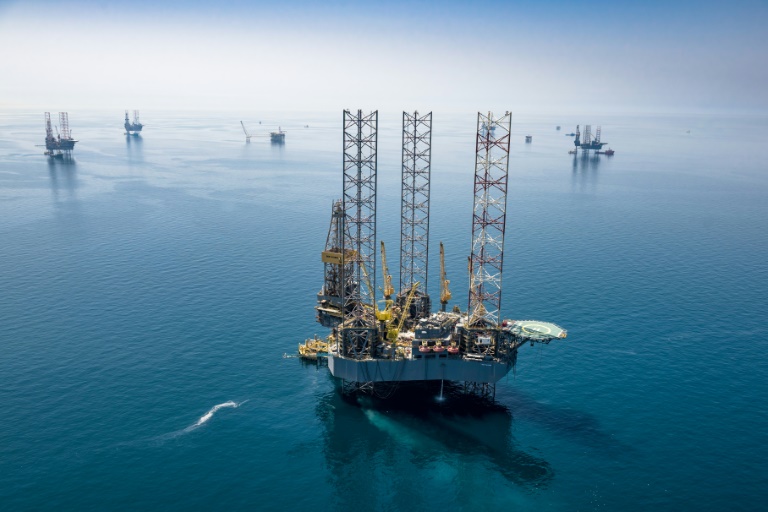
Major oil-producing nations led by Saudi Arabia and Russia are expected to make this week their biggest output cut since the start of the Covid pandemic in efforts to buttress prices.

Energy prices soared after Russia invaded Ukraine earlier this year, pushing inflation to decades-high levels that have put pressure on economies across the world.

But crude prices have fallen in recent months on concerns over demand amid a slowdown in the global economy.

The 13 members of the Organization of the Petroleum Exporting Countries (OPEC), led by Riyadh, and their 10 allies headed by Moscow will hold on Wednesday their first in-person meeting at the group’s headquarters in Vienna since March 2020.

Collectively known as OPEC+, the alliance drastically slashed output by almost 10 million barrels per day in April 2020 to reverse a massive drop in crude prices caused by Covid lockdowns.

OPEC+ began to raise production last year after the market improved — output returned to pre-pandemic levels this year, but only on paper as some members struggled to meet their quotas.

The group agreed last month on a slight cut of 100,000 bpd from October, the first in more than a year.

– One million cut –

Analysts now expect — and financial media have reported — that OPEC+ will discuss taking one million bpd out of the market from November at Wednesday’s meeting.

“There’s been plenty of rumours about how the alliance will respond to the deteriorating economic outlook and lower prices,” said Craig Erlam, analyst at trading platform OANDA.

“A sizeable cut now looks on the cards, the question is whether it will be large enough to offset the demand destruction caused by the impending economic downturn,” he added.

After soaring close to $140 per barrel in the aftermath of Russia’s invasion of Ukraine, oil prices have dropped below the $90 mark.

According to the UBS bank, a cut of at least 500,000 bpd would be necessary to stop the price plunge.

In anticipation of Wednesday’s meeting, oil prices jumped on Monday, with Brent North Sea crude, the international benchmark, rising by almost five percent to reach $89.15 — still far from its March peak.

– Ignoring the West –

Stephen Brennock, an analyst with PVM Energy, said OPEC+ would “want to reassert its influence” when the group meets this week.

“After all, the producer group has lost control over the oil market in recent weeks,” he said.

It remains to be seen how the United States and other major oil consumers will react to any OPEC+ decision to slash output.

Consumer countries have pushed for OPEC+ to open taps more widely to bring down prices — calls which the group has largely ignored.

US President Joe Biden made a controversial trip to Saudi Arabia in July in part to convince the kingdom to loosen the production taps, meeting Crown Prince Mohammed bin Salman despite his promise to make Riyadh a “pariah” following the 2018 killing of journalist Jamal Khashoggi.

“OPEC will not be making any friends among Western leaders, especially petroleum importers whose economies and currencies are ravaged by higher oil prices due to a deterioration in the trade balance,” said Stephen Innes, an analyst with SPI Asset Management, ahead of Wednesday’s meeting.

Observers have cast doubt how much more OPEC+ could possibly be pumping with some of its members struggling to meet quotas.

Bjarne Schieldrop, chief commodities analyst at SEB research group, predicted it would be “very easy for the group to implement cuts given that most members are stretched to the limit of what they can produce”.

He said Saudi Arabia was currently producing 11 million barrels per day.

“It hasn’t maintained such a high production more than twice in history and then only for 1-2 months,” he said.

Moroccan nomads' way of life threatened by climate change

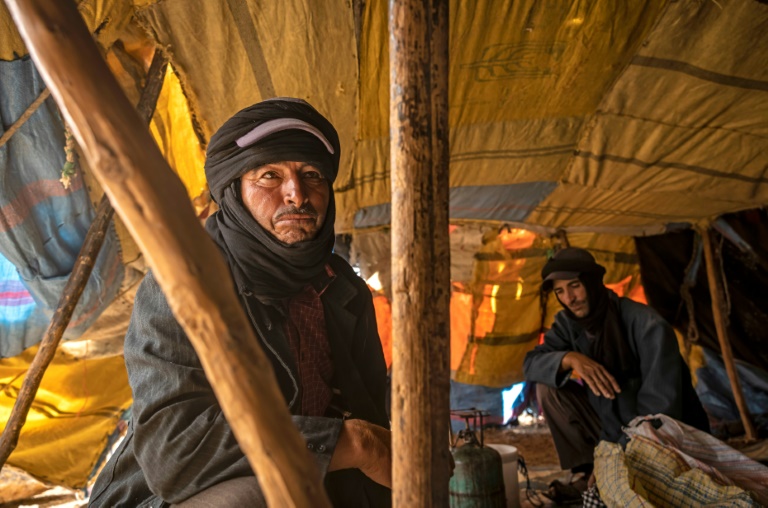
In the blistering desert of Morocco, the country’s last Berber nomads, the Amazigh, say their ancient lifestyle is under threat as climate change brings ever-more intense droughts.  

“Everything has changed,” said Moha Ouchaali, his wrinkled features framed by a black turban. “I don’t recognise myself anymore in the world of today. Even nature is turning against us.” 

Ouchaali, an Amazigh man in his 50s, has set up an encampment near a dry riverbed in barren hills about 280 kilometres (175 miles) east of Marrakesh. 

Amid the rocky, arid landscape near the village of Amellagou, he and his family have pitched two black woollen tents, lined with old animal fodder bags and fabric scraps.

One is for sleeping and hosting guests, the other serves as a kitchen.

“Water has become hard to find. Temperatures are going up and the drought is so harsh, but we can’t do much,” said Ouchaali.

His tribe, the Ait Aissa Izem, has spent centuries roaming the country to find food for their animals, but their way of life is steadily disappearing.

According to the last census, just 25,000 people in Morocco were nomadic in 2014, down by two-thirds in just a decade.

“We’re exhausted,” Ouchaali’s 45-year-old wife Ida said emotionally. “Before, we managed to live decently, but all these droughts, more and more intense, make our lives complicated. Without water we can’t do anything.”

– ‘Last nail in coffin’ –

This year has seen Morocco’s worst drought in four decades.

Rainfall is set to decline by 11 percent and average temperatures set to rise by 1.3 percent by 2050, according to forecasts from the Ministry of Agriculture.

“Nomads have always been seen as a barometer of climate change,” said anthropologist Ahmed Skounti.

“If these people, used to living in extreme conditions, can’t resist the intensity of global warming, that means things are bad.”

The drying up of water resources was “the last nail in the coffin for nomads”, he added.

In easier times, the Ait Aissa Izem would pass the summer in the relatively cool mountain valley of Imilchil, before heading to the area around regional capital Errachidia for the winter.

“That’s ancient history,” Ouchaali said, sitting in his tent and taking a sip of sweet Moroccan tea. “Today we go wherever there’s a bit of water left, to try to save the animals.”

Severe water shortages have even pushed some nomads to take the rare step of taking out loans to feed their livestock, their most vital asset.

“I’ve gone into debt to buy food for my animals so they don’t starve to death,” said Ahmed Assni, 37, sitting by a tiny, almost dried-out stream near Amellagou.

Saeed Ouhada said the difficulties had pushed him to find accommodation for his wife and children in Amellagou, while he stays with his parents in a camp on the edge of the town.

“Being a nomad isn’t what it used to be,” he said. “I’ll keep at it because I have to. My parents are old but they refuse to live in a town.” 

Driss Skounti, elected to represent nomads in the region, said the area used to have around 460 tents. Today, they don’t even add up to a tenth of that number.

– ‘Tired of fighting’ –

Some Moroccan nomads have given up their ancient lifestyle altogether — and not just because of the ever-worsening climate.

“I was tired of fighting,” said Haddou Oudach, 67, who settled permanently in Er-Rich in 2010.

“We’ve become outcasts from society. I can’t even imagine what nomads are going through today.”

Moha Haddachi, the head of an association for the Ait Aissa Izem nomads, said social and economic changes were making a nomadic lifestyle ever-more difficult. 

The scarcity of pastures due to land privatisation and agricultural investment also contributes to the difficulties, he said.

“Agricultural investors now dominate the spaces where nomads used to graze their herds.”

Nomads also face hostility from some villagers, angered by those camping in their region despite officially belonging to other provinces.

A law was passed in 2019 to delineate where nomads and sedentary farmers could graze their animals, but “nobody applies it”, Haddachi said.

Former nomad Oudach was despondent about “this era of selfishness where everyone thinks only of themselves”. 

“It wasn’t always like this, we used to be welcomed everywhere we went,” he said.

Embarking on a life of nomadism offers little to young people.

Houda Ouchaali, 19, says she can’t stand watching her parents “suffering and battling just to survive”.

“The new generation wants to turn the page on nomadism,” she said.

She now lives with an uncle in Er-Rich and is looking for professional training to allow her to “build a future” and escape the “stigmatising gaze that city people often have for nomads”.

Driss Skounti said he had little hope for the future of nomadism.

“Nomadic life has an identity and a tradition steeped in history,” he said, “but is doomed to disappear within 10 years.”

kao-agr/par/jsa/fz

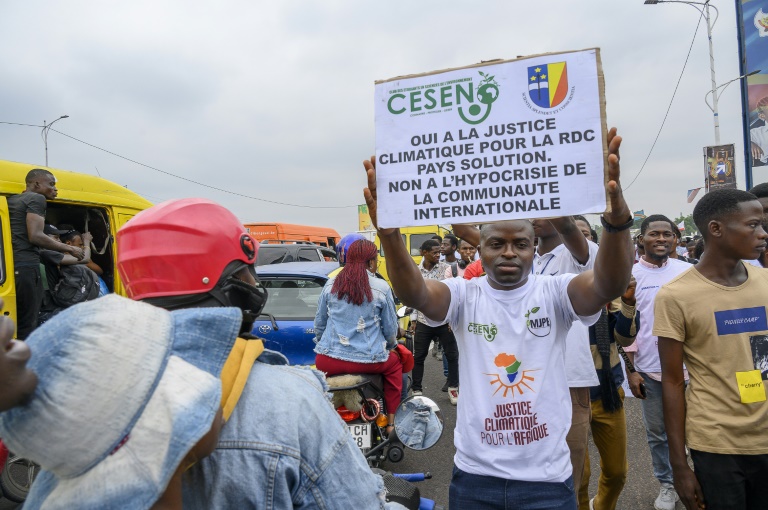
Calls for more funding as pre-COP27 climate talks open in DR Congo

Warning “no-one will escape” a worsening crisis, DR Congo led calls on Monday for a surge in funding to brake global heating and fight its impacts at the start of pre-COP27 climate talks in Kinshasa. 

The haggle comes ahead of COP27 — the UN’s 27th summit-level gathering on climate change, which is due to take place in Egypt next month. 

At opening ceremonies in the DRC’s parliament building, Congolese Environment Minister Eve Bazaiba called on countries to respect financial pledges and endorse plans to help compensate climate-inflicted damage.

She added that money to protect carbon-absorbing rain forests — of which the DRC has vast tracts — should be viewed not as aid but as an investment in humanity’s future.

“Unless a global effort is made … no-one will escape,” Bazaiba warned. “We all breathe the same air”. 

Egyptian Foreign Minister Sameh Shoukry also stressed the need for more money, noting an unfulfilled promise — dating back to COP15 in Copenhagen in 2009 — to provide developing countries with $100 billion dollars a year to fight climate change. 

“The picture is not reassuring,” he said.  

Deputy UN Secretary-General Amina Mohammed offered a gloomy update on the battle today.

“All indicators on climate are heading in the wrong direction,” she said.

Current funding for climate adaptation is a “pittance” compared to the likely scale of future needs, she said. 

– Damages –

Delegates from over 50 countries are attending the two-day informal talks in Kinshasa, including US climate envoy John Kerry. The event winds up on Wednesday with side discussions.

No formal announcements are expected in what is billed as a ground-clearing exercise ahead of the next month’s conference, taking place in Sharm el-Sheikh from November 6-18. 

Greater support from wealthier countries, historically the world’s biggest carbon polluters, to their poorer counterparts is expected to dominate the talks. 

But post-pandemic economic strains and Russia’s invasion of Ukraine have cast a pall over the money question.

The last UN climate summit, COP26 in Glasgow in November 2021, reaffirmed the goal — agreed in Paris in 2015 — of limiting the rise in the Earth’s average temperature to well below 2.0 degrees Celsius (3.6 degrees Fahrenheit) above pre-industrial levels and pursuing efforts to limit it to 1.5C.

However, the latter goal may already be beyond reach as the Earth’s temperature is already 1.2C higher than before the Industrial Revolution. 

Poorer countries had also pushed at Glasgow for a financial mechanism to address losses and damage caused by climate change. 

But richer states rejected the call and the participants agreed instead to start a “dialogue” on financial compensation for damages.  

– ‘We also need bread’ –

Egypt, as host of COP27, has made implementing the pledge to curb global heating the priority of the November summit. 

The Democratic Republic of Congo, for its part, is pushing the message that it can act as a “solution country” for climate change due to its vast rainforests, which act as a carbon sink. 

Around 30 billion tonnes of carbon are stored across the Congo Basin, researchers estimated in a study for Nature in 2016. The figure is roughly equivalent to three years of global emissions.

However, the central African nation in July launched an auction for 30 oil and gas blocs — ignoring warnings from environmentalists that drilling could harm ecosystems and release vast amounts of heat-trapping gases. 

Bazaiba, the environment minister, told pre-COP27 delegates that Africa was facing a dilemma since the continent has contributed so little to climate change and yet has fossil-fuel resources that could alleviate poverty. 

“What should we do in this circumstance, let our children and small children die of hunger?” she asked, as applause rung out in the hall of the parliament building.

“As much as we need oxygen, we also need bread,” she said, 

OPEC+ tipped to make big cut in oil output

Major oil-producing nations led by Saudi Arabia and Russia are expected to make this week their biggest output cut since the start of the Covid pandemic in efforts to buttress prices.

Energy prices soared after Russia invaded Ukraine earlier this year, pushing inflation to decades-high levels that have put pressure on economies across the world.

But crude prices have fallen in recent months on concerns over demand amid a slowdown in the global economy.

The 13 members of the Organization of the Petroleum Exporting Countries (OPEC), led by Riyadh, and their 10 allies headed by Moscow will hold on Wednesday their first in-person meeting at the group’s headquarters in Vienna since March 2020.

Collectively known as OPEC+, the alliance drastically slashed output by almost 10 million barrels per day in April 2020 to reverse a massive drop in crude prices caused by Covid lockdowns.

OPEC+ began to raise production last year after the market improved — output returned to pre-pandemic levels this year, but only on paper as some members struggled to meet their quotas.

The group agreed last month on a slight cut of 100,000 bpd from October, the first in more than a year.

– One million cut –

Analysts now expect OPEC+ to decide to take one million bpd out of the market from November at Wednesday’s meeting.

“There’s been plenty of rumours about how the alliance will respond to the deteriorating economic outlook and lower prices,” said Craig Erlam, analyst at trading platform OANDA.

“A sizeable cut now looks on the cards, the question is whether it will be large enough to offset the demand destruction caused by the impending economic downturn,” he added.

After soaring close to $140 per barrel in the aftermath of Russia’s invasion of Ukraine, oil prices have dropped below the $90 mark.

According to the UBS bank, a cut of at least 500,000 bpd would be necessary to stop the price plunge.

In anticipation of Wednesday’s meeting, oil prices jumped more than four percent on Monday, with Brent North Sea crude, the international benchmark, reaching $88.55 — still far from its March peak.

– Ignoring the West –

Stephen Brennock, an analyst with PVM Energy, said OPEC+ would “want to reassert its influence” when the group meets this week.

“After all, the producer group has lost control over the oil market in recent weeks,” he said.

It remains to be seen how the United States and other major oil consumers will react to any OPEC+ decision to slash output.

Consumer countries have pushed for OPEC+ to open taps more widely to bring down prices — calls which the group has largely ignored.

US President Joe Biden made a controversial trip to Saudi Arabia in July in part to convince the kingdom to loosen the production taps, meeting Crown Prince Mohammed bin Salman despite his promise to make Riyadh a “pariah” following the 2018 killing of journalist Jamal Khashoggi.

“OPEC will not be making any friends among Western leaders, especially petroleum importers whose economies and currencies are ravaged by higher oil prices due to a deterioration in the trade balance,” said Stephen Innes, an analyst with SPI Asset Management, ahead of Wednesday’s meeting.

Observers have cast doubt how much more OPEC+ could possibly be pumping with some of its members struggling to meet quotas.

Bjarne Schieldrop, chief commodities analyst at SEB research group, predicted it would be “very easy for the group to implement cuts given that most members are stretched to the limit of what they can produce”.

He said Saudi Arabia was currently producing 11 million barrels per day.

“It hasn’t maintained such a high production more than twice in history and then only for 1-2 months,” he said.

W. African bloc flies envoys to Burkina Faso after latest coup

Envoys from the West African bloc ECOWAS were heading to Burkina Faso on Monday after the jihadist-torn Sahel state underwent its second military coup in less than nine months.

The streets of the capital Ouagadougou were quiet after a two-day showdown between military rivals jousting for power and a spurt of violent anti-French protests.

The country’s latest self-proclaimed leader is a 34-year-old captain, Ibrahim Traore, who seized the helm from Lieutenant-Colonel Paul-Henri Sandaogo Damiba, in power since January.

Religious and community mediators said Damiba on Sunday had agreed to step down, two days after Traore declared he had been forced out. Regional diplomats said he had fled to Togo.

ECOWAS — the Economic Community of West African States — issued a statement welcoming “a peaceful settlement of their differences” and announced it would dispatch a delegation to Ouagadougou on Monday.

The team is headed by Guinea-Bissau Foreign Minister Suzi Carla Barbosa and includes former Niger president Mahamadou Issoufou, the bloc’s mediator on Burkina Faso.

Burkina is struggling with a seven-year-old jihadist campaign that has claimed thousands of lives, forced nearly two million people to flee their homes and left more than a third of the country outside government control.

Anger within the army at failures to roll back the bloody insurgency prompted Damiba’s coup against the elected president, Roch Marc Christian Kabore, on January 24.

Appointing himself transitional president, Damiba vowed to make security the country’s top priority — but after a brief lull, attacks revived, claiming hundreds of lives.

The mounting toll was cited by Traore as justification for the latest coup.

Damiba on Sunday set “seven conditions” for stepping down, the religious and community leaders said.

These included security guarantees for him and his allies in the military; and that the pledge he had given to ECOWAS for a return to civilian rule within two years be respected.

Speaking on the French radio station RFI on Monday, Traore spelt out that he would uphold the July 2024 timeline for restoring civilian rule.

This could even happen “before that date” if conditions were right, Traore said.

He said that he would simply carry out “day-to-day business” until a new civilian or military transitional president was appointed.

The appointment would be made by a national forum gathering political and social representatives, the pro-Traore faction in the military said on Sunday.

Traore told RFI that this meeting would take place “well before the end of the year.”

Analysts said that his position, if maintained, would be likely to satisfy ECOWAS, which has suffered five coups in three of its 15 members since August 2020.

– Anti-French protests –

Burkina’s latest bout of turmoil coincided with a surge of violent protests against France, the former colonial power and ally in Burkina’s struggle against the jihadists.

Pro-Traore officers accused Damiba of having taken refuge at a French military base in order to plot a “counter-offensive” — charges he and France denied.

On Sunday, security forces fired tear gas from inside the French embassy in Ouagadougou to disperse angry protesters, and the French Institute, which promotes French culture, was also attacked.

The French foreign ministry said the attack was carried out by “hostile demonstrators manipulated by a disinformation campaign against us”.

Traore on Monday condemned what he called “acts of violence and vandalism” against those buildings and urged “calm and restraint.”

Damiba’s claimed ouster on Friday was announced just hours after a protest rally that also demanded the end of France’s military presence in the Sahel and closer military cooperation with Russia. Some of the protestors carried Russian flags.

Russian paramilitaries are supporting regimes in Mali and Central African Republic — sidelining France, those countries’ traditional backer. 

But Russian troops have also been tarred with accusations of massacres and other abuses.

On Monday, the Kremlin spokesman said Russia wanted the situation in Burkina “to normalise as soon as possible, for complete order to be ensured in the country and for a return to the framework of legitimacy as soon as possible.”
African playes in Europe: Partey ends his Arsenal goal drought

Ghana midfielder Thomas Partey scored his first Premier League goal since March for Arsenal, whose 3-1 derby win over Tottenham Hotspur at the weekend kept them top of the table.   

In another clash between London clubs, retired Gabon forward Pierre-Emerick Aubameyang bagged his maiden goal for new club Chelsea in a 2-1 win at Crystal Palace.

Usually prolific Mohamed Salah continues to struggle with Liverpool this season. The Egyptian failed to score in a 3-3 draw with Brighton — he has netted just two league goals in seven matches. 

Here, AFP Sport highlights African headline-makers in the major European leagues:

ENGLAND

THOMAS PARTEY (Arsenal)

He opened the scoring as the leaders enjoyed an impressive win against north London rivals Tottenham. Partey struck at the Emirates Stadium in the 20th minute with a superb first-time curler into the top corner from 25 yards. Mikel Arteta’s side went on to secure their seventh win from eight league games this season to retain a one point lead over Manchester City.

PIERRE-EMERICK AUBAMEYANG (Chelsea)

The Gabon striker scored his first goal for Chelsea following his move from Barcelona as the Blues won at Crystal Palace. Former Arsenal star Aubameyang had gone without a goal in his first two games since returning to England on transfer deadline day. But the 33-year-old ended his wait to get on the scoresheet in the 38th minute at Selhurst Park, spinning to fire home.

SPAIN

INAKI WILLIAMS (Athletic Bilbao)

Fresh from making his international debut for Ghana, Williams put up a barnstorming performance to help Bilbao romp to a 4-0 win over Almeria. Williams opened the scoring in the 10th minute with a glancing header from a cross provided by his brother Nico. He had another well-taken goal ruled out for a marginal offside, and then set up Nico for the third goal.

ITALY

ADEMOLA LOOKMAN (Atalanta)

Nigeria forward Lookman made sure that Atalanta stayed level on points with Serie A leaders Napoli with the only goal in a 1-0 win over Fiorentina. London-born Lookman netted his second goal of the campaign and his first since the opening weekend of the season when he tapped in the winner from Luis Muriel’s low cross.

FODE BALLO-TOURE (AC Milan)

Left-back Ballo-Toure has been made a fringe player at AC Milan by Theo Hernandez, but the Senegal international had a huge hand in their thrilling 3-1 win at Empoli. The 25-year-old wept with joy after putting Milan back ahead with his first league goal in the fourth minute of stoppage time, just two minutes after Nedim Bajrami curled home what he thought was the free-kick which would earn Empoli a point.

Tigray rebels announce troop deployment in northern Ethiopia

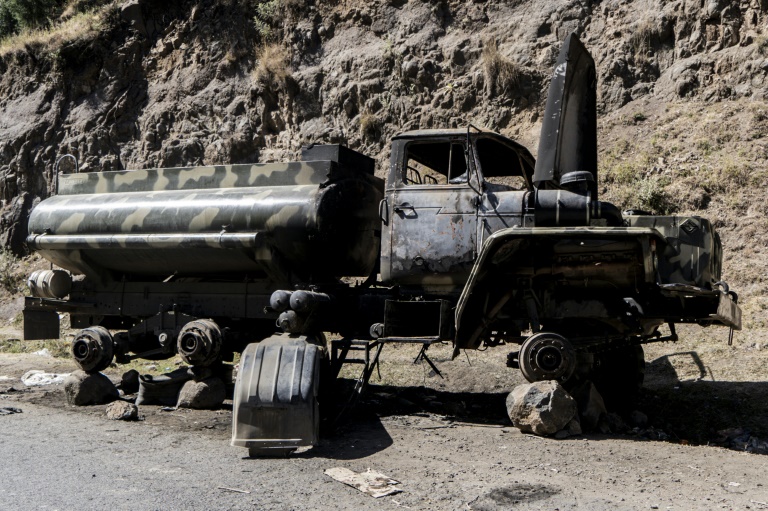
Authorities in Ethiopia’s rebel-held Tigray region said they had withdrawn fighters from occupied parts of a neighbouring region to counter a major offensive unfolding to the north. 

Pro-government forces and rebels led by the Tigray People’s Liberation Front (TPLF) resumed fighting in late August after a five-month truce, dimming hopes of peacefully settling nearly two years of war.

The latest upsurge has drawn Eritrean troops back onto the battlefield in support of Ethiopia’s federal and regional forces, which are fighting the TPLF on multiple fronts in the country’s north.

Tigrayan authorities said late Sunday that a redeployment of fighters from occupied parts of the Amhara region to the south of Tigray was necessary to counter intensifying combat to the north.

“So because of this, on the southern front, we have withdrawn from the areas of Amhara region we entered,” Tigray’s regional authorities said in a statement.

The withdrawal had been under way for three days and could be reversed if the front came under attack again, they added.

An Amhara government official in that part of the region told AFP that TPLF rebels had withdrawn from some towns, and reported some localised fighting.

AFP was not able to independently verify claims of battlefield gains or troop movements. 

Access to northern Ethiopia is severely restricted and Tigray has been under a communications blackout for more than a year.

The involvement of Eritrea has provoked strong condemnation from Western nations pushing for a peaceful resolution to the war in Africa’s second-most populous country.

Eritrean troops supported Ethiopian forces in the early stages of the war, which erupted in November 2020 when Prime Minister Abiy Ahmed sent soldiers into Tigray to unseat the TPLF.

The TPLF dominated Ethiopia’s ruling coalition for decades before Abiy took power in 2018, and is a historic enemy of Eritrea and its iron-fisted ruler Isaias Afwerki.

In September, authorities in the closed-off nation issued a general call for mobilisation of its armed forces.

The war has claimed untold lives and spurred a humanitarian crisis, and all sides to the conflict have been accused of grave abuses against civilians.

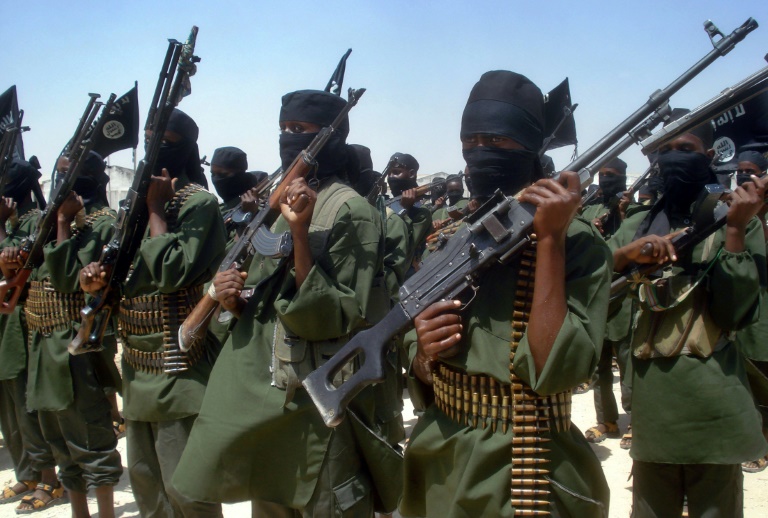
Top Al-Shabaab leader killed in joint operation: Somalia govt

The Somali government announced on Monday a top Al-Shabaab militant, who had a $3.0-million US bounty on his head, had been killed in a joint air strike in southern Somalia.

The drone strike on October 1, launched by the Somali army and international security partners, killed Abdullahi Yare near the coastal town of Haramka, the ministry of information said in a statement dated Sunday but posted online on Monday.

“This leader… was the head preacher of the group and one of the most notorious members of the Shabab group,” it said.

“He was former head of the Shura council and the group’s director for finances,” the ministry said, referring to a powerful consultation body within Al-Shabaab.

A co-founder of the Al-Qaeda-linked group, Yare was believed to be next in line to take over the leadership of the movement from its ailing chief Ahmed Diriye, according to the ministry.

“His elimination is like a thorn removed from Somalia as a nation,” the ministry said.

Yare was one of seven leaders named by the United States on its most-wanted list in 2012. Washington offered three million dollars for his capture.

The announcement of the strike comes weeks after Somalia’s recently elected President Hassan Sheikh Mohamud vowed to stage all-out war on the jihadists, following a string of deadly attacks. They include a 30-hour hotel siege in the capital, Mogadishu, that killed 21 people.

Mohamud last month urged citizens to stay away from areas controlled by Al-Shabaab as he vowed to ratchet up offensives against the militants.

US forces have in the past partnered with African Union soldiers and Somali troops in counterterrorism operations, and have conducted frequent raids and drone strikes on Al-Shabaab training camps throughout Somalia.

Last month, the US military said it had killed 27 jihadist fighters in an air strike near Bulobarde, the main town on the road linking Mogadishu to Beledweyne, a key city on the border with Ethiopia.

It said the air strike was carried out “at the request” of the Somali government.

Al-Shabaab, which espouses a strict version of sharia or Islamic law, has waged a bloody insurrection against the Mogadishu government for 15 years and remains a potent force despite an African Union operation against the group.

Its fighters were ousted from the capital in 2011 but continue to stage attacks on military, government and civilian targets.

The group last week claimed responsibility for a bomb blast that killed a top Somali police officer near the Al-Shabaab-controlled village of Bursa, some 30 kilometres (20 miles) north of Mogadishu. 

Close Bitnami banner
Bitnami