Africa Business

Doubt over Ethiopia peace talks as Kenya envoy says won't attend

Kenya’s former president Uhuru Kenyatta, a key player in African Union-led efforts to bring peace to Ethiopia, said Friday he would be skipping negotiations expected to begin this weekend, raising doubts over whether the talks would go ahead.

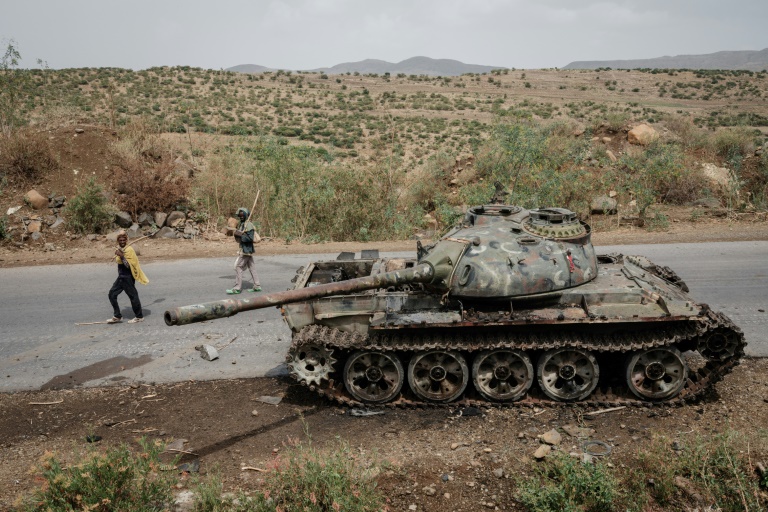
The bid to resolve the nearly two-year conflict comes as fierce fighting grips northern Ethiopia after a resurgence in late August shattered a five-month truce and halted aid into war-torn Tigray. 

The AU has invited the warring sides to talks in South Africa that were scheduled to start on Saturday, mediated by the bloc’s Horn of Africa envoy Olusegun Obasanjo, South Africa’s former deputy president Phumzile Mlambo-Ngcuka and Kenyatta.

AU Commission chair Moussa Faki Mahamat said in a statement Thursday he had “full confidence in… the distinguished panel members to ensure constructive engagements and dialogue between the parties towards a sustainable, inclusive negotiated settlement to the conflict”.

But in a sign of the challenges confronting the process, Kenyatta said in a letter to Faki he would not be attending the South Africa talks “due to conflicts in my schedule”.

“However, in the interim and as you consider the possibility for another date for the peace talks, I would be grateful to receive further clarity on the structure and modalities of the talks, including but not limited to the rules of engagement for all the interlocuters invited,” he wrote.

Kenyatta, who left office in August, also said the “immediate and unconditional cessation of hostilities” should be put high on the agenda.

Both the Ethiopian government and the Tigray People’s Liberation Front (TPLF), which have been at war since November 2020, said on Wednesday they were ready to take part in the negotiations.

But TPLF leader Debretsion Gebremichael protested that the regional authorities were not consulted before the invitation was issued, and sought clarification on what other parties would be involved, what role the international community would play and logistics such as air travel and security for their negotiating team.

Representatives of the AU, the Ethiopian government and the TPLF did not respond to AFP’s requests for comment following Kenyatta’s announcement.

– Air strikes –

Fighting has escalated in recent weeks on multiple fronts in northern Ethiopia, with several air strikes hammering Tigray.

A senior official at the region’s biggest hospital said there had been a deadly drone attack on Friday on the town of Dengolat about 30 kilometres (20 miles) south of Tigray’s capital Mekele.

“Total number of casualties not yet known. We have received 42 victims, five of them have died,” Kibrom Gebreselassie, chief executive director at Ayder Referral Hospital in Mekele, said on Twitter.

AFP was not able to independently verify the report as access to northern Ethiopia is severely restricted and Tigray has been under a communications blackout for more than a year.

In addition to cutting aid to Tigray, which is facing crippling shortages of food, fuel and medicine, the latest upsurge in combat has drawn Eritrean troops back to the battlefield in support of Ethiopian forces, raising alarm in the international community.

In the face of the deepening conflict, the United States said its special envoy to the region, Mike Hammer, would be making his second visit to Ethiopia in as many months to seek a halt to the fighting.

Hammer, who met Kenya’s newly elected President William Ruto in Nairobi on Friday, has warned that Eritrea’s presence was only adding to the complications of ending the conflict in Africa’s second-most populous country.

The war, which erupted in November 2020, has killed untold numbers of civilians, driven several million from their homes and triggered a deep humanitarian crisis in northern Ethiopia.

All parties in the conflict have also been accused of grave abuses against civilians, and the UN Human Rights Council on Friday voted narrowly to extend the mandate for an investigation mission by a year, despite Addis Ababa’s opposition.

In its first report issued last month, the Commission of Human Rights Experts on Ethiopia said it had found evidence of widespread rights violations and that there were “reasonable grounds to believe that, in several instances, these violations amount to war crimes and crimes against humanity”.
Doubts over Ethiopia peace talks as Kenya envoy says won't attend

Kenya’s former president Uhuru Kenyatta, one of the key players in African Union-led efforts to bring peace to Ethiopia, said Friday he would not be attending negotiations expected to begin this weekend, raising doubts over whether the talks would go ahead.

The bid to resolve the near two-year conflict comes as fierce fighting grips northern Ethiopia after a resurgence in combat in August shattered a five-month truce and halted aid into war-torn Tigray. 

The AU has invited the warring sides to talks in South Africa that were scheduled to start on Saturday, mediated by the bloc’s Horn of Africa envoy Olusegun Obasanjo, South Africa’s former deputy president Phumzile Mlambo-Ngcuka and Kenyatta.

AU Commission chair Moussa Faki Mahamat said in a statement on Thursday he had “full confidence in… the distinguished panel members to ensure constructive engagements and dialogue between the parties towards a sustainable, inclusive negotiated settlement to the conflict.”

But in a sign of the challenges confronting the process, Kenyatta said in a letter to Faki he would not be attending “due to conflicts in my schedule”.

“However, in the interim and as you consider the possibility for another date for the peace talks, I would be grateful to receive further clarity on the structure and modalities of the talks, including but not limited to the rules of engagement for all the interlocuters invited,” he wrote.

Both the Ethiopian government and the Tigray People’s Liberation Front (TPLF), which have been at war since November 2020, said on Wednesday they were ready to take part in the AU-led negotiations.

But Tigray’s regional authorities said they wanted to know what other parties would be involved, what role the international community would play and logistics such as air travel and security for their negotiating team.

“Considering we were not consulted prior to the issuance of this invitation, we need clarification to some of the following issues to establish an auspicious start for the peace talks,” said a statement signed by TPLF leader Debretsion Gebremichael.

Representatives of the AU, the Ethiopian government and the TPLF did not respond to AFP’s requests for comment following Kenyatta’s announcement.

Polls close in troubled Lesotho after parliamentary vote

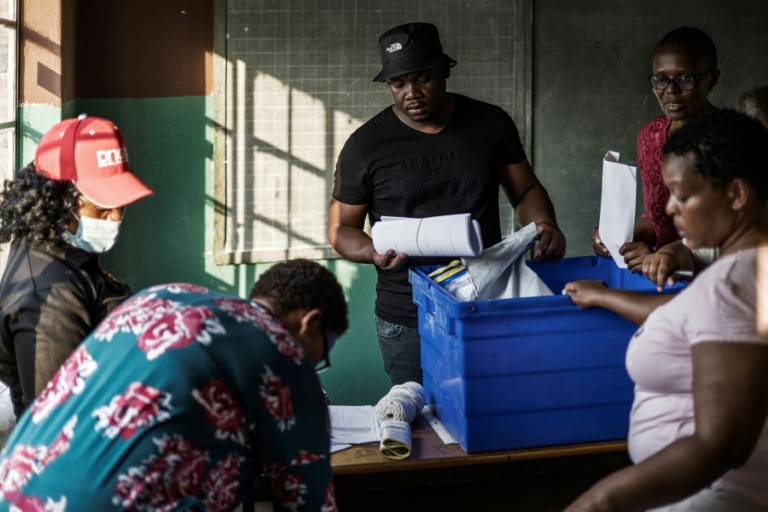
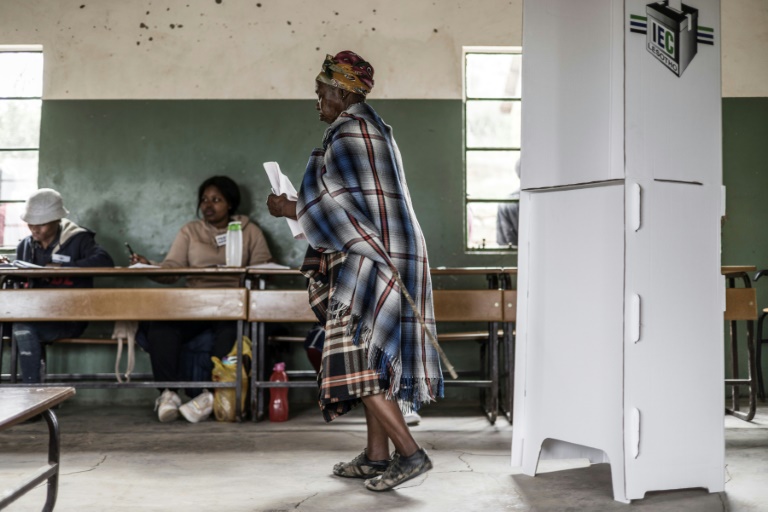
Voters draped in traditional shepherd’s blankets cast their ballots on Friday in parliamentary elections in Lesotho, but observers saw little prospect of an end to the country’s long-running political gridlock. 

The southern African kingdom has been governed for the past decade by frail and fractious coalitions, with no premier serving out a full five-year term.

Some voters walked for kilometres (miles) or queued for hours to reach polling booths set up at schools or sometimes under marquees on the grass.

“I’m confident that our next prime minister will bring us better life and better conditions,” Mamete Potsane, 74, told AFP. 

Wearing a floral sweater and sneakers, the widow, who lives on a government allowance of 800 maloti ($44) a month, gave a thumbs-up as she left a voting station at the foot of picturesque Mount Qiloane. 

Polls closed at 1500 GMT and counting started shortly afterwards. The result is likely to be announced next week.

– Instability –

Surrounded entirely by South Africa, Lesotho is a mountain nation of two million people nicknamed the “Kingdom in the Sky.”

It has been buffeted by coups and attempted coups since independence from Britain in 1966, and nearly a third of its population live on less than $1.90 a day. 

“We’ve lost hope,” said Mpho Mochaka, 26. A street vendor selling cigarettes and apples in the capital, Maseru, she said she did not vote. 

The outgoing government is led by the All Basotho Convention (ABC). But current Prime Minister Moeketsi Majoro did not seek another term, after being ousted as party head earlier this year. 

His predecessor Thomas Thabane was forced to step down in 2020 after being accused of ordering the murder of his estranged wife. Charges against him were dropped in July. 

The ABC’s new leader, former health minister Nkaku Kabi, squared off against an array of contenders.

More than 50 parties were in the running.

– Millionaire challenger –

Kabi’s main challengers included Mathibeli Mokhothu, who heads the Democratic Congress — Lesotho’s second largest party — and Sam Matekane, a millionaire believed to be the country’s richest man who could be a dark horse, according to analysts. 

No one is expected to win outright, darkening prospects of much-needed reform, said Seroala Tsoeu-Ntokoane, a political researcher at the National University of Lesotho.

“Coalitions are a source of instability because they’re formed with political parties with not much to hold them together, no mutual policy platform, no mutual respect,” she said. 

The outgoing parliament failed to pass a law aimed at strengthening political stability, by banning lawmakers from switching party allegiance within the first three years of their tenure.

“We want infrastructures, roads and running businesses, it’s all about bringing back hope in the country,” said Mekhotak Setsebi, 30, a blanket tied around his shoulders. 

He is the head of a small logistics company but business is bad, he said before casting his ballot in Maseru’s suburb of Matala. 

The 120-seat parliament is chosen by a mixed electoral system — 80 lawmakers are voted in by constituents, while another 40 seats are distributed proportionally.

About 1.5 million people were registered to vote. Turnout in the last elections in 2017 was only 47 percent, but some observers said the figure could be higher this year.

Prison sentence ends for S.Africa's ex-leader Zuma

The prison sentence of beleaguered ex-South African president Jacob Zuma officially ended on Friday, with correctional services saying he had been released from their system having served only part of his term behind bars. 

The former head of state was jailed for 15 months for contempt of court in July last year after refusing to testify before a graft inquiry — but was released on medical parole two months later. 

“It is a day of mixed emotions,” Zuma said in a statement on Friday, thanking his supporters for speaking out against what he said was an “unjust and cruel incarceration.”

“I am relieved to be free again to walk around and do whatever I want to do without restrictions.”

He compared his release to the day in 1973 when he walked out of Cape Town’s notorious Robben Island prison, where he had been jailed as an apartheid-era political prisoner with Nelson Mandela.

The 80-year-old was granted parole after being admitted to hospital for an undisclosed condition.

A court later ordered him back to jail, but he managed to remain out as appeal proceedings dragged on. 

“All administrative processes have now been conducted and the sentence expiry date marks the end of him serving his sentence,” the Department of Correctional Services said in a statement.

Zuma’s jailing last year sparked riots that descended into looting and left more than 350 dead in the worst violence to hit the country since the advent of democracy in South Africa.

Last month, he announced he was ready to make a political comeback at the ruling African National Congress (ANC) party’s internal conference in December where the top seats will be hotly contested.

Zuma is a divisive figure whose name resonates with graft for most South Africans but remains a hero to many grassroots ANC members.

He is still facing separate corruption charges over an arms deal dating back more than two decades.

Lines and long walks as troubled mountain kingdom of Lesotho votes

Voters in Lesotho were casting ballots in parliamentary elections on Friday, but observers doubted that the outcome would end long-running political gridlock.

The southern African kingdom has been governed for the past decade by frail and fractious coalitions, and no premier has served out a full five-year term.

“It is very likely that there will be a coalition again,” said Liesl Louw-Vaudran at South Africa’s Institute for Security Studies (ISS), in Pretoria. 

Surrounded entirely by South Africa, Lesotho is a mountain nation of two million people nicknamed the “Kingdom in the Sky.”

It has been buffeted by coups and attempted coups since independence from Britain in 1966, and nearly a third of its population live on less than $1.90 a day. 

In Koro-Koro, about an hour’s drive from the capital Maseru, men wrapped in traditional blankets started queueing outside a voting station from the early morning. 

“I hope that my vote will count,” said Paul, 32, who said he had walked for kilometres (miles) to cast his ballot. 

Like many, he used to work in South Africa, but the Covid-19 pandemic upended that and today he is unemployed.

Polling stations opened at 7:00 am (0500 GMT) and were due to close at 5:00 pm. About 1.5 million people are registered to vote. 

In Maseru’s suburb of Matala, marquees on the grass served as polling stations. 

Before opening shop, election officials showed the empty ballot boxes to those queueing outside, to allay fears of rigging. International observers watched. 

“I have never voted, and I am not willing to vote,” Dineo Moketsie, a 32-year-old teacher told AFP earlier in the week, angry at politicians who he said had done nothing to better living conditions in the country. 

“I just feel that it’s a waste of time”. 

The outgoing government is led by the All Basotho Convention (ABC). But current Prime Minister Moeketsi Majoro is not seeking another term, after being ousted as party head earlier this year. 

His predecessor Thomas Thabane was forced to step down in 2020 after being accused of ordering the murder of his estranged wife. Charges against him were dropped in July. 

The ABC’s new leader, former health minister Nkaku Kabi, is squaring off against an array of contenders.

More than 50 parties are in the running.

– Millionaire challenger –

Kabi’s main challengers include Mathibeli Mokhothu, who heads the Democratic Congress — Lesotho’s second largest party — and Sam Matekane, a millionaire believed to be the country’s richest man who could be a dark horse, according to analysts. 

His party, “Revolution for Prosperity”, dwarfs most of the others in terms of resources, said Rataibane Ramainoane, a political adviser to the government.

“Its presence is being felt across the country,” he said.

Still, no one is expected to win outright, darkening prospects of much-needed reform, said Seroala Tsoeu-Ntokoane, a political analyst at the National University of Lesotho.

“Coalitions are a source of instability because they’re formed with political parties with not much to hold them together, no mutual policy platform, no mutual respect,” she said. 

The outgoing parliament failed to pass a law aimed at strengthening political stability, by banning lawmakers from switching party allegiance within the first three years of their tenure.

“We want infrastructures, roads and running businesses, it’s all about bringing back hope in the country,” said Mekhotak Setsebi, 30, a blanket tied around his shoulders. 

He is the head of a small logistics company but business is bad, he said before casting his ballot in Matala. 

The 120-seat parliament is chosen by a mixed electoral system — 80 lawmakers are voted in by constituents, while another 40 seats are distributed proportionally.

Results are expected next week.

Sahel military coups only help jihadists: analysts

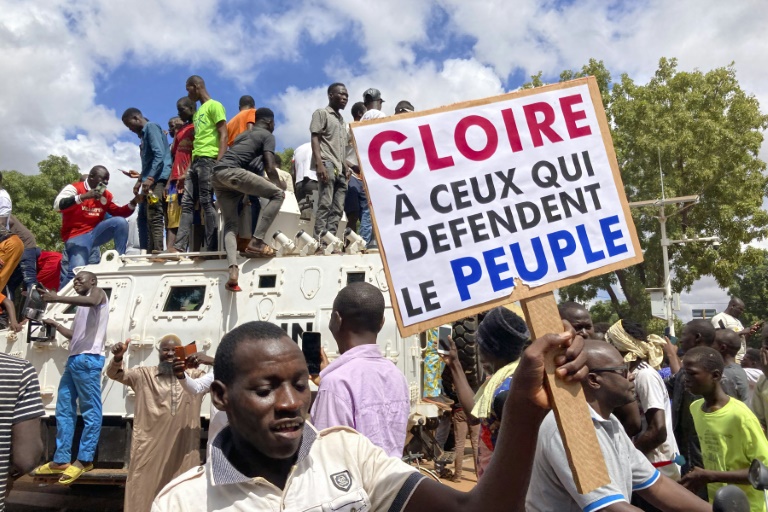
Burkina Faso’s new rulers say they seized power to better fight jihadists, but history in the Sahel suggests the coup will merely stoke turbulence and division, benefitting the insurgents, analysts say.

The poor, arid region has been wracked by jihadist insecurity since 2012.

It began in northern Mali then in 2015 spread to its centre and neighbouring Niger and Burkina Faso, claiming thousands of lives and prompting more than two million people to flee their homes.

A new junta led by 34-year-old Captain Ibrahim Traore seized power in Burkina Faso last week, in the second such power grab since January blamed on failures to quell jihadist attacks. 

It followed two similar coups in Mali in 2020 and 2021.

The latest takeover comes during a struggle for influence between France and Russia in the former French colonies, whose leaders appear to be increasingly turning to Moscow to help battle the jihadists.

But analyst Yvan Guichaoua said the coup would only serve the interests of the jihadists — the Al-Qaeda-linked Group to Support Islam and Muslims (GSIM) and the local branch of the Islamic State group.

“The big winners are not the Russians or the French, but GSIM and IS,” said Guichaou, an expert at the Brussels School of International Studies. “What a disaster.”

Organisers of coups in the Sahel typically promise improved security, but these pledges are misleading, analysts say.

A putsch typically “destabilises the army structure and divides members of the military into supporters and opponents of the coup,” said Djallil Lounnas at Morocco’s Al-Akhawayn University.

“It means instability, division and purges.”

Coups only compound problems in countries where the armed forces are already accused of inefficiency and mismanagement, and security forces are often under-equipped, he and others said.

– Army problems –

Alain Antil, a Sahel expert at the French Institute of International Relations, gave the example of more than 50 Burkinabe gendarmes killed by jihadists in November last year.

Two weeks earlier, they had warned headquarters they were running short of supplies.

“They were hunting gazelles in the scrubland to eat,” he said, and were in no position to take on the insurgents.

“You can’t go and fight such determined adversaries with this kind of logistics problem.”

Disgruntled junior officers led by Traore forced out junta leader Lieutenant-Colonel Paul-Henri Sandaogo Damiba, whom they accused of failing his country. 

Traore was declared president on Wednesday, three days after Damiba fled to neighbouring Togo following a prolonged standoff at the weekend.

But, said Antil, nothing indicates Traore will be any more successful.

“The myth of the enlightened military man able to fix problems… very rarely holds up,” he said.

Soldiers are “often less well-equipped than the civilians they replace to understand” non-security aspects of a crisis.

GSIM this week mocked Burkina’s latest change of leader.

“Let the tyrants know that the repeated coups will not avail them,” it said in a statement.

Mauritanian journalist Lemine Ould Salem, who has written a book on jihadism, said political turmoil gives credibility to extremist talk that “delegitimises state institutions.”

“They say, ‘look, there is no democracy, no state, no constitution’,” he said.

– Regional impact –

Military coups in the Sahel have also weakened regional cooperation in the fight against the jihadists.

Since its takeover, Mali had a bustup with France, the country’s strongest foreign ally, which withdrew its last troops from the country in August.

The junta has brought in Russian operatives it describes as military trainers, but which western countries say are mercenaries from the Wagner group.

Mali has also quit a regional anti-jihadist force dubbed the G5 Sahel and antagonised its southern neighbour, Ivory Coast, by detaining 46 Ivorian soldiers in July.

Bamako “risks ruining all cooperation, including for security,” Antil said.

The Soufan Center think tank in a note this week said France had “served as somewhat of a ‘bogeyman’, or an excuse to account for the growing strength of jihadists in Burkina Faso and the Sahel more broadly”. 

Michael Shurkin, a US historian specialised in the French army, said there were also “many who believe in conspiracy theories according to which the French arm the jihadists”. 

They “simplify a complex reality and enable people to avoid having to understand their own responsibility and find their own solutions,” he said.

Troubled Lesotho votes for parliament

Voters in the southern African kingdom of Lesotho were casting ballots in parliamentary elections on Friday, but hopes were low that the outcome will end the country’s long-running political gridlock.

Lesotho has been governed for the past decade by a string of coalition governments that have proved fractious and frail, and no premier has served out a full five-year term.

“It is very likely that there will be a coalition again,” said Liesl Louw-Vaudran, a researcher at South Africa’s Institute for Security Studies (ISS), in Pretoria. 

Surrounded entirely by South Africa, which heavily depends on it for water, Lesotho is a mountain kingdom of two million people nicknamed the “Kingdom in the Sky.”

It has been buffeted by coups and attempted coups since independence from Britain in 1966, and nearly a third of its population live on less than $1.90 (1.90 euros) a day. 

“I hope that my vote will count,” said Paul, a 32-year-old who said he walked for kilometres to cast his ballot in Koro-Koro, about an hour from the capital Maseru. 

Like many, he used to work in South Africa, but the Covid-19 pandemic upended that and today is unemployed.

Polling stations opened at 7:00 am (0500 GMT) and were due to close at 5:00 pm. About 1.5 million people are registered to vote. 

Only 47 percent of registered voters bothered to cast their ballot at the last elections in 2017. 

“I have never voted, and I am not willing to vote,” Dineo Moketsie, a 32-year-old teacher told AFP earlier in the week, angry at politicians who he said have done nothing to better living conditions in the country. 

“I just feel that it’s a waste of time”. 

The process can also be cumbersome and queues outside polling stations can sometimes last hours. 

The outgoing government is led by the All Basotho Convention (ABC). But current Prime Minister Moeketsi Majoro is not seeking another term, after being ousted as party head earlier this year. 

His predecessor Thomas Thabane was forced to step down in 2020, after being accused of ordering the murder of his estranged wife. Charges against him were dropped in July. 

The ABC’s new leader, former health minister Nkaku Kabi, is squaring off against an array of contenders.

More than 50 parties are in the running.

“People still believe in our movement and we’re going to win,” said Kabi, 49. 

– Millionaire challenger –

His main challengers include Mathibeli Mokhothu, who heads the Democratic Congress — Lesotho’s second largest party — and Sam Matekane, a millionaire believed to be the country’s richest man who could be a dark horse, according to analysts. 

“Our country is sinking. So, we have to try and save (it),” Matekane told AFP in an interview. 

His party, “Revolution for Prosperity”, dwarfs most of the others in terms of resources, said Rataibane Ramainoane, a political adviser to the government.

“Its presence is being felt across the country,” he said.

Still, no one is expected to win outright, darkening prospects of much-needed reform, said Seroala Tsoeu-Ntokoane, a political analyst at the National University of Lesotho.

“Coalitions are a source of instability because they’re formed with political parties with not much to hold them together, no mutual policy platform, no mutual respect,” she said. 

The outgoing parliament failed to pass a law aimed at strengthening political stability, by banning lawmakers from switching party allegiance within the first three years of their tenure.

The 120-seat parliament is chosen by a mixed electoral system — 80 lawmakers are voted in by constituents, while another 40 seats are distributed proportionally.

International observers will monitor the vote. Results are expected next week.

Troubled Lesotho heads into polls

Voters in the southern African kingdom of Lesotho will cast their ballots in parliamentary elections Friday, but hopes are low that the outcome will end the country’s long-running political gridlock.

Lesotho has been governed for the past decade by a string of coalition governments that have proved fractious and frail, and no premier has served out a full five-year term.

“It is very likely that there will be a coalition again,” said Liesl Louw-Vaudran, a researcher at South Africa’s Institute for Security Studies (ISS), in Pretoria. 

Surrounded entirely by South Africa, which heavily depends on it for water, Lesotho is a mountain kingdom of two million people nicknamed the “Kingdom in the Sky.”

It has been buffeted by coups and attempted coups since independence from Britain in 1966, and nearly a third of its population live on less than $1.90 a day. 

The capital Maseru was quiet on Thursday evening, lulled by taxis humming in the streets and vendors chatting under large umbrellas set on the sides of the main road.

About 1.5 million people are registered to vote, with ballots opening at 07:00 am (0500 GMT) and closing at 05:00 pm. 

Only 47 percent of registered voters bothered to cast their ballot at the last elections in 2017. 

“I have never voted, and I am not willing to vote,” said Dineo Moketsie, a 32-year-old teacher angry at politicians who he said have done nothing to better living conditions in the country. 

“I just feel that it’s a waste of time”. 

The process can also be cumbersome and queues outside polling stations can sometimes last hours. 

The outgoing government is led by the All Basotho Convention (ABC). But current Prime Minister Moeketsi Majoro is not seeking another term, after being ousted as party head earlier this year. 

His predecessor Thomas Thabane was forced to step down in 2020, after being accused of ordering the murder of his estranged wife. Charges against him were dropped in July. 

The ABC’s new leader, former health minister Nkaku Kabi, will square off against an array of contenders.

More than 50 parties are in the running.

“People still believe in our movement and we’re going to win,” said Kabi, 49. 

– Millionaire challenger –

His main challengers include Mathibeli Mokhothu, who heads the Democratic Congress — Lesotho’s second largest party — and Sam Matekane, a millionaire believed to be the country’s richest man who could be a dark horse, according to analysts. 

“Our country is sinking. So, we have to try and save (it),” Matekane told AFP in an interview. 

His party, “Revolution for Prosperity”, dwarfs most of the others in terms of resources, said Rataibane Ramainoane, a political adviser to the government.

“Its presence is being felt across the country,” he said.

Still, no one is expected to win outright, darkening prospects of much-needed reform, said Seroala Tsoeu-Ntokoane, a political analyst at the National University of Lesotho.

“Coalitions are a source of instability because they’re formed with political parties with not much to hold them together, no mutual policy platform, no mutual respect,” she said. 

The outgoing parliament failed to pass a law aimed at strengthening political stability, by banning lawmakers from switching party allegiance within the first three years of their tenure.

The 120-seat parliament is chosen by a mixed electoral system — 80 lawmakers are voted in by constituents, while another 40 seats are distributed proportionally.

International observers will monitor the vote. Results are expected next week.

Egypt replants mangrove 'treasure' to fight climate change impacts

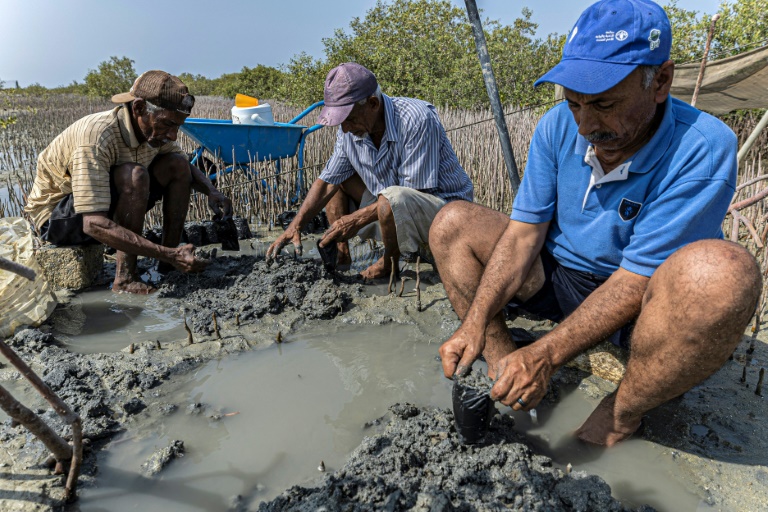
On Egypt’s Red Sea coast, fish swim among thousands of newly planted mangroves, part of a programme to boost biodiversity, protect coastlines and fight climate change and its impacts.

After decades of destruction that saw the mangroves cleared, all that remained were fragmented patches totalling some 500 hectares (1,200 acres), the size of only a few hundred football pitches.

Sayed Khalifa, the head of Egypt’s agriculture syndicate who is leading mangrove replanting efforts, calls the unique plants a “treasure” because of their ability to grow in salt water where they face no problems of drought.

“It’s an entire ecosystem,” Khalifa said, knee-deep in the water. “When you plant mangroves, marine life, crustaceans and birds all flock in.”

Between the tentacle-like roots of months-old saplings, small fish and tiny crab larvae dart through the shallows — making the trees key nurseries of marine life.

Khalifa’s team are growing tens of thousands of seedlings in a nursery, which are then used to rehabilitate six key areas on the Red Sea and Sinai coast, aiming to replant some 210 hectares.

But Khalifa dreams of extending the mangroves as far “as possible,” pointing past a yacht marina some six kilometres (four miles) to the south.

The about $50,000-a-year government-backed programme was launched five years ago.

– ‘Punch above their weight’ –

Mangroves also have a powerful impact in combating climate change.

The resilient trees “punch above their weight” absorbing five times more carbon than forests on land, according to the UN Environment Programme (UNEP).

The stands of trees also help filter out water pollution and act as a natural barrier against rising seas and extreme weather, shielding coastal communities from destructive storms.

UNEP calculates that protecting mangroves is a thousand times cheaper than building seawalls over the same distance.

Despite their value, mangroves have been annihilated worldwide at rapid speed. 

Over a third of mangroves globally have been lost globally, researchers estimate, with losses up to 80 percent in some coastlines of the Indian Ocean.

Mangrove expert Niko Howai, from Britain’s University of Reading, said in the past many governments had not appreciated “the importance of mangroves”, eyeing instead lucrative “opportunities to earn revenue” including through coastal development.

In Egypt’s case, “mass tourism activities and resorts, which cause pollution”, as well as boat activity and oil drilling wreaked havoc on mangroves, said Kamal Shaltout, a botany professor at Egypt’s Tanta University.

Shaltout warned that mangrove restoration efforts “will go to waste” if these threats are not addressed.

“The problem is that the mangroves we have are so limited in number that any damage causes total disruption,” he said.

– Impact of mass tourism –

There is little reliable information to indicate how much has been lost, but Shaltout said “there are areas that have been completely destroyed”, particularly around the major resort town of Hurghada.

Red Sea tourism accounts for 65 percent of Egypt’s vital tourism industry.

The scale of damage, a 2018 study by Shaltout and other researchers found, “probably far exceeds what could be replaced by any replanting programme for years to come”.

Efforts to link up replanted areas will be potentially blocked by barriers of marinas, resorts and coastal settlements.

“Mangroves are hardy, but they are also sensitive, especially as saplings,” Howai said.

“Intermingling mangrove reforestation with existing development projects is not impossible, but it is going to be more challenging.”

To be successful, Shaltout said that tourist operators must be involved, including by tasking resorts with replanting areas themselves.

“It could even come with certain tax benefits, to tell them that just like they have turned a profit, they should also play a role in protecting nature,” the botanist said.

The Cuban priestesses defying religious patriarchy

First, they defied the male dominion over the Afro-Cuban Santeria religion by being secretly ordained. Then, they shocked the patriarchy by performing a ritual long considered the exclusive preserve of men.

Twenty years after first breaking the glass ceiling, Cuba’s Santeria priestesses are still battling to claim their place. 

The Santeria religion is hundreds of years old — a mix of beliefs brought to Cuba by Yoruba slaves from West Africa, and Catholicism.

Experts say about 70 percent of Cubans are followers of Santeria.

The first priestesses in five centuries only appeared on the communist island in 2000, when Nidia Aguila de Leon, now 60, and Maria Cuesta, 51, were ordained in secret in Havana.

Today there are several hundred priestesses — known as iyanifas or “mothers of wisdom” — in Cuba.  

“As a child, I was always told that if I had been a man, I would be a babalao (priest),” Cuesta — the daughter of a Santeria priest, told AFP.

But for the longest time, the role of women in the church was limited to cleaning and plucking chickens for ceremonies, she said.

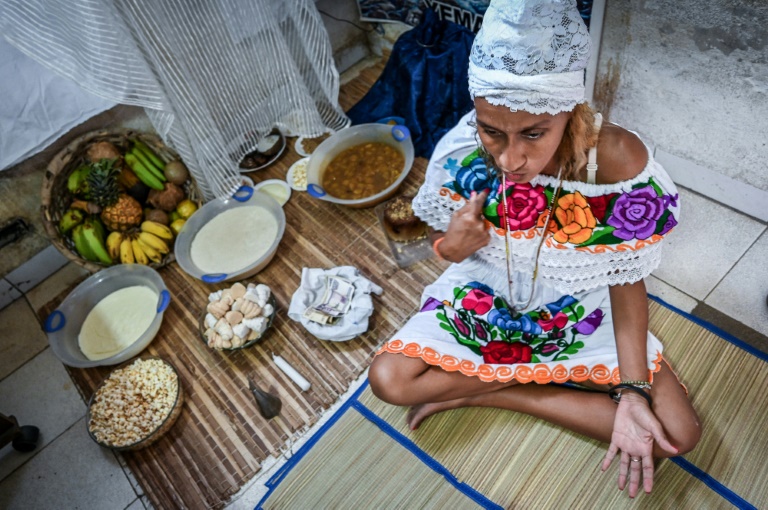
Now, “I am the one to kill the hen” for sacrifices, said Cuesta. “I know how to throw the shells” to read the future.

“I know how to do everything, perhaps better than a babalao,” she pronounced proudly.

– ‘Defend our rights’ –

Aimee Ibanez, a 43-year-old pharmacist and fellow priestess, says the role of iyanifas is also to “defend our rights as women.”

But their growing presence — and following — has not gone unchallenged.

In January 2021, Ibanez and two other priestesses caused an uproar by presiding over a ritual known as the “Letter of the Year,” a prophecy of what the new year holds.

Never before had it been done by a woman, let alone three.

“Many people were opposed” to women conducting the ritual, said Ibanez. “But many were also in favor.”

The Yoruba Association of Cuba, the state body representing Santeria, expressed its disgust.

In a statement distributed on social media, the exclusively male association accused the women of acting to “desecrate… our cultural heritage, our religion.”

At her house in central Havana that also serves as a temple, Aguila de Leon said that after her participation in the “Letter of the Year” ritual, critics from the Yoruba Association proclaimed the women would suffer death as “divine punishment.”

– ‘New trends’ –

Santeria was born from the heady mix of African religious rites and rituals found in the slave barracks of Cuba.

To be able to practice their religion outside of the barracks with their owners’ permission, the slaves linked their own deities to Catholic saints to create the hybrid belief system that still exists today.

In the 1990s, after the collapse of the Soviet Union, Cuba changed from an atheist to a secular state, and the ruling Communist Party started admitting believers into its ranks.

Today, the streets of Havana are replete with people wearing Santeria religious symbols in the form of necklaces or bracelets, with different colors representing different saints.

On the beaches, a stroller will often find offerings in the form of cigars, rum or bird sacrifices.

Politicians, intellectuals and artists frequently evoke the Santeria deities in public.

With the recent explosion of iyanifas in the public eye, the Yoruba Association has had to moderate its position.

“We have nothing against the new trends that have arrived in our country in recent years, but it is not in the Afro-Cuban traditions” of Santeria to have women priests, its new president Roberto Padron told AFP.

However, iyanifas already existed in Nigeria before the 16th century when the first African slaves arrived in the Americas, Santeria priest and scholar Victor Betancourt said.

And with the cruel treatment of the slaves in their new home, many of the original beliefs were altered, or lost altogether, with the role of women specifically distorted, he said.

Historically, an iyanifa can do anything a babalao does except ordain other priests, insisted Betancourt, the husband of iyanifa Aguila de Leon.

Close Bitnami banner
Bitnami