Africa Business

Springbok Rhule's 'special bond' with Leyds key to La Rochelle life

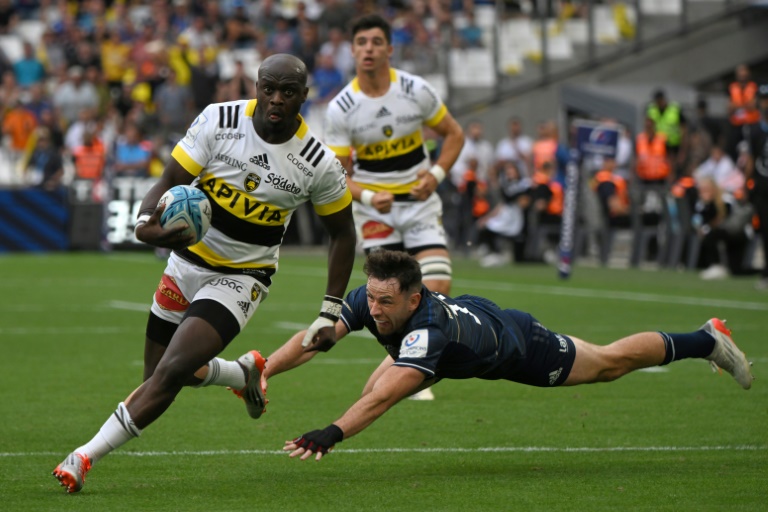
Raymond Rhule says having a “special bond” with fellow Springbok Dillyn Leyds has allowed the pair to blossom at La Rochelle, before Saturday’s French Top 14 trip to Bayonne.

The pair arrived at Stade Marcel Deflandre in the summer of 2020 before helping the outfit on the Atlantic coast to last season’s European Champions Cup.

Rhule, 29, is currently out injured with an ankle issue but 30-year-old Leyds has scored 27 points including 17 from the tee, his first from the boot since 2015, as La Rochelle sit second in the league table after six rounds.

“We’re close. We’ve played together since under-20s where we won the World Championship (in 2012),” Rhule told AFP this week.

“It’s always nice when you have someone you can relate to, and crack the same type of jokes.

“It’s a special bond which makes rugby go a whole lot easier when you guys see the same pictures, see the game the same way,” he added.

Rhule, who like Leyds can play centre, wing and full-back, made the last of his seven South Africa appearances in 2017’s record defeat to New Zealand and missed out on the Rugby World Cup success two years later.

“I’ve always wanted to have a comeback but those types of things are not up to me,” said Rhule.

“I left there (South Africa) on a sour note and I always want an opportunity to rectify that.

“If it doesn’t happen, it doesn’t happen. I’ve learnt to control what I can control and everything else is not up to me,” he added.

Rhule headed to France 12 months after his most recent cap and signed with second-tier Grenoble.

There he was clocked running 35km/h during a game by French broadcasters Canal+, as quick as Paris Saint-Germain’s France World Cup winner Kylian Mbappe.

“Pace is a part of my game but I reckon it’s not my whole game,” Rhule said.

“I always try to pride myself on being able to read my game and execute,” he added.

– ‘Slick’ Cassiem –

The Accra-born flyer, who speaks six languages, then moved across France from the Alps to the west coast to work under La Rochelle’s then head coach ex-Ireland fly-half Ronan O’Gara.

This weekend, O’Gara, who has since replaced Jono Gibbes as director of rugby, takes his side south to a sold-out Stade Jean-Dauger to face the Basques of Bayonne, who have Rhule’s former Cheetahs team-mate Uzair Cassiem in their back-row.

“He’s a great dude. His personality off the field is great as well. He’s quite energetic and gives a lot to the team,” Rhule said of eight-time Springbok Cassiem.

“He’ll bring a lot to Bayonne, we must not give him too much space to run, because he’s slick,” he added.

Elsewhere this weekend, Rhule’s fellow Bok Cheslin Kolbe is set to return for Toulon as they host Brive, three months after being sidelined with a fractured jaw.

Scrum-half Cobus Reinach, who won the 2019 World Cup alongside Kolbe, has returned to training with champions Montpellier after a serious shoulder injury before Saturday’s re-run of June’s Top 14 final with a trip to Castres.

Former Buffalo Bills training squad member Christian Wade could make his debut as Racing 92 welcome Pau after the ex-England winger joined the Parisians on a one-year deal.

Fixtures (times GMT)

Saturday

Castres v Montpellier (1300), Stade Francais v Perpignan, Toulon v Brive, Racing 92 v Pau, Bayonne v La Rochelle (all 1500), Toulouse v Clermont (1905)

Sunday

Lyon v Bordeaux-Begles (1905)
US tightens travel screening as worries about Ebola mount

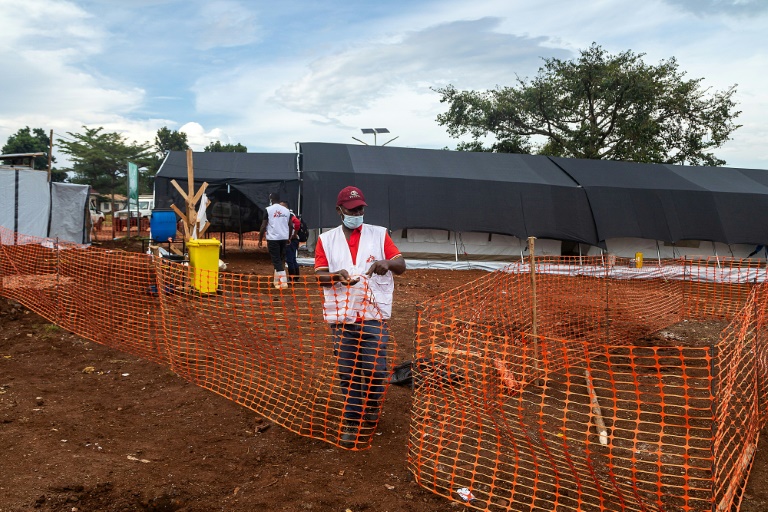
The United States announced tighter screening Thursday for people who traveled to Uganda due to an outbreak of Ebola in the African country.

Beginning Friday, the State Department said, any air travelers entering the United States who have been in Uganda in the 21 days before arrival will have to route through one of five designated airports for screening by the Centers for Disease Control and Prevention (CDC) and US Customs and Border Protection.

The airports are in New York, Newark, Atlanta, Chicago and Washington.

The move came after the CDC issued a warning over Ebola virus disease (EVD) since the Ugandan Health Ministry declared an outbreak in the Mubende district on September 20.

On Wednesday, the World Health Organization said there were 63 confirmed and probable Ebola cases in Uganda and 29 deaths.

The CDC said the outbreak appeared limited to five districts in central Uganda and had not reached the capital Kampala or key travel hub Entebbe.

As of Thursday, “no suspected, probable, or confirmed EVD cases related to this outbreak have been reported in the United States or other countries outside of Uganda,” the CDC said.

There are no direct flights from Uganda to the United States. But the CDC said it was essential to screen travelers who had been in Uganda to prevent the disease from spreading.

In 2014, the United States implemented rigid screening procedures after a severe outbreak of Ebola in Africa.

Eleven people were treated for the disease in the United States, and two of them died. Most of those infected were medical workers in West Africa.

Demonstrators rally in support of new Burkina Faso leader

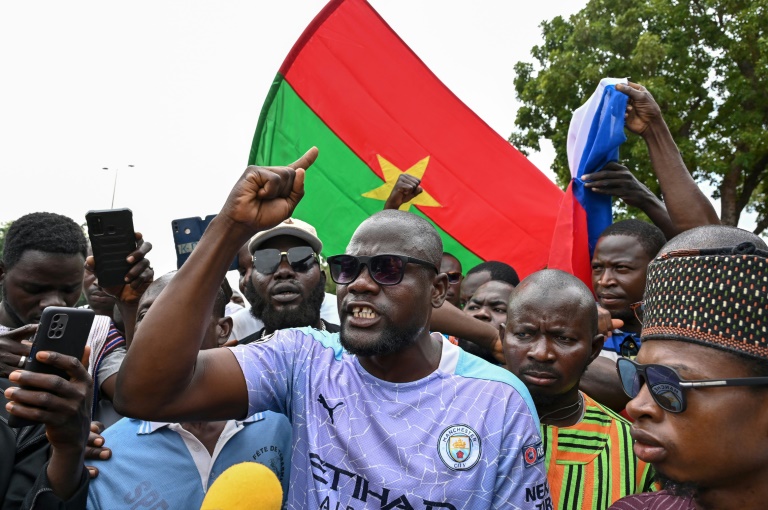
Demonstrators gathered in the capital of Burkina Faso on Thursday to show their support for the country’s new junta leader, as rumours swirled of internal divisions in the army. 

Ibrahim Traore was declared president on Wednesday after a two-day standoff that ousted Lieutenant-Colonel Paul-Henri Damiba, who had seized power only in January. 

Traore was at the head of a core of disgruntled junior officers — but there were rumours just a few days later of discussions among some other army generals over potentially replacing him.

A crowd of several hundred people, mostly young men, gathered in front of the national radio and television centre in the city.

“We have learned that the generals are in consultation to appoint one of them in place of Captain Traore. It will not do! Not today, not tomorrow,” said one of those rallying, trader Amadou Congo.

Rumours circulating in Ouagadougou claimed there was a division between the junior officers represented by Traore and the high-ranking officers who moved in the same circles as Damiba.

After an hour of protesting a soldier sought to calm the crowd, and the new government denied rumours of a split.

“Information which has been circulating since this morning on social networks about generals meeting… is unfounded” according to a statement released by the communication ministry.

Calm has generally returned to the streets of Ouagadougou since last Friday’s coup and turbulent weekend that followed.

Traore graduated as an officer from Burkina Faso’s Georges Namonao Military School — a second-tier institution compared to the prestigious Kadiogo Military Academy of which Damiba and others in the elite are alumni.

Some of the protesters were waving Burkina or Russian flags — with speculation rife that Burkina’s new leader may follow other fragile regimes in French-speaking Africa and forge close ties with Moscow at the expense of France.

Diamond millionaire hopes to rock Lesotho vote

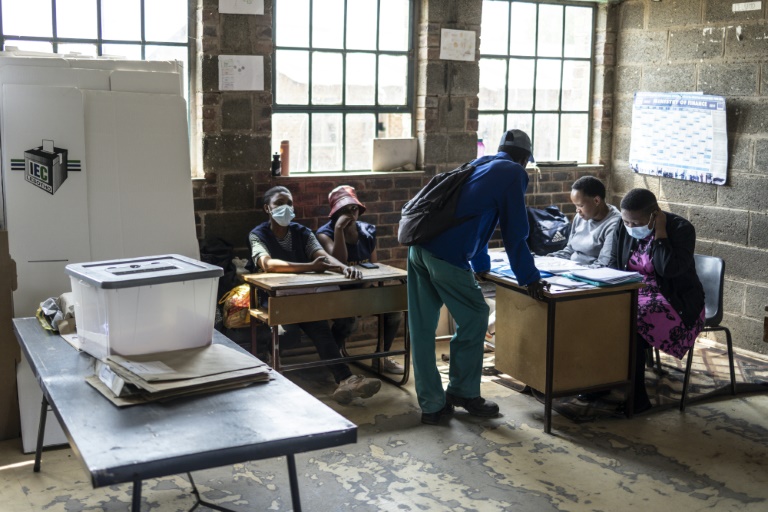
Sitting at the desk of a grand office in Lesotho’s capital of Maseru, Sam Matekane doesn’t attempt to hide his ambition.  

The millionaire political novice — whose business empire spans from donkeys to diamonds — says he aims to secure an “outright win” in the country’s parliamentary elections on Friday.  

That’s no easy feat.

The small southern African kingdom has been ruled by fractious and frail coalition governments for the past decade, with no party able to secure a majority and no premier serving out a full five-year term. 

Analysts expect the vote to usher in yet another coalition, unlikely to tackle poverty and instability in the mountainous country of about two million people.  

But some concede Matekane, who styles himself as a champion of the country’s business elite, could be a dark horse in the race.  

“I want to go alone,” the 64-year-old says about his plan to do away with political alliances during an interview shortly before the vote. 

“Our country is sinking. So, we have to try and save (it) as business people,” he tells AFP. 

Lesotho, which is completely surrounded by South Africa, ranks among the world’s poorest countries, with more than 30 percent of its population living on less than $1.90 a day.

A constitutional monarchy where the king has no formal power, it has long been beset by political turmoil that has hampered development.

Coups and attempted coups dot its history since independence from Britain in 1966.

Matekane says he hopes to turn things around, bringing his business skills to the government to relaunch the economy and tackle public debt and unemployment. 

“All these governments that came, we were assisting them with the hope that things will change but things never changed and got worse,” he told AFP.

“That’s when we realised we need to take over”.

But so far he has given little in the way of detailed plans.

– Rags to riches –

The seventh of fourteen children born to a family of poor farmers in the central town of Mantsonyane, Matekane is a rags-to-riches tale. 

He started off raising donkeys at the age of 22, and is now thought to be Lesotho’s wealthiest man. 

Through the years he added a myriad of business ventures to his portfolio, from diamond mining to farming and medicinal cannabis — the cultivation of which Lesotho allowed in 2017, becoming the first African country to do so. 

His success is simply down to “working hard”, he says.

A philanthropist, he has become a popular figure in the kingdom, building schools, a stadium and even a theatre. 

He funds scholarships, sponsors the national football federation and has helped with the purchase of vaccines during the coronavirus pandemic. 

He does not want to state his worth, but his affluence is on display at his office on the 6th floor of a building in the centre of Maseru, a sleepy city of 350,000 people. 

White armchairs and golden door handles adorn the premises, while a helipad occupies part of the lawn. 

Influential figures, including international election observers and the former president of the constitutional court, come and go from the building. 

The outgoing parliament failed to pass a law on electoral reform aimed at ending political volatility — which would have prohibited lawmakers from switching party allegiance within the first three years of their tenure.

A fan of motorcycle racing, Matekane likes to move fast. 

He launched his party “Revolution for Prosperity” only six months ago, and quickly recruited former ministers, a number of business figures and an ex-Central Bank governor.

In his efforts to maximise his time, Matekane often flies to meet his constituents, explains his chauffeur. 

The transport can save precious minutes, the man says: “A two hours’ drive, but only 30 minutes by helicopter”.

At 34, Burkina's new junta chief is world's youngest leader

Just a week ago, 34-year-old Ibrahim Traore was an unknown, even in his native Burkina Faso. 

But in the space of a weekend, he catapulted himself from army captain to the world’s youngest leader — an ascent that has stoked hopes but also fears for a poor and chronically troubled country.

Traore, at the head of a core of disgruntled junior officers, ousted Lieutenant-Colonel Paul-Henri Sandaogo Damiba, who had seized power just in January.

The motive for the latest coup — as in January — was anger at failures to stem a seven-year jihadist insurgency that has claimed thousands of lives and driven nearly two million people from their homes.

On Wednesday, Traore was declared president and “guarantor of national independence, territorial integrity… and continuity of the State.”

At that lofty moment, Traore became the world’s youngest leader, wresting the title from Chilean President Gabriel Boric, a whole two years older.

Traore’s previously unknown face is now plastered on portraits around the capital Ouagadougou.

His photo is even on sale in the main market, alongside portraits of Burkina’s revered assassinated radical leader, Thomas Sankara, and of Jesus.

– Military career –

Traore was born in Bondokuy, in western Burkina Faso, and studied geology in Ouagadougou before joining the army in 2010.

He graduated as an officer from the Georges Namonao Military School — a second-tier institution compared to the prestigious Kadiogo Military Academy (PMK) of which Damiba and others in the elite are alumni.

Traore emerged second in his class, a contemporary told AFP, describing him as “disciplined and brave.”

After graduation, he gained years of experience in the fight against the jihadists.

He served in the badly-hit north and centre of the country before heading to a posting in neighbouring Mali in 2018 in the UN’s MINUSMA peacekeeping mission. 

He was appointed captain in 2020.

A former superior officer, speaking on condition of anonymity, recounted an incident that occurred in 2020 when the town of Barsalogho in central Burkina was on the verge of falling to the jihadists.

The highway into Barsalogho was believed to have been mined, so Traore led his men on a “commando trek” across the countryside, arriving in time to free the town, he said.

When Damiba took power in January, ousting elected president Roch Marc Christian Kabore, Traore became a member of the Patriotic Movement for Preservation and Restoration (MPSR), as the junta chose to call itself.

– Discontent –

In March, Damiba promoted Traore to head of artillery in the Kaya regiment in the centre of the country.

But it was a move that ironically would sow the seeds of Damiba’s own downfall.

The regiment became a cradle of discontent, and Traore, tasked by his colleagues with channelling their frustrations, made several trips to Ouagadougou to plead their case with Damiba.

Disillusionment at the response turned into anger, which appears to have crystallised into resolve to seize power after an attack on a convoy in northern Burkina last month that left 27 soldiers and 10 civilians dead.

“Captain Traore symbolises the exasperation of junior officers and the rank and file,” said security consultant Mahamoudou Savadogo.

The new president faces a daunting task in regaining the upper hand over jihadist groups, some affiliated with Al-Qaeda and others with the Islamic State. They have steadily gained ground since they launched their attacks from Mali in 2015.

Yet Traore has promised to do “within three months” what “should have been done in the past eight months,” making a direct criticism of his predecessor.

Savadogo warned that one soldier overthrowing another illustrates “the deteriorating state of the army, which hardly exists any more and which has just torn itself apart with this umpteenth coup d’etat”.

Traore’s takeover comes during a struggle for influence between France and Russia in French-speaking Africa, where former French colonies are increasingly turning to Moscow.

Demonstrators who rallied for him in Ouagadougou during last weekend’s standoff with Damiba waved Russian flags and chanted anti-France slogans.

Traore seems — for now — to bring hope to many in a country sinking steadily in the quagmire.

On Monday, L’Observateur Paalga newspaper, went with a decidedly biblical headline: “Ibrahim, the intimate friend of God, will he be able to save us?”

Kenya lobby groups protest lifting of ban on GM crops

Activists and agriculture lobby groups on Thursday urged Kenya’s government to reverse its decision to lift a long-standing ban on genetically modified crops as the country struggles with a crippling drought.

The government of newly elected President William Ruto on Monday allowed the open cultivation and import of GM crops, saying it was in response to the drought — the worst to hit the country in 40 years. 

But activists protested the move, raising concerns over the safety of GM foods in a joint statement signed by nearly a dozen groups, including Greenpeace Africa.

“Food security is not just (about) the amount of food but the quality and safety of food,” the statement said.

“Our cultural and indigenous food have proved to be safer, with diverse nutrients and with less harmful chemical inputs.”

Kenya, like many other African nations, banned GM crops over health and safety concerns and to protect smallholder farms, who account for the vast majority of rural agricultural producers in the country.

However, the East African powerhouse had faced criticism over the ban including from the United States which is a major producer of GM crops.

On Monday, a statement issued by Ruto’s office said the decision was “a progressive step towards significantly redefining agriculture in Kenya by adopting crops that are resistant to pests and disease.” 

It said the cabinet had considered expert views and technical reports, including by Kenya’s National Biosafety Authority, the World Health Organization and Food and Agriculture Organization, before arriving at a decision.

– ‘Curtails freedom’ –

But the activists said the move was made without public participation and that it “essentially curtails the freedom of Kenyans to choose what they want to eat, or not.”

“We demand that the ban be immediately reinstated and an inclusive participatory process be instituted to look into long-term and sustainable solutions to issues affecting food security,” they said.

They added that the lifting of the ban opened the market to US farmers using sophisticated technologies and highly subsidised farming that risked putting small-scale farmers in Kenya out of business. 

Agriculture is the backbone of Kenya’s economy, contributing over 20 percent to GDP.

Ruto, a former chicken seller turned millionaire businessman, was elected to the top job in August on a promise to turn around Kenya’s stuttering economy and tackle inflation.

Within weeks of taking office in September, he halved the price of fertilisers to improve crop yields in the midst of the drought that has affected 23 of 47 counties. 

Four consecutive rainy seasons have failed in Kenya, Somalia and Ethiopia, an unprecedented climatic event that has pushed millions across the Horn of Africa into extreme hunger.

'Gold dust': Liberians queue for rice

In the Clara Town suburb of Liberia’s capital Monrovia, Aminata Kanneh stands sweating under the hot midday sun, queueing in a 100-metre-long line to buy rice.

“Today makes it two weeks that I have been coming every day, but until now I have not got a grain of rice,” the 34-year-old told AFP.

Liberians around the country have for weeks been queuing outside wholesalers to get their hands on the national staple food after rumours of a coming rice shortage began circling about six months ago.

Supply-chain disruptions and Russia’s war in Ukraine have caused food shortages and high prices across much of the world. 

But Liberia, a West African nation of five million people, has been hit particularly hard, with the government and UN blaming a delay in shipments.

Rice prices have steadily risen to about $25 per 25-kilogram bag, from the official rate of $13, over the past six months.

“I can’t sell a bag for even $20 right now because rice has become gold dust”, said Angeline Sandy, a 27-year-old retailer.

“I bought a bag for $23 — I am selling it for $30.”

Some 1.3 million people — more than a fifth of the population — live on less than $2.15 per day, according to the World Bank.

One wholesaler who asked not to be named blamed the price hikes on the war in Ukraine, citing heightened freight costs.

“In neighbouring countries, rice is sold for more than $20 (while) we are asking for only $15 per bag”, he said. 

“We are selling at a loss — we can’t continue.”

Djaounsede Madjiangar, a spokesman for the UN World Food Programme in West Africa, said the rice shortage was due to “delays in the incoming consignment”.

“On the price of rice, it is definitely impacted by the crisis in Ukraine”, he said, adding that about 70 percent of Liberia’s staple food, including rice, is imported. 

“As for many other countries in West Africa, the increase in domestic food prices reflects international food price trends, largely driven by the global energy crisis resulting from the Russia and Ukraine crisis”, he said.

– ‘Remain calm’ –

This week the commerce ministry called on Liberians to “remain calm” and refrain from panic-buying, adding that more supplies were on the way.

It also urged retailers not to hoard the commodity.

“We want to assure the public that the current stock of rice in the country can serve the market up to the arrival of the next vessel which is expected in the coming days”, the Tuesday statement said.

It said the government has been subsidising importers to maintain a price cap on the staple product, and attributed “delays in incoming consignments” to a National Port Authority order in August to block vessels deemed defective from docking in the country.

One wholesaler told AFP that Liberia needs at least 50,000 metric tonnes of rice per month to satisfy demand. 

The commerce ministry said that some 150,000 metric tonnes would arrive between mid-October and early November, which would supply the market until early next year. 

Another 22,000 metric tons were expected “in the coming days”, the statement said.

Liberia also faced fuel shortages earlier this year with prices spiking and motorists forced to wait in long queues outside gas stations.

One of the poorest countries in the world, Liberia is still recovering after back-to-back civil wars from 1989 to 2003 and West Africa’s 2014-16 Ebola crisis. The country also suffers from high inflation and regular cash shortages.

It ranks 178th out of 191 countries on the UN’s Human Development Index.

A presidential election is slated for October 2023.

Nearly 200 dead in Niger floods

Flooding caused by heavy rains in the West African state of Niger has claimed nearly 200 lives and affected more than a quarter of a million people, the Civil Protection Service said on Thursday, describing the toll as one of the highest on record.

Rainy-season floods claimed 192 lives, affected more than 263,000 people and destroyed more than 30,000 homes, as well as classrooms, medical centres and grain stores, it said.

The worst-affected regions are Maradi and Zinder in the centre of the country, Dosso in the southwest and Tahoua in the west.

The rainy season in Niger, located in the heart of the arid Sahel, typically runs from June to September and routinely claims lives.

In 2021, 70 people were killed and 200,000 people were affected. The death toll in 2020 was 73.

Katiellou Gaptia Lawan, head of the national meteorological agency, said this year’s heavy rains were consistent with models of impacts from climate change.

Niger is the world’s poorest country, according to the benchmark of the 2020 Human Development Index devised by the United Nations Development Programme (UNDP).  

Over 4.4 million people — more than a fifth of the population — fall into the category of “severe” food insecurity, the International Red Cross and Red Crescent said in July.

In Senegal, ancient male rite collides with modern times

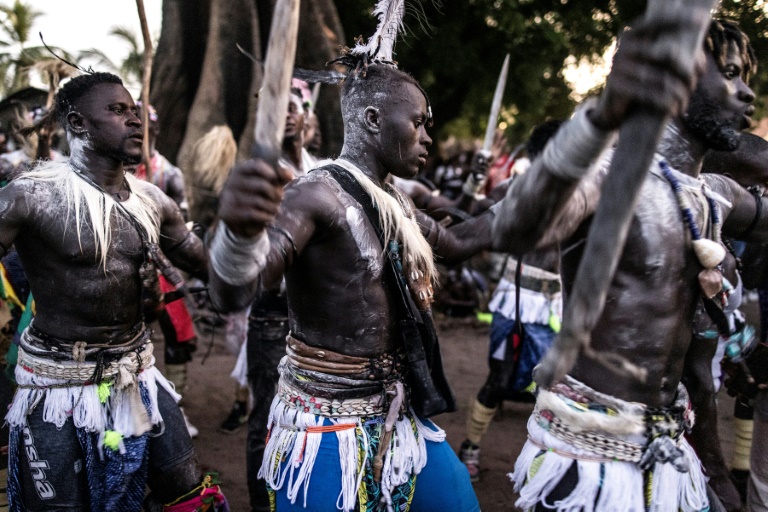
The dancers are a blaze of colour, swirling amid a deafening, pounding noise.

In their midst, a young man stands up.

Wearing a beaded necklace and clad in a tight red shirt with multi-coloured scarves hanging from his waist, with his arms outstretched, he makes a long cry to the heavens.

This is an important moment for Cedric Djikila Diatta, 21, on his path towards the coveted status of manhood.

According to the traditions of the Diola people in Senegal’s southern region of Casamance, he has entered the period of “Youth” — the intermediate chapter between adolescence and adulthood.

To prepare for the next step, a phase that may take half a dozen years, he and other young men of the same age have spent the past month together.

They have been working in the rice fields and listening to the elders recount secret rites of passage and inculcate the values of hospitality and discipline.

“Once you have been initiated, you change status,” said Cedric. 

“You are free to travel, get married, take decisions that affect the entire community.”

– Combat –

Central to the transition to adulthood is the notion of warriorhood — “Life is a fight,” said Cedric. “You always have to fight.”

And this where the dance comes in: it is designed to strengthen them spiritually for combat, which in the Diola culture is conveyed through wrestling, Senegal’s national sport.

As tomtoms and the bombolong, a traditional elongated drum, echo around the village of Kabrousse, the young initiates leap from side to side, their metal armbands rubbing against each other.

Some are bare-chested, others are wearing tunics, feathers or magic charms called grigris — those men who are due to marry in the coming year are dressed as women.

The dancers swirl around, some brandishing swords or staves, and even fake snakes.

Evening starts to fall and a gentle light, filtered by the emerald fronds of two giant kapok trees, bathes the dancers.

Young women arrive, gathering around the young men, swinging their hips, their makeup and hair perfect, crooning their support for their champions and rubbing powder on the sculpted male bodies.

Children are there, and the elderly too. The mothers look adoringly at their sons on the brink of manhood — “he’s so handsome!” cries Cedric’s mother, Angele Antessey Diatta, a proud smile illuminating her face.

– Threatened tradition –

The party marking the end of these important rites coincides with the end of the rainy season each year in late September.

Lower Casamance is part of Senegal’s southernmost region, and almost separated from the rest of the country by the tiny state of Gambia.

The rituals, teaching and secrets conveyed from generation to generation vary from village to village, said Abdou Ndukur Kacc Ndao, an anthropologist.

“But these practices are under threat today,” he said. 

“In a hundred, two hundred years, it may well be that they no longer exist.”

Pressures on animist-rooted traditions range from the growing place of Islam in Senegal, greater mixing among ethnic groups, and migration towards other regions within the country or abroad.

Those who return bring back different perspectives, fashions and tastes.

Cedric praised the ancient traditions, but he also had his eye on distant horizons.

He showed off his small house, which had no furniture, toilet or running water or even a floor.

He stopped school at the age of 12 to help his parents in the field. His father fell ill and two of his brothers also died of sickness, lacking treatment.

He trained as a cook, working in one of the hotels in Casamance’s Cap Skirring tourist resort, leaving for work at 4:30 am and returning in the afternoon to work in the rice fields.

He said he earned 80,000 CFA (around $120) a month.

His dream was to get a job at the Club Med, an upmarket French vacation village at Cap Skirring.

“When you get hired there, you make contacts enabling you to head off and live elsewhere,” he said.

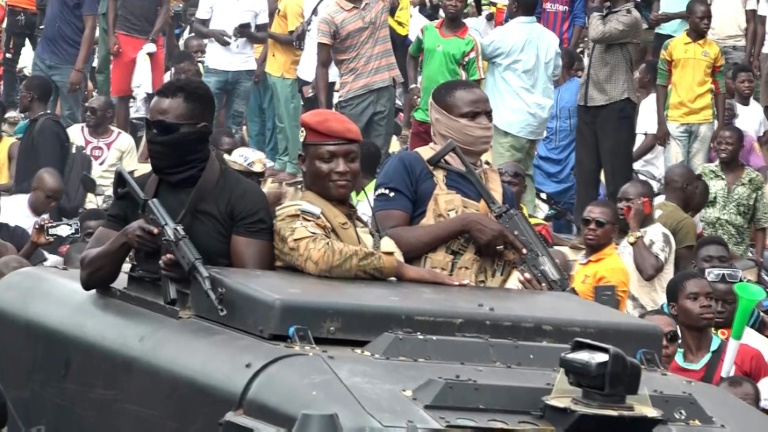
Traore officially named Burkina Faso president after coup

Captain Ibrahim Traore was appointed as president of Burkina Faso on Wednesday, according to an official statement, after the West African country’s second coup in less than nine months.

The impoverished Sahel nation plunged into renewed turmoil at the weekend when Lieutenant-Colonel Paul-Henri Sandaogo Damiba — who had seized power in January — was toppled by newly emerged rival Traore, leading a faction of disgruntled junior officers.

It was the latest putsch in the Sahel region much of which, like Burkina Faso, is battling a growing Islamist insurgency.

Traore has been appointed as “Head of State, Supreme Head of the Armed Forces”, according to the official statement read out on national television by spokesman for the ruling junta Captain Kiswendsida Farouk Azaria Sorgho.

The statement said that Traore would now be the “guarantor of national independence, territorial integrity… and continuity of the State.”

Damiba fled to Togo following the two-day standoff, which was defused by religious and community leaders.

Burkina is struggling with a seven-year-old jihadist campaign that has claimed thousands of lives, forced nearly two million people to flee their homes and left more than a third of the country outside government control.

Swelling anger within the armed forces prompted Damiba’s coup against the elected president in January.

Appointing himself transitional head of state, Damiba had vowed to make security the country’s top priority — but after a brief lull the attacks revived, claiming hundreds of lives.

– Tensions –

Delegates from the Economic Community of West African States (ECOWAS) wrapped up a fact-finding mission Tuesday and held meetings with religious and traditional leaders and Traore.

Traore said the ECOWAS visit was to “make contact with the new transition authorities” as part of the support that Burkina Faso derived from the region.

Speculation has risen that Burkina’s new leader may follow other fragile regimes in French-speaking Africa and forge close ties with Moscow at the expense of France, the region’s former colonial power and traditional ally.

The dramatic takeover coincided with violent anti-French protests and the sudden emergence of Russian flags among demonstrators.

On the streets, demonstrators’ slogans included “France get out”, “No to ECOWAS interference”, and “Long live Russia-Burkina cooperation”.

The United States has warned the junta of the risks of allying with Russia, saying they condemned “any attempt to exacerbate the current situation in Burkina Faso”.

“We strongly encourage the new transitional government to adhere to the agreed-upon timeline for a return to a democratically elected, civilian-led government,” a State Department spokesman said earlier this week.

Traore has previously said he would stand by a pledge that Damiba gave ECOWAS for restoring civilian rule by July 2024.

Close Bitnami banner
Bitnami