Africa Business

Burundi president replaces PM after coup plot claim

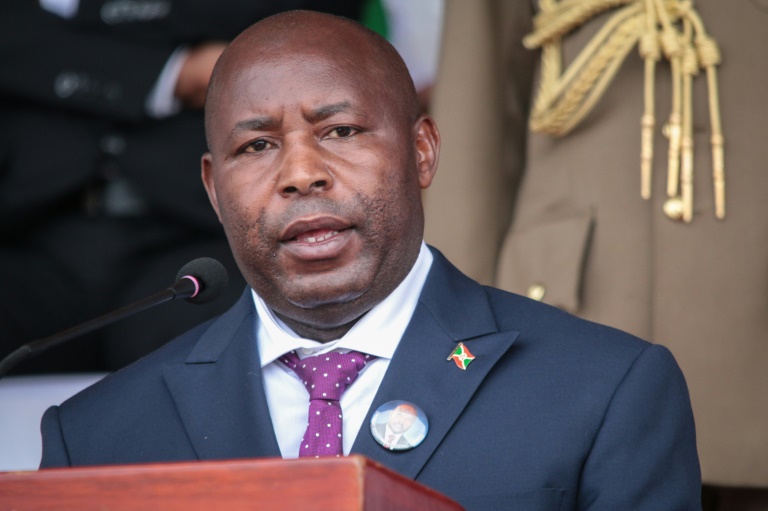
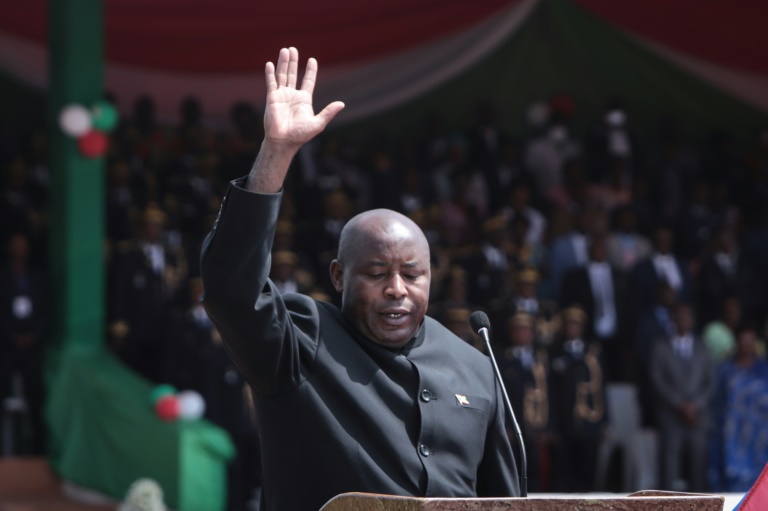
Burundi’s President Evariste Ndayishimiye replaced his prime minister and a top aide in a high-level political purge Wednesday after warning of a “coup” plot against him.

Security minister Gervais Ndirakobuca was sworn in before parliament as new premier, capping a day of high drama in the troubled central African nation.

He succeeds Alain-Guillaume Bunyoni, who was sacked along with Ndayishimiye’s civilian chief of staff General Gabriel Nizigama in the first major reshuffle at the top since the president took office a little over two years ago.

Lawmakers had approved the appointment of Ndirakobuca — a former chief of Burundi’s feared intelligence agency — in a unanimous 113-0 vote at a hastily called parliamentary session earlier Wednesday.

Ndayishimiye, a 54-year-old former army general, gave no reasons for Bunyoni’s dismissal, but last week he had warned of a coup plot against his regime.

“Do you think an army general can be threatened by saying they will make a coup? Who is that person? Whoever it is should come and, in the name of God, I will defeat him,” Ndayishimiye said at a meeting of government officials on Friday in the political capital Gitega.

The fate of Bunyoni, a former police chief and security minister who has long been a senior figure in the ruling CNDD-FDD party, was not immediately known.

Ndirakobuca, a 52-year-old father of eight, is among a number of Burundian officials accused of stoking violence against government opponents in a wave of deadly unrest in 2015 and remains under EU sanctions.

Ndayishimiye’s new chief of staff — a post sometimes described as a “super prime minister” — is Colonel Aloys Sindayihebura, who was in charge of the domestic branch of the National Intelligence Service.

Lawmakers had been called to attend the National Assembly session on Wednesday via urgent messages sent overnight on WhatsApp.

– 2015 crackdown –

Analysts say a cabal of military leaders known as “the generals” wield the true political power in Burundi and the president himself had alluded to his isolation in a 2021 speech.

Ndayishimiye took power in June 2020 after his predecessor Pierre Nkurunziza died of what the Burundian authorities said was heart failure although there was widespread speculation he had succumbed to Covid.

He has been hailed by the international community for slowly ending years of Burundi’s isolationism under Nkurunziza’s chaotic and bloody rule.

But he has failed to improve its wretched record on human rights and the African Great Lakes nation of 12 million people remains one of the poorest on the planet. 

Nkurunziza had launched the brutal 2015 crackdown on political opponents that left 1,200 people dead and made Burundi a global pariah.

The turmoil erupted after he had launched a bid for a third term in office, a move the opposition said was unconstitutional and violated a peace deal that ended the country’s bloody civil war in 2006.

The United States and the European Union had imposed sanctions over the unrest that also drove 400,000 people to flee the country, with reports of arbitrary arrests, torture, killings and enforced disappearances.

– Economic woes –

Burundi has been in the grip of an economic malaise since the 2015 unrest, with a lack of foreign exchange and shortages of basic goods such as fuel, certain foodstuffs, building materials and medicines.

In February, both Brussels and Washington resumed aid flows to the landlocked nation after easing the 2015 sanctions, citing political progress under Ndayishimiye.

Civil society groups have returned, the BBC is allowed to broadcast again and the European Union — Burundi’s largest foreign donor — has commended efforts to fight corruption.

But concerns over rights abuses remain. 

Human Rights Watch in May described politically motivated murders and kidnappings by police and state-backed youth groups, while a UN inquiry last year characterised the situation as “disastrous”.

Since independence from Belgium in 1962, Burundi’s history has been littered with presidential assassinations, coups and ethnic massacres.

It was gripped by a brutal civil war from 1993 to 2006 between majority Hutus and minority Tutsis that left some 300,000 people dead, mainly civilians.
South Africa's Elgar ready for 'World Cup final' against England

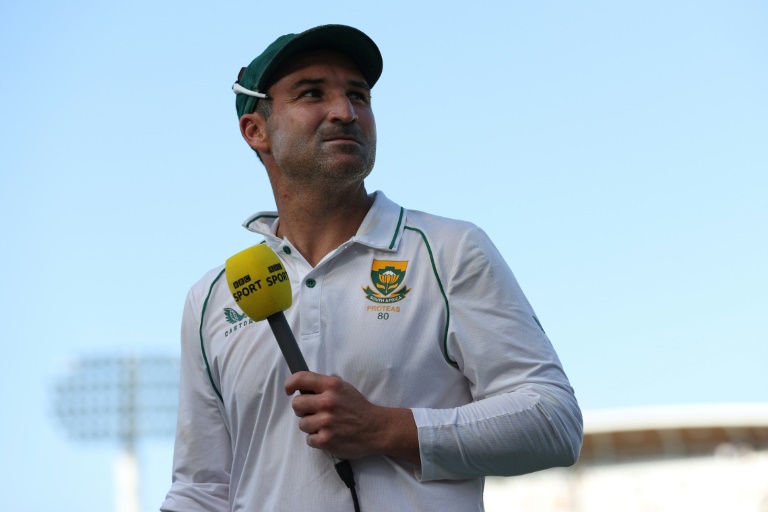
South Africa captain Dean Elgar is treating the Test series decider against England at the Oval “like a World Cup final” as the Proteas seek to recover from a heavy defeat.

The tourists won the first Test at Lord’s by an innings and 12 runs, only for England to level the three-match campaign with an even more emphatic innings-and-85-run success at Old Trafford last month.

But Elgar is confident the well-rested Proteas can secure a win that would take them back to the top of the World Test Championship table.

“It’s pretty much like a World Cup final for us, that’s the way I’m viewing it,” Elgar said on the eve of the match on Wednesday.

South Africa have not lost a Test series since Elgar took over the captaincy last year and the 35-year-old opener knows what is at stake.

“It’s the biggest Test so far in my captaincy,” he said.

“The players know that, they sense that. You have to empty the tank. You can’t leave anything behind. It’s huge for us, massive. 

“I’ve never experienced a Test series win against England, and that’s after playing for 10 years.

He added: “We know if we manage to win this game we’re back at number one. It’s pretty much like a World Cup final for us, that’s the way I’m viewing it.”

– ‘Walk the walk’ –

Elgar confirmed Ryan Rickelton, who was in good form for English county side Northamptonshire earlier this season, would replace Rassie van der Dussen after the batsman was ruled out with a broken finger.

While declining to name his side, he also said other changes were possible, with Khaya Zondo in line to replace struggling batsman Aiden Markram and left-arm quick Marco Jansen bidding for a recall at the expense of off-spinner Simon Harmer.

Top-order runs have been a longstanding issue for South Africa — the Proteas have posted just one fifty in the series, Sarel Erwee’s 73 at Lord’s.

“I know how much top-order runs mean for a team to set up a successful chance of victory,” said Elgar, who has scored 13 hundreds in his 78 Tests.  

“It’s been a frustration, but it’s something we’ve worked on hard. We’ve spoken at length about this topic, and now it’s time to walk the walk.”

South Africa have used some of their downtime to take a break from cricket by playing golf at the Belfry course in central England, with go-kart racing also proving a popular way for the tourists to relax and get the Old Trafford loss out of their system.

“We’ve only had six days of Test cricket (this tour),” said Elgar. “With regards to freshness, we’ve got no excuse. With regards to hunger, we’ve got no excuse.

“We had a few good days out of the noise and the hustle and bustle to remind ourselves why we’re here -— we’re here to win a Test series.”

Scientists fight to protect DR Congo rainforest as threats increase

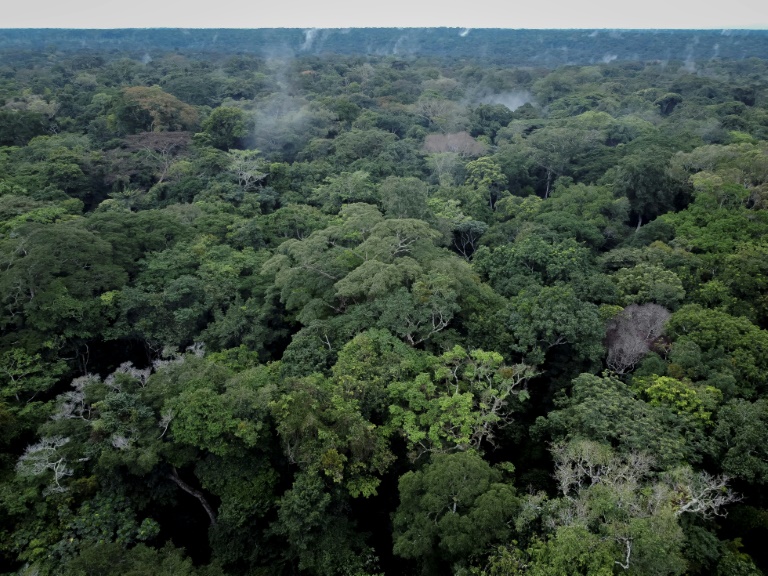
A tower bristling with sensors juts above the canopy in northern Democratic Republic of Congo, measuring carbon dioxide emitted from the world’s second-largest tropical rainforest. 

Spanning several countries in central Africa, the Congo Basin rainforest covers an immense area and is home to a dizzying array of species. 

But there are growing concerns for the future of the forest, deemed critical for sequestering CO2, as loggers and farmers push ever deeper inside.

Scientists at the Yangambi Biosphere Reserve in the DRC’s Tshopo province are studying the rainforest’s role in climate change — a subject that received scant attention until recently.

Standing 55 metres tall, the CO2-measuring flux tower came online in 2020 in the lush reserve of 250,000 hectares (620,000 acres).

Yangambi was renowned for tropical agronomy research during the Belgian colonial era. 

This week, it also hosted scientists as part of meetings in the DRC dubbed pre-COP 27, ahead of the COP27 climate summit in Egypt in November.

Thomas Sibret, who runs the CongoFlux CO2 measuring project, said that flux towers are common worldwide.

But until one was set up in Yangambi, there had been none in Congo, which had “limited our understanding of this ecosystem”, he said.

Around 30 billion tonnes of carbon are stored across the Congo Basin, researchers estimated in a study in Nature in 2016. The figure is roughly equivalent to three years’ of global emissions.

Sibret said more time is required to draw definitive conclusions from the data gathered by DRC’s flux tower, but one thing is certain: The rainforest sequesters more greenhouse gases than it emits.

– ‘No more trees’ –

Paolo Cerutti, the head of the Center for International Forestry Research’s operations in Congo, said this was good news.

In Latin America, “we’re starting to see evidence that the Amazon (rainforest) is becoming more of an emitter,” he said.

“We’re betting a lot on the Congo Basin, especially the DRC, which has 160 million hectares of forest still capable of absorbing carbon.”

But Cerutti warned that slash-and-burn agriculture poses a particular threat to the future of the rainforest, pointing out that half a million hectares of forest were lost last year.

Slash-and-burn agriculture sees villagers cultivate lands until they become depleted, then clear forests to create new lands, and repeat the cycle. 

With the DRC’s population of about 100 million people set to expand, many worry the forest is in dire threat. 

Jean-Pierre Botomoito, the head of the Yanonge area about 40 kilometres (24 miles) from Yangambi, said that he once thought the forest was inexhaustible.

But “here, there are no trees,” he said.

Villagers in his once-forested region now have to travel long distances along narrow muddy paths to find tree-dwelling caterpillars — a local delicacy. 

Charcoal used for cooking in the absence of electricity and gas is similarly hard to obtain.

There are efforts to help farmers in the remote and impoverished region to make a living while sustaining the environment.

A largely EU-financed project, for example, trains farmers to rotate cassava and groundnut crops between fast-growing acacia trees. 

Farmers can harvest the acacia trees to make charcoal after six years.

Experts also encourage the use of more efficient kilns to produce more charcoal and teach loggers how to select which trees to fell.

– Vandalism –

Jean Amis, the head of a local farmers’ organisation, was enthusiastic about the project.

“We didn’t necessarily have the right practices” before, he said.

Others are too.

Helene Fatouma, the president of a women’s association, says fishponds on the edge of the forest now yield 1,450 kilos of fish in six months, as opposed to 30 previously.

But not all residents of the surrounding area support the various schemes.

Some people believe that the flux tower is stealing oxygen, for example, or that it is a prelude to land appropriation.

Researchers often find dendrometers — devices that measure tree dimensions — vandalised, and some traditional chiefs think the forest will grow back by itself without outside interference. 

The Indonesia-based Center for International Forestry Research says that resistance to the schemes can be overcome through raising awareness. 

Dieu Merci Assumani, the director of the DRC’s National Institute for Agricultural Research, agreed.

But he said there needs to be more financing for locals, who have seen little benefit from promised funds to protect the rainforest.

Assumani pointed as an example to the $500-million deal to protect the Congo Basin rainforest, signed by President Felix Tshisekedi and then British prime minister Boris Johnson in Glasgow last year.

“Commitments are all very well, but they need to be disbursed,” he said. 

Evariste Ndayishimiye: Burundi president walking a tightrope

Burundi’s President Evariste Ndayishimiye has faced a tricky balancing act to bring change to the troubled nation while accommodating the elites who helped put him in power, even as activists warn that his government’s human rights record remains dire.

But he has been praised for ending the country’s global pariah status, prompting the United States and the European Union to lift sanctions.

Since he took power in June 2020, the former army general has taken some high-profile steps to distinguish his regime from that of his predecessor Pierre Nkurunziza, whose brutal crackdown on political opponents in 2015 left 1,200 people dead.

But his talk of a “coup” plot against him, followed by a purge of top officials, including former prime minister Alain Guillaume Bunyoni, was a reminder of his authoritarian roots.

Handpicked by the ruling CNDD-FDD party to run in the 2020 elections, Ndayishimiye, 54, was expected to remain under the wing of Nkurunziza, who was known as Burundi’s “eternal supreme guide” until his sudden death in June 2020.

At first, there was little sign that Ndayishimiye would depart from his predecessor’s policies.

His maiden speech as president featured a long homage to Nkurunziza as he vowed to follow in his footsteps, lambasting the international community for interfering in Burundi. 

But he soon began to chart a different course.

He declared the coronavirus pandemic “the greatest enemy of Burundians”, sharply breaking with Nkurunziza who denied the gravity of Covid-19.

Whereas Nkurunziza had closed off the country — feuding with neighbours, expelling diplomats, and blacklisting UN investigators — Ndayishimiye ventured abroad, slowly putting Burundi back on the map.

Earlier this year, the United States and the European Union resumed aid flows to the impoverished landlocked nation of 12 million, despite warnings from rights campaigners.

“We see Ndayishimiye moving things slowly, step by step,” said Julien Nimubona, professor of political science at the University of Burundi.

“He would like to go further, but faces stiff resistance.”

– ‘The generals’ –

According to analysts, the real levers of power in Burundi are operated by a cabal of military leaders, known as “the generals”, which was forged underground when the CNDD-FDD was a Hutu rebel movement.

Its members outnumber Ndayishimiye, who has few known allies, observers say.

The president himself alluded to his isolation during a speech in 2021.

“There are those who tell me I will die of exhaustion trying to flush out wrongdoing from top to bottom,” he said.

But, he added, “how do you expect me to do that when I haven’t found anyone to help among my staff?”

Described by those who know him as more open-minded than many in the CNDD-FDD, Ndayishimiye, widely known by his nickname “Neva”, is not associated with the worst abuses carried out by his predecessor’s regime.

But neither did he stand out for trying to rein in the violence that erupted after the 2015 election, when Nkurunziza won a third term seen by many as unconstitutional.

The killings sparked an exodus and a UN commission accused the government of gross abuses including summary executions, rape and torture.

Ndayishimiye “gives the impression of a real sincerity in wanting to improve things,” said one diplomat in Bujumbura, the country’s economic capital.

But others point out that Ndayishimiye has himself spent years as a high-ranking ruling party cadre, and question how far he is willing to change the status quo.

“After Nkurunziza, we are moving into a phase of decompression, but that doesn’t change the DNA of the regime,” said Thierry Vircoulon, a specialist in Central Africa at the French Institute of International Relations.

“The power remains the same, that is to say fundamentally authoritarian.”

– Quick to anger –

Ndayishimiye had only just begun his studies at the University of Burundi when civil war broke out in 1993, costing at least 300,000 lives.

He was in his second year of law school when extremists from the Tutsi ethnic group massacred dozens of Hutu students on campus. He narrowly escaped, putting down his pen to take up a gun.

He rose through the ranks and became the CNDD-FDD’s main negotiator in ceasefire negotiations that ended the bloodshed in 2006.

In the post-war years, Ndayishimiye held several high-tier positions, including minister of the interior and public security, and as Nkurunziza’s military and civilian chief of staff.

Those who know Ndayishimiye personally describe two sides to him — he is seemingly open to consensus, as well as fiery and quick to lose his temper.

“He’s a rather open-minded man, easy at first, who likes to joke and laugh with his friends,” said one friend who spoke to AFP on condition of anonymity. 

“But unlike Nkurunziza… Evariste Ndayishimiye can be quite angry and gets carried away very easily, and risks becoming infuriated.”

Burundi president sacks PM after warning of coup plot

Burundi’s President Evariste Ndayishimiye sacked his prime minister and a top aide in a high-level purge Wednesday after warning of a “coup” plot against him.

The former army general replaced Alain Guillaume Bunyoni and civilian chief of staff General Gabriel Nizigama on a day of high drama in the troubled central African country.

At a hastily called parliamentary session, lawmakers approved the appointment of security minister Gervais Ndirakobuca to replace Bunyoni in a unanimous 113-0 vote, the national broadcaster RTNB said.

Ndayishimiye, who has been in power for just over two years, gave no reasons for Bunyoni’s dismissal, but last week warned of a coup plot.

“Do you think an army general can be threatened by saying they will make a coup? Who is that person? Whoever it is should come and, in the name of God, I will defeat him,” Ndayishimiye had warned at a meeting of government officials on Friday in the political capital Gitega.

The fate of Bunyoni, a former police chief and security minister who has long been a senior figure in the ruling CNDD-FDD party, was not immediately known.

Ndayishimiye’s new chief of staff — a post sometimes described as a “super prime minister” — is Colonel Aloys Sindayihebura, who was in charge of domestic intelligence within the National Intelligence Service.

Lawmakers had been called to attend the National Assembly session on Wednesday via urgent messages sent overnight on WhatsApp.

– 2015 crackdown –

Analysts say a cabal of military leaders known as “the generals” wield the true political power in Burundi and the president himself alluded to his isolation in a 2021 speech.

Ndayishimiye, 54, took power in June 2020 after his predecessor Pierre Nkurunziza died of what the Burundian authorities said was heart failure.

He has been hailed by the international community for slowly ending years of Burundi’s isolationism under Nkurunziza’s chaotic and bloody rule.

But he has failed to improve its wretched record on human rights and the African Great Lakes nation of 12 million people remains one of the poorest on the planet. 

Nkurunziza had launched a brutal crackdown on political opponents in 2015 that left 1,200 people dead and made Burundi a global pariah.

The turmoil erupted after he had launched a bid for a third term in office, a move the opposition said was unconstitutional and violated a peace deal that ended the country’s bloody civil war in 2006.

The United States and the European Union had imposed sanctions over the unrest that also drove 400,000 people to flee the country, with reports of arbitrary arrests, torture, killings and enforced disappearances.

Ndirakobuca was among those sanctioned in 2015 by the United States for “silencing those opposed” to Nkurunziza’s third term bid.

Burundi has been in the grip of an economic malaise since the 2015 unrest, with a lack of foreign exchange and shortages of basic goods such as fuel, certain foodstuffs, building materials and medicines.

In February, both Brussels and Washington resumed aid flows to the landlocked nation after easing the 2015 sanctions, citing political progress under Ndayishimiye.

Civil society groups have returned, the BBC is allowed to broadcast again and the EU — Burundi’s largest foreign donor — has commended efforts to fight corruption.

But concerns over rights abuses remain. 

Human Rights Watch in May described politically motivated murders and kidnappings by police and state-backed youth groups, while a UN inquiry last year characterised the situation as “disastrous”.

Since independence in 1962, Burundi’s history has been littered with presidential assassinations, coups and ethnic massacres.

It was gripped by a brutal civil war from 1993 to 2006 between majority Hutus and minority Tutsis that left some 300,000 people dead, mainly civilians.
England captain Stokes 'excited' to see Brook debut against South Africa

England captain Ben Stokes said he was excited by the prospect of Harry Brook’s Test debut after confirming the Yorkshire batsman would replace the injured Jonny Bairstow in the series finale against South Africa.

Brook is the only change to the England XI that levelled the three-match series with a commanding victory in the second Test at Old Trafford after Bairstow was ruled out with a freak leg injury suffered playing golf.

Bairstow has been in stellar form this year, scoring 1,061 runs, including six centuries, in 10 Tests.

“Harry is someone who has been spoken about a lot as representing England going forward,” Stokes said at the Oval on Wednesday, on the eve of the deciding Test.

“It’s amazing how sometimes people’s opportunities get presented to them…. He deserved his opportunity to be in the squad initially and he deserves his opportunity this week.”

The skipper said he felt “devastated” for Bairstow, who will also miss the T20 World Cup in Australia, which starts next month.

“He’s been a massive reason as to why we’ve had such a successful summer,” he said. “It was a freak accident.”

But all-rounder Stokes added: “The way in which our middle order has been playing this summer, I feel as if Harry coming in, the way he goes about his game with the bat in his hand is pretty much a like-for-like replacement.

“He’s always going to look to take the bowling on, take the positive option. It’s obviously devastating to not have Jonny but I’m very excited we get a replacement with the skill Jonny possesses.”

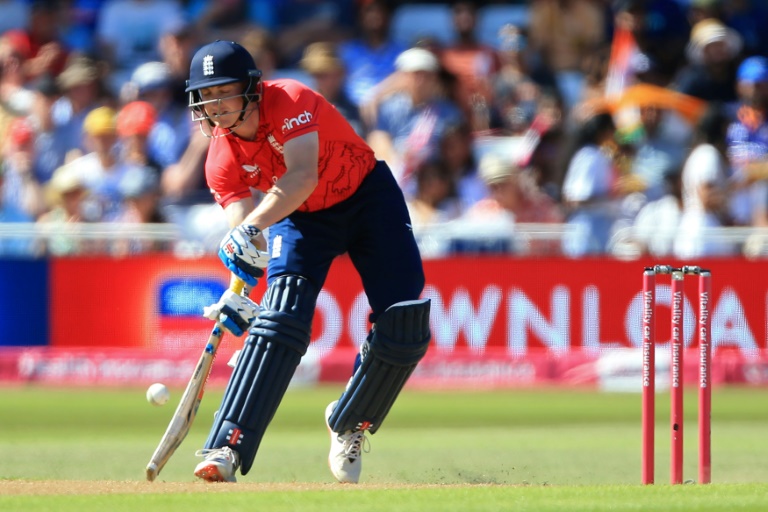
Brook, 23, has played four Twenty20 internationals for England.

South Africa won the first Test at Lord’s by an innings and 12 runs, only for England to bounce back to win by an innings and 85 runs in Manchester during another match wrapped up inside three days.

“We know that South Africa are always going to stay in the game and stay in the moment,” said Stokes. 

“We put the Lord’s defeat behind us and we concentrated on Manchester so I know that Dean (Elgar, the Proteas captain) and the South Africa team will be doing the same thing here. 

“I think it’s great for the series that it goes down to the wire. I know that South Africa are going to come out firing but it’s how we respond to the questions that they ask us.”

England team

Zak Crawley, Alex Lees, Ollie Pope, Joe Root, Harry Brook, Ben Stokes (capt), Ben Foakes (wkt), Stuart Broad, Jack Leach, Ollie Robinson, James Anderson

Evariste Ndayishimiye: Burundi president walking a tightrope

Burundi’s President Evariste Ndayishimiye has faced a tricky balancing act to bring change to the troubled nation while accommodating the elites who helped put him in power, even as activists warn that his government’s human rights record remains dire.

But he has been praised for ending the country’s global pariah status, prompting the United States and the European Union to lift sanctions earlier this year.

Since he took power in June 2020, the former army general has taken some high-profile steps to distinguish his regime from that of his predecessor Pierre Nkurunziza, whose brutal crackdown on political opponents in 2015 left 1,200 people dead.

But his talk of a “coup” plot against him, followed by a purge of top officials, including former prime minister Alain Guillaume Bunyoni, was a reminder of his authoritarian roots.

Handpicked by the ruling CNDD-FDD party to run in the 2020 elections, Ndayishimiye, 54, was expected to remain under the wing of Nkurunziza, who was known as Burundi’s “eternal supreme guide” until his sudden death in June 2020.

At first, there was little sign that Ndayishimiye would depart from his predecessor’s policies.

His maiden speech as president featured a long homage to Nkurunziza as he vowed to follow in his footsteps, lambasting the international community for interfering in Burundi. 

But he soon began to chart a different course.

He declared the coronavirus pandemic “the greatest enemy of Burundians”, sharply breaking with Nkurunziza who denied the gravity of Covid-19.

Whereas Nkurunziza had closed off the country — feuding with neighbours, expelling diplomats, and blacklisting UN investigators — Ndayishimiye ventured abroad, slowly putting Burundi back on the map.

Earlier this year, the United States and the European Union resumed aid flows to the impoverished landlocked nation of 12 million, despite warnings from rights campaigners.

“We see Ndayishimiye moving things slowly, step by step,” said Julien Nimubona, professor of political science at the University of Burundi.

“He would like to go further, but faces stiff resistance.”

– ‘The generals’ –

According to analysts, the real levers of power in Burundi are operated by a cabal of military leaders, known as “the generals”, that was forged underground when the CNDD-FDD was a Hutu rebel movement.

Its members outnumber Ndayishimiye, who has few known allies, observers say.

The president himself alluded to his isolation during a speech in 2021.

“There are those who tell me I will die of exhaustion trying to flush out wrongdoing from top to bottom,” he said.

But “how do you expect me to do that when I haven’t found anyone to help among my staff?”

Described by those who know him as more open-minded than many in the CNDD-FDD, Ndayishimiye, widely known by his nickname “Neva”, is not associated with the worst abuses carried out by his predecessor’s regime.

But neither did he stand out as trying to rein in the violence that erupted after the 2015 election, when Nkurunziza won a third term seen by many as unconstitutional.

The killings sparked an exodus and a UN commission accused the government of gross abuses including summary executions, rape and torture.

Ndayishimiye “has brought a breath of fresh air to Burundi. This is to his credit. He gives the impression of a real sincerity in wanting to improve things,” said one diplomat in Bujumbura, the country’s economic capital.

But others point out that Ndayishimiye has himself spent years as a high-ranking ruling party cadre, and question how far he is willing to change the status quo.

“There are certain aspects where there has been no progress. I am thinking in particular of torture, abductions, forced disappearances,” said Carina Tertsakian from the Burundi Human Rights Initiative.

Burundi remains much like a single-party state, analysts say, and opposition movements are muzzled even if ostensibly permitted.

– Quick to anger –

Ndayishimiye had only just begun his studies at the University of Burundi when civil war broke out in 1993, costing at least 300,000 lives.

He was in his second year of law school when extremists from the Tutsi ethnic group massacred dozens of Hutu students on campus. He barely escaped, putting down his pen to take up a gun.

He rose through the ranks and became the CNDD-FDD’s main negotiator in ceasefire negotiations that ended the bloodshed in 2006.

In the post-war years, Ndayishimiye held several high-tier positions, including minister of the interior and public security, and as Nkurunziza’s military and civilian chief of staff.

Those who know Ndayishimiye personally describe two sides to him — seemingly open to consensus, but fiery and quick to lose his temper.

“He’s a rather open-minded man, easy at first, who likes to joke and laugh with his friends,” said one friend who spoke to AFP on condition of anonymity. 

“But unlike Nkurunziza… Evariste Ndayishimiye can be quite angry and gets carried away very easily, and risks becoming infuriated.”

Burundi appoints new PM after president warns of 'coup' plot

Burundi’s parliament on Wednesday approved the appointment of a new prime minister after President Evariste Ndayishimiye warned last week of a possible coup plot against him.

Security Minister Gervais Ndirakobuca has replaced Alain Guillaume Bunyoni as prime minister after a unanimous vote in parliament, the national broadcaster RTNB said.

Bunyoni’s departure came after Ndayishimiye, who has been in power for just over two years, had last week warned of a coup plot against him.

“Do you think an army general can be threatened by saying they will make a coup?  Who is that person? Whoever it is should come and in the name of God I will defeat him,” Ndayishimiye had warned at a meeting of government officials on Friday.

Ndayishimiye took power in the troubled nation in June 2020 after his predecessor Pierre Nkurunziza died of what the Burundian authorities said was heart failure.

The country had been plunged into deadly turmoil in 2015 when then president Nkurunziza launched a bid for a third term in office, despite concerns over the legality of such a move.

New PM Ndirakobuca was sanctioned in 2015 by the US for “silencing those opposed” to Nkurunziza’s third term bid.

Burundi’s history is littered with presidential assassinations, coups, ethnic massacres and a long civil war that ended in 2006 and left some 300,000 dead.

Scientists fight to protect DR Congo rainforest as threats increase

A tower bristling with sensors juts above the canopy in northern Democratic Republic of Congo, measuring carbon dioxide emitted from the world’s second-largest tropical rainforest. 

Spanning several countries in central Africa, the Congo Basin rainforest covers an immense area and is home to a dizzying array of species. 

But there are growing concerns for the future of the forest, deemed critical for sequestering CO2, as loggers and farmers push ever deeper inside.

Scientists at the Yangambi Biosphere Reserve in the DRC’s Tshopo province are studying the rainforest’s role in climate change — a subject that received scant attention until recently.

Standing 55 metres tall, the CO2-measuring flux tower came online in 2020 in the lush reserve of 250,000 hectares (620,000 acres).

Yangambi was renowned for tropical agronomy research during the Belgian colonial era. 

This week, it also hosted scientists as part of meetings in the DRC dubbed pre-COP 27, ahead of the COP27 climate summit in Egypt in November.

Thomas Sibret, who runs the CongoFlux CO2 measuring project, said that flux towers are common worldwide.

But until one was set up in Yangambi, there had been none in Congo, which had “limited our understanding of this ecosystem”, he said.

Around 30 billion tonnes of carbon are stored across the Congo Basin, researchers estimated in a study in Nature in 2016. The figure is roughly equivalent to three years’ of global emissions.

Sibret said more time is required to draw definitive conclusions from the data gathered by DRC’s flux tower, but one thing is certain: The rainforest sequesters more greenhouse gases than it emits.

– ‘No more trees’ –

Paolo Cerutti, the head of the Center for International Forestry Research’s operations in Congo, said this was good news.

In Latin America, “we’re starting to see evidence that the Amazon (rainforest) is becoming more of an emitter,” he said.

“We’re betting a lot on the Congo Basin, especially the DRC, which has 160 million hectares of forest still capable of absorbing carbon.”

But Cerutti warned that slash-and-burn agriculture poses a particular threat to the future of the rainforest, pointing out that half a million hectares of forest were lost last year.

Slash-and-burn agriculture sees villagers cultivate lands until they become depleted, then clear forests to create new lands, and repeat the cycle. 

With the DRC’s population of about 100 million people set to expand, many worry the forest is in dire threat. 

Jean-Pierre Botomoito, the head of the Yanonge area about 40 kilometres (24 miles) from Yangambi, said that he once thought the forest was inexhaustible.

But “here, there are no trees,” he said.

Villagers in his once-forested region now have to travel long distances along narrow muddy paths to find tree-dwelling caterpillars — a local delicacy. 

Charcoal used for cooking in the absence of electricity and gas is similarly hard to obtain.

There are efforts to help farmers in the remote and impoverished region to make a living while sustaining the environment.

A largely EU-financed project, for example, trains farmers to rotate cassava and groundnut crops between fast-growing acacia trees. 

Farmers can harvest the acacia trees to make charcoal after six years.

Experts also encourage the use of more efficient kilns to produce more charcoal and teach loggers how to select which trees to fell.

– Vandalism –

Jean Amis, the head of a local farmers’ organisation, was enthusiastic about the project.

“We didn’t necessarily have the right practices” before, he said.

Others are too.

Helene Fatouma, the president of a women’s association, says fishponds on the edge of the forest now yield 1,450 kilos of fish in six months, as opposed to 30 previously.

But not all residents of the surrounding area support the various schemes.

Some people believe that the flux tower is stealing oxygen, for example, or that it is a prelude to land appropriation.

Researchers often find dendrometers — devices that measure tree dimensions — vandalised, and some traditional chiefs think the forest will grow back by itself without outside interference. 

The Indonesia-based Center for International Forestry Research says that resistance to the schemes can be overcome through raising awareness. 

Dieu Merci Assumani, the director of the DRC’s National Institute for Agricultural Research, agreed.

But he said there needs to be more financing for locals, who have seen little benefit from promised funds to protect the rainforest.

Assumani pointed as an example to the $500-million deal to protect the Congo Basin rainforest, signed by President Felix Tshisekedi and then British prime minister Boris Johnson in Glasgow last year.

“Commitments are all very well, but they need to be disbursed,” he said. 

A ghost of Angola's past, Luanda's bullring awaits new life

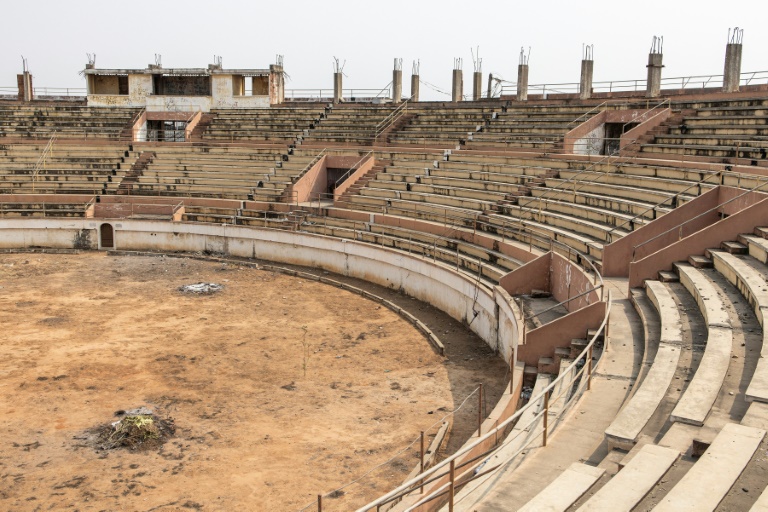
Around the corner from a congested Luanda street, partially covered by a thick row of little shops and food stalls, stands a dilapidated concrete bullring — the vestige of Angola’s colonial past.

Once a thrust of city life, the arena has been abandoned for decades, and repeated government promises to renovate the venue have yet to bear fruit.

The neglected ring is entered through an almost-hidden, corrugated iron gate, and steps are lined with rubbish. The air is permeated by a thick smell of urine.

Numbers for the stands can still be seen on the worn-out walls, half-covered by graffiti.

Up to the mid-1970s, Luanda residents crowded the stadium’s 20,000 seats to watch bullfights or “touradas” — a violent pastime pitting man against animal that was introduced to the southern African country by its Portuguese colonisers.

Unlike Spanish bullfighting, under Portuguese rules the bull is not killed in front of the audience in the arena but usually slaughtered afterwards.

Locals would form long queues to watch a bullfighter named Chibanga from Mozambique, who was a marked exception in a sport dominated by whites.

When Chibanga fought, “it was a big event, everyone wanted to see it,” recalls Antonio de Oliveira, also known as “Delon”.

He heads Angola’s Carnival Association, a cultural group that now occupies the premises.

“He was a great model because it was believed that only the white Portuguese could practice the tourada, not the Africans”, added Delon.

The arena’s sand circle and seat rows are still intact but have long fell silent.

After independence in 1975, the MPLA, a former Marxist liberation movement, came to power and banned bullfights, which they saw as a reminiscence of the violence of colonial rule.

“They thought … it necessary to breathe new life into” the country, says Delon. 

– Warm beers, no change –

Having been first introduced only about 25 years earlier, the touradas disappeared without trace. 

The arena became a concert venue, hosting some of the biggest names in central African music, from Pepe Kalle to Koffi Olomide. 

But as a lengthy and brutal civil war consumed the country, it slowly fell into decay and started to draw refugees looking for shelter rather than entertainment. 

Some squatted inside, while others built homes around it. 

“We saw this abandoned space. It was in terrible conditions … but we had no other option,” says Francisco, a former soldier, who came to live in the area with his family in 1998.

The civil war ended in 2002, but here — as in the halls of power, where the MPLA have remained since independence, having won the most recent narrow and disputed election only last month — little has changed. 

The provincial governor last showed up for an “assessment” tour in 2019, locals say. 

“There is some funding from private sponsorships but little else,” laments Delon, who would like to see the place spring back to life.

“We have a great cultural heritage, dance, music, cinema, crafts,” he says. 

Meanwhile old-timers on plastic chairs drink lukewarm beer as they reminisce about the good old days under the stadium’s huge concrete beams. 

A few squatters still live on the upper floors, where iron bars and chained dogs seal the entrance to dwellings veiled behind large red and black national flags. 

Francisco, the former soldiers, and others like him who live in cinder block houses that sprawl around the building would see their homes razed to make room for a huge parking lot if the current renovation plans were to get underway.

“After twenty years here, the government is telling us to move out. We don’t have a problem with that,” he says looking at the old bullring. 

“One day it will be renovated” he repeats. “We are waiting”.

Close Bitnami banner
Bitnami