Africa Business

Mauritanian ex-president released from custody pending trial

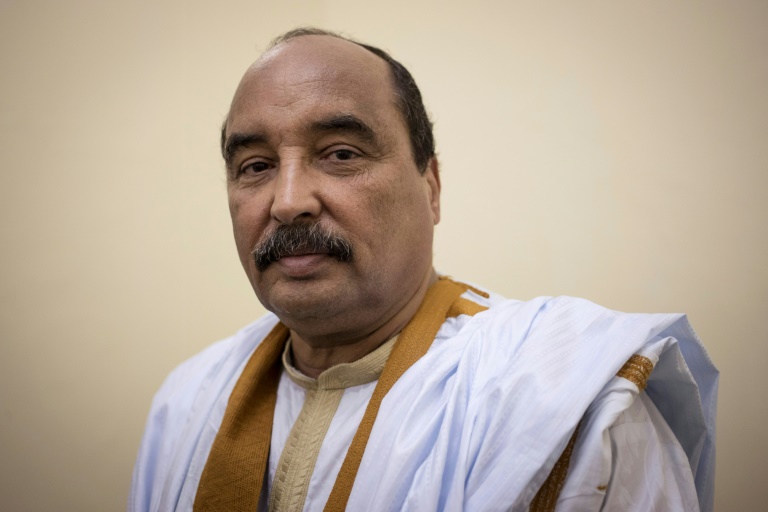
Mauritania’s disgraced ex-president, Mohamed Ould Abdel Aziz, has been released from custody pending a trial on corruption charges, a judicial official said Thursday.

The 65-year-old former general emerged late Wednesday from his home in the capital Nouakchott where he was being held, after police removed barriers and guards withdrew, an AFP reporter saw.

He waved to a few people who had gathered to celebrate his freedom of movement.

“Judicial supervision over him ended at midnight Wednesday and, in line with the law, he is free to move around,” a magistrate at the public prosecutor’s office told AFP.

“However, this does not mean that his case is over, far from it,” the source said, speaking on condition of anonymity.

Aziz came to power in the conservative West African state in a bloodless coup in 2008.

He stepped down in 2019 after two terms, succeeded by a former general and long-time aide, Mohamed Ould Ghazouani, in the first transition of power between elected leaders in Mauritania’s history.

But within months of the handover, the authorities began investigating suspected graft from the time Aziz was in power.

He was charged in March 2021 with corruption, money laundering and illicit enrichment along with 11 figures from his former regime, including his sons-in-law, two former prime ministers and several ex-ministers and businessmen.

He was imprisoned in June 2021 for breaking the terms of pre-trial judicial oversight. In January 2022, he was released from jail after undergoing heart surgery but placed under supervision at home.

Aziz and his co-defendants, whose judicial controls were lifted in March, have condemned the allegations as political score-settling. 

Aziz has argued that he has immunity from prosecution and persistently refused to speak to the examining magistrate. 

No date has been set for the trial.

Aziz’s main attorney, Mohameden Ould Icheddou, told AFP “he has his freedom (of movement) back, his passport will be returned to him and he will also get back the keys to the family home in Akjoujt,” Aziz’s home town 250 kilometres (150 miles) north of Nouakchott.

“The former president’s priority will be to go abroad for medical treatment after all the pressure he has been under, and in the wake of his heart illness,” he said.

Tunisia food-makers starved for supplies amid crisis

Cash-strapped Tunisia is facing a dearth of imported foodstuffs from dairy products to coffee, forcing informal rationing at supermarkets and threatening some food and beverage companies.

For weeks, consumers and businesses have been struggling to find essentials such as sugar, flour and cooking oil — a crunch experts blame on the dire financial situation of the state which has a monopoly on many staples.

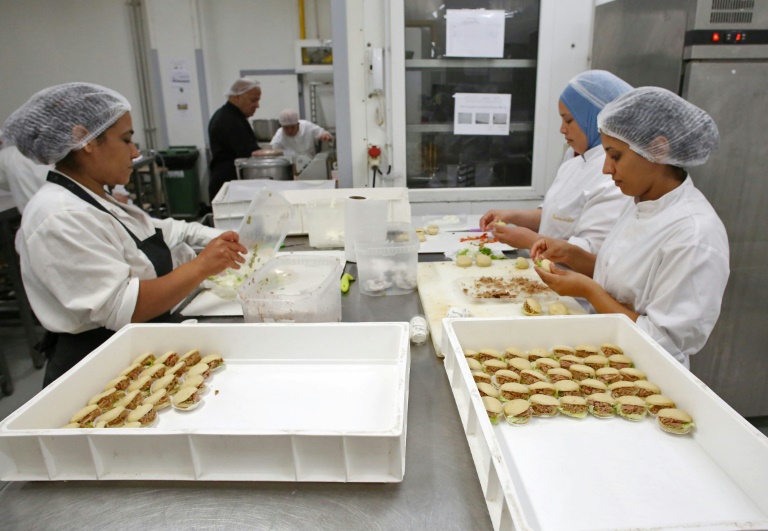
Radhia Kamoun, CEO of the patisserie chain Gourmandise, says she is struggling to source key ingredients, while those that are available have surged in price.

“When the sugar crisis began, we started using less of it, and the same with coffee — but you can’t make pastries without butter,” she said from her office in the capital’s Ariana district.

Gourmandise, with 27 branches across the country, has had to raise its prices twice this year, she said.

The state has failed to communicate and clarify “what’s going on and what’s going to happen”, Kamoun said, describing the situation as the worst crisis since the business was founded in 1976.

“If it carries on, we’ll be forced to close shops, even though we had an expansion plan that had continued even throughout the coronavirus pandemic,” she said.

Economists say the problem stems from Tunisia’s woeful finances and a trading system in which the state has a monopoly on imports of commodities such as coffee, sugar, tea and rice.

It buys the products either on credit or with its foreign currency reserves, then releases them to local markets, in some cases heavily subsidising them.

But in March, ratings agency Fitch downgraded Tunisia’s credit rating to CCC, citing political uncertainty and gaping budget deficits.

Since then, “many international suppliers have stopped trusting Tunisia and are demanding cash up front for products and transport,” said economist Moez Hadidane.

– Saied vs ‘speculators’ –

Tunisia has been negotiating for months for a bailout loan likely worth two billion dollars from the International Monetary Fund, which is expected to demand painful economic reforms in return.

President Kais Saied, who seized far-reaching powers last year and has since focused his efforts on remaking the political system, has consistently blamed “speculators” for the shortages.

Some commentators say police raids on food storage facilities — ostensibly targeting hoarders — have worsened the problem as businesses are afraid to keep their usual inventories. 

The upshot is that many supermarkets have started informally rationing foods, such as by limiting purchases of flour and coffee to one pack per customer.

Traders say subsidised vegetable oil is almost impossible to find, despite the government insisting it is available.

Social Affairs Minister Malek Zahi acknowledged last month that there was a crisis, blaming disrupted supply chains and price hikes on commodities and transport worldwide, largely due to Russia’s invasion of Ukraine.

But economist Hadidane said global supply issues were simply exacerbating existing problems mostly caused by the Tunisian state’s financial woes.

“In the first six months of the year, the state spent just half the sum it spent on foodstuffs in the same period last year,” Hadidane said, blaming a shortage of foreign currency.

Saied has denied that state finances are the problem, instead accusing unspecified actors of “disrupting distribution of products for political purposes” and trying to “artificially create a crisis”.

Hadidane said Saied’s comments “contradict his actions”.

“At the same time as talking about conspiracies to justify the situation to the poor, his government is negotiating with the IMF for a bailout that will inevitably stipulate an end to subsidies on basic goods,” Hadidane said.

“The question now is this: is the president brave enough to move forward with economic reforms?”

– ‘Empty promises’ –

The next few months will be crucial for staff at the Tunisian Carbonated Drinks Company, which holds the local franchise to make products including Coca-Cola.

Late last month, a sugar shortage forced it to pause production, leading to lay-offs at its southern Tunis factory, which employs some 600 people.

Dozens of angry workers had protested to demand their reinstatement, union head Souheil Boukhris said.

The company told AFP employees had returned and production had resumed. But Boukhris said output was still reduced as the state was only allowing the factory to buy a fifth of its daily sugar needs of 60 tonnes.

A prolonged crisis would threaten jobs, he said.

Delivery drivers queued up outside the factory this week for crates of drinks, many waiting hours to collect much-reduced quantities.

Boukhris demanded more transparency from the authorities.

“The state should tell us whether it can solve this problem or not,” he said, “instead of giving us the promises we’ve been hearing for weeks but which haven’t materialised.”

The hungry bugs fighting Uganda's fertiliser crisis

As fertiliser prices shot up following Russia’s invasion of Ukraine, Ugandan villager Peter Wakisi fretted for the future of his small farm and his young family.

Little did he know that the answer to his prayers would arrive in the form of bugs — specifically the black soldier fly, an insect introduced to the East African nation by scientists who see it as the solution to farmers’ woes.

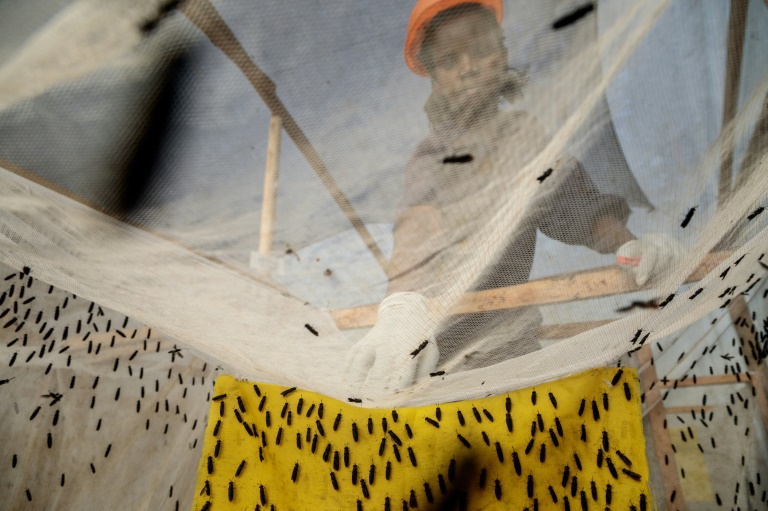
Wakisi, 36, is one of over 1,200 villagers enrolled in a programme to grow and sell the larvae of the black soldier fly, or BSF, a tiny creature whose powerful stomach enzymes turn food waste into fertiliser.

The food digested and excreted by the larvae is used to nourish plants.

The benefits are plain to see, father-of-four Wakisi said, pointing to a row of black plastic containers — home to the young larvae he buys and raises before selling back to the scientists for a threefold profit.

“The manure from the waste generated by the BSF, mixed with organic waste and pig droppings, is safe to the soil and much cheaper compared to inorganic fertilisers whose prices increased due to the war between Russia and Ukraine,” Wakisi said. 

“Organic fertilisers have reduced the expenses I used to incur on chemical fertilisers by almost 60 percent. My plants are healthier and yields are better now,” he told AFP in his village of Kawoomya Nyiize in central Uganda’s Kayunga district.

The programme, which is partly funded by the government of the Netherlands, is run by Kampala-based Dutch startup Marula Proteen Limited in partnership with Ugandan agricultural firm Enimiro. 

“A soil that doesn’t replenish its organic stock will eventually deplete and the plant yields will diminish significantly,” said Tommie Hooft, director at Marula Proteen.

The fertiliser produced by the black soldier flies “is full of healthy microbes that provide essential nutrients like nitrogen, phosphorous and potassium” to plants, making it an excellent option for farmers, he said.

– The ‘ick’ factor –

But first, there’s the ‘ick’ factor to consider, at least in the eyes of some.

Scola Namataka, a 30-year-old single mother in Kayunga’s Nakirubi village, said she could never have imagined raising insects, especially ones known to feast on faeces.

“I said that can’t be possible, rearing these maggots,” she told AFP, reaching into a plastic container to grab a handful of wriggling larvae.

But with money falling short and the soil on her family’s farm becoming increasingly depleted of nutrients, Namataka was running out of options when she heard about the programme in March this year.

Since enrolling, her plants are thriving, she said, and she’s even managed to get used to the pungent scent of the larvae feeding factory in her backyard.

After the war in Ukraine highlighted the worrying dependence of many agricultural economies on Russian fertiliser, the plentiful supply of these insects is a boon to farmers, said Hooft.

Adult females lay hundreds of eggs during their days-long life cycle and the larvae’s voracious appetite means there’s little risk of running out of manure.

“Being so dependent on an imported product is detrimental to farmers’ profitability. Our organic fertiliser is locally produced, and always available,” Hooft said.

Apart from subsistence farmers, the company sells BSF fertiliser to bigger enterprises like Clarke Farms, a 1500-acre coffee estate around 300 kilometres (190 miles) west of Kampala.

The firm has also teamed up with the Kampala Capital City Authority to help with waste disposal, collecting between 8-10 tonnes of garbage daily from food markets and feeding it to larvae.

– ‘More sustainable’ –

The programme aims to solve several problems at once, said Ruchi Tripathi of VSO, one of the non-profits which has partnered with Marula Proteen.

“Feeding the soil through adding organic nutrients is much more sustainable and will build the resilience of the soils which (will) in turn feed the plants,” she told AFP.

“This helps improve food security, reduce dependence on expensive imported chemical fertilisers, and reduces demand for oil-based fertilisers, helping fight against climate change,” she added.

For Wakisi, these black bugs have transformed his family’s fortunes, enabling him to hire a tractor, feed his children and pay school fees for his four younger siblings.

Though the cost of fertiliser continues to soar in Uganda, he no longer worries about it.

“I have abandoned the use of chemical fertilisers,” he said.

CAF Confederation Cup: Five things to know

African debutants Future FC of Egypt and Royal AM of South Africa will be among 48 clubs challenging CAF Confederation Cup title-holders Renaissance Berkane of Morocco this season. 

While the length of the continent separates them geographically, Future and Royal share the advantage of being well supported financially by owners desperate to make an impact in Africa.

Berkane will not be easily conquered, though, in a season that kicks off on Friday, having reached three of the last four finals and won two.

Here, AFP Sport lists five things to know about a competition launched in 2004, which is the African equivalent of the UEFA Europa League. 

Berkane buoyant

Based in the northeastern citrus growing region, Berkane are known as the Orange Boys and have shown consistent improvement since a disappointing Confederation Cup debut seven years ago.

They lost the 2019 final on penalties to Zamalek, beat another Egyptian club, Pyramids, in the next title decider and edged Orlando Pirates of South Africa on penalties in the 2022 final.

Moroccan clubs usually hire local, north African or European coaches, but the latest Berkane success came under the guidance of Florent Ibenge from the Democratic Republic of Congo.

Royal revel

Durban-based Royal burst on to the South African scene last season, finishing third in their Premiership debut, ahead of traditional giants Orlando Pirates and Kaizer Chiefs.

They subsequently lost Malawian coach John Maduka, who moved to top-flight rivals Maritzburg United, while leading scorer Victor Letsoalo was transferred to another Premiership outfit.

But the departures have not stopped a club funded by TV personality and businesswoman Shauwn Mkhize from being among those setting the pace in the new league season.

Future bright

Cairo club Future changed owners, changed its name from Coca-Cola FC, and finished fifth in their Egyptian Premier League debut last season.

Confederation Cup slots go to the clubs finishing third and fourth, but the CAF deadline for entries fell midway through the season so Future qualified as they were fourth at that stage.  

Former Zamalek goalkeeper Mahmoud ‘Genesh’ Abdel Rahim is the best known member of a squad that includes stars from Cameroon, Ghana, Madagascar and Tunisia.  

Nigerian hurdles

The closest a Nigerian club came to winning the competition was in 2005 when now defunct Dolphins finished runners-up to Moroccan opponents FAR Rabat.

No team from the most populous country in Africa has reached the final since and the chances of Kwara United or Remo Stars doing so this season are slim.

Kwara will face Berkane if they eliminate Douanes of Niger while Remo have a tough preliminary hurdle to clear in the shape of FAR.

Sfaxien struggle

Tunisian team CS Sfaxien hold the record for Confederation Cup titles with three, but they have performed poorly in recent campaigns.

They made a humiliating exit in the qualifying phase three seasons ago, and exited in the quarter-finals the following year and in the group stage last season.

Unless Sfaxien improve under coach Karim Dalhoum and captain/goalkeeper Aymen Dahmen, the chances of the trophy coming to Tunisia for a sixth time are remote.

The hungry bugs fighting Uganda's fertiliser crisis

As fertiliser prices shot up following Russia’s invasion of Ukraine, Ugandan villager Peter Wakisi fretted for the future of his small farm and his young family.

Little did he know that the answer to his prayers would arrive in the form of bugs — specifically the black soldier fly, an insect introduced to the East African nation by scientists who see it as the solution to farmers’ woes.

Wakisi, 36, is one of over 1,200 villagers enrolled in a programme to grow and sell the larvae of the black soldier fly, or BSF, a tiny creature whose powerful stomach enzymes turn food waste into fertiliser.

The food digested and excreted by the larvae is used to nourish plants.

The benefits are plain to see, father-of-four Wakisi said, pointing to a row of black plastic containers — home to the young larvae he buys and raises before selling back to the scientists for a threefold profit.

“The manure from the waste generated by the BSF, mixed with organic waste and pig droppings, is safe to the soil and much cheaper compared to inorganic fertilisers whose prices increased due to the war between Russia and Ukraine,” Wakisi said. 

“Organic fertilisers have reduced the expenses I used to incur on chemical fertilisers by almost 60 percent. My plants are healthier and yields are better now,” he told AFP in his village of Kawoomya Nyiize in central Uganda’s Kayunga district.

The programme, which is partly funded by the government of the Netherlands, is run by Kampala-based Dutch startup Marula Proteen Limited in partnership with Ugandan agricultural firm Enimiro. 

“A soil that doesn’t replenish its organic stock will eventually deplete and the plant yields will diminish significantly,” said Tommie Hooft, director at Marula Proteen.

The fertiliser produced by the black soldier flies “is full of healthy microbes that provide essential nutrients like nitrogen, phosphorous and potassium” to plants, making it an excellent option for farmers, he said.

– The ‘ick’ factor –

But first, there’s the ‘ick’ factor to consider, at least in the eyes of some.

Scola Namataka, a 30-year-old single mother in Kayunga’s Nakirubi village, said she could never have imagined raising insects, especially ones known to feast on faeces.

“I said that can’t be possible, rearing these maggots,” she told AFP, reaching into a plastic container to grab a handful of wriggling larvae.

But with money falling short and the soil on her family’s farm becoming increasingly depleted of nutrients, Namataka was running out of options when she heard about the programme in March this year.

Since enrolling, her plants are thriving, she said, and she’s even managed to get used to the pungent scent of the larvae feeding factory in her backyard.

After the war in Ukraine highlighted the worrying dependence of many agricultural economies on Russian fertiliser, the plentiful supply of these insects is a boon to farmers, said Hooft.

Adult females lay hundreds of eggs during their days-long life cycle and the larvae’s voracious appetite means there’s little risk of running out of manure.

“Being so dependent on an imported product is detrimental to farmers’ profitability. Our organic fertiliser is locally produced, and always available,” Hooft said.

Apart from subsistence farmers, the company sells BSF fertiliser to bigger enterprises like Clarke Farms, a 1500-acre coffee estate around 300 kilometres (190 miles) west of Kampala.

The firm has also teamed up with the Kampala Capital City Authority to help with waste disposal, collecting between 8-10 tonnes of garbage daily from food markets and feeding it to larvae.

– ‘More sustainable’ –

The programme aims to solve several problems at once, said Ruchi Tripathi of VSO, one of the non-profits which has partnered with Marula Proteen.

“Feeding the soil through adding organic nutrients is much more sustainable and will build the resilience of the soils which (will) in turn feed the plants,” she told AFP.

“This helps improve food security, reduce dependence on expensive imported chemical fertilisers, and reduces demand for oil-based fertilisers, helping fight against climate change,” she added.

For Wakisi, these black bugs have transformed his family’s fortunes, enabling him to hire a tractor, feed his children and pay school fees for his four younger siblings.

Though the cost of fertiliser continues to soar in Uganda, he no longer worries about it.

“I have abandoned the use of chemical fertilisers,” he said.

Human development set back 5 years by Covid, other crises: UN report

A United Nations report published Thursday argues that an unprecedented array of crises, chiefly among them Covid-19, has set human progress back five years and fueled a global wave of uncertainty.

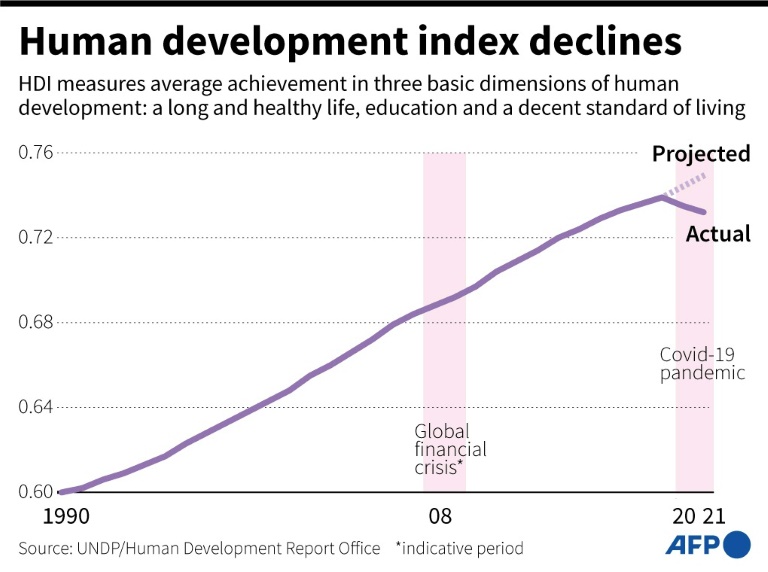
The UN Development Program (UNDP) announced that for the first time since it was created over 30 years ago, the Human Development Index — a measure of countries’ life expectancies, education levels, and standards of living — has declined for two years straight, in 2020 and 2021.

“It means we die earlier, we are less well educated, our incomes are going down,” UNDP chief Achim Steiner told AFP in an interview.

“Just under three parameters, you can get a sense of why so many people are beginning to feel desperate, frustrated, worried about the future,” he said.

The Human Development Index has steadily risen for decades, but began sliding in 2020 and continued its fall in 2021, erasing the gains of the preceding five years, the paper says.

Titled “Uncertain times, unsettled lives,” the report points to the Covid-19 pandemic as a major driver of the global reversion, but also says that a compounding number of crises — political, financial and climate-related — have not allowed time for populations to recover.

“We’ve had disasters before. We’ve had conflicts before. But the confluence of what we’re facing right now is a major setback to human development,” said Steiner.

The setback is truly global, impacting more than 90 percent of countries around the world, according to the study.

Switzerland, Norway and Iceland all retain their spots at the top of the list, while South Sudan, Chad and Niger sit at the bottom.

And while some countries had begun to recover from the pandemic, many others in Latin America, sub-Saharan Africa, South Asia and the Caribbean had not yet turned the corner before a new crisis hit: the war in Ukraine.

– ‘Lost trust’ –

While the fallout from Russia’s invasion of Ukraine on food and energy security has not yet been calculated into this year’s index, “without any doubt, the outlook for 2022 is grim,” Steiner said.

A large contributor to the Human Development Index’s recent decline is a global drop in life expectancy, down from 73 years in 2019 to 71.4 years in 2021.

The report’s lead author, Pedro Conceicao, described the decrease as an “unprecedented shock,” noting that some countries — the United States included — had drops of two years or more.

The report also describes how transformational forces, such as climate change, globalization and political polarization, present humanity with a complex level of uncertainty “never seen in human history,” leading to rising feelings of insecurity.

“People have lost trust in one another,” said Steiner.

“Never mind in institutions, our neighbor now becomes sometimes the greatest threat, whether literally speaking in the community, or globally by nations, that is paralyzing us.”

“We can’t continue with the playbook of the last century,” Steiner argued, preferring a focus on economic transformation rather than a reliance on growth as a panacea.

“Frankly speaking, the transformations we now need require us to introduce the metrics of the future: low carbon, less inequality, greater sustainability.”

The report strikes a positive note as well, saying that improvements could be made by focusing on three main areas: investments in renewable energy and preparation for future pandemics, insurance to absorb shocks, and innovations to strengthen the capacity to cope with future crises.

Steiner also called for a reversal in the recent downward trend of development assistance to the most vulnerable countries.

Continuing down that road would be a grave error, said Steiner, and “underestimates the impact it has on our ability to work together as nations.”

US returns antiquities to Egypt

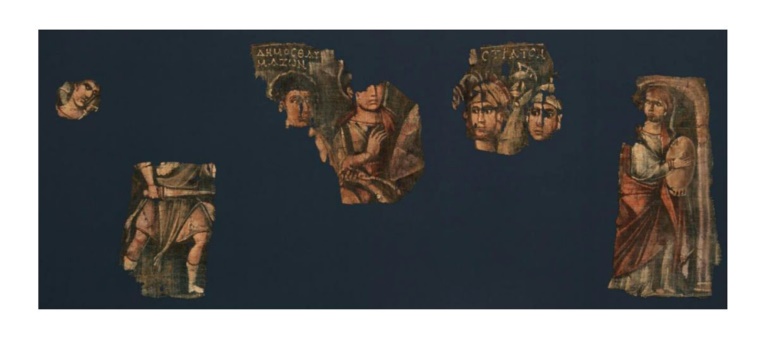
Authorities in New York announced Wednesday the return of 16 antiquities to Egypt, including five works that were seized from the Metropolitan Museum of Art as part of a probe into international art trafficking.

Manhattan District Attorney Alvin Bragg said the 16 works were worth more than $16 million. He spoke a day after announcing a similar return of 58 artworks to Italy.

“Today’s repatriation shows the breadth and prevalence of antiquities trafficking networks,” Bragg said in a statement.

Nine of the pieces had been in the possession of Michael Steinhardt, whom Bragg described as one of the world’s largest collectors of ancient art.

In 2021, Steinhardt was forced by US authorities to return 180 stolen ancient artworks worth a total of $70 million.

Under that deal he avoided going to jail but was banned for life from acquiring antiquities in the legal market.

Five other pieces were seized in May and June from the Met, worth $3.1 million, as part of a probe carried out by US and French authorities and under which former Louvre director Jean-Luc Martinez was charged in France.

Those five pieces had been looted from archeological sites in Egypt, smuggled through Germany or the Netherlands to France, and sold by the Paris-based Pierre Berge & Associes to the Met, Bragg said.

“The information developed and shared by the Manhattan DA’s office with law-enforcement agencies around the world related to this investigation has led to the indictment or arrest of nine individuals in France, including the former Louvre Director Jean-Luc Martinez,” Bragg said.

Countries growing 70% of world's food face 'extreme' heat risk by 2045

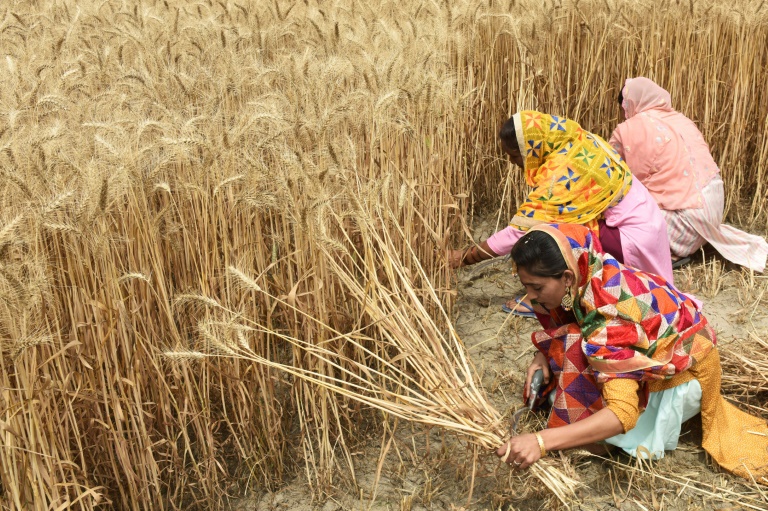
Blistering crop-withering temperatures that also risk the health of agricultural workers could threaten swathes of global food production by 2045 as the world warms, an industry analysis warned Thursday.

Climate change is already stoking heatwaves and other extreme weather events across the world, with hot spells from India to Europe this year expected to hit crop yields.

Temperature spikes are causing mounting concern for health, particularly for those working outside in sweltering conditions, which is especially dangerous when humidity levels are high. 

The latest assessment by risk company Verisk Maplecroft brings those two threats together to calculate that heat stress already poses an “extreme risk” to agriculture in 20 countries, including agricultural giant India.

But the coming decades are expected to expand the threat to 64 nations by 2045 — representing 71 percent of current global food production — including major economies China, India, Brazil and the United States. 

“With the rise in global temperatures and rise in global heat stress, we’re going to see crops in more temperate countries as well start being affected by this,” said Will Nichols, head of climate and resilience at Verisk Maplecroft. 

Rice is particularly at risk, the assessment said, with other crops like cocoa and even tomatoes also singled out as of concern.

– Growing risk –

Maplecroft’s new heat stress dataset, using global temperature data from the UK Met Office, feeds into its wider risk assessments of countries around the world. 

It is based on a worst-case emissions scenario leading to around 2 degrees Celsius of warming above pre-industrial levels as soon as 2045. 

However, the authors stress that in projections to mid-century, even scenarios that assume higher levels of carbon-cutting action could still result in temperatures nearing 2C.

India — responsible for 12 percent of global food production in 2020 and heavily reliant on outdoor labour productivity — is already rated as at extreme risk, the only major agricultural nation in that category at current temperatures. 

“There’s a very real worry that people in rural areas, which are obviously highly dependent on agriculture, are going to be much more vulnerable to these kinds of heat events going forward,” Nichols told AFP. 

That could impact productivity and in turn exports — and have potentially “cascading” knock-on effects on issues such as the country’s credit rating and even political stability, he said.

By 2045, the list grows much longer.   

Nine of the top ten countries affected in 2045 are in Africa, with the world’s second largest cocoa producer Ghana, as well as Togo and Central African Republic receiving the worst possible risk score.

The top 20 at-risk countries in the coming decades include key Southeast Asian rice exporters Cambodia, Thailand and Vietnam, the authors said, noting that rice farmers in central Vietnam have already taken to working at night to avoid the high temperatures.

The assessment highlights that major economies like the US and China could also see extreme risk to agriculture in 2045, although in these large countries the impacts vary by region.  

Meanwhile, Europe accounts for seven of the 10 countries set to see the largest increase in risk by 2045. 

“I think what it reinforces is that, even though a lot of us are sort of sitting in sort of Western countries, where we might think we’re a bit more insulated from some of these threats, actually we are not necessarily,” Nichols said.  

“Both in terms of the sort of physical risks that we’re facing, but also in terms of the kind of knock on effects down the supply chain.” 

Energy majors exaggerating green performance: analysis

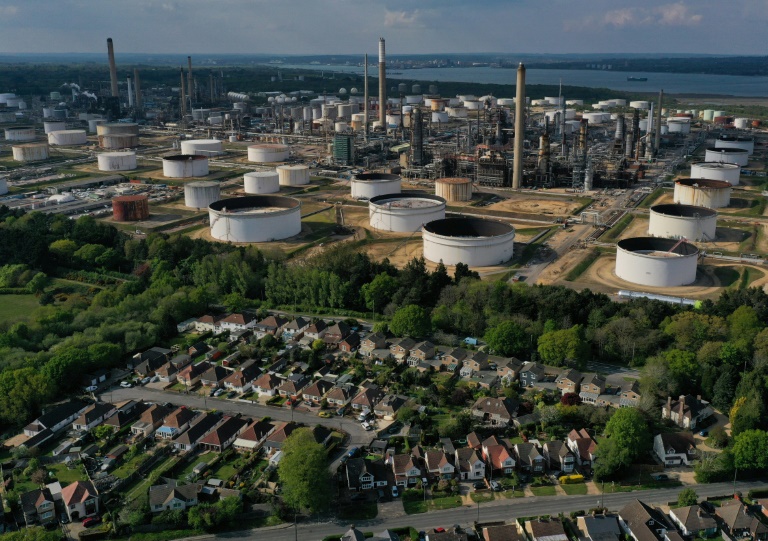
Energy majors are exaggerating their green credentials in public messaging while continuing to allocate the majority of new investment to oil and gas projects, according to an industry analysis released Thursday.

Campaigners say this “significant misalignment” between communication strategies and business plans could allow five of the biggest privately-owned energy firms to continue to delay the decarbonisation needed to avoid the worst impacts of climate change. 

Industry watchdog InfluenceMap analysed the content of more than 3,400 public communications from BP, Chevron, ExxonMobil, Shell and TotalEnergies in 2021, from press releases, speeches and company and CEO social media accounts. 

They found that 60 percent of all messages contained at least one “green” claim — such as emissions reduction targets, transitioning the energy mix, or promoting fossil gas as part of a clean energy solution.

These public communications were found to contrast with the five’s planned capital expenditure for 2022, with just 12 percent of new investments earmarked for low-carbon activities. 

“You can see this real difference between a high use of green claims in public communications versus this ongoing strategy to kind of undermine and block climate policy,” report co-author and program manager Faye Holder told AFP.

She said the gap between what the majors advertised and what they were investing in was misleading the public as to their role in battling climate change.  

“Based on the public communications, and particularly social media, it would be fair enough if you walked away with the impression that these companies are acting to solve climate change, because that’s what you’re hearing from them,” she said.

– ‘Climate disinformation’ –

The analysis found that Shell had the largest disparity between its green talk and actual low-carbon investment. 

InfluenceMap said that 70 percent of Shell’s communications last year contained at least one green claim, compared with just 10 percent of planned investment in low-carbon activities this year.

A spokesman for Shell told AFP the major was already investing “billions of dollars in low-carbon energy”.

“To help alter the mix of energy Shell sells, we need to grow these new businesses rapidly. That means letting our customers know through advertising or social media what lower-carbon solutions we offer now or are developing.”

The analysis found that 62 percent of TotalEnergies’ communications mentioned green activities, while it planned to allocate 25 percent of 2022 capital expenditure on low-carbon projects. 

A TotalEnergies spokeswoman countered that 30 percent of the firm’s investments are devoted to “decarbonised energy”.

“Our public announcements policy reflects the transformation of TotalEnergies in a multi-energy company,” she told AFP. 

An ExxonMobil spokesman said it “continues to mitigate emissions from its operations and achieved its 2025 emission-reduction plans four years earlier than planned”.

BP and Chevron did not respond to requests for comment. 

The analysis found that overall the five corporations had spent $750 million on climate-related messaging last year alone. 

Report co-author Ed Collins said that represented good business for the majors, as it was significantly cheaper than decarbonising their business models and would encourage governments to continue subsidising their products.

“The costs seem huge, but the investment is tiny in comparison to the potential reward in terms of favourable policy conditions and subsidisation of building assets,” he said. 

Some of the firms analysed plan to increase oil and gas production by 2026, something the analysts said would see their emissions “significantly overshoot” the International Energy Agency’s recommended net-zero pathway. 

Gwendoline Delbos-Corfield, a Greens member of the European Parliament, said Thursday’s analysis proved that the firms studied were engaged in “climate disinformation”.

“It shows the lengths oil and gas companies are willing to go to mislead citizens and protect their own interests.”

Burundi president replaces PM after coup plot claim

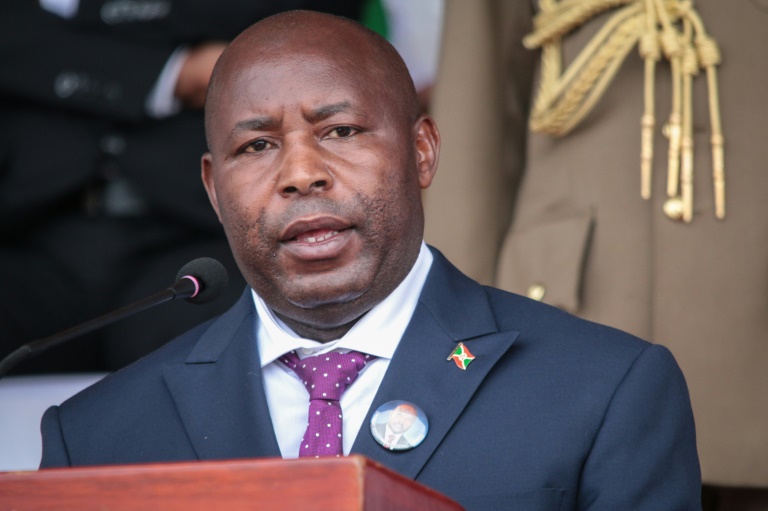
Burundi’s President Evariste Ndayishimiye replaced his prime minister and a top aide in a high-level political purge Wednesday after warning of a “coup” plot against him.

Security minister Gervais Ndirakobuca was sworn in before parliament as new premier, capping a day of high drama in the troubled central African nation.

He succeeds Alain-Guillaume Bunyoni, who was sacked along with Ndayishimiye’s civilian chief of staff General Gabriel Nizigama in the first major reshuffle at the top since the president took office a little over two years ago.

Lawmakers had approved the appointment of Ndirakobuca — a former chief of Burundi’s feared intelligence agency — in a unanimous 113-0 vote at a hastily called parliamentary session earlier Wednesday.

Ndayishimiye, a 54-year-old former army general, gave no reasons for Bunyoni’s dismissal, but last week he had warned of a coup plot against his regime.

“Do you think an army general can be threatened by saying they will make a coup? Who is that person? Whoever it is should come and, in the name of God, I will defeat him,” Ndayishimiye said at a meeting of government officials on Friday in the political capital Gitega.

The fate of Bunyoni, a former police chief and security minister who has long been a senior figure in the ruling CNDD-FDD party, was not immediately known.

Ndirakobuca, a 52-year-old father of eight, is among a number of Burundian officials accused of stoking violence against government opponents in a wave of deadly unrest in 2015 and remains under EU sanctions.

Ndayishimiye’s new chief of staff — a post sometimes described as a “super prime minister” — is Colonel Aloys Sindayihebura, who was in charge of the domestic branch of the National Intelligence Service.

Lawmakers had been called to attend the National Assembly session on Wednesday via urgent messages sent overnight on WhatsApp.

– 2015 crackdown –

Analysts say a cabal of military leaders known as “the generals” wield the true political power in Burundi and the president himself had alluded to his isolation in a 2021 speech.

Ndayishimiye took power in June 2020 after his predecessor Pierre Nkurunziza died of what the Burundian authorities said was heart failure although there was widespread speculation he had succumbed to Covid.

He has been hailed by the international community for slowly ending years of Burundi’s isolationism under Nkurunziza’s chaotic and bloody rule.

But he has failed to improve its wretched record on human rights and the African Great Lakes nation of 12 million people remains one of the poorest on the planet. 

Nkurunziza had launched the brutal 2015 crackdown on political opponents that left 1,200 people dead and made Burundi a global pariah.

The turmoil erupted after he had launched a bid for a third term in office, a move the opposition said was unconstitutional and violated a peace deal that ended the country’s bloody civil war in 2006.

The United States and the European Union had imposed sanctions over the unrest that also drove 400,000 people to flee the country, with reports of arbitrary arrests, torture, killings and enforced disappearances.

– Economic woes –

Burundi has been in the grip of an economic malaise since the 2015 unrest, with a lack of foreign exchange and shortages of basic goods such as fuel, certain foodstuffs, building materials and medicines.

As discontent mounts, Ndayishimiye on Friday repeated his promise to crack down on monopolies granted to leaders and those close to the government.

Earlier on Wednesday, Burundi’s trade ministry announced the easing of imports of maize, maize flour, sugar and cement in a statement on Twitter, dated September 6.

It follows the import of fuel by a state firm in the last ten days, meaning petrol stations can be filled up.

In February, both Brussels and Washington resumed aid flows to the landlocked nation after easing the 2015 sanctions, citing political progress under Ndayishimiye.

Civil society groups have returned, the BBC is allowed to broadcast again and the European Union — Burundi’s largest foreign donor — has commended efforts to fight corruption.

But concerns over rights abuses remain. 

Human Rights Watch in May described politically motivated murders and kidnappings by police and state-backed youth groups, while a UN inquiry last year characterised the situation as “disastrous”.

Since independence from Belgium in 1962, Burundi’s history has been littered with presidential assassinations, coups and ethnic massacres.

It was gripped by a brutal civil war from 1993 to 2006 between majority Hutus and minority Tutsis that left some 300,000 people dead, mainly civilians.

Close Bitnami banner
Bitnami