Africa Business

Goals not guns: in troubled DRC, football academy draws in youth

In war-torn eastern Democratic Republic of Congo, national park authorities are hoping a football academy will persuade youngsters to take up the Beautiful Game rather than a rifle.

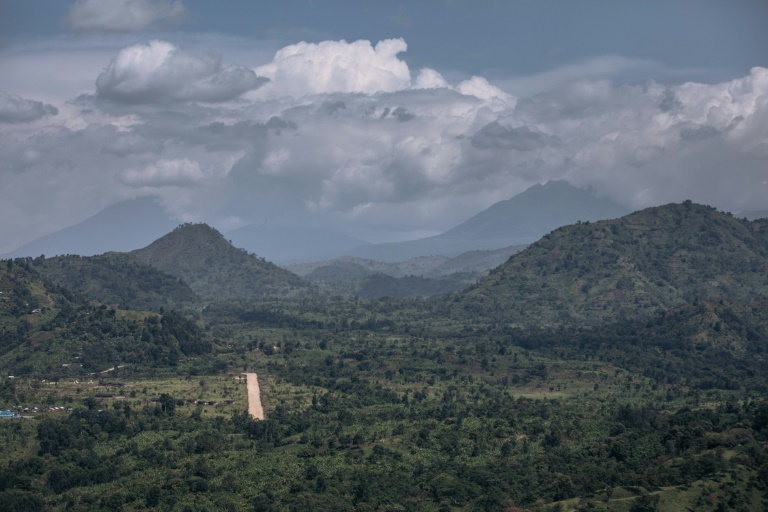
Around 50 children aged between 10 and 16 have signed up to the Virunga youth football training scheme at a stadium in Rumangabo, a village in North Kivu province which borders a military base and the Virunga National Park.

It is the oldest national park in Africa, famed for its gorillas and volcanoes. 

Monkeys look on intrigued as the children are put through their paces, with drills, games and advice.

An estimated 120 armed groups roam the DRC’s volatile east. The resurgence in the region of the M23 (the March 23 Movement), a primarily Congolese Tutsi group, is of primary concern.

After lying mostly dormant for years, the rebels resumed fighting late last year, seizing the strategic town of Bunagana on the Ugandan border in June and prompting thousands of people to flee their homes.

M23, which the DRC government accuses Rwanda of funding, is operating just six kilometres away from Rumangabo and poses a constant threat.

“They are there in the hills, yesterday they pillaged a health centre,” said Gentil Karabuka, a prominent community member.

Young people born in a chaotic and violent environment have proved easy pickings for rebel groups looking to recruit new members.

But Dieu Boyongo, the coordinator of the football project, hopes it will be a beneficial alternative for the youngsters.

“We think that this football school, situated in a conflict zone, is a positive occupation for them,” Boyongo said.

Boyongo wants the young people on the project to leave violence and misery far behind them, replacing the sound of bullets with the roar of the crowd.

The budding footballers are enjoying the project so far.

“I would like to play for Real (Madrid) or PSG (Paris Saint-Germain),” said 13-year-old Esdras before swapping his torn trousers for a new football strip.

Gloire, also 13, dreams of having a “career like Cristiano Ronaldo,” the five-time Ballon D’Or winner.

– ‘Together in peace’ –

The organisers believe team sport is also a way to deliver a message about peace, and make the children aware of the park’s conservation efforts.

One young spectator has absorbed this idea. “I want to become a park guard, in order to protect the gorillas and other animals,” nine-year-old Narcisse said.

Emmanuel Bahati Lukoo, chief of the southern sector of the park, hopes others will leave with the same resolve.

“When we speak of the east of the country most people only see young people who are with the armed rebels,” he told AFP.

“But we do not want these stories to continue.

“It is imperative that the young understand the park is a means for them of developing as people.”

They can develop as footballers too, according to one of the coaches who oversee training. 

“The ambition is to produce very good young players here at Rumangabo,” Prince Katsuva told AFP.

“We will begin teaching them the technical fundamentals and in five to six months we will have a good team.

“We want to show everyone that we can live together in peace.”

Before the inaugural match, Katsuva told his proteges to pass on a message when they return to their communities.

He hammered home that people should stop poaching and trading in charcoal from the park.

The authorities at Virunga also employ people displaced by the fighting. They live at the entrance of the headquarters in huts, which covered in either tarpaulins or banana leaves offer little protection from the cold and rain.

They are employed as day workers, which guarantees them something to eat, while others have seen their children recruited by the football academy.
Diamond magnate appeals Swiss bribery verdict

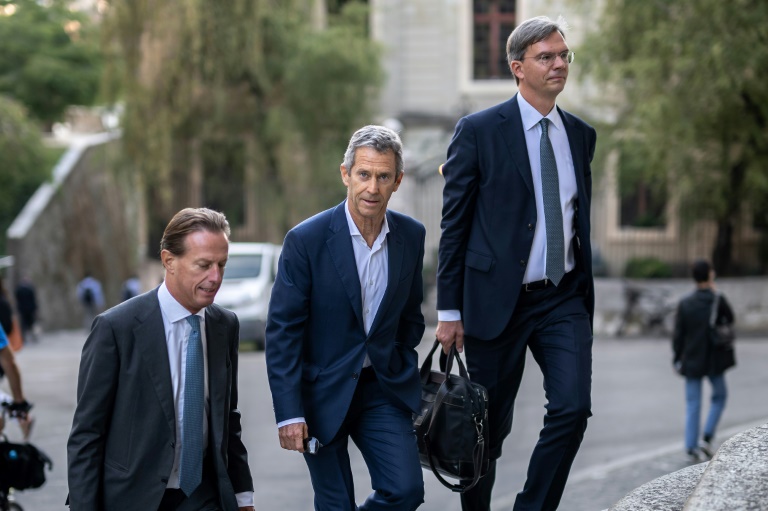
French-Israeli diamond magnate Beny Steinmetz was back in court in Switzerland on Monday to appeal his conviction in what has been described as the mining sector’s biggest-ever corruption case.

The 66-year-old businessman was convicted in January 2021 of setting up a complex financial web to pay bribes to ensure his company could obtain permits in Guinea’s southeastern Simandou region, which is estimated to contain the world’s biggest untapped deposits of iron ore.

He was sentenced by a Geneva court to five years in prison and also ordered to pay 50 million Swiss francs ($52 million) in compensation.

Steinmetz, wearing a dark blue suit, arrived at the court house as a free man. He has not begun serving his sentence, since he was issued a legal free-passage guarantee to attend the first trial, and was permitted to leave Switzerland after it ended. 

He has been issued another free-passage for the appeal, which is expected to last until September 7, with the verdict set to fall later.

Steinmetz maintained his innocence throughout the original trial and immediately appealed against the ruling, decrying it as a “big injustice”.

He changed his legal team for the appeal, and his new lead lawyer Daniel Kinzer presented an impassioned defence on Monday’s first day, detailing a long line of alleged missteps, errors and misunderstandings in the trial.

– ‘No bribes’ –

“I am confident the appeals court can be convinced,” he told AFP in an email before the hearings, adding a deeper look at the case revealed “a totally different picture than the one painted by the first verdict”.

“We expect that the tribunal recognises that Beny Steinmetz did not bribe anyone.”

During the first trial, Swiss prosecutors convinced the court that Steinmetz and two partners had bribed a wife of the then Guinean president Lansana Conte and others in order to win lucrative mining rights in Simandou.

The prosecutors said Steinmetz obtained the rights shortly before Conte died in 2008 after about $10 million was paid in bribes over a number of years.

Conte’s military dictatorship ordered global mining giant Rio Tinto to relinquish two concessions which were subsequently granted to Beny Steinmetz Group Resources (BSGR) for around $170 million in 2008.

Just 18 months later, BSGR sold 51 percent of its stake in the concession to Brazilian mining giant Vale for $2.5 billion.

But in 2013, Guinea’s first democratically-elected president Alpha Conde launched a review of permits allotted under Conte and later stripped the VBG consortium formed by BSGR and Vale of its permit.

– ‘Pact of corruption’ –

To secure the initial deal, prosecutors claimed Steinmetz and representatives in Guinea entered a “pact of corruption” with Conte and his fourth wife Mamadie Toure.

Toure, who has admitted to having received payments, has protected status in the United States as a state witness. 

Before the court, Kinzer decried that much of the prosecutor’s case relied on her testimony, despite no insight into the opaque US deal and that the defence had never been given access to her.

He asked for all her testimony to be deemed inadmissable.

“One cannot legitimately rely on prosecution witnesses who have secret agreements with law enforcement, whose testimony has not been fully disclosed and who were not cross-examined on trial,” he told AFP.

His co-counsel Christian Luscher highlighted significant concerns around the handling of the case by Claudio Mascotto, the prosecutor initially in charge of the investigation, suggesting he had struck a deal with another witness in the case, and asking that he be questioned in court.

Steinmetz’s team also rejects the narrative that corruption was behind the transfer of mining rights from Rio Tinto to BSGR, insisting that Rio Tinto had lost half of its concessions for failing to develop them, in line with Guinea’s mining laws.

“The mining rights were withdrawn from a competitor because it was hoarding them and then awarded to BSGR on the basis of a solid and convincing business case, with no need to bribe a public official,” Kinzer told AFP.

From bus routes to gutters, tech-savvy youth map Mali's capital

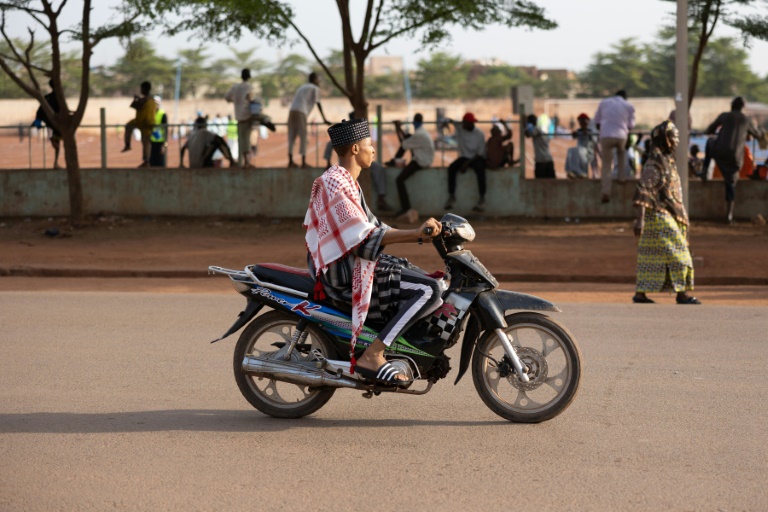
Under a blazing sun in Mali’s capital, Amadou Menta leant over to measure a gutter then jotted down the results on a mapping app on his smartphone.

“We’re collecting data,” said the 27-year-old geography student, helping to chart the roadside drains of central Bamako with two friends.

Until recently Mali’s capital was largely uncharted on the web.

With street names or fixed public transport routes often missing in the city of some two million, people tend to ask for directions to find their way.

But the lack of maps is a major obstacle to developing its infrastructure — whether to prevent traffic jams, collect wastewater and rubbish, or prevent flooding.

Tech-savvy young Malians are striving to change this, cataloguing the city’s features in the hope it will improve the lives of its residents.

Armed with smartphones, dozens of volunteers have been collecting data for the local branch of OpenStreetMap, a free, online geographic database — which is then used by sites including Google Maps.

Menta and fellow mappers have been charting the channels collecting waste and rainwater in Daoudabougou, a central district often hit by floods.

The gutter project is receiving financial support from the World Bank, and has been welcomed by the authorities.

But it’s just one of the avenues the group is exploring — and there is plenty more work to do.

Founder Nathalie Sidibe said there was previously “no freely available data in Mali”. 

“We saw mapping as a concrete way to contribute to developing the area,” she said.

“We need to change habits here — and to do that, we need to encourage people to use digital tools.”

– Data to ‘get ahead’ –

Mobile data access is still poor in Mali.

Countrywide, only one in 10 women is connected to mobile broadband, compared to one in five men, a World Bank report found last year.

But the OpenStreetMap Mali team has been busy.

So far, its volunteers have drawn up a map of Bamako’s public minibus routes, household waste collection points, and basic social services.

Adama Konate, deputy mayor in charge of sanitation, said the group’s efforts had helped Bamako.

“We only had basic knowledge before this project,” Konate said.

“Now we know that this place needs drainage, and that place needs a rubbish dump.”

Mahamadou Wadidie, director of the Regional Development Agency in Bamako, said the youth mapping project had made his job much easier.

On the agency’s website, he showed off a regularly updated map of all the health centres and schools in Bamako drawn up from OpenStreetMap data.

“Instead of taking two months to find out about these things, mayors can now get this information from their computer,” he said.

“Digitisation is allowing us to get ahead, to lose less time.”

Mali — an impoverished country with severe governance challenges that has been battling a decade-long jihadist insurgency — does not have many resources to devote to digitising data, he said.

But Menta and his young colleagues, he said, have shown it is possible to launch ambitious mapping projects “without spending a lot of money”.

Angola's ex-strongman dos Santos laid to rest in Luanda

Angola’s former strongman president Jose Eduardo dos Santos, whose nearly four-decade rule was marred by graft and nepotism allegations, was buried in Luanda on Sunday despite a family row over his final resting place.

The funeral was held at the historic palm tree-lined Praca da Republica in the seaside capital on what would have been dos Santos’s 80th birthday.

It comes days after his party, the People’s Movement for the Liberation of Angola (MPLA) — which has ruled the oil-rich country for nearly half a century — saw its worst electoral results in the most hotly contested polls since independence.

Dos Santos — who died last month following a cardiac arrest — will be remembered as a “statesman and devoted pan-Africanist”, Namibia’s ex-president Sam Nujoma, 93, told the hundreds of mourners in attendance.

A choir sang dirges while flags flew at half-mast around the square, which houses an imposing concrete mausoleum where the country’s founding president Agostinho Neto is interred.

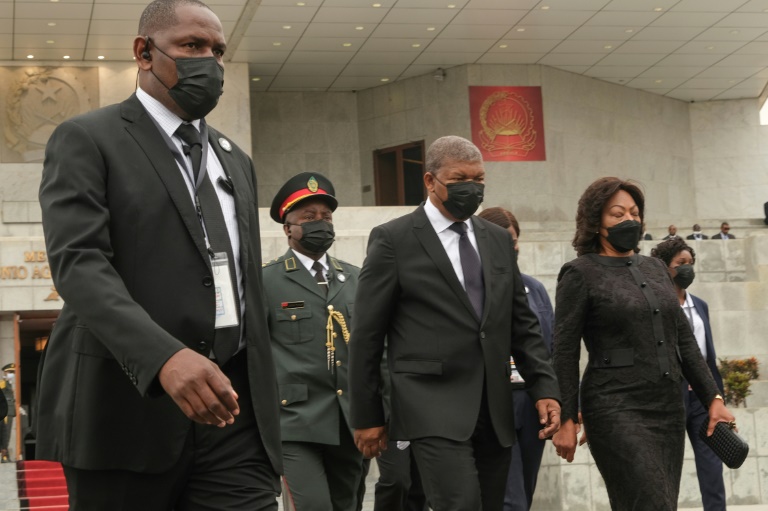
Dignitaries including South African President Cyril Ramaphosa, the Democratic Republic of Congo’s leader Felix Tshisekedi and Portugal’s President Marcelo Rebelo de Sousa filled rows of white and gold seats.

Josiane dos Santos, the late leader’s daughter, sobbed while recalling her father’s love for music. 

During Angola’s war for independence, the young “Zedu”, as he was called, began his career as a revolutionary by recording LPs that encouraged the fight against coloniser Portugal while he took refuge in neighbouring DRC, she said.

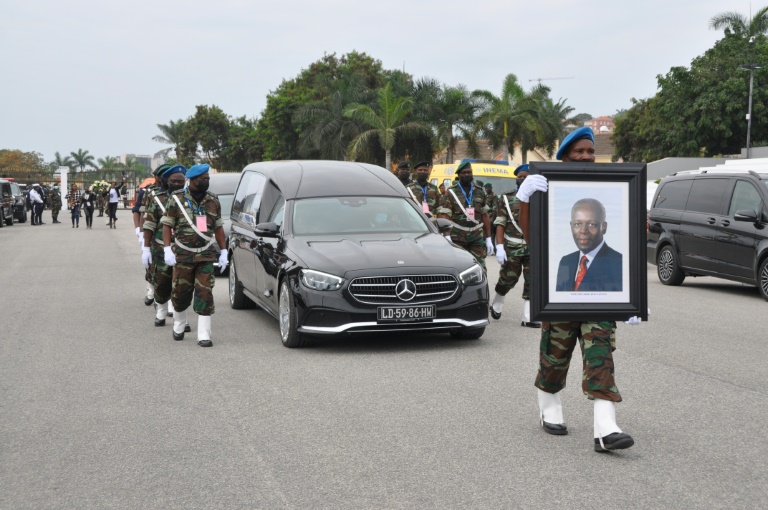
A 21-gun salute rang as a portrait of dos Santos was carried ahead of the coffin, supported by military-clad pallbearers, in a slow procession to a specially built tomb behind the Neto mausoleum where he was buried.

– ‘Architect of peace’ –

Dos Santos was referred to by many, particularly MPLA members, as the “architect of peace” who brought democracy and multiparty politics to the country. 

On the streets of Luanda, some people were more critical of his legacy. 

“He left a high rate of youth unemployment, extreme poverty and one of the most unequal societies,” said Mariana Quissanga, 42, a furniture businesswoman. 

Dos Santos led the country from 1979 to 2017 under the MPLA banner — which saw its worst performance in this week’s election.

After 97 percent of the results were tallied, an initial count showed the MPLA had won 51.07 percent of the vote, with 44.05 percent for the party’s main rival, the National Union for the Total Independence of Angola (UNITA).

UNITA — which fought a bitter 27-year civil war against the MPLA government — has rejected the results.

Five members of the election commission have threatened not to sign off the results.

The commission, which is meeting to finalise the results, said on Sunday evening that the process was “following its course”.

Despite political differences, UNITA leader Adalberto Costa Junior attended Sunday’s funeral.

“We have already lodged complaints with the electoral commission on where we believe the results do not match our count,” he told reporters on the sidelines of the service. 

Dos Santos died at a Barcelona clinic, and some of his children were at loggerheads with the government and his estranged wife over where and when he was to be buried. 

But a Spanish court ruled that the body be returned to Angola.

His eldest daughter Isabel dos Santos, who has faced a slew of investigations into her multinational businesses, did not attend the funeral.

Instead, as the ceremony was under way, Isabel posted an old picture of herself and her father on Instagram, captioned in Portuguese “Happy birthday papa”.

His other daughter Tchize also wished him a happy birthday on Instagram in a post showing herself on a yacht, while criticising the choice of a Sunday and his birthday to hold the funeral. 

Under dos Santos, Angola became one of Africa’s top oil producers. While he and his family reaped vast wealth from the country’s resources, most of its 33 million people remain among the poorest in the world. 

He stepped down in 2017, appointing Joao Lourenco his successor, who now stands to win a second term in office. Lourenco did not speak at the funeral.

Dos Santos passed a series of laws before his departure from government, granting himself broad judicial immunity.  

Rival Libya leaders trade blame after Tripoli clashes kill 32

Libya’s rival premiers on Sunday traded accusations over deadly clashes in Tripoli — the worst in the capital since a landmark 2020 ceasefire and which sparked fears of a major new conflict.

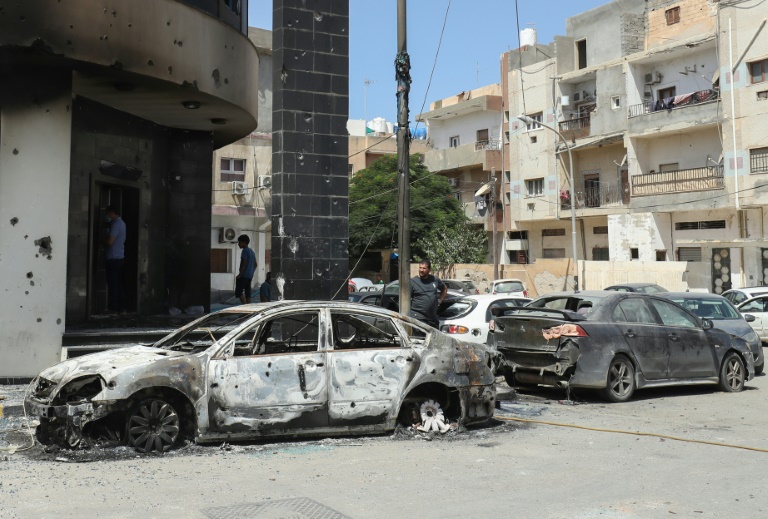
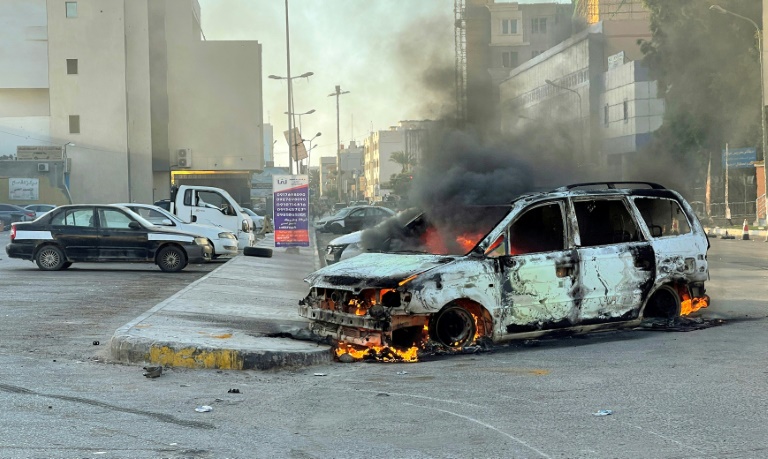
The health ministry said 32 people were killed and 159 wounded during the fighting between rival armed groups which began overnight Friday and continued into Saturday, setting buildings on fire and damaging several hospitals.

The fighting came after months of mounting tensions between backers of Abdulhamid Dbeibah and Fathi Bashagha, whose administrations are vying for control of the oil-rich North African country.

Dbeibah, whose government was installed in Tripoli in the country’s west as part of a United Nations-led peace process last year, accused his rivals of responding to “foreign agendas”.

Local media and experts said Bashagha had failed in what was his second attempt to dislodge his rival from the capital in three months. 

In a video address late Sunday, Dbeibah lashed out at “criminals” and “putschists” who “waged war on the capital with tanks and heavy weapons”.

He vowed to “go after all those involved” and to relocate the headquarters of some armed groups outside the city centre.

Earlier, his rival Bashagha, who was appointed by Libya’s eastern-based parliament this year, said Dbeibah, “his ruling family and his armed gangs” were “responsible for the blood that flowed” in Tripoli, accusing them of wanting to cling onto power “at any cost”.

Bashagha, a former interior minister, is backed by powerful eastern military chief Khalifa Haftar, whose 2019 attempt to seize the capital by force turned into a year-long conflict.

Dbeibah has refused to cede power on the grounds that the next administration should be the product of elections.

– ‘Terrified’ –

Libya plunged into chaos following the 2011 overthrow and killing of dictator Moamer Kadhafi in a NATO-backed uprising, with myriad armed groups and foreign powers moving to fill the power vacuum.

A cautious calm had set in by Saturday evening, an AFP correspondent reported. Flights resumed and shops re-opened on Sunday.

During the fighting, rockets “were flying over our heads, in the middle of residential buildings,” said resident Mohammed Abaya, 38.

“We were terrified,” said another resident, retiree Lotfi Ben Rajab. “A rocket fell in my neighbour’s living room but didn’t explode, thank God”.

Bashagha had initially ruled out the use of violence to take power in Tripoli but subsequently hinted that he could resort to force.

Certain armed groups, seen as neutral in the latest crisis, returned to support Dbeibah this weekend to push back Bashagha.

The public prosecutor on Sunday asked the head of passports to issue travel bans against Bashagha, some of his ministers and a former military intelligence official, according to a letter carried by local media.

Dbeibah said earlier Sunday he would create two committees to survey the damage from the fighting.

– Shifting sands –

Dbeibah’s Government of National Unity said fighting had broken out after negotiations to avoid bloodshed in Tripoli collapsed. Bashagha denied such talks had taken place.

The UN’s Libya mission had called for “an immediate cessation of hostilities”, deploring “indiscriminate medium and heavy shelling in civilian-populated neighbourhoods”.

Local media reported late Saturday that a group of pro-Bashagha militias that had been making their way to the capital from Misrata later turned back.

The fighting prompted several airlines to cancel flights to and from the capital, but flights resumed and shops reopened on Sunday morning. Educational institutions said student exams would go ahead on Monday.

On Saturday evening, Dbeibah ordered the arrest of anyone involved in the “attack on Tripoli”, both civilian and military.

A pro-GNU force from Misrata — the hometown of both Dbeibah and Bashagha — said Sunday it had arrested several “assailants”. 

But analysts said the crisis was far from resolved, with the capital controlled by a multitude of armed groups with shifting alliances.

The “groups that found themselves on the same side in yesterday’s Tripoli fighting will tomorrow clash over turf, positions and budgets,” analyst Wolfram Lacher said on Twitter.

“The factions that were pro-Dbeibah yesterday will challenge him tomorrow.”

Angola's ex-strongman dos Santos laid to rest in Luanda

Angola’s former strongman president Jose Eduardo dos Santos, whose nearly four-decade rule was marred by graft and nepotism allegations, was buried in Luanda on Sunday despite a family row over his final resting place.

The funeral was held at the historic palm tree-lined Praca da Republica in the seaside capital Luanda on what would have been dos Santos’s 80th birthday.

It comes days after his party, the People’s Movement for the Liberation of Angola (MPLA) — which has ruled the oil-rich country for nearly half a century — saw its worst results at the polls in the most hotly contested elections since independence.

Dos Santos — who died last month following a cardiac arrest — will be remembered as a “statesman and devoted pan-Africanist”, Namibia’s ex-president Sam Nujoma, 93, told the hundreds of mourners in attendance.

A choir sang dirges while flags flew at half-mast around the square, which houses an imposing concrete mausoleum where the country’s founding president Agostinho Neto is interred.

Dignitaries including South African President Cyril Ramaphosa, the Democratic Republic of Congo’s leader Felix Tshisekedi and Portugal’s President Marcelo Rebelo de Sousa filled rows of white and gold seats.

Josiane dos Santos, the late leader’s daughter, sobbed while recalling her father’s love for music. 

During Angola’s war for independence, the young “Zedu”, as he was called, began his career as a revolutionary by recording LPs that encouraged the fight against coloniser Portugal while he took refuge in neighbouring DRC, she said.

A representative of his foundation collapsed in the middle of his eulogy.  

A 21-gun salute rang as a portrait of dos Santos was carried ahead of the coffin, supported by military-clad pallbearers, in a slow procession to the mausoleum where he was laid to rest. 

– ‘Architect of peace’ –

Dos Santos was referred to by many, particularly MPLA members, as the “architect of peace” who brought democracy and multiparty politics to the country. 

On the streets of Luanda, some people were more critical of his legacy. 

“He left a high rate of youth unemployment, extreme poverty and one of the most unequal societies,” said Mariana Quissanga, 42, a furniture businesswoman. 

Dos Santos led the country from 1979 to 2017 under the MPLA banner — which saw its worst performance in this week’s election.

After 97 percent of the results were tallied, an initial count showed the MPLA had won 51.07 percent of the vote, with 44.05 percent for the party’s main rival, the National Union for the Total Independence of Angola (UNITA).

UNITA — which fought a bitter 27-year civil war against the MPLA government — has rejected the results.

Five members of the election commission have threatened not to sign off the results.

Despite political differences, UNITA leader Adalberto Costa Junior attended Sunday’s funeral.

“We have already lodged complaints with the electoral commission on where we believe the results do not match our count,” he told reporters on the sidelines of the service. 

Dos Santos died at a Barcelona clinic, and some of his children were at loggerheads with the government and his estranged wife over where and when he was to be buried. 

But a Spanish court ruled that the body be returned to Angola and it was buried in a specially built tomb behind the Neto mausoleum. 

His eldest daughter Isabel dos Santos, who has faced a slew of investigations into her multinational businesses, did not attend the funeral.

Instead, as the ceremony was under way, Isabel posted an old picture of herself and her father on Instagram, captioned in Portuguese “Happy birthday papa”.

His other daughter Tchize also wished him a happy birthday on Instagram in a post showing herself on a yacht, while criticising the choice of a Sunday and his birthday to hold the funeral. 

Under dos Santos, Angola became one of Africa’s top oil producers. While he and his family reaped vast wealth from the country’s resources, most of its 33 million people remain among the poorest in the world. 

He stepped down in 2017, appointing Joao Lourenco his successor, who now stands to gain a second term in office. Lourenco did not speak at the funeral.

Dos Santos passed a series of laws before his departure from government, granting himself broad judicial immunity.  

Tentative calm in Libyan capital after clashes kill 32

Flights resumed and shops re-opened in Libya’s capital Tripoli on Sunday after clashes between backers of rival governments killed at least 32 people and sparked fears of major new conflict.

Armed groups had exchanged fire that damaged several hospitals and set buildings on fire starting overnight Friday into Saturday, the worst fighting in the Libyan capital since a landmark 2020 ceasefire.

A cautious calm had set in by Saturday evening, an AFP correspondent reported, and the health ministry said Sunday morning that 32 people had been killed and 159 wounded during the clashes.

The fighting came after months of mounting tensions between backers of Abdulhamid Dbeibah and Fathi Bashagha, whose rival administrations are vying for control of the oil-rich North African country, which has seen more than a decade of violence since a 2011 uprising.

Rockets “were flying over our heads, in the middle of residential buildings,” said Mohammed Abaya, 38, who lives in one of the areas of the capital that saw fighting.

“We were terrified,” said another resident, retiree Lotfi Ben Rajab. “A rocket fell in my neighbour’s living room but didn’t explode, thank God”.

– Calls for calm –

Dbeibah’s administration was installed in Tripoli in the country’s west as part of a United Nations-led peace process last year.

He has so far prevented Bashagha from taking office there, arguing that the next administration should be the product of elections.

Bashagha was appointed by Libya’s eastern-based parliament earlier this year.

He is backed by powerful eastern military chief Khalifa Haftar, whose 2019 attempt to seize the capital by force turned into a year-long conflict.

Bashagha, a former interior minister, had initially ruled out the use of violence to take power in Tripoli but subsequently hinted that he could resort to force.

Libya plunged into chaos following the 2011 overthrow and killing of dictator Moamer Kadhafi in a NATO-backed uprising, with myriad armed groups and foreign powers moving to fill the power vacuum.

Certain armed groups, seen as neutral in the latest crisis, returned to support Dbeibah this weekend to push back Bashagha’s second attempt to enter the capital.

Both sides exchanged blame on Saturday while world powers appealed for calm.

The UN’s Libya mission called for “an immediate cessation of hostilities”, deploring “indiscriminate medium and heavy shelling in civilian-populated neighbourhoods”.

On Saturday evening, Dbeibah posted a video of himself surrounded by bodyguards and greeting fighters supporting his administration.

“We won’t leave this country to the scoundrels,” he said in the video posted on his Twitter account under the title “end of the aggression”.

He said on Sunday he would create two committees to survey the damage from the fighting.

– ‘Never-ending story’ –

Dbeibah’s Government of National Unity said fighting had broken out after negotiations to avoid bloodshed in Tripoli collapsed.

Bashagha denied such talks had taken place, and accused Dbeibah’s “illegitimate” administration of “clinging to power”.

Local media reported late Saturday that a group of pro-Bashagha militias that had been making their way to the capital from Misrata later turned back.

The fighting had prompted several airlines to cancel flights to and from the capital.

But flights resumed and shops reopened on Sunday morning, and educational institutions said student exams would go ahead on Monday.

On Saturday evening, Dbeibah ordered the arrest of anyone involved in the “attack on Tripoli”, both civilian and military.

A pro-GNU force from Misrata — the hometown of both Dbeibah and Bashagha — said Sunday it had arrested several “assailants”. 

But analysts said the crisis was far from resolved, with the capital controlled by a multitude of armed groups with shifting alliances.

Analyst Wolfram Lacher called it “a never-ending story” on Twitter.

“The armed groups that found themselves on the same side in yesterday’s Tripoli fighting will tomorrow clash over turf, positions and budgets,” he wrote.

“The factions that were pro-Dbeibah yesterday will challenge him tomorrow.”

Japan vows to work for 'more resilient' African economies

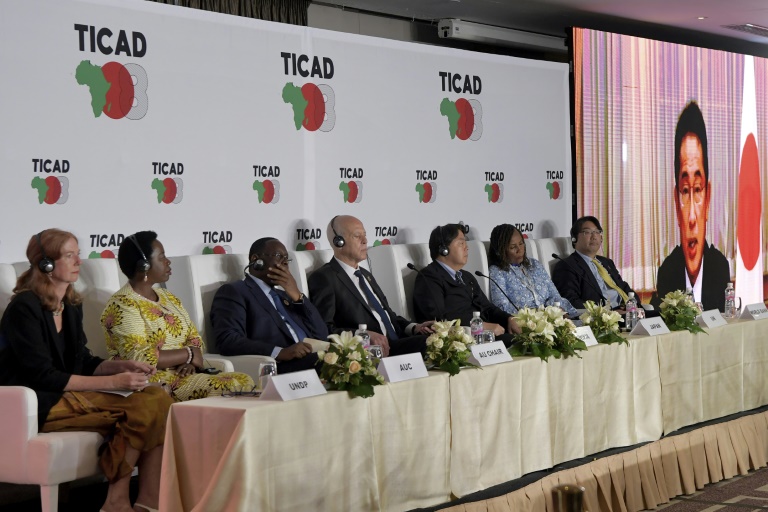
Japan will cooperate closely with African countries to promote “more resilient” economies, Prime Minister Fumio Kishida told the final session of an investment conference in Tunisia on Sunday.

He also promised Japan would use its place on the United Nations Security Council next year to push for a permanent African seat on the world body, a day after announcing $30 billion in public and private finance for the continent.

Japan wants “to create an environment where African people can live in peace and security so they can develop,” Kishida said, speaking via live video from Tokyo after testing positive for Covid-19 days earlier.

Senegalese President Macky Sall, chair of the 55-member African Union, backed Kishida’s call for the continent to have a seat on the UN Security Council.

Conflicts “that destabilise us and prevent us from developing must be taken into account by the Security Council” whose mission it is to promote international peace and security, Sall said.

He also called for a greater role for African peacekeepers in resolving conflicts.

“Without security there can be no development,” Sall said.

The eighth Tokyo International Conference on African Development (TICAD) took place in Tunisia, one of many import-dependent countries battered by global supply disruptions and price spikes unleashed by the coronavirus pandemic and the war in Ukraine.

Some 20 African heads of state and government took part in the summit in the North African nation, which brought together around 5,000 people from business and other sectors and shut down major roads across Tunis, causing weekend traffic chaos.

– ‘New approach’ –

Tunisian host President Kais Saied called for a “new approach” towards Africa, noting that many countries which had racked up large foreign debts since independence were also net exporters of human resources — taking skills gained in Africa to be used in the global North.

“Who is lending to whom?” he asked.

Sall called for African debts to be rescheduled or cancelled, as well as for the implementation of a promise by the G20 group of nations to suspend interest payments.

“Given the double crisis we’re facing, these measures are necessary to relaunch our economies,” he said.

The conference came as Japan’s rival China cements its influence on the continent with its “Belt and Road” infrastructure initiative, and as experts express concern about the long-term sustainability of some African nations’ borrowing from Beijing.

Kishida also announced that Japan would appoint a special envoy to the Horn of Africa, where a long and devastating drought in parts of Ethiopia, Kenya and Somalia has prompted the UN’s weather agency to warn this week of an “unprecedented humanitarian catastrophe”.

In West Africa, Kishida said Japan would pump $8.3 million into the troubled but gold-rich Liptako-Gourma tri-border area between Mali, Niger and Burkina Faso that has been ravaged by jihadist attacks in recent years.

The aid will aim to “develop good cooperation between residents and local authorities” and help improve administrative services for the area’s five million residents, he said.

In a final statement, the conference participants voiced “deep concern (over) the negative socio-economic impact” of the Ukraine crisis, saying it had created food insecurity in Africa.

“(We) reiterate the repeated calls for the resumption of the export of cereals, grains and agricultural products as well as fertilisers to global markets in order to relieve the African population,” the declaration read.

Angola bids solemn farewell to ex-strongman dos Santos

Angola’s former strongman president Jose Eduardo dos Santos, whose nearly four-decade rule of the oil-rich nation was marred by allegations of plunder and nepotism was laid to rest amid a family row.

The funeral, which was disputed by some of his children, was held at the historic palm tree lined Praca da Republica in the seaside capital Luanda on what would have been dos Santos’s 80th birthday.

It comes days after his party, the People’s Movement for the Liberation of Angola (MPLA) — which has ruled the country for nearly half a century — saw its worst results at the polls in the most hotly contested elections since independence.

Dos Santos — who died last month following a cardiac arrest — will be remembered as a “statesman and devoted pan-Africanist,” Namibia’s ex-president Sam Nujoma, 93, told the hundreds of mourners in attendance.

A choir sang dirges while flags flew at half-mast around the square, which houses an imposing concrete mausoleum where the country’s founding president Agostinho Neto is interred.

Dignitaries including South Africa’s President Cyril Ramaphosa, the Democratic Republic of Congo’s President Felix Tshisekedi and Portugal’s President Marcelo Rebelo de Sousa filled rows of white and gold seats.

Josiane dos Santos, the late leader’s daughter, sobbed while recalling her father’s love for music. 

During Angola’s war for independence, the young “Zedu”, as he was called, began his career as a revolutionary by recording LPs that encouraged the fight against coloniser Portugal while he took refuge in the neighbouring DRC, she said.

A representative of his foundation collapsed in the middle of his eulogy.  

A 21-gun salute rang as a portrait of dos Santos was carried ahead of the coffin, supported by military-clad pallbearers, in a slow procession to the mausoleum where he was laid to rest. 

– ‘Architect of peace’ –

Dos Santos was referred to by many, particularly MPLA members, as the “architect of peace” who brought democracy and multiparty politics to the country. 

On the streets of Luanda, some people were more critical of his legacy. 

“He left a high rate of youth unemployment, extreme poverty and one of the most unequal societies,” said Mariana Quissanga, 42, a furniture and clothes businesswoman. 

Dos Santos led the country from 1979 to 2017 under the MPLA banner — which saw its worst performance in this week’s election.

After 97 percent of the results were tallied, an initial count showed the MPLA had won 51.07 percent of the vote, with 44.05 percent for the party’s main rival, the National Union for the Total Independence of Angola (UNITA).

UNITA — which fought a bitter 27-year civil war against the MPLA government — has rejected the results.

Five members of the election commission have threatened not to sign off the results.

Despite political differences, UNITA leader Adalberto Costa Junior attended Sunday’s funeral.

“We have already lodged complaints with the electoral commission on where we believe the results do not match our count,” he told reporters on the sidelines of the service. 

Dos Santos died at a Barcelona clinic, and some of his children were at loggerheads with the government and his estranged wife over where and when he was to be buried.

But a Spanish court ruled that the body be returned to Angola. 

His eldest daughter Isabel dos Santos, who has faced a slew of investigations into her multinational business dealings, did not attend the funeral.

Instead, as the ceremony was under way, Isabel posted a picture of herself and her father on Instagram, captioned in Portuguese “Happy birthday papa”.

His other daughter Tchize also wished him a happy birthday on Instagram in a post showing herself on a yacht, while criticising the choice of a Sunday and his birthday to hold the funeral. 

Under dos Santos, Angola became one of Africa’s top oil producers. While he and his family reaped vast wealth from Angola’s resources, most of the country’s 33 million people remain among the poorest in the world. 

He stepped down in 2017, appointing Joao Lourenco as his successor, who now stands to gain a second term in office. 

Dos Santos passed a series of laws before his departure from government, granting himself broad judicial immunity.  

bur-cld-giv-str/sn/cdw

Tentative calm in Libyan capital after clashes kill 32

Flights resumed and shops re-opened in Libya’s capital Tripoli on Sunday after clashes between backers of rival governments killed at least 32 people and sparked fears of major new conflict.

Armed groups had exchanged fire that damaged several hospitals and set buildings on fire starting Friday evening, the worst fighting in the Libyan capital since a landmark 2020 ceasefire. 

A cautious calm had set in by Saturday evening, an AFP correspondent reported, and the health ministry said Sunday morning that 32 people had been killed and 159 wounded during the clashes.

The fighting came after months of mounting tensions between backers of Abdulhamid Dbeibah and Fathi Bashagha, whose rival administrations are vying for control of the North African country which has seen more than a decade of violence since a 2011 uprising.

Dbeibah’s administration, installed in the capital as part of a United Nations-led peace process last year, has so far prevented Bashagha from taking office there, arguing that the next administration should be the product of elections.

Bashagha was appointed by Libya’s eastern-based parliament earlier this year and is backed by powerful eastern military chief Khalifa Haftar, whose 2019 attempt to seize the capital by force turned into a year-long civil war.

Bashagha, a former interior minister, had initially ruled out the use of violence to take power in Tripoli but subsequently hinted that he could resort to force.

Libya plunged into chaos following the 2011 overthrow and killing of dictator Moamer Kadhafi in a NATO-backed uprising, with myriad armed groups and foreign powers moving to fill the power vacuum.

Certain armed groups seen as neutral in the latest crisis moved to back Dbeibah this weekend to push back Bashagha’s second attempt to enter the capital.

Both sides exchanged blame on Saturday while world powers appealed for calm.

– Shifting sands –

The UN’s Libya mission called for “an immediate cessation of hostilities”, deploring “indiscriminate medium and heavy shelling in civilian-populated neighbourhoods”.

On Saturday evening, Dbeibah posted a video of himself surrounded by bodyguards and greeting fighters supporting his administration.

Wearing a blue shirt and accompanied by his personal guard, he shook hands and took selfies with supporters.

“We won’t leave this country to the scoundrels,” he said in the video posted on his Twitter account under the title “end of the aggression”.

He said on Sunday he would create two committees to survey the damage from the fighting.

Dbeibah’s Government of National Unity said fighting had broken out after negotiations to avoid bloodshed in the western city collapsed.

Bashagha denied such talks had taken place, and accused Dbeibah’s “illegitimate” administration of “clinging to power”.

Local media reported late Saturday that a group of pro-Bashagha militias that had been making their way to the capital from Misrata later turned back.

The fighting prompted several airlines to cancel flights in and out of the only working airport in the capital, and high school examinations set for the end of August were postponed.

But flights resumed and shops reopened on Sunday morning, while the University of Tripoli announced that exams set for Monday would go ahead as originally planned, annulling an earlier postponement.

On Saturday evening Dbeibah ordered the arrest of anyone involved in the “attack on Tripoli”, both civilian and military.

A pro-GNU force from Misrata — the hometown of both Dbeibah and Bashagha — said Sunday it had arrested several involved in the attack. 

But analysts said the crisis was far from resolved, with the capital controlled by a multitude of armed groups with shifting alliances described by analyst Wolfram Lacher as “a never-ending story”.

“The armed groups that found themselves on the same side in yesterday’s Tripoli fighting will tomorrow clash over turf, positions and budgets,” he wrote on Twitter.

“The factions that were pro-Dbeibah yesterday will challenge him tomorrow.”

Close Bitnami banner
Bitnami