Africa Business

Three things we learned from England-South Africa 2nd Test

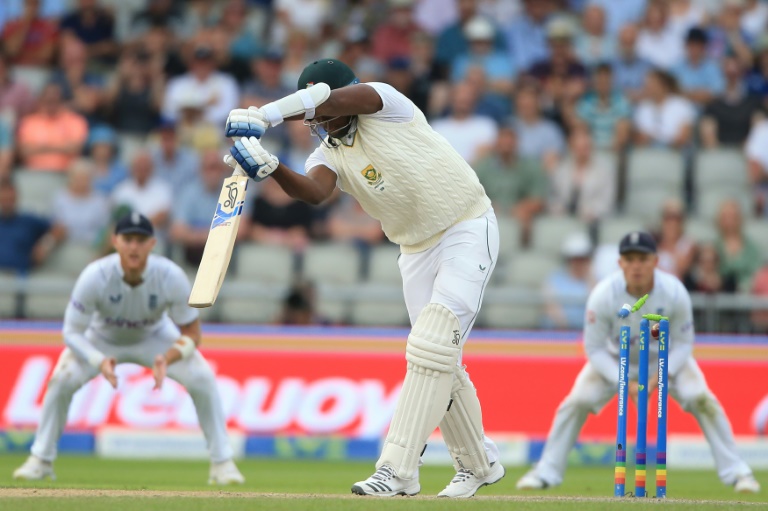
England overwhelmed South Africa by an innings and 85 runs in the second Test at Manchester’s Old Trafford on Saturday.

This win, which meant England levelled a three-match series at 1-1, was even more emphatic than South Africa’s innings and 12-run triumph in the first Test at Lord’s.

Here, AFP Sport looks at three things we learned from another three-day finish in the series.

Foakes stars with the bat as well as the gloves

Ben Foakes has long been acknowledged as one of the best wicketkeepers in England, but the presence of Jonny Bairstow — now deployed as a specialist batsman — and white-ball captain Jos Buttler in and around the red-ball set-up has seen him denied Test chances amid concerns over his batting.

Surrey gloveman Foakes, 29, has in particular suffered from the perception he is particularly vulnerable against fast bowling. 

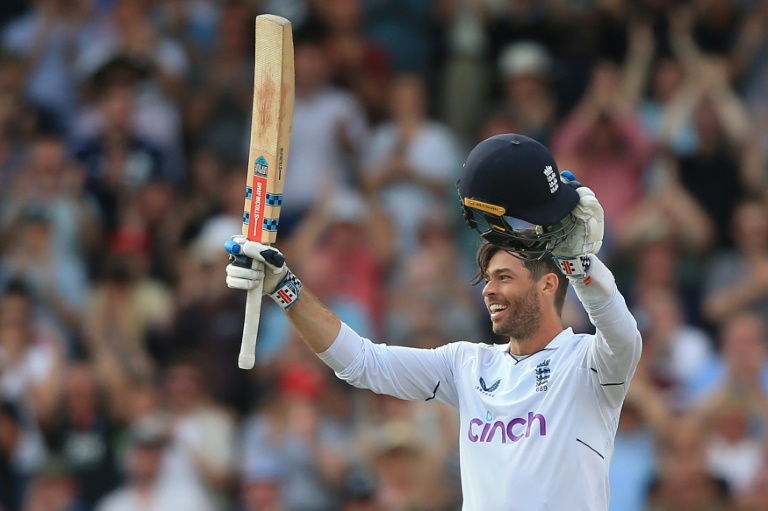
But against one of the best pace attacks in the world, Foakes’s 113 not out in a total of 415-9 declared at Old Trafford was exactly what England required.

England were still behind South Africa’s meagre first innings 151 when Foakes came into bat at 147-5, but his sixth-wicket stand of 173 with captain Ben Stokes (103) proved to be the decisive partnership of the match.

Foakes has now scored two Test hundreds, as many as Buttler but in just over a quarter of the number of matches — 16 to 57.

“It was a match-defining hundred from him batting at number seven,” said Stokes of Foakes’s hundred. “But then also there is his wicketkeeping. He’s the best in the world.”

England can win without Root runs

Joe Root is the outstanding England batsman of his generation, as exemplified by an overall Test record of 10,481 runs, including 28 hundreds, from 123 matches at an average of over 50 — the mark of a great player.

This season Root, back in the ranks after standing down as captain, has scored 592 runs in six Tests, including three hundreds, at a huge average of 74.

All teams are, almost by definition, reliant on their best players but even someone as talented as Root will have the odd bad match.

That made England’s victory in Manchester all the more significant as it was the first time in two years they had won a Test without a score of 50 or more from Root, who was out for nine.

South Africa’s plans come unstuck

South Africa, despite a dominant display at Lord’s, opted to change a winning team with towering left-arm fast bowler Marco Jansen unlucky to be dropped after taking four wickets and making 48 in a low-scoring game.

The Proteas’ hoped recalled off-spinner Simon Harmer would be a factor in the fourth innings, but such an idea almost obliged South Africa captain Dean Elgar to bat first upon winning the toss, even though it meant exposing his fragile top order to the new ball in overcast conditions favouring England’s quicks.

South Africa slumped to 77-5 and, with England batting just the once, the fourth innings where they hoped Harmer might star never came about.

“I really didn’t think we batted particularly well,” said opener Elgar. 

“Sure the ball went around but this is Test cricket, man, you need to deal with it. 

“We did lose those two wickets just before lunch, if we were three down at lunch, 80-odd for three we would have been in a pretty good position, I would’ve bitten my arm off for that result. We were five down and you’re always going to be playing catch-up cricket.”
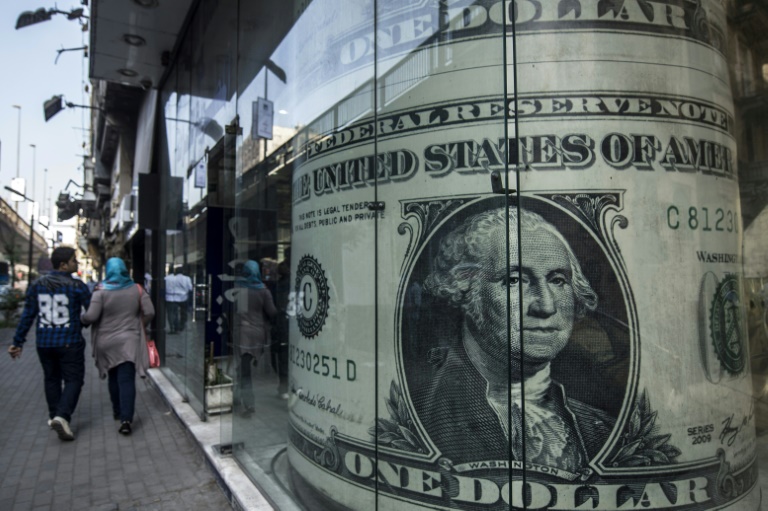
Egypt dims lights to boost foreign reserves

An economic crisis spurred by the Ukraine war is casting darkness upon Egypt’s streets, as the government dims lights to free up energy for export and bolster hard currency reserves.

Russia’s invasion of Ukraine had an immediate impact on Egypt, the world’s biggest wheat importer which has relied on the ex-Soviet states for over 80 percent of its grain.

Egypt, which turned to the International Monetary Fund for a loan after the war erupted, is pumping more natural gas abroad to increase its foreign currency reserves — a move that has come in for criticism.

And while the government announced electricity rationing this month, signs of wastage elicit scorn.

“I see streetlights still working during daylight hours… and we’re suffering from high electricity bills,” said a disgruntled Cairo resident in his 30s who spoke on condition of anonymity.

The country’s vital tourism sector has also been hit by the Ukraine conflict, cutting the flow of holidaymakers to a country still hurting from the 2011 revolution and Covid-19 pandemic.

Economic growth slowed to 3.2 percent in the fourth quarter of 2021-22 against 7.7 percent last year, although annual expansion was 6.6 percent.

Despite the better-than-expected annual figure, the government said growth had tapered off in the wake of  “global political and economic developments”.

Egypt’s monetary policy has been caught between a rock and a hard place since Russia invaded Ukraine in February.

Inflation hit a three-year high of 14.6 percent in July after Egypt devalued the pound, pushing up the price of imports and depleting forex reserves by $7.8 billion since February to $33.1 billion in July.

– Capital flight –

Egypt is negotiating an IMF loan to help mitigate fallout from the Ukraine war on the country, where 30 percent of the 103 million population lives in poverty.

But the talks have stretched out for six months, raising eyebrows among analysts.

“The fact that talks with the IMF have dragged is probably a sign that some officials are reluctant to follow through on the Fund’s demands and would prefer to rely on support from the oil-flush Gulf economies,” London’s Capital Economics said.

“We need to speed up negotiations with the IMF,” said Hany Genena, an economist and lecturer at American University in Cairo.

“Since last week, there has been a severe shortage of dollars provided to importers by banks in various sectors.”

Cairo had previously secured a $12-billion IMF loan in 2016 that required it to slash subsidies and devalue the pound.

In 2020, Egypt received two more loans, including $5.4 billion tied to reforms and $2.8 billion to tackle Covid.

Genena said Egypt needed to undertake more “drastic” reforms to restore its forex reserves, including a full float of the pound.

Last week, as the currency plunged to a near all-time low of 19.1 to the dollar, central bank governor Tarek Amer resigned.

It was unclear why Amer quit, but Egyptian media suggested it was because of his reluctance to implement a full float.

James Swanston of Capital Economics said the currency needed to depreciate to 25 pounds to the dollar by the end of 2024 “to avoid external imbalances rebuilding”.

But $14.6 billion worth of investments has flown out of the country in the first quarter of 2022, reflecting concerns over the Ukraine war.

Capital Economics said, however, that investment pledges worth $22 billion from Gulf countries will “go some way to alleviating external financing concerns”.

– Gas lifeline –

Among Egypt’s slate of measures to preserve foreign currency was a decision to let the pound slip 17 percent against the greenback in March.

The government said electricity rationing seeks to achieve “an additional surplus — at an average of 15 percent of the natural gas pumped to power stations — that can be exported and bring in hard currency.”

Among the measures to conserve energy were “reducing lighting in streets and public squares.”

Since 2018, Egypt has been ramping up its natural gas capacity, now setting its sights on an energy-hungry Europe, which is eager to decrease reliance on Russian gas.

The government announced this month “exceptional aid to nine million families at a cost of $52 million per month,” but for many, the soaring cost of living had already done enough damage. 

Mahmoud al-Saeedy, a fruit salesman in Cairo, has depleted his savings trying to keep up with rising prices.

“I return to my village in the south every 40 or 50 days, with only 600 pounds ($31.3) to give to my family,” he told AFP.

“What can they do with it?”

South Africa opens door to foes for World Rugby Sevens crown

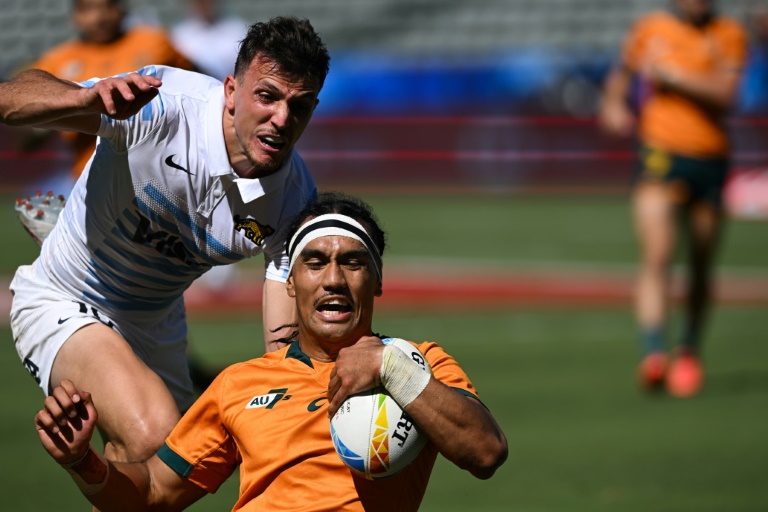
Points leader South Africa crashed out in Saturday’s group stage of the season-ending World Rugby Sevens Series tournament at Los Angeles, opening the door to the crown for three rivals.

Host United States defeated the Blitzboks 21-7 in the opening match and New Zealand edged South Africa 17-14 to deny the season leaders a quarter-final berth from Pool B.

That left Australia, Argentina and Fiji still in the chase to overtake South Africa for the overall title after all three advanced to the last eight.

Sunday’s quarter-final pairings include undefeated Fiji against the United States, Ireland against unbeaten New Zealand, Kenya against the unbeaten Aussies and undefeated Samoa against Argentina.

Australia took a critical 19-14 Pool A triumph over Argentina as well as blanking Japan 61-0 and ripping Spain 54-0 in the night’s last match.

The South Africans, who won last month’s Commonwealth Games crown and the year’s first four events, could have clinched the title by reaching the final.

Instead, Australia, which trailed 124-122 entering the weekend, has the best chance to overtake them with Argentina six back and Olympic champion Fiji on 104.

Under a special points system used this season due to Covid-19, each team’s total includes its best seven results from the year.

That means Australia would take a first-ever title with a top-three finish while Fiji and Argentina must win Sunday’s final and have help to capture the trophy.

Argentina must have the Aussies lose in the quarter-finals to sustain any title hopes.

The South American squad has never won the title and won its only tournament this season at Vancouver.

Four-time champion Fiji rolled through Pool C, defeating Wales 28-12, France 29-19 and Ireland 21-7.

The Samoans dominated Pool D, beating Kenya 33-14, Scotland 22-7 and England 31-5.

New Zealand downed the hosts 33-12 and Canada 26-5 in its unbeaten Pool B run.

Churchgoers, researchers celebrate Tunisia's Sicilian past

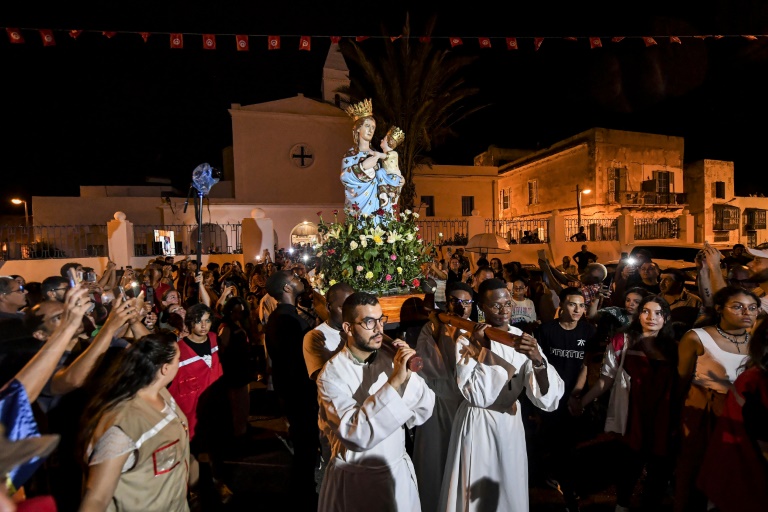
Worshippers crying “Hail Mary” walk alongside their Muslim neighbours in the Tunisian port district of La Goulette, harking back to a time when Sicilians were at the heart of neighbourhood life.

The Madonna of Trapani procession, marking the Catholic Feast of the Assumption, is an echo of a “forgotten history” researchers of Italian origin say offers a model for coexistence with migrants, among faiths and ethnicities.

The annual procession was born in the mid-19th century when La Goulette was home to tens of thousands of Sicilians, as well as Sephardic Jews, Maltese, Greeks and Spaniards.

“They shared each other’s celebrations and sadnesses, and took part in each other’s events”, said Silvia Finzi, editor of Italian-language Tunisian newspaper Corriere di Tunisi — one of some 120 Italian publications founded between 1838 and 1956, the year Tunisia gained independence from France.

There were some red lines — for example, there were few marriages across religious divides.

But for centuries, Tunisia has been able to peacefully host a mosaic of migrant communities “without forcing them to forget their roots”, Finzi said.

The Madonna of Trapani procession started after Tunisia’s Muslim ruler Ahmed Bey — whose mother was a Sardinian Christian — gave a piece of land for the building of a church in 1848.

It was Sicilian fishermen from La Goulette, a port district on the edge of Tunis, who started the annual procession from the church to the sea to mark the Feast of the Assumption on August 15 and pray for a good catch and protection on the high seas.

The mariners lived among Muslims and Jews in a part of La Goulette nicknamed “Little Sicily”.

Trapani is a city in the northwest of the Italian island.

The procession was suspended in 1964 following Tunisia’s independence from France, but was relaunched in 2017.

This year it attracted hundreds of Christians, Muslims and the mayors of Tunis and La Goulette.

– ‘Example of respect’ –

The Catholic Archbishop of Tunis, Ilario Antoniazzi, said such a procession would be “impossible” in other parts of the Maghreb region.

The 74-year-old, who has spent some 50 years in the region, said Muslim-majority Tunisia’s “respect” for those of other faiths is “an example for many Arab countries”.

That is partly due to the long history of Sicilians in La Goulette, just 220 kilometres (135 miles) from the Italian territory, the Mediterranean’s biggest island.

Alfonso Campisi, a professor of Italian civilisation descended from Sicilian settlers, has spent two decades researching the “forgotten history” of some 130,000 Italians in the North African country, mostly Sicilians.

He wrote a book and produced a documentary to “give a voice” to those who have continued to live in La Goulette.

His film on the “Sicilians of Africa”, which was shown in France, Italy and Tunis this summer, also examines the fate of those who left after independence and ended up in refugee camps in northern Italy.

– ‘Missing link’ –

Italians had headed to Tunisia in waves over the 19th and 20th century, and they were to leave a lasting mark on Tunisian architecture, cuisine (lots of pasta plates) and even the local dialect of Arabic. 

Many were craft workers, masons, mechanics or farm workers who fled Italy to escape poverty or Cosa Nostra, the Sicilian mafia.

Most left Tunisia after independence, when Tunisians were given priority in public jobs and land ownership. 

Nadia Naji, a Tunisian lecturer in Italian, said that Tunisians themselves “don’t know this period of history, there is a missing link”.

Italian heritage is everywhere from the colonial-era buildings of Tunis to words that have infiltrated the local dialect of Arabic — such as the names of fish (triglia for red mullet) and expressions such as “d’accordo” (OK).

“My grandparents used to tell me about their Jewish, Italian and Sicilian friends,” said Atef Chedli, a radiologist aged 65, after seeing Campisi’s documentary.

“It wasn’t ‘Tunisians and the others’. The Jews were very well integrated, so were the Italians and the Maltese.”

Under French rule from 1881 to 1956, “Italians were close to the Tunisian population (partly) because they had the same inferior status” and because of a shared, Mediterranean culture, Finzi said.

Both Campisi and Finzi think this Tunisian model can serve as an example nowadays for integration of migrants in Italy, France and in the rest of the world. 

Tunisia “was able to welcome a mass of poor people, from Sicily but also from Greece, Corsica and Spain,” said Campisi.

Those who remember that period, Tunisian Sicilians and Tunisians, have a mix “of nostalgia and a desire for Tunisia to remain an open and tolerant country” that welcomes migrants, Finzi added.

Frustrated South Africa vow to learn lessons from Wallabies loss

Frustrated South Africa coach Jacques Nienaber rued missed opportunities and handling errors for costing them their Rugby Championship match against Australia, but said lessons had been learned for the second Test next weekend.

After conceding a try in the opening minute, the world champion Springboks dominated possession in the first-half at Adelaide Oval on Saturday, but despite intense pressure failed to make it count and trailed 10-3 at the break.

They finished strongly with two late Kwagga Smith tries to deny the tiring Wallabies a bonus point, but their lack of finishing in the first 40 minutes proved decisive and they crashed 25-17.

Nienaber noted a similar scenario in their recent Test against Wales and a fortnight ago against New Zealand, when they created plenty of chances but didn’t capitalise.

“It was frustrating how many opportunities we created but didn’t convert into points,” he said. “It is something that has happened in our last few games, so we will work hard to correct that. 

“We were in Australia’s 22 about 13 times, if not more, and we didn’t come away with points a lot of the time, and when they were in our 22, they used their chances well and got the rewards for it.”

Defeat left the World Cup winners propping up the Rugby Championship table with just one win from three, trailing surprise leaders Argentina, who sit on top after their stunning 25-18 upset of the All Blacks in New Zealand.

“We will have a good review of the game, take the lessons learned, and ensure that we are up for next week’s clash in Sydney,” added Nienaber. 

“The nice thing is that we will have another chance against Australia in seven days and hopefully we will be able to turn things around.”

Captain Siya Kolisi also pointed to handling errors as a problem to fix.

“Our last passes didn’t go to hand, but as coach Jacques always says, no one intentionally knocks on the ball,” he said. 

“Our set-pieces were good, but we can always get better, so we will go back and review the game, and we are looking forward to the next clash against them.”

– ‘Enormous character’ –

In contrast, it was one of the Wallabies’ best performances this year, with a mighty defensive effort and well-worked attacking set-pieces earning them the win.

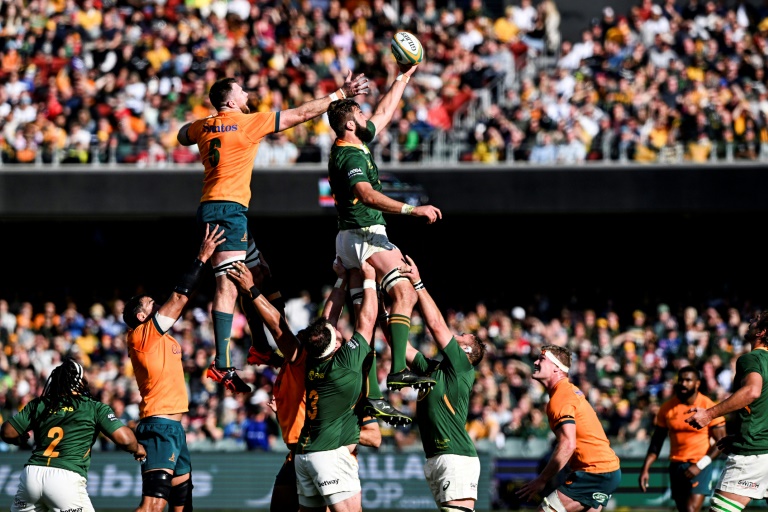
They did lose six lineouts on their own throw in a game to forget for returning hooker Folau Fainga’a, which allowed the Springboks to build constant pressure. They also conceded 16 penalties to South Africa’s nine.

But overall coach Dave Rennie was a happy man after a much better performance from a team that was dismantled 48-17 by the Pumas in San Juan this month.

“We prepared really well and whilst that’s no guarantee for performance, we’re rapt with how we started,” said Rennie after Australia extended their unbeaten home streak against South Africa to eight games.

“We showed an enormous amount of character for about 20 minutes, and at times down to 14 (in the first-half). 

“You saw great examples with a really important scrum where we won a penalty, and Marika Koroibete getting across with the try-saving tackle.”

Australia’s task now is to record consecutive victories, a feat they have failed to achieve this season — winning three Tests against England, Argentina and South Africa but also losing three.

“We’re well aware of the challenge next week and backing it up,” said Rennie.

Libya clashes kill 23, spark fears of new war

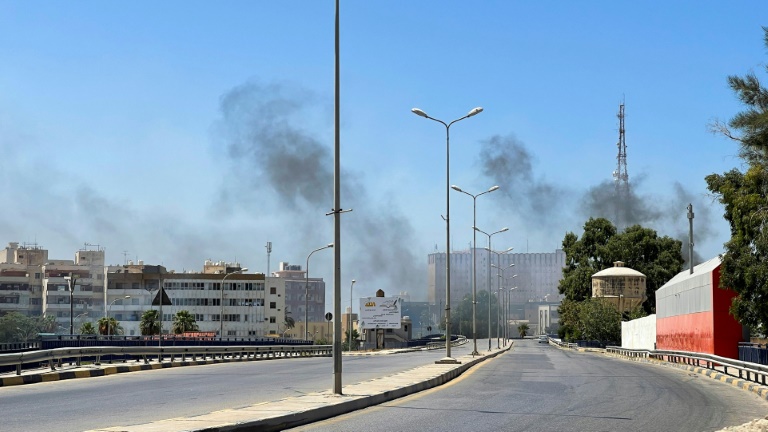
Clashes between backers of Libya’s rival governments killed at least 23 people and damaged six hospitals in Tripoli on Saturday, sparking fears that a political crisis could spiral into a major new armed conflict.

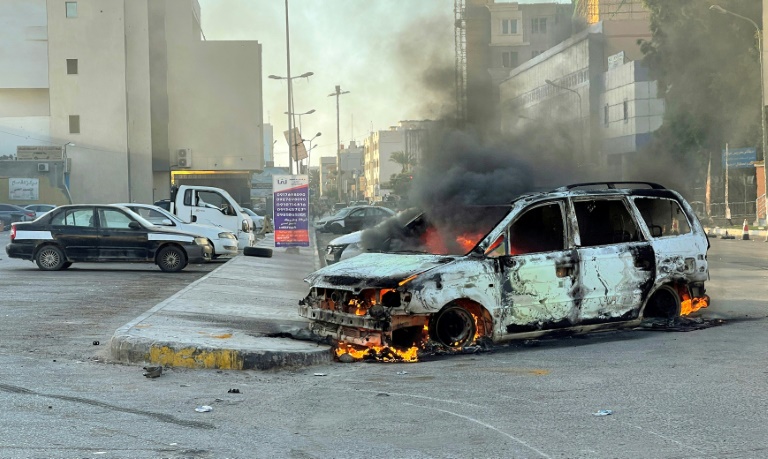
Small arms fire and explosions rocked several districts of the capital overnight and into Saturday, when smoke could be seen rising from damaged buildings.

But cautious calm appeared to have returned on Saturday night, an AFP correspondent said.

The head of the government in Tripoli, Abdulhamid Dbeibah, posted a video of himself surrounded by bodyguards and greeting fighters supporting him.

In an updated toll, the health ministry in Tripoli said 23 people had been killed and 140 wounded in the fighting.  

Six hospitals were hit and ambulances were unable to reach areas affected by the clashes, the ministry had said earlier, condemning “war crimes”.

The two rival administrations vying for control of the North African country and its vast oil resources — one based in the capital, the other approved by a parliament in the country’s east — exchanged blame.

The UN’s Libya mission called for “an immediate cessation of hostilities”, citing “ongoing armed clashes including indiscriminate medium and heavy shelling in civilian-populated neighbourhoods”.

The US ambassador to Libya, Richard Norland, said in a statement that Washington “condemns” the surge in violence, urging an “immediate ceasefire and UN-facilitated talks between the conflicting parties”.

News agency Lana said actor Mustafa Baraka had been killed in one of the neighbourhoods hit by fighting, sparking anger and mourning on social media.

– ‘Threats’ –

Dbeibah’s Government of National Unity said fighting had broken out after negotiations to avoid bloodshed in the western city collapsed.

Dbeibah’s government, installed as part of a United Nations-led peace process following a previous round of violence, is challenged by a rival government led by former interior minister Fathi Bashagha.

Bashagha, who is backed by Libya’s parliament and eastern-based military strongman Khalifa Haftar, says the GNU’s mandate has expired.

But he has so far been unable to take office in Tripoli, as Dbeibah has insisted on only handing power to an elected government.

Dbeibah’s government accused Bashagha of “carrying out his threats” to seize Tripoli by force.

Dbeibah’s GNU said negotiations had been underway to “hold elections at the end of the year to resolve the political crisis”, but that Bashagha had “walked out at the last moment”.

Bashagha denied such talks had taken place, and accused Dbeibah’s “illegitimate” administration of “clinging to power”.

Local media reported later Saturday that a group of pro-Bashagha militias that had been making their way to the capital from Misrata had turned back.

– ‘Urban warfare’ –

Emadeddin Badi, a senior fellow at the Atlantic Council, warned that the violence could quickly escalate.

“Urban warfare has its own logic, it’s harmful both to civilian infrastructure and to people, so even if it isn’t a long war, this conflict will be very destructive as we have already seen,” he told AFP.

He added that the fighting could strengthen Haftar and those close to him.

“They stand to benefit from western Libya divisions and have a better negotiating position once the dust settles.”

Bashagha was appointed in February by the parliament, which was elected in 2014 and is based in the eastern city of Tobruk, but he has been unable to impose his authority in Tripoli.

Initially ruling out the use of violence, the former interior minister has since hinted that he could resort to force.

Last week, he called on “Libyan men of honour” to drop their support for Dbeibah’s “obsolete and illegitimate” administration.

In July, clashes between rival groups in Tripoli left 16 people dead, including a child.

It was the deadliest violence to hit the Libyan capital since Haftar’s ill-fated attempt to seize it by force in 2019 and 2020.

Tunisia, Morocco recall envoys in W. Sahara tit-for-tat

Tunisia announced Saturday the recall of its ambassador to Morocco for consultations, a day after the kingdom did the same in response to Tunisia’s president hosting the Polisario movement’s leader.

The Polisario wants an independent state in the Western Sahara, a vast stretch of mineral-rich desert which Morocco sees as a sovereign part of its own territory.

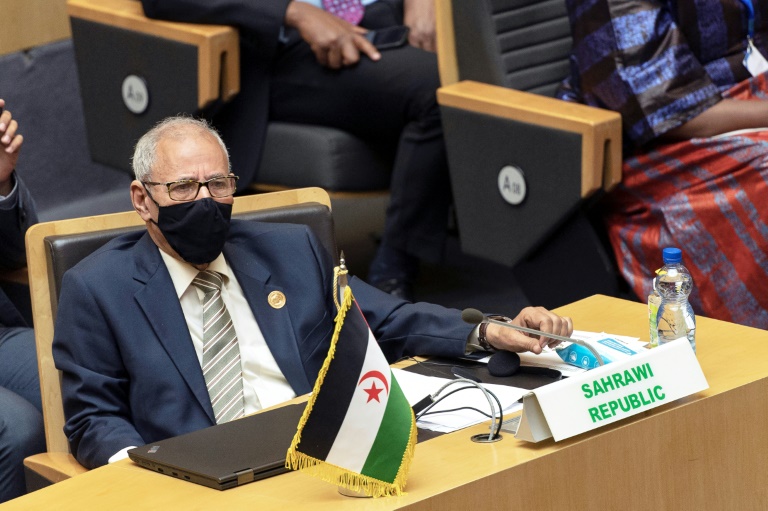
Tunisian President Kais Saied had on Friday hosted Polisario chief Brahim Ghali who arrived to attend the Japanese-African investment conference TICAD.

In response to what it called a “hostile” and “unnecessarily provocative” act, Morocco immediately withdrew its Tunis ambassador for consultations and cancelled its own participation in the high-profile conference.

On Saturday, the Tunisian Foreign Ministry voiced its “surprise” at Morocco’s reaction.

“Tunisia has maintained its total neutrality on the Western Sahara issue in line with international law,” it said in a statement.

“This position will not change until the concerned parties find a peaceful solution acceptable to all.”

Saied spent much of Friday welcoming African leaders arriving for the TICAD conference, including Ghali who is also president of the self-proclaimed Sahrawi Arab Democratic Republic (SADR).

Morocco accused Tunisia of “unilaterally” inviting the Polisario chief “against the advice of Japan and in violation of the process of preparation and established rules”. 

But Tunisia said Saturday the African Union (AU) had issued a direct invitation to the SADR, a member state, to join the conference, noting that it had attended previous such gatherings — alongside Morocco.

The foreign ministry in Rabat hit back, charging Tunisia’s response was riddled with “many approximations and untruths”.

The tit-for-tat diplomatic row came as French President Emmanuel Macron visited Morocco’s arch-rival and Polisario backer Algeria on a visit aimed at healing ties with the former French colony.

Diplomatic sources said Guinea-Bissau President Umaro Sissoco Embalo, current chairman of the Economic Community of West African States (ECOWAS), walked out of the conference in protest at the Polisario’s participation.

In a speech at the forum’s opening, AU chair Macky Sall regretted Morocco’s absence caused by “a lack of consensus on a question of representation”.

“We hope that this problem will find a solution for the smooth running of our partnership” between Africa and Japan, he said.

It is not the first time that Ghali’s travels have sparked Moroccan anger.

In April 2021, he headed to Spain to be treated for Covid-19, sparking a year-long diplomatic row between Spain and the North African kingdom.

That only ended after Madrid dropped its decades-long stance of neutrality over the Western Sahara — a former Spanish colony — and backed a Moroccan plan for limited self-rule there.

The Polisario had waged an armed struggle before agreeing to a ceasefire in 1991 on the promise of a UN-supervised referendum on self-determination, which has never happened.

Robinson and Anderson bowl England to 2nd Test win over South Africa

England hammered South Africa by an innings and 85 runs to win the second Test at Old Trafford inside three days on Saturday.

The victory, which followed South Africa’s almost as crushing innings and 12-run win in the first Test at Lord’s, meant England levelled the three-match series at 1-1.

South Africa, 141-3 in their second innings at tea, then saw England captain Ben Stokes remove both Rassie van der Dussen (41) and Keegan Petersen (42) for their interval scores.

The Proteas, the World Test Championship leaders, then collapsed against the new ball as they lost their last five wickets for seven runs in 31 balls en route to being dismissed for 179.

Recalled seamer Ollie Robinson took 4-43 in 15.1 overs and 40-year-old England great James Anderson 3-30.

Anderson had earlier marked becoming the first man to play 100 Tests on home soil (97 in England, three in Wales) by taking three wickets in South Africa’s meagre first innings 151 after Proteas captain Dean Elgar surprisingly decided to bat first in bowler-friendly conditions.

This match was a personal triumph for player of the match Stokes, who made 103 — his first century as England captain — in a total of 415-9 declared that also featured wicketkeeper Ben Foakes’s Test-best 113 not out.

Stokes has now won five of his six Tests as skipper since succeeding Joe Root as England’s permanent captain.

The third and now deciding Test at the Oval in south London starts on September 8.

Brief scores

South Africa 1st Innings 151 (J Anderson 3-32, S Broad 3-37)

England 1st Innings 415-9 dec (B Foakes 113 no, B Stokes 103; A Nortje 3-82)

South Africa 2nd Innings 179 (O Robinson 4-43, J Anderson 3-30)

Result: England won by an innings and 85 runs

Player of the match: Ben Stokes (ENG)

Series: Three-match series level at 1-1

Libya clashes kill 12, spark fears of new war

Clashes between backers of rival governments killed at least 12 people and damaged six hospitals in Libya’s capital Saturday, sparking fears that a political crisis could spiral into a major new conflict.

Small arms fire and explosions rocked several districts of Tripoli overnight and into Saturday, when smoke could be seen rising from damaged buildings.

Early on Saturday evening, the health ministry in Tripoli gave a preliminary toll of 12 dead and 87 wounded from the fighting.  

Six hospitals were hit and ambulances were unable to reach areas affected by the clashes, the ministry had said earlier, condemning “war crimes”.

The two rival administrations exchanged blame as videos posted online showed burned-out cars and buildings riddled with bullet holes, as well as a mosque on fire.

The UN’s Libya mission called for “an immediate cessation of hostilities”, citing “ongoing armed clashes including indiscriminate medium and heavy shelling in civilian-populated neighbourhoods” that it said had damaged hospitals.

The US embassy in Libya said it was “very concerned” about the clashes.

News agency Lana said actor Mustafa Baraka had been killed in one of the neighbourhoods hit by fighting, sparking anger and mourning on social media.

The Government of National Unity (GNU) of Abdulhamid Dbeibah said fighting had broken out after negotiations to avoid bloodshed in the western city collapsed.

Dbeibah’s government, installed as part of a United Nations-led peace process following a previous round of violence, is challenged by a rival government led by former interior minister Fathi Bashagha.

– Trading blame –

Bashagha, who is backed by Libya’s parliament and eastern-based military strongman Khalifa Haftar, says the GNU’s mandate has expired.

But he has so far been unable to take office in Tripoli, as Dbeibah has insisted on only handing power to an elected government.

Dbeibah’s government accused Bashagha of “carrying out his threats” to seize Tripoli by force.

Dbeibah’s GNU said negotiations had been underway to “hold elections at the end of the year to resolve the political crisis”, but that Bashagha had “walked out at the last moment”.

Bashagha denied such talks had taken place, and accused Dbeibah’s “illegitimate” administration of “clinging to power”.

Emadeddin Badi, a senior fellow at the Atlantic Council, warned that the violence could quickly escalate.

“Urban warfare has its own logic, it’s harmful both to civilian infrastructure and to people, so even if it isn’t a long war, this conflict will be very destructive as we have already seen,” he told AFP.

He added that the fighting could strengthen Haftar and those close to him.

“They stand to benefit from western Libya divisions and have a better negotiating position once the dust settles.”

Bashagha was appointed in February by the parliament, which was elected in 2014 and is based in the eastern city of Tobruk, but he has been unable to impose his authority in Tripoli.

Initially ruling out the use of violence, the former interior minister has since hinted that he could resort to force.

Last week, he called on “Libyan men of honour” to drop their support for Dbeibah’s “obsolete and illegitimate” administration.

Last month, clashes between rival groups in Tripoli left 16 people dead, including a child.

It was the deadliest violence to hit the Libyan capital since Haftar’s ill-fated attempt to seize it by force in 2019 and 2020.

Japan vows billions at Africa investment conference

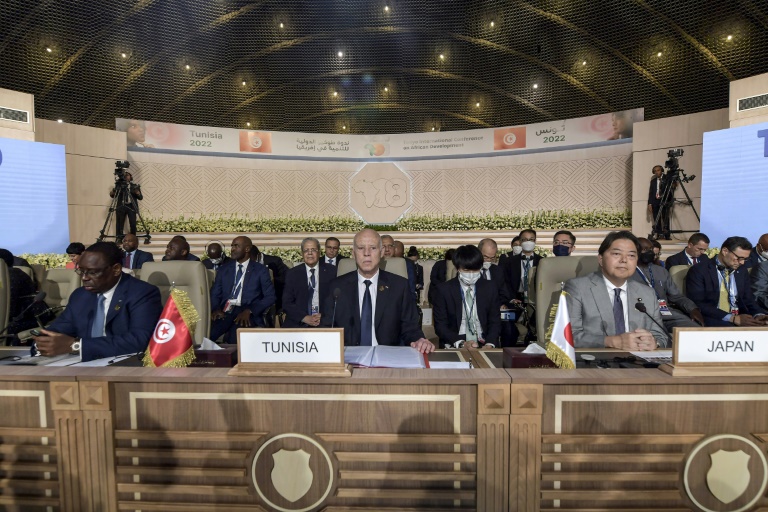
Japanese Prime Minister Fumio Kishida Saturday pledged $30 billion over three years for Africa in a virtual address to a development conference in Tunis aiming to counter China’s growing continental influence.

The eighth Tokyo International Conference on African Development (TICAD8) takes place amid a “complex” international environment caused by the coronavirus pandemic and the war in Ukraine, the Japanese foreign ministry said.

Host country Tunisia is among the countries bearing the brunt of global supply chain disruptions and price spikes unleashed by these two factors, since it is heavily import dependent and is not an energy player.

In his opening speech, Tunisian President Kais Saied urged delegates to “search together for ways for African peoples to achieve the hopes and dreams of the first generation after independence”.

Praising Japan’s strong track record of development and “preserving” its culture, he said that “the world cannot continue as it was. With all its wealth and assets, Africa cannot watch its people live through poverty.”

Kishida, speaking over live video from Tokyo after testing positive for Covid-19 days earlier, pledged that “Japan will invest both public and private funds worth $30 billion over the next three years” across Africa.

“To improve the lives of Africans, we will provide up to $5 billion in co-financing with the African Development Bank,” he said.

The pledge come as China cements its influence on the continent with its “Belt and Road” infrastructure initiative, and as experts express concern about the long-term sustainability of some African nations’ borrowing from Beijing. 

– Rabat-Tunis tensions –

Japan’s initiative “includes up to $1 billion in a new special quota to be established by Japan to promote debt consolidation reforms” in Africa, the Japanese premier said.

He also pledged $300 million in co-financing with the African Development Bank to boost food production, vowing to help African countries weather grain shortages caused by the war in Ukraine, a major wheat producer.

Senegalese President Macky Sall, the current chairman of the African Union, paid tribute to Africa’s “partnership” with Japan, praising “concrete results in the agriculture, health, education and water” sectors.

He also urged a suspension of interest on debt owed to G20 countries, calling for a seat for the continent at the next G20 summit.

On the eve of TICAD, Morocco withdrew from the event and recalled its ambassador from Tunisia for consultations, after Saied hosted the head of Western Sahara’s Polisario secessionist movement.

Tunis in turn said it would recall its own ambassador from Rabat, pointing to its “total neutrality” on Western Sahara, a territory Rabat sees as an integral part of Morocco. 

Sall said he “regrets Morocco’s absence”, expressing hopes for a solution to the disagreement.

It is the first TICAD — held every three years either in Japan or an African country — since the coronavirus pandemic began.

The Japanese delegation is led by Foreign Minister Yoshimasa Hayashi, with about 5,000 participants set to attend.

Among those are 48 representatives of African countries, including at least 20 heads of state or government, according to Tunisian diplomatic sources.

A slick promotional video said the conference aims to promote “African development led by African people”.

But no journalists from African news outlets were given access to delegates ahead of the event, except Tunisian state media, alongside Japanese journalists.

The conference has sparked anger among Tunisians as major road closures threatened traffic disruptions in the capital.

Authorities spruced up parts of the city likely to be seen by delegates and dug in roadside plants, but these efforts also drew ire from social media users.

“I feel deeply insulted by the clean-up of Tunis for the TICAD,” one Tunisian wrote on Twitter, arguing that “those we pay to make our lives easier” should instead focus on making the capital livable for citizens all year round.

Close Bitnami banner
Bitnami